(November, 2025 | No. 11 | Vol. 69)
11/1/2025
Truth Magazine (ISSN 1538-0793) is published once a month by Truth Publications, Inc., 103 W. Washington St., Athens, AL 35611.
© 2025 Truth Publications, Inc. All Rights Reserved.
Manuscripts should be sent to the editor, Mark Mayberry, at mark@truthpublications.com. Link.
Subscriptions, renewals & other correspondence should be sent to: Truth Magazine, 103 W. Washington St., Athens, AL 35611 or by emailing us at subscriptions@truthmagazine.com. Link.
Book orders should be sent to: CEI Bookstore | truthbooks.com | Street Address: 103 W. Washington St., Athens, AL 35611 | Phone: (855) 492-6657 | Email: sales@truthbooks.com Link.
Online Website: truthmagazine.com
DISCLAIMER: Books in ads are screened, but an ad does not mean unqualified endorsement. All books should be tested by Scripture. We appreciate readers notifying us if they find some glaring fault in the ads.
By Mark Mayberry
Synopsis: Margaret (Maggie) Esther Mayberry Matheny was born November 3, 1964 and passed away October 12, 2025. These personal reflections are offered in loving memory of a dear sister.

Maggie & Sherelyn—December, 2024 @ Fall Creek Falls State Park, TN
Several events stand out in my memory of my sister Maggie. One is from our childhood. I was in my teens; Margaret (as we called her then) was eight years younger than I. During that time, we lived on a farm in Clarksville, Tennessee. We had two Shetland ponies, one of which was named Spot. When I would ride Spot, this demonic beast would furtively move close to the fence, and while I was distracted by being scraped by the barbed wire, he would turn his head around and attempt to bite my other leg. Sometimes Spot would walk near our flock of geese and then buck me off in their midst, so that not only did I suffer the indignity of being forcefully dismounted, but when I landed on the ground, the geese would attempt to flog me. In contrast, Margaret loved horses and was able to ride them effectively. One of the lingering memories I have of our youth is of her riding those Shetland ponies with exuberance—her blonde hair flying in the wind, horse and rider being one. In my mind, this is a picture of youthful, carefree joy.
Sherelyn and I enjoyed every occasion of being around Margaret and her husband, Tim Matheny. Tim and I share a love of technology. He has worked at Apple for over thirty-five years. For a long time, I was the obnoxious brother-in-law who argued the virtues of the Windows platform—until, after forty years of banging my head against a wall, I recognized the benefits of Apple’s unified, user-friendly platform (especially when it comes to publishing), shifted my entire workflow to the Mac/iPad/iPhone, and repented in dust and ashes. Tim graciously forgave me for my obstinacy.
Anyway, Tim and I would talk about tech and tools and the ways in which they can help us accomplish our tasks. When we’d get off on one of these tangents, Maggie would smile indulgently and sometimes roll her eyes. She didn’t care about any of that. Oh, she used technology—specifically her phone—to keep in touch with friends, family, and fellow Christians. Maggie was a people person, and people loved her. Everyone instinctively recognized her as having a warm, loving, and devoted heart.
Time spent with Tim and Maggie could be loads of fun. Hikes in rugged terrain, playing card games at our annual family reunions at Fall Creek Falls, and trips to the American West were delightful experiences.
Just hours before Maggie’s death, her voice had become weak and, at times, her mind wandered and it was hard to understand her thoughts or words. But at one point, she looked at Tim and said clearly, “I am ready to pack my bags and leave this place!” With laughter and tears, those with her said, “Well, you are getting ready to go on your greatest journey, yet!” A few moments later, she said, “Have we checked out yet?” Again, she was encouraged to be patient; it was almost time to go. Maggie had been planning and preparing for this trip for a lifetime. Nothing else could compare with this. She trusted that to be “carried away by the angels,” or “caught up together to meet Him in the air” is the journey that will eclipse all others. She would want to share that experience with all.
Several years ago, we went on a vacation with Margaret and Tim, one of their Brentwood friends, Pat, my brother Daniel, and his son Abraham. Sherelyn and I traveled around Colorado, Utah, and Arizona, sharing the splendor of the American Southwest with them. Part of the trip involved driving the Million Dollar Highway, a twenty-five-mile scenic stretch of U.S. Route 550 in southwestern Colorado that runs between the towns of Silverton and Ouray. It is famous for its stunning mountain views and treacherous, narrow, and winding road, which features steep drop-offs and no guardrails in many sections.
Seven of us were packed into a rather small SUV, with Maggie, Abraham, and me occupying the back bench seat, in which we were wedged together like sardines in a can. Although Daniel is an excellent and attentive driver on such road trips, we accused him of intentionally taking hairpin curves at a slightly elevated speed, causing us alternately to smash the person sitting to our left or right, depending on the direction of the curve.
Now, if this had occurred when we were children, we would have been fussing at each other: “Get off me! Stay on your side!” However, instead of complaining about the discomfort, Maggie (in her indomitable manner) treated the ride as a grand adventure, and each curve became a source of laughter and hilarity. That was Margaret. She could turn difficulties into delights.
Margaret was also sensitive to the needs of others. There were several times in my life when her lovingkindness was especially meaningful. Our mother, Ruth Mayberry, died of cancer about twenty-five years ago. As it so happened, Margaret and I were at Mom’s hospital bedside on the day that she passed. We shared that sad but significant moment—comforting each other through mutual tears, our hearts filled with a mixture of loss and joyful hope.
Later, at Mom’s funeral, as the oldest of her children, I tried to set the example of calm stability. Yet, as the singing started, emotions overcame composure, and sobs began to wrack my body. At that very moment, Maggie, who was sitting behind me, reached out her hand and laid it on my shoulder. Her calmness and compassion gave me a sense of renewed confidence that I could focus on something higher than my sense of loss and participate in the service that memorialized the life of one whom we loved so dearly—without grieving excessively or allowing emotions to become overwhelming. I’ll always appreciate her for that small act of kindness.
Recently, my siblings and I visited our older brother, Bill Burns, as he neared the end of his life. By this point, Bill was bedfast, and his wife, Polly, was bearing the burden of caring for her beloved husband of fifty years. We spent several hours at his bedside, saying our goodbyes to Bill and extending comfort and encouragement to Polly.
Maggie was sick herself, facing the final months of her life. Cancer had returned, and she would pass away in two months. However, her entire focus that day was on Bill and Polly. Later I said to her, “Margaret, I was so impressed when we went to visit Bill and Polly. Although you were carrying a heavy burden, you made no reference to yourself or to your sickness but focused entirely upon their needs.” She replied, “That day was all about Bill and Polly.”
Another memory that stands out is her care and love for older women. Due to difficult circumstances, my mother moved to Nashville to live with my grandmother and raise the children who were still at home. Margaret was very supportive of Grandmother—helpful and loving. As the years passed, she became especially attached to an elderly widow in the Brentwood congregation named Ann Moses. On one occasion when we were visiting Nashville, Sherelyn and I met Maggie at a restaurant in Brentwood, and Maggie brought Ann along. Maggie helped her in every way that was needed—assisting her in walking, helping her order her meal, getting utensils and condiments, including her in the conversation, and making her a part of the family. Maggie treated this aged sister in Christ as if she were her own mother or grandmother.
Tim showed me a picture that he said was one of the most precious he possesses. It was taken during a Sunday assembly at Brentwood. As age and infirmity took their toll, Mrs. Ann often would be unable to remain awake through the worship services. When Margaret recognized this was happening, she would quietly move up and sit beside her, and gently slide her shoulder under Ann’s drooping head, allowing her to rest upon Maggie’s shoulder.
Recently, as I was watching a culturally oriented video on YouTube, another video popped up that communicated a message shockingly reflective of this selfish age. In short, the clip was rooted in a worldview focused on the present and gave no thought for tomorrow. It said: When you die, you will be quickly forgotten. Since nobody’s going to remember you, you might as well live for yourself. Forget about the future. Give no thought to eternity. Find fulfillment in the present. This Epicurean philosophy is so foreign to the message taught by Jesus Christ and the life of faith lived by Margaret Matheny. She lived for others. She served her husband, children, and grandchildren. She served her brothers and sisters, regardless of whether the bond was physical or spiritual. Most of all, she served her Lord.
Visitation and memorial services for Margaret (Maggie) Esther Mayberry Matheny were held on Saturday, October 18, 2025, at the Brentwood church of Christ, 208 Granny White Pike, Brentwood, Tennessee. Over sixty of her physical family were joined by hundreds of her spiritual family to remember her life and legacy and honor her Lord and Savior. The obituary was read by Tim Beever, the song service was led by Trey Keller, and a message of encouragement was presented by Tim Ruffin (which is reproduced below by permission). Personal reflections were offered by Maggie’s husband, Tim Matheny. His comments were a magnificent way of addressing grief, which so often causes those who experience such loss to fold inward. Yet he found the strength and composure to share words of exhortation and help those who loved “M” to move forward—with deep appreciation for the past and hope for the future. The closing prayer was led by Wally Vinson, one of the Brentwood elders. This was one of the most beautiful, respectful, and reverent funeral services I have ever experienced.
We gather here today in the presence of God to give thanks and to remember the beautiful life of Maggie Matheny. In this time of mourning, we offer our deepest condolences to the Matheny and Mayberry families and all who loved Maggie.
My name is Timothy Ruffin, and I am the minister here at the Brentwood church of Christ. My wife, son, and I have been here for just a little over a year. While we didn’t know Maggie very well, we are so grateful for the time we were able to spend with her. I don’t feel worthy to stand here today and speak about Maggie, but before she passed away, she asked her husband, Tim, if I could deliver a message of encouragement to her friends, family, and church family because she said that you all were such an encouragement to her. So this afternoon, I will do my best to honor Maggie’s request.
The year was 740 BC, and the king was dead. The Assyrian dread struck fear in the heart of a nation wed to sin—a nation engulfed in error, committed to crime, and filled with pride. It was pride that caused the prophets to lie, Isaiah to cry, Jehovah to sigh, and King Uzziah to die.
In Judah, the monarch and morality had died, and the prophet Isaiah was likely wondering why. . . when suddenly Yahweh appeared on high. In Isaiah chapter 6, the prophet writes in verse 1, “In the year that King Uzziah died, I saw the Lord, seated high and lofty on His throne, and the train of His robe filled the temple. Above Him stood seraphim, each having six wings; with two, they covered their faces, with two they covered their feet, and with two they flew. One called to another, ‘Holy, holy, holy is the Lord of hosts; the whole earth is full of His glory.’”
In Isaiah chapter 6, when the king had died, Isaiah saw the Lord seated high and lofty on His throne. Because when earthly kingdoms collapse, God’s sovereignty remains unshaken. When earthly kings die, God is still seated on His throne. When presidents are impeached, God is still righteous. When earthly leaders fail, God is still faithful.
When the matriarch of a family passes away, God’s love is eternal. When the patriarch of a family passes away, God’s guidance is everlasting. When we lose our spouse, we will always and forever be the bride of Christ. For as wonderful as monarchs, matriarchs, mothers, and great men and women of God are, one day they will all collapse and fall. Yet, what we learn in Isaiah chapter 6 is that our great and awesome God will forever and always be seated on His throne, ruling and reigning.
One hundred and fifty years after Isaiah’s vision, the nation of Israel lay in ruins. Infants and babies starved and fainted like wounded men in the streets. Prophets and priests were slaughtered in the sanctuary of the Lord. Men and women were so famished and hungry that they looked at their deceased children and resorted to cannibalism. Children, also hungry, looked at their deceased parents and did the same.
Ezekiel, a Jew, stripped from his home, family, and friends, now a captive in Babylon, sat by the Chabar Canal with dozens of exiles, weeping as they remembered how beautiful Jerusalem once was, now scattered with dead bodies, bones, and ashes. As they wept, Ezekiel was likely wondering where in the world God was when suddenly the Lord revealed Himself to the prophet in all of His glory.
In Ezekiel chapter 1, the Bible says in verse 1, “In the thirtieth year, in the fourth month, on the fifth day of the month, as I was among the exiles by the Chabar Canal, I saw the heavens opened, and I saw visions of God.” As he suffered in exile, Ezekiel saw visions of the Lord: a stormy wind and a bright cloud with fire flashing forth continually. In the midst of the cloud, he saw four living creatures with four faces—one had the face of a lion, one had the face of an ox, one had the face of a man, and the fourth had the face of an eagle in flight. As for the likeness of the living creatures, their appearance was like burning coals of fire. Next to the living creatures were wheels described as tall and awesome, full of eyes all around and within. Wherever the living creatures went, the wheels went. When the living creatures rose, the wheels rose, for the spirit of the living creatures was in the wheels.
Above the living creatures and above the wheels was an expanse like awe-inspiring crystal. Above the expanse, Ezekiel looked, and in verse 26 of chapter 1, the text says he saw the likeness of a throne. When Ezekiel was suffering in exile, he saw the Lord seated high and lofty on His throne.
Again, when earthly kingdoms collapse, God’s sovereignty remains unshaken. When our health is good, God is ruling and reigning. When our health fails, He is still ruling and reigning. When a child is born, God is ruling and reigning. When a child passes away, God is still seated on His throne. When our mother is alive and well, God is ruling. When our mother has passed away, He is still seated on His throne. When our beloved spouse of years passes away, God will forever and always be sovereign.
Seven hundred years after Ezekiel’s vision, Christians faced intense persecution at the hands of the Roman emperor Domitian. They were arrested for associating with Jesus, fired for failing to bow down to the king, persecuted for not participating in pagan rituals, marginalized for making known the Messiah, and Christians were mauled by beasts for worshiping the Creator rather than the created.
There was an apostle named John who was exiled on the island of Patmos for declaring the word of God and making known that Jesus was the Christ. What is remarkable about John’s situation is that even while he was suffering in exile, and even while Christians were being persecuted, John saw the Lord seated high and lofty on His throne.
In Revelation chapter 4, John writes in verse 1, “After this I looked, and behold, a door standing open in heaven, and the first voice which I had heard speaking to me like a trumpet said, ‘Come up here, and I will show you what must take place after this.’ At once I was in the spirit, and behold, a throne stood in heaven, and One seated on the throne.”
What John sees is astonishing: around the throne are four living creatures with four faces, the same as what Ezekiel saw. Here, in Revelation chapter 4, John sees living creatures with six wings, the same as Isaiah saw. The living creatures cry out, “Holy, holy, holy is the Lord Almighty, who was and who is to come.” John hears the same declaration that Isaiah heard.
Here in Revelation chapter 4, John sees the Lord seated high and lofty on His throne. Four living creatures praise God, and twenty-four elders fall down at the throne of God, crying out, “Worthy are You, our Lord and God, to receive glory and honor and power, for You created all things, and by Your will they exist and were created.” How incredibly remarkable—even amidst suffering, God is still being praised, for He is worthy to be praised.
Psalm 146 begins and ends with “Praise the Lord.” Psalm 147 begins and ends with “Praise the Lord.” Psalm 148 begins and ends with “Praise the Lord.” Psalm 149 begins and ends with “Praise the Lord.” The last Psalm of the Psalter, Psalm 150, begins and ends with the call that everything that has breath should praise the Lord. For despite our circumstances, suffering, and loss, He will forever and always be worthy of praise.
Hundreds of years after John’s vision, Maggie Matheny’s friends, family, and church family are grieving the loss of a beautiful wife, an honorable daughter, a loving mother, a sweet sister, a dear aunt, a lovely niece, a beloved friend, and, most importantly, a child of God. However, what Isaiah chapter 6, Ezekiel chapter 1, and Revelation chapter 4 remind us of is that even in the midst of our suffering, God is still God. He is still seated on His throne, ruling and reigning. He reminds us that there is a great day coming—a day when the Lord will be revealed from heaven with a cry of command, a trumpet will sound, the archangel will shout, and the dead in Christ will rise first. We who are alive and remain will be caught up to be with the Lord forever, and we will always be with the Lord. As Paul says in 1 Thessalonians 4, and as Maggie requested that I share today, let us encourage one another with these words.
Mark Mayberry has labored with the Adoue Street church of Christ in Alvin, TX, since 1998, where he serves as the evangelist and an elder. The church website is here. His website is here. He can be reached here.



By Kyle Pope
Synopsis: The second Psalm in the inspired collection of songs the Holy Spirit preserved in the Old Testament is a powerful and prophetic declaration of the nature and authority of the Messiah. It is fulfilled in the life, rule, and diety of Jesus—the Christ, our King, God in the flesh, and the Son to whom all souls should direct their worship.
The Old Testament is filled with prophecies pointing to the coming of Jesus. The first, preserved in the book of Psalms, appears as the second in the collection of inspired songs of praise to God. It begins with a question and a hypothetical quote from the mouth of the ungodly:
Why do the nations rage, and the people plot a vain thing? The kings of the earth set themselves, and the rulers take counsel together, against the LORD and against His Anointed, saying, “Let us break their bonds in pieces and cast away their cords from us” (vv. 1-3).
The Law of Moses commanded the anointing of priests, declaring: “You shall anoint them, consecrate them, and sanctify them, that they may minister to Me as priests” (Exod. 28:41b). These are the first identified in Scripture as those “anointed” (mashiach) (Lev. 4:3, 5, 16; 6:22). The word Messiah is derived from this Hebrew word meaning “anointed one,” and Christ is the Anglicized form of its Greek translation. Yet, Psalm 2 does not seem to speak of the nations’ response to priests.
The Old Testament primarily identified kings as the Lord’s anointed (mashiach) (cf. 1 Sam. 24:10; 26:9; 2 Sam. 22:51; 23:1; Ps. 18:50; Isa. 45:1). When Samuel anointed Saul to be the first king of Israel, he was told, “Tomorrow about this time I will send you a man from the land of Benjamin, and you shall anoint him commander over My people Israel” (1 Sam. 9:16a, NKJV). When the Lord allowed Samuel’s conception, his mother Hannah prophetically declared God’s protection of His future kings. She prayed: “The adversaries of the LORD shall be broken in pieces; from heaven He will thunder against them. The Lord will judge the ends of the earth. He will give strength to His king and exalt the horn of His anointed” (1 Sam. 2:10). Psalm 2 echoes these words.
He who sits in the heavens shall laugh; the LORD shall hold them in derision. Then He shall speak to them in His wrath, and distress them in His deep displeasure: “Yet I have set My King on My holy hill of Zion” (vv. 4-6).
All who stand against the One whom God has chosen will come to nothing. The “thunder” of Hannah’s prophecy becomes laughter from “He who sits in the heavens.” Although His enemies “plot a vain thing,” He will “speak to them in His wrath.” While they might hope to “break their bonds in pieces,” in reality, all “adversaries of the LORD shall be broken in pieces.” Yet, Psalm 2 expands the promise of divine protection beyond merely provision for earthly kings. The Lord proclaims:
I will declare the decree: The LORD has said to Me, “You are My Son, today I have begotten You. Ask of Me, and I will give You the nations for Your inheritance, and the ends of the earth for Your possession” (vv. 7-8).
What earthly king of Israel or Judah was ever offered “the ends of the earth” for his possession? In Hannah’s prophetic prayer, it is the Lord who will “judge the ends of the earth.” In a general sense, angels were called “sons of God” (cf. Job 1:6; 2:1; 38:7), but the Hebrew writer quotes Psalm 2, asking: “For to which of the angels did He ever say: ‘You are My Son, Today I have begotten You’?” (Heb. 1:5a). He clearly saw Psalm 2 as more specific than the general sonship of angels. The Hebrew writer continues, “And again: ‘I will be to Him a Father, and He shall be to Me a Son’” (Heb. 1:5b). This is a quote from 2 Samuel 7:14, when God promised to be with David’s heir who would sit on his throne. While the Hebrew writer argues that this too was not said to angels, Psalm 2 seems to attribute Sonship in an even more direct sense than any earthly king ever enjoyed.
The New Testament records that on two occasions God spoke directly from heaven, declaring of Jesus: “This is My beloved Son” (Matt. 3:17; 17:5). Who has ever more fully fulfilled the Divine proclamation of Psalm 2, “You are My Son”? The Hebrew writer later quotes Psalm 2 again, arguing: “Christ did not glorify Himself” (Heb. 5:5)—God the Father identified the Divine Sonship of Jesus. When Paul spoke in the synagogue in Pisidian Antioch, he taught that the resurrection of Jesus was the fulfillment of Psalm 2. He stated, “And we declare to you glad tidings—that promise which was made to the fathers. God has fulfilled this for us, their children, in that He has raised up Jesus. As it is also written in the second Psalm: ‘You are My Son, Today I have begotten You’” (Acts 13:32-33). No earthly king ever conquered death. The Lord’s “Anointed” in Psalm 2 foreshadowed a king, but a King who would be God’s only begotten Son (cf. John 1:18; 3:16, 18; 1 John 4:9). This becomes clear in the closing words of Psalm 2. Of this “begotten” Son, the Holy Spirit proclaims:
You shall break them with a rod of iron; You shall dash them to pieces like a potter’s vessel (v. 9).
In Hannah’s prophetic prayer, it is the Lord who will “judge the ends of the earth.” Why is it utter foolishness to resist and oppose the Lord’s “Anointed”? Because He stands as Judge of all the earth.
Jesus paraphrases Psalm 2 when He speaks to the church in Thyatira: “But hold fast what you have till I come. And he who overcomes, and keeps My works until the end, to him I will give power over the nations—‘He shall rule them with a rod of iron; they shall be dashed to pieces like the potter’s vessels’—as I also have received from My Father” (Rev. 2:25-27).
This imagery of Jesus Christ ruling the nations with a “rod of iron” appears twice later in John’s revelation (12:5; 19:15). The Messiah of Psalm 2 is Ruler and Judge of all creation. Recognition of the true subject of this psalm leads to the closing words of counsel for any who would oppose Him:
Now therefore, be wise, O kings; be instructed, you judges of the earth. Serve the LORD with fear, and rejoice with trembling. Kiss the Son, lest He be angry, and you perish in the way, when His wrath is kindled but a little. Blessed are all those who put their trust in Him (vv. 10-12).
Since the Lord’s “Anointed” is more than a mere earthly king, but in fact One whom God identifies as “My Son,” possessing “the ends of the earth” and ruling the nations with a “rod of iron,” the Holy Spirit instructs all potential opponents to “serve the LORD with fear.” Why does He not say, “Serve the Anointed with fear”? Because, as made clear in this psalm, the Anointed Messiah, against whom it is a “vain thing” to plot, is God’s Son—God in the flesh, the Lord Himself. Thus the adversary is warned: “Kiss the Son, lest He be angry.” The picture here is a kiss of reverence and submission—not of betrayal, as with Judas (cf. Matt. 26:48; Mark 14:44; Luke 22:47-48)—but of adoration, devotion, and obedient subservience that recognizes one’s utter helplessness in the face of such power.
This message is vital for us now. Far too many souls imagine they can reject God’s will and ignore the mercy and patience of the Lord, as demonstrated in the sacrifice of Jesus Christ, the Lord’s “Anointed,” on our behalf. Although we may plot and rage, all resistance to the One who “sits in heaven” is foolishness. He laughs at such futile resistance and warns of the time when He will “speak to them in His wrath.” Having identified Christ as His Son, the One to whom belong “the ends of the earth” and a “rod of iron” for ruling and judging, the only prudent course is to “kiss the Son”—that is, worship Him and serve Him, rather than “perish in the way.” This is not mindless servitude, but a reasoned and rational recognition of exactly who Jesus is. “Blessed are all those who put their trust in Him.”
Kyle Pope preaches for the Vestavia church of Christ in Vestavia Hills, AL. He has written several books published by Truth Publications. Go here for more information. The church website is here. He can be reached here.





By Sherelyn Mayberry
Synopsis: The article emphasizes that true peace, happiness, and light are found only in God, who offers security and guidance beyond what the world provides. It highlights that earthly pleasures and material wealth cannot compare to the eternal joy and rest promised to those who trust in the Lord. Ultimately, salvation and the hope of heaven come exclusively through Jesus Christ, who is the source of every spiritual blessing.
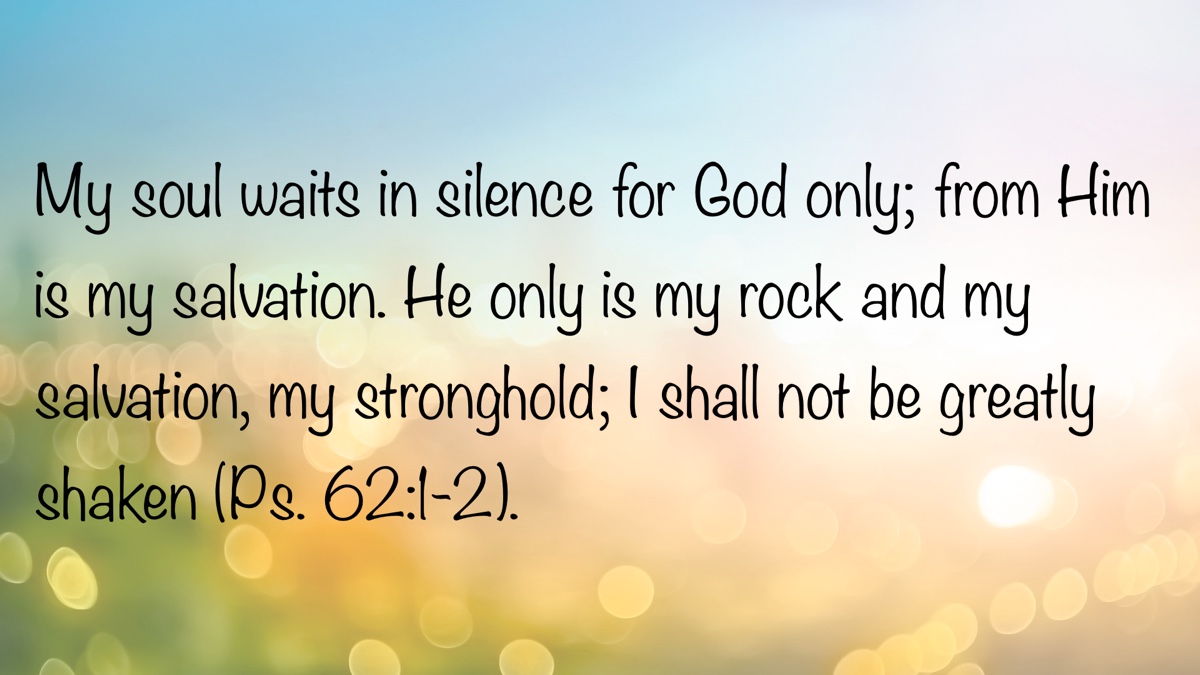
The hymn “Only in Thee” (PHSS #420) speaks of the source where mankind can find perfect hope for eternity. “My soul waits in silence for God only; from Him is my salvation” (Ps. 62:1-2). Only in God do I find my rock and my stronghold. Only in Thee, dear Lord, come peace, happiness, and light. An abode of rest, trust, help, salvation, and, ultimately, heavenly sight are found only in our loving God.
Jesus gives us peace that is different from the world. We do not need to be troubled when we believe in God (John 14:1, 27). Be anxious for nothing, but through prayer and thanksgiving ask God to meet your needs. He will answer with a peace that the world cannot comprehend (Phil. 4:6-7). “The steadfast of mind You will keep in perfect peace, because he trusts in You” (Isa. 26:3-4).
We can trust in God to give peace, because we have an everlasting Rock. The Lord will bless His people with peace through the strength He provides (Ps. 29:11). Paul wished for the Thessalonian brethren that God would continually grant them peace in every way (2 Thess. 3:16). Peace is found in Him.
In the Lord’s presence is fullness of joy. In His right hand are pleasures forever (Ps. 16:11). Earthly delights are seemingly sweet, but they fail at the last. Happy are all who hold fast to the wisdom of God, and so find it. Pleasures of earth cannot compare with wisdom. It is more profitable than gold, silver, and precious jewels. All of wisdom’s path is peace (Prov. 3:13-18).
Do not fix your hope on the uncertainty of riches, but on God, storing up treasures as a good foundation for the future (1 Tim. 6:17-19). Do not store up treasures on earth, where moth and rust destroy and thieves break in and steal. Lay up treasures in heaven, where no perils exist and where your heart will securely reside (Matt. 6:19-21). The one who trusts in riches will fail, but the righteous will flourish like the green leaf (Prov. 11:28). “For what does it profit a man to gain the whole world and forfeit his soul?” (Mark 8:36). Let us, therefore, be free from the love of money, being content with what we have, for the Lord says, “I will never desert you, nor will I ever forsake you” (Heb. 13:5). Bliss is complete only in the Lord.
Jesus, the Word in flesh, is a lamp to our feet and a light to our path (Ps. 119:105). Jesus is the light of the world. Those who follow Him will not walk in darkness but will have the “light of life” (John 8:12). Even when I fall, I will rise again. When I have dwelt in darkness, the Lord can become a light for me (Mic. 7:8).
When Jesus began His ministry, Isaiah’s prophecy was fulfilled: “The people who were sitting in darkness saw a great light, and those who were sitting in the land and shadow of death, upon them a light dawned” (Matt. 4:16; Isa. 9:2). God said, “Light shall shine out of darkness,” and Christ is the One who shone in the apostles’ hearts, giving them knowledge of the glory of God in the face of Jesus. Then, the apostles shared this inspired gospel. Unfortunately, the gods of this world blind the hearts of the unbelieving, so they remain in darkness, not seeing the light (2 Cor. 4:4-6). Believe in the light and let it guide your path.
An abode of rest, offering shelter when trials assault us and temptations arise, is found only in the Lord. “Come to Me, all who are weary and heavy-laden, and I will give you rest. . . For My yoke is easy and My burden is light” (Matt. 11:28-30). There is rest for the people of God who have worked for the Lord, so be diligent to enter that rest and do not fall through disobedience (Heb. 4:9-11). Those who die in the Lord will rest from their labors (Rev. 14:13). Do not let your heart be troubled by persecution or temptation. The Father’s house has many dwelling places of rest. Jesus has gone to prepare pleasant pavilions for the faithful’s coming. This rest comes only in the Lord (John 14:1-3, 6).
There are many Old Testament examples of those seeking rest in the Lord. Moses asked to know God’s way, so he could find favor in His sight. When Moses found favor, the Lord said, “My presence shall go with you, and I will give you rest” (Exod. 33:13-14). The Psalmist, David, said the Lord, my shepherd, makes me rest in green pastures and leads me beside calm waters. He restored David’s soul while guiding him in righteousness for His name’s sake (Ps. 23:1-3). When Israel sinned and walked in abominations, they were told to seek the ancient paths—the good way of the Lord—and walk in it. Then, they could find rest for their souls (Jer. 6:16). So, when oppressed, do not fear and be weak. God will save and quiet you with His love (Zeph. 3:16-17).
Trust in God at all times. Pour out your heart before Him (Ps. 62:8). When you are afraid, put your trust in His faithful word. “What can mere man do to me?” (Ps. 56:3-4). When our minds are centered on the Lord, our faith will lead to perfect peace. In Him, we have an everlasting Rock (Isa. 26:3-4). God is my strength, shield, and helper, so He deserves my reliance. Therefore, my heart exults, and I can sing in thankfulness (Ps. 28:7).
Blessed is the man whose hope is the Lord; he will not fear when heat comes, be anxious in drought, or cease to yield fruit (Jer. 17:7-8). The Lord is my strength and song. With joy I will draw water from the springs of salvation (Isa. 12:2). Faith will lead me to sing songs of trust in God.
Do not fear or look anxiously about you, for God will help and uphold you with His righteous right hand (Isa. 41:10). “I will lift up my eyes to the mountains; from where shall my help come? My help comes from the Lord, who made heaven and earth” (Ps. 121:1-2). He is a very present help in times of trouble and is abundantly available (Ps. 46:1). What nation has a God so near to it as the Lord our God whenever we call to Him? (Deut. 4:7).
When I am afflicted and needy, the Lord will be mindful of me (Ps. 40:17). The Psalmist said that if the Lord had not been my help, my soul would soon have dwelt in the land of death. When he thought he would stumble, the Lord held him up. When his heart was filled with anxieties, the Lord’s consolations cheered him and gave him hope (Ps. 94:17-19).
The everlasting God never tires or grows weary of offering strength. Both old and young can increase power through His help. We all may occasionally struggle, but “those who wait for the Lord will gain new strength; they will mount up with wings like eagles, they will run and not get tired, they will walk and not become weary” (Isa. 40:31).
There is salvation in no other name under heaven than the Lord Jesus Christ; we will be saved only in Thee (Acts 4:12). God saves us according to His mercy by the washing of regeneration—baptism—and the gift of the Holy Spirit—eternal life—poured out through Jesus Christ our Savior (Titus 3:5-6). We must believe and obey the Son to have eternal life (John 3:36). God, according to His great mercy, offers us a living hope through the resurrection of Jesus. We look for an imperishable inheritance reserved in heaven for the faithful (1 Pet. 1:3-5).
Jesus, our Savior, is the only way to the Father (John 14:6). There is one God and one mediator between God and men, Christ Jesus, who gave Himself a ransom for us all (1 Tim. 2:5-6). He is our only hope for salvation.
In heaven, the river of life will flow from the throne of God. The faithful will see His face, and there will be no night there, because God will illumine them (Rev. 22:1, 4-5). No longer will there be the sun by day or the moon by night, for the Lord will be an everlasting Light (Isa. 60:19-20). The glory of God is present in the holy city, the New Jerusalem. It illuminates the city, and its lamp is the Lamb. Nothing unclean, nor those practicing abominations or lying, shall enter the city, but only those whose names are written in the Lamb’s book of life (Rev. 21:10-11, 23-27).
While we are in our earthly body, we are absent from the Lord, walking by faith, not by sight. Preferring to be absent from our earthly body and at home with the Lord in heavenly sight, we can be of good courage (2 Cor. 5:6-8). We hope for what we do not see, but with perseverance eagerly wait for it (Rom. 8:24-25). The outcome of our faith—the salvation of our soul—comes through our love for and belief in God. Great rejoicing, with joy inexpressible and full of glory, evidences faith in Him (1 Pet. 1:8-9).
Like Moses, we can endure as seeing Him who is unseen (Heb. 11:27). In the end, the Lord will descend from heaven at His Second Coming, and the dead in Christ will rise first. Then, the faithful on earth will be caught up in the clouds with the faithful dead to meet the Lord in the air. Together, they will always be with the Lord (1 Thess. 4:16-17). Faith will become sight.
“There is one Lord, one faith, one baptism, one God and Father of all, who is over all and through all and in all” (Eph. 4:5-6). When we are baptized into Christ, we are baptized into His death. We rise to walk in newness of life, freed from sin (Rom. 6:3-7). Only in Christ do we find every spiritual blessing in heavenly places. In Him alone, we were chosen to be holy and blameless, that we could obtain an inheritance in the age to come (Eph. 1:3-4, 11-12, 18-21). Only, dear Lord, in Thee!
Sherelyn is the wife of Mark Mayberry, who labors with the Adoue Street congregation in Alvin, TX, as an evangelist and elder. She labors as a homemaker and Bible class teacher. She and Mark have two sons- and daughters-in-law, and two grandchildren. She can be reached here.


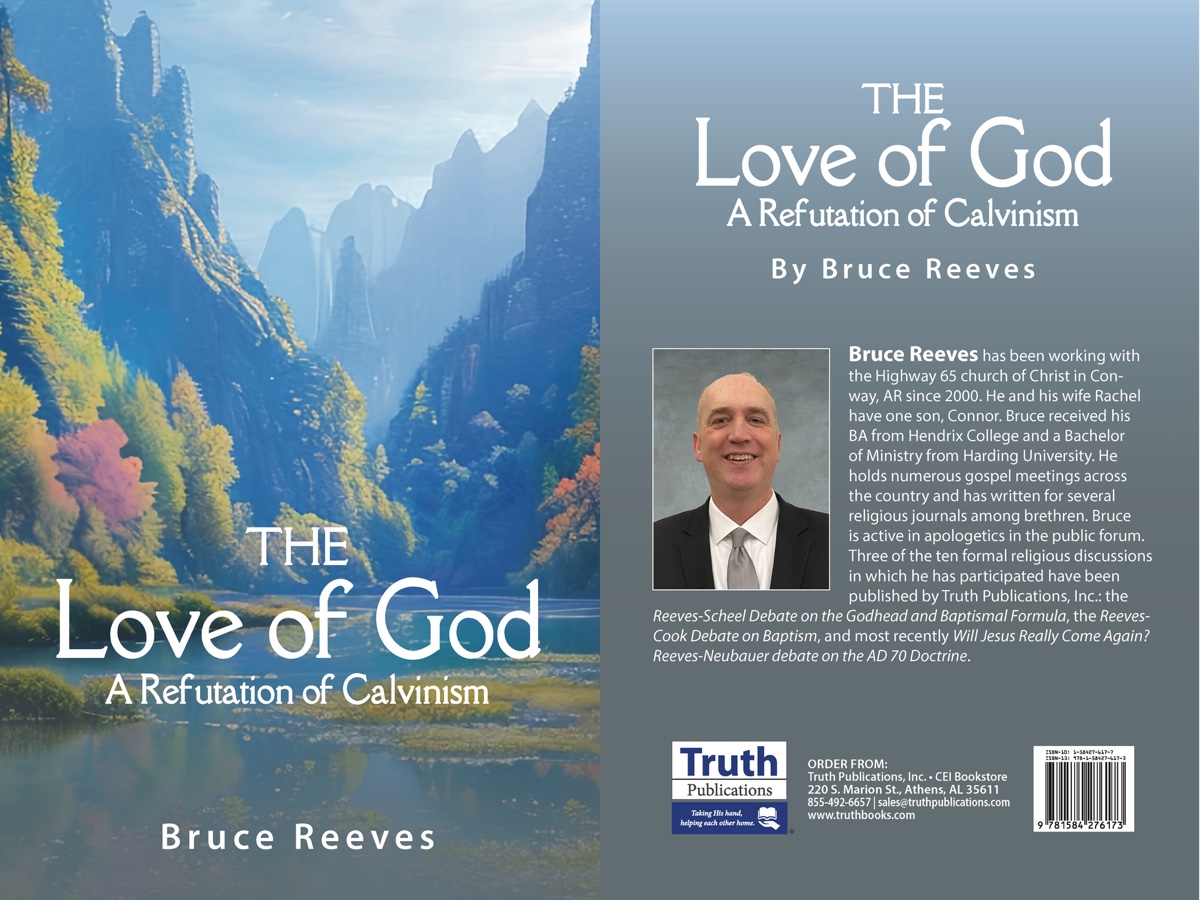
By Bruce Reeves
Synopsis: The reason we don’t use instruments in worship isn’t about tradition; it’s about conviction and following God’s pattern. When we stop teaching on this, and start chasing what’s popular or entertaining, we open the door to compromise. We need to keep emphasizing worship that honors God’s word and conforms to the New Testament pattern rather than human precepts or preferences.
Our worship offers a reflection of our perspective of God, our attitude toward His word, and our willingness to rely absolutely on His revelation for our beliefs and practices in His service. If you visit the assembly of a faithful church of Christ, one of the unique and visible aspects of our worship is the absence of instrumental music as we sing praises to God. This is not merely a matter of tradition but one of faith and conviction. Yet it seems that this issue arises among our brethren frequently. It is fair to ask why certain issues seem to recycle while others do not. Why are there some congregations, preachers, and elderships that have decided to silence the pulpit on this issue? Why are there some brethren who have chosen to view this as a secondary and non-essential question?
Some may ask, “Weren’t instruments used in Jewish worship in the Old Testament?” Yes, but a better question may be, “How do we know that they were authorized by God?” As we look at the instruments used in the Temple, we read that “David spoke to the chiefs of the Levites to appoint their relatives the singers, with instruments of music” (1 Chron. 15:15-16). His plans for the Temple were in harmony with “the details of God’s pattern” (1 Chron. 28:11-19). When Hezekiah restored Israel’s worship, he respected the pattern. We read of the specific persons (2 Chron. 29:25), specific means (2 Chron. 29:26), and the specific purpose of calling God’s people to sacrifice in worship (2 Chron. 29:27-28). The Law of Moses was very detailed in its directions regarding the construction of the Tabernacle, every piece of furniture, priestly clothing, as well as the various offerings to be given. Likewise, God’s instruction for the eventual Temple was definitive.
What lessons should we learn from the Old Testament regarding instrumental music in worship? Their use was not left up to the discretion of the people but resulted from God’s directions. Why did they use them? Because God told them to! For the first four hundred years, two silver trumpets were used to call Israel to action. Why did David later give them additional instruments? God commanded him to do so. With such a clear emphasis on the command of God as the reason to use instruments, the obvious question for us when we come to the New Testament is, “Where are these direct statements, unavoidable conclusions, or approved examples of Christians using instruments in worship to God?” They are non-existent. The very principles of communication by which we know that instruments were used in the Old Testament are the same principles of communication through which it must be concluded that they were not used by first-century Christians.
Instrumental music was closely connected to Temple worship among the Levites, and there can be no doubt that we now live under the New Covenant and that the Levitical priesthood has passed away (1 Chron. 16:4-6; 23:1-5; Heb. 7:11-14; 8:1-5, 8-13; 9:8-14). The Old Testament record of Temple worship offers no more authority for instrumental music in our worship than it does for the special clothing of priests, burning of incense, or animal sacrifices. The New Testament’s exclusion of instrumental music in worship and God’s desire for a cappella singing is just as clear through specific commands and the silence of Scripture as is the Old Testament’s inclusion of instrumental music in Temple worship (John 4:22-24; 1 Cor. 14:15; Eph. 5:19; Col. 3:16; Heb. 2:12). Why can we see the one and not the other? According to the New Testament evidence, instrumental music was not present in the worship of the early church. Singing was incontestably present in the corporate life of early Christians. However, there is no reference to instrumental music in worship. No instrument is found in a New Testament reference, but only vocal praise; thus, no New Testament authority for instrumental music in worship is available.
Perhaps the most persuasive argument for many is not actually what the Scriptures teach, and this reveals a great problem. Those who have grown up in congregations that oppose instrumental music in worship may feel like outsiders compared to their religious friends. Ironically, while this may be our feeling in the present, historically those who introduce instruments into worship are the odd ones out (John Price, Old Light on New Worship, 67-140).
This vital aspect of worshipping God in spirit and in truth has drifted into a non-essential category in the minds of some Christians because it has disappeared from our discussions of God’s word. But why? Have elderships, preachers, and disciples decided it is an unpopular and inconvenient truth that should be excised from public teaching? Are our young men and women to understand this truth through osmosis? Let’s suppose that a preacher refused to teach on this subject for five to ten years. This means that our youth will grow through adolescence without hearing it even preached. If it isn’t important enough to mention from the pulpit, how important is it really? When will we decide that baptism for the remission of sins should be eliminated from our teaching as well? This is not merely a matter of human tradition; it is a matter of divine tradition and biblical teaching (2 Thess. 2:15; 2 John 9-11).
The call of the gospel has always been countercultural. The “supply-demand” perspective of a “market-driven” message is not the gospel of Christ (Rom. 1:16). Robert L. Dabney, a well-known Presbyterian preacher, reflected on the decline of his own generation and wrote that the introduction of the instrument into worship by a fellow preacher was due to a “most unsound and perilous” argument, and that it was considered “advantageous to prevent his young people from leaving his church. . .” (John Price, 136). Could it be that some are more interested in using the assembly for marketing purposes than for true spiritual worship and edification (Phil. 3:3)?
Too often, our consideration of worship revolves more around whether it entertains us than whether it edifies us. Is it more important for us to have a “highly emotional experience” than to allow God’s word to shape our spiritual sacrifice to the Lord? Are we prioritizing social acceptance over biblical depth? If popular religious songs and concerts are described by brethren as “spiritually uplifting as worship to God,” then how long will it be before such arguments are made for the introduction of instrumental music into congregational worship?
Don’t think this could not happen where you worship. We often can be lulled into a false sense of security concerning these types of issues. Someone may announce, “That will never happen as long as I am here.” Perhaps we should ensure that our brethren are well taught so that when we are gone, they will have their own convictions moving forward. Yet the question remains, “How might a congregation change its views of the authority of the Scriptures regarding its worship and mission?” It does not happen by accident.
It will begin with an absence of definitive teaching on this question. While our preaching must be balanced, such balance does not exclude addressing vital worship questions. Next, more emphasis is put on how we feel than on the message we express in our singing. Then there is a subtle, but concerted, effort to desensitize conviction on the question of instrumental music being used in worship. The plan is to transition the question to being merely a matter of tradition or personal preference. As things move along, the leadership becomes more hypercritical of emphasis on scriptural worship and more defensive of those who engage in unscriptural practices. We begin to hear that perhaps this is a matter of personal conscience such as we find in Romans 14, or that it is not really a part of “the doctrine of Christ.” Those who oppose the practice are mischaracterized as being “pharisaical,” “legalistic,” “judgmental,” “hyper-conservative,” “loveless,” “lifeless,” “formalistic,” “heartless,” or “cold.” Now the ground has been prepared for small incremental changes, such as introducing religious instrumental music in small young adult studies, ladies’ Bible classes, etc. Before you know it, a congregation is dividing its worship periods into traditional versus contemporary services. Now a congregation has a full-blown community church-style worship format, which was the plan and agenda from the beginning! The effort to restore New Testament Christianity has now evaporated, and we are left asking, “How did this happen?” It does not have to occur where we worship, but we must be discerning.
As God’s people, we must continue to teach, instruct, and strive to be balanced in powerfully singing praises to God in our worship, recognizing that how we sing and what we sing matters to our Savior! To quote my good friend Lowell Blasingame, who preached the gospel for years and has gone on to his reward, “When we quit plowing, that’s when the weeds and grass overtake the field.”
Price, John. Old Light on New Worship: Musical Instruments and the Worship of God, a Theological, Historical and Psychological Study. Avinger, TX: Simpson Publishing Company, 2005. Amazon.
Bruce Reeves has labored with the Highway 65 church of Christ in Conway, AR, since 2000. He and his wife, Rachel, have one child. The church website is here. He can be reached here.


By Shawn Chancellor
Synopsis: The article emphasizes that God’s patterns are designed to bring life and fellowship, as seen in the detailed instructions for the Tabernacle, which allowed His presence to dwell among Israel. It explains that Israel’s deepest need was not merely freedom from slavery but intimate communion with God, a need God anticipated and met through His divine arrangement. Finally, the author draws a parallel to the New Testament, asserting that the church fulfills this same purpose and must adhere to God’s pattern to maintain unity, holiness, and true fellowship.
So far in our study of patterns, we have noticed that the use of patterns is rooted in God’s nature (Gen. 1). By following His patterns, we can fulfill His purpose for us (Gen. 2:18-25). Following God’s pattern leads to life (Gen. 6). In Exodus 25-40, we will see that following God’s patterns also allows us to have fellowship with God.
In Exodus 25-31, a meticulous pattern for the construction and service of the Tabernacle is given. The text details how the materials would be contributed and collected, as well as who would be responsible for building and serving. An exacting blueprint of the tent, its furnishings, and the work of the priests within the Tabernacle is given. Chapter 40 emphasizes, through constant repetition, that Moses did everything “according to all that the Lord commanded him” (Exod. 40:16, 19, 23, 25, 27, 29, 32; cf. Exod. 25:40; 39:32, 42-43).
In the opening chapter of Exodus, we read of Israel entering into a period of bitter slavery (vv. 8-22). During this time, there is no mention of God speaking to Israel from the death of Jacob in Genesis 49 until God speaks to Moses at the burning bush in Exodus 3. During this time, Israel cried out to God, and He heard them (Exod. 2:23-25). However, God did not immediately reveal how or when He would aid them. This period of darkness must have been difficult to bear. They undoubtedly felt separated from God’s presence and abandoned in their distress.
During the period of the plagues and the Exodus, God communicated through Moses and Aaron, but His presence was seen through the plagues. Thus, when enslaved Israel witnessed God’s presence, it was in the context of the destruction of a nation. Seeing God’s presence through the lens of His destructive wrath may have been part of the reason for the complaints at the Red Sea (Exod. 14:12) and in the wilderness on the journey to Sinai (Exod. 15:22-25; 16:2-3; 17:1-3).
It is not until Sinai that the congregation hears God’s voice. Even then, the primary mode of communication was through Moses (Exod. 19:3, 20-25), and the people were unsure of God’s presence (Exod. 20:18-20; 32:1).
The Tabernacle would solve these problems. With its construction, God would reside among the people (Exod. 25:8, 22). He would meet with Israel at the doorway of the tent (Exod. 29:42b). There, God would speak to Moses and, through him, to the people (Exod. 29:42c). The presence of His glory would sanctify the Tabernacle, and He would dwell with Israel so that “they shall know that I am the Lord their God. . .” (Exod. 29:43-46).
The Tabernacle would bring an end to the period of darkness and serve as a visible manifestation of God’s fellowship. No longer would they have to find God on a mountain; He would dwell among them.
The flow of the book of Exodus helps us recognize Israel’s true need. In Exodus 1-12, Israel suffers in slavery. God rectifies this and leads them out of Egypt. However, He did not lead them along the most direct route to Canaan, lest they “change their minds when they see war” (Exod. 13:17). Instead, He led them through a series of challenging situations, through which they were to learn to trust Him (Exod. 13-18).
In chapters 19-24, we see Israel enter into a covenant relationship with God. However, they were still not prepared to march to Canaan; there was one more step that must be taken. They needed a means for God to dwell with them in intimate union.
Sin often becomes our focus when we speak of our spiritual needs. However, Exodus takes us beyond the problem of sin to the need it creates. Israel cried out for freedom from bondage. Exodus shows us that even after God provided freedom from bondage for His people, they needed something else. It was just this—a need for God to dwell among them in close fellowship—that He fulfilled through the Tabernacle.
The order of events in Exodus 25-31 demonstrates God’s wisdom and love for His people. He provided the answer for Israel’s deepest need before she even knew to ask for it.
In Exodus 25-31, God gave Moses the pattern for the Tabernacle while he was on the mountain. In Exodus 32:1-6, we find that while Moses was receiving the pattern, the Israelites made the golden calf. The making of this idol was an inexcusable sin; however, the fundamental desire expressed by Israel is worth consideration.
Moses had been on the mountain for 40 days with no food or water. The glory of the Lord rested on the mountain, which the people perceived as a cloud of smoke and fire (Exod. 19:18; 24:17). Although God showed Himself to Aaron, his sons, and the elders of Israel (Exod. 24:9-13), there was much fear, confusion, and anxiety among the people. Was Moses still alive? Had he angered the God of the plagues and been killed? Questions like these are summed up in the people’s statement, “As for this Moses. . . we do not know what has become of him” (Exod. 34:1).
In Exodus 24:1-8, we find they had a written covenant and an altar. The “book of the covenant” was read in the hearing of the people, and their desire to obey was affirmed through a blood offering. However, the presence of God was not in the camp with the people but on the mountain (Exod. 24:1-2, 9-12). Despite the foolishness of turning to an idol, the calf seems to indicate that Israel desired a God who would dwell with them in close fellowship (Exod. 33:1-4, 12-17).
God’s grace and provision are seen in the fact that He knew Israel’s need before she did and had begun providing for that need through His divine pattern (Exod. 25:8). Regarding this, Oswalt writes:
Thus, these final chapters of the book provide a picture of God’s ultimate solution to the human problem: the sharing of his life with us in intimate union. This is why there are two descriptions of the Tabernacle, and this is why the incident of the golden calf is sandwiched between them. Even before the people knew they had a problem, God was giving Moses instructions on how to meet it (chs 25-31) (Oswalt, 492).
Israel’s understanding of this need was deepened by her failed attempt to fulfill it apart from the divine pattern. While the people had not yet received the instructions for the Tabernacle, they had already been warned to have no other gods before Jehovah and not to make any idol (Exod. 20:3-5). As we have noted in our previous studies, whenever man attempts to operate outside of the divine pattern, chaos and death follow.
The need for fellowship with God is constant throughout Scripture, and in the New Covenant, God provided a new structure for His presence: the church. This divine communion is corporately realized in the body of Christ, which is “built together to become a dwelling in which God lives by his Spirit” (Eph. 2:22). Paul illustrates this reality by describing the local church as the “temple of God” (1 Cor. 3:16). His meaning in this passage is unmistakably corporate; the Greek pronoun for “you” in the passage is plural, addressing the entire community. Furthermore, this metaphor directly confronts the problem in Corinth, where divisions born from carnal, worldly wisdom were threatening to defile God’s holy, collective dwelling place.
The problem in Corinth was very similar to the problem in Exodus 32. Rather than appealing to the divine pattern, the Sophists in Corinth were attempting to forge their own path to intimate fellowship with God. However, just as in Exodus 32, this led to chaos. Consider what Paul had to rebuke in this letter: adultery and fornication were accepted (1 Cor. 5:1-2; 6:16-18); the scruples of weak brethren were trampled (1 Cor. 8-10); the Lord’s Supper was abused to the point of being unrecognizable (1 Cor. 11:20-22); spiritual gifts had become a point of pride and contention (1 Cor. 12-13); the worship service had become chaotic (1 Cor. 14); and Greek concepts of the afterlife were displacing the doctrine of the resurrection. Paul sets these things straight by referring them to God’s pattern for the church. This pattern gave shape to the doctrines, relationships, worship, and purpose of the local church.
We should note that Paul did not ignore these problems in the name of unity. Instead, he called them to repentance because the path they were on led to spiritual death. The only way for the church to be the temple it is intended to be is by conforming to the pattern God has given for its construction and operation. This is why the inspired apostle expresses such frustration in 1 Corinthians. Paul had spent a year and a half with them, instructing them in the gospel. They had the opportunity to be a temple of God in the midst of idolatrous Corinth—to be a beacon drawing men away from the foolishness of idolatry and to the one true God. Instead, they departed from the pattern and attempted to blend what Paul had taught them with the philosophies that surrounded them. This reshaped their doctrines, worship, purpose for gathering, and their interpersonal relationships.
In our previous studies, we have noted that the use of patterns is intrinsic to God’s nature, that in those patterns life is found, and that far from being cold, legalistic forms, these patterns allow us to experience God’s grace. We should also note that while departures from the pattern should be pointed out and rectified, pattern theology is not intended to provide a means for one brother to criticize another. Adherence to the patterns found in Scripture is about becoming the temple of God.
Moses “did all that the Lord commanded him” (Exod. 40:16), and “the glory of the Lord filled the tabernacle” (Exod. 40:34). Israel’s long period of darkness ended. The Lord was in their midst. Let us seek out the pattern for fellowship and do all that the Lord has commanded so that we, too, might dwell in communion with the Lord.
Ross, Allen, and John N. Oswalt. Cornerstone Biblical Commentary: Genesis, Exodus. Vol. 1. Carol Stream, IL: Tyndale House Publishers, 2008.
Shawn Chancellor has worked with the South Georgia Street church of Christ in Amarillo, TX, since 2014. He and his wife, Bonnie, have one daughter and were recently blessed with their first granddaughter. The church website is here. He can be reached here.


By Bobby Graham
Synopsis: The author recounts the decision to move from Decatur, Alabama, to Richmond, Virginia, emphasizing the challenges of leaving family and friends while recognizing the need for preaching in the Richmond area. The narrative highlights the growth opportunities provided by full-time preaching, deeper study, and fellowship with other preachers, as well as efforts to strengthen congregations and establish new ones in Virginia. Ultimately, brother Graham chose to return to Alabama for a role in education and preaching, viewing it as the best way to serve God effectively.
The decision to leave Decatur, Alabama, and move to Richmond, Virginia, was somewhat difficult because we would be leaving family, brethren, and Athens Bible School behind. Knowing we would be filling a definite need for preaching in the Richmond area made the decision somewhat easier. After praying to the Lord, preachers often have to make decisions after weighing the advantages and disadvantages involved. They should make sure that their reasons are godly reasons, not ungodly reasons like higher pay and more popularity—though higher pay is not always a carnal motive. Every move before this one was done either with pickup trucks or a U-Haul truck. The congregation in Richmond provided for our move by means of Wheaton Van Lines, through collaboration with local representative Mel Myers, a preaching brother in the Bloomington, Indiana, area. His ads often appeared in the Gospel Guardian or Truth Magazine in those years. From June 1971 to August 1974, I engaged in full-time preaching for the West End church, meeting at 4909 Patterson Avenue in Richmond. This was my first full-time work in preaching, though I had preached regularly for several years.
Our first two children, Richard and Mary Katherine, had been born by the time of this move to Richmond. Leaving wonderful Christians with whom we had developed very close ties at Somerville Road in Decatur was difficult for us and for some of those we left behind. I especially remember how hard it was for Sylvester Ferrell to say goodbye to our children and us. He gave Richard an old-fashioned sock monkey (made from a large brown work sock and decorated to resemble a monkey’s face), which we moved from place to place through the years. For a long time after brother Ferrell’s death, the monkey reminded us of him and his tender heart. Another elderly individual in the congregation had given Richard two heirloom pieces—a cup with “DARLING” and a cluster of grapes on it, and a child’s rocking chair. Although gifts were given to the other three of us in the family, these two stand out in my memory because of the special place they occupied in the lives of the donors.
The West End church had begun on the north side of the James River a number of years earlier by some who were a part of the Forest Hill congregation. John and Elizabeth Nosker were two of those with the congregation from its inception. For many years, the name John Nosker stood out with faithful brethren as one who loved truth and worked tirelessly for its progress as a member and an elder at West End. He had come to Richmond after serving in the army in the 1940s, though he was a native of the Ohio Valley, as was his wife Elizabeth. He had also done much preaching in Richmond congregations, as well as those in the surrounding area, over a number of years. By the time of our move to Richmond, he was a vice president of the Federal Reserve Bank in Richmond. When he invited us or other visitors to tour the bank, though the food was always excellent, the main attraction was always the burning of dirty or worn-out currency. In his work as an elder, his concern for the sheep was never in doubt, but his firmness in standing for right was equally evident. Hospitality was another strong practice of the Noskers, as they frequently opened their home to guests, including our family when we visited Richmond to discuss possibly preaching there or to locate a house where we could live. Visiting preachers were also among their guests. Other elders serving in the West End congregation while we were there included H. O. Arnold and Morris Ball, a native of Limestone County, Alabama.
Good preaching in the various congregations of the area had long been available. Men like Harris J. Dark, Irvin Himmel, Connie Adams, Norman Midgett, Cecil Cox, John Humphries, and Wayne Sullivan had lived and preached before the time of our move. During our time there, visiting speakers included James R. Cope, Bob Owen, Harris J. Dark, Stanley Lovett, Leslie Diestelkamp, and Granville W. Tyler. Every time there was a meeting at West End with one of these men speaking, the pressure on this young preacher only grew stronger. I will also say that not one of them was intimidating, but encouraging, to a young preacher.
At least I had more time for study and lesson preparation than ever before, when I was teaching school all day. I enjoyed the luxury of having that additional time. I was able to broaden my reading and deepen my understanding of biblical themes and, especially, biblical content. I also was able to read more widely from my library, which during those years grew considerably. During these Richmond years, I began acquiring sermon tapes of certain preachers (some by purchasing them, others from congregations distributing them), so that I could grow in the Scriptures by listening to these older and wiser men. I was able to purchase tapes of some of the Foy E. Wallace Jr. sermons. Tapes of the Thayer Street Lectures in Akron began being available, as did the Florida College Lectures tapes. Wide new vistas of learning were opening up.
Having been accustomed to many gospel meeting opportunities in North Alabama, I had to adjust my expectations for such opportunities in Virginia. The four congregations then existing around Richmond (West End, Forest Hill, German School Road, and Rivermont), two churches in the Tidewater area (Newport News and Norfolk), and the three then available in the Washington-Baltimore area (Annandale, Taylor Avenue, Glen Burnie) provided several opportunities during the year for hearing the word and becoming acquainted with other brothers and sisters in Christ. We relished times to visit, because finding those of like precious faith in areas where the cause of the Lord is not as strong is an occasion for great joy. Furthermore, strong faith is often found among Christians in such areas. Opportunities for spiritual growth can be found in many such areas. The preachers located in the Richmond area developed close ties and found numerous occasions to study with each other and build each other up. Opportunities for teaching in area congregations may be even more numerous in such a region than in one where the cause is stronger. There were also some opportunities to help with beginning new congregations in the greater Virginia area because of Richmond connections. An early effort was made in Charlottesville, a second effort in Blackstone, and a third in Chester. The latter two groups are still meeting and working, and a later effort in Charlottesville met with success. I encourage preachers of all ages in all locations to broaden their horizons in the areas where they are, that they might make a definite contribution to the growth of the kingdom through the spread of the gospel of Christ. Preaching the gospel is the only means for the saving of souls, the planting of churches, and the spread of the kingdom of God!
When we moved to Richmond in June 1971, only one of the four churches in the area had a full-time preacher. John Humphries was working with the German School Road church. The three without a preacher at the time were Forest Hill, West End, and Rivermont near Hopewell, Virginia. Soon after our arrival at West End, Rufus Meriwether and his family moved to work with Forest Hill, and Roy Diestelkamp located at Rivermont. Rivermont, by the way, was the congregation where the parents of Connie Adams were worshiping. Connie had grown up near Hopewell, Virginia, and his parents had become part of Rivermont when troubles arose earlier in the Hopewell church. All four of us preachers became close friends and appreciative brothers. John Humphries and I grew especially close, only to deepen that friendship in our years since Richmond. In those later years, John lived in Poughkeepsie, New York; Louisville, Kentucky; Montgomery, Alabama; and Calvert City, Kentucky. During the same years, I have lived in Athens, Trinity, Huntsville, and back to Athens, Alabama. We have studied together, traveled to debates together, preached in meetings together, discussed many spiritual issues, and consulted with each other on different occasions. Each of us also shares the common endeavor of preaching in a foreign country many times—John in India and I in Belize. We have spent the night with each other on different occasions and enjoyed the spiritual fellowship that the CEI-Bookstore Truth Lectures have provided.
Living in Central Virginia was truly enjoyable for our family, though we were separated from family and friends in Alabama. We enjoyed our brothers, sisters, sons, daughters, mothers, and fathers in the spiritual family of God. It matters not where our lot might be cast; if we act as God’s family ought, we will enjoy similar relationships to those in our physical families. Some of the members of the West End church were particularly helpful in locating a house where we could live when we moved to 1214 Condover Road, Richmond, VA. It was located in the Farmington section at the far west end of Richmond. We had previously lived in houses that we rented or the brethren provided, but this was the first house we had ever owned.
Both before and after our Richmond experience, we sometimes lived in a church-provided house, which presents both advantages and disadvantages. In earlier years, it was probably wise for churches to provide houses for preachers in some cases, as a supplement to their very low income. In more recent times, however, it is my judgment that preachers do much better by providing their own houses, because they are then able to build and to depend upon the equity invested in the real estate in future years. I can also understand the need for a rural congregation sometimes to provide a house for the preacher, because finding a place to rent or buy in some rural communities proves quite difficult.
Our family policy regarding credit has always been never to charge something on a credit card unless we were able to pay it completely by the due date. During our first year in Richmond, we made an exception to this policy because we thought it was wise to do so. We lived about two-tenths of a mile through some woods from Fred and Margaret Ford, two of the members at West End. Because they had ample land for their gardening and more, they invited us to plant a garden on their property next to theirs. Knowing that gardening at the Fords’ would benefit us financially, our two children educationally, and the Fords and the Grahams spiritually, we gratefully accepted their offer. We thought it best to buy our own rotary tiller when Sears was selling a Craftsman tiller at a very good price. At the same time, Sears was offering a sewing machine, which Karen needed, at a very good price. By doing some figuring, we decided that we were saving more than enough on the two items to justify the small amount of interest we would need to pay on the credit card purchases for two or three months. Thus began our gardening through the woods from our house. In those days, pushing the rotary tiller up the road a short distance and through the woods another short distance to the Ford property was a fairly easy task (in later years it was more easily accomplished elsewhere with a truck). Gardening was always a family venture for us, involving even the children, if they were old enough to drop seeds and do other simple tasks. I had grown up gardening, and we had gardened on a large scale while at Hollands Gin and Somerville Road. We were able to maintain our large-scale gardening in every location where we later moved. Of course, as the children grew older, they grew to dread gardening responsibilities; however, in later life, they realized what valuable experiences they had. Parents today would do well to take their children outside the house, away from their electronic devices and the television set, to involve them in outdoor activities, some of which should teach them the responsibilities that come from manual work.
Knowing that Virginia had many historical sites, we decided early during our Richmond stay to use many Mondays for visiting some of those sites. We were able to tour numerous places in the general area: Virginia’s Capitol, the James River, one or two of the historic districts of the town, Williamsburg, Jamestown, Yorktown, Fredericksburg, Luray Caverns, Charlottesville, Newport News, Norfolk, the Delmarva Peninsula, the Shenandoah Valley, Washington, D.C., Harrisonburg, Staunton, Baltimore, Lancaster County, Pennsylvania, and others. At some of these locations, there were plays, musicals, or historic enactments to acquaint us with the unique role played by the Commonwealth of Virginia in our nation’s history. We left Virginia for Alabama with an enriched understanding and appreciation for the Old Dominion. It also became our responsibility, to some extent, to accompany family or friends visiting us to certain areas, especially Washington and Williamsburg. In fact, I became a fairly proficient tour guide for some of these areas after a trip or two to visit them.
A year or so into our work in Richmond, I began thinking about returning to school to pursue my master’s degree in School Administration and Supervision of Instruction. I discussed my desire with the two elders, assuring them I would not allow schoolwork to hinder the work I was doing with the church. They were encouraging. I began my studies at Virginia Commonwealth University, sometimes taking a full-semester course as a mini-course, and other times taking a full course. The value of graduate study in education often comes from studying under individuals who have served as school administrators. They are able to combine the practical with the theoretical. While pursuing my studies, I took coursework that would allow me to work in elementary school, where I had not previously labored. Some of my electives were courses I believed would broaden my understanding of the field of education—like School Law and Introduction to Special Education. I completed my coursework before moving back to Alabama, and I received my degree by mail a few months later.
Every preacher must decide for himself how he can best serve the Lord—whether in full-time or part-time preaching. By the end of our time in Richmond, I had done both. In my experience with part-time preaching, my days were busy with concerns about schoolwork and preaching. In contrast, full-time preaching allowed for more leisurely days, though they were still full with study, visiting, and private teaching. The chief difference I perceived was in the number of opportunities for teaching and influencing people, which were more numerous when I was also doing schoolwork. Primarily for this reason, Karen and I decided to return to Alabama so I could work as the elementary principal at ABS and preach for the Pleasant Valley congregation in northwest Limestone County. Sometime that spring, I received a letter from Clifford Buchanan, ABS Principal, inviting me to serve under him as Assistant Principal and Elementary Principal. After I accepted his invitation, I received a call from a former student of mine—whom I had taught during his senior year at ABS—conveying the invitation of the elders, on behalf of the Pleasant Valley congregation, for me to work with them in preaching and teaching. They also invited our family to live in the one-year-old preacher’s house owned by the church. When the two invitations came so close together, offering us the opportunity to increase our teaching of young people and preaching the gospel to all willing to hear, we considered it a blessing of God’s providence, which we gratefully accepted.
We were well acquainted with many of the ABS patrons, faculty, and staff, as well as several members of the congregation where we would be. These acquaintances made our decision to return to Alabama easier, knowing that our life there would be very pleasant. We thoroughly enjoyed our time in Richmond, and our departure reflected no discontent with the people there. It was simply a matter of deciding in what kind of situation I could work most effectively for the Lord. In my schoolwork, I could impact young people every day—from early morning to the end of the school day and even beyond. Many times, my Bible teaching at the school found expression in my preaching and teaching in the congregation, and vice versa. Given what I perceived to be my abilities and opportunities, I made the choice I did.
U-Haul was the way to go for our move back to Alabama. We had the truck and our car pretty well packed in preparation for Sunday, our last day at West End. The next morning, August 12, 1974, we left Richmond for Alabama. This was the first long-distance move requiring us to transport a sizable collection of frozen food in the deep freezer, because of our garden produce. When we stopped for the night, we plugged the freezer into an outlet at the motel to keep the food safe. The next day brought us to Route 6, Box 207, Athens, AL 35611, just before dark. By the time we pulled into the driveway, nearby neighbors in that rural community had come to the house to tell us where we would spend the night. brother Lake Bates and his wife, Helen—though advanced into their eighties—wanted us to spend that night with them. The number of people gathered at the house was not large, but their excitement at our arrival was obvious. We were tired after two days of trouble-free travel, but we were elated to be home. After the hospitable welcome and the evening’s stay, we had no fears about what lay ahead as we faced the huge task of unloading the truck and setting up housekeeping in the home where we would live for the next six years.
Bobby L. Graham actively participates in fill-in preaching, Belize trips, teaching an hour each day at Athens Bible School, and in gospel meeting work. He and his wife, Karen, have three children. He can be reached here.



By Leon Mauldin
Synopsis: Avdat was a major Nabataean city strategically located on the Incense Route, facilitating trade between the Arabian Peninsula and the Mediterranean. The city flourished under Nabatean, Roman, and Byzantine control before its destruction in the seventh century and eventual abandonment. Archaeological excavations have revealed significant remains, including temples, churches, and a large winepress, offering insight into the cultural and economic life of the region.
Avdat was a key city on the Incense Route, also known as the Spice Route. The city was ultimately abandoned in the tenth century C.E. and remained largely uninhabited until its rediscovery and excavation in the late nineteenth century. Archaeological work was undertaken by Michael Avi-Yonah and Avraham Negev of the Hebrew University of Jerusalem.
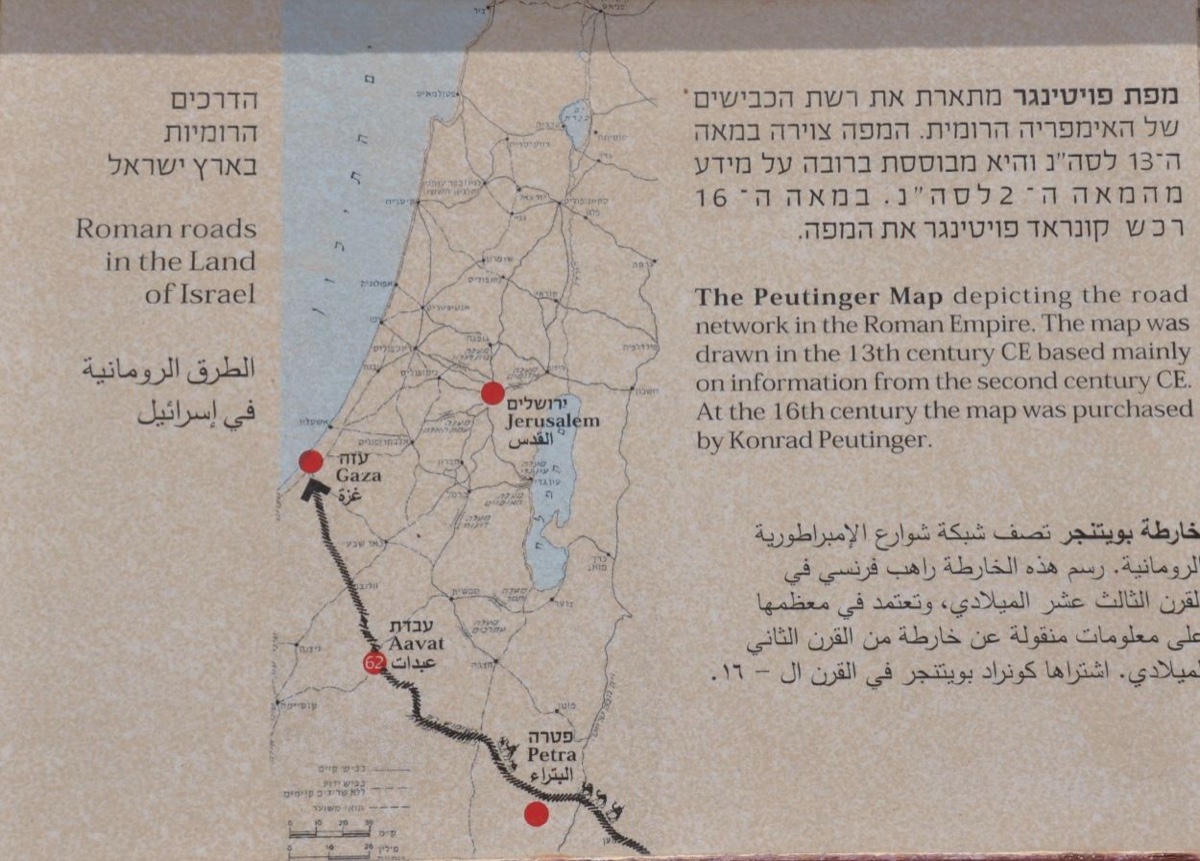
The Spice Route transported herbs, spices, perfumes, and treasures from the Arabian Peninsula to Gaza via Petra and the Negev. From Avdat, roads led to other Nabatean cities such as Mampsis, Nessana, and Gaza. The city is situated on a hill 1,860 feet (567 meters) above sea level.
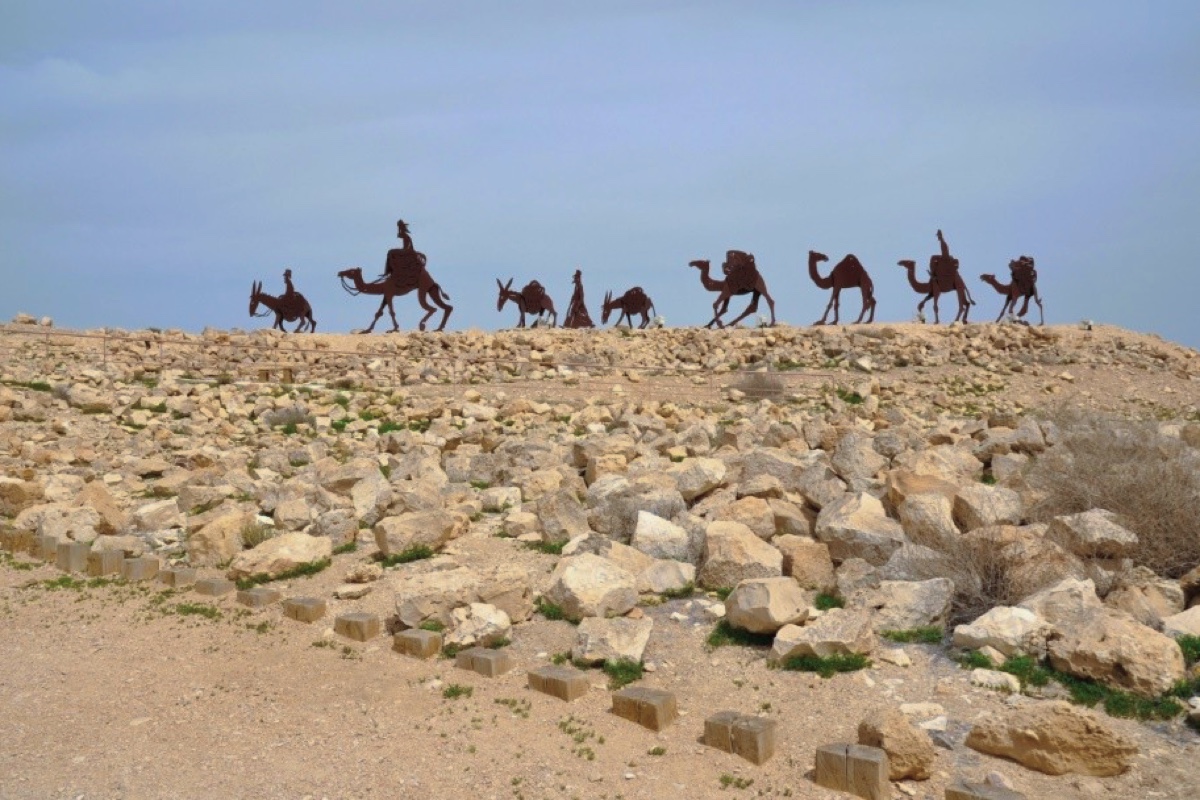
Avdat was founded by the Nabataeans in the second century BC. The city became part of the Roman Empire in AD 106. Avdat flourished during the Byzantine period (between the fourth and seventh centuries) and was destroyed by the Persians in 614.
The Lexham Bible Dictionary states that Avdat, also known as Oboda:
was known in ancient times as a major station on the Incense Route (also known as the Spice Way) in the Negev region in southern Israel. From the third century BC until the domestication of the camel in the second century AD, the Nabataeans maintained a city in that territory because of its strategic location for the exchange and transportation of frankincense, myrrh, and other spices. The route extended from modern Yemen and Oman on the Arabian Peninsula to the Mediterranean Sea (Acosta, s.v. “Oboda”).
The Biblical World in Pictures (BAS) states: “The duration of the Nabatean city had been brief but glorious. Of these people, Nelson Glueck wrote:”
They may be accounted one of the most remarkable peoples of history. Sprung swiftly out of the desert of Arabia to a position of great power and affluence, they were thrust back by the Romans even more swiftly into the limbo whence they came. . . The phenomenon of their appearance and disappearance between the first centuries BCE and CE may be likened to the brilliance of a meteor flashing briefly across the skies to blazing extinction (Shanks).
Regarding the Nabataeans, the Lexham Bible Dictionary notes:
The Nabataeans were a nomadic people who began to settle in the southern part of the Transjordan in the third century BC. Despite the inhospitable terrain of this region, the Nabataeans were able to pursue agriculture by developing a system of dams, water tunnels, and cisterns that harnessed the infrequent but heavy rainfalls of the area (see Akasheh, “Ancient and Modern Watershed Management,” 220-24). This allowed them to prosper and become more urban (Joukowsky, “From the Guest Editor”). Several cities arose in this dry, rocky area, including Haluza, Mamshit, Avdat, and Shivta. The Nabataeans’ primary center was the rose-rock city of Petra.
The Nabataeans held considerable influence and affluence in the first century BC and first century AD. Nabataea eventually came under Roman control, first as a client state and then as a Roman province under Emperor Trajan in AD 106. Contemporary literature from this period often refers to the Nabataeans with the generic title “Arabs” (Krause, s.v. “Nabataea”).
At the site of Avdat, one can see Nabatean remains (as well as Roman and Byzantine).
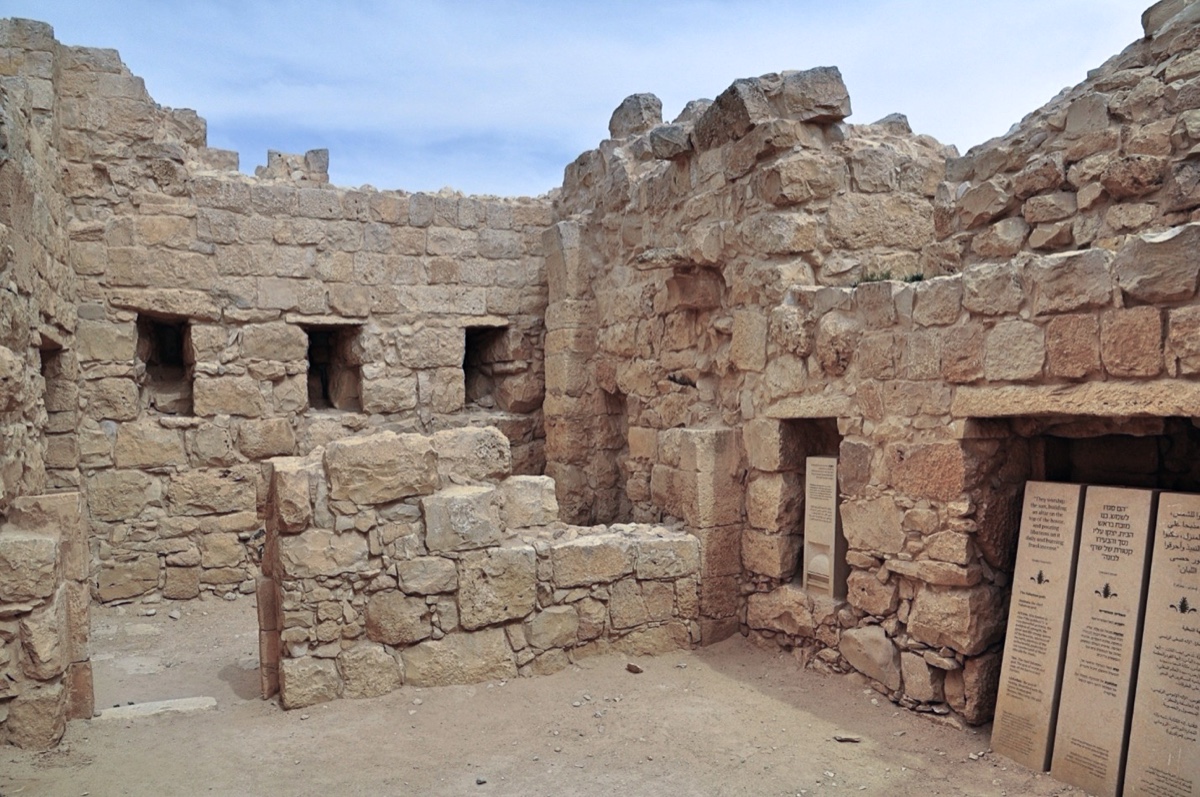
The niches in view would have contained idols of some of the major Nabataean gods. Here is a listing of some of them:
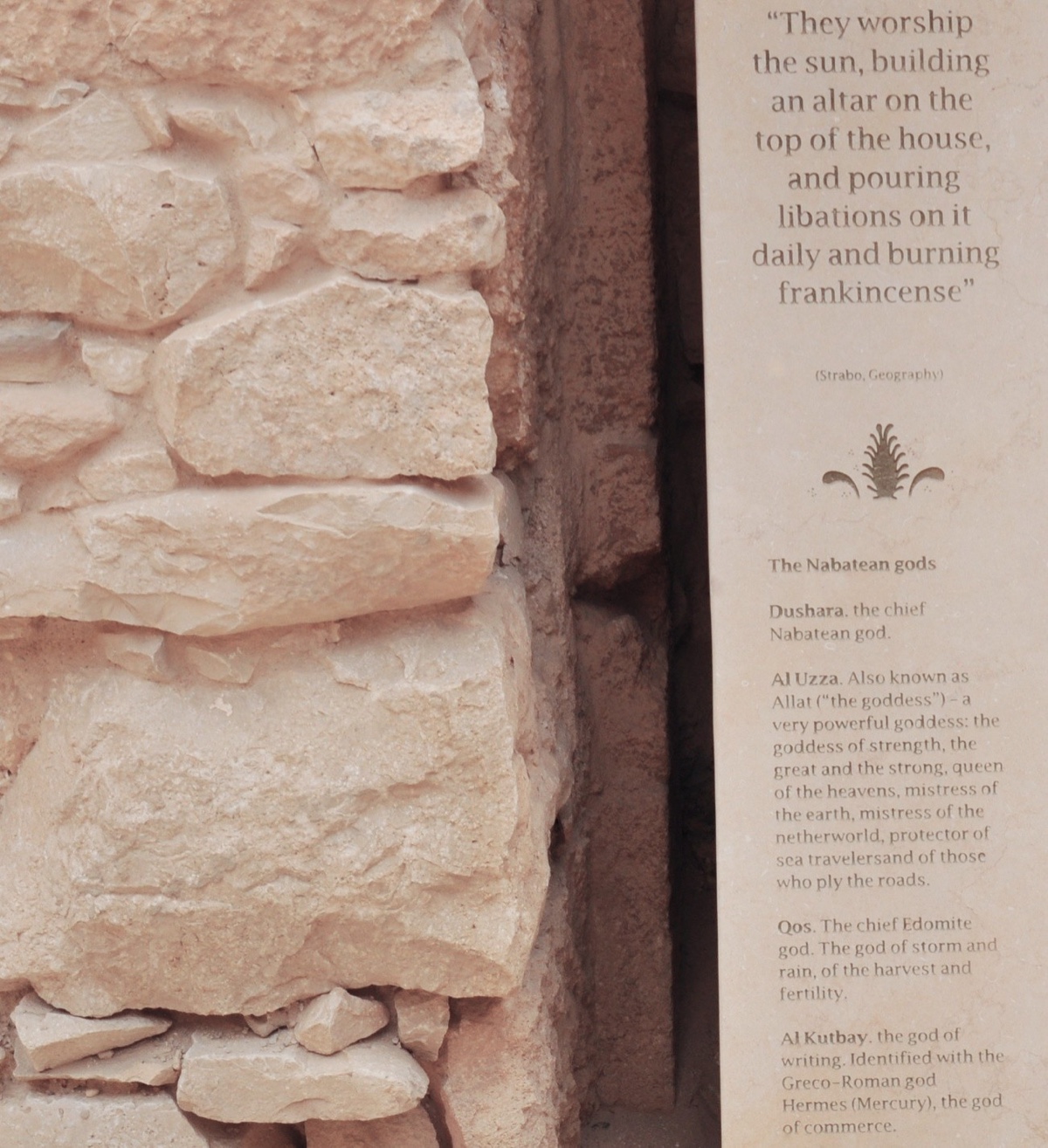
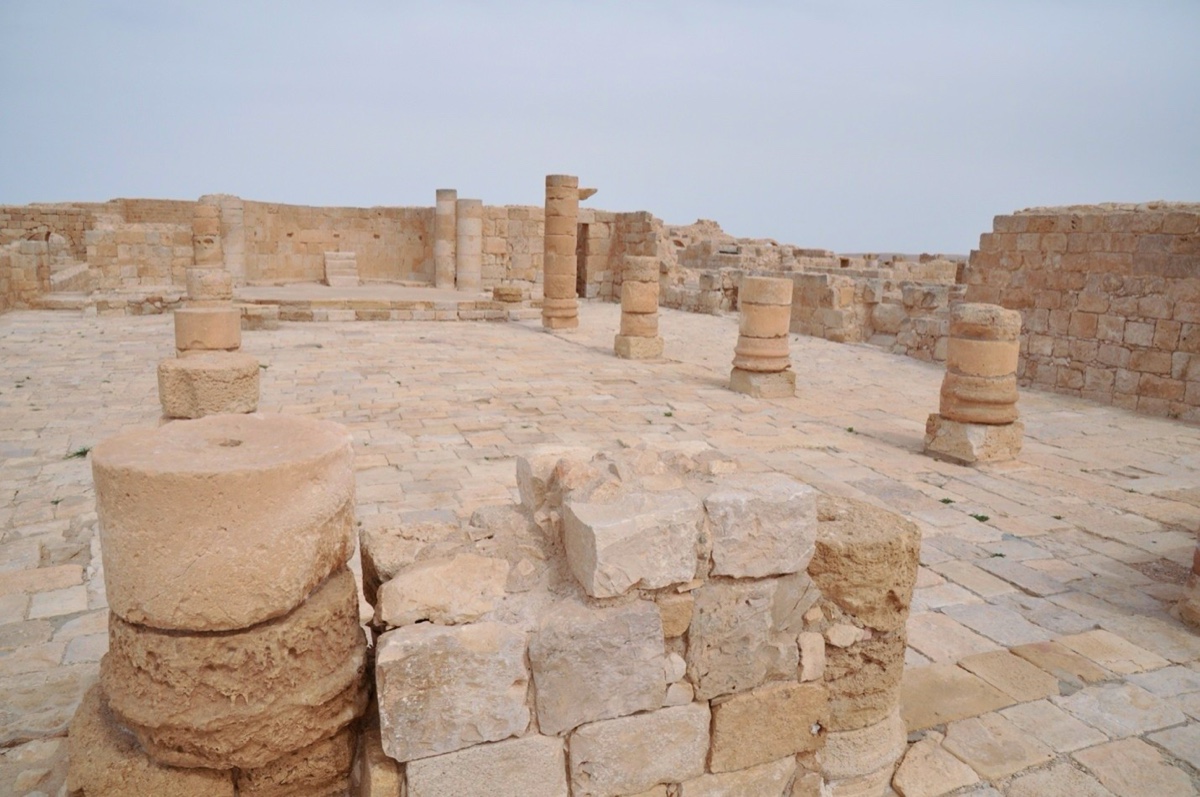
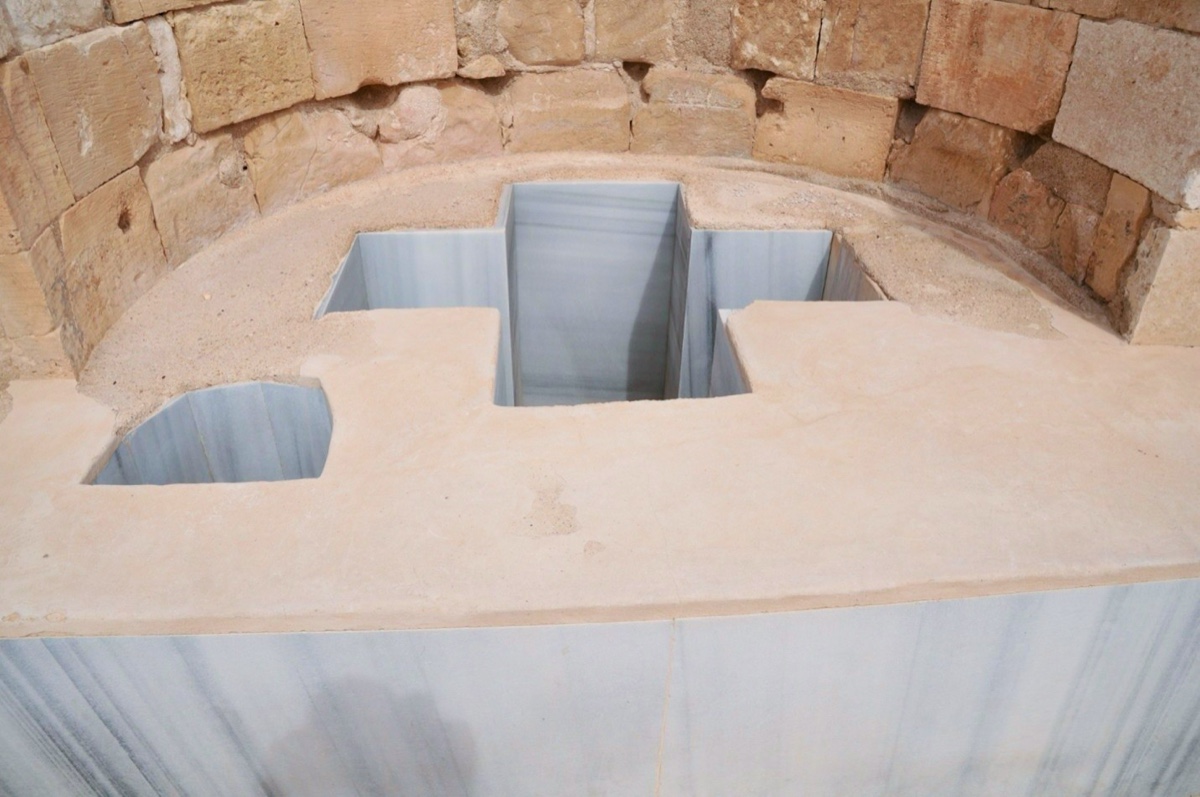
Also, one of the largest ancient winepresses may be seen at Avdat. This can be used to illustrate texts such as Revelation 14:18-20:
Then another angel, the one who has power over fire, came out from the altar; and he called with a loud voice to him who had the sharp sickle, saying, “Put in your sharp sickle and gather the clusters from the vine of the earth, because her grapes are ripe.” So the angel swung his sickle to the earth and gathered the clusters from the vine of the earth, and threw them into the great winepress of the wrath of God. And the winepress was trodden outside the city, and blood came out from the winepress, up to the horses’ bridles, for a distance of two hundred miles.
Contextually, John was speaking of God’s righteous judgment on those who worshiped the beast and his image (v. 9). In the vision, the figure employed for judgment was that of an angel with a sharp sickle harvesting fully ripe grapes. These were thrown into “the great winepress of God” (v. 19), where the grapes were trampled (v. 20).
Image 7: Large winepress at Avdat—Byzantine Period
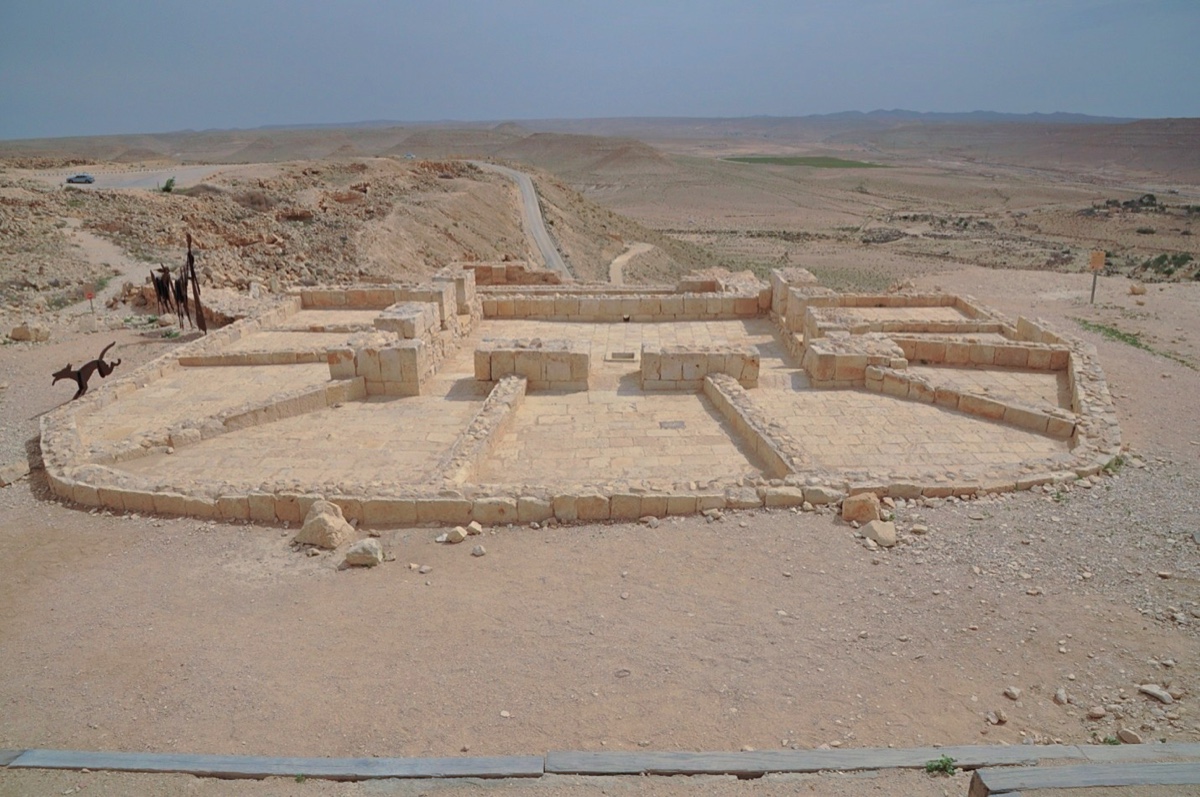
Avdat is one of many archaeological sites that help us enter the biblical (and immediately post-biblical) world.
Acosta, Dempsey Rosales. “Oboda,” in The Lexham Bible Dictionary. Edited by John D. Barry et al. Bellingham, WA: Lexham Press, 2016.
Krause, Mark S. “Nabataea,” in The Lexham Bible Dictionary. Edited by John D. Barry et al. Bellingham, WA: Lexham Press, 2016.
Shanks, Hershel, ed. The Biblical World in Pictures. Washington, DC: Biblical Archaeology Society, 2003.
Leon Mauldin has worked with the Hanceville church of Christ in Hanceville, AL, for over thirty-six years. He and his wife, Linda, have three children and nine grandchildren (one deceased). The church website is here. His personal blog is here and info about his Bible Land Tours is here. He can be reached here.




By David Weaks
Synopsis: This collection of short articles call believers to place worship and spiritual devotion above worldly distractions, drawing a sharp contrast between the zeal of early Christians and the complacency often seen today. It warns against the habit of harshly judging others while ignoring our own flaws, urging humility and steady service. Brother Weaks ultimately challenges readers to reject self-centered thinking and remain faithful to God, even when faced with perceived injustice or mistreatment.
Two thousand years ago, a father arose before sunrise and carefully stepped over his sleeping children, who were strewn around the floor, snoring peacefully. He made his way to the door and went outside to water and feed the goats and chickens. Inside, his wife was now awake and making bread for the children’s breakfast. Soon, she set about getting the children washed and ready for the day. She had made sure everything was ready for her household the night before, because today was important.
After a quick morning meal and prayers, this family trundled down the dusty footpath to the house of some neighbors. There, they greeted their smiling friends and Christians from all over town. It was the Lord’s Day, and these early Christians gathered together earnestly and excitedly for worship, just as they had been doing since the day of Pentecost a couple of years earlier (Acts 2:42). The man and his wife had been in Jerusalem that day and heard a man named Peter preach the most glorious sermon about his Lord, Jesus of Nazareth. This couple were cut to the heart and were baptized into Christ (Acts 2:37-38). Now, as disciples of Jesus, they assembled every first day of the week with other Christians to worship God. This weekly assembly was important to them, and it would never cross their minds to forsake it (Heb. 10:23-25).
Two millennia later, on another Lord’s Day, a father snored while his wife listened hopefully for a familiar sound in the darkness. Sure enough, she heard the youngest daughter sniffle and cough. Then came another cough, more phlegmy than the first. “Well, we can’t get her out today; she can’t miss school on Monday.” Her husband, now awake, said, “You’re right. It’s better not to expose the older people at church to whatever she has caught.” His wife added, “Besides, we went to worship twice last month.”
And the house slept on.
The children slept on, receiving no Bible instruction.
Mom and Dad slept on, showing their kids that rest trumps worship.
Fathers and mothers like this are not committed to worship. They do not share the attitude of David, who was glad when they said, “Let us go to the house of the Lord” (Ps. 122:1). They are not cut from the same cloth as the saints in first-century Troas, who assembled and listened to Paul preach until midnight (Acts 20:7). They would not have been among the Israelites who listened reverently to the Law of Moses read “from morning to midday” (Ezra 8:1-3).
Those who sleep through the Lord’s Day are asleep spiritually. It is time to awake (Rom. 13:11-12; Eph. 5:14; 1 Cor. 15:34).
A man was asked to preach on a Sunday morning where he worshiped, and he readily accepted, because he had been waiting for a chance to get some things off his chest. He was upset that “Nobody” cared about the work of the church like he did. In his sermon, he adopted a “scorched earth” approach to weeding out those who, in his estimation, were not as faithful as he was. He thundered from the pulpit: “Nobody* wants to worship God!” ”Nobody* cares about lost souls!” “Nobody* studies his Bible anymore!” ”Nobody* visits the sick!”
It is certainly true that many churches are weak and dying, and the threat of lukewarmness is very real (Rev. 3:15-16). Sometimes the work of the church is carried by a faithful few. Who would deny this reality? Preachers can never stop preaching on the need for saints to be “zealous for good works” (Titus 2:14). The church in Laodicea was lukewarm, and God was ready to spew them out of his mouth. Some churches are populated with saints who have “left their first love,” meaning their early zeal has waned (Rev. 2:4, 19). Therefore, it will always be necessary to teach brethren to abound in all areas of Christian duty (2 Cor. 8:7; 9:8; Phil. 1:9; 1 Thess. 3:12; 4:1).
However, sometimes the heavy-handed critic can be oblivious to many faithful Christians who work tirelessly in the cause of Christ. Sometimes the real problem is with the critic. He struggles to see the beam in his eye while he strains to pick out the specks in the eyes of other Christians (Matt. 7:3-5). There are many genuine disciples who prioritize laboring in the Lord’s vineyard (Matt. 9:37-38; 20:1-16). They are busy working for the Lord on a daily basis. Having given themselves first to the Lord (2 Cor. 8:5), they serve as salt and light of the world (Matt. 5:13-16).
Wear the name of “Nobody,” the faithful disciple who is scorned and dismissed by critics. Do all those things you have been commanded to do and say, “We are unprofitable servants. We have done what was our duty to do” (Luke 17:10).
Sin is such a terrible thing that Jesus said it would be better to pluck out your own eye and cast it from you if your eye causes you to sin (Matt. 5:29; 18:9). According to the Lord, it would be better to be blind and go to heaven than to struggle with lust of the eye only to lose your eternal soul. That is quite a statement! Eternal life is so important and should be the only real consideration for a Christian. Being physically limited is better than having all of one’s faculties and going to hell.
Please allow me a play on words here: for “eye,” substitute the word “I.” “If your ‘I’ causes you to sin, pluck it out and cast it far from you. . .” The words “I” and “Me” are two of the most dangerous words in our vocabulary. People are often quite self-absorbed, and that is a dangerous thing to one’s spiritual life. Sin is the result of one being drawn away by his desires and enticed (Jas. 1:13-15). The desires that James describes clearly have to do with self-interest. If love of self keeps you from heaven, then it is certainly better to cut away your “I” and put others first. Everything in the New Testament teaches us that a disciple of the Lord is one who puts others ahead of himself (Phil. 2:3-4). Love does not seek its own (1 Cor. 13:5). One is to seek the well-being of others rather than his own well-being (1 Cor. 10:24).
Unfortunately, most people struggle with “Me Syndrome.” Consider these clear Bible examples. Greed motivated the sin of Balaam (2 Pet. 2:15; Jude v. 11; Rev. 2:14). Ananias and Sapphira kept back part of the proceeds of the sale of their possessions and lied about it out of plain old selfishness (Acts 5:1-10). What drove David to sin with the wife of Uriah if it was not selfishness (2 Sam. 11:1-5)? Who could argue that selfish desire to possess real power from God was at the root of Simon the sorcerer’s sin (Acts 5:21-23)?
Are you one of those self-absorbed people? The test is simple: How many times a day do you say, “I”? Do you talk more about what you think about things than you wonder what others might think? Do you lecture people about what you like? Are words like, “I think. . . I feel. . . I want. . . I need. . . I believe. . . I like. . . I don’t like. . . It seems to me. . . If you ask me. . .” the driving force of your conversations?
If so, then you probably need to “pluck out your ‘I’ and cast it far from you.”
King Rehoboam was a young fool. He rejected the wise counsel of older men who urged him to heed his people’s request for relief from the burdens placed upon them by Solomon. When the people realized Rehoboam would not heed their request, they left him in anger, driven by this bitter thought: “What share have we in David? We have no inheritance in the son of Jesse. Every man to your tents, O Israel! Now see to your own house, O David!” (2 Chron. 10:16). This is the cry of people in our day who believe themselves unfairly treated or deprived of rights. They claim to have been “disenfranchised” by society.
What the people of Jeroboam’s rebellion failed to remember was that they were still Israelites. They descended from Abraham, and God was still their God (Exod. 6:7). However, all they could think about was how badly and disrespectfully they had been treated. They sought equality and desired fair treatment.
There is no doubt that Rehoboam was wrong. He did not care about his people. He cared only about possessing power. He was in charge, and things would be done his way. However, Jeroboam’s followers were just as wrong! They cared nothing for God, their Creator, and they willingly worshiped the idols created by Jeroboam. What they really cared most about was how hurt they were that the king didn’t grant their wishes. They believed they were special (Deut. 7:6), and the king should have acknowledged that!
Brethren, where is it written that life is fair? Whatever happened to putting God first, no matter how one is treated (Exod. 20:1-4)? Why weren’t the people of northern Israel willing to follow God when the odds were against them (Job 2:10)? No matter what fate Rehoboam decided, Israel should have continued in faithfulness, because God’s love for them should have far outweighed the contempt of Rehoboam.
No earthly king or potentate can please everyone. No man will ever make you as happy as you want to be, nor is it his job to do so. Remember this: No one whose God is the Lord is ever disenfranchised (Ps. 33:12).
David Weaks, a former Catholic, obeyed the gospel in February 1985, and began preaching later that year. David and his wife, Perri, live in West Columbia, TX, where he has labored with the church since August 1997. They raised their two daughters in West Columbia. He can be reached here.



By Danny Linden
Synopsis: Job’s cry of despair reminds us that the Bible doesn’t shy away from the hardest parts of life—it speaks to real pain and real people. Suffering and hopelessness aren’t signs of failure; they’re part of our common experience, and God understands that. In the end, we’re reminded to lean on Scripture for comfort and correction, trusting that God sees what we cannot.
From time to time, someone claims that the Bible is too theoretical and stuffy—that it does not address the problems and emotions of real people. I always think that a person making that claim has not truly read the Bible, because it is full of every emotion, sin, doubt, and ugly situation you can imagine.
One example of this is desperation in times of suffering. The Bible never claims that we will live charmed lives with no problems. We are subject to many of the same afflictions that all men face—sickness, loss, fear, consequences of the sins of others or ourselves, and death. In the face of such problems, we might become desperate and hopeless. God knows this and has given us examples of faithful people throughout history who dealt with similar issues.
Job is the prime example of a man who lost everything, did not understand why, and struggled mentally and spiritually as a result. Chapter 3 contains the first lament he was able to utter, and it is heartbreaking. As difficult as this chapter is to read, it provides comfort when we are desperate and adrift.
After this Job opened his mouth and cursed the day of his birth. And Job said: Let the day perish on which I was born, and the night that said, “A man is conceived.” Let that day be darkness! May God above not seek it, nor light shine upon it. Let gloom and deep darkness claim it. Let clouds dwell upon it; let the blackness of the day terrify it. That night—let thick darkness seize it! Let it not rejoice among the days of the year; let it not come into the number of the months. Behold, let that night be barren; let no joyful cry enter it. Let those curse it who curse the day, who are ready to rouse up Leviathan. Let the stars of its dawn be dark; let it hope for light, but have none, nor see the eyelids of the morning, because it did not shut the doors of my mother’s womb, nor hide trouble from my eyes (Job 3:1-10).
After seven days of silent agony in the presence of his friends, Job finally spoke. He had nothing hopeful or encouraging to say. There was no possibility of making light of his affliction or trying to find a silver lining. Everything about the situation was unimaginably tragic. In a short time, Job lost his livelihood, his assets, and all of his children (1:13-19). Job responded with intense grief but also a sense of acceptance. He made sure to worship the Lord even in that time of sorrow (1:20-22).
Nevertheless, Job’s troubles grew worse. Satan afflicted him with “loathsome sores from the sole of his foot to the crown of his head” (2:7-8). Even Job’s wife thought that God must be determined to kill him painfully, so she advised him to get it over with: “Curse God and die!” (Job 2:9). Although Job tried to hold on to his faith in God (2:10), this was too much for him to bear.
At that moment, Job believed that he had experienced more evil than good in his life. He wished he could erase the day of his birth from history. Most of the Book of Job is written in poetic form; this passage is a good example. He uses several synonyms to describe the darkness of his birth. What would normally be viewed as a celebratory day of new life was viewed in retrospect as the beginning of a lifetime of suffering.
Job is not the only person who has wished he had never been born. Even a state of mind this dark and desperate is acknowledged by the Bible, which gives voice to others facing similar distress.
Why did I not die at birth, come out from the womb and expire? Why did the knees receive me? Or why the breasts, that I should nurse? For then I would have lain down and been quiet; I would have slept; then I would have been at rest, with kings and counselors of the earth who rebuilt ruins for themselves, or with princes who had gold, who filled their houses with silver. Or why was I not as a hidden stillborn child, as infants who never see the light? There the wicked cease from troubling, and there the weary are at rest. There the prisoners are at ease together; they hear not the voice of the taskmaster. The small and the great are there, and the slave is free from his master (Job 3:11-19).
Job knew that he could not erase the day of his birth. No one ever asked or chose to be born, but we find ourselves here all the same. If Job had died at birth, he would have gone on to the peaceful rest of the grave. Again, Job could not go back and change history, but this provides a glimpse into how much he suffered. The universal drive of man to live and thrive had been extinguished in Job.
We usually consider death to be a loss. When I die, I will lose the opportunity to be with my family, to do the work I love, and to pursue my passions. Death represents an end of so much that we treasure. Even those who are left behind mourn the loss. Each birthday and holiday that passes is one that I cannot experience with my loved one. Milestones and ordinary life events are missed, and it is hard to say which one hurts more. The bride walking alone down the aisle and the empty place at the weeknight dinner table both leave gaping holes in our hearts.
Job’s perspective was different because of his intense sorrow. He had already lost everything, so death could not rob him of anything more. In fact, it would only take away grief, pain, and hopelessness. In Job’s eyes, death brings all people to an equal position. The weary can finally rest, and the wicked are no longer able to trouble the righteous.
Job is not alone in viewing death as a release and a rest. Every day, people around the world give in to their pain and take their own lives by suicide. Psychologists tell us that people commit suicide for many reasons, but a major one is a sense of hopelessness (CDC: Suicide Prevention). People can endure a great deal if they see better days ahead or recognize a purpose in their suffering, but when there is no longer hope, the end of life may seem more appealing.
Why is light given to him who is in misery, and life to the bitter in soul, who long for death, but it comes not, and dig for it more than for hidden treasures, who rejoice exceedingly and are glad when they find the grave? Why is light given to a man whose way is hidden, whom God has hedged in? For my sighing comes instead of my bread, and my groanings are poured out like water. For the thing that I fear comes upon me, and what I dread befalls me. I am not at ease, nor am I quiet; I have no rest, but trouble comes (Job 3:20-26).
Job then grew somewhat existential in his complaints. If life comes with pain and suffering, why do we live at all? God seems to have “hedged [him] in” for nefarious purposes. The blessings from the first part of Job’s life indicated that God was pleased with him, but his present afflictions suggested quite the opposite. Job resolutely maintained his innocence before God (cf. 6:10, 24-30; 17:7-9), yet God’s hand was heavy upon him. What is the point? Job never seriously seemed to consider taking his own life, but he certainly was not motivated to keep living and wished that he could die.
Later in the book, Job begins to accuse God of treating him unfairly. He seeks to bring his case before God so that the oversight or error might be corrected (13:3, 13-28). Although God endorses Job’s claim of innocence (1:1-5, 8; 2:3; 42:7-9), He also said that Job “darken[ed] counsel by words without knowledge” (38:2) when he falsely attributed his suffering to God. There was no mistake or oversight, but neither was Job guilty and deserving of punishment. Job simply did not have the whole picture.
Job 3 is a difficult chapter to read in isolation. Thankfully, it is not the end of Job’s story, nor is it the end of the Bible’s treatment of the subject of despair. After Job and his friends took turns trying to address the situation, God set them straight and revealed what they were missing. Job came to this conclusion:
I know that You can do all things, and that no purpose of Yours can be thwarted. . . I had heard of You by the hearing of the ear, but now my eye sees You; therefore I despise myself, and repent in dust and ashes (42:2, 5-6).
God knows the constraints and struggles of man. After all, He created us! We are finite creatures with limited perspectives and weak bodies who are burdened by sin and its consequences. When you feel as desperate as Job, remember that the Lord is “a God of seeing” who cares for you (cf. Gen. 16:13). Your desperation is not a shock to God, nor is it sinful—if you will be cautious in your next steps.
God did not consume Job or his friends in fire as they clumsily tried to understand how He works and what Job should do. Instead, He humbled them and revealed the truth to them. God may not appear to you in a whirlwind to answer your questions (which would probably be more overwhelming than one might think), but you can do the same thing through the word that is revealed much more extensively than it was in Job’s day. Allow the Scriptures to humble you and reveal God’s plan for you, and you can survive the “valley of the shadow of death” with God leading the way (Ps. 23:4).
Suicide Prevention. “Risk and Protective Factors for Suicide.” Centers for Disease Control and Prevention. Last modified April 25, 2024. https://www.cdc.gov/suicide/risk-factors/.
Unless otherwise noted, all Scripture quotations come from The Holy Bible: English Standard Version (ESV). Wheaton, IL: Crossway Bibles, 2001.
Danny Linden has worked with the Hebron Lane church of Christ in Shepherdsville, KY, since March 2023. He and his wife, Lauren, have four children. The church website is here. His website is here. He can be reached here.



By Jacob Lawrence
Synopsis: Our world has become disturbingly comfortable with violence and the devaluing of human life, as seen in the senseless killing of Charlie Kirk. Life is precious, and we need to treat people with dignity and love, recognizing their worth. As Christians, we’re called to remain strong in our faith, shine as a light in a dark world, and share hope and the message of redemption with those around us.
We live in a society in which a complete lack of appreciation for human life is tolerated and accepted. Thousands of people die every year, and a large percentage of those deaths are because of murder, abuse, suicide, and other horrific causes.
Just recently, on September 10, a young businessman, spokesman, and well-known debater—Charlie Kirk—died over an opinion. Instead of trying to settle their differences civilly (or just move on with his life) a man took it upon himself to take a human being’s life. To murder someone’s son, husband, and father because of opinions. This murderer wasn’t just simply a product of a mental illness or evil thoughts and actions, but he was also a product of his environment—the world. In no way, shape, or form am I condoning his actions; I am just applying his actions to the world in which we live. When viewed through the lens of contemporary culture, his actions in killing Charlie Kirk align with prevailing trends.
How are faithful Christians supposed to go about their daily life and thrive in this world if it is so evil? How are Christians supposed to be a light to the world and remind others how precious a human life is? How are Christians to remain faithful to Jehovah?
David beautifully describes the worth of a human life in Psalm 139:13-16. He talks about how he was wonderfully created by Jehovah and how God intricately formed his inward parts and who he was as a human. God the Father delivers the same message in Jeremiah 1:5. This applies not only to Jeremiah, but to all of us. God creates every individual; He knows us even before He creates us. He knew us before we even came into existence! How beautiful is that? Why would God care to know something that has no value?
Paul conveys the same message found in Genesis 1:26-27 in Ephesians 2:10—describing disciples as God’s workmanship and affirming that we are created for good works. Now, we have free will, which is why not all of man’s deeds are deemed as good, but the point is that the value of human life is immeasurable.
Why would God sacrifice His Son for a creation that didn’t matter? Why would a member of the Godhead even bother to save us if we had no purpose? Why would God even create us in the first place? The answer is, He wouldn’t do these things for something that had no worth. The reason He did these things is that He sees worth when He looks down upon us!
If God sees worth in us, if He deemed us worthy enough to die for us, should we not see others in the same light?
Genesis 1:26-27 gives us all that we need to determine the value of a human life. Man—since the beginning of the earth—is created in the image of God. If we are supposed to love God—whom we cannot see—then we must love men—whom we can see—since they were made in Jehovah’s image (1 John 4:20).
Additionally, God blesses man in the next verse (Gen. 1:28). Why would God bless something that is not meaningful? Why would He give mankind dominion over the earth (and everything on it) and tell them to multiply if it wasn’t meaningful (Gen. 1:28-29)?
If this isn’t enough proof that human life is meaningful, please read John’s first epistle. 1 John 3:10 says that the one who loves not his brother is a child of the devil. Verse 15 says that anyone who hates his brother is a murderer and will not receive heaven.
Continuing in 1 John, verse 13 says that we should not be surprised if the world hates us. The world and those who follow it are always going to be against God, also implying that they will be against us (1 John 5:19). No matter how much proof we give the world, no matter how many Christians try to light the world, there will always be some that do not let the gift of God into their lives (Rom. 1:21).
However, we shouldn’t let that discourage us. There are many Bible verses that tell us that persecution should be perceived as a blessing (1 Pet. 4:14). Jesus said that those who endure persecution have a glorious reward waiting for them (Matt. 5:10-12). Acts 5:41 reveals that the apostles rejoiced after being flogged by the Jewish Council. They considered themselves worthy of suffering for the cause of Christ. James 1:2-4 talks about how persecution produces endurance, which produces a more complete faith.
Additionally, Jesus commanded us to preach the good news to those in need—the world (Matt. 28:18-20)! It is our job as Christians is to be a light to the world and show that there is an alternative path in this life than the one that the world provides.
And that—remembering our reward at the end and spreading that news to others—is the foundation of remaining faithful to Jehovah. Remember that we are promised heaven (if we are faithful) and we are not to keep that reward to ourselves.
God believed that this world deserved a shot at redemption (2 Pet. 3:9). He showed that by sending His Son to die for everyone. Jesus did not come to save the righteous, but the unrighteous (which included everyone)! If God Himself believes that humanity deserves redemption, then we should carry that same attitude. No one is too far gone, and no one is undeserving of the saving power of Christ.
This world is lost in darkness, and it is our job as servants of Christ to spread light to this darkness. Yes, we will not be able to save everyone, but we must try. We do that through preaching the word and serving as a righteous example to this world.
In a world full of people who have a complete disregard for human life, be that light to draw people to Jesus! Take part in uncomfortable conversations, stand for your faith, be the light to this darkened world. Remember not to give up on this world, because if God did so, we wouldn’t be here (1 John 3:11-24).
Human life is beautiful and sacred. God sees worth when He looks at us. He saw worth when He formed us. From the moment we were conceived in the womb, we were deemed human, beautiful, alive, and worthy of that life.
Jacob Lawrence is an eighteen-year-old senior who worships with the Adoue Street church of Christ in Alvin, TX. He can be reached here.



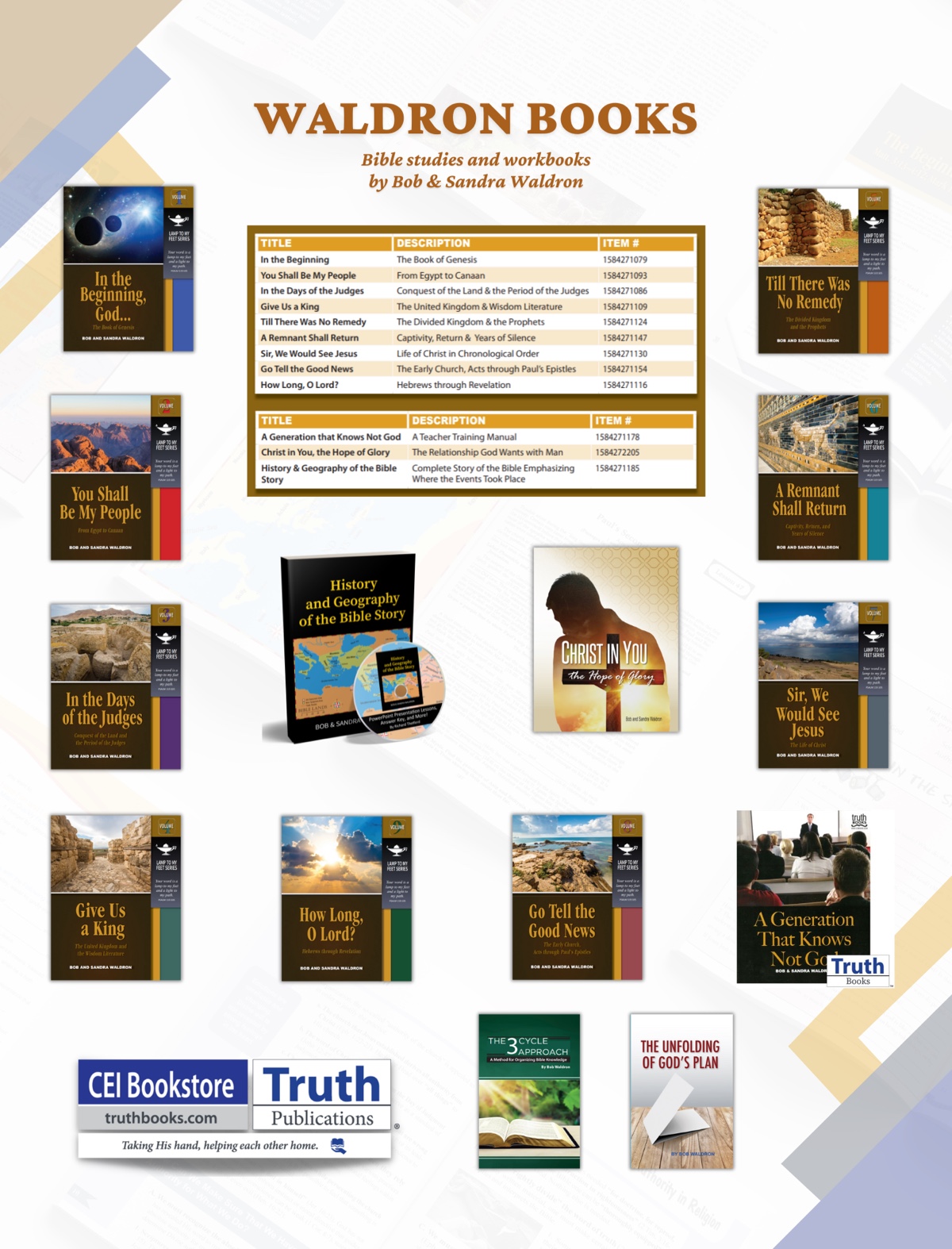
By Trevor Bailey
Synopsis: Christians believe in one God, while Hinduism embraces many deities. Hinduism’s complex and diverse theology often sees all gods as manifestations of a single divine essence. It compares Hindu polytheism with other historical and cultural examples. The author also discusses how modern ideologies like postmodernism share similarities with Hindu thought, especially in their views on subjective truth and religious pluralism.
During my two preaching trips to southern India, the gods worshiped by most of the population were easy to see: in temples, richly adorned, containing representations of one or more deities; as statues taller than houses; in small roadside shrines with an image behind metal bars; and on apartment buildings with plaques of greenish faces attached to their sides. These various gods may seem strange and even repulsive to Westerners, with unnatural skin colors, mixtures of animal parts with human (such as the elephant head of Ganesha or the simian face and tail of Hanuman), and even fangs that bespeak violent destruction. Roughly a billion people venerate some or all of these deities. Why does Hinduism encourage the worship of many gods?
Many Americans do not know much about India; beyond Gandhi and the Taj Mahal (a funerary monument built by a Muslim ruler), they might struggle to name more people and places. However, India and its beliefs are an important part of global politics. India contains one-sixth of the world’s population, and both the United States and China compete for its allegiance. India’s current political leader promotes Hindutva, a belief that everything in India should reflect Hindu values. Many Christians in India have been concerned that Prime Minister Modi and his party would cut their benefits, though the results of the last national election have eased those concerns somewhat. India has also had tense relations with Pakistan since the British partitioned the land into a mostly Hindu country and predominantly Muslim countries (Pakistan and eventually Bangladesh). India and Pakistan possess nuclear weapons and maintain a strong suspicion of each other.
Do Hindus worship many deities? Generally, yes. “Hinduism” was originally applied to many people in India by outsiders, and its beliefs are notoriously difficult to define. Hinduism does not insist on polytheism. Gandhi was among those who said that even atheists can be Hindu: “A man may not believe in God and still call himself a Hindu.” I once worked with an Indian man who might have qualified; he claimed not to believe in God but tried to avoid eating meat because of his Indian upbringing.
You might have read that Hinduism has 330 million gods, but that is likely a mistranslation, since the Sanskrit word in the original statement can mean either “ten million” or “type.” Still, thirty-three “types” of deities is quite a number. One god might have different incarnations on earth—Vishnu has ten. The three largest branches of Hinduism differ on who the supreme god is: Vishnu, Shiva, or Devi. Each of these three has over three hundred million followers. However, many Hindus might agree that they believe in God (singular)—they would see all gods (and everything in the universe) as part of one divine being, Brahman.
Some people think of Hinduism as a set of cultural practices rather than a religion, though that can be contentious. Hindus generally do not have group worship services at regular intervals but gather and make offerings at a time of their choosing at a temple. They also might practice puja (a worship ritual) daily in their homes. Still, the lack of anything approaching a congregation in most cases can make Hinduism difficult to understand. There are texts highly valued by Hindus, but these do not have the form or status that the Bible has for Christians.
Please do not envision Hindus, who worship many gods, as being less intelligent or advanced than other people in the world. The Bible shows us some polytheists who were highly advanced in many ways. The Greeks excelled at philosophy, drama, sculpture, and much else, but they were also polytheists. Paul addressed the men of Athens in Acts 17:22-31. They had many gods and even made room for some gods they had not known. To them, Paul emphasized the true knowledge of God and the reality of judgment. Many did not believe the truth, but a few were responsive.
The people of Lystra in Acts 14:8-11 were influenced by Greek and Roman culture. They understood that the healing that had happened there was not the work of man, but they misattributed power and deity to Paul and Barnabas, whom they called Hermes and Zeus. Paul and Barnabas emphasized that they were mere men and urged them to turn to the true God who had created them. While some became Christians in Lystra, others tried to stone the two teachers.
Not only did the Greeks, Romans, and people from other accomplished cultures worship many gods, so did people who had much closer contact with the one true God. The first Israelite settlers in the Promised Land were warned against trying to learn how the former residents had worshiped their gods (Deut. 12:30-31). The people that the Assyrians resettled in the land of Israel after conquering the Northern Kingdom tried to honor multiple gods from different backgrounds (2 Kings 17:28-33). They feared the true God to some extent but would not commit to Him. There we see a syncretism that is probably also found in Hinduism: a mixture of older Indian practices seems to have given rise to Hinduism, and that likely contributed to its plethora of gods. Hinduism and Buddhism have long influenced each other; some Hindus have even regarded the Buddha as an avatar of their god Vishnu.
One reason some peoples have worshiped many gods is that they know something many “modern, intelligent” people try to deny: the reality of the supernatural. Many people on earth have correctly deduced that an eternal, powerful, creative being lives and acts (Rom. 1:19-20). However, it is easy to take a false step and try to reduce that being to an earthly image or representation (Rom. 1:21-23). Such people may confuse worshiping the Creator with worshiping His creation (Job 31:26-28; Deut. 4:19).
The nations preceding Israel in the Promised Land chose naturally impressive places for their false worship (Deut. 12:1-3). As you go through India, it is not unusual to see a temple or shrine to a god at a striking spot, such as a waterfall, indicating a connection to the worship of the natural world. One of the more prominent Hindu goddesses, Saraswati, is identified with a river that existed long ago, if at all.
Though it was blatantly sinful, the Israelites themselves often began to worship other gods. The worshipers of the golden calf wanted other, tangible gods after Moses had been absent from them and with the Lord on Sinai for several weeks (Exod. 32:1-4). Sometimes this idolatrous urge came from seeking the fulfillment of physical desires through worship. Hosea 3:1 indicates that the raisin cakes associated with other gods were attractive to the Israelites.
Some Israelites then (and some Christians now) have served other gods because of the influence of their spouses (Judg. 3:5-6). Solomon was turned away from the Lord by his many wives to worship idols (1 Kings 11:2-4).
The people of Judah sometimes worshiped whichever gods seemed to bring results, not realizing that God had still extended mercy to them in not punishing them immediately for their apostasy, and that God had not blessed them when their turning back to Him was half-hearted (Jer. 44:15-19). Ahaz also tried to worship the gods of Damascus after being defeated by their followers (2 Chron. 28:22-23).
Late one night I was reading part of Sengupta’s Being Hindu and then Pluckrose and Lindsay’s Cynical Theories. The latter book was discussing Western academics’ embrace of postmodernism when I suddenly felt unsure of which of the two books I was currently reading: was it still the one about Hinduism or the one about postmodernism? Two books with wildly different subjects were describing highly similar worldviews. Postmodernism involves treating all statements or beliefs as equally true or equally false and makes “your truth” a matter of what you choose to believe. According to Sengupta, “In Hinduism, there is no truth to be found outside oneself” (98). He also says, “. . .the search for God is really the search for ourselves; we are what we are looking for” (154). Hinduism generally sees all religions (and philosophical systems) as ultimately bringing their adherents to the same place and sees calling only one of them true as nonsensical. Sengupta writes, “. . .Hindus find it easy to accept other faiths as entirely valid; after all, whether it is Christ, Moses, or Muhammad, the destination is the same, says Hinduism” (113). It is likely not coincidental that a time of great media coverage of Hinduism in the West was also when postmodernism was entering the public consciousness (consider the Beatles’ stay in Maharishi Mahesh Yogi’s ashram in Rishikesh, India, in 1968).
From their time under British control, Indians seem to have developed affinities for tea and especially for cricket, but not for Christian beliefs. (If another nation has exploited your people and their resources for 150 years, you might drink their beverages and play their sports, but you would probably not be inclined to follow their faith.) As I understand it, preachers in India have had far more success converting denominational Christians than Hindus (or Muslims).
Many Hindus have been brought up to think that truth is personal and not empirically knowable. However, Hindus are often keenly interested in truth, even though they may have been raised to perceive it as more fluid than the Bible does. Paul used reason to show his audience in Athens in Acts 17 that the truth about God and judgment could be confirmed through the resurrection of Jesus Christ. The Bible’s historical accuracy in many other matters also speaks to its truth.
The Bible invites readers to weigh the evidence of predictive prophecy. Isaiah 41:21-24 challenges other purported gods to speak of future events accurately. Nebuchadnezzar’s dream was interpreted by Daniel, and only the one true God could have accurately predicted the next 650 years of history through the dream and its interpretation (Dan. 2:11, 46-47).
Many modern people who claim to be monotheists really worship multiple gods. You could even think you worship only the one true God but set up money, power, or entertainment as a god to whom you are devoted—at least at times—more than to God Himself. Such people may be the ones who will hear Christ say, “I never knew you,” in the judgment (Matt. 7:23).
We all have to choose whom we will worship. Joshua listed three choices in Joshua 24:14-15: the gods the Israelites’ forefathers had worshiped (tradition); the gods popular in the land they were conquering (environment); or the only right choice—and Joshua’s choice—the Lord, the one true God.
Pluckrose, Helen, and James Lindsay. Cynical Theories: How Activist Scholarship Made Everything about Race, Gender, and Identity. . . and Why This Harms Everybody. Durham, NC: Pitchstone Publishing, 2020.
Sengupta, Hindol. Being Hindu: Understanding a Peaceful Path in a Violent World. Lanham, MD: Rowman & Littlefield, 2018.
The quote about Hinduism from Gandhi can be found at https://en.wikipedia.org/wiki/Hinduism#Definitions.
Trevor Bailey has worked with the Hillcrest church of Christ in Utica, Ohio, since 2004. He and his wife, Sharon, have four children. The church website is here. He can be reached here.


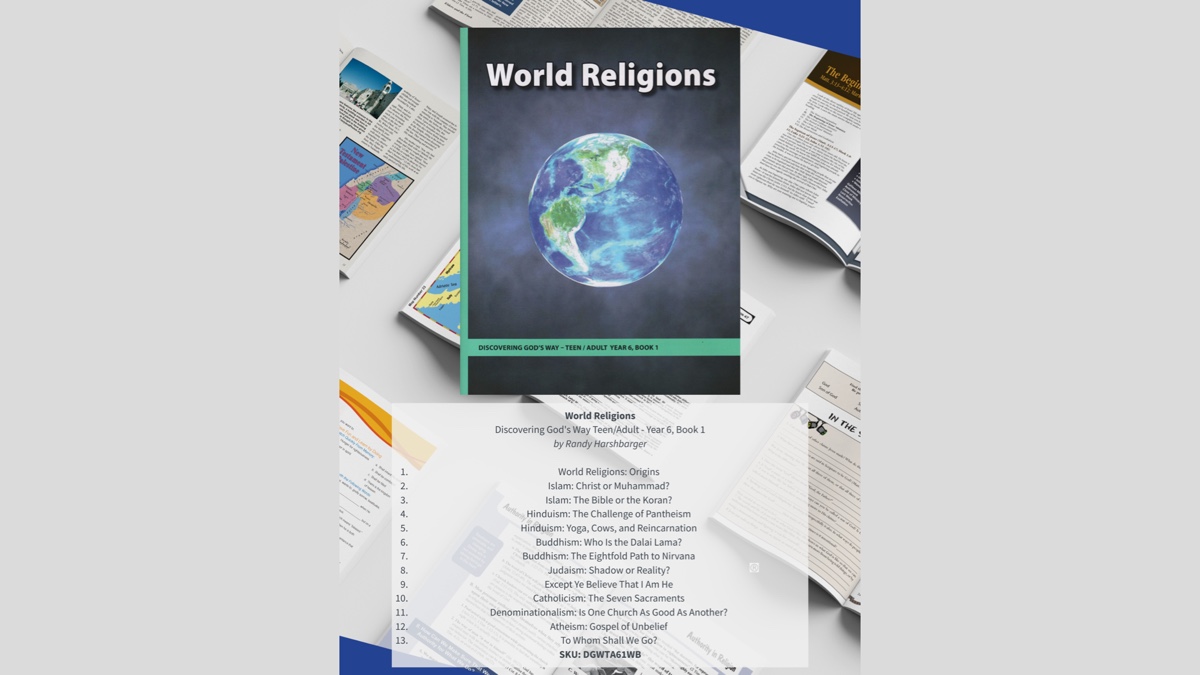
By Joe R. Price
Synopsis: The article lays out a clear contrast between Eastern philosophies like karma and reincarnation and the Christian worldview, showing that the former are rooted in human speculation rather than divine truth. It explains how karma leads to a detached view of suffering, suggesting people deserve their hardships due to past lives, while Christianity teaches that each person lives once, dies, and is judged by God. The brother Price concludes that Christians find hope not in endless cycles of rebirth, but in the promise of resurrection and final justice through Christ.
When we speak of the Christian view of karma and reincarnation, we are, of course, referring to biblical teaching as it relates to these topics. God’s word is truth, and to it we turn to know “all things that pertain to life and godliness” (John 17:17; 2 Pet. 1:3).
The apostle of Christ warned against the philosophies of men. Inspired by the Holy Spirit, he wrote, “Beware lest anyone cheat you through philosophy and empty deceit, according to the tradition of men, according to the basic principles of the world, and not according to Christ” (Col. 2:8).
The philosophies of Hinduism and Buddhism regarding life, death, and immortality are encapsulated in their teachings of karma and reincarnation. (Hinduism and Buddhism differ in that Hindus believe each person has a soul or eternal self, while Buddhists believe each person has a stream of consciousness or causal continuity that is reincarnated.) We will see that their teachings of karma and reincarnation stand in sharp contrast to the Bible’s teachings on life, death, immortality, and causality.
The Hindu teaching of karma (Sanskrit for “action” or “deed”) is the fundamental principle of cause and effect that governs a person’s life and subsequent reincarnations. It essentially holds that an individual’s intentions and actions (the cause) influence their future (the effect), both in the current life and in future lives within the cycle of rebirth (samsara). So, it is believed that if a person is suffering physically, emotionally, or mentally, then they must have been evil in a previous life for which they are now paying the consequences. Karma has brought suffering upon them because of their previous evil. Conversely, if they were good in an earlier life, then good comes back to them in their subsequent rebirth. Thus, being stricken with illness, disease, or poverty is “proof” that the person was evil in a previous life. To escape suffering, they must live contentedly with the burdens karma has placed on them to progress from pain to the comfort of goodness in future lives.
Such a view of humanity’s struggles and successes produces a careless and unloving view and treatment of the suffering of one’s fellow man. According to karma, they deserve it.
The concepts of karma and reincarnation are ancient, with their origins traceable to the Rig Veda, and are further detailed in the Upanishads (dating from around 800 to 400 BC) and the Bhagavad Gita (c. 400 BC to AD 200). Here is a sample of references to reincarnation from the Bhagavad Gita:
The soul never takes birth and never dies at any time, nor does it come into being again when the body is created. The soul is birthless, eternal, imperishable, and timeless and is never terminated when the body is terminated (2:20).
As a person gives up old and worn-out garments and accepts new apparel, similarly the embodied soul, giving up old and worn-out bodies, verily accepts new bodies (2:22).
For one who has taken birth, death is certain, and for one who has died, birth is certain (2:27) (Swami).
A modern Hindu commentator observes:
Our wise Rishis (a sage, an accomplished and enlightened person, jrp) of long ago desired to know the mysteries of life and death. What happens after death? Why is there so much happiness for some and suffering for others in a lifetime? The Gods revealed to the rishis in their deepest meditations the answers to these puzzling questions. They revealed the laws of karma and reincarnation, which are now two of Hinduism’s most central beliefs. They encapsulate our ancient religion’s view of life, death, and immortality. All Hindus know that they take many births and receive the results of their own actions in this and future lives (Hinduism Today).
Thus, the concepts of karma and reincarnation are inseparable and run much deeper than simple “cause and effect” in this life. While “karma” may be informally described by many as “what goes around comes around,” the doctrine is embedded in a cyclical view of birth, death, and rebirth that is experienced multiple times. What is sown in one life is reaped in the next (reincarnated) life, and so on, for many, many, many lives.
The goal sought by the devotees of karma and reincarnation is release from this physical realm. This liberation from the cycle of birth and death is called moksha. It is achieved through self-knowledge, devotion, righteous action (karma yoga), and meditation. When liberated, the soul is freed from all karma and no longer reborn.
After a number of such excellent incarnations, and after God-realization has been attained, the soul body becomes mature enough that it no longer needs to take a physical incarnation. Instead, it continues its evolution on inner planes of consciousness. This release from samsara is called Moksha. The soul is said to be freed from the bondage of birth and death (Hinduism Today).
The Bible presents God’s truth about life and death, the nature of human beings, and our immortal souls, including the causes and effects of our actions in this life and beyond.
Made in the image of God, human beings have an immortal soul that possesses divine traits, including intelligence, emotions, volition, moral responsibility, accountability, and a conscience (Gen. 1:26-27; Eccl. 12:7; Zech. 12:1; Matt. 10:28; 2 Cor. 4:16-5:4; Heb. 13:18). These attributes are shared by all humanity and distinguish us from the animal world, which lives by instinct and ceases to exist at death (Eccl. 9:4).
Physical life and death. Each human life is unique, fashioned by God, and valuable in His sight (Ps. 139:13-16; Acts 17:25, 28). The Scriptures teach that we live and die once on the earth, not countless times. “It is appointed for men to die once, but after this the judgment” (Heb. 9:27). The doctrines of karma and reincarnation are the product of human thought and meditation, not divine revelation. God’s word is truth on the matter, not the imaginations of men (John 17:17).
The body, death, and resurrection. The Bible teaches that the human body returns to dust after it dies. Physical death is the separation of the spirit from the body (Jas. 2:26). “In the sweat of your face you shall eat bread till you return to the ground, for out of it you were taken; for dust you are, and to dust you shall return” (Gen. 3:19). The lifeless body that decays in the dust will be resurrected from the dead by God on the last great day (1 Cor. 15:35-54).
The spirit after death. Instead of migrating from one physical body to another (be it human, animal, insect, etc.), the spirit, separated from the body at death, returns to the care and keeping of God (Eccl. 12:7). Further explanation of this is given in Luke 16:19-31, where angels took Lazarus to “Abraham’s bosom” of security, rest, and safety. At the same time, the rich man was found in “torments”—each received an existence consistent with the manner of their one life on earth. This realm of the dead, or departed spirits, is identified as Hades, where all the dead await resurrection and judgment. There is no migration of the soul sent back to the earth in another physical form to live a life formed by the events of one’s previous life on earth. Death ends one’s participation in the events on the earth (Luke 16:27-30; Eccl. 9:5-6).
Bodily resurrection and judgment. Jesus said, “Do not marvel at this; for the hour is coming in which all who are in the graves will hear His voice and come forth—those who have done good, to the resurrection of life, and those who have done evil, to the resurrection of condemnation” (John 5:28-29). We do not expect rebirth into another body on earth based on our motives and actions of a previous life. We expect a glorious day of resurrection from the dead and judgment before God, when our deeds on earth will be judged. “For we must all appear before the judgment seat of Christ, that each one may receive the things done in the body, according to what he has done, whether good or bad” (2 Cor. 5:10). God has appointed this day of righteous judgment, and all are commanded to repent to receive eternal life, or else receive eternal punishment for our sins against God (Acts 17:30-31; Rom. 2:3-11).
Cause and effect. While karma is linked to countless cycles of death and rebirth, the Bible teaches we reap what we sow, but not through reincarnation’s cycles of rebirth. Moral accountability is at the heart of reaping what we sow.
Do not be deceived, God is not mocked; for whatever a man sows, that he will also reap. For he who sows to his flesh will of the flesh reap corruption, but he who sows to the Spirit will of the Spirit reap everlasting life. And let us not grow weary while doing good, for in due season we shall reap if we do not lose heart (Gal. 6:7-9).
Our choices often produce consequences, either good or bad. Often, the consequences of our actions affect others. For instance, a consequence of the sins of Adam and Eve was physical death, not only for themselves but also for all humanity (Gen. 3:19; Eccl. 12:6-7). The consequence of physical death is what Paul meant when he said, “as in Adam all die” (1 Cor. 15:22).
Sometimes we reap what we sow in this life, but not always. Some things happen by chance and not according to a strict application of “cause and effect.” Wise Solomon, to whom God granted great wisdom, wrote of observing that cause and effect do not always occur on earth.
I returned and saw under the sun that—the race is not to the swift, nor the battle to the strong, nor bread to the wise, nor riches to men of understanding, nor favor to men of skill; but time and chance happen to them all (Eccl. 9:11).
Time and chance stand in sharp contradiction to karma. Christians understand that one’s physical circumstances cannot be directly attributed to karmic cause and effect.
The falsehood of karma is most prominently seen when one considers the life of Jesus Christ. He “went about doing good and healing all who were oppressed by the devil, for God was with Him” (Acts 10:38). Jesus “committed no sin, nor was deceit found in His mouth; who, when He was reviled, did not revile in return; when He suffered, He did not threaten, but committed Himself to Him who judges righteously” (1 Pet. 2:22-23). His goodness was not rewarded in this life; in fact, the opposite was true. Furthermore, His resurrected body ascended into heaven. He did not have a rebirth in another body for life on this earth (Luke 24:46-51; Acts 1:9-11).
Sometimes the righteous suffer and die painfully. “Others were tortured. . . still others had trial of mockings and scourgings. . . they were stoned, they were sawn in two. . . being destitute, afflicted, tormented—of whom the world was not worthy” (Heb. 11:35-38). Faithfulness to God can bring suffering and painful death. Paul details beatings, imprisonments, hunger, and dangers he endured for Christ (2 Cor. 11:23-27). The righteous may suffer deeply even though they are beloved of God. For example, Lazarus, the poor beggar, suffered greatly in life, while the rich man lived in luxury; yet after death, their situations were reversed (Luke 16:20-22). That description lands a deathblow to both karma and reincarnation.
Sometimes it appears that the wicked prosper, living in comfort, ease, and safety. Nevertheless, God’s judgment awaits them, and they will not prosper in eternity (Ps. 73). “Though a sinner does evil a hundred times, and his days are prolonged, yet I surely know that it will be well with those who fear God, who fear before Him. But it will not be well with the wicked; nor will he prolong his days, which are as a shadow, because he does not fear before God” (Eccl. 8:12-13).
Christians do not rest their hope on karma and reincarnation to right the wrongs done by evil people or to reward the actions of the just. The word of God assures us that when the Lord Jesus returns on the last great day of resurrection and judgment, He will right every injustice committed against the righteous (2 Thess. 1:5-10; Rom. 2:3-11).
We live but once on this earth; we die, and then comes judgment where we will give an account of ourselves to Almighty God (Heb. 9:27; 2 Cor. 5:10). These great Bible truths compel us to learn and live by God’s revealed will today since we have no guarantee of tomorrow (Jas. 4:13-17). “Behold, now is the accepted time; behold, now is the day of salvation” (2 Cor. 6:2).
Hinduism Today. Karma and Reincarnation. September 5, 2019. https://hindu.org/basics/karma-and-reincarnation/.
Swami Bhaktisiddhanta Saraswati Srila Prabhupada. Srimad Bhagavad-Gita and Reincarnation. https://www.bhagavad-gita.org/Articles/gita-reincarnation.html.
Unless otherwise noted, all biblical citations are taken from The Holy Bible: New King James Version (NKJV). Nashville: Thomas Nelson, 1994.
Joe R. Price has worked with the Vegas Drive church of Christ, Las Vegas, NV, since October 2022. He and his wife, Debbie, have four children and two grandchildren. His website is here and the church’s website is here. He can be reached here.


By Kyle Pope
Synopsis: The article highlights the Bible’s unified message and divine inspiration versus the diverse and often contradictory nature of Hindu texts. It explains how Hinduism’s religious structure, including the caste system and concepts like karma and reincarnation, is rooted in ancient texts categorized as śruti and smriti. The author argues that while the Bible offers clarity and certainty, Hindu scriptures promote subjectivism and spiritual uncertainty.
Both Hinduism and Christianity look to collections of ancient texts from which their teachings and practices are drawn. How do these texts compare? How are they viewed by their adherents, and how do they harmonize with other texts within their own anthology of scriptures?
The book Christians know as “the Bible” draws its name from a word that has come to us through Latin, from the Greek word biblia (meaning “books”)—the plural of biblion (the diminutive of biblos, a word originally applied to documents written on papyrus). As early as AD 150, in an early Christian text known as 2 Clement, it was used in reference to “the books” (2:14) of the Hebrew Old Testament and the Greek New Testament (Bruce). Christians believe this collection of books to be “given by the inspiration of God” (2 Tim. 3:16a, NKJV) or “breathed out by God” (ESV), and the basis for all sound teaching in what is right and wrong in order to be pleasing to God (2 Tim. 3:16b-17). It proclaims itself as the standard by which all will be judged on the Day of Judgment (John 12:47-48; Rev. 20:12). It is comprised of sixty-six books (thirty-nine in the Old Testament and twenty-seven in the New Testament), written over a period of 1,500 years (ca. 1450 BC to ca. AD 95), and includes books of history, poetry, hymns, epistles, and prophecy—building to and proclaiming the coming of Jesus to earth and the salvation He offers unto eternal life.
For the 1.2 billion adherents of Hinduism worldwide and 3 million in the United States (Hackett), the Bible is not the text to which they look in matters of faith, but to the thousands of texts that comprise Hindu scriptures. To understand this, we must first go back to an ancient event that shaped the development of Hinduism. Around 1500 BC, a people known as the Aryans migrated into India. It is unclear whether this was a conquest or a natural migration, but the existence of this lighter-skinned people, who came to be identified as the “Brahmin” caste, established a racial designation that underlies all Hindu belief: the caste system. This system set five distinct social and religious classes: (1) Brahmins (the highest class of Aryan priests); (2) Kshatriyas (princes and warriors); (3) Vaisyas (merchants and landowners); (4) Sudras (farmers, laborers, and servants); and (5) Dalits or Untouchables (who practiced occupations considered polluting). The oldest Hindu scripture teaches this came about when the gods sacrificed the universal soul and formed the different castes from the severed parts of his body (Rig Veda 10.90.1-16). Until recent years, intermarriage between the castes was strictly forbidden, and some contact between the castes was condemned. In 1950, the Indian constitution outlawed “untouchability,” but many continue to practice this religiously based segregation mandated by Hindu scriptures.
So, why do these scriptures teach that one person is born into the Brahmin caste while another is born an untouchable? Because they believe in karma—the concept that one’s behavior in a past life determines his present existence. Hindu scriptures teach a principle known as samsara, the idea that all the universe goes through endless cycles of birth, destruction, and renewal. On a personal level, this is reincarnation—the idea that a person can be reborn in his next life as a human or animal, based on how he has lived in this life. Should people try to improve their social class? Not really. They should stay in their place because this is the order of the universe, or dharma—the moral order of things. This teaching provided the religious justification for the racial and class segregation of the caste system, and Hindus call their own religion Sanatana Dharma—“Eternal Dharma.” The only real hope offered in Hindu scriptures rests in what they call moksha (or “liberation”), the hope that one day a person can be freed from this endless cycle of rebirth by attaining a higher level of existence. This is not salvation in a Christian sense, but more the idea of becoming one with the universe by losing any sense of personal identity.
These principles are articulated in two categories of Hindu scriptures: śruti and smriti.
1. Śruti. The word śruti, meaning “heard,” refers to scriptures believed to have been divinely revealed to a ṛṣi (or “seer”). This is not the idea of revelation from a personal God to an inspired prophet. Shirik explains, “The human agents, ṛṣis, through contemplation, were able to ‘hear’ and ‘see’ the words echoing in eternity and pass on the content orally to the subsequent select followers, which eventually came to be written down” (71). These texts are considered the most authoritative and unchangeable and include “Samhita (the four Vedas), Brahmanas (commentary on the Vedas composed by Brahmins), Aranyakas (treatises by forest dwellers), and the Upanishads (philosophical and speculative material)” (ibid., 67). The oldest of these, the Rig Veda, dates to between 1500-1200 BC and contains hymns and sacrificial texts.
2. Smriti. The word smriti (meaning “remembered”) refers to a secondary class of texts acknowledged as of human origin, recording traditions and teachings drawn from the Vedas. These include Itihasas epics, such as the Mahabharata and Ramayana (the famous Bhagavad Gita is a part of the Mahabharata), the Puranas (18 texts relating stories of divine incarnations—about the size of the Hebrew Old Testament), and the more than 5,000 texts of the Dharmaśāstra tradition, including the Code of Manu (formal rules of the caste system, written by Aryan priests). Ironically, while śruti texts are considered more authoritative, less than one percent of most Hindus know the content of śruti texts (Holm, 72). Shirik explains, “The practices and beliefs of the popular Hinduism of today are derived more from the second category of scriptures, smriti” (67).
Before we compare the Bible and Hindu scripture, we must recognize some distinct differences between Christian views and the Hindu concepts of deity and the authority of scripture.
1. The Concept of Deity. The Vedas taught there were many gods. The gods Mitra and Varuna were said to jointly rule the universe (Rig Veda 5.63.3; 7.60.12). The god Indra (like the Greek god Zeus or Roman god Jupiter) was considered ruler of the gods (Rig Veda 2.12.1). In the Upanishads, there were said to be as many as 3,306 gods (Brihadaranyaka Upanishad 3.9.1). However, these same texts also teach that there is only one god. The Rig Veda claims, “They speak of Indra, Mitra, Varuna, Agni, and the winged Suparna. The wise call the One Being by many names” (1.164.46). This “One Being” they call Brahman, but we should not confuse this with a biblical concept of the one true God. All living things are considered part of Brahman. It is universal consciousness, but not personality. The Hindu can have no personal relationship with Brahman; he can only recognize his relationship to it. Ironically, while Hinduism considers Brahman impersonal, it teaches that Brahman has had many personal manifestations in the form of lesser deities. There is Brahma (the creator god), Vishnu (the preserver god), and Shiva (the destroyer god). Hindus believe that Vishnu has had nine incarnations (or avatars), some of which were animals, some human. Krishna, worshipped by the Hare Krishna sect, was considered one of these avatars, as was Buddha.
2. The Authority of Scripture. In describing Hindu śruti texts as “authoritative” or modern Hindu practice being “derived” from smriti texts, we must not confuse this with a Restoration ideal to “speak where the text speaks, and be silent where it is silent,” or even a Reformation attitude of Sola Scriptura (“the Scriptures alone”). In the Hindu worldview, even śruti scriptures are considered to demonstrate the personal enlightenment the author attained, but not a set pattern set forth in the words recorded. Shirik explains, “Even though the Vedas were considered authoritative, Hindus believe that truth is encountered not primarily through the text, but mystically or existentially with the help of the gurus” (79). This presents a major challenge to the very idea of comparing biblical and Hindu scriptures. One is seen as the basis of faith, while the other is simply a springboard for personal inner exploration. One might argue that the battles Western society and the current world of denominationalism face with postmodernism (an attitude that rejects absolute truth) reflect a “Hinduization” of modern thought. Our world’s promotion of “my truth” or “your truth” meshes quite well with Hindu thought. Even so, let’s end our study with some objective comparisons that present two very different types of scriptures which both claim to be divine revelation.
Although the Bible is a collection of books spanning centuries, it presents a unified message free of contradictions. In contrast, Hindu texts often contradict each other. For example, this can be seen in what they say about deity. They claim Brahman was unborn (Chhandogya Upanishad 6.2.1-2) but born from nothing (Rig Veda 10.129.1-3; Katha Upanishad 2.4.6). Brahman is said to be imperishable (Brihadaranyaka Upanishad 4.5.14) but was also once mortal (Brihadaranyaka Upanishad 1.4.6). They claim Brahman is all things, material and immaterial (Brihadaranyaka Upanishad 2.3.1), but then list some material things that are not Brahman (Brihadaranyaka Upanishad 5.12). How can both be true? They claim the gods were created after the universe (Rig Veda 10.129.6), but the gods created the universe (Rig Veda 10.90.6-14). Which is it? They claim human beings were created (Rig Veda 10.129.9-12) but have always existed (Bhagavad Gita 2.12). They claim our behavior follows us into the next life (Chhandogya Upanishad 3.14.1), but then claim that all evil is left behind us in death (Brihadaranyaka Upanishad 4.3.8). How can we have it both ways?
In contrast to faith in Christ, Hindu scriptures teach a faith of confusion. The Hindu scripture known as the Kāma Sūtra gives explicit sexual instruction to married couples but also has sections sanctioning adultery and prostitution. In Brhadāraṇyaka Upanishad, if a woman refuses a man’s sexual advances, it instructs, “he should beat her with a stick or with his fists and overpower her” (6.4.9, 21). Śatapatha Brāhmana even sanctions ritual bestiality (13.5.2.1-10). Is this the kind of behavior that will lead one to a better caste in his next life? Apparently!
By contrast, the Bible teaches the sanctity of the marriage bed and condemns sexual immorality (Heb. 13:4; 1 Thess. 4:3). Hindu scriptures teach that human beings can be reborn as animals (Chhandogya Upanishad 5.10.7). The Bible teaches God made all life but created human beings in His image (Gen. 1:25-27). Hindu scriptures teach that the gods feed on human souls (Brhadāraṇyaka Upanishad 6.2.14-16; Chhandogya Upanishad 5.10.4-5). The Bible teaches a transcendent God who is not dependent upon any substance (Ps. 50:12; Acts 17:24-25).
Hindu scriptures teach its followers to escape from this world. Indifference is glorified (Bhagavad Gita 14.23-26). The Bible teaches that following Christ improves the world as we look to and seek eternal life in the age to come (Matt. 5:16, 44-45). For the Hindu, all suffering is just karma (Brihadaranyaka Upanishad 4.4.5; 5.11). In Christ, suffering can come from chance, but it can help the Christian grow in faith (Eccl. 9:11; John 16:33; Rom. 5:3-5).
Finally, the Hindu scriptures are characterized by uncertainty. Notice how this is seen in the oldest śruti text, the Rig Veda. In discussing the creation of the universe, this supposed divine revelation declares, “He, the first origin of this creation, whether he formed it all or did not form it, whose eye controls this world in highest heaven, he verily knows it, or perhaps he knows not” (Rig Veda 10.129.10). Does that sound like divine revelation? I think not!
By contrast, the revelation of the Bible offers certainty. The Bible says God created all things: “In the beginning God created the heavens and the earth” (Gen. 1:1). By His word He brought the universe into existence from nothing: “By faith we understand that the worlds were framed by the word of God, so that the things which are seen were not made of things which are visible” (Heb. 11:3). How do these Scriptures compare? In this writer’s humble opinion, there is no comparison! “The entirety of Your word is truth, and every one of Your righteous judgments endures forever” (Ps. 119:160).
Bruce, F. F., et al. The Origin of the Bible. Carol Stream, IL: Tyndale House Publishers, 2020.
Hackett, Conrad, Marcin Stonawski, Yunping Tong, Stephanie Kramer, Anne Fengyan Shi, and Dalia Fahmy. “How the Global Religious Landscape Changed From 2010 to 2020: Section 5. Hindu Population Change.” Pew Research Center. June 9, 2025. https://www.pewresearch.org/religion/2025/06/09/hindu-population-change/
Holm, Jean, and John Westerdale Bowker. Sacred Writings. London: Pinter Publishers, 1994, 72.
Macnicol, Nicol, ed. Hindu Scriptures. J.M. Dent and Sons Ltd, New York, 1959.
Parakh, Percy. “How Does the Bible Compare to Hindu Scriptures? A Christian Perspective!” PercyParakh.com. Feb. 1, 2020. https://percyparakh.com/is-the-bible-superior-to-hindu-scriptures/
Shirik, Sochanngam. “Inspiration, Authority, and Canonicity of the Scripture: Comparative Study Between Hindu and Christian Scriptures.” Journal of Global Christianity 5.1 (Feb. 2019): 64-83.
Kyle Pope preaches for the Vestavia church of Christ in Vestavia Hills, AL. He has written several books published by Truth Publications. Go here for more information. The church website is here. He can be reached here.



By David Dann
Synopsis: Every person’s eternal destiny hinges on reaching the right conclusion about the true identity of Jesus of Nazareth. The article affirms that the gospel message is rooted in Jesus being the Son of God—not merely a prophet or messenger. It contrasts Scripture’s portrayal of Jesus with the Qur’an’s depiction, underscoring that Jesus is uniquely divine: the Christ, Lord and King, Savior, and the ultimate sacrifice for sin.
The message of the gospel is based on the fact that Jesus is the Son of God. When the angel Gabriel appeared to Mary while she was still a virgin, Luke writes, “And the angel answered and said to her, ‘The Holy Spirit will come upon you, and the power of the Highest will overshadow you; therefore, also, that Holy One who is to be born will be called the Son of God’” (Luke 1:35, NKJV). Jesus is more than just a Prophet. The religion of Christ is founded upon the fact that He is the Son of God.
While few would deny that Jesus is a historical figure, confusion exists as to His true identity and His role as the Christ and Son of God. The religion of Islam, for example, affirms the historical reality of Jesus of Nazareth while, at the same time, underrating His position. According to the Qur’an, Muhammad was instructed to say, “We believe in Allah and what has been revealed to us; and what was revealed to Abraham, Ishmael, Isaac, Jacob, and his descendants; and what was given to Moses, Jesus, and other prophets from their Lord. We make no distinction between any of them. And to Allah we all submit” (Qur’an 2:136). While Islam’s holy book mentions Jesus numerous times, it portrays Him as no more than just another of many prophets or mere messengers of God, rejecting the idea that He is the Son of God. The Qur’an warns Christians, “O People of the Book! Do not go to extremes regarding your faith; say nothing about Allah except the truth. The Messiah, Jesus, son of Mary, was no more than a messenger of Allah and the fulfillment of His word through Mary and a spirit created by a command from Him. So believe in Allah and His messengers and do not say, ‘Trinity.’ Stop!—for your own good. Allah is only One God. Glory be to Him! He is far above having a son!” (Qur’an 4:171). In contrast, the New Testament, written centuries before the Qur’an, says, “Therefore God also has highly exalted Him and given Him the name which is above every name, that at the name of Jesus every knee should bow, of those in heaven, and of those on earth, and of those under the earth, and that every tongue should confess that Jesus Christ is Lord, to the glory of God the Father” (Phil. 2:9-11). The Bible exalts Jesus not only as a prophet, but as much more than a prophet.
The portrayal of Jesus in the Bible and His portrayal in the Qur’an are distinctly different. One cannot believe the description given of Jesus in the Qur’an and at the same time believe in the Jesus described in the Bible. The clear contrast between these two versions of Jesus raises questions that demand answers. According to the oldest eyewitness testimony available, Jesus is much more than a mere messenger or even a notable prophet. Please consider who Jesus really is and why Christians view Him as the Son of God.
1. He is God in the flesh. Speaking of Jesus, John the apostle writes, “In the beginning was the Word, and the Word was with God, and the Word was God. . . And the Word became flesh and dwelt among us, and we beheld His glory, the glory as of the only begotten of the Father, full of grace and truth” (John 1:1, 14). He came into this world as “God with us” (Matt. 1:23; cf. 1 Tim. 3:16). Far from being a mere man, Jesus has all the qualities One must possess in order to be considered deity. Only Jesus is rightly referred to as “God” in the flesh.
2. He is the Christ. When Jesus questioned His apostles concerning His identity, Matthew writes, “Simon Peter answered and said, ‘You are the Christ, the Son of the living God’” (Matt. 16:18). Unlike other messengers, He is the Messiah, the Christ, the Anointed and chosen One who was sent into the world by the Father to save mankind from sin and condemnation—and He affirmed this to be so (cf. John 10:24-25). Only Jesus is rightly referred to as the Christ.
3. He is Lord and King. On the night of His betrayal, He spoke to His apostles, saying, “You call Me Teacher and Lord, and you say well, for so I am” (John 13:13). When questioned by the Roman governor, “Jesus answered, ‘My kingdom is not of this world. If My kingdom were of this world, My servants would fight, so that I should not be delivered to the Jews; but now My kingdom is not from here.’ Pilate therefore said to Him, ‘Are You a king then?’ Jesus answered, ‘You say rightly that I am a king. For this cause I was born, and for this cause I have come into the world, that I should bear witness to the truth. Everyone who is of the truth hears My voice’” (John 18:36-37). Much more than a mere mortal messenger, Jesus is both Lord and King. Only Jesus, in contrast to mere men, can rightly be referred to as “Lord of lords and King of kings” (Rev. 17:14).
4. He is the exclusive Savior. The apostle Peter boldly preached Jesus to the leaders in Jerusalem, saying, “Him God has exalted to His right hand to be Prince and Savior, to give repentance to Israel and forgiveness of sins” (Acts 5:31). Far from being a mere mortal messenger, He offers the only possibility of forgiveness of sins and salvation. As Jesus Himself said to His apostles, “I am the way, the truth, and the life. No one comes to the Father except through Me” (John 14:6). Peter later reemphasized the uniqueness of Jesus’s position as Savior, saying, “Nor is there salvation in any other, for there is no other name under heaven given among men by which we must be saved” (Acts 4:12). Only Jesus is rightly referred to as the “Savior” of the world.
5. He is the one saving sacrifice. John the baptizer rightly identified Jesus, saying, “Behold! The Lamb of God who takes away the sin of the world!” (John 1:29). Unlike mere messengers or prophets, Jesus died on the cross to take away man’s sins. The writer of Hebrews highlighted the saving significance of the death of Jesus, saying, “But this Man, after He had offered one sacrifice for sins forever, sat down at the right hand of God, from that time waiting till His enemies are made His footstool. For by one offering He has perfected forever those who are being sanctified” (Heb. 10:12-14). Only Jesus is rightly referred to as the one sacrifice for sins.
1. His fulfillment of prophecy. Centuries before Jesus was born, the prophets provided detailed descriptions of Him that prove He is the unique Son of God. Isaiah prophesied of His birth, saying, “Therefore the Lord Himself will give you a sign: Behold, the virgin shall conceive and bear a Son, and shall call His name Immanuel” (Isa. 7:14). Micah prophesied of His birthplace and eternal nature (Mic. 5:2). The psalmist described the manner of His death, saying, “They pierced My hands and My feet” (Ps. 22:16). Jesus fulfilled every prophecy concerning His birth, life, death, and resurrection, proving that He is the Son of God.
2. His miracles. After recording several notable miraculous signs which Jesus performed, John writes, “And truly Jesus did many other signs in the presence of His disciples, which are not written in this book; but these are written that you may believe that Jesus is the Christ, the Son of God, and that believing you may have life in His name” (John 20:30-31). While the Qur’an records no miracles of Muhammad, it does claim that Jesus performed miracles (Qur’an 3:49). The miracles of Jesus—such as healing the sick, lame, and blind, walking on water, casting out demons, and raising the dead—serve the purpose of proving that He is the Son of God (cf. Matt. 4:23-24; Luke 5:17; Matt. 14:22-33; John 11:37-45). Jesus performed signs that no one else could perform, proving His divinity.
3. His sinless perfection. John points out that Jesus challenged even His enemies to produce evidence that He had sinned, saying, “Which of you convicts Me of sin? And if I tell the truth, why do you not believe Me?” (John 8:46). By the Qur’an’s own admission, Muhammad was a sinner in need of forgiveness: “So be patient, O Prophet, for Allah’s promise is certainly true. Seek forgiveness for your shortcomings. And glorify the praises of your Lord morning and evening” (Qur’an 40:55). “Indeed, We have granted you a clear triumph, O Prophet, so that Allah may forgive you for your past and future shortcomings, perfect His favour upon you, guide you along the Straight Path” (Qur’an 48:1-2). Unlike mere mortal messengers who have sinned, the writer of Hebrews says, “Seeing then that we have a great High Priest who has passed through the heavens, Jesus the Son of God, let us hold fast our confession. For we do not have a High Priest who cannot sympathize with our weaknesses, but was in all points tempted as we are, yet without sin” (Heb. 4:14-15). He goes on to affirm that Jesus is “separate from sinners” (Heb. 7:25). He never sinned, proving that He is the Son of God.
4. His resurrection. Prior to His crucifixion, Jesus foretold His own death and resurrection, saying, “Therefore My Father loves Me, because I lay down My life that I may take it again. No one takes it from Me, but I lay it down of Myself. I have power to lay it down, and I have power to take it again. This command I have received from My Father” (John 10:17-18). When His disciples visited His tomb the third day following His death and burial, Mark writes, “And entering the tomb, they saw a young man clothed in a long white robe sitting on the right side; and they were alarmed. But he said to them, ‘Do not be alarmed. You seek Jesus of Nazareth, who was crucified. He is risen! He is not here. See the place where they laid Him’” (Mark 16:5-6). The tomb of Jesus was empty, for He had risen from the dead just as He said He would. In direct contrast to this, Islamic scholars admit that Muhammad died and remained buried in his tomb: “The Prophet (peace and blessings be upon him) does not have the ability to be present in numerous places; he is in only one place, which is his grave, and this is according to the consensus of the Muslims” (islamonline.net). As Paul points out, Jesus was “declared to be the Son of God with power according to the Spirit of holiness, by the resurrection from the dead” (Rom. 1:4). Jesus came forth from the grave alive after His suffering, proving His divinity.
1. Everyone must honor Him. Since He is the Son of God, rather than just a mere mortal messenger, Jesus made it clear “that all should honor the Son just as they honor the Father. He who does not honor the Son does not honor the Father who sent Him” (John 5:23). There is no acceptable middle ground in which Jesus may be honored merely as a prophet but not as the Son of God. John writes, “Whoever confesses that Jesus is the Son of God, God abides in him, and he in God” (1 John 4:15), and, “He who has the Son has life; he who does not have the Son of God does not have life” (1 John 5:12). Every individual is obligated to recognize, believe, and confess that Jesus is the Son of God.
2. Everyone will be judged by Him. Jesus said, “He who rejects Me, and does not receive My words, has that which judges him—the word that I have spoken will judge him in the last day” (John 12:48). Far from being a mere mortal messenger, Jesus Christ will come with the power to raise the dead and with the authority to administer the great judgment of the last day (cf. 2 Cor. 5:10; 2 Thess. 1:6-10). Every individual is obligated to submit to Jesus as the Son of God.
3. Everyone can be forgiven through Him. Since the Son of God came into the world and served as the sacrifice to take away man’s sin, Paul writes, “For the grace of God that brings salvation has appeared to all men” (Titus 2:11). This wonderful good news about Jesus means that salvation is available to all mankind in Him. Following His resurrection, Mark records, “He said to them, ‘Go into all the world and preach the gospel to every creature. He who believes and is baptized will be saved; but he who does not believe will be condemned’” (Mark 16:15-16). Every individual is obligated to believe in Jesus, turn from sin, and be baptized into Christ to receive forgiveness of sin because He is the Son of God.
The bold claim of the gospel is that Jesus of Nazareth is much more than just a man, a messenger, or one of many prophets whom God sent to speak His word. The message of the Bible is that Jesus Christ is the Son of God who is the Savior of the world. He is the crucified and resurrected Lord of lords and King of kings to whom all must come for forgiveness of sin and salvation. As the Son of God, He offers sinners the only possibility of redemption and the only hope of eternal life. What will you do with Jesus?
“Can We Regard the Prophet (PBUH) as Dead?” IslamOnline.net. Accessed September 16, 2025. https://fiqh.islamonline.net/en/can-we-regard-the-prophet-pbuh-as-dead/.
The Quran. Quran.com. Accessed September 16, 2025. https://quran.com/.
In August 2021, David Dann moved to the Athens, GA, area to work with the recently formed University church of Christ. In June 2025, the members of the University congregation united with the members of the Oglethorpe Avenue congregation to form a new local church, now known as the Classic City church of Christ. He and his wife, Cynthia, have been blessed with six children. The church website is here. He can be reached here.



By Shawn Chancellor
Synopsis: Christianity teaches one God in three persons, while Islam emphasizes God’s absolute singularity. The author notes that Muhammad and the Qur’an reject the Trinity, often misinterpreting it as polytheism or mistakenly including Mary as part of it. In contrast, the Bible presents a unified yet plural divine nature. Whereas Islam describes God as transcendent and solitary, the Christian understanding of God is inherently relational—making attributes like atonement, grace, and love central to His nature.
Under the heading “God in Abrahamic religions,” Wikipedia says the following: “The most prominent Abrahamic religions are Judaism, Christianity, and Islam. They. . . all share a common foundation in worshipping Abraham’s God, who is called Yahweh in Hebrew and Allah in Arabic.” Shortly after 9/11, celebrities, politicians, and even evangelical leaders made public statements in an attempt to prevent violence against Muslims who had nothing to do with the attacks. The ecumenical sentiment that has swept through Western culture over the past several decades has led to the idea that God can be worshipped in many ways and under many names. Allah, of course, is seen as just another name for the same god. However, if one were to ask either a Muslim scholar or a committed Bible student whether Jehovah and Allah are the same, the answer would be far different.
Even a cursory comparison of the Bible and the Qur’an reveals two beings with very different natures and characters. For example, Jehovah is a relational being who seeks to have fellowship with humanity (Rom. 8:15; Eph. 1:5-6). On the other hand, the Qur’an states that Allah “did not create the jinn and mankind except to worship me” (Qur’an 51:56).
Perhaps the most fundamental distinction is found in the number of divine persons who possess the qualities of God. The Bible clearly reveals that there are three divine persons: the Father, the Son, and the Holy Spirit (Matt. 28:19). Conversely, the Qur’an describes a single being referred to as God. “Those who say, ‘Allah is one in a Trinity,’ have certainly fallen into disbelief. There is only One God. If they do not stop saying this, those who disbelieve among them will be afflicted with a painful punishment” (Qur’an 5:73).
Indeed, those who say, “Allah is the Messiah, son of Mary,” have fallen into disbelief. Say, O Prophet, “Who has the power to prevent Allah if He chose to destroy the Messiah, son of Mary, his mother, and everyone in the world altogether? To Allah alone belongs the kingdom of the heavens and the earth and everything in between. . . (Qur’an 5:17).
As noted above, Muhammad did not believe in a triune God. He viewed Allah as a single individual with no companion or equal. To him, the idea of aligning anything with God, such as the concept of a divine Messiah, is blasphemy.
And on Judgment Day, Allah will say, “O Jesus, son of Mary! Did you ever ask the people to worship you and your mother as gods besides Allah?” (Qur’an 5:116).
We should also note that his understanding of the biblical Trinity was significantly different from that described in Scripture. Rather than seeing the Trinity as the Father, Son, and Holy Spirit, Muhammad understood it to be composed of Allah, Jesus, and Mary.
Allah has never had offspring, nor is there any god besides Him. Otherwise, each god would have taken away what he created, and they would have tried to dominate one another. Glorified is Allah above what they claim! (Qur’an 23:91).
Muhammad understood Jesus to be merely a man. The Qur’an describes Jesus as being born of a virgin (Qur’an 19:20), a prophet who worked miracles (Qur’an 2:136), and the Messiah (Qur’an 4:157). However, he was in no sense understood to be the son of God, mainly because in Muhammad’s mind this would have required Allah to beget another being. To Muhammad, the Trinity represented three gods who would naturally be rivals, thus weakening one another.
The Bible reveals that there is one divine nature (Deut. 6:4; Acts 17:29). This divine nature is shared by three persons or individuals: the Father (John 17:1-5), the Son (John 1:1-3, 14), and the Holy Spirit (Acts 5:3-4). Each divine person is equal in nature; however, they each have distinct roles, which they carry out (Matt. 3:16-17; Luke 1:35; Acts 10:38).
Hear, O Israel! The Lord is our God, the Lord is one! (Deut. 6:4).
Some might ask how we can say there are three divine persons when Deuteronomy says the Lord is One? The term “one” in this passage is the Hebrew term ehad, and it is used to refer to a united plurality. Consider the following uses of the term:
Then Moses came and recounted to the people all the words of the Lord and all the ordinances; and all the people answered with one (ehad) voice. . . (Exod. 24:3).
. . .the singers were to make themselves heard with one (ehad) voice to praise and to glorify the Lord (2 Chron. 5:12).
And the Lord said, “Behold, they are one (ehad) people, and they all have the same language” (Gen. 11:6).
When we understand “one” in Deuteronomy 6 to communicate the concept of a united plurality, we see that this passage is entirely consistent with passages like John 1:1, which demand multiple divine persons. Just as several people can form one church or one family, multiple divine persons form the one Godhead or divine nature.
Unlike the gods of polytheism, the divine persons of the Godhead are united in purpose and nature. The many gods that humans have conceived possess various attributes, powers, and realms over which they rule. The pantheon is modeled after human kingdoms, and the gods of the pantheon are modeled after humans; therefore, the mythology of these gods is filled with jealousy and war.
The Bible reveals something far different. Because all three members of the godhead are equal in nature, there is no inequality between them that might breed jealousy or mistrust. Furthermore, one of the fundamental attributes of the godhead is unity. Jesus expressed this beautifully in John 17:21, where He asked that His disciples might be one, “even as You, Father, are in Me and I in You. . .”
While all members of the Godhead are equal in nature, they are distinct in function and authority. We see this most clearly in the incarnation, where the Son is sent to do the Father’s will (John 4:34; 5:36) and was “led around by the Spirit” (Luke 4:1). After his resurrection, Jesus sent the Holy Spirit (John 16:7). However, this is the result of voluntary submission, not coercion (John 10:17-18).
There is a temptation to run from conversations about the nature of God and the Godhead. We may think that such concepts are challenging to grasp and, therefore, have little practical value in our lives. However, this is not the case. If it were not for the fact that there are multiple divine persons, there could have been no atonement sacrifice made. The atonement required a divine person to submit themselves to the will of another, to suffer, and to die so that we could be forgiven (Heb. 2:9-10, 17-18; 5:1-10; 10:1-12). Religions like Islam have no concept of atonement or salvation offered by grace through faith.
Furthermore, gods such as Allah are not relational beings. Muslims conceive of Allah as an eternal being. This means he would have existed throughout eternity alone, without relationship or love; thus, these things are not intrinsic to his being. As one reads the Qur’an, the impact becomes clear: Islam is a works-based, transactional religion, and if Allah truly is divine, it could not be otherwise.
On the other hand, the divine nature described in the Bible exists only in relationship. The divine persons experience no aloneness or lack of love. John can write that “God is love” (1 John 4:8) because love is intrinsic to His existence. C. S. Lewis put it as follows:
Being Christians, we learn from the doctrine of the Blessed Trinity that something analogous to “society” exists within the Divine being from all eternity—that God is Love, not merely in the sense of being the Platonic form of love, but because, within Him, the concrete reciprocities of love exist before all worlds and are thence derived to the creatures (Lewis, 21).
When Christians speak of love, we refer to something concrete and objective. The love we find in God gives value to its object, rather than deriving value from the object. We can model our love for one another on a love that supersedes the transactional and generates true grace and mercy.
The notion that Allah and Jehovah are the same god with different names is a reductionist view of the very worst kind. The god of Islam models the fears and shortcomings of the human imagination, is incapable of truly loving his creatures, and can only hope to be satisfied through acts of service. On the other hand, the God of the Bible transcends the weaknesses of mankind, intrinsically relates through love, and is filled with mercy and grace. As we share the good news with our friends and neighbors, let us ensure that our efforts are marked by the same love, compassion, and grace that flow from the very nature of our triune God.
Lewis, C. S. The Problem of Pain. In Collected Letters of C. S. Lewis. New York: HarperCollins, 2001. Kindle edition.
Wikipedia contributors. “God in Abrahamic Religions.” Wikipedia. Last modified October 14, 2025. https://en.wikipedia.org/wiki/God_in_Abrahamic_religions.
Shawn Chancellor has worked with the South Georgia Street church of Christ in Amarillo, TX, since 2014. He and his wife, Bonnie, have one daughter and were recently blessed with their first granddaughter. The church website is here. He can be reached here.



By Tyler Sams
Synopsis: The article addresses the challenge of reasoning with individuals from different religious backgrounds, particularly Muslims, and compares this to discussions with Latter-day Saints who also claim additional revelations beyond the Bible. It critiques the Islamic assertion that the Bible has been corrupted, noting the lack of historical evidence for such claims and emphasizing the reliability of the Bible’s manuscript tradition despite textual variants. Finally, it questions the Islamic claim of a perfectly preserved Quran, highlighting issues with multiple recognized readings and the limitation that only Arabic versions are considered inspired.
Reasoning with friends of differing religious persuasions can be challenging. As Christians, we recognize that we have a duty to give an answer for our faith and our hope (1 Pet. 3:15). Yet this duty becomes increasingly difficult when we are dealing not with denominational error, but with an entirely different set of beliefs. Disagreements with our Methodist or Baptist friends center on our reading and understanding of the Bible; reasoning with our Muslim friends is much different, as we approach these important discussions with different books and different perspectives. How can we give a confident answer to our Muslim friends? How can we defend the significance of the Old and New Testaments to our neighbors who hold a different book in higher esteem?
If your experience is anything like mine, you have had the rush of getting dinner on the table interrupted by a knock at the door. In answering the door, you have been greeted by two young men, dressed in white shirts and ties, wearing name tags that identify them as elders for the Church of Jesus Christ of Latter-day Saints. As busy as we are, hopefully we have made time to engage with our Latter-day Saint (LDS) friends. As strange as it may sound, the message they bring is not altogether different from the message of our Islamic friends. How so?
Our LDS friends bring new revelations to the table. They tell us the Bible is good (“as far as it is translated correctly” [The Articles of Faith, no. 8]), but there is more. Alongside the Bible (specifically the King James Version with the above disclaimer), the LDS church holds up the Book of Mormon (and two other books) as inspired. In a similar way, those who have adopted the Islamic view pronounce the Quran to be God’s greatest, final, and complete revelation. If we have ever taken the time to engage with our LDS friends about the nature of God’s word, then we are on good footing to talk coherently with our Muslim friends, whether we realize it or not!
Islam affirms that both the Torah (the first five books of the Old Testament) and the New Testament were inspired. It is important to note the past tense were because that correctly summarizes the Islamic viewpoint. Quran 5:46 notes, “We sent, following in their footsteps, Jesus, the son of Mary, confirming that which came before him in the Torah; and We gave him the Gospel, in which was guidance and light, and confirming that which preceded it of the Torah as guidance and instruction for the righteous.” Other passages from the Quran could be cited (3:3-4; 5:110; 57:27), but 5:46 accurately demonstrates the Islamic perspective.
However, similar to our LDS friends, our Muslim neighbors argue that the Torah and New Testament, as we possess them today, have been corrupted beyond recognition and no longer reflect the wisdom and will of God. The Quran identifies this, implying in 2:79 that Christians have altered their own text (“those who write the Book with their own hands and then say, ‘This is from Allah. . .’”) and further accusing Bible adherents of improperly handling God’s word by calling them “a party who alter the Scripture with their tongues so you may think it is from the Scripture, but it is not from the Scripture” (3:78). Noted Islamic scholar Muhammad Asad succinctly records, “The Quran often stresses the fact that those earlier instances of divine writ have largely been corrupted over the course of time, and that the extant holy ‘books’ do not really represent the original revelations” (The Message of the Qur’an, ix).
The Islamic presentation of the Quran is quite different from the Islamic presentation of the Bible. We are told the Bible has been corrupted, but the Quran has not. The Quran affirms that it has been divinely revealed and divinely preserved in its totality (75:17-18; 15:9): not only the original revelation, but specific subsequent Arabic qiraats (i.e., readings; more on this later). Thus, the Quran is regarded as the revelation by which all other revelations are to be judged.
Part of Islam’s foundational claim is that the Bible has been corrupted from its original form, so that it no longer reflects the perfect will of God. Is this true? Can this claim be demonstrated? Is there proof of the Bible’s corruption? The claim is made so often and with such absolute conviction that one almost imagines the conclusion is foregone. If such is the case, the proof ought to be readily available and easily understood. So where is it?
One oft-repeated claim relates to leaders in the Catholic Church conspiring together to alter the text of Scripture so as to preserve power and influence for themselves, even at the expense of an accurate rendering of God’s word. Popular media portrayals of robed individuals in smoke-filled rooms, ruminating about power and secret societies, have captured the imaginations of many and perpetuated this concept. However, does this idea have any grounding in historical fact? Again, we must ask, where is the proof? Where is the proof of a Catholic conspiracy to hinder or alter the text of Scripture? Beyond there being no substantive proof for such an assertion, a basic understanding of the transmission of the biblical text exposes the foolishness of such a notion.
Our Bibles come to us on the strength of preserved manuscripts, whether partial or complete. Today, our New Testaments are supported by somewhere in the neighborhood of 6,000 Greek manuscripts—not to mention thousands of other manuscripts in different languages (Latin, Syriac, Ethiopic, etc.). While, to our knowledge, we do not possess any autographs (original documents—like Paul’s original letter to the Colossians), those documents were copied and shared abundantly, resulting in the rich manuscript tradition we enjoy today. In order for the Catholic conspiracy claim to work (as the illustration demonstrates), not only would the altered document need to sneak in unnoticed, but all other legitimate manuscripts would also need to be destroyed (or at the very least, significantly reduced). There is no proof—absolutely none—that such a conspiracy actually occurred. The abundant manuscript evidence that exists today demonstrates the foolishness of the conspiracy claim.
Another oft-repeated claim references the variances within New Testament manuscripts. It is argued that the presence of so many textual variants inherently concedes a lack of inspiration and authority—“While the documents may have been originally inspired, their current form is definitively uninspired, being materially affected by the textual variances,” says one person. Another might say, “The presence of these variant readings indicates God did not inspire the translation process; thus, we cannot have confidence in the text absent the autographs.” Informed Islamic sources will point to questioned New Testament sections like John 8 or Mark 16 and argue that the Quran is superior because no such textual disagreements take place—“How could God inspire a book that is so confused,” one might reason about the New Testament.
Consider that the textual variances argument is not exactly what people make it out to be. Although prejudiced scholars like Bart Ehrman argue, “There are more differences among our manuscripts than there are words in the New Testament” (Misquoting Jesus, 10), such terminology leaves honest students with a perception that is inaccurate. While we might think of a “textual variant” as being something like a scribe forgetting the word not in a manuscript of the Ten Commandments from Exodus 10, the reality of textual variants is much more simplistic. For example, the man we know as Nebuchadnezzar is known as Nebuchadrezzar in the KJV, based upon the different manuscripts available to those translators. Norman Geisler and William Nix correctly note that, while some seek to instill doubt in the Bible by throwing around numbers like 200,000 textual variants in the New Testament, “If a single word were misspelled in 3,000 different manuscripts, they are counted as 3,000 variants” (From God to Us: How We Got Our Bible, 177). Suddenly, those supposed 200,000 variants do not seem so overwhelming! Even if one were to remove the aforementioned disputed sections of the New Testament to relieve the majority of the variants question, nothing in the New Testament changes because no unique doctrine is established in those texts.
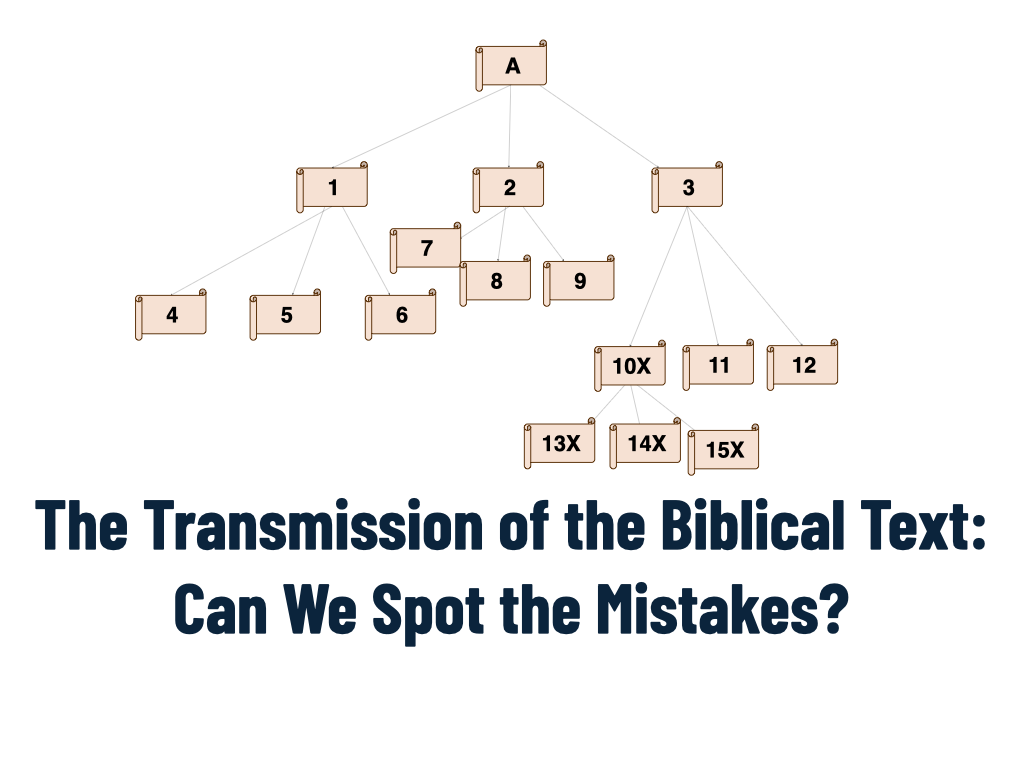
What many people do not realize is that the multiplicity of diverse manuscripts and the presence of textual variants actually serves the interested reader! It is through the vast manuscript library that we are able to identify spurious translations and insertions. As the second illustration demonstrates, having access to this plethora of manuscripts is an embarrassment of riches, enabling us to identify mistakes in transmission, determine when they occurred, and recover the legitimate reading. The Holy Spirit never promised to superintend the translation process or confirm the accuracy of every manuscript; the Holy Spirit simply revealed He has inspired the original authors and their original documents. Through the manuscript evidence we now have, we reproduce those original documents with confidence. As we will see, though, our Muslim friends cannot say the same as it relates to the Quran.
While perhaps not immediately apparent, our Muslim friends have a problem as it relates to the Quran. We are told the Bible was the word of God until it was corrupted, but the Quran, having been divinely revealed and inspired, is the word of God. Yet, even that claim is suspect and prone to leaving the wrong impression.
When our devout Muslim neighbors say the Quran is inspired, they mean only the Arabic version of the Quran is inspired. This principle is acknowledged within the Quran (12:2; 14:4; 42:7; 41:44). Because of this, for example, English translations like the Saheeh International translation are useful but are not considered to be inspired: “The fact that a translation of the Qur’an cannot be considered as a substitute for the actual Qur’an has been agreed upon by all the major scholars of Islam. . . any translation of the Qur’an is, in reality, an interpretation of the Qur’an, and not the Qur’an itself, simply because the Qur’an is the perfect Word of Allah. . .” (Nassimi, 36). Interestingly, a failure to understand Arabic leaves one incapable of understanding and following the supposedly inspired Quran.
While we might be left with the impression that there is only one version of the Quran, that impression, surprisingly, is incorrect. Does it not seem contradictory that, although the Quran promises that heaven preserves the Quran (15:9), Islamic scholars identify several Arabic readings (qiraat) of the Quran that are regarded as inspired? Our Muslim friends clarify that there is only one Quran revealed in seven dialects, yet confusingly, they also affirm that these seven inspired dialects of the one Quran have descended through time to us, “resulting in ten recognized Qiraat” (i.e., qiraat meaning versions or readings) (Eltahan, “How Many Versions of the Quran Are There?”). While going from one Quran to seven dialects might be understandable, the seven dialects turning into ten “recognized” (read: authoritative) readings strains credibility—how could these readings be equally inspired by Allah yet exhibit differences beyond word-for-word translation? The Islamic contention that heaven has meticulously ordered the translation process introduces more questions than answers.
Questions regarding the legitimacy of guiding religious books are of extreme importance; these issues must be studied! The standard Islamic narrative that the Bible has been corrupted through years of transmission is a claim that simply has not been demonstrated. Without any such proof, claims of corruption ought to be discarded. Though our devoted Muslim neighbors claim to regard only one Quran, that affirmation is suspect not only with regard to the written language of the Quran in question, but also with regard to the provenance of the versions of the Quran in circulation. There is good reason to accept the Bible, and there is good reason to look upon the Quran with skepticism.
Asad, Muhammad. The Message of the Qur’an. Bristol, England: The Book Foundation, 2003, 2008.
Ehrman, Bart D. Misquoting Jesus: The Story Behind Who Changed the Bible and Why. San Francisco: HarperSanFrancisco, 2007.
Eltahan, Abeer. “Are There Different Versions of the Quran?” Explore Islam. September 18, 2024. https://explore-islam.com/are-there-different-versions-of-quran/.
Geisler, Norman L., and William E. Nix. From God to Us: How We Got Our Bible. Chicago: Moody Press, 1974.
Nassimi, Daoud Mohammad. A Thematic Comparative Review of Some English Translations of the Qur’an. PhD diss., University of Birmingham, 2008. https://etheses.bham.ac.uk/id/eprint/263/.
The Church of Jesus Christ of Latter-day Saints. Articles of Faith. https://www.churchofjesuschrist.org/comeuntochrist/article/articles-of-faith.
Tyler Sams has worked with the University Oaks church of Christ in San Antonio, TX, since March 2021. He and his wife, Audrey, have two children. The church website is here. He can be reached here.



Note: Please send additions, corrections and updates here.
Updated: 11/1/2025
17312 Jones Rd, Athens, AL 35613
Sun. Bible Study 9:30 am | Sun. Worship: 10:20 am & 5:00 pm | Wed. Bible Study 7:00 pm
Evangelist: Jonathan Reeder | Website | 256-233-3160
24190 Wooley Springs Rd, Athens, AL 35613
Sun. Worship 9:30 am & 5:15 pm | Wed. Bible Class 7:00 pm
Evangelists: Bob Watson & Matt Taylor | Website
3955 Pine Lane, Bessemer, AL 35022
Sun. Bible Study 9:10 am | Sun. Worship 10:00 am & 5:00 pm | Wed. Bible Class 7:00 pm
Evangelist: David Deason | 256-497-8127 205-425-2352 | Email | Website
2325 Old Columbiana Rd. (near I-65 & Hwy. 31)
Sun. Bible Study 9:00 am | Worship 10:00 am & 5:00 pm | Wed. Bible Study 7:00 pm
Evangelist: Kyle Pope | 205-822-0018 | Website
19965 Sandlin Rd. Elkmont, AL 35620
Sun. Worship 9:30 am & 3:00 pm | Bible Classes: 10:45 am | Wed. Bible Study 7:00 pm
Evangelist: Lance R. Taylor | 256-777-0990 | Website
851 N. Pine St. (Located next to University campus)
Sun. Bible Study 9:30 am | Worship 10:15 am & 5:00 pm | Wed. Bible Study 7:00 pm
Evangelist: Kenny Moorer | 256-766-0403
601 Pineywood Road, Gardendale, AL, 35071 (Located 10 miles N of Birmingham)
Sun. Bible Study 9:30 am | Worship: 10:25 am & 5:00 pm | Wed. Bible Study: 7:00 pm
Evangelists: Andrew Smith & Jason Shackleford | 205-631-2131 | Website
129 Hillcrest Rd, Mobile, AL 36608
Sun. Worship 9-9:30 am | Bible Study 9:30-10:30 am | Worship 10:30-11:30 am | Wed. Bible Study 7:00 pm
Evangelist: Ken Sils | 765-307-8048 | 251-342-4144 or 342-2041 | Website
271 Highway 65 N, Conway, AR 72032
Sun. Bible Study 9:00 am | Worship 10:00 am & 5:00 pm | Wed. Bible Study 7:00 pm
Evangelist: Bruce Reeves | Bldg: 501-336-0052 | Website
2655 Prince St., Conway, AR 72034
Sun. Worship 9:00 pm | Bible class 9:50 am | Worship & Lord’s Supper: 10:40 am | Wed. Bible Class 7:00 pm
501-450-8640
2323 South 46th St.
Sun. Bible Study 9:45 am | Worship 10:30 am | Wed. Bible Study 7:00 pm
407 Bella Vista Dr.
Sun. Bible Study 9:30 am | Worship 10:15 am & 5:00 pm | Wed. Bible Study 7:00 pm
Evangelist: Norman E. Sewell | 870-741-9104 or 870-741-5151 | Website
514 Airport Rd.
Sun. Bible Study 10:00 am | Worship 11:00 pm & 6:00 pm | Wed. Bible Study 7:00 pm
Evangelist: Dick Blackford | 870-933-9134
17903 Ibbetson Ave.
Sun. Bible Study 9:45 am | Worship 10:50 am & 6:00 pm | Wed. Bible Study 7:30 pm
562-866-5615 | Website
3433 Studebaker Rd.
Sun. Bible Study 9:50 am | Worship 10:45 am & 5:30 pm | Wed. Bible Study 7:00 pm
JP Flores | 562-420-2363 or Mark Reeves | 562-377-1674 | Website
449 W. Allen Ave., Suite 120, San Dimas, CA 91773
Sun. Bible study 10:00 am | Worship 11:00 pm & 4:00 pm | Wed. Bible Study 7:30 pm
909-788-9978 | Website
Meets at the Fort Collins Senior Center, 1200 Raintree Dr., Fort Collins, CO 80526
Sun. Bible Study 9:30 am | Worship 10:30 am
Evangelist: Richie Thetford | Website
1414 Hawk Parkway, Unit C
Sun. Worship 11:00 pm | Bible Study 2 pm & 1:30 pm
970-249-8116 |
64 Casting Lake Rd.
Sun. Bible Study 9:00 am | Worship 10:00 am & 6:00 pm | Wed. Bible Study 7:00 pm
850-622-3817 | Website | Location change coming in 2022: 497 Church St Santa Rosa Beach, FL 32459
196 Ave C, Geneva, FL 32732
Sun. Bible Study 10:00 am | Worship 10:45 am
(689) 229-9888 | Website
6 Lane Dr., Mary Esther, FL 32569
Sun. Bible Study 9:30 am | Worship 10:30 am & 5:00 pm | Wed. Bible Study 7:00 pm
850-244-9222 | Website | Evangelist: Chris Simmons | Email
3940 S. Bumby Ave.
Sun. Bible Study 9:30 am | Worship & Communion Service 10:30 am (No pm Service) | Wed. Bible Study 7:00 pm
Evangelist: Shawn Jeffries and Jared Rosado
Office: 407-851-8031 | Website | Note: Please call for current worship and Bible study times.
621 E. Wheeler Rd.
Sun. Bible Study 10:00 am | Worship 10:50 am & 6:00 pm | Wed. Bible Study 7:30 pm
Evangelist: Bobby Witherington | 813-684-1297 | Website
Route 116 (near Callaway Gardens)
Sun. Bible Study 10:00 am | Worship 11:00 pm & 6:00 pm | Wed. Bible Study 7:30 pm
Evangelist: Tommy W. Thomas | 706-628-5117 or 628-5229 |
Meeting at 321 2nd St. S., Ste. 103, Nampa ID 83651
Sun. Bible Study 10:00 am | Worship 11:15 am | Wed. Bible Study 7:00 pm
208-461-1318 | Email | Website or here
Note: Please see website for most current information.
370 N. Shilling | P.O. Box 158-83221
Sun. Bible Study 10:00 am | Worship 11:00 pm | Wed. Bible Study 7:30 pm
208-785-6168 or 681-1552
1310 NE 54th Ave, Des Moines, IA 50313
Sun. Bible Study 9:45 am | Worship 10:40 am | Wed. Bible Study 7:00 pm
515-262-6799 | Website
1236 63rd St. (Dir: 1.5 miles E of I355)
Sun. Bible Study 9:00 am | Worship 9:55 am & 6:00 pm | Wed. Bible Study 7:30 pm
Evangelist: Steve Wolfgang | 630-968-0760 | Website
1100 S. 17th St.
Sun. Bible Study 9:30 am | Worship 10:30 am & 6:00 pm | Wed. Bible Study 7:00 pm
217-234-3702
16224 S Vincennes Ave.
Sun. Bible Study 9:00 am | Worship 10:00 am & 4 pm | Wed. Bible Study 7:00 pm
Evangelist: Donald Hawkins | 708-339-1008 | Website
Meeting @ Sleep Inn Suites and Motel | 1101 North Cummings Lane, Washington, IL 61571
Sun. Worship: 11:30 am | Bible Study: 12:30 pm | Wed. Bible Study 6:30 pm @ home of Tim Sundlie, call for address
Evangelist: Tim Sundlie | 608-796-9028 | Email | Website
407 W Lewis and Clark Parkway, Clarksville, IN 47129
Sun. Bible Study 9:30 am | Worship 10:30 am & 6:00 pm | Wed. Bible Study 7:30 pm
Elders: Allen L. Morris (812) 989-5838 and Stephen W. Nale (502) 727-7559 or (812) 944-2305 | Website
Sun. Bible Study 9:30 am | Worship 10:30 am | Wed. 7:00 pm
765-676-6404 | Website
15530 Herriman Blvd, 46060
Sun. Bible Study 10:00 am | Worship 11:00 am | Wed. Bible Study 7:00 pm
Evangelist: John Smith | Email | 317-501-8035 or 317-501-0249 or 317-701-1204
400 Lafayette Ave. | P.O. Box 34
Sun. Bible Study 9:45 am | Worship 10:30 am & 6:00 pm | Wed. 7:00 pm
812-279-4332
(First St. & Karnes Ct.)
Sun. Bible Study 9:45 am | Worship 10:30 am & 5:00 pm | Wed. Bible Study 7:00 pm
Evangelist: Jeremy Goen | 812-967-3437 or 967-3520 | Website
302 S. Fourth Ave., Mulvane KS 67110 | Mail: PO Box 11
Sun. Bible Classes: 10:00 am | Worship 11:00 am | Wed. Bible Study 7:00 pm
Evangelist: Jay Horsley | 316-644-8503 | Website | Email
5600 SW 17th St, Topeka, KS 66604
Sun. Bible Study 9:15 am | Sun. Worship 10:30 am | Wed. Bible Study 7:00 pm
785-235-8687 or 785-273-7977 | Website
1235 Williams St.
Sun. Worship 10:00 am | Bible Study After am Worship & 6:00 pm | Wed. Bible Study 7:00 pm
Evangelist: Jerid Gunter | 270-274-4451
8081 US Hwy 68-East, Benton, KY 42025
Sun. Bible Study 9:00 am | Worship 10:00 am | Wed. Bible Study 6:00 pm
270-354-9451 | Email | Website | Conveniently located near Kenlake State Resort Park on the western shore of Kentucky Lake.
612 Broadway
Sun. Bible Study 9:45 am | Worship 10:30 am & 5:00 pm | Wed. Bible Study 6:30 pm
Evangelist: Charles J. White | 270-422-3878
107 Sunny Hill Dr.
Worship 9:30 am & 11:30 am | Bible Study 10:30 am | Wed. Bible Study 7:00 pm
Evangelist: Steve Lee | 270-789-1651 | Website
103 N. Main St. | P.O. Box 233
Sun. Bible Study 10:00 am | Worship 10:45 am & 5:00 pm | Wed. Bible Study 7:00 pm
Evangelist: Jarrod Jacobs | 270-589-4167 or 270-274-3065
385 E. Lexington Ave.
Sun. Worship 10:00 am | Bible Study 11:15 am & 5:00 pm | Wed. Bible Study 7:00 pm
Evangelist: B.J. Sipe | 859-236-4204
18 Scott Drive, Florence, KY 41042
Sun. Worship 9:30 am & 5:30 pm | Sun. Bible Study 10:30 am | Wed. Bible Study 7:00 pm
859-371-2095 | Website
1733 Bowling Green Rd.
Sun. Bible Study 9:00 am | Worship 10:00 am & 6:00 pm | Wed. Bible Study 7:00 pm
Evangelist: Steve Monts | 270-776-9393 | Website
733 Mill St. Leitchfield, KY 42754
Sun. Bible Study 9:30 am | Worship 10:00 am Communion 10:55 am | Wed. Bible Study 6:00 pm
270-230-6144 | Website
1803 Dixie Garden Dr.
Sun. Bible Study 9:30 am | Worship 10:30 am & 6:00 pm | Wed. Bible Study 7:00 pm
Evangelist: Michael Hardin | Email | 502-937 2822
3221 East Hebron Lane
Sun. Bible Study 9:00 am | Worship 10:00 am & 5 pm | Wed. Bible Study 7:30 pm
Evangelist: Danny Linden & Ron Halbrook | 502-957-5115 or 502-955-1748 | Website
405 Orice Roth Rd. | 70737 (Baton Rouge area)
Sun. Bible Class 9:30 am | Worship 10:30 am & 6:00 pm | Wed. Bible Study 7:00 pm
Evangelist: R.J. Evans | Email | 225-622-4587
856 Brighton Ave. (Breakwater School) | Leave Maine Turnpike at Exit 48
Sun. Bible Study 10:00 am | Worship 11:00 pm w/ second service immediately following am worship | Mid-week Bible Study (please call for times & places)
207-839-3075 or 839-8409
3084 Creek Drive SE, #1-C, Kentwood, MI 49512 | P.O. Box 8446, Kentwood, Mich. 49508 (Grand Rapids area)
Sun. Worship 11:00 am | Sun. Bible Study 12:30 pm | Wed. Bible Study 7:00 pm
Evangelist: Joseph Gladwell | Email
414 South Main Street
Sun. Bible Study 10:00 am | Worship 11:00 am | Wed. Bible Study 6:00 pm
Evangelist: Ryan Thomas | 810-837-1302 or 989-389-3226 | Website
2110 E State Line Rd. (Exit I-55) (Memphis area)
Sun. Bible Study 9:30 am | Worship 10:30 am | Wed. Bible Study 7:00 pm
Evangelist: James A. Brown | Bldg: 662-342-1132
805 Meadow Rd, Severn, MD 21144
Sun. Bible Study 10:00 am | Sun. Worship 11:00 pm & 6:00 pm | Wed. Bible Study 7:30 pm
Evangelist: Brandon Trout | 410-969-1420 or 410-551-6549 | Website
422 N Linton St., Blodgett, MO 63824
Sun. Worship 10:00 am | Wed. Bible Study 7:00 pm
Evangelist: Russell Rice | 573-475-0417
4000 SW Christiansen
Sun. Worship 9:00 pm | Bible Study 10:00 am | Worship 11:00 pm | Wed. Bible Study 7:00 pm
Evangelist: Brett Hogland | 816-228-9262
432 Eagle Rock Rd, Branson, MO 65616
Sun. Worship 9:30 am | Bible Study 10:30 am | Sun. Evening Worship 5:00 pm | Wed. Bible Study 6:00 pm
Evangelist: Philip North | 417-239-1036 | Email | Website
2912 Bloomfield Rd
Sun. Bible Study 9:15 am | Worship 10:00 am | Wed. Bible Study 7:00 pm
Seth McDonald & Jerry Lee Westbrook | 573-837-1001 | Email | Website
703 Harrison St.
Sun. Bible Study 10:00 am | Worship 11:00 pm & 6:00 pm | Wed. Bible Study 7:00 pm
Evangelist: Nolan Glover | 870-650-1648 | Website
685 Sidney St.
Sun. Bible Study 9:30 am | Worship 10:15 am & 5:00 pm | Wed. Bible Study 7:00 pm
Evangelist: Lynn Huggins | 573-265-8628
2727 County Line Rd.
Sun. Bible Study 9:00 am | Worship 9:50 am | Wed. Bible Study 7:00 pm
816-279-4737 | Website
Bell St & S 7th St. Beatrice, NE 68310
Sun. Bible Study 9:00 am | Worship 10:00 am & 6:30 pm
402-233-4102 or 402-228-3827 | Website
5327 S. Tryon Street, Charlotte, NC 28217
Sun. Bible Study 9:30 am | Sun. Worship 10:30 am | Wed. Bible Study 7:00 pm
704-525-5655 | Website
3781 East Highway 27, Iron Station, NC 28080
Sun. Bible Study: 10:00 am | Sun. Worship 11:00 am & 6:00 pm | Wed. Bible Study 7:00 pm
Evangelist: Stan Adams | 704-748-9777 (Bldg) & 704-748-3747 (Jerry) | Email | Website
1031 Welford Dr, Beavercreek, OH 45434 (located a few miles E of Dayton)
Sun. Short Worship: 9:30 am | Bible Study 10:05 am | Sun. Worship 11:00 am | Wed. Bible Study Adults: 1:00 pm & All ages: 7:00 pm
Evangelist: Heath Rogers | 937-426-1422 | Website
13501 Lorain Ave, Cleveland, OH 44111
Sun. Bible Study 10:00 am | Worship 11:00 am | Wed. Bible Study 7:00 pm (Call)
Evangelist: John Dicus | (330) 723-0111 or (330) 590-0227 or (216) 322-9392 | Website
28 W. Main St., Dayton, OH 45449
Sun. Worship 9:00 pm | Bible Study 9:30 am | Worship 10:25 am | Wed. Bible Study 7:00 pm
Evangelists: Michael Grushon 937-866-5162 or Alan Beck 937-469-3311 | Website
6417 Franklin-Lebanon Rd. Franklin, OH 45005
Sun. Bible Study 10:00 am | Worship 10:45 am | Tues. Bible Study 6:30 pm
Evangelist: Josh Lee | 937-789-8055 or 937-746-1249 | Website
1973 W Main St. New Lebanon, OH 45345
Sun. Bible Study 9:30 am | Worship 10:30 am, & 5:00 pm | Wed. Bible Study 7:00 pm
Evangelist: Bruce Hastings | 937-687-7150 or 937-478-0367
80 Sandhill Rd. Reno, OH 45773
Sun. Bible Study 9:30 am | Worship 10:30 am & 6:30 pm | Wed. Bible Study 7:00 pm
Evangelist: Mark Childers | 304-615-1091 | 740-374-9827 | Website
4110 Frey Rd., Northwood, OH 43619 (Toledo Area)
Sun. Worship 11:00 pm
Evangelist: Donald Jarabek | 419-893-3566 & 567-331-2269
33226 Children’s Home Rd., Pomeroy, OH 45769
Sun Worship 10:00 am & 5 pm | Bible Study 11:00 am | Wed. Bible Study 6:00 pm
Jack Hunt | Email | 740-645-4612 | Website
2120 No. A St.
Sun. Bible Study 9:45 am | Worship 10:45 am & 5:30 pm | Wed. Bible Study 7:00 pm
Evangelist: Rob Lungstrum | 918-931-1362 or 918-423-3445
4110 NE 122nd Ave #101, Portland, OR 97230
Sun. Bible Study 10:00 am | Worship 11:00 am | Thur. Bible Study 7:00 pm
Evangelist: Samuel A. Matthews | 971-331-2838 | Bldg: 503-432-8697 | Email | Website
3702 E. Long St.
Sun. Bible Study 9:30 am | Worship 10:30 pm & 5:30 pm | Wed. Bible Study 7:30 pm
Bldg: 541-367-1599 | Email | Website
7222 Germantown Ave, Philadelphia, PA 19119
Sun. Bible Study 10:15 am | Sun. Worship: 11:15 am | Tues. Bible Study: 7:00 pm
Evangelist: James H. Baker, Jr. | 215-248-2026 | Website
3000 Trotter Rd. Hopkins, SC 29061
Sun. Bible Study 10:00 am | Worship 11:00 am & 3:00 pm
Building Phone: Bldg: 803-600-2297
Contacts: Brad McCleary | Email | 803-587-2774
Charles Foxworth | Email | 360-303-2029
David Gibson | Email | 803-419-4802
3370 Broad St. Extension
Sun. Bible Study 9:30 am | Worship 10:30 am & 5:30 pm | Wed. Bible Study 7:00 pm
Evangelist: A.A. Granke, Jr. | 803-499-6023
4013 Edmund Hwy., West Columbia, SC 29170
Note: Our website displays our current assembly schedule.
Evangelist: Jerry Cleek | 219-313-1108 | Website
326 Powell Road, Collierville, TN 38017
Sun. Bible Study 9:00 am | Worship 10:00 am | Wed. Bible Study 7:00 pm
Evangelist: Doug Seaton | 901-854-6816 or 901-634-7840
417 Mooresville Pike | (Located .8 mi. N. of Hwy. 50/Jas. Campbell)
Sun. Bible Study 9:30 am | Worship 10:30 am & 3:30 pm | Wed. Bible Study 7:00 pm
931-388-5828 or 931-381-7898 | Website
4894 Hooper Hwy. | 37722 | (Located 15 mi. E. of Gatlinburg on Hwy. 321)
Sun. Bible Study 10am | Worship 11:00 pm & 5:00 pm | Wed. Bible Study 6:00 pm
Evangelist: Olie Williamson | 423-487-5540 or 423-748-0844
350 N Main St. Kingston Springs, TN 37082
Sun. Bible Study 9:00 am | Worship 10:00 am & 5:00 pm | Wed. Bible Study 7:00 pm
108 Locust St.
Sun. Bible Study 9:30 am | Worship 10:30 am & 5:00 pm | Wed. Bible Study 7:00 pm
Evangelist: Daniel H. King, Sr. | 931-379-3704 or 931-964-3924 | Website
1110 Cason Lane
Sun. Bible Study 9:00 am | Worship 10:00 am & 5:00 pm | Wed. Bible Study 7:00 pm
Bldg: 615-896-0090 | Website
2091 Pitts Ln, Murfreesboro, TN 37130 (located at the corner of Northfield Blvd and Pitts Lane)
Sun. Bible Study 9:30 am | Sun. Worship 10:30 am & 6:00 pm | Wed. Bible Study 7:00 pm
Evangelist: David Bunting | 615-893-1200 | Website
7471 Charlotte Pike
Sun. Bible Study 9:00 am | Worship 10:00 am & 5:00 pm | Wed. Bible Study 7:00 pm
Evangelist: Lee Wildman | 615-952-5458 or 615-356-7318
1414 W. Exchange Pkwy
Sun. Bible Study 9:00 am | Worship 10:00 am & 5:00 pm | Wed. Bible Study 7:00 pm
Evangelist: Jerry King 214-504-0443 or 972-727-5355 | Website
4343 S Interstate 35, Alvarado, TX 76065 (Located on the East Service Road off I-35 North of Alvarado)
Mail: I-35 church of Christ, P.O. Box 1269, Alvarado, TX 76009
Sun. Bible Study 10:00 am | Worship 11:00 am | Wed. Bible Study 7:00 pm
682-202-9741 or 817-739-3402 | Website
605 E. Adoue St., Alvin, TX 77511
Sun. Bible Study 9:30 am | Worship 10:30 am & 5:00 pm | Wed. Bible Study 7:30 pm
Evangelist: Mark Mayberry | Email | Website
701 North Pruett St.
Sun. Bible Study 9:45 am | Worship 10:40 am & 6:30 pm | Wed. Bible Study 7:00 pm
Bldg: 281-422-5926 | Weldon: 713-818-1321 | Website
2919 Main St/FM 517 E., Dickinson, TX 77539
Sun. Bible Study 10:00 am | Sunday Worship 11:00 am & 6:00 pm | Wed. Bible Study 7:00 pm
713-298-6673
301 Robison St.
Sun. Bible Study 9:30 am | Worship 10:30 am & 6:00 pm | Wed. Bible Study 7:00 pm
Evangelist: Phillip Stuckey | 361-782-5506 or 361-782-2844 | Website
6110 White Settlement Rd. 76114
Sun. Bible Study 9:30 am | Worship 10:30 am & 6:00 pm | Wed. Bible Study 7:30 pm
817-738-7269
4303 18th St, Bacliff, TX 77518
Sun. Bible Study 9:00 am | Sun. Worship 10:00 am & 6:00 pm | Wed. Bible Study 7:00 pm
Evangelist: Richard Lay | Website
Old Granbury Rd Church of Christ
4313 Old Granbury Rd, Granbury, TX 76049
Sun. Bible Study 9:30 am | Sun. Worship 10:30 am | Wed. Bible Study 7:00 pm
Evangelist: Chip Foster | 817-913-4209 or 817-279-3351 | Website
2510 Fry Rd, Houston, TX 77084
Sun. Bible Study 9:45 am | Worship 10:30 am & 6:00 pm | Wed. Bible Study 7:00 pm
Evangelist: David Flatt | Email | Website
6111 Indiana Ave, Lubbock, TX 79413
Sun. Bible Study 10:00 am | Sun. Worship 9:00 am & 11:00 am | Wed. Bible Study 7:00 pm
806-795-3377 | Website
1820 Mansfield Webb Rd, Mansfield, TX 76063
Sun. Bible Study 9:30 am | Sun. Worship: 10:20 am & 5:00 pm | Wed. Bible Study 5:30 pm.
Evangelist: Tom Roberts | 817-996-3926 | Website
612 S Shawnee St, Nacogdoches, TX 75961
Sun. Bible Study 9:45 am | Worship 10:30 am & 6:00 | Wed. Bible Study 6:00 pm
Minister: Van Dennis | 936-615-2950
3831 N.E. Stallings Dr.
Sun. Bible Study 9:30 am | Worship 10:20 am & 6:00 pm | Wed. Bible Study 7:00 pm
Evangelists: Randy Harshbarger & Jay Taylor
314 N. Tolbert
Sun. Bible Study 9:30 am | Worship 10:30 am & 5:00 pm | Wed. Bible Study 7:00 pm
Evangelist: Ronald Stringer
4404 Twin City Blvd.
Sun. Bible Study 9:30 am | Worship 10:30 am & 6:00 pm | Wed. Bible Study 7:30 pm
Evangelist: Jason Garcia Email or Email | 254-939-0682 | Website
2301 Franklin Dr., Texarkana, AR 71854
Sun. Bible Study 9:30 am | Worship 10:15 am | Wed. Bible Study 7:00 pm
870-772-0746 | Website
340 E Warren St. (in Hewitt, a suburb of Waco)
Sun. Bible Class 9:30 am | Worship 10:30 am | Wed. Bible Study 7:00 pm
Evangelist: Marc Smith | 254-292-2482 or 652-7698
4500 Kell West Blvd, Wichita Falls, TX 76309
Sun. Bible Class 9:30 am | Worship 10:30 am & 3:30 pm | Wed. Bible Study 6:30 pm
Evangelist: Dennis L. Scroggins | 512-626- 5702 | Email | Website
Please mail all correspondence to 1504 Hayes St, Wichita Falls, TX 76309
Meeting in the Capital City Grange Hall, 6612 Route 12 Berlin, VT 05602
Sun. Bible Study 9:00 am | Worship 10 am | Tues. Evening in Homes
Evangelist: Open | Website | P.O. Box 70, Williamstown, VT 05679 | For questions or directions: Wade Holt 802-485-4311
217 Taxus St., Chesapeake, VA 23320
Sun. Bible Study 10:00 am | Worship 11:00 am & 5:00 pm | Wed. Bible Study 7:00 pm
Evangelist: Steven Matthews | 757-436-6900 | Website
8330 Doublecreek Court, Chesterfield, VA 23832 (Located in teh Metro Area; Courthouse Rd. at Double Creek Ct. 2.2 miles S of Rt. 288)
Sun. Bible Study 9:30 am | Worship 10:30 am & 5:00 pm | Wed. Bible Study 7:00 pm
Evangalist: Nathan L. Morrison | 804-778-4717 | Website
1208 W. 41st St.
Sun. Bible Study 10:00 am | Worship 11:00 pm & 6:00 pm | Wed. Bible Study 7:00 pm
Evangelist: Jack Bise, Jr.
2970 Old Leaksville Rd.
Sun. Bible Study 10:00 am | Worship 11:00 pm & 5:30 pm | Wed. Bible Study 7:00 pm
276-956-6049 | Website
929 Indiana Ave. NE (5 min. from Roanoke Convention Center)
Sun. 1st Lesson 9:15 am | Bible Study 10:00 am | Worship 11:00 pm | Wed. Bible Study 7:30 pm
Evangelist: Brent Paschall | 540-344-2755 | Website
5652 Haden Rd.
Sun. Bible Study 10:00 am | Worship 11:00 am
Robert Mallard | 757-464-4574
1860 Mt Baker Hwy, Bellingham, WA 98226,
Sun. Bible Study 9:30 am | Worship 10:30 am & 6:00 pm | Wed. Bible Study 7:00 pm
Evangelist: Steven J. Wallace | 360-752-2692 or 806-787-5088 | Website & Website
Meeting at Gray Middle School, 6229 S. Tyler St., Tacoma, WA 98409
Note: Please see webpage for updated meeting location and times.
Sun. Bible Study 10:00 am | Worship 11:00 pm | Wed. Bible Study 7:00 pm (Online)
253-242-3098 | Email | Website
7 Old Davisson Run Rd, Clarksburg, WV 26301
Sun. Bible Study 9:30 am | Worship 10:20 am
304-622-5433 | Website | Email
1929 Morgantown Ave.
Sun. Bible Study 10:00 am | Worship 10:45 am & 6:00 pm | Wed. Bible Study 7:00 pm
304-363-8696 or 304-844-2437
210 Cedar Ave, Moundsville, WV 26041
Sun. Bible Study 9:30 am | Sun. Worship 10:30 am & 6:00 pm | Wed. Bible Study 7:00 pm
Evangelist: Tony Huntsman | 304-845-4940 | Website