(August, 2025 | No. 8 | Vol. 69)
8/1/2025
Truth Magazine (ISSN 1538-0793) is published once a month by Truth Publications, Inc., 103 W. Washington St., Athens, AL 35611.
© 2025 Truth Publications, Inc. All Rights Reserved.
Manuscripts should be sent to the editor, Mark Mayberry, at mark@truthpublications.com. Link.
Subscriptions, renewals & other correspondence should be sent to: Truth Magazine, 103 W. Washington St., Athens, AL 35611 or by emailing us at subscriptions@truthmagazine.com. Link.
Book orders should be sent to: CEI Bookstore | truthbooks.com | Street Address: 103 W. Washington St., Athens, AL 35611 | Phone: (855) 492-6657 | Email: sales@truthbooks.com Link.
Online Website: truthmagazine.com
DISCLAIMER: Books in ads are screened, but an ad does not mean unqualified endorsement. All books should be tested by Scripture. We appreciate readers notifying us if they find some glaring fault in the ads.
By Mark Mayberry
Synopsis: John Mark Hicks recently posted a thoughtful and respectful response to critiques of his book, engaging in meaningful dialogue with Truth Magazine. As editor of this journal, I am thankful for Hicks’ openness to continued discussion on spiritual matters. This exchange reflects a shared commitment to addressing theological concerns in a spirit of brotherly conversation.
On May 18, 2025, John Mark Hicks posted “A Response to the February 2024 Issue of Truth Magazine” on his blog, Searching for the Pattern which can be found here. His post addresses critiques from the February 2024 issue of Truth Magazine concerning his book Searching for the Pattern, etc. I want to express my sincere appreciation to John Mark Hicks for his thoughtful and reasoned response. His engagement reflects a spirit of brotherly dialogue that is both substantive and respectful, and it opens the door for continued conversation on matters of mutual spiritual concerns. I share the sentiments of Steve Wolfgang, who responded to brother Hick’s post on May 19th by saying, “Thanks, John Mark, for a gracious and substantive rejoinder, which leaves doors open for future conversation. I appreciated our interaction at the recent Ellis symposium, and look forward to future opportunities for brotherly discussion.”
In this editorial for the August 2025 issue of Truth Magazine, I offer a detailed critique of John Mark Hicks’ response to the February 2024 issue of Truth Magazine. Below, I affirm the historical and theological necessity of biblical patterns, contrasting Hicks’ “theological hermeneutic” with the traditional “blueprint hermeneutic” used in Churches of Christ. My critique defends the use of commands, examples, and inferences as essential tools for discerning God’s will, citing both Old and New Testament precedents. In a spirit of seeking to reach a correct and common understanding of God’s will, we challenge Hicks’ positions on general benevolence, women’s roles, and the Lord’s Supper, arguing that his approach undermines scriptural authority and promotes cultural accommodation. In conclusion, we reemphasize the importance of doctrinal clarity, the exclusivity of truth, and the church’s responsibility to uphold divine patterns in all aspects of faith and practice.
John Mark Hicks correctly notes that the emphasis on a blueprint has long characterized Churches of Christ and continues to influence non-institutional brethren today. He cites 1860 as the point when the blueprint pattern approach began to dominate in Churches of Christ. Alexander Campbell introduced the missionary society in 1849, formally establishing the American Christian Missionary Society (ACMS) and serving as its first president. The goal was to organize and support evangelistic efforts “more effectively,” but the move was controversial. Many in the Restoration Movement regarded it as an unscriptural innovation that introduced a human institution into the work of the church.
The earliest documented use of instrumental music in a Restoration Movement church occurred in 1859 at Midway Christian Church in Kentucky, where L. L. Pinkerton introduced a melodeon. After the Civil War, the use of instruments gradually spread, sparking heated debates and eventually leading to a division between Churches of Christ (a cappella) and Christian Churches/Disciples of Christ (instrumental) in the late nineteenth and early twentieth centuries.
These two issues—the missionary society and instrumental music—precipitated a split between brethren who, until then, had worshiped together in relative unity. Churches of Christ, following the biblical pattern and respecting the silence of Scripture, sought book, chapter, and verse—based upon divine commands, approved apostolic examples, and necessary inferences—for all they preached and practiced. By contrast, the Christian Church argued that biblical silence is permissive, adopting a much looser view of authority. This led to widespread innovations and pervasive apostasy.
A century later, brethren who promoted the sponsoring church arrangement and church support of human institutions for evangelism, edification, and benevolence used the same reasoning to justify their innovations. This led to division in the 1950s and 1960s, when forgetting these principles resulted in the same sad outcome: brethren practicing many things for which they had no authority.
Hicks contrasts what he calls “blueprint pattern theology” and “God-oriented theology.” In making this distinction, he diminishes the recurring biblical theme that our Lord is a God of patterns. Throughout Scripture, God has given patterns to men. By divine revelation, He has provided man with clear instructions—through positive commands and negative prohibitions—and expects men to follow His will faithfully. How else can a man know the mind of God?
Like others who promote a progressive approach to the Bible, Hicks attempts to frame the discussion as an “either/or” proposition: either we follow a “blueprint hermeneutic” (which he asserts is a mere human construct), or we follow a “theological hermeneutic” (which he argues is biblical). He uses language that makes it sound as though his view is centered in God and ours is not. However, it’s not a matter of “either/or” but one of “both/and.” Conservative-minded disciples approach Sacred Scripture from both a theological perspective and a pattern perspective.
Hicks discounts our approach to Scripture by labeling it a “blueprint hermeneutic.” However, it is actually grounded in the nature of God and is theologically centered. All of this “either/or” framing—i.e., blueprint hermeneutic vs. theological hermeneutic—creates a false dichotomy and is, on some level, disingenuous. We are the ones who adhere to a theological model that matches and harmonizes with the nature of God. Yes, we follow a “blueprint hermeneutic” but it is theologically centered on who God is—Our God is a God of patterns.
For example, the opening chapters of Genesis center on God as Creator. After the six days of creation, He did not simply walk away (as the deists suppose) and leave man without guidance. Instead, the Lord provided a pattern for man’s dominion over nature, as well as for marriage, modesty, morality, and more. His pattern for marriage—one man joined to one woman for life—is moral, theological, and exclusive, being rooted in the very character of God (Gen. 2:18-24).
Adam was told to tend the garden but forbidden to eat from the tree of knowledge of good and evil—a pattern involving personal responsibility. Contrasting acceptable and unacceptable worship, Abel acted in faith (Heb. 11:4)—in harmony with directions from God (Rom. 10:17)—unlike his brother Cain (Gen. 4:1-7). God gave Noah a pattern for constructing the ark (Gen. 6:13-22). A pattern for the tabernacle and its furnishings was given to Moses on Mt. Sinai: “See that you make all things according to the pattern” (Exod. 25:9, 40). David was given a divine pattern for the temple and its storehouses: “All this,” said David, “the LORD made me understand in writing by His hand upon me, all the details of this pattern” (1 Chron. 28:11-19, esp. v. 19).
There is also a pattern for God’s spiritual house, the church, as revealed in the New Testament. Its terms of admission are set forth in the Great Commission and echoed in Acts. Its pattern for corrective church discipline is described in the Gospels and Epistles (Matt. 18:15-17; 1 Cor. 5). The work, worship, and organization of the church are reflected in various statements of Jesus during His earthly ministry, in the Great Commission, in Acts, and the Epistles.
In acknowledging the importance of the apostolic message, faithful brethren are not exalting Acts and the Epistles over the Gospels. Rather, they recognize the pivotal importance of Acts 2, when the Church of Christ was established. From that point on, divine instruction was given to disciples on “how one ought to conduct himself in the household of God, which is the church of the living God, the pillar and support of the truth” (1 Tim. 3:15). Thus, we look to the entire New Testament for principles and precepts regarding the work, worship, and organization of the church, as well as its terms of admission and discipline.
Paul warned of a coming apostasy—“The Spirit explicitly says that in later times some will fall away from the faith. . .” (1 Tim. 4:1). In this and many other passages, “the faith” refers to an objective standard: the gospel of Christ, the good news of salvation. It is “from faith to faith” (Rom. 1:16-17). Obedient believers live in harmony with God’s revealed, objective standard. Divine truths found on the pages of the New Testament must be imprinted on the fleshy tablets of our hearts (Jer. 31:33; 2 Cor. 3:2-3). In this way, we learn to walk by faith (2 Cor. 5:7).
In contrasting blueprint and theological hermeneutics, Hicks acknowledges they are not mutually exclusive but compatible—a point with which I agree. He notes that everyone uses commands, examples, and inferences in some form and searches for a pattern or model.
However, Hicks objects to adopting a “pattern theology,” especially if it results in breaking fellowship over differing views, such as the “saints-only versus general benevolence” issue that led to division in the 1960s. He criticizes Roy Cogdill’s seven rules for determining whether an example is binding. Nevertheless, all must analyze whether a given Bible example is meaningful and relevant.
Is it significant that Jesus observed the Passover in an upper room and that the disciples at Troas assembled in an upper room? The second-floor settings are incidental, but the spiritual observance of the Lord’s Supper—instituted in the first instance and observed in the second—is highly significant. The emblems—unleavened bread and fruit of the vine—have deep spiritual significance, to the exclusion of other emblems such as Coke and cookies.
The applicability of using commands, examples, and necessary inferences may be observed in Matthew 19, when some Pharisees came to Jesus, testing Him and asking, “Is it lawful for a man to divorce his wife for any reason at all?” (v. 3). Jesus’s answer appeals to a biblical command, a divinely approved example, and concludes with a necessary inference:
And He answered and said, “Have you not read that He who created them from the beginning MADE THEM MALE AND FEMALE, and said, ‘FOR THIS REASON A MAN SHALL LEAVE HIS FATHER AND MOTHER AND BE JOINED TO HIS WIFE, AND THE TWO SHALL BECOME ONE FLESH’? So they are no longer two, but one flesh. What therefore God has joined together, let no man separate” (Matt. 19:4-6).
By saying, “Have you not read. . .,” Jesus points His questioners to the authoritative standard—the inspired word of God. First, He cites a divinely approved example: “He who created them from the beginning MADE THEM MALE AND FEMALE.” Next, He calls attention to a direct command: “FOR THIS REASON A MAN SHALL LEAVE HIS FATHER AND MOTHER AND BE JOINED TO HIS WIFE, AND THE TWO SHALL BECOME ONE FLESH.” Finally, Jesus draws a necessary inference: “So they are no longer two, but one flesh. What therefore God has joined together, let no man separate.”
The apostle Paul repeatedly used pattern language: “But thanks be to God that though you were slaves of sin, you became obedient from the heart to that form (tupos) of teaching to which you were committed” (Rom. 6:17). Addressing the young evangelist Timothy, he said, “Retain the standard (hupotupōsis) of sound words which you have heard from me, in the faith and love which are in Christ Jesus” (2 Tim. 1:13). The Greek word tupos (used fifteen times in fourteen verses) literally refers to a mark made by a blow or a form produced by a die—a model, example, or pattern to be followed. Hupotuposis, a derivative, also conveys the idea of a form or pattern. Clearly, the New Testament contains a pattern that believers must follow and obey (Phil. 3:17-18).
While Hicks objects to specifics such as saints-only benevolence and observing the Lord’s Supper exclusively on the first day of the week, are there other patterns he would reject? For example, the New Testament pattern for salvation—hearing, believing, repenting, confessing, and being baptized—is repeatedly cited in Scripture as essential. Yet, is Hicks willing to extend fellowship to those who have not conformed to this pattern?
In point five, Hicks objects to conclusions drawn by Richard and Christopher Hays in their 2024 book, The Widening of God’s Mercy, which he labels unbiblical. The Hayses argue that the overarching biblical narrative emphasizes divine mercy and inclusion, interpreting Scripture through the lens of God’s mercy. Difficult texts are reinterpreted in light of larger biblical themes, resulting in advocacy for LGBTQ+ inclusion. Hicks objects to their conclusions, yet in my judgment, he adopts a similar approach, though not to the same extent.
The arguments commonly used to justify reinterpreting biblical teaching on the role of women—often in response to cultural trends, allowing them to serve in preaching and pastoral roles—are strikingly similar to those advanced by individuals who advocate extending fellowship to the LGBTQ+ community. In both cases, biblical prohibitions are dismissed as culturally conditioned. Those who oppose these changes are portrayed as oppressive, while those who endorse them appeal to the love, grace, and mercy of God. They cannot envision a God who would be so narrow as to exclude women from the pulpit or the LGBTQ+ community from Christian fellowship, saying, “I don’t believe that is who God is!”
But how can we know anything about God? We learn about Him through the divinely inspired Scriptures. The Bible records God’s interactions with individuals and nations. Through it, we behold His goodness and severity. By reading the biblical narrative, we observe His character, discern His will, rejoice in His mercy, and respect His judgments.
I am thankful that Hicks objects to a theological hermeneutic that argues for LGBTQ+ inclusion. However, we must ask: If appealing to God’s love, grace, and mercy provides a basis for rejecting clear biblical teaching on the role of women, why doesn’t the same approach work for those who would extend fellowship to the LGBTQ+ community?
If the love of God allows us to go beyond the biblical pattern in one area, where does it stop? Why wouldn’t it apply in all areas? What is to prevent someone else from taking these same arguments and applying them to a practice or lifestyle that we might currently find objectionable?
Hicks lists criteria for the proper application of God’s commands in any culture, some being specific to circumstances and others universally binding. Good judgment is needed to determine when commands, examples, or inferences are binding. The procedure is reasonable, as Roy Cogdill sought in answering, “When is an example binding?” The same applies to commands and inferences.
Hicks outlines criteria for binding biblical commands, such as universal applicability or reflection of the eternal character of God. In this regard, he is in no stronger position than those he critiques—like Cogdill—since he, too, proposes his own set of interpretive rules:
When there is an explicit directive or prohibition in the biblical text which is (1) consistent throughout Scripture, (2) rightly understood in its contexts, (3) applied in diverse cultures without adaptation and with theological grounding, and (4) is rooted in the origins, narrative, and goals of God’s story, the theological hermeneutic has solid ground to hear and obey (I think blueprint advocates probably agree with the above sentence).
He gives a list of four categories; however, not everyone would agree that the items he includes are consistently treated throughout Scripture. If consistency is his metric, he may be left with no usable standard.
Applying Hick’s rules (which are subjective and selective) requires human judgment in application—precisely what he criticizes others for doing. Hicks makes interpretative decisions, just like Cogdill, approaching Scripture from the same basic framework, even if he arrives at different conclusions.
Reasoning is absolutely necessary in making applications, whether of commands, examples, or inferences. Of course, this underscores our responsibility to “accurately handle the word of truth” (2 Tim. 2:15). Ephesians 3:1-4 reveals that we can understand God’s will, while Ephesians 5:17 commands disciples to do so. Hicks acknowledges this, but does he apply it to Ephesians 4:1-6, which emphasizes the importance of manifesting the right attitude and adhering to the doctrinal truths upon which unity is based?
Hicks addresses ambiguity in commands or examples—a legitimate concern. For instance, while the Bible commands, “Go into all the world,” the mode of transportation is left to the evangelist, but the message must be the gospel of Christ. We have no right to bind human precepts as doctrine. Jesus Himself warns that teaching men’s commandments renders worship invalid (Matt. 15:1-9). Unauthorized religious practices will be rejected on the final day (Matt. 7:21-23).
Judgment is required in applying biblical commands, just as in applying examples and inferences. The holy kiss or foot washing, for example, can be adapted culturally to express love and service. In contrast, when the Lord specifies the type of music He desires or the one baptism He commands, we are restricted to singing in worship and baptism for the remission of sins.
By stressing ambiguity over certainty, Hicks embraces the modern idea that certainty is intellectually fragile and tolerance is preferred over absolutes—a notion reflected even in popular culture (e.g., “Only a Sith deals in absolutes”—Obi-Wan Kenobi from Star Wars: Episode III—Revenge of the Sith [2005]).
Despite this, the Bible affirms the reality of truth versus error. Jesus Himself said, “I am the way, the truth, and the life” (John 14:6), and, “If you continue in My word, then you are truly disciples of Mine; and you will know the truth, and the truth will make you free” (John 8:31-32). Jude exhorted his readers to “contend earnestly for the faith which was once for all handed down to the saints” (v. 3). These passages—along with many others that could be cited—reflect the exclusive nature of divinely revealed truth.
Those who promote general benevolence often appeal to Jesus’s example of feeding and healing both saints and sinners; however, His miracles were limited—especially toward non-Israelites. In like manner, the training mission on which Jesus sent the apostles was directed exclusively to Jews (Matt. 10:5-6).
Are these examples meant to define the church’s work? Jesus empowered the apostles to heal, but the purpose was to confirm the word, not to meet physical needs alone. If general benevolence was God’s design for the church throughout history, why did gifts of healing or physical provision cease? Only apostles bestowed spiritual gifts, and when they and their recipients died, miracles ceased. This shows such empowerment was never intended for the permanent church but for its infancy—serving to reveal and confirm the word.
God has fully equipped His people for all things pertaining to life and godliness (2 Pet. 1:2-3). His word supplies us with the precepts and power to carry out the tasks He has assigned. The church can fulfill its divinely ordained work—evangelism, edification, and benevolence—without reliance on human institutions.
While the church can (and should) help needy saints (Acts 4:32-35; etc.), the idea that the Lord’s church—a small fraction of the world’s population—can address all human suffering is impossible. The sheer disparity between the many in need and the relatively few in the church means that general benevolence efforts are largely ineffective, except as token gestures (such as keeping a stocked pantry for the hungry, serving Thanksgiving meals at the homeless shelter, or sending a small monthly donation to some benevolent institution, etc.).
The church’s effectiveness lies in fulfilling its God-given role, not in virtue signaling. Collectively, we are tasked with helping nonbelievers in ways that address their spiritual needs: preaching the gospel, leading them to Christ, etc. Compared to individual disciples fulfilling the mandate of Galatians 6:10 or Christian families adopting orphans, institutional efforts are ineffectual.
The institutional controversy was never about caring for orphans—it was about how such care is carried out. Ironically, the institutional model was later abandoned even by secular governments. They eventually acknowledged that housing children in large institutions was among the worst possible environments. The best solution is placing children in family homes.
The modest results of institutionalism—which undermined the saints-only pattern in the 1950s and ’60s—were not genuinely effective. God empowers us to accomplish what He commands; the church should not settle for tokenism.
If the federal government, with its vast authority and resources, cannot alleviate all need, how can the Lord’s church? The United States, despite being the world’s richest nation with the ability to tax extensively, cannot solve homelessness, hunger, or poverty. How then can the church, with limited resources, do so?
Before moving on, please consider one other point. Hicks argues that we should follow our Lord’s example in providing for the physical needs of unbelievers. Would he advocate following Jesus’s example in cleansing the temple? Would that mean entering a denomination and confronting its unscriptural innovations in the same aggressive manner? If not, why not? Why is Jesus’s example of feeding the hungry binding, but this example is off-limits?
Regarding cultural shaming (point three), I agree with many of Hicks’s principles but not his applications. If following the biblical pattern puts us at odds with contemporary culture and leads to criticism, so be it.
Of course, in the context of the topics addressed in the February 2024 issue of Truth Magazine, this discussion arose in response to Hicks’s push for significant changes regarding women’s roles in the pulpit and pastoral leadership. In the New Testament, public preaching was assigned to men. Every example of church leadership involves men. Paul tells the Corinthians, “Women are to keep silent in the churches” (1 Cor. 14:34) and instructs Timothy similarly (1 Tim. 2:11-15). In the aforementioned passage, Paul references the pattern laid down in the Garden of Eden to reinforce the roles of men and women (Gen. 2:18; 3:16). Please note also that elders must be “the husband of one wife” (1 Tim. 3:2; Titus 1:6).
Scripture contains examples of women teaching: older women teaching younger women (Titus 2:3-5), mothers instructing children, as Lois and Eunice did with Timothy (2 Tim. 1:5; 3:14-15), and Priscilla with Aquila teaching Apollos privately (Acts 18:24-26).
Actually, it is Hicks who seeks to change a long-recognized practice in Churches of Christ that is rooted in revelation. He argues that maintaining male leadership will lead to cultural shaming and that this tradition is not divinely mandated. Nevertheless, as previously cited, apostolic teaching, biblical examples, and necessary inferences justify this position—we hold it not merely as tradition, but because God established order in the home and the church, giving men leadership roles in both (1 Tim. 2:13-14).
Back in the 1970s, Hicks wrote a book defending a more conservative position of women teachers and their role in the church—which contradicts his current position (see Woman’s Role in the Church by Bruce L. Morton and John Mark Hicks, Lambert Book House, 1978). He now accepts the possibility—or inevitability—of expanded roles for women, something that he denied decades ago.
Hicks now disregards direct apostolic instructions regarding women, dismissing them as cultural rather than binding. However, this move is inconsistent with his appeal to other Scriptures as authoritative. He effectively sets aside inspired directives whenever they conflict with his evolving views.
Hicks criticizes the adaptation of a theological hermeneutic that subverts clear scriptural directives, yet he is guilty of this very thing regarding women’s roles. The Scriptures teach male-led homes and religious activity in both the Old and New Testaments. In seeking to expand women’s public roles, Hicks does precisely what he claims should not be done: ignoring divine patterns clearly revealed in Scripture.
Examples abound of brethren allowing cultural shaming to deter them from following the biblical pattern—such as when church discipline draws media scorn for enforcing biblical standards on issues like adultery (Matt. 18; 1 Cor. 5). Those who oppose abortion and homosexuality today are increasingly shamed and vilified.
The church is also “shamed” by evangelical culture for lacking a praise band or requiring baptism for remission of sins. Faithful brethren are criticized for upholding the exclusive nature of truth. Declaring Jesus as the sole path to salvation is offensive to a culture that claims any sincere faith suffices. If the world mocks us for adhering to the biblical pattern in any (or all) of these areas, so be it!
Progressivism in the political sphere offers a useful parallel. America’s written Constitution binds its officeholders, but since the 1920s, the idea of a “living constitution” has loosened adherence to the original intent, leading to alterations that the founders would scarcely recognize. Similarly, some interpret the Bible according to current values—redefining things such as morality, marriage, and gender in ways previously unknown.
When discussing pattern versus grace (point four), Hicks admits it is not “either-or” but “both-and.” We must follow God’s pattern and trust His grace. Notably in this context, Hicks embraces the term “pattern.” On the one hand, he dismisses pattern hermeneutics; on the other, he acknowledges God’s use of pattern language for understanding His word.
Let’s be clear: (1) Grace does not cover the continued practice of sin; (2) Grace does not condone preaching that sinful actions are right; (3) Grace does not extend to encouraging others to join in sinful practices.
Grace certainly covers sin, but only in line with repentance and obedience. Hicks’ view minimizes sin’s impact. To the modern mindset, Adam and Eve’s eating from the forbidden fruit may seem like a small thing, yet it resulted in separation from God. Sin’s seriousness must not be underestimated.
Hicks contrasts the theological hermeneutic with the blueprint hermeneutic, confusing the issue. Theology concerns the study of God; a theological hermeneutic is, by definition, God-centered. Yet, Scripture shows God is a God of patterns—a fact evidenced throughout both Testaments as previously mentioned. Therefore, in a significant sense, a “God-centered” hermeneutic includes a focus on the patterns God has revealed to be obeyed (Matt. 7:21-23; Rom. 6:17-18; 2 Tim. 1:13; 1 Cor. 4:6; 11:1-2; Phil. 4:9).
In the New Testament, Paul uses tupos to signify the “form” of doctrine delivered to believers, and calls for adherence to the “standard” of sound words. The idea of pattern extends throughout the covenants. Consider the following Old Testament examples of selective obedience: Why didn’t God accept both Cain and Abel’s offerings? Why was Uzzah struck down for touching the ark? Why were Nadab and Abihu consumed by fire? Why was Jeroboam’s decision to change worship practices repeatedly condemned? These stories illustrate a consistent principle: God does not accept unauthorized changes to His revealed pattern, no matter how “sincere” the person may be.
In response to Hicks’s discussion of “perfectionism,” we simply remind our readers that the biblical concept does not reflect sinless perfection but rather continuous striving to obey God’s word while relying on His grace in times of failure. Paul instructs the Corinthians to “perfect holiness in the fear of God” (2 Cor. 7:1), indicating that perfection is an ongoing process. Israel sometimes failed to follow the pattern completely and corrected their course upon realizing their error (Neh. 8:13-18). Perfection (teleios) implies growth and maturity, not flawlessness; therefore, we should not reject scriptural language simply because some misapply the term “perfectionism.”
In point six, Hicks compares law versus transformation and calls baptism an expression of allegiance to God. Does he accept the New Testament pattern regarding baptism—element (water), action (immersion), purpose (remission of sins), and subject (a penitent believer who has confessed Christ)? Does he object to the unscriptural practices of infant baptism, baptism by rose petals, or of those who regard baptism simply as an outward sign of a previously received grace? Does he accept as brethren those who have not complied with the biblical pattern?
Paul urges, “Present your bodies a living and holy sacrifice, acceptable to God, which is your spiritual service of worship. . . be transformed by the renewing of your mind” (Rom. 12:1-2). The will of God sets forth doctrinal distinctives and calls for sanctification, requiring continual reassessment, self-examination, and, when necessary, correction.
In point seven, Hicks describes the blueprint hermeneutic as allegedly simple, but then asserts that it is not, since it requires rigorous reasoning when determining whether commands, examples, or inferences are binding. He admits that “theological hermeneutic” adherents apply similar processes, if more loosely; yet, he criticizes us because we hold to a more exacting standard.
Hicks cannot escape the need to rightly divide the word of truth (2 Tim. 2:15). He accuses us of overemphasizing Acts and the Epistles while diminishing Jesus in the Gospels—a false charge. Jesus’s teachings and examples in the Gospels are treated as authoritative, just as Acts, the Epistles, and Revelation are.
The Epistles are as authoritative as Jesus’s words because He promised that the Spirit would guide the apostles into all truth (John 14:16-17, 25-27; 15:26-27; 16:12-15). Gospel writers, apostles, and New Testament prophets all wrote by inspiration (1 Cor. 2:6-16). The Spirit would teach all things, including doctrinal matters for the church—its organization, leadership, qualifications of elders and deacons, the headship of Jesus, and the authority of elders—all of which are encompassed in the teaching of Christ and not excluded simply because they appear outside the Gospels or are counted as having secondary significance.
Hicks emphasizes a Christ-centered theology and the mystery of the gospel as revealed by Paul in Ephesians and elsewhere. The mystery, hidden but now revealed, includes “one Lord, one faith, one baptism. . .” These doctrinal distinctives unite the church (Eph. 4:4-6).
Mystery does not mean divine revelation is nebulous and unclear. Some claim the uncertainty of doctrine warrants open diversity, but we are commanded to seek and apply God’s will in all things.
In points 8 and 9, Hicks acknowledges that his theological hermeneutic is less defined and more open-ended, while accusing proponents of the blueprint model of imposing artificial restrictions by relying on inferences he personally rejects as binding.
Hicks shows inconsistency with the Lord’s Supper. He favors weekly observance, but also supports its observance on other days. Does he critique brethren or denominations who observe it quarterly or annually? His complaint is based on our willingness to censure those who do not conform to the weekly pattern.
Finally, Hicks mischaracterizes non-institutional brethren’s approach to the Gospels versus Acts and the Epistles, implying that we accept Jesus’s teaching only if it is repeated later. This is not a view we advocate or endorse. Our Lord came proclaiming the gospel of the kingdom (Matt. 4:23). He taught principles governing the kingdom and set forth church teachings that applied after His ascension and the establishment of the church on Pentecost.
Jesus lived and died under the Old Covenant. Many of the things He said and did reflected respectful submission to the Mosaic Law. However, that Law has been taken out of the way, having been nailed to the cross, and has been superseded by the gospel of Jesus Christ.
Perceptive students of God’s word distinguish between Jesus’ teachings that expound upon the Law and His proclamation of principles that govern the gospel dispensation. When asked, “Teacher, what good thing shall I do to obtain eternal life?” Jesus answered, “There is only One who is good; but if you wish to enter into life, keep the commandments” (Matt. 19:16–17). Here, “commandments” refers to the Mosaic Law, which would soon be removed and nailed to the cross (Col. 2:13–14). In contrast, Matthew 18:15–17 sets a pattern for dealing with discipline in the church—even before local congregations existed—foreshadowing their establishment after Acts 2. Jesus’ teachings on marriage, divorce, and remarriage present a pattern distinct from the Mosaic Law but binding in the Christian age.
Our Lord lived under the Old Testament, fully and completely complying with the Mosaic code. On the night He was betrayed, Jesus observed the Passover and instituted the Lord’s Supper: “I will not drink of this again with you until I drink it new with you in the kingdom” (Matt. 26:69; Mark 14:25; Luke 22:18). The kingdom and the church are one (Matt. 16:16-19; Col. 1:13, 18). Acts records the church’s establishment; Acts 20:7 shows saints assembling on the first day of the week to break bread. In contrast, Jesus’s Thursday evening Passover observance was grounded in Old Testament law.
We must recognize the distinction between the Old and New Testaments, with the former being for the nation of Israel and the latter being for all humanity. The Old Testament law, including the Ten Commandments and the Mosaic ordinances, was delivered to Israel following their exodus from Egypt and was intended to guide them until the coming of the Messiah (Gal. 3:19-29).
In contrast, the New Testament introduces a universal covenant through Jesus Christ, extending salvation to all humanity. This shift is prophesied in Jeremiah 31:31-34 and fulfilled in Hebrews 8:6-13, where the writer explains that Jesus is the mediator of a better covenant, enacted on better promises. The New Testament emphasizes the gospel’s reach beyond Israel, as seen in the Great Commission: “Go therefore and make disciples of all the nations. . .” (Matt. 28:19-20) and “Go into all the world and preach the gospel to all creation” (Mark 16:15). The Old Testament serves as a foundation and foreshadowing, while the New Testament reveals the fulfillment and expansion of God’s redemptive plan for all people.
In closing, I appreciate the thoughtful tone and charitable spirit with which John Mark Hicks has approached this important discussion. While I commend his desire for deeper theological reflection, I remain convinced that the biblical pattern—revealed through commands, examples, and necessary inferences—remains essential for discerning God’s will. My concern is that Hicks’ approach, though well-intentioned, blurs the lines of doctrinal clarity and opens the door to cultural accommodation at the expense of scriptural authority. I offer this response not to end the conversation, but to continue it—rooted in a shared love for truth, a reverence for God’s word, and a desire to walk faithfully in the footsteps of Christ.
Mark Mayberry has labored with the Adoue Street church of Christ in Alvin, TX, since 1998, where he serves as the evangelist and an elder. The church website is here. His website is here. He can be reached here.



By Kyle Pope
Synopsis: How can relationships that have become broken and damaged be healed? What does the Bible teach about the way Christians can mend tattered and torn relationships? This study considers six principles that can help us through these difficult challenges.
In every human relationship, sadly there can be times when things happen that damage the trust, closeness, and love that once existed between people. Children who were once good friends may face the pain of rejection when one child decides another is not popular enough, and distances himself from the other to gain new friends. Two girls who were once best friends may face betrayal when one flirts with a boy the other likes, or says something bad to another person about the other. As adults, couples that once did everything together may find that differences in child rearing, morals, politics, financial status, or even personality traits make it harder and harder to spend time with each other. Co-workers who once collaborated well may experience strain in their relationship when it becomes clear that how they act toward each other in person does not match how they speak about one another to others. In families, brothers and sisters can face the same problems if favoritism, partiality, or unfair treatment create resentments. Competitiveness can wipe away any sense of mutual respect, cooperation, and brotherly love. Sin can compromise trust when lies, theft, substance abuse, sexual immorality, or denial of affection destroy relationships between husbands and wives, parents and children, or brothers and sisters.
We might wish that in obedience to the gospel the shared faith and hope of salvation enjoyed by fellow Christians would prevent such worldly and destructive influences from harming relationships between brethren. Unfortunately, that is not the case. A brother can say something to a fellow Christian from the most sincere motives, and it be taken in a way that shatters relationships. Past mistakes, or even sinful attitudes, can create walls of mistrust that lead people who hope to spend eternity with one another in heaven to assume the very worst about each other, and spread their wicked assumptions to anyone who will listen. Harsh criticisms, exclusive associations, a refusal to ask, listen, and talk to each another when perceptions arise lead to a party spirit, a combative and defensive mentality resulting in division, discouragement, and in some cases the loss of souls—all among those who claim to love God! This shouldn’t happen among God’s people—but it does!
How should Christians handle such damaged relationships? What should be done? Depending on the relationship, and the nature of the problem, sometimes it may be good for some relationships to end. If I lose a friend because I refuse to participate in sin with him, that may not be a bad thing (2 Cor. 6:14-17). If, on the other hand, the relationship has been compromised by my sin, or some unfortunate miscommunication or misunderstanding, I must do all within my power to mend the relationship (Matt. 5:23-24). Whether we are talking about relationships between classmates, co-workers, family members, or members of a congregation, what does the Bible teach about mending broken relationships?
Jesus taught that before acceptable worship can be offered to God, when we remember that someone has something against us, we must “first be reconciled to your brother” (Matt. 5:23-24). Sometimes we grow comfortable with dysfunction. I once had a Jeep with a major problem in the steering column. You turned it a certain way, and the wipers came on. If you turned it another way, the horn would beep. I didn’t want (or have the money) to repair it, so I just adapted myself to driving with a dysfunctional vehicle. We sometimes do the same thing with relationships. Something is not what it should be, so we just settle in and get used to it. This is one thing if we have done all we can. We can’t force others to do what they will not. The children of broken homes can’t force parents to behave themselves and love one another. It is a different thing when we are talking about relationships in Christ. If you see that I am not what I ought to be and you do not act to correct my sin, I could be lost—but you could as well. God told Ezekiel that failing to warn his brethren to turn from sin could jeopardize his own soul (Ezek. 3:16-21). When a Christian becomes entangled in sin, other disciples are commanded to “restore such a one in a spirit of gentleness” (Gal. 6:1). We must firmly desire to mend what is broken, whether it be within our souls or within our relationships.
The consequences that resulted from the confusion of human languages at the Tower of Babel illustrate how vital good communication is to cooperative relationships (Gen. 11:1-9). Sometimes, even when people speak the same language, communication breaks down. We say something that is misunderstood. We say something that we should not have said. James said the tongue is “an unruly evil, full of deadly poison” (Jas. 3:8). Sometimes we hear a small portion of the information, but we don’t hear everything that would give us a full picture. This may be part of why the Holy Spirit tells us to be “swift to hear, slow to speak, slow to wrath” (Jas. 1:19). The wise man tells us, “He who answers a matter before he hears it, it is folly and shame to him” (Prov. 18:13). Communication requires going to a person, asking questions, being willing to hear what the person says, working to understand, and if sin is a factor, we must be willing to rebuke sin in others, and correct sin in ourselves (Matt. 7:5). This is not easy. It takes hard work. Yet, no relationship can be healed without good communication.
The Bible has a great deal to say about the dangers of gossip and backbiting. Those given over to a “debased mind” are “whisperers” and “backbiters” (Rom. 1:28-30). The godly should “turn away” from those who are “slanderers” (2 Tim. 3:5). “Revilers” will not inherit the kingdom of God (1 Cor. 6:10). We may be condemned if we “grumble” against one another (Jas. 5:9). When relationships are broken, this sin even further compromises any hopes of reconciliation. Often we cloak this in the guise of consolation or even closeness to others, but when gossip and backbiting replace direct communication with the person being discussed, the result is not constructive—it becomes a factor that further erodes the relationship. The wise man said, “He who repeats a matter separates friends” (Prov. 17:9). If I truly want to mend a broken relationship between me and another person I need to tell myself “I am going to stop talking bad about that person to anyone else,” especially if I am unwilling to go and talk to the person about what bothers me (see Matt. 18:15-17).
In the twisted paranoia of King Saul, although David was in truth one of his most loyal supporters, he came to see in David’s every action the steps of treason and betrayal (cf. 1 Sam. 24:1-22). How does it affect us when it comes to our attention that someone else has looked at our behavior in a certain situation, weighed all the possible causes, reasons, motives, or attitudes that could have been involved in a certain scenario and assumed the very worst about us? It hurts! Did they ask us about it before making this assumption? Did they give us the benefit of the doubt? No, they just assumed we are the kind of wicked person that behaves in the worst possible way. What does that do to relationships? It shatters them. Paul taught that true love “thinks no evil” but instead “believes all things” and “hopes all things” (1 Cor. 13:1-7). Sometimes people do the worst thing possible—because people sin. But even when that happens, what should a Christian’s responsibility be? We should try to bring them out of that sin. Remember Paul’s charge to “restore such a one in a spirit of gentleness” (Gal. 6:1)? We must hope for the best, and only when all information is truly provided believe the worst. If the worst is in fact what occurred, we must snatch a brother or sister out of the fires of sin—“pulling them out of the fire, hating even the garment defiled by the flesh” (Jude 23). We don’t hate them, delight in their peril, or rally allies to oppose them. We hate the fact that sin has defiled our brother or sister, and we refuse to grant Satan the victory.
Jesus taught the challenging doctrine “If your brother sins against you, rebuke him; and if he repents, forgive him. And if he sins against you seven times in a day, and seven times in a day returns to you, saying, ‘I repent,’ you shall forgive him” (Luke 17:3-4). In the earliest days of my preaching work, I studied with a Christian couple whose marriage had been shattered by the fact that the husband had committed adultery. While the wife was within her rights to put him away (Matt. 5:32; 19:9), she chose to work to reconcile the relationship. One of the biggest obstacles for them to overcome was how to repair the trust that had been lost. Particularly in matters of intimacy, she was not sure she could ever feel comfortable again letting her guard down. The process was slow. Little by little, trust had to be reestablished. He had to show that, despite his past sins, he could be trusted in the future. After a time, even the closeness of intimacy was renewed when trust was regained. Broken relationships often result in parties on both sides losing trust in each other. Relationships can never be healed until some measure of trust is restored. This may take time. It is not an easy process. Yet, an atmosphere of mistrust can never foster harmony. I may have to be the first one who chooses to trust, when a pattern of untrustworthy behavior has been demonstrated in the past. Even so, until action is taken to restore trust, relationships will not be mended.
A governing principle of life in this universe is something scientists call entropy, which describes the fact that everything in the universe moves towards disorder. For example, you heap up a pile of dirt, and unless you continue to re-pile it and shovel it back as it was, it will gradually fall and disperse. You repair a car and it runs great, but unless it is maintained, it will break down again. The same is true of relationships. We must keep up the necessary maintenance to sustain good relationships. Husbands and wives must work to rekindle the spark that made them first love each other. This is illustrated in Christ’s words to the church in Ephesus, who had left their “first love” and were charged to “repent and do the first works” (Rev. 2:4-5). In God’s relationship to Israel, He says of Himself, “I will allure her, will bring her into the wilderness, and speak comfort to her” (Hos. 2:14). Friends, co-workers, family, and brethren in Christ need to take an active interest in one another to have good relationships. Paul commanded the Philippians, “Let each of you look out not only for his own interests but also for the interests of others” (Phil. 2:4). This takes spending time with each other, getting to know one another, and trying to understand each other. We are to “rejoice with those who rejoice, weep with those who weep” (Rom. 12:15). This takes not being too narrow in our expectations of others, but giving each other the freedom to be different and unique. It takes work to maintain a relationship with one another.
Often, relationships are never repaired because people don’t believe that it is possible. Perhaps our own life or family experience makes us conclude that once damage has occurred, the relationship just has to end. We must recognize that the very example of reconciliation back to God on the part of a lost sinner who can become a child of God is the ultimate example of mending a broken relationship. Paul declared, “while we were still sinners Christ died for us” explaining after this “if when we were enemies we were reconciled to God through the death of His Son, much more, having been reconciled, we shall be saved by His life” (Rom. 5:8, 10). If God, in Christ, was willing to reconcile a broken and tattered relationship that had developed between man and God in our sin, any human relationship can be healed. The question is simply, will we follow God’s example and do it, or not?
Kyle Pope preaches for the Vestavia church of Christ in Vestavia Hills, AL. He has written several books published by Truth Publications. Go here for more information. The church website is here. He can be reached here.



By Sherelyn Mayberry
Synopsis: This article reflects on the hymn “Purer in Heart, O God” as a sincere prayer for living a life of purity and devotion to God. It emphasizes that purity involves being cleansed, set apart, and fully committed to following the Lord every day. By abiding in Christ and walking in holiness, we prepare ourselves to one day see God face to face.
The hymn “Purer in Heart, O God” (PHSS #580) is a plea to God for help in living a life devoted to following Him in all purity. Guidance is needed to direct my path, so I will do the Lord’s will in a loving way. Abiding in Christ is necessary to have a hope of one day seeing the Lord face to face. As God reigns in our hearts, our lives will be holy, set apart from sin, and pure.
Purity is associated with cleansing, sanctification, and devotion to our holy God. Dictionary.com defines “purity” as “the condition or quality of being pure; freedom from anything that debases, contaminates, pollutes, etc.” or “freedom from guilt or evil; innocence.” Merriam-Webster’s Collegiate Dictionary defines it as “unmixed with any other matter. . . containing nothing that does not properly belong. . . free from moral fault or guilt.” From a biblical perspective, purity is connected to compliance with laws, faithfulness to God’s covenant, and emphasizes the heart’s condition.
When the heart is pure, it affects our words, thoughts, and actions, including choices concerning lascivious behavior.
Help me, Lord, to be devoted to You in love, service, and walk. If you love God, you will keep His commandments (John 14:15). In speech, conduct, love, faith, and purity, we should be an example to those who believe, beginning when we are young (1 Tim. 4:12). Flee youthful lusts and pursue righteousness, faith, love, and peace with all others who follow the Lord from a pure heart (2 Tim. 2:22). Show devotion by giving attention to God’s word, keeping it in your heart, and applying it with all diligence (Prov. 4:20-23). Cleanse your ways by heeding the Lord’s commands; seek Him with your whole heart and do not wander from His precepts (Ps. 119:9-10). Lean on the Lord for understanding, for He will guide you on straight paths (Prov. 3:5-6). Fix your hope on Jesus and follow in His footsteps (1 John 3:3).
Present your body as a living sacrifice, devoted to being acceptable to God. Be transformed by the renewing of your mind through God’s good, acceptable, and perfect will (Rom. 12:1-2). Let the Holy Spirit guide you through His inspired word. Your steadfast devotion to Christ will give you strength to be immovable and abounding in His work (1 Cor. 15:58). So, labor with enthusiasm for the Lord, for He is the One you serve, and He will reward you (Col. 3:23-24).
Help me, God, lovingly to abide in You, that I may be purer in heart. Who can abide with God? He who has clean hands and a pure heart, who has not offered false worship to idols or sworn falsely (Ps. 24:3-4). Dwell on these excellent and praiseworthy things—whatever is true, honorable, right, pure, lovely, and of good repute (Phil. 4:8). As your heart is filled with pure thoughts, your behavior can be holy as God is holy. If you draw near to God as you learn His will, your hands will be cleansed and your heart purified (Jas. 4:8).
If we love God, we will keep His commandments. God will then love us and make His abode with us (John 14:23). We must understand these commandments so that we may abide in Christ’s teaching. If we neglect this blessing, we do not have God. If we abide in the teaching, we have both the Father and the Son (2 John 9). Know that God abides in you and you in Him as you confess that Jesus is the Son of God. God so loved us that He sent His Son to die for us as our Savior (1 John 4:13-16; John 3:16).
The one who abides in Christ, and Christ in him, bears much fruit. When Christ and His word abide in you, the fruit you bear proves you are His disciple (John 15:5-8). If you continue in Christ’s doctrine, then you are truly His disciple; you will know the truth, and the truth will set you free from the bondage of sin (John 8:31-32). As Christ abides in you, walk in Him, being firmly rooted and built up in your faith. Be instructed by Him (Col. 2:6-7). God’s will is that we be sanctified—set apart in purity. The fruit of the Spirit will be evident as we walk in the Spirit. Crucifixion of the flesh in sanctification will be evidenced by abstaining from sexual immorality, controlling our lustful passions, and possessing our bodies in honor of God (Gal. 5:22-25; 1 Thess. 4:3-5).
Help me, dear Lord, to be fully purged from sin and pure, so I may see Your face through eternity. Create in me a clean and steadfast spirit enduring to the end, so I will not be cast from Your presence (Ps. 51:10-11). To the pure, all things are pure, but to the defiled and unbelieving, nothing is pure—their mind and conscience are defiled (Titus 1:15). Evil that proceeds from the heart defiles a man (Matt. 15:18-20). Don’t let your mind be filled with filth that will draw you away from your spiritual King. Cleanse yourself from the defilement of flesh and spirit, and perfect holiness in the fear of God (2 Cor. 7:1).
Put to death immorality, impurity, passion, and evil desire, which bring wrath from God on the disobedient. Put on the new self, being renewed in the image of God (Col. 3:5-7, 9-10). Keep yourselves from the deeds of the flesh, including impurity, so that you may inherit the kingdom of God (Gal. 5:19-21).
“Blessed are the pure in heart, for they shall see God” (Matt. 5:8). Your heart may fail and you may fall into sin, but God is the strength who can rescue you. Return and draw near to Him (Ps. 73:26-28). Pursue peace and sanctification, without which no one will see the Lord (Heb. 12:14). Those who hope one day to see the Lord will purify themselves, so their hope will be realized (1 John 3:3).
Since the unrighteous will not inherit the kingdom of God, we must be purified by washing, sanctification, and justification through the blood of Jesus Christ our Savior (1 Cor. 6:11). Then, let us abstain from every form of sin, holding fast to what is good. God will set you apart as holy, preserved blameless, prepared for the coming of the Lord (1 Thess. 5:21-23).
“Purity.” Dictionary.com. https://www.dictionary.com/browse/purity.
“Purity.” Merriam-Webster’s Collegiate Dictionary. Springfield, MA: Merriam-Webster, 1996.
Sherelyn is the wife of Mark Mayberry, who labors with the Adoue Street congregation in Alvin, TX, as an evangelist and elder. She serves as a homemaker and Bible class teacher. She and Mark have two sons and daughters-in-law, as well as two grandchildren. She can be reached here.



By Bruce Reeves
Synopsis: In his final article in this series, brother Reeves explores the moral and theological challenges posed by the account of Israel’s war with the Midianites, emphasizing that God’s judgments, though severe, are rooted in justice and divine purpose. He critiques common atheist objections to Old Testament narratives, arguing that such critiques often lack context and rely on subjective moral standards. Ultimately, the author encourages believers to trust in God’s wisdom and righteousness, viewing His actions as part of a broader redemptive plan rather than as arbitrary or unjust.
It is my prayer that our study of the book of Numbers has deepened our understanding of God, helping us to know Him more intimately, to appreciate the nature of His character, to see the victory that comes through an obedient faith, and to recognize the power of His purposes among His people. As we conclude Numbers, we find ourselves at a pivotal moment: the transition of leadership from Moses to Joshua, and the shift from the wilderness wandering to the conquest of Canaan.
Before closing this study, however, let us take time to reflect on one of the most significant challenges to faith in God, one that many skeptics point to, which is found within the pages of the book of Numbers. This event occurred in Israel’s war with the Midianites, and some question how this can harmonize with a God of love. We must be prepared to engage with those who have heard philosophical and moral arguments against the God of the Bible from non-believers.
In ancient warfare, victory was often followed by the taking of spoils along with captives when defeated cities were destroyed. The captives often included entire populations (2 Chron. 28:5; Isa. 14:2) or, in cases where men had been killed in battle, women and children who remained would be taken (Gen. 34:29; Deut. 20:14). The children would help strengthen the viability of existing families, and the women would help in the creation of new ones. These women and children would now have an opportunity to receive the provisions of a new family. This is not to say that this was an ideal or easy situation. A law in Deuteronomy even names the sorrow that could accompany a woman leaving her old family to become part of a new one, and the Lord commanded Israel to give her time to grieve (Deut. 21:10-13).
Christopher J. H. Wright wrote in his commentary on Deuteronomy, “We might like to live in a world without wars and thus without prisoners of war. However, Old Testament law recognizes such realities and seeks to mitigate their worst effects by protecting the victims as far as possible” (Wright, 234). Yahweh’s avenging of the Midianites through Israel must be put in the context of what they had done (Num. 31:2). The Lord would bring judgment against the evil His people had done against Him (Ps. 99:8; Jer. 5:9, 29), the evil other nations did against Him (Mic. 5:15; Nah. 1:2), or the evil they had done to other people (1 Sam. 24:13; Ps. 58:10-11).
Earlier, the Midianites had treated the Israelites as enemies, purposely seducing them into a fatal situation in which God poured out judgment on Israel because of sexual immorality (Num. 25:16-18). Now, those who had brought judgment on Israel in their immorality and spiritual terrorism were the ones who would receive a fatal judgment from the Lord (Num. 31:17-18).
Moses passes on the Lord’s command, making clear that the Israelites are ultimately carrying out His sovereign will and righteous judgment (Num. 31:3). The people’s obedience to the Lord’s command is highlighted as they go to war, soundly defeating the Midianites and killing the men (Num. 31:7). The text mentions five Midianite kings who were killed (Num. 31:8; cf. 25:6, 14-18). Balaam was also killed—apparently after stopping to visit the Midianites on his way home to counsel them on how to defeat Israel, hoping to be paid (Num. 31:16).
Moses, Eleazar, and other Israelite leaders left the camp to greet the soldiers on their return (Num. 31:13). Upon encountering them, Moses became incensed when he realized that they had spared the very women who, by following Balaam’s counsel, had incited the Israelites to commit a grievous act of unfaithfulness against the Lord, an offense that resulted in the death of twenty-four thousand individuals (Num. 31:14-16; cf. 25:9). Moses’s next commands would ensure that not only the Midianite women involved in that sin would die but also required the death of every woman who had been intimate with a man and their sons (Num. 31:17-18).
This is an event that is emotionally and intellectually challenging, to be sure, but we must be reminded that this was not the normal approach to warfare by Israel with nations outside the land (Deut. 20:14). However, Midian had deliberately tried to destroy Israel in a particularly devious manner, and it should be remembered that God also brought severe judgments on His own people for their disobedience (Num. 14:35-37; 16:46-49; 25:9). In the ancient world, the male line was carried on by sons and the wives who bore them. Unmarried girls could carry on an Israelite lineage (Num. 31:18). This campaign did not put an end to the Midianites as a people, but it did weaken their influence and power (Judg. 6-8).
The older men had fought against Israel and therefore, were to be killed.
The women as a class had seduced the Israelite men and had caused great harm.
The young men served as a future threat.
However, the girls were innocent and posed no threat to Israel.
This was an exception because the Midianites had gone to great lengths to harm Israel.
It is at this point that atheists and skeptics will ask, “How could God do this?” or “Why did Moses respond in this manner?”
What basis does atheism provide for appealing to objective truth and justice?
Why complain that God does not intervene and then complain when He does so?
Were the Canaanites in the Old Testament not given 400 years to repent?
Were the Canaanites in the Old Testament not offering their children in sacrifice to idols?
The question of God’s morality in His Old Testament judgments, such as we see in Numbers and throughout the Old Testament, has served in recent times as the foundation of the arguments of many popular atheists today, such as Sam Harris, Richard Dawkins, and Christopher Hitchens.
Richard Dawkins writes:
The God of the Old Testament is arguably the most unpleasant character in all fictions; jealous and proud of it; a petty, unjust, unforgiving control freak; a vindictive, bloodthirsty ethnic cleanser; a misogynistic, homophobic, racist, infanticidal, genocidal, filicidal, pestilential, megalomaniacal, sadomasochistic, capriciously malevolent bully (The God Delusion, 31).
Oxford theologian Allister McGrath, who authored The Dawkins’ Delusion and Dawkins’ God, argues that Dawkins is ignorant of Christian theology, and therefore unable to engage religion and faith intelligently (Dawkins’ God: Genes, Memes, and the Meaning of Life, 81).
“It is an Old Testament problem, which the New Testament corrects.”
The God of the Old Testament is the same God of the New Testament (Deut. 6:4-5; Mark 12:29). Hebrew Scripture has much to say of the grace and love of God and the New Testament has much to say of God’s judgment and wrath against sin (Exod. 34:6-7; Ps. 103:8-14; 145:9, 13, 17; Jer. 31:20; Matt. 10:15; 25:41; Rom. 1:18-2:16; 11:22; Heb. 10:26-31). Jesus Christ was never embarrassed or ashamed of the teaching of the Old Testament and claimed to be the fulfillment of God’s promises.
“The Israelites thought it was what God commanded, but they were wrong.”
This is an assumption that does not harmonize with the Scriptures. There is no correction of Israel’s actions in all the word of God. The psalmist condemns the refusal of the exodus generation to do what the Lord told them to do and the failure of the following generation to complete the task (Ps. 106:24). The Holy Spirit presents the conquest as part of God’s unfolding plan (Gen. 15:18-21; Exod. 6:6-8; Josh. 23:3-5, 9-10; Ps. 44:1-3; Acts 7:45; 13:19).
“It is all meant to be an allegory of spiritual warfare.”
This argument falls well short of the context of Scripture. The biblical revelation of Moses’s command and Israel’s actions is not some sort of parabolic teaching to make a spiritual application. It was not allegorical Israelites who allegorically attacked or allegorical Canaanites who allegorically died.
If the God of the Old Testament is to be critiqued, then His critics owe a thorough reading of the accounts under consideration. The Lord does not bring judgment on the wicked rashly or thoughtlessly: “Say to them, ‘As I live!’ declares the Lord God, ‘I take no pleasure in the death of the wicked, but rather that the wicked turn from his way and live. . .’” (Ezek. 33:11; cf. Gen. 18:23-25). Whether we agree or not, God is the final judge (Gen. 18:25; 1 Cor. 4:1-5; 2 Cor. 5:10-11). The atheist has no basis for appealing to an independent and objective concept of justice—one that would enable him to distinguish between good and evil, or right and wrong—since his morals lack objective grounding.
William Lane Craig writes:
These stories offend our moral sensibilities. Ironically, however, our moral sensibilities in the West have been largely, and for many people unconsciously, shaped by our Judeo-Christian heritage, which has taught us the intrinsic value of human beings. . . it is the Bible itself that has inculcated the values that these stories seem to violate (A Reasonable Response, 277).
“Is God arbitrary or does He have reasons for His judgments on the Canaanites?”
The answer is that God had divine reasons, which are set forth in the Old Testament. He had held His vengeance back for approximately four hundred years until the Amorites’ “iniquity was complete” (Gen. 15:13, 16). It must also be acknowledged that when Yahweh brought judgment on the Amorites, they were extremely immoral, sexually deviant, abusive, cruel, and vicious (Lev. 18:20-30). They were embracing such practices as ritual prostitution and child sacrifice (Deut. 20:18; Jer. 19:4-5).
Most popular atheists and skeptics rarely present the whole story—because if they did, their arguments would be significantly weaker. According to Richard Dawkins, for instance, the destruction of the Canaanites was an act of ethnic cleansing in which “bloodthirsty massacres” were carried out with “xenophobic relish.” No, Dawkins is not concerned about being biblically accurate, and he frequently engages in a very superficial, shallow, unenlightened, and twisted reading of Scripture. Ironically, he is forced to plagiarize the language and concepts of the Bible to argue against God. Upon what basis is Dawkins or any atheist able to define “jealousy,” “pride,” “pettiness,” “unjustness,” “unforgiveness,” “vindictiveness,” “misogyny,” “racism,” “infanticide,” etc., as being “evil”? He has no criteria except subjective human feelings to determine what he considers “injustice” and “wickedness.” His mischaracterization of God reveals a blind prejudice, deliberate distortion of the facts, and a fallacious appeal to reason and logic that should be considered “delusional” itself. One might ask where “reason” and “logic” come from if there is no God?
The truth is that an atheist has no objective foundation to ground his values in and, therefore, they are just his own subjective, societal, and relative dribble that he vainly grasps for in desperation. Therefore, on what basis can any of these previously immoral perspectives and actions be defined as evil? Why are these things even considered immoral or evil? According to Dawkins’ theories, many of the qualities he condemns in God are admirable expressions of “the survival of the fittest” and “the selfish gene.” Therefore, in his attempt to attack the God of the Bible, Richard Dawkins and his fellow-travelers unwittingly point toward faith in God.
“Israel was afraid of strangers.”
This is a common accusation made by non-believers and reflects a lack of appreciation for the biblical story of redemption. As early as Genesis, we see the Lord making great redemptive promises to Abraham for the blessing of “all the nations of the earth” (Gen. 12:3). Rahab, a Canaanite woman, and Ruth, a Moabitess woman, were incorporated into the community of Israel and became a part of the Messianic lineage (Josh. 6:23). That does not sound like a xenophobic God to me!
Israel was commanded to show concern for non-Israelites (Lev. 19:33; Deut. 10:18-19). The Jewish people were given civil law, which advanced legal protections for strangers and foreigners in Israel (Lev. 24:22; Num. 35:15). Christ’s parables and incarnation also undercut the views of Dawkins and Harris regarding God (Luke 15:1–2; cf. 10:36). The very scope of the gospel destroys such a view of God and the Bible (Gal. 3:28; Eph. 2:12-13).
Ironically, non-believers frequently ask why God does not intervene to stop human suffering; yet, when He does, they object to how He does so! When He does not intervene, they cry that He is not righteous, and when He does intervene, they cry that He is not righteous. Perhaps the real problem is not with God’s character, but with human wickedness and rebellion.
Others accuse God of murder. The question is asked, “How can the Lord condemn us for murder and yet He takes human life?” No, God is not guilty of murder. He created life and therefore has the right to take it. If we take innocent life, we are taking that which does not belong to us, but to the Father (Gen. 1:26-28; 9:6). All life belongs to God as the eternal Creator; therefore, when He acts in judgment, it is not murder—it is the transfer of a soul from one realm to another. We have all heard the phrase, “He does not have the right to play God.” This phrase implies that our Creator uniquely has the right to take life since He gave it. The Canaanite children would be ushered into paradise, while those who were ungodly would enter torment. The story is told of a woman who called a live radio program and argued that God was immoral for judging the Canaanites. The host asked her what her position was concerning a woman’s right to abort her unborn child, and she hung up. Apparently, she thought God could not transition souls He created from the physical realm to the spiritual realm, but a woman could take the life of her unborn child. The inconsistency is glaring and self-defeating.
Perhaps the greater issue is that the Old Testament depiction of God bothers those in rebellion against His will. Jesus teaches that physical disasters on the wicked should warn us all regarding our sinfulness and need to repent (Luke 13:3-5). These temporal judgments foreshadow the final judgment of the world (Acts 17:30-31; 2 Pet. 3:1-18).
Whatever dramatic events occur in the Old Testament, especially in the Pentateuch, the question really is about God permitting suffering or bringing temporal judgments on various peoples. So, let’s quickly review their general argument, and then consider its failures.
The skeptic’s argument:
If God were perfectly good, He would defeat evil.
If God were perfectly powerful, He could defeat evil.
Evil is not yet defeated.
Therefore, there is not a perfectly powerful and loving God.
The biblical response:
If God were perfectly good, He would defeat evil.
If God were perfectly powerful, He could defeat evil.
Evil is not yet defeated.
Therefore, God will defeat evil and is presently working against evil.
We must not allow God’s righteous judgments in the Old Testament, including those in the book of Numbers, to shake our faith or lead us away from Him. Instead, these judgments reveal God’s holiness, justice, and deep concern for His covenant people. They not only remind us that sin has serious consequences but also that God is patient, merciful, and always working to bring His people back to Himself. Rather than turning us away, these truths should deepen our reverence for God and strengthen our trust in His perfect wisdom and justice. Thank God for Jesus Christ, who is leading us to our eternal rest and promised land.
Craig, William Lane. A Reasonable Response: Answers to Tough Questions on God, Christianity, and the Bible. Chicago, IL: Moody Publishers, 2013.
Dawkins, Richard. The God Delusion. London: Black Swan, 2016.
—. River Out of Eden: A Darwinian View of Life. New York: Basic Books, 1996.
McGrath, Alister E. Mere Apologetics: How to Help Seekers and Skeptics Find Faith. Seoul: DMI Press, 2014.
—. Dawkins’ God: Genes, Memes, and the Meaning of Life. Oxford, England: Blackwell Publishing, 2004.
Wright, J.H. The God I Don’t Understand. Grand Rapids, MI: Zondervan, 2008.
Bruce Reeves has labored with the Highway 65 church of Christ in Conway, AR, since 2000. He and his wife, Rachel, have one child. The church website is here. He can be reached here.



By Shawn Chancellor
Synopsis: In creation, God uses patterns to form the universe, the earth, and His relationship with man; thus, for New Testament Christians, seeking patterns to guide our relationship with Him is consistent with the divine nature. Patterns in Scripture reflect God’s nature as a God of order, not human invention. From creation to redemption, God consistently uses intentional, interconnected systems to reveal His will. Following these patterns is a faithful and grace-filled response to God’s design.
Are patterns in Scripture a product of human invention, or do they reflect the divine nature?
In our last article, we argued that Scripture is both a narrative and a blueprint. The narrative reveals the nature and character of God through His mighty works. The blueprint, or pattern, shapes people and local churches for His service. This raises a key question: Is “pattern theology” a human invention imposed on Scripture, or did God intentionally communicate His will through patterns? We contend that God’s actions, from creation to the present day, consistently demonstrate that He is a God of order, employing patterns to accomplish His intended purpose. Understanding this aspect of God’s character is foundational to our approach to His word and is the primary focus of this article.
We use the term “pattern” in two ways: first, as an exemplar or standard to follow, and second, as an interdependent system in which every component is essential for a specific, predictable result. In such a pattern, removing any element prevents the system from achieving its intended outcome.
The Old Testament provides several case studies revealing God’s inherent nature of order and specific design. Consider the Ark, the Tabernacle, and the arrangement of the Israelite camp. Even if we dismiss analogies between these events and the church, we still see a consistent attribute of God’s nature across eras and covenants. In these accounts, God reveals Himself as One who accomplishes His purposes through precise, interdependent systems. God’s grace was made available through these patterns, and the faithfulness of His people was shown by their adherence to the specific, contingent elements He revealed. From the beginning of His relationship with humanity, God has operated through divine patterns.
The creation account in Genesis 1-2 reveals that God’s use of patterns is not limited to written revelation but is also evident in His actions before mankind was created.
“In the beginning, God created . . .” Much can be gleaned from the first words of Scripture. We learn that God existed before creation and that nothing material existed before He brought it into being. God is the subject of this first sentence, and the emphasis should remain on Him throughout the creation account. We also conclude that God began with a clean slate and created precisely what He desired. This is confirmed by the “it was good” formula repeated in verses 4, 10, 12, 18, 25, and finally, in verse 31, when He pronounces the entire creation “very good.”
The text also shows that God created man to have a lasting relationship with Him (Gen. 1:26-30). This principle is foundational to the gospel—through the gospel, God has restored this relationship, which was His purpose for humanity from the beginning. This relationship is experienced as we participate in His blessings and promises. However, God formed this fellowship through speech. Thus, our relationship began and is bound by His word. Note the repeated phrase, “Then God said . . .” in verses 3, 26, 28, and 29. What God says to man has value and power. By looking to His word for patterns to guide our interactions with Him and His creation, we recognize and respect the power of His word.
Genesis 1-2 introduces not only the person of God but also His nature. The text reveals a builder of systems who creates with precision through the application of various patterns. The narrative’s movement from formless to formed, from uninhabited to inhabited, is not merely a story about what God did but a profound insight into how God is. He first creates the necessary structures (light, sky, sea, land) and then fills them with their corresponding inhabitants (celestial bodies, birds, fish, animals). This reveals a God who works through contingency and interdependence. Birds without a sky are purposeless; an ocean without life does not fulfill His objective. Each element is “good” because it perfectly fits its role within the larger, interdependent system God is creating. This method is not arbitrary; it flows from the very nature of One who brings order from chaos through divine, systematic design.
The pattern of creation moves from the simple to the complex. The story begins with a formless void and gradually unfolds, revealing increasing complexity until it culminates in the emergence of mankind. With the creation of humanity, we transition from physical complexity to relationships and the dynamics that accompany them. This progression gives a sense of deepening order and structure.
We see a similar progression in God’s revelation of the gospel to man. We begin with broad, simple promises (Gen. 3:15) and end with detailed discussions about the nature of Christ and the scheme of redemption (Phil. 2:5-8; cf. Romans and Galatians). The more God reveals, the more clearly we see the shape He intends for our relationship with Him. The more we see that shape, the more we understand the elements that must be present for that relationship to be realized.
As Genesis 1-2 would lead us to expect, the physical universe testifies to the nature of its Creator. This truth is affirmed in Psalm 19 and Romans 1:20. Science, the study of this universe, is possible because God’s nature is to create and sustain through dependable, intricate, and interdependent systems. The laws of physics, chemistry, and biology are not merely analogous to spiritual order; they are a direct product of the divine nature. This reveals a God who engineers reality through precise patterns—a truth with profound implications for how we should expect Him to communicate His will in other domains.
Perhaps this is why searching for and noticing patterns is ingrained in the human psyche. David Atkinson makes this point well:
All of us from our earliest days are delighted with patterns. We make patterns in the sand, we look for patterns in the stars. We find delight in crystals and snowflakes, in number series and repeated pictures on wallpaper. Science exists because of patterns. It is a way of searching for and giving expression to the regular patterns we believe that nature follows (Atkinson, 18-20).
As we have observed regarding the universe, examining humanity provides us with clues about God’s nature; after all, we are made in His image (Gen. 1:26-27). While patterns are not the only way God has communicated to us, there is a real sense in which being people of the Book means we are to be people of the pattern.
This understanding of God’s nature as a God of patterns finds its ultimate expression and fulfillment in the person of Jesus Christ. New Testament authors connect the pattern of the original creation directly to Christ, who is both the agent of creation and the agent of redemption (John 1:1-4; Col. 1:13-16). The gospel reveals the grace of God in its fullness and lays out a divine pattern—a specific, interdependent series of events (the incarnation, life, death, and resurrection of Jesus) that had to occur for salvation to be possible. Therefore, seeking a pattern for the church in the New Testament is not a cold, mechanical exercise. It is seeking conformity to the mind of Christ, recognizing that the God who revealed His nature in the intricate order of creation has now revealed His heart in the beautiful, specific, and necessary pattern of redemption.
Where order is absent, there is chaos. Before God imposed His pattern, the earth was “formless and void” (Gen. 1:2)—terms the prophets later used to describe the disorder resulting from idolatry (Isa. 24:10). However, Isaiah says we are not to seek the Lord in a dark (chaotic) place (Isa. 45:18-19).
God established a pattern for man’s activity in the beginning (Gen. 2:15-25): tend the garden, be joined to his wife, and avoid the tree of knowledge. When man rejected this pattern, death and chaos followed. Consider the events of the first four chapters of Genesis:
Man ate of the tree of knowledge and was expelled from the garden and cut off from the tree of life (Gen. 3:23-24).
Cain murdered Abel when he abandoned God’s pattern of sacrifice (Gen. 4:1-8).
As man moved further away from God’s pattern, polygamy and war became part of his reality (Gen. 4:22-23).
Consider the abandonment of God’s pattern for gender and sexual identity, marriage, and relationships in the world today. When God’s pattern is ignored and His image is blurred, chaos, sin, and death result (Jas. 3:16).
Any discussion about how to read and understand Scripture must recognize that the nature of the Revealer is seen in the revelation. Scripture portrays Jehovah as a God of order who employs consistent patterns to establish that order. For New Testament Christians, seeking a pattern for godly living or the operation of local churches should be viewed as consistent with God’s nature.
For thirty-three years, Jesus walked a precise path that fulfilled scores of predictive prophecies. As He followed the Father’s blueprint of the incarnation, He became a pattern for us. Turning to Scripture to seek a pattern for godly living and the work of the church fits the pattern Jesus left us. This is precisely where we see the grace of God at work. The giving of a discernible pattern, derived from the life of Christ and the teachings of His apostles, is not intended to allow anyone to claim spiritual or ecclesiological perfection. It is a gracious gift—a blueprint that provides clarity and direction, guiding us in our pursuit of fellowship with a God who does not leave His children to navigate ambiguity alone. Seeking this pattern is not legalism; it is a loving and grateful response to a God who has graciously shown us how to live. It is the means by which we find our place within the glorious, interdependent system He is building—the church, which is the Body of Christ, where every part is essential for His purpose to be realized (1 Cor. 12:12).
Atkinson, David. The Message of Genesis 1-11: The Dawn of Creation. Edited by J. A. Motyer and Derek Tidball. The Bible Speaks Today. England: Inter-Varsity Press, 1990.
Shawn Chancellor has worked with the South Georgia Street church of Christ in Amarillo, TX, since 2014. He and his wife, Bonnie, have one daughter and were recently blessed with their first granddaughter. The church website is here. He can be reached here.



By Bobby L. Graham
Synopsis: The author explains that John’s description of heaven uses physical imagery to help us grasp spiritual truths. Since we understand the physical world best, God uses familiar symbols to show us the blessings of eternal fellowship, protection, and provision. These details aren’t meant to be taken literally—they’re figures that point us to the deeper reality of being at home with the Lord.
Brother Graham, do you think that when John described heaven in Revelation with the twelve foundations inlaid with precious stones, with walls of precious stones, and so forth, that he was being figurative or literal? He certainly seems to go into a lot of detail for it to be only figurative.
In brief, I judge that John, as the Spirit guided him, used physical descriptions to convey a spiritual lesson; in other words, he employed figurative language. When we first read John’s description in Revelation 21 and 22, our initial reactions might be: (1) little connection to reality, (2) language that sounds literal or physical, and (3) curiosity as to why it is presented this way. Human incapacity—even John’s—to comprehend anything beyond the physical, due to a lack of experience with any other kind of reality, may explain the use of physical imagery. The physical features of John’s description make it sound like a city on earth, though it is not (Heb. 11:10, 13-14; 12:22; 1 John 2:1f; Phil. 3:20-21; 1 Cor. 15:35-49). Did not the Spirit of God employ physical or material images in all other visions given to John on Patmos—lamp-stands, stars, sword, feet of brass, two beasts, dragon, lamb, lake of fire, locusts, smoke, horsemen, seven thunders, temple, male child, horns, harlot, mountains or hills, bowls of wrath, Jerusalem, and Babylon? Certainly, these were figures or symbols of the real meaning Christ intended, because the physical was already understandable to John and to the first-century Christians receiving this message. By understanding the physical meaning of the symbols or figures, they could then also grasp the spiritual truth intended in each one. So it must have been with the physical symbols describing the New Jerusalem, encompassing the redeemed at home with the Lord forevermore. As the Spirit led Paul to write, “Flesh and blood cannot inherit the kingdom of God” when he spoke of the resurrection of the dead and the transformation of the living at the end of time when Christ comes again (1 Cor. 15:50). The more we study this description, the more we see that it frames a new kind of reality, where all things are made new (“new in kind” is the meaning), spiritual rather than physical.
Focusing on the final chapters, why would the Lord—working through the Holy Spirit in divine revelation to the apostle John—describe the final state of the redeemed as a beautiful city, where all spiritual needs are met, using physical details? Consider the details revealed: twelve foundations, twelve gates, a river, at least one fruit tree producing twelve different months of precious fruit, God’s dwelling among His people and wiping their tears away, a high wall with twelve gates, twelve precious stones, measuring the city by earthly standards to be approximately 1,380 miles on each side, New Jerusalem as a bride adorned for her husband, streets of gold, the glory of God lighting it, all defilements excluded, and no nighttime to diminish the one eternal day. Such a physical description conforms to human experience—what we have seen, heard, and touched.
Repeated reading and meditation on this text reveal a clear purpose for the arrangement of what is described (22:1-22:5): the blessings of heaven include: (1) fellowship with God (21:1-8); (2) protection by God (21:9-27); and (3) provisions from God (22:1-5). Underlying these three heavenly blessings in each section are the specific details identified:
Eternal fellowship with God realized (21:1-8): The city comes down from God and is prepared as a bride for her husband; God dwells with His people; former pain and sadness are gone; fellowship is signified by the constant and free supply of the water of life; our status as God’s children is magnified by descriptions of our inheritance, identity, access and presence. Throughout this section, the Lord stresses our spiritual association with Him in that home of the redeemed by means of physical indicators.
Secured protection from God (21:9-27): The character of the city of gold is stressed again as coming down from God (vv. 9-11); a high jasper wall with twelve gates named for the twelve tribes and twelve angels present; divine reckoning of His own people indicated by measuring the city; foundations adorned with jewels; no need for a temple because God is all that the temple portrayed; lighted by divine glory; enjoyed by the redeemed of all nations; gates never shut; no night there; nothing unclean there; only those written in the Lamb’s book of life. In this section, the Lord assures the safekeeping of the redeemed by means of physical safeguards.
Supplied provisions by God (22:1-5): The tree of life bears fruit; nothing is accursed; servants of God worship Him; they see His face with His name on their foreheads; the Lord is their light; they reign forevermore. Here, the Lord again uses the physical to mark the abundant spiritual supply that will accompany the heavenly rest.
Ultimately, the Lord did it this way for our benefit, knowing that our comfort and assurance depend on our first understanding these matters. The same John who penned Revelation wrote elsewhere, “Beloved, now we are children of God; and it has not yet been revealed what we shall be, but we know that when He is revealed, we shall be like Him, for we shall see Him as He is” (1 John 3:2). What we do know is that we will be like Him; but it has not yet been revealed exactly what that will be like. The closest we can get to understanding the spiritual body mentioned by Paul in 1 Corinthians 15 is through understanding the physical body in Paul’s contrast; the closest we can get to understanding our spiritual abode in heaven is through understanding the figures and symbols used by the Lord in the Bible.
Bobby L. Graham actively participates in fill-in preaching, Belize trips, teaching an hour each day at Athens Bible School, and in gospel meeting work. He and his wife, Karen, have three children. He can be reached here.



By Mike Willis
Synopsis: The invasion of Shishak recorded in Scripture coordinates with archaeology to provide a fixed year for dating events in the Bible and serves as a foundation for precise dates in Egyptian history.
In the fifth year of King Rehoboam, Shishak king of Egypt came up against Jerusalem. He took away the treasures of the house of the LORD and the treasures of the king’s house. He took away everything. He also took away all the shields of gold that Solomon had made, and King Rehoboam made in their place shields of bronze, and committed them to the hands of the officers of the guard, who kept the door of the king’s house. And as often as the king went into the house of the LORD, the guard carried them and brought them back to the guardroom (1 Kings 14:25-28, ESV).
After Solomon died, the kingdom of Israel divided into Israel and Judah. The ten northern tribes rebelled against the leadership of Rehoboam, Solomon’s successor, and followed Jeroboam. The Bible presents Rehoboam as an inexperienced novice whose poor judgment precipitated the rebellion of the northern tribes. He was not a strong military leader, as evidenced by the invasion of Shishak (also translated Shoshenq). However, the emphasis of this article is not on Shishak or Rehoboam, but on the chronological information given in the text: “In the fifth year of King Rehoboam, Shishak king of Egypt came up against Jerusalem.” Here is a year in Israel’s history that can be correlated to Egypt’s history.
Edwin R. Thiele observed, “Events recorded in both Hebrew and secular history are always of interest. In the fifth year of Rehoboam, Shishak of Egypt attacked Jerusalem (1 Kings 14:25; 2 Chron. 12:2)” [Note 1]. This synchronization is important, as noted by Kenneth A. Kitchen:
To this first Shoshenq belongs a series of monuments that link him explicitly with Palestine and war there. Conversely, no other Shoshenq has (so far) any known connection with Palestine or events there. And the dates of Shoshenq I (ca. 945-924) fit the days of Rehoboam (ca. 931-914). Even more closely, Shoshenq I’s unfinished works in celebration of his victory date to his Year 21 onward (Silsila stela, that year; ca. 925), setting his campaign in Years 19 or 20 (927f. or 926f.), while the fifth year of Rehoboam is about 926/925 also. The Egyptian and Hebrew dates are independent of each other. . . but match very well [Note 2].
Montgomery and Gehman wrote regarding Shishak’s invasion of Israel:
Verses 25-28 briefly present Shishak’s raid in Palestine, with particular note of his spoliation of the sacred and royal treasures. This note is of archival origin, with the editorial introduction, and it came to pass. . . the Pharaoh’s name is given (as also in the story of Jeroboam, 11:40), a specification that does not occur again until Hezekiah’s reign (II. 19:9). The regnal year is given, as before, only in connection with temple history (6:1). The date is the first of international reference in the Bible [Note 3].
Montgomery and Gehman thought that “The fifth year of the reign is chronologically dubious” [Note 4]. More recent scholars are not so skeptical because all the Egyptian relationships fit well with biblical chronological information.
Solomon married the daughter of Pharaoh—a marriage mentioned several times in Kings and Chronicles (1 Kings 3:1, 7:8; 9:16, 24; 11:1; 2 Chron. 8:11). John Bright comments on Egypt’s weakness that triggered Solomon’s marriage to Pharaoh’s daughter: “Most distinguished of Solomon’s wives was the daughter of the Pharaoh of Egypt (not named, but one of the last of the feeble Twenty-first Dynasty) who, as befitted her rank, was accorded privileged treatment (ch. 3:1; 7:8). This illustrates both the relative importance of Israel and the low estate to which Egypt had sunk” [Note 5].
Jeroboam fled to Egypt. Abijah had prophesied that Jeroboam would rise to power over the ten northern tribes of Israel (1 Kings 11:26-40). This enemy of Solomon was welcomed in Egypt by a pharaoh determined to reassert Egyptian dominance over Palestine. Shishak (945-924 BC) [Note 6], the first monarch of Egypt’s Twenty-second Dynasty, was in power and determined to rebuild Egypt’s might. Some years earlier, when David was attacking Edom, its leader, Hadad, fled to and was welcomed in Egypt. Jeroboam fled to Egypt as well and was welcomed by Shishak. When Solomon died, Jeroboam returned to Israel and was willing to lead the ten tribes that rebelled against Rehoboam. When Shishak invaded Israel, he attacked the southern part of the land, under Rehoboam’s leadership. Though Jeroboam ruled the larger part of Israel, Shishak first attacked Rehoboam of Judah, expecting Jeroboam to be an ally rather than an enemy, based on Jeroboam’s expatriation in Egypt. To avoid further war, Judah’s king was forced to give Pharaoh Shishak the gold shields displayed in the temple by Solomon.
The Bubastite Portal at Karnak, Egypt, commemorates Shishak’s invasion of Palestine. The memorial states that Shishak attacked about 150 locations, though only 70-80 are legible and only about 30-40 are known historical sites. Nevertheless, scholars can get a partial picture of Shishak’s actions. Kenneth Kitchen explained:
The Negeb part of the list and campaign certainly demand this form of explanation. With Mazar and Aharoni, in line with the clear implication of 2 Chronicles 12:4, it seems justified to consider that Shoshenq himself with the main force went up a well-worn route by Aijalon and Gibeon, to secure the submission and tribute of Rehoboam in nearby Jerusalem. From there, he could either have returned directly to the “Via Maris” and have gone north to Megiddo (cf. Noth and Herrmann), or else simply have moved directly north from Jerusalem/Gibeon through Israel (via Tirzah) to Jezreel and so to Megiddo. At some point in time, he dispatched a force down to the Jordan, and over to the Jabbok and East Palestine. After all this, Shoshenq and his forces would set out from Megiddo via Aruna for Raphia and Egypt [Note 7].
When there is this kind of concurrence of events and circumstances surrounding an event, the date and facts confirm each other. The events mesh together at 926 BC, the fifth year of Rehoboam’s reign (931-914 BC) [Note 8]. This ties Israel’s history to Egypt’s and provides Egyptian historians a fixed year to work on Pharaoh dynasties.
How do we establish that 926 BC is when the invasion occurred? Absolute dates can be established through a circuitous route. The limmu lists, also known as Assyrian Eponym Lists, are chronological records used by the Assyrians to date events. Each year was named after a high-ranking official, known as a limmu or eponym, who held office that year. These lists provide a year-by-year account of significant events and are crucial for reconstructing ancient Assyrian chronology. The limmu lists are valuable because they include references to astronomical events, such as eclipses, which can be precisely dated. This allows historians to anchor Assyrian chronology to specific years and correlate it with other historical timelines. Thiele wrote:
One item of unusual importance is a notice of an eclipse of the sun that took place in the month Simanu in the eponymy of Bur-Sagale. Astronomical computation has fixed this at 15 June 763. With the year of the eponymy of Bur-Sagale fixed at 763 BC, the year of every other name of the complete canon can be fixed [Note 9].
To safeguard conclusions drawn from the limmu lists, another source is used, known as Ptolemy’s Canon or the Canon of Kings. It is a chronological list of rulers used by ancient astronomers to date astronomical phenomena, such as eclipses. The list was preserved by the Greek astronomer Claudius Ptolemy and covers about 1,000 years, beginning with the kings of Babylon after Nabonassar’s accession in 747 BC. Thiele commented on the significance of this document for chronological dating:
What makes the canon of such great importance to modern historians is the large amount of astronomical material recorded in his Almagest, making possible checks as to its accuracy at almost every step from beginning to end. Over eighty solar, lunar, and planetary positions, with their dates, are recorded in the Almagest and have been verified by modern astronomers [Note 10].
The establishment of an absolute date for Israel’s history is also tied to Ahab’s participation in the battle of Qarqar (sometimes spelled Karkar). Though not mentioned in Scripture, it is mentioned on the Kurkh Monoliths regarding Assyrian King Shalmaneser III. This battle was a major confrontation between Assyrians and an Aramean coalition of Hadadezer (Ben-Hadad II) of Aram-Damascus, Ahab of Israel, Irhuleni of Hamath, Gindibu of Qedar, Ba’asa of Ammon, Matinu Baal of Arwad, Kate of Quwê, and Adunu Baal of Shianu. Ahab supplied 2,000 chariots and 10,000 foot soldiers for the battle [Note 11]. Shalmaneser’s records say the coalition was made up of twelve kings. Though the Assyrians claimed a great victory, the battle temporarily halted the Assyrian advance, preventing a decisive conquest at that time. The battle of Qarqar occurred in 853 BC based on the astronomical record of an eclipse and the Assyrian limmu lists.
Subsequently, Ahab died in a battle to regain Ramoth-gilead in which Jehoshaphat of Judah participated. He was succeeded by his son Ahaziah, who reigned two years, followed by Jehoram. In 841 BC, Jehu led a rebellion against Jehoram in which both the kings of Israel (Ahab) and Judah (Ahaziah) were killed. At this point, the two kingdoms appointed their kings simultaneously, providing another checkpoint to harmonize their chronologies.
Working backward and combining the dates given in Scripture about Solomon and David’s reigns, one can reconstruct the United Kingdom’s chronological history. Solomon reigned forty years (1 Kings 11:42), 971-932 BC; David reigned forty years, 1009?-969? BC; Saul reigned forty years (Acts 13:21), 1051?-1009? BC [Note 12]. Tie these statements to 1 Kings 6:1: “In the four hundred and eightieth year after the people of Israel came out of the land of Egypt, in the fourth year of Solomon’s reign over Israel, in the month of Ziv, which is the second month, he began to build the house of the LORD” (ESV). The fourth year of Solomon’s reign was 966, which was 480 years after the Exodus, dating the Exodus at 1446 BC. Therefore, the Exodus began on 14 Nisan, 1446 BC (see Exod. 12).
Based on the dating of Shishak’s invasion and using the dates given in Scripture, one can construct the history of the kings, though it is much more complex than simply adding together the years given for each king’s reign. The complexity of assigning dates to the kings of Israel and Judah is caused by co-regencies and different methods for counting the accession year of a king’s reign in Israel in contrast to Judah [Note 13].
It is a circuitous, indirect route to arrive at Near East chronology, but Israel’s chronological history depends on this process. Fixed dates are established by eclipses recorded in Assyria and the Assyrian limmu lists, which define the years of Assyrian kings and important events each year. Together, they determine the date of the battle of Qarqar in 853 BC.
Jehu’s overthrow of Ahab’s dynasty and the killing of Ahaziah of Judah in the same rebellion establishes a common date for both nations. After dating the kings of Israel and Judah, the Shishak invasion can be dated, enabling the chronologies of Assyria, Israel, and Egypt to align. Though more complicated than many students may wish to process, it allows historians to assign dates to the historical narratives in Scripture.
In closing, Edward F. Campbell, Jr. summarizes the consequences of Shishak’s invasion:
What is reported by both historians is the campaign of Pharaoh Shishak (Shoshenq I) of the Egyptian Dynasty 22 (1 Kings 14:25-28; 2 Chron. 12:2-12). The campaign took the form of a lightning raid that ranged through both north and south. The degree of devastation is hard to assess, either from biblical indications or Shishak’s own depiction at Karnak; he claimed to have taken over 150 locales, though whether by destroying them or receiving their capitulation is not clear. The Chronicler reports Rehoboam’s capitulation of Jerusalem. Archaeology shows that a number of sites in the central Negeb highlands, which Solomon had established as fortresses, were put out of commission. Towns all along the coastal route show signs of having been attacked, and Megiddo, in the pass through the Carmel range, suffered extensive damage; Shishak left a victory stela there. An Egyptian foray into the central hills attacked Shechem and other upland locales, though the Bible says nothing of how this affected Jeroboam. It would seem that Shishak raided the north as a show of strength but let it go at that, or at least could not follow up any advantage he had gained.
The Egyptian raid came in the fifth year of the Divided Monarchy, according to the Bible. What relation the raid bore to the loss of Solomon’s empire holdings cannot be said, but apparently the division of Israel from Judah cost the divided monarchies any grip on the entities surrounding them. Philistia (1 Kings 15:27), Ammon (by inference), Moab (to judge from the Mesha inscription), and perhaps Edom all seem to have broken loose from Israel and Judah. One indicator of the loss of control is the report in 2 Chronicles 11:5-12 of the fifteen towns Rehoboam fortified in an arc around Jerusalem, none farther from the capital than Lachish (about 43 kilometers [27 miles]) or Adoraim (about 35 kilometers [22 miles]). Israel and Judah had become minor players within the larger international scene [Note 14].
Bright’s summary of Shishak’s invasion is helpful, but the main thrust of this article is to demonstrate that biblical chronology is very exact. Furthermore, Bible chronology anchors Egyptian chronology and has been used to correct Mesopotamian records as well. Those who dismiss biblical chronology as inaccurate and worthless may be unaware of how seriously it is treated by Bible scholars (see bibliography below).
[Note 1] Edwin R. Thiele, The Mysterious Numbers of the Hebrew Kings, 35.
[Note 2] Kenneth A. Kitchen, On the Reliability of the Old Testament, 33.
[Note 3] Montgomery and Gehman, 1-2 Kings, International Critical Commentary, 268-269.
[Note 4] Ibid., 269.
[Note 5] John Bright, A History of Israel, 191.
[Note 6] Kenneth A. Kitchen, The Third Intermediate Period in Egypt (1100-650 BC), 76.
[Note 7] Kenneth A. Kitchen, The Third Intermediate Period in Egypt (1100-650 BC), 446.
[Note 8] In a private email, Rodger Young wrote, “His fifth year, the year in which Sheshonq invaded, began in Tishri of 927 BC (932t-5 = 927t BC). Egyptian pharaohs usually began their invasions into Palestine after the crop had been harvested in Egypt but had not yet been fully harvested in Palestine. So Shoshenq’s invasion was in the spring of 926 BC, which was still in Rehoboam’s fifth year, 927t” (March 11, 2025). By way of explanation, the “t” is Young’s abbreviation for the month Tishri. Israel counted Tishri as the first month of the year whereas Judah used Nisan as the first month of the year creating some confusion in harmonizing dates. The sense is this: In the chronology that counts the first month of the year from Tishri, the year Sheshong invaded Judah and Israel was 927–the fifth year of his reign that began in 932–Mike Wilis.
[Note 9] Thiele, op. cit., 69.
[Note 10] Ibid., 70-71.
[Note 11] Kenneth A. Kitchen, Ancient Near Eastern Texts, 279.
[Note 12] I am following the dates given by Rodger Young, “Tables of Reign Lengths from the Hebrew Court Records,” Journal of the Evangelical Theological Society, 48/2 (June 2005), 246.
[Note 13] See Thiele’s The Mysterious Numbers of the Hebrew Kings, 61-66.
[Note 14] Campbell, Edward F., Jr. “A Land Divided,” The Oxford History of the Biblical World, edited by Michael D. Coogan, 283.
I want to thank Steve Rudd for providing photos for this article, proofreading my manuscript, and introducing me to Rodger Young, a respected chronologist who has published many papers in biblical academic journals. I also thank Rodger Young for valuable feedback on this paper, though he is not responsible for any errors I may have committed.
Anstey, Martin. Chronology of the Old Testament. Grand Rapids: Kregel Publications, 1973. This is a reprint of The Romance of Bible Chronology in two volumes by Marshall Brothers, London, 1913.
Bright, John. A History of Israel. Philadelphia: Westminster Press, 1959.
Campbell, Edward F., Jr. “A Land Divided.” The Oxford History of the Biblical World. Edited by Michael D. Coogan. New York: Oxford University Press, 1998, 273-320.
Evian, Shirly Ben-Dor and Israel Finkelstein. “The Sheshonq Fragment from Megiddo: A New Interpretation.” Bulletin of American Schools of Oriental Research, November 2023.
Finkelstein, Israel. “The Campaign of Shoshenq I to Palestine: A Guide to the 10th Century BCE Polity.” Zeitschrift des Deutschen Palästina-Vereins 118 (2002), 2.
Gray, John. I and II Kings: A Commentary. Philadelphia: The Westminster Press, 1963.
House, Paul R. 1, 2 Kings: The New American Commentary. Nashville: Broadman & Holman Publishers, 1995.
Kitchen, Kenneth A. On the Reliability of the Old Testament. Grand Rapids: William B. Eerdmans Publishing Company, 2003.
_____. The Third Intermediate Period in Egypt (1100-650 BC). Oxford: Oxbow Books, 2009.
Montgomery, James A. and Henry Snyder Gehman. A Critical and Exegetical Commentary on the Books of Kings, International Critical Commentary. Edinburgh: T. and T. Clark, 1960.
Pritchard, James B. Ancient Near Eastern Texts Relating to the Old Testament. Princeton: Princeton University Press, 1969.
Steinmann, Andrew E. From Abraham to Paul: A Biblical Chronology. Saint Louis: Concordia Publishing House, 2011.
Strand, Kenneth A. “Thiele’s Biblical Chronology as a Corrective for Extrabiblical Dates.” Andrews University Seminary Studies (Autumn, 1996) 34:2, 295-317.
Thiele, Edwin R. The Mysterious Numbers of the Hebrew Kings. Grand Rapids: Zondervan Publishing House, 1983.
Wiseman, Donald J. 1 and 2 Kings: An Introduction and Commentary. Tyndale Old Testament Commentaries. Downers Grove, IL: InterVarsity Press, 1993.
Young, Rodger C. “Ezekiel’s Jubilee: Real or Rabbinic Fiction? Part 1: Ezekiel 40:1 and 1 Kings 6:1.” Journal of the Evangelical Theological Society 67:3 (2024), 475-492.
_____. “How Lunar and Solar Eclipses Shed Light on Biblical Events.” Bible and Spade 26.2 (2013), 37-44.
_____. “Tables of Reign Lengths from the Hebrew Court Records.” Journal of the Evangelical Theological Society. 48/2 (June 2005), 225-248.
_____. “When Did Solomon Die?” Journal of the Evangelical Theological Society. 46/4 (December 2003), 589-603.

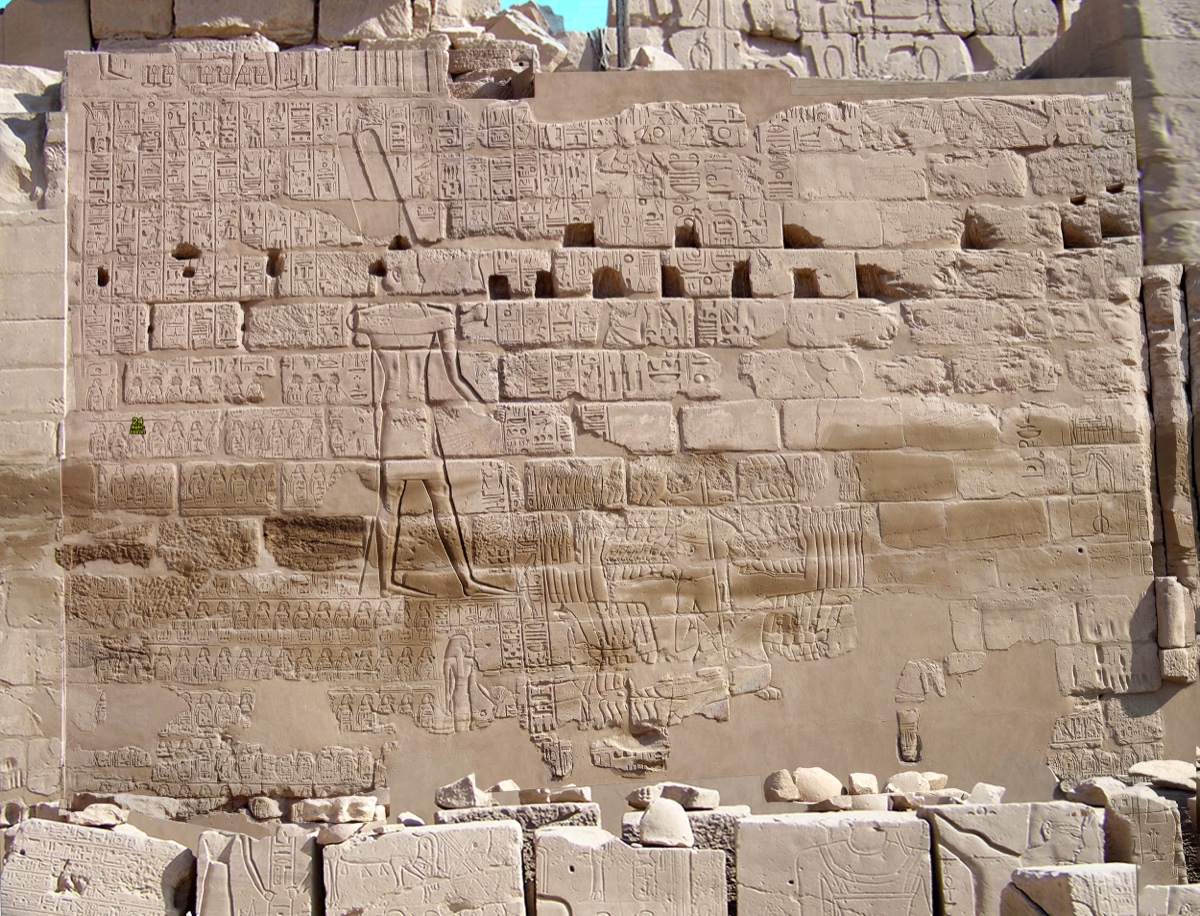
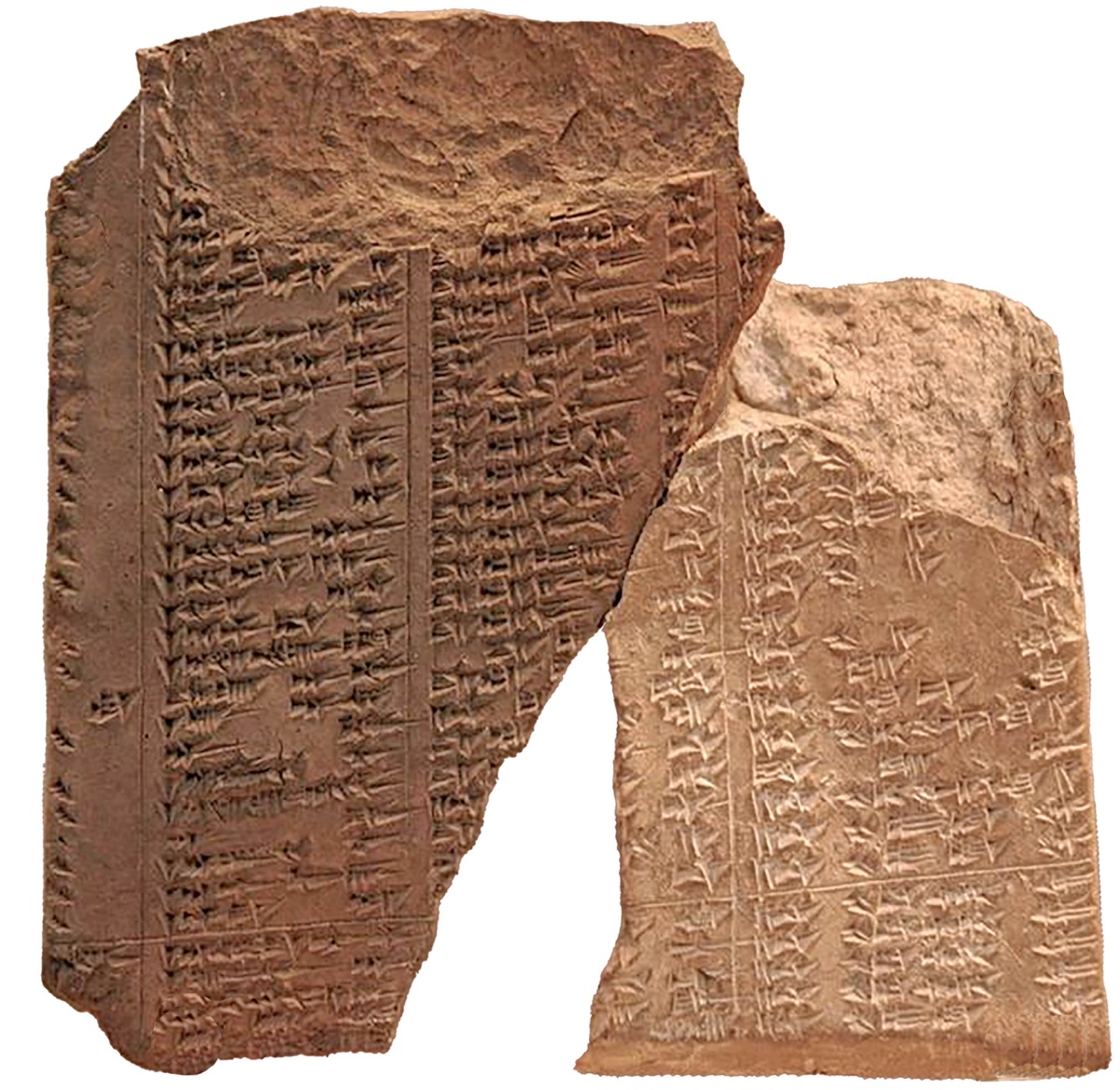
Mike Willis served as editor of Truth Magazine for forty years. Presently, he is preaching for the Decatur Township church located southwest of Indianapolis, IN. The church website is here. He can be reached here.



By David Weaks
Synopsis: This month’s submissions focus on the dangers that come with sin. Sin enslaves the mind and heart of man. People love sin so much that it is as if they consume it like water, says Eliphaz the Temanite. John gives us the grotesque illustration of Rome, the Great Harlot, and how she deceived the world into sin. We also learn that fathers are in a unique position to help their children navigate away from the destruction of sin and to seek the Lord instead. Finally, we discuss the concept of freedom and slavery from a spiritual perspective.
Eliphaz the Temanite, Job’s friend, was brutal in his assessment of people: “If God puts no trust in His saints, and the heavens are not pure in His sight, how much less man, who is abominable and filthy, and who drinks iniquity like water” (Job 15:15-16).
Most of what Eliphaz said was wrong. He reached far beyond Bible truth into the dilapidated bag of human opinion and made the following mistakes:
God did not view the heavens as impure. God called His creation “good” (Gen. 1:31).
There were people throughout Bible history, like Noah, who found favor in the sight of God (Gen. 6:8).
Man is never described in the Scriptures as being corrupt by nature. Man always makes the choice to sin; it is never thrust upon him against his will (Rom. 5:12; Jas. 1:13-16).
Only one line of our text actually relates to reality: Eliphaz said that man “drinks iniquity like water.” It is hard not to agree with Eliphaz on this point. People sin so much because they love sin more than they hunger and thirst for righteousness (Matt. 5:6). People love to sin, or they would not do it. It was true in the days of Noah, when “every intent of the thoughts of his (man’s) heart was only evil continually” (Gen. 6:5), and it is just as true today. Liars love the sick thrill of deceiving others, so they lie (Col. 3:9). Adulterers crave fornication (1 Cor. 6:18; Heb. 13:4). Thieves love money, so they steal (1 Tim. 6:10; 1 Pet. 4:15; Eph. 4:28).
Sinners are not innocent victims of divine laws that are too hard to keep. God’s commandments are not burdensome for those who love God (1 John 5:3). People choose to sin because it brings them pleasure. Rejecting the boundaries established by God, they break all restraint (Hos. 4:2). This will be true of people as long as they continue to eliminate God from their knowledge or fail to acknowledge their accountability (Rom. 1:28).
Please, for the sake of your eternal soul, do not love sin. Do not crave it, do not seek it out. Instead, hunger and thirst for righteousness, and you shall be filled (Matt. 6:33).
Imperial Rome at its zenith was the wonder of the world. John said that people regarded her with dread and awe: “Who is like unto the Beast?” (Rev. 13:4). Rome controlled commerce throughout the ancient world (Rev. 18:11-15). Law and order were hallmarks of Rome. Its emperors bore a sword of justice that even Paul said one must obey as a citizen (Rom. 13:5), and which Jesus said must be supported through taxes faithfully paid (Mark 12:17).
However, Rome was also corrupt in all its parts. Immorality was on display everywhere. She was the “whore of Babylon” who had seduced the nations to partake of her fornication (Rev. 18:1-3; 19:2). This “great nation” believed its emperor was God (Rom. 13:1ff). The Romans rejected the knowledge of God (Rom. 1:28)—fashioning gods out of wood, stone, and metal shaped like earth’s creatures, and in the likeness of corruptible men (Rom. 1:23, 25). They were slaves to their lusts and defiled their bodies with every form of perversion (1:24). They abandoned all restraint and were filled with all unrighteousness (1:29-30). The nation of Rome was “without understanding” from top to bottom (1:30).
Whenever men reject God, their moral and spiritual collapse is inevitable. The vacuum created by rejecting the Creator will be filled with “gods” of men’s own making. When divinely inspired laws are repudiated, there remains no restraining force to thwart sin and illuminate the pathway of righteousness (Ps. 119:105; 2 Thess. 2:6).
A wicked nation can “lead the free world,” but it will collapse in a heap if it rejects God and His will; it is only a matter of time. A man who rejects the knowledge of God might become rich, powerful, and admired, but the whorish god called “Self,” which he worships in the place of God, will preside over his downfall into the depths of depravity.
Alas, Babylon! (Rev. 18:10).
Actor Denzel Washington was once asked if he thought America had “come far enough” in race relations “given the disproportionate numbers of black youths arrested every day.” The interviewer was trying to bait Mr. Washington into raging against racism in America. However, he responded: “Where are their fathers?” The reporter did a double take, then stammered the question out another way. Washington gave the same answer: “The black youths you’re asking about, where are their fathers?”
Excellent question! Where are fathers, and what are they doing that is so important, when their greatest responsibility is raising their sons and daughters to follow God? Where are the men in America who accept the sacred charge of teaching their children to love God and who show the way of righteousness in their everyday lives?
Solomon said: “My son, hear the instruction of your father, and do not forsake the law of your mother. . .” (Prov. 1:8). Then Solomon went on to provide his son with solid instruction on how to be a righteous man and how to avoid the pitfalls of youth. Among the things he taught his son are the following:
Do not participate in evil deeds with evil people. Avoid wicked friends (1:10-19; 4:14-17).
Listen to your father! When he teaches you God’s wisdom, and follow it (1:20-33; 4:1-13).
Understanding of equity, righteousness, and judgment comes from listening to the wisdom and truth taught by your father (2:1-9).
Wisdom will help you avoid evil deeds and not be ensnared by evil men (2:10-15).
Wisdom will help you deliver yourself from the immoral woman who flatters, seduces, and destroys (2:16-19; 5:1-23; 6:20-35; 7:1-27).
Do not lean on your own understanding, but fear the Lord and acknowledge Him. He will direct your path and give you health and strength (3:5-8).
Confidence, strength, and safety in one’s daily life come from following the wisdom of the Lord (3:21-26).
Treat people right (3:27-30).
Diligently guard your heart and keep it pure (4:23).
Speak properly (4:24).
Concentrate on walking in the path of the Lord. Avoid all that distracts you from it (4:25-27).
Work hard and never be lazy (6:6-11).
Dear reader, life is hard, especially when you are young and lack experience and knowledge. Human wisdom is always suspect (Jer. 17:9), especially when you struggle with the folly of youthful thinking (Prov. 22:15). Children desperately need godly men called fathers to guide them through life. How can a child possibly hope to navigate all the pitfalls of life without godly fathers to teach them God’s instructions?
There is no need a child has that is more urgent than stability, security, and love from a father’s guidance. Fathers were given to all of us by God to help us understand how to live our lives and reach heaven.
Indeed, Mr. Washington. Where were their fathers?
Human beings crave freedom. Nobody seeks slavery, at least not knowingly. Unfortunately, many people end up slaves because they are not vigilant enough to see it developing. I am not referring to the kind of slavery in which people are bound in shackles and forced to pick cotton under a master’s whip; I am talking about the enslavement of the mind and heart to sin.
Hosea warned us about this danger. He said his people were enslaved by their lusts: “Harlotry, wine, and new wine enslave the heart” (Hos. 4:11). Furthermore, the people were enslaved by their devotion to idols: “My people ask counsel from wooden idols, and their staff informs them. For the spirit of harlotry has caused them to stray, and they have played the harlot against their God” (v. 12). Sins of the flesh are of such an addictive nature that they take over one’s life mentally, emotionally, and spiritually. People who drink wine and commit fornication abandon good judgment and common sense. They practice what is entirely destructive to their lives. Solomon said that “wine is a mocker and strong drink arouses brawling” (Prov. 20:1), and then a few chapters later, he describes the complete destruction of a drunk (Prov. 23:20-21, 29-35). It would be better for a man to put a knife to his own throat if he has no control over his appetites (Prov. 23:1-3).
False religion and false teaching today differ little from Hosea’s time. People take counsel of wolves who approach them in sheep’s clothing (Matt. 7:15). The Bible, the truth, is the only source of freedom from sin (John 8:32). The doctrines of men do nothing but cloud one’s judgment, misdirect one from the Lord, and bind him in loyalty to the whims of other men. The enslavement of one’s mind to doctrinal error is so profound that those who are stuck in that quagmire refuse to see their very real and doomed condition. The prophet Malachi lamented the sinful people of God, who, when chastened with the truth, answered every charge with a mindless, “In what way have we. . .” (Mal. 1:6-7; 2:17; 3:7, 8).
Of course, the list of things that enslave people piles up high. People enslave themselves to sexual desire and are doomed by it (Prov. 7:23). They enslave themselves to sappy sentimentality and fall victim to people who claim to love them (2 Sam. 13:1ff). Others enslave themselves to material possessions (Heb. 13:5; 1 Tim. 6:9-10).
Freedom truly is in Jesus Christ. Therefore, devote yourself to being the bondservant of Jesus Christ that you should be, and do not give your heart in slavery to anyone or anything else (Eph. 6:6).
David Weaks, a former Catholic, obeyed the gospel in February 1985 and began preaching later that year. David and his wife, Perri, have lived in West Columbia, TX, where he has labored with the church since August 1997. They raised their two daughters in West Columbia. He can be reached here.




By Danny Linden
Synopsis: This article contrasts Saul and Jonathan to show how faithfulness is tested in times of crisis. King Saul disobeyed God under pressure, thinking the situation justified his actions, but God rejected that reasoning. Jonathan, by contrast, trusted God and obeyed, showing that faith and obedience are always the right response—even when the pressure is high.
God’s laws are easier to follow in ideal circumstances, when little threat or pressure looms. What happens when we are tested by a crisis? Is disobedience ever justified by extenuating circumstances? King Saul faced such a test in 1 Samuel 13 and chose to disobey God’s law. God’s response reveals that He does not approve of such a decision. The following chapter gives us a contrasting example in Jonathan, who remained faithful and obedient.
Saul chose three thousand men of Israel. Two thousand were with Saul in Michmash and the hill country of Bethel, and a thousand were with Jonathan in Gibeah of Benjamin. The rest of the people he sent home, every man to his tent. Jonathan defeated the garrison of the Philistines that was at Geba, and the Philistines heard of it. And Saul blew the trumpet throughout all the land, saying, “Let the Hebrews hear.” And all Israel heard it said that Saul had defeated the garrison of the Philistines, and also that Israel had become a stench to the Philistines. And the people were called out to join Saul at Gilgal. And the Philistines mustered to fight with Israel, thirty thousand chariots and six thousand horsemen and troops like the sand on the seashore in multitude. They came up and encamped in Michmash, to the east of Beth-aven. When the men of Israel saw that they were in trouble (for the people were hard pressed), the people hid themselves in caves and in holes and in rocks and in tombs and in cisterns, and some Hebrews crossed the fords of the Jordan to the land of Gad and Gilead. Saul was still at Gilgal, and all the people followed him trembling. He waited seven days, the time appointed by Samuel. But Samuel did not come to Gilgal, and the people were scattering from him (1 Sam. 13:2-8).
In a time of great crisis, King Saul’s leadership was put to the test. Israel had just defeated a Philistine garrison, which stirred up zeal among the Israelites and provoked fury from the Philistines. Saul mustered three thousand men and had enough volunteers to send some men away. Saul and the Israelites knew the Philistines would counterattack but dramatically underestimated the intensity of the assault. The Philistine army outnumbered them, even counting only chariots and horsemen, let alone infantry “like the sand on the seashore.”
When the Israelites saw the enemy army on the next hill, morale plummeted. The battle had not yet begun, and Saul was already losing troops. Some deserted to hide in caves and tombs, others defected to the enemy, and some fled across the river. Even those who remained trembled in fear. In just a few days, Saul’s army was down to six hundred men (13:15).
Saul faced another problem: Samuel had promised to meet him in Gilgal to oversee the sacrifices before battle, but the day arrived and Samuel was nowhere to be found. With the Philistines ready to attack and his army shrinking daily, what could Saul do?
So Saul said, “Bring the burnt offering here to me, and the peace offerings.” And he offered the burnt offering. As soon as he had finished offering the burnt offering, behold, Samuel came. And Saul went out to meet him and greet him. Samuel said, “What have you done?” And Saul said, “When I saw that the people were scattering from me, and that you did not come within the days appointed, and that the Philistines had mustered at Michmash, I said, ‘Now the Philistines will come down against me at Gilgal, and I have not sought the favor of the LORD.’ So I forced myself, and offered the burnt offering.” And Samuel said to Saul, “You have done foolishly. You have not kept the command of the LORD your God, with which He commanded you. For then the LORD would have established your kingdom over Israel forever. But now your kingdom shall not continue. The LORD has sought out a man after His own heart, and the LORD has commanded him to be prince over His people, because you have not kept what the LORD commanded you” (1 Sam. 13:9-14).
Saul took decisive action and offered the sacrifice himself, stepping into the role of priest. As soon as he finished, Samuel arrived and rebuked him. Saul gave a list of reasons for his decision: the people were scattering, Samuel was too slow (though he actually arrived on the promised day), and the Philistine army was preparing to attack at any moment. Even though Saul knew better, he “forced himself” to disobey.
Was Saul justified? In times of crisis, many believe it is acceptable or even necessary to set aside the rules and do what “must” be done. Saul’s reasons seem sensible from a human perspective. Yet, God’s wisdom confounds the wisdom of men (1 Cor. 1:20). Saul expected God to lead him down a clear, obvious path to victory, so when danger increased, his faith diminished. Contrast this with David’s understanding: “Even though I walk through the valley of the shadow of death, I will fear no evil, for You are with me; Your rod and Your staff, they comfort me” (Ps. 23:4). The valley of the shadow of death is a place of crisis and danger; yet that does not change the God who leads us through it, nor does it lessen our obligation to be faithful and obedient each day.
Samuel did not accept Saul’s excuses, and neither did God. Saul’s decisive action was nothing more than foolish rebellion.
Jonathan said to the young man who carried his armor, “Come, let us go over to the garrison of these uncircumcised. It may be that the LORD will work for us, for nothing can hinder the LORD from saving by many or by few.” And his armor-bearer said to him, “Do all that is in your heart. Do as you wish. Behold, I am with you heart and soul.” Then Jonathan said, “Behold, we will cross over to the men, and we will show ourselves to them. If they say to us, ‘Wait until we come to you,’ then we will stand still in our place, and we will not go up to them. But if they say, ‘Come up to us,’ then we will go up, for the LORD has given them into our hand. And this shall be the sign to us.” So both of them showed themselves to the garrison of the Philistines. And the Philistines said, “Look, Hebrews are coming out of the holes where they have hidden themselves.” And the men of the garrison hailed Jonathan and his armor-bearer and said, “Come up to us, and we will show you a thing.” And Jonathan said to his armor-bearer, “Come up after me, for the LORD has given them into the hand of Israel.” Then Jonathan climbed up on his hands and feet, and his armor-bearer after him. And they fell before Jonathan, and his armor-bearer killed them after him. And that first strike, which Jonathan and his armor-bearer made, killed about twenty men within as it were half a furrow’s length in an acre of land. And there was a panic in the camp, in the field, and among all the people. The garrison and even the raiders trembled, the earth quaked, and it became a very great panic (1 Sam. 14:6-15).
Jonathan reacted to the high-pressure situation much differently than his father. Instead of compromising his faith, he remembered God’s promises: “When you go out to war against your enemies, and see horses and chariots and an army larger than your own, you shall not be afraid of them, for the LORD your God is with you, who brought you up out of the land of Egypt” (Deut. 20:1). Why should they fear the Philistines when God had already promised them victory?
Jonathan and his armor-bearer showed their faith by attacking the garrison alone. They went against all conventional military wisdom and seemingly relinquished any advantage by revealing themselves immediately. Yet, the result was still an overwhelming victory. No part of God’s law had to be violated for the battle to be won. All Jonathan had to do was have faith in God and His promises and obey.
God does not promise us military victories today, but He gives us an even greater promise. “For everyone who has been born of God overcomes the world. And this is the victory that has overcome the world—even our faith. Who is it that overcomes the world except the one who believes that Jesus is the Son of God?” (1 John 5:4-5). We will overcome the world and all its evil if we are born of God and are faithful to Him.
Throughout our lives, crises will test our faith through emergencies, danger, grief, stress, busyness, and more. How will we respond? Saul here provides a negative example, but let us be more like Jonathan and have faith to remember God’s promises even under pressure. If the path is more treacherous than we expect, we should not compromise God’s law. God will lead us to the end if we will trust and obey!
Unless otherwise noted, all Scripture quotations come from The Holy Bible: English Standard Version (ESV). Wheaton, IL: Crossway Bibles, 2001.
Danny Linden has worked with the Hebron Lane church of Christ in Shepherdsville, KY, since March 2023. He and his wife, Lauren, have four children. The church website is here. His website is here. He can be reached here.



By Seth Williams
Synopsis: While we can’t control time, we can control what we prioritize—and those choices shape both our lives and our eternity. The author walks through examples of people who either honored God by putting Him first or suffered consequences when they didn’t. In the end, he challenges us to take a hard look at our own priorities and ask: what matters most to me?
“Time management is an oxymoron. Time is beyond our control, and the clock keeps ticking regardless of how we lead our lives. Priority management is the answer to maximizing the time we have.” Just as John C. Maxwell, an American author and speaker, noted that time is beyond our control, Zig Ziglar, a motivational speaker, author, and salesman, said, “Lack of direction, not lack of time, is the problem. We all have twenty-four-hour days.” We cannot control time, but we can control our priorities. Our priorities determine our future both here on earth and in eternity (Luke 16:19-28). Therefore, it is very important to have our priorities right. What is a priority? Merriam-Webster defines priority as “something given or meriting attention before competing alternatives.”
Noah: In his time, nobody was serving God (Gen. 6:5-8) except him and perhaps his family (Gen. 7:1, 13). Instead of looking out only for himself, Noah, prioritizing helping others and serving God, preached righteousness to others (2 Pet. 2:5).
Abraham (Abram): Although some rich people are proud, Abram was not (Gen. 13:2). Instead of prioritizing getting more, he prioritized peace and others (Gen. 13:6-9). When he saw a problem, he talked to Lot and did what it took to solve it, letting Lot choose where to move first.
Joseph: After Joseph’s brothers sold him into Egypt, Joseph, being second in command over all Egypt (Gen. 41:40-41), could have sought revenge on his brothers. Instead, he was kind to them and realized that God meant it for good (Gen. 45:4-5). Rather than prioritizing revenge, he prioritized love and peace.
Paul: When Paul was teaching in Iconium and Lystra, people came from those cities and stoned him until they thought he was dead (Acts 14:19). Then he stood up and went back into those same cities (Acts 14:20), prioritizing encouraging the disciples (Acts 14:21-23).
Jesus: Our Lord was perfect (1 Pet. 2:22). He did the will of the Father for us (John 6:38), suffered for us (1 Pet. 2:21), and offered Himself for us (Eph. 5:2). That shows He prioritized doing the will of the Father and making it possible for us to have a hope of heaven.
John, the cousin of Jesus: he could have claimed to be the Christ and sought all the glory and fame for himself (John 1:19). Instead, he told the truth and confessed he was not the Christ (John 1:20; John 1:29-30) but was preparing the way for the Christ (John 1:23). He prioritized humility.
If you are reading this now, you are taking time that could be used for other priorities. By reading this, you show a priority to serve God, be with God, and have your priorities right.
While not everyone has this experience, my family has taught me about the Bible. That shows they have a priority to spiritually help people, just as Lois and Eunice helped Timothy (2 Tim. 1:5).
Along with the last example, evangelists have a priority of helping others serve God. Sometimes they even travel to the other side of the world to preach. I heard about an evangelist who was offered his dream job, but realized the congregation he worshiped with needed his help as a preacher. So, he turned down the job offer and kept preaching. Would we have considered doing that?
Adam and Eve: Even though God told them not to eat from the tree of the knowledge of good and evil (Gen. 2:16-17), Eve ate when she saw it looked delightful (Gen. 3:6). Likewise, Adam, instead of prioritizing obeying God’s rules, prioritized himself.
Ham: When Noah became drunk and naked, Ham saw his father’s nakedness (Gen. 9:20-22). Instead of having the priority of solving the problem, he told his brothers, perhaps even in a mocking way.
David: After seeing Bathsheba bathing (2 Sam. 11:2-3), he desired to lie with her so much that he was willing to commit adultery (2 Sam. 11:4). Afterward, he made another poor decision by attempting to hide his sin (2 Sam. 11:6-13). He was so dedicated to these priorities that he indirectly killed Bathsheba’s husband (2 Sam. 11:14-17).
The scribes and Pharisees: They prioritized being seen and admired by men instead of God (Matt. 6:5; Matt. 22:5-7). They might obey the law when they could be seen, but disregarded the priority of obeying the more important commands of the Lord (Matt. 22:23-24).
Simon the sorcerer: After hearing Philip preach, Simon believed and was baptized (Acts 8:12-13). While following Philip, he saw the power of the miracles and, probably prioritizing his own physical benefit, asked for the power of the Holy Spirit (Acts 8:18-23).
Judas: Even though Judas was one of Jesus’s apostles, when offered money, he was willing to prioritize his own benefit over Jesus and betray Him (Matt. 26:14-16). As Matthew 6:24 says, you cannot serve both wealth and God.
Kim Jong Un: Instead of making it his priority to spread the good word, he prioritizes abolishing the spreading of the good word. In his country, he even persecutes Christians.
Taylor Swift: While she could be a huge influencer encouraging people to serve God, she has the opposite influence. She prioritizes physical success, physical wealth, and physical happiness.
Although not technically a person, I will include Satan: Since creation, Satan has made it his priority to separate souls from God (Gen. 3).
Achieving God’s kingdom and His righteousness should be our top priority (Matt. 6:33). Rather than prioritizing fitting in socially, we should fit in with what God’s will is—what is good, acceptable, and perfect (Rom. 12:1-2). Youthful passions or lusts should not be our priority; we should flee from them (2 Tim. 2:22). Instead, we should prioritize something productive, like studying the Bible or becoming more like Christ. Would you rather own the whole world or have the privilege of being with God in eternity? Having the entire world would be extremely nice. You could do, try, and own everything on earth—but then you die. Eternity is forever, so we should obey God so we can spend eternity with Him in heaven (Mark 8:36-38). Our minds, desires, and priorities should be set on obeying God, making it to heaven, and loving God—not on things in the world (Col. 3:2).
Do you serve God or money? You may think you serve God—or perhaps you serve Him only when it’s easy—but when faced with a choice between going to church or making extra income, receiving a promotion, or working additional hours, you choose the latter. You may tell yourself you’re only missing one church service, but then you miss more and more, until you realize the truth of Jesus’s words: “You cannot serve both God and money” (Matt. 6:24).
So, which will you prioritize? Eating and drinking are essential—you must do both to stay alive, and you likely do so multiple times a day. Yet righteousness is compared to these necessities. Therefore, being righteous should be such a high priority that we practice it continually, every day (Matt. 5:6). First and foremost, our top priority must be to love the Lord (Matt. 22:37-38).
In conclusion, our top priorities should be spiritual, not physical. We should prioritize evangelizing just as Paul, John, and Jesus did. We should truly prioritize loving the Lord. If we do, we will obey His other commandments (John 14:15) and receive the reward of heaven (Matt. 25:31-40). If we submit to the Lord, He will make our paths straight and eventually give us the reward of heaven (Proverbs 3:6). Laura Vanderkam, a speaker and author, said, “Instead of saying ‘I don’t have time,’ try saying ‘it’s not a priority,’ and see how that feels.” So, I ask again: What is your top priority?
Seth Williams is a member of the Northeast church of Christ in Crosby, TX and has visited many congregations in America, as well as the Philippines, Malaysia, Italy, and Australia. He lives with his parents, one brother, and two sisters in Crosby and enjoys art and playing rugby. He is beginning 9th grade this month, being homeschooled with Classical Conversations.



By Joe R. Price
Synopsis: This article explains that God has always expected His people to reflect His holiness through modest clothing that covers nakedness and comes from a heart of humility and self-control. It shows that modesty isn’t based on culture or personal preference—it’s grounded in God’s consistent standards throughout Scripture. In the end, we’re reminded that modest clothing honors God, protects others from stumbling, and reflects a heart that is shaped by His word.
God has arranged His universe in an orderly fashion. From the heavens above to the earth beneath our feet, from our mortal bodies to our immortal souls made in the image of God, His arrangements are purposeful, productive, and proclaim praise to His glory and holiness (Ps. 19:1-6; 97:6; Acts 17:26-28).
It is not surprising, then, that God expects one who bears His image from creation and the image of Christ as a “new creation” in Him (the Christian) to bear the marks of a well-arranged, orderly life of “true righteousness and holiness” in both mind and conduct (Gen. 1:27; 2 Cor. 5:17; Eph. 4:24).
The Bible speaks of this well-arranged, orderly life. The English word “modest” (kosmios) is used twice in the New Testament. It means “orderly, i.e., decorous,” and is used to describe “apparel” and behavior (1 Tim. 2:9; 3:2). This word is derived from the more common kosmos, meaning “arrangement,” and is often translated “world.”
Thus, modest attire is well-arranged clothing that reflects a heart ordered by true righteousness and holiness. Such “modest apparel” will be honorable in the sight of God and those who see us.
We must not naively think Christians are immune to the world’s influence (1 John 2:15). The moral relativism of the secular world has crept into the thinking and conduct of Christians regarding modest apparel. Recently, a Christian posted on social media, “What is immodest to one may not be immodest to another.” Is that biblical? Upon what divine standard could such a view be based? What Scripture teaches such a thing?
God has not left the meaning and application of modest apparel so nebulous and undefined that we cannot know and practically apply what is modest and immodest clothing. God’s word—not human wisdom, situations, or opinions—provides what we need to understand and follow His will for the well-arranged life of good behavior, including modest clothing (cf. Isa. 8:19-20; Acts 17:11; 2 Tim. 3:16-17). God, in His word, has revealed the principles of purity and holiness and their application to our behavior, including modest clothing (2 Pet. 1:2-4).
As we study God’s word regarding modest clothing, several enduring truths emerge.
Both good and evil behavior proceed from the heart; therefore, the heart must be guarded diligently (Prov. 4:23; Matt. 12:34-35; Mark 7:21-23). A heart in which shame is firmly rooted—i.e., “shamefastness” (1 Tim. 2:9, ASV)—brings forth the good fruit of modest apparel. A heart arranged with “sobriety” (1 Tim. 2:9, ASV; “self-control” in 1 Tim. 2:15) chooses clothing that accords with self-control. Adorned with “the incorruptible beauty of a gentle and quiet spirit,” one is equipped to select and wear clothing that conveys the heart’s sense of shame and self-control (1 Pet. 3:2-4). There is no dispute: modest clothing proceeds from a modest heart.
One of the spiritual tragedies among God’s people in Jeremiah’s day, leading to their exile in Babylon, was their lack of shame over their sins:
Were they ashamed when they had committed abomination? No! They were not at all ashamed, nor did they know how to blush. Therefore, they shall fall among those who fall; in the time of their punishment they shall be cast down,” says the LORD (Jer. 8:12).
We cannot help but observe a similar lack of shame regarding immodest clothing in our society generally, and among some Christians specifically. Whether through spiritual immaturity from not being taught God’s will, disregard for God’s word, or outright defiance, the lack of propriety (“bashfulness,” G127) and inability to blush when exposing or being exposed to nakedness certainly exists. Shirtless men, bikinis, short shorts that expose the thigh, backless or cleavage-revealing tops and dresses, tights that cover but do not conceal—these and similar attire fail to convey godliness.
Christians must not only teach the principles of purity, godliness, and holiness but also apply them to our clothing. A sense of shame toward immodest clothing can be established and restored when disciples are convicted by God’s word to wear clothing that conceals nakedness, shuns extravagance, and portrays an incorruptible spirit of godliness and holiness (1 Tim. 2:9-10; 1 Pet. 1:15-16; 3:3-4).
God, as revealed through His word, provides the definition and application of modest character and conduct, including our clothing. As noted from 1 Timothy 2:9, He wants women to “adorn themselves in modest apparel, with propriety and moderation, not with braided hair or gold or pearls or costly clothing” (1 Tim. 2:9). Clothing is to be consistent with one’s profession of godliness and the good works of God (1 Tim. 2:10). Men are not excluded from God’s expectation of modesty and are also expected to conduct themselves modestly (1 Tim. 2:8; cf. “good behavior” in 1 Tim. 3:2).
Certain truths have been revealed from the beginning of creation (i.e., creation-mandated truth). For example, gender identity and headship (Gen. 1:27; 3:16-19); marriage (Gen. 2:18-25; Matt. 19:4-6); brotherly love and respect for human life, including a prohibition against eating blood (Gen. 4:1-10; 8:3-4; 9:3–6). Included in such creation-mandated truths is God’s revealed will that men and women are not only clothed, but in such a way that conceals their nakedness.
When Adam and Eve sinned, they knew they were nude (bare, without clothing), which had previously been without shame (Gen. 2:25; 3:7). They “sewed fig leaves together and made themselves coverings,” attempting to conceal their nakedness (Gen. 3:7). Such aprons or belts that girded the waist were minimal. After putting on these coverings, when God’s presence in the garden was known, they “hid themselves” among the trees (Gen. 3:8). When questioned by God, Adam said, “I heard Your voice in the garden, and I was afraid because I was naked; and I hid myself” (Gen. 3:10). Evidently, Adam had a sense of shame while wearing the fig leaves. His shame of sin and the physical exposure it revealed were still present while Adam was wearing a loin covering. He was covered, true. But was he clothed? No. “Also for Adam and his wife the LORD God made tunics of skin, and clothed them” (Gen. 3:21). A tunic (“to cover, to cover over, to clothe oneself,” Gesenius, 420), according to Gesenius, was “an inner garment next the skin (Lev. 16:4); also worn by women (Cant. 5:3; 2 Sam. 13:18); generally with sleeves, coming down to the knees, rarely to the ankles.” Without controversy, the God-provided tunics, while more permanent, were a clear contrast to fig-leaf girdles that minimally covered nudity and clothing that covered nakedness and its shame (Gen. 3:7, 21).
The comparison to modern swimwear, athletic attire, and clothing that covers but does not conceal the bare body is unmistakable. God has always expected clothing that covers nakedness and its shame. The loss of shame, as mentioned earlier, occurs when God-given parameters are refused.
God’s will regarding modest clothing has remained constant throughout the ages, despite His different covenants with mankind (Patriarchal, Mosaic, and Gospel ages). As noted in Genesis 3:7-11, 21, God provided modest clothing that concealed nakedness from the earliest days of humanity.
Under the Law of Moses, God directed the priests to wear robes, tunics, and trousers in their holy service to Him (Exod. 28:2-4, 31, 39, 40-43; 39:27). We cannot fail to see the shadowy instruction that New Testament Christians (a “holy priesthood”) are to clothe their hearts with the traits of purity and holiness and, therefore, their bodies with attire that reflects their spiritual service to the Lord (1 Pet. 2:5, 9; Rom. 12:1-2).
The Law of Moses continued to reveal God’s definition of nakedness and the need for its concealment. Not only did the priests wear tunics when offering sacrifices but also “trousers to cover their nakedness; they shall reach from the waist to the thighs” (Exod. 28:42). In Exodus 20:26, God said, “Nor shall you go up by steps to My altar, that your nakedness may not be exposed on it.” Having already seen that loin coverings were ineffective in concealing nakedness (Gen. 3:7-10, 21), we learn here that exposure from the waist to the thigh is the nakedness God wants covered (To suggest “from the waist to the thighs” begins at the waist and ends at the top of the thigh would be nothing more than Adam and Eve’s girdle.).
Isaiah figuratively described the shame of Babylon’s sins: “Remove your veil, take off the skirt, uncover the thigh, pass through the rivers. Your nakedness shall be uncovered, yes, your shame will be seen; I will take vengeance, and I will not arbitrate with a man” (Isa. 47:2-3).
Isaiah equates taking off the skirt with uncovering the thigh, which amounts to uncovering nakedness. Such imagery enables us to understand that exposing what a skirt covers (like what trousers cover), the leg or thigh, exposes nakedness. That is the nakedness God covered when He clothed Adam and Eve.
Through Ezekiel, God painted a portrait of Israel becoming a nation as a young maiden whose “breasts were formed,” but she was “naked and bare.” In this state, God “spread My wing over you and covered your nakedness” (Ezek. 16:7-8).
As previously discussed, the gospel also reveals God’s timeless will that men and women be modest in character and clothing (1 Tim. 2:8-10; 3:2; 1 Pet. 3:3-4).
Throughout time, God has always desired that spiritual, moral, and physical nakedness among His people be covered in ways consistent with the holiness of His presence.
We can indeed be a stumbling block without realizing it (Matt. 16:22-23; 18:6-7). Exposing one’s nakedness certainly places temptation before others. This does not excuse lustful thoughts and conduct (Matt. 5:28; Jas. 1:14-15). However, we must not think we bear no responsibility or accountability when, through our conduct, others are led into sin (Gal. 2:11-13). We cannot “bait the hook” that entices someone to sin and then, like Pilate, wash our hands of accountability (Matt. 27:24). Let us eagerly avoid becoming a stumbling block to others. Modest clothing helps prevent occasions of stumbling.
It has always been true that God has (1) required His people to wear modest clothing (Gen. 3:7-10, 21), (2) explained and identified modest clothing (Exod. 28:42; Ezek. 16:8), and (3) exalted modest clothing that proceeds from a heart rooted in a sense of shame and self-control (1 Tim. 2:8-10; 1 Pet. 3:3-4).
God’s word reveals His will on modest clothing and calls on us to apply His truth on modesty to what we teach and wear. When followed, we can say with the psalmist, “I have restrained my feet from every evil way, that I may keep Your word. I have not departed from Your judgments, for You Yourself have taught me” (Ps. 119:101-102).
Bible. American Standard Version. Oak Harbor, WA: Logos Research Systems, Inc., 1995.
Bible. The New King James Version. Nashville: Thomas Nelson, 1982.
Gesenius, Wilhelm, and Tregelles, Samuel Prideaux. Gesenius’ Hebrew and Chaldee Lexicon to the Old Testament Scriptures. Bellingham, WA: Logos Bible Software, 2003.
Strong, James. A Concise Dictionary of the Words in the Greek Testament and The Hebrew Bible. Bellingham, WA: Logos Bible Software, 2009.
Joe R. Price has worked with the Vegas Drive church of Christ, Las Vegas, NV, since October 2022. He and his wife, Debbie, have four children and two grandchildren. His website is here, and the church’s website is here. He can be reached here.



By Bruce Reeves
Synopsis: This article emphasizes that modesty is not merely about clothing but is a reflection of a heart transformed by devotion to Christ, rooted in humility, self-respect, and a desire to honor God. It argues that both men and women are called to uphold modesty in thought and behavior, resisting cultural influences that promote sexual objectification and self-promotion. Ultimately, modesty is portrayed as an act of love and spiritual integrity that reflects one’s identity in Christ and care for others.
Modesty in how we dress and carry ourselves is a topic that is often misunderstood, many times avoided, but incredibly important in our walk with Christ. In a world that values self-promotion and sex appeal, modesty has become either irrelevant or perhaps even offensive to many. Yet, the Bible teaches that modesty is far more than a dress code; it is a posture of the heart expressed in our conduct. True devotion to Christ aligns our outward choices with inward devotion, reminding us that we are to be followers of Jesus in every aspect of our lives, including our dress.
“Modesty is a respectable manner of adorning one’s body and carrying oneself, born out of a freedom from a worldly definition of beauty and worth, and motivated by a desire to draw attention to Jesus Christ.”
Christ changes us inside-out (Rom. 12:1-2). The grace of God teaches us to deny ungodliness and worldly desires and to live sensibly, righteously, and godly in this present age as we anticipate the coming of Christ (Titus 2:11-14). While this issue is about our clothing, it is not merely about our clothing. Deep things must happen in our hearts before modesty becomes a priority. When God becomes our treasure, when His word is our supreme authority, when the gospel of Jesus Christ is the most precious thing to us, and when we long for the fruit of the Spirit more than the acceptance of others, then our attitude toward modesty is going to be shaped by Christ more than the world (1 Pet. 1:13-16).
Paul writes, “Likewise, I want women to adorn themselves with proper clothing, modestly and discreetly, not with braided hair and gold or pearls or costly garments, but rather by means of good works, as is proper for women making a claim to godliness” (1 Tim. 2:9-10). How we dress impacts our example and influence on others. Some have attempted to dismiss this truth by arguing that any person who would lust would do so regardless of one’s dress. While it is true that we are responsible for our thoughts no matter the circumstances, the idea that we are not responsible for presenting a stumbling block due to lustful dress and demeanor is neither sensible or godly (Prov. 6:25-28; 7:10).
Paul emphasizes that there is such a thing as “proper clothing” and “modest apparel” (1 Tim. 2:9). These phrases are defined as attire which is “respectable” and “honorable” (BDAG, 445). We are to be orderly and decent in how we present ourselves to a watching world. R.C. Trench explains, “The well ordering is not of dress and demeanor only, but the inner life’s. . . expressing itself in the outward conversation” (Trench’s Synonyms of the New Testament, 346). Should we not ask ourselves what messages we are sending to those around us by what we wear? What are we trying to accomplish through our dress?
The apostle also explains that our character and integrity motivate our decisions concerning what we wear. He uses terms such as “modestly” (NASB), “shamefacedness” (KJV), or “propriety” (NKJV). Knight says this is reflective of “a state of mind or attitude necessary for one to be concerned about modesty” (Pastoral Epistles, 133). He goes on to comment that it is “a moral feeling, reverence. . . respect of the feeling or opinion of others or for one’s own conscience and so shame, self-respect. . . sense of honor” (Knight, 134). The term “shamefacedness” is defined as “a sense of shame. . . prominently objective in its reference, having regard for others, a sense of shame. . . modesty rooted in character” (Vine’s Dictionary, IV, 17).
We also see that spiritual discernment should lead us to dress in a way that honors God. Paul again emphasizes this truth with such words as “sobriety” (KJV) or “discreetly” (NASB). Some have attempted to cloud the question of modesty by ignoring the fundamental principles of Scripture, countering with, “You should not judge someone’s heart.” Christ does condemn hypercritical and hypocritical judgment (Matt. 7:1-5), but we are called to discern what hypocritical judgment is, the nature of spiritual hogs and dogs, the fruit of false teachers, and the character of righteousness in Christ (Matt. 7:6-20). The Lord even commands us to judge righteously and not according to appearance (John 7:24). Paul tells us to use “good judgment, moderation, and self-control” (Knight, 134). He is describing the truth that godly women are to exercise a healthy, sound, and rational way of thinking that is shaped by the will of God.
Wisdom requires that we ask some basic questions:
“Can I stand, walk, sit, kneel, or bend over?”
“Am I ‘naked’ by biblical principles?”
“Does my clothing emphasize my body in a way that would lead others to lust?”
“Do my clothes indicate a lack of character?”
“What kind of influence will my clothing have on others?”
“Am I dressing in a way that pleases God?”
All moral decisions involve judgments, but not all decisions are equal, and some judgments are sinful (Phil. 2:9-11). Based on biblical principles immodesty can be seen in revealing the chest and back, clothing that is too sheer and see through, too tight such as leggings, short dresses and miniskirts, split dresses, backless dresses, low-cut blouses, and dresses revealing cleavage and the breasts, men in public wearing tight clothing or no shirt at all, and swimsuits revealing large portions of the body in mixed swimming at public pools. The event itself does not eliminate the principles of holiness that we find in the Scriptures. Whether one is considering a wedding dress, formal wear, athletic activities, vacations, recreation, school functions, or other special events, it is not the event itself that determines what is modest, but the word of God. Should we be specific in the application of these issues or will people just figure it out on their own? It is my conviction that we should first deal with the core principles of the heart but then make scriptural applications. We live in a society and culture that have been desensitized to the very concepts of holiness and godliness. Therefore, it is essential to teach with clarity and offer biblically based guidance for proper application even if it is unpopular.
It has become popular among brethren who are hesitant to address the modesty issue to argue that 1 Timothy 2:9-11 is merely speaking of those who wear extravagant clothing and pursue social status and, therefore, cannot be applied to those who wear too little clothing. Regardless, these principles are to be applied to all circumstances. While it is true that the passage speaks to social wealth status, it is not merely speaking of that issue.
Worldly women draw attention to themselves socially and sexually (Isa. 3:16-26). Godly women were to present themselves differently than the so-called “priestesses” of the Temple of Diana (Acts 19:24-35). The priestesses of Artemis/Diana were known to wear braided hair, pearls, and gold jewelry, possibly symbolizing their connection to the fertility goddess. In Roman culture, prostitutes, especially those in higher-class brothels, were known for elaborate hairstyles, expensive clothes, and jewelry. A showy appearance had a connection to sensuality. There was temptation for women to draw attention to themselves sensually and idolatrously, as did the priestesses of Artemis among the Greeks or Diana among the Romans. Recent scholarship has argued that “a new paradigm of behavior had begun in Ephesus in which wealthy women were displaying themselves in permissive clothing and hairstyles seeking more sexual freedom and prominence in government” (Towner, 196).
Paul was concerned that women professing godliness could be pulled into this movement and undermine their faith. The notion that these principles do not apply to those overly concerned with status and those given to sexual promiscuity through immodest dress is false. Extravagant jewelry “epitomized the sumptuousness of immoral women” (Towner, 209). John MacArthur wrote: “For the women of the church to imitate the gaudy clothing styles of pagan women, to call attention to themselves or to dress to entice men into illicit sexual relationships was to blaspheme the entire point of worship to God” (God’s High Calling for Women, 15). Yes, modesty is about more than clothing; it is about our heart.
Because modesty is a heart issue, it applies not only to godly women but faithful men as well. Paul writes, “Therefore, I want men in every place to pray, lifting up holy hands, without wrath and dissension” (1 Tim. 2:8). He then says, “Likewise, I want women to adorn themselves with proper clothing” (1 Tim. 2:9). Men are responsible for their thoughts. Job declared, “I made a covenant with my eyes not to look lustfully at a young woman” (Job 31:1). That covenant began in his heart before God and transformed his thinking and behavior. Jesus addressed the problem of adultery as coming from the heart. His point is not that a lustful thought constitutes actual adultery any more than hating one’s brother would constitute murder. Still, He demonstrates the source of the problem (1 John 3:15). Christ teaches that if a man looks at a woman with lust for her, he has already committed adultery with her in his heart (Matt. 5:28). This is not describing the natural sexual desire innate in human nature; it is a desire that fantasizes and lacks only the opportunity (Heb. 13:4; cf. Gen. 39:9, 13; 2 Tim. 2:22). If clothing is being worn which a person knows will incite lust in others, how has brotherly love not been violated?
We can see the plague of sexual objectification of women through the apparel and dress that our society uses to target them. I recently read on a sister’s Facebook wall about her disdain for preachers or teachers who address issues regarding immodesty, arguing that it is impossible to know if certain clothing or dress is modest or immodest. Can you imagine if someone said, “I don’t think we can know what the sexualization of women and girls through clothing looks like,” or “I don’t believe we can know if a particular clothing objectifies women?” The American Psychological Association was tasked with examining the psychological theory, research, and clinical experience addressing the hyper-sexualized view of girls via media and other cultural messages. In study after study, findings have indicated that women are more often than men portrayed in a sexual manner (e.g., dressed in revealing clothing, expressing bodily postures or facial expressions that imply sexual readiness) and are objectified (e.g., used as a decorative object, or viewed as body parts rather than a whole person). Examples of advertising, clothing, and entertainment are shockingly abundant. Research links sexualized objectification of young women with three of the most common mental health problems of girls and women: eating disorders, low self-esteem, and depression. Sexual objectification of women has been found to so damage a young woman’s self-image that her ability to have a mature personal relationship with a man is extremely difficult (American Psychological Association, “The Sexualization of Girls, 2007 Study). What message are we sending our young men and women when we fail to help them see the value of the whole person as one created in the image of God (Gen. 1:26-28)?
Are we truly focused on having a heart for God and Christ (Col. 3:1-2)? Is social media, Instagram, society, and a godless culture shaping your view of others? Are we helping our young women understand that their value is more than skin-deep? Are we helping them see that God treasures their whole person? Are we helping our young men to value the beauty of the heart of a virtuous woman of God? Stop feeding your mind and heart with cultural expectations and start feeding your soul with the love and grace of Jesus.
Modesty honors God.
Modesty affirms that your greatest value is your identity in Christ.
Modesty is a gift to those around you.
Modesty is an act of brotherly love.
Modesty shows the world that Christ cares for the whole person: body, soul, and spirit.
Why talk about it? We talk about the issues of modesty because we love one another and want to offer spiritual protection from a wicked world. In the middle of his persuasive warnings the Hebrew writer assured his readers of his confidence in them when he wrote, “But, beloved, we are convinced of better things concerning you, and things that accompany salvation, though we are speaking in this way” (Heb. 6:9). Paul encouraged the Philippians to know that his motivation was his love for them. “Finally, my brethren, rejoice in the Lord. To write the same things again is no trouble to me, and it is a safeguard for you” (Phil. 3:1).
Knight, George W. The Pastoral Epistles: A Commentary on the Greek Text. New International Greek Testament Commentary, ed. I. Howard Marshall and W. Ward Gasque. Grand Rapids: William B. Eerdmans Publishing Company, 1992.
MacArthur, John. The High Calling for Women. Nashville: Thomas Nelson, 1988.
Towner, Philip H. 1-2. Timothy & Titus. The IVP New Testament Commentary Series, ed. Grant R. Osborne. Downers Grove, IL: InterVarsity Press, 1994.
Trench, R.C. Trench’s Synonyms of the New Testament. Tyndale House Publishers, 2000.
Vine, W.E. Vine’s Expository Dictionary of Biblical Words. New York: Thomas Nelson, 1985.
Bruce Reeves has labored with the Highway 65 church of Christ in Conway, AR, since 2000. He and his wife, Rachel, have one child. The church website is here. He can be reached here.


By Mark Mayberry and Daniel H. King
Synopsis: This article addresses those parts of the body that must be covered for one to be modest, including significant Hebrew words such as “loin coverings” (chagorah)—which Adam and Eve made in a failed attempt to cover their nakedness—versus the “garments/tunics” (kethoneth) that God later provided. In Genesis 3, God established clothing—specifically, modest clothing—as a permanent institution among men and women.
Certain eternal and unchanging principles are set forth in the opening chapters of Genesis. In the beginning, God created man as a free-moral agent (Gen. 1:26; 2:16-17). In the beginning, He placed man in a position of dominion and stewardship over all creation (Gen. 1:26; 9:1-2). In the beginning, He instituted marriage and ordained the proper relationship between husbands and wives (Gen. 2:20-24). In the beginning, He emphasized the gravity and guilt of sin (Gen. 3, 4 & 6). In the beginning, He accentuated the difference between authorized and unauthorized worship (Gen. 4:1-7). In the beginning, He stood in judgment of humanity’s vice and violence, wickedness and corruption (Gen. 6-8). In the beginning, He ordained capital punishment to ensure social justice and respect for human life (Gen. 9:5-6).
Christians recognize that the Law of Moses has been superseded by the gospel of Christ (Eph. 2:14-15; Col. 2:13-14). Nevertheless, the principles set forth in the early chapters of Genesis were established before the covenant of blood at Sinai and are rooted in the very character of God. Because they reflect His unchanging will, these ethical ideals remain eternally valid. It is therefore no surprise that they are evident in the Patriarchal, Mosaic, and Christian dispensations. The New Testament repeatedly refers to the opening chapters of Genesis to emphasize the unchanging nature of certain truths, especially in those passages that relate to marriage, the roles of men and women, and modesty (Matt. 19:3-9; Mark 10:1-12; 1 Cor. 14:34-35; Eph. 5:25-33; 1 Tim. 2:9-15).
In this essay, we give consideration to questions pertaining to how the third chapter of Genesis addresses the issue of modesty. In their original ignorant and innocent state, the man and his wife were both naked and were unashamed (Gen. 2:25). However, after eating from the tree of knowledge of good and evil, Adam and Eve realized they were naked and are said to have been embarrassed (Gen. 3:6-7). Nakedness is not something shameful in the private and personal relationship of a husband and wife (Heb. 13:4). That much is evident from this text. On the other hand, shame and embarrassment naturally follow when third parties enter the picture. Hence, Adam and Eve were ashamed when God came to commune with them in the cool of the evening (Gen. 3:8-10).
When Adam and Eve realized they were naked, they sewed fig leaves together and made themselves coverings (Gen. 3:7). Some Bible versions say “aprons” (KJV, ASV, RSV), while others say “coverings” (NIV, NKJV), “loin coverings” (NASB), or “loincloths” (NRSV).
The Hebrew word chagorah, here translated “loin coverings,” derived from chagar (to gird oneself) refers to “a girdle,” “loin covering,” or “belt” (Thomas, 2290b). Occurring five times in five Bible verses (Gen. 3:7; 2 Sam. 18:11; 1 Kings 2:5; 2 Kings 3:21; Isa. 3:24), it is rendered “armor” (1x), “belt” (3x), “loin coverings” (1x) in the NASB. In addition to the fig-leaf loin coverings that the first human pair used in an attempt to cover their nakedness (Gen. 3:7), it also identified an article of women’s dress (Isa. 3:24), plus the belt or armor of a warrior (2 Sam. 18:11; 1 Kings 2:5; 2 Kings 3:21).
The Hebrew and Aramaic Lexicon of the Old Testament (HALOT) says it refers to a (1) “girdle” or (2) “loincloth” (Koehler, 290).
The Concise Hebrew and Aramaic Lexicon of the Old Testament says it refers to a “belt,” “sash,” or “loincloth” (Holladay and Köhler, 95).
The Cyclopaedia of Biblical, Theological, and Ecclesiastical Literature says “Apron stands in one passage of the KJV for the Hebrew chagorah (a girdle, as usually) and is used of”the fig-leaf bands which our first parents made to hide their shame (Gen. 3:7)” (Mclintock and Strong, 326).
The Enhanced Brown-Driver-Briggs Hebrew and English Lexicon says it refers to a “girdle,” “loin-covering,” or “belt” (Brown, Driver, and Briggs, 292).
Gesenius’ Hebrew and Chaldee Lexicon to the Old Testament Scriptures defines it as “an apron” or “a girdle” (Gesenius and Tregelles, 260).
The International Standard Bible Encyclopedia, Revised Edition says, “In Genesis 3:7, the Hebrew hagora is used for mankind’s first garment—the fig leaves sewed together by Adam and Eve. The word comes from hagar, ‘gird,’ and elsewhere means ‘girdle’ (2 Sam. 18:11; 1 Kings 2:5; Isa. 3:24). It undoubtedly covered only the loins” (DeHoog, 217).
The Theological Wordbook of the Old Testament offers the following comments on chagorah which is generally defined as a “girdle” or “belt.”
The feminine form hagora is used five times and the masculine form hagor is used three times. The hagora was mankind’s first garment, loincloths (KJV, RSV “aprons”) hastily improvised from fig leaves by Adam and Eve (Gen. 3:7). The hagora as worn by women was not an undergarment, as the word “girdle” connotes in modern usage, but a valuable ornamented belt or sash like the Japanese ʿobi (Isa. 3:24; Prov. 31:24). With men, the hagora (hagor) was the accoutrement on which the sword was hung (1 Sam 18:4). The phrase designating young men fit for military service is “all who were able to put on the hagora” (2 Kings 3:21; KJV “armour,” NEB “arms”). This military belt was highly prized as a trophy of war (2 Sam. 18:11) (Yamauchi, 263).
In summary, this Hebrew word is often translated as girdle, belt, or loincloth. The term refers to a simple garment or accessory used to cover the loins or secure clothing, typically translated as a girdle, belt, sash, or apron. It appears in early biblical contexts—most notably as the fig-leaf coverings made by Adam and Eve—and is associated with both practical and symbolic uses. For men, it could serve as a military belt or a place to hang a sword, while for women, it might be an ornamental sash. It should be observed that one who wore such a belt or sash was not fully dressed in any sense of the word, for it was only one accoutrement of an adequately dressed person. We might imagine an individual appearing in public today wearing a heavy belt, and nothing else besides being arrested for public indecency.
We may presume, based on the evidence provided by this passage, that Adam and Eve’s original effort to cover their nakedness was deemed by God to be inadequate. Also, apparently, their recent awakening to the reality of guilt and sin alerted them to the fact that they needed to cover themselves from public view. They still felt ashamed about the exposure of certain parts of their anatomy even though they had made loin coverings for themselves from the garden plants (Gen. 3:7, 10). The Lord was not satisfied with their feeble efforts either. To correct this deficiency, God gave them clothing, more to His liking, which we may assume by the description given (Gen. 3:21), was modest, very unlike their own pitiful invention. According to the KJV and the ASV, God made “coats of skins” (kuttonet) for Adam and Eve and clothed them. The RSV, NASB, NIV and NRSV say that God made “garments of skins.” The NKJV says that God made “tunics of skin, and clothed them.”
This term is employed frequently in Scripture and so has both etymology and context, which is helpful for our understanding of it. Based upon biblical usage, the tunic (i.e., a long shirt-like garment) was the basic clothing of ancient Israelite dress, worn by both men and women, which typically reached from the shoulders to the knees. Priests also wore special tunics as part of their sacred vestments, which were long-sleeved and ankle-length (Exod. 28:39).
A tunic could be plain or ornate, depending on the wearer’s status. For example, Israel/Jacob manifested his love for Joseph, the son of his old age, by giving him a “coat of many colors” (KJV). This was a special tunic, which either contained “many colors” (ESV) or was “varicolored” (NASB) and is also rendered “a long-sleeved robe” (CSV) or “a long robe with sleeves” (NRSV).
The Hebrew word kuttonet refers to “a tunic” (Thomas, 3801). It occurs twenty-nine times in twenty-six verses, where it is rendered “coat” (2x), “dress” (1x), “garment(s)” (6x), and “tunic(s)” (20x) in the NASB. It is twice translated “coat” to describe the torn clothing of Hushai the Archite who met David when he was fleeing from Jerusalem (2 Sam. 15:32), and Job’s garments which had become distorted in his humiliation and were binding around the throat (Job 30:18). It is used once by the Shulammite, who is awakened by the voice of her beloved, who says, “Open to me, my sister, my darling.” She rejects his appeal, saying, “I have taken off my dress, how can I put it on again? I have washed my feet, how can I dirty them again?” (Song of Sol. 5:2-3). It is rendered “garment(s)” to describe the clothing that God provided for Adam and Eve (Gen. 3:21), the long-sleeved garment worn by Tamar when she attempted to assist Ammon who pretended to be ill (2 Sam. 13:18-19), and the clothing provided for the priests during the period of the Israelite restoration (Ezra 2:69; Neh. 7:70, 72).
It is rendered “tunic(s)” to identify Joseph’s varicolored tunic (Gen. 37:3, 23, 31, 32, 33), the priestly garments which included a breast-piece, an ephod, a robe, a tunic of checkered work, a turban, and a sash (Exod. 28:4, 39, 40; 29:5, 8; 39:27; 40:14; Lev. 8:7, 13; 10:5; 16:4), and also the attire of Eliakim son of Hilkiah—a high-ranking official in the kingdom of Judah during the reign of King Hezekiah—who is described as a faithful servant of God, chosen to replace Shebna, a corrupt steward (Isa. 22:21).
The Hebrew and Aramaic Lexicon of the Old Testament (HALOT) defines it as a “shirt-like tunic” that was the “dress of layman” (Gen. 37:3, 23, 31-33; 2 Sam. 15:32; Isa. 22:21; Job 30:18). Tunics were the “dress of women” (2 Sam. 13:18ff; Song of Sol. 5:3) and the “dress of priests” (Exod. 28:4, 39ff; 29:5, 8; 39:27; 40:14; Lev. 8:7, 13; 10:5; 16:4; Ezra 2:69; Neh. 7:69, 71; Sirach 45:8). According to ancient documents, tunics were made of linen, flax, woolen fabric, etc. They were also made “of skins” (Gen. 3:21) (Koehler, 505).
A Concise Hebrew and Aramaic Lexicon of the Old Testament defines it as a “long shirt-like (under-) garment (Gen. 37:3) not necessarily of linen; of skin (Gen. 3:21). It was also”for women” (2 Sam. 13:18ff) and “for priests” (Exod. 28:4)” (Holladay and Köhler, 167).
The Enhanced Brown-Driver-Briggs Hebrew and English Lexicon refers to a “tunic, [the] principal ordinary garment of man and woman, worn next to the person” (Brown, Driver, and Briggs, 509).
Gesenius’ Hebrew and Chaldee Lexicon to the Old Testament Scriptures offers the following definition of tunic: “an inner garment next to the skin (Lev. 16:4); also worn by women (2 Sam. 13:18; Song of Sol. 5:3); generally with sleeves, coming down to the knees, rarely to the ankles” (Gesenius and Tregelles, 420).
The Dictionary of Biblical Languages with Semantic Domains: Hebrew Old Testament says it refers to a “tunic, garment,” i.e., clothing as a covering more complete than a loincloth, a basic garment reaching the knees and so a common garment for common wear and work (Gen. 3:21; Song of Sol. 5:3) (Swanson, 4189).
The HarperCollins Bible Dictionary defines “tunic” as “a loose-fitting, knee-length garment worn next to the skin by both men and women” (Matt. 10:10; Mark 6:9). “Often, another tunic or garment was worn over the first” (Powell, 1073).
The International Standard Bible Encyclopedia, Revised describes a tunic as the basic garment of antiquity. It could have a collar (Job 30:18), was sometimes seamless (John 19:23), and more than one might be worn—as an inner and outer garment (Matt. 10:10; Mark 6:9; Luke 9:3) (Bromiley, 929).
The Theological Wordbook of the Old Testament defines kuttōnet as a “tunic, a long shirt-like garment, usually of linen” (1058a). Adam’s tunic was made of fur. Tunics were also worn by women, and were also an essential part of the priestly attire (Harris, Archer, and Waltke, 459).
In summary, the Hebrew word kuttonet refers to a basic, shirt-like garment—commonly translated as a tunic, coat, or dress—worn by both men and women in ancient times. It was typically worn next to the skin and could be made from various materials such as linen, wool, or even animal skins. This garment served as the standard attire for everyday use, for religious service, and even at times for ceremonial roles. It is the word that describes the garments God made for Adam and Eve, Joseph’s multicolored tunic, the priestly vestments, etc. It was long, sometimes with sleeves, and reached to the knees or even to the ankles. The tunic could be plain or ornate, depending on the wearer’s role or status, and was sometimes layered with other garments for added function or formality.
Are there lessons we can learn from Exodus 28 which describes the garments of the priests? While many specifics are discussed, one point is undeniable: God required the Levitical priesthood to dress modestly, on penalty of death (Exod. 28:43). He prescribed “tunics” for the Israelite priests, which normally reached from the shoulders to the knees—but in their case, extended to the ankles (Exod. 28:4, 40). Beneath their tunics, priests wore linen breeches (undergarments) reaching from the waist to the thighs, which served as a secondary covering for the body, to guarantee that (under all circumstances) their naked flesh would not be exposed (Exod. 28:42). The altar was to be without steps to prevent indecent exposure while climbing up to offer sacrifice (Exod. 20:25-26). Taken collectively, these stipulations demonstrate that God required a higher moral standard than heathen religions, which were characterized by immodesty and immorality. In recognizing the emphasis on modesty, we are making no attempt to bind Old Testament laws relating to the priesthood. Rather, we simply acknowledge the consistent manner in which God required the human body to be covered.
You shall make for them linen breeches to cover their bare flesh; they shall reach from the loins even to the thighs (Exod. 28:42, NASB).
Make linen undergarments as a covering for the body, reaching from the waist to the thigh (Exod. 28:42, NIV84).
You shall make for them linen undergarments to cover their naked flesh; they shall reach from the hips to the thighs (Exod. 28:42, NRSV).
And make for them undergarments of linen to cover naked flesh; they will be from loins to thigh (Exod. 28:42, LEB).
The Hebrew words miknās (singular) or miknāsayim (plural) occur five times in five Bible verses (Exod. 28:42; 39:28; Lev. 6:10; 16:4; Ezek. 44:18). It is used exclusively of the “linen breeches” or “undergarments” worn by the Levitical priests.
You shall make for them linen breeches to cover their bare flesh; they shall reach from the loins even to the thighs (Exod. 28:42).
and the turban of fine linen, and the decorated caps of fine linen, and the linen breeches of fine twisted linen (Exod. 39:28).
The priest is to put on his linen robe, and he shall put on undergarments next to his flesh; and he shall take up the ashes to which the fire reduces the burnt offering on the altar and place them beside the altar (Lev. 6:10).
He shall put on the holy linen tunic, and the linen undergarments shall be next to his body, and he shall be girded with the linen sash and attired with the linen turban (these are holy garments). Then he shall bathe his body in water and put them on (Lev. 16:4).
Linen turbans shall be on their heads and linen undergarments shall be on their loins; they shall not gird themselves with anything which makes them sweat (Ezek. 44:18).
Koehler says it refers to the “leggings of the priests,” “a loin-cloth in two pieces,” and/or a “hip-sheath” (HALOT, 581).
Brown, Driver, and Briggs say it refers to “drawers.” It is derived from a root that means “cover up” or “hide” (BDB, 488).
Gesenius’ Hebrew and Chaldee Lexicon to the Old Testament Scriptures say this Hebrew word is used “only in plural or dual” and refers to “breeches of the Hebrew priests, so called from their hiding and concealing their nakedness” (Gesenius and Tregelles, 472).
A Concise Hebrew and Aramaic Lexicon of the Old Testament defines them as “(linen) trousers of the priests, a kind of double-apron serving as a garment for the hips, breeches” (Holladay and Köhler, 194).
The Theological Wordbook of the Old Testament defines miknās as “trousers or drawers (for priests) (KJV, ASV, RSV render similarly, breeches). This noun occurs only in the dual (miknāsayim). It is found five times in Exodus and Leviticus and once in Ezekiel 44:18. Trousers were ordered by God in the interests of decorum, and were made of linen to absorb perspiration” (Feinberg, 445).
The Lexham Research Lexicon of the Hebrew Bible defines the noun miknāsayim as “leggings of the priests; loin-cloth in two pieces” and says it refers to a “hip-sheath,” The Greek equivalent from the LXX is periskelēs, a compound adjective derived from peri, meaning “around” and skelēs, meaning “leg.” So, periskelēs literally means “covering the leg” or “encircling the leg.” In ancient Greek contexts, it was often used to describe garments or armor that wrapped around or protected the legs—such as underpants, leggings, greaves, or long tunics.
In summary, the Hebrew word miknāsayim refers to a specific type of priestly garment—namely, linen breeches or undergarments. These were designed to cover the hips and thighs, ensuring modesty during sacred service. The term is always used in the dual form, indicating a two-part or paired garment, and is often described as a kind of double-apron, hip-sheath, or leggings. Their primary function was to conceal nakedness, aligning with the broader biblical emphasis on decorum and reverence in worship settings. The Greek equivalent, periskelēs, reinforces this idea, literally meaning “covering the leg” or “encircling the leg,” and was used in ancient contexts to describe leg-covering garments like underpants or greaves.
The Hebrew verb hayah means “to fall out, come to pass, become, be” (Thomas, 1961). Like all verbs of being, it appears frequently in the literature. While it occurs 3,573 times in 3,131 verses, it is thrice rendered “reach” in the NASB. It is used of a net that reached halfway up the altar (Exod. 27:5). It is used in our present context of the priestly undergarments that reached from the loins even to the thighs (Exod. 28:42). It is used prophetically of the Messiah, who would serve as a light to the nations so that salvation may reach to the ends of the earth (Isa. 49:6).
The word can also be rendered “ended,” “extend,” or “extended.” In describing the territory of Benjamin, Joshua 18:19 says, “The border continued to the side of Beth-hoglah northward; and the border ended at the north bay of the Salt Sea, at the south end of the Jordan.” As instructions were given regarding the apportioning of Canaan, Numbers 34:3 says, “Your southern sector shall extend from the wilderness of Zin along the side of Edom, and your southern border shall extend from the end of the Salt Sea eastward.” In describing the descendants of Noah and the territory allotted to Shem, Ham, and Japheth, the text says, “The territory of the Canaanite extended from Sidon as you go toward Gerar, as far as Gaza; as you go toward Sodom and Gomorrah and Admah and Zeboiim, as far as Lasha” (Gen. 10:19).
In summary, the Hebrew verb hayah broadly means “to be,” “to become,” or “to come to pass,” but in certain contexts, it conveys the idea of something extending or reaching from one point to another. It is used to describe physical extension—such as a net reaching up the altar or garments reaching from the loins to the thighs—as well as territorial extension (such as borders extending across a region) or metaphorically (like salvation reaching the ends of the earth). In these cases, the verb emphasizes continuity or span, suggesting movement or coverage over a measurable distance rather than a fixed point. In all these occurrences, the text is describing something that reaches from one point to another. It does not describe a “dot” but a “distance.”
The Hebrew word min or minni or minne is a primary preposition, signifying “from” (Thomas, 4480). When the preposition “from” is used to signify distance (as it does in this context), it communicates the idea of the separation of two objects, or the space indicated away from a point of origin to some designated or even undefined point of destination. Specifically, it marks the starting point of a physical or metaphorical movement or measurement.
The Hebrew and Aramaic Lexicon of the Old Testament defines it as “the strong set of muscles binding the abdomen to the lower limbs, the outer lumbar region, hips and loins” (Koehler, 655).
The Enhanced Brown-Driver-Briggs Hebrew and English Lexicon offers two distinct definitions: The first identifies a region of the body: (1) the “place of wearing a girdle” or “the place of things attached to a girdle (such as a sword or inkhorn). Sometimes the loins were girded with sackcloth (in mourning). The linen breeches of the priest were to extend from the loins to the thighs. The second definition BDB offers is more symbolic: (2) the loins as the seat of one’s strength (Brown, Driver, and Briggs, 608).
The Hebrew preposition ad means “as far as, even to, up to, until, while” (Thomas, 5704). When the preposition “to” is used to signify distance, it communicates the idea of a destination, endpoint, or the limit of movement or measurement. It marks the goal or target of a journey, action, or extension. In phrases like “from Dan to Beersheba” or “to the ends of the earth,” “to” emphasizes the extent or reach of something—whether it’s a journey, influence, or divine promise. It often carries a sense of purposeful movement or fulfillment. In our present context, the linen breeches of the priest started at the loins, ended at the thighs, and were inclusive of both regions.
In sentences using the verb “to reach,” the prepositions “from” and “to” typically indicate the starting point and the ending point of a movement, extension, or range. Here’s how they function: “From” marks the origin or starting point of the action, while “to” marks the destination or end point. Examples abound. The river reaches from the mountains to the ocean. The signal reached from the base station to the outer village. The patriotic song “America the Beautiful” ends with the entreaty, “And crown thy good with brotherhood from sea to shining sea!” This line poetically expresses the vastness of the United States, stretching from the Atlantic Ocean to the Pacific Ocean, and emphasizes unity and shared values across the nation.
The expression “from the [X] to the [Y]” is found often in the Bible and is normally used to describe territorial extent or dominion over a geographic area. This structure—“from the [object/location] to the [object/location]”—is a common biblical idiom used to convey totality or completeness of range, whether in geography, influence, or time (Ps. 72:8; Deut. 11:24; 2 Chron. 9:26; Isa. 59:19).
Hebrew vocabulary, like all languages, utilizes identical terms in various contexts with different meanings. Usually, though, such distinctions are easily distinguishable because of particular usages in certain types of contexts. This may confuse certain readers, but we all know this is true because the principle is applicable in the English language as well. If you think about this for a moment or simply open your English dictionary and look up a few words, you will see how true this is. The word for “thighs” is like this. It has different meanings in different settings. However, this does not really change anything about the actual meaning of the term in straightforward contexts like the one with which we are dealing.
Thomas defines the Hebrew word yarek as “thigh,” “loin,” “side,” or “base” (Thomas, 3409).
The Hebrew and Aramaic Lexicon of the Old Testament (HALOT) says it carries two distinct meanings: (1) “the fleshy part of the upper thigh,” and (2) when used “metaphorically, in referring to (the) side (of an object)” (Koehler, 439).
Sub-definitions of #1 include “from the hips to the thighs” (Exod. 28:42), the hip (Gen. 32:32), a miscarriage (Num. 5:21; etc.), fatherhood (Gen. 46:26; etc.), erotic (Song of Sol. 7:2), the area of the genitals, touched during an oath (Gen. 24:2; etc.), a place for the sword (Exod. 32:27), striking the thigh (Jer. 31:19), the hip-socket (Gen. 32:26, etc.).
Sub-definitions of #2 include the base of the altar (Lev. 1:11; etc.) and the base of a lampstand (Exod. 25:31).
This word occurs 58 times in 35 verses, and is rendered “base” (3x), “direct” (2x), “hips” (1x), “loins” (1x), “ruthlessly” (1x), “side” (7x), “thigh” (18x), and “thighs” (1x) in the NASB. When yarek is translated as “thigh,” it can be used in a narrow or broad sense, depending on the context. Sometimes it is used of the generative region of the body (Gen. 24:2, 9; 47:29; Num. 5:21, 22, 27), sometimes of the hips (Gen. 32:25, 31, 32), sometimes of the waist from which a sword would hang (Exod. 32:27; Judg. 3:16, 21; Ps. 45:3), and sometimes (as in our present text) it covers the entire region of the upper leg that extends from the hips to the knees (Exod. 28:42; Jer. 31:19; Ezek. 21:12). In Ezekiel 24:4, it is used to identify “the thigh” of a severed animal carcass. Since men and mammals share a similar body structure, the usage here would be similar to the region described in Exodus 28:42.
Yarek is twice translated “descendants,” where it refers to those who have come from the loins of a progenitor, such as Joseph (Gen. 46:26), or Gideon (Judg. 8:30). Similarly, yarek is rendered “loins,” identifying the seventy descendants of Jacob who went down into Egypt (Exod. 1:5). At the root of this usage, of course, lies the generative ability associated with the sexual organs of the ancestors of various peoples.
Yarek may also refer to the “base” or “side” of an inanimate object, such as the base of a lampstand (Exod. 25:31; 37:17; Num. 8:4), the side of the tabernacle (Exod. 40:22, 24; Num. 3:29, 35), the side of the altar (Lev. 1:11; 2 Kings 16:14), or the sword that hangs at the side of a soldier (Song of Sol. 3:8). This meaning apparently has nothing at all to do with its derivation. Many terms are like this. They simply come to be used over time in a certain way, and that is all that may fairly be said of them.
In certain instances, Yarek was also used to depict specified battlefield experiences, either having to do with faintheartedness (Deut. 20:3; Isa. 7:4; Jer. 51:46) or the ruthlessness seen in a great slaughter (Judg. 15:8). Again, as in previous usage, this connection is difficult if not impossible to explain.
It can also carry the suggestion of sexual beauty: “How beautiful are your feet in sandals, O prince’s daughter! The curves of your hips are like jewels, the work of the hands of an artist” (Song of Sol. 7:1). Moreover, this is not unexpected, given that the association of female hips with sexuality is obvious.
In summary, the Hebrew word yarek broadly refers to the upper part of the leg and nearby regions, with both literal and metaphorical applications. Literally, it denotes the thigh or hip area, including the region from the loins to the thighs, the hip socket, the genital region, and the place where a sword might be worn. It can also refer to physical actions involving the thigh, such as striking it in grief or pain.
Metaphorically, yarek can signify the side or base of an object, such as the bottom part of an altar or a lampstand. It also carries symbolic meanings, including associations with oaths (as in placing a hand beneath the thigh), connotes miscarriage in certain instances, and occasionally elicits erotic imagery, depending on the context. The term is rich in nuance and appears in a variety of physical, ritual, and relational settings throughout the Hebrew Bible.
Whether we are dealing with ancient Hebrew, classical or koine Greek, English, or some other modern tongue, words can carry different meanings depending on their context, which is always the deciding factor in determining a particular usage or meaning. In both the Old and New Testaments, you may find words that have varied connotations but are used differently in another context. Of course, it is inappropriate to take one of those meanings that is contextually isolated and apply it elsewhere in a way that does not accurately communicate the force of the term it had in its original setting. Moreover, it is a mistaken assumption to think that generally the Hebrew is fluid, while the Greek is specific. Some words are very specific, but at other times words may have a variety of meanings, and the context is always ultimately determinative. We should therefore avoid the all-too-common error of superimposing one definition on a word in a place where the context requires another. For example, it would be inappropriate to translate feminine “hips” as “base” just because the term is utilized at times to refer to the “base” of an altar or vessel. Too, it would make no sense to translate the word as “miscarriage” in a situation where the meaning plainly should be “thigh.” Again, it is the context that is determinative.
While we recognize that not every occurrence of the word yarek could be defined as encompassing the region from the loins to the thigh, several biblical occurrences do clearly and inarguably carry this meaning. To use the few exceptions that happen also to appear to rule out a given meaning for all of them and to say there is no conclusion that can be drawn from any passage is unfair, tends toward bias, and ignores the context in particular instances. Too, it minimizes the evidence from etymology as well as definitional evidence from the best scholarship (cited above from dictionaries, concordances, lexicons, etc.). Clearly, we come to understand the meaning of any given word in a particular context based upon how it is used in that setting. We are not left to wonder what it could mean or what is under consideration.
Inevitably, someone will observe that these passages derive from the Old Testament and that all of this is isolated from a bygone dispensation and therefore has little to do with our situation as New Testament Christians. Consequently, they may minimize the importance of these observations. But this conclusion ignores a fundamental principle of biblical interpretation. In fact, there are many important principles that have their origin in Old Testament revelation and are found there almost exclusively. These lessons are eternal because they have their basis in divine truth. It will be recalled that Paul derived his examples for the benefit of Christians frequently from the Hebrew Bible (e.g., Rom. 2:24; 4:1-3, 6-8, 13-22; 5:14; 1 Cor 10:1-4, 5-12; etc.). Foundational principles abound in the Old Testament, and we are meant to learn them (Rom.15:4).
God clothed Adam and Eve in modest clothing to teach them and (ultimately us also) that it is important to cover ourselves up from the ogling gaze of others. There may be less specificity in the New Testament materials on the topic of modesty precisely because this principle was taught so forcefully and plainly in Genesis at the beginning of the world. A general observation (1 Tim. 2:9) under the circumstances was sufficient on that account. It says, in essence, nothing has changed in this respect from the beginning of time. Clothe yourself in a manner that is appropriate for one who has named Jesus as his Lord and claims to be His follower. If that is what you are, then dress like it.
It should never be forgotten that it was God who created the sexual impulse, and it was Him also who ordained that the proper expression and fulfillment of physical desire should occur only within the relationship of marriage (Heb. 13:4). It is therefore important for religious people who love God and honor Holy Scripture always to keep in mind that the very concept of modesty is tied to the sacredness of intimacy within the confines of the marriage relationship. Not only is one’s body to be preserved for his or her spouse in the sexual relationship, but the body is also to be properly covered until one enters the marital relationship and afterwards is reserved solely for one’s own spouse.
Sadly, too many people miss the point of modest dress. When individuals expose their bodies in public, they expose something that belongs exclusively to their spouse or future spouse. We should not dress in ways that would be visually stimulating to members of the opposite sex, except in the privacy of the marital relationship. In all other circumstances, husbands and wives should be chaste and pure in their public dress and demeanor (2 Cor. 11:2; Titus 2:3-5; 1 Pet. 3:1-2).
Immodest clothing is wrong for the same reason that sexually suggestive dancing and pornography are wrong: They are lascivious, i.e., sexually suggestive. Smutty movies produce lust. So does dirty dancing. So does immodest clothing. Each is a different manifestation of the same problem. Therefore, let us resolve to avoid that which is lustful, lewd, and lascivious (Gal. 5:19-21; Eph. 4:17-24; 1 Pet. 4:1-4).
Purity requires a distinct effort by both men and women. Like the patriarch Job, we should determine not to look lustfully at those of the opposite sex. He said, “I made a covenant with my eyes not to look lustfully at a girl” (Job 31:1, NIV). Lecherous and licentious thoughts are just as sinful as overt immorality (Matt. 5:28). Accordingly, we should wear modest clothing, so that we do not cast a stumbling-block in the pathway of another (Rom. 14:13). God will not deal lightly with those who lead others into sin or cause them to sin (Luke 17:1-2). Therefore, let us be careful to glorify God in our bodies and our spirits (1 Cor. 6:19-20).
Our study leads us to an inescapable conclusion: God intends for men and women to be clothed appropriately in public. Far too many professing Christians want to see how short, how low, how tight, how revealing they can wear their clothes. They push the limits of modesty and even at times of good decorum. How do you distinguish between modest and immodest clothing? If your clothing exposes (or accentuates) the thighs, the hips, the waist, the midriff, or the breasts, it is immodest. If you find yourself having to pull it up, tug it down, walk funny, or if your clothing is so form-fitting that it seems only to change the color of your skin, it is immodest.
This matter requires eternal vigilance. One generation may show admirable restraint in their dress and demeanor, but such a state will not continue without continuous monitoring. Unless parents diligently impress upon their children the importance of modesty, the next generation will probably manifest considerably less moral reserve. Before long, Christians will have moved from being a modest people to being exactly like the world around them. Brethren, we are drifting. . .
Brannan, Rick. Editor. Lexham Research Lexicon of the Hebrew Bible, Lexham Research Lexicons. Bellingham, WA: Lexham Press, 2020.
Brown, Francis, Samuel Rolles Driver, and Charles Augustus Briggs. Enhanced Brown-Driver-Briggs Hebrew and English Lexicon. Oxford: Clarendon Press, 1977.
Feinberg, Charles L. “Miknās.” Theological Wordbook of the Old Testament. Edited by R. Laird Harris, Gleason L. Archer Jr., and Bruce K. Waltke. Chicago: Moody Press, 1999.
Gesenius, Wilhelm, and Samuel Prideaux Tregelles. Gesenius’ Hebrew and Chaldee Lexicon to the Old Testament Scriptures. Bellingham, WA: Logos Bible Software, 2003.
Holladay, William Lee, and Ludwig Köhler. A Concise Hebrew and Aramaic Lexicon of the Old Testament. Leiden: Brill, 2000.
Koehler, Ludwig, et al. The Hebrew and Aramaic Lexicon of the Old Testament (HALOT). Leiden: E. J. Brill, 1994-2000.
Lust, Johan, Erik Eynikel, and Katrin Hauspie. A Greek-English Lexicon of the Septuagint: Revised Edition. Deutsche Bibelgesellschaft: Stuttgart, 2003.
Thomas, Robert L. New American Standard Hebrew-Aramaic and Greek Dictionaries: Updated Edition. Anaheim, CA: Foundation Publications, Inc., 1998.
Mark Mayberry has labored with the Adoue Street church of Christ in Alvin, TX, since 1998, where he serves as the evangelist and an elder. The church website is here. His website is here. He can be reached here.

Daniel H. King, Sr. lives in Columbia, TN. He and his wife, Donna, have two children. He has preached for the Locust St. church of Christ in Mt. Pleasant, TN, since 2015. Presently he is also serving as an elder of the congregation. The church website is here. He can be reached here.



By Danny Linden
Synopsis: This article explains that clothing communicates meaning and that Christians should dress in ways that reflect godliness while being mindful of cultural norms. While culture can influence how clothing is perceived, it should never override God’s standards for modesty and holiness. Christians are called to dress wisely—avoiding sin, showing respect for others, and honoring God in every setting.
Any discussion of appropriate clothing for a Christian must consider both scriptural standards and the prevailing cultural context. Social norms can never justify what God calls sin, but God has given us both explicit laws and general principles. In this article, we will explore how Christians’ clothing choices ought to align with Scripture while wisely respecting cultural norms.
It should be clear that we communicate through much more than words. Tone of voice, delivery, volume, facial expressions, gestures, and body language all contribute to meaning. Another nonverbal means of communication is our dress. A paper in Clothing and Textiles Research Journal notes that “dress has a certain priority over verbal discourse in communicating identity since it ordinarily sets the stage for subsequent verbal communication [Note 1]” (Roach-Higgins & Eicher, 7).
If this is not obvious, consider a few simple examples. Uniforms are types of clothing closely associated with specific jobs or roles in society. We can readily identify a police officer, a United States Marine, or a medical professional by their distinctive uniforms [Note 2]. If I wear such a uniform without holding that position, I am either wearing a costume (appropriate in certain settings) or trying to deceive others about my identity (which may be impolite, eccentric, or even fraudulent, depending on the circumstances).
Clothing can also communicate explicitly through symbols, logos, and text. A shirt or hat might identify me as a supporter of a politician, a fan of a sports team, an alumnus of a university, or a regular patron of a business. A symbol on clothing might even broadcast a hateful ideology (such as a swastika). This kind of communication is usually deliberate and straightforward.
These examples are unambiguous, but all clothing communicates something to everyone you meet. That message can vary in different contexts, but something is always being communicated. The woman who was “dressed as a prostitute” (Prov. 7:10) was not in a uniform, yet her attitude and attire made her intentions clear.
Every culture assigns meaning to various garments, and those associations can vary across times and places. For example, some clothing is generally accepted as being for men and other clothing for women. In America, a man wearing a skirt is often seen as effeminate; in Scotland, however, a tartan kilt carries no such implication. The loose, flowing toga was a decidedly masculine garment in ancient Rome. If someone wore something similar today, it would probably be perceived as feminine [Note 3].
Norms extend beyond gender. We are familiar with the traditional white wedding dress worn by the bride in American weddings. This tradition is so common that it is taboo for a guest to wear a white dress lest attention be drawn from the bride. Even an off-white dress is usually considered too similar. However, this practice is not consistent everywhere. In China and several other Asian countries, the bride traditionally wears red, so guests avoid that color. This creates interesting situations at weddings that blend multiple cultures, sometimes requiring a gentle reminder to guests about wearing appropriate attire.
Sometimes the cultural standard is not about a particular article of clothing but about formality. These standards can be stated explicitly, such as dress codes for work or jury duty, or they can be implicit. The implicit norms are no less meaningful. What would you think of someone arriving at an office interview in shorts and a graphic tee, or turning up at a backyard barbecue in a tuxedo with tails? Both would stand out in an undesirable way.
The Bible references at least one cultural norm of dress in the first century. The prohibition of “braided hair” for women in 1 Timothy 2:9 and 1 Peter 3:3 has confused many modern readers. In our context, braided hair is just one hairstyle among many. The practice Paul and Peter addressed, however, was different. Women of means would weave gold, silver, and other precious materials into their hair in elaborate styles meant to display wealth and beauty. Both Paul and Peter connect this with other forms of ostentatious dress, such as extravagant jewelry and expensive clothing. We no longer see such hairstyles, but the underlying principle still applies to any showy display.
Over time, cultural connotations change. In the early Roman Empire, the toga was worn by both sexes. By its end, a woman in a toga was assumed to be a prostitute or adulteress. Just a few decades ago in our country, women wearing pants were seen as imitating men or making radical political statements. This is no longer true in America. Pants are now widely accepted as unisex clothing in both formal and informal settings. There is nothing inherently wrong with changing cultural standards as long as they do not violate God’s law, though this can be difficult for Christians to navigate.
We have considered various examples of cultural standards of dress, but should a Christian care about how society views clothing? After all, we are not to be conformed to the world but must obey the will of God (Rom. 12:2). The world often contradicts God’s law. This is true with every doctrinal issue, not just clothing. Many cultural norms may not raise an eyebrow among the general populace yet still displease God.
For example, it is culturally appropriate to wear revealing swimsuits at the beach or water park. In some places in this country and especially abroad, there are even nude beaches where people wear no clothes at all! This violates God’s law regarding which parts of the body must be covered to be modest. The same is true of some wedding dresses, sports uniforms, athletic attire, and other general clothing. The biblical teaching on appropriate coverings does not make exceptions for special occasions, sports, exercising at the gym, or any other situation, regardless of how innocuous they may seem [Note 2]. The world can never invalidate a command of God by normalizing sin on a societal level. In these cases, we must be willing to stand out and let them think we are strange for not joining them in their debauchery (1 Pet. 4:4).
However, many cultural standards are morally neutral. It is not a sin for a guest to wear a white dress to a wedding, but only a foolish or a self-absorbed person would do so when it is likely to offend [Note 5]. A Christian should “walk in wisdom toward outsiders” (Col. 4:5). We should avoid giving needless offense when our service to God will already offend some. Before choosing attire, ask:
Is it suitable for the occasion?
Does it draw unnecessary attention to me?
Does it unnecessarily set me apart from my community?
Does it hinder my kingdom work?
As mentioned above, cultural norms change over time. This is tricky for Christians to navigate wisely without causing offense. Two examples of current societal changes illustrate these challenges:
Our society is rapidly altering its expected level of formality in dress in almost every area of life. Fewer restaurants require slacks and jackets, workplace dress codes are relaxing, and casual apparel is being worn in more and more places. How should that affect our choices about what we wear? We may do well to set a positive example of respect for the serious aspects of life. The relaxing of clothing standards is sometimes associated with a hesitancy to treat anything with honor. However, we must also be careful not to let our clothing communicate pretense or arrogance when we do not intend it.
Secondly, the societal attitude toward tattoos has changed dramatically in just a couple of generations and is likely to change more. A common joke is that a tattoo sleeve used to mean you were a biker in a gang willing to kill, and now it means you are a chef who makes a lovely pork belly. While this may be an overstatement, there is some truth to it. The stigma has lessened over time and no longer communicates the same message it once did—at least to some.
When dealing with these changes, we must remember that culture is not a monolith. It changes unevenly. This creates unintended consequences if we are not careful. My informal clothing may seem inappropriate to some, while others accept it readily. My tattoo may be celebrated by my peer group but viewed with suspicion by those a generation older than I. In these and other situations where cultural norms are changing, we would do well to proceed with caution and seek to make the wise choice, even if it is more conservative than strictly necessary.
What we wear is part of our example to the world. Christians should be people who act, speak, and dress wisely. We want to avoid committing sin and still respect cultural norms as best we can.
[Note 1] Roach-Higgins and Eicher include in their definition of dress elements such as clothing, body modifications (such as to hair, skin, nails, teeth, etc.), and accessories (whether held or worn).
[Note 2] Uniforms often have further differentiating characteristics that help identify more specific details about a person (such as scrub colors for different jobs in a hospital or a badge to indicate rank, position, or credentials).
[Note 3] From time to time, fashion designers will make garments inspired by the toga. These are usually gowns made for women—a shocking faux pas by ancient Roman standards, but relatively pedestrian today. This illustrates how much the context of time and place matters when judging clothing.
[Note 4] Of course, the privacy of marriage is a different matter altogether and is approved by God (Prov. 5:15-19; Heb. 13:4). Modesty is not an applicable principle between husband and wife who have been made “one flesh” by God (Gen. 2:24; Matt. 19:5-6; Eph. 5:31).
[Note 5] Cultural norms do have exceptions, and the overall point is not invalidated even if the bride wears a different color or if the guests are encouraged to wear white at a particular wedding.
Unless otherwise noted, all Scripture quotations come from The Holy Bible: English Standard Version (ESV). Wheaton, IL: Crossway Bibles, 2001.
Roach-Higgins, Mary Ellen, and Joanne B. Eicher. “Dress and Identity.” Clothing and Textiles Research Journal 10, no. 4 (1992): 1-8.
Danny Linden has worked with the Hebron Lane church of Christ in Shepherdsville, KY, since March 2023. He and his wife, Lauren, have four children. The church website is here. His website is here. He can be reached here.


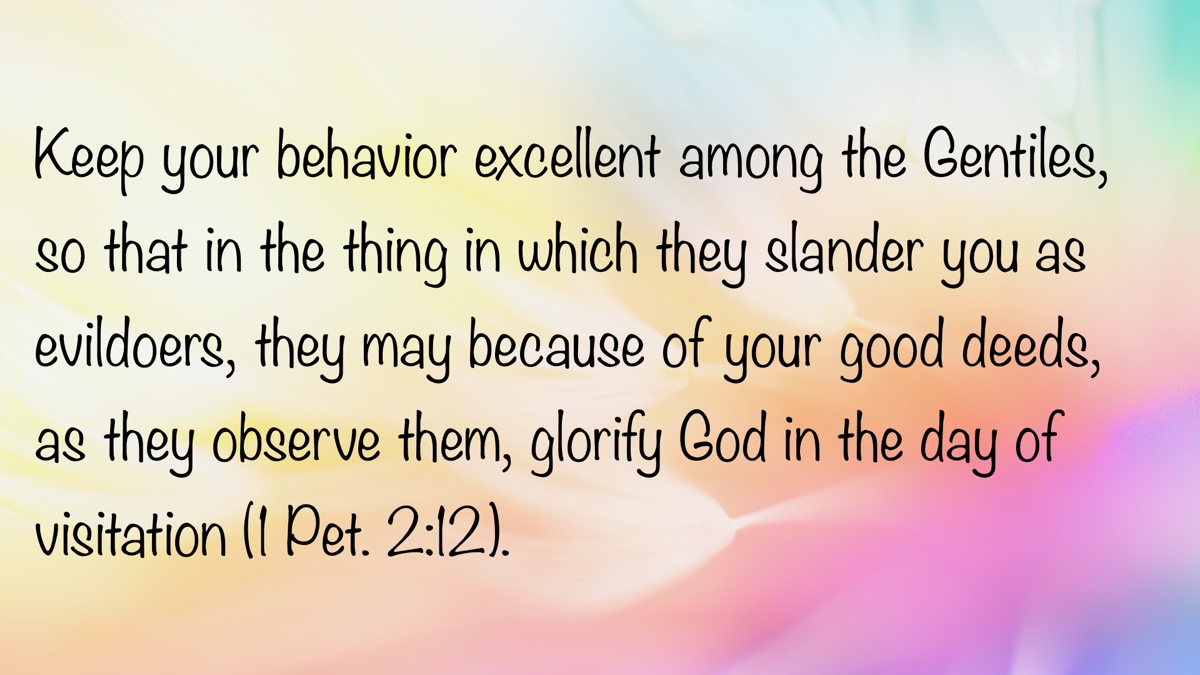

By Donnie V. Rader
Synopsis: This article explores how what we wear to worship reflects our respect for God and the seriousness of what we’re doing. It emphasizes that while Scripture doesn’t set a dress code, it provides principles of modesty, decency, and appropriateness that should guide our choices. Ultimately, our attire should reflect a heart of reverence, not casualness, and help us focus on worship without distracting others.
When I accepted the assignment to write on clothing in worship, I realized it might not have been my best decision, simply because opinions on this topic are often extreme. I am wading into an area filled with as much emotion as Scripture. Some believe God does not care what we wear to worship, so they dress in something short, tight, or low-cut. Others think God is unconcerned with our attire (since the heart is all that really matters), so they come to services dressed as if they were working in the yard. Still others believe that if a man does not wear a coat and tie and a woman does not wear a dress, they have come close to committing sin. They argue we should always wear our “best.”
When I finish this task, some will think I have gone too far—binding where God has not and trying to set a dress code. Others will think I have not gone far enough, believing I have encouraged casual or even sloppy attire. I intend for neither to be the case.
How we dress makes a difference. Surely no one would deny this. Our clothing makes a statement about who we are. If you see someone in a uniform (police, fireman, or doctor), you know something about who they are. The same is true if you see someone wearing a priest’s collar, a nun’s habit, or a Jewish kippah. If you see a t-shirt that says “MAGA,” “Black Lives Matter,” or “No Kings,” you discern something about the wearer. Why would this not also be true as we attend worship services? Our clothing speaks volumes before we say a word.
Divinely made clothing covered from the shoulder to the knee. In the garden of Eden, man’s attempt to cover himself was insufficient. Adam and Eve were still “naked” (Gen. 3:10) in a relative sense after making “coverings” of fig leaves for themselves (Gen. 3:7). These coverings were a “girdle, loin-covering, belt” (Brown, Driver, and Briggs, 292). God made “tunics” of skin for both the man and the woman (Gen. 3:21). The “tunic” covered from the shoulder to the knee. Gesenius’ lexicon states: “a tunic, an inner garment [was worn] next the skin (Lev. 16:4); also worn by women (Cant. 5:3; 2 Sam. 13:18); generally with sleeves, coming down to the knees, rarely to the ankles. . .” (Gesenius and Tregelles, 420).
Nakedness is to be covered. In the Old Testament, uncovering the “nakedness” of anyone other than one’s mate was prohibited (Lev. 18:6-7). Nakedness is equated with shame (Gen. 3:7; Rev. 3:17; 16:15; 17:16). The word “naked” (e.g., Mark 14:51) can refer to either complete nudity or one who is “not fully clothed” (Oepke, 773-774). The exposed thigh is equated with nakedness. Priests were to wear clothing that covered their “nakedness,” which would “reach from the waist to the thighs” (Exod. 28:42). The Bible in Basic English renders this as “to the knees.” Likewise, when God announced He would embarrass Babylon, He said He would take off her skirt and “uncover the thigh,” adding, “your nakedness shall be uncovered” (Isa. 47:2-3).
Our clothing should be modest (1 Tim. 2:9-10). The word “modest” means “respectable, honorable. . . pertaining to being appropriate for winning approval, appropriate” (BDAG, 561).
We should dress in a way that reflects a sense of shame (1 Tim. 2:9-10). The KJV uses “shamefacedness,” and the ASV has “shamefastness.” Vine says, “Shamefastness is that modesty which is ‘fast’ or rooted in the character” (Vine, 568). Strong suggests it conveys the idea of “downcast eyes.”
Our attire should not be sexually attractive. The Bible speaks of the “attire of a harlot” (Prov. 7:10), indicating that clothing can be sexually attractive. The LBP renders this as “. . .dressed seductively.” Clothing should not draw attention to parts of the body that would arouse sexual thoughts.
When planning what to wear to worship, consider whether your clothing will create a problem or distraction for others. It is possible to so “overdress” that it becomes inappropriate. For example, if a man wore a tuxedo and top hat or a woman wore a wedding gown with a long train, they would not be considered “modest,” even though their bodies are covered. The same is true for someone attending worship in a dress that is short, tight-fitting, sheer, or so clingy that her form is clearly marked out. We must consider what is seen when we sit (e.g., a skirt or dress that rides above the knee when seated) and what is seen when others walk by or are standing above us (e.g., the man serving the Lord’s Supper may see more than the woman realizes).
No dress code should be set. I am not willing to set a “dress code” for worship. However, we all agree that some clothing, though covering the body, is not appropriate for worship. No one would approve of wearing a clown suit, Santa suit, priest’s collar, nun’s garb, a man in a dress, or the attire of the Pope. While these are extreme, they illustrate that some clothing does not show respect for the worship of God.
Joseph dressed for the occasion. When Joseph prepared to go before the king, he shaved and changed his clothes (Gen. 41:14). Why did he not go as he was? This demonstrates the principle that clothing shows respect for what we are doing. David did the same when going to the house of the Lord to worship (2 Sam. 12:20). President Reagan was quoted as saying you would never see him in the Oval Office without a coat and tie because of the respect he had for what that office represented and what he did there.
There is a general principle of appropriate and inappropriate dress. Most of us recognize that we dress appropriately for the occasion. At a friend’s wedding, you would not wear a wedding dress unless you are the bride. At a funeral, you would not wear a bright yellow or flowery dress or suit. Neither would you wear dirty clothes nor a t-shirt advertising a team or business.
All things in our worship should be decent and orderly (1 Cor. 14:40). The word translated “decent” is used three times in the New Testament. In this context, the focus is on the abuse of spiritual gifts, particularly tongues. The assembly should be conducted decently and orderly. The same word appears in Romans 13:13 (translated “properly”), where we are to “walk properly” in our daily lives, and in 1 Thessalonians 4:12 (translated “properly”), where we are to conduct ourselves properly toward outsiders.
The word “decent” or “properly” means “pertaining to being proper in behavior, decently, becomingly. . . behave decently” (BDAG, 414). Why would that not include how we dress for worship? Our attire should not only be modest but also should show respect (decency) for what we are doing—worshipping God.
I realize we are dealing with areas of judgment, at least as we apply these general biblical principles. The point is that however we dress (suit, dress, open collar, etc.), it should reflect the respect we have for what we are doing. My grandfather could not afford a suit, but he had a new, clean pair of overalls (starched to the point they would nearly stand on their own) reserved for the Lord’s day. That reflected his respect for worship.
We must be careful as we approach this topic. We need to avoid binding our opinions, personal preferences, or our likes and dislikes. We must not set a standard we cannot consistently follow. We should not look down upon visitors (or make them feel unwelcome) who may not be dressed to our liking, nor should we be impressed by those wearing expensive clothes. Certainly, James 2 applies here.
It is safe to conclude that attitude and attire go hand in hand. Casual dress and casual attitudes are linked. The more casual our attitude toward worship, the more casual our dress becomes. This is not to say a man must wear a coat and tie or a woman must wear a dress or skirt. However, in many places, attire for worship is becoming increasingly casual. Members attend in clothing they might wear while working in the garden or yard. It is not difficult to see that as this becomes more common, a more casual attitude toward the entire service develops.
We all recognize the difference between someone who comes to services “casually” by choice and one who does so out of necessity. Some brethren come directly from work (on Wednesdays) wearing their work clothes. On those occasions, their clothing reflects the importance they place on assembling.
Hajo Adam and Adam D. Galinsky reported a study on the association between what one wears and attentiveness to the task at hand. A summary of their findings states:
We introduce the term “enclothed cognition” to describe the systematic influence that clothes have on the wearer’s psychological processes. We offer a potentially unifying framework to integrate past findings and capture the diverse impact that clothes can have on the wearer by proposing that enclothed cognition involves the co-occurrence of two independent factors—the symbolic meaning of the clothes and the physical experience of wearing them. As a first test of our enclothed cognition perspective, the current research explored the effects of wearing a lab coat. A pretest found that a lab coat is generally associated with attentiveness and carefulness. We therefore predicted that wearing a lab coat would increase performance on attention-related tasks. In Experiment 1, physically wearing a lab coat increased selective attention compared to not wearing a lab coat. In Experiments 2 and 3, wearing a lab coat described as a doctor’s coat increased sustained attention compared to wearing a lab coat described as a painter’s coat, and compared to simply seeing or even identifying with a lab coat described as a doctor’s coat. Thus, the current research suggests a basic principle of enclothed cognition—it depends on both the symbolic meaning and the physical experience of wearing the clothes (Journal of Experimental Social Psychology, 918-925).
It is likely someone can cite a study showing what we wear has no impact on what we do. However, this study suggests there may be a connection between how we dress and how seriously we take the task at hand. That surely includes worship. Nevertheless, did we not already know this?
Adam, Hajo, and Adam D. Galinsky. “Enclothed Cognition.” Journal of Experimental Social Psychology 48, no. 4 (July 2012): 918-25.
Arndt, William, et al. A Greek-English Lexicon of the New Testament and Other Early Christian Literature (BDAG). Chicago, IL: University of Chicago Press, 2000.
Brown, Francis, Samuel Rolles Driver, and Charles Augustus Briggs. The Enhanced Brown-Driver-Briggs Hebrew and English Lexicon. Oxford: Clarendon Press, 1977.
Gesenius, Wilhelm, and Samuel Prideaux Tregelles. Gesenius’ Hebrew and Chaldee Lexicon to the Old Testament Scriptures. Bellingham, WA: Logos Bible Software, 2003.
Oepke, Albrecht. Theological Dictionary of the New Testament. Edited by Gerhard Kittel, Geoffrey W. Bromiley, and Gerhard Friedrich. Grand Rapids, MI: Eerdmans, 1964.
Vine, W. E., Merrill F. Unger, and William White Jr. Vine’s Complete Expository Dictionary of Old and New Testament Words. Nashville, TN: Thomas Nelson Publishers, 1996.
Donnie V. Rader has worked with the El Bethel church of Christ in Shelbyville, TN, since January 1994. He has served as one of their elders since 2004. He and his wife, Joan, have two children and six grandchildren. The church’s websites are here and here. He can be reached here.


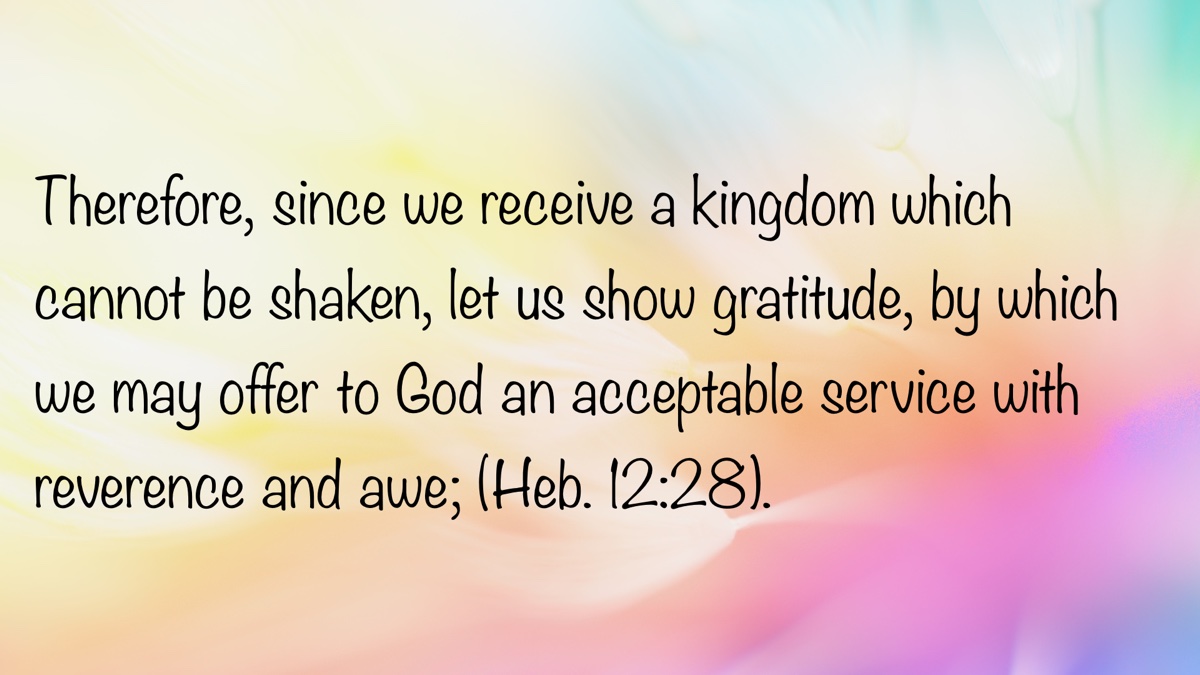
By Tony and Darlene Noll
Synopsis:
Men and women often have different perceptions regarding body image and clothing, yet God’s standard of modesty applies to everyone. Immodest clothing and behavior can cause others to stumble, especially through lust, so we all need to be mindful of how we present ourselves. Modesty isn’t just about what we wear—it’s about honoring God with our choices, protecting what’s sacred, and helping others draw closer to Him.
This article does not specifically address what God considers modest dress or actions, nor does it define modesty or nakedness. Instead, it aims to help both men and women understand what may lead them to sin through lust. Generally speaking, men and women perceive the body and clothing differently. While we must avoid stereotyping by applying these behaviors universally, these perceptions are largely accurate. Additionally, in today’s society—where gender confusion is increasingly common—it is important to note that someone not fitting this profile does not necessarily belong to the homosexual or transgender community.
In general, immodest, revealing clothing fuels lust. The sight of nude or semi-nude bodies can provoke strong sexual appetites and encourage lustful thoughts. The fashion industry and pornographers understand this well. It is imperative that Christians understand it too.
God tells us that we are a holy, royal priesthood—but does our dress reflect this? It is clear that God is not always pleased with our choices. He demonstrated this in the garden when Adam and Eve dressed inappropriately, and God clothed them to cover their nakedness, therefore modestly. Clearly, modesty is not about dress alone. The way we walk, talk, our demeanor, subtle flirtatious looks, and lifestyles can be just as immodest and inappropriate—becoming stumbling blocks to others. We should not look to societal norms for answers; rather, we must look to God for guidance.
Both men and women can be enticed and tempted by others who are either unclothed or inadequately clothed. Bible verses addressing control over lustful passions are written to both genders (Col. 3:5-7; Rom. 1:24; Mark 7:21-23, etc.). Examples such as Potiphar’s wife in Genesis 39:7 and the woman in Song of Solomon 5:10-16 show that female urges can be tied to visual stimuli. Men should be mindful of their clothing choices to avoid potentially tempting women. This includes revealing or overly form-fitting clothing, such as skin-tight jeans or shirts that emphasize muscles. Men must be cautious about how their pants fit—particularly sweatpants that accentuate key areas. Going shirtless can also be a catalyst for temptation. When dating, seductive language, excessive flattery, or smooth words can lead a woman to believe you’re committed, which may cause her to allow the relationship to become more physical than it should. Inappropriate touching can also lead to impure thoughts.
The world tells us that physical attraction and sex come first, but they have it backward. Sex is a wonderful gift from God, but it should be the final part of a relationship—and only within marriage. If you are dating, grow together spiritually first, enjoy one another socially, and engage in intellectual discussions. This foundation allows emotional and physical attraction to develop over time, leading to a successful marriage. Though challenging with raging hormones, learning self-control early in life results in a more fulfilling marriage and a closer walk with God.
Many women are more moved by affection, tenderness, and emotional connection. Most want to feel valued and cherished at home. Second only to a man’s relationship with God, a woman wants to be the most important person in her husband’s life—and she wants him to have eyes only for her. Wandering eyes and unwholesome attention to other women negatively impact relationships. When emotional needs are unmet, a woman may feel lonely, dissatisfied, or resentful, potentially leading her to seek emotional connection elsewhere. She may not be looking for a physical relationship, but rather someone who listens and seems to care. Open and honest communication about feelings, concerns, and desires is vital. Regularly expressing gratitude and appreciation reinforces value and strengthens bonds. Affectionate gestures—hugs, kisses, and words of affirmation—go a long way in providing emotional security. Ultimately, successful relationships are built on mutual value and prioritization.
Modern clothing styles can objectify women by emphasizing physical appearance over their inherent value as children of God. We must not compromise God’s standards for stylish, cute, or trendy clothing. However, it is possible to be both fashionable and modest. Many Christian women find creative ways to express their unique style while adhering to biblical principles. The Proverbs 31 woman dressed in “fine linen and purple,” clearly taking care in her appearance. A helpful verse to remember when choosing clothing is 1 Peter 2:9, which says, “But ye are a chosen generation, a royal priesthood, an holy nation, a peculiar people; that ye should shew forth the praises of him who hath called you out of darkness into his marvellous light” (1 Pet. 2:9). It reminds us that our dress identifies us as representatives of God.
On a personal note, I became a Christian in my 30s and dressed very immodestly before obeying the gospel. I sought attention from the opposite sex, wanted to fit in, and was insecure. The cure was seeking value internally through a relationship with God. It didn’t happen overnight, but thankfully, the Christians surrounding me—and God—were patient. Understanding God’s word and my value as His child helped fill that void. Some immodest actions stem from deep, hurtful needs that the world cannot heal. We can change and help others change by loving them through the hurt and seeking to fill the void. Our beautiful bodies are sacred and to be cherished. Protect what is sacred, honor God, and cultivate inner beauty. Our worth comes from God—not fashion trends or others’ opinions. Focus on cultivating a pure heart and mind, and your clothing choices will naturally reflect your values.
From my experience and discussions with other men, it is generally true that men are more visually stimulated. Immodesty can cause a man to stumble due to lust of the eyes, which may lead to lust of the flesh if he pursues those desires.
Culture is often used as the standard for modesty, and that standard changes with each generation. What was once considered immodest is now normalized. Unfortunately, Christians sometimes adopt society’s definition of modesty. While the world’s standards shift, God’s definition remains constant.
Most men have innate sexual desires that can be aroused by immodest dress and actions—thoughts that women, especially unmarried women, may not fully understand. A man is not absolved of responsibility for his thoughts and actions. Like Job, we can make a covenant with our eyes not to look lustfully (Job 31:1). Removing temptation illustrates true love (agape) and sacrifice for one’s brother in Christ. My prayer is that this article helps women understand how their wardrobe and actions may affect men’s thoughts—even unintentionally.
One of the simplest ways to tempt a man is by exposing skin that should be covered. Shirts that hug tightly, expose the midsection, or show cleavage, as well as outfits like tube tops that reveal shoulders, chests, and backs, can be stumbling blocks. Shorts that expose the thigh are also problematic. Ladies, are you aware of what men might fixate on when you’re standing or sitting in short dresses or shorts? Tight skirts with slits can expose too much thigh and draw attention. Parents—especially fathers—must be attentive to what their daughters wear during athletic events. These outfits are often revealing. Similarly, modern swimwear can entice men at swim meets, pools, or beaches. Young brides, why choose a wedding dress that exposes skin meant only for your husband? Wedding photos are then displayed for all to see. Parents posting revealing pictures of daughters on social media can provoke impure thoughts in men. Though culturally accepted, it is not aligned with God’s will.
Some clothing doesn’t expose flesh but is still immodest. Tights or spandex without a modest outer covering can attract attention and cause a man to fix his gaze on her when he normally would not do so. These outfits leave little to the imagination and are akin to being nude with a different skin color.
The way a woman carries herself, or behavioral modesty, can also be an avenue for causing a man to stumble. Flirting—inappropriate, playful touching or personalized attention—can lead to lustful thoughts. While it may seem innocent, a man might perceive a message never intended. Modesty is a form of communication. Clothing sends messages, and immodest dress can be seen as inviting certain interactions. Since men are often the aggressors in relationships, they may act on these signals.
I’ve seen the struggles of my female family members and how challenging Satan has made the clothing section of stores. I appreciate every woman who diligently maintains God’s standard of modest dress. Your sacrifice is noticed and appreciated in helping men get to heaven.
It is sad when someone chooses to share their sexuality through immodest dress or behavior. Outside of marriage, revealing our bodies should embarrass us—it is shameful. Due to its prevalence, immodesty is hard to ignore and can desensitize us. Modesty fosters self-respect and engenders respect from others, while removing stumbling blocks for fellow Christians. Our lives—including our dress, actions, thoughts, and relationships—should point to God and bring Him honor. By living in alignment with God’s will, His light shines through and counters the world’s darkness. We must surrender our desires and trust His purpose, exalting Him in all we do.
Tony and Darlene Noll have been members of the Indiana Avenue church of Christ in Lubbock, TX, since 2023, where Tony currently serves as an elder. They have been married for 41 years and have two married children and seven grandchildren. They can be reached here.


Note: Please send additions, corrections and updates here.
Updated: 7/1/2025
17312 Jones Rd, Athens, AL 35613
Sun. Bible Study 9:30 am | Sun. Worship: 10:20 am & 5:00 pm | Wed. Bible Study 7:00 pm
Evangelist: Jonathan Reeder | Website | 256-233-3160
24190 Wooley Springs Rd, Athens, AL 35613
Sun. Worship 9:30 am & 5:15 pm | Wed. Bible Class 7:00 pm
Evangelists: Bob Watson & Matt Taylor | Website
3955 Pine Lane, Bessemer, AL 35022
Sun. Bible Study 9:10 am | Sun. Worship 10:00 am & 5:00 pm | Wed. Bible Class 7:00 pm
Evangelist: David Deason | 256-497-8127 205-425-2352 | Email | Website
2325 Old Columbiana Rd. (near I-65 & Hwy. 31)
Sun. Bible Study 9:00 am | Worship 10:00 am & 5:00 pm | Wed. Bible Study 7:00 pm
Evangelist: Kyle Pope | 205-822-0018 | Website
19965 Sandlin Rd. Elkmont, AL 35620
Sun. Worship 9:30 am & 3:00 pm | Bible Classes: 10:45 am | Wed. Bible Study 7:00 pm
Evangelist: Lance R. Taylor | 256-777-0990 | Website
851 N. Pine St. (Located next to University campus)
Sun. Bible Study 9:30 am | Worship 10:15 am & 5:00 pm | Wed. Bible Study 7:00 pm
Evangelist: Kenny Moorer | 256-766-0403
601 Pineywood Road, Gardendale, AL, 35071 (Located 10 miles N of Birmingham)
Sun. Bible Study 9:30 am | Worship: 10:25 am & 5:00 pm | Wed. Bible Study: 7:00 pm
Evangelists: Andrew Smith & Jason Shackleford | 205-631-2131 | Website
129 Hillcrest Rd, Mobile, AL 36608
Sun. Worship 9-9:30 am | Bible Study 9:30-10:30 am | Worship 10:30-11:30 am | Wed. Bible Study 7:00 pm
Evangelist: Ken Sils | 765-307-8048 | 251-342-4144 or 342-2041 | Website
271 Highway 65 N, Conway, AR 72032
Sun. Bible Study 9:00 am | Worship 10:00 am & 5:00 pm | Wed. Bible Study 7:00 pm
Evangelist: Bruce Reeves | Bldg: 501-336-0052 | Website
2655 Prince St., Conway, AR 72034
Sun. Worship 9:00 pm | Bible class 9:50 am | Worship & Lord’s Supper: 10:40 am | Wed. Bible Class 7:00 pm
501-450-8640
2323 South 46th St.
Sun. Bible Study 9:45 am | Worship 10:30 am | Wed. Bible Study 7:00 pm
407 Bella Vista Dr.
Sun. Bible Study 9:30 am | Worship 10:15 am & 5:00 pm | Wed. Bible Study 7:00 pm
Evangelist: Norman E. Sewell | 870-741-9104 or 870-741-5151 | Website
514 Airport Rd.
Sun. Bible Study 10:00 am | Worship 11:00 pm & 6:00 pm | Wed. Bible Study 7:00 pm
Evangelist: Dick Blackford | 870-933-9134
145 N. Country Club Rd.
Sun. Bible Study 9:00 am | Worship 10:00 am & 6:00 pm | Wed. Bible Study 7:00 pm
Evangelist: Brenden Ashby | 520-326-3634 | Website
17903 Ibbetson Ave.
Sun. Bible Study 9:45 am | Worship 10:50 am & 6:00 pm | Wed. Bible Study 7:30 pm
562-866-5615 | Website
3433 Studebaker Rd.
Sun. Bible Study 9:50 am | Worship 10:45 am & 5:30 pm | Wed. Bible Study 7:00 pm
JP Flores | 562-420-2363 or Mark Reeves | 562-377-1674 | Website
449 W. Allen Ave., Suite 120, San Dimas, CA 91773
Sun. Bible study 10:00 am | Worship 11:00 pm & 4:00 pm | Wed. Bible Study 7:30 pm
909-788-9978 | Website
Meets at the Fort Collins Senior Center, 1200 Raintree Dr., Fort Collins, CO 80526
Sun. Bible Study 9:30 am | Worship 10:30 am
Evangelist: Richie Thetford | Website
1414 Hawk Parkway, Unit C
Sun. Worship 11:00 pm | Bible Study 2 pm & 1:30 pm
970-249-8116 |
64 Casting Lake Rd.
Sun. Bible Study 9:00 am | Worship 10:00 am & 6:00 pm | Wed. Bible Study 7:00 pm
850-622-3817 | Website | Location change coming in 2022: 497 Church St Santa Rosa Beach, FL 32459
196 Ave C, Geneva, FL 32732
Sun. Bible Study 10:00 am | Worship 10:45 am
(689) 229-9888 | Website
6 Lane Dr., Mary Esther, FL 32569
Sun. Bible Study 9:30 am | Worship 10:30 am & 5:00 pm | Wed. Bible Study 7:00 pm
850-244-9222 | Website | Evangelist: Chris Simmons | Email
3940 S. Bumby Ave.
Sun. Communion: 9:30 am | Bible Study 10:00 am | Praise & Preaching: 10:55 am (No pm Service) | Wed 7:00 pm
Evangelist: Ken Chapman
Office: 407-851-8031 | Website | Note: Please call for current worship and Bible study times.
621 E. Wheeler Rd.
Sun. Bible Study 10:00 am | Worship 10:50 am & 6:00 pm | Wed. Bible Study 7:30 pm
Evangelist: Bobby Witherington | 813-684-1297 | Website
Route 116 (near Callaway Gardens)
Sun. Bible Study 10:00 am | Worship 11:00 pm & 6:00 pm | Wed. Bible Study 7:30 pm
Evangelist: Tommy W. Thomas | 706-628-5117 or 628-5229 |
Meeting at 321 2nd St. S., Ste. 103, Nampa ID 83651
Sun. Bible Study 10:00 am | Worship 11:15 am | Wed. Bible Study 7:00 pm
208-461-1318 | Email | Website or here
Note: Please see website for most current information.
370 N. Shilling | P.O. Box 158-83221
Sun. Bible Study 10:00 am | Worship 11:00 pm | Wed. Bible Study 7:30 pm
208-785-6168 or 681-1552
1310 NE 54th Ave, Des Moines, IA 50313
Sun. Bible Study 9:45 am | Worship 10:40 am | Wed. Bible Study 7:00 pm
515-262-6799 | Website
1236 63rd St. (Dir: 1.5 miles E of I355)
Sun. Bible Study 9:00 am | Worship 9:55 am & 6:00 pm | Wed. Bible Study 7:30 pm
Evangelist: Steve Wolfgang | 630-968-0760 | Website
1100 S. 17th St.
Sun. Bible Study 9:30 am | Worship 10:30 am & 6:00 pm | Wed. Bible Study 7:00 pm
217-234-3702
16224 S Vincennes Ave.
Sun. Bible Study 9:00 am | Worship 10:00 am & 4 pm | Wed. Bible Study 7:00 pm
Evangelist: Donald Hawkins | 708-339-1008 | Website
Meeting @ Sleep Inn Suites and Motel | 1101 North Cummings Lane, Washington, IL 61571
Sun. Worship: 11:30 am | Bible Study: 12:30 pm | Wed. Bible Study 6:30 pm @ home of Tim Sundlie, call for address
Evangelist: Tim Sundlie | 608-796-9028 | Email | Website
407 W Lewis and Clark Parkway, Clarksville, IN 47129
Sun. Bible Study 9:30 am | Worship 10:30 am & 6:00 pm | Wed. Bible Study 7:30 pm
Elders: Allen L. Morris (812) 989-5838 and Stephen W. Nale (502) 727-7559 or (812) 944-2305 | Website
Sun. Bible Study 9:30 am | Worship 10:30 am | Wed. 7:00 pm
765-676-6404 | Website
15530 Herriman Blvd, 46060
Sun. Bible Study 10:00 am | Worship 11:00 am | Wed. Bible Study 7:00 pm
Evangelist: John Smith | Email | 317-501-8035 or 317-501-0249 or 317-701-1204
400 Lafayette Ave. | P.O. Box 34
Sun. Bible Study 9:45 am | Worship 10:30 am & 6:00 pm | Wed. 7:00 pm
812-279-4332
(First St. & Karnes Ct.)
Sun. Bible Study 9:45 am | Worship 10:30 am & 5:00 pm | Wed. Bible Study 7:00 pm
Evangelist: Jeremy Goen | 812-967-3437 or 967-3520 | Website
302 S. Fourth Ave., Mulvane KS 67110 | Mail: PO Box 11
Sun. Bible Classes: 10:00 am | Worship 11:00 am | Wed. Bible Study 7:00 pm
Evangelist: Jay Horsley | 316-644-8503 | Website | Email
5600 SW 17th St, Topeka, KS 66604
Sun. Bible Study 9:15 am | Sun. Worship 10:30 am | Wed. Bible Study 7:00 pm
785-235-8687 or 785-273-7977 | Website
1235 Williams St.
Sun. Worship 10:00 am | Bible Study After am Worship & 6:00 pm | Wed. Bible Study 7:00 pm
Evangelist: Jerid Gunter | 270-274-4451
8081 US Hwy 68-East, Benton, KY 42025
Sun. Bible Study 9:00 am | Worship 10:00 am | Wed. Bible Study 6:00 pm
270-354-9451 | Email | Website | Conveniently located near Kenlake State Resort Park on the western shore of Kentucky Lake.
612 Broadway
Sun. Bible Study 9:45 am | Worship 10:30 am & 5:00 pm | Wed. Bible Study 6:30 pm
Evangelist: Charles J. White | 270-422-3878
107 Sunny Hill Dr.
Worship 9:30 am & 11:30 am | Bible Study 10:30 am | Wed. Bible Study 7:00 pm
Evangelist: Steve Lee | 270-789-1651 | Website
103 N. Main St. | P.O. Box 233
Sun. Bible Study 10:00 am | Worship 10:45 am & 5:00 pm | Wed. Bible Study 7:00 pm
Evangelist: Jarrod Jacobs | 270-589-4167 or 270-274-3065
385 E. Lexington Ave.
Sun. Worship 10:00 am | Bible Study 11:15 am & 5:00 pm | Wed. Bible Study 7:00 pm
Evangelist: B.J. Sipe | 859-236-4204
18 Scott Drive, Florence, KY 41042
Sun. Worship 9:30 am & 5:30 pm | Sun. Bible Study 10:30 am | Wed. Bible Study 7:00 pm
859-371-2095 | Website
1733 Bowling Green Rd.
Sun. Bible Study 9:00 am | Worship 10:00 am & 6:00 pm | Wed. Bible Study 7:00 pm
Evangelist: Steve Monts | 270-776-9393 | Website
733 Mill St. Leitchfield, KY 42754
Sun. Bible Study 9:30 am | Worship 10:00 am Communion 10:55 am | Wed. Bible Study 6:00 pm
270-230-6144 | Website
1803 Dixie Garden Dr.
Sun. Bible Study 9:30 am | Worship 10:30 am & 6:00 pm | Wed. Bible Study 7:00 pm
Evangelist: Michael Hardin | Email | 502-937 2822
3221 East Hebron Lane
Sun. Bible Study 9:00 am | Worship 10:00 am & 5 pm | Wed. Bible Study 7:30 pm
Evangelist: Danny Linden & Ron Halbrook | 502-957-5115 or 502-955-1748 | Website
405 Orice Roth Rd. | 70737 (Baton Rouge area)
Sun. Bible Class 9:30 am | Worship 10:30 am & 6:00 pm | Wed. Bible Study 7:00 pm
Evangelist: R.J. Evans | Email | 225-622-4587
856 Brighton Ave. (Breakwater School) | Leave Maine Turnpike at Exit 48
Sun. Bible Study 10:00 am | Worship 11:00 pm w/ second service immediately following am worship | Mid-week Bible Study (please call for times & places)
207-839-3075 or 839-8409
3084 Creek Drive SE, #1-C, Kentwood, MI 49512 | P.O. Box 8446, Kentwood, Mich. 49508 (Grand Rapids area)
Sun. Worship 11:00 am | Sun. Bible Study 12:30 pm | Wed. Bible Study 7:00 pm
Evangelist: Joseph Gladwell | Email
414 South Main Street
Sun. Bible Study 10:00 am | Worship 11:00 am | Wed. Bible Study 6:00 pm
Evangelist: Ryan Thomas | 810-837-1302 or 989-389-3226 | Website
2820 Grandview Ave, Meridian, MS 39305
Sun. Bible Study 10:00 am | Sun. Worship 11:00 pm | Wed. 6:30 pm
Ron Cooper: 601-934-3675 | Email
Ricky Ethridge: 601-737-5778 | Email
2110 E State Line Rd. (Exit I-55) (Memphis area)
Sun. Bible Study 9:30 am | Worship 10:30 am | Wed. Bible Study 7:00 pm
Evangelist: James A. Brown | Bldg: 662-342-1132
805 Meadow Rd, Severn, MD 21144
Sun. Bible Study 10:00 am | Sun. Worship 11:00 pm & 6:00 pm | Wed. Bible Study 7:30 pm
Evangelist: Brandon Trout | 410-969-1420 or 410-551-6549 | Website
422 N Linton St., Blodgett, MO 63824
Sun. Worship 10:00 am | Wed. Bible Study 7:00 pm
Evangelist: Russell Rice | 573-475-0417
4000 SW Christiansen
Sun. Worship 9:00 pm | Bible Study 10:00 am | Worship 11:00 pm | Wed. Bible Study 7:00 pm
Evangelist: Brett Hogland | 816-228-9262
432 Eagle Rock Rd, Branson, MO 65616
Sun. Worship 9:30 am | Bible Study 10:30 am | Sun. Evening Worship 5:00 pm | Wed. Bible Study 6:00 pm
Evangelist: Philip North | 417-239-1036 | Email | Website
2912 Bloomfield Rd
Sun. Bible Study 9:15 am | Worship 10:00 am | Wed. Bible Study 7:00 pm
Seth McDonald & Jerry Lee Westbrook | 573-837-1001 | Email | Website
703 Harrison St.
Sun. Bible Study 10:00 am | Worship 11:00 pm & 6:00 pm | Wed. Bible Study 7:00 pm
Evangelist: Nolan Glover | 870-650-1648 | Website
685 Sidney St.
Sun. Bible Study 9:30 am | Worship 10:15 am & 5:00 pm | Wed. Bible Study 7:00 pm
Evangelist: Lynn Huggins | 573-265-8628
2727 County Line Rd.
Sun. Bible Study 9:00 am | Worship 9:50 am | Wed. Bible Study 7:00 pm
816-279-4737 | Website
Bell St & S 7th St. Beatrice, NE 68310
Sun. Bible Study 9:00 am | Worship 10:00 am & 6:30 pm
402-233-4102 or 402-228-3827 | Website
5327 S. Tryon Street, Charlotte, NC 28217
Sun. Bible Study 9:30 am | Sun. Worship 10:30 am | Wed. Bible Study 7:30 pm
704-525-5655 | Website
3781 East Highway 27, Iron Station, NC 28080
Sun. Bible Study: 10:00 am | Sun. Worship 11:00 am & 6:00 pm | Wed. Bible Study 7:00 pm
Evangelist: Stan Adams | 704-748-9777 (Bldg) & 704-748-3747 (Jerry) | Email | Website
1031 Welford Dr, Beavercreek, OH 45434 (located a few miles E of Dayton)
Sun. Short Worship: 9:30 am | Bible Study 10:05 am | Sun. Worship 11:00 am | Wed. Bible Study Adults: 1:00 pm & All ages: 7:00 pm
Evangelist: Heath Rogers | 937-426-1422 | Website
13501 Lorain Ave, Cleveland, OH 44111
Sun. Bible Study 10:00 am | Worship 11:00 am | Wed. Bible Study 7:00 pm (Call)
Evangelist: John Dicus | (330) 723-0111 or (330) 590-0227 or (216) 322-9392 | Website
28 W. Main St., Dayton, OH 45449
Sun. Worship 9:00 pm | Bible Study 9:30 am | Worship 10:25 am | Wed. Bible Study 7:00 pm
Evangelists: Michael Grushon 937-866-5162 or Alan Beck 937-469-3311 | Website
6417 Franklin-Lebanon Rd. Franklin, OH 45005
Sun. Bible Study 10:00 am | Worship 10:45 am | Tues. Bible Study 6:30 pm
Evangelist: Josh Lee | 937-789-8055 or 937-746-1249 | Website
1973 W Main St. New Lebanon, OH 45345
Sun. Bible Study 9:30 am | Worship 10:30 am, & 5:00 pm | Wed. Bible Study 7:00 pm
Evangelist: Bruce Hastings | 937-687-7150 or 937-478-0367
80 Sandhill Rd. Reno, OH 45773
Sun. Bible Study 9:30 am | Worship 10:30 am & 6:30 pm | Wed. Bible Study 7:00 pm
Evangelist: Mark Childers | 304-615-1091 | 740-374-9827 | Website
4110 Frey Rd., Northwood, OH 43619 (Toledo Area)
Sun. Worship 11:00 pm
Evangelist: Donald Jarabek | 419-893-3566 & 567-331-2269
33226 Children’s Home Rd., Pomeroy, OH 45769
Sun Worship 10:00 am & 5 pm | Bible Study 11:00 am | Wed. Bible Study 6:00 pm
Jack Hunt | Email | 740-645-4612 | Website
2120 No. A St.
Sun. Bible Study 9:45 am | Worship 10:45 am & 5:30 pm | Wed. Bible Study 7:00 pm
Evangelist: Rob Lungstrum | 918-931-1362 or 918-423-3445
4110 NE 122nd Ave #101, Portland, OR 97230
Sun. Bible Study 10:00 am | Worship 11:00 am | Thur. Bible Study 7:00 pm
Evangelist: Samuel A. Matthews | 971-331-2838 | Bldg: 503-432-8697 | Email | Website
3702 E. Long St.
Sun. Bible Study 9:30 am | Worship 10:30 pm & 5:30 pm | Wed. Bible Study 7:30 pm
Bldg: 541-367-1599 | Email | Website
7222 Germantown Ave, Philadelphia, PA 19119
Sun. Bible Study 10:15 am | Sun. Worship: 11:15 am | Tues. Bible Study: 7:00 pm
Evangelist: James H. Baker, Jr. | 215-248-2026 | Website
3370 Broad St. Extension
Sun. Bible Study 9:30 am | Worship 10:30 am & 5:30 pm | Wed. Bible Study 7:00 pm
Evangelist: A.A. Granke, Jr. | 803-499-6023
4013 Edmund Hwy. (Hwy. 302), West Columbia, SC 29170
Sun. Bible Study 9:30 am | Sun. Worship 10:30 am & 5:00 pm | Wed. Bible Study 7:00 pm
Evangelist: Jerry Cleek | 219-313-1108 | Website
326 Powell Road, Collierville, TN 38017
Sun. Bible Study 9:00 am | Worship 10:00 am | Wed. Bible Study 7:00 pm
Evangelist: Doug Seaton | 901-854-6816 or 901-634-7840
417 Mooresville Pike | (Located .8 mi. N. of Hwy. 50/Jas. Campbell)
Sun. Bible Study 9:30 am | Worship 10:30 am & 3:30 pm | Wed. Bible Study 7:00 pm
931-388-5828 or 931-381-7898 | Website
4894 Hooper Hwy. | 37722 | (Located 15 mi. E. of Gatlinburg on Hwy. 321)
Sun. Bible Study 10am | Worship 11:00 pm & 5:00 pm | Wed. Bible Study 6:00 pm
Evangelist: Olie Williamson | 423-487-5540 or 423-748-0844
350 N Main St. Kingston Springs, TN 37082
Sun. Bible Study 9:00 am | Worship 10:00 am & 5:00 pm | Wed. Bible Study 7:00 pm
108 Locust St.
Sun. Bible Study 9:30 am | Worship 10:30 am & 5:00 pm | Wed. Bible Study 7:00 pm
Evangelist: Daniel H. King, Sr. | 931-379-3704 or 931-964-3924 | Website
1110 Cason Lane
Sun. Bible Study 9:00 am | Worship 10:00 am & 5:00 pm | Wed. Bible Study 7:00 pm
Bldg: 615-896-0090 | Website
2091 Pitts Ln, Murfreesboro, TN 37130 (located at the corner of Northfield Blvd and Pitts Lane)
Sun. Bible Study 9:30 am | Sun. Worship 10:30 am & 6:00 pm | Wed. Bible Study 7:00 pm
Evangelist: David Bunting | 615-893-1200 | Website
7471 Charlotte Pike
Sun. Bible Study 9:00 am | Worship 10:00 am & 5:00 pm | Wed. Bible Study 7:00 pm
Evangelist: Lee Wildman | 615-952-5458 or 615-356-7318
1414 W. Exchange Pkwy
Sun. Bible Study 9:00 am | Worship 10:00 am & 5:00 pm | Wed. Bible Study 7:00 pm
Evangelist: Jerry King 214-504-0443 or 972-727-5355 | Website
4343 S Interstate 35, Alvarado, TX 76065 (Located on the East Service Road off I-35 North of Alvarado)
Mail: I-35 church of Christ, P.O. Box 1269, Alvarado, TX 76009
Sun. Bible Study 10:00 am | Worship 11:00 am | Wed. Bible Study 7:00 pm
682-202-9741 or 817-739-3402 | Website
605 E. Adoue St., Alvin, TX 77511
Sun. Bible Study 9:30 am | Worship 10:30 am & 5:00 pm | Wed. Bible Study 7:30 pm
Evangelist: Mark Mayberry | Email | Website
701 North Pruett St.
Sun. Bible Study 9:45 am | Worship 10:40 am & 6:30 pm | Wed. Bible Study 7:00 pm
Bldg: 281-422-5926 | Weldon: 713-818-1321 | Website
2919 Main St/FM 517 E., Dickinson, TX 77539
Sun. Bible Study 10:00 am | Sunday Worship 11:00 am & 6:00 pm | Wed. Bible Study 7:00 pm
713-298-6673
301 Robison St.
Sun. Bible Study 9:30 am | Worship 10:30 am & 6:00 pm | Wed. Bible Study 7:00 pm
Evangelist: Phillip Stuckey | 361-782-5506 or 361-782-2844 | Website
3277 Pendleton Rd.
Sun. Bible Study 9:30 am | Worship 10:30 am & 5:00 pm | Wed. Bible Study 7:00 pm
915-855-1524
4303 18th St, Bacliff, TX 77518
Sun. Bible Study 9:00 am | Sun. Worship 10:00 am & 6:00 pm | Wed. Bible Study 7:00 pm
Evangelist: Richard Lay | Website
6110 White Settlement Rd. 76114
Sun. Bible Study 9:30 am | Worship 10:30 am & 6:00 pm | Wed. Bible Study 7:30 pm
817-738-7269
Old Granbury Rd Church of Christ
4313 Old Granbury Rd, Granbury, TX 76049
Sun. Bible Study 9:30 am | Sun. Worship 10:30 am | Wed. Bible Study 7:00 pm
Evangelist: Chip Foster | 817-913-4209 or 817-279-3351 | Website
2510 Fry Rd, Houston, TX 77084
Sun. Bible Study 9:45 am | Worship 10:30 am & 6:00 pm | Wed. Bible Study 7:00 pm
Evangelist: David Flatt | Email | Website
6111 Indiana Ave, Lubbock, TX 79413
Sun. Bible Study 10:00 am | Sun. Worship 9:00 am & 11:00 am | Wed. Bible Study 7:00 pm
806-795-3377 | Website
1820 Mansfield Webb Rd, Mansfield, TX 76063
Sun. Bible Study 9:30 am | Sun. Worship: 10:20 am & 5:00 pm | Wed. Bible Study 5:30 pm.
Evangelist: Tom Roberts | 817-996-3926 | Website
612 S Shawnee St, Nacogdoches, TX 75961
Sun. Bible Study 9:45 am | Worship 10:30 am & 6:00 | Wed. Bible Study 6:00 pm
Minister: Van Dennis | 936-615-2950
3831 N.E. Stallings Dr.
Sun. Bible Study 9:30 am | Worship 10:20 am & 6:00 pm | Wed. Bible Study 7:00 pm
Evangelists: Randy Harshbarger & Jay Taylor
268 Utopia Ave. (Dir: I-37 S.E. Exit Pecan Valley)
Sun. Bible Study 9:30 am | Worship 10:30 am & 5:00 pm | Wed. Bible Study 7:00 pm
Evangelist: Jesse Garcia | 210-660 0409
314 N. Tolbert
Sun. Bible Study 9:30 am | Worship 10:30 am & 5:00 pm | Wed. Bible Study 7:00 pm
Evangelist: Ronald Stringer
4404 Twin City Blvd.
Sun. Bible Study 9:30 am | Worship 10:30 am & 6:00 pm | Wed. Bible Study 7:30 pm
Evangelist: Jason Garcia Email or Email | 254-939-0682 | Website
2301 Franklin Dr., Texarkana, AR 71854
Sun. Bible Study 9:30 am | Worship 10:15 am | Wed. Bible Study 7:00 pm
870-772-0746 | Website
340 E Warren St. (in Hewitt, a suburb of Waco)
Sun. Bible Class 9:30 am | Worship 10:30 am & 5:00 pm | Wed. Bible Study 7:00 pm
Evangelist: Marc Smith | 254-292-2482 or 652-7698
4500 Kell West Blvd, Wichita Falls, TX 76309
Sun. Bible Class 9:30 am | Worship 10:30 am & 3:30 pm | Wed. Bible Study 6:30 pm
Evangelist: Dennis L. Scroggins | 512-626- 5702 | Email | Website
Please mail all correspondence to 1504 Hayes St, Wichita Falls, TX 76309
Meeting in the Capital City Grange Hall, 6612 Route 12 Berlin, VT 05602
Sun. Bible Study 9:00 am | Worship 10 am | Tues. Evening in Homes
Evangelist: Open | Website | P.O. Box 70, Williamstown, VT 05679 | For questions or directions: Wade Holt 802-485-4311
217 Taxus St., Chesapeake, VA 23320
Sun. Bible Study 10:00 am | Worship 11:00 am & 5:00 pm | Wed. Bible Study 7:00 pm
Evangelist: Steven Matthews | 757-436-6900 | Website
8330 Doublecreek Court, Chesterfield, VA 23832 (Located in teh Metro Area; Courthouse Rd. at Double Creek Ct. 2.2 miles S of Rt. 288)
Sun. Bible Study 9:30 am | Worship 10:30 am & 5:00 pm | Wed. Bible Study 7:00 pm
Evangalist: Nathan L. Morrison | 804-778-4717 | Website
1208 W. 41st St.
Sun. Bible Study 10:00 am | Worship 11:00 pm & 6:00 pm | Wed. Bible Study 7:00 pm
Evangelist: Jack Bise, Jr.
2970 Old Leaksville Rd.
Sun. Bible Study 10:00 am | Worship 11:00 pm & 5:30 pm | Wed. Bible Study 7:00 pm
276-956-6049 | Website
929 Indiana Ave. NE (5 min. from Roanoke Convention Center)
Sun. 1st Lesson 9:15 am | Bible Study 10:00 am | Worship 11:00 pm | Wed. Bible Study 7:30 pm
Evangelist: Brent Paschall | 540-344-2755 | Website
5652 Haden Rd.
Sun. Bible Study 10:00 am | Worship 11:00 am
Robert Mallard | 757-464-4574
1860 Mt Baker Hwy, Bellingham, WA 98226,
Sun. Bible Study 9:30 am | Worship 10:30 am & 6:00 pm | Wed. Bible Study 7:00 pm
Evangelist: Steven J. Wallace | 360-752-2692 or 806-787-5088 | Website & Website
Meeting at Gray Middle School, 6229 S. Tyler St., Tacoma, WA 98409
Note: Please see webpage for updated meeting location and times.
Sun. Bible Study 10:00 am | Worship 11:00 pm | Wed. Bible Study 7:00 pm (Online)
253-242-3098 | Email | Website
7 Old Davisson Run Rd, Clarksburg, WV 26301
Sun. Bible Study 9:30 am | Worship 10:20 am
304-622-5433 | Website | Email
1929 Morgantown Ave.
Sun. Bible Study 10:00 am | Worship 10:45 am & 6:00 pm | Wed. Bible Study 7:00 pm
304-363-8696 or 304-844-2437
210 Cedar Ave, Moundsville, WV 26041
Sun. Bible Study 9:30 am | Sun. Worship 10:30 am & 6:00 pm | Wed. Bible Study 7:00 pm
Evangelist: Tony Huntsman | 304-845-4940 | Website