(July, 2025 | No. 7 | Vol. 69)
7/1/2025
Truth Magazine (ISSN 1538-0793) is published once a month by Truth Publications, Inc., 103 W. Washington St., Athens, AL 35611.
© 2025 Truth Publications, Inc. All Rights Reserved.
Manuscripts should be sent to the editor, Mark Mayberry, at mark@truthpublications.com. Link.
Subscriptions, renewals & other correspondence should be sent to: Truth Magazine, 103 W. Washington St., Athens, AL 35611 or by emailing us at subscriptions@truthmagazine.com. Link.
Book orders should be sent to: CEI Bookstore | truthbooks.com | Street Address: 103 W. Washington St., Athens, AL 35611 | Phone: (855) 492-6657 | Email: sales@truthbooks.com Link.
Online Website: truthmagazine.com
DISCLAIMER: Books in ads are screened, but an ad does not mean
unqualified endorsement. All books should be tested by Scripture. We
appreciate readers notifying us if they find some glaring fault in the
ads. 
By Mark Mayberry
Synopsis: This issue of Truth Magazine encourages young Christians to examine modern cultural assumptions about education, feminism, marriage, materialism, origins, and the therapeutic mindset. It contrasts contemporary views with values rooted in truth, responsibility, and spiritual purpose, urging readers to resist societal pressures that undermine faith and family. The issue is designed as a personal and practical guide for those entering adulthood, offering counsel to help them navigate the challenges of college, career, and relationships with conviction and clarity.
The July issue of Truth Magazine focuses on the theme of “Challenging Assumptions.” In the modern era, there is an underlying set of assumptions that governs how most people think on a broad variety of issues. Christians should challenge those assumptions, which are real if not always recognized, as they apply to education, feminism, marriage, the concept of origins, how we view material possessions, and the therapeutic culture.
These articles are written with a specific audience in mind: young Christians who have graduated from high school and will soon be entering college or the workplace. They also target believers who are contemplating marriage in the near future.
In education, the classical education of yesteryear was intended to broaden the mind and deepen one’s understanding of the world. It was rooted in a search for truth and was knowledge-based and fact-oriented. In contrast, the modern approach to education is often a vehicle for propaganda and promoting the progressive mindset of the modern era. In some ways, many colleges are intellectual wastelands. The denial of absolute truth is a foundational principle in much of modern education, particularly within the “soft” sciences.
Regarding feminism, the modern view of the relationship between men and women is often demeaning toward men and destructive toward women. Feminism has dominated our society since the 1960s. Its failed promises lie at the root of many societal problems we face in contemporary culture. When contrasted with feminism, godly femininity is rooted in service rather than self-fulfillment; it emphasizes true love over sexual promiscuity and finds ultimate meaning in hearth and home, family and faith—not in climbing the corporate ladder, nor in fame, fortune, or politics.
When we think of marriage, the modern view of marriage is under assault. One of the reasons Western culture is suffering such dire challenges is the breakdown of the home and the family. In certain communities, particularly in the Black culture, marriage is not practiced, with 85 percent of births occurring to unwed mothers and without a father figure in the home. Herein, we compare the modern views of marriage, with its emphasis on divorce, to the biblical view of marriage, with its emphasis on “till death do us part.”
Materialism promotes the view that acquiring possessions and property is life’s highest goal. In contrast, the New Testament warns against the love of mammon (money), equating it with idolatry. Jesus reminds us that a person’s worth is not measured by the abundance of possessions. Therefore, readers are encouraged to seek wisdom rather than wealth and to set their affections on things above, not on the things of this world.
The question of origins addresses where we came from, why we’re here, and where we’re going. The atheistic mindset claims that man is merely the highest step on the evolutionary ladder. Materialists deny that man is made in the image of God, reject the concept of immortality, and dismiss biblical teaching on heaven as pie-in-the-sky wishful thinking and hell as baseless scare-mongering. Therefore, the author examines how this mindset shapes our view of individuals and society, as well as our understanding of this life and the next.
Last, we also seek to confront the therapeutic culture. Among the “helping professions,” self-destructive behavior is not regarded as a moral failing, personal weakness, or lack of self-control, but is instead framed in therapeutic terms. For example, alcoholism and drug addiction are viewed as illnesses or syndromes rather than as sins. How does this therapeutic culture exacerbate the problems that plague society? What are the consequences of treating sinful behavior as issues to be resolved through therapy, treatment, or medication prescribed by a doctor or psychologist? Therefore, we offer counsel to young people to take responsibility for their actions and to recognize the imperative of fearing God and obeying His commandments.
To make this series of articles more personal, I also reached out to Jake Locklear, one of our deacons in the Alvin congregation. His oldest daughter, Maddie, just graduated from high school and will go away to college this fall. I said:
Good afternoon, Jake. I know that life can be busy, work can be demanding, and experiencing those last milestone moments in a child’s youthful activities can be moving and emotional—especially for Mom and Dad.
Several weeks ago, you talked to me about material that might be available and useful to a young Christian, like Maddie, who is graduating from high school and going away to college. I found a few articles in back issues of Truth Magazine, but I wanted to do something more. Based on our conversation, I have built the July issue of TM around a set of topics that could be very helpful. They focus on challenging modern assumptions regarding education, feminism, marriage, materialism, origins, and the therapeutic culture. I asked the writers to approach these topics as if they were encouraging a young person who had reached maturity and is leaving home—challenging them to be on guard and aware of the challenges they will soon confront.
Would you also like to write an article for Truth Magazine along the lines of things a father wants or needs to say to his firstborn daughter as she leaves home? It doesn’t have to mention Maddie, but you can do so if you desire. . . .
Thankfully, Jake found time in his busy schedule to write the following article, which will benefit all who read it. One of the blessings of working with a congregation for over a quarter-century is witnessing families grow and children mature spiritually. I’ve watched little girls like Maddie—who used to argue with her sister over who got to sit beside “Mr. Mark” and play Tic-Tac-Toe while we waited for our lunch at the restaurant—grow into wonderful young Christian women. Now Maddie is preparing to leave for college in just a few weeks.
By Jake Locklear
Synopsis: A child going off to college is both an exciting and anxious time. Are they prepared to face new temptations, trials, and tests? Some basic reminders can help build confidence in their readiness to take this next step toward maturity.
Raise your children in the discipline (nurture) and instruction (admonition) of the Lord (Eph. 6:4).
Train up a child in the way he should go; even when he is old, he will not depart from it (Prov. 22:6).
Many of us have raised our children trusting in these Scriptures. We have read the Bible with them, prayed with them, and worshiped with them. More importantly, we have tried our best to keep God at the center of their lives and hearts. We talk about Him and His word when we sit and walk, when we lie down, and when we rise up (Deut. 6:4-9).
Missy and I have trusted these Scriptures for eighteen years in raising our three children. Yet this spring, our confidence is being put to the test. Our oldest daughter, Maddie, is leaving home this August to attend college. I believe it is understandable to be concerned when she leaves—and even good to reflect on how we have raised her.
This became “real” for us a few months ago when Maddie chose to attend Centenary College of Louisiana. Centenary has a unique start for freshmen: they all take a two-week mini course, which includes a trip to Paris, France. One of the course options is “Beliefs and Values.” The description is below:
Develop a strong core of beliefs and values to start your college experience. We engage in personal, in-depth discussions about the most important questions arising from philosophy, religion, ethics, and politics. We visit various religious sites, read about the French and American existentialists, and carefully examine how different people answer questions about work, death, love, and suffering. Students will find the class personally challenging, but they will leave the course with a stronger sense of their own beliefs and values and the skills and community support needed to thrive in a diverse world.
The thought of our daughter exploring her core beliefs and values with a college professor in Paris challenged me. Have we raised her well? How prepared is she for what the world will throw at her outside our home? How will her faith stand in the face of temptations and trials? Have we done enough?
We trust our daughter. We trust that she knows God’s word and lives by faith—not perfectly, but consistently. Yet, we still feel the need to reinforce the faith she has been raised to embrace as her own.
Peter expressed a similar desire in his second letter. Even though his readers “know. . . and have been established in the truth,” Peter writes that he “will always be ready to remind you,” with the goal of “stirring up your sincere mind” (2 Pet. 1:12-13; 3:1). Jude also expressed this desire in his letter: “Now I desire to remind you, though you know all things once for all” (Jude v. 5).
We all need reminders, especially when entering a new environment. We may know the truth, but new situations with new temptations and trials still test us. These tests are often passed with wisdom—applying our knowledge to our environment—and wisdom often comes from experience. So reminders shared by those with wisdom and experience are helpful as we enter the new.
Often the last thing we say to our kids as they walk out the door is, “Remember who you are.” We intend that as a final reminder to act in a way consistent with their identity. It also, hopefully, spurs them to ask, “Who am I?”
As kids go to college, they will in some ways be shaping their identity. They will put away some identities and add or create new ones. The extracurricular activities that shaped who they once were will turn into occupations: “I am a soccer player” will be replaced with “I am a physical therapist.” Their affiliations and colors will change: “I am a Dawson Eagle” will be replaced with “I am a Centenary Houla.” Their roles in the family will change: “I am a daughter of Jake and Missy” will one day be secondary to “I am the wife of [John Doe].”
Our prayer, though, is that one identity never gets replaced—it only matures. Who am I?
I am fearfully, wonderfully, skillfully, remarkably, and carefully made by God—and His works are awesome (Ps. 139:13-15).
I am made in His image (Gen. 1:26).
I am chosen by God, holy and beloved (Col. 3:2; 1 Thess. 1:4; 2 Thess. 2:13).
I am His beloved child (Eph. 5:1; 1 John 3:2).
I am a disciple of Jesus Christ (Acts 11:26).
I am created in Him for good works (Eph. 2:10).
I abide in His word (John 8:31).
I imitate Him and “walk just as He walked” (1 Cor. 11:1; 1 John 2:6).
From this identity—“I am a child of God. I am a Christian.”—comes the foundation from which our core beliefs and values are shaped. Rooted in this identity, we can answer life’s most important questions with confidence. We can engage in this diverse world with integrity.
After seeking and exploring everything “under heaven [and] under the sun,” the wise preacher ends by saying, “The conclusion, when all is heard, is: fear God and keep His commandments, because this applies to every person” (Eccl. 1:13-14; 12:13-14). As one version (GNT) states: “this is all that we were created for.”
We were created by a loving God, who desires us to love and obey Him. As John writes, “For this is the love of God, that we keep His commandments; and His commandments are not burdensome” (1 John 5:3). Yet, throughout history, many have sought to avoid conforming to His purpose, claiming that His commands are too demanding, difficult to understand, or hard to follow.
Others have tried to complicate God’s purpose for us. In contrast, Jesus keeps it simple. When asked, “Which is the greatest commandment?” He answered: “‘You shall love the Lord your God with all your heart, and with all your soul, and with all your mind.’ This is the great and foremost commandment. The second is like it: ‘You shall love your neighbor as yourself.’ On these two commandments depend the whole Law and the Prophets” (Matt. 22:36-40).
Our prayer is that you understand why God created you. Why am I here?
Love is patient, kind, humble, gentle, forgiving, true, forbearing, believing, hoping, and enduring (1 Cor. 13:4-8).
I love others just as He loves me (John 13:34-35).
The greatest love is to lay down my life for my friends; this is what Jesus did for me (John 15:13; Rom. 5:8).
No law forbids love; rather, love is the fulfillment of the law (Gal. 5:22-23; Rom. 13:10).
With this understanding—“I love God with my all, and I love my neighbor as myself”—we can fulfill our purpose. Add to this the value of excellence—that whatever I do, I do it with all my heart, might, and strength (Eccl. 9:10; Col. 3:23). When we couple His purpose for us with our striving for excellence, we can live our why.
A lawyer once tested Jesus with this question: “Teacher, what shall I do to inherit eternal life?” Ultimately, after being prompted by Jesus, the lawyer answered by quoting the greatest commandments—Love God with your all and love your neighbor as yourself (Luke 10:25-29).
Hopefully, fulfilling your purpose—to love God, to love your neighbor, and to do so with excellence—will take you many places. It is taking you to college. It will take you to a career, a home, a community, and likely many other places along the way.
In all the excitement of going places, you will hopefully also sense something else. For all that this world has to offer, it is not your ultimate destination. There is something more. God has placed eternity in our hearts—a desire for a life beyond this world (Eccl. 3:11).
Our prayer is that you understand God has a final home for you. Where am I going?
I am a sojourner on this earth; my citizenship is in heaven (Heb. 11:13-16; Phil. 3:20).
Jesus has prepared a home for me in heaven, where I am blessed with all spiritual blessings in Him (John 14:2-3; Eph. 1:3).
I seek and set my mind on things that are above, where Christ is (Col. 3:1-2).
With confidence in our future home—“I am going to heaven”—we can maintain a spiritual vision. We can lay aside the things of this world and keep our eyes on Jesus, who is seated in heaven at the right hand of God the Father (Heb. 12:1-2). In doing so, we keep all things in proper perspective and win the “long game.”
Have we prepared our daughter for what is to come? Have we done enough?
We will ultimately know the answer on that day when God tests the quality of our work. For now, we will continue to reinforce her faith in the final two months we have with her. We will take confidence in knowing we have built upon the solid foundation of Jesus Christ (1 Cor. 3:10-13).
Jake Locklear serves as a deacon at the Adoue Street church of Christ in Alvin, TX. He is married to Missy, his wife of twenty-one years, and they have three children: Maddie (18), Maren (15), and Doak (12). He is president and CEO of APM, an affiliate of GE Vernova. He can be reached here.


By Kyle Pope
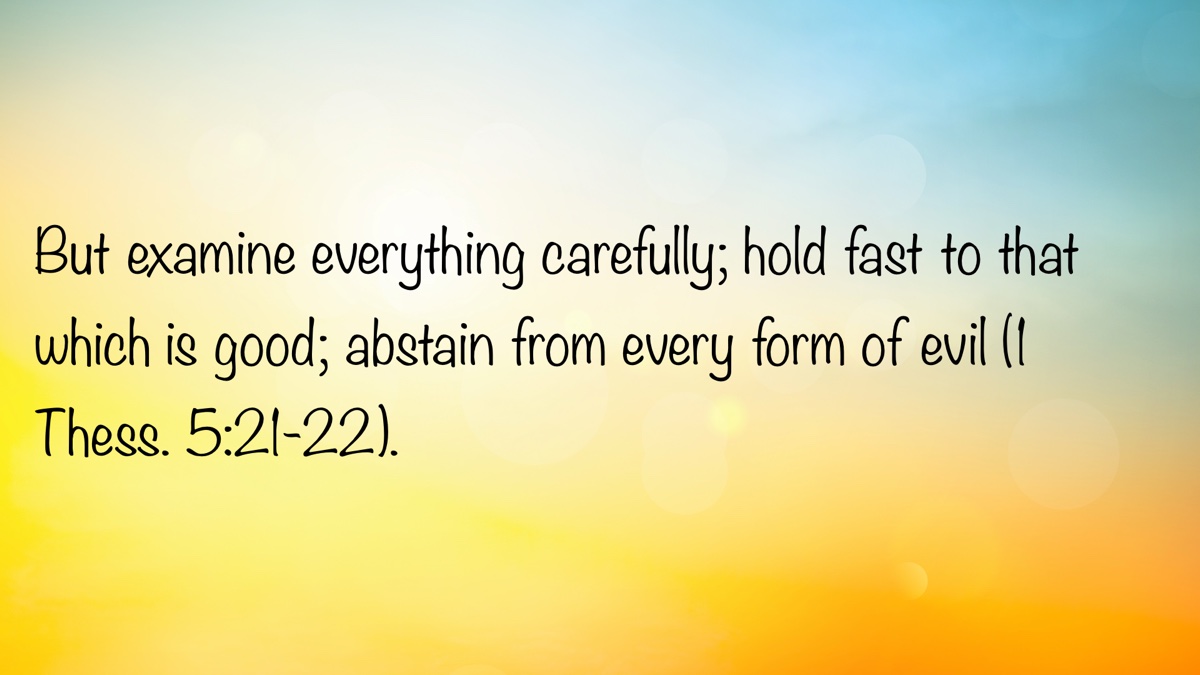
Synopsis: The first epistle of John has much to say about the confidence a child of God can have. How does this compare to the world’s portrayal of confidence? This brief study surveys what the Holy Spirit teaches us about confidence in First John.
A prominent theme in religious teaching is confidence. In an uncertain world, religious teachers offer their listeners assurance. What does the future hold? Will God shield us from hardship? Are we confident in our salvation? How may we be certain in the face of uncertainty? The Bible has much to say about confidence, but does it align with what the religious world teaches on the subject?
John’s first epistle is an affirmation of confidence. He writes, “Now, little children, abide in Him, that when He appears, we may have confidence and not be ashamed before Him at His coming” (1 John 2:28, NKJV). One day, Christ will appear again for judgment. The Hebrew writer, after affirming that all must “die once, but after this the judgment” (Heb. 9:27), promises, “To those who eagerly wait for Him, He will appear a second time, apart from sin, for salvation” (Heb. 9:28b). John is referring to Jesus’s return for judgment. He promises that we need not “be ashamed before Him” but can be confident. How? Through applying three words: “abide in Him.” John devotes the following words to explaining what this means.
Part of abiding in Him is acting like Jesus. Since “He is righteous,” the one who is truly “born of Him” is one who “practices righteousness” (1 John 2:29). This is where the world’s view of confidence falls short. The world says that even if we sin, even if we don’t live like Christ, we can still be confident in God’s grace. Clearly, “all have sinned and fall short of the glory of God” (Rom. 3:23), and victory over sin rests in Christ’s sacrifice, not in our own deeds. Yet John explains, “He was manifested to take away our sins, and in Him there is no sin” (1 John 3:5). John offers no confidence to the soul who continues in sin. Instead, he writes, “Whoever abides in Him does not sin” (1 John 3:6a). In fact, “Whoever sins has neither seen Him nor known Him” (1 John 3:6b).
To some, this may not seem like a firm basis for confidence. Is John teaching that we can only be confident if we are flawless? No. At the beginning of this chapter, John explains, “My little children, these things I write to you, so that you may not sin. And if anyone sins, we have an Advocate with the Father, Jesus Christ the righteous” (1 John 2:1). John acknowledges that Christians may sin, but he urges them to live in such a way that they “may not sin.” When Christians do sin, John teaches, “If we confess our sins, He is faithful and just to forgive us our sins” (1 John 1:9).
John is setting down definitions. “Whoever has been born of God does not sin” (1 John 3:9a)—“He who sins is of the devil” (1 John 3:8a). By definition, a child of God does not sin. Not because it is impossible for him to sin, nor because he never stumbles, but because as long as “His seed”—that is, Christ’s word—“remains in him,” it influences his life so that “he cannot sin.” We do not sin when we allow God’s word to work in us; we sin when we do not. As long as we allow the word of God to abide in us, we will not sin.
John teaches confidence, but he also warns against deception. There is a danger of self-deception. He writes, “If we say that we have no sin, we deceive ourselves, and the truth is not in us” (1 John 1:8). We must acknowledge our weakness and confess our sins whenever they arise. Nevertheless, we must also avoid deception from those who offer false confidence. He writes, “Little children, let no one deceive you. He who practices righteousness is righteous, just as He is righteous” (1 John 3:7). It is a deception to imagine that we “abide in Him” while continuing in sin. The child of God will never attain flawlessness, but must live in a lifelong effort to imitate our Savior—“He who says he abides in Him ought himself also to walk just as He walked” (1 John 2:6).
Being counted as “children of God” is an immeasurable “manner of love” that God has “bestowed on us” (1 John 3:1a). Yet, being a child of God carries implications. First, “the world does not know us, because it did not know Him” (1 John 3:1b). How foolish to imagine we can live like the world and still be children of God! It also means that when He comes in judgment, “we shall be like Him, for we shall see Him as He is” (1 John 3:2b). This does not mean we will become gods, but it is a blessed promise that in the age to come, we shall share more of His likeness than we now enjoy. If we hope to be “like Him” in the age to come, that transformation must begin now. It is the choice we make in this life that determines our true kinship with Him. John explains, “In this the children of God and the children of the devil are manifest” (1 John 3:10a). Confidence comes as we imitate our Master, trust in His mercy, and rely on His sacrifice. There is no confidence in sin—“Whoever does not practice righteousness is not of God, nor is he who does not love his brother” (1 John 3:10b).
Kyle Pope preaches for the Vestavia church of Christ in Vestavia Hills, AL. He has written several books published by Truth Publications. Go here for more information. The church website is here. He can be reached here.




By Diana Dow
Synopsis: We only have a few short years to train our children before it is too late. We must spend this time wisely, saving ourselves and our children a lifetime of heartache.
Correct your children before it’s too late; if you don’t punish them, trouble will come their way (Prov. 19:18, CEV).
We are told in Proverbs that we should correct our children before it is too late. As parents, we are the most influential individuals in our children’s lives. They cling to every word we say, observe every action we take, and believe what we believe. This total trust in our lifestyle choices and belief system cannot—and will not—last. Gradually, our children begin to think for themselves. They will begin to look beyond their own home and see that other families do things differently. They will begin to test the waters. Eventually, our children will have formed habits and a belief system embedded deep into the core of who they are. Where have these habits come from? How was this belief system built? If we obey God in raising our children, their habits and belief system will come from us. God has instructed parents to train their children in the way they should go (Prov. 22:6). How are we to go about this, and how long do we have before it is too late?
First and foremost, we must have faith in God. We must believe that “He is, and that He is a rewarder of those who diligently seek Him” (Heb. 11:6). While it is possible for someone who does not believe in God to teach facts about Him, without genuine faith in Him, it is impossible to teach someone to love and want to obey Him. We cannot rely on the faith of our family, our friends, or our religious leaders. We seek Him by reading, studying, and meditating on the Bible for ourselves because “faith comes by hearing and hearing by the word of God” (Rom. 10:17).
Second, it is not enough that we believe in God; we must live our faith. Our faith must be demonstrated through our obedience to His will. Our children will see our faith in action and know that we are true to God. They will see our love for God when we turn away from selfish ambition and pride while humbling ourselves in service to others. They will see our obedience to God when we turn aside from worldly enticements, choosing consistently to follow God’s will in all we do. They will see our trust in God as we make the hard decisions to give up anything that interferes with our service to Him. As Jesus says in Matthew 5:20, “By their fruits you will know them,” so it is with our children. They will know us by our fruits.
Third, we must share our faith with our children. It is not enough to let our children see faith in our lives. We must talk to them about why we do what we do. As mature Christians, making God-pleasing choices comes naturally, but our children are experiencing these types of choices for the first time. Explain why we have chosen to devote certain times to worshiping God with our church family—not because it is a tradition, not because it is always convenient, but because God has told us to assemble to worship Him. Explain why there are some things we will not do because we have devoted our lives to God: the entertainment we choose, the clothing we wear, the words we say. Unless a family is new to the Christian lifestyle, these things should not come as a surprise to the children. They have seen it played out in their parents’ lives, but they need to know why we are making the choices we make. They need to hear us verbalize our faith and the reasons for our actions so they can internalize the words as they form their habits and beliefs. Otherwise, they will get their instructions from somewhere else, believing their friends and other influencers over their parents because these friends and influencers are talking and making sin sound exciting. “Do not be deceived: ‘Evil company corrupts good habits’” (1 Cor. 15:33).
Fourth, we must be willing to correct them when they go astray. Children will test boundaries. Even though they see our faith in God and have been taught why we do what we do, they will still want to see how close they can get to sin without going completely over the edge. How far do they have to push before Mom and Dad give in and allow them to do what everyone else is doing? It is critical to be aware of what they are doing, where they are going, and to whom they are talking. The temptation to us as parents is to give in a little—just this once. After all, their friends’ parents approve. It must be okay. The boundary that our children once looked at as a hedge of safety and security has been widened, allowing them to get closer to sin. The next time the boundary is tested, it will be more difficult for us to make the hard decision. We have already gone against the warnings found in Scripture when we allowed the boundary to be moved the first time. Children do not understand this.
They see something they want. They ask for it repeatedly. They bargain. They pout. They make life difficult at home. Wearied or distracted parents, wanting to keep peace in the family, often give in. Instead of Mom and Dad being the leaders, the child begins to dictate what will and will not be allowed. It is progressively more difficult to rein in an older child once they have seen and experienced the world and its trappings. Before we know it, it is too late.
How long do we have? In our culture, a standard age has been set when our children are considered adults and thus legally accountable for their own choices. Based on this standard, we have eighteen years to raise our children. In actuality, we do not have that long to train their habits and nurture their belief in God. It has been said that the rebellion of a two-year-old is essential to establishing who will be in charge in the home. While we cannot help but smile at some ways our toddlers test the boundaries we have set, it is no laughing matter. They must learn quickly and definitively that Mom and Dad are the leaders of this home. Correction must happen consistently and firmly. The antics of a chubby two-year-old will not be nearly as endearing when the same behavior is still being displayed at thirteen. Address the toddler’s rebellion now to avoid rebellion later. It has also been said that a child’s belief system is set by age seven. A seven-year-old may not know the whys of what they believe, but all children—whether they have been brought up in a home that follows Christ or in one that does not—have learned what it is to be loved or hated, to be treated fairly or to be taken advantage of, to do what is right or what is wrong. The experiences they have had in their seven short years set the tone for the rest of their life. Every parent knows that seven years is not very long. This is why it is so important for us to train our children in the way they should go from the moment they are born.
Demonstrate God’s love for them by how we love them and love others. Demonstrate God’s justice by being fair in our dealings with them and with others. Demonstrate what is right and what is wrong by the choices we make—all the time talking to them as we sit in our house, as we walk by the way, as we lie down, and as we rise up (Deut. 6:7).
All too soon, the influence we have had on our young children will begin to be crowded out by influences beyond our control. As our children enter adulthood and beyond, we will no longer be their whole world. If we have done what God asked, they will remember what we taught them (Prov. 22:6). It will be up to them how they will live their lives. Our place will then be to lead by example and to pray for their souls. As Jesus said of the woman who anointed Him before His death, “She has done what she could,” we have done what we could, and it is enough.
“Proverbs 19:18.” Contemporary English Version (CEV). Bible Hub. https://biblehub.com/proverbs/19-18.htm.
Diana Dow lives in Amarillo, TX, where she teaches private music lessons in her home, online, and at the local community college. She maintains a website about teaching Bible classes here, one about homeschooling here, and one about her music studio here. Diana can be reached here.

By Bruce Reeves
Synopsis: This article examines Israel’s renewal as God raises a new generation to enter the Promised Land, demonstrating His faithfulness and provision through the second census. It warns against disobedience by recalling the failures of the previous generation, and highlights God’s justice and care for the marginalized through the story of Zelophehad’s daughters. The transition of leadership from Moses to Joshua underscores the value of mentorship and submission to God’s authority, ultimately encouraging believers to embrace grace, learn from past mistakes, and invest in raising up future leaders.
The journey along the ancient paths may at times require a renewed spirit and a new beginning (Rom. 6:3-4; 2 Cor. 5:17). In Numbers 26, God begins a new chapter for Israel. He raises up a new generation, staying true to His redemptive promises and proving once again that His purposes will prevail (Num. 26:1-2). As we noted at the beginning of our study, the first major part of the book is found in the first twenty-five chapters. Initially, Israel was obedient to the Lord as He organized and prepared them for their future movements toward the Promised Land (Num. 1:1-10:10). However, they became distrustful and disobedient in their rebellion against God (Num. 10:11-25:18). With only a few exceptions, the first generation could not enter Canaan (Num. 14:26-35). The following central section of the book directs its attention to the second generation, the ones who would inherit the Promised Land (Num. 26-36). God’s willingness to give His people a fresh start teaches us powerful lessons about grace, restoration, and what it means to truly walk with Him.
God’s people had conducted the first census about thirty-eight years earlier at Sinai (Num. 1:1-46), whereas the second census was taken in Numbers 26. The census was necessary because the first generation had died, and Israel had to determine the land allotments for the second generation. In the second census, as in the first, Israel counted the number of men “twenty years old and upward” (Num. 26:2, 4) for each tribe, and the total number of men for all the tribes was given (Num. 26:5-21). The results showed that Israel’s population had not significantly declined during the years in the wilderness, demonstrating the faithfulness of God’s promise to His people. The Lord’s providence and provisions were tangible and observable. The second census also encouraged Israel to march into Canaan with complete confidence that the Lord was with them. Each tribe was to be thankful for what God had given them rather than engaging in murmuring and complaining (cf. Num. 11:1). As was the case earlier in Numbers, the census of the Israelites is followed by that of the Levites. While Levites would receive cities and gifts for their service, they did not receive land, nor were they part of the primary census.
We find a warning in the account of Nadab and Abihu’s disobedience and rebellion, showing that the Levites—and even Aaron’s family—were not exempt from accountability. Subsequent statements serve as a reminder that the rebellious generation did not enter Canaan because of their unbelief (Num. 26:61, 65). Still, it also offers encouragement that if Israel would walk in the footsteps of Joshua and Caleb, they would enter Canaan. We, too, will enter our heavenly rest if we follow in their footsteps of faithfulness.
The Lord’s faithfulness is a warning to His people. Yahweh had promised judgment on the disobedient (Num. 14:29-30). While Sacred Scripture emphasizes both God’s loving compassion and gracious forgiveness, it also reveals the truth that He “does not leave the guilty unpunished” (Exod. 34:7). In the New Testament, the book of Hebrews looks back to the first generation of Israelites and offers a special warning to contemporary Christians (Heb. 3:7-4:11). We must not look lightly on the relevance of the Lord’s admonition through these Old Testament examples (Rom. 15:14; 1 Cor. 10:6, 11; Heb. 10:26-31).
The Lord’s faithfulness is not only a warning; it is also an encouragement to live for Him. Why have another census? It was to encourage Israel to realize that despite all the disappointing events of the past, victory was still before them by the power of God (Num. 26:2). The distribution of land to the various tribes declared and confirmed God’s goodness and faithfulness. At every step of faith, we too can rest securely in our Father’s steadfast love and precious promises (Rom. 8:18-38; 1 Cor. 1:9; Heb. 4:14-16; 10:23).
The promises and instructions given in Numbers 27-30 implied that Israel would conquer Canaan and prosper in the land. An interesting question arises in this chapter regarding whether daughters could inherit their father’s property if he had no sons (Num. 27:1-11). It also describes the end of Moses’s service, the consequences of his past failures, as well as the Lord’s grace in allowing him to see the Promised Land. We then see God’s plan for Joshua, who had served so faithfully under Moses, to lead the people to their reward in Canaan (Num. 27:12-23). Even in the details, God’s commands reveal the path of victory as Israel moves toward the Promised Land. Every command of God reveals His infinite wisdom, boundless power, and overflowing grace.
Zelophehad’s daughters pleaded with Moses, Eleazar, and the Israelite leaders in front of the people at the entrance to the tent of meeting, requesting that their family line continue through the promised inheritance, even though their father had no sons (Num. 27:1-4). They also explained that while their father died in the wilderness because of his sin, he was not part of Korah’s rebellion (Num. 27:3). Their request expressed strong faith, as it trusted that Israel would inherit the Promised Land. It seemed reasonable to suggest that any men who married landowning daughters married into the estate. By this means, the family line would continue through any grandsons that were born. Moses treated these women with respect, carefully listening to their concerns. He had not previously received any instructions from the Lord on the subject, so he brought these issues before God. Yahweh agreed with the daughters’ request and told Moses they were correct in what they said, therefore, they were to receive their father’s inheritance. God’s response to this request by the daughters is yet another example of His concern for the defenseless and marginalized, such as orphans and widows. The Lord ensured that He would meet the needs of these women. Of course, they would have to work the land, doing their part to support themselves, but their humility and respect were admirable.
Numbers 27:8–11 gives the following instructions:
• If a man had a son or sons, his land was to go to him or them (Deut. 21:15-17); according to this law, the wife did not inherit her husband’s property when he died, but God provided for widows in other ways (Levirate law).
• If he had no son, his inheritance was to go to his daughter (27:8).
• If he had no daughter, his inheritance was to go to his brothers (Num. 27:9).
• If he had no brothers, the land was to go to his father’s brothers or uncles or the nearest relative (27:10-11).
The Lord was willing to hear the concerns of His people and to offer reasonable provisions for their well-being. From this example, we learn how to approach those in authority with our concerns in a respectful and kind way. Zelophehad’s daughters did not make unreasonable requests, nor did they behave improperly in their approach to spiritual leadership.
Moses would see the Promised Land but not enter it due to his previous sins (Num. 27:12-14; Deut. 34:4). Although the Lord loved Moses and shared a special relationship with him (Deut. 34:10–12; Heb. 11:24–27), Moses still had to bear the consequences of his actions and past sins (Deut. 34:5). God commanded Moses to ascend Mount Nebo so that he could view the land of Canaan (Deut. 34:1). He would be gathered to his fathers in death just as Aaron was because of his sin of rebellion, but these consequences did not deny the love and relationship Moses had with the Lord. God spoke of the land as having already been “given” to Israel even before they had entered Canaan due to the certainty of His faithful promise (Num. 27:12). This assurance did not negate the requirement of faith; rather, it encompassed the very nature of complete surrender to their divine King.
Moses showed his love for the Israelites by praying earnestly for them (Num. 27:15-17). He combines the language of warfare (“to go out and come in before them”) and shepherding (“like sheep without a shepherd”) in Numbers 27:15-17. Interestingly, Jesus refers to Himself as the good shepherd and describes Israel as sheep without a shepherd during His ministry (Matt. 9:32; John 10:11-15; cf. Zech. 10:2). The apostle John, in turn, presents Christ as the leader and warrior of God’s people in spiritual warfare (2 Cor. 10:3-5; Eph. 6:10-17; Rev. 19:11-21). Joshua, who had long served as a faithful assistant to Moses, was now appointed as the leader of Israel (Num. 27:18–23; Deut. 34:9).
While it is not uncommon for older brethren to struggle in embracing their role as mentors and encouragers to the younger, they still have much to offer. Paul exhorted Titus to ensure that older men instruct the younger men and that older women likewise teach and mentor the younger women (Titus 2:1-8). What a blessing it has been personally to behold the courageous strength, humble grace, and sacrificial devotion of many mature and aging believers in God’s family. In contrast, those who are younger in the faith would do well to seek the guidance and insight of those more seasoned in their spiritual walk (Heb. 13:7, 17). There is a concerning tendency among some to sideline the wisdom of mature believers and discredit their work to assert their own agendas. However, the account of Rehoboam serves as a clear warning of the consequences of such self-serving ambition. I thank God for the older brethren who have served as encouragers, mentors, and, when needed, gracious critics whose insights have greatly benefitted me in my walk with Christ. Paul described Timothy as his “son in the faith” and made every effort to prepare him to be a good soldier of Jesus Christ (1 Tim. 1:2; 2 Tim. 1:2; 2:2-5). With maturity and experience comes the responsibility to invest in others. Like Moses, may we intentionally equip and mentor those who will lead after us, just as Joshua was prepared to take up the mantle of leadership over Israel.
When the Lord appointed Joshua as Israel’s next leader, He made it clear that Joshua was to seek and follow divine guidance, just as Moses had done (Num. 27:21). True spiritual leadership always begins with submission to God’s direction. A leader among God’s people must walk under the authority of Christ, the “Chief Shepherd” (1 Pet. 5:1-4). Israel experienced a new beginning because they were blessed with leadership that was credible, qualified, and faithful. In the same way, let us be intentional in training, encouraging, and supporting our younger brethren so they may serve God with excellence and maturity (Eph. 4:11-16). May God bless us all as we continue to grow in His grace.
Bruce Reeves has labored with the Highway 65 church of Christ in Conway, AR, since 2000. He and his wife, Rachel, have one child. The church website is here. He can be reached here.


By Bruce Reeves
Synopsis: This article emphasizes that the Holy Spirit operates in the lives of Christians through the teaching and revelation found in God’s word, not through mystical or miraculous experiences. It argues that praying for an additional outpouring of the Spirit is unnecessary, as believers already receive the Spirit’s blessings and guidance through Scripture. Instead, Christians are encouraged to trust in the Spirit’s work through the word, live in harmony with biblical teachings, and find confidence in their existing relationship with the Father, Son, and Holy Spirit.
There is no doubt that the Holy Spirit is a blessing to every faithful Christian through His teaching, influence, and powerful revelation. As we live in Christ, we share a relationship with the Father, the Son, and the Holy Spirit (Matt. 28:19-20; 2 Cor. 13:14). Scripture speaks of our relationship with the Holy Spirit, not a physical or mystical indwelling. Paul emphasizes this truth as he describes the Spirit dwelling in us and us dwelling in the Spirit in Romans 8:1-9. This is very similar to what Jesus Himself said, “The Father is in Me, and I am in Him” (John 14:10) as He emphasized the unity between the Father and Himself. He later added, “In that day you will know that I am in My Father, and you in Me, and I in you” (John 14:20). We are “filled with the Spirit” when His word richly dwells within us (Eph. 5:18; Col. 3:16).
Recently, some have argued that Christians should continually pray for the Holy Spirit to come on them and that failure to do so undermines true discipleship. While we should always be open to growth and self-examination, we must also carefully evaluate whether such criticisms are biblically justified. Have faithful Christians misunderstood this topic? Have believers been wrong for not continuously praying for the Holy Spirit, or could there be misconceptions in the current proposal?
Luke 11:1 records, “It happened that while Jesus was praying in a certain place, after He had finished, one of His disciples said to Him, ‘Lord, teach us to pray just as John also taught his disciples.’” In response, the Lord gave instruction on prayer, including teaching on persistence and confidence in God’s goodness. Interestingly, while Matthew records Jesus saying the Father gives “good things” to those who ask (Matt. 7:7-11), Luke specifies that God would give them the “Holy Spirit” (Luke 11:13). Contextually, the Spirit’s gifts were necessary for the apostolic mission.
Though the apostles would receive some abilities through the Holy Spirit prior to Pentecost, such as the power to cast out demons (Matt. 10:1), they had not yet received the baptism of the Holy Spirit, which would come on them on the Day of Pentecost (Luke 24:49; Acts 1:1-8; 2:1-4). When Jesus spoke of the Holy Spirit being given (Luke 11:13; 24:49; John 20:22), He was addressing the apostles and referring to the Spirit’s role of equipping and authorizing them to proclaim the gospel in its fullness. Luke records in the book of Acts, “When the apostles in Jerusalem heard that Samaria had received the word of God, they sent them Peter and John, who came down and prayed for them that they might receive the Holy Spirit. For He had not yet fallen upon any of them; they had simply been baptized in the name of the Lord Jesus. Then they began laying their hands on them, and they were receiving the Holy Spirit” (Acts 8:14-17). Such gifts have ceased today because we possess the complete revelation of God; therefore, there is no need to pray for them.
In Acts 4:23-31, when Peter and John faced persecution, they prayed, and the Holy Spirit came upon them, enabling them to speak boldly. It should be noted that in this context we read of the inspiration of the prophet David (Acts 4:25) and Luke comments, “And when they prayed, the place where they had gathered together was shaken, and they were all filled with the Holy Spirit and began to speak the word of God with all boldness” (Acts 4:31). To be sure, the Spirit was present among the Lord’s people in a miraculous way during the first century. As Spirit-inspired ambassadors the apostles were empowered to preach the gospel and confirm the message through wonders and signs (2 Cor. 5:18-20; Mark 16:16-20).
Are faithful Christians today commanded to pray continually for the Holy Spirit to come upon them? From Pentecost onward, we find no such instruction. As John Martin writes:
Jesus stated that this good gift is the Holy Spirit, the most important gift that followers of Jesus would receive (cf. Acts 2:1–4). The heavenly Father gives both heavenly gifts and earthly gifts. Believers today are not to pray for the Holy Spirit because this prayer of the disciples (for the Holy Spirit) was answered at Pentecost (Bible Knowledge Commentary, 235).
If Christians desire to learn how to pray more effectively, they should consult the Scriptures. The Spirit does not provide instruction separate from the revealed word. Instead, we rely on the teaching of inspired apostles, who were empowered by the Holy Spirit to remember all that Jesus taught and to reveal all truth (John 14:26; 16:13).
Through the Scriptures, we learn how to pray—by studying the New Testament, the Psalms, and the patterns of faithful prayer found throughout the Bible. This understanding does not come through a direct, miraculous operation of the Spirit, but through diligent reading and application of God’s word. We certainly should pour our hearts out in thanksgiving to the Lord for the blessings the Holy Spirit has bestowed on us. T.H. Horne argues that it is possible that this is a case of metonymy in which the source of our blessings, namely the Holy Spirit, is named for the blessings themselves (Critical Introduction, Vol. 1, 359).
Regardless, we must strive to align our thinking, beliefs, and actions with the word of Christ. In doing so, we live under the influence of the Holy Spirit. Paul’s description in Romans 8:5–17, of both the Spirit dwelling in us and us dwelling in the Spirit, makes it clear that this relationship is real—though not mystical or sensational.
Unfortunately, some are influenced more by views advanced by men such as Francis Chan or Matt Chandler than by Scripture. These perspectives may appeal to a desire for a mystical experience, but they are not grounded in the language or doctrine of the New Testament. What may seem “fresh” to those who have not been exposed to erring concepts in the religious world are merely regurgitated forms of an ancient error. The Holy Spirit leads, influences, guides, and teaches us through the powerful revelation of the gospel, i.e., “the law of the Spirit” (Rom. 8:2). If we faithfully follow the Scriptures, we will live in fellowship with the Father, Son, and Holy Spirit by His grace and truth (1 John 4:12, 15-16; 2 John 9-11).
Why would a faithful Christian pray for the Holy Spirit to come into their life if they are already in a covenant relationship with Him? When we obeyed the gospel, we received the blessings of the Spirit (Acts 2:38). There is no longer any need for a miraculous outpouring of the Spirit’s gifts, because we now have the completed revelation of God’s word (1 Cor. 13:8-13; Heb. 2:3-4). He has promised to dwell in our hearts through faith and His word (Rom. 10:17; Eph. 6:17).
If we depart from God’s fellowship, we should pray to be restored to the Lord and His presence (Ps. 51:10-12), but even in such cases, our guidance comes through the Spirit’s revealed word (John 6:63).
Is there a belief that the Spirit will give us something beyond Scripture? A mystical, emotional experience that can’t be explained? What are we seeking and how would we know we have received it? This kind of vague, unbiblical language does not reflect the teaching of the New Testament for the life of the Christian. While we must trust the goodness of God to give His children good gifts, we must consider the immediate context of passages.
The question whether Christians today should pray for the Holy Spirit deserves careful, biblical reflection rather than unwarranted assumptions based on emotion. Scripture makes clear that the Holy Spirit is indeed active in the lives of believers, not through mystical experiences, but through His inspired word, which instructs, convicts, and transforms us. While there is no reason to ask for what God has already given in the New Covenant, we should be satisfied with what God has provided. Our prayer life should be shaped by Scripture, our spiritual growth guided by God’s revealed truth, and our confidence grounded in the knowledge that we already enjoy fellowship with the Father, Son, and Holy Spirit. In faithfully following God’s word, we walk and grow in the Spirit’s teaching and glorify Christ in all we do.
Horne, Thomas Hartwell. An Introduction to the Critical Study and Knowledge of the Holy Scriptures. Cambridge: Cambridge University Press, 2013.
Martin, John A. “Luke.” In The Bible Knowledge Commentary: An Exposition of the Scriptures, edited by J. F. Walvoord and R. B. Zuck, vol. 2. Wheaton, IL: Victor Books, 1985.
Bruce Reeves has labored with the Highway 65 church of Christ in Conway, AR, since 2000. He and his wife, Rachel, have one child. The church website is here. He can be reached here.



By Shawn Chancellor
Synopsis: The framework through which we view Scripture must be robust and nuanced enough to encompass the fullness of God’s nature and recognize the way He seeks to shape His people.
In an age of shifting cultural values, believers and local churches are increasingly confronted with difficult questions about worship, relationships, and ethics. Does Scripture supply concrete answers to modern-day questions such as (1) should local churches utilize female leadership? (2) Is same-sex marriage acceptable? (3) Is pornography objectively immoral?
How we answer these questions depends entirely on how we read the Bible. This has led to a fundamental divide in biblical interpretation, often pitting two distinct approaches against each other: one that views Scripture as a grand, unfolding story of God’s character, and another that sees it as a detailed blueprint for Christian living. Understanding the strengths and weaknesses of each is the first step toward a more faithful application of God’s word.
The “theological hermeneutic” views Scripture as a narrative that reveals the nature of God through His mighty acts, with an emphasis on love and mercy, particularly as seen in the life of Christ. It often regards church organization and form as matters of liberty.
The “blueprint pattern hermeneutic” views Scripture as a set of patterns that provide a detailed picture of the life of the believer and the church. These patterns are understood to be inspired and handed down by the apostles and are necessary to shape the believer’s life and the church. This approach looks for commands, examples, and necessary inferences to determine the shape of the pattern.
These views are typically presented as opposing one another. However, this dilemma may be unnecessary. Scripture certainly presents a narrative. The Bible tells the story of God establishing His kingdom and placing His anointed King on the throne. As we immerse ourselves in this story, we learn about God’s nature, and see His holiness and love, His mercy and judgment. We also see mankind’s failure to reflect that nature, and how He redeems us from that failure.
It is equally valid to note that the narrative of Scripture is a pattern through which God shapes a people for His purpose. From creation onward, the details of the pattern become more refined until, finally, the shape of salvation, discipleship, and the church is revealed. This pattern describes the church and its work so that we can carry out His mission in a manner that reflects not only His purpose but also His wisdom. When we recognize and apply the pattern, we become people of the pattern.
Paul’s admonition to Timothy helps clarify the importance of patterns. Paul, writing from prison and anticipating death (2 Tim. 4:6-18), knew the gospel’s message of a suffering Savior was scandalous in the first century (Rom. 1:16; 1 Cor. 1:18ff.). His imprisonment likely intensified this scandal, and some used it to promote a more “spiritualized” gospel by claiming the resurrection had already occurred (2 Tim. 2:18).
However, Paul did not view the suffering of Christ as shameful; rather, he understood that salvation was made possible through suffering (2 Tim. 1:8-10). Were it not for the cross, there would have been no resurrection. Paul was imprisoned because he taught the gospel, specifically the story of a suffering Savior who was vindicated through the resurrection and offered salvation to all men. He viewed his suffering as following the pattern established by Jesus in His suffering (2 Tim. 1:8, 12; 2:3, 10-13).
Through the gospel, Paul called Timothy to join him boldly in a life of sacrificial obedience, just as Jesus sacrificially obeyed the Father. Salvation is found in this gospel, not through our works (2 Tim. 1:9). In this context, “works” cannot refer to acts of obedience (Rom. 6:16-17). By “works,” he refers to an effort to find salvation through a different pattern of teaching and living than that which Jesus modeled and commanded.
The narrative of the gospel forms a pattern—one of complete submission, sacrifice, service, and love, as demonstrated by Jesus in His life on earth. It is this pattern, or “standard,” that Paul encourages Timothy to keep (2 Tim. 1:13).
There is some debate about what Paul means by “standard” (NASB), “form” (KJV), or “pattern” (ESV) in 2 Timothy 1:13. Note the following quotations:
An interesting word is used to denote the pattern of sound teaching which Timothy is urged to guard. Hypotypōsis means an outline sketch, such as an architect might make before getting down to the detailed plans of a building. The importance of this pattern cannot be overemphasized. It means that the apostle claims his own teaching to be no more than a starting-point. It was to be a guideline rather than a stereotyped form of words. It would allow for growth within that guideline (cf. 1 Tim. 1:16 for a discussion of the word hypotypōsis). Timothy is not told merely to repeat what Paul taught, but to follow that teaching as a basis (Guthrie, 149-150).
John Mark Hicks takes a similar approach. In his comments on Galatians 6:14-16, he says:
In other words, the rule or canon by which Christians walk is not fundamentally or foundationally the New Testament as a written document but the mighty act of God in Jesus by the Spirit. Or, to put it another way, the criterion of the gospel is what God has done. It is a theological criterion, which the written New Testament proclaims. The rule is about God, what God has done, and God’s faithful enactment of the promise to Abraham. The rule or pattern, according to the apostle Paul, is not a detailed blueprint for church practices but the cross of Christ and the inauguration of new creation (Hicks, 94).
He then quotes several passages, including 2 Timothy 1:13, to demonstrate that the rule of faith is not what is written in the epistles, but what God has done through the cross and the resurrection.
However, John Stott disagrees with this understanding of “standard:”
The only other occurrence of hypotypōsis in the New Testament is in Paul’s first letter to Timothy where he describes himself, the object of Christ’s amazing mercy and perfect patience, as ‘an example to those who were to believe in him’ (1:16). Arndt and Gingrich, who give ‘model’ or ‘example’ as the usual translation, suggest that it is used ‘rather in the sense prototype’ in 1 Timothy 1:16 and ‘rather in the sense standard’ in 2 Timothy 1:13. In this case, Paul is commanding Timothy to keep before him as his standard of sound words, or ‘as a model of sound teaching’ (NEB mg.) what he had heard from the apostle. This certainly suits the general teaching of the letter and faithfully reflects the emphasis of the sentence on the first word “model” or “standard” (Stott, 43-44).
In this instance, the theological hermeneutic is employed to distinguish the narrative of the gospel from the instruction in the epistles. This reflects a view that sees the epistles as primarily addressing cultural issues of the time, which may not apply to the church today.
However, we should ask if writings such as 1 Timothy would be a part of the sound words Timothy heard from Paul. Hicks appears to think so, as he includes 1 Timothy 3:16 in his list of passages summarizing the faith. This is interesting because even a cursory reading of 1 Timothy demonstrates that Paul spoke at length about the work of the local church.
Passages like 2 Timothy 1:8-13 demonstrate that there is no clear, objective way to distinguish between the narrative and the pattern. Surely, we are better off employing a comprehensive hermeneutic that recognizes the role of narrative in revealing the nature of God, while also acknowledging a pattern that allows disciples and churches to be shaped by the mighty acts of God.
The either-or fallacy, also known as the false dilemma or false dichotomy, is a logical fallacy that occurs when a situation is presented as having only two possible options or outcomes, when, in reality, there are other alternatives. This fallacy oversimplifies complex issues and forces a choice between two extremes, ignoring the middle ground.
We began this lesson with an example of an either-or fallacy: Should we view Scripture as a narrative or a set of patterns? Sometimes Scripture presents us with a binary decision; for example, we may either have faith in Jesus or be eternally lost. However, Bible students must be careful not to create such dilemmas where none exist. For instance, we may be asked, “Would you rather be in a church that follows the patterns of Scripture or a church filled with love and mercy?” What would prevent a congregation from doing both?
A purely narrative approach often leads to this fallacy. It emphasizes what Jesus did—demonstrate love and mercy—and minimizes details about worship, leadership, and the work of the church. Likewise, a purely blueprint approach often emphasizes the details and minimizes love and mercy. Neither approach is complete.
Naturally, it is Jesus who helps us navigate this ground. He is the embodiment of the divine nature (John 1:14-18) and the mighty acts of God. He also followed the pattern of the Old Law throughout the incarnation. The story of His life on earth was one of compassion and mercy expressed within the pattern of the Law.
How do we apply the divine character revealed in the story of Scripture in our relationships? Jesus provides us with concrete, objective answers in Matthew 5:21-48. Interestingly, He does so by correcting misconceptions about the Law through the “you have heard, but I say” formula. From this, we can see that, when properly understood, the pattern shapes us in a way that allows us to reflect God’s character (Matt. 5:16, 48).
Jesus answered questions about the law (Luke 10:25-28), divorce (Matt. 19:3-9), and forgiveness (Matt. 18:21-23) with similar objective, concrete teaching. His teaching was rooted in God’s nature and communicated through the pattern of Scripture. Thus, when we come to the epistles, we should not be surprised to see a prescriptive pattern for the organization and function of the church. After all, Jesus sent the Holy Spirit to reveal His mind through the apostles (John 16:7-13; 1 Cor. 2:10-16).
The narrative of Scripture and its patterns are too nuanced to be reduced to a simple either-or proposition regarding love and obedience. Jesus rejects this approach in Matthew 23:23, where He said, “Woe to you, scribes and Pharisees, hypocrites! For you tithe mint and dill and cumin, and have neglected the weightier provisions of the law: justice and mercy and faithfulness; but these are the things you should have done without neglecting the others.” Some point to the first part of the verse and argue that we can either be loving or concerned with the details of a pattern (such as local church organization, church benevolence, or male-only leadership). Jesus presented no such dilemma. He rejected a simple either-or approach.
The framework we use as we approach Scripture impacts how we relate to God and His people. It will determine how we show love and mercy and how we hold one another accountable. Our framework will also affect the organization of local churches, the form of worship, the subjects addressed, and the works in which the church is involved.
Ultimately, the debate between viewing Scripture as narrative or pattern is a false dilemma that Jesus Himself resolves. He is both the perfect embodiment of God’s character—love, mercy, and justice—and the faithful follower of God’s commands. He demonstrated that a life of obedience is the natural expression of a heart shaped by the divine story. The truly biblical path is to embrace the whole counsel of God, allowing the grand story of His redemptive love to be the very reason we joyfully follow the pattern He has given us. In doing so, we become people who not only know God’s character but also reflect it in our lives and churches.
Guthrie, Donald. The Pastoral Epistles. Tyndale New Testament Commentaries, vol. 14. Downers Grove, IL: InterVarsity Press, 1990.
Hicks, John Mark. Searching for the Pattern: My Journey in Interpreting the Bible. Kindle ed. Self-published, 2019.
The New English Bible: With the Apocrypha (NEB). Oxford: Oxford University Press; Cambridge: Cambridge University Press, 1970.
Stott, John R. W. Guard the Gospel: The Message of 2 Timothy. The Bible Speaks Today. Downers Grove, IL: InterVarsity Press, 1973.
Shawn Chancellor has worked with the South Georgia Street church of Christ in Amarillo, TX, since 2014. He and his wife, Bonnie, have one daughter and will soon have their first grandchild. The church website is here. He can be reached here.



By Bobby Graham
Synopsis: The author reflects on formative college years marked by hard work, spiritual growth, and mentorship, balancing academic studies, preaching, and employment to support his education. He emphasizes the value of practical experience, the influence of seasoned teachers and preachers, and the importance of sound biblical instruction in strengthening local congregations. Through personal anecdotes, brother Graham illustrates how early commitments to faith, service, and disciplined study shaped his lifelong approach to teaching, preaching, and building meaningful relationships.
My college years meant moving from my childhood home outside Florence, Alabama, to Temple Terrace, Florida, just outside Tampa. It was a move from people who had loved and cared for me—and whom I loved and cared for—both family and friends—to people whom I hardly knew, except in a very few instances. It was also a move from the rural area west of Florence to the suburban area of Temple Terrace. Temple Terrace was a small town, but the area just across the Hillsborough River from the Florida College campus was more rural in those years, similar in some ways to the one where I had grown up. There I had my first job as a college student, working for J. D. Evans, who was in charge of the college’s hydroponics garden. Working there, raising tomatoes hydroponically, was both similar and dissimilar to the work I had done helping with the garden and cornfield back home, but it was close enough in certain ways to remind me of home. Nothing at home was done hydroponically (with the use of nutrients combined with water). J. D. was a brother of Jewel Flatt, wife of Curtis Flatt, both of whom I had known for about thirteen years back in Florence.
It was understood by all the family, including me, that I would need to work to help pay for my college expenses. In the mid-1960s, student loans for college through government programs were virtually unheard of. In those days, the real name for student loans was work. I think the college had a couple of loan funds established by individual Christians for the benefit of the students, but pay-as-you-go was our way of doing it.
My summers were times of work to save money for the college years ahead. My parents were not wealthy, though they tried to help with my college expenses. I felt responsible for doing whatever work I could during the summer and school year to pay what I could. During the summer of 1964, before leaving for Florida College, I worked for the Alabama Highway Department in an entry-level job with a survey crew. Being an expert with a sledgehammer to drive wooden hubs or stakes into the dry, red soil, where most roads are built, was not a skill required to get the job as much as the willingness to work. Dotting the center line of a highway in those days was slowly done as we youngest workers walked that line, sometimes several miles a day, with a paint can and a stick with a rag at the end to dot the twine which the engineers had stretched in the exact place where the paint dots needed to be. Only later did a machine come into use for striping the center. Learning by doing was the name of the game in that kind of summer job. I was also still preaching for the Mount Hope church in Tennessee, where I had been for the last year and a half when I left for Florida College.
During the summer of 1965, after my first year of college, I worked as a temporary bank teller for the First National Bank in Florence. In this summer job, as in the previous one, it was not my job skills that gained me the job, but my willingness to learn and to listen to the older employees. I also spent that summer doing fill-in preaching for different congregations in Lauderdale County, Alabama, and nearby Colbert County.
I preached for the North Birmingham church for three months during the late spring and summer of 1966, filling in while Sewell Hall was preaching in Australia, and worked for about three weeks in August with Irven Lee to establish a new congregation in Sumiton, Walker County, Alabama, before returning to Temple Terrace for my third year of college, which actually turned out to be only the first trimester. My time in Sumiton with Brother Lee proved quite valuable, as we visited in the community during the day to talk with people about the Bible and to invite them to the weekend meetings we were conducting for the next two weeks in an effort to begin a congregation there. I learned from a much older brother how to talk to people and handle touchy situations that arose in conversations. What a grand opportunity for an inexperienced young man! As the first weekend meeting approached, Brother Lee said that he wanted me to do the preaching for both weekend meetings. I truly felt the need to sit at his feet, but he insisted I would gain useful experience in speaking. He was well known for planning those “little meetings,” as he called them, in numerous places where he wanted to see a church begun; they served a useful purpose for many years of his life in that kind of work. During this time at Sumiton, the North Birmingham church continued my support to work with Brother Lee.
I left Florida College after the fall trimester of 1966 so I could enroll in Florence State University while staying at home. I was trying to save money for a trip to the Bible Lands with Melvin Curry, who was planning to lead a student group from Florida College during the summer of 1967. Ron Halbrook, Donna Bell, and Steve Wolfgang were also part of that group. During that same summer, I was able to preach in several congregations in Lauderdale, Colbert, and Limestone Counties and in northeastern Mississippi. During that year of college, Henry Fudge, a former FC student then teaching at ABS, came from Athens Bible School to recruit young men to teach at the school in Athens. Ron Halbrook, Jack Smith, and I agreed to go to the school to teach in August 1967.
My years as a student at Florida College were busy, combining a full load of courses with an on-campus job and preaching for the Union church between Chiefland and Trenton, Florida, for the last year and a half of my time in Temple Terrace. Edgar Srygley, Marston Mitchell, and Roscoe Knight freely allowed two or three of us young preachers to ride with them on Sundays, dropping us off at our preaching sites as they drove north toward their congregations from Trenton across to Cherry Sink. Such experiences with those older men were formative in the lives and preaching of us young men. After my first two years of college, with the help of my parents, I bought a 1958 Chevrolet (two-tone black and white), which some of us boys used to drive ourselves to preach that fall trimester.
During my first year at the college, I worshiped with the Seminole congregation because of connections with the James P. Miller family. He had preached in gospel meetings during our Poplar Street and College View years, and I had stayed with the Millers a few days after my parents left me in Tampa before the beginning of my first year of school. I also worshiped at Seminole on Wednesday nights during my last year and a half of college in Tampa. The people at Seminole warmly embraced not only me but also the other college students worshiping with them. They gave us “a home away from home.” Seminole offered me an occasional opportunity to speak, but it was the class Brother Miller taught for young preachers that I found most appealing and helpful. Besides working at the hydroponics garden during my second year at the school, I worked as a night watchman and cleaned one floor at the old FC Academy. Now you can easily understand why I described my time at Florida College as busy.
Early in my time as a student at Florida College, I seriously considered majoring in mathematics because I so enjoyed the subject. About the beginning of the second year, however, I decided to pursue Bible as my major, because of the wealth of experience and knowledge available to me in the various teachers at the college. Exceptional men like Edgar Srygley, James R. Cope, Clinton Hamilton, Homer Hailey, Harry Payne Sr., Bob Owen, and Melvin Curry are rarely all accessible in such a convenient setting; for this reason, I decided not to pass up such a great opportunity. I tried to schedule every Bible or Bible-related class I could each trimester for the rest of my time there. My study included Bible History and Geography, perhaps my most defining course, because it nailed down the whole Bible story as to time and place; Genesis and the Law and the Synoptic Gospels, both of which contributed invaluably to my grasp of the content of divine revelation and its validity, in contrast with modernistic claims; Acts of the Apostles, still a favorite in my preaching and my many years of teaching at Athens Bible School; along with various New Testament epistles, which certainly provided proof that God intended to give us a pattern; Psalms and other books of Wisdom Literature, which complemented my understanding of God and His relationship with humans; Jeremiah, Ezekiel, and all the Minor Prophets, which fully introduced me to a section of the Bible heretofore neglected, enhancing my understanding of God’s rule among the nations and of the amenability of the Gentiles to Him, though not in covenant relationship. Closely aligned with the Bible courses were my two years of New Testament Greek under Edgar Srygley Jr. and Harry Payne Sr., and my year of Church History under Harry Payne Sr.
Though not Bible courses, I especially enjoyed my two semesters of Western Civilization under Harry Payne Sr., because of his ability to recite history from his voluminous knowledge, and Modern English Grammar under Lewis Garrett. This trimester course in diagramming all kinds of sentences, both spoken and written, truly showed the roles and relationships of all parts of the English sentence, thus giving me a more complete understanding of the power of the spoken and written word.
During the fall trimester of 1966, I learned that Melvin Curry was planning to lead an FC group under the sponsorship of the Foreign Language League to the Bible Lands during the summer of 1967. After discussing the matter with my parents, especially the financial aspect of making the trip, we decided that I would leave the college after the first trimester to attend college locally while staying at home, so I could save money for the six-week trip to the Bible Lands.
While at Florence State University for that one semester early in 1967 (a trimester at FC was two to three weeks shorter than the traditional semester, but its credit hours were equivalent to semester hours because of the time covered in classes), I enjoyed being able to live at home while majoring in history and resuming some preaching in North Alabama. Not long after I had begun that semester’s study, the church at Locks Crossing in eastern Lauderdale County asked me to preach for them. I continued working with them until the end of 1967, when we began work with the Hollands Gin congregation in Limestone County, because by then we were married and living in that county. We still enjoy close ties to some people whom we loved in both of these early congregational works. I learned the value of faithful men who had contributed to the stability of those works. I began to understand the importance of different factors that strengthen a local work: faithful teaching, elderly Christians, younger people, the practice of hospitality, Bible classes held at the church building on Sundays and Wednesdays, private classes for the lost and the saved, kindness to the poor and needy by faithful Christians, sincerity and genuineness in individual life, and an older preacher mentoring a younger one. This understanding was very important to me as a young preacher, and it enabled me in later life to utilize and draw from all of these means for building up a local church. Almost from the beginning of my regular work in preaching, I tried to emphasize biblical teaching as a preventative to a church’s manifesting spiritual weakness or accumulating the wrong kind of members like Corinth. I still believe that church problems can frequently be avoided when proper teaching is done.
It was not financially possible for me to go to Florida College that final trimester, and make that trip during the summer as well. I recall that the study trip and the transportation to New York City and back home to Alabama cost about $1,000. Our instructor was Robert O’Brien, a Jesuit priest chosen by the Foreign Language League. While in Jerusalem and headquartered at the New Orient House Hotel, he taught one week concerning “Archaeology and the Old Testament” and a second week on “Archaeology and the New Testament.” His perspective was definitely modernistic, and his Roman Catholic doctrinal views were sometimes at odds with his modernism. I clearly recall his efforts to explain away what he called the biological virgin birth of Jesus, a miracle, while trying to make room for what he termed the theological virgin birth. This contention of his became the occasion for some intense questioning, and even disputing, by several of us in our group. Especially the young men in the group were well equipped to deal with his ideas, because of our preparation in our classes at Florida College. We also visited various sites of biblical events in Israel. Ours was the first planeload of tourists permitted to enter Israel after the recent war with a coalition of Arab states. We frequently heard blasts of leftover landmines from the Six-Day War being detonated. Friends from FC like Ron and Donna Halbrook, Sylvia (Bufford) Jones, and Steve Wolfgang became even closer during this trip and remain friends much later in life because of such experiences we all shared. When our trip ended in New York City, instead of returning directly to Alabama, I made my way to Akron, Ohio, to visit the one who was to become my wife, though we were not engaged.
Karen Ruth Hodge came to the college in August 1965, a year later than I had, because she had spent the previous year at home in Akron, Ohio, working to make money for Florida College. At the college, she worked in the dining hall three meals each day so she could receive her meals free of charge. We dated twice while students at the college. During the spring of 1966, while I was a student at Florence State University, she followed the FC tradition of inviting a young man—in this case, me—to be her date for the Spring Banquet. During my visit to the college at the time of the banquet, her dorm mother, Gladys Stafford, allowed her to use her kitchen in Sutton Hall to prepare a meal for me. After enjoying that delicious supper, including carrot cake for dessert, I determined that this was worth looking into further. When school ended in May, she made her way to North Alabama in a Dodge Polara, for which her father had secured a loan for her, which came with the car when we married. She visited our home in Florence for a few days, during which we became engaged. We then decided to marry on November 24, 1967. By that time, I would have begun my teaching responsibilities at Athens Bible School.
Although Karen and I dated only twice while students at Florida College, our experiences with each other were more than one might otherwise think. We had been together for worship at Seminole, visiting at the Haileys’ house while helping with Gordon Kirby, and talking together on campus. During the spring trimester of 1967 while we were apart, and the fall semester after I started teaching in Athens, we “courted by correspondence.” Not only did we learn much about each other from these letters, but we also did much planning for our marriage and our lives together. We even took care of such matters as budgeting and describing purchased used furniture and appliances, which I had bought by letter. One of our dresser drawers still serves as the vault for these many letters.
After beginning my work as an English and Bible teacher at Athens Bible School in August 1967, I continued my college work at Athens College. The board of directors at ABS had established the policy of paying the college tuition for teachers to help compensate for the low salaries available at that time. My college work in Florida and at Athens College had provided me with enough credit hours in English to teach in that field. Teachers who had not completed their college degrees were given emergency certificates (now called provisional certificates), as long as they were progressing toward their degrees. Three or four of us working under these conditions soon completed our degree requirements and received our teacher’s certificate.
My studies at Athens College were fairly diverse, including several history and literature courses, which helped me meet Alabama’s requirements for teaching English and history. When I attended Athens College, the school was affiliated with the Methodist Church, but before the days of the United Methodist Church. When the dean of the college examined my transcript to determine the courses I needed to meet their degree requirements, he informed me that I would not have to take their religion courses, because I had already studied about ninety hours of Bible, Bible languages, and church history courses at Florida College. All of my coursework at Athens College during the ABS school year had to be done in night classes. During a couple of the summers, however, I could take a few classes in the daytime. I studied biology under a Christian named Wilbur Wright for a couple of semesters and humanities courses under a former Russian named Anatol von Spakovsky (a joy as a teacher, but his accent was difficult to understand). All my courses there were worthwhile, but I especially enjoyed Southern Literature, History of the American Frontier, Ancient History, and Judge David Rosenau’s course in Alabama Government, because of his colorful career as county court judge in Limestone County for many years.
Teaching school all day and preparing these lessons, going to college classes two nights each week, preparing lessons for a Wednesday night class and Sunday sermons, visiting members and visitors to encourage spiritual growth, and visiting area gospel meetings combined to make a very busy schedule. Both youthful vigor and having no children until 1969 helped us to deal with that schedule. It was during these very busy two and a half years that we became even closer friends with Ron and Donna Halbrook. Ron and I took classes together at Athens College, taught together at ABS, participated in each other’s weddings in late 1967, and preached in meetings where the other was preaching in Limestone County. After learning about each other during our years at Florida College and extending that relationship through the many activities we enjoyed together in Athens, we developed a very close relationship which stands to this day.
As I reflect on those years, I think of how good they were—despite my many involvements and busy schedule—preparing many lessons, driving many miles, reading many pages, writing many papers, and attending many gospel meetings. I also preached many radio lessons around the noon hour on WJMW-AM’s “Spiritual Guidance,” a program coordinated by Bennie Lee Fudge, and on the Eastside radio program, substituting for Sewell Hall, close to the time of the other program (both during my lunch hour). There were several times when I substituted for Sewell and then preached on the other program on the same day, requiring me to drive from the Eastside building, where I spoke from their study, to the radio station on Hines Street for the other program. “Spiritual Guidance” was sponsored by a different local church each month, with that church also providing the speaker. Because some of those congregations used as their preachers, men who also had daytime jobs through the week, they sometimes requested someone else to do the speaking on the radio for them. I was asked to do so many times during those years. “Busy” was the best adjective to describe my life at the time, but I’ve often told people it was a good kind of busy.
Bobby L. Graham actively participates in fill-in preaching, Belize trips, teaching an hour each day at Athens Bible School, and in gospel meeting work. He and his wife, Karen, have three children. He can be reached here.


By Leon Mauldin
Synopsis: The author argues that the book of Revelation was most likely written during the reign of Domitian, around AD 95, rather than before the destruction of Jerusalem. The article highlights the intense pressure first-century Christians faced to participate in emperor worship, a practice that served as a unifying force within the Roman Empire and was promoted by successive emperors. Archaeological and historical evidence is presented to show how imperial cults and related civic honors, such as the title neokoros, shaped the social and religious landscape confronting early Christians.
While I am aware that many brethren date the book of Revelation prior to the destruction of Jerusalem in AD 70, I believe the evidence best supports its writing during the reign of Domitian, about AD 95.
Every historical period has its challenges. For Christians living in the first century, the pressure to engage in imperial worship was a reality. E. M. Blaiklock notes:
The worship of the Roman emperor as a divine being—the cause and occasion of the tragic rift between the empire and the church—began spontaneously in the eastern provinces, was recognized by Augustus and Tiberius, and was progressively promoted by their successors as a political measure. Such a cult had manifest usefulness as a cementing and unifying force in the first century, as the principate struggled to stabilize the frontiers and establish cohesion in the Mediterranean world (Tenney and Silva, 838).
G. K. Beale writes that the book of Revelation “presupposes that Christians were being required to participate to some degree in the imperial cult (e.g., 13:4-8, 15-16; 14:9-11; 15:2; 16:2; 19:20; 20:4). Roman emperors began to require worship of their person as divine prior to Domitian’s time” (Beale, 5).
The word neokoros “originally meant ‘temple sweeper’ but came to have the honorific meaning of ‘warden.’ In the later imperial period, the title was awarded to cities in honor of expressly designated temples for the worship of the emperor” (Yamauchi, 90). We see the word used in Acts 19:35, which says, “After quieting the crowd, the town clerk said, ‘Men of Ephesus, what man is there after all who does not know that the city of the Ephesians is guardian of the temple of the great Artemis and of the image which fell down from heaven?’” (NASB; note CSB has “temple guardian;” ESV, “temple keeper”). Friesen states, “One of the most significant developments in the provincial cults of Asia was the emergence of the term neokoros in the last first century CE to describe a city with a provincial imperial cult temple.” He goes on to say that the term “neokoros—a caretaker of a temple of the Bebastoi—became the most coveted civic title” (Yamauchi, 55).
There are many archaeological remains associated with the Imperial Cult, including a temple to Augustus in Ankara (today’s capital of Turkey), as well as in Antioch of Pisidia (where Paul preached during his first missionary journey [Acts 13]); a temple devoted to Emperor Trajan can be seen in Pergamum. A temple honoring the Flavian dynasty is located in Ephesus. “Dio Cassius wrote that the emperor Gaius ordered the Asians to build him a temple at Miletos” (Friesen, 39).
I believe it is helpful when reading the book of Revelation to bear in mind that our brethren in the first century (and in the era immediately following) were under enormous pressure to compromise the faith by engaging in imperial worship.
Beale, G. K. The Book of Revelation: A Commentary on the Greek Text (The New International Greek Testament Commentary). Grand Rapids, MI: W.B. Eerdmans; Paternoster Press, 1999. Link.
Friesen, Steven J. Imperial Cults and the Apocalypse of John. Oxford, England: Oxford University Press, 2001.
Tenney, Merrill C., and Moisés Silva, editors. The Zondervan Encyclopedia of the Bible, Volume 2: Revised Full-Color Edition (Kindle Edition). Grand Rapids, MI: Zondervan Academic, 2010.
Yamauchi, E. M. “Recent Archaeological Work in the New Testament Cities of Western Anatolia: Part I.” The Near East Archaeological Society Bulletin: New Series. No. 13. Near East Archaeological Society (NEAS), 1979. Link.

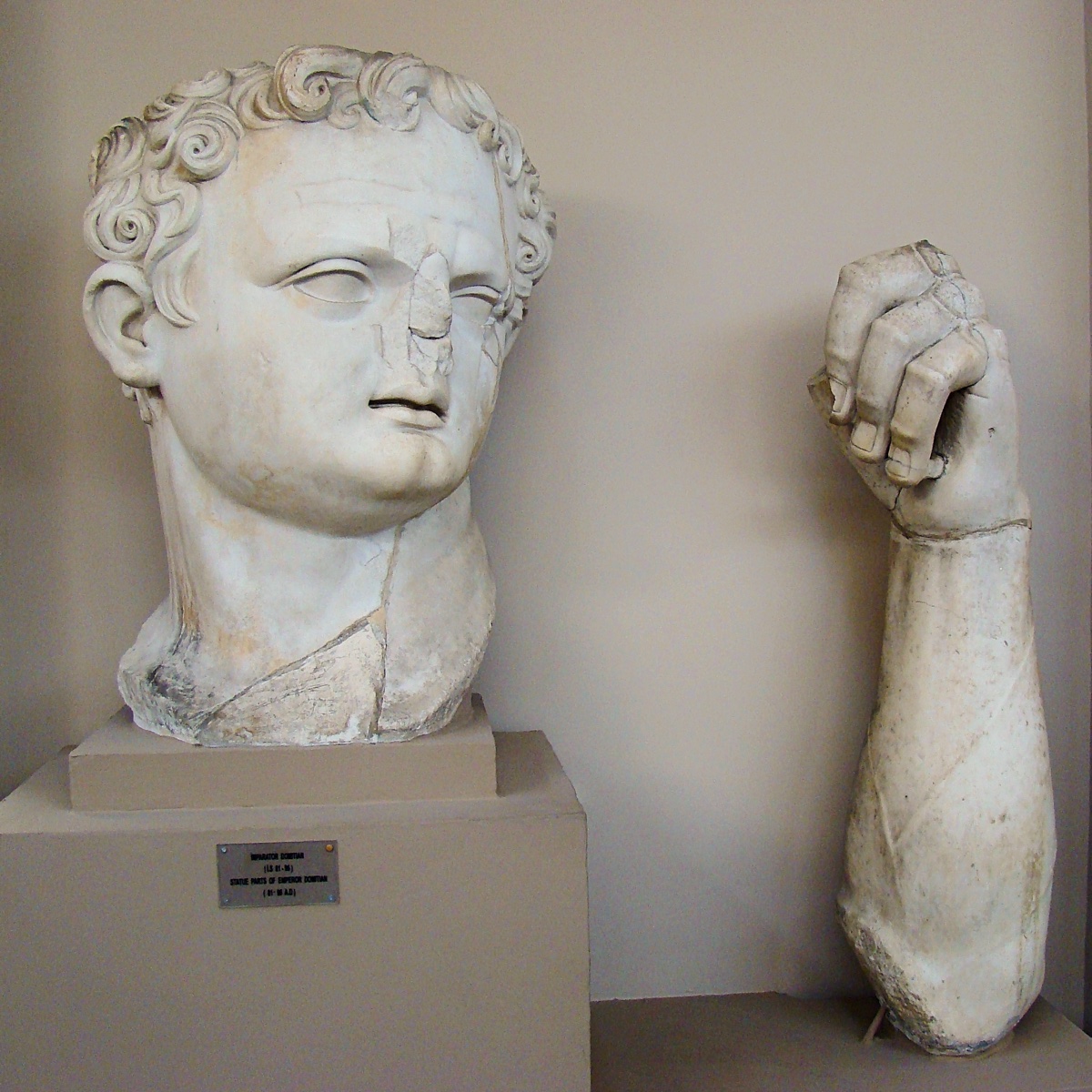


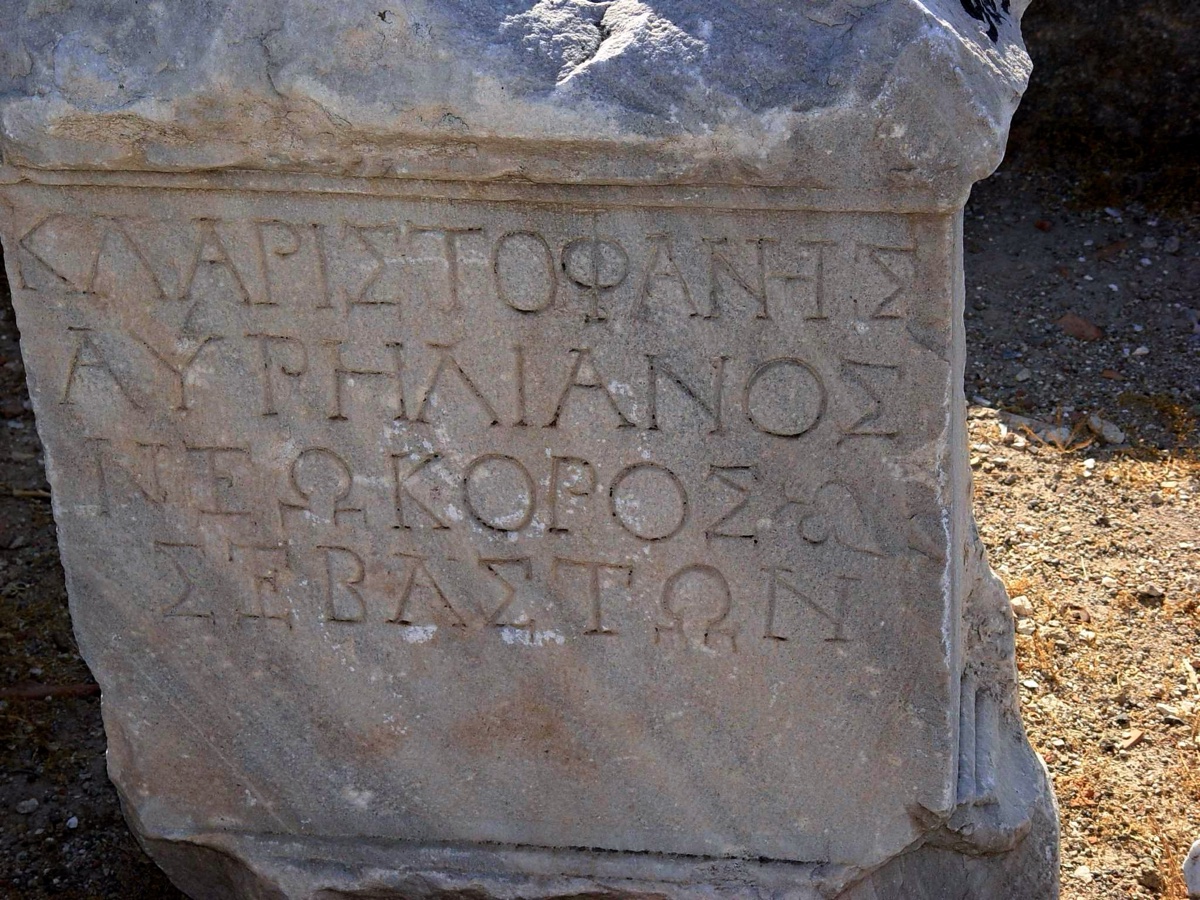
Leon Mauldin has worked with the Hanceville church of Christ in Hanceville, AL, for over thirty-six years. He and his wife, Linda, have three children and nine grandchildren (one deceased). The church website is here. His personal blog is here and info about his Bible Land Tours is here. He can be reached here.



By David Weaks
Synopsis: The author reflects on the destructive nature of uncontrolled anger, emphasizing its power to damage relationships and urging individuals to address their own faults rather than judging others. He compares life’s struggles to the myth of Sisyphus, encouraging perseverance and hope by reminding readers that suffering is temporary and that faith offers ultimate reward. Finally, he observes that despite changing times, persistent moral issues like divorce, adultery, immodesty, rejection of authority, and false religion continue through the generations, and urges readers to let biblical truth guide their lives instead of following harmful societal trends.
A couple of years ago, I began writing short, Bible-related articles in the early morning hours, when my mind would light up with thoughts about Scripture—erasing sleep from the night’s agenda. I continue to write them several times each week, calling them “4 a.m. Musings,” because it always seems to be 3 or 4 a.m. when my addled brain demands a hearing.
Once an article is completed, I send it to church members via text message. The brief articles that will appear in this column are from these early morning study sessions. Several submissions will appear each month. I hope you find some use for them in your daily Bible study.
Jesus taught that anger, when not carefully controlled and properly vented, is a destructive force like nothing else in a person’s life. Our Lord said that anger is such a powerful emotion that it can eventually lead to murder (Matt. 5:21-26).
Anger “without cause” is the real culprit. This variety is anger at its absolute worst. It is spawned by hurt feelings, perceived offenses, or slights (real or imaginary). It presumes the worst of others and quickly assigns blame, foaming up because the one afflicted is convinced that everyone around him is guilty of neglect or offense. Yet there is little, if any, real wrongdoing from the “enemies list.” The angry person is simply bitter about everything and everyone.
Self-loathing is what the unjustly angry man feels, but he lashes out at everyone around him. He must make everyone suffer for his anger. He is perversely relieved, like a drug addict who gets his hit of “dope.” When he lashes out and sees that his rantings have struck home and caused another person pain, he feels an unrealistic relief, which he interprets as justification for his rage.
RACA: Jesus said that unjust anger becomes personal, and the angry man insults the intelligence of those he blames for his own misery. The word “raca” means “empty head.”
The unjustly angry man does not seek proper relief for his anger; he accuses people instead. When he says, “You don’t understand,” “You don’t know what you’re talking about,” or “You have no idea what I am going through,” the angry man is making a fundamental judgment on another person that is unfair and wrong. Folks, God has not given any man the power to judge the heart of any other person. Yes, we can assess character based on the fruit of a person’s life, but no man—especially one clouded by rage—is in any position to read hearts.
THOU FOOL: When a man’s anger takes him here, calling another person a fool, he has dismissed the so-called fool, implying he is no longer worthy of the angry man’s time or love. He wants nothing more to do with the fool. The angry man has decided that the fool is worthless. This is judgmentalism at its worst.
What an angry man needs to do is stop attacking others and start fixing himself. His anger has driven him to embody the “mote and beam” problem (Matt. 7:1–6). He needs to fight himself, not everyone else, because his “anger issue” is a wrecking ball—immensely powerful and destructive. Anger eventually becomes like a pile of tinder: it ignites quickly and consumes everything it touches. The slightest spark sets it ablaze.
Pointless, selfish anger takes over one’s whole life, and before you know it, nothing can ever succeed in making you less angry. Good deeds, kind words, good wishes, and even prayers only spark more anger. This irrational mindset is where unjust anger leaves a man. He cannot think clearly or even appreciate kindness and brotherhood.
Paul said ours is to “be angry and not sin.” We must dispense with it quickly, or it will engulf us and destroy every relationship that should buoy and strengthen us. Never let the sun go down on your wrath (Eph. 4:26).
Sisyphus, in Greek mythology, was king of ancient Corinth. Sisyphus was a cruel tyrant who persecuted his people merely for the perverse pleasure of watching them suffer under his ministrations. The “gods” punished Sisyphus by condemning him to spend eternity rolling an immense boulder up a hill, only to have it roll back down to the bottom each time it neared the crest. Sisyphus was required to start over, time after time, forever.
Life can seem very much like the ordeal of Sisyphus. However, God, our Creator, has not condemned us to an impossible task. We can do the hard things in life. At times, life merely seems impossible. Paul promised that every temptation we face (and surely every struggle) is common to man, and with each temptation there is a way of escape (1 Cor. 10:13).
Our struggles can surely seem Sisyphean, but they are only for a moment—and they are light afflictions that “work for us an eternal weight of glory” (2 Cor. 4:17). As disciples of Jesus Christ, we cannot allow ourselves to be crushed by life’s boulders; we must relentlessly keep pushing them up the hill—with faith and hope—knowing that we have a reward in heaven (2 Cor. 4:17).
Jesus, our Lord and example, was beaten, bloodied, exhausted, publicly humiliated, and rejected, and then He was forced to carry His cross to the place where He would be executed (John 19:16-18). Jesus deserved nothing He suffered. He was innocent of all charges. He had only done good, and for His trouble, He suffered the most terrible pain and death. Surely the old phrase, “Life’s not fair,” applied to our Lord. Yet, Jesus refused to revile others; instead, He prayed for them (1 Pet. 2:23; Luke 23:34). Jesus knew He was returning to His Father, and in this hope, He found the strength to carry His cross to Golgotha (Heb. 12:2). He knew He would be raised from the dead.
Folks, when life seems like a boulder too large for you to push up life’s hill, and you fear it may roll back, crushing you, remember that life’s suffering is temporary, and you will be raised from the dead to be with the Lord forever. Comfort one another with these words (1 Cor. 15:20; 1 Thess. 4:16-18).
In 1967, Sonny and Cher, the husband-and-wife pop singing duo, had a hit song called “The Beat Goes On.” It is a simple song that depicted the events of the late 1960s: fads, social trends, and even the Vietnam War are highlighted. The point of the song is that time passes, but things tend to stay the same. Some trends change forms, but they can be seen from generation to generation.
Sadly, this depiction of life is all too true. Just look around you. Every day you can see new iterations of age-old evils.
Divorce goes on. Jesus Christ could not have been clearer in His instructions: “What God has joined together, let not man put asunder” (Matt. 19:6). Paul was equally clear: “Now to the married I command, yet not I but the Lord: A wife is not to depart from her husband” (1 Cor. 7:10). In case these statements are not clear enough, Malachi bluntly states that “God hates divorce” (Mal. 2:16). Clearly, divorce is an ancient evil, yet for decades, the divorce rate in America has hovered around forty to fifty percent.
Adultery goes on. On the heels of telling people to remain married, Jesus said that to divorce for a cause other than fornication, and then to marry again, constitutes adultery (Matt. 19:9; see 5:31-32). To put away one’s mate for any cause other than fornication means that you are still bound to that person, even if you have put her or him away. You cannot marry again while your mate lives (Rom. 7:1-3). Such a person must remain unmarried or be reconciled to his mate (1 Cor. 7:10).
Adultery is an ancient sin. It was condemned at Mount Sinai (Exod. 20:14). Solomon said that one who commits adultery “lacks understanding; he who does so destroys his own soul” (Prov. 6:32). Yet here we are in the year 2025, and adultery is so commonplace that people dismiss it as normal. I once overheard two old men discussing the Clinton/Lewinsky scandal years ago. One said to the other, “What’s the big deal? Everyone does it.” Adultery’s beat goes on and on.
Immodesty goes on. Nakedness in the Bible has always been shameful. Adam and Eve hid themselves from God, even after adorning themselves with fig leaves, because they were still naked and were ashamed (Gen. 3:10). Isaiah said that the sins of Babylon would be exposed as one might expose his nakedness (Isa. 47:1-4, esp. v. 3). Edom would similarly be condemned: “I will lift your skirts over your face, I will show the nations your nakedness, and the kingdoms your shame” (Nah. 3:5).
Peter taught that one ought to clothe himself in a manner that is not shameful. It ought to demonstrate the “hidden person of the heart, which is very precious in the sight of God” (1 Pet. 3:3-4). Today, teens buy pants with holes in them to expose their thighs (which violates the ancient standard of nakedness) to everyone around them. One’s eighteenth birthday used to be a milestone of maturity; now it is the date on which one can run to the local tattoo artist and mark up his body with permanent graffiti. By adulthood, many of these kids will have very little flesh untouched by ink and metal. What do these modifications say about the hidden person of the heart? Immodesty’s beat goes on and on.
Rejection of authority goes on. All authority was given to Jesus by God (Matt. 28:18). Christ is the head of His church (Eph. 1:22-23; Col. 1:18). He supplied the Holy Spirit, the Comforter, to the apostles, who guided them into all truth (John 16:13). They spoke by inspiration about those things they were given (1 Cor. 2:13; Gal. 1:11-12; 2 Pet. 1:20-21). Those who love the Lord recognize the Bible as their only source of divine authority (2 Tim. 3:16-17). Those who respect divine authority never speak for God unless they can speak the oracles of God, and they never act in the name of the Lord without “the ability which God supplies” (1 Pet. 4:11).
Unfortunately, respect for God’s word has never been universal. People have always rejected the authority of the Bible in favor of doing what is right in their own eyes (Judg. 17:6; 21:25). That ancient beat goes on and on. In the modern era, many folks care far less about what can be found in the Bible than they do about defending their own opinions and religious views.
False religion goes on. God commanded Israel to reject false gods (Exod. 20:1-5). Yet, Israel continually dabbled in idolatry. In fact, before they left Mount Sinai, Israel built a calf and worshiped it (Exod. 32:1ff). In the New Testament, Jesus promised to build His church (Matt. 16:18). It is His to govern and rule (Eph. 1:22-23). The apostle Paul said there is only one church (Eph. 4:4). Clearly, the God of heaven and earth wants His people to be members of that one church (Acts 2:47).
Yet the ancient beat of false religion has never slowed throughout human history. Thousands of churches today claim divine approval, despite their multitude of digressions. False religion is as much an abomination today as it ever was!
It is ironic that two hippies from the 1960s could have been so perceptive. But what is truly sad is that men and women today cannot see the truth or stop following the sinful trends of the past. The Bible is a light to our path—if we will simply open our eyes and follow His word (Ps. 119:105). Yet most people blindly march to sin’s rhythmic beat.
David Weaks, a former Catholic, obeyed the gospel in February 1985, and began preaching later that year. David and his wife, Perri, have lived in West Columbia, TX, where he has labored with the church since August 1997. They raised their two daughters in West Columbia. He can be reached here.



By Danny Linden
Synopsis: The article explores the idea that while all sin is serious, there is a distinction between the different types of sin discussed in 1 John 5:16-18. It emphasizes that habitual sin, love for the world, and refusal to confess wrongdoing indicate a hardened heart that distances one from God. In contrast, those who acknowledge their sins, seek forgiveness, and strive to live righteously demonstrate the qualities of a child of God and can be restored through prayer and repentance.
Are some sins worse than others? It is human nature to categorize sin according to perceived severity. Some sins are so shameful that it seems impossible to overcome them or be forgiven. Others are so ordinary that they are hardly worth mentioning. Of course, this is human wisdom. No commandment of God can be overlooked (Jas. 2:8-11). God calls us to repent and be cleansed of all our sins. He is willing to forgive even His most dedicated opponent (1 Tim. 1:12-17).
Despite this, the Bible does speak of kinds of sins that have different outcomes. How should we interpret a passage like 1 John 5:16-18, which seems to teach that some sins put our salvation in jeopardy while others do not?
If anyone sees his brother committing a sin not leading to death, he shall ask, and God will give him life—to those who commit sins that do not lead to death. There is sin that leads to death; I do not say that one should pray for that. All wrongdoing is sin, but there is sin that does not lead to death. We know that everyone who has been born of God does not keep on sinning, but He who was born of God protects him, and the evil one does not touch him (1 John 5:16-18).
John describes two kinds of sin: a sin that does not lead to death, and a sin that does. These sins require different responses from faithful brethren who may observe them.
If you see your brother committing a sin that does not lead to death, you should intercede for him and ask God to forgive him. James instructs something similar: “Therefore, confess your sins to one another and pray for one another, that you may be healed. The prayer of a righteous person has great power as it is working” (Jas. 5:16). God promises to hear the prayers of His righteous servants who make an appeal to Him on behalf of a guilty brother. This should motivate us to be quick in confessing our sins and asking for prayers!
John stops short of giving any particular command for what you should do if you see your brother committing sin that does lead to death. “I do not say that one should pray for that” is not exactly a prohibition, but any prayer that could be offered in such circumstances is less likely to be effective. There is not the same level of hope for restoration. Something is different in this situation.
John clarifies that the difference is not that the first offense does not fully cross the line into sin. The wrongdoing under consideration here is truly sin in every way, yet something is still different.
This passage does not give a complete explanation of the issue, which has caused many to speculate wildly. Nevertheless, we do not need to speculate. There is enough teaching throughout the letter to give us a satisfactory explanation. Let’s work our way backwards through the letter to see what else John says by inspiration.
Everyone who makes a practice of sinning also practices lawlessness; sin is lawlessness. You know that He appeared in order to take away sins, and in Him there is no sin. No one who abides in Him keeps on sinning; no one who keeps on sinning has either seen Him or known Him. Little children, let no one deceive you. Whoever practices righteousness is righteous, as He is righteous. Whoever makes a practice of sinning is of the devil, for the devil has been sinning from the beginning. The reason the Son of God appeared was to destroy the works of the devil. No one born of God makes a practice of sinning, for God’s seed abides in him; and he cannot keep on sinning, because he has been born of God. By this it is evident who are the children of God, and who are the children of the devil: whoever does not practice righteousness is not of God, nor is the one who does not love his brother (1 John 3:4-10).
We all sin, but a distinction can be made between one who slips into sin and one who habitually sins. John says that the children of God do not keep sinning routinely—only the children of the devil do that! Those who abide in Jesus receive life from the true vine to bear fruit of righteousness (cf. John 15:1-11).
This passage is sometimes used to promote the idea that it is impossible for Christians to sin because of their identity in Christ—who allegedly keeps us faithful and gives us good works. Christ certainly teaches us how to do good works, but John 15:10 tells us that abiding in Jesus happens through our faithful obedience to His commands. We are nothing without Him (John 15:4), but we are more than passive vessels that receive righteousness without any action on our part.
The “children of God” and “children of the devil,” then, are not unchangeable categories into which we fall. They are descriptions of two kinds of people. Children of the devil sin and keep sinning. Children of God do not make a habit of sinning, or else they would cease to be children of God. If they sin, they quickly repent and correct their behavior.
Do not love the world or the things in the world. If anyone loves the world, the love of the Father is not in him. For all that is in the world—the desires of the flesh and the desires of the eyes and pride of life—is not from the Father but is from the world. And the world is passing away along with its desires, but whoever does the will of God abides forever (1 John 2:15-17).
Sinners are dominated by their desires. They do whatever feels right in the moment, which leaves them vulnerable to the devices of Satan. They cannot experience the love of the Father in this state, and they cannot keep sin away for long. There is no compelling reason to abstain from sin when you love the things of the world.
Christians understand that this world is coming to an end, so it is foolish to place our hope in it. The desires and temptations of the world naturally lose their allure to one who has set his affection on things above. What can flesh, eye, and pride offer when the love of the Father is eternal? A Christian cannot sin without (at least momentarily) losing that perspective, but with greater maturity comes greater resolve to be faithful to God.
If we confess our sins, He is faithful and just to forgive us our sins and to cleanse us from all unrighteousness. If we say we have not sinned, we make Him a liar, and His word is not in us. My little children, I am writing these things to you so that you may not sin. But if anyone does sin, we have an advocate with the Father, Jesus Christ the righteous (1 John 1:9-2:1).
Children of God see their sin and mourn over it (Matt. 5:4). We are overjoyed to learn that God wants to comfort us and can be counted on to forgive us of all our guilt. Only a fool would take that as an excuse to sin more (Rom. 6:1-2). God’s grace is an opportunity for us to start over and learn how to live righteously. Every time we fail, Jesus is there to be our advocate for forgiveness again.
Sinners tend to downplay their own guilt. They see themselves as just like everyone else, so they do not have a special need for salvation. This is delusional and even impugns the holiness of God. God sees us for what we are—sinners in need of salvation. We can either accept His forgiveness or, through our stubborn denial, make Him a liar.
By now, it should be clear that the two types of sins in 1 John 5:16-18 are better understood as two paths, or even two types of sinners. The same offense could qualify as a sin that does not lead to death or one that does lead to death.
As an example, God clearly tells us that all liars will be condemned to eternal punishment (Rev. 21:8). Lying goes against God’s nature and is a damnable sin. If I am guilty of lying, what determines if that sin will lead to death?
Is my sin part of a pattern of habitual behavior? If I am content to lie repeatedly, my relationship with the truth is broken. There will be many consequences to this that go far beyond the one lie under consideration.
Is my sin a symptom of my love for the world? What will stop me from lying again if it fulfills my goals and desires in life?
Do I understand and admit my sin, or am I making excuses for it? If I am not bothered by my lies and even defend them as necessary and good, my sin will continue.
A person like this is not necessarily beyond hope, and it is not wrong to pray for God to forgive them, but they need their worldview shattered and rebuilt in the Lord. The problem is larger than a single bad decision or lapse in judgment. This is an emergency, and they are at risk of becoming so hardened to the truth that they may never be receptive to it again.
If my sin is not a part of this dangerous pattern, that does not mean I can ignore it. John and James both tell us to pray for each other to be forgiven by God. This should be a much simpler process for the child of God who is not in the habit of sinning. We all sin, but our sin does not have to lead to death. Praise God for His mercy and faithfulness to forgive!
Unless otherwise noted, as Scripture quotations come from The Holy Bible: English Standard Version (ESV). Wheaton, IL: Crossway Bibles, 2001.
Danny Linden has worked with the Hebron Lane church of Christ in Shepherdsville, KY, since March 2023. He and his wife, Lauren, have four children. The church website is here. His website is here. He can be reached here.



By Chloe Harrell
Synopsis: Sometimes young teens can feel overwhelmed, as if they can’t do enough important work in God’s kingdom. However, there is meaningful work that God wants young Christians to be doing, and these things are foundational for our future spiritual success as long as we follow God’s biblical guidelines.
As young Christians, we may tend to think there isn’t much work we can do in the church. Often, we get overwhelmed thinking that we can’t help spread the gospel or assist in certain types of work, so we give up and do nothing at all! However, an important work we can perform is simply to build our lives for the future. I want to share some ways in which we can take action and do what we’re commanded to do by preparing ourselves for future work and opportunities.
We can simply start by creating and maintaining relationships within the Lord’s church, learning and applying Scripture, letting our lights shine, singing with our hearts to the Lord, and above all, creating and maintaining a good relationship with our Father. By doing so, whenever we come across opportunities to spread God’s word, we will be ready and able to do so more efficiently.
When doing just about anything, it’s logical to practice or prepare beforehand. If you’re racing, you practice in advance—you don’t just run onto the track and hope everything works out. You train, practice, and prepare for months, even years. Nobody decides to run a marathon and competes the next day without any training!
Every athlete exercises self-control in all things. They do it to receive a perishable wreath, but we an imperishable. So I do not run aimlessly. . . I discipline my body and keep it under control, lest after preaching to others I myself should be disqualified (1 Cor. 9:25-27).
Before jumping into anything, we must prepare ourselves!
As young Christians, our main priority should be laying a solid foundation. Each one of us is building our own lives; we must choose (and build on) our foundation.
Everyone then who hears these words of Mine and does them will be like a wise man who built his house on the rock. And the rain fell, and the floods came, and the winds blew and beat on that house, but it did not fall, because it had been founded on the rock (Matt. 7:24-25).
If we are building on the rock, we will have a secure foundation that will withstand even the worst storms of life.
Each one’s work will become manifest, for the Day will disclose it. . . and the fire will test what sort of work each one has done. If the work that anyone has built on the foundation survives, he will receive a reward (1 Cor. 3:13-14).
We will be tested and retested throughout our lives; if our foundation holds up, we “will receive a reward”—eternal life, where there will be no more trials! So let’s build a strong foundation!
. . .that the members may have the same care for one another. If one member suffers, all suffer together; if one member is honored, all rejoice together. Now you are the body of Christ and individually members of it (1 Cor. 12:25-27).
But if you bite and devour one another, watch out that you are not consumed by one another (Gal. 5:15).
If we can’t find peace within the church—the body of Christ—no work will be accomplished!
Let us not become conceited, provoking one another, envying one another (Gal. 5:26).
Instead of devouring and provoking one another, the writer of the book of Hebrews says. . .
Let us consider how to stir up one another to love and good works, not neglecting to meet together, as is the habit of some, but encouraging one another, and all the more as you see the Day drawing near (Heb. 10:24-25).
Forming good relationships with those of like-minded faith is a great way to practice having spiritual conversations. It’s not always the easiest or most comfortable topic for some of us, but it should be something that we’re excited to talk about! Creating godly relationships with fellow Christians is very beneficial to each of us and can also help us feel more comfortable conversing about our Lord with those outside of Christianity.
God commands us to spread the gospel. As young teens, we may feel there aren’t a lot of ways for us to do so. However, there may be more opportunities in the future as we grow and develop our talents. So let us remember to keep growing our relationships with the members of the church and readying ourselves for the future.
As young Christians, we should fill our minds with a knowledge of God’s word so that one day, when we find an opportunity to teach someone else, we will be ready to share the gospel with them!
But as for you, continue in what you have learned and have firmly believed, knowing from whom you learned it and how from childhood you have been acquainted with the sacred writings, which are able to make you wise for salvation through faith in Christ Jesus (2 Tim. 3:14-15).
Not only should we strive to gain a knowledge of God’s word, but we should also apply it! Jesus warns us that. . .
Not everyone who says to Me, “Lord, Lord,” will enter the kingdom of heaven, but the one who does the will of My Father who is in heaven (Jas. 1:22).
We should not just simply read it, memorize it, and teach it. We must practice the truth we believe and profess.
. . .If you would enter life, keep the commandments (Matt. 19:17).
Jesus simply states that we must do what He has commanded in order to inherit eternal life. To abide by His law, we must know it. . . and to know it, we must study His Word. As we study it and learn to apply it, we will then be more prepared to teach others of His Word so that they, too, might be able to “enter the kingdom of heaven.”
A simple but powerful resource young people have to use is their influence. We should constantly be reminded that our influence on those inside and outside the church goes much further than we might realize.
Let no one despise you for your youth, but set the believers an example in speech, in conduct, in love, in faith, in purity (1 Tim. 4:12).
Let your light shine before others, so that they may see your good works and give glory to your Father who is in heaven (Matt. 5:16).
We are commanded to sing praises to the Lord from our hearts.
And do not get drunk with wine, for that is debauchery, but be filled with the Spirit, addressing one another in psalms and hymns and spiritual songs, singing and making melody to the Lord with your heart (Eph. 5:18-19).
Singing from our hearts is a wonderful way to encourage and uplift our brethren, while at the same time receiving the same benefits! We must be careful, however, that we are singing with our hearts and to our Lord.
I once heard someone say: Anytime we sing hymns, we are singing about God, but we must sing to Him. When we sing to God, we are also singing about Him. Singing from our hearts means we sing out joyously, not just singing to ourselves or those around us, but to the Lord!
If it’s from the heart, our voices don’t have to sound as amazing as we think they need to. God is less concerned about how our earthly voices sound and more concerned with listening to our hearts. When we get caught up in how good or bad we sound, we can lose focus on why we are singing praises and to Whom we are singing them.
For the Lord sees not as man sees. . . but the LORD looks on the heart (1 Sam. 16:7).
We must have a strong relationship with the Lord in order to continue growing and to help others grow as well. Our relationship with God is described in the Bible as Christ being the Good Shepherd, and we being His sheep.
I am the good shepherd. I know My own and My own know Me. . . My sheep hear My voice, and I know them, and they follow Me (John 10:14, 27).
Good relationships are built on trust. Sheep trust their shepherd to lead and protect them. In the same way, we, as sheep, must trust God and His word to lead us through unfamiliar territory and protect us from danger. This guidance, comfort, and protection are given only to those who follow Christ in submission and obedience. Psalm 23 paints a perfect picture of this.
A good relationship is also built on communication, so let us not forget how important it is that we should “pray without ceasing” (1 Thess. 5:17).
Even though there may be times when we, as young Christians, feel that we can’t do much to spread God’s word, we can always find ways to grow in our faith and build stronger relationships as we prepare for future work. By working hard to become effective children of God, we can make a difference by shining our lights, guiding others to Christ, and learning to apply the Scriptures in our lives.
All Scripture is breathed out by God and is profitable for teaching, for reproof, for correction, and for training in righteousness, that the man of God may be complete, equipped for every good work (2 Tim. 3:16-17).
Read that slowly one more time and really try to think about what it means. All the Scripture we have is breathed out by God. All of it is useful, profitable, able to make us complete and “equipped for every good work.”
So if you ever find yourself doubting your abilities as a young Christian, just remember, start with the Bible. The Bible is what God has given us to guide and inform us throughout our lives on earth. All we need to know in order to please the Lord and obtain eternal life is found between Genesis 1:1 and Revelation 22:21. So let’s read it, apply it, be an example of it, and as we grow, teach it and spread it to the uttermost parts of the earth!
Unless otherwise noted, all biblical quotations come from The Holy Bible: English Standard Version (ESV). Wheaton, IL: Crossway Bibles, 2016.
Chloe Harrell is a member of the Adoue Street church of Christ in Alvin, TX. She is a fifteen-year-old just finishing her freshman year of high school. She loves her dogs, all things outdoors, and studying her Bible. She can be reached here.



By Tommy Peeler
Synopsis: The article emphasizes that true education begins with a reverence for God, asserting that all fields of study—whether science, history, or literature—gain deeper meaning when centered on divine truth. It traces how early American institutions of higher learning were founded on Christian principles, contrasting that with the modern shift away from spiritual foundations in academia. Brother Peeler encourages students to remain grounded in their faith through prayer, Scripture, church involvement, and evangelism, especially when navigating secular educational environments.
From early times, education has played a vital role in cultures. Education has given us the ability to read, write, and sharpen our reasoning. Many today spend a significant amount of money and many years in pursuit of education. How does God’s word guide us in our educational pursuits? What does the history of our nation reveal about the purpose of education? What advice can we offer young people as they spend several formative years at universities that are often ambivalent or even hostile to spiritual pursuits?
Real education begins with God. “The fear of the LORD is the beginning of knowledge; but fools despise wisdom and instruction” (Prov. 1:7) [Note 1]. The highest wisdom is ultimately gained from listening to God (Ps. 119:98-100). This does not deny that unbelievers may be brilliant in their fields, but it emphasizes that life’s most enduring questions require a proper understanding of God.
How did the world come to be?
What is our purpose in this life?
What awaits us after death?
If God is placed at the center of any field of study, it will be revolutionary. Consider a few examples. Science and biology become the study of the world that God created (Ps. 8, 19, 29, 104, 147). Psalm 111:2 says, “Great are the works of the LORD; they are studied by all who delight in them.” This verse was well chosen to grace the entrance of the Cavendish Laboratory in Cambridge, the site of some fundamental physical discoveries [Note 2]. It is no accident that a man like Isaac Newton, who made major scientific discoveries that advanced the study of physics, was a believer. Newton and men like him became invested in the study of science because they wanted to understand the world God had created. The study of history is transformed into His story. “History is not an accident; it means that human existence is fulfilling the plan and purpose of a single, all-powerful Creator” [Note 3]. (Ps. 78, 105, 106, in addition to all the historical books of the Bible) [Note 4]. Literature illustrates great truths already told in Scripture [Note 5].
Historically, America recognized the need to make God an important part of education. There was a time when American education, especially higher education, acknowledged that truth [Note 6].
Harvard College was founded in 1636 as the first college in the Colonies. Its namesake, John Harvard, was a Cambridge-educated minister who died of tuberculosis shortly after arriving in New England [Note 7]. Harvard’s mission statement, written in 1642, read, “Everyone shall consider as the main end of his life and studies, to know God and Jesus Christ, which is eternal life (John 17:3)” [Note 8]. The university’s motto in 1650 was “In Christi Gloriam” (“For the glory of Christ”) [Note 9]. A new motto was adopted in 1692: “Truth (Veritas) for Christ (Christo) and Church (Ecclesiae)” [Note 10]. Fifty-two percent of Harvard’s seventeenth-century graduates became ministers [Note 11].
Yale, founded in 1701, stated in its original mission: “Above all, have an eye to the great end of all your studies, which is to obtain the clearest conception of Divine Things and to lead you to a saving knowledge of God in His Son Jesus Christ.” The preacher who sparked the Great Awakening, Jonathan Edwards, was president of Princeton (then called the College of New Jersey). Timothy Dwight, Edwards’s oldest grandson, was a key figure in the Second Great Awakening and served as president of Yale (1795-1817). Even Duke University, established later in 1924, put up a plaque in the middle of campus stating, “The aims of Duke University are to assert a faith in the eternal union of knowledge and religion set forth in the teaching and character of Jesus Christ, the Son of God” [Note 12]. Higher education and the fear of the LORD were once connected in American life.
Other early American figures recognized the importance of grounding education in the fear of the Lord. Benjamin Rush (1746-1813), a physician, signer of the Declaration of Independence, and U.S. Treasurer from 1797 to 1813, wrote a small pamphlet (“A Defence of the Use of the Bible in Schools”) in which he stated that Christianity was the only true religion and thus the Bible should be used as a schoolbook for children. John Woolman (1720–1772), a Quaker reformer, lamented handing over our children to teachers who do not seek to instruct them in divine precepts.
Even secular universities once had a strong Christian influence. William McGuffey (1800-1873) was chair of moral philosophy at the University of Virginia from 1845 to 1873. His McGuffey Readers taught Christian doctrine and morality, were commonly used as school textbooks, and sold over 120 million copies. In 1890, ninety percent of all state universities had chapel services, and fifty percent made attendance mandatory [Note 13].
While higher education in America began with a foundation in God, such foundations have crumbled in most colleges. Today, the pursuit of the knowledge of God and truth is not a high priority at many colleges. Around 2018, only nine colleges or universities in Florida offered a bachelor’s degree in the Bible. If the Bible is taught in state schools, it is usually taught without reverence for God or the text. The earlier statements about Harvard and Yale would be scoffed at in those universities today, even in their divinity departments. When Duke University rewrote its mission statement in 1988, it spoke of “the spirit of free inquiry” and the promotion of “diversity and mutual tolerance,” but said nothing about Jesus Christ [Note 14].
College students are often confronted by professors and peers with the idea that there is no absolute truth. Several years ago, a college freshman told me that an engineering professor began his first class by saying, “There is no right and wrong. There is no truth. Find whatever is true for you and follow it, but there is no absolute truth.” Would you want to drive over a bridge that this engineering professor has built? How could a professor like this ever count any answer as wrong on a test? The claim of no absolute truth is patently false because it is self-contradictory [Note 15]. John Lennox, now an Oxford mathematician and strong believer in God, was pressured by his professors to renounce his faith at age nineteen because it would hold back his scientific career. Belief in God as the Creator is viewed as unenlightened and as something that might deter academic progress. Some believe that those who enter the halls of academia must abandon all faith. Such professors apparently hold to their rejection of God as an absolute truth.
How can the young keep their hearts and lives pure when they go to college during these formative and impressionable years (Ps. 119:11)? Is apostasy inevitable for all Christians entering college? Absolutely not! Moses was educated in all the learning of the Egyptians (Acts 7:22). Daniel and his friends had their names changed as they were steeped in Babylonian literature celebrating their history and their gods, yet they would not recant their devotion to the LORD (Dan. 1:3-7). What are some things you can do to stand in your faith?
Be nourished by God’s word (Acts 2:42; 17:11). Pray regularly (Luke 11:1-4; 18:1-8; Acts 2:42; 3:1; 4:23-31).
Daniel and his three friends were exposed to a variety of secular subjects, including idolatry. Yet Daniel spent time reading from the prophets (Dan. 9:1-3). He and his friends were grounded in God’s word and were determined not to be corrupted by the things around them (Dan. 1:8).
Contemplate specifically the accounts of the resurrection of Jesus. Some who studied these subjects skeptically became believers [Note 16]. Paul was well educated (Acts 22:3; 26:24)—being able to quote poets (Acts 17:28; Titus 1:12), plays (1 Cor. 15:33), and debate the intellectuals of his day (Acts 17:18). However, it was only when he was convinced of the resurrection of Jesus that all his learning fit into place.
Attend a local church that will encourage you to grow in Christ (Heb. 10:24-25).
We need to be surrounded by those traveling in the same direction. Moses was given Aaron to be like-minded and to help him stand (Exod. 4:10-17). Daniel and his friends prayed together and strengthened themselves in God (Dan. 2:17-23). Seek to be encouraged and to encourage others in a local church. Make it a point to sit with an older person or family, at least occasionally. Get to know the group of which you are a part. Parents and students should contact the church they plan to attend before school starts, informing them they will be attending so they can hold you accountable. Eat meals with the members. Do not allow your entire existence to be wrapped up in the college scene. Inform the preacher, elders, and local members when your faith is challenged so they can help you through your questions. Remember, there is strength in numbers (Eccl. 4:7-12).
Avoid the temptations of alcohol and sexual immorality (Rom. 13:12–14; Gal. 5:19-21).
The more deeply a person becomes involved in sin, the stronger the arguments for postmodernism appear. Proverbs, especially chapters 1-9, is good reading for college students.
Find ways and opportunities to be evangelistic (Matt. 28:18-20).
It is hard to win a battle if your strategy is merely defensive. At some point, you need to go on the offensive, and one way to do that is to seek to win souls. Be open about your faith. Read and pray publicly. Invite others to join you in “meet-up” studies at local coffee shops or restaurants.
Never lose sight of God and eternal life as your deepest desire, and live accordingly. Keep your eyes on Jesus (Heb. 12:2).
[Note 1] Similar statements are found elsewhere in the wisdom literature (Prov. 9:10; Job 28:28; Ps. 111:10; Eccl. 12:13). The fear of the LORD is a subject regularly invoked in the book of Proverbs and applied to various activities (cf. Prov. 1:7, 29; 2:5; 3:7; 8:13; 9:10; 10:27; 14:26-27; 15:16, 33; 16:6; 19:23; 22:4; 23:17; 24:21; 31:30). This is an attitude that helps us successfully navigate the minefields of life.
[Note 2] (Kidner, 397).
[Note 3] (Oswalt, 283).
[Note 4] History was often disorienting to God’s prophets, as illustrated by the book of Habakkuk. To say history is His story does not mean its lessons will be easy to understand. Prophets were inspired voices to tell us the meaning of events. They not only prophesied of the future but also interpreted events of the past (Amos 4:6-11) and the present (Hag. 1:1-11).
[Note 5] Nathaniel Hawthorne, for example, made profound statements on sin and guilt in stories such as “The Minister’s Black Veil.”
[Note 6] Michael Medved, in The 10 Big Lies about America, quotes the Northwest Ordinance of 1787, which Congress adopted: “Religion, morality, and knowledge being necessary to good government and the happiness of mankind, schools and the means of education shall forever be encouraged” (Medved, 82).
[Note 7] Jun-Youb Lee, “A History of God at Harvard.”
[Note 8] Roger Schultz, “Faith & Service: Christianity and the American University.”
[Note 9] Ibid.
[Note 10] Jeffrey F. Evans, “Harvard University’s Original Purpose and Mission Statement.”
[Note 11] Ron Shafer, Kittanning, chapter 10. Shafer also states in this chapter that 123 of the first 126 American colleges considered themselves Christian, and 262 of the first 268 college presidents in America were ministers.
[Note 12] (Johnson, 167).
[Note 13] (Shafer, Kittanning, chapter 10).
[Note 14] (Johnson, 168).
[Note 15] A humorous story reflecting this thought is told by John Lennox, mentioned earlier in this paper. One of Lennox’s students stated he was reading a book whose main thesis was that there is no such thing as authorial intent—the idea that we cannot understand why an author wrote. Lennox told the student that he would never read the book, because if he did and was convinced by it, it would destroy the author’s premise.
[Note 16] Frank Morrison’s Who Moved the Stone (1930) and Lee Strobel’s The Case for the Resurrection (2012) are two of many examples of books written by those who did not believe in Christ but became convinced Jesus was raised from the dead.
Evans, Jeffrey F. “Harvard University’s Original Purpose and Mission Statement.” Thought for the Week (blog), January 7, 2014. http://thoughtfortheweek-jeff.blogspot.com/2014/01/harvard-universitys-original-purpose.html.
Hawthorne, Nathaniel. “The Minister’s Black Veil.” In Twice-Told Tales, 183-201. Boston: Ticknor and Fields, 1837.
Johnson, Phillip E. Reason in the Balance. Downers Grove, IL: InterVarsity, 1995.
Kidner, Derek. Psalms 73-150. Downers Grove: IL: Inter-Varsity, 1975.
Lee, Jun-Youb. “A History of God at Harvard.” The Harvard Crimson, January 28, 2020. https://www.thecrimson.com/article/2020/1/28/lee-history-god-harvard/.
Medved, Michael. The 10 Big Lies About America: Combating Destructive Distortions About Our Nation. New York: Crown Forum, 2008.
Morison, Frank. Who Moved the Stone? London: Faber & Faber, 1930.
Oswalt, John N. The Book of Isaiah: Chapters 40-66. Grand Rapids: MI: Eerdmans, 1998
Schultz, Roger. “Faith & Service: Christianity and the American University.” Liberty Journal, February 26, 2019. https://www.liberty.edu/journal/article/christianity-and-the-american-university/.
Shafer, Ron. Kittanning. Meadville, PA: Christian Faith Publishing, 2024.
Strobel, Lee. The Case for the Resurrection. Grand Rapids, MI: Zondervan, 2012.
Tommy Peeler has labored with the Avon Heights church of Christ in Avon, IN, since 2021. The church website is here. He can be reached here.



By Wiley Deason
Synopsis: This article explores the impact of modern feminism on Christian beliefs and practices, contending that it often challenges biblical roles for women and men. The author discusses feminism’s influence on culture, the church, and family life, warning against redefining scriptural concepts such as submission and divorce. Ultimately, brother Deason urges Christians to embrace God’s design for gender roles as the path to true dignity and fulfillment.
It is difficult for any man to write about the impact of modern feminism among Christians. There is a real risk of being labeled, even among God’s people, as a misogynist, sexist, chauvinist, or bigot. Therefore, it is my prayer that you will manifest benevolence and grace as I attempt to teach God’s will on this timely topic.
In the Bible, women are highly valued for their influence in the world, at home, and in the local church. In Genesis 2, when man was without companionship, God created the woman to be “a helper suitable” (v. 18). The two would be married and were to become united in all that God intended for the home. In Judges 4, God used Deborah, an influential woman, to deliver His people from the Canaanites. Not long after that, God used a Moabite woman named Ruth to fulfill His law of redemption and to be part of the bloodline of Jesus. Years later, that bloodline would be threatened. Who did God use to rescue the Jews from the evil plot of Haman? He chose Queen Esther, a Jewish woman who was in the right place at just the right time. In the New Testament, women like Mary Magdalene, Joanna, and Susanna contributed to Jesus and His disciples “out of their private means” (Luke 8:3). Dorcas was known for her “deeds of kindness and charity” (Acts 9:36). Priscilla aided her husband, Aquila, in teaching Apollos “the way of God more accurately” (Acts 18:26). Phoebe, Mary, Tryphaena, and Tryphosa were commended for their service to the Lord (Rom. 16). Euodia and Syntyche were both recognized in Philippi for sharing in Paul’s struggles (Phil. 4:2-3). Clearly, women have always been important in the eyes of God. Without godly women, the local church and the home would not function as He intends. This article is not intended to demean, degrade, or devalue women. My sole purpose is to help us see the dangers of modern feminism as we understand God’s will for women.
Feminism is nothing new, with roots going back to Plato and Aristotle, and modern feminism dating to the late 1700s. For over a century, its focus centered on the legal rights of women regarding education, property ownership, and suffrage. From 1960 to 1980, it shifted to social equality in the workplace, reproductive rights, and human sexuality. In the 1990s, the emphasis shifted again to individualism, intersectionality, and diversity. In recent years, feminism has been characterized by digital activism with campaigns like the “Me Too” movement, focusing on sexual harassment, body positivity, and transgender rights, while maintaining intersectionality and inclusivity as central themes. While feminism has had some positive impacts on our culture, much of its influence has challenged the traditional and biblical roles that God has given to women. In so doing, feminists have also sought to redefine manhood and challenge godly masculinity. This has created confusion in our world, even among Christians, as people try to navigate the swiftly changing current of cultural norms.
Feminism influences every aspect of our culture. In the home, modern feminism has advocated for same-sex marriages and unorthodox parenting roles or arrangements. For the feminist, it is no longer necessary to have a strong male role model in the home to raise children. Feminists are drawn to parenting styles such as “permissive parenting” and “gentle parenting” that deny God’s pattern for discipline in the home. In the corporate world, feminist movements have been highly successful in getting companies to hire an equal share of women and men. While acknowledging the skill set of women is a positive shift in the workforce, it puts the emphasis in the wrong place, elevating equality above all else. Companies face increasing pressure to promote an equal or greater number of women to positions of authority compared to men. Modern feminism has influenced politics, with more women running for office and riding on campaign slogans such as “the future is female” and “fight like a girl,” which are often used to demean male leadership.
This movement has also had a profound impact in the religious world. It has influenced theology, leadership structures in churches, biblical interpretation, and the overall experience of church members. Many denominational, community, and institutional churches have caved to the pressure of adding women to their pulpits. In his recent work, Women Serving God, John Mark Hicks, a longtime professor at David Lipscomb University and a preacher, advocates for women preaching and serving as elders in local churches of Christ. Even private religious colleges have been impacted by feminism, with women teaching a variety of religious and biblical courses to mixed audiences. Even the most conservative of these institutions now have women serving on their boards of directors, allowing them to influence course offerings and policy decisions, including what is being taught, who will teach, and who will have oversight. With its wide grip, the modern feminist movement has swiftly and masterfully taken our world in the wrong direction.
Feminism influences Christians to reconsider the role of godly women. In many places, there has been a “Me Too” movement among sisters in Christ. In Titus 2:4-5, women are encouraged “to love their husbands, to love their children, to be sensible, pure, workers at home, kind, being subject to their own husbands, so that the word of God will not be dishonored.” Instead, feminist-minded sisters tolerate their husbands occasionally, idolize the social well-being of their children, seek relevance and meaning through their careers, focus on becoming the “trendy mom,” and desire to exercise authority over their husbands. What has caused this shift? Feminism. This movement attempts to promote women’s rights by demeaning and degrading God’s will for the male role.
Feminism influences Christians to redefine biblical words and concepts. Two topics immediately come to mind—submission and divorce. To the feminist, submission is an evil word that only carries the idea of being “lesser than.” The very notion that Scripture teaches a wife to submit to her husband is seen as degrading. It is as if you are asking the feminist to trade her dignity for submission. This is why feminists attempt to redefine biblical words and concepts to give them softer meanings. The result is often a bitter rivalry with men—even between husbands and wives. In fact, men are often emasculated and treated as ignorant, stupid, and unwise. This is also seen among Christians and in the local church. Some feminist-minded sisters violate God’s will in 1 Timothy 2:11-12, that a woman should “quietly receive instruction with entire submissiveness” and not teach as one exercising authority over a man. Sisters are tempted to usurp the authority that God has given them, labeling any man who attempts to correct them as misogynistic. The temptation is to be resentful of godly men, and that resentment ultimately leads to hostility. This is especially seen when a godly man attempts to defend the truth. Feminist-minded sisters often question and attack him to defend the false teacher and the false teaching. One sister recently used a Facebook thread to attack seven God-fearing men who wrote articles confronting false doctrine. How did we get to this point? Feminism. One thing men and women have in common is that we all have to submit to somebody. The modern feminist is wrong. Submission is not degrading; it is dignifying. It is how this world recognizes us as the people of God.
Another example is the subject of divorce. To be fair, God’s will concerning marriage, divorce, and remarriage has been attacked by both men and women over the years. Still, feminism contributes to such attacks. For decades, divorce has been justified for almost any reason. If a brother is accused of alcoholism, drug addiction, gambling addiction, pornography addiction, physical abuse, verbal abuse, etc., the tendency among feminist-minded sisters is automatically to believe the accuser and to justify her “right” to divorce him. In Matthew 19, Jesus taught that you cannot divorce your spouse for just any reason. He then authorized one reason for a lawful divorce—fornication (porneia). It is only when one spouse has physical, sexual relations with another person that divorce is authorized. While substance abuse, gambling addictions, pornography addictions, and abuse of any kind are horrible and sinful, the answer to such issues is not to rush to divorce. We should never rush to dissolve a marriage just because someone experiences extreme difficulty. Some people simply need help so they can repent, forgive, and reconcile. Yet, the modern feminist is more concerned with “legal rights” than with God’s will. So, they attempt to redefine words like divorce and fornication to justify ending a marriage to fit their agenda.
Feminism places pressure on both men and women. Imagine being a mother today, raising a son to be masculine or a daughter to be feminine in our current culture. It can be daunting! Feminism causes a lot of unnecessary anxiety, pressure, and stress. Thankfully, feminism is not the only option. There is a better way for women professing godliness: “Do not be conformed to this world, but be transformed by the renewing of your mind, so that you may prove what the will of God is, that which is good and acceptable and perfect” (Rom. 12:2).
While some women are not happy with the role that God has given them, others find true meaning in the Bible’s picture of womanhood. It has been a joy to be married to a godly wife, raised by a godly mother, and surrounded by godly women who all serve as examples of the good, acceptable, and perfect will of God. It has been a joy to belong to local churches where godly sisters are fulfilling their God-given roles with diligence and zeal. Paul said, “For all of you who were baptized into Christ have clothed yourselves with Christ. There is neither Jew nor Greek, there is neither slave nor free man, there is neither male nor female, for you are all one in Christ Jesus” (Gal. 3:27-28). Women are just as important to the Lord as men. They are so important that God gave His Son to die for them, too. Nevertheless, God has perfectly and carefully crafted us for different roles—roles we need to respect, fulfill with zeal, and utilize to please Him.
Wiley Deason has worked with the Eastside church of Christ in Bowling Green, KY, since May 2024. He and his wife, Mallory, have three children. His sermons can be downloaded from here. He can be reached here.


By Ron Halbrook
Synopsis: The author explains that while God designed marriage to be a loving, lifelong union between a man and a woman for the benefit of the family, Satan has continually worked to pervert this design through selfishness, immorality, and the breakdown of traditional roles and values. These perversions have led to widespread issues such as divorce, adultery, abuse, and the normalization of alternative relationship structures, all of which undermine the stability and purpose of the family as God intended. Brother Halbrook urges readers to reject these destructive assumptions and return to God’s original plan for marriage, relying on the teachings of Christ and the gospel to restore and uphold true marital and family relationships.
God designed marriage, but Satan soon perverted it. God designed marriage to perpetuate mankind in an environment of true love where a husband, a wife, and their children cherish and nourish each other. Satan’s perversions poison this environment so that each one pursues his own selfish desires to the detriment and destruction of others.
God ordained marriage in Genesis 2:24, where He said, “Therefore shall a man leave his father and his mother, and shall cleave unto his wife: and they shall be one flesh.” After reviewing and naming the animal creation, Adam was struck by how isolated and alone he was without a companion who shared his unique human nature. God then put him into a deep sleep and fashioned one of his ribs into the first woman. Adam awoke to the sight of his companion with unspeakable joy, declaring her to be “bone of my bones, and flesh of my flesh” (Gen. 2:23).
God then joined Adam and Eve in marriage as a model for all men and women to follow in the ages to come (v. 24) The male gender is created with special qualities of leadership and the female gender with special qualities of support so that their united relationship is interdependent and mutually fulfilling. While the man and the woman will continue to love their parents, their first priority is uniting their own two lives to serve each other as “one flesh” or one person.
Becoming “one flesh” in marriage requires the deepest and strongest commitment to live as lifelong companions. People do not marry by accident, and marriage is not for temporary convenience or experiment. God made one man to serve one woman and one woman to serve one man for life.
The marriage union is predicated on husband and wife serving each other by unselfish love, a lesson God teaches, repeats, and reinforces throughout the Bible. The husband’s love should be so strong that the wife knows he would lay down his life for her. “Husbands, love your wives, even as Christ also loved the church, and gave Himself for it. . . So ought men to love their wives as their own bodies. He that loveth his wife loveth himself. For no man ever yet hated his own flesh; but nourisheth and cherisheth it, even as the Lord the church” (Eph. 5:25, 28-29).
Truly, “he that loveth his wife loveth himself,” because that love is returned to him by the heart and hands of his wife. Proverbs 31 provides a detailed description of the unselfish love of a virtuous wife, including:
The heart of her husband doth safely trust in her, so that he shall have no need of spoil. She will do him good and not evil all the days of her life (vv. 11-12).
She openeth her mouth with wisdom; and in her tongue is the law of kindness. She looketh well to the ways of her household and eateth not the bread of idleness. Her children arise up, and call her blessed; her husband also, and he praiseth her (vv. 26-27).
God ordained that children should be born into this atmosphere of committed, unselfish love. They are to be received by parents as treasured gifts of God! The parents’ love daily surrounds their children with godly conduct and demeanor, vital instruction, and measured discipline as exemplified by the book of Proverbs. Children need all of this attention to set the boundaries for a productive life because they are not born with them: “Foolishness is bound in the heart of a child; but the rod of correction shall drive it far from him” (Prov. 22:15). It is especially important for fathers to be good role models so as not to frustrate their children: “Ye fathers, provoke not your children to wrath: but bring them up in the nurture and admonition of the Lord” (Eph. 6:4).
Psalm 127:1-5 pictures children as a blessing to their parents not only while they are young but also in their maturity:
Lo, children are an heritage of the LORD: and the fruit of the womb is his reward. As arrows are in the hand of a mighty man; so are children of the youth. Happy is the man that hath his quiver full of them: they shall not be ashamed, but they shall speak with the enemies in the gate (vv. 3-5).
The godly character of the children refutes false accusations against their parents.
Ever the master of deception and perversion, Satan perpetuates perverted assumptions about marriage. These assumptions are passed down generation after generation as Satan rules the world by appealing to the lusts of the flesh, the lust of the eyes, and the pride of life (1 John 2:15-17; 1 Pet. 1:18; Eph. 2:2-3).
First, he tempted Eve to sin in the garden. Rather than seeking her husband’s counsel, she sinned and brought the sin to him (Gen. 3:6). In announcing her punishment, God reminded her of her proper role of subjection to her husband (Gen. 3:16). The latest appearance of this ancient rebellion against God’s plan is the so-called feminist movement, which claims women find greater fulfillment by not being married, or, if they marry, they should not be subject to their husband’s leadership. Such thinking leads to fornication, adultery, and divorce. Another consequence is children born out of wedlock into an environment driven by selfishness, where they are treated as a burden, neglected, and abused—or murdered by abortion before birth.
Next, Satan poisoned the heart of Cain with false worship and hatred of his brother’s faithful obedience so that he murdered him and claimed not to be his “brother’s keeper” (Gen. 4:3-9). Sadly, husbands and wives frequently neglect each other’s needs. Likewise, parents and children often neglect one another. People live on the assumption of “every man for himself.” Domestic violence and child abuse are rampant in modern culture. A high percentage of murders occur among family members who hate each other.
Bible history records Lamech as the first polygamist in violation of God’s design for monogamy (Gen. 4:19). Knowing this to be a curse, God warned the kings of Israel not to multiply wives (Deut. 17:17). Polygamy became so pervasive that God temporarily tolerated it until the coming of the Gospel Age, while regulating it in an effort to ameliorate some of its worst abuses (Exod. 21:7-11; Deut. 21:15-19). Yet, He also filled Scripture with examples of how polygamy breeds conflict, hatred, and alienation among family members. Christ and the New Testament reaffirm Genesis 2:24, which mandates one man for one woman for life (Matt. 19:3-9; 1 Cor. 7:1-5; Eph. 5:23-33). Polygamy is not yet legalized in the USA, but we have serialized polygamy through easy divorce-and-remarriage laws.
Several new terms, such as “polyamory” and “consensual non-monogamy,” have surfaced in recent years, advocating various forms of “open marriage,” in which the husband and wife are free to engage in sexual relationships with whomever they choose. “Live in” has become the norm for many who view sexual companionship as a mere temporary convenience or an experimental relationship without marital commitment. Sexually transmitted diseases are rampant in American society, and some people consider their disease a badge of honor.
Satan has succeeded in promoting perversions of marriage through the breakdown of the moral foundation of marriage, aided by ungodly practices in homes, society, government, and religion. There has been a rising tide of fornication, divorce for every pretext, homosexuality, and transgender illusions—though none of these sins is new.
Home life has deteriorated because of worldliness invading the lives of parents. Parents who fall victim to materialism, with little or no time for prayer, Bible study, and the worship of God, undermine the strength of their marriage and the future of their children. Parents who abuse drugs, drink alcoholic beverages, gamble, view pornography, commit adultery, and divorce in the pursuit of sin destroy their own homes. Manifesting impatience, bad tempers, bitterness, and excessive criticism of each other and the children lead to verbal and physical abuse. Parents who manipulate, domineer, spoil, and engage in sexual abuse poison relationships. Children who suffer from all this chaos created by their parents cannot grasp or practice in their own lives the moral principles that support healthy marriages and stable families.
As worldliness permeates our culture through the ungodly examples and influence of celebrities in sports and entertainment, young people learn to admire worldly practices. The young assume these celebrities have happy lives, not seeing the reality of sin’s multilayered miseries.
Government policies legalize, accommodate, and even promote sins that Satan exploits to destroy marriages and families. Liquor and gambling enrich government coffers while destroying homes, which are the foundation of a nation’s strength. In 1969, California enacted no-fault divorce which soon became our nation’s norm. Various government agencies, including the educational system, have embraced homosexuality and transgenderism as normal conduct and have enshrined such conduct with legal support. The home as God designed it cannot survive such policies, which are out of touch with reality.
Satan has been so shrewd as to utilize religion from the time of Cain until now to promote assumptions that destroy marriage. Cain envisioned worship as subject to man’s design and then dismissed his duty toward his brother. Prominent religious leaders have gradually retreated from the Bible’s standard of marriage as one man for one woman for life. They first diluted and then totally abandoned the teaching of Jesus in Matthew 19:9, where He plainly declared, “I say unto you, Whosoever shall put away his wife, except it be for fornication, and shall marry another, committeth adultery: and whoso marrieth her which is put away doth commit adultery.” They have sanctioned divorces that violate Christ’s marriage law. They have sanctioned homosexuality in support of the assumption that God sanctions it, despite the Bible’s denunciation of such conduct as perversion (Rom. 1:26-28).
It is a disgrace for preachers in churches of Christ to make concessions that accommodate the assumptions Satan promotes to pervert marriage. Various theories deviating from Christ’s law on divorce and remarriage accommodate adulterous marriages. We are told people that in such marriages do not need to bring forth the works of repentance by ending their adulterous relationships (Matt. 3:8; Acts 26:20). If such theories are valid for heterosexual marriages, they are equally valid for homosexual marriages, but God says people who engage in such practices “shall not inherit the kingdom of God” (1 Cor. 6:9-11). Defenders of these false theories counter, “But God does not join homosexuals in marriage.” Yes, and that is the very point with adulterous marriages—God does not join people in such unions, despite legal divorce papers, new marriage licenses, and weddings performed by false teachers (Matt. 19:6).
Through the gospel, Christ challenges and overthrows Satan’s perverted assumptions about marriage. He calls us back to Genesis 2:24. Paul’s declaration in 2 Corinthians 10:3–5 serves as a clarion call for us to meet Satan’s onslaught with the mighty weapons of God:
For though we walk in the flesh, we do not war after the flesh: (For the weapons of our warfare are not carnal, but mighty through God to the pulling down of strongholds;) Casting down imaginations, and every high thing that exalteth itself against the knowledge of God, and bringing into captivity every thought to the obedience of Christ (vv. 3-5).
May we preach and practice God’s perfect design for marriage rather than accommodate or compromise with the perversions of Satan that are accepted by our culture. There can be no compromise, no concessions, no fear, no retreat, and no surrender in the face of Satan’s perverted assumptions. Let us proclaim the truth of the gospel without deviating to the right or to the left.
Let us lift high the message of the crucified and risen Savior, who said, “I, if I be lifted up from the earth, will draw all men unto Me. This He said, signifying what death He should die” (John 12:32-33). The gospel calls all men to bring their sins to the cross of Christ because there is no other hope. He said unto them, “Go ye into all the world, and preach the gospel to every creature. He that believeth and is baptized shall be saved; but he that believeth not shall be damned” (Mark 16:15-16).
Ron Halbrook has labored with the Hebron Lane church of Christ in Shepherdsville, KY, since 1997, concurrently alongside Danny Linden. Ron and Donna have three children and eleven grandchildren. The church website is here. He can be reached here.


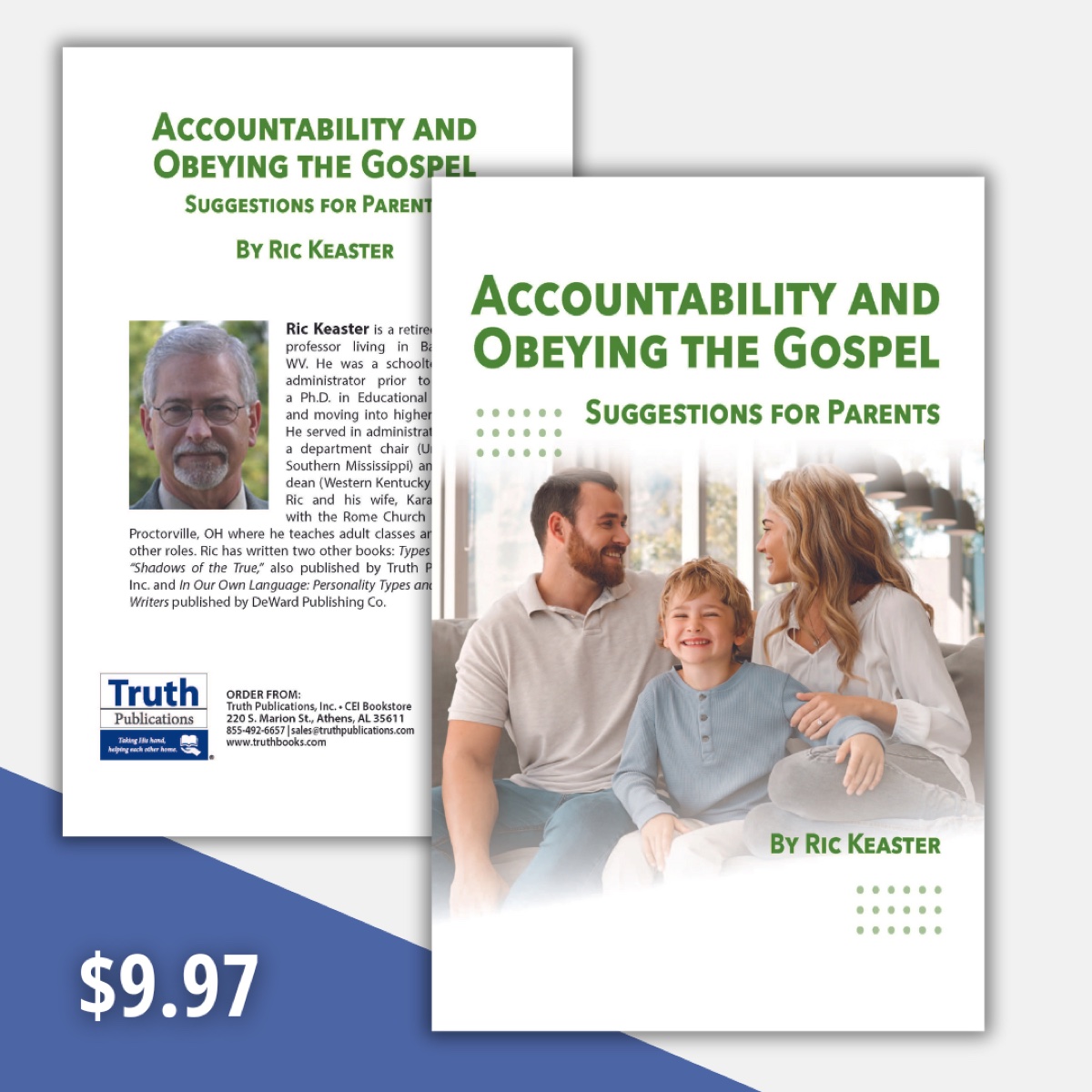
By Joshua Gurtler
Synopsis: The article critiques the foundational assumptions of humanism and naturalism—such as the belief that scientific laws arose naturally, life emerged from non-life, and the universe is billions of years old—arguing that these views rely on unprovable presuppositions. It asserts that these worldviews ultimately depend on faith rather than empirical science, despite often accusing Christians of doing the same. Brother Gurtler concludes that true knowledge and understanding of life’s origin and purpose can only be found through divine revelation from the Creator.
Assumptions, or presuppositions, are attached to all worldviews. Worldviews are comprised of “a network of our most basic beliefs about reality, in light of which all observations are interpreted” and “our worldview contains our most strongly held convictions about how the world works: how it came to be, the nature of reality, the nature of truth and how we should live” (Lisle, 24-25).
Aside from Christianity, two other prominent, interrelated Western worldviews are (1) Humanism: man can answer all life’s questions and achieve his highest potential by reasoning alone, and (2) Naturalism: only physical nature exists, discounting the supernatural. Together, these suggest that all knowledge can be attained by scientific investigation. Thus, science is the true god of the secular world, supporting the philosophy of naturalistic macroevolution to circumvent the Creator and His divine reason for our existence.
Humanism and naturalism fail to admit that they are based on foundational assumptions which cannot be scientifically tested. Despite this, Christians are often accused of “relying on faith and not science.” Nevertheless, atheist philosopher Dr. Michael Ruse admits that “. . .evolution, akin to religion, involves making certain a priori or metaphysical assumptions, which at some level cannot be proven empirically” (The New Antievolutionism). Now, who are the ones relying on faith and not science?
For the balance of this article, let’s examine three humanist assumptions regarding the origin and meaning of life. We will conclude with the Bible’s teaching, revealing where all knowledge is truly found.
Oddly enough, this universally accepted assumption violates the naturalist’s most fundamental belief: that “we live in an accidental, random chance universe.” If the universe is only a product of natural (chemical) reactions, then it should be composed of completely erratic, natural phenomena, having no order, pattern, or predictable scientific repeatability. Therefore, in the humanist universe, scientific laws cannot exist. Some atheists admit this. Commenting on the laws of nature, atheist Dr. James Shea writes, “We seem to believe that there literally are such laws. The concept is anachronistic in that it originated at a time when the Almighty was thought to have established the laws of nature and to have decreed that nature must obey them. . .” (Shea, 10:455-460). John G. Kemeny said, “It is a great pity for the Philosophy of Science that the word ‘law’ was ever introduced” (Kemeny, 39). However, if natural scientific laws do exist, then, in a universe of random chemical reactions, where does Dr. Shea posit they came from? In the materialist universe, there would be no way to know that, twenty years from now (June 1, 2045) in Trenton, NJ, the sun will rise at 5:31 a.m., the sun will set at 8:22 p.m., and solar noon will be at 12:56 p.m. However, those are immutable facts, because the divinely ordained scientific laws that govern our universe “stand according to Your ordinances” (Ps. 119:91).
Natural scientific laws have been created with such minute precision that, if they were altered by even infinitesimal deviations, life could not exist. Dozens of scientific laws, such as the strong nuclear force that holds the atom together, prevent the very molecular structure of the universe from flying apart. For this reason, the Scriptures teach us that Christ holds all these natural laws in place by His power: “who being the brightness of His glory and the express image of His person, and upholding all things by the word of His power” (Heb. 1:3), and “He is before all things and in Him all things hold together” (Col. 1:17, NASB).
Natural laws govern the scientific disciplines of physics, chemistry, quantum mechanics, electromagnetics, celestial mechanics, cosmology, astrophysics, etc., such that nature operates in an organized, law-like fashion. Humanists simply assume that these laws exist, with no scientific explanation for them. An intelligent designer, God, is the true reason scientific laws exist, supported by Scriptures such as Jeremiah 31:35; 33:25-26; Genesis 8:22; and Psalm 119:90-91, which says, “Your faithfulness continues throughout all generations; You established the earth, and it stands. They stand this day according to Your ordinances, for all things are Your servants.”
However, in an atheistic, happenstance universe, scientifically testable predictions would be impossible, because everything would happen by arbitrary chemical reactions. God’s scientific laws are the basis for the book written by two intelligent design proponents (Drs. Guillermo Gonzales [astronomer] and Jay Richards [analytical philosopher]) in The Privileged Planet. Without an intelligent designer, the universe and life could not exist.
Despite being disproven by Dr. Louis Pasteur (the father of bacteriology, a devout believer in Christ, and opponent of Darwinian evolution) 166 years ago, humanists still hold to their assumption that life can arise by natural chemical reactions, without an intelligent designer. This assumption violates the law of biogenesis: life begets life. In this regard, Nobel prize winner and atheist Dr. Paul Medawar said, “In its affirmative form, the law of biogenesis states that all living organisms are the progeny of living organisms that went before them. The familiar Latin tag is omne vivum ex vivo—All that is alive came from something living; in other words, every organism has an unbroken genealogical pedigree extending back to the first living things. In its negative form, the law can be taken to deny the occurrence (or even the possibility) of spontaneous generation. . . The Law of Biogenesis is arguably the most fundamental in biology” (Medawar, 311-312). Humanists, who sometimes concede the inability of abiogenesis on this planet, simply push the problem back further, arguing for “directed panspermia”—the belief that life was originally seeded onto earth by alien life forms from outer space. As hard as that is to believe, atheists Drs. Francis Crick (discoverer of the DNA double helix) and Richard Dawkins (the world’s most celebrated and prolific atheist) actually argue for the possibility of panspermia, despite the complete lack of empirical evidence. Now, who are the ones ignoring science and relying on faith?
Despite reams of scientific evidence to the contrary, humanists contend for vast ages of “deep time.” Three simple scientific demonstrations that dispel this concept are as follows: (1) Carbon-14 (C14) in Coal—Carbon-14, a radioactive isotope with a half-life of 5,730 years, can only be detected for a theoretical maximum of 95,000 years. However, all coal (estimated at up to 300 million years old) contains C14, demonstrating that coal is not millions of years old, and is only a few thousand years old at best (2) C14 in Diamonds—All diamonds (estimated at up to 3.3 billion years old) contain C14, demonstrating that they are, again, not billions of years old, and only a few thousand years old at best (3) Short-period Comets—Short-period comets (“dirty ice balls”), which lose mass every time they orbit the sun, can only survive for a maximum of a few thousand years in our solar system, according to secular astronomers. If so, they should have disintegrated 4.6 billion years ago, when our solar system was formed; however, we still see them, demonstrating that our solar system is only a few thousand years old. The humanist’s common response that “new comets must be entering the solar system from an Oort Cloud or Kuiper Belt” has never been scientifically demonstrated and is simply assumed to occur. Now, who are the ones ignoring science and relying on faith?
Absolute, eternal truth can only be obtained through an eternal mind: the mind of the Creator (i.e., metaphysical). We must look outside the material universe. Scores of questions which cannot be investigated scientifically can only be answered by divine revelation. The Lord affirms this throughout Scripture, including the following four passages:
“The fear of the Lord is the beginning of knowledge, but fools despise wisdom and instruction” (Prov. 1:7). “If you seek her as silver, and search for her as for hidden treasures; then you will understand the fear of the Lord, and find the knowledge of God. For the Lord gives wisdom; from His mouth come knowledge and understanding” (Prov. 2:4-6). “My goal is that they may be encouraged in heart and united in love, so that they may have the full riches of complete understanding, in order that they may know the mystery of God, namely, Christ, in whom are hidden all the treasures of wisdom and knowledge” (Col. 2:2-3, NIV).
Thus, the true answer to the origin and meaning of life lies in the Creator, who established the scientific laws of nature, came to earth as a man, and died as a sacrifice to salvage us from our self-destructive enmity with God. “This is the ‘stone which was rejected by you builders, which has become the chief cornerstone.’ Nor is there salvation in any other, for there is no other name under heaven given among men by which we must be saved” (Acts 4:11-12).
“What about science?” some ask. The scientific revolution was ushered in by theists who believed that God created the universe in an orderly, law-like fashion. They sought to find God’s guiding hand in His natural scientific laws. As Baylor professor Dr. Rodney Stark stated, “Science was not the work of western secularists or even deists; it was entirely the work of devout believers in an active, conscious, creator God” (Stark, 376). For further reading on this topic, see my article, “Finding God in Science.”
In closing, let us recognize that assumptions are a part of all worldviews. The naturalist worldview affirms that all knowledge can be attained scientifically, but this claim is self-defeating because it is itself an assumption that cannot be tested scientifically. Similarly, the humanist worldview is also grounded in assumptions that cannot be verified by scientific means.
Gonzalez, Guillermo, and Jay W. Richards. The Privileged Planet: How Our Place in the Cosmos Is Designed for Discovery. Regnery Publishing, 2004.
Gurtler, Joshua. “Finding God in Science.” Truth Magazine, Vol. 65, No. 10 (October 2021), 24-25.
Kemeny, John G. A Philosopher Looks at Science. Princeton, NJ: Van Nostrand Reinhold, 1959.
Lisle, Jason. The Ultimate Proof of Creation: Resolving the Origins Debate. Green Forest, AR: New Leaf Publishing Group, 2009.
Medawar, Paul B., and Jean S. Medawar. Aristotle to Zoos: A Philosophical Dictionary of Biology. Harvard University Press, 1983. In: Bird, W. C. The Origin of Species Revisited: The Theories of Evolution and of Abrupt Appearance (Volume 1). Regency, 1991.
Ruse, Michael E. “The New Antievolutionism.” Symposium at the Annual Meeting of the American Association for the Advancement of Science (AAAS). Boston, MA, Feb. 13, 1993. https://www.leaderu.com/orgs/arn/orpages/or151/mr93tran.htm.
Shea, James H. “Twelve Fallacies of Uniformitarianism.” Geology Vol. 10, No. 9 (September 1982): 455–460. https://pubs.geoscienceworld.org/gsa/geology/article-abstract/10/9/455/188747/Twelve-fallacies-of-uniformitarianism.
Stark, Rodney. For the Glory of God: How Monotheism Led to Reformations, Science, Witch-hunts and the End of Slavery. Princeton, NJ: Princeton University Press, 2004.
Joshua Gurtler has preached at congregations in various states and regularly holds creation/evolution lectureships. He preaches monthly for the Jersey Central church of Christ, outside of Trenton, NJ. In his secular work, he conducts foodborne pathogen research for the federal government. He, his wife Jana, and their children are members of the church in Exton, PA. He can be reached here.


By Jeff May
Synopsis: The author warns against equating success with material possessions, arguing that society’s focus on wealth, status, and recognition distracts from what truly matters in life. Through the example of Jesus’ teaching and the story of the rich fool, the article highlights the emptiness of pursuing earthly treasures at the expense of spiritual fulfillment and genuine relationships. Brother May urges readers to view possessions as temporary, to prioritize a relationship with God, and to use their resources responsibly and generously—recognizing that true value lies in being “rich toward God” rather than in accumulating wealth.
One of the greatest traps of the devil is to convince men and women that their possessions are the true measure of success. The successful life is believed to be where we make a lot of money, live in a big house, and drive expensive vehicles. Furthermore, it is about prestige, clout, respect, recognition, the right seat at the table, the right space in the parking lot, the right title on the business card, the right clothes in the closet. It’s about getting the watch, the trophy, the promotion, or the award. A man’s life consists in the abundance of things that he possesses—or so we think.
In Luke 12, Jesus says the exact opposite. He said, “Take heed and beware of covetousness, for one’s life does not consist in the abundance of things that he possesses” (v. 15). How true! More than one person has climbed the ladder of success and arrived at the top, only to realize later in life that their ladder was leaning against the wrong wall. They come to see that it has not given them the fulfillment they expected and has caused them to leave the most important things undone.
Jesus then uses a story to drive the point home. Notice the words I italicize as you read. “The ground of a certain rich man yielded plentifully. And he thought within himself, ‘What shall I do, since I have no room to store my crops?’ So he said, ‘I will do this: I will pull down my barns and build greater, and there I will store all my crops and my goods. And I will say to my soul, “Soul, you have many goods laid up for many years; take your ease; eat, drink, and be merry”’ (Luke 12:16-19).
Someone once said, “This man had a bad case of ‘I’ strain!” He certainly did! He was quite stuck on himself and his possessions. It was an “I, me, mine, myself mentality.” As you ponder his words, what is noticeably missing? There is no mention of God or his fellowman. Money and possessions were used by Satan to crowd God out of his life. Beware!
An interesting observation is that the man Jesus is telling this story to actually interrupted Jesus’s preaching. Jesus is hammering away at points that should have every person on the edge of his seat. He’s preaching about judgment day when everything comes to light. He speaks about hell. He warns of how God will deny us if we deny Him. He even speaks of sin that cannot be forgiven when one blasphemes the Holy Spirit. This ought to be soul-searching material, and yet this man seems to hear none of it and waits for Jesus to take a breath so he can blurt out, “Tell my brother to divide the inheritance with me” (Luke 12:13). Can you believe he interrupted this major sermon Jesus was preaching for something so personal and petty? He has clearly lost focus on what truly matters—if he ever had it to begin with.
Now, let’s hear the end of Jesus’s story. “But God said to him, ‘You fool! This night your soul will be required of you; then whose will those things be which you have provided?’ So is he who lays up treasure for himself and is not rich toward God” (Luke 12:21). His money and possessions had given him a false sense of security. He was sure his life had been laid out with comfort and abundance for many years to come. However, he did not have years left, or months, or weeks, or even days. He would die that night in absolute poverty, for he was not rich toward God. He had not laid up treasures where they can truly be kept secure. He had not laid up treasure in heaven (Matt. 6:19-21).
Perhaps you have heard the one-liner that says, “No man on his deathbed says, ‘I wish I had spent more time at the office.’” I have been at the bedside of many who were dying, and it seems at that moment they really want to talk about God, family, and friends. Life has a way of eventually teaching us what should have mattered all along. As I write, I’m listening to a song called “More Life.” It’s the story of a man who has lived for the dollar and even hurt others in the pursuit. Now dying with cancer, the nurse comes in with something for the pain and says, “Is there anything more you need?” He says, “Yeah. More life. More time. More faith. And the presence of mind to breathe deeper, love stronger, and stay in the moment one moment longer. Less anger. Less worry. More life” (More Life, Randy Travis).
We would do well to listen to the wisdom literature of the Bible. Books like Proverbs and Ecclesiastes are both written from the perspective of one who “has been there and done that.” We are shown where the dead-end roads are so, hopefully, we feel no need to travel those roads ourselves and learn the hard way.
Solomon was a man who, as king, had unlimited resources. You name it; he had it! He had fame, money, house(s), food and drink, servants, and entertainment. He said he did not hold back from any pleasure. Yet, at the height of achievement, he said, “Then I looked on all the works that my hands had done and on the labor in which I had toiled; and indeed it was all vanity and grasping for the wind. There was no profit under the sun” (Eccl. 2:11). When he got what he wanted, it was not what he wanted. He still had a God-shaped hole that only the Lord could fill. The rest of the book is about his search for meaning “under the sun,” and he concludes it is only what is above the sun that gives satisfaction and fulfillment. At the end, he says, “Let us hear the conclusion of the whole matter. Fear God and keep His commandments, for this is the whole duty of man. For God will bring every work into judgment, including every secret thing, whether it is good or whether it is evil” (Eccl. 12:13).
To have a healthy mindset toward possessions, let us first realize that everything we have comes from God. He makes it clear that all our possessions are really His. We are simply stewards of what belongs to Him and are expected to manage it all in a way that honors Him (1 Chron. 29:11; Ps. 50:10-12).
Do not let money or possessions become your god. The Israelites built monuments for Molech. We often do the same for Moolah (an old term for money). They built a golden calf; we build the bronze bull of Wall Street. When a rich young ruler was told by Jesus to keep the commandments (the Ten Commandments), he boastfully said he had kept them all his life and wondered what he lacked. In truth, he had not even kept the first one. It reads, “Thou shalt have no other gods before Me” (Exod. 20:3). His god was in his pocket and Jesus knew it. When Jesus told him to sell everything and give to the poor, he walked away sad because of his possessions (Matt. 19:16-22). By not following Jesus and instead staying devoted to his possessions, he embraced inner sadness, not joy.
We should also know that God does not seek to make us feel guilty if we have great material possessions. He wants us to enjoy them, make Him the source of our security, and share with others. 1 Timothy 6:17-19 says so much: “Command those who are rich in this present age not to be haughty, nor to trust in uncertain riches but in the living God, who gives us richly all things to enjoy. Let them do good, that they be rich in good works, ready to give, willing to share, storing up for themselves a good foundation for the time to come, that they may lay hold on eternal life.” Let us be sure to give to the Lord’s work bountifully, knowing that He will always take care of us (2 Cor. 9:6-15). We simply cannot outgive God.
Prioritize: First, pay God; second, pay yourself by saving (Prov. 6:6-8); third, pay your bills (Rom. 13:8). Do not spend more than is left (Prov. 21:20) and be extremely wary of borrowing, lest you become a slave to debt (Prov. 22:7-9). Let money be your servant, not your master.
At last, realize that Jesus talked about money and possessions so often. He knew that our practices concerning money are often a barometer of our spiritual condition. Your heart will always go where your treasure is (Matt. 6:21). Let us make sure our treasure is God. May He help us all to that end.
Travis, Randy. “More Life.” Featuring Don Henley. Anniversary Celebration. Warner Bros. Nashville, 2011.
Jeff May has worked with the Danville Road church of Christ in Decatur, AL, since 2021. He and his wife, Susan, have two children and three grandchildren. The church’s website is here. He can be reached here.


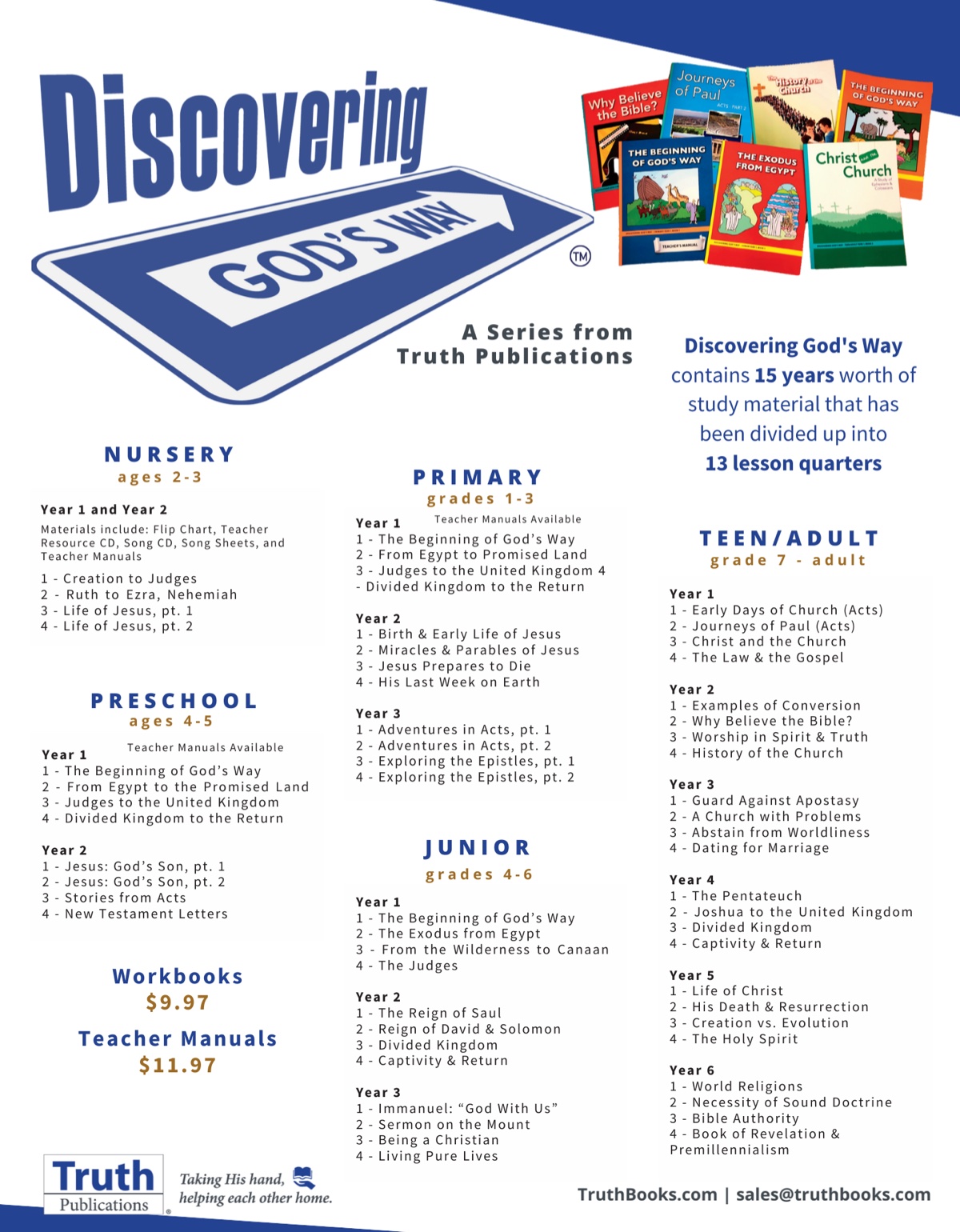
By David Weaks
Synopsis: Therapists abound. For everything. There are twelve-step programs, psychiatrists, psychologists, and experts in every area of human suffering—physical, mental, and emotional. Today, there are apps for your smartphone that put you in instant contact with a therapist, and people consult them daily. Some hire “life coaches” whom they consult regarding every decision they make. Has what is potentially good—mental health therapists—become a fad to some people and a dependency on others? Have people surrendered their own judgment to dependence on the opinions of their counselors?
Therapists and counselors abound. For everything. This is a good thing. Men and women have devoted their lives to helping others cope with the worst traumas of life. There is certainly a need and a place for these professionals, because people are often profoundly afflicted by ailments of the mind and body, whether the causes are physical abuse, psychological trauma, or something organic. People who grieve the loss of loved ones can find it nearly impossible to pull themselves out of the downward spiral of emotions that their loss has brought. Further, in their estimation, their loss seems impossible for anyone else to understand, leading to anger and despair. Qualified therapists and grief counseling can be indispensable for such individuals.
In the Bible, there were people who struggled with problems beyond the garden-variety issues of mind and body. Consider the case of poor Tamar, David’s daughter. She was trapped, raped, and then callously rejected by her half-brother Amnon (2 Sam. 13:10-19). What Tamar suffered was indescribably awful. She was a virgin, and after Amnon raped her, he despised her and banished her from his sight (vv. 17-18), leaving her an outcast. How does a young woman cope with such a violation? To whom could she turn for comfort and consolation? Rape is always a catastrophic injury. The Bible says that she “put ashes on her head, and tore her robe of many colors that was on her, and laid her hand on her head and went away crying bitterly” (v. 19). Sexual assault is all too common in our world, and millions of girls and women are left broken human beings because of it. Many victims (perhaps all) require extensive counseling to recover. It is possible for someone to suffer such profound losses that grief pushes him beyond the reach of consoling words. Job’s friends struggled to help him, but they were “miserable comforters” to Job (16:2). He was in such pain that he wished for death (6:8).
Like so many other good things, the proliferation of counselors and advisors creates a problem—dependence. Not everyone needs professional therapy. When one needs medication, care must be taken by the doctor and patient to avoid dependency. For example, hydrocodone is a powerful painkiller, and doctors prescribe it with caution. This drug is not given to treat something as minor as a sore throat. Overuse and unnecessary use can lead to dependency. Hydrocodone—commonly known by its street name, Vicodin—is highly addictive. Therefore, it is not prescribed simply because people want it or believe they need it. This cautious approach represents the wisest course of action for all medical treatments. Shouldn’t we also view psychological treatments in the same manner? People who need professional therapy should use it only when necessary, and those who have no need for it should not seek it.
Life is hard and problems abound for everyone, but most people have the life experience and strength to handle their own problems. Job said, “Man who is born of woman is of few days and full of trouble” (Job 14:1). Humans grow when they are forced to struggle. An easy life, free from all worry and care, is a fantasy; if it were reality, it would only weaken people. James said:
My brethren, count it all joy when you fall into various trials, knowing that the testing of your faith produces patience. But let patience have its perfect work, that you may be perfect and complete, lacking nothing. If any of you lacks wisdom, let him ask of God, who gives to all liberally and without reproach, and it will be given to him (Jas. 1:2-5).
Sometimes life’s pain is self-inflicted, and people need to suffer the consequences of their bad decisions. When we behave badly, we hurt other people. When we sin, we separate ourselves from God, injuring ourselves (Rom. 6:23). The grief and pain that our conscience piles on us in such moments is good. Paul said, “godly sorrow works repentance” (2 Cor. 7:10). Therapy does more harm than good when it shields a sinner from the grief he has caused by his sins. The pain of guilt inflicted by one’s conscience is very real and is designed to drive a sinner to his knees in penitence. A person who is shielded from such sorrow will find his conscience seared as with a hot iron (1 Tim. 4:2).
The Bible contains the best guidance for everyday problems, as well as for addressing the deeper issues of human existence. Peter said that God’s divine power “has given to us all things that pertain to life and godliness, through the knowledge of Him who called us by glory and virtue” (2 Pet. 1:3). Certainly, the wisest words from heaven may not reach a mind that is haunted and broken by trauma or a mind rearranged by chemical imbalances. These cases remain the realm of trained physicians. However, God’s word still gives us the answers to the pains and sorrows of life, so that we do not need professional counselors to guide our way down every dark path.
The unnamed author of Psalm 119 (traditionally thought to be David) said, “My soul clings to the dust; revive me according to Your word” (v. 25). Then he said, “My soul melts from heaviness; strengthen me according to Your word” (v. 28). He saw his solution clearly. When he was in despair, he would cling to the Lord’s testimonies (v. 31), and he would “run the course of Your commandments, for You shall enlarge my heart” (v. 32). He knew where his relief could be found; it was in the word of God.
Do you remember playing in the dirt as a child? Do you remember being outside in the elements every day of summer vacation, running, climbing trees, eating with dirty hands, and drinking from the water hose? You probably have a strong immune system today. You also know how to handle “people problems” as well. You and your friends argued and fussed with one another; jealousies flared, things were said that should not have been, and feelings were hurt. Yet, over the course of a day or two, you practiced the basics of dispute resolution, and your problems went away. Furthermore, your mom and dad left you to “fight your own battles,” knowing that was the best way for you to grow up.
Godly parents teach their children how to live according to the Bible (Deut. 6:7). Our parents taught us to remember and honor God in all our daily activities. Now, as adult Christians, you and I have a lifetime of experience upon which we can call when troubles arise. We do not fall apart at the slightest stress or anxiety. Sadness is just that, sadness, and it will dissipate. Anger comes slowly and dissipates quickly when we apply biblical truth (Eph. 4:26; Jas. 1:19). Human relations issues do not send us to bed to hide under the covers, cowering in fear; we learn from the Bible how to confront offenders scripturally (Matt. 18:15). Our parents would never have allowed us to believe we were justified pouting in anger.
While mental illness is a real thing, normal pain, sorrow, and guilt are not mental illness. The pursuit of perfect happiness in this life is both unrealistic and unachievable. The pains of life bring sadness, and we deal with them. Sins have consequences, and we repent of them. A sinful heart that has been pricked by the word of God needs to manifest godly sorrow and genuine repentance (Acts 2:36-38). The last thing a sinner needs is to be told that he really is not guilty, and could not help behaving badly. The godly cry of “What have I done, O Lord?” must not be replaced with “How can a counselor help me not feel bad anymore?” Obedience to God is where a clean, pain-free conscience comes from (1 Pet. 3:21). God has placed on everyone the duty to obey Him (Heb. 5:8-9). He commands men to repent, not to evade the sorrow and pain of sin (Acts 17:30).
Overreliance on therapy can foster a belief that only professional counselors have any advice to give. This is a genuine danger for a Christian. People who talk daily to a counselor for the simplest problems of life soon view any other advisor as inferior, and their counsel as unhelpful.
Christians are blessed with understanding friends, family, and brethren in Christ who are ready and willing to help when needed. Disciples love the word of God and offer advice based upon it. Worldly counselors give advice from the world’s perspective. Paul the apostle warned about the danger of involving worldly people in decisions relating to Christian living. “Dare any of you, having a matter against another, go to law before the unrighteous, and not before the saints?” (1 Cor. 6:1). He asked, “Are you unworthy to judge the smallest matters?” (v. 2). To appoint those who are “less esteemed by the church to judge” is a shameful thing (vv. 4-5). Paul asked a pointed question: “Is it so, that there is not a wise man among you, not even one, who will be able to judge between his brethren?” (v. 5). The point he is making is that “Yes!” there are those among the saints who are well equipped to resolve such conflicts.
If such is the case in matters for the court, is it not equally so that we have wise brethren among us to offer advice and counsel when we struggle with other problems of life? Why would one’s first thought be to take his troubles to an unbeliever, when there are people in his closest circle of companions, Christians, who are ready, willing, and able to offer counsel from the perspective of the Bible?
It is certainly good to have professionally trained counselors to whom we can turn when we suffer real trauma and depression. However, we do not need counselors and life coaches to govern our lives for us. God has given us the ability to control our emotions and to make good decisions. He has also given us the word of God as our guide to daily life (Ps. 119:105). Life can be hard, indeed. Yet, the path of the Lord is clear to the man who seeks it. We must not lose confidence in the wisdom of God. Depend on doctors when they are needed, but depend on God and His word always.
David Weaks, a former Catholic, obeyed the gospel in February 1985, and began preaching later that year. David and his wife, Perri, have lived in West Columbia, TX, where he has labored with the church since August 1997. They raised their two daughters in West Columbia. He can be reached here.



Note: Please send additions, corrections and updates here.
Updated: 7/1/2025
17312 Jones Rd, Athens, AL 35613
Sun. Bible Study 9:30 am | Sun. Worship: 10:20 am & 5:00 pm | Wed. Bible Study 7:00 pm
Evangelist: Jonathan Reeder | Website | 256-233-3160
24190 Wooley Springs Rd, Athens, AL 35613
Sun. Worship 9:30 am & 5:15 pm | Wed. Bible Class 7:00 pm
Evangelists: Bob Watson & Matt Taylor | Website
3955 Pine Lane, Bessemer, AL 35022
Sun. Bible Study 9:10 am | Sun. Worship 10:00 am & 5:00 pm | Wed. Bible Class 7:00 pm
Evangelist: David Deason | 256-497-8127 205-425-2352 | Email | Website
2325 Old Columbiana Rd. (near I-65 & Hwy. 31)
Sun. Bible Study 9:00 am | Worship 10:00 am & 5:00 pm | Wed. Bible Study 7:00 pm
Evangelist: Kyle Pope | 205-822-0018 | Website
19965 Sandlin Rd. Elkmont, AL 35620
Sun. Worship 9:30 am & 3:00 pm | Bible Classes: 10:45 am | Wed. Bible Study 7:00 pm
Evangelist: Lance R. Taylor | 256-777-0990 | Website
851 N. Pine St. (Located next to University campus)
Sun. Bible Study 9:30 am | Worship 10:15 am & 5:00 pm | Wed. Bible Study 7:00 pm
Evangelist: Kenny Moorer | 256-766-0403
601 Pineywood Road, Gardendale, AL, 35071 (Located 10 miles N of Birmingham)
Sun. Bible Study 9:30 am | Worship: 10:25 am & 5:00 pm | Wed. Bible Study: 7:00 pm
Evangelists: Andrew Smith & Jason Shackleford | 205-631-2131 | Website
129 Hillcrest Rd, Mobile, AL 36608
Sun. Worship 9-9:30 am | Bible Study 9:30-10:30 am | Worship 10:30-11:30 am | Wed. Bible Study 7:00 pm
Evangelist: Ken Sils | 765-307-8048 | 251-342-4144 or 342-2041 | Website
271 Highway 65 N, Conway, AR 72032
Sun. Bible Study 9:00 am | Worship 10:00 am & 5:00 pm | Wed. Bible Study 7:00 pm
Evangelist: Bruce Reeves | Bldg: 501-336-0052 | Website
2655 Prince St., Conway, AR 72034
Sun. Worship 9:00 pm | Bible class 9:50 am | Worship & Lord’s Supper: 10:40 am | Wed. Bible Class 7:00 pm
501-450-8640
2323 South 46th St.
Sun. Bible Study 9:45 am | Worship 10:30 am | Wed. Bible Study 7:00 pm
407 Bella Vista Dr.
Sun. Bible Study 9:30 am | Worship 10:15 am & 5:00 pm | Wed. Bible Study 7:00 pm
Evangelist: Norman E. Sewell | 870-741-9104 or 870-741-5151 | Website
514 Airport Rd.
Sun. Bible Study 10:00 am | Worship 11:00 pm & 6:00 pm | Wed. Bible Study 7:00 pm
Evangelist: Dick Blackford | 870-933-9134
145 N. Country Club Rd.
Sun. Bible Study 9:00 am | Worship 10:00 am & 6:00 pm | Wed. Bible Study 7:00 pm
Evangelist: Brenden Ashby | 520-326-3634 | Website
17903 Ibbetson Ave.
Sun. Bible Study 9:45 am | Worship 10:50 am & 6:00 pm | Wed. Bible Study 7:30 pm
562-866-5615 | Website
3433 Studebaker Rd.
Sun. Bible Study 9:50 am | Worship 10:45 am & 5:30 pm | Wed. Bible Study 7:00 pm
JP Flores | 562-420-2363 or Mark Reeves | 562-377-1674 | Website
449 W. Allen Ave., Suite 120, San Dimas, CA 91773
Sun. Bible study 10:00 am | Worship 11:00 pm & 4:00 pm | Wed. Bible Study 7:30 pm
909-788-9978 | Website
Meets at the Fort Collins Senior Center, 1200 Raintree Dr., Fort Collins, CO 80526
Sun. Bible Study 9:30 am | Worship 10:30 am
Evangelist: Richie Thetford | Website
1414 Hawk Parkway, Unit C
Sun. Worship 11:00 pm | Bible Study 2 pm & 1:30 pm
970-249-8116 |
64 Casting Lake Rd.
Sun. Bible Study 9:00 am | Worship 10:00 am & 6:00 pm | Wed. Bible Study 7:00 pm
850-622-3817 | Website | Location change coming in 2022: 497 Church St Santa Rosa Beach, FL 32459
196 Ave C, Geneva, FL 32732
Sun. Bible Study 10:00 am | Worship 10:45 am
(689) 229-9888 | Website
6 Lane Dr., Mary Esther, FL 32569
Sun. Bible Study 9:30 am | Worship 10:30 am & 5:00 pm | Wed. Bible Study 7:00 pm
850-244-9222 | Website | Evangelist: Chris Simmons | Email
3940 S. Bumby Ave.
Sun. Communion: 9:30 am | Bible Study 10:00 am | Praise & Preaching: 10:55 am (No pm Service) | Wed 7:00 pm
Evangelist: Ken Chapman
Office: 407-851-8031 | Website | Note: Please call for current worship and Bible study times.
621 E. Wheeler Rd.
Sun. Bible Study 10:00 am | Worship 10:50 am & 6:00 pm | Wed. Bible Study 7:30 pm
Evangelist: Bobby Witherington | 813-684-1297 | Website
Route 116 (near Callaway Gardens)
Sun. Bible Study 10:00 am | Worship 11:00 pm & 6:00 pm | Wed. Bible Study 7:30 pm
Evangelist: Tommy W. Thomas | 706-628-5117 or 628-5229 |
Meeting at 321 2nd St. S., Ste. 103, Nampa ID 83651
Sun. Bible Study 10:00 am | Worship 11:15 am | Wed. Bible Study 7:00 pm
208-461-1318 | Email | Website or here
Note: Please see website for most current information.
370 N. Shilling | P.O. Box 158-83221
Sun. Bible Study 10:00 am | Worship 11:00 pm | Wed. Bible Study 7:30 pm
208-785-6168 or 681-1552
1310 NE 54th Ave, Des Moines, IA 50313
Sun. Bible Study 9:45 am | Worship 10:40 am | Wed. Bible Study 7:00 pm
515-262-6799 | Website
1236 63rd St. (Dir: 1.5 miles E of I355)
Sun. Bible Study 9:00 am | Worship 9:55 am & 6:00 pm | Wed. Bible Study 7:30 pm
Evangelist: Steve Wolfgang | 630-968-0760 | Website
1100 S. 17th St.
Sun. Bible Study 9:30 am | Worship 10:30 am & 6:00 pm | Wed. Bible Study 7:00 pm
217-234-3702
16224 S Vincennes Ave.
Sun. Bible Study 9:00 am | Worship 10:00 am & 4 pm | Wed. Bible Study 7:00 pm
Evangelist: Donald Hawkins | 708-339-1008 | Website
Meeting @ Sleep Inn Suites and Motel | 1101 North Cummings Lane, Washington, IL 61571
Sun. Worship: 11:30 am | Bible Study: 12:30 pm | Wed. Bible Study 6:30 pm @ home of Tim Sundlie, call for address
Evangelist: Tim Sundlie | 608-796-9028 | Email | Website
407 W Lewis and Clark Parkway, Clarksville, IN 47129
Sun. Bible Study 9:30 am | Worship 10:30 am & 6:00 pm | Wed. Bible Study 7:30 pm
Elders: Allen L. Morris (812) 989-5838 and Stephen W. Nale (502) 727-7559 or (812) 944-2305 | Website
Sun. Bible Study 9:30 am | Worship 10:30 am | Wed. 7:00 pm
765-676-6404 | Website
15530 Herriman Blvd, 46060
Sun. Bible Study 10:00 am | Worship 11:00 am | Wed. Bible Study 7:00 pm
Evangelist: John Smith | Email | 317-501-8035 or 317-501-0249 or 317-701-1204
400 Lafayette Ave. | P.O. Box 34
Sun. Bible Study 9:45 am | Worship 10:30 am & 6:00 pm | Wed. 7:00 pm
812-279-4332
(First St. & Karnes Ct.)
Sun. Bible Study 9:45 am | Worship 10:30 am & 5:00 pm | Wed. Bible Study 7:00 pm
Evangelist: Jeremy Goen | 812-967-3437 or 967-3520 | Website
302 S. Fourth Ave., Mulvane KS 67110 | Mail: PO Box 11
Sun. Bible Classes: 10:00 am | Worship 11:00 am | Wed. Bible Study 7:00 pm
Evangelist: Jay Horsley | 316-644-8503 | Website | Email
5600 SW 17th St, Topeka, KS 66604
Sun. Bible Study 9:15 am | Sun. Worship 10:30 am | Wed. Bible Study 7:00 pm
785-235-8687 or 785-273-7977 | Website
1235 Williams St.
Sun. Worship 10:00 am | Bible Study After am Worship & 6:00 pm | Wed. Bible Study 7:00 pm
Evangelist: Jerid Gunter | 270-274-4451
8081 US Hwy 68-East, Benton, KY 42025
Sun. Bible Study 9:00 am | Worship 10:00 am | Wed. Bible Study 6:00 pm
270-354-9451 | Email | Website | Conveniently located near Kenlake State Resort Park on the western shore of Kentucky Lake.
612 Broadway
Sun. Bible Study 9:45 am | Worship 10:30 am & 5:00 pm | Wed. Bible Study 6:30 pm
Evangelist: Charles J. White | 270-422-3878
107 Sunny Hill Dr.
Worship 9:30 am & 11:30 am | Bible Study 10:30 am | Wed. Bible Study 7:00 pm
Evangelist: Steve Lee | 270-789-1651 | Website
103 N. Main St. | P.O. Box 233
Sun. Bible Study 10:00 am | Worship 10:45 am & 5:00 pm | Wed. Bible Study 7:00 pm
Evangelist: Jarrod Jacobs | 270-589-4167 or 270-274-3065
385 E. Lexington Ave.
Sun. Worship 10:00 am | Bible Study 11:15 am & 5:00 pm | Wed. Bible Study 7:00 pm
Evangelist: B.J. Sipe | 859-236-4204
18 Scott Drive, Florence, KY 41042
Sun. Worship 9:30 am & 5:30 pm | Sun. Bible Study 10:30 am | Wed. Bible Study 7:00 pm
859-371-2095 | Website
1733 Bowling Green Rd.
Sun. Bible Study 9:00 am | Worship 10:00 am & 6:00 pm | Wed. Bible Study 7:00 pm
Evangelist: Steve Monts | 270-776-9393 | Website
733 Mill St. Leitchfield, KY 42754
Sun. Bible Study 9:30 am | Worship 10:00 am Communion 10:55 am | Wed. Bible Study 6:00 pm
270-230-6144 | Website
1803 Dixie Garden Dr.
Sun. Bible Study 9:30 am | Worship 10:30 am & 6:00 pm | Wed. Bible Study 7:00 pm
Evangelist: Michael Hardin | Email | 502-937 2822
3221 East Hebron Lane
Sun. Bible Study 9:00 am | Worship 10:00 am & 5 pm | Wed. Bible Study 7:30 pm
Evangelist: Danny Linden & Ron Halbrook | 502-957-5115 or 502-955-1748 | Website
405 Orice Roth Rd. | 70737 (Baton Rouge area)
Sun. Bible Class 9:30 am | Worship 10:30 am & 6:00 pm | Wed. Bible Study 7:00 pm
Evangelist: R.J. Evans | Email | 225-622-4587
856 Brighton Ave. (Breakwater School) | Leave Maine Turnpike at Exit 48
Sun. Bible Study 10:00 am | Worship 11:00 pm w/ second service immediately following am worship | Mid-week Bible Study (please call for times & places)
207-839-3075 or 839-8409
3084 Creek Drive SE, #1-C, Kentwood, MI 49512 | P.O. Box 8446, Kentwood, Mich. 49508 (Grand Rapids area)
Sun. Worship 11:00 am | Sun. Bible Study 12:30 pm | Wed. Bible Study 7:00 pm
Evangelist: Joseph Gladwell | Email
414 South Main Street
Sun. Bible Study 10:00 am | Worship 11:00 am | Wed. Bible Study 6:00 pm
Evangelist: Ryan Thomas | 810-837-1302 or 989-389-3226 | Website
2820 Grandview Ave, Meridian, MS 39305
Sun. Bible Study 10:00 am | Sun. Worship 11:00 pm | Wed. 6:30 pm
Ron Cooper: 601-934-3675 | Email
Ricky Ethridge: 601-737-5778 | Email
2110 E State Line Rd. (Exit I-55) (Memphis area)
Sun. Bible Study 9:30 am | Worship 10:30 am | Wed. Bible Study 7:00 pm
Evangelist: James A. Brown | Bldg: 662-342-1132
805 Meadow Rd, Severn, MD 21144
Sun. Bible Study 10:00 am | Sun. Worship 11:00 pm & 6:00 pm | Wed. Bible Study 7:30 pm
Evangelist: Brandon Trout | 410-969-1420 or 410-551-6549 | Website
422 N Linton St., Blodgett, MO 63824
Sun. Worship 10:00 am | Wed. Bible Study 7:00 pm
Evangelist: Russell Rice | 573-475-0417
4000 SW Christiansen
Sun. Worship 9:00 pm | Bible Study 10:00 am | Worship 11:00 pm | Wed. Bible Study 7:00 pm
Evangelist: Brett Hogland | 816-228-9262
432 Eagle Rock Rd, Branson, MO 65616
Sun. Worship 9:30 am | Bible Study 10:30 am | Sun. Evening Worship 5:00 pm | Wed. Bible Study 6:00 pm
Evangelist: Philip North | 417-239-1036 | Email | Website
2912 Bloomfield Rd
Sun. Bible Study 9:15 am | Worship 10:00 am | Wed. Bible Study 7:00 pm
Seth McDonald & Jerry Lee Westbrook | 573-837-1001 | Email | Website
703 Harrison St.
Sun. Bible Study 10:00 am | Worship 11:00 pm & 6:00 pm | Wed. Bible Study 7:00 pm
Evangelist: Nolan Glover | 870-650-1648 | Website
685 Sidney St.
Sun. Bible Study 9:30 am | Worship 10:15 am & 5:00 pm | Wed. Bible Study 7:00 pm
Evangelist: Lynn Huggins | 573-265-8628
2727 County Line Rd.
Sun. Bible Study 9:00 am | Worship 9:50 am | Wed. Bible Study 7:00 pm
816-279-4737 | Website
Bell St & S 7th St. Beatrice, NE 68310
Sun. Bible Study 9:00 am | Worship 10:00 am & 6:30 pm
402-233-4102 or 402-228-3827 | Website
5327 S. Tryon Street, Charlotte, NC 28217
Sun. Bible Study 9:30 am | Sun. Worship 10:30 am | Wed. Bible Study 7:30 pm
704-525-5655 | Website
3781 East Highway 27, Iron Station, NC 28080
Sun. Bible Study: 10:00 am | Sun. Worship 11:00 am & 6:00 pm | Wed. Bible Study 7:00 pm
Evangelist: Stan Adams | 704-748-9777 (Bldg) & 704-748-3747 (Jerry) | Email | Website
1031 Welford Dr, Beavercreek, OH 45434 (located a few miles E of Dayton)
Sun. Short Worship: 9:30 am | Bible Study 10:05 am | Sun. Worship 11:00 am | Wed. Bible Study Adults: 1:00 pm & All ages: 7:00 pm
Evangelist: Heath Rogers | 937-426-1422 | Website
13501 Lorain Ave, Cleveland, OH 44111
Sun. Bible Study 10:00 am | Worship 11:00 am | Wed. Bible Study 7:00 pm (Call)
Evangelist: John Dicus | (330) 723-0111 or (330) 590-0227 or (216) 322-9392 | Website
28 W. Main St., Dayton, OH 45449
Sun. Worship 9:00 pm | Bible Study 9:30 am | Worship 10:25 am | Wed. Bible Study 7:00 pm
Evangelists: Michael Grushon 937-866-5162 or Alan Beck 937-469-3311 | Website
6417 Franklin-Lebanon Rd. Franklin, OH 45005
Sun. Bible Study 10:00 am | Worship 10:45 am | Tues. Bible Study 6:30 pm
Evangelist: Josh Lee | 937-789-8055 or 937-746-1249 | Website
1973 W Main St. New Lebanon, OH 45345
Sun. Bible Study 9:30 am | Worship 10:30 am, & 5:00 pm | Wed. Bible Study 7:00 pm
Evangelist: Bruce Hastings | 937-687-7150 or 937-478-0367
80 Sandhill Rd. Reno, OH 45773
Sun. Bible Study 9:30 am | Worship 10:30 am & 6:30 pm | Wed. Bible Study 7:00 pm
Evangelist: Mark Childers | 304-615-1091 | 740-374-9827 | Website
4110 Frey Rd., Northwood, OH 43619 (Toledo Area)
Sun. Worship 11:00 pm
Evangelist: Donald Jarabek | 419-893-3566 & 567-331-2269
33226 Children’s Home Rd., Pomeroy, OH 45769
Sun Worship 10:00 am & 5 pm | Bible Study 11:00 am | Wed. Bible Study 6:00 pm
Jack Hunt | Email | 740-645-4612 | Website
2120 No. A St.
Sun. Bible Study 9:45 am | Worship 10:45 am & 5:30 pm | Wed. Bible Study 7:00 pm
Evangelist: Rob Lungstrum | 918-931-1362 or 918-423-3445
4110 NE 122nd Ave #101, Portland, OR 97230
Sun. Bible Study 10:00 am | Worship 11:00 am | Thur. Bible Study 7:00 pm
Evangelist: Samuel A. Matthews | 971-331-2838 | Bldg: 503-432-8697 | Email | Website
3702 E. Long St.
Sun. Bible Study 9:30 am | Worship 10:30 pm & 5:30 pm | Wed. Bible Study 7:30 pm
Bldg: 541-367-1599 | Email | Website
7222 Germantown Ave, Philadelphia, PA 19119
Sun. Bible Study 10:15 am | Sun. Worship: 11:15 am | Tues. Bible Study: 7:00 pm
Evangelist: James H. Baker, Jr. | 215-248-2026 | Website
3370 Broad St. Extension
Sun. Bible Study 9:30 am | Worship 10:30 am & 5:30 pm | Wed. Bible Study 7:00 pm
Evangelist: A.A. Granke, Jr. | 803-499-6023
4013 Edmund Hwy. (Hwy. 302), West Columbia, SC 29170
Sun. Bible Study 9:30 am | Sun. Worship 10:30 am & 5:00 pm | Wed. Bible Study 7:00 pm
Evangelist: Jerry Cleek | 219-313-1108 | Website
326 Powell Road, Collierville, TN 38017
Sun. Bible Study 9:00 am | Worship 10:00 am | Wed. Bible Study 7:00 pm
Evangelist: Doug Seaton | 901-854-6816 or 901-634-7840
417 Mooresville Pike | (Located .8 mi. N. of Hwy. 50/Jas. Campbell)
Sun. Bible Study 9:30 am | Worship 10:30 am & 3:30 pm | Wed. Bible Study 7:00 pm
931-388-5828 or 931-381-7898 | Website
4894 Hooper Hwy. | 37722 | (Located 15 mi. E. of Gatlinburg on Hwy. 321)
Sun. Bible Study 10am | Worship 11:00 pm & 5:00 pm | Wed. Bible Study 6:00 pm
Evangelist: Olie Williamson | 423-487-5540 or 423-748-0844
350 N Main St. Kingston Springs, TN 37082
Sun. Bible Study 9:00 am | Worship 10:00 am & 5:00 pm | Wed. Bible Study 7:00 pm
108 Locust St.
Sun. Bible Study 9:30 am | Worship 10:30 am & 5:00 pm | Wed. Bible Study 7:00 pm
Evangelist: Daniel H. King, Sr. | 931-379-3704 or 931-964-3924 | Website
1110 Cason Lane
Sun. Bible Study 9:00 am | Worship 10:00 am & 5:00 pm | Wed. Bible Study 7:00 pm
Bldg: 615-896-0090 | Website
2091 Pitts Ln, Murfreesboro, TN 37130 (located at the corner of Northfield Blvd and Pitts Lane)
Sun. Bible Study 9:30 am | Sun. Worship 10:30 am & 6:00 pm | Wed. Bible Study 7:00 pm
Evangelist: David Bunting | 615-893-1200 | Website
7471 Charlotte Pike
Sun. Bible Study 9:00 am | Worship 10:00 am & 5:00 pm | Wed. Bible Study 7:00 pm
Evangelist: Lee Wildman | 615-952-5458 or 615-356-7318
1414 W. Exchange Pkwy
Sun. Bible Study 9:00 am | Worship 10:00 am & 5:00 pm | Wed. Bible Study 7:00 pm
Evangelist: Jerry King 214-504-0443 or 972-727-5355 | Website
4343 S Interstate 35, Alvarado, TX 76065 (Located on the East Service Road off I-35 North of Alvarado)
Mail: I-35 church of Christ, P.O. Box 1269, Alvarado, TX 76009
Sun. Bible Study 10:00 am | Worship 11:00 am | Wed. Bible Study 7:00 pm
682-202-9741 or 817-739-3402 | Website
605 E. Adoue St., Alvin, TX 77511
Sun. Bible Study 9:30 am | Worship 10:30 am & 5:00 pm | Wed. Bible Study 7:30 pm
Evangelist: Mark Mayberry | Email | Website
701 North Pruett St.
Sun. Bible Study 9:45 am | Worship 10:40 am & 6:30 pm | Wed. Bible Study 7:00 pm
Bldg: 281-422-5926 | Weldon: 713-818-1321 | Website
2919 Main St/FM 517 E., Dickinson, TX 77539
Sun. Bible Study 10:00 am | Sunday Worship 11:00 am & 6:00 pm | Wed. Bible Study 7:00 pm
713-298-6673
301 Robison St.
Sun. Bible Study 9:30 am | Worship 10:30 am & 6:00 pm | Wed. Bible Study 7:00 pm
Evangelist: Phillip Stuckey | 361-782-5506 or 361-782-2844 | Website
3277 Pendleton Rd.
Sun. Bible Study 9:30 am | Worship 10:30 am & 5:00 pm | Wed. Bible Study 7:00 pm
915-855-1524
4303 18th St, Bacliff, TX 77518
Sun. Bible Study 9:00 am | Sun. Worship 10:00 am & 6:00 pm | Wed. Bible Study 7:00 pm
Evangelist: Richard Lay | Website
6110 White Settlement Rd. 76114
Sun. Bible Study 9:30 am | Worship 10:30 am & 6:00 pm | Wed. Bible Study 7:30 pm
817-738-7269
Old Granbury Rd Church of Christ
4313 Old Granbury Rd, Granbury, TX 76049
Sun. Bible Study 9:30 am | Sun. Worship 10:30 am | Wed. Bible Study 7:00 pm
Evangelist: Chip Foster | 817-913-4209 or 817-279-3351 | Website
2510 Fry Rd, Houston, TX 77084
Sun. Bible Study 9:45 am | Worship 10:30 am & 6:00 pm | Wed. Bible Study 7:00 pm
Evangelist: David Flatt | Email | Website
6111 Indiana Ave, Lubbock, TX 79413
Sun. Bible Study 10:00 am | Sun. Worship 9:00 am & 11:00 am | Wed. Bible Study 7:00 pm
806-795-3377 | Website
1820 Mansfield Webb Rd, Mansfield, TX 76063
Sun. Bible Study 9:30 am | Sun. Worship: 10:20 am & 5:00 pm | Wed. Bible Study 5:30 pm.
Evangelist: Tom Roberts | 817-996-3926 | Website
612 S Shawnee St, Nacogdoches, TX 75961
Sun. Bible Study 9:45 am | Worship 10:30 am & 6:00 | Wed. Bible Study 6:00 pm
Minister: Van Dennis | 936-615-2950
3831 N.E. Stallings Dr.
Sun. Bible Study 9:30 am | Worship 10:20 am & 6:00 pm | Wed. Bible Study 7:00 pm
Evangelists: Randy Harshbarger & Jay Taylor
268 Utopia Ave. (Dir: I-37 S.E. Exit Pecan Valley)
Sun. Bible Study 9:30 am | Worship 10:30 am & 5:00 pm | Wed. Bible Study 7:00 pm
Evangelist: Jesse Garcia | 210-660 0409
314 N. Tolbert
Sun. Bible Study 9:30 am | Worship 10:30 am & 5:00 pm | Wed. Bible Study 7:00 pm
Evangelist: Ronald Stringer
4404 Twin City Blvd.
Sun. Bible Study 9:30 am | Worship 10:30 am & 6:00 pm | Wed. Bible Study 7:30 pm
Evangelist: Jason Garcia Email or Email | 254-939-0682 | Website
2301 Franklin Dr., Texarkana, AR 71854
Sun. Bible Study 9:30 am | Worship 10:15 am | Wed. Bible Study 7:00 pm
870-772-0746 | Website
340 E Warren St. (in Hewitt, a suburb of Waco)
Sun. Bible Class 9:30 am | Worship 10:30 am & 5:00 pm | Wed. Bible Study 7:00 pm
Evangelist: Marc Smith | 254-292-2482 or 652-7698
4500 Kell West Blvd, Wichita Falls, TX 76309
Sun. Bible Class 9:30 am | Worship 10:30 am & 3:30 pm | Wed. Bible Study 6:30 pm
Evangelist: Dennis L. Scroggins | 512-626- 5702 | Email | Website
Please mail all correspondence to 1504 Hayes St, Wichita Falls, TX 76309
Meeting in the Capital City Grange Hall, 6612 Route 12 Berlin, VT 05602
Sun. Bible Study 9:00 am | Worship 10 am | Tues. Evening in Homes
Evangelist: Open | Website | P.O. Box 70, Williamstown, VT 05679 | For questions or directions: Wade Holt 802-485-4311
217 Taxus St., Chesapeake, VA 23320
Sun. Bible Study 10:00 am | Worship 11:00 am & 5:00 pm | Wed. Bible Study 7:00 pm
Evangelist: Steven Matthews | 757-436-6900 | Website
8330 Doublecreek Court, Chesterfield, VA 23832 (Located in teh Metro Area; Courthouse Rd. at Double Creek Ct. 2.2 miles S of Rt. 288)
Sun. Bible Study 9:30 am | Worship 10:30 am & 5:00 pm | Wed. Bible Study 7:00 pm
Evangalist: Nathan L. Morrison | 804-778-4717 | Website
1208 W. 41st St.
Sun. Bible Study 10:00 am | Worship 11:00 pm & 6:00 pm | Wed. Bible Study 7:00 pm
Evangelist: Jack Bise, Jr.
2970 Old Leaksville Rd.
Sun. Bible Study 10:00 am | Worship 11:00 pm & 5:30 pm | Wed. Bible Study 7:00 pm
276-956-6049 | Website
929 Indiana Ave. NE (5 min. from Roanoke Convention Center)
Sun. 1st Lesson 9:15 am | Bible Study 10:00 am | Worship 11:00 pm | Wed. Bible Study 7:30 pm
Evangelist: Brent Paschall | 540-344-2755 | Website
5652 Haden Rd.
Sun. Bible Study 10:00 am | Worship 11:00 am
Robert Mallard | 757-464-4574
1860 Mt Baker Hwy, Bellingham, WA 98226,
Sun. Bible Study 9:30 am | Worship 10:30 am & 6:00 pm | Wed. Bible Study 7:00 pm
Evangelist: Steven J. Wallace | 360-752-2692 or 806-787-5088 | Website & Website
Meeting at Gray Middle School, 6229 S. Tyler St., Tacoma, WA 98409
Note: Please see webpage for updated meeting location and times.
Sun. Bible Study 10:00 am | Worship 11:00 pm | Wed. Bible Study 7:00 pm (Online)
253-242-3098 | Email | Website
7 Old Davisson Run Rd, Clarksburg, WV 26301
Sun. Bible Study 9:30 am | Worship 10:20 am
304-622-5433 | Website | Email
1929 Morgantown Ave.
Sun. Bible Study 10:00 am | Worship 10:45 am & 6:00 pm | Wed. Bible Study 7:00 pm
304-363-8696 or 304-844-2437
210 Cedar Ave, Moundsville, WV 26041
Sun. Bible Study 9:30 am | Sun. Worship 10:30 am & 6:00 pm | Wed. Bible Study 7:00 pm
Evangelist: Tony Huntsman | 304-845-4940 | Website