(January, 2025 | No. 1 | Vol. 69)
1/1/2025
Truth Magazine (ISSN 1538-0793) is published once a month by Truth Publications, Inc., 220 S. Marion, Athens, AL 35611.
© 2025 Truth Publications, Inc. All Rights Reserved.
Manuscripts should be sent to the editor, Mark Mayberry, at mark@truthpublications.com. Link.
Subscriptions, renewals & other correspondence should be sent to: Truth Magazine, 220 S. Marion, Athens, AL 35611 or by emailing us at subscriptions@truthmagazine.com. Link.
Book orders should be sent to: CEI Bookstore | truthbooks.com | Street Address: 220 S. Marion, Athens, AL 35611 | Phone: (855) 492-6657 | Email: sales@truthbooks.com Link.
Online Website: truthmagazine.com
DISCLAIMER: Books in ads are screened, but an ad does not mean unqualified endorsement. All books should be tested by Scripture. We appreciate readers notifying us if they find some glaring fault in the ads.
Dear Customers and Supporters,
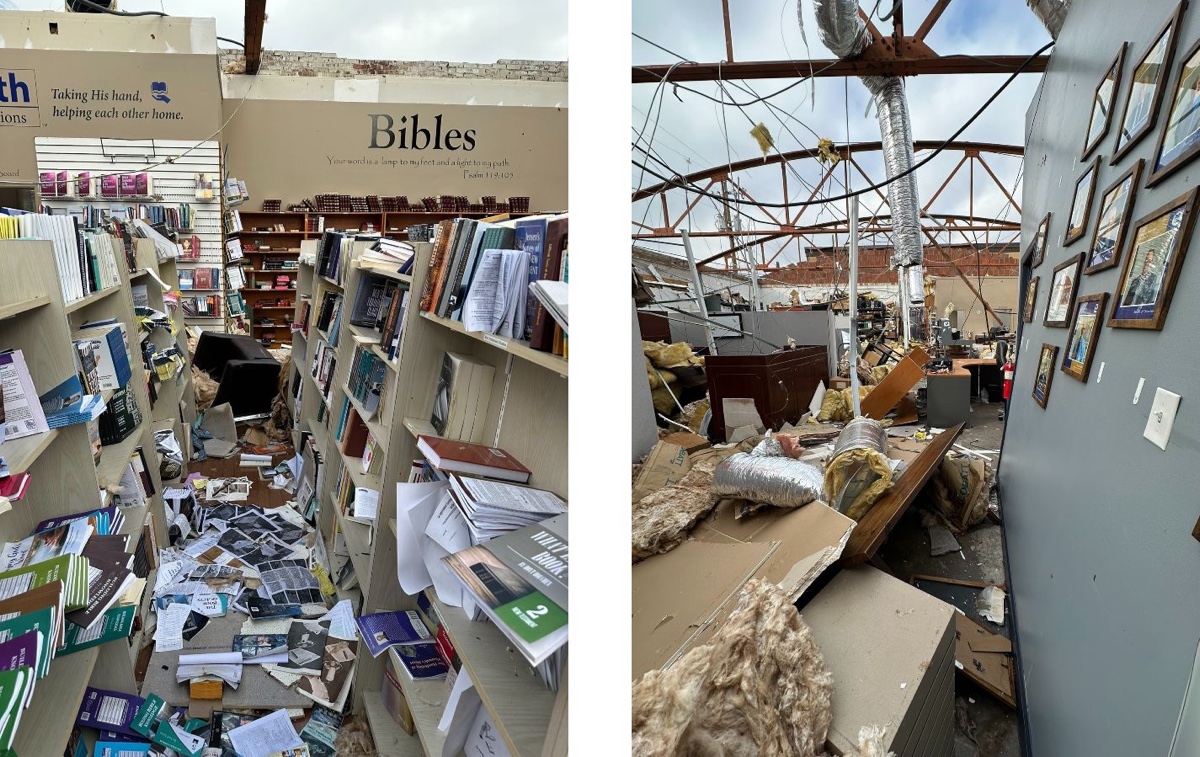
On the night of December 28th, an EF-1 tornado ripped through downtown Athens, AL leaving a significant path of destruction. In its direct path was our historic CEI Bookstore building. Thankfully, no one was in the building, and no one was harmed in our immediate area. Multiple buildings and businesses were hit and will be affected by this natural disaster.
From the images we are sharing and that many of you may have already seen, you can tell that CEI Bookstore took a direct hit, and we lost our entire roof. This left debris all inside the building and scattered roof pieces and debris all the way into the courthouse square as well as across the tops of other neighboring buildings.
Our commitment is to restart from this devastation and continue serving you as soon as possible in the very best way we are able. We need your patience and prayers as we embark on this journey.
We will be taking the next couple of days to assess the damages, work with our insurance providers, and set up remote operations with a goal of being able to take your calls and orders beginning January 2nd or 3rd. Please stay connected via our email newsletter, social media, and messaging at truthbooks.com for the latest in our progress.
If you need order assistance or would like to get with us as soon as we are operating again, then please email your request to sales@truthpublications.com.
If you are interested in helping as a volunteer or offering specific goods/services in our recovery, then please email kerri@truthpublications.com.
Those willing to help us financially during this restart can make donations at truthbooks.com/donation. We are a non-profit organization, donations are tax-deductible for eligible gifts, and we do not accept donations from churches or religious organizations.
God is our refuge and strength, a very present help in trouble. Therefore we will not fear, even though the earth be removed, and though the mountains be carried into the midst of the sea; though its waters roar and be troubled, though the mountains shake with its swelling (Ps. 46:1-3, NKJV).
Serving you, Lance R. Taylor
Director of Operations CEI Bookstore | Truth Publications, Inc. 220 S. Marion Street, Athens, AL 35611
Note: To stay current on our recovery efforts, please regularly check our blog. To make a tax-deductible donation, go here.


By Mark Mayberry
Synopsis: The January 2025 issue of Truth Magazine focuses upon “Foreign Evangelism.” Tthe biblical concept of an “open door” symbolizes the opportunities that arise for Christians to share the gospel of Jesus Christ which is the power of God unto salvation. God is seeking those who seek Him. Through His providential power, our Lord creates opportunities for His people to spread the Gospel and fulfill His purposes. The open door serves as a reminder of God’s faithfulness and the assurance that His plans cannot be thwarted by opposition.
Beginning in Genesis 3:8 and continuing throughout the pages of Sacred Scripture, anthropomorphic language is used to describe the Lord God. The statement, “they heard the sound of the Lord God walking in the garden in the cool of the day,” provides a picture of God’s presence among His creation, communicating a sense of intimate closeness that can exist between the Creator and those who are made in His image. This close familiarity is damaged by sin but restored through the person of Jesus Christ.
The term “anthropomorphic” refers to the attribution of human characteristics, emotions, or intentions to non-human entities—including divine beings (either real or imagined), animals, objects, or abstract concepts. Describing a storm as “angry,” a dog as “loyal,” or a cat as “devious” are instances of anthropomorphism. The word is derived from the Greek words anthropos, meaning “human,” and morphe, meaning “shape” or “form.”
Biblical examples abound. Scripture refers to God’s face (Num. 6:25-26), His eyes and ears (Ps. 34:15), His hand and arm (Exod. 6:6), His feet (Nah. 1:3), His heart (Hos. 11:8), His mouth and voice (Isa. 55:11), and emotions (Exod. 34:14; 1 John 4:8). This article, which reviews our recent efforts to preach the gospel in the Philippines and Malaysia, draws upon biblical language that describes power and providence. Therefore, let us consider God’s mighty hand and also His invisible hand.
Deuteronomy 11:1-7, which refers to God’s “mighty hand and His outstretched arm,” emphasizes the importance of loving and obeying the Lord. It recounts His powerful strength in accomplishing His plan and purpose—as reflected in Israel’s deliverance from Egypt, the destruction of Pharaoh’s army, and His miraculous demonstration of provision and punishment of sin. This passage also highlights the personal witness of these events by the children of Israel who are so addressed.
You shall therefore love the LORD your God, and always keep His charge, His statutes, His ordinances, and His commandments. Know this day that I am not speaking with your sons who have not known and who have not seen the discipline of the LORD your God—His greatness, His mighty hand and His outstretched arm, and His signs and His works which He did in the midst of Egypt to Pharaoh the king of Egypt and to all his land; and what He did to Egypt’s army, to its horses and its chariots, when He made the water of the Red Sea to engulf them while they were pursuing you, and the LORD completely destroyed them; and what He did to you in the wilderness until you came to this place; and what He did to Dathan and Abiram, the sons of Eliab, the son of Reuben, when the earth opened its mouth and swallowed them, their households, their tents, and every living thing that followed them, among all Israel—but your own eyes have seen all the great work of the LORD which He did (Deut. 11:1-7).
Employing similar language, the apostle Peter encourages his readers to humbly trust in God’s care, urging them to cast their anxieties on Him, with the assurance that He will exalt them at the proper time:
Therefore humble yourselves under the mighty hand of God, that He may exalt you at the proper time, casting all your anxiety on Him, because He cares for you (1 Pet. 5:6-7).
How was God’s mighty hand demonstrated by our evangelistic trip to the Philippines and Malaysia? I was reminded of the beauty of His creation: the vast oceans that separate the continents, the volcanic mountains that surround the Pacific Ocean, the beautiful faces of innocent children, the open hearts of those who would learn more about God’s word and ways, and the generous, loving hearts of brethren who make such evangelistic trips possible.
Our journey took us across the Pacific Ocean, the largest and deepest body of water on Earth. It covers over sixty million square miles and averages a depth of 13,000 feet—making up about 46% of Earth’s water surface and about 32% of the planet’s total surface area. The Philippines is a fascinating region from a geological perspective because of its complex tectonic setting. It is composed of over 7,500 islands, clustered into three major island groups: Luzon, the Visayas, and Mindanao. This archipelago is a seismically active zone that has been progressively constructed by the convergence of multiple tectonic plates. The popular name for the volcanic mountains that surround the Pacific Ocean is the “Ring of Fire.” This term describes a horseshoe-shaped area of intense volcanic and seismic activity that follows the edges of the Pacific Ocean. It includes a long string of volcanoes, oceanic trenches, and earthquake zones, stretching around much of the Pacific Ocean.
On several occasions, while laboring in the Philippines, I overheard brother Ron Halbrook preface his lessons by saying, “I don’t believe we are here by accident.”
God has a plan. The scheme of redemption that was conceived in His mind from eternity gradually manifested over the centuries of human history and was brought to fruition in the life, death, resurrection, and glorification of His Son, the Lord Jesus Christ (1 Cor. 15:1-8; Eph. 1:3-6).
We work His plan. When the apostles heeded the great commission, they acted in accordance with a divinely ordained plan. When modern-day disciples continue this good work, they are embracing the greatest of tasks (Matt. 28:18-20; Luke 24:44-49).
When we came to Kidapawan for several days of study with denominational preachers, we were afforded the unexpected opportunity of meeting with a prominent medical doctor, owner of the local hospital, and leader in the community. In certain ways, this doctor reminded me of Cornelius, the Roman Centurion at Caesarea, who is described in Scripture as “a devout man and one who feared God with all his household, and gave many alms to the Jewish people and prayed to God continually” (Acts 10:2). Previously, he had reached out to Danny Angeles, a preacher in Kidapawan—offering to provide medical care to poor members of his congregation.
This seventy-year-old physician invited us into his home for a Bible study and supper. He was eager to hear our presentation, listened attentively to our words, interacted with us, asked questions, read the passages that we cited, offered comments, and often expressed agreement. Ron Halbrook, Jack Jacko, and I planted the seed during our two-hour visit. Hopefully, the local evangelist will follow up, and our collective efforts will bear fruit. As we began our discussion, Ron said, “I don’t believe that we are here by accident. God opens doors.” This expression occurs several times in the New Testament. In each of these passages, the concepts of an “open door” and individual accountability are closely connected.
From there they sailed to Antioch, from which they had been commended to the grace of God for the work that they had accomplished. When they had arrived and gathered the church together, they began to report all things that God had done with them and how He had opened a door of faith to the Gentiles (Acts 14:26-27).
In Acts 14:26-27, an “open door” refers to the opportunity that God provided for Paul and Barnabas to spread the gospel to the Gentiles. Upon their return to Antioch, Paul and Barnabas gathered the church to report all that God had done with them, emphasizing their accountability to the brethren and to the Lord. They acknowledged that it was God who had opened the door of faith to the Gentiles, showing their recognition of His sovereignty and their responsibility to carry out faithfully the mission entrusted to them. While God provides opportunities (the open door), it is the responsibility of individuals (Paul and Barnabas) to act on these opportunities with diligence and integrity.
But I will come to you after I go through Macedonia, for I am going through Macedonia; and perhaps I will stay with you, or even spend the winter, so that you may send me on my way wherever I may go. For I do not wish to see you now just in passing; for I hope to remain with you for some time, if the Lord permits. But I will remain in Ephesus until Pentecost; for a wide door for effective service has opened to me, and there are many adversaries (1 Cor. 16:5-9).
In 1 Corinthians 16:5-9, an “open door” refers to the significant opportunity for effective service that Paul experienced in Ephesus. God created a favorable circumstance for Paul to carry out his ministry. Paul’s decision to remain in Ephesus until Pentecost, despite many adversaries, highlights his sense of individual accountability. He is determined to seize the opportunity provided by God, even in the face of opposition. Paul’s detailed plans to visit the Corinthians after going through Macedonia and his hope to spend significant time with them, if the Lord permits, further illustrate a sense of accountability. He is not acting impulsively but is thoughtfully considering his actions and their impact on his ministry and the people he serves.
Now when I came to Troas for the gospel of Christ and when a door was opened for me in the Lord, I had no rest for my spirit, not finding Titus my brother; but taking my leave of them, I went on to Macedonia. But thanks be to God, who always leads us in triumph in Christ, and manifests through us the sweet aroma of the knowledge of Him in every place. For we are a fragrance of Christ to God among those who are being saved and among those who are perishing; to the one an aroma from death to death, to the other an aroma from life to life. And who is adequate for these things? For we are not like many, peddling the word of God, but as from sincerity, but as from God, we speak in Christ in the sight of God (2 Cor. 2:12-17).
In 2 Corinthians 2:12-17, Paul mentions that a door was opened for him in Troas, indicating that God had created an opportunity for him to preach the gospel. Despite this open door, Paul was distressed because he couldn’t find Titus, his brother in Christ. Even when opportunities are presented, we must be mindful of the well-being of fellow Christians. Paul’s decision to leave Troas and go to Macedonia, despite the open door, shows his concern for his fellow worker, Titus. Individual needs sometimes outweigh collective needs. Furthermore, Paul emphasizes that his evangelistic efforts flowed from a commitment to principle, not popularity. His ministry reflected a love of God and man, not a desire for personal gain. Evangelists are accountable to God for how they spread the gospel. In pursuing opportunities, let us act responsibly, always considering the well-being of others and manifesting integrity and sincerity.
Devote yourselves to prayer, keeping alert in it with an attitude of thanksgiving; praying at the same time for us as well, that God will open up to us a door for the word, so that we may speak forth the mystery of Christ, for which I have also been imprisoned; that I may make it clear in the way I ought to speak (Col. 4:2-4).
In Colossians 4:2-4, the inspired apostle emphasizes the importance of prayer, vigilance, and gratitude, while also highlighting the responsibility of believers to share the message of Christ. The letter to the saints in Colossae is counted among the prison epistles—written while Paul was awaiting trial before Caesar. Despite his inability to travel freely, Paul looked for opportunities to spread the gospel. Paul asks for prayers that God will open doors for the word, allowing him to proclaim the mystery of Christ effectively. This indicates that while God provides opportunities, it is up to individuals to recognize and act upon them.
Individual accountability is reflected in the call to devote oneself to prayer and to be alert with an attitude of thanksgiving. Believers are responsible for maintaining a prayerful and watchful life, ensuring they are prepared to seize the opportunities God provides. Paul’s request for clarity in his speech underscores the personal responsibility to communicate the gospel accurately and effectively.
And to the angel of the church in Philadelphia write: He who is holy, who is true, who has the key of David, who opens and no one will shut, and who shuts and no one opens, says this: “I know your deeds. Behold, I have put before you an open door which no one can shut, because you have a little power, and have kept My word, and have not denied My name. Behold, I will cause those of the synagogue of Satan, who say that they are Jews and are not, but lie—I will make them come and bow down at your feet, and make them know that I have loved you. Because you have kept the word of My perseverance, I also will keep you from the hour of testing, that hour which is about to come upon the whole world, to test those who dwell on the earth. I am coming quickly; hold fast what you have, so that no one will take your crown. He who overcomes, I will make him a pillar in the temple of My God, and he will not go out from it anymore; and I will write on him the name of My God, and the name of the city of My God, the new Jerusalem, which comes down out of heaven from My God, and My new name” (Rev. 3:7-12).
Concerning the church at Philadelphia, Christ said, “I know your deeds. Behold, I have put before you an open door which no one can shut, because you have a little power, and have kept My word, and have not denied My name” (Rev. 3:7-12, esp. v. 8). In Revelation 3:7-12, an “open door” symbolizes the opportunities and access provided by God for the church in Philadelphia to carry out their mission. This door, which no one can shut, signifies the divine empowerment and assurance that their efforts will not be thwarted by external opposition—even that of Imperial Rome. What explains their success? It resulted from their fidelity to the word and their courageous confession of His name.
The passage emphasizes individual accountability through the recognition of the deeds of the church members. God acknowledges their perseverance, faithfulness, and adherence to His word despite their limited strength. This highlights that while God provides opportunities (the open door), it is the responsibility of the believers to act faithfully and diligently within those opportunities.
The promise of protection from the hour of testing and the reward of becoming a pillar in the temple of God further underscores the importance of individual accountability. Those who remain steadfast and overcome challenges are assured of their place in God’s eternal kingdom. This demonstrates that accountability involves not only seizing opportunities but also maintaining faith and integrity in the face of trials.
In summary, the “open door” represents the divine opportunities for ministry and service, while individual accountability is reflected in the faithful and diligent response to these opportunities, ensuring perseverance and integrity in their actions.
When we arrived in Manila on December 1, Ron Halbrook had made arrangements for a van from the motel to pick us up at the airport. In addition to our luggage, we also had eight large boxes filled with Bible study materials to be distributed among Filipino brethren. During the thirty-minute ride to the hotel, the hotel representative who assisted us asked what brought us to the Philippines. When he heard that we had come to his country to preach the gospel, he asked a number of questions, which provided an opportunity for us to explain the nature of our work and offer a summary of the distinctiveness of New Testament Christianity compared to Roman Catholicism and Protestant denominationalism. He was open and receptive. We encouraged him to attend the nearby Edsa Pasay congregation.
The next three weeks involved constant travel in Metro Manila, at various places on Luzon, Cebu, and Mindanao. I did not see this young man again until Saturday, December 21, when it so happened that he was on duty in the lobby. As I was awaiting my ride to the airport, he approached me and we struck up a conversation. Despite the passage of three weeks and the constant flow of guests filling the hotel during the holiday season, he recognized me and remembered our previous discussion. We had another thirty-minute conversation. I learned about his family and future aspirations. He posed several questions, which I sought to answer from a biblical perspective. We shared contact information, and I promised to start sending him study materials. Finally, I introduced him to James Paet, the evangelist for the Edsa-Pasay congregation, who arrived to carry me to the airport. Hopefully, James will be able to follow up.
Who would have thought—in a city of eleven million people with one of the busiest international airports in the world, at a hotel that handles a constant flow of guests, especially during the holiday season—that I would have a religious discussion with the same individual on the first and last days of my trip, and that both encounters would result in an opportunity to talk about Jesus Christ and discuss the gospel message with someone who eagerly asked questions and listened attentively to our answers? Like Ron, I don’t think these two discussions simply happened by chance!
While the Bible declares that “time and chance” impact our earthly existence (Eccl. 9:11), I don’t believe in the superstitious concepts that “luck,” “fate,” or “fortune” determine the course of human life. Such concepts are rooted in classical mythology, not Sacred Scripture.
I again saw under the sun that the race is not to the swift and the battle is not to the warriors, and neither is bread to the wise nor wealth to the discerning nor favor to men of ability; for time and chance overtake them all (Eccl. 9:11).
Events that might seem random may, in fact, occur because of the movement of God’s invisible hand. Consider Micaiah’s prophecy that Ahab, king of Israel, would be killed in battle at Ramoth-gilead, and the “random” bow-shot that found its mark (1 Kings 22:17-28, esp. vv. 34-35).
Now a certain man drew his bow at random and struck the king of Israel in a joint of the armor. So he said to the driver of his chariot, “Turn around and take me out of the fight; for I am severely wounded.” The battle raged that day, and the king was propped up in his chariot in front of the Arameans, and died at evening, and the blood from the wound ran into the bottom of the chariot (1 Kings 22:34-35).
While we are wise to exercise caution in specifically identifying occasions of divine providence (Phile. 15-16), disciples of Christ acknowledge that God acts on behalf of those who are seeking to serve Him. God rules in the nations of men. He answers prayer. He protects, provides, and keeps His promises.
During Paul’s second missionary journey, he revisited the cities of Derbe and Lystra, where he had previously preached and established churches. It was in Lystra that he met Timothy, who joined him on this journey. Afterward, Paul and his companions traveled through the Phrygian and Galatian regions, but were prevented by the Holy Spirit from preaching in northern Asia Minor. They then attempted to enter Bithynia, but the Spirit of Jesus did not allow them. Instead, they passed by Mysia and went to Troas. There, Paul had a vision of a man from Macedonia pleading for help. Interpreting this vision as a divine call, they immediately went to Macedonia to preach the gospel.
Certainly, there were lost souls in the province of Asia, but the Lord guided Paul to cross over into Macedonia, where a host of souls was waiting to hear the gospel. Miracles, signs, and wonders frequently occurred in the apostolic era while the New Testament was being revealed. Although we live in the post-apostolic era, God is still in control. He is still seeking men who seek Him.
They passed through the Phrygian and Galatian region, having been forbidden by the Holy Spirit to speak the word in Asia; and after they came to Mysia, they were trying to go into Bithynia, and the Spirit of Jesus did not permit them; and passing by Mysia, they came down to Troas. A vision appeared to Paul in the night: a man of Macedonia was standing and appealing to him, and saying, “Come over to Macedonia and help us.” When he had seen the vision, immediately we sought to go into Macedonia, concluding that God had called us to preach the gospel to them (Acts 16:6-10).
Before Paul began his labors in Corinth, the Lord said to Paul, “I have many people in this city.” Therefore, he continued proclaiming the message of salvation (Acts 18:9-10).
And the Lord said to Paul in the night by a vision, “Do not be afraid any longer, but go on speaking and do not be silent; for I am with you, and no man will attack you in order to harm you, for I have many people in this city” (Acts 18:9-10).
In John 7:14-18, Jesus goes to the temple during the middle of a feast and begins to teach. The people are amazed because He speaks with great wisdom and knowledge, despite having no formal education. They wonder how He has become so learned.
Jesus explains that His teachings are not His own but originate with God who sent Him. He emphasizes that anyone who is willing to do God’s will can recognize whether His teachings are truly from God or if He is speaking on His own authority. Jesus makes a distinction between those who seek their own glory and those who seek the glory of God. One who seeks God’s glory is truthful and righteous, unlike those who speak for their own benefit. This passage highlights Jesus’s divine authority and the importance of seeking and doing God’s will.
But when it was now the midst of the feast Jesus went up into the temple and began to teach. The Jews then were astonished, saying, “How has this man become learned, having never been educated?” So Jesus answered them and said, “My teaching is not Mine, but His who sent Me. If anyone is willing to do His will, he will know of the teaching, whether it is of God or whether I speak from Myself. He who speaks from himself seeks his own glory; but He who is seeking the glory of the One who sent Him, He is true, and there is no unrighteousness in Him” (John 7:14-18).
Mark Mayberry has labored with the Adoue Street church of Christ in Alvin, TX, since 1998, where he serves as the evangelist and an elder. The church website is here. His website is here. He can be reached here.


By Kyle Pope
Synopsis: Critics of faith make the accusation that God is guilty of carrying out actions that He forbids of His creation. Is this a valid charge? What principles of law can help us test this claim and consider God’s relationship to the laws He binds upon His people?
From time to time, critics of faith or believers facing doubts level the charge against God that He is inconsistent. The argument is that God makes laws for us but violates those laws Himself. If this is true, so it is argued, God demands more of us than He does of Himself. Let’s explore this argument to test its validity.
1. Authority. Law, by its very nature, requires a few basic elements. First, there must be an established authority to make the law. In the case of federal law, the United States consists of branches of duly elected representatives of the people who pass and enforce laws. When it comes to natural law, there are no written ordinances, but the authority that established the principles that govern nature (i.e., God) put them in place by virtue of the fact that He created nature and so has the right to order it as He pleases (cf. Jer. 33:25). Divine Law that is given by revelation is higher than any human law. It is not set by man, although many laws of man derive their authority from divine law—and thus from God Himself. Just as God made the elements of the natural world with the laws that govern them, God made man as a spiritual being, and He alone holds the ultimate authority to regulate his behavior (Ps. 119:105).
2. Rules. A second element common to all law is some type of rules or regulations. All laws mandate certain things that must operate a certain way. A system without rules is said to be lawless. Any system that is governed by law operates within set rules and guidelines. It could be a speed limit. The law mandates “70 miles per hour” as the maximum speed at which a vehicle can travel on a certain road. It could be behavior. It is a crime to steal. The nature of the rule depends upon the nature of the thing regulated. In some cases, the authority that enforces the rule is understood to stand outside of the rule. The highway patrolman who exceeds 70 miles per hour is not guilty if he does this to catch a driver who is speeding. The policeman that confiscates stolen property is not a thief. Part of their authority exempts them from some measure of accountability to the very laws they must enforce.
3. Jurisdiction. A third element of all law is jurisdiction. For law to have meaning, there must be some realm over which a given law has dominion. The ancient laws of the Hittite empire may be curious relics of antiquity, but they no longer hold any power because there is no longer a Hittite empire. The realm and the region over which these laws once held power no longer exist. In regional governments, the issue of jurisdiction is paramount. The authority of one state cannot enforce its laws on the citizens of another because it does not have jurisdiction. By the same token, if I violate a practice that is considered criminal in another jurisdiction but is permitted within the county, state, or country where I live, I am not guilty. A good example of this is the burka worn by Muslim women. A woman in the United States is not a criminal if she refuses to wear a burka, even though it is required by law in countries such as Saudi Arabia.
4. Subjects. Finally, in a very similar way, all law must involve subjects—that is, those who are under obligation to that law. I could write an imaginary law for an imaginary jurisdiction over an imaginary population of people, but its force would remain just that—imaginary—because where there are no subjects, there is no law. The region where the former Hittite empire once reigned still exists, but its people no longer exist. On the other hand, as citizens of the United States, we are obligated to obey the laws of our nation because we are properly subjects of the government which holds authority over us, and we are thus subject to its laws.
1. Laws of Nature. Let’s start by looking at laws of nature. As we have already noted, God is the authority who established these laws. There are set rules that define these laws. Laws of gravity demand that a rock falls to the ground—it doesn’t float up into the sky. Is God within the jurisdiction of natural law? A key difference between the picture of the God of the Bible and the concepts of pagan false religions is His transcendence. The God of the Bible exists outside of the natural realm that He created. In other words, while pagan false gods such as Zeus, Anubis, or Odin were themselves thought to have been subject to laws of nature of which they were a part, the God of the Bible stands outside of the jurisdiction of natural laws. He is the “unmoved Mover.” He is the First Cause of all things! That means He can make an ax-head float (2 Kings 6:5-6). He can make time stand still (Josh. 10:12-13). He can make the shadow of the sundial go backwards (2 Kings 20:10-11). He is not under the jurisdiction of natural law, but every atom within this present universe, together with every soul made in His image, is. They are subjects of the natural laws that God established over His creation. Yet, because God transcends the natural universe, He is not a subject of His own creation and is therefore not subject to the laws that govern it.
2. Moral or Religious Law. What about moral or religious laws? There is an interesting example that concerns the Sabbath commandment. Mosaic law required that no ordinary work was to be done on the seventh day (Exod. 20:10). This was a law that was not given until the Law of Moses was revealed (Neh. 9:14). It was a law that was not restated under the Law of Christ (Col. 2:16). That means that those who worked on the seventh day before the Law of Moses, as well as those who now live under Christ, and even those who were not a part of the Mosaic covenant during the time of the Israelite commonwealth, were outside of its jurisdiction and were not, therefore, subject to its regulation. What about God? This law was drawn from what was said about God’s creation (Exod. 20:11). The present universe was made in six days, but Scripture tells us that after this was done, God “rested on the seventh day from all the work which He had done” (Gen. 2:2). Even before this was given as a law to the Israelites, God is said to have “blessed the seventh day, and sanctified it” (Gen. 2:3). The Hebrew writer, in one sense, speaks of God’s works being “finished from the foundation of the world” (Heb. 4:3-4), but Jesus, when criticized for healing on the Sabbath, said, “My Father has been working until now, and I have been working” (John 5:16-17). Did God violate His own Sabbath law? No. He stood outside of its jurisdiction and, like those before and after the Law of Moses, He was not subject to its regulations.
3. Genocide. This may seem reasonable when we are talking about things like the Sabbath law, but what is most frequently criticized is God’s treatment of His creation. That is, He commands us not to murder, but then on occasion, He has commanded the extermination of the Canaanites and Amalekites. He commands us not to harm one another, but He promises to punish the wicked throughout all eternity. Is He breaking His own laws in these examples? What are the basic elements of law in these examples? God is the established authority, and He has set the rules that govern appropriate behavior. Yet, has God defined all taking of life as wrong? No! It is true that man is not to avenge himself (Rom. 12:19), and God condemns murder (Exod. 20:13), but He grants to the civil authority the right to punish, even to the point of death, those guilty of certain laws (Rom. 13:4). Is the executioner a murderer? No. Like the policeman who speeds to catch someone speeding, the executioner, in his authority to carry out punishment, is (to a measure) exempt from accountability to the law he is enforcing (cf. Num. 35:27). God, on some specific occasions, commanded Israel (in essence) to act as His executioner (Deut. 7:1-5; 25:17-19; 1 Sam. 15:1-5). The Canaanites and Amalekites were among some of the most wicked people that history has ever known (Deut. 9:4; Ps. 106:34-37). God bore with their wickedness for a long time in order to give them time to repent (cf. Gen. 15:16). When His patience with them came to an end, He used Israel as the vehicle by which He ended their ability to do more wickedness. Did He violate His own law? No. First, because He was never under the jurisdiction of this law, nor a subject to obey it, but also because the people whom He used to carry out His punishment were not violating any divine law themselves. They were carrying out lawful punishment—in this case, in the form of warfare.
4. Eternal Punishment. What about eternal punishment? The issue of jurisdiction is applicable to this question as well. God is not under the jurisdiction of the laws He has set for His creation. When Judgment Day comes, the nature of the present jurisdiction will be changed. What rules will govern the age to come? The jurisdiction of the realm of the saved will not be the same as the jurisdiction of the realm of the condemned. For example, to some measure, in that age, the present laws of nature will be changed. In the jurisdiction of the saved, there will be no more death, nor sorrow, nor pain because for them “the former things have passed away” (Rev. 21:4). On the other hand, some of these things will exist for the lost—“the smoke of their torment rises forever and ever” (Rev. 14:11). Is it cruel for God to punish the wicked eternally? Let’s consider this from another angle. If I create something—a piece of pottery, a birdhouse, a painting, or a machine—what rights do I have over that thing I have created? Am I cruel to the pottery if I reshape it into another vessel? (cf. Jer. 18:5-6). Have I sinned against the birdhouse if I decide to use it for something else? If the machine turns out to be dangerous, am I a monster if I make certain it is kept away from ever causing any harm to anyone ever again? No.
In our creation, it is God that formed the molecules and synaptic responses that form our physical bodies (Ps. 139:13-16). We are His creation—He can do with us as He pleases. God asked Judah, “Can I not do to you as this potter?” (Jer. 18:6). Above all other creatures in this universe, He has blessed us by placing within us a spirit that is said to be in His image (Gen. 1:26-27)—we are from this point onward eternal creatures (Eccl. 3:11). That is a blessing! Yet, it is a blessing that demands responsibility. The nature and demands of God are such that all creatures that bear His likeness must conform to His law. For those who fail in this (which is to say all who are morally accountable in age and ability), He has made provision for this failure by the atonement of Christ. What is God to do with those of His creation whom He has made eternal, who remain in rebellion to His authority and refuse His regulation? Since He is not a subject of His own law, and therefore not under the jurisdiction of His own authority, we cannot even compare any action He takes to punish wrong with committing wrong—remember the executioner is not a murderer. Confiscation is not theft. Those who reject the gospel of Christ establish themselves as a type of eternally dangerous machine that must be forever put where it can never harm the subjects of God’s kingdom ever again—that is essentially what hell is. Is this cruel on God’s part? No, it is His right as Creator and the transcendent authority over His creation.
Kyle Pope preaches for the Vestavia church of Christ in Vestavia Hills, AL. He has written several books published by Truth Publications. Go here for more information. The church website is here. He can be reached here.



By Sherelyn Mayberry
Synopsis: “Will You Not Tell It Today?” by Sherelyn Mayberry emphasizes the importance of sharing the good news of salvation and walking in the light of the Lord. It highlights that gladness comes from trusting in the Lord, hope comes with faith, and salvation comes through obedience to the Lord’s call. The text encourages believers to testify about the light of Christ in their lives, to have confidence in the Lord’s care, and to extend the invitation of salvation to others. It concludes by urging the righteous to share their hope and joy with others, as exemplified by the early Christians who praised God with gladness and sincerity of heart.
In the song, “Will You Not Tell It Today?” (PHASS #794), we are exhorted to tell the good news of salvation to all who need the Savior. Since we all sin and fall short of the glory of God, we need the Light to brighten our way. Gladness will come to those who trust in the Savior’s presence and light. Hope comes with faith in the Lord’s promises kept. Salvation comes with obedience to the invitation of the Lord’s call. Walk in the Light, so darkness does not overcome you. One who walks in darkness does not know where he goes. Believe in the Light, so you may become sons of Light (John 12:35-36). Tell the world how the light of His presence has brightened your day!
Tell others of the gladness that comes when one trusts in the Lord’s power to save. “Whoever will call on the name of the Lord will be saved” (Rom. 10:12-13). There is spiritual bounty for all who call on Him. We are sanctified in Christ Jesus when we as saints heed His calling (1 Cor. 1:2). Those who inherit the kingdom of God have been washed, sanctified, and justified in the name of the Lord. What a precious blessing!
Have confidence in the Lord’s care for you. The Lord takes thought of man and is concerned about him. Man is crowned with glory and honor (Ps. 8:4-6; Heb. 2:6-8). Like God cared for His sheep, Israel, He cares for all people through time, leading them to rest (Ezek. 34:12-15). The Lord is the shepherd of His people, and we lack nothing in Him. He restores our souls, comforts us, and shows us goodness and mercy (Ps. 23:1-6). Jesus, the Good Shepherd, calls His sheep and leads them out. He is the door of the sheep to gain access to salvation and abundant life. As the Good Shepherd, He laid down His life for His sheep (John 10:2-4, 9-11, 14-16). His care is constant and true.
Formerly walking in darkness, we should now walk as children of Light. The fruit of our walk in the Lord is all goodness, righteousness, and truth (Eph. 5:8-9). John the Baptist came to testify about “the true Light which, coming into the world, enlightens every man.” The writer of John spoke of Jesus, the Word, who became flesh and dwelt among us (John 1:8-9, 14). Christ Jesus as Lord should be preached, so He shines in our hearts “to give the Light of the knowledge of the glory of God in the face of Christ” (2 Cor. 4:5-6). So, we should let the light of the Lord shine in our lives, not hiding it under a bushel, but placing it on a lampstand. Then, it gives light to all in the house. Others can see our good works and glorify the God of heaven (Matt. 5:15-16).
The hope of salvation comes through faith in the Savior to bring a reward in heaven. The outcome of your believing obedient faith is salvation (1 Pet. 1:8-9; John 14:15). By grace—a gift of God—through faith, you receive salvation, when accompanied with good works (Eph. 2:8-10). Do your works heartily for the Lord from whom you receive the reward of the inheritance (Col. 3:23-24).
Remember that spiritual strength comes from the Lord. “I can do all things through Him who strengthens me” (Phil. 4:13). “Be strong in the Lord, and in the strength of His might” (Eph. 6:10). Let your heart take courage and be strong as you wait for the Lord (Ps. 27:14).
Keep your mind fixed on the hope provided by grace delivered at the revelation of Jesus Christ as obedient children (1 Pet. 1:13-14). This hope is laid up in heaven for faithful saints (Col. 1:5). It is an anchor for the soul, both sure and steadfast (Heb. 6:19). The reward for those who love the Lord’s appearing is a crown of righteousness (2 Tim. 4:8). This crown is for those who seek the old path, the good way, and walk in it. Then, you will find rest for your souls. When you are weary and heavy-laden, the Lord promises the hope of rest in His eternal palace (Matt. 11:28-29; Jer. 6:16).
Since we all need the Savior because we sin, salvation comes through obedience to the invitation of the Lord’s call. Sin is lawlessness, and all who practice sin practice lawlessness (1 John 3:4). When you are slaves of sin, you are free of righteousness, and there is no positive benefit of remaining in this state. The outcome of this slavery is death (Rom. 6:20-21).
The world has spent enough time walking in sin. Each will give an account of his evil deeds, so preach to those who are dead in sin. They may heed the Master’s call and begin to live according to God in the spirit (1 Pet. 4:3, 5-6). Be an example to them by walking in a manner worthy of the calling with which you have been called (Eph. 4:1). Tell them about the Lord’s invitation. The Spirit and the bride say, “Come.” Let the one who is thirsty come and take the water of life (Rev. 22:17).
Extend an invitation to all lost in sin. Like the Lord offers through Isaiah, saying, “Come now, and let us reason together.” “Though your sins are as scarlet, they will be white as snow.” Tell these lost sinners that if they accept the invitation and obey, they will be blessed. If they refuse and rebel, they will be cursed (Isa. 1:18-20). Invite all to the Lord’s wedding feast that they may be a part of the kingdom of heaven (Matt. 22:2, 9).
Trusting in the Lord brings gladness to the righteous. “Light is sown for the righteous, and gladness for the upright in heart” (Ps. 97:11-12 NKJ). The righteous should tell of their hope with gladness, because the expectation of the wicked perishes (Prov. 10:28). David prophesied of the resurrected Christ who would fill him with gladness and joy while in His presence (Ps. 16:8-11). Peter refers to this prophecy in his sermon on the Day of Pentecost in Acts 2. He goes on to preach to the multitude about the precious Savior that they have crucified. They are pricked in their hearts. When 3,000 souls were added to the church through baptism, these new believers took their meals together with gladness and sincerity of heart, praising God (Acts 2:25-28, 46-47). We, too, can share our gladness! “If the light of His presence has brightened your way, O will you not tell it today?”
Sherelyn is the wife of Mark Mayberry, who labors with the Adoue Street congregation in Alvin, TX, as an evangelist and elder. She labors as a homemaker and Bible class teacher. She and Mark have two sons- and daughters-in-law, and two grandchildren. She can be reached here.



By Bruce Reeves
Synopsis: Those who teach God’s word publicly must give such an important task deliberation and thought because of the potential to do either great good or great harm. The tongue of the teacher can be an instrument of instruction, exhortation, and encouragement, or it can be used as a dangerous and destructive weapon against the spiritually naïve and defenseless (Rom. 16:17; 2 Pet. 2:1-3).
Even during the darkest of times, the Lord provides assurance for those who follow Him. As noted earlier in our study, Numbers 16 describes two stories in which the Israelites rebelled against the Lord’s appointed leaders, especially regarding the Aaronic priesthood. Yahweh responds with miraculous signs to confirm the leaders He has chosen and promises to bring judgment on those who rebel against His will. As though He were heading off a third rebellion and judgment, the Lord intervenes with a miraculous sign to verify that only Aaron and his family were to serve as priests in the tabernacle (Num. 17:1-11). The Israelites now fear for their lives because of God’s presence in the tabernacle and past judgments on those who had been disobedient. The Lord reassures them that they need not fear if they would but submit to His pattern for the priesthood (Num. 18:1-7).
The test requires each tribal leader to give a staff to Moses (Num. 17:2). The Hebrew word for “staff” (matteh) can be used to refer to a “tribe” (Num. 1:4, 16, 21) and is also associated with leadership, making it a perfect symbol for the people (cf. Gen. 49:10; Ps. 110:2). This included a staff for Aaron from the tribe of Levi, which made it clear that God had ordained his work as high priest (Num. 17:3). The rods were then to be placed in the “tent of meeting in front of the testimony, where I meet with you” (Num. 17:4). This was a natural place to put them since the Lord revealed His will to the Israelites from within the tabernacle (Exod. 25:22; 40:5). In this case, He would do so by making one of these pieces of wood sprout with life, indicating He had chosen that the staff’s owner was to serve as a priest (Num. 17:5). This was not only to be a warning to Israel (to reject God’s leaders is to reject God), but also an encouragement to Moses and Aaron that the Lord was with them. It is as if the Lord was saying, “I am aware of the burden you are bearing, and I will bear it with you.” Moses and the Israelites immediately followed the Lord’s directions (Num. 17:6-7).
Upon entering the “tent of the testimony” the next day, Moses saw that Aaron’s rod, which represented the tribe of Levi, had not only sprouted but had budded, blossomed, and produced almonds (Num. 17:8). Budding or blossoming might happen in a night, but producing almonds does not. This was clearly a miracle. Almond blooms with white blossoms and its fruits were highly prized (Gen. 43:11). The color “white” in Scripture symbolizes purity and holiness (Isa. 1:18; Dan. 7:9; Rev. 20:11) and Jeremiah associates the almond with diligent and prophetic watching (Jer. 1:11-12). These qualities were to be personified by Aaron and the Levitical priesthood in their faithfulness and purity before God.
Yet, we know that only Jesus Christ exemplifies these qualities perfectly (Heb. 5:1-6). The writer of Hebrews encourages us “to draw near with confidence to the throne of grace, so that we may receive mercy and find grace to help in time of need” because of “our great high priest. . . Jesus, the Son of God. . . Who has been tempted in all things as we are, yet without sin” (Heb. 4:14-16). Later, in the same epistle, we read that our High Priest is “holy, innocent, undefiled, separated from sinners and exalted above the heavens” (Heb. 7:26; cf. Rev. 1:13-16).
In a final step, the Lord commands Moses to put Aaron’s rod “in front of the ark of the covenant law, to be kept as a sign to the rebellious” so that they would cease their “grumblings” against the Lord. This was much like the censers hammered into a covering for the altar to serve as visible warnings for Israel (Num. 16:38; 17:10). It is God’s desire for a relationship with His people that has always led Him to reveal His truth to them.
The Lord’s reply to the people’s frightened cries was given directly to Aaron (Num. 17:12-18:7). God had already provided the very thing they were crying out for, but now He would reaffirm His mercy in the pattern for the priesthood through His commandments (Num. 1:50-53; 3:5-10). It was the Levites’ responsibility to guard the tent of meeting, so that no unauthorized person would draw near and provoke God’s wrath on the nation (Num. 18:3-4). Although the non-priestly Levites were precluded from specific priestly work, such as entering the tent of meeting or officiating at the altar, their work was still important. No matter what our gift or talent is in the Lord’s work, it is important for the well-being of the body of Christ (1 Cor. 12:12-27).
Up to this point, there has been a lot of death in Israel. We read of the plague that was sent by God on the rebellious, which led to the deaths of 14,700 people (Num. 17:6-15), as well as the judgment of fire and the earth swallowing the rebellious in the events surrounding Korah and his followers (Num. 16:31-32). Several times, God had threatened to destroy the entire nation because of the sins of the rebellious, but now He reminds the people of the hierarchy of responsibility for the encroachment of the tabernacle. These responsibilities of priests and Levites were acts of mercy in that only they and not the Israelite community at large would suffer death at the hands of the Lord (Num. 18:1, 3, 7, 22-23). The greater the privilege of their work, the greater the responsibility. They were to ensure such sins did not happen on their own part or through the actions of others in Israel due to their negligence (Num. 18:1-7).
Spiritual leaders bear a weighty responsibility to God for His people and His work. There is a great obligation on the part of shepherds, as well as those who teach the gospel of Christ.
All six of the terms given in the New Testament for those who have a shepherding oversight in local churches emphasize distinctive aspects of their work among God’s people. These men are described as “elders” (Acts 20:17), “overseers” (Acts 20:28), “shepherds” (Acts 20:28; 1 Pet. 5:2), “pastors” (Eph. 4:11), “bishops” (1 Tim. 3:1), and “presbyters” (1 Tim. 4:14). The New Testament pattern reveals a plurality of elders overseeing and shepherding any given local congregation (Acts 14:23; Titus 1:5) and the qualities of these men are revealed in Scripture (1 Tim. 3:1-7; Titus 1:5-11). The writer of Hebrews encourages believers to appreciate the tremendous responsibility of elders when he writes: “Obey your leaders and submit to them, for they keep watch over your souls as those who will give an account. Let them do this with joy and not with grief, for this would be unprofitable for you” (Heb. 13:17). Consider the responsibilities of those who would keep watch over the souls under their charge and who on the day of judgment will be required to give an account for their leadership (1 Pet. 5:2-3). All shepherds must strive to pastor God’s people with tender hearts, uncompromising conviction, and dedication to the word of God. The day that men are appointed as elders is a joyful day, but it is also an incredibly sobering day. Elders are not perfect men, but they are to be trustworthy and faithful servants of the Lord.
James offers a surprising warning, “Let not many of you become teachers, my brethren, knowing that as such we will incur a stricter judgment” (Jas. 3:1). Someone may counter, “I thought we needed more teachers?” We need more “faithful teachers” (2 Tim. 2:1-2). There are a few dangers that can be associated with public teaching. Those who teach God’s word publicly must give such an important task deliberation and thought because of the potential to do either great good or great harm. The tongue of the teacher can be an instrument of instruction, exhortation, and encouragement, or it can be used as a dangerous and destructive weapon against the spiritually naïve and defenseless (Rom. 16:17; 2 Pet. 2:1-3). Thus, Paul encourages Timothy to “preach the word” regardless of the circumstances (2 Tim. 4:2-5).
Paul, likewise, warned the Corinthians to remember that although teachers can plant and water, it is God that gives the increase (1 Cor. 3:4-7). As teachers, we are to build on the foundation of Christ with diligence and humility (1 Cor. 3:8-16). If one “destroys the temple of God, God will destroy him, for the temple of God is holy” (1 Cor. 3:17). Just as God’s people were to reverence the Lord’s physical tabernacle in the Old Testament, so we are to have respect for Christ’s church in the New Testament. As Paul wrote to Timothy, he encouraged him to examine himself as he taught the gospel: “Watch your life and doctrine closely. Persevere in them, because if you do, you will save both yourself and your hearers” (1 Tim. 4:16).
The sense is not, “Timothy, you will be their savior!” but “Timothy, in the absence of faithfulness, great harm may come—harm to you for being unfaithful and harm to them because they will follow you in unfaithfulness! So, guard yourself, and lead faithfully, because by faithfulness, you will stay close to the Lord, and you will lead His people to Him, not away from Him! Leaders cannot be held responsible for every sin their people commit, nor will they be, if they have been faithful in their duties. . . but faithfulness matters” (Sklar, Leviticus, 600)
In this light, leaders and teachers would do well to ask, “Are there areas where I have been too lax in my duties or too slow to guide and encourage those who lead in the holy ways of God?” “Do I hold before them the Lord’s abundant love and infinite holiness?” Leaders must also remember their deep need for God and His grace!
What about those of us who are to submit to their guidance? Should we not ask, “How can we show our confidence and submission to their leadership to bring joy, rather than grief?” “How can we help and not hurt, encourage and not discourage, build up and not tear down?” These are all profitable questions to bring about the wellbeing of God’s family. While there is a place for constructive criticism, perhaps faithful men who are striving to lead and teach us need our prayers and encouragement more than anything else. Rather than grumbling and complaining, what if Israel had been encouraging and praying for Moses and Aaron as they led Israel in the ways of God.
Sklar, Jay. Zondervan Exegetical Commentary on the Old Testament: Leviticus: A Discourse Analysis of the Hebrew Bible. Grand Rapids, MI: Zondervan Academic, 2023.
Bruce Reeves has labored with the Highway 65 church of Christ in Conway, AR, since 2000. He and his wife, Rachel, have one child. The church website is here. He can be reached here.

By Shane Carrington
Synopsis: Jesus walked into the temple and cleansed it on both ends of His ministry, demonstrating the faithfulness that God wants from us as His New Testament house, the church.
Has anyone ever come to your house and tried to take over? Moving your furniture, rearranging your kitchen, telling you what you could and could not do in your own home, and even reorganizing the tools in your garage without your permission? How well did that go? Did they get a repeat invitation?
The Jewish leaders had taken over God’s house, and they were using it in ways they should not. God did not give them permission to incorporate those things into the activities of the temple, and Jesus showed them how wrong this was. Twice! Once at each end of His ministry (John 2:13-22; Matt. 21:12-17).
At the beginning of His ministry,
. . .He found in the temple those who were selling oxen and sheep and doves, and the money changers seated at their tables. And He made a scourge of cords, and drove them all out of the temple, with the sheep and the oxen; and He poured out the coins of the money changers and overturned their tables; and to those who were selling the doves, He said, “Take these things away; stop making My Father’s house a place of business” (John 2:14-16).
Very close to the end of His ministry,
. . .Jesus entered the temple and drove out all those who were buying and selling in the temple, and overturned the tables of the money changers and the seats of those who were selling doves. And He said to them, “It is written, ‘My house shall be called a house of prayer;’ but you are making it a robbers’ den” (Matt. 21:12-13).
With His strong rebuke for their misuse of the house of God, we learn several things from Jesus in these great passages that teach us very important principles.
Business is good for providing for yourself and your family (Gen. 3:17-19; Eph. 4:29; 2 Thess. 3:10). However, secular business ventures were not the purpose of the temple. It was “a house of prayer” (Matt. 21:12-13)—a place for worship, sacrifice, and instruction in the word of God—not a place to make another denarius. Turning the temple into “a house of merchandise” (NKJV) perverted its purposes. Incorporating money-making business ventures into the work of the church is equally unscriptural.
When Jesus drove out the people who were making merchandise of the temple, His disciples were reminded of a key Messianic prophecy:
His disciples remembered that it was written, “Zeal for Your house has eaten Me up” (John 2:17).
His sense of justice is mentioned several times in Old Testament prophecies about His ministry. For example,
For unto us a Child is born, unto us a Son is given; and the government will be upon His shoulder. And His name will be called Wonderful, Counselor, Mighty God, Everlasting Father, Prince of Peace. Of the increase of His government and peace, there will be no end, upon the throne of David and over His kingdom, to order it and establish it with judgment and justice from that time forward, even forever. The zeal of the Lord of hosts will perform this (Isa. 9:6-7).
Jesus always stood for the truth, and He demonstrated this in every interaction He had with others.
Christ’s desire for justice is an important facet of His character, and it is rooted in His:
Conviction concerning the pattern of God’s word. God has always had a pattern. From creation week to the tabernacle to the plan of salvation and the New Testament church, God has revealed His blueprint and expectations. The tabernacle was not to be used as a convenient way for people to sell merchandise. Jesus had conviction about this, and thus He removed them.
Zeal (jealousy) for God’s holiness. In both testaments, God depicted Himself as the groom and His people as His bride. In this marriage illustration, God showed that He expected both Old Testament Israel and the New Testament church to be faithful to Him like a husband and wife are to show fidelity to one another. The Jewish leaders were not faithful to God in these vignettes, so Jesus removed them from the temple complex.
Love toward God and others. The values of deep devotion and sacrificial love embedded in the Greek word agape would allow room in the temple for neither making merchandise of God nor of His people. That is why Jesus drove them out. Their love had grown dim, and their values had waned, but Christ showed what love really looks like by declaring the sacredness of the temple.
The Jewish leaders made the temple a “robbers’ den” (Matt. 21:13), but the character of God’s Son would not allow such (Matt. 21:14-16).
The Jewish leaders wanted a sign from Jesus that would prove His authority to cleanse the temple. His response revealed the truth of His nature and work: His resurrection.
So the Jews answered and said to Him, “What sign do You show to us, since You do these things?” Jesus answered and said to them, “Destroy this temple, and in three days I will raise it up.” Then the Jews said, “It has taken forty-six years to build this temple, and will You raise it up in three days?” But He was speaking of the temple of His body. Therefore, when He had risen from the dead, His disciples remembered that He had said this to them; and they believed the Scripture and the word which Jesus had said (John 2:18-22).
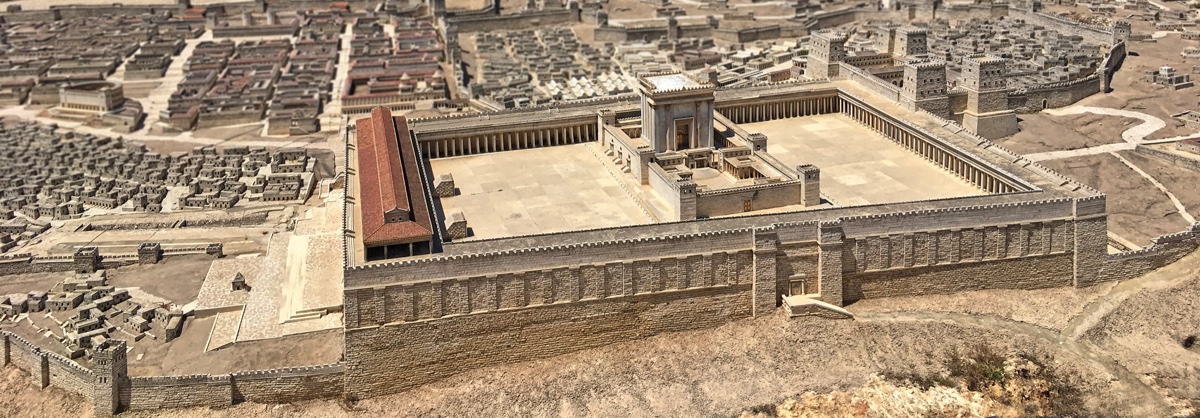
The Jerusalem temple was impressive. Historical descriptions of the time, and archaeological work in the present, demonstrate its “glory” (Hag. 2:3, 9). However, no human design or construction can compare to the resurrection of Jesus.
Christ’s resurrection from the dead is the ultimate proof He is God’s Son (Rom. 1:3-4). It was a foundational step for Him to both fulfill the Old Testament system and implement the gospel. The Son of God had authority in the house of God to implement the will of God, and His resurrection would be the ultimate proof that He had such authority.
God’s desire for that structure limited its uses. In a similar fashion, God has specific purposes for the work of a local congregation (1 Tim. 3:15; Eph. 4:11-16; 1 Cor. 16:1-4; Phil. 4:14-18), and we are to abide within the teaching of His word concerning those things too.
He gave them through His holiness. God’s patterns have always been important (Heb. 8:4), and we are to follow God’s pattern today (2 Tim. 1:13, etc.).
Attempts to simplify Him are misguided at best and false at worst. Christ’s holiness is a composite of His love and justice, and to emphasize one to the neglect of the other is to make a mockery of His true nature.
Because we have sinned, we have earned spiritual death (Rom. 6:23; Isa. 53:4-8). Jesus came and died to redeem us, and His willingness to cleanse the temple foreshadowed the spiritual cleansing He would make possible for us through His sacrifice on the cross. Jesus risked it all to redeem us, declaring the depths of His love.
Some first-century Jews tried to take over God’s house/temple for their selfish purposes. Jesus would not allow this. The temple belonged to God, and it was built to magnify His glory. The zeal of Christ showed just how inappropriate this was. May we truly honor God by worshipping in harmony with His holy will (John 4:23-24).
The Jewish leaders came into God’s house with their own selfish plans. At both the beginning and end of His ministry, Jesus showed the ungodly nature of this. What a Savior who both redeemed us from our sins and demonstrated the importance of acknowledging the holiness of God by standing with Him for truth! May we honor Him by passionately standing for truth as His New Testament house, the church (1 Tim. 3:15).
Shane Carrington has worked with the Southside church of Christ in Sulphur Springs, TX, since 1999. He has two children and four grandchildren. The church website is here. He can be reached here.

By Bobby L. Graham
Synopsis: The dawning of a new year is a time of reflection and anticipation, and we are excited to introduce a bi-monthly column called “Autobiography.” In this column, brother Bobby Graham shares insights from his lifetime of preaching and teaching. Readers will benefit greatly from his experiences and reflections on his journey of faith.
If the term “preaching roots” can describe one’s earliest efforts to preach, then my preaching roots are many and diverse. In fact, they extend over a period of some fifteen years and include both “preaching formation” in my youth and my earliest attempts to speak publicly concerning Christ and the gospel.
The influences and environment favorable to developing a very young child into a preacher of the word must first be considered. Have you ever thought about such influences as definite contributors to the end product? We often think of the college attended and the congregation where one was a part, but how much more important are those earliest influences (1 Sam. 1:11, 28)!
I, the first of four sons, was born to Leon and Mary Graham in Florence, Alabama on August 30, 1946. Daddy had been a Christian from his teens in Franklin County/Belgreen, Alabama. Mother was raised a Methodist in Jackson County/Maysville, Georgia. They met while students in Rome, Georgia, at Berry College, where they were required to work their way through school. They later married, though Daddy would soon leave home with the Army. Mother heard much good teaching at the Poplar Street congregation in Florence, Alabama, while she lived with my grandparents, John Noble and Anna Myrtle Graham, during Daddy’s years in service in World War II.
Both grandparents had denominational backgrounds—my grandfather as a Cumberland Presbyterian and my grandmother as a Baptist. Our Grahams, all the way back to Scotland before 1830, were Presbyterians, and the Joneses on my grandmother’s side were originally Primitive Baptists and later Missionary Baptists. Grandmother’s father, Riley Carson Jones, was a Baptist preacher and a skilled carpenter. Considerable courage was necessary to bring my grandparents out of the denominational circles in which they had earlier circulated, especially in the South, where adherents of true New Testament teaching brought by Restoration Movement preachers as far back as the 1820s were often mocked as Campbellites. It is highly significant, however, that in the middle of the 1800s, one Baptist preacher named John Taylor left the Baptist denomination for New Testament truth, without ever hearing or reading from a single Restoration Movement preacher (John 8:31-32). He preached much in Franklin County, where my grandparents were born and lived for some fifty years until they moved to Florence, Alabama, about 1940.
Some humorous incidents from my very early years, probably beginning about the age of four or five, express my early intention to preach, though it was garbled by much spiritual misunderstanding, possibly affected by the denominational backgrounds of my family. After Daddy removed a weeping willow tree in our front yard, the stump remained close to ground level (before the day of stump-grinders). I was standing on that stump in those early years, pretending to preach. Aunt Clara, who operated a country grocery store with her husband Uncle Tennant, noticed that I was doing something causing me to sling my arms and talk loudly on that stump. She yelled across the distance, “Bobby, what are you doing?” I replied that I was preaching on a stump. My younger brother Don was standing on that same stump one day when Aunt Clara saw him and asked him what he was standing on. He said that he was standing on the promises. On another occasion, when she asked if he was standing on the promises, he said he was standing on a stump. I later told some aunts that I was going to be a “Blaptist” preacher. It was also quite common for us Graham boys to play church with some of the neighbor children while sitting on our basement steps. Someone would preach, somebody else would lead a prayer, another would lead singing, and there was always a sinner who responded to the invitation, asking to be baptized. My brother Don, just below me in age, was usually the sinner. I can’t even remember how many times I’ve baptized Don; I guess it never “stuck.” He and I have laughed in later years about his being the most baptized sinner in the history of the world, and I sometimes humorously added that he needed all of those baptisms. Even these humorous experiences manifest the kind of upbringing we had, thus forming desires, attitudes, and eventual intentions that would play a part in my decision to preach the gospel of Christ (Matt. 6:33).
Mother heard the solid teaching of the Scriptures by men such as Franklin T. Puckett and Roy E. Cogdill, opposites in their manner in her mind, as well as Barney Keith and Paul Keller, both of whom preached in Brother Puckett’s place during entire summers while he was away in meetings. Mother became infuriated on one occasion when she heard Cogdill’s stern preaching and determined that she would go home and study her Bible to prove him wrong. She instead proved him right and herself wrong by studying the Bible. After their marriage, my parents always worshiped with the Poplar Street church until 1960. When Daddy served this church as its treasurer, Mother and a couple of us older boys would sit around the coffee table on Sunday night, helping him to count the money contributed on the Lord’s Day. The church’s eldership was divided over institutionalism (the work and organization of the local church), resulting in a variety of preachers during the decade of the 1950s. Local preachers remembered from those years include Robert Welch, H.A. Dickson, and Curtis Flatt. Meeting preachers remembered from those years include James P. Miller, C. L. Overturf, Sr., and Earl I. West (author of Search for the Ancient Order series of books), who was preaching in a meeting when I obeyed the gospel of Christ in the late 50s. In his meeting at Poplar Street, held in the late 50s, I was aware enough of what was involved to know that Brother West taught the truth concerning congregational autonomy and cooperation, but he later gave up his previous solid views concerning institutionalism. Even the pro-institutional preachers who came usually presented very scriptural lessons at Poplar Street. At no time during my younger years did I ever receive the impression that preaching was anything less than urgent, either in purpose, content, or manner (2 Tim. 4:1-5).
This kind of preaching in my formative years certainly inclined me in the right spiritual direction. Correct attitudes can be instilled early in life, and they should be. Likewise, our Bible classes at Poplar Street were excellent classes in the study of the Bible. I remember a practice of taking a collection from the children in the classes, which was eventually stopped because of concern over its unscriptural nature. A Sunday morning class for women was a regular part of the Bible classes. Some of the best teachers in children’s classes whom I have ever learned from were women there at Poplar Street. Maude Mullins and Lois Blackburn were two of those outstanding teachers in my childhood. Grady Threet and Ike Hibbett were two of my teachers as I moved into the teenage years. Grady later taught young people’s classes at College View, as well as serving as an overseer there. Another of those valued teachers in Bible classes was Daddy. Mother was a gifted teacher of children at Poplar Street, though I did not have her as a teacher. She also taught classes at the College View and Helton Drive congregations from the 1960s into the 1990s. Her work included Ladies’ classes, because some of the young children whom she had taught in her early years of teaching at Poplar Street became women whom she taught in Ladies’ classes in the latter two churches. Some of those who enjoyed her teaching and influence in both parts of their lives came to the funeral home in January 2006 after she passed away and commented about her teaching and influence over the years. Because of a youth when both parents frequently taught, there was the constant impact on a young son that teaching God’s word was important (2 Tim. 1:5).
In addition to the preaching and teaching received, there was also the influence of our home. My parents always attended on the Lord’s Day from the beginning of their marriage; but I recall, as a young child in the early 1950s, our expanding our attendance to include all the services of the congregation. I also recall Daddy telling us of his decision to contribute more generously on the First Day of the Week. I am satisfied that this was a mutual decision of my parents, because I never heard Mother disagree with him about attending more or giving more. She was in full support of the decision. The united picture of parents growing in service to the Lord is monumentally important in the rearing of children. Otherwise, parental influence is canceled or weakened. Over sixty years of preaching experience have showed to me the folly of divided influence in the home. The greatest impact available in the rearing of children is that of the parents working in harmony. The Lord’s instructions to ancient Israel in Deuteronomy 6 demonstrate to us the need for such daily impact, not merely an occasional or hit-and-miss approach (Deut. 6:6-9).
I was the oldest of four sons born to our parents—Bobby, Don, Steve, and Dan. Yes, all my sisters were brothers! We were taught to work hard and to play hard. Our parents sometimes played with us until advancing age made it unwise for them to do so. We grew up on a ten-acre farm about four miles west of Florence, Alabama, on the Waterloo Road. There was always work for us to do. Daddy’s attitude toward teaching us to work is reflected in his frequent comment during our youth that he might have us dig a hole first and then fill it up, if other work was not available. There were cows, pigs, horses, chickens, ducks, goats, dogs, cats, and bird dogs to feed and care for. There was grass to mow, corn patches and garden to turn and plant/harvest, house and buildings to paint, neighbors to help, and even housework to do for us boys. I learned to plow with a horse, not a tractor, when I was big enough to do so. Hard work might just be the solution to many of the problems of today’s youth! Its usefulness has never been lost on me, whether in teaching school, preaching, or teaching our children the value of work (Eccl. 9:10).
Another significant part of home influence was the parental example and teaching about our attitudes toward our teachers at school. We attended Oakland School four miles west of our home in Lauderdale County. We lived in the Three Forks community, located four miles west of town. Daddy enjoyed hunting quail, which were quite numerous in our rural section in the 1950s. It was customary for our parents to invite our teachers from Oakland to eat a quail supper with us soon after school began each year. The meal usually included fried quail, quail gravy, biscuits, some vegetables from the garden, a congealed salad, and, of course, a Mary Graham dessert—all prepared by Mother and a black woman who assisted. This kind of gathering was planned by the parents to foster respect by the boys for their teachers. Such respect was even further emphasized by Daddy and Mother telling our teachers there in our presence what they expected of their sons in the way of conduct in the classroom and behavior at school. They always included mention of punishment at school, as it would definitely be followed by punishment at home. Remember that this entire conversation took place at the supper table in the presence of us boys, so that we would know about it. How different today’s schools and young people would be if all parents took a similar approach to the right attitude toward teachers. Yes, our parents were undergirding the respect that all are to have for older people and for those in positions of authority (1 Pet. 5:5). Such training is vital for adulthood, especially for one who wants to teach the gospel of Christ. During my fifth and sixth-grade years at Oakland, in the classrooms of Miss Elsie and Miss Earline Rice (sisters who never married), I first led any kind of devotional. This regular part of our early morning schedule was sometimes led by the teacher, and sometimes a student. This was my first opportunity as an eleven-year old boy to express spiritual ideas from the Bible, in any kind of setting. This was not a bad way to whet my appetite for a later work (Prov. 22:6)!
My childhood upbringing would not be completely told, nor my preparation to preach, without reference to the days of racial segregation as I was growing up. Contrary to popular ideas, racial segregation was not altogether bad. I do not mean that I would recommend that we go through it again, but there were some definite advantages from that time in our history. I never attended an integrated school until my one semester at Florence State College in the Spring of 1967. Even then, all students in my classes were white. The absence of Colored/Black students in our schools, however, did not mean that we did not have much association with the black people. Moreover, I do not use the term “Colored” disparagingly, for I will soon indicate how much respect we had for them (Matt. 7:12).
They attended their schools, and we attended our schools. Once we came home from school, however, there was a definite integrating of the races. My brothers and I played ball with some of the black boys living near us; or, at times, we boys swam together in the same pond where the cattle and the hogs spent time. As far back as I can remember in my childhood, there was a black woman like Annie Mae, Ruth, or Charlotte, who worked in the house to help with cleaning, washing, cooking, and even child rearing. We boys were taught to respect whoever that was. Whatever a person’s race was, we spoke respectfully, saying, “Yes, Ma’am/Sir,” and “No, Ma’am/Sir.” We learned at an early age to speak to elderly people (regardless of race) as “Uncle John” and “Aunt Mary.” They lived near us in the same community, with one black family always living on our farm, so the mother could work in our house. As I began my early efforts at preaching, I would sometimes talk to Ruth or Charlotte about my preaching, and sometimes the lessons I was planning. As I entered my teens in the late 1950s, I remember that there were few divorces or missing fathers of any race, contrary to what began developing in the 1960s, as government programs proliferated to make it financially easier for parents to live apart from each other, thereby causing children to be raised without the benefit of a father at home. As an indication of the respect and the love which we had for those who lived on our property and worked for us, we continued staying in contact with them and even helping them financially in their later years after their moving away. It was definitely a different time in history, which had its disadvantages/bad points; but all was not bad. I continue to have quite fond memories of those days in my childhood and early teens. My experiences and my memories of those days were quite formative in my early preaching, and even still continue to cause me to have concern and appreciation for people of all races. God is no respecter of persons, nor can God’s children show partiality (Acts 10:34)!
Congregations were also segregated in those days, although there was visiting back-and-forth among the congregations during gospel meetings. Brother Marshall Keeble was often sought after and heard by brethren of both races. Poplar Street helped to support the preacher at the East Alabama Street church in Florence for a number of years (2 Cor. 11:8). During the years when Daddy served as the treasurer for Poplar Street, I often saw John Harris come by Court Jewelers in Florence to pick up his support check from Daddy, affording a young boy opportunities to talk to him and benefit from him. Looking back on those distant years, I can truly say that there was love for each other in those situations.
While my childhood is not presented as the perfect model, it is nevertheless true that a childhood filled with such principles as adherence to the New Testament message of truth; the priority of spiritual matters over material ones; the urgency of gospel preaching; the united example of faithful parents; regular spiritual training in childhood; the value of work; proper respect for older people, including those in authority; and treating others with fairness and impartiality certainly prepares the trainee in this kind of situation for a future work, which is dependent upon the same principles—preaching the word.
Such training in youth reflected the firmly held belief that this was the way to train children, whether they were preaching or working in a business. After Daddy and I were hit by a drunk driver when I was nine years old, I lay unconscious in Eliza Coffee Memorial Hospital in Florence for over twenty-four hours. Daddy later told me and others that he promised the Lord that he would dedicate me to the Lord’s work if the Lord helped me to survive. With the kind of training and preparation before the time of that accident and more intensified preparation after it, much entered into the equipping of this oldest son. For all righteous influences that entered my childhood, whether from immediate family, extended family, neighbors, friends, school, teachers, or brethren in Christ, I am humbly grateful to Our God and Father (1 Cor. 15:10). I am especially indebted and thankful for my parents, who channeled these good influences in my direction!
Bobby L. Graham actively participates in fill-in preaching, Belize trips, teaching an hour each day at Athens Bible School, and in gospel meeting work. He and his wife, Karen, have three children. He can be reached here.


By Luke Chandler
Synopsis: Discoveries from King Tut’s tomb are famous for their astonishing beauty and intrinsic value, but some of them give understanding for a famous biblical object.
Just over one hundred years ago, Howard Carter discovered the lost tomb of Pharaoh Tutankhamun. The tomb’s location, fortunately forgotten in antiquity, was spared the looting that befell other Pharaohs’ tombs. All the original tomb objects, including treasures of gold, silver, ivory, and precious stones, remained in situ when Carter’s team opened the sealed doors in 1922. The tomb’s most famous objects include a golden funerary mask, Tutankhamun’s mummy, and a throne, but some of Tut’s treasures illuminate a famous object from the biblical Tabernacle.
The items in Tutankhamun’s tomb include decorated wooden boxes known as “arks.” These were common objects in Egyptian religious practice and served as repositories for sacred objects. Egyptian temples typically had arks in their most holy chambers, and Tutankhamun’s tomb suggests arks were commonly included in royal burials. The remarkable discoveries in King Tut’s burial chambers give us detailed insight into Egyptian religious practices during the 14th century BC, close to the time of the 15th century Hebrew exodus from Egypt (per the literal biblical timeline).
One of the arks in King Tut’s tomb is a wooden chest almost three feet in length and around two feet in both width and height. This ark is made of two types of wood with inlaid ivory trim and hieroglyphic inscriptions in gold and contained objects associated with worship of the god Osiris. This ark features wooden carrying poles running on the long axis to permit easy transport. The poles are designed to extend outward while the ark is carried and then to retract partially underneath afterward.
A second ark in Tutankhamun’s tomb is slightly longer at nearly four feet in length, just over two feet in height, and twenty inches wide at the base. This ark has attached non-retractable carrying poles. It is made of wood, exquisitely overlaid with gold and contained sacred objects relating to the god Anubis. Sitting atop the ark is an image of Anubis, made of painted wood adorned with inlaid silver and gold and decorated with precious stones. This ark stood in front of a chest containing the Pharaoh’s canopic jars (with the king’s organs inside), and the image represented the god guarding the chest on behalf of the deceased king.
It is not surprising that Bible students may recognize features of these two Egyptian arks. They have much in common with the biblical Ark of the Covenant. While the biblical ark and the arks in Tut’s tomb are separated by just over a century, they all belong to the same cultural context. The Hebrews, having dwelt in Egypt for generations, would have been familiar with the Egyptian concept of an ark to transport sacred objects. When God commanded the ark’s construction, the Israelites understood the concept and had artisans skilled in the necessary craftsmanship.
Scripture gives a detailed description of the Ark of the Covenant, and many details line up with the Egyptian arks noted above. In Exodus 25, the Bible describes the Ark of the Covenant as a wooden box measuring nearly four feet long, with a width and height of nearly two and a half feet. Those dimensions are similar to the Anubis ark. Exodus 37 says a craftsman named Bezalel built the wooden ark and overlaid it with gold on the outside and inside. The Anubis ark demonstrates that Egyptians knew how to apply a thin overlay of gold to wooden objects, so it is reasonable that some among the Hebrews would have acquired that same skill.
What was the Ark of the Covenant’s purpose? As with the Egyptian arks, it held sacred objects. Moses placed the stone tablets of “the Testimony” (the Ten Commandments) inside, along with Aaron’s budded rod and a golden urn with manna from the wilderness (Exod. 16:33-34; Num. 17:10; Deut. 10:1-5; Heb. 9:4).
Atop the Ark of the Covenant was a solid gold piece known as the “mercy seat” with images of two winged cherubim facing one another. God’s Presence was considered to dwell there, and the Lord would speak with Moses from the mercy seat (Exod. 25:17-22). This brings to mind the image of Anubis on top of his ark, representing the god’s presence to guard objects in King Tut’s tomb.
The Ark of the Covenant had rings on the outside corners for inserted poles to carry the ark. The biblical text indicates the poles were not to be removed from these rings (25:15), though later biblical instructions indicate priests were to move the poles or set them up in some way (Num. 4:6, 8, 11, 14). The text does not explain how to reconcile these two sets of instructions, but the Osiris ark may provide a clue. The Osiris ark was made with retractable poles that could be adjusted to fit a smaller space after transport. Might the Israelites have made the Ark’s poles retractable in a similar way? It is certainly possible considering the design is archaeologically attested from Egypt and would be consistent with the instructions in both Exodus 25 and Numbers 4.
Besides the connections noted above, the Egyptian arks show the artisan skills required for the biblical Ark were known in the time of the Exodus. Some critics of the Bible allege the Law of Moses was written centuries after the time it describes, but the artistic know-how evident in Tut’s tomb places the Ark of the Covenant in the same era. It was indeed a product of its time rather than an anachronistic addition to the Bible text.
The connections between the biblical and Egyptian arks can bring a disquieting thought. Might their similarities suggest the Bible is a product of human rather than divine invention? To the contrary, these correlations show God’s pattern of approaching people on their own level, using whatever they understand to teach about His will. God took existing practices such as circumcision (from Egypt), crucifixion (from the Romans), and water immersion (from the Jews) and redefined each of them for His covenants. Jesus was able to talk with common people about His kingdom, but could also engage on a doctoral level with the educated elites in Jerusalem. In Acts 17, Paul preached to the Athenians by citing their own literature instead of the Hebrew Bible. We also see that God took the concept of a sacred, transportable ark, something Israelites knew in Egypt, and redefined it to teach them about the nature of His holiness. The Ark of the Covenant was kept in the Tabernacle tent, in the dark and behind thick fabrics. This showed people that God was among them, and yet was unapproachable without some kind of intervention. This is a foundational doctrine for the gospel.
One of archaeology’s greatest benefits is to help us understand the biblical world as biblical people understood it. This is a vital tool for those who seek the original understandings and original patterns in God’s word.
Image 1 Caption: King Tutankhamun’s headdress, also known as the Mask of Tutankhamun, is one of the most iconic symbols of ancient Egypt. This funerary mask is made of gold and is adorned with semi-precious stones such as lapis lazuli, carnelian, obsidian, turquoise, and glass paste1. It features the likeness of Osiris, the Egyptian god of the afterlife, and is 21.3 inches tall, weighing over 22 pounds.
Image 2 Caption: The ark associated with the worship of Osiris on display in the new Grand Egyptian Museum in Cairo. Photo by Luke Chandler.
Image 3 Caption: The ark associated with the worship of Osiris on display in the new Grand Egyptian Museum in Cairo. Photo by Luke Chandler.
Image 4 Caption: the Anubis shrine on display in the new Grand Egyptian Museum in Cairo. Photo from Wikipedia Commons.
Luke Chandler has worked with the North Terrace church of Christ in Tampa, FL, since 2006. He is a professor at Florida College, teaching Biblical Studies and Archaeology. He and his wife Melanie have five children. The church website is here. His Bible, Archaeology and Travel blog is here. Information about his Travel Tours is here. He can be reached here.


By Danny Linden
Synopsis: The letter to Philemon gives us an example of faithful service that challenges us to step up in our walk with Jesus.
Near the end of the New Testament, we find Paul’s letter to Philemon. This letter is so personal that it almost feels like we are intruding into a situation that should remain private. Of course, this letter is given to us by the inspiration of God and is filled with lessons that should build our faith.
I thank my God always when I remember you in my prayers, because I hear of your love and of the faith that you have toward the Lord Jesus and for all the saints, and I pray that the sharing of your faith may become effective for the full knowledge of every good thing that is in us for the sake of Christ. For I have derived much joy and comfort from your love, my brother, because the hearts of the saints have been refreshed through you (Philem. 4-7).
It was appropriate for Paul to acknowledge Philemon’s track record of faithful service. He wasn’t writing to harangue a reluctant or rebellious brother. Philemon was filled with love for Jesus and his brethren, which created real devotion within his heart. Paul had personally benefited from his love, and he was not the only one! This was true to such a degree that Paul prayed for Philemon’s example to be seen by others so that they could know what it really means to serve Christ and all that is gained by doing so.
A faithful brother or sister in Christ is refreshing and encouraging. Ideally, the church would be filled with such men and women. Don’t wait around for others to meet that standard. Rise to the occasion and be the example that your brethren need.
Accordingly, though I am bold enough in Christ to command you to do what is required, yet for love’s sake I prefer to appeal to you—I, Paul, an old man and now a prisoner also for Christ Jesus— (Philem. 8-9).
Paul had the right to use his apostolic authority to command Philemon to do what was necessary, but he knew that not everything needs to be worded as a command. Philemon was someone who already was enthusiastic about doing the right thing. No ultimatum or threat of punishment was necessary from Paul.
This is the ideal for Christians. The Bible contains many commands for us to follow, but not as many as one might think. This has led some to think that not much is required of us or that only a few things really matter to God. That couldn’t be further from the truth! In reality, much of the Bible assumes that we are like Philemon—people who love God and want to do what is right and simply need to be guided in righteous paths. Just because God doesn’t word everything in the strictest possible way does not mean He doesn’t feel strongly about it. Are we people who can be appealed to out of love?
I appeal to you for my child, Onesimus, whose father I became in my imprisonment. (Formerly he was useless to you, but now he is indeed useful to you and to me.) I am sending him back to you, sending my very heart. I would have been glad to keep him with me, in order that he might serve me on your behalf during my imprisonment for the gospel, but I preferred to do nothing without your consent in order that your goodness might not be by compulsion but of your own accord. For this perhaps is why he was parted from you for a while, that you might have him back forever, no longer as a bondservant but more than a bondservant, as a beloved brother—especially to me, but how much more to you, both in the flesh and in the Lord. So if you consider me your partner, receive him as you would receive me. If he has wronged you at all, or owes you anything, charge that to my account. I, Paul, write this with my own hand: I will repay it—to say nothing of your owing me even your own self (Philem. 10-19).
Paul’s actual appeal was a tough one to swallow. Onesimus was Philemon’s runaway bondservant who had met Paul and been converted to Christ. He had been helpful to Paul during his house arrest, but it was necessary for him to go back and make things right with his master. We don’t know the circumstances of Onesimus’s abandonment of his post. There were many reasons one could find himself bound to a master for a time. Whatever the situation, Onesimus had no legal or moral right to run away during his term of service. Philemon was well within his rights to make Onesimus work for him again with whatever legal penalty would apply.
Paul knew all this, but delicately asked for Philemon to make a sacrifice. Instead of recouping his economic losses, Philemon had an opportunity to do something greater. Onesimus and Philemon were now brothers in the Lord! If Philemon forgave Onesimus and released him from his debt, it would free him up to do so much more. This was not strictly necessary—Onesimus can be a Christian and a bondservant (cf. Col. 3:22-25). However, wouldn’t it be a gracious gesture that would bind these two men together for life and accomplish much in the kingdom?
Philemon was already a disciple who was used to sacrificing for his brethren (cf. verse 2, where it is revealed that the church meets in his house). Christians who sacrifice may be called to sacrifice more. Will that make us bitter? That reaction might be understandable, but God calls us to ever greater service.
If money is really the issue, Paul offered to pay what was owed. Whenever possible, though, it is beneficial for Christians to not allow money to get in the way of our work and unity. Could Philemon be willing to make this sacrifice even when he had been wronged?
For this perhaps is why he was parted from you for a while, that you might have him back forever, no longer as a bondservant but more than a bondservant, as a beloved brother—especially to me, but how much more to you, both in the flesh and in the Lord (Philem. 15-16).
When Onesimus ran away from Philemon, he could have ended up anywhere. Somehow, he found Paul and heard the gospel. Was this a random chance? That’s possible. Some things in life happen because of time and chance (Eccl. 9:11). Paul suspects otherwise, though. Although he was not willing to speak with certainty, Paul says that “perhaps” this is why Onesimus journey brought them together. Of course, Onesimus had no such thing in mind when he left, but God’s hand may be in it.
God’s providence is difficult for us to understand. We are always in a similar position as Paul, unable to speak in absolutes since God does not reveal to us how He works in our everyday lives. We know, however, that God is active and answers prayer. This must mean that He is working in countless ways that are difficult for us to identify. We can be thankful for His guiding hand and pray that God would work powerfully to answer our prayers and that He would use us as tools for good in the lives of others.
Yes, brother, I want some benefit from you in the Lord. Refresh my heart in Christ. Confident of your obedience, I write to you, knowing that you will do even more than I say. At the same time, prepare a guest room for me, for I am hoping that through your prayers I will be graciously given to you (Philem. 20-22).
How did Philemon react when Onesimus showed up on his doorstep with this letter in his hand? We are not given that answer. There is no follow-up to this letter. We can follow Paul’s lead and see that he fully expected that Philemon would do everything Paul asked and even more! That was just the kind of man he was. It had to be encouraging for Paul to write such a difficult letter with the knowledge that Philemon was a man of impeccable character, who would take it in the best light.
Are we people who go above and beyond in our service to the Lord? Too often, Christians ask to do the least that they can get away with. That attitude is discouraging and does not fool God. Christ did not ask to do the least He could for us when we were lost in our sins. God does not resolve to answer the fewest number of prayers that He can get away with. Why would we think that God would accept such an attitude from us?
Philemon and Onesimus teach us so much about serving Jesus. We should be challenged to show the same love for our Savior and for each other, to embody a sacrificial spirit, and to go above and beyond and do more than the minimum required.
Danny Linden has worked with the Hebron Lane church of Christ in Shepherdsville, KY, since March 2023. He and his wife, Lauren, have four children. The church website is here. His website is here. He can be reached here.


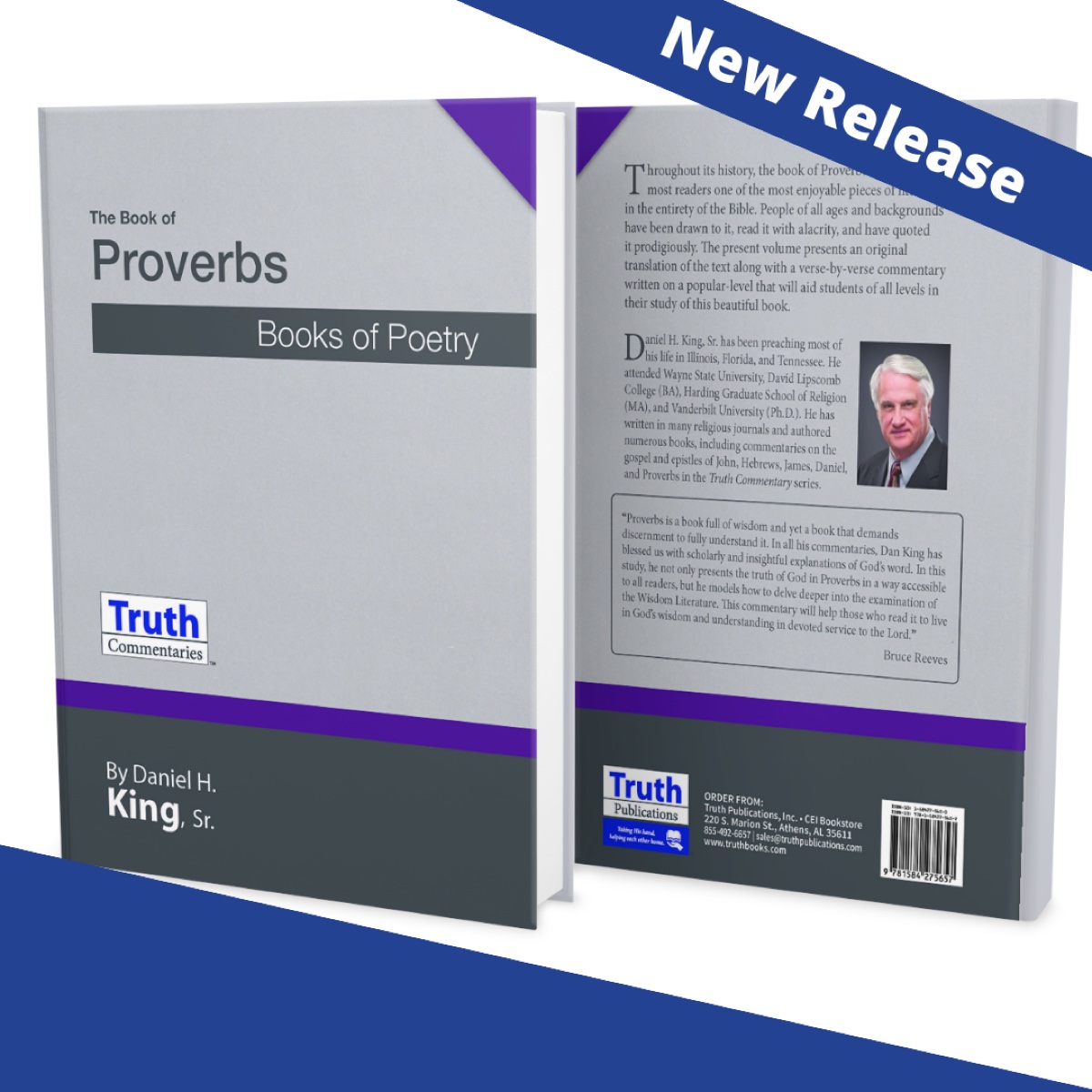
By Emma Wallace
Synopsis: Godly contentment, with which many young adults, myself included, struggle, does not come naturally but must be learned through living for Christ.
This past fall, I started my junior year of college at Texas A&M University, and faced the startling reality that I was over halfway done with my college career. With graduating college comes more responsibilities and burdens. Soon, I will transition from being a full-time student to working full-time. I will go from having a few expenses to paying all my own bills. I will go from renting a room to buying a home. I will go from being a daughter to also being a wife and, if the Lord wills, a mother. Over the past few years, I have gotten a taste of independence. It has been fun at times, but it can also be stressful and discouraging on occasion. I find myself pulled between longing for the simplicity of my childhood and embracing the allures of adulthood.
Although I don’t believe that experiencing small bits of nostalgia or dreaming of what the future holds is inherently evil, I believe that dwelling on either for too long can lead to discontentment. We, as Christians, even young Christians, should find contentment within our faith in Christ and our hope of heaven rather than the unknowns of our earthly life.
Paul says in Philippians 4:11, “For I have learned in whatever state I am, to be content.” Paul was not born or endowed with the ability to be content; rather, it was something he learned. We, like Paul, should learn it as well. Nevertheless, how do we learn contentment?
As an engineering major, I often resort to well-known formulas for solving problems. It might seem like the commandment to be content is like getting handed an assignment without instructions. However, we do have a pattern we can follow to obtain true contentment. Just as a student is expected to study to receive a good grade on their exam, finding contentment will take diligent work on our part.
Contentment is first learned from recognizing God’s love and Christ’s sacrifice. Romans 5:8 says, “But God demonstrates His own love toward us, in that while we were still sinners, Christ died for us.” Without His love and death on the cross, we would have no hope of a future in heaven. But with His sacrifice, we have the opportunity to obtain citizenship in heaven. The Hebrew author, in chapter 11, harkens back to the faiths of patriarchs like Abraham. Abraham, because he knew where his true citizenship lay, put his faith in God over all else, traveling to where he was commanded instead of staying at his earthly home. If we have a hope of heaven, just as Abraham did, what else really matters?
To achieve contentment also means we must be in the present. We must let go of the past, avoiding both looking back at our past decisions with regret and at our youth with covetousness. We need to live in the now and redeem the time, as Ephesians 5:16 tells us. On the other hand, we must also not worry too much about what the future holds. Matthew 6:34 tells us, “Therefore do not worry about tomorrow, for tomorrow will worry about its own things. Sufficient for the day is its own trouble.” If we spend too much time thinking about exactly what tomorrow will bring, we will miss opportunities of today.
The pattern also shows us contentment only comes if we find sufficiency in Christ, rather than ourselves. In Philippians 4:13, Paul reveals that he has found contentment in Christ, proclaiming, “I can do all things through Christ who strengthens me.” This should encourage to us all that He provides what is needed. To find this sufficiency in Him, we need to find the peace of God. Paul, in the same chapter, tells us exactly how to find this peace. We are to go to Him in everything with prayer and supplication, with thanksgiving. We continually need to pray to cultivate the peace that surpasses understanding. Bringing our concerns to God allows us to open our hearts towards His peace and guidance.
Contentment is not limited to ideal circumstances. Paul writes about being content in whatever situation in Philippians 4:12, saying, “I know how to be abased, and I know how to abound. Everywhere and in all things I have learned to be full and to be hungry, both to abound and to suffer need.” Our difficult times may not be being thrown in prison, persecuted, or having a thorn in our flesh like Paul. As young adults, we may face the challenges of starting a career, building relationships, or managing our finances. We may have struggles in letting go of our youth. Ecclesiastes 7:10 cautions us, “Do not say, ‘Why were the former days better than these?’ For you do not inquire wisely concerning this.” Childhood, in particular, can represent a time of innocence, joy, and simplicity, but Solomon reminds us that while it is fine to look back at the past, we should not idealize it to inhibit future growth. It can be hard to find happiness and thanksgiving amidst hard times, but our difficulties are not an excuse for being discontent with where we are now.
Social media can also become a great danger and temptation if we aren’t careful. It can cause us to idealize unrealistic expectations or make us feel like we are falling behind in life. However, God calls us to focus on the path that was laid out for us. Colossians 3:17 says, “Whatever you do in word or deed, do all in the name of the Lord Jesus, giving thanks to God the Father through Him.” We need to focus on doing everything in the name of the Lord to make the most of our specific circumstances.
As I grew up, I would often look at what others around me had and what I didn’t. “It’s not fair that I don’t have that too” was a phrase I found myself saying, or thinking, a lot as I was growing up. It is easy to compare yourself to your peers and envy what they have, whatever age you are. Paul tells us this ungodliness needs to be corrected. According to 1 Timothy 6:6, “Godliness with contentment is great gain.” Later in the chapter, he says all we really need to be content with our lives is food and clothing, and that’s not speaking of gourmet dishes or designer brands. We shouldn’t be envying our neighbor down the street because of the newest model car they just purchased or coveting the expensive lifestyle of a coworker. According to Paul, “those who desire to be rich fall into temptation and a snare, and into many foolish and harmful lusts which drown men in destruction and perdition. For the love of money is a root of all kinds of evil.” Greed and covetousness are serious offenses which lead men to destruction.
As young adults, we often measure our success by worldly standards—careers, possessions, or relationships. As we read in Hebrews 13:5, we are to “be content with such things as you have” because God “will never leave you nor forsake you.” The things of the world are constantly changing. There will be a new model of the car your neighbor just got before the end of the year. Your current obsession will be just a memory as the years pass. If you place your happiness on the things of the world, how will you ever reach contentment if you can’t keep up with the things in it? You can’t and you won’t. However, there is one constant in which we can place our happiness. The Hebrew writer, in Hebrews 13:8, says, “Jesus Christ is the same yesterday, today, and forever.” Our constant is God. His expectations are not constantly changing, and His presence is always there. If we work to find contentment in Him, we will find it.
Contentment is learned. Paul had learned contentment in 2 Corinthians 12, when he boasted of his infirmities and found strength in Christ. Contentment is not something we learn through reading textbooks or sitting in a lecture. Paul did not learn contentment at the feet of Gamaliel (Acts 22:3-4), but learned it through living for Christ. We, like Paul, will find true contentment within glorifying in our hope of heaven, staying focused on the present, communicating with God, and finding sufficiency and peace in Him.
Staying content with our current life stage will be impossible if we are dwelling on the past or yearning for the future. We must focus on today to avoid missing out on opportunities and experiences that we have only in our current life stage. Likewise, staying content with what we have when we focus on what we don’t have, or what others do, will be impossible. Looking at what others have will divert our focus off of the Lord. Christ is our constant and where we find our peace and contentment. The gospel of Matthew sums up well where our priorities should lie. Matthew 6:33 says, “Seek first the kingdom of God and His righteousness, and all these things shall be added to you.”
Emma Wallace grew up in Friendswood, TX, and is the daughter of Michael and Heather Wallace. She is currently a junior Civil Engineering major at Texas A&M University, where she attends the Southwest church of Christ in College Station, TX. She can be reached here.





By Dennis Allan
Synopsis: Three decades in Brazil have brought changes and challenges that demand adaptation and teach valuable lessons.
When we moved to Brazil in 1993, we had no idea that we would decide to devote the rest of our lives to the work in this country that we adopted as home. It has been a blessing to work in the Portuguese-speaking half of South America, and it is a privilege to be able to share a bit of what we have learned.
We find different New Testament examples of reporting on the work God uses Christians to accomplish. Luke’s accounts are sometimes detailed but often quite general. Paul and his coworkers had opportunities to report in person to some of the brethren who aided them. His letters include frequent references to coworkers and occasional sad notes naming some who failed and presented a threat to others. For this article, I adopted the general approach found in texts like Acts 6:7; 8:4 and 11:19-21. This will not be a who’s who of efforts in Brazil, nor will it be a personal diary. Dozens of North Americans, hundreds of Brazilians, and a handful of other South Americans have participated personally in this work. Many North American churches have provided support and resources for me and for others who have labored here. Rather than using this space to list names, I want to reduce to a few paragraphs some of the practical things we’ve learned that might be helpful to others.
While the 15-17% of the people in the world who speak English as a first or second language are scattered around the globe, effective work in many countries requires communicating in different tongues. In short-term efforts or in nations with multiple languages, those who preach must often rely on interpreters, which reduces effective communication to something well below 50% of what it might be in a common tongue. Brazilians speak Portuguese, so we learned the language, from the very beginning, and did all of our teaching in that language. It was difficult, exhausting, and inefficient in the first months, but it was the right decision. The effectiveness of our efforts multiplied as we became reasonably proficient in the language.
Brazilians are generally very patient and receptive to foreigners, so they tolerated our limitations. For a different reason, some of our early contacts were frustrated by our insistence on teaching in Portuguese. A few wanted us to teach them English so they could get better jobs in other countries, and we replied by telling them that learning God’s word in their native tongue could prepare them for eternity with Him.
Brazil’s land area is larger than the forty-eight contiguous states of the US, and a less developed infrastructure makes access to some areas difficult. The distance and isolation result in significant cultural differences from one region to another. Changes over the past three decades have also required adaptations in our work. Our message is timeless, but our audience is changing. Four factors stand out as especially impactful:
Government policies have pushed to increase the number of college graduates. While there are excellent professors in some universities, many students do not learn logical or critical thinking as they are bombarded by godless philosophy.
Brazil is still considered a developing country, but its economy has been more stable since some dramatic changes in the monetary system in the 1990s. In practical terms, the average Brazilian is considerably more prosperous than his parents were. There are certainly positive effects of that change, but increased prosperity typically goes hand-in-hand with a lessened sense of dependence on God. We must work harder to find good contacts today than we did 30 years ago.
In 1990, most sources suggested that about 90% of Brazilians were Roman Catholics. That number is now closer to 50%. The exodus from the Catholic Church has resulted in a growing number of skeptics, although about 90% of the population still claims belief in a Supreme Being. Most of those confess faith in the true God. The larger shift has been to Neo-Pentecostal churches with their emphasis on the theology of prosperity.
I doubt that any country has been completely shielded from the globalization of communication that we have witnessed in recent decades. In this area, we face all the same challenges that Christians in the US encounter. People are bombarded with information and consume it in small bites that are often distorted. Anyone can publish, and content is often consumed because it catches the eye, not necessarily because of any real quality. Brazilian culture, before this process of globalization, did not place great emphasis on reading. Today, many people do not have the patience to read or the inclination to comprehend what they read. Since our work demands that listeners come to understand the word, it is often necessary to guide an audience through a process of grasping the meaning of the text.
These cultural changes are among the factors that require adjustments in our approach to teaching. The message is eternal, but we have to reach people where they are. In our early years here, we placed heavy emphasis on printed material. We still mail out material regularly to thousands of homes throughout the country and use printed literature in door-to-door and public evangelism. Print media is still important. The Internet, however, has become the primary vehicle for the transmission of information, so it has also become a very important part of our work. A website that was created a couple of years after we arrived in Brazil has been extremely important in spreading the gospel. For several years, that content was only in text formats. We then were able to add audios and, for nearly 15 years now, have been producing video content. Besides the website itself, which has received millions of visits over the years, we maintain a YouTube channel which has over 25,000 subscribers and over 800 videos. We are in the second year of a daily podcast, which means a new video posted daily on that platform and others (Spotify, Amazon Music, Facebook, etc.).
During the COVID-19 pandemic, the local congregation continued to meet every Sunday in outdoor settings (an advantage of living just inside the tropic zone), but we had to learn how to do Bible studies online. We continue to transmit three classes and one sermon each week for the benefit of brethren in other places and some non-Christians.
Ever since the first century, the work of preachers has been cyclical, and our work in Brazil is no exception. We go through periods of greater emphasis on reaching the lost, followed by the necessity to focus on edifying new Christians, often helping a handful of new Christians learn to work together as a local congregation. Older congregations may do well for years, but Satan has his tactics to create problems, and we are sometimes called to help with teaching to deal with those challenges.
Just this year, I am aware of three congregations that have suffered serious problems leading to divisions because of the influence of the father of lies. He has sown discord through doctrinal issues over what constitutes marriage and realized eschatology and has caused confusion and conflict among brethren through the mishandling of false accusations. Over the years, other doctrinal issues have perturbed some congregations, and moral failings have destroyed the influence of some brethren who were once instruments for good. I imagine that any 30-year period in any country would involve similar challenges and setbacks.
In my involvement with the work in Brazil, I had to learn that models that worked well in other places and times were not ideal for this country and this century. After receiving much good advice from men who had been involved in work in Nigeria in the 1960s, I came to Brazil with that model in mind. Early on, I was joined by others in recruiting efforts with the idea of rotating North American families in and out every couple of years. For several reasons, it became apparent that a different approach was warranted. As Christians and congregations have matured, it has become much more feasible to develop preachers and teachers in Brazil than to work with all the adaptations necessary for a foreign family to spend a couple of years here. Our own planned obsolescence seems to be a practical approach as we look to the future.
I doubt that many North American Christians would favor the Lord’s work in their country being dependent on a constant flow of preachers from another continent. Similarly, I believe that the future of the work in Brazil must depend on the labor of dedicated Brazilians. We have encouraged Brazilian churches to choose and support Brazilian preachers, men with whom they can communicate and whose work they can observe firsthand. This approach takes time, requiring the training of men and the educating of churches to assume responsibility for their support, but I am convinced of the long-term benefits for the work.
A significant challenge as we look forward, but one that must be met by Brazilian Christians, is the process of maturing attitudes about generous giving and adequate support of preachers. The migration from the Catholic Church through Neo-Pentecostal groups, mentioned above, means that many of those who are converted have been significantly influenced by the theology of prosperity and a heavy emphasis on tithing. When they learn that tithing was a part of the Old Covenant and is not included as a New Testament requirement, there is a tendency to adopt an attitude of stinginess in giving. The result is that some congregations that probably could provide much or all of the support of a preacher do not have that level of contributions. Helping brethren to develop attitudes of sacrificial giving requires patience and teaching. It is most effectively done when Brazilians teach their peers, rather than through teaching of those with direct ties to other countries. There has been significant progress, so that preachers are generally being supported better than they were several years ago. I pray that the trend continues so that faithful men can focus on their work of preaching without excessive concern about financial needs.
I look forward to a heavenly gathering where there will be no language barriers and saints who lived north of the equator can sing praises alongside their brethren from the southern half of the sphere. Please join me in prayers for the continued progress of the gospel and the growth of saints in Brazil.
Dennis Allan has served in Brazil since 1993 and currently works with a congregation he helped start in 2017 in Campo Limpo Paulista in the state of São Paulo. He and his wife, Benita, have three grown children. He provides content for a website of Bible studies in Portuguese. He can be reached here.

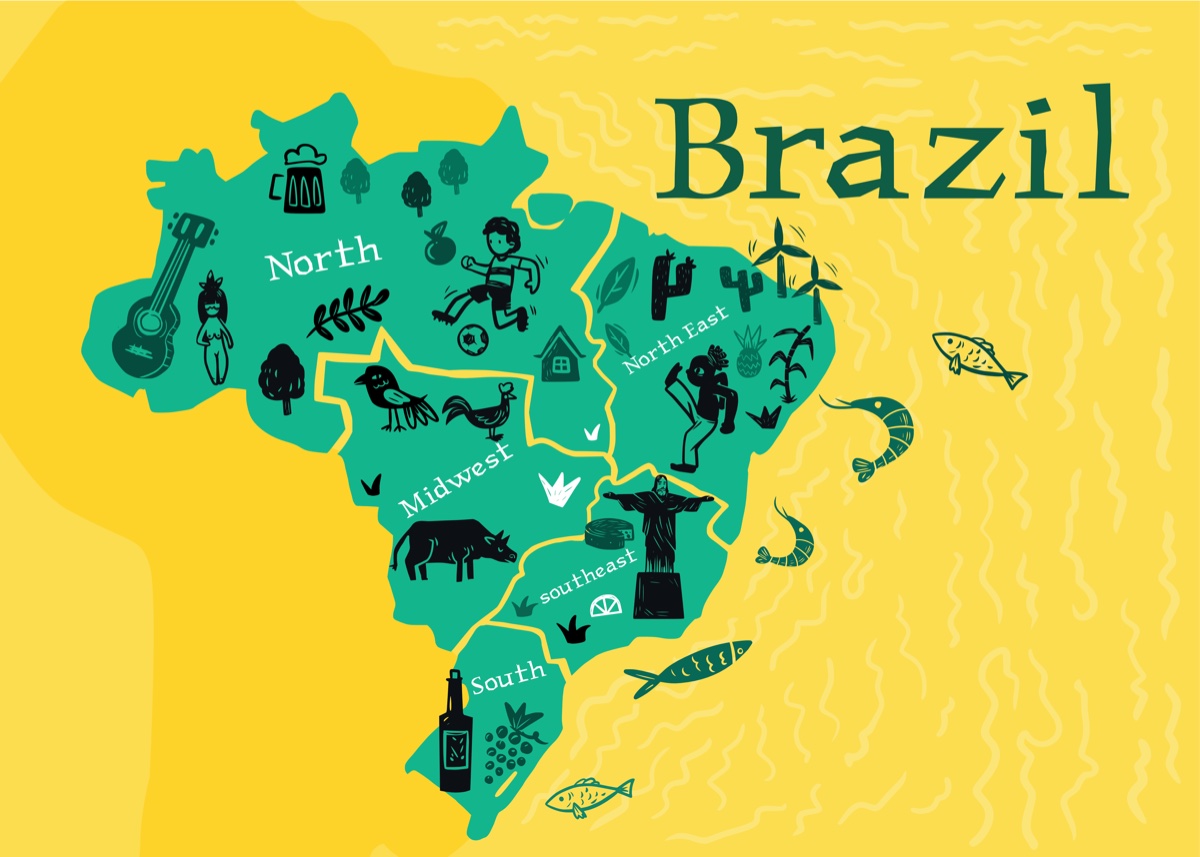
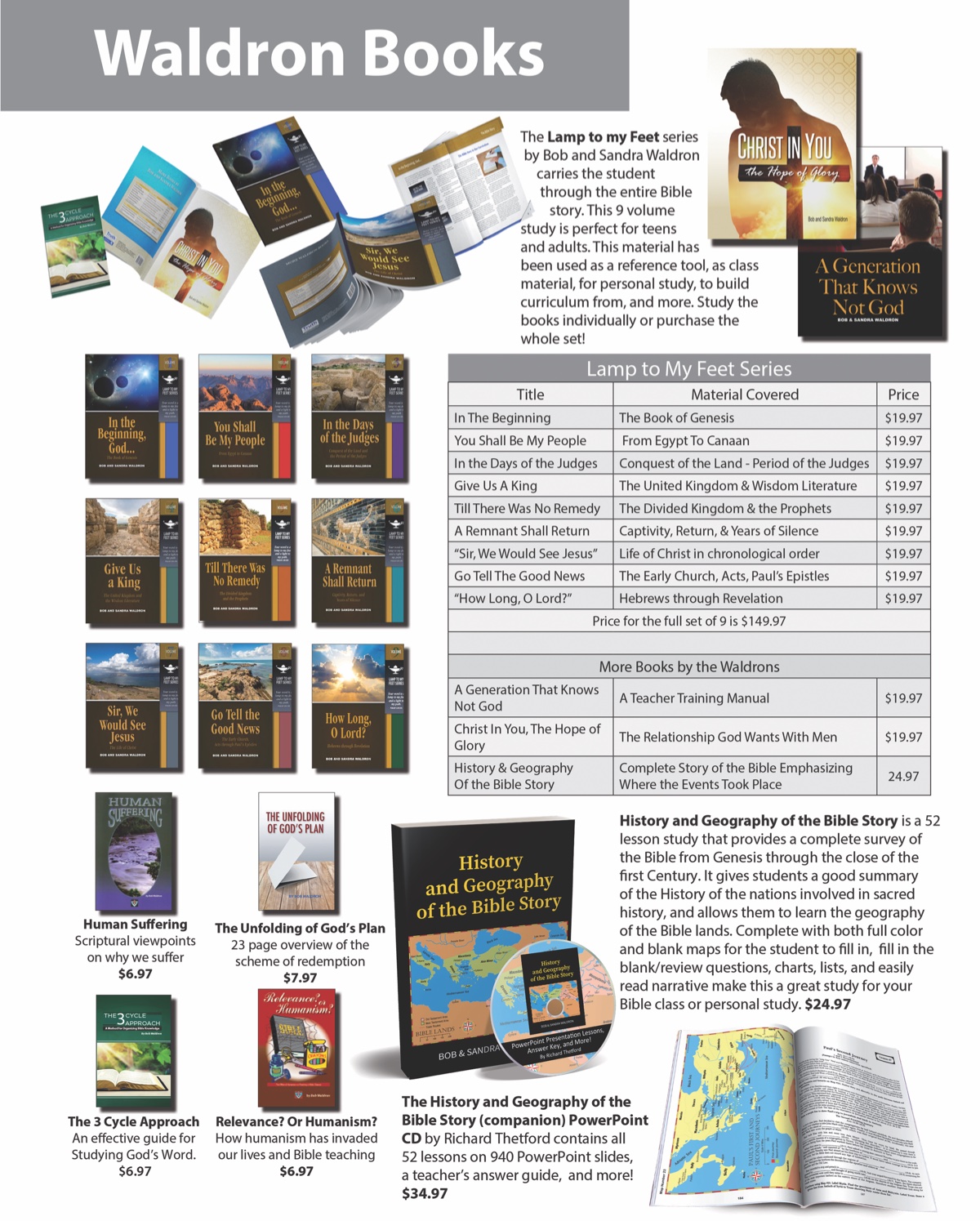
By Royce Chandler
Synopsis: In reflecting on the Lord’s work in Colombia, we offer a brief survey of forty-seven years of restoring people to the gospel.
It is impossible adequately to condense forty-seven years of history into one brief article. However, I pray that this brief review will stimulate positive thinking and, perhaps, positive reactions to the great work happening in Colombia, South America.
In December 1976, I received a letter in response to an ad for a Bible correspondence course placed in the newspaper in Danville, Kentucky. Carlos Restrepo, a Colombian, was a federal prisoner in Springfield, Missouri, serving one year for a drug charge. After searching for the truth since the age of fourteen, he was converted through that course and was baptized in the prison in March 1977, before being released and deported back to Colombia in April.
In July 1977, desperate for help, he wrote a second letter to the elders of the church in Danville, Kentucky, addressed to elder Kelly Ellis, asking for help. The elders immediately agreed to send me to study with him. Wayne Partain agreed to go with me, and we spent two weeks with Carlos in August 1977, studying with him day and night.
My wife and I, along with Bob and Leta Crawley, returned to study with him during the final two weeks of December. Then, in January 1978, Wayne and Faye Partain spent three months with Carlos in Bogotá, baptizing fifteen souls into Christ. So began the Lord’s work in Colombia.
During the next three years, Carlos baptized well over two hundred people and began small congregations in Manizales, Armenia, Cali, and Pereira. He then involved many of those new converts in evangelistic work.
During the past forty-seven years, many visits have been made to help teach and fortify the Lord’s work in Colombia, but most of the work has been done by Colombian brethren. Over time, a few Colombian men have received support from U.S. brethren to work full-time in various regions of the country.
Now, in 2024, there are over 105 congregations spread throughout the country. When Carlos wrote, “I have faith that many good things shall happen to my people if they know God’s word,” he had no way of knowing just how truly that would happen.
Unfortunately, after blazing the way in his country, Carlos fell into personal problems which resulted in his leaving the Lord. However, his training others paid off richly as good men picked up the mantle and continued to spread the gospel in all parts of Colombia and into Ecuador, Bolivia, Panama, Peru, and the Galápagos Islands, converting thousands to the Lord.
We know that Satan always interferes with the Lord’s work and cause problems, even destruction. During the first years in Colombia, large numbers were baptized into Christ through the efforts of others who were themselves still spiritual babes. The average age of that first generation of saints during those early years was eighteen. With no mature teacher to supply constant care and support, many new converts fell away. Many requests for teaching went unanswered because none of those early Christians had the means to answer the pleas coming from far distances. When some went and baptized a number of people, they could not stay with those new converts long enough to bring them to a level of maturity and to be self-sustaining in their development as local congregations.
Lack of resources for transportation costs, laptops, projectors, and sufficient personal support, as well as the ability to print study materials, is a continuing challenge. Because of widespread poverty, most local churches generate very low contributions, most of which go for furnishing and maintaining a meeting place. When preachers respond to calls for studies or for printed study materials, they must pay those costs from their own income.
While we in the U.S. have access to multitudes of study materials in personal libraries and online, few are available in Spanish, and most of these resources are from Catholic or denominational sources. I remember a brother in Tenerife, in the Canary Islands, who was so happy to show me his “library,” which consisted of a small briefcase containing copies of some Spanish materials provided by Wayne Partain and Bill Reeves. This lack of materials is my current motivation for translating a large amount of Bible study materials I have accumulated over the past fifty-seven years and posting them online on my website, roycechandler.com. Materials include many essays on Bible themes, charts, diagrams, PowerPoint studies of many subjects, complete semester studies of Bible books, study booklets written for teens and adults, and a great variety of sermons.
Since many brethren in the U.S. think preachers in other countries need little income to be considered “full-time,” sufficient support for preachers who are willing to devote their full time to the work is difficult to obtain. Having no personal knowledge of living conditions and costs in other countries is a barrier to sufficient support. In Colombia, for example, many costs are equal to our own in the U.S. High inflation is a major problem, and difficulties caused by drops in the value of the U.S. dollar cause major challenges at times. Failure to increase support each year, based on that country’s inflation, produces severe deficits in those families. Education, medical needs, clothing, food, and savings are all necessary, just as they are for North Americans, but they often are not considered by brethren providing support from the U.S.
Responding to requests for Bible studies is difficult when the need is to travel major distances to provide those studies. None of the Colombian preachers is provided a “work fund” to cover the required travel expenses. Consequently, many of those requests cannot be answered because the costs must come from the preacher’s own income. Public transportation is cheap but problematic due to the distances involved, frequent delays, and poor road conditions. Road closings are common because of washouts and rockslides.
Only a few congregations provide children’s classes. There is no space for classrooms in their small meeting places, teachers are not trained, and there are few study materials for children available in Spanish.
Isolation from other brethren is a great difficulty because most local churches are far from each other. The few congregations existing along the north coast are geographically far apart not only from each other, but even more so from the many churches in the central and southern regions. Consequently, the edification that comes from spending time with other Christians is not available. Since the few preachers in those regions cannot afford the time or the expense of traveling to the isolated groups that have no men capable of providing mature teaching, many of those groups suffer from a lack of growth.
Sadly, some of the few full-time preachers have fallen into sin and left the Lord, and the damage is profound. That has happened far too often. The results include many Christians losing confidence in what they were taught, causing some to fall away from the Lord. Those churches are left in shambles, and those Christians find it difficult to recover without mature leadership.
Despite the challenges, limitations, and failures, there continues to be a strong desire to know and to follow the truth of the Lord’s gospel. Many saints continue to grow in understanding and in working to serve the needs of the local churches with whom they work. A good number of first-generation Christians there have matured in knowledge and are strong leaders and teachers in the churches where they work and worship.
During the past several years, Colombian preachers and concerned parents have worked together to provide Bible camps for the young people. Each year, the camp is held in a different region of the country to give access to a broad range of children. The three-day camps provide spiritual training and social interaction with other young Christians in an effort to help mitigate the children’s isolation from one another. These “encuentros” also give the preachers and adults from other areas the blessing of knowing each other and working together.
Three congregations have grown sufficiently to be able to appoint elders, and others are inching closer to that level. It’s a slow process in many places because of high dropout rates among the men and fear of accepting that responsibility. As a rule, the women spiritually develop faster and are more devoted to the Lord’s work, but a number of good men continue to attend men’s classes designed to train them in worship participation and in leadership skills.
Apart from regular worship assemblies, many of the churches also arrange Bible studies in the homes of the members several nights each week. Their purpose is to strengthen the families, to improve relationships among the saints, and to teach subjects needed or requested by those families.
Many of the churches invite preachers and elders from the U.S. to present lessons of special need and interest. Additionally, they commonly request studies about marriage, the family, raising children, training for spiritual service in local congregations, moral and spiritual self-discipline, and about the eldership. These visits provide needed encouragement for Colombian families, as well as increased understanding among North Americans of the work and the need to spend time with these brethren.
Faithfully serving the Lord in a third-world country is challenged by poverty, gang and cartel violence, unstable governments, high inflation, poor education systems, high unemployment, a culture saturated with sensuality in all forms of public media, and by countless institutions dominated by Catholicism. Yet, large numbers of people still are looking for the truth, for the Lord’s help to live above that worldly and often dangerous environment, and for His instructions to help raise their children to love and to serve the Lord.
For forty-seven years, I have been blessed to visit among the Colombian brethren dozens of times. Their bold faith and their sacrificial devotion to His work have made deep impressions on me. One of their great strengths is their devotion to their families. Often, multiple family groups live together; they sacrificially watch out for each other. As a people, Colombians are friendly, warm, caring, and gracious to strangers, including we “Gringos,” who often cannot communicate with them in their language. Yet, their love for people and, even more, for the people of God leads them to take us in and to treat us as one of their own.
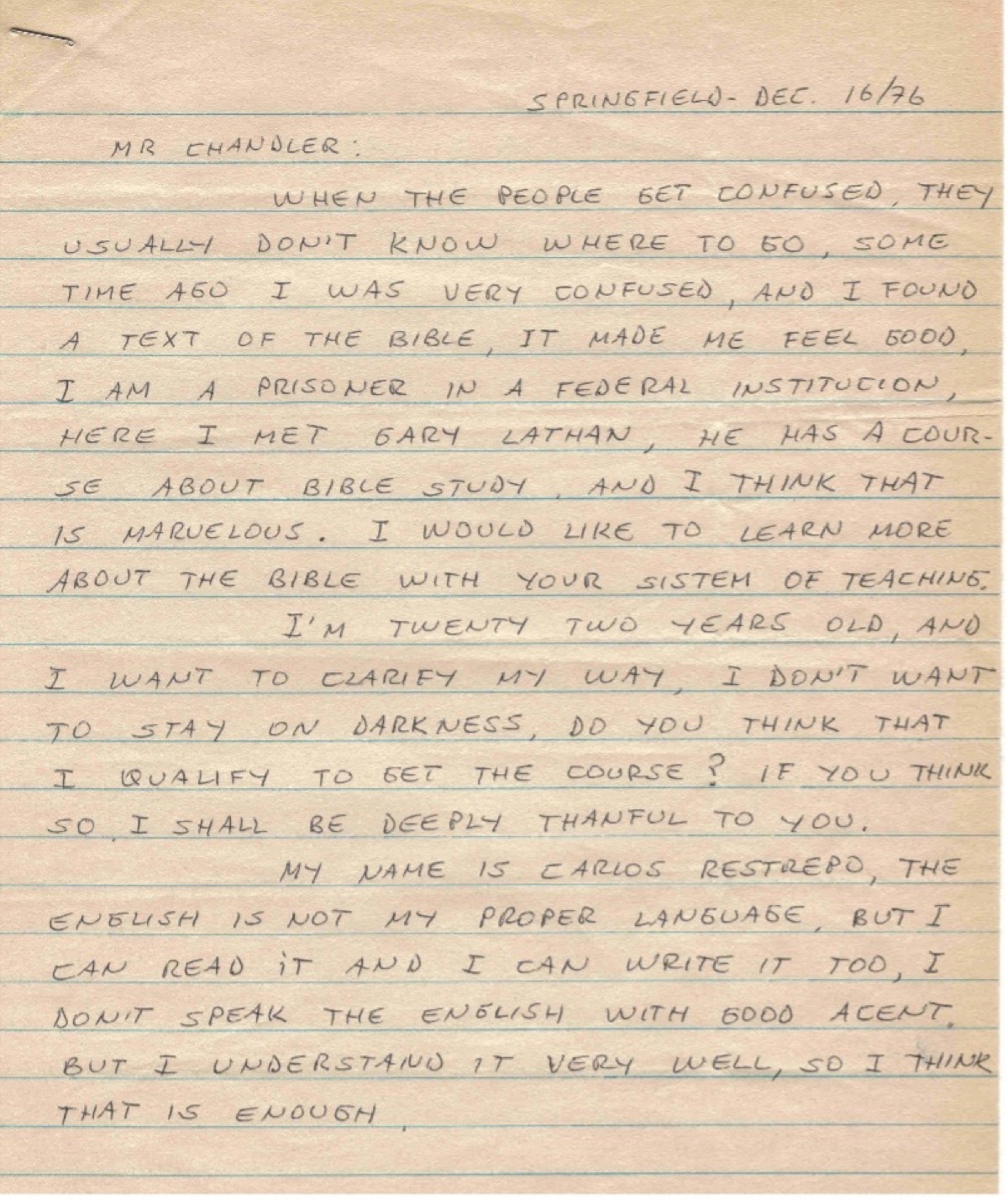
Caption 1: From a letter dated 12/16/1976, Carlos Restrepo wrote, “I have faith that many good things will happen to my people if they know God’s word.”
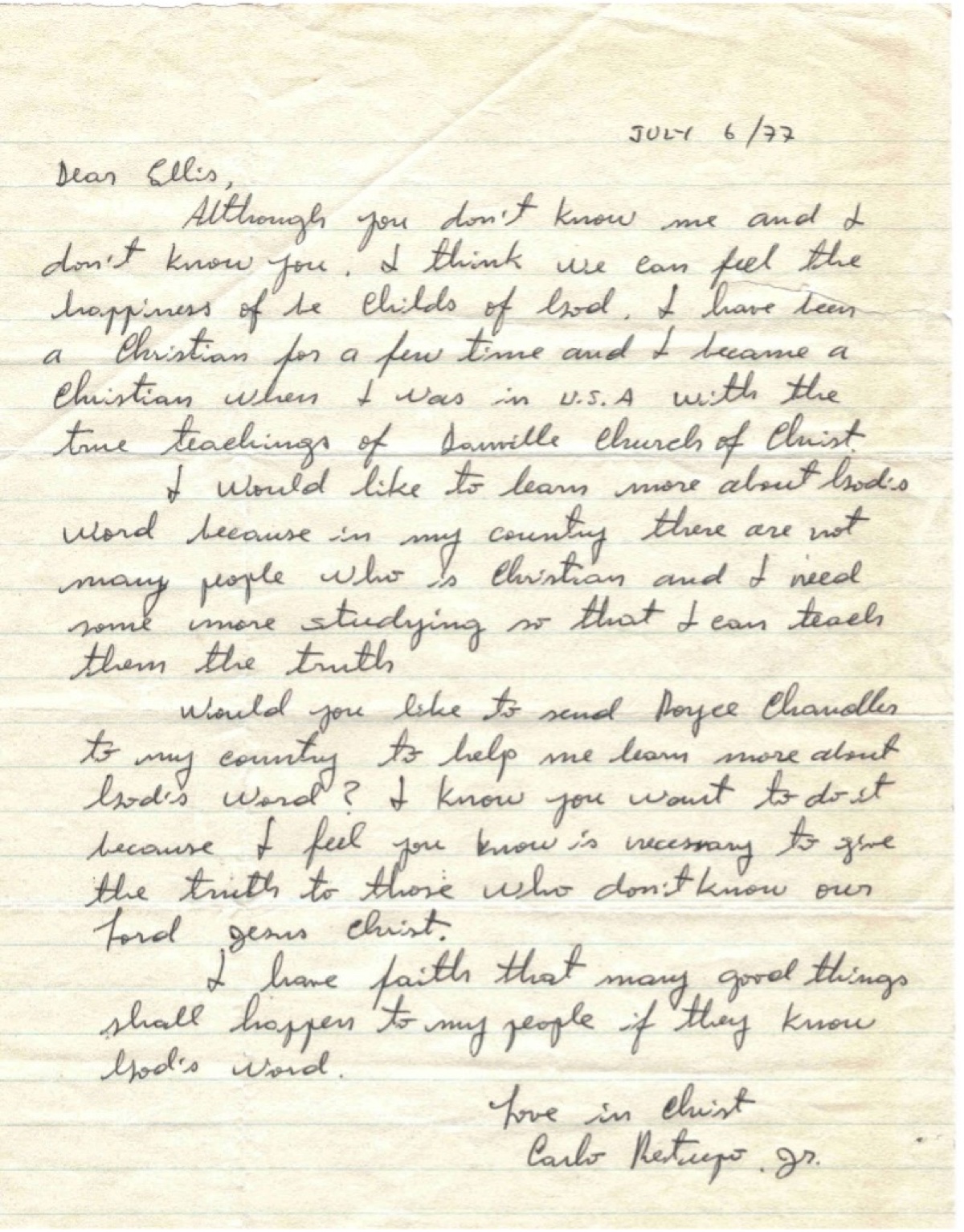
Caption 2: Letter Dated 7/6/1977 Carlos Restrepo wrote, “I don’t want to stay in darkness. Do you think that I qualify to get the course?”
Royce Chandler, preacher and elder with the North Terrace church of Christ in Lutz, Florida. He and his wife, Hope, have three children and fourteen grandchildren. The church website is here. his personal website is roycechandler.com. He can be reached here.


By David A. Cox
Synopsis: Through the turbulent years the nation of Grenada has faced, the gospel has struggled to develop and mature. However, faithful saints and workers in the body of Christ have been ready to see that change. Patience and perseverance are required to achieve the goal.
Grenada is the southernmost of the Windward Islands in the Eastern Caribbean. It is a tri-island nation comprising the main islands of Grenada, Carriacou, and Petite Martinique. The main island, Grenada, is approximately 134 square miles. Grenada is an independent island nation, having received its independence from Great Britain in 1974. The government is served by a Prime Minister and two legislative bodies. The Governor-General represents the Grenadian monarch, King Charles of the United Kingdom, showing a strong tie that still exists today between the United Kingdom and Grenada. There is also a solid connection to the United States of America because of the American Medical School, which has been located in Grenada since 1977. Additionally, the U.S. invasion of the island on October 25, 1983, liberated the island from a strong-handed communist coup that had taken power only one week earlier. Today, October 25 is honored in Grenada as Thanksgiving Day for the freedom recovered from communism. I often ponder this liberation’s effect on the cause of Christ and the work in Grenada.
The work of the Lord began in October 1969 when Ernest Roberts, the first gospel preacher, came to the island of Grenada. Ernest and his wife, Eden, moved to the capital city, St. George, and established a congregation there. From there, the church worshipped, and the work began in teaching the gospel of Christ to the island nation. Brother Roberts recalls using Bible correspondence courses that Ralph Wharton had developed, which they used to pass out and study with the people. As the preaching and teaching continued, people were receptive, turning their lives over to following the way of Christ. The first baptism was Aaron Seththal in St. Andrew Parish in March 1970. After Aaron, who was seventeen years old at the time, was baptized, other family members were baptized along with others, which began the church in Grenville.
In 1971, the gospel was taken to the village of Mt. Granby due to a request for a Bible correspondence course. Mt. Granby is a small remote village in the middle of the island in St. John’s Parish. The person who requested the course did not seem interested. Still, contact was made with two sisters who obeyed the gospel, leading to others in the village learning about the gospel of Christ. This resulted in the establishment of a congregation in Mt. Granby. In these early days, as Brother Roberts would travel each Sunday for Lord’s Day services in St. George’s, Grenville, and Mt. Granby, he met some people interested from the area around Concord and took them with him to Mt. Granby to worship. As time passed, others in Concord would learn and obey the gospel, which led to a congregation being established in Concord. Much of the work’s success in Grenada came from the fieldwork of knocking on doors and Bible Correspondence Courses in the 1970s. Through these efforts, many souls were brought to the Lord and saved from their sins.
From here, the work spread from Parish to Parish until churches met in St. George, St. Andrew, St. John, and St. David’s Parishes. In 1974, Theophilus St. Louis moved to Grenada to work with the church at La Sagesse, St. David. In 1975, Francis Noel began preaching for the church in Concord. In 1977, Jerry Hersey and his family moved to Grenada for Jerry to teach for a couple of years at the American Medical School, St. George’s University. They joined the church in St. George. They were a big help to the work on the island, and Jerry studied the institutional issues with Ernest Roberts. In 1979, Terrance Baptiste began working with the church at Grenville. In 1980, a group from Maran that had met with the Mt. Granby church began meeting in Gouyave. Theodore LeBlanc from Dominica had moved to Grenada to start preaching for the church there. The work in Grenada would be characterized by rapid growth. Six congregations were established, and attendance ranged from about 25 to around 100.
In the late 1970s and 1980s, the nation was experiencing a period of political revolution and division. As sometimes is the case, the political powers in place will want to use religion as a cloak of legitimacy in the eyes of people, which causes challenges for the people of God. The political revolutions and coup after coup created unrest and divisions in the nation, and these turbulent times affected the church in Grenada. The growth in seeing hundreds of people baptized into Christ and the establishment of congregations where none had existed stopped unless there was a division in the church. As a result, a period of unrest caused a lack of focus on saving the lost. So, as the nation established a new government, churches sought to recover the growth experienced in the earlier years. Many became enamored with attracting people in any way possible. This resulted in adverse effects of following after things and methods that were not always scriptural nor productive in bringing unity and maturity among the brethren. Some preachers were in demand for preaching because of their charisma and entertaining manner of presenting their lessons, while their lives were morally bankrupt. Many efforts were made by brethren to canvass and teach people quickly and baptize them; many quickly turned aside from following the Lord.
As we come to the close of the century to embark with a renewed optimism for the days of old. The church is looking to turn the page and seek encouragement as they move forward. So, to this end, in 1998, Tol Burk came to preach at meetings with the church in St. George and at Mt. Granby. The meeting at Mt. Granby was before their building was built and under the moonlight. However, as the church is trying to move forward, there is another major setback for the nation and an obstacle to deterring the church’s focus. In 2004, Hurricane Ivan destroyed the island nation. There was devastation across the island, killing thirty-nine people and destroying 90% of the homes on the island. It was followed in 2005 by Hurricane Emily, killing one person but further damaging homes and agriculture, which severely harmed many livelihoods. So, we look at the years of the 1980s, 1990s, and 2000s to see work being done and faithful people continuing to serve the Lord, but the frustrations and disappointments are present.
Finally, as the nation began to revive after the hurricanes, optimism for the future came again, looking for the dawning of a new day. In 2007, Ernest Roberts and his wife, Eden, moved back to Grenada from Dominica after leaving the island in 1982. They moved back, planning to work in the eastern side of the island La Digue area. Ken Craig came in 2008 to La Digue to work with Brother Roberts. In 2008, Tol Burk went to Mt. Granby to preach at a meeting there. David Hurst preached in St. George and Concord. In the summer of 2009, W. Jim Walsh and his son, Brian, visited the Mt. Granby church to work with them. Steve Perrotte was the preacher at that time. In 2010, a group left the St. George church and began meeting at the Stadium. Ernest Roberts was the preacher at the Stadium. Albert Dickson came with Jerry Hersey to visit and work with brethren at the Stadium in 2010. Ossafa Gordon started preaching for the Archibald Avenue church in St. George in 2013.
More frequent efforts have started to be made to work with the brethren in Grenada, beginning in 2013. The trips include Gospel Meetings, Spot (Tent) Meetings, Leadership Workshops, Vacation Bible Schools, Focus on Evangelism, Home Bible Studies, Radio Programs, Street evangelism, and Door-to-Door (Field Evangelism). Among those who have made trips to Grenada are Gary Henry, Louisville, Kentucky; Mark McCrary, Louisville, Kentucky; Don Wright, Akron, Ohio; David Cox, Athens, Alabama; Jeff McCrary, Columbus, Georgia; Buc Chumbley, Harvest, Alabama; Jody Broyles, Ocala, Florida; Rennie Frazier, St. Paul, Minnesota.
The last 15 years’ trips have been to seek and save the lost and develop the churches there to carry on their work. To help them get a better grounding in the scriptural organization and the work of the church. Helping them see each church has autonomy over its own affairs. We have seen good strides in the development of understanding among the members of the church. However, as always, some individuals need to have more teaching. The church is showing signs of growth. The church’s attitude seems less focused on the past and more on the future as the years have passed. Some examples are: The Archibald Avenue church is moving with an earnest focus on having Elders, Overseers, of the church. They want men to serve as deacons and remove the tasks from the evangelist. The Archibald Avenue church conducts a weekly radio program with a large listening audience on the island. Several people are being taught regularly and committing to follow Jesus Christ. For all this, I say, praise the Lord, for He is good!
The church has continued to worship the Lord and reach for the lost over the last 50 years with various challenges. Today, eight congregations are on the main island, and one might ask, “Why are there eight churches within 134 square miles?” It is true that perhaps there are a couple of cases where it probably is not for the best, but the terrain is mountainous and makes traveling from one location to another challenging, coupled with the fact that so many of the Grenadians do not own cars to take them from place to place. Therefore, the churches may seem close, but the time needed to get from one place to the other is not what one might think. The congregations are located at:
Even though it is in Grenada, I have yet to discuss the work in Carriacou. As a separate island, Carriacou is somewhat separated from the earlier work done on the main island. I will briefly discuss it here.
During this period, the church in Carriacou was established in 1985. With that said, it should be known that Bible correspondence courses and studies were conducted with people in Carriacou and Petite Martinique before 1985; it was not until then that brethren saw the need to see the church established there. Phillip Mendes left the Grand Anse church to work with the church in Hillsborough, Carriacou. Some brethren from South Alabama were instrumental in helping to purchase a property for the church and building a meeting place for them to meet. The island of Carriacou has about 8,000 people. Brother Mendes taught many people on the island the gospel of Christ and baptized many. He preached there until he died in 2016.
From his death until this year, they did not have a preacher working with them. On my first trip to Grenada in 2017, I was told about the work in Carriacou and had contact with them over the years. In 2022, I made my first trip to the island to visit the church. The church was struggling and discouraged, with about 10-15 in number. In the fall of 2023, Jody Broyles, Rennie Frazier, and I returned to the island. Some who had come back the year before were there, but there was a need for a man to labor there. Crispin Hostin, from Mt. Granby, was also on the trip. The church at Carriacou knew him well and wanted him to work with them regularly. He did, starting in January 2024. The attendance now averages about 30 on the Lord’s Day.
David A. Cox has worked with the Market Street church of Christ in Athens, AL, since 2008. He and his wife, Kerry, have two sons. The church website is here. He can be reached here.

Caption: Map of Grenada and Location of Congregations

By Joe R. Price
Summary: The fields remain white for a harvest of souls in India. Gospel successes, challenges, and struggles encourage us to use our opportunities to spread the gospel there.
Nineteen years ago, Bobby Holmes invited me to join him on a preaching trip to India. It was a part of the world I knew little about, so I accepted his invitation with some apprehension. I will always be grateful to the Lord and brother Holmes for the great doors of opportunity opened to the gospel through these early visits. I have made annual trips to India since 2006 (except for the COVID-19 pandemic interruption). I plan to return at the end of January 2025 to spend the month of February teaching classes and preaching at village churches.
We were not the first preachers to visit India. Faithful brethren have been preaching there for many years, including brothers John Humphries, Jerry Parks, William Beasley, Ed Brand, and others (Humphries). We merely follow on the heels of others’ labors (1 Cor. 3:5-9).
The most notable impact of gospel conversions in India came through the work of J. C. Bailey, who lived in India for nine years (1963-72), followed by regular trips to India. It is estimated that over 20,000 were baptized into Christ during his time there, with hundreds of new congregations being established (Davidson). “Many others have contributed to the work in India through the years. After fifteen years, the number of churches of Christ had grown to over 2,000, and 180,000 had been baptized” (Ibid).
These conversion efforts brought with them the doctrines and practices that divided brethren in America (centralization of organization and the God-revealed work of local churches). Over time, church-supported organizations, notably Bible Schools, were established in India, and centralized oversight was arranged. A 2019 report from “Church of Christ India Missions,” which is “under the oversight of the elders of Shiloh church of Christ” in Hazel Green, AL, reported there were “more than 53,000 preachers” working with them “in one capacity or another” (Newsletter).
Brother Holmes, other gospel preachers, and I began teaching classes in south India (Telangana and Andhra Pradesh states) with preachers trained at these church-supported preacher schools. These classes addressed the doctrinal departures of centralized oversight and church support of organizations (like preacher schools). I continue to teach annual preacher training classes to lay a solid biblical foundation for establishing and applying Bible authority concerning the local church’s organization, work, and worship. These studies include lessons on unity and fellowship, emphasizing that we cannot go beyond the doctrine of Christ without forfeiting our fellowship with the Father and Son (2 John 9-11; Gal. 1:6-10). Since 2006, my companions and I have taught hundreds of gospel preachers, many of whom have turned away from the unbiblical practices of centralized oversight (which takes the form of “directors” among many churches), church support of human organizations, and similar errors. These men have turned back the financial support they were getting from institutional churches of Christ and the director system that has developed to distribute support from churches in the U.S.A. to preachers in India. Many faithful men who have turned away from these innovations continue preaching without outside financial support.
Our preacher classes include Bible instruction on the evangelist’s work, faithful worship, Christian growth in Christ, morality, and additional lessons as specific needs and situations arise. One recent subject that generated additional teaching was the nature of the Godhead and Christ’s humanity and deity.
The language barrier is a constant reality in India. “The Census of India of 2001 recognizes 122 major languages and 1,599 other languages spoken in the country” (World Atlas). India has no national language, but “as per the Official Languages Act, 1963, Hindi and English are official languages in the Indian Government” (Ibid). About 41% of Indians speak Hindi. While many Indians know some English, the more remote areas have little English training. Loosely translated phrases of unfamiliar English slang, colloquialisms, and common English idioms can unintentionally cause the hearers to misunderstand the gospel message. Plainness of speech is always important when we teach the gospel. That importance is magnified by the language barriers in India, as in many other places worldwide.
Therefore, using a reliable interpreter is crucial to teaching the gospel accurately. Using an interpreter slows the teaching process, but is essential to communicating God’s word accurately. I urge those preaching in India to be aware of the vital importance of your interpreter. Brother I. S. Deenadayal has done this work for and with me for close to fifteen years and is a trusted, valuable part of my work.
Another challenge of preaching the gospel in India is Hinduism. India has been a Hindu nation for close to 4,000 years. In 2021, 78% of Indians were Hindu (IndiaOnlinePages, Hindu). Muslims account for about 15% of the population (IndiaOnlinePages, Muslim). “Christians” (in the broadest use of the term) make up about 2.5% (IndiaOnlinePages, Minorities). New Testament Christians are a small subset of this figure.
A synthesis of Indian culture and tradition, Hinduism is thoroughly idolatrous, with millions of gods and variations thereof. Shrines and temples to the gods are as common in India as our local convenience stores. Like Paul in Athens, one’s spirit stirs to see an entire nation “given over to idols” (Acts 17:16). Paul’s sermon on the Unknown God is an essential text to know and teach in India (Acts 17:22-34). For more on Hinduism, see “Sharing the Gospel with Followers of Hinduism and Buddhism” (Price).
Daily subsistence remains a challenge for millions and millions of souls in India. While the government provides foodstuffs to specific qualifying segments of the population, many village brethren struggle to sustain a simple, modest standard of living. Most of them are day laborers in the nearby fields. Consequently, many churches’ ability to support a preacher financially is minimal. During my first trip to India in 2006, $50 per month supported a gospel preacher living in an Indian village. Because of inflation, that figure has now risen to $200 per month. Still, even $100 per month is a substantial help to preachers laboring with no outside support from churches or individuals. As noted earlier, there is a significant number of these preachers. Please contact me if you wish to help support faithful Indian preachers, and I will provide you with the information you need.
Numerous struggles continue to exist when preaching in India. The cost of everything continues to rise, including traveling to India to preach the gospel. On each trip, I typically remain in India for a month and teach four or five preacher training classes lasting three to five days each (depending on their locations, travel requirements, and other factors). Funds raised for these preaching trips pay for travel expenses (to, from, and in-country), food, lodging, Telugu language Bibles, songbooks, and benevolent gifts to needy brethren. I am still seeking support for my trip from late January to late February. Please contact me if you wish to have fellowship with me in this work.
The ongoing spiritual development of Christians in India remains an essential part of the work that must occur among the churches. Such spiritual growth only happens by consistently teaching and obeying the whole counsel of God (Acts 20:27; 2 Tim. 3:16-17; 2:2, 14-18; 4:1-5). Preacher classes must repeatedly emphasize the need for spiritual growth (1 Pet. 2:1-3; 2 Pet. 1:5-11; 3:17-18). The brethren need to grasp there is far more to being a Christian than being baptized. It is only the beginning of a new life of faith in Christ (2 Cor. 5:17, 7; Gal. 2:20).
The need for spiritual growth among the churches of India is not unlike the needs of churches in America. Developing qualified leadership (elders) and servants (deacons) is paramount. Very few Indian churches have elders and deacons. A danger I’ve observed is preachers taking on (or being expected to assume) what amounts to the role of a pastor. In the absence of elders, decisions on behalf of the local church should include the men of the church (while they also consider the members’ input and needs).
At times, brethren in America struggle to know how to respond to internet pleas for financial support from preachers in India. Some may ignore them entirely and push the delete button. If you wish to support faithful preachers in India, try to distinguish between those who spend their time trolling Facebook and church websites searching for support from faithful men who need support. Treat the prospect as you would if the man were in the U.S. Do your homework. Ask the man for references and then contact those references to learn about the man’s character and gospel work. Is he faithfully teaching and living the gospel, or is he involved in unscriptural doctrines? Ask the man how much support he seeks and whether he gets support from others. A monthly support of $200 is appropriate for a man living in a village, while more is needed in larger cities. Western Union or some other money delivery service can send funds. I recommend sending three months at a time to lessen the delivery fees. If the man has a bank account (most do not), I recommend using Remitly. Ask the preacher to send you regular work reports if you support him. Most can send emails in English. Regularly communicate with the preacher to learn about and pray for him and his work.
Is anyone willing to commit five to ten years to move to India and work among the churches? Opportunities abound to save the lost and strengthen the saved. Short preaching trips and the work they accomplish are beneficial, but coming and going for a month or so each year cannot replace local evangelists’ and teachers’ uninterrupted day-to-day work (Acts 11:21-26). The sustained presence of solid, grounded preachers would be a tremendous blessing to spreading the gospel in India.
As in the days of the Savior, even now, “the harvest truly is plentiful, but the laborers are few. Therefore, pray the Lord of the harvest to send out laborers into His harvest” (Matt. 9:37-38). May we continue to lift our eyes and see the fields ready for harvest (John 4:35-38).
Davidson, Roy. The Old Paths Archive. https://tinyurl.com/2agzl9dt.
“How We Do It.” Church of Christ India Missions Newsletter. January 2019. https://tinyurl.com/28bwmw92.
Humphries, John. “Gospel Preaching in India.” Guardian of Truth XXXVI: 24, p. 741 December 17, 1992. https://tinyurl.com/2dmfoemu.
Humphries, John. “The Work in India.” Truth Magazine. Vol. XLV: 5, p.18. March 1, 2001. https://tinyurl.com/229k99tu.
“Hindu Population of India.” IndiaOnlinePages.com. https://www.IndiaOnlinePages.com/population/hindu-population-in-india.html.
“Muslim Population in India.” IndiaOnlinePages.com. https://www.IndiaOnlinePages.com/population/muslim-population-in-india.html.
“Minorities in India.” IndiaOnlinePages.com. https://www.IndiaOnlinePages.com/population/minorities/index.html.
Price, Joe. “Sharing the Gospel with Followers of Hinduism and Buddhism.” Truth Magazine. No. 7, Vol. 68, No. 7, July 2024. https://tinyurl.com/2xsj3xj7.
“What Languages Are Spoken In India?” World Atlas. https://tinyurl.com/y78tfb2v.
Joe R. Price has worked with the Vegas Drive church of Christ, Las Vegas, NV, since October 2022. He and his wife, Debbie, have four children. His website is here and the church’s website is here. He can be reached here.



By Phillip E. Stuckey
Synopsis: The article highlights the ongoing efforts to spread the gospel in Eastern Europe, particularly in Moldova, through Bible conferences, preaching, and fellowship, despite challenges such as language barriers, the legacy of Soviet atheism, and the war in Ukraine, while emphasizing the faithfulness of local believers and the importance of continued support for evangelism in the region.
Then He opened their minds to understand the Scriptures, and said to them, “Thus it is written, that the Christ should suffer and on the third day rise from the dead, and that repentance for the forgiveness of sins should be proclaimed in His name to all nations, beginning from Jerusalem. You are witnesses of these things. And behold, I am sending the promise of My Father upon you. But stay in the city until you are clothed with power from on high” (Luke 24:45-49, ESV).
This is Luke’s account of the Great Commission. Matthew’s and Luke’s accounts of the life of Jesus end with it, and both leave the reader with a sense of anticipation. Only Mark’s longer ending speaks of how the disciples respond, going everywhere preaching the word (Mark 16:19-20). It is safe to say that Jesus’s words to those first disciples ignited a movement that has never stopped since that first Pentecost (Acts 2; 8:4).
By God’s grace, there have been faithful brethren in every generation who have been moved by this call. They have labored to spread the gospel in their own homes and communities. They have labored to spread the gospel in the land of their birth. Countless brethren have gone to foreign lands like Paul and so many others did. I had never pictured myself as being among those who would labor in foreign fields, but I am thankful that I have been blessed to have a part in the work in Eastern Europe.
My involvement in the work in Eastern Europe began in 2018. My dear friend and brother, John Gentry, asked me to accompany him, Lou Sieg, and Laura Barker to take part in the 13th Annual Bible Conference in Chișinău in the Republic of Moldova. Moldova is a former Soviet republic located between Ukraine and Romania. Since that year, I have been a part of every annual lectureship except for 2020, when COVID prevented it. In connection with that work, I have traveled with John to preach in Lithuania and, most recently, Belgium. Our most recent trip was just over a month ago for the 18th Annual Bible Conference with John Gentry, John’s wife Stacy, my wife Beth, and brother Caleb Wray. I am writing this article to encourage you to both pray for and support this kingdom work in whatever way you can.
God said in Isaiah that His word “shall not return to Me empty, but it shall accomplish that which I purpose, and shall succeed in the thing for which I sent it” (Isa. 55:11, ESV). This truth has been and continues to be a great comfort to me. When we preach and live the truth, it will do its job, drawing some to God while driving away others. Our task is to plant and water and let God give the increase (1 Cor. 3:6).
Years ago, faithful brethren went into the former Soviet Union and preached the gospel. Serghei Corcimaru met some of these brethren; though he was not a believer, he worked with them as a translator. Through this interaction, he studied and came to faith in Christ. Afterward, he returned to Moldova, where he now works as a government scientist. He taught the gospel to a coworker who was also converted. Eventually, Serghei asked for assistance from American brethren, and many, like John Smith, Steve Niemeier, Steve Brewer, Johnny Felker, and others, traveled to Moldova to support and encourage the saints there.
Through such efforts and the constant, patient work of Serghei and other faithful saints there, the gospel has found good purchase. There are local congregations in Chișinău, Bălți, and Bendery. These congregations range in size from five to twenty members, but they are all strong in their faith and love for the Lord and one another. The saints there continue to fight the good fight and win souls to Christ.
Paul speaks about how the body is supposed to “build itself up in love” (Eph. 4:16). This is one of the successes and strengths of the work there. The church in Chișinău meets in the evening on Tuesdays and Fridays for Bible studies. Long before COVID, going back to 2008, they were already opening these studies online to saints in Moldova and other parts of Europe, Ukraine, and Russia via Skype, Viber, and Zoom. Along with numerous other brethren, I have been privileged to assist in some of these classes from time to time. John has consistently taught each week in at least one of these classes. The contacts the saints have made through these combined efforts have resulted not only in conversions but also in new friendships and more opportunities to spread the gospel in other places. Our work in Lithuania with brother Kestutis Subacius came about from his participation in these online studies.
The annual Bible conference is a major part of our work there. Each year, all the Christians in Moldova come together in Chișinău for several days of concentrated study. In recent years, brethren have come from other countries like Lithuania, Belgium, the Czech Republic, and other places to participate. The Christians in Moldova are very active in inviting their friends and neighbors to come. In our most recent trip, we went out into the streets, inviting people to Bible studies. We are hoping to build on that work in our upcoming trips.
During the Bible conferences, the love and fellowship that these Christians have for the Lord and for one another can be seen and felt. One of my greatest blessings is the relationships I have made during regular trips. Despite the barriers of language and culture, we all have a shared bond in Christ (Gal. 3:28). The brethren have welcomed us as one of the family. We are grateful that they have a zeal for the Lord, for one another, and for sharing the gospel.
There are many ways in which the work in Eastern Europe is no different than it is back here in the States. One of the things I learned early on and continue to remind myself of is that “people are people.” It doesn’t matter who you are or where you are from or what language you speak. We are all made in the image of God, and we all share similar hopes and dreams (Acts 17:24-28). We are all in need of salvation and the gospel (Rom. 3:23; John 3:16). We all want to have peace and prosperity and a good life for our families. As Christians, we all want to be a part of a thriving and vibrant church, yet life is not always easy or cooperative. People get sick, financial reversals happen, brethren’s faith waxes and wanes, etc. Of course, the allure of worldliness is a struggle overseas, just as it is here in the States.
Some things are particular challenges for the work there. There are not very many Christians or faithful churches in these countries. There are no elders and deacons. There are no area gospel meetings or singings. Not only are there not many brethren, but there are no publishing companies that are constantly providing Bible-based materials in their native language like we have in the States. While some Americans can relate—depending on where you live—this can be a real struggle.
There are also unique challenges in evangelizing the lost in Moldova. The language barrier is an obvious one, but there are others. As citizens of a former Soviet republic, the long years of religious repression and indoctrination in an atheistic worldview remain an obstacle to the hearts of many. At the same time, there are strong national ties to the Russian Orthodox church. There is still an attitude among some that to be Moldovan is to be Orthodox. To leave that faith is to betray your nationality.
Of course, the war in Ukraine is another challenge that the brethren deal with to different degrees, depending on what is happening in the war. Food and energy supplies/prices are all subject to change because of the war. The country is divided over which direction they should take. Some want to move back towards Russia, and some do not. Of course, this struggle is felt in the churches. It is hard for us to imagine, but for some, life was better under a Soviet system. The transition to a more Western economy and country has not been smooth, and many feel left out. While it is easy for us to get lost in the politicization of this war back home, it is important to remember that we have brothers and sisters who are caught in the middle of this conflict. Since we have a shared citizenship in heaven, we should do all we can to support and encourage them as they face these challenges (Phil. 3:20).
Despite all these challenges, the work goes on, and the saints persevere in the strength and grace of our Lord (Eph. 6:10-18; Titus 2:11-14). God’s word is still powerful and active, and it will always do its job (Isa. 55:11). The saints are planting and watering and God is giving the increase (1 Cor. 3:6). We praise and thank God for these faithful brethren. We praise and thank God for the encouraging work that is going on in Moldova and throughout Eastern Europe. We praise and thank God for the many brethren who have labored so much in this work over the years. May God continue to bless the work of building the Kingdom there, here, and in every place. May God bless us and help each of us to do our part in whatever way we can to support taking the gospel to all nations (Matt. 28:18-20; Luke 24:46-47).
Phillip E. Stuckey has worked with the Robison Street church of Christ, since 2014. He and his wife, Beth, have three children. The church website is here. He can be reached here.


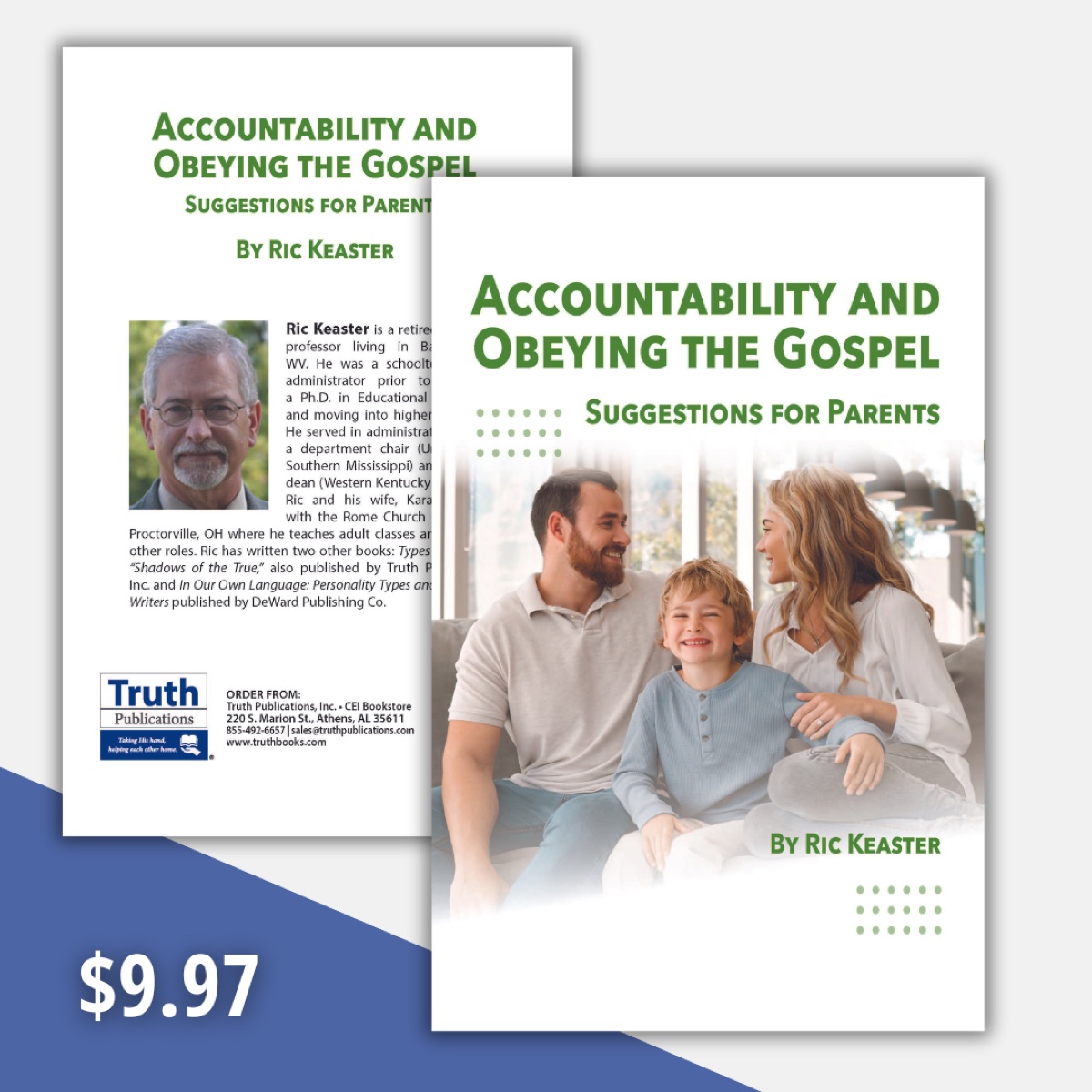
By Arrigo Corazza
Synopsis: Preaching the gospel in Italy is an extremely difficult task because of the overwhelming power of Catholicism that has shaped Italian society and mentality over a very long span of time. During this period, the Bible was almost an unknown “material object,” so Italians have always been ignorant of the word of God. In the last fifty years, I have served churches whose average membership was fifteen to twenty. The question is: was it worthwhile? Yes, of course. That is why we ought to preach constantly the gospel in Italy, the center of Roman Catholic power.
As Christians know from experience, teaching the gospel of Christ is a difficult task—everywhere and always. This truism can be dramatically altered by historical facts that make a country substantially different from others in terms of the reception of the gospel. Just to confine our thoughts to preaching in the so-called “free world” (or “western world”), the situation in Italy appears to be unique and extremely complicated.
Let’s see some facts about it (without claiming completeness).
(1.) Italy is a Catholic country (90% of sixty million people). The remaining 10% is made up of atheists and non-Catholics (Protestants, evangelicals, sects, etc.); the Jews are about forty thousand. According to a poll from some years ago, Jesus Christ is the sixth in the preferences of Italians (now it could be even worse).
After the favor shown by Emperor Constantine (who died in 337 AD), in 380 AD Theodosius made Catholicism the official religion of the Roman Empire (in 391-392 paganism was forbidden); in Italy, it remained so until 1984. Can you believe that?
(2.) Italy is the center of Catholicism because Rome was the center of the Roman Empire. When Catholicism gradually took the role of Roman power, it was natural to center it in the former capital. Sometimes this point is forgotten or underestimated. Catholicism is an Italian creation (like the Renaissance, the Inquisition, fascism, mafia, pizza, etc.). Should not Jerusalem be the capital of the church of Christ (Acts 2)? No. Christianity does not have a capital, a center of power. On the contrary, Catholicism is a universal (Greek: καθολικός, katholikòs) religion whose center is in Rome (the Pope speaks in Italian).
(3.) The Catholic Church took material possession of the central part of Italy (The State of the Church; Lo Stato della Chiesa) until September 20, 1870, when the Kingdom of Italy conquered Rome, confining the Pope to the area of the Vatican only. Through the centuries, the Pope became an immensely rich monarch, ruling in his territory. Our Lord said that His Kingdom is not of this world (John 18:36). The pagan Rome became the Papal Rome.
Italians give yearly billions of Euros to the Catholic Church. Starting July 2023, access to the Pantheon in Rome requires an entrance ticket. The Pantheon (Greek: “[house of] all Gods”), built in 27-25 BC, was the magnificent temple hosting all the divinities of the Empire. Thirty percent of the entrance ticket (which is 5 Euros or about 6-7 USD) goes to the Catholic Church. The Pantheon is one of the most visited monuments in all of Italy (millions of visitors each year). In 609 AD, the Pantheon became a church dedicated to the Virgin Mary and to the Martyrs. Another example of paganism entering the Catholic Church.
(4.) Because of Catholic influence, only on December 1, 1970, was divorce introduced in Italy.
(5.) Like Spain, Italy did not experience a Reformation because the Inquisition was ferociously set against it. This produced a dramatic delay in the diffusion of spiritual freedom. The ignorance of the Bible among the Italian population caused a very bad outcome for the illiteracy of the population itself in the centuries to come (from history we know that several populations learned to read and write thanks to the diffusion of the Bible). Things went differently in other European countries (Germany, England, Holland, Sweden, etc.) where the Reformation spread and in the new settlements of the so-called “New World” (the American continent, etc.).
(6.) Italian Catholicism created the Inquisition, forbade the reading of the Bible in national languages (the Bible had to be read only in Latin: Council of Trent, April 8, 1546). The Index of Forbidden Books was created in 1559; the Bible was listed there for centuries. Sad to say, also, that precocious forms of anti-Judaism were fostered by the Catholic environment and developed later into anti-Semitism on a racial basis.
(7.) Italians show a very strong individualist side, with no sense of being faithful to the State or to anything else (maybe only to the family, “our private thing,” cosa nostra). Most Italians do not get along anymore with the Catholic Church but tend to defend her from criticism. Most Italians profess to be Catholic, but only a few (maybe 10%) attend Mass or obey the Sacraments. At the Fourth Council of the Lateran (1215 AD), it was commanded that the Catholic believer confess his sins to the priest at least once a year, at Easter. This adequately explains what the state of Catholic believers was then (and still is now). Sad to say again, in this Council it was decreed that the Jews had to separate from the rest of the population and consequently wear a badge.
Today, the average Italian Catholic believer is a kind of modern Frankenstein: formally Catholic, but substantially irreligious. The Catholic Church has always taught: “You sin, and I will forgive you.” So, people here have reached the point of sinning and not confessing their sins anymore, thinking that “God is good and will save me anyway.” There’s no tension toward Judgment Day. People here rely only on men, on themselves.
(8.) What really matters in Italy is “tradition.” Catholicism has spread a mantle through the centuries, so that the mentality of the people regarding Catholic traditions is very slow to change. The French scholar Jacques Le Goff (1924-2014) wrote that “history of mentality is history of slowness in history.” The Catholic tradition is something ingrained (even unconsciously) in the thoughts of Italians. It is a secular component of the structure of Italian mentality. Italian society changed a lot in the last decades because of secularization, but its foundations are still firmly rooted in Catholicism. Pedobaptism is the most valid way to force people to become Catholics.
The following story will help you understand the defense of Catholic traditions in Italy. On August 17, 1851, Francesco Madiai (born in 1805) was arrested in Florence with his wife Rosa and three other individuals (one was British) under the accusation of proselytism against Catholicism, the State religion in the Grand Duchy of Tuscany. After living for some time in the US and in England, the Madiai couple had converted to the “evangelical faith.” Yet, the arrest destroyed their life. Even Queen Victoria of the British Empire made an appeal on their behalf, but unsuccessfully. In the end, Francesco Madiai was banned and died in poor health (Switzerland, 1868). What was the fault of the small group? Gathering secretly in a private house to worship God through Christ only on a biblical basis, without Catholic traditions.
We know from the Scriptures that the gospel arrived early in Italy: let’s remember Paul’s letter to the Romans; see the church in Puteoli (today’s Pozzuoli, seat of an important trade harbor, Acts 28:13-14); read Hebrews 13:24. Then, as we have seen, Catholicism took over slowly but constantly.
In the historical frame depicted above, American missionaries (mainly from Texas) began preaching the gospel in 1949. My father Alessandro (born 1926) was the first Christian ever baptized by them (1949). He began preaching and continued until he died (2017). My brother Stefano (born 1953) and I (born 1955) grew up as non-Catholics in a large area (San Giovanni) close to the Colosseum. We were known generically as “the Protestants” (we never experienced any persecution or discrimination). At the end of the Seventies, Stefano and I were taken to study at Florida College, Temple Terrace, Florida, thanks to our mentors (Roy E. Cogdill for me and H.E. Phillips for him).
Back in Italy, on May 1, 1978 (age 23), I began preaching full-time, supported by American churches and individuals. After almost fifty years, I am still preaching the gospel faithfully, helped by US sources. I have served churches in Rome, Alessandria, and Pisa, where I arrived in 1997. My brother Stefano is currently preaching in Rome (Chiesa di Cristo, Via Sannio 69).
During my long service, I labored for churches whose average membership was fifteen to twenty, with no elders. As you can imagine, it is not an easy duty.
Since 1949, churches of Christ have spread from the Alps to Sicily. We have always been a minority: at their peak, total membership in churches might have been around three thousand (it is only a guess, because obviously there are no official statistics). Three thousand members spread among sixty million people! How small was (and still is) our number!
The life of churches is rhapsodic (ups and downs). The 1950s and 60s witnessed growth in Italian churches, followed by a slow decline, which was due to several factors—even to the unfaithful position of the brethren.
I must thank those who have brought the gospel to us (1949) in a very hostile environment. I must thank Brother Roy E. Cogdill for bringing me to study at Florida College. I must thank all the teachers I had at Florida College and all the preachers and teachers I learned from during my stay with American brethren. I must thank all the American churches and individuals who have been supporting financially my preaching without interfering with it: they never told me what to do; just requested that I would only preach the gospel (the very thing I was eager to do). I must thank the Italian brethren I served for their help and dedication in the Kingdom: we are living a wonderful spiritual experience together in a still pioneering work. Finally, I must thank our God for my health so far. Notwithstanding some very annoying post-Covid-19 problems, at seventy years old I can preach and teach in full body functionality.
Yes, because after almost fifty years of preaching full-time, I wish I had converted and baptized more sinners than I did—but I guess this is a common sentiment among preachers.
No, because I have always tried to do my very best. Which does not mean that errors were not made, but never to the point of hurting the churches I helped. In my service to very small churches, I had to be a preacher, a teacher, a “deacon,” a treasurer on a few occasions, and often a janitor. I worked together with the brethren, not over them.
While it is true that preaching to ten or a thousand persons is indifferent to a gospel preacher, that numbers are not strictly vital for churches (otherwise we would strive to have numbers at any cost and not Christians according only to the New Testament), yet sometimes numbers evidently count in churches in terms of leadership, services, and generational change.
A small church membership does not always imply a defect or a failure on the part of the Christians. Announcing faithfully the gospel, we arrive at a certain point, beyond which resides the will of those who listen to the word of God—accepting or refuting: it is the logic in the Parable of the Sower (Luke 8:4-15). We cannot force people to accept the gospel. Others have done so and still do so.
Let’s see a couple of significant historical examples about it. King Charlemagne of the German tribe of the Franks (748-814 AD) supported greatly the Roman Catholic Church. He defeated the pagan German Saxons and asked them to decide either to convert to Catholicism or die. In the Massacre of Verden (782 AD, Lower Saxony, Germany), he ordered the beheading of more than four thousand Saxons who did not want to convert to Catholicism. It is worth noting that King Charlemagne is still venerated in some parts of the Catholic world.
The famous Catholic scholar Augustine (354-430 AD) defended the idea of forcing the heretics (Latin: compelle intrare, i.e., “force to enter”) to go back to orthodoxy using Luke 14:23 (ἀνάγκασον εἰσελθεῖν in Greek). On this basis, the Crusades against the Muslims, the heretics, and the Jews were inevitably to come in the Middle Ages.
Christianity is the religion of the word, not the religion of the sword.
Arrigo Corazza was born in Rome, Italy on March 5, 1955. After studying at Florida College, he completed in Rome his doctoral studies in Near Ancient East History. Arrigo has labored with the churches of Christ in Rome (Via Sannio 69, 1978-1986), Alessandria (1986-1997) and Pisa (from 1997 until now). He and his wife Patrizia have two daughters (both Christians) and two grandchildren. The church website is here. He can be reached here.



By Dan Koen
Synopsis: Our call to use our feet to take the gospel to all nations and how the gospel message is giving enlightenment, hope, and strength to the souls in Sierra Leone, West Africa.
How beautiful upon the mountains are the feet of Him who brings good news. . . (Isa. 52:7).
Paul, an apostle of Christ, referenced this Scripture in Romans 10:15 to describe the essential process by which man can be saved. God’s plan is for citizens within His kingdom to journey to those who desperately need the gospel of Jesus and to proclaim to them the kingship of Christ. It may be unintuitive to us that the feature described as beautiful about the preacher is not his mind (in what he understands) or his mouth (in how he speaks); but rather his feet (in where he goes). Until God’s people are no longer surprised but educated regarding the importance of the preacher’s feet, I feel we will be satisfied being disciple-makers that have beautiful minds and beautiful speech, but ugly feet—those that remain under desks or on top of assembly house carpeting, and not walking to those who are lost. Ironically, these men and women will possess the softest and cleanest of feet among God’s children, but they won’t be the most beautiful.
Furthermore, a closer look at the original quotation in Isaiah 52:7 reveals that these beautiful feet are mountain climbing feet. The kind of feet that carry gospel proclaimers through the most strenuous terrain and challenging landscapes, traversing mountain peaks and high elevations in order to reach the most isolated of wanderers. I don’t believe this detail is intended to describe geography, but difficulty. The feet that God commends as beautiful are the feet that zealously walk towards the lost and view the distance or barriers in between as irrelevant. The commission of Christ to make disciples of all nations includes using our feet to walk through neighborhood sidewalks, up to our office co-workers, or down the church building aisle to the visitor seated in the back. However, it also requires some to traverse to more arduous distances to fulfill this command. When my wife and I became convicted by this, our insecurities and feelings of ineptitude were overcome, and we decided to dedicate our feet to the mountains. Our mountain is called Sierra Leone.
The country of Sierra Leone, located 500 miles north of the equator on the coast of West Africa, is a country roughly the size of South Carolina. It is routinely ranked among the five most impoverished countries in the world and recognized mostly for its bloodstained civil war (1991-2002) and outbreak of Ebola (2014-2015). Both of these devastations had dramatic negative effects on the economy and education system that has resulted in much of the country being impoverished and illiterate (by western standards). There are twenty-three languages spoken throughout the country, but the common tongue is Krio. Religiously, Sierra Leone is over 75% Muslim and around 20% Christian, but tribal traditions and religious beliefs and practices have been assimilated into both. However, these facts are not the aspects that compelled us to leave our home and move to this small country. What truly drew our hearts to this country are the spiritual needs and opportunities found here.
Upon my first investigative visit to Sierra Leone in 2017, I travelled to a village to study with a new convert. Unfortunately, when I arrived, he was not there. Instead of immediately departing, I decided to take a chance and offer a Bible study to some other inhabitants of the village. The very first people I offered this to, David and Douda, immediately agreed to stop what they were doing, sit down with me, and hear a message from God’s word. This general openness to listen and learn is not an isolated case or in any way exceptional in this country. One activity that I do with my two oldest daughters (five and three years old) is weekly evangelism walks across various neighborhoods of our town and surrounding villages. Despite living in a Muslim dominated environment, our experience is that 70-85 percent of the people we encounter as we walk house to house will immediately stop their washing, cooking, or socializing and agree to hear any message from the Bible we choose to share with them. Even preachers and church leaders that are ignorant and errant in their teaching are eager to listen and receive correction.
Septimus is a local pastor with whom I studied for many months. He was so excited about what he was learning about authentic new covenant Christianity that he organized a week-long Bible study where he could invite his fellow pastors in the area to attend and learn. This resulted in sixty pastors attending and over half of them requesting more private teaching and pleading for this teaching to be shared with their congregations. One of the men I met that day was Solomon. Further study with Solomon resulted in his eyes being opened regarding the necessity of baptism for the forgiveness of sins. His response to this revelation was humbling. He said, “I feel like Nicodemus. ‘Am I a pastor, yet do not know these things?’” He was baptized shortly after and soon arranged a study at his hometown with seventy of his friends, family, and fellow pastors to be exposed to the same truth he had discovered.
In Sierra Leone, there is very little negative tension or awkwardness regarding religious dialogue or biblical discussions. Recently, I was invited to preach at a denominational church. As expected, instruments were used heavily during worship. I taught about how Christ has fulfilled the commands contained within the Old Law, including the use of instruments in worship, and as a result we are no longer bound to them but to the new covenant of Christ. Their response after the lesson as they ended their meeting with worship was to take a sheet and cover the instruments they had previously used. They then shook my hand and hugged me, thanking me for teaching the truth to them.
Because of the general lack of reading comprehension among people in Sierra Leone, the presence of sound, knowledgeable, and mature Bible teachers is largely absent. This results in an extreme vulnerability to false teaching and abusive teachers. Yet, this also results in an overwhelming positive reception towards those who have a strong grasp of the Scriptures and are able to communicate it effectively. I’ve been blessed to see the joy and relief of countless people who have discovered that what they had been taught or grew up believing was false. Tamba is a new brother in Christ whose previous church refused to baptize him until he paid a fee of 500 Leones. Imagine the look on this man’s face when he learned that the gift of God’s grace through baptism is completely free. Salimatu rejoiced when she learned that the Bible does not forbid her presence at church during her period. Salina felt instant relief and freedom when she learned that instead of waiting to be forgiven until the birth of her baby that was conceived out of wedlock, she could be forgiven immediately upon repentance. Hawa was shocked to discover that the version of the story of Noah’s ark that she was taught was false— that wicked men never entered the ark and smeared the interior walls with human excrement. There are so many more examples of rampant errors and falsehoods that are easily corrected by any competent Bible student.
Despite these wide-open doors of opportunity, my time and availability is no match to keep up with the demand. One solution to this dilemma was to create Krio Bible teaching videos and post them online to social media so that I could direct people there to receive teaching until I was able to meet with them personally. Instead of this project solving my problem of opportunity overflow, it has unexpectedly—albeit joyfully—resulted in the opposite. Within a few months of starting a Krio Bible teaching Facebook page, the content posted received over 500,000 views and around 1,200 private messages per month. This has already led to multiple conversions among whom are Aiah and Joseph—both of whom are church leaders that are now in the process of reforming their congregations’ beliefs and practices to align with biblical truth. The online work has opened new doors of opportunity and invitations for personal visits to teach throughout the country.
There is a wealth of opportunity and an abundance of need for the kingdom of God to expand throughout this country. The harvest is plentiful, but the laborers are few. Though my wife and I have poured four years of labor and service into the men and women of this place, the unique opportunities here would warrant a lifetime of devotion to the souls of Sierra Leone. Although the Lord may grant us the ability to spend a lifetime here, the spiritual needs are far beyond what we and the few workers here can handle. So much of my attention is dedicated to the training of teachers, and so many of my prayers are devoted to the request that the Lord send to this place men and women who understand the true gospel of the kingdom and are willing to speak it with sincerity and boldness.
The feet that God says are beautiful may be called to walk on mountain paths that are treacherous and tiresome. Our family has certainly experienced that. We’ve faced risk to our physical safety through many encounters with illness, civil unrest, and even the unassisted home birth of our second child. Additionally, there have been attacks on our hearts from loneliness, insecurity, anxiety and the frequent sense of being overwhelmed with the needs of those around us. However, the blessings received and discovered on this path remove any potential for self pity, and instead fill us with sympathy for those of our brethren that are either unable or unwilling to walk similar roads. The relationships we’ve gained and the faith we’ve witnessed within the people here has enriched our lives beyond our highest expectations. During our time here, the Lord has made us aware of many weaknesses of which we would have otherwise been ignorant and supplied to us the necessary grace to bolster those areas of fragility. Moreover, the privilege we have been granted to be eyewitnesses of the handiwork of the Lord in Sierra Leone is something that fills us with overflowing joy, thankfulness, and praise.
The Lord has taught us that when we entrust our feet to His paths, the result will always abound in good.
The LORD has displayed His holy arm in the sight of all the nations; all the ends of the earth will see the salvation of our God (Isa. 52:10).
Dan Koen has worked with various congregations of the Lord’s people in Sierra Leone, West Africa since 2020, when he transferred there from Boston, MA. He and his wife, Sonia, have three children and are expecting their fourth. Dan shares content on his YouTube channel, “Mindful Missionary w/ Dan Koen,” which is accessible here He can be reached here.

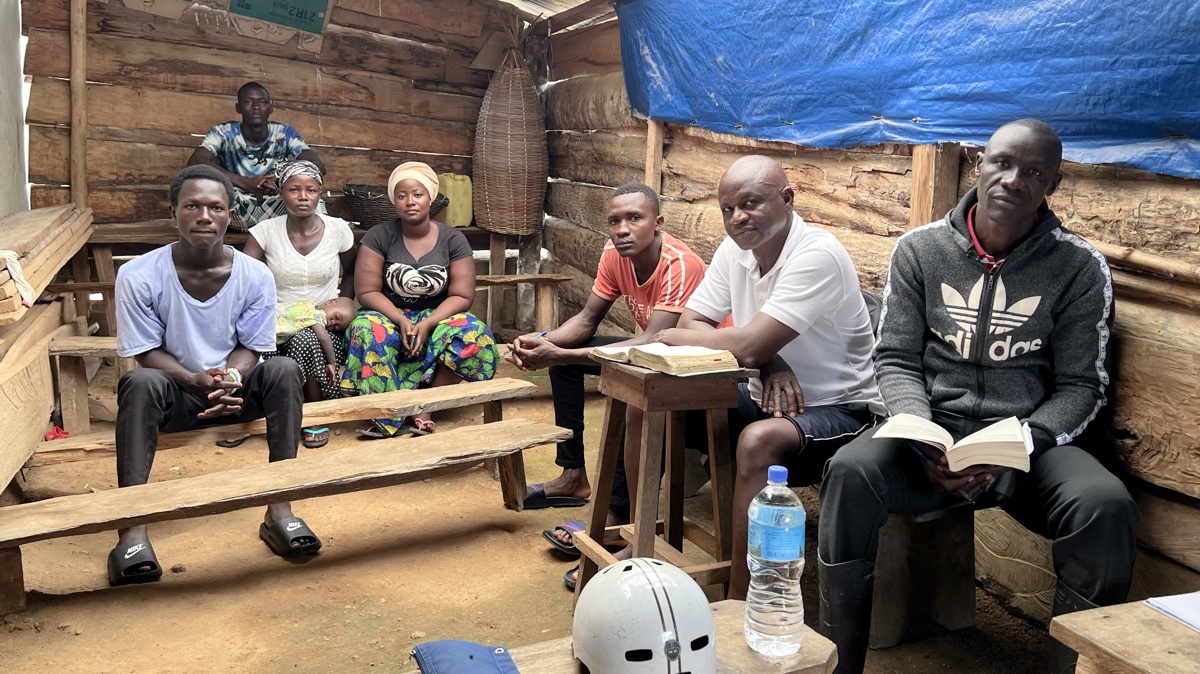

By Joe Greer
Synopsis: Preaching in Africa comes with a few challenges, but the reward is witnessing humble souls listen to the teaching of God’s word.
Travel to places on the other side of the world comes with challenges and inconveniences. To get from the United States to many places on the African continent requires three days of travel, several flights, and passing through many time zones. Yet, I’m not sure we can say that is such an unbearable difficulty when those just a couple of generations before us would travel for weeks to get there by train, vehicle, a long time on a ship, and maybe even a short flight or two along the way. Today our time is often limited, and we are anxious to get busy about the work and then stay on schedule to be back home to continue the primary work we are involved in. We are thankful we can manage a preaching trip in a shorter period these days, but find ourselves banking on things running smoothly. In life’s reality, not all goes as planned, and long-distance preaching requires flexibility and willingness to work through many minor challenges. Sometimes getting the work done proves difficult.
Those who have a knowledge of the demands of such travel sometimes seriously question, “Why go to Africa?” That is a reasonable inquiry, and that question is sometimes followed up with the statement, “We have many lost here in this country.” Never could a statement be more true, and never should we lose sight of opportunities we have right in front of us. So then, again, why go?
For one thing, Jesus said to go. He knew better than anyone the truest need of mankind. “The Son of Man has come to seek and save that which was lost” (Luke 19:10). Jesus understood it best, that it is all about the people. The fact is, without Jesus, we are all hopelessly doomed with our sin separating us from God. Since we hold in our hand the answers to man’s greatest issues of life, how can we not carry that saving word to those who might be willing to listen?
And there is this. . . without a preacher, “How then shall they call on Him in whom they have not believed? And how shall they believe in Him of whom they have not heard?” (Rom. 10:14). Someone needs to go and share the powerful message of God, bringing salvation “for everyone who believes” (Rom. 1:16). That preaching opportunity may be in a makeshift building that saints meet in, or under the shade of a tree, or maybe in someone’s hut with people sitting on the floor at your feet. Yet, to answer again, why go to Africa? You will always find willing listeners.
There are so many worthy locations where a preacher of righteousness is a balm to a lost and dying world, and it is just a matter of determining where we can be the most useful. With a diversity of abilities, each one of us may find our greatest usefulness in different places and in different ways. It may not be Africa for you, but without any question, there is a place where each of us can find effectiveness in teaching the word of God. The first challenge is determining to go and teach, whether that is next door or around the world. “Having then gifts differing according to the grace that is given to us, let us use them” (Rom. 12:6)
After many trips to African countries, I realize the major incentive for going back—so very simply it is, the people. What draws me there repeatedly is the people. It is that willingness for so many to come out and listen; to consider with a tender heart the reasons of hope that God reveals in His word. If ever there was a place where people are willing to listen, it is in the poor countries found in Africa. It is eye-opening to see and to stay out in the bush with brethren and preach to them there. The difficulty of their living circumstances becomes very real when you go to where they live, and you gain insight and their respect. The very idea that you would come out and stay with them and eat their food means a lot and helps them to see you are not above them.
Whether it is in the city or the bush, not everyone will listen, but many will. That is not to say all who hear sound teaching will accept the word of God and submit to Him; in fact, many will walk away. In Africa, I have found many will not only come but listen. . . and will do so for hours and then ask for you to preach some more. It is that humble attitude that draws me back, that desire to know the will of God.
We speak of our inconveniences, and I wonder if we should be embarrassed to do so. It is true that preaching in Africa is not always the easiest thing to do. We should measure our minor difficulties against those who walk for miles only for the promise of Bible teaching. Sometimes they do so without shoes or proper clothing for warmth in the cooler months—or without having a nutritious meal to ready them for the long foot journey, but they come in the interest of hearing what God has to say to them (and they have been promised nothing more than to hear preaching from the Bible). Humble hearts will listen and be moved by the words of God. “Blessed are they who keep His statutes and seek Him with all their hearts” (Ps. 119:2).
When the Christians in Jerusalem were scattered, they “went everywhere preaching the word” (Acts 8:4). We learn something about the power of the gospel when Philip went out “and preached Christ to them” (Acts 8:5). We see “they believed Philip as he preached the things concerning the kingdom of God and the name of Jesus Christ, both men and women were baptized” (Acts 8:12). This is the influence of Bible preaching that falls on willing and receptive hearts. Like those early disciples, we should be eager to share the word of God.
We wish the results were always simple and quick, but reality says there are many who walk away. After Paul’s amazing declaration of truth on Mars Hill, many mocked and turned away (Acts 17:32). That happens in Africa too, but there are always those who want to hear more. There are people who will listen, and you can always find a crowd to preach to. Some of the most interesting preaching opportunities have been in the bush where people will gather around your feet and listen with interest and weigh the words of truth carefully, and many will respond.
It’s all about the people is a true statement no matter where we live, and those who understand the power of God’s word should be ready and engaged to offer it to any who are willing to listen. Evangelism at home should be pursued with the same intensity as we might have for going somewhere far away to deliver the message of God. We have in our hands the revelation of God—His truths—and that which gives the genuine hope for all mankind. We need to be generous in offering it to all.
Another important work in Africa is teaching men to be faithful deliverers of truth. Paul said it best, “The things that you have heard from me among many witnesses, commit these to faithful men who will be able to teach others also” (2 Tim. 2:2).
On every trip, our primary focus has turned more to classes devoted to studies with preachers. We want to strengthen the understanding of Bible fundamentals, such as God’s authority and the hope of salvation for those willing to obey God. Even many who stand before the church and try to explain the Scriptures are limited in understanding and consequently have little to preach and are without the ability to speak against false teaching. If we can help these men to grow in knowledge, it will be reflected in their preaching, and then the brethren who hear them benefit from their learning. In recent years, we have included as many as four three-day preacher training sessions, usually with twenty-five to forty men. Generally, everything we say has to be interpreted, and this slows the process a little. All of this requires a lot of preparation and organization, but we have always felt the effort has been worth the results we see.
If we are studying with preachers who are more knowledgeable, we will teach on subjects like the Holy Spirit, the work of the church, or discuss the teaching of whatever false doctrine they are facing. This means you must be flexible to address the current issues of the day.
In the end, it’s all about the people—and simply said, we are naturally drawn to those with the greatest thirst to know what God has to say, and these will be blessed because of that desire. “Blessed are those who hunger and thirst for righteousness, for they shall be filled” (Matt. 5:6) In Africa, we have found great opportunities for teaching.
Joe Greer has made numerous preaching trips to Africa with his primary work being in Zimbabwe and Zambia. He works with the church in Taylors, SC, and is in a two-preacher arrangement joining in the work five years ago with his son-in-law, Ben Walker. Joe and his wife, Sandra, have been married forty years and have two daughters and seven grandchildren. He can be reached here.

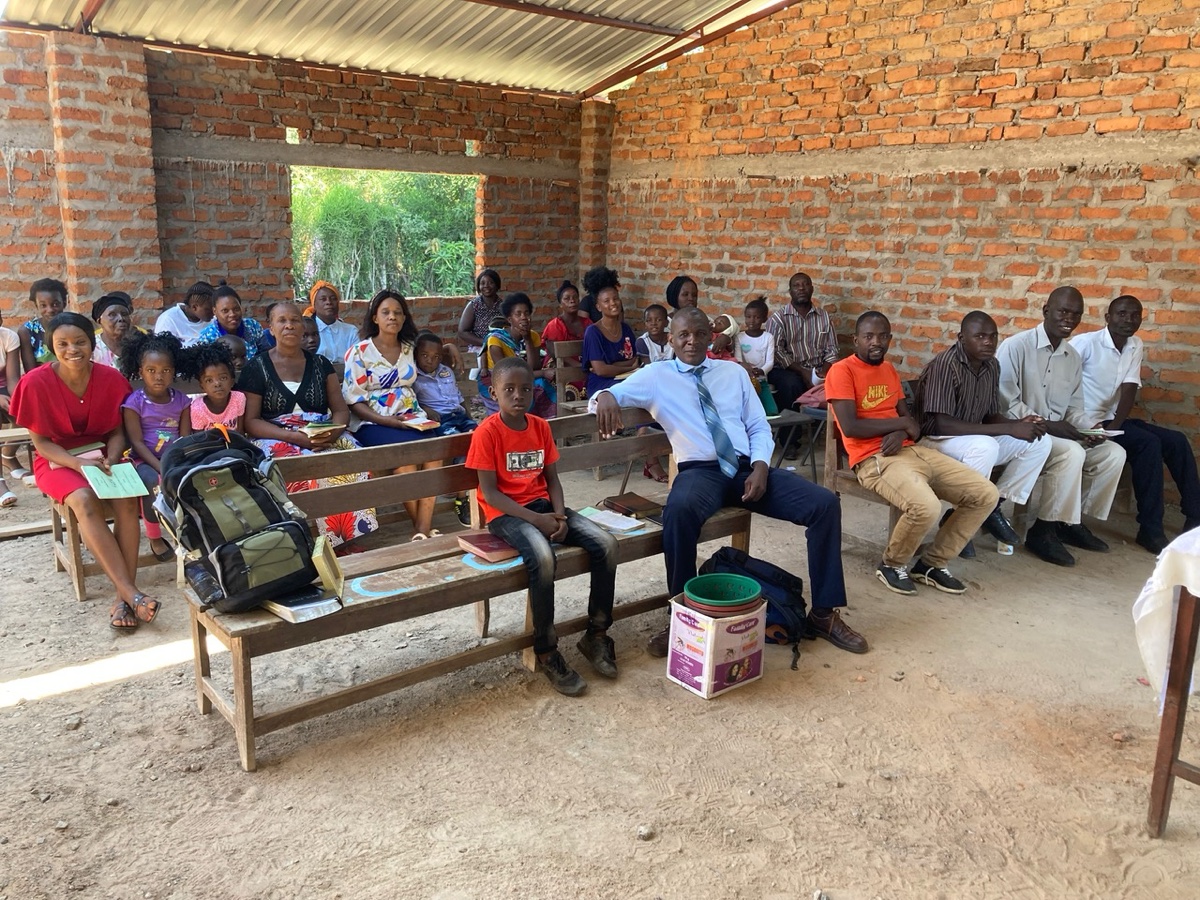
Caption: The church in Livingstone, Zambia
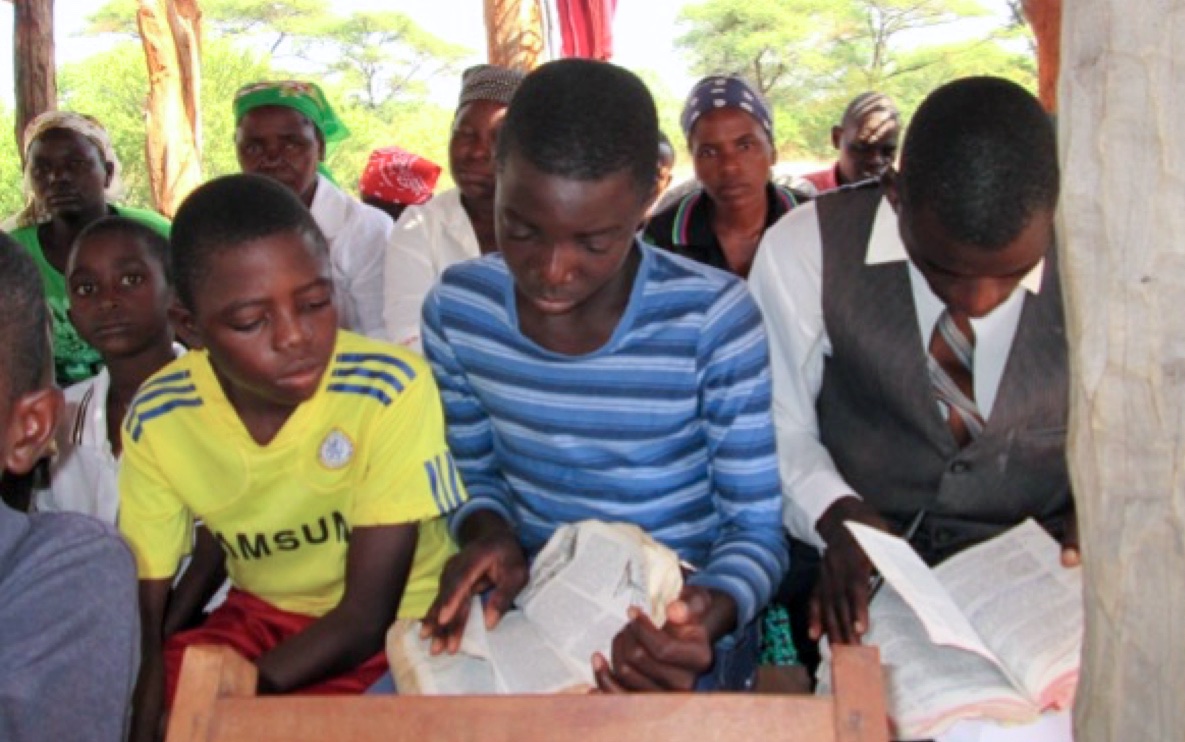
Caption: Owning a Bible is a luxury that many do not enjoy. There is a tremendous need for Bibles in native languages. It is not unusual that in a group of fifty listeners only four or five Bibles can be found.
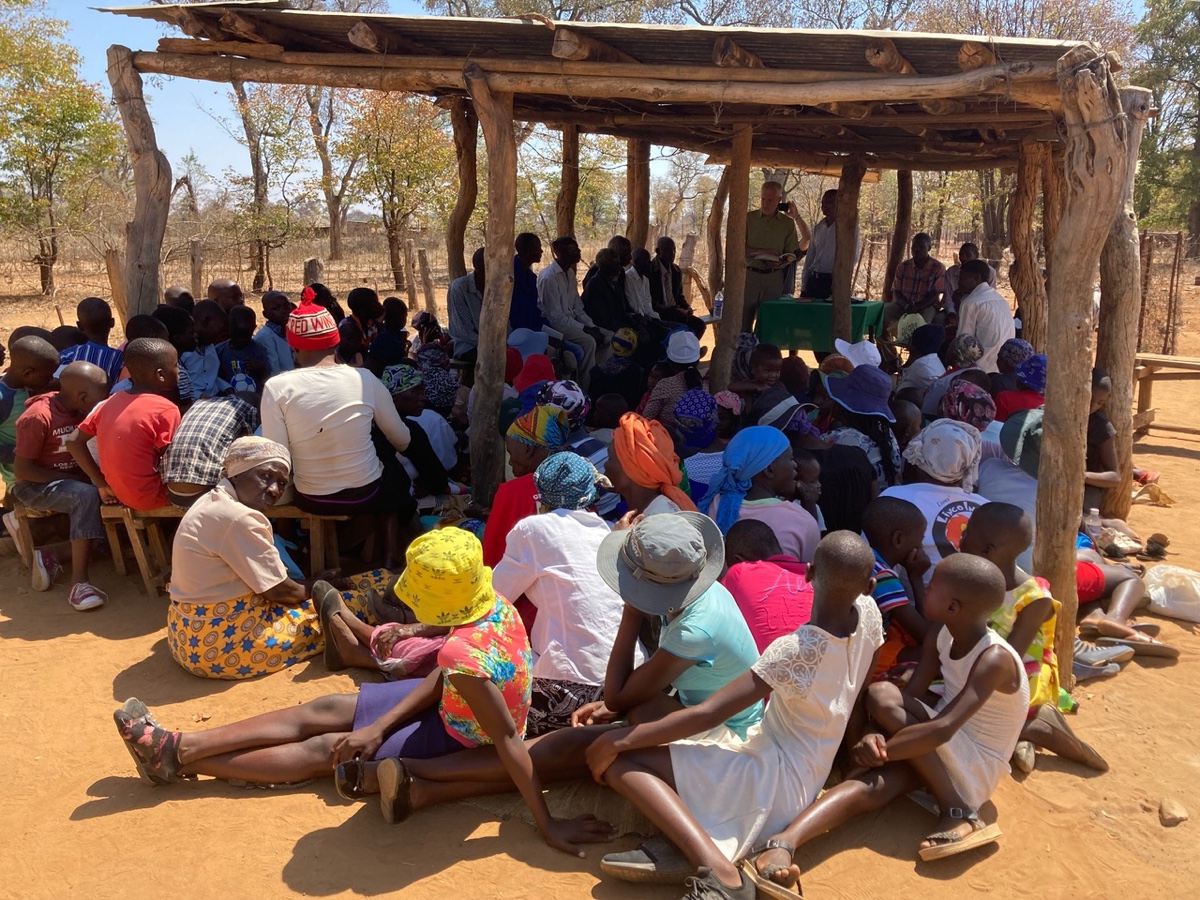
Caption: Brethren and visitors listening to preaching in the Tsholotsho district of Zimbabwe.
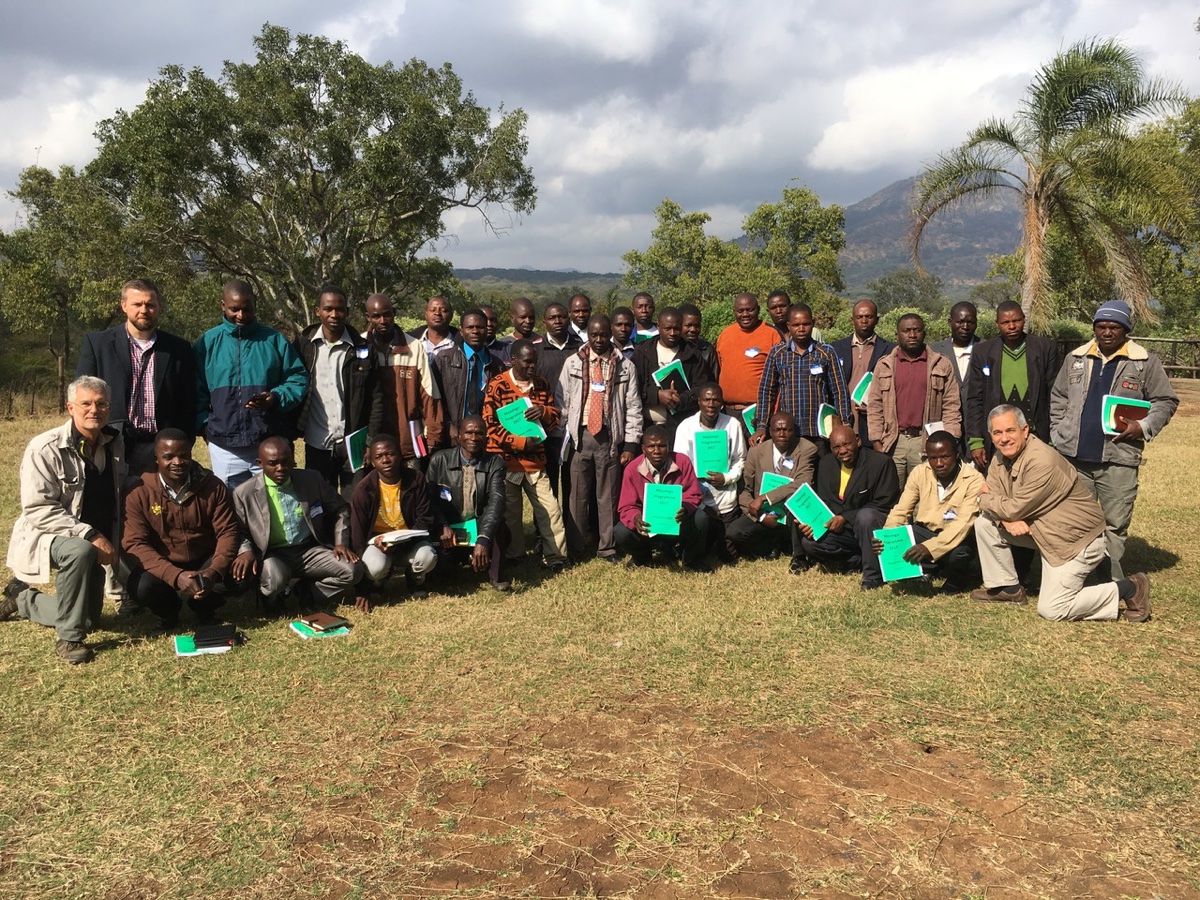
Caption: Preachers involved in studies taught by Joe Greer, Tadd Corder and Steve Klein near Masvingo, Zimbabwe.

By Ron Halbrook
Synopsis: In December 2024, Ron Halbrook, Chris Reeves and I travelled to the Philippines to preach the gospel. Below you will find the reports that Ron posted over the course of our trip. To follow his ongoing efforts, go here.
Dear family, brethren, and friends,
First, I apologize for the delay in getting this first report out. This trip has involved more complications than any I can remember, and I have been getting to bed past midnight almost every night. The delay will make this report longer than usual.
Mark Mayberry (from Alvin, Texas) and I arrived safely from Louisville, Kentucky, in Manila, Philippines, after passing through Atlanta, Georgia, and Inchon, South Korea. We arrived shortly after midnight Tuesday morning after almost 30 hours of travel. It was a long, tiring trip, but nothing like Paul’s travels, which left him floating in the sea after his shipwreck! We count it a blessing to travel this way. Chris Reeves (from Clarksville, Tennessee) arrived from Nashville, Tennessee, Tuesday about noon by God’s good providence.
On Wednesday, James Paet drove the three of us to the church meeting in Kapitbahayan, Navotas, where Elias Cruz labors in the gospel. Fifty-four souls joined us for an all-day series on “The Challenge of Gospel Preaching.” I discussed “The Heart of the Preacher,” a textual study of Philippians 1. Mark analyzed 1 Corinthians 1:10, pleading for unity among preachers. Chris explained various challenges faced by preachers in Old and New Testament times, reminding us we must be ready to face challenges and suffering in our time to uphold the truth of the gospel.
The open forum continued for an hour and a half with questions about how to distinguish doctrinal truth from personal opinions and scruples of conscience. The Word of God contains all doctrinal truth in direct statements, approved examples, and necessary implications. Personal opinions and scruples result from human reasoning and traditions. When they are held in the realm of personal conscience without forcing them on others, they do not cause trouble. When pressed and hammered like an iron wedge, they can cause division among God’s people. There were questions about elders: how to know men are qualified and how to work through the selection and appointment processes.
On Thursday, Mark and I went to the airport to fly to Kota Kinabalu, Malaysia. We went early but stood in a long line that moved at a snail’s pace at the check-in counter. We were about the last ones served. After the attendant had taken our suitcases and was almost ready to hand us our boarding passes, she said the boarding had ended and we would have to look for another flight. After spending a fruitless hour at the Malaysia Airlines office, we gave up and returned to the hotel. After waiting a couple of hours while a travel agent looked for a flight, we were told nothing was available until Sunday! That would mean the cancellation of the Malaysian segment of our trip.
I then called Rody Gumpad to ask him to request his travel agent to look for flights. They found one leaving Manila at 9:40 P.M. but said Mark could not go because he could not enter a new country until he got a new passport since his expires next month (a cushion period is required in case something might delay the person leaving the country). I alone flew to Brunei, slept on a couch-like seat in that airport, and took a connecting flight that arrived in Kota Kinabalu Friday at 8:10 A.M.
I rushed to the hotel, showered, and changed clothes, and Nick Rowe rushed me to the rented room where the church meets. Nine souls were waiting for the series on “The Bible Is the Word of God” to start. I preached on “The Glory of God (Ps. 19)” and also taught “The Inspiration and Authority of Scripture (2 Tim. 3:14-17).” To fill in for Mark, I preached the sermon “Now I Know That Thou Fearest God (Gen. 22:12).” The open forum was next. A dear sister asked for a discussion on how she might convert her stubborn husband. Beginning with 1 Peter 3:1, we discussed the powerful impact of a wife’s godly example and how she might look for opportunities to plant the seed of truth. If he refused to open his heart, not even Jesus Christ, the perfect teacher, could convert him.
Though exhausted, I walked for an hour to increase my stamina and finally got to bed about midnight. I was just thankful to be here after such a long and stressful day!
Mark recouped by working with Chris for a couple of days in Metro Manila and with Rody Gumpad for a couple of days in Tuguegarao, Cagayan. The saints in Kota Kinabalu are anxious to hear him teach, too, but possibly that will be possible at some future time by God’s good providence. The glitch in our travel plan may have involved God’s good providence because it is possible Mark would have arrived in Malaysia but would have been prevented from entering the country during the immigration process.
The series on the Bible resumed here Saturday with studies on “The Writing and Canon of Scripture (2 Pet. 3:1-2)” and “Apocryphal Books and Other False Scriptures (2 Cor. 11:3).” Then a separate lesson was taught entitled “The Gospel Makes Us Right with God (Rom. 1:16-17)” on first principles of the gospel.
The open forum included a fruitful discussion of why people refuse to believe in God and why they claim to believe in the theories of the “big bang” and macro evolution. The basic answer is that they are fleeing from God and do not want to be held accountable for their sins. Eight souls attended today’s session. At the hotel that evening, I studied, worked on the backlog of email, and exercised for an hour, making it to bed at midnight again.
Twenty-four souls were present for the Lord’s Day service when I presented Part 1 of the sermon entitled “The Bible: God’s Only True Word (2 Tim. 3:16).” Most of them were not able to attend the first two days because of work schedules, but they were very attentive today! Afterward, everyone was invited to Nick and Justina Rowe’s house to share in a potluck meal and visit.
In the afternoon, Nick drove out to the village of Sugud for us to study the Bible with his Catholic friend, Ben Anthony. This was the first time he had agreed to study. I began with Matthew 7:7, pointing out that when Jesus preached about the new kingdom for our salvation, He taught that some people make it a priority to ask, seek, and knock until they learn and understand God’s plan. Other people learn little because they have other agendas and priorities in life.
Ben then started by asking what is the difference between the Old and New Testaments. We went back to Genesis 12:1-3, which outlines how God would bring the Savior into the world in the land of Canaan, through the nation of Israel, and would bless men of all nations through this Savior who must be the seed of Abraham. The Old Testament records the preparations God made for the coming of the Savior, and the New Testament records His coming and His teaching, which saves all who obey Him. We studied some basic facts of the gospel and also contrasted the commands of Jesus with the human traditions of Catholicism. Ben was one of the most perceptive and receptive people I have ever studied with, and we hope this laid a foundation for future studies which will lead him to obey the gospel of Christ.
To have more time to study for tomorrow’s lessons and to work on the backlog of email, I ate in my room tonight and squeezed in an exercise session from 10:30-11:30. That put me in bed about midnight again.
Part 2 of “The Bible: God’s Only True Word” was presented Monday with an attendance of 8 souls. This was followed by “Finish the Race (2 Tim. 4:6-8)” and the final lesson “Death, What Then? (Eccl. 12:7).” The open forum was wide-ranging and profitable, but a couple of questions about why God proceeds in certain ways to fulfill His purpose reminded us of Deuteronomy 29:29—the secret things belong to Him alone.
I thought my Malaysia Airlines return ticket was still valid but learned at the last minute they had canceled the ticket because of a mistake in their records and refused to issue a new one! Sister Collette Brown is my travel agent in the U.S., and she spent many hours before finding an available seat on Royal Brunei Airlines, the same airline I used to get here. I am deeply indebted to her!
I cannot leave today (Tuesday) until 9:05 P.M. Then, it requires me to sleep in the airport again in Brunei tonight to make the connecting flight to Manila Wednesday at 11:55 A.M.—but that is better than swimming back to Manila, which might take a little longer! Anyway, there goes the day of rest I had planned to have before flying to Mindanao for the next segment of this trip.
For some reason, this trip keeps encountering complications, but many prayers are being answered as God opens doors to solve the problems as they arise. The latest complication is that Lordy Salunga must have emergency surgery and will be recuperating during the time I was scheduled to work with him in a two-day lectureship on “Marriage and Morals” in Angeles City, Pampanga, on Luzon. Please pray that his surgery and recovery will be fully successful. By God’s good providence, Archie Alarcon at nearby San Fernando City agreed to host the series, and we have been communicating to make the arrangements.
One day at a time, dear Lord!
The open doors, as well as the complications that have arisen, make me all the more conscious of how important and powerful your prayers are. Thank you, and God bless each one of you. In Christian love, Ron Halbrook.
Dear family, brethren, and friends,
Tuesday night, I bid farewell to Nick and Justina Rowe and flew to Brunei. After spending the night in the airport, I safely reached Manila Wednesday afternoon, where Mark had arrived from Tuguegarao, Cagayan, ahead of me. Thursday, Mark, with James Paet, joined me on a flight to Davao City in southern Mindanao. Salvador Parbo and a contingent of preachers from General Santos City met us about 2:00 P.M. to drive us about 3 hours to reach Kidapawan City, Cotabato, to work with Danny Angeles.
We hit the ground running because we drove straight to the house of Danny’s doctor friend, who is a 7th Day Adventist, for a first-time Bible study. I presented an overview of God’s plan for our salvation entitled “The Gospel Makes Us Right with God (Rom. 1:16-17),” including changes in the plan made by false religions and denominations. I let the doctor himself read most of the passages, and he acknowledged that he understood what we studied. Mark took a few minutes to explain Jeremiah 31:31-34 to clarify the distinction between the Old and New Testaments. Dr. Edwin made a weak attempt to explain how his denominational baptism might be the same as Bible baptism, but he acknowledged that he needed to give this more study and thought. He thanked us for providing the bread of life from God’s Word and invited us to his table to share a feast of physical food.
After we finally got to our hotel, I took a late-night walk, reviewed tomorrow’s lessons, and read a few emails, getting to bed at 1:15 A.M. I have learned that Negros Occidental has suffered a volcanic eruption that has affected our brethren. Brother Roy Matta is pleading for about $12,000 in emergency benevolence funds to help provide clean water, food, and repairs. He lives on the island of Cebu but travels often to this area of Negros and is in a good position to get the relief directly into the hands of the saints who are suffering.
The lectureship on “How to Study the Bible” began Friday in Kidapawan City thanks to the good work of Danny, who was converted from The Christian and Missionary Alliance Churches of the Philippines (CAMACOP) when Jim McDonald was here some years ago. We rented a function room on property owned by the Methodist Church to accommodate our expected audience. Because he held a responsible position in the Alliance denomination before his conversion by the true gospel, he has many friends and contacts in the denominational world. Our attendance today was 110, which included many denominational pastors (men) and pastoras (women preachers).
I taught four lessons: the Bible as a book God expects us to study, approaching it with confidence we can understand it, wrong attitudes and methods of study, and the Law of Moses was nailed to the cross. Mark’s lessons addressed reasons for Bible study, preparing the heart, and rightly dividing the truth.
Together, we conducted an open forum for almost an hour. Questions resulted in a discussion of the Hebrew word Elohim (a plural form of a word for the one God, including the Father, the Son, and the Holy Spirit), whether the church is the church of God or the church of Christ (both, because God planned it and Christ died for it), instrumental music authorized under the Law of Moses but not authorized by Christ for our worship today, how people were saved before Christ came (they obeyed God by faith in the promise of the Savior and His sacrifice forgave their sins), was the church in Jerusalem the universal or the local church (people were baptized into the universal church [Acts 2:47] and the Apostles taught them to form a local church to worship [Acts 2:42]), and a woman’s role in worship (men should lead and women participate in appropriate ways without exercising authority over men).
Someone asked about the denominational practice of exchanging pulpits. They do this based on their concept that members of the denominations constitute the universal church. However, the Lord adds souls to the universal church when they are baptized for the remission of sins (Acts 2:38, 41, 47), which is not the baptism performed by denominations who teach salvation by faith alone. Also, none of the denominations existed in the first century when Christ built His church. Therefore, churches of Christ do not participate in exchanging pulpits with denominational preachers.
None of the questions today were belligerent. They simply sought more understanding and clarification. This has been a very productive and profitable day!
The moon has been especially beautiful the last couple of nights.
Thank you for your prayers and support, which make this work possible! In Christian love, Ron Halbrook
Dear family, brethren, and friends,
The Kidapawan lectures on “How to Study the Bible” continued Saturday with another full house. The corrected attendance Friday was 138, including 47 denominational preachers, and today we had 108 with 34 denominational preachers. Mark’s topics were study by context, take all the Bible says, and the silence of Scripture. My lessons focused on translations and word studies, the historical context of passages, and the Bible’s use of figurative language.
The open forum was very productive again. One denominational preacher who returned today explained he was taught that Ephesians 4:8-11 means Jesus went into hades to save people who died during Old Testament times. The passage is not discussing what Jesus did to save certain people but how He conquered sin and death, then ascended to heaven to equip His saints to serve Him in different roles. Hebrews 9:15 shows the perfect sacrifice of Christ saved Old Testament people who lived and died by faith in God and His promises to send the Savior. Sinners in hades cannot change their status (Luke 16:26).
Someone else wanted to know if Psalm 150 authorizes us to worship with instrumental music today. Most people do not realize that God commanded the use of instrumental music during the ceremony of burning animal sacrifices—see 2 Chronicles 29:25-28. So, that is what we, too, should do if we use the Old Testament as the basis for using instrumental music in worship today. In reality, we serve God under the commandments of Christ today, and He commands that we sing, not that we play instruments (Matt. 28:18-20; Eph. 5:19). We should not add anything to God’s revelation (Rev. 22:18).
It is a joy to report that nine people repented of their sins and false religions and decided to be baptized into Christ for the remission of their sins (Matt. 28:18-20; Acts 2:38; 22:16; Gal. 3:26-27). We rejoice with the angels of heaven! We have learned that others are seriously considering taking the same step in submission to Christ.
On the Lord’s Day, 110 souls gathered for the worship in Kidapawan City. Mark presented a simple but effective overview of the Bible. I preached “The Prison of Sin (1 Pet. 3:19).” After a quick lunch, we went to a Pentecostal-type church called the Lanao House Fellowship Center, where we were invited to preach. Mark’s sermon gave an introduction to the church of Christ in the New Testament, and I followed with “The Gospel Makes Us Right with God (Rom. 1:16-17),” dealing with first principles of the gospel. Twenty-five attended and were very attentive. They invited us to return as soon as possible. Danny will follow up with this group, and Mark and I hope to have contact with them via email.
From 4:00-7:30 P.M., we preached in another Pentecostal-type church called Light of the World, where 34 gathered, including seven denominational preachers. The local preacher listened intently, sitting right at the front. I preached my lesson on “The Gospel Makes Us Right with God,” and Mark followed with a study of objections to Bible teaching on baptism. Once again, we shared our email addresses and hope to have further contact with these people, and Danny will continue working with them also. This has been a very busy and productive Lord’s Day!
The restaurant in our hotel was closed when we got back tonight, so Mark and I walked to another hotel where we could eat supper. After catching up on some work, I walked about 11:00 and got to bed at midnight. A big, bright, beautiful moon greeted me tonight and reminded me of many of you who can see it, too. We must leave at 7:00 A.M. tomorrow to drive to Davao City and catch a plane back to Manila, from where Mark and I will separate for the last segment of our trip.
Thank you for all of your prayers, and may God bless each one of you taking time to read these reports. In Christian love, Ron Halbrook.
Dear family, brethren, and friends,
ALERT: Preaching is never dull work, including reports, and we get plenty of advice. Some brethren like reports cut to the bone, short, with only the most essential information (I understand: you have other things to do than read long reports). Others tell me the most interesting parts of these reports are the details of what is taught, including the open forum discussions. So, short or elaborated? This one includes elaboration on the open forum discussions because so many interesting questions were submitted. Therefore, some of you may need to delete this report before wading into it. You can please some of the people some of the time, but not all of the people all of the time, as the saying goes! Feel free to smile here, if you like!
Salvador Parbo took Mark and me from Kidapawan City to Davao City early Monday morning to catch our flights around 1:00 P.M.—Mark to Cebu City to work with Chris Reeves, but James Paet and I flew to Manila. Jaime, James’ daughter, was kind enough to meet James and me at the Manila airport with James’s vehicle.
Although James had to be as tired as I was, he drove us to Angeles City, Pampanga, where we arrived around 7:30 P.M. I slept some as we traveled, but as far as I know, he didn’t! We stopped along the way for a light lunch at 4:00. After checking in at the hotel, I walked for an hour to boost my stamina, then ate a salad in my room while preparing for tomorrow’s lessons. God has answered many prayers as Mark, Chris, and I have been traveling and teaching His Holy Word.
I walked at my favorite walking place in the Philippines tonight. The U.S. military established a base here in 1903, and part of it was named Clark Field or Clark Air Base in 1913. Though the base closed in 1991, the area has been preserved as an economic zone, including the excellent airport. The military parade ground has been preserved as a huge open park consisting of 23 hectares (57 acres) with a walking track that runs 1.4 miles around the park. I walked about a mile to get to the track and then covered it twice, all under the light of the most gorgeous full moon!
“Marriage and Morals” is the theme of a 2-day lectureship that started Tuesday at a rented function room in Santo Tomas, Pampanga, near San Fernando, where Archie Alarcon labors with the Unity St. church of Christ. The series was originally scheduled for the Southside church of Christ in Angeles City, but Lordy Salunga had emergency surgery, and Archie provided the backup venue. Eighty souls attended today’s session while we studied “Marriage: God’s Gift to Man and Woman (Gen. 2:24),” “Marriage: Joined by God (Matt. 19:6),” “The Truth about Abortion (Rom. 13:8-10),” and “The Truth about Homosexuality (Jude 7).”
The open forum ran over an hour with about 30 questions on various aspects of marriage and morality. Does a man sin if he feels attraction to another male? No, that is only temptation—sin occurs when we yield to temptation and violate God’s law. What advice can we give a woman guilty of the traumatic sin of abortion who is willing to repent? Assure her that God’s love in sending Christ provided a perfect sacrifice for all sins of all people (John 3:16). Point her to the beautiful invitation of Jesus to “all who labor and are heavy laden, and I will give you rest” (Matt. 11:28-30). Jesus will lift the crushing weight of this sin, and the mother will someday meet her aborted child in heaven!
May an abused wife divorce her husband and marry someone else? No, fornication is the only ground for divorce and remarriage. She may remove herself and her children from harm’s way by seeking temporary shelter in a safe place until the abuser gets help and will no longer endanger her. In short, “love your neighbor as yourself” means not only can you help a neighbor get out of a burning house, but you may also rescue yourself from a burning house.
Several people asked about the status of unbelievers’ marriages. Does God bind them in true marriage? Yes, 1 Corinthians 7:13-15 shows He does. Is it a sin to abort a child when a nation has a two-child policy like China had? Yes, because we ought to obey God rather than man, just like the parents of Moses in Exodus 1-2 (Acts 5:29).
Does God bind people in marriage who do not register it with the government? The marriage vow is binding once taken, like any vow before God, but the person errs by not complying with the government’s requirement to register the marriage. Marriages are not registered at times in the Philippines because of people living in remote areas or because of poverty. Filipino preachers and other saints help to guide them and provide any necessary funds to register their marriages when they come down from the mountains.
Are two people married because they love each other and decide to live together? No, the “live-in” arrangement involves fornication. Marriage requires intent, agreement, and the vow committing the man and woman to the marriage covenant. Is the innocent party required to reconcile with the fornicator if he repents in all cases? There is no such requirement. The best case is always to be reconciled if possible, but it is very hard to restore trust after a mate violates the marriage vow—and other complications may be involved that impede trust. Some people are able to accomplish it, but not all.
Does God join someone in marriage who is forced into the marriage? No, this is an attempt to sanctify rape. Both persons must exercise free will with the intention to marry, the agreement to marry, and the vows of marriage.
Wednesday was the final day of this lectureship and the last day of my preaching on this trip. Sixty-two souls heard sermons addressing “The Threat of Pornography: Making Sex a God (Eph. 5:3-5)” (in 2 parts), “The Truth about Transgender (Gen. 1:27),” and “Preserving Unity in Christ (John 17:17-21).”
Our open forum ran 1 hour and 15 minutes with about the same number of questions as yesterday. Is there a difference between “preacher” and “teacher,” and which one can the church support? They are synonyms with “preacher” or “evangelist” indicating a proclaimer of God’s Word and usually includes full-time devotion to this work. “Teacher” simply indicates conveying information such as God’s truth, not a full-time work in the gospel. The church can use its resources to support all aspects of its work, including evangelism, worship, and benevolence to the saints.
Is it good for a marriage to have a long-distance relationship as when one partner works in a foreign country, a common practice for Filipinos? We cannot say it is always sinful because each case may have different circumstances, but it does create a great strain on a marriage and on the proper nurturing of children. What is the greater value: financial income or cultivating our marriage and raising our children in the nurture and admonition of the Lord with both a father and a mother? Should we watch movies for entertainment that glorify homosexuality and other sins? No, we should reprove them (Eph. 5:11).
When issues are stirring that divide Christians, how can we help the situation? We should be sure that we approach them with our hearts filled with love for God, with an unwavering commitment to know the truth, and with sincere brotherly love. Discussions should be conducted in a calm and respectful manner. We should extend patience and allow for growth in understanding various issues. When someone pushes an issue to the point that error and evil practices are spreading, public debate to expose the false teaching becomes necessary, as happened in Acts 15. Even then, it is imperative to speak the truth in love (Eph. 4:15).
Jesus said to forgive 70 times 7, but how should we treat repeat offenders such as alcoholics, drug addicts, and people who have been addicted to pornography? We should forgive them as Jesus commanded, but also reassure them of our love and prayers, reach out to help them in any way possible, and make ourselves available to them 24/7.
Is the current worldwide push to advance abortion, homosexuality, and transgender conduct evidence that Satan is marshaling his forces as prophesied in Revelation 20:7-8? I have wondered about the same thing, and the passage may refer to all of Satan’s work until his final defeat at the end of time. These particular sins have been rampant throughout most of human history, and they are certainly on the rise as Satan exerts every effort in his malicious war against God and the human family. Will God perform a miracle again like He did in Genesis 19 to punish nations? No, but He has plenty of other avenues through which to execute judgment on nations, such as His providential control of natural forces and of the rise and fall of nations.
Both days, brethren asked several questions about when does God actually join or bind two people in their marriage? Genesis 2:24, as reaffirmed by Jesus in Matthew 19 and by Paul in Ephesians 5, shows that God joins us in marriage when we have the intention to marry, we agree to marry, and we make our vows to enter the covenant of marriage (see also Mal. 2:14-16). The government does not join us but makes an important record for legal protections. The witnesses do not join us but play important roles to confirm to society that we are married. The preacher does not join us but declares God’s instructions for marriage from His Holy Word.
It has been a pleasure working with Archie Alarcon, with Jerry Moral, and other good men helping us with singing.
Tonight I walked about 5 miles because, for the past week, I have been abbreviating the walk for lack of time and the press of the work. It has been a joy to see what appears to be a full moon for 3 nights in a row (according to the phases, it is not full 3 nights but has that appearance). Again, tonight it was brightly beaming, reminding me of the love of many who read these reports and watch for the moon!
Before leaving Angeles City Thursday morning, James and I visited Lordy Salunga at the hospital lobby. He was released yesterday but had an appointment with the doctor at the hospital, so we had a good visit there. By the mercies of God, his surgery was successful, but he is managing the effects of an allergy to some of the medicines. God willing, I hope to reschedule the lectureship that had been planned with him next year. After our drive back to Manila, I was able to exercise, eat supper, do some work, and then get a very good night’s rest.
I got some more work done Friday morning, including the submission of last-minute Bible orders, and then met Chris Reeves and Mark Mayberry after their return from Cebu City, where they had a very successful lectureship and baptized 4 precious souls. James Paet drove us to the Philippine Bible Society, where we purchased 805 Bibles in various Filipino dialects, which will be delivered to preachers scattered around the islands to distribute to our brethren. This high privilege is made possible by the donations of many dear saints at home—God will not forget your sacrifices and service, which make this blessing possible!
After exercise, supper, and completion of this report, I hope to get another good night of rest in preparation for the long trip home. All of us are anxious to join our loved ones at home for the holidays.
Saturday morning, James will bring Chris and me to the airport to fly together to South Korea, where I will catch a plane to Minneapolis, and a connecting flight will bring me to the loving arms of Donna at the airport in Louisville, Kentucky, at midnight (if the flight is on time). Chris’s connections will take him to Atlanta and back to Nashville, Tennessee. Mark’s plane leaves Manila late Saturday night, taking him to South Korea to Atlanta, and then straight to Houston, Texas.
May God bless the dear Filipino saints we leave behind, bless our families who share in our work, and bless every saint who has prayed for us and contributed funds to finance these labors! In Christian love, Ron Halbrook.
Ron Halbrook has labored with the Hebron Lane church of Christ in Shepherdsville, KY, since 1997, concurrently alongside Danny Linden. Ron and Donna have three children and eleven grandchildren. The church website is here He can be reached here.

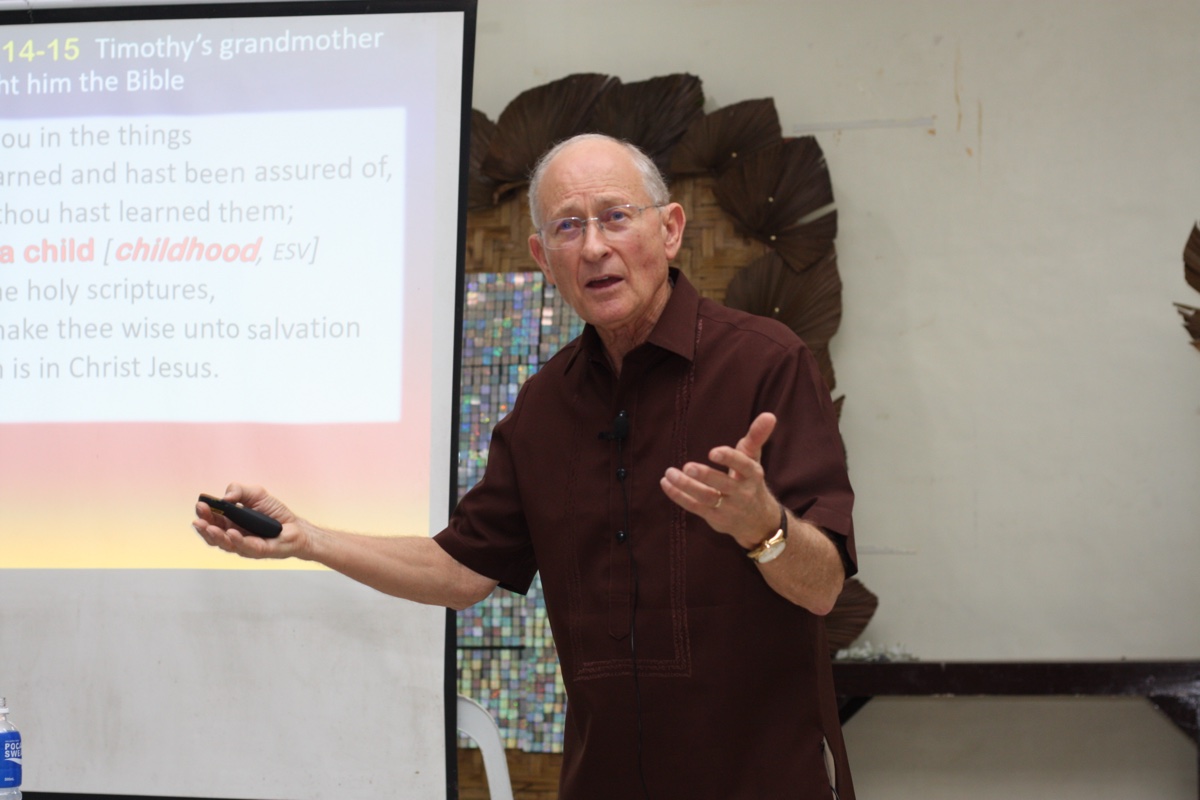
Caption: Ron Halbrook presenting a lesson on “How to Study the Bible” at Kidapawan.
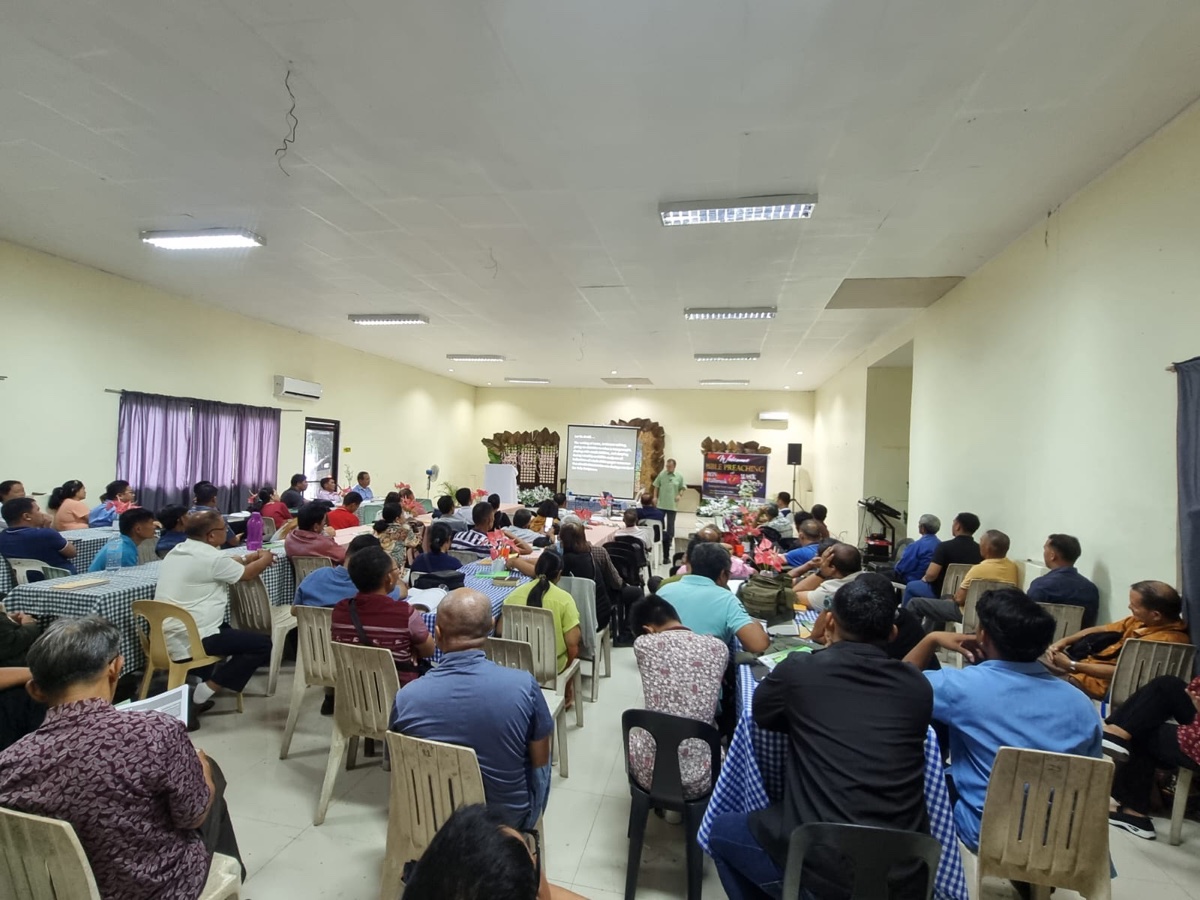
Caption: Bible studies at Kidapawan with many denominational preachers in attendance.
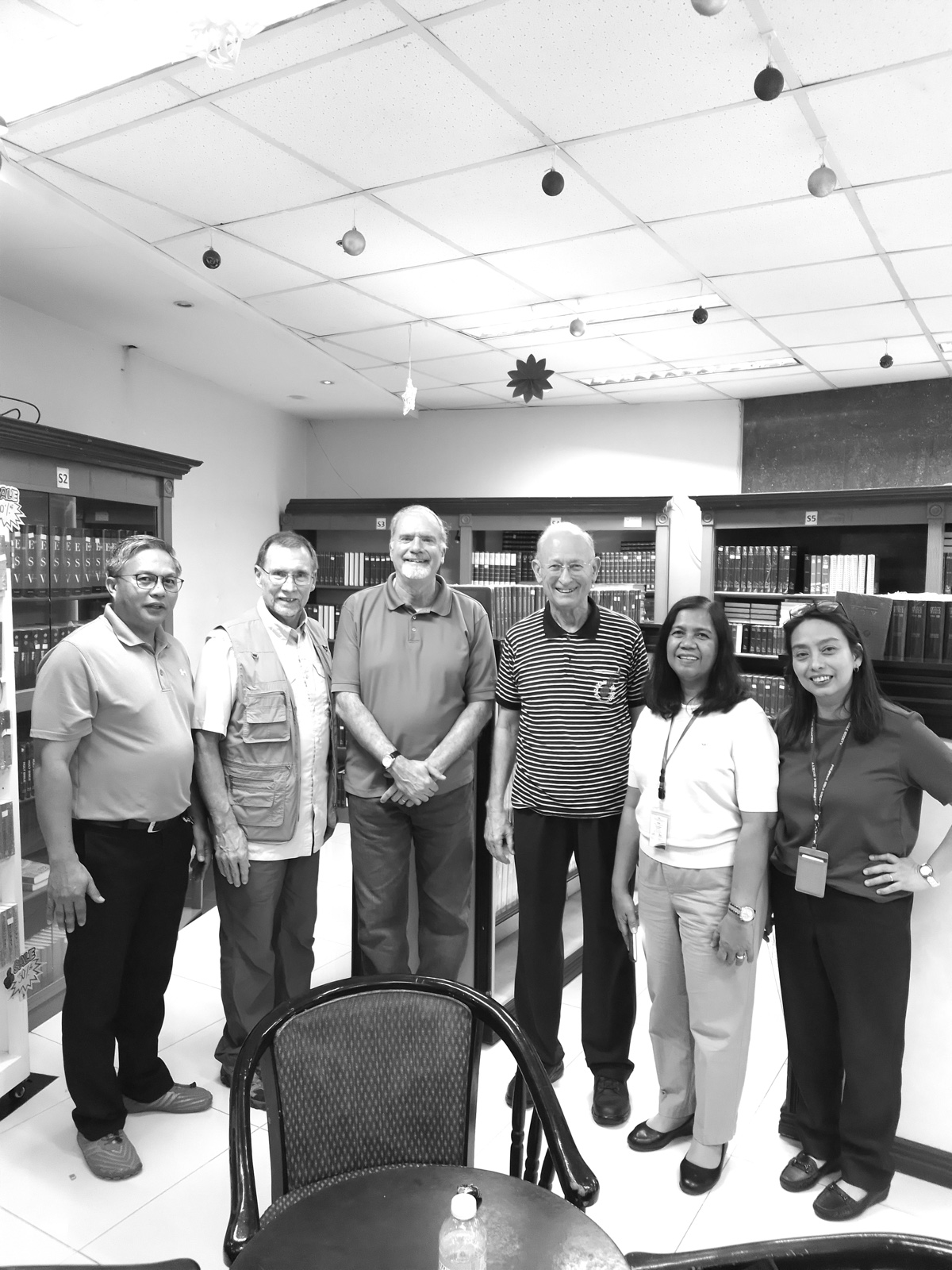
Caption: Purchasing Bibles at the Philippine Bible Society in Manila.
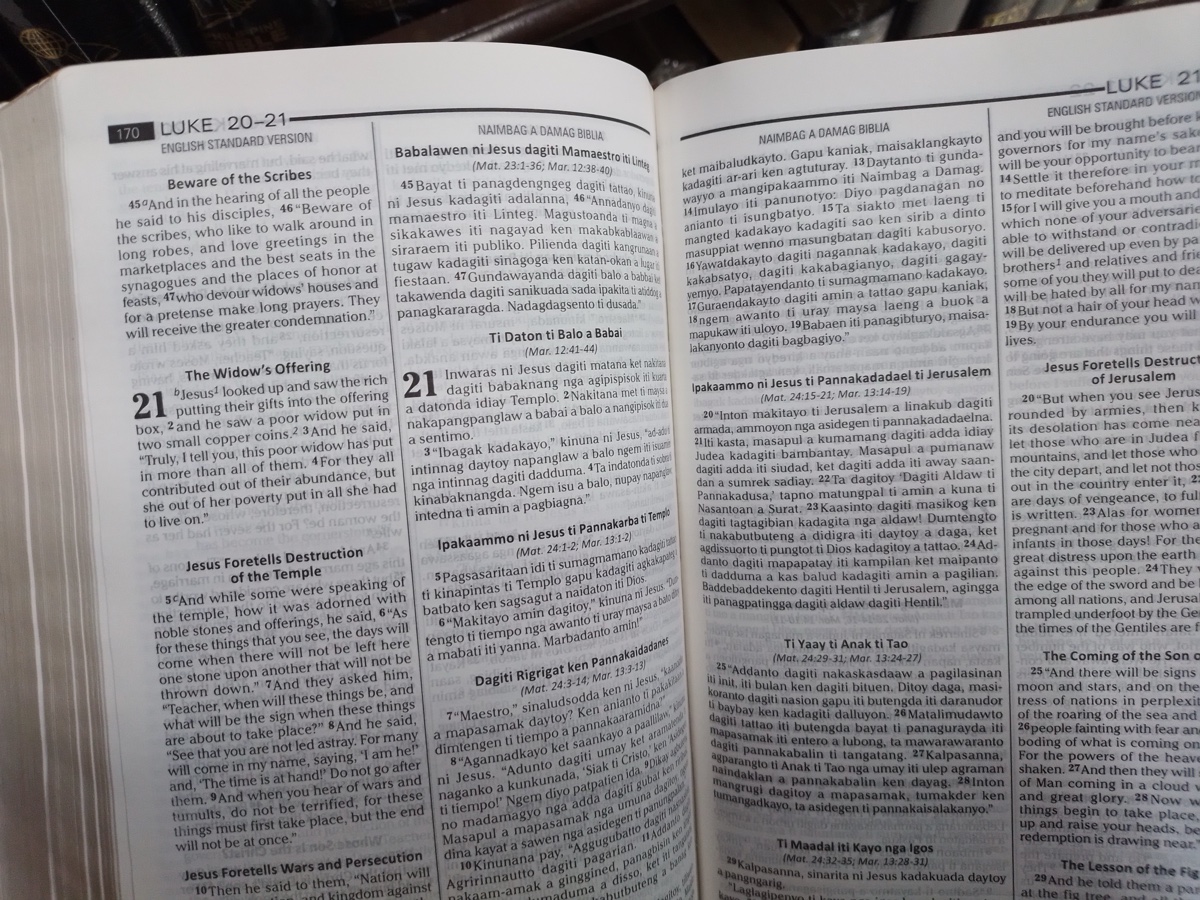
Caption: Diglot Bible with English Standard Version (ESV) and Ilokano Dialect

By Mark Mayberry
Synopsis: In December 2024, Ron Halbrook, Chris Reeves and I travelled to the Philippines to preach the gospel. Below you will find the reports I posted over the course of our trip.
The first part of the trip, the flight itself, and the travel from the United States to the Philippines went smoothly. We are blessed in the modern era to travel the world with relative ease. Certainly, the cost has increased in recent years, and this is the most expensive trip I’ve experienced in terms of airfare. Still, it is remarkable that we can go to the other side of the world in approximately 24 hours, including the stops involved when there are three legs of the journey.
On Tuesday, we arrived at about 1:30 at the motel after deplaning, going through customs, and getting our luggage from the airport. It was about 2:00, or more likely 2:45, before I went to sleep, and then I woke up at 6:00 a.m. I visited with Sherelyn initially after she got home from her trip to Louisville. Then, after Ron and I had breakfast, we went to the money changers and converted some U.S. dollars into Philippine pesos.
Several Filipino brethren helped unbox the Bible study materials we brought with us from the United States in eight large shipping boxes. They repackaged the literature and prepared to ship it to various places in the Philippines.
James Paet, Ron, and I then went to the Mall of Asia, where I got a new SIM card and a month’s worth of text and data for the phone that I use in the Philippines. We purchased a couple of items for Ron and then had lunch together. We came back and met with Chris Reeves at the motel. Afterward, we rested for about 40 minutes and then exercised for about an hour. In the evening, we had supper with Chris. Ron and I discussed our plans for tomorrow when we’re preaching in a one-day gospel meeting here in the Greater Manila area.
The preaching meeting on Wednesday was well attended. There were 54 in attendance, men and women alike, mostly gospel preachers from Metro Manila, some of whom had driven eight hours to attend. There was good attention. We had two sessions in the morning, another session in the afternoon, followed by a question-and-answer session. So the actual teaching offered was eight hours in total. Each of us addressed some topic relating to the heart of a gospel preacher. That was the title of Ron’s lesson. He had, of course, a biblically based presentation of how a preacher should view himself, and how his heart should be dedicated to both proclaiming the truth and accurately communicating God’s message, as well as applying it to his own life and doing so out of a desire to help other people get to heaven and help to save his family and as many as possible from the clutches of Satan.
My lesson dealt with 1 Corinthians 1:10-11, which addresses the issue of controversy and the exhortation that we should be perfectly joined together in the same mind and the same judgment. Over the course of my lesson, I focused on two basic areas. One, when it comes to doctrinal matters, we should strive for spiritual unity, respect the consistency of divine revelation, accurately divide the word of truth, and unite upon what the Scripture teaches. On the other end of the spectrum, when we deal with areas in which God’s word is silent or where we are not given specific instruction regarding the implementation of certain aspects of divine truth, where more than one approach is possible. For example, this principle would apply to choosing to be married or not be married as in 1 Corinthians 7, in view of the present distress, Paul gave his opinion that it’s better not to marry but certainly did not bind that upon others and was respectful of the fact that marriage provides a blessing for those involved in such a mutually supportive relationship. Basically, it was to help work through some of the difficulties that brethren here face, just like they have in America, over knowing when to stand firm and solidly committed to biblical principles and allowing brethren to have differing thoughts and responses in areas of judgment or personal application, not binding opinions as the Pharisees did, who were guilty of adding to and subtracting from the word of God. They would often build a hedge around the law and make the laws relating to personal cleanliness and ceremonial purity stricter than what the scriptures actually called for. At the same time, when it suited them, especially when it would impact them financially and relieve them from what some would view as an onerous burden, they loosed the implication inherent in the command, “Honor your father and your mother,” and allowed people to neglect that duty and the proper application of it. So they were opposing and binding and thus rendering worship vain.
On Thursday, Chris held a day-long session. James Paet took him to a nearby place to preach. His lessons focused on the family, encouraging both the men and women present, the husbands and wives, the preachers and their wives, to be mindful of their cultivated relationships with their children. His lessons were primarily on the family.
My initial plans were to join Ron and go to Malaysia. Unfortunately, as is often the case in travel overseas where the efficiencies of the United States are sometimes lacking, when we went to fly from Manila to Malaysia, the lines were so long that we ended up missing our flight. They had actually closed the gates and the doors of the plane by the time we reached the check-in window, and we were not allowed to board. We spent the next four or five hours trying to rebook a flight, which was a frustrating experience going from one company to another. When you buy an airfare or a flight ticket from a travel agent, sometimes if a complication ensues, the airlines want you to go back to the travel agent. They’re not willing to make the necessary changes to the existing tickets. With the time change that we faced in the United States being at night while we were trying to get rebooked, we couldn’t pursue the first and obvious option. Because the flight was booked with Malaysia Airlines, but the first part was serviced by a Filipino airline, one company tried to say it was the other company’s problem and responsibility to correct it. We spent about two hours at the Malaysia Airlines office. Although they didn’t have a ticket agent in the facility, yet a helpful young lady spent a lot of time with us trying to put us in touch via phone with a ticket agent. We spent about 45 minutes trying to rebook the flight, made progress, and then lost the connection, unable to reconnect with the same person. This happened at least twice. On the third time, they started saying there weren’t any flights available, and we would have to wait three days before we could fly. We went back to the motel and regrouped. Eventually, after several other futile attempts, we were able to get Ron scheduled to fly out later that evening. However, I was unable to fly to Malaysia due to complications with my passport, which expires in less than two months. Malaysia is very strict in their application of that window. It was perfectly fine to purchase the tickets several months ago, but this close to the expiration of the passport while overseas and unable to update it was a bridge too far. Ron went on his own, leaving at about 7:00 in the evening to catch a 9:00 flight, traveling overnight to Malaysia to begin preaching the next morning.
I revised my plans and will stay in Manila at least until Sunday, working with James Paet and going to various places where he scheduled several day-long sessions. I’ll work with him at the local congregation where he labors on Sunday and then fly to Tuguegarao on Monday.
On Friday, Chris Reeves and I traveled south of Manila to the Bancal-Carmona Church of Christ and worked with Brother Junie Samontina. It was a gathering primarily of young people, so our topics addressed their needs. I talked about passages in the New Testament that deal with the relationship between husbands and wives and also considered the text in Proverbs 31 about the worthy woman. In his first lesson, Chris discussed examples in the Bible of young men and women who put God first. In his second lesson, Chris talked about youth under pressure and the need to resist peer pressure and societal pressures to be sexually promiscuous, dishonest, lazy, and so on.
Throughout the day, we interacted with the young people during study periods and personal interaction, offering them counsel specifically directed at the challenges they will face and urging them to be faithful to God as they grow up.
It was a very beneficial day, and I enjoyed visiting this congregation again and seeing brethren with whom I had labored in the past. It was uplifting to work with such young people of potential.
Saturday was a day of recovery and preparation for the remainder of the trip.
On Sunday, I worshiped with the Edsa Pasay Church of Christ in Manila, where James Paet and Rainier Allado preach. A deaf-mute group of Christians normally assembles in an adjoining room, but this Sunday they joined the main congregation and participated in a combined worship assembly with the aid of a sign-language translator. There were 63 attendees, including 11 deaf-mute members. During the Bible class hour, I presented a survey of the Bible, which was well received. In the worship service, I spoke on the need for diligence in all areas of life, encouraging brethren to be committed to continued spiritual growth.
After lunch with James Paet’s family, we traveled to the Bacoor Church of Christ in Cavite City. This church building was constructed some years ago by an American brother, but the congregation subsequently dwindled in size until they stopped assembling. This building remained unused until February of this year, when efforts were made to reestablish a functional group in this area. I presented a sermon that explored the biblical question “How Long Will You?” to emphasize human accountability and the need for individuals to take responsibility for their actions and decisions in their relationship with God. It examines various biblical contexts, such as Adam and Eve’s choice in the Garden of Eden, Moses’ decision to endure ill-treatment with God’s people, and the Israelites’ choices under Joshua’s leadership. It also discusses the consequences of inaction, complacency, and misplaced priorities, urging hearers to make decisive commitments to God, embrace humility, and obey His commandments.
On Monday, I flew from Manila to Tuguegarao City in northern Luzon. Rody and Tessie Gumpad met me at the airport, along with Dennis Yuson and his wife, along with several others. We all drove to the Isabela Province, which is located in the Cagayan Valley region. We met with the saints at Santiago, where Brother Victor Ramos preaches. We had a good worship with a very attentive group of Christians. Rody Gumpad provided a summary of my lesson in the local dialect, which was well received and reinforced the message. One young lady obeyed the gospel.
The second stop on Monday was at Villa Corazon, a remote congregation with a simple building. Despite the humble circumstances in which we assembled, the audience was very attentive, and two young men came forward to confess faith in Christ. Many in this region have been receptive to the truth, and numerous churches have been established here.
On Tuesday, I preached at Minagbag, where Jay Jay Gumpad labors. The audience was attentive to my lesson on “Stumbling Versus Stability,” which explores the concepts from physical, emotional, and spiritual perspectives. Spiritually, it highlights biblical commendations of stability through faith and obedience, while cautioning against stumbling due to pride, cultural conformity, doctrinal distortions, faulty reasoning, and inordinate desires. One young lady obeyed the gospel. I also reconnected with my dear friend, and fellow-laborer, Gerald Ganela, who recently lost his father, a long-time faithful gospel preacher.
The second stop on Tuesday was at the Solana Lingu Church, where Brother Robert Rancis labors. Robert, a former elder in the downtown Tuguegarao Church, is committed to preaching the gospel in this rural community. I spoke on the need for diligence, and Rody summarized the lesson. The singing was beautiful. In the evening, sister Tessie Gumpad, one of the best cooks anywhere, provided a delicious dinner for us as we concluded our two days of gospel preaching.
I composed these thoughts at the Tuguegarao Airport, awaiting my flight back to Manila. It has been wonderful reconnecting with brethren I have worked with over the past 20 years. Many of the preachers who attended over the last two days were former students from previous preacher training programs held at the Tuguegarao Church under the leadership of Rody, with assistance from various American evangelists. I have developed longstanding relationships with many of these brethren and hold a special place in my heart for the saints in the Cagayan Valley.
As I visit churches in different areas, I try to identify their needs and address such in my preaching. I do this through consultation with local evangelists who know the situation at each place. In the Cagayan Valley, during my visit to Tuguegarao, the churches were not experiencing internal strife or division, so my lessons focused on exhortation to the lost and encouragement to the faithful. I also encouraged these preachers to serve God faithfully in whatever capacity they find themselves, whether in a supportive role or a position of more notable impact.
Thursday was a day of travel, which brought an unexpected and blessed opportunity. Travel in the Philippines is often built around air travel because the Republic of the Philippines is a nation of islands. While I have traveled by “Fast Boat” from place to place, especially in areas where the islands are grouped rather closely together, when you go considerable distances such as from Luzon, the large island to the north, down to Mindanao, which is another large island to the south, flight is really your only option.
We flew by Philippine Airlines, via an Airbus 330 normally used for intercontinental travel, that was fully loaded with passengers. The flight from Manila to Davao City took approximately an hour and a half. However, the entire flight, because of the loading and disembarking times, takes more like three hours. We made it to the airport at 9:00 a.m. and arrived in Davao at 1:30 p.m. Several Filipino brethren met us at the airport, preacher companions with whom we have worked in years past. The journey to Kidapawan took approximately three hours. The roads we traveled upon were concrete highways, concrete and asphalt, but compared to America, it felt like we were riding a washboard (i.e., of the antique variety that was used in yesteryear to scrub dirt and debris from clothing).
After arriving at our destination, we experienced an unexpected opportunity made possible by the local evangelist, Danny, who is hosting our studies over the next two days. Ron and I taught a series of lessons on “How to Study the Bible” to a large group of denominational preachers. Danny was converted several years ago when Jim McDonald made his last trip to the Philippines. He has close contacts with many of his former associates and had invited them to come and study the Word of God with us.
Danny also made contact with a man who owns and operates the local hospital. This individual, a 70-year-old surgeon from a Seventh-day Adventist background, has reached out to religious groups in the area to extend health care to the poor members of the Lord’s Church and other groups as well. He is trying to help the community in which he has labored for so many years.
He invited Ron, me, and our traveling companions into his home for a Bible study and supper. We had about a two-hour Bible study in which Ron presented a simple lesson on the uniqueness of God’s plan of salvation, focusing on Jesus Christ as our Savior and the Lord’s church as the realm in which we come into fellowship with the Lord and fellow Christians. This lesson emphasized the distinctiveness of the gospel message. The man read the passages presented. I was given the opportunity, after the initial discussion, to follow up with a brief discussion of the covenants of God, which is an area that needed to be addressed in view of his denominational affiliation.
Seventh-day Adventists believe that the old covenant, in particular observing the Sabbath, is still in force. I was able to discuss the biblical concept of covenants: God has established the covenant of marriage, which is between God, a man, and a woman, as the relationship in which we find companionship and happiness. There are also covenants that God made with individuals, such as with Abraham and David. Then there are covenants that God made with His people, first with the nation of Israel at Mount Sinai, and finally, with all who would obey the gospel through the person of Jesus Christ.
We compared the old covenant with the new and better covenant that replaced it, focusing in particular on Jeremiah 31. Jesus is not just the one who instituted a better covenant; He is a better high priest, more powerful, better than the angels, etc. It was a wonderful opportunity. The man was very receptive, and in the interaction we shared with him, it appears that he is not far from the kingdom of God and was very open to the truths that were taught.
Before we left, one of the Filipino brothers traveling with us, Jack Jacko, offered some parting admonitions in their local dialect to conclude with a final appeal. I hope that this individual will be drawn to the gospel and that the seed planted this night through an unexpected opportunity will bear fruit. Brother Danny encouraged this man to not only obey the gospel himself but also share it with his fellow surgeons, doctors, and the medical staff serving in the local hospital. This is the evangelistic spirit that prevails here in the Philippines.
Our time in Kidapawan was a good opportunity to study with a number of denominational preachers. Ron shared the specific numbers of those who attended in his report. In addition to the large group of gospel preachers, there were between 30-40 denominational preachers in attendance each day.
Ron and I presented material from a workbook by Cecil Willis on How to Study the Bible, which sets forth the hermeneutical principles drawn from Sacred Scripture. It examines a variety of common religious doctrines and contrasts them with the truth contained in God’s Word, easily distinguishable by employing sound reasoning: (1) studying everything the Bible says on a subject before drawing a conclusion, (2) not interpreting one verse so that it contradicts clear teaching found elsewhere, (3) recognizing the distinction between the old and the new covenants, etc.
These sessions were very profitable. Students listened attentively and often signaled agreement with the principles being set forth. Questions posed in the open forum section showed that several individuals were seeking to apply these concepts to some of the erroneous positions with which they had previously been associated.
I hope that continued growth will occur and that others will be led to the truth in subsequent days and weeks. One family came forward acknowledging that they had been in error in their teaching practice. Because English was a second language, they sought further clarification on some points of discussion but recognized that they needed to be baptized for the remission of sins and renounce their previous erroneous practices. We hope that this will bear fruit and that good will result.
I appreciate the efforts of our Filipino brethren who supported our efforts. Many gospel preachers came, listened, and helped in the one-on-one discussions with some of the visitors from a denominational background, reinforcing the teaching that Ron and I presented.
On Sunday, we met in the morning with the saints here at Kidapawan with 110 in attendance. During the first hour, I presented a “Survey of the Bible,” pointing out that God had a plan before the foundation of the world to save mankind, which unfolded through the ages and ultimately was fulfilled in the person of Jesus Christ. Ron presented another excellent sermon during the worship hour. We enjoyed our association with Christians here in this city.
In the afternoon, we had a special opportunity to visit two nearby Pentecostal churches and preach the gospel freely and without hindrance. We studied relevant topics that would be helpful to each, and our lessons were well received. Twenty-five attended the first session with a “Church of God” group, while 34 were in attendance at the second session with a “Light of the World” congregation. Seven denominational preachers were in attendance.
After a very long day, we finally returned to the motel around 8 p.m., only to find that the restaurant had already closed. Ron and I walked into town and found a restaurant that remained open, enjoying a delicious meal before retiring for the night.
My focus during this final week has been to work with Chris Reeves in a preacher training program at Cebu, hosted by Brother Jonathan Carino at the Luim building. The program started on Monday and ran through Wednesday. Since I traveled on Monday from Kidapawan on Mindanao to Cebu in the Visayans, I was unable to participate in the studies on the first day. However, I was able to join the sessions on the second and third days.
Tuesday was very rewarding. Chris has an ongoing series on preacher training, teaching from 1st and 2nd Timothy and offering practical counsel on the work of a preacher, including how to use technology such as freely available software and online services like Bible Hub. He spent an hour in one of the sessions showing the features available, explaining where those tools are useful, and cautioning about some sections that might have suspect lessons and articles written from a denominational perspective.
On Tuesday, I presented a compressed version of the lessons that Ron and I had taught earlier on “How to Study the Bible.” This study group was composed of faithful gospel preachers who possess a more mature understanding of Scripture than the denominational preachers with whom we studied at Kidapawan. As a result, we were able to delve more deeply into the material. The application shifted from the milk of the word (i.e., first principles) to meatier matters (i.e., more challenging issues) that will help them in pondering and proclaiming God’s word.
On Wednesday, I presented four lessons that provided an introduction and summary of the books of Ezra and Nehemiah. We have been studying these lessons back home over the course of our third trimester, which is a four-month-long series of lessons in the auditorium class at Adoue Street dedicated to these books. I taught many of the lessons but shared the responsibility with other teachers, such as my fellow elder, Darin Henry, and other men in the congregation. Here, over the course of four one-hour sessions, I provided a summary of Ezra and Nehemiah, focusing on how these men exemplified the need for courage in facing the various challenges that came with their efforts to restore the remnant to its proper status before God. This proved to be both interesting and informative for our Filipino preaching brethren and applicable to their circumstances and struggles.
On Thursday, Chris and I held a one-day gospel meeting with the saints who attend the Luim congregation. Four young men responded to the gospel invitation and were baptized.
On Friday, Chris and I flew from Cebu to Manila and visited the Philippine Bible Society with Ron Halbrook, where we purchased Bibles in various Filipino dialects.
On Saturday, we began our journey back to the United States. Thank you to all who made it possible for us to travel halfway around the world and perform this important and rewarding work!
Yours,
Mark Mayberry
Mark Mayberry has labored with the Adoue Street church of Christ in Alvin, TX, since 1998, where he serves as the evangelist and an elder. The church website is here. His website is here. He can be reached here.
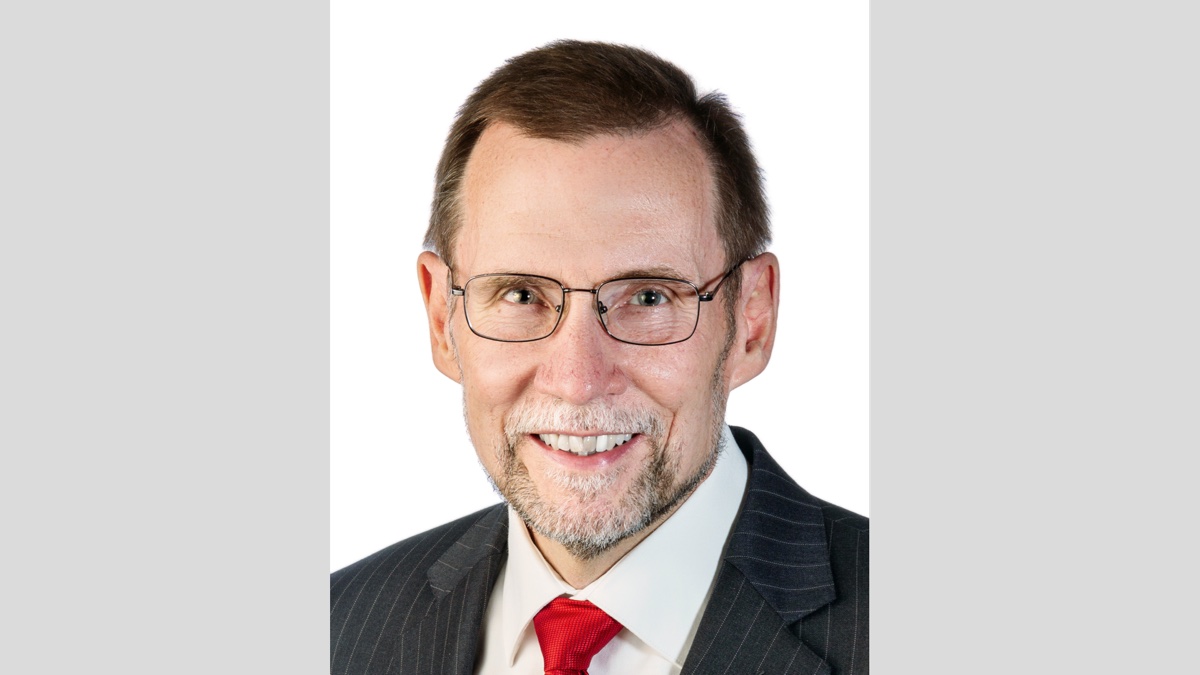

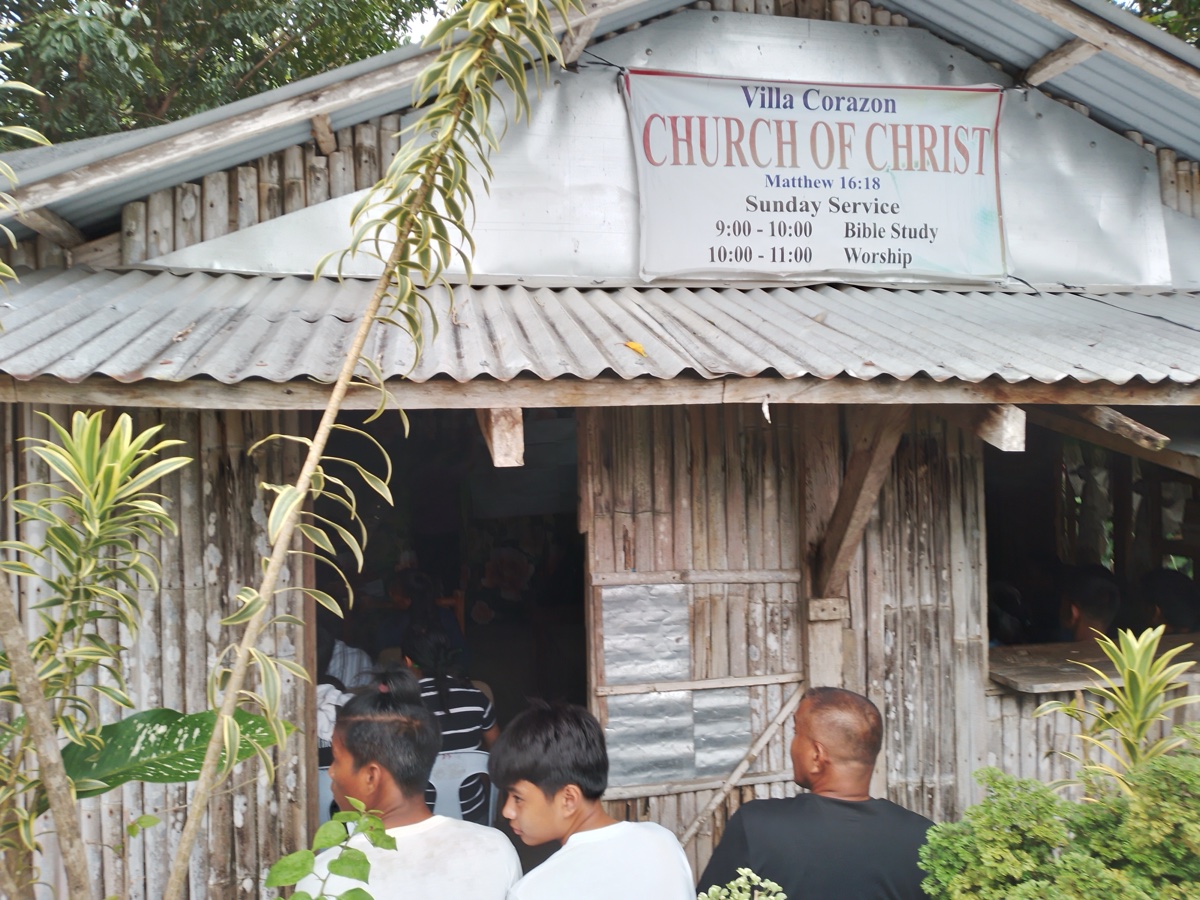
Caption: Preaching at Villa Carazon congregation in Isabela Province in northern Luzon.
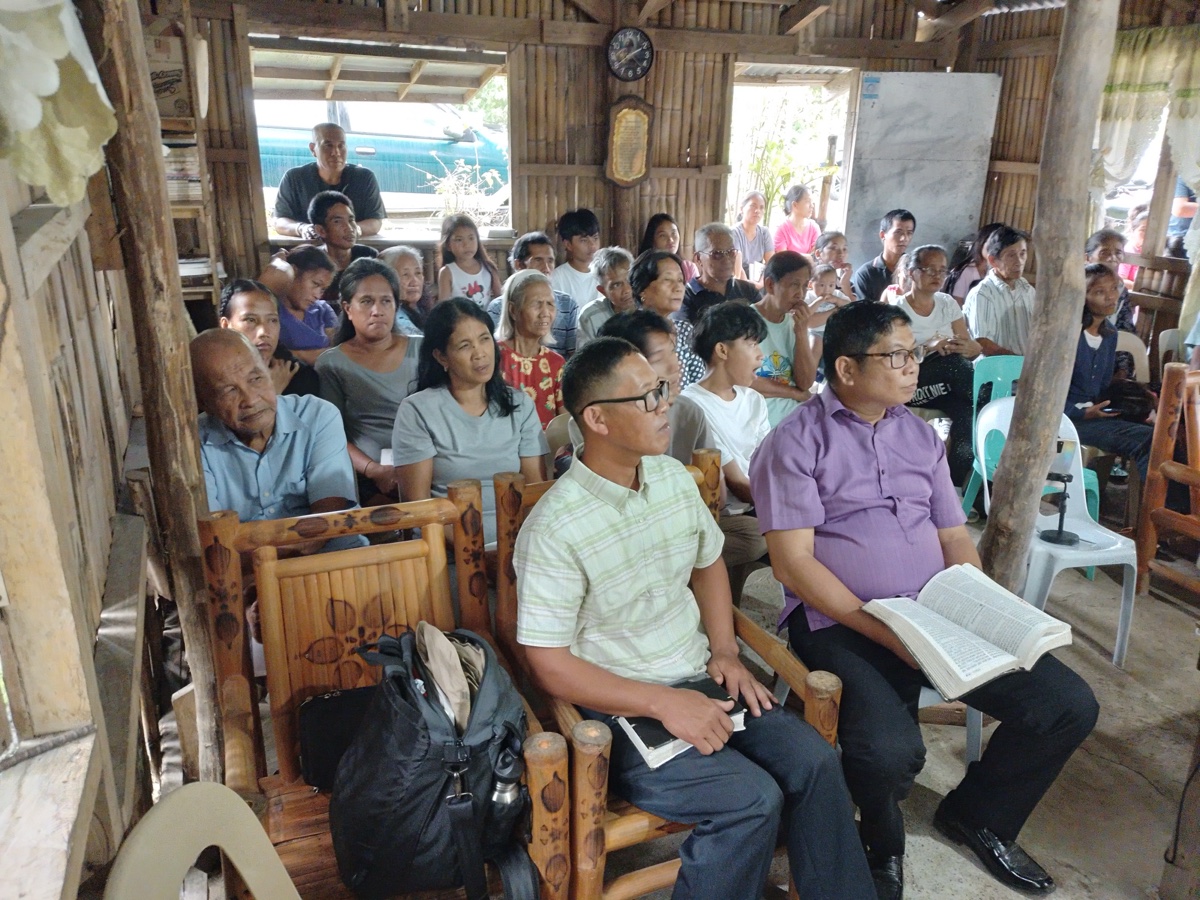
Caption: Preaching at Villa Carazon congregation in Isabela Province in northern Luzon.
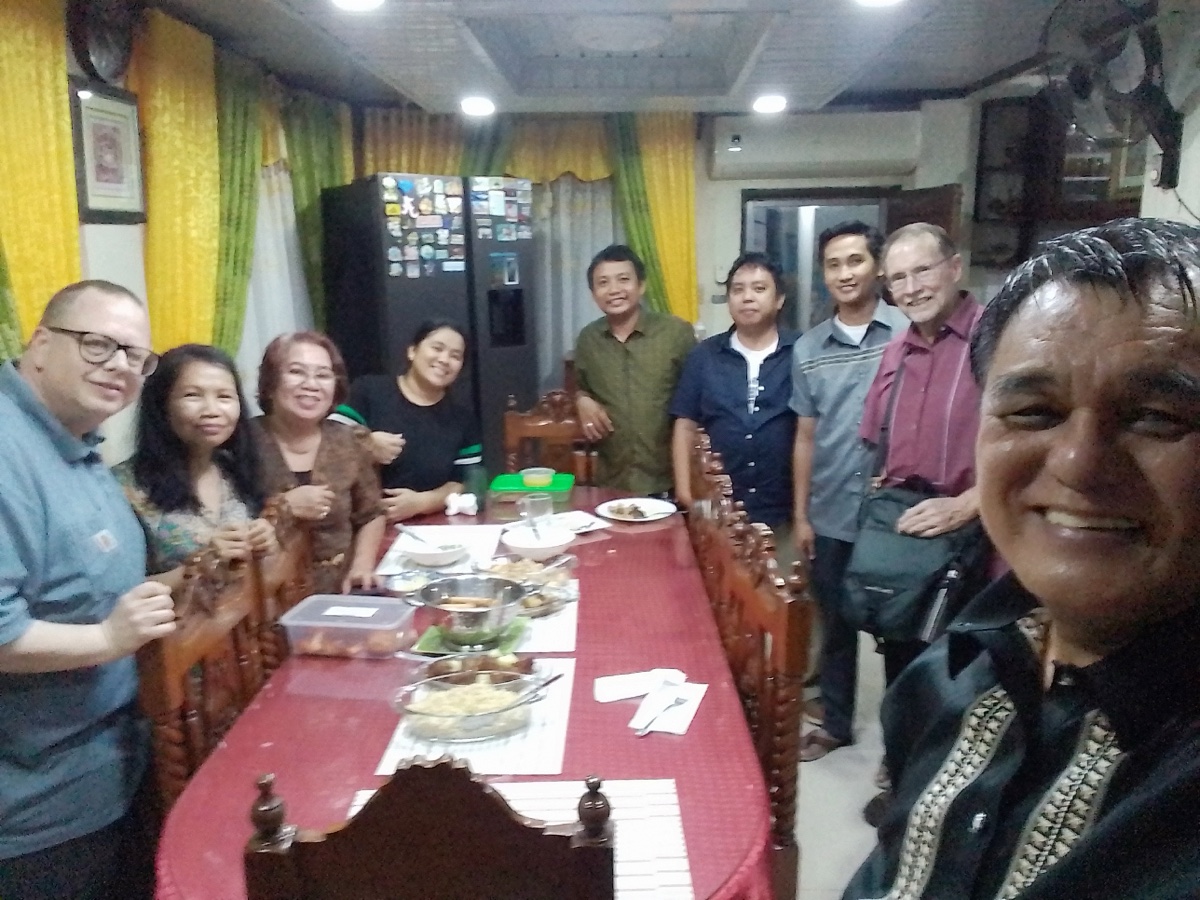
Caption: Enjoying supper at Rody and Tessie Gumpad’s house in Tuguegarao, Cagayan Valley, in northern Luzon.

By Chris Reeves
Synopsis: When God blesses us with a knowledge of His word and years of experience in serving the Lord, we can take that knowledge and experience to help other Christians at home and abroad.
Often when Jesus was teaching people, He would “perceive” (know) something about them and then say or do something to help them in their relationship with God (Matt. 22:18; Mark 15:10; Luke 8:46; 20:23; John 16:19). He would see something and then say something, yet the art of perception was not limited to Jesus. We are told in Scripture that even the multitudes “perceived” things (Matt. 21:45; Mark 12:12; Luke 1:22; 18:34; 20:19; John 8:27; Acts 4:13; 19:34; 27:39). Paul “perceived” things (Acts 23:6) and brethren “perceived” things also (Gal. 2:9).
Today, I try to follow this same approach in my preaching and teaching. When I “perceive” or see something, I say something. When I get a chance to preach overseas, I do the same thing. Lately, I have seen three things among my overseas brethren that I am trying to help them with when possible. They are good brethren who love the Lord, and I am trying to help them be even more faithful in their service to Him.
One area of teaching that I have focused on overseas is the subject of marriage and family. When Steve Walker and I were preaching in Ghana in 2022, we noticed a need for more teaching on marriage and family. During the question-and-answer period of our lessons, brethren (particularly the women) would often raise questions about marriage. They would ask about how they could be better treated at home. At that point, Steve and I realized that there was a great need for teaching on marriage. Now, when I am overseas, I try to address this topic whenever and wherever I can. I do not give just generic lessons about marriage, but I try to get specific in my lessons. I draw on Scripture and my thirty-six years of marriage experience to address real-life matters that are going on within marriages and families in the Lord’s church.
During my recent trip to the Philippines with Ron Halbrook and Mark Mayberry, I was blessed to have the opportunity to address this great topic in different places. On December 5, 2024, I taught on this subject with the Phase 6 church in Manila. My three lessons were: “Attitudes That Sweeten Marriage,” “You Can Have a Happy Marriage,” and “Happiness and Harmony in the Home.” On December 10, 2024, I covered these same lessons with an audience of about seventy-five in attendance in Baroy, Lanao del Norte, Mindanao. Later that week, on December 13, I taught similar lessons to a group of Christians in Cebu.
Each time I address the importance of having marriages and families founded on God’s word, I always get positive feedback. I often hear after the lessons something like, “Brother Reeves, we really appreciate you talking about things that are often not preached on here.” Those in attendance really like this topic being discussed specifically, and they always have good follow-up questions. Sometimes the questions have to do with the (mis)treatment of a spouse, the sexual relationship, communication, infidelity, or unscriptural marriages.
Another area of teaching that I have focused on overseas is the need for more expository preaching and teaching. Our preaching brethren overseas do a great job with their topical sermons and studies, but I am working with them to do more verse-by-verse studying, preaching, and teaching in their own congregations. A few preachers are already doing this, and I am trying to get more to do it as well. With topical preaching and teaching, you know parts of the Bible here and there. With expository preaching and teaching, both the preacher and the congregation get to know all of God’s word systematically. They both will know “the whole counsel of God” (Acts 20:27). The biblical knowledge of the preacher and congregation will increase dramatically and exponentially with expository study and teaching. Expository teaching is also a good way for the preacher to read God’s word to the whole church (Col. 4:16; 1 Thess. 5:27) and to “give attention to reading”—the public reading of Scripture (1 Tim. 4:13; see also Neh. 8:8; Jer. 36:8; 51:63).
During my recent trip to the Philippines, Mark Mayberry and I had a great opportunity to do some preacher training for three days, December 16-18, 2024. This was done at the meeting place of the Luym church in Cebu with about 25 area preachers in attendance. Mark taught some lessons on “How to Study the Bible” and a “Survey of Ezra-Nehemiah.” I taught a “Survey of 1-2 Timothy and Titus” along with some other lessons. During my lessons, I took the opportunity to talk about the importance of verse-by-verse preaching and teaching and showed them how they can do that. As a follow-up to this, I am currently engaged in a once-a-week Zoom Bible study with my Filipino/Ghana preaching brethren where we continue to learn how to do expository learning and teaching. We are currently going through the book of Colossians.
Lastly, when I get a chance to travel and work overseas, I try to talk to the local preachers about getting Bibles in the hands of all the Christians who attend. I have noticed that in many local churches, many brethren sit and listen attentively, but they do not have their own Bible to open. I see many young Christians sitting without a Bible, and I think of how they need that Bible in their life in this wicked world we live in. Some do not have Bibles at all, and others have them, but their Bible is not open.
I appreciate my overseas brethren who have an attentive attitude. Honestly, they appear to be more attentive than some of my American brethren. At the same time, I would also like to see them develop a habit of reading and examining their own Bible. I want them to be like the noble Bereans who “examined the Scriptures” as Paul was preaching to them (Acts 17:11). It is certainly good for the preacher to know his Bible (2 Tim. 4:2), but all the members need to know their Bible to strengthen their own faith and so they can share their faith with others (1 Pet. 3:15). I don’t want my brethren to “err, not knowing the Scriptures” (Matt. 22:29). I want them to “read and understand” (Matt. 24:15). I want them to “read” from their own Scriptures like the Ethiopian Eunuch did (Acts 8:28-32). I want them to “read” on their own and know the mystery of Christ (Eph. 3:3-4). I want them to be blessed when they “read” (Rev. 1:3).
To this end, I am also working to get Bibles into the hands of my brethren overseas, both new converts and seasoned Christians. Often, they do not have a Bible because they cannot afford to buy one. They are available, but they are costly for many of our brethren. For example, a basic Filipino Bible costs only about $11, but that is $11 more than they have. If you are reading this and are interested in helping purchase Bibles for your brethren overseas, please contact Ron Halbrook, Mark Mayberry, or myself, and we will be happy to help you make that happen.
I have been blessed by God to be taught His word and to be given the years to gain some wisdom and experience in serving the Lord. I am now trying to share that knowledge and wisdom with others. When I see something, I say something. I do this now at home and abroad. I have been helped by this approach, and now I try to help others with this approach.
I have also been blessed to travel and help my brethren overseas. These are good brethren! Like all of us, they can use some help in increasing their service to the Lord. If you can use your talents to take the gospel overseas, let me encourage you to do it. The Macedonian call, “come over and help us” (Acts 16:10), can still be heard today. Will you answer that call?
Chris Reeves has preached for the Warfield Blvd. church of Christ in Clarksville, TN, since 2016. He and his wife, Cheri, have four children and two grandchildren. His Bible study website is here. The church website is here. He can be reached here.
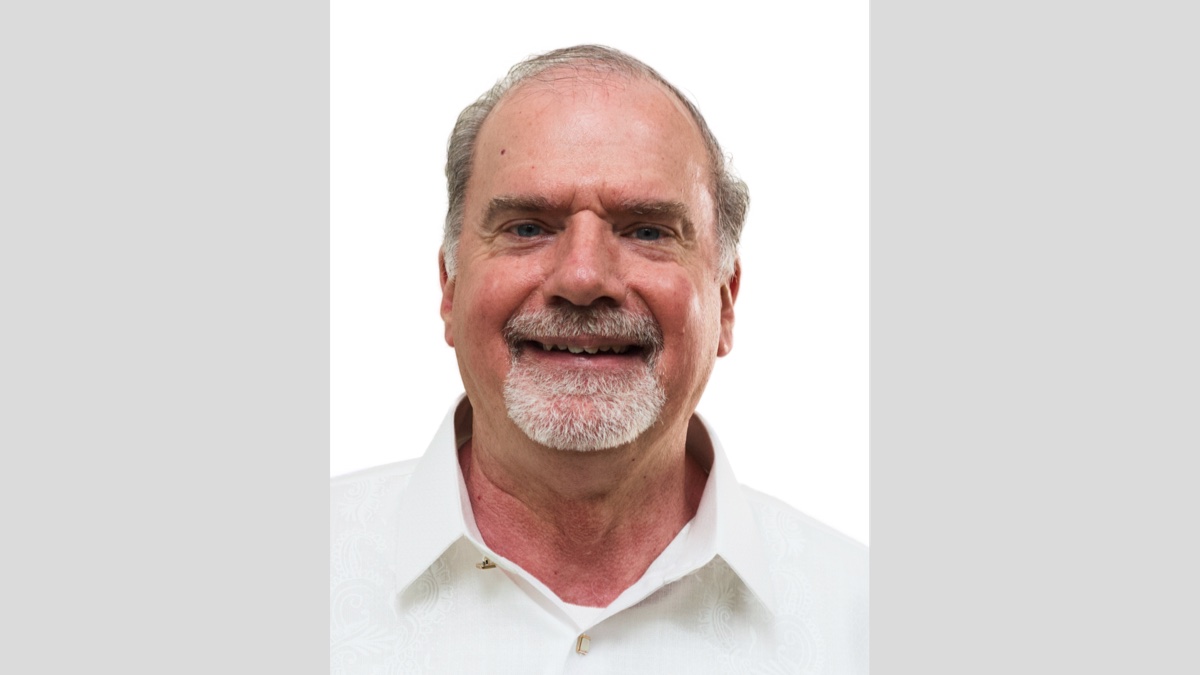

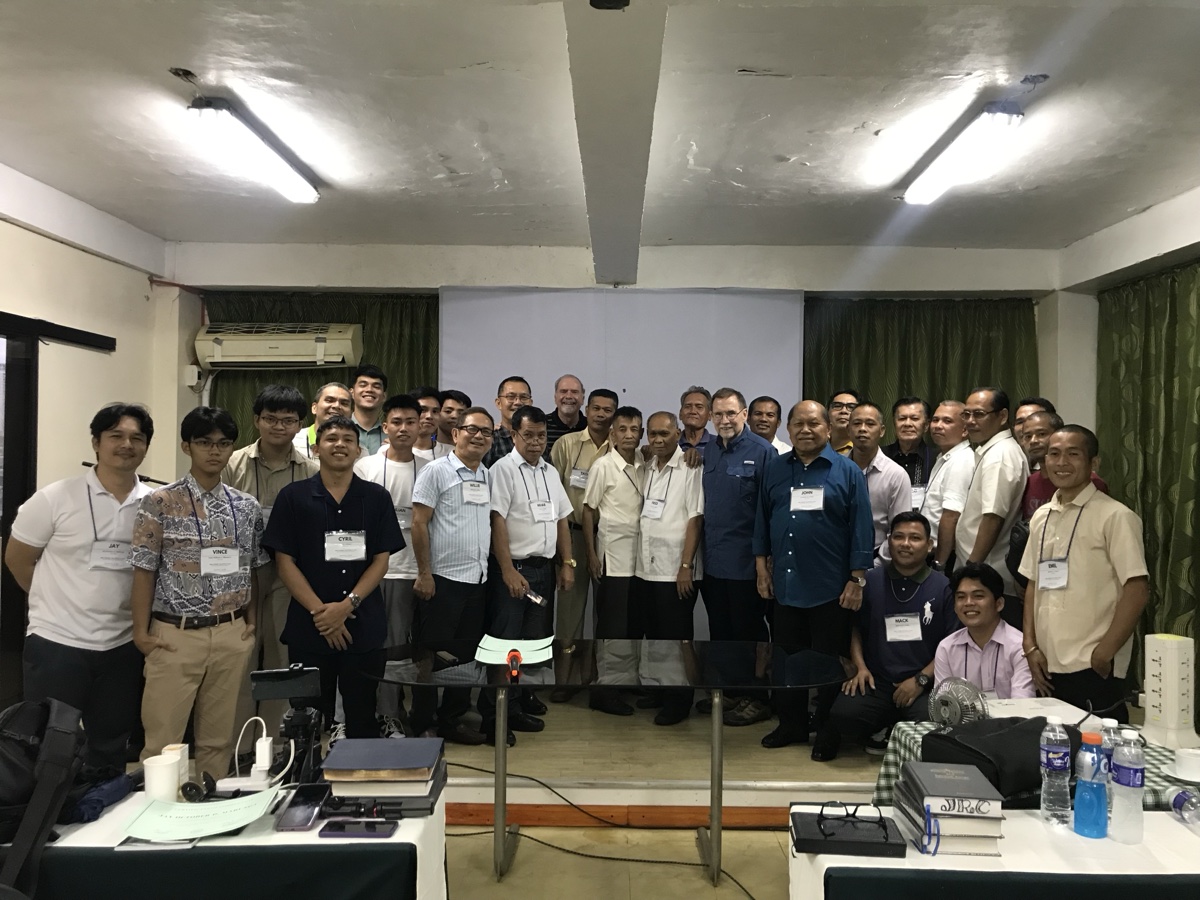
Caption: Preacher’s Training Program (PTP) at Cebu City.
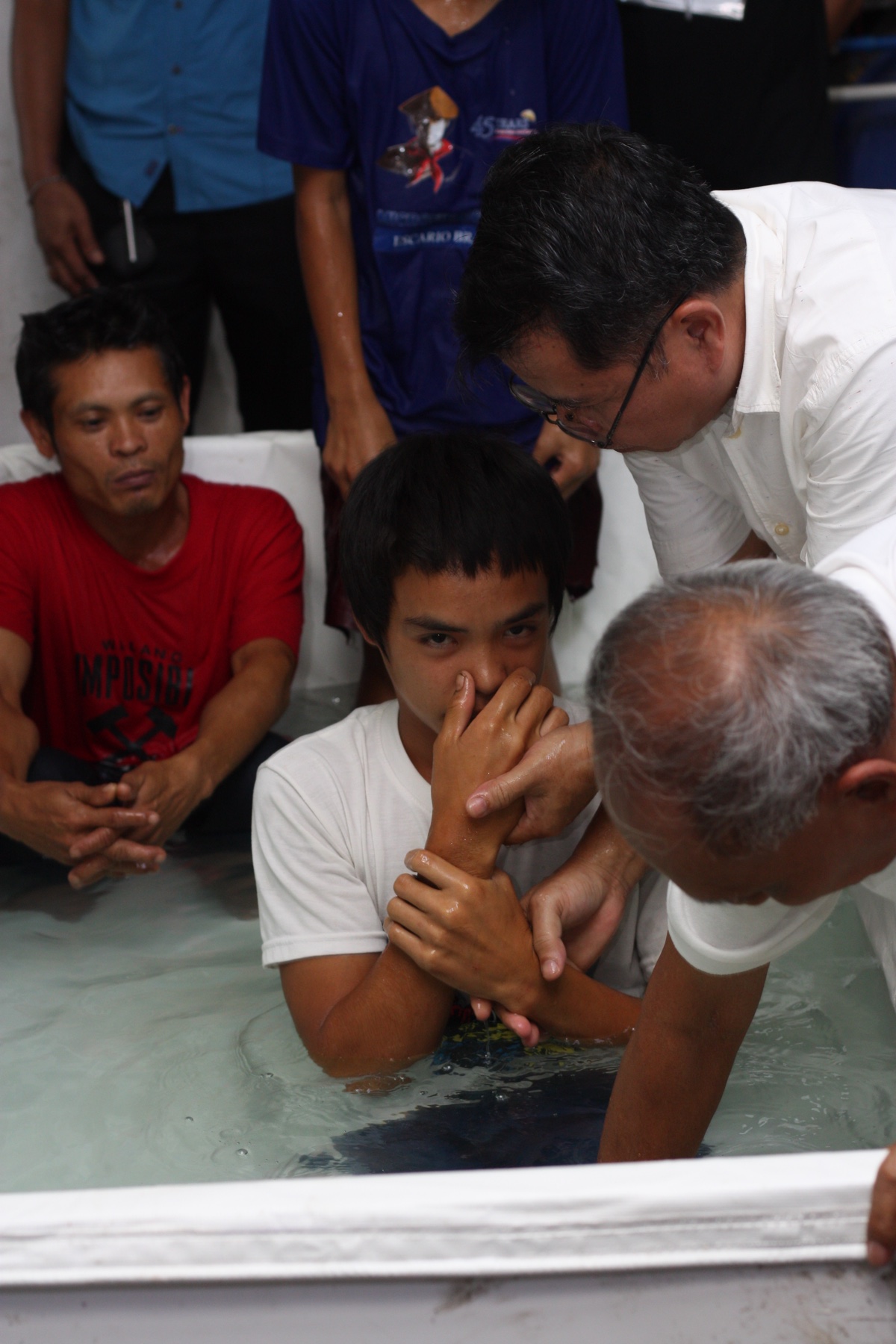
Caption: Baptisms after gospel meeting at Lyum Church of Christ in Cebu City.
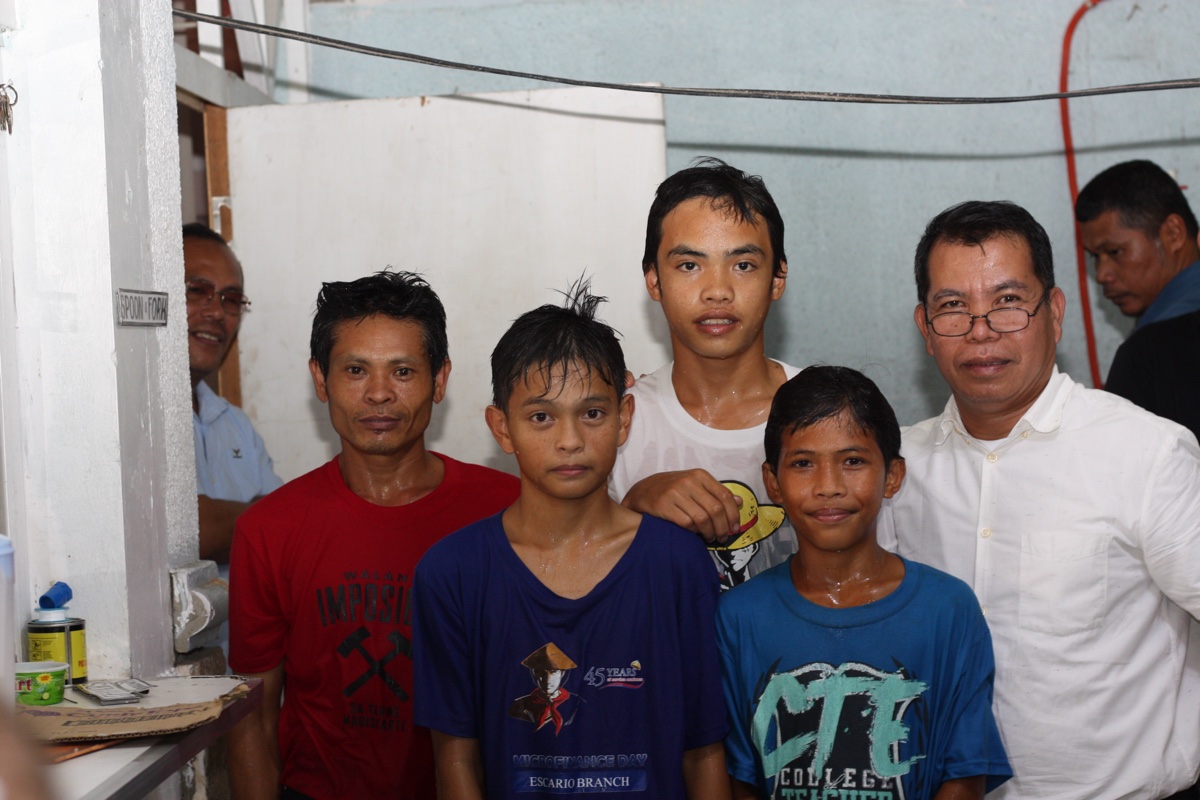
Caption: Baptisms after gospel meeting at Lyum Church of Christ in Cebu City.

Note: Please send additions, corrections and updates here.
Updated: 1/2/2025
17312 Jones Rd, Athens, AL 35613
Sun. Bible Study 9:30 am | Sun. Worship: 10:20 am & 5:00 pm | Wed. Bible Study 7:00 pm
Evangelist: Jonathan Reeder | Website | 256-233-3160
24190 Wooley Springs Rd, Athens, AL 35613
Sun. Worship 9:30 am & 5:15 pm | Wed. Bible Class 7:00 pm
Evangelists: Bob Watson & Matt Taylor | Website
3955 Pine Lane, Bessemer, AL 35022
Sun. Bible Study 9:10 am | Sun. Worship 10:00 am & 5:00 pm | Wed. Bible Class 7:00 pm
Evangelist: David Deason | 256-497-8127 205-425-2352 | Email | Website
2325 Old Columbiana Rd. (near I-65 & Hwy. 31)
Sun. Bible Study 9:00 am | Worship 10:00 am & 5:00 pm | Wed. Bible Study 7:00 pm
Evangelist: Kyle Pope | 205-822-0018 | Website
19965 Sandlin Rd. Elkmont, AL 35620
Sun. Worship 9:30 am & 3:00 pm | Bible Classes: 10:45 am | Wed. Bible Study 7:00 pm
Evangelist: Lance R. Taylor | 256-777-0990 | Website
851 N. Pine St. (Located next to University campus)
Sun. Bible Study 9:30 am | Worship 10:15 am & 5:00 pm | Wed. Bible Study 7:00 pm
Evangelist: Kenny Moorer | 256-766-0403
601 Pineywood Road, Gardendale, AL, 35071 (Located 10 miles N of Birmingham)
Sun. Bible Study 9:30 am | Worship: 10:25 am & 5:00 pm | Wed. Bible Study: 7:00 pm
Evangelists: Andrew Smith & Jason Shackleford | 205-631-2131 | Website
129 Hillcrest Rd, Mobile, AL 36608
Sun. Worship 9-9:30 am | Bible Study 9:30-10:30 am | Worship 10:30-11:30 am | Wed. Bible Study 7:00 pm
Evangelist: Ken Sils | 765-307-8048 | 251-342-4144 or 342-2041 | Website
271 Highway 65 N, Conway, AR 72032
Sun. Bible Study 9:00 am | Worship 10:00 am & 5:00 pm | Wed. Bible Study 7:00 pm
Evangelist: Bruce Reeves | Bldg: 501-336-0052 | Website
2655 Prince St., Conway, AR 72034
Sun. Worship 9:00 pm | Bible class 9:50 am | Worship & Lord’s Supper: 10:40 am | Wed. Bible Class 7:00 pm
501-450-8640
2323 South 46th St.
Sun. Bible Study 9:45 am | Worship 10:30 am | Wed. Bible Study 7:00 pm
407 Bella Vista Dr.
Sun. Bible Study 9:30 am | Worship 10:15 am & 5:00 pm | Wed. Bible Study 7:00 pm
Evangelist: Norman E. Sewell | 870-741-9104 or 870-741-5151 | Website
514 Airport Rd.
Sun. Bible Study 10:00 am | Worship 11:00 pm & 6:00 pm | Wed. Bible Study 7:00 pm
Evangelist: Dick Blackford | 870-933-9134
145 N. Country Club Rd.
Sun. Bible Study 9:00 am | Worship 10:00 am & 6:00 pm | Wed. Bible Study 7:00 pm
Evangelist: Brenden Ashby | 520-326-3634 | Website
17903 Ibbetson Ave.
Sun. Bible Study 9:45 am | Worship 10:50 am & 6:00 pm | Wed. Bible Study 7:30 pm
562-866-5615 | Website
3433 Studebaker Rd.
Sun. Bible Study 9:50 am | Worship 10:45 am & 5:30 pm | Wed. Bible Study 7:00 pm
JP Flores | 562-420-2363 or Mark Reeves | 562-377-1674 | Website
449 W. Allen Ave., Suite 120, San Dimas, CA 91773
Sun. Bible study 10:00 am | Worship 11:00 pm & 4:00 pm | Wed. Bible Study 7:30 pm
909-788-9978 | Website
Meets at the Fort Collins Senior Center, 1200 Raintree Dr., Fort Collins, CO 80526
Sun. Bible Study 9:30 am | Worship 10:30 am
Evangelist: Richie Thetford | Website
1414 Hawk Parkway, Unit C
Sun. Worship 11:00 pm | Bible Study 2 pm & 1:30 pm
970-249-8116 |
64 Casting Lake Rd.
Sun. Bible Study 9:00 am | Worship 10:00 am & 6:00 pm | Wed. Bible Study 7:00 pm
850-622-3817 | Website | Location change coming in 2022: 497 Church St Santa Rosa Beach, FL 32459
196 Ave C, Geneva, FL 32732
Sun. Bible Study 10:00 am | Worship 10:45 am
(689) 229-9888 | Website
6 Lane Dr., Mary Esther, FL 32569
Sun. Bible Study 9:30 am | Worship 10:30 am & 5:00 pm | Wed. Bible Study 7:00 pm
850-244-9222 | Website | Evangelist: Chris Simmons | Email
3940 S. Bumby Ave.
Sun. Communion: 9:30 am | Bible Study 10:00 am | Praise & Preaching: 10:55 am (No pm Service) | Wed 7:00 pm
Evangelist: Ken Chapman
Office: 407-851-8031 | Website | Note: Please call for current worship and Bible study times.
621 E. Wheeler Rd.
Sun. Bible Study 10:00 am | Worship 10:50 am & 6:00 pm | Wed. Bible Study 7:30 pm
Evangelist: Bobby Witherington | 813-684-1297 | Website
Route 116 (near Callaway Gardens)
Sun. Bible Study 10:00 am | Worship 11:00 pm & 6:00 pm | Wed. Bible Study 7:30 pm
Evangelist: Tommy W. Thomas | 706-628-5117 or 628-5229 |
Meeting at 321 2nd St. S., Ste. 103, Nampa ID 83651
Sun. Bible Study 10:00 am | Worship 11:15 am | Wed. Bible Study 7:00 pm
208-461-1318 | Email | Website or here
Note: Please see website for most current information.
370 N. Shilling | P.O. Box 158-83221
Sun. Bible Study 10:00 am | Worship 11:00 pm | Wed. Bible Study 7:30 pm
208-785-6168 or 681-1552
1310 NE 54th Ave, Des Moines, IA 50313
Sun. Bible Study 9:45 am | Worship 10:40 am | Wed. Bible Study 7:00 pm
515-262-6799 | Website
1236 63rd St. (Dir: 1.5 miles E of I355)
Sun. Bible Study 9:00 am | Worship 9:55 am & 6:00 pm | Wed. Bible Study 7:30 pm
Evangelist: Steve Wolfgang | 630-968-0760 | Website
1100 S. 17th St.
Sun. Bible Study 9:30 am | Worship 10:30 am & 6:00 pm | Wed. Bible Study 7:00 pm
217-234-3702
16224 S Vincennes Ave.
Sun. Bible Study 9:00 am | Worship 10:00 am & 4 pm | Wed. Bible Study 7:00 pm
Evangelist: Donald Hawkins | 708-339-1008 | Website
Meeting @ Sleep Inn Suites and Motel | 1101 North Cummings Lane, Washington, IL 61571
Sun. Worship: 11:30 am | Bible Study: 12:30 pm | Wed. Bible Study 6:30 pm @ home of Tim Sundlie, call for address
Evangelist: Tim Sundlie | 608-796-9028 | Email | Website
407 W Lewis and Clark Parkway, Clarksville, IN 47129
Sun. Bible Study 9:30 am | Worship 10:30 am & 6:00 pm | Wed. Bible Study 7:30 pm
Elders: Allen L. Morris (812) 989-5838 and Stephen W. Nale (502) 727-7559 or (812) 944-2305 | Website
Sun. Bible Study 9:30 am | Worship 10:30 am | Wed. 7:00 pm
765-676-6404 | Website
15530 Herriman Blvd, 46060
Sun. Bible Study 10:00 am | Worship 11:00 am | Wed. Bible Study 7:00 pm
Evangelist: John Smith | Email | 317-501-8035 or 317-501-0249 or 317-701-1204
400 Lafayette Ave. | P.O. Box 34
Sun. Bible Study 9:45 am | Worship 10:30 am & 6:00 pm | Wed. 7:00 pm
812-279-4332
(First St. & Karnes Ct.)
Sun. Bible Study 9:45 am | Worship 10:30 am & 5:00 pm | Wed. Bible Study 7:00 pm
Evangelist: Jeremy Goen | 812-967-3437 or 967-3520 | Website
302 S. Fourth Ave., Mulvane KS 67110 | Mail: PO Box 11
Sun. Bible Classes: 10:00 am | Worship 11:00 am | Wed. Bible Study 7:00 pm
Evangelist: Jay Horsley | 316-644-8503 | Website | Email
5600 SW 17th St, Topeka, KS 66604
Sun. Bible Study 9:15 am | Sun. Worship 10:30 am | Wed. Bible Study 7:00 pm
785-235-8687 or 785-273-7977 | Website
1235 Williams St.
Sun. Worship 10:00 am | Bible Study After am Worship & 6:00 pm | Wed. Bible Study 7:00 pm
Evangelist: Jerid Gunter | 270-274-4451
8081 US Hwy 68-East, Benton, KY 42025
Sun. Bible Study 9:00 am | Worship 10:00 am | Wed. Bible Study 6:00 pm
270-354-9451 | Email | Website | Conveniently located near Kenlake State Resort Park on the western shore of Kentucky Lake.
612 Broadway
Sun. Bible Study 9:45 am | Worship 10:30 am & 5:00 pm | Wed. Bible Study 6:30 pm
Evangelist: Charles J. White | 270-422-3878
107 Sunny Hill Dr.
Worship 9:30 am & 11:30 am | Bible Study 10:30 am | Wed. Bible Study 7:00 pm
Evangelist: Steve Lee | 270-789-1651 | Website
103 N. Main St. | P.O. Box 233
Sun. Bible Study 10:00 am | Worship 10:45 am & 5:00 pm | Wed. Bible Study 7:00 pm
Evangelist: Jarrod Jacobs | 270-589-4167 or 270-274-3065
385 E. Lexington Ave.
Sun. Worship 10:00 am | Bible Study 11:15 am & 5:00 pm | Wed. Bible Study 7:00 pm
Evangelist: B.J. Sipe | 859-236-4204
18 Scott Drive, Florence, KY 41042
Sun. Worship 9:30 am & 5:30 pm | Sun. Bible Study 10:30 am | Wed. Bible Study 7:00 pm
859-371-2095 | Website
1733 Bowling Green Rd.
Sun. Bible Study 9:00 am | Worship 10:00 am & 6:00 pm | Wed. Bible Study 7:00 pm
Evangelist: Steve Monts | 270-776-9393 | Website
733 Mill St. Leitchfield, KY 42754
Sun. Bible Study 9:30 am | Worship 10:00 am Communion 10:55 am | Wed. Bible Study 6:00 pm
270-230-6144 | Website
1803 Dixie Garden Dr.
Sun. Bible Study 9:30 am | Worship 10:30 am & 6:00 pm | Wed. Bible Study 7:00 pm
Evangelist: Michael Hardin | Email | 502-937 2822
3221 East Hebron Lane
Sun. Bible Study 9:00 am | Worship 10:00 am & 5 pm | Wed. Bible Study 7:30 pm
Evangelist: Danny Linden & Ron Halbrook | 502-957-5115 or 502-955-1748 | Website
405 Orice Roth Rd. | 70737 (Baton Rouge area)
Sun. Bible Class 9:30 am | Worship 10:30 am & 6:00 pm | Wed. Bible Study 7:00 pm
Evangelist: R.J. Evans | Email | 225-622-4587
856 Brighton Ave. (Breakwater School) | Leave Maine Turnpike at Exit 48
Sun. Bible Study 10:00 am | Worship 11:00 pm w/ second service immediately following am worship | Mid-week Bible Study (please call for times & places)
207-839-3075 or 839-8409
3084 Creek Drive SE, #1-C, Kentwood, MI 49512 | P.O. Box 8446, Kentwood, Mich. 49508 (Grand Rapids area)
Sun. Worship 11:00 am | Sun. Bible Study 12:30 pm | Wed. Bible Study 7:00 pm
Evangelist: Joseph Gladwell | Email
414 South Main Street
Sun. Bible Study 10:00 am | Worship 11:00 am | Wed. Bible Study 6:00 pm
Evangelist: Ryan Thomas | 810-837-1302 or 989-389-3226 | Website
2820 Grandview Ave, Meridian, MS 39305
Sun. Bible Study 10:00 am | Sun. Worship 11:00 pm | Wed. 6:30 pm
Ron Cooper: 601-934-3675 | Email
Ricky Ethridge: 601-737-5778 | Email
2110 E State Line Rd. (Exit I-55) (Memphis area)
Sun. Bible Study 9:30 am | Worship 10:30 am | Wed. Bible Study 7:00 pm
Evangelist: James A. Brown | Bldg: 662-342-1132
805 Meadow Rd, Severn, MD 21144
Sun. Bible Study 10:00 am | Sun. Worship 11:00 pm & 6:00 pm | Wed. Bible Study 7:30 pm
Evangelist: Brandon Trout | 410-969-1420 or 410-551-6549 | Website
422 N Linton St., Blodgett, MO 63824
Sun. Worship 10:00 am | Wed. Bible Study 7:00 pm
Evangelist: Russell Rice | 573-475-0417
4000 SW Christiansen
Sun. Worship 9:00 pm | Bible Study 10:00 am | Worship 11:00 pm | Wed. Bible Study 7:00 pm
Evangelist: Brett Hogland | 816-228-9262
432 Eagle Rock Rd, Branson, MO 65616
Sun. Worship 9:30 am | Bible Study 10:30 am | Sun. Evening Worship 5:00 pm | Wed. Bible Study 6:00 pm
Evangelist: Philip North | 417-239-1036 | Email | Website
2912 Bloomfield Rd
Sun. Bible Study 9:15 am | Worship 10:00 am | Wed. Bible Study 7:00 pm
Seth McDonald & Jerry Lee Westbrook | 573-837-1001 | Email | Website
703 Harrison St.
Sun. Bible Study 10:00 am | Worship 11:00 pm & 6:00 pm | Wed. Bible Study 7:00 pm
Evangelist: Nolan Glover | 870-650-1648 | Website
685 Sidney St.
Sun. Bible Study 9:30 am | Worship 10:15 am & 5:00 pm | Wed. Bible Study 7:00 pm
Evangelist: Lynn Huggins | 573-265-8628
2727 County Line Rd.
Sun. Bible Study 9:00 am | Worship 9:50 am | Wed. Bible Study 7:00 pm
816-279-4737 | Website
Bell St & S 7th St. Beatrice, NE 68310
Sun. Bible Study 9:00 am | Worship 10:00 am & 6:30 pm
402-233-4102 or 402-228-3827 | Website
5327 S. Tryon Street, Charlotte, NC 28217
Sun. Bible Study 9:30 am | Sun. Worship 10:30 am | Wed. Bible Study 7:30 pm
704-525-5655 | Website
3781 East Highway 27, Iron Station, NC 28080
Sun. Bible Study: 10:00 am | Sun. Worship 11:00 am & 6:00 pm | Wed. Bible Study 7:00 pm
Evangelist: Stan Adams | 704-748-9777 (Bldg) & 704-748-3747 (Jerry) | Email | Website
1031 Welford Dr, Beavercreek, OH 45434 (located a few miles E of Dayton)
Sun. Short Worship: 9:30 am | Bible Study 10:05 am | Sun. Worship 11:00 am | Wed. Bible Study Adults: 1:00 pm & All ages: 7:00 pm
Evangelist: Heath Rogers | 937-426-1422 | Website
13501 Lorain Ave, Cleveland, OH 44111
Sun. Bible Study 10:00 am | Worship 11:00 am | Wed. Bible Study 7:00 pm (Call)
Evangelist: John Dicus | (330) 723-0111 or (330) 590-0227 or (216) 322-9392 | Website
28 W. Main St., Dayton, OH 45449
Sun. Worship 9:00 pm | Bible Study 9:30 am | Worship 10:25 am | Wed. Bible Study 7:00 pm
Evangelists: Michael Grushon 937-866-5162 or Alan Beck 937-469-3311 | Website
6417 Franklin-Lebanon Rd. Franklin, OH 45005
Sun. Bible Study 10:00 am | Worship 10:45 am | Tues. Bible Study 6:30 pm
Evangelist: Josh Lee | 937-789-8055 or 937-746-1249 | Website
1973 W Main St. New Lebanon, OH 45345
Sun. Bible Study 9:30 am | Worship 10:30 am, & 5:00 pm | Wed. Bible Study 7:00 pm
Evangelist: Bruce Hastings | 937-687-7150 or 937-478-0367
80 Sandhill Rd. Reno, OH 45773
Sun. Bible Study 9:30 am | Worship 10:30 am & 6:30 pm | Wed. Bible Study 7:00 pm
Evangelist: Mark Childers | 304-615-1091 | 740-374-9827 | Website
4110 Frey Rd., Northwood, OH 43619 (Toledo Area)
Sun. Worship 11:00 pm
Evangelist: Donald Jarabek | 419-893-3566 & 567-331-2269
33226 Children’s Home Rd., Pomeroy, OH 45769
Sun Worship 10:00 am & 5 pm | Bible Study 11:00 am | Wed. Bible Study 6:00 pm
Jack Hunt | Email | 740-645-4612 | Website
2120 No. A St.
Sun. Bible Study 9:45 am | Worship 10:45 am & 5:30 pm | Wed. Bible Study 7:00 pm
Evangelist: Rob Lungstrum | 918-931-1362 or 918-423-3445
4110 NE 122nd Ave #101, Portland, OR 97230
Sun. Bible Study 10:00 am | Worship 11:00 am | Thur. Bible Study 7:00 pm
Evangelist: Samuel A. Matthews | 971-331-2838 | Bldg: 503-432-8697 | Email | Website
3702 E. Long St.
Sun. Bible Study 9:30 am | Worship 10:30 pm & 5:30 pm | Wed. Bible Study 7:30 pm
Bldg: 541-367-1599 | Email | Website
7222 Germantown Ave, Philadelphia, PA 19119
Sun. Bible Study 10:15 am | Sun. Worship: 11:15 am | Tues. Bible Study: 7:00 pm
Evangelist: James H. Baker, Jr. | 215-248-2026 | Website
3370 Broad St. Extension
Sun. Bible Study 9:30 am | Worship 10:30 am & 5:30 pm | Wed. Bible Study 7:00 pm
Evangelist: A.A. Granke, Jr. | 803-499-6023
4013 Edmund Hwy. (Hwy. 302), West Columbia, SC 29170
Sun. Bible Study 9:30 am | Sun. Worship 10:30 am & 5:00 pm | Wed. Bible Study 7:00 pm
Evangelist: Jerry Cleek | 219-313-1108 | Website
326 Powell Road, Collierville, TN 38017
Sun. Bible Study 9:00 am | Worship 10:00 am | Wed. Bible Study 7:00 pm
Evangelist: Doug Seaton | 901-854-6816 or 901-634-7840
417 Mooresville Pike | (Located .8 mi. N. of Hwy. 50/Jas. Campbell)
Sun. Bible Study 9:30 am | Worship 10:30 am & 3:30 pm | Wed. Bible Study 7:00 pm
931-388-5828 or 931-381-7898 | Website
4894 Hooper Hwy. | 37722 | (Located 15 mi. E. of Gatlinburg on Hwy. 321)
Sun. Bible Study 10am | Worship 11:00 pm & 5:00 pm | Wed. Bible Study 6:00 pm
Evangelist: Olie Williamson | 423-487-5540 or 423-748-0844
350 N Main St. Kingston Springs, TN 37082
Sun. Bible Study 9:00 am | Worship 10:00 am & 5:00 pm | Wed. Bible Study 7:00 pm
108 Locust St.
Sun. Bible Study 9:30 am | Worship 10:30 am & 5:00 pm | Wed. Bible Study 7:00 pm
Evangelist: Daniel H. King, Sr. | 931-379-3704 or 931-964-3924 | Website
1110 Cason Lane
Sun. Bible Study 9:00 am | Worship 10:00 am & 5:00 pm | Wed. Bible Study 7:00 pm
Bldg: 615-896-0090 | Website
2091 Pitts Ln, Murfreesboro, TN 37130 (located at the corner of Northfield Blvd and Pitts Lane)
Sun. Bible Study 9:30 am | Sun. Worship 10:30 am & 6:00 pm | Wed. Bible Study 7:00 pm
Evangelist: David Bunting | 615-893-1200 | Website
7471 Charlotte Pike
Sun. Bible Study 9:00 am | Worship 10:00 am & 5:00 pm | Wed. Bible Study 7:00 pm
Evangelist: Lee Wildman | 615-952-5458 or 615-356-7318
1414 W. Exchange Pkwy
Sun. Bible Study 9:00 am | Worship 10:00 am & 5:00 pm | Wed. Bible Study 7:00 pm
Evangelist: Jerry King 214-504-0443 or 972-727-5355 | Website
4343 S Interstate 35, Alvarado, TX 76065 (Located on the East Service Road off I-35 North of Alvarado)
Mail: I-35 church of Christ, P.O. Box 1269, Alvarado, TX 76009
Sun. Bible Study 10:00 am | Worship 11:00 am | Wed. Bible Study 7:00 pm
682-202-9741 or 817-739-3402 | Website
605 E. Adoue St., Alvin, TX 77511
Sun. Bible Study 9:30 am | Worship 10:30 am & 5:00 pm | Wed. Bible Study 7:30 pm
Evangelist: Mark Mayberry | Email | Website
701 North Pruett St.
Sun. Bible Study 9:45 am | Worship 10:40 am & 6:30 pm | Wed. Bible Study 7:00 pm
Bldg: 281-422-5926 | Weldon: 713-818-1321 | Website
2919 Main St/FM 517 E., Dickinson, TX 77539
Sun. Bible Study 10:00 am | Sunday Worship 11:00 am & 6:00 pm | Wed. Bible Study 7:00 pm
713-298-6673
301 Robison St.
Sun. Bible Study 9:30 am | Worship 10:30 am & 6:00 pm | Wed. Bible Study 7:00 pm
Evangelist: Phillip Stuckey | 361-782-5506 or 361-782-2844 | Website
3277 Pendleton Rd.
Sun. Bible Study 9:30 am | Worship 10:30 am & 5:00 pm | Wed. Bible Study 7:00 pm
915-855-1524
4303 18th St, Bacliff, TX 77518
Sun. Bible Study 9:00 am | Sun. Worship 10:00 am & 6:00 pm | Wed. Bible Study 7:00 pm
Evangelist: Richard Lay | Website
6110 White Settlement Rd. 76114
Sun. Bible Study 9:30 am | Worship 10:30 am & 6:00 pm | Wed. Bible Study 7:30 pm
817-738-7269
Old Granbury Rd Church of Christ
4313 Old Granbury Rd, Granbury, TX 76049
Sun. Bible Study 9:30 am | Sun. Worship 10:30 am | Wed. Bible Study 7:00 pm
Evangelist: Chip Foster | 817-913-4209 or 817-279-3351 | Website
2510 Fry Rd, Houston, TX 77084
Sun. Bible Study 9:45 am | Worship 10:30 am & 6:00 pm | Wed. Bible Study 7:00 pm
Evangelist: David Flatt | Email | Website
6111 Indiana Ave, Lubbock, TX 79413
Sun. Bible Study 10:00 am | Sun. Worship 9:00 am & 11:00 am | Wed. Bible Study 7:00 pm
806-795-3377 | Website
1820 Mansfield Webb Rd, Mansfield, TX 76063
Sun. Bible Study 9:30 am | Sun. Worship: 10:20 am & 5:00 pm | Wed. Bible Study 5:30 pm.
Evangelist: Tom Roberts | 817-996-3926 | Website
612 S Shawnee St, Nacogdoches, TX 75961
Sun. Bible Study 9:45 am | Worship 10:30 am & 6:00 | Wed. Bible Study 6:00 pm
Minister: Van Dennis | 936-615-2950
3831 N.E. Stallings Dr.
Sun. Bible Study 9:30 am | Worship 10:20 am & 6:00 pm | Wed. Bible Study 7:00 pm
Evangelists: Randy Harshbarger & Jay Taylor
268 Utopia Ave. (Dir: I-37 S.E. Exit Pecan Valley)
Sun. Bible Study 9:30 am | Worship 10:30 am & 5:00 pm | Wed. Bible Study 7:00 pm
Evangelist: Jesse Garcia | 210-660 0409
314 N. Tolbert
Sun. Bible Study 9:30 am | Worship 10:30 am & 5:00 pm | Wed. Bible Study 7:00 pm
Evangelist: Ronald Stringer
4404 Twin City Blvd.
Sun. Bible Study 9:30 am | Worship 10:30 am & 6:00 pm | Wed. Bible Study 7:30 pm
Evangelist: Jason Garcia Email or Email | 254-939-0682 | Website
2301 Franklin Dr., Texarkana, AR 71854
Sun. Bible Study 9:30 am | Worship 10:15 am | Wed. Bible Study 7:00 pm
870-772-0746 | Website
340 E Warren St. (in Hewitt, a suburb of Waco)
Sun. Bible Class 9:30 am | Worship 10:30 am & 5:00 pm | Wed. Bible Study 7:00 pm
Evangelist: Marc Smith | 254-292-2482 or 652-7698
4500 Kell West Blvd, Wichita Falls, TX 76309
Sun. Bible Class 9:30 am | Worship 10:30 am & 3:30 pm | Wed. Bible Study 6:30 pm
Evangelist: Dennis L. Scroggins | 512-626- 5702 | Email | Website
Please mail all correspondence to 1504 Hayes St, Wichita Falls, TX 76309
Meeting in the Capital City Grange Hall, 6612 Route 12 Berlin, VT 05602
Sun. Bible Study 9:00 am | Worship 10 am | Tues. Evening in Homes
Evangelist: Open | Website | P.O. Box 70, Williamstown, VT 05679 | For questions or directions: Wade Holt 802-485-4311
217 Taxus St., Chesapeake, VA 23320
Sun. Bible Study 10:00 am | Worship 11:00 am & 5:00 pm | Wed. Bible Study 7:00 pm
Evangelist: Steven Matthews | 757-436-6900 | Website
8330 Doublecreek Court, Chesterfield, VA 23832 (Located in teh Metro Area; Courthouse Rd. at Double Creek Ct. 2.2 miles S of Rt. 288)
Sun. Bible Study 9:30 am | Worship 10:30 am & 5:00 pm | Wed. Bible Study 7:00 pm
Evangalist: Nathan L. Morrison | 804-778-4717 | Website
1208 W. 41st St.
Sun. Bible Study 10:00 am | Worship 11:00 pm & 6:00 pm | Wed. Bible Study 7:00 pm
Evangelist: Jack Bise, Jr.
2970 Old Leaksville Rd.
Sun. Bible Study 10:00 am | Worship 11:00 pm & 5:30 pm | Wed. Bible Study 7:00 pm
276-956-6049 | Website
929 Indiana Ave. NE (5 min. from Roanoke Convention Center)
Sun. 1st Lesson 9:15 am | Bible Study 10:00 am | Worship 11:00 pm | Wed. Bible Study 7:30 pm
Evangelist: Brent Paschall | 540-344-2755 | Website
5652 Haden Rd.
Sun. Bible Study 10:00 am | Worship 11:00 am
Robert Mallard | 757-464-4574
1860 Mt Baker Hwy, Bellingham, WA 98226,
Sun. Bible Study 9:30 am | Worship 10:30 am & 6:00 pm | Wed. Bible Study 7:00 pm
Evangelist: Steven J. Wallace | 360-752-2692 or 806-787-5088 | Website & Website
Meeting at Gray Middle School, 6229 S. Tyler St., Tacoma, WA 98409
Note: Please see webpage for updated meeting location and times.
Sun. Bible Study 10:00 am | Worship 11:00 pm | Wed. Bible Study 7:00 pm (Online)
253-242-3098 | Email | Website
7 Old Davisson Run Rd, Clarksburg, WV 26301
Sun. Bible Study 9:30 am | Worship 10:20 am
304-622-5433 | Website | Email
1929 Morgantown Ave.
Sun. Bible Study 10:00 am | Worship 10:45 am & 6:00 pm | Wed. Bible Study 7:00 pm
304-363-8696 or 304-844-2437
210 Cedar Ave, Moundsville, WV 26041
Sun. Bible Study 9:30 am | Sun. Worship 10:30 am & 6:00 pm | Wed. Bible Study 7:00 pm
Evangelist: Tony Huntsman | 304-845-4940 | Website