
(December, 2024 | No. 11 | Vol. 68)
12/1/2024
Truth Magazine (ISSN 1538-0793) is published once a month by Truth Publications, Inc., 220 S. Marion, Athens, AL 35611.
© 2024 Truth Publications, Inc. All Rights Reserved.
Manuscripts should be sent to the editor, Mark Mayberry, at mark@truthpublications.com. Link.
Subscriptions, renewals & other correspondence should be sent to: Truth Magazine, 220 S. Marion, Athens, AL 35611 or by emailing us at subscriptions@truthmagazine.com. Link.
Book orders should be sent to: CEI Bookstore | truthbooks.com | Street Address: 220 S. Marion, Athens, AL 35611 | Phone: (855) 492-6657 | Email: sales@truthbooks.com Link.
Online Website: truthmagazine.com
DISCLAIMER: Books in ads are screened, but an ad does not mean unqualified endorsement. All books should be tested by Scripture. We appreciate readers notifying us if they find some glaring fault in the ads.
By Mark Mayberry
Synopsis: Mark’s editorial discusses the decline of progressive and woke politics in the United States, particularly highlighted by the recent presidential election. Vice President Kamala Harris shifted away from woke positions to appeal to a broader audience. However, with a wink and a nod, she also tried to reassure her fellow travelers, saying, “My core values have not changed.” Thankfully, a majority of American voters recognized and rejected such insincerity. This article also critiques the mainstream media’s continued defense of unpopular progressive stances, such as transgender athletes in sports, and emphasizes the importance of standing for biblical principles of truth in the face of societal error. The document underscores that truth is definable, distinctive, and defensible, while error is deceitful and destructive. It concludes with a call for individuals to uphold and apply God’s word in their lives to influence the world positively.
The recent presidential election represented a decisive defeat of progressive thinking and the woke mentality in the political arena. The woke movement and its associated issues were resoundingly repudiated by a majority of the American voting population. It seems we have passed peak woke, especially regarding the “trans” issue. However, the mainstream media seem to have “missed the memo.”
After the election, there was a meltdown on CNN, which is not unusual as it happens almost daily. One particular panel discussion shows how vested proponents of the progressive movement are in defending their extreme positions. One man mentioned that Vice President Harris suffered defeat partly because people are not on board with “trans boys” competing in girls’ sports, an “85 to 15 issue,” where 85% of the American population is against it. This simple statement of truth was viciously attacked by a Jewish rabbi on the panel, who objected to the language used, labeling it “transphobia.” Apparently, defending LGBTQ+ rights has become an essential component of the left.
A post-election editorial by Rich Lowry entitled “The Power of ‘Woke’ Is Fading—and Kamala Harris’ Flip-Flops Prove It,” discusses the decline of woke politics in the United States, as evidenced by Kamala Harris’s shift in political positions. Harris, who once embraced woke ideas, distanced herself from them in the 2024 election to appeal to a broader audience. This change suggests that woke politics may not be as popular as previously thought. Lowry highlights Harris’s disavowal of several progressive stances, such as defunding the police, abolishing ICE, and supporting Medicare for All. Lowry argues that her “volte-face” (i.e., the act of turning around to face in the opposite direction, which refers to an abrupt and complete reversal of attitude, opinion, or position) shows a significant shift in the political landscape, where woke attitudes and policies are in marked decline. Indeed, it appears that we are now past peak woke.
In reality, the woke agenda never carried credence with the broader American population. Support for such extreme positions of the progressive left (i.e., academia, the media, Soros-funded district attorneys, non-governmental organizations [NGOs], and the wealthy foundations that lavishly finance radical causes, etc.).
When you find yourself on the minority side of an 85%-15% issue, politically speaking, you are on the losing side. Yet, political shows like CNN defend this position despite its unpopularity. LGBTQ+ policy in the United States has evolved over the years, from Clinton’s “don’t ask, don’t tell” approach to gays in the military, to the Obama administration’s push for same-sex marriage, which the Supreme Court eventually affirmed. In a landmark decision handed down on June 26, 2015, the Court ruled that all 50 states must issue marriage licenses to same-sex couples and recognize lawful marriages performed in other states. The Biden administration has taken several steps to support transgender athletes, including issuing Title IX protections, Executive Orders, etc.
While the aforementioned article by Rich Lowry was encouraging because it argues that the power of woke policies is fading, it also offers a sobering reminder. The key statement that stood out was: “An idea has been won or lost in American politics when both parties either favor or oppose it or simply don’t want to fight about it anymore.” Politically and economically, Reagan’s policies prevailed in the Democratic Party when Clinton embraced them in the ’90s. However, “gay marriage” won politically when Republicans stopped talking about it.
In recent weeks, I have reflected on how biblical principles of truth relate to our current political climate. Lowry’s assertion that “gay marriage won politically when Republicans stopped talking about it” continues to resonate. This is an important lesson for us as members of the church: we must stand for truth and defend it, even if it is unpopular. If we stop talking about principles of truth, we sacrifice the field of battle where ideas and souls are won or lost. Therefore, let us consider the nature of truth versus error. Truth is definable, distinctive, and defensible. In contrast, error is both deceitful and destructive.
Truth is definable and supernaturally revealed. In 2 Timothy 3:16-17, Paul writes, “All Scripture is given by inspiration of God and is profitable for teaching, for reproof, for correction, for instruction in righteousness, that the man of God may be complete, thoroughly equipped for every good work.” This passage emphasizes that Scripture is God-breathed and provides all we need for life and godliness. In 2 Peter 1:19-21, Peter praises the value of prophecy, stating that prophecy is the work of men inspired by God to communicate divine truth. Truth is foundational and solid, like a lamp shining in a dark place. Jesus is depicted as the morning star, heralding the coming of a new day. Prophecy is not a matter of one’s own interpretation, but is received revelation by the Holy Spirit. Truth is definable and revealed in the pages of Scripture.
Truth is distinctive and stands in contrast to the confusion and depravity of the world. In Ephesians 4:17-24, Paul encourages believers to turn away from the lifestyle of the world and be renewed in the spirit of their minds. Believers should put on the new self, created to be like God in true righteousness and holiness. Truth leads to a distinctive lifestyle that is different from the world.
Truth is defensible, as demonstrated by the miracles performed by those who preached and prophesied. An example is the story of Elijah in 1 Kings 17:17-24, where Elijah revived a woman’s son, confirming the truth of God’s word. Miracles confirm the message, as seen in John 3:1-2, where Nicodemus acknowledges that Jesus’s signs prove He is from God. The foundation of Christian faith is the miraculous events of Pentecost and the resurrection of Jesus. It is our duty to defend the truth, even when it is unpopular. In Ephesians 5:6-13, Paul urges believers to expose the unfruitful deeds of darkness and stand against evil. We must speak the truth, whether it is popular or not.
Error is deceitful and destructive. In Isaiah 5:18-23, the prophet warns against various forms of moral corruption and hypocrisy, including falsehood, sin, and moral inversion. The world often turns truth on its head, calling evil good and good evil. In 2 Thessalonians 2:9-12, Paul warns of a time when religious error will be widely embraced, leading people away from the truth.
Error is destructive, leading to spiritual, moral, and sometimes physical ruin. In 2 Peter 2:1-3, Peter warns of false teachers who will introduce destructive heresies and deny the authority of Jesus Christ. These false teachers will lead many astray and bring swift destruction upon themselves.
As we consider the world in which we live, we may hope that the events of this last week indicate a shift back toward biblical principles. Let us pray for leaders who will help turn our country back toward these principles. In our individual lives, we must recognize the difference between truth and error and submit to the one while rejecting the other. Let us apply God’s word to our lives and change the part of the world in which we have an impact.
Mark Mayberry has labored with the Adoue Street church of Christ in Alvin, TX, since 1998, where he serves as the evangelist and an elder. The church website is here. His website is here. He can be reached here.





By Kyle Pope
Synopsis: John the Baptist demonstrated remarkable courage in his rebuke of the unlawful marriage of Herod Antipas to the wife of his brother Philip. Understanding the nature of this rebuke helps us to see what the gospel demands of those who are in unlawful marriages today.
As John prepared the way for Jesus, the Bible tells us he called all the people to repent and prepare for the Messiah (Luke 3:7-14). One of the boldest demonstrations of this came when he had the courage to rebuke the unlawful marriage of Herod and Herodias. He told Herod, “It is not lawful for you to have her” (Matt. 14:4, NKJV). According to Josephus, Herodias was Herod’s niece by his brother Aristobulus (Antiquities 18.5.1), but she was also “his brother Philip’s wife” (Matt. 14:3).
Both Matthew and Mark identify Herodias’s first husband as Philip (Mark 6:17), but Josephus simply calls him “Herod” (Antiquities 18.5.1). The names “Herod” and “Philip” were common in the Herodian family and were likely both applied to Herodias’s first husband. Many scholars, without explanation, call him “Herod Philip.” Although no ancient sources identify him this way, it is reasonable to conclude that both names were applied to him. This was not the Philip whom Luke identifies as the tetrarch of Iturea and Trachonitis (Luke 3:1), who was also Herod’s brother. Herod Philip was a son of Herod the Great by Mariamne, the daughter of the High Priest (Josephus, Wars 1.28.4).
Josephus records that Herod Antipas, while on a journey to Rome, stayed with his brother and fell in love with Herodias. Herod was already married to the daughter of Aretas, the Nabatean Arabian king of Petra. Upon agreeing to “put away” his lawful wife, Herodias “put away” Philip and married Antipas. Mark makes it clear that Herod and Herodias were not just living together—“he had married her” (Mark 6:17). Herod Antipas’s divorce of the daughter of Aretas eventually led to war with the Nabatean king in retaliation for Herod’s mistreatment of his daughter (Antiquities 18.5.1-4).
Not only had John rebuked Herod’s unlawful marriage, but Luke adds that John had rebuked him for Herodias “and for all the evils which Herod had done” (Luke 3:19). Steve Klein expresses it well that, “The Herods, though not generally very moral, were very familiar with the religion of the Jews and were obliged from a political viewpoint to respect it” (62). John declared of their marriage “it is not lawful.” The word translated “lawful” is not derived from the Greek word nomos, meaning “law,” but refers to what is permitted or allowed in accordance with law. Earlier in the Gospel of Matthew, Jesus addressed questions about what was “lawful” (12:2-12). The Jews interpreted things as unlawful if they violated their own traditions. Herod may have thought that things he chose to do were lawful because of his own civil authority. Yet Jesus, like John, was always concerned with what was truly “lawful” as it related to divine law. Herod represented civil authority but had violated God’s law. He was indeed married to Herodias (in that he had made a marriage covenant with her), but it was unlawful for him to do so.
Although John was preparing the way for Jesus, he was still under Mosaic Law. When he rebuked Herod, he was rebuking the violation of Mosaic Law. Herod’s marriage to Herodias violated Mosaic Law in at least three ways. First, marriage to one who was “near of kin” (i.e., “a blood relation”) was prohibited (Lev. 18:6). The Hebrew in Leviticus 18:6 literally reads “flesh of his flesh.” Although a niece was not specified in the verses following 18:6, a niece would be “near of kin.” In the same text, intimacy with a daughter was not specified but was clearly a “flesh of his flesh” prohibited relationship, just as a niece would have been. Josephus identifies Herodias as the daughter of Herod’s brother, Aristobulus (Antiquities 18.5.1). Second, marriage to the wife of a brother was prohibited (Lev. 18:16; 20:21), unless the brother died childless (Deut. 25:5-9). Herod Philip was still alive when Herodias married Herod Antipas (cf. Josephus Antiquities 18.5.4). Third, Mosaic Law only allowed the man to “put away” his wife (Deut. 24:1-4). Josephus writes that, “Herodias took upon herself to confound the laws of our country and divorced herself from her husband while he was alive and was married to Herod [Antipas] her husband’s brother” (Antiquities 18.5.4). This was not the first time a woman in the Herodian family had done this. Earlier in the same work, Josephus wrote about Salome, the sister of Herod the Great, Herodias’s great-aunt. Josephus describes her action against her husband Costobarus, “she sent him a bill of divorce and dissolved her marriage with him, though this was not according to the Jewish law, for with us it is lawful for a husband to do so; but a wife; if she departs from her husband, cannot of herself be married to another, unless her former husband put her away. However, Salome chose to follow not the law of her country, but the law of her authority, and so renounced her wedlock” (Antiquities 15.7.10). Any or all of these violations would justify John’s charge that it was not lawful for Herod to have Herodias.
This situation offers important application to modern marriage issues. While all men are now governed by the Law of Christ, similar principles relate to modern violations of Christ’s laws on marriage. If a man has joined himself into a marriage covenant that “is not lawful,” it is true today, as it was true in Herod’s day, “it is not lawful for you to have her” (cf. Matt. 5:32; 19:9). It is commonly taught today that two people who have joined themselves into an unlawful marriage may simply repent before God and remain in their marriage. Some would even argue that to divorce would compound sin upon sin. John’s words show the error of this teaching. Brother Jesse Jenkins notes:
A prevalent theory is that the “marrying” is a sin, but that one can repent of the “marrying” and then live with the one whom he married. . . . I suspect that John could have saved his life by changing to this theory and telling Herod that if he would repent, he could continue to “have” her (12).
Jesus taught, “What God has joined together, let not man separate” (Matt. 19:6). When a marriage is unlawful, we are not talking about something that “God has joined together.” It is not sinful, therefore, to end what is unlawful. In the days of Ezra, the Israelites had violated Mosaic Law by marrying women who had not converted to Judaism. Repentance did not mean they could stay in a marriage that was unlawful. Those who sought to follow God ended their unlawful unions (Ezra 9-10). The same is true today. When one who seeks to follow Christ comes to recognize that he is in a marriage that violates the Law of Christ, he, too, must recognize of his own wife, “it is not lawful for you to have her.” As painful as this may be, it is exactly what John died to affirm and exactly what the Law of Christ demands.
Jenkins, Jesse. “Sins That Beheaded John the Baptist.” Gospel Anchor 19.11 (July 1993): 11-12.
Klein, Steve. “Mark 6:14-29.” Is It Lawful? A Comprehensive Study of Divorce. Ed. Dennis Allan and Gary Fisher, Self-published, 1989. 60-65.
Kyle Pope preaches for the Vestavia church of Christ in Vestavia Hills, AL. He has written several books published by Truth Publications. Go here for more information. The church website is here. He can be reached here.




By Diana Dow
Synopsis: God wants couples to be fruitful and multiply, trusting in Him and His promise to provide their needs.
So God created man in His own image; in the image of God He created him; male and female He created them. Then God blessed them, and God said to them, “Be fruitful and multiply” (Gen. 1:27-28).
This is the first hint of God’s plan for families: “Be fruitful and multiply.” Four times in the Old Testament it is repeated. Each time the instruction was given at a critical point in history: in the beginning, after the flood, at the giving of the Law, and upon entering into Babylonian captivity. As long as God’s people obeyed Him, He blessed them with joyful, peaceful lives surrounded by their children and grandchildren.
At creation, God ordained that man and woman, made in His image, would have children. Adam and Eve, being the first couple, were the first to experience the wonderment of bringing a child into the world. Scripture names three of their children: Abel, Cain, and Seth. Yet, more were to come. After Seth was born, Adam had eight hundred years to be blessed with “sons and daughters.” We will never know how many children they had, but it is apparent that they took this command from God seriously.
After he begot Seth, the days of Adam were eight hundred years; and he had sons and daughters (Gen. 5:4).
When Noah and his family stepped out of the ark onto the newly cleansed land, God instructed them to “be fruitful and multiply.” What an ordeal they had been through. One hundred years preparing the ark as God specified. Having the door shut by God Himself with just their immediate families inside. Experiencing the torrential rain and rising waters. Then, watching as the waters receded and the beautiful new land appeared. If they wondered what their future would be, God reassured them all would be well and that they should begin filling the land with people.
So God blessed Noah and his sons, and said to them: “Be fruitful and multiply, and fill the earth” (Gen. 9:1).
God promised the Israelites in Leviticus 26 that if they would follow Him, He would bless them. Blessings such as the trees will bear abundant fruit, they will eat and be full, they will live securely in the land, and harmful animals will be removed from the land. In the midst of these blessings, God says He will make them fruitful, and they will multiply.
For I will look on you favorably and make you fruitful, multiply you and confirm My covenant with you (Lev. 26:9).
Jeremiah writes instructions on how the Israelites should live while in Babylonian captivity. He tells them to build houses, grow gardens, take wives, and give daughters. Why? So they may multiply and not decrease. The Israelite nation would be preserved even while in captivity. They were to continue living productive lives, so when the time came to return to Jerusalem, they would repopulate the land with a whole new generation of God’s people.
Take wives and have sons and daughters; take wives for your sons, and give your daughters in marriage, that they may bear sons and daughters; multiply there, and do not decrease (Jer. 29:6).
God consistently encourages His people to have children. In the song of ascents found in Psalm 127, we are reminded that children are a gift from God. They are a reward. Who does not love gifts and rewards? I have yet to meet anyone who says, when offered a gift, “No thank you, I have more than I can manage already;” or when offered a reward, says, “No thank you, I have plenty.” Yet we are encouraged by our culture to look at our children as burdens instead of as the gifts they are.
Behold, children are a gift of the Lord, the fruit of the womb is a reward (Ps. 127:3).
The psalmist makes it clear that children are not frivolous gifts, mere tokens of friendship, but are beneficial to the receiver. A warrior without arrows is useless in battle. Only when the warrior has filled his quiver with arrows does he have the confidence necessary to face the enemy. Children, like a warrior’s arrows, are essential to the strength, protection, and continuation of the family. Having many children provides a safety net for their elderly parents, assuring that they will be cared for when difficult times come upon them. Being part of a full quiver ensures that all the siblings will be there to support each other in good times and in bad times. When children are raised to love and respect God, the benefit to all is priceless.
Like arrows in the hand of a warrior, so are the children of one’s youth. Blessed is the man whose quiver is full of them; They will not be ashamed when they speak with their enemies in the gate (Ps. 127:4-5).
As a mom of many, women frequently feel the need to explain why they chose to have fewer children than I had. The most common explanation is that they had what they could afford. I cannot help but notice that finances were not a concern to God when telling His people to “be fruitful and multiply,” but trusting in Him was essential.
A friend and sister in Christ once confided in me that they had bought into the modern-day concept of no more than two children per family. The idea was to limit family size and thus prevent the world from overpopulation. Instead of multiplying, the world population needed to be stabilized, replacing the previous generation person for person. As an older woman, she had come to regret that they had trusted the science of the day instead of putting their trust in God.
When young Christian couples are “fruitful and multiply” they bless all who are around them but especially their brethren. Their example of teaching their children about God is an inspiration to others to do the same. Young children bring smiles to all in the congregation. As children mature and begin to submit to God, their example becomes a shining light, giving confidence to the older generation that this local congregation will continue, and that salvation through Christ will be taught in this community for years to come.
I encourage young couples to trust in God to supply their needs as they raise the gifts He has given them. Do not be afraid of what may or may not happen down the road. Trying to predict whether or not financial stability will be yours is a futile exercise. Instead, live a quiet life that is centered on God. Have another baby or two or more and be in awe of the blessings that will come your way. The fancy car, the dream home, the extravagant vacations, and the latest gadgets are what the world says we must have and must provide for our children, but we do not live by the world’s standards. God’s promise to bless those who seek Him is enough.
Therefore, do not be anxious, saying, “What shall we eat?” or “What shall we drink?” or “What shall we wear?” For the Gentiles seek after all these things, and your heavenly Father knows that you need them all. But seek first the kingdom of God and His righteousness, and all these things will be added to you (Matt. 6:31-33).
Diana Dow lives in Amarillo, TX, where she teaches private music lessons in her home, online, and at the local community college. She maintains a website about teaching Bible classes here, one about homeschooling here, and one about her music studio here. Diana can be reached here.




By Bruce Reeves
Synopsis: What wonderful lessons we learn from the word of God! The principles of leadership, mercy, faithfulness, trust, and obedience shine brightly in this story. Let us follow the example of Moses and Aaron and fall on our faces before God as we strive to help His people follow Him.
It is amazing how much we learn from God’s interactions with Israel in the Old Testament, and the text before us is no exception (Rom. 15:4). Numbers 16 contains two rebellion stories: the rebellion led by Korah, Dathan, and Abiram (Num. 16:1-40) and the people’s rebellion (Num. 16:41-50). As we begin with the first, it may be noted that it describes two different complaints (Num. 16:1-15) and two vindicating judgments (Num. 16:16-40):
First complaint: everyone is holy and can be priests, not just Aaron and his family (Num. 16:1-3).
Second complaint: Moses is an unfaithful and poor leader (Num. 16:12-15).
First judgment: Moses is the Lord’s appointed leader and has been faithfully obedient to the Lord (Num. 16:25-34).
Second judgment: Aaron and his family are the Lord’s appointed priests (Num. 16:35-40).
This chapter begins with a large group of men who gather in rebellion against Moses and Aaron (Num. 16:1-2). The group is led by Korah, a Levite, who is joined by three Reubenites (Num. 26:7-9). With them were 250 leaders from the nation, recognized and chosen by their fellow Israelites to be leaders and thus one presumes speaking on their behalf. Therefore, this rebellion cuts across the entire nation even if everyone did not join in the uprising.
The heart of the initial complaint is that all the nation should be able to carry out priestly duties since every Israelite is holy and it is asserted that the Lord is “with them” or “in their midst” (Num. 16:3; cf. Exod. 29:45). These are half-truths presented as the whole story, which ends up being a false narrative. While all Israelites were to be holy in behavior (Exod. 19:6; Num. 15:40), only Aaron’s family had been set apart to be ritually holy in performing the work of priesthood (Num. 3:10).
Rather than responding defensively and arrogantly to those who were disobedient, Moses humbly bowed down before God in dismay of this terrible rebellion (Num. 16:4). He then addressed Korah, the rebellion’s leader, announcing a test by which the Lord would again emphasize who was authorized to lead and serve in the priesthood (Num. 16:5, 40). The test involved presenting an incense offering, that is, placing burning coals in a metal pan and then adding incense, creating a cloud of smoke that rose as an offering to the Lord (Num. 16:6-7). It is interesting to note that Korah was a Levite and was blessed to participate in work in which most Israelites were not permitted to be a part. Yet, this was not enough for Korah and those associated with him. The wordplay is powerful in this context. Korah says, “You have gone far enough. . . why do you exalt yourselves above the assembly of the Lord?” (Num. 16:3). He unwittingly was condemned by his own words. Moses responds, “. . .and the man whom the Lord chooses shall be the one who is holy. You have gone far enough, you sons of Levi” (Num. 16:7).
The example of Korah pointedly illustrates that those who are hypercritical of the Lord’s people often are the most ungrateful among us. Sadly, they may fail to see the selfless giving, the zealous service, and the amazing sacrifices of their own brethren.
Moses insightfully exposed the real reasons for the rebellion. He highlights the privileges and blessings the Lord had granted the Levites and the danger of developing an unthankful heart (Num. 16:8-10). Korah was of the Kohathite branch of Levi, meaning he was privileged with responsibility for the tent’s holiest items when it was taken down, transported, and set up (Num. 4:1-20). Apparently these blessings were not enough for Korah; he was now demanding the priesthood also (Num. 16:10). The rebellion against Moses and Aaron was rebellion against the God who had graciously delivered His people from Egypt (Num. 16:11). Korah had an insatiable greed and desire for privilege and power at all costs. While his jealous rage targeted Moses and Aaron, it was really a direct attack against the Lord, even while claiming to serve Him. Accusations often mask the real motive, and in this case, the real motive was selfishness, jealousy, envy, and a fleshly desire for power.
Moses then summoned Dathan and Abiram, who had returned to their tents (Num. 16:12). These two were not driven as much by a desire for the priesthood but by the resentment of not having yet received the Promised Land. As a result of their bitterness, they refused to submit to Moses. They would not even meet him when they were summoned. Sin blinds, rationalizes, and justifies even the worst of attitudes (Num. 16:13-14). Absurdly, they describe their time in Egypt as being akin to living in a land flowing with milk and honey—forgetting the harsh taskmasters and their former humiliation. Ironically, they now perceive their former prison as a paradise. How many times do people today see the world of spiritual corruption and slavery as a paradise and service to God as a prison? The rebels even go so far as to blame Moses for the results of their sin. It is interesting that their view of Moses was that of an arrogant and overbearing leader, when in fact he is described by the Holy Spirit as a humble servant of God, who constantly offered intercession for an insubordinate people. Had it not been for Moses, they would have already been destroyed. Sin distorts our perception so badly that we turn truth into a lie so that we can serve our own lusts (Isa. 5:20; Rom. 1:18-31; 2 Thess. 2:10-12). Moses responded in righteous anger against the false accusations. He defended his integrity and honesty in leading Israel lovingly and sacrificially much in the same way that Samuel did when misrepresented by Israel (Num. 16:15; 1 Sam. 12:3). Justifiably, Moses sought God’s vindication and affirmation as the divinely chosen leader of Israel (Num. 16:16-40).
Korah gathers all his followers against Moses and Aaron, but his confidence is about to be shattered, and his disobedience will be judged (Num. 16:16-19). The glory of the Lord is manifested as He is about to bring judgment on those who were rebelling against His purposes (Num. 16:19). Yahweh tells Moses and Aaron to separate from the assembly as He is about to reveal His righteous wrath on those who were attacking His leadership (Num. 16:21). It is important to remember that separating from the guilty and rebellious is not only a theme in this chapter, but throughout the book of Numbers (Num. 16:23, 26, 45). The people of God are to proclaim His mercy to the lost, but we are also to separate from “blind leaders” who advocate error that jeopardizes souls. To endorse or provide a base of operations for those in error is to be a partaker of their evil deeds (1 Cor. 5:1-13; Eph. 5:10-11; 2 Thess. 3:6; 2 John 9-11). In a culture and society that has idolized the notion of the compromise of truth, we must give our hearts to live in God’s mercy and holiness (Rom. 12:1-2; 1 Pet. 1:13-18).
Moses promised that if the death of those opposing Aaron and himself was unique, then they would know that such was a judgment from God (Num. 16:28-31). No sooner does he finish speaking than the judgment takes place exactly as Moses described: the earth splits, opening its mouth and swallowing them whole (Num. 16:31-32). This judgment became a divine warning to all those who would rebelliously depart from God (Num. 26:10). The story of the second judgment quickly follows: fire comes out from before the Lord and consumes the 250 men offering incense, mirroring what happened to Nadab and Abihu (Num. 16:35; cf. Lev. 10:1-2). These judgments together formed a clear vindication and affirmation of Moses and Aaron as God’s servants. Eleazar, Aaron’s oldest son, was told to take the censers that Korah and his followers had used, and turn them into bronze plating for the altar of the burnt offering (Num. 16:37-38). This event was to reiterate to Israel the importance of following God’s pattern and commands (Num. 16:40).
Some are slow to learn obvious lessons, and so it was with Israel. The people still want to blame Moses and Aaron for the consequences of their own sin (Num. 16:41). How often do we want to blame everyone else but ourselves for sins against God. We can never be cleansed and spiritually healed until we acknowledge our transgressions (Ps. 51:1-17; 1 John 1:9). Once more, the Lord appears in judgment in defense of Moses and Aaron when the people assembled against them. The cloud of glory revealed His powerful presence as He descended on the tent of meeting (Num. 16:41-42). When the Lord expressed His desire to pour His wrath out on the congregation and “consume them instantly,” Moses and Aaron “fell on their faces” before Him (Num. 16:45).
It is revealing to notice how horrific this scene was for Eleazar: 250 rebels have become 250 smoldering corpses. The 250 metal censers, however, have survived the burning, but since these had been presented to the Lord, they were now ritually holy (Num. 4:15). Eleazar was therefore to take the censers, scatter any remaining coals in them some distance away, and then turn them into bronze plating for the altar of burnt offering (Num. 16:37-38). This was to serve as a “sign” and “reminder” for the Israelites that only priests were to burn incense and perform any offering at the altar (Num. 16:38-40). Eleazar carried out these commandments just as the Lord had commanded him through Moses, in contrast to the disobedience of Korah and his followers (Num. 16:40).
Moses asks Aaron to “hurry to the assembly” and make intercession through an incense offering (Num. 16:46). This scene is dramatic: Aaron grabs his censer and a handful of incense, runs to the altar, scoops up live coals, turns and runs into the assembly’s presence and hardly stops before throwing the incense of coals to make a fragrant cloud rise to the Lord, like a sweet-smelling savor (Num. 16:47).
The scene is also highly ironic: the previous day, those wrongly presenting incense had died; this day, Aaron presents incense so that those who deserve to die might live! Nonetheless, the plague swept through quickly enough that 14,700 people died, in addition to those from Korah’s rebellion (Num. 16:49). Aaron returned to Moses at the tent of meeting, where he would serve as the people’s high priest (Num. 16:50).
In the story of Korah, we see that rebellion is progressive in nature. The first stage is getting involved in a cause without looking at the facts. When one does not weigh the evidence presented or consider the facts and compare both sides of an issue, it becomes easy to get caught up in the moment. We must set aside our emotions and analyze what has been taught or done without allowing our own personal feelings to distort reality. Korah and his followers turned Egypt into the Promised Land and Moses into the enemy oppressors. The second stage is seen when one becomes associated and connected with the rebellion. Korah manipulated and used those who were sympathetic to him. Rebellious leaders often attempt to use others to shield themselves from accountability and responsibility (Jas. 3:1).
The next stage is when those who have remained in a rebellious group long enough become a part of the leadership of the movement. This pattern is noticeable among those who become unfaithful to the Lord. They may have departed because of deception or inattention. For a while, they may even feel guilty for their departure from the Lord, but as time goes by, they become hardened, bitter, and accusatory. They have decided that their greatest mission is to deconstruct and undermine faithful churches and brethren. They often mischaracterize and misrepresent, just as Korah did Moses and Aaron (3 John 9-11).
We see courage in Aaron as he makes atonement for the people who were suffering the consequences of their sin. Even more so, we have a merciful High Priest in Jesus who ran into the midst of humanity and offered Himself as our sacrifice (John 3:16; Rom. 5:6-8; Heb. 2:17-18; 4:14-16; 7:5; 8:1). Are we concerned with those who are living under the plague of sin and the promise of God’s judgment (Rom. 11:22; 2 Cor. 5:10; 2 Thess. 1:6-9)? Are we willing to follow Aaron’s example of standing between the living and the dead and while proclaiming the good news of God’s grace? James writes, “My brethren, if any among you strays from the truth and one turns him back, let him know that he who turns a sinner from the error of his way will save his soul from death and will cover a multitude of sins” (Jas. 5:19-20).
What wonderful lessons we learn from the word of God! The principles of leadership, mercy, faithfulness, trust, and obedience shine brightly in this story. Let us follow the example of Moses and Aaron and fall on our faces before God as we strive to help His people follow Him.
Bruce Reeves has labored with the Highway 65 church of Christ in Conway, AR, since 2000. He and his wife, Rachel, have one child. The church website is here. He can be reached here.



By Shane Carrington
Synopsis: By traveling with Jesus through Samaria, we learn to break down cultural barriers in order to bring others to Him.
Jesus went to some places where Jewish people would go—and some places they would not! Among the latter, Jesus went to Samaria (John 4:4), a region long significant to the Jews.
So He came to a city of Samaria called Sychar, near the parcel of ground that Jacob gave to his son Joseph; and Jacob’s well was there (John 4:5-6a).
While this area had historical significance for Israel, the racial tension between them and the Samaritans caused many Jews to avoid that path. Samaria housed a multi-racial people, composed of Jews and Gentiles, as a result of the Assyrian conquest of the northern ten tribes of Israel in 722 BC. The animosity between the northern and southern kingdoms was amplified when Jews in the north intermingled with Samaritans. Consequently, Samaritans and Israelites referred to one another as “dogs.”
Despite the historical difficulties, the text says that Jesus “had to pass through Samaria” (John 4:3-4). Actually, this was not a travel necessity. Further, it would have been a historical anomaly. Jews usually avoided Samaria by taking a circuitous route around it. Typically, they crossed the Jordan River south of Samaria, traveled the Transjordan north, then crossed over close enough to the Sea of Galilee to avoid entering Samaria.
While it was not physically necessary to travel through Samaria, Jesus apparently viewed this as a moral obligation. There was a woman there who needed His help. She had lost her way, was deeply entrenched in sin, and needed spiritual direction. This compelled Jesus to travel into a region that few of His fellow countrymen would enter. He took Himself, and His message, to outsiders. So should we! The barriers involved in our comfort zones must be shattered to take the gospel to people who need Him. This will not always be easy or feel natural, but people who are lost need our help. Jesus did this repeatedly, and He bids us to recognize the abundant harvest that awaits (John 4:34-38).
Jesus’s walk through Samaria teaches us about Him, the kind of hearts He wants to form in us, and our mission toward people who need redemption in Christ.
Jesus went far outside the box on this occasion. First of all, He spoke to a Samaritan, which, as we previously noticed, was not common for Jewish people. “For Jews have no dealings with Samaritans” (John 4:9). They were bitter enemies and had been for most of a millennium. This began with the division between northern and southern kingdoms back in 931 BC, and the chasm had only widened through the centuries. Secondly, Jesus spoke to a woman. “His disciples came, and they were amazed that He had been speaking with a woman. . .” (John 4:27). While this barrier is largely nonexistent in our society, it still prevails in some cultures today. Both were taboo for Jews in the first century. That is why, when Jesus asked her for a drink of water, she responded, “How is it that You, being a Jew, ask me for a drink since I am a Samaritan woman?” (John 4:9). She was puzzled by His willingness to address her.
We learn powerful lessons from Jesus at this well in Samaria. Among them, we observe that the gospel is for all, even people with whom we have cultural “barriers.” Instead of looking for excuses to avoid sharing the gospel with others, we, like Christ, need to find common ground upon which to begin introducing them to the Savior. Do not limit the gospel’s range of motion. Break down the “barriers” that culture constructs. Our job is not to decide whom we will try to save but to invite everyone we can (Matt. 22:1-14). Jesus asked her. So also should we.
Jesus is God’s greatest gift (Eph. 2:4-5). He embodies the fullness of God’s grace and truth (John 1:14-18). Of all the other glimpses God revealed through the centuries, Jesus is the focal point and culmination of God’s redeeming work. Even Samaritans had heard of the Christ (John 4:25)!
Christ is also the greatest gift because He provides our greatest need: salvation. Jesus said,
If you knew the gift of God, and who it is who says to you, “Give Me a drink,” you would have asked Him, and He would have given you living water (John 4:10).
Further, He declared,
Everyone who drinks of this water will thirst again; but whoever drinks of the water that I will give him shall never thirst; but the water that I will give him will become in him a well of water springing up to eternal life (John 4:14).
Physical water provides temporary aid, but living water from Jesus furnishes eternal hope. The Father sent Him to give “the free gift. . . eternal life in Christ Jesus our Lord” (Rom. 6:23).
Jesus made soul-piercing statements to this woman who had been living a very sad, painful life. When He asked her to bring her husband into their discussion, she said, “I have no husband” (John 4:16-17). Then Jesus revealed her difficult past and sinful present:
You have correctly said, “I have no husband;” for you have had five husbands, and the one whom you now have is not your husband; this you have said truly (John 4:17-18).
She was deeply entrenched in sin and needed to repent. While our sins may be different than hers, we all need to repent in order to obey the gospel initially in baptism (Acts 2:38) and to be restored when we sin again and need to pray for forgiveness (Acts 8:20-24; 1 John 1:8-2:2).
It has been truthfully said, “The latch to the door of your heart is on the inside” (Rev. 3:20). People decide to live in sin; people must decide to repent. Others cannot force that door open. We must be willing participants in our salvation by listening when, like Jesus in this passage, others try to teach and urge us to repent.
Jesus accepted neither her lifestyle nor her manner of worship (John 4:20-24), but her reaction to this was amazing. First, she declared that Jesus must be a prophet (John 4:19), and second. . .
Jesus had deep compassion and a relentless spirit (John 4:31-38). This not only reached her heart (John 4:28-29), but through this newly convicted woman, Jesus had an opportunity to reach her community (John 4:30, 39-42). Waterpots were incredibly valuable in their culture because drawing drinking water was essential for survival. Yet she left her’s at the well and went to tell her community about the One she had met that day.
So the woman left her waterpot, and went into the city and said to the men, “Come, see a man who told me all the things that I have done; this is not the Christ, is it?” They went out of the city, and were coming to Him (John 4:28-30).
Being convicted of her sins led her to faith in Jesus. What an opportunity that one soul, convicted for Jesus, can provide for many others!
Jesus journeyed out of His way to help one soul who needed what only He can provide. In talking to this woman from Samaria, He ignored vast cultural differences and broke down social norms in order to introduce her and others to Jesus. So should we. The world needs Him, so the world needs us to bring them to Him. Invite someone to a Bible study. Invite someone to visit worship assemblies. One soul, convicted for Jesus, can reach many other souls. Will we?
Shane Carrington has worked with the Southside church of Christ in Sulphur Springs, TX, since 1999. He has two children and four grandchildren. The church website is here. He can be reached here.



By Bobby L. Graham
Synopsis:
Can you explain being “baptized for the dead” in 1 Corinthians 15:29?
The verse in question reads as follows: “Otherwise, what will they do who are baptized for the dead, if the dead do not rise at all? Why then are they baptized for the dead?”
Some have said that this verse is one of the most difficult to explain in the New Testament. They might be correct. Though I do not know what all of them are, someone has written that there are thirty or forty different explanations for this verse. Some are so outlandish that I do not even consider them; they are completely foreign to the teachings of the New Testament regarding baptism. Others are much closer to what the Bible teaches about the matter.
The most widely held and practiced erroneous doctrine on this passage is taught by the Latter-day Saints/Mormons. They believe that Paul was establishing as God’s will that those dying without baptism can be saved by the proxy/vicarious baptism of a living saint. Could this teaching be true?
Any acceptable explanation of what this verse means must harmonize (1) with the total context of the New Testament concerning the possibility of proxy acts and concerning baptism. The explanation must also accord (2) with what Paul is teaching in the context of 1 Corinthians 15.
First, consider what the New Testament teaches about proxy acts and about baptism: Nowhere does the New Testament teach that one individual can act on behalf of another in matters of faith and obedience. The principle of individual responsibility permeates the teaching done by Jesus and His apostles throughout the New Testament (Rom. 14:12; 2 Cor. 5:10; Heb. 9:27). The Scriptures are equally clear that opportunity ends at death and one’s final destiny is thus sealed (2 Cor. 5:10; Luke 16:19-31). Nothing in the rest of the New Testament supports the idea of proxy/vicarious baptism, just as nothing in the New Testament supports the idea of proxy/vicarious faith. For this very reason, infant baptism is alien to New Testament teaching. Parents cannot believe for an unbelieving infant. Where does the Bible teach this idea?
New Testament teaching concerning baptism is consistent with its teaching concerning individual responsibility. That each individual must believe in Christ, repent, confess Christ, and be baptized is unquestionably true (Mark 16:15-16; Acts 10:47-48). There is never any indication that one person may act on behalf of another in obedience to the gospel of Christ. Likewise, Paul’s question in verse 29 uses baptism in its ordinary significance: immersion in water for the remission of one’s sins. If he was referring to an erroneous practice of baptism, surely he would have shown its error.
Second, consider what Paul is teaching in 1 Corinthians 15:29: Because Christ has been raised (v. 13), guaranteeing the resurrection of all people, our convictions are not in vain—the preaching of the resurrection (v. 14), our faith (v. 14), the apostles were not false witnesses (v. 15), and we do not remain in sin without hope (v. 17).
In view of all these considerations, Paul asks a rhetorical question (one which implies its own answer) in verse 29, which is here paraphrased: “If there is no resurrection from the dead ones/realm of death, what is the benefit of being baptized in preparation for death for those being baptized?”
Another way of explaining Paul’s question, which actually amounts to the same idea, is that they were being baptized to belong to/to be numbered among the dead, who will never arise from the dead (see Mike Willis’ commentary on this passage). Paul bluntly asked why they would do this if there is no hope of arising from the dead.
For more information on the Mormon practice of “Baptism for the Dead,” go here.
Bobby L. Graham actively participates in fill-in preaching, Belize trips, teaching an hour each day at Athens Bible School, and in gospel meeting work. He and his wife, Karen, have three children. He can be reached here.


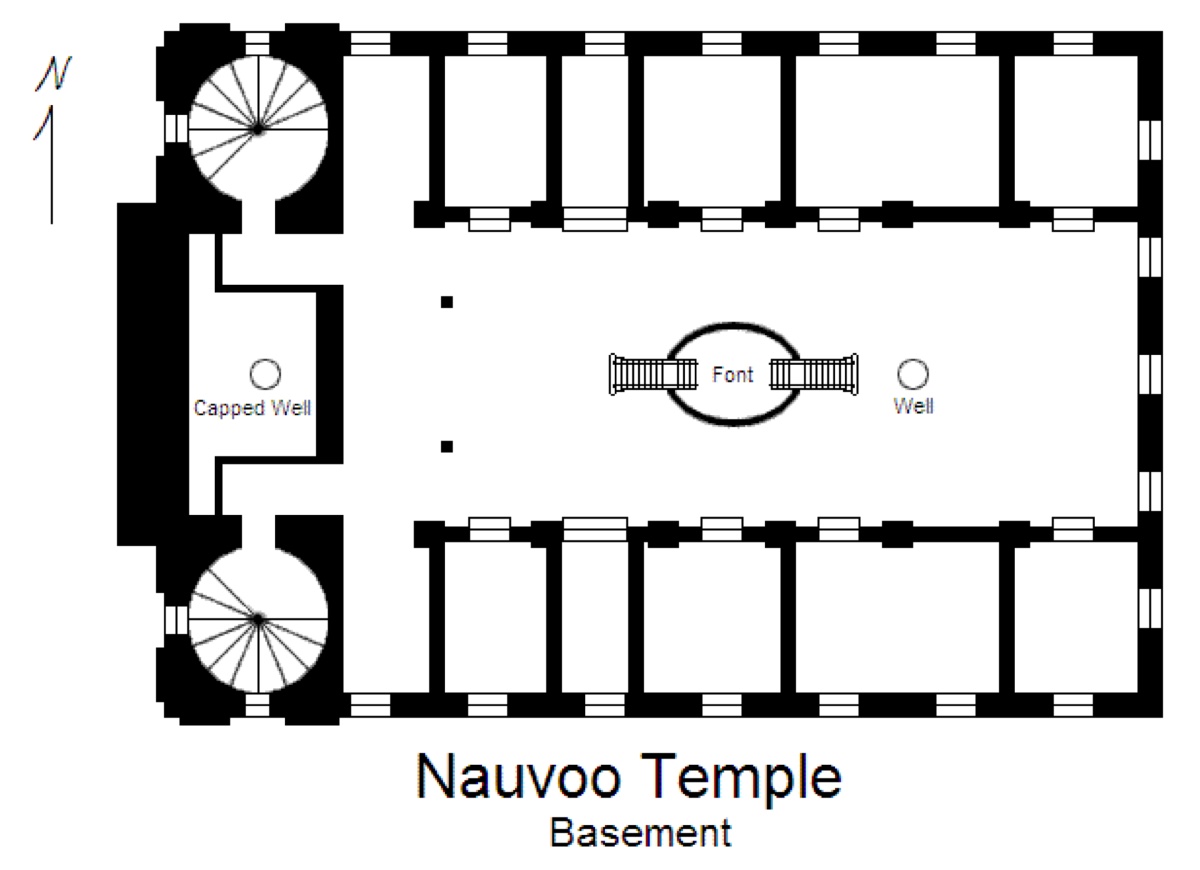
Photo Caption: Floorplan of the Nauvoo Temple basement. The basement of the temple was used as the baptistery, containing a large baptismal font in the center of the main room. By Bytebear at English Wikipedia, CC BY 2.5 Online.

By Mike Willis
Synopsis:
In the first article on Hezekiah, we looked at several proofs that Hezekiah was a historical person, as shown by his seal and references to him in Taylor’s prism. In our second article, I related things Hezekiah did to prepare his kingdom to withstand the Assyrian threat: bringing a water supply inside the city walls by digging a tunnel from the Gihon Spring to the Pool of Siloam (archaeologists uncovered the tunnel itself and the inscription left by the workers as they completed the tunnel); preparing supplies to withstand a siege by storing supplies in large storage jars marked with lmelek (“for the king”), and building a wall to encompass other parts of the city of Jerusalem. In this article, let us look at the historical correspondence between Sennacherib’s account of the invasion of Judah and the biblical narrative.
The Assyrians had previously conquered and destroyed Samaria, the capital of the northern nation of Israel (722/721 BC). The siege of Samaria lasted three years and ended with the fall of the city, resulting in thousands being taken into Assyrian captivity. The war was started by the Assyrian King Shalmaneser and finished by Sargon II (722-705 BC) [Note 1]. When King Sargon II died, he was succeeded by Sennacherib (705-681 BC). A change in dynasty was always a temptation to subordinate nations to start a rebellion against the new monarch. A rebellion against Assyria soon followed, which involved Egypt and the Judean cities of Ekron, Lachish, and Jerusalem. King Hezekiah was heavily involved in the rebellion: “The LORD was with him; wherever he went out, he prospered. He rebelled against the king of Assyria and would not serve him. He struck down the Philistines as far as Gaza and its territory, from watchtower to fortified city” (2 Kings 18:7-8).
Sennacherib’s account from Taylor’s Prism adds further details to what we know about the rebellion:
INSERT PHOTO OF TAYLOR’S PRISM HERE
The officials, the patricians and the (common) people of Ekron—who had thrown Padi, their king, into fetters (because he was) loyal to (his) solemn oath (sworn) by the god Ashur, and had handed him over to Hezekiah, the Jew—(and) he (Hezekiah) held him in prison, unlawfully, as if he (Padi) be an enemy—had become afraid and had called (for help) upon the kings of Egypt (and) the bowmen, the chariot (-corps) and the cavalry of the King of Ethiopia, an army beyond counting—and they (actually) had come to their assistance. In the plain of Eltekeh, their battle lines were drawn up against me and they sharpened their weapons. Upon a trust(-inspiring) oracle (given) by Ashur, my lord, I fought with them and inflicted a defeat upon them (Ancient Near Eastern Texts [ANET], 287).
Hezekiah was neck-deep in the rebellion. The Taylor Prism goes on to record Sennacherib as saying,
I besieged Eltekeh (and Timnah), conquered (them) and carried their spoils away. I assaulted Ekron and killed the officials and patricians who had committed the crime and hung their bodies on poles surrounding the city. The (common) citizens who were guilty of minor crimes, I considered prisoners of war. The rest of them, those who were not accused of crimes and misbehavior, I released. I made Padi, their king, come from Jerusalem and set him as their lord on the throne, imposing upon him the tribute (due) to me (as) overlord (ANET, 288).
One city that Sennacherib besieged was Lachish, the second largest and most important city in Judah (the first was Jerusalem). The situation for Israel’s King Hezekiah was dire, if we can believe Sennacherib’s account.
As to Hezekiah, the Jew, he did not submit to my yoke, I laid siege to forty-six of his strong cities, walled forts and to the countless small villages in their vicinity, and conquered (them) by means of well-stamped (earth-)ramps, and battering rams brought (thus) near (to the walls) (combined with) the attack by foot soldiers, (using) mines, breeches as well as sapper work (ANET, 288).
While the siege of Lachish was in progress, Hezekiah sent a letter to Sennacherib offering tribute to avoid capture.
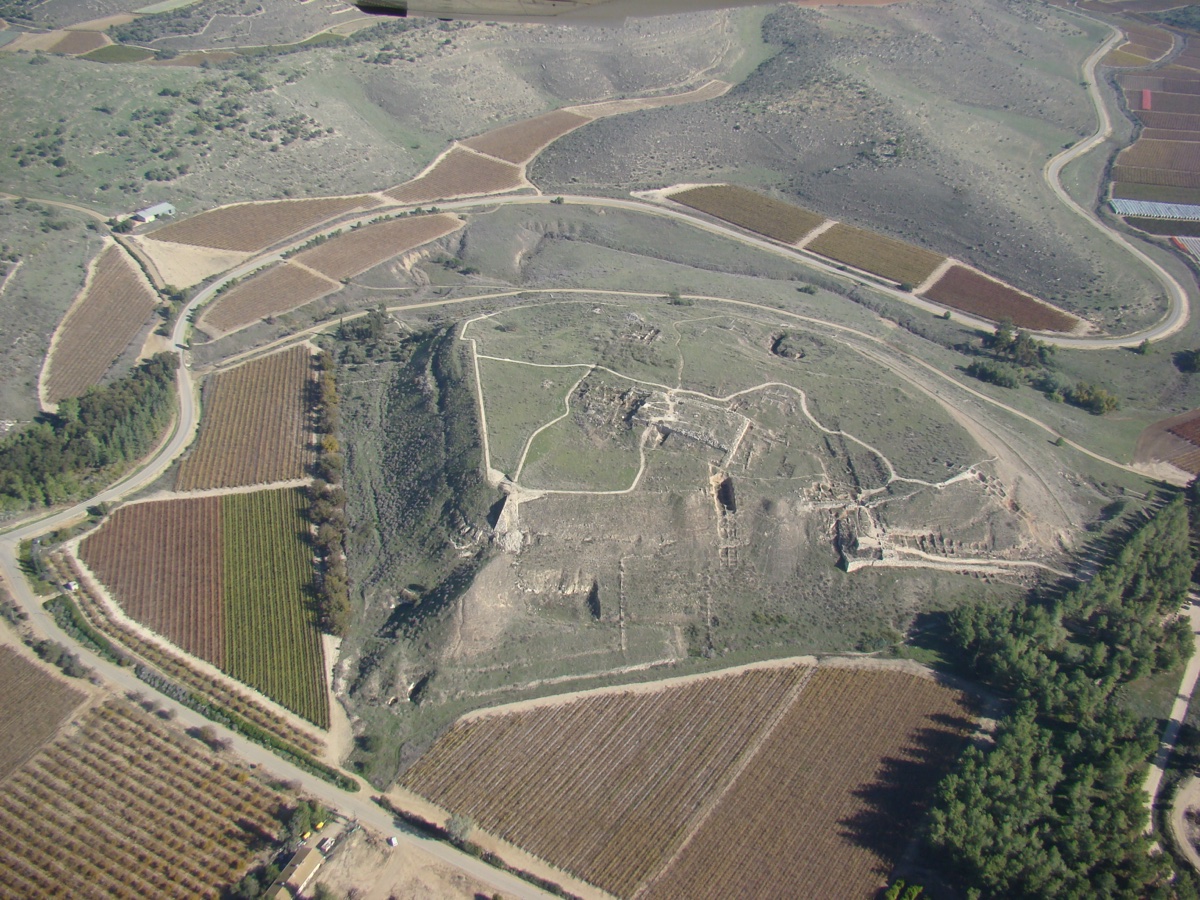
Image Caption: This aerial photo of Lachish is from Leon Mauldin and is used with permission.
And Hezekiah king of Judah sent to the king of Assyria at Lachish, saying, “’I have done wrong; withdraw from me. Whatever you impose on me I will bear.” And the king of Assyria required of Hezekiah king of Judah three hundred talents of silver and thirty talents of gold. And Hezekiah gave him all the silver that was found in the house of the LORD and in the treasuries of the king’s house. At that time Hezekiah stripped the gold from the doors of the temple of the LORD and from the doorposts that Hezekiah king of Judah had overlaid and gave it to the king of Assyria (2 Kings 18:14-16).
Nonetheless, this was not enough to satisfy Sennacherib. He saw Hezekiah’s situation as an opportunity to defeat Judah and loot the city of Jerusalem as had been done to Samaria, the capital city of Israel, twenty years before.
Sennacherib had the siege of Lachish portrayed on the walls of his monument room in his palace in Nineveh. The entrance to the palace was down a hall between winged lamassu statues on each side of the entrance, one passed through Balawat Gates with designed ornaments on them (similar to these from the palace of Shalmaneser), and into the room where all the walls were lined with reliefs showing one of Sennacherib’s most important accomplishments—the conquest of Lachish. The reliefs on these palace walls were removed and remounted in a special room fitted them in the British Museum.
Some of the wall reliefs show the siege engines on a mounted slope, attacking the base of the defensive walls of Lachish. I am including pictures taken from the reliefs displayed in the British Museum, as well as additional photos.
Pritchard, James Bennett, ed. The Ancient Near Eastern Texts Relating to the Old Testament, 3rd ed. with Supplement Princeton: Princeton University Press, 1969.
[Note 1] There is some discussion about how much part Sargon II played in the destruction of Samaria, with Leon J. Wood attributing the conquest to Shalmaneser V (A Survey of Israel’s History, 282), but Michael D. Coogan argues that Sargon II was the one who finally subdued rebellious Israel (The Oxford History of the Biblical World, 324).
[Note 2] Apart from those attributed to others, all other photos are my own.
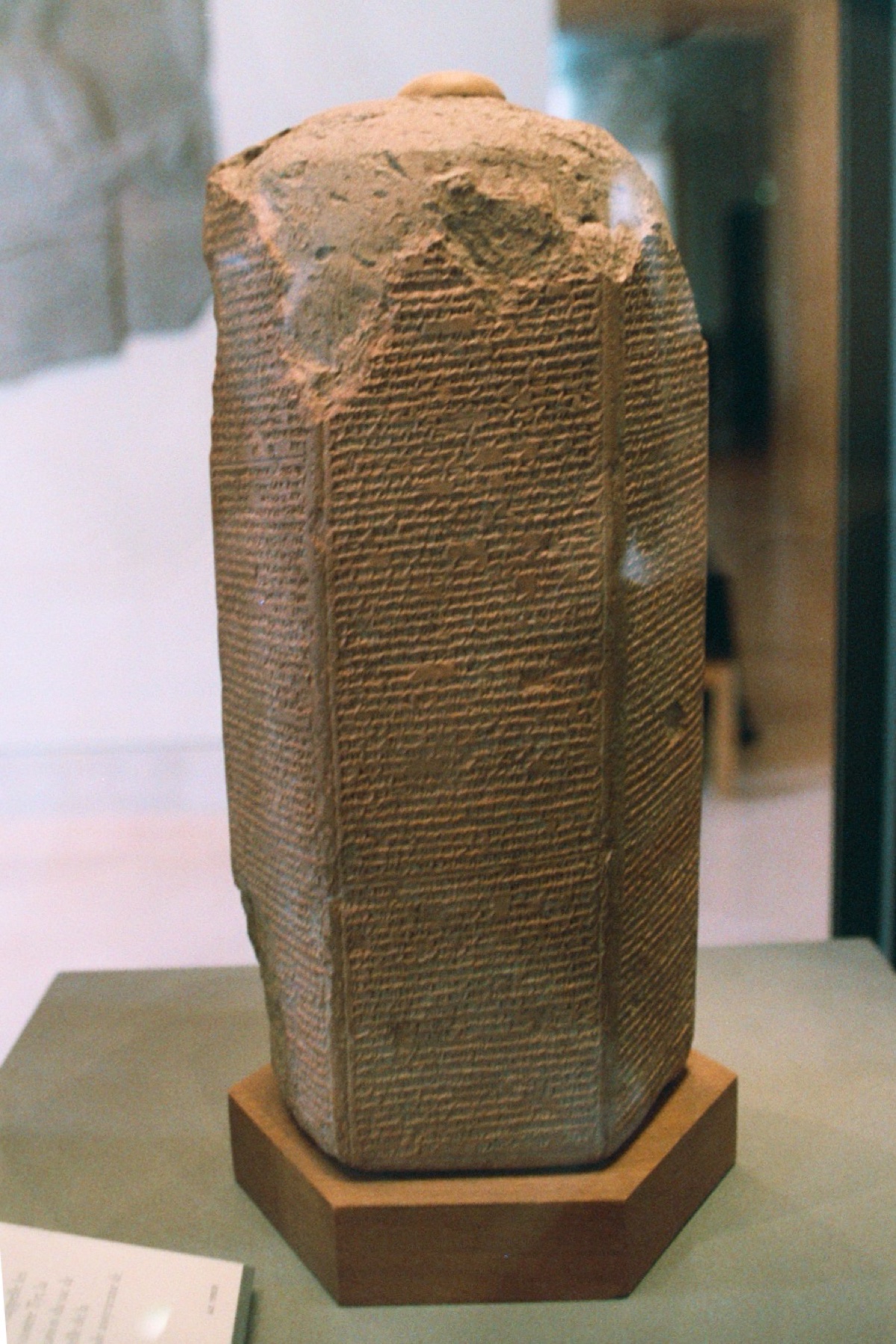
Image 1 Caption: Taylor Prism is housed in the British Museum. It is Sennacherib’s account of the siege of Jerusalem in 701 BC. It is named after Colonel Robert Taylor, who found the prism at Nineveh in 1830.
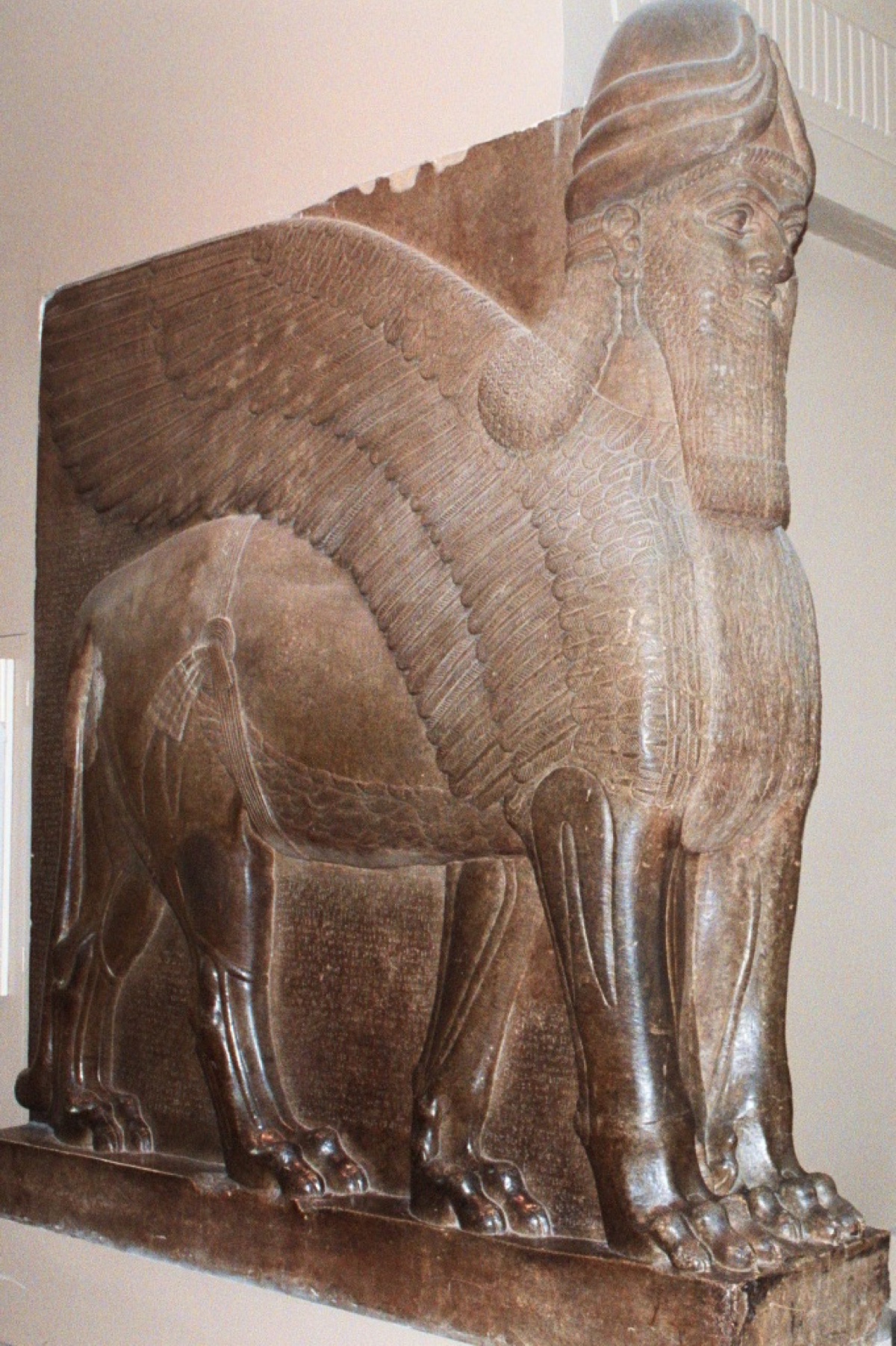
Image 3 Caption: One would enter the display room of Sennacherib’s palace by passing between a pair of lamassu statues, one on each side of the entrance corridor.

Images 4/5 Caption: Having passed through the lamassu statues, one would proceed down a corridor to the Balawat Gates (similar to these reconstructions from Shalmaneser’s palace). The metal horizontal plates on the gates are portrayed in the reconstruction, but the original plates are also displayed, showing the intricate details.
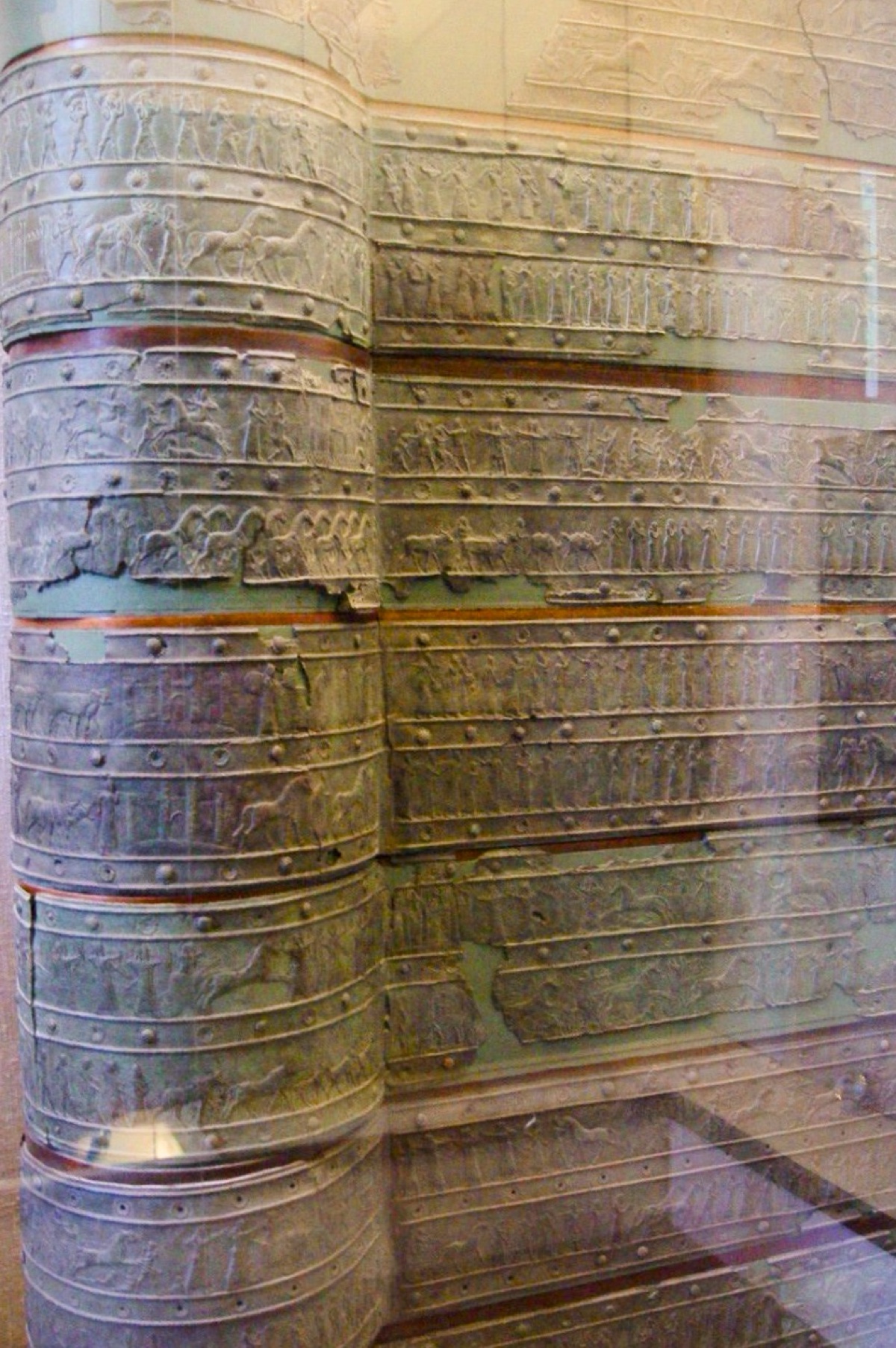
Images 4/5 Caption: Having passed through the lamassu statues, one would proceed down a corridor to the Balawat Gates (similar to these reconstructions from Shalmaneser’s palace). The metal horizontal plates on the gates are portrayed in the reconstruction, but the original plates are also displayed, showing the intricate details.
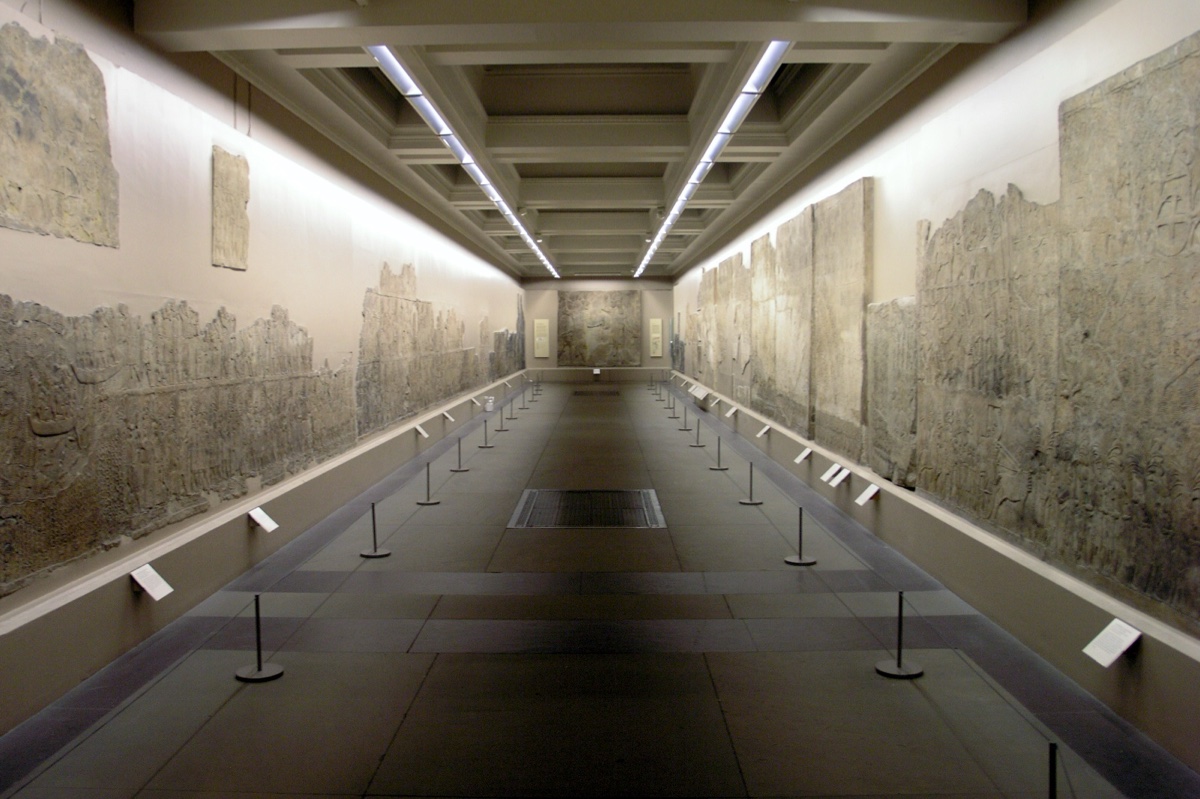
Image 6 Caption: The British Museum, Room 9—Nineveh Palace Reliefs
This room houses reliefs that originally decorated two sides of a courtyard at the Southwest Palace of Sennacherib and his successors at Nineveh. Instead of the usual scenes of warfare, they depict the transport from the quarries of huge human-headed winged bulls for the palace doorways. Other panels show campaigns in the marshes of southern Iraq and the bringing of tribute. Photo by Mujtaba Chohan. Used by Permission of the British Museum Link
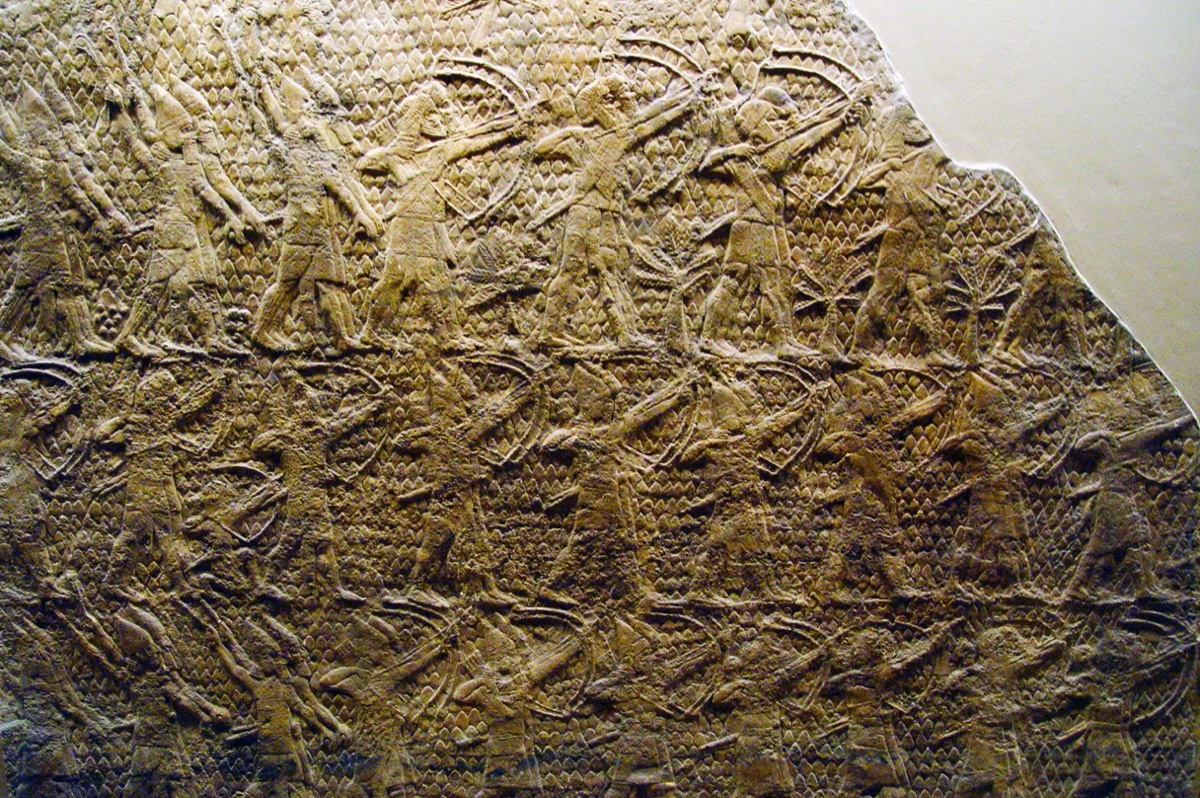
Image 7 Caption: This photo shows the siege of Lachish in progress with archers providing cover arrows to protect those who are besieging the walls of the city.
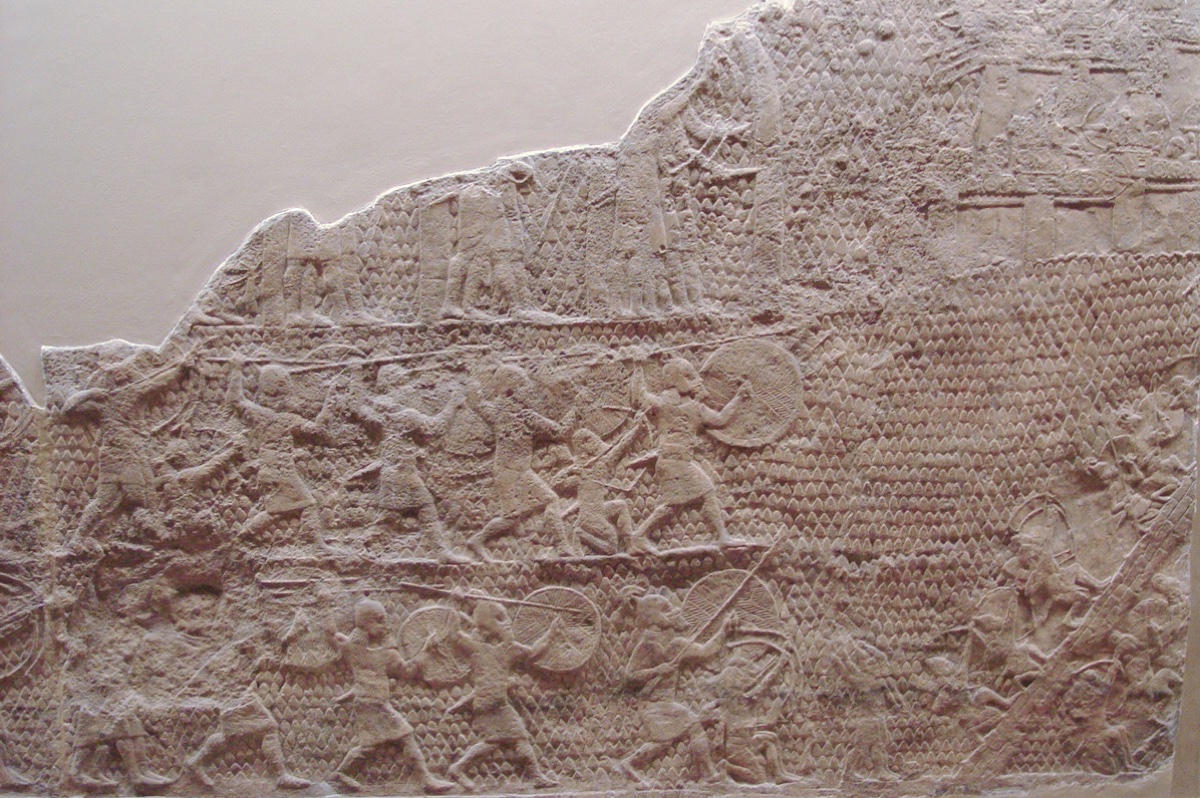
Image 8 Caption: This photo shows other soldiers providing protection as the siege engines are shown proceeding up the ramp to attack the wall.

Image 9 Caption: This photo shows the full assault of the siege engines on the front lines breaking through the defensive walls of Lachish.
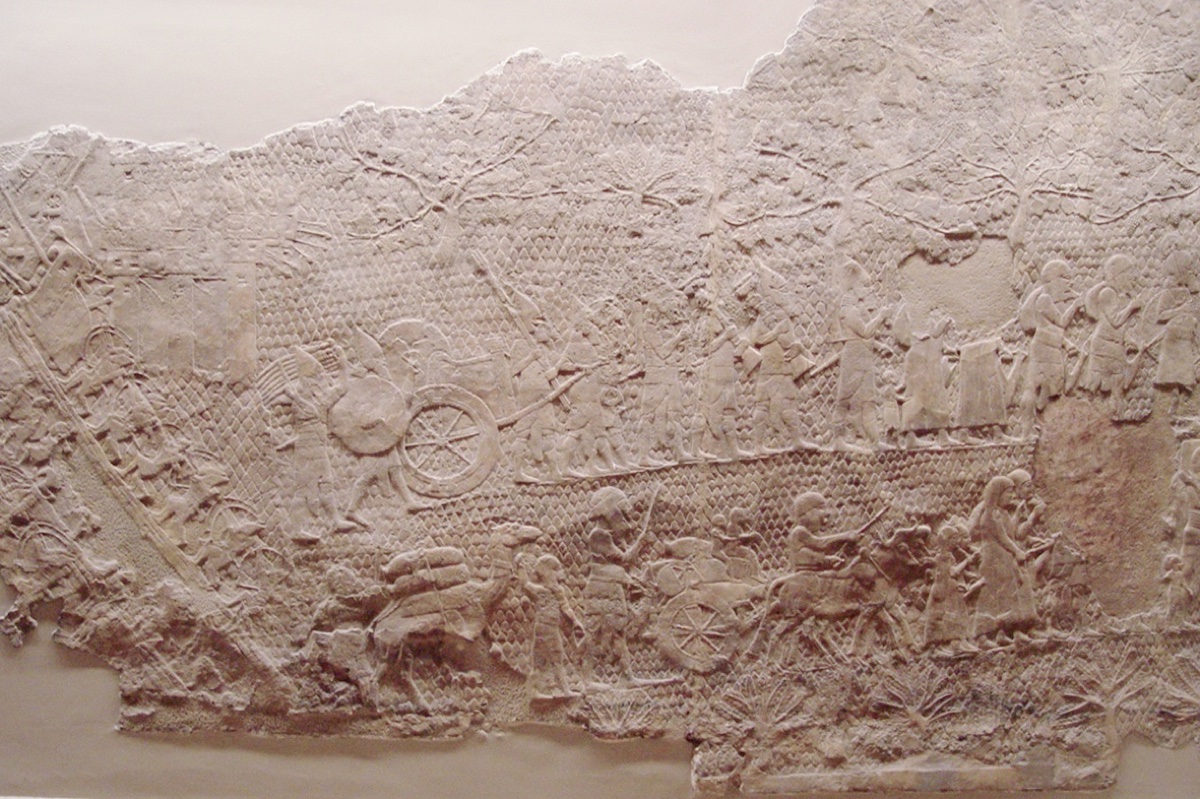
Image 10 Caption: On the left side of the photo, one can see additional siege engines and on the right the soldiers are removing booty taken in the conquest.

Image 11 Caption: What the siege ramp at Lachish looks like today.
Mike Willis served as editor of Truth Magazine for forty years. Presently, he is preaching for the Decatur Township church located southwest of Indianapolis, IN. The church website is here. He can be reached here.


By Danny Linden
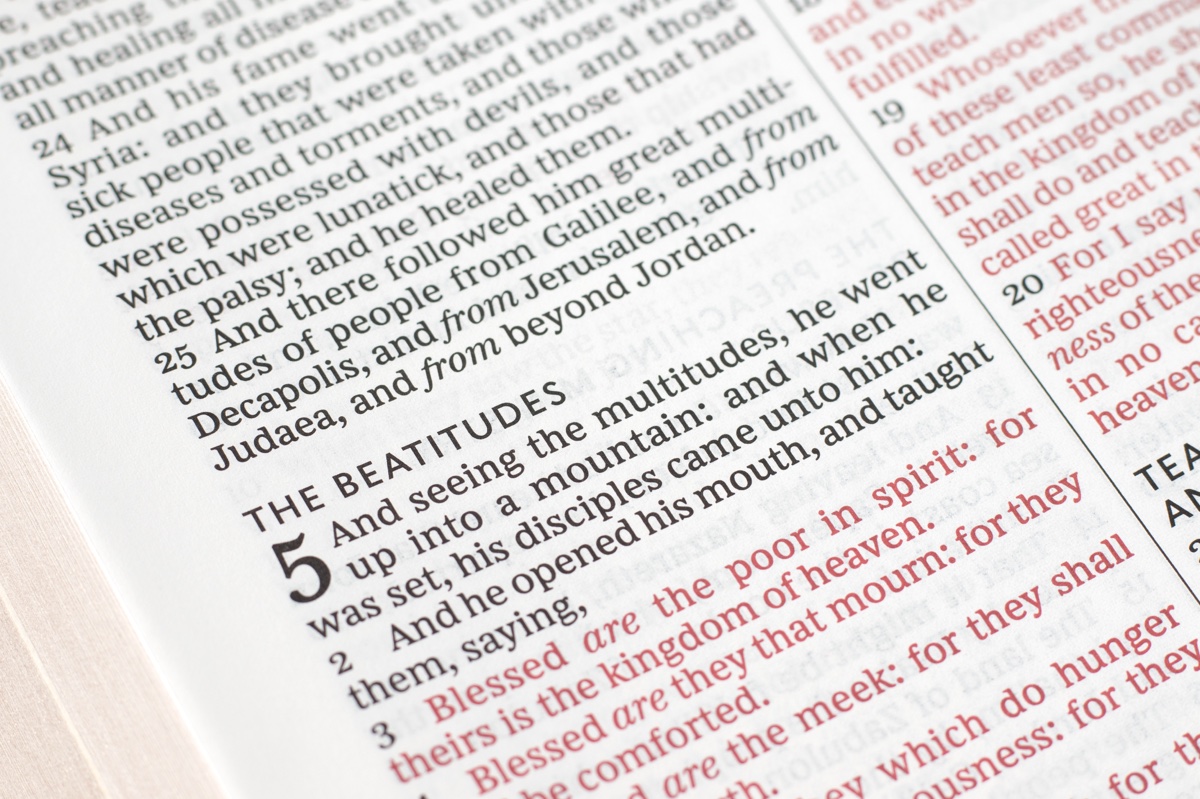
Synopsis: The last four beatitudes in Matthew 5:7-12 teach us how a kingdom seeker must also desire to be righteous and work in the kingdom.
Jesus’s Sermon on the Mount deals with the question of citizenship in the kingdom of God. In the last issue, we explored the first four beatitudes, which describe the spiritual brokenness that a seeker of God must possess. The remaining four beatitudes build on this foundation, emphasizing the importance of embodying righteousness and actively working in the kingdom.
“Blessed are the merciful, for they shall receive mercy” (Matt. 5:7). A citizen of the kingdom sees the needy and is compelled to show kindness. There is no haughtiness or inclination to look down on anyone. It is almost automatic—I see a need, and my desire is to relieve that pain in any way I can.
Why are kingdom seekers so merciful? It is because we are reminded of our own brokenness before God. When we were in despair, we longed for God to be gracious and heal us. We had nothing to offer and no way to help ourselves, but we still needed God.
Citizens of the kingdom know that we cannot solve people’s greatest problem. We have no power to forgive sin or bring others into a relationship with God. All we can do is show kindness in every way and do our best to lead others to Jesus, praying for God to extend mercy to them as He did to us. In cases where we have been wronged, we must be willing and eager to forgive, knowing that we have been forgiven of far more by God.
Some kindness is shown from a heart of condescension rather than mercy. Condescension is born out of arrogance and self-gratification. That spirit may result in some surface-level good deeds, but it is not a moldable attitude with which God can work and it is not indicative of one who is in the kingdom of God.
God’s willingness to show us mercy is contingent in part on our willingness to show mercy to others. If we are stingy and unforgiving, God will treat us with harshness and an unyielding spirit. In the parable of the two debtors, the master’s heart was turned against his servant who refused to show even a fraction of the mercy from which he has benefited:
Then his master summoned him and said to him, “You wicked servant! I forgave you all that debt because you pleaded with me. And should not you have had mercy on your fellow servant, as I had mercy on you?” And in anger, his master delivered him to the jailers until he should pay all his debt. So also My heavenly Father will do to every one of you, if you do not forgive your brother from your heart (Matt. 18:32-35).
“Blessed are the pure in heart, for they shall see God” (Matt. 5:8). Purity was a familiar concept to a Jewish audience. The law of Moses taught Israel about purity through ritual practices of physical cleansing. It was easy for a person or object to become defiled, and it took time and attention to be cleansed. Without being properly purified, even a priest could not approach God with an offering or in worship.
The most important lesson from the law of Moses and Christ’s teachings about the kingdom of God is their shared emphasis on maintaining purity of heart. The physical washings faded away in the new covenant—even baptism was clarified by Peter to be for a spiritual cleansing, not a washing away of dirt from the body (1 Pet. 3:21). Purity of the heart remains a key demand from God.
A pure heart is seen in unadulterated devotion. We can understand this in light of the fourth beatitude of hungering and thirsting for righteousness. When finally given the chance to quench our thirst and be holy before God, why not take it and never let it go? Disciples with pure hearts will shun sin because they have found something far better in the kingdom.
It is amazing that God allows anyone to come into His presence. It is a blessing that can’t be ignored but will not be enjoyed by many. Only those with clean hands and a pure heart are granted the right to stand in the throne room of God. Isn’t that such an amazing transformation from the mournful, meek soul who accepted his fate in despair?
Who shall ascend the hill of the LORD? And who shall stand in His holy place? He who has clean hands and a pure heart, who does not lift up his soul to what is false and does not swear deceitfully. He will receive blessing from the LORD and righteousness from the God of his salvation. Such is the generation of those who seek Him, who seek the face of the God of Jacob (Ps. 24:3-6).
“Blessed are the peacemakers, for they shall be called sons of God” (Matt. 5:9). Many first-century Israelites were not exactly making peace. Political zealots were trying to spark revolution and upheaval. Others sought community power by creating religious sects and working to climb their way to the top. Judaism was a tangled mess of people and groups vying for power and respect. In the midst of that chaos, Jesus calls for those who make peace.
Peacemakers work toward bonds of unity and love among neighbors. They do not insult or exploit others, they do not tolerate gossip, and they do not care about what they can gain from others. Everywhere a citizen of the kingdom goes, there should be greater peace and humility.
Peacemakers care about people who are not easily considered neighbors—people who live far away and/or those with whom they have little in common. They do not wish for war and desire harmony and contentment in every place.
Most importantly, peacemakers seek to be right with God. They know that they are enemies of God so long as their sin is held against them, so they desire forgiveness and unity. They are done opposing and angering God, and if He will be merciful, they will live in harmony with Him.
Jesus says that peacemakers will be called sons of God. That was a loaded term to the Jewish people and likely stirred some controversy as He said these words. Being a “son of God” was considered the birthright of the Jews. They were God’s chosen people (cf. John 8:33, 41). The members of all the warring religious sects believed they were “sons of God,” and particularly righteous ones at that! Even their community viewed them that way. On the other hand, the zealots were working hard to free Israel from tyranny. They were revolutionaries who were willing to bleed for the freedom of the nation they loved. Peace was not an option while the Romans ruled, but who else would you call sons of God if not the people fighting to liberate His chosen people?
According to Jesus, the true sons of God are not the phony religious leaders or the warmongering rebels. The true sons of God seek peace.
Blessed are those who are persecuted for righteousness’ sake, for theirs is the kingdom of heaven. Blessed are you when others revile you and persecute you and utter all kinds of evil against you falsely on My account. Rejoice and be glad, for your reward is great in heaven, for so they persecuted the prophets who were before you (Matt. 5:10-12).
Persecution for the sake of righteousness is a powerful proof of service. If you can serve God even when it causes you to suffer, then your heart must be aligned with His purposes. The willingness to be harmed without complaint shows a true transformation of the heart. This is as far as we can get from the starting position of brokenness, guilt, and worthlessness before God.
The promised reward cycles all the way back to the same reward given for the first beatitude: “for theirs is the kingdom of heaven.” This creates a bookend effect, showing that the heart of the kingdom seeker must embody all of these things.
Enduring persecution is so alarming to us that it demands further explanation. Jesus went on to say that we may endure many kinds of persecution, but that our enemies cannot take away our reward. Though we may be shamed by the world, we follow in the footsteps of other faithful servants of God, including the prophets. This allows us to do even more than simply endure suffering. We can rejoice in it, knowing that our reward in heaven will be great indeed.
The beatitudes collectively portray an image of the kind of person who wants to enter the kingdom of heaven and will be admitted by God. We must recognize our pitiful state before Him and realize that we are totally dependent on His mercy and willingness to teach us righteousness. We must also be enthusiastic about a life of service in the kingdom.
Many people believe they can go through life without participating in religious activities and still hope for heaven because they have accepted Jesus as their personal Savior. Some self-proclaimed Christians claim to be members of the Lord’s church and expect to go to heaven when they die, even though they have made no requisite changes and accepted no spiritual responsibilities or obligations. This is foolishness and does not demonstrate a genuine, enduring desire to be with God and become like Him.
Too many people want to be in the church and go to heaven when they die, but expect no changes and no responsibilities. That is foolishness and does not show a real, enduring desire to be with God and like God. God knows the difference, and we must come to our senses quickly before it is too late.
Danny Linden has worked with the Hebron Lane church of Christ in Shepherdsville, KY, since March 2023. He and his wife, Lauren, have four children. The church website is here. His website is here. He can be reached here.


by Joshua D. Gipson
Synopsis: Deuteronomy 6:13 states, “You shall fear only the Lord your God; and you shall worship Him and swear by His name.” While worship is commanded, its importance is often overlooked.
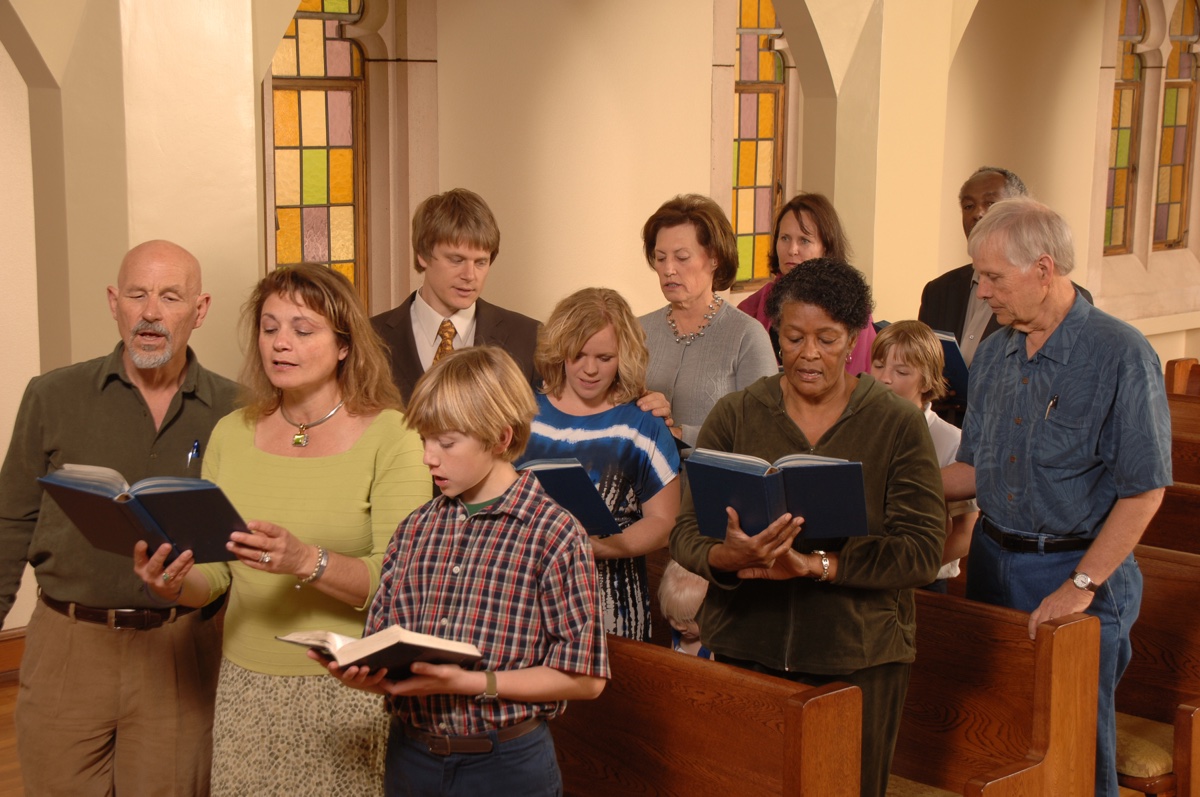
First, I would like to express my thanks to Mark Mayberry for giving me the opportunity to write this article. It is the twenty-first century, as you well know, and something that is slowly going away is the importance of worship to God. Now, you probably have done it, and, in all seriousness, I’ve done it; there have been times when I’ve not thought of worship like I should. Most every person has probably done this at some point in their life. So many people of this age look at Sunday worship as just another Sunday, or even anytime you’re worshiping as nothing. When I was younger, I sometimes saw worship as just a time to see my friends—not all the time, but sometimes. I was just a child, but as I have gotten older and matured, I’ve realized that worship is more important than one might think. However, it’s come to my attention that even grownups often don’t think that much about worship. Now, while it is sad to see adults going through life not thinking much of worship, it is even more sad seeing young kids and teenagers like me going through their youth not thinking about it. What I want to talk about is simply worship itself, and contemplate the question of whether or not we are not taking worship as seriously as we should. In considering this topic, may we ask the following questions: (1) Why do I worship? (2) Why do I go to church on Sunday? and probably the most importantly, (3) What does worship mean to me?
The word worship in just a general term means “to honor or show reverence for as a divine being or supernatural power” and “to regard with great or extravagant respect, honor, or devotion,” as Webster’s Dictionary puts it. The all-around term, if you just looked it up, means “show reverence and adoration for (a deity); honor with religious rites.” Finally, as Dictionary.com puts it, it means “reverent honor and homage paid to God or a sacred personage, or to any object regarded as sacred” and “adoring reverence or regard.” The common concept in every definition is that worship is to honor, show reverence, and to show a high regard. “Regard” means to “consider or think of,” so showing a high regard means to think or consider very highly, but that’s obvious. The point that I’m trying to make is that worship is to honor, to think of, to even sometimes bow down. Worship in general can, and I use “can” very carefully, be used to worship things on earth like kings, queens, rulers, even some spiritual leaders—although I am not saying that we should. Worship should be only to God, as Jesus states in Matthew 4:10, “You shall worship the Lord your God, and serve Him only.”
The definition that we use every day is not the only definition; there is a definition in the Bible that is very similar, if not the same, to the general term “worship.”
Consider Matthew 20:20. Here the mother of the sons of Zebedee comes to Jesus with her sons, “bowing down and making a request of Him.” The words “bowing down” are really what I want to focus on because they show humility, and as we’ll get to later, humility is a big part of worship.
Consider Luke 5:8. Jesus told the fishermen to cast their nets out into the water, and when they did, they caught a great number of fish. Then, Simon Peter fell down at Jesus’s feet, saying, “Go away from me Lord, for I am a sinful man.” We see here again a sign of humility, which is a major part of worship. While “bowing down” and “falling down” are generally synonymous, “falling down” is usually more geared towards a more earnest worship.
There are many examples of worship in the Bible as we just saw, but one that I would like to emphasize is Exodus 34:8, where it says that “Moses made haste to bow low toward the earth and worship.” Moses made haste to bow low! That leaves a question: do you make haste to worship?
God is the one and only answer, as seen in Deuteronomy 6:13, “You shall fear only the Lord your God; and you shall worship Him and swear by His name.” We also see that in Matthew 4:10. The consistent message of the Bible is that we worship God and Him alone.
In order to worship something, we need to know who or what it is, so let’s take a quick look at who God is.
He is the Creator, as seen in Genesis 1:1. This is a very simple passage: “In the beginning, God created the heavens and the earth.” It is also stated in Isaiah 40:28 that God is “the Everlasting God and the Creator.”
He is the great I AM. In John 8:58, Jesus states, “Before Abraham was born, I am.” Now, we all know Jesus was with God in the beginning of time, as stated in John 1:1-5. Also stated in verse 42, Jesus was sent from God and everything He teaches is from God (v. 40). So, if Jesus states, “Before Abraham was born, I am,” that means He is a member of the Godhead, the great I Am. As such, He will reign forever and ever.
He rules in the kingdoms of men. As said in Daniel 4:32, God will always rule in the kingdoms and nations of man and is always in control.
Throughout the Bible, we are commanded to worship by many individuals. However, the most important figures, or rather, “Beings,” who command us to worship, are Jesus and God.
Matthew 4:1-11 is about the temptation of Jesus by Satan. In vv. 8-10, Satan offers Jesus all the kingdoms of the world if He would fall down and worship him, but Jesus responds with, “Go, Satan! For it is written, ‘You shall worship the Lord your God and serve Him only.’” Jesus tells Satan to worship God and Him only, and if Jesus is telling Satan that, then we should listen as well. Jesus is commanding all of us, throughout the New Testament, to worship the Most High God and we need to listen.
In these passages, God commands the Israelites to “not worship any other gods, for He is a jealous God.” What God is saying is don’t worship any other gods, because we are to be worshiping Him.
Those are really the only two that I want to look at, because it’s God and Jesus telling us to worship, and if God and Jesus are telling us to do anything, we need to do it, no matter what. We could stop right there with why we should worship, because God and Jesus commanded it, but we should always want to worship because we are edified (1 Cor. 14:26). The passage states that in all we do during worship, “let all of it be done for edification,” meaning anything we do during worship, be it singing, praying, or teaching, should be edifying. We should also want to go to worship (Ps. 122:1; Heb. 10:23-25). We should always be happy when we get to go to worship.
In the broad sense, there is no specific time to worship. Worshiping is any time you’re honoring God, whether it be singing praises, praying, or teaching the word. In Matthew 26:36-46, Jesus prayed to God when He knew that He was going to go through this horrific torture and death, but He still found time to worship. Another example is Paul and Silas in Acts 16:25. When they were praying and singing praises to God while in prison, they found time to worship. The point I’m trying to pull out of these examples is that in some of their darkest hours, they still worshiped God. So, if they can do that, we can find the time to do it ourselves. It is also stated in Acts 20:7 and 1 Cor. 16:1-2 that we are to partake of the Lord’s Supper, and also give upon the first day of the week. Doing all of that is a sign of honor, which means that we are to worship on the first day of the week.
This is a very important topic, if not the most important, because if our minds and attitudes are not right, then why are we worshipping? First, we need to be humble (Acts 20:19). As was stated earlier, this is a very important part of worship. We don’t need to think too highly of ourselves. In God’s eyes, we are the same as the person sitting beside us. Next, we need to honor and respect God when we worship (Ps. 5:7). The point is simple: worship is honoring. If we do not honor God, then we are not worshiping as we have been commanded.
This is not an exhaustive list of all the ways we must worship according to how God has commanded us. My hope is that, in writing this, it can inspire each of us to worship with complete reverence and godly fear (Rom. 8:7). Let us approach worship with the seriousness it deserves, so that we can all achieve our goal of being in heaven with our heavenly Father for eternity.
Joshua Gipson is a member of the El Bethel church of Christ in Shelbyville, TN, where he has attended his whole life and where he preached his first sermon. Joshua is homeschooled by his parents, David and Melissa Gipson, and is the grandson of Jim and Paige Deason. He can be reached here.




By Jeremy Paschall
Synopsis: The “anti-pattern” spirit seeks to “deceive the hearts of the unsuspecting” (Rom. 16:18), but we are called to “retain the standard [pattern, form] of sound words” (2 Tim. 1:13).
In the beginning, God created the heavens and the earth. The earth was formless and void, and darkness was over the surface of the deep, and the Spirit of God was moving over the surface of the waters. Then God said. . . (Gen. 1:1-3ff, emp. added) [Note 1].
By His spoken word, God created order from chaos—separating light from darkness (Gen. 1:3-4), day from night (v. 5), atmospheric waters from terrestrial (vv. 6-8), and seas from land (vv. 9-10). He established the systems by which plants (vv. 11-13), animals (vv. 20-25), and humans (vv. 26-28a) reproduce “after their kind;” and He established the hierarchy by which all of His creation co-exists and mutually benefits (vv. 28b-30). He set “lights in the expanse of the heavens to separate the day from the night, and. . . for signs and for seasons and for days and years” (vv. 14-19). In summary, “God saw all that He had made, and behold, it was very good” (v. 31)—an inviolable design for the ages. Indeed, “While the earth remains, seedtime and harvest, and cold and heat, and summer and winter, and day and night shall not cease” (Gen. 8:22).
From the beginning, “God is not a God of confusion” (1 Cor. 14:33)[Note 2], and the patterns established at creation are reflected in subsequent divine revelation. For example, by God’s design, “The earth brought forth vegetation, plants yielding seed after their kind, and trees bearing fruit with seed in them, after their kind; and God saw that it was good” (Gen. 1:12). This system replanted the earth after the flood, confirmed to Noah the receding of flood waters (Gen. 8:11-14), and ordered the Jewish feast calendar (Exod. 23:14-19; 34:22-23; Deut. 16:1-17). Furthermore, the seed’s two essential functions established at creation—giving life, and transmitting qualities to offspring—are the foundation of Jesus’s parable of the sower (Matt. 13; esp. Luke 8:11) and Peter’s inspired words, “for you have been born again not of seed which is perishable but imperishable, that is, through the living and enduring word of God” (1 Pet. 1:23).
Further, consider the seventh-day sabbath rest, previewed in Exodus 16 and codified in 20:8-10—“For in six days the LORD made the heavens and the earth, the sea and all that is in them, and rested on the seventh day; therefore, the LORD blessed the sabbath day and made it holy” (v. 11; cf. Gen. 2:1-3). The creation week itself formed the pattern for Israel’s calendar week, which subsequently prefigures the Sabbath rest, which remains for the people of God (Heb. 4:1-11).
Likewise, when the LORD spoke to Moses at Mt. Sinai concerning His earthly dwelling place and its furnishings, He explicitly warned, “According to all that I am going to show you, as the pattern of the tabernacle and the pattern of all its furniture, just so you shall construct it” (Exod. 25:9); “See that you make them after the pattern for them, which was shown to you on the mountain” (v. 40); “Then you shall erect the tabernacle according to its plan which you have been shown in the mountain” (26:30; cf. Num. 8:4) [Note 3]. Twice in the New Testament (Acts 7:44; Heb. 8:5), when recounting God’s nature and expectations, this divine pattern mandate is recalled.
Pattern language also fills the New Testament, and this should not be surprising, since Jesus did not come to destroy the Law or the Prophets, but to fulfill them (Matt. 5:17). In fact, “whatever was written in earlier times,” including that Law and those Prophets, “was written for our instruction” (Rom. 15:4); and Old Testament narratives are preserved “as an example, and they were written for our instruction, upon whom the ends of the ages have come” (1 Cor. 10:11). Rather than explicitly or implicitly eschewing the “patternism” of the Old Testament in favor of some looser hermeneutic, the New Testament points us back to those patterns which reveal the nature and character of God.
Further, the New Testament explicitly upholds patternism. The apostle Paul commended Christians in Rome, who “became obedient from the heart to that form of teaching to which you were committed” (Rom. 6:17). Knowing well “that form of teaching,” they were urged, “keep your eye on those who cause dissensions and hindrances contrary to the teaching which you learned, and turn away from them” (16:17). The Corinthians were repeatedly admonished to remember and follow Paul’s “ways which are in Christ” (1 Cor. 4:17; i.e., his personal example, cf. 11:1) and his consistent doctrine among various local churches, “just as I teach everywhere in every church” (1 Cor. 4:17; cf. 7:17; 16:1-2). Similar words were addressed to the Philippians: “Brethren, join in following my example, and observe those who walk according to the pattern you have in us” (3:17); and “The things you have learned and received and heard and seen in me, practice these things, and the God of peace will be with you” (4:9). The Thessalonians were commanded to “keep away from every brother who leads an unruly life and not according to the tradition which you received from us” (2 Thess. 3:6). Paul’s letters to Timothy and Titus frequently enjoined “soundness” (1 Tim. 1:10; 4:6; 6:3-4; 2 Tim. 4:3; Titus 1:9, 13; 2:1, 2, 8), including the exhortation, “Retain the standard [pattern, form] of sound words which you have heard from me, in the faith and love which are in Christ Jesus” (2 Tim. 1:13, emp. added).
An “anti-pattern” spirit is certainly nothing new. At the 1957 David Lipscomb College lectureship, school president Athens Clay Pullias first presented his lecture entitled “Where There Is No Pattern” [Note 4], which later received wider distribution as a tract by the same name. “In the 1960s and 1970s, a group of brethren advocated fellowship with those of differing doctrines and practices, even with those in denominations, claiming there is no diagram or blueprint of what the church should be”[Note 5]—sometimes called the grace-unity movement, associated with the names Carl Ketcherside and Leroy Garrett. Those same notions were re-packaged and re-popularized by F. LaGard Smith’s 2003 book, Who Is My Brother? Facing a Crisis of Identity and Fellowship [Note 6]. In 2009, Edward Fudge published five installments under the title “The Plague of Patternism” [Note 7], in which he assailed “this doctrinal system [known] as ‘CENI-S,’ an abbreviation for ‘command, example, necessary inference’ and ‘silence’” [Note 8], and declared that “patternism itself had been wrong from the beginning” [Note 9].
Sadly, this spirit is alive and well today, advocated by new voices. Perhaps most notably, John Mark Hicks’ book, Searching for the Pattern, proposes to replace “an exclusive pattern, a specific blueprint” [Note 10] with a “theological hermeneutic” [Note 11], because “The gospel is not a pattern of prescribed forms for the church” [Note 12]. This book and its advocates have caused major divisions in local churches in the Dallas and Indianapolis metro areas, and its doctrine-dismissive sentiment is finding its way into other pulpits—for example, “My security is not in what I believe but in Who I believe in” [Note 13], as if to separate Christ from His teaching and that of His inspired messengers. The New Testament is increasingly being described as a “love letter” and “narrative,” and those who uphold so-called blueprint theology are decried as “legalistic patternists,” “Pharisees,” and preachers of “merit-based righteousness.”
Biblical patternism is not the worship of patterns, as some slanderously charge, rather it is reverence for the Divine Architect who drew those patterns (Heb. 12:2). It is adherence to biblical standards in due respect for the Lord’s authority (Matt. 17:5; 28:18-20; Eph. 1:22-23; Col. 1:18), serving Him under law to Jesus Christ (1 Cor. 9:21; Gal. 6:2); never daring to call Him “Lord,” or espouse Him as our pattern, apart from His teachings (Matt. 7:21-27; Luke 6:46-49).
“If Scriptures set no norm, there is no norm; thus, nothing abnormal. If there is no pattern, then there is no wrong/sin. If there is no sin, every person can be a law to himself. If each is his own law, what place does God occupy? Why is He even needed?” [Note 14]. However, Jesus said, “If you love Me, you will keep My commandments” (John 14:15), “He who has My commandments and keeps them is the one who loves Me; and he who loves Me will be loved by My Father, and I will love him” (v. 21), and “If you keep My commandments, you will abide in My love; just as I have kept My Father’s commandments and abide in His love” (John 15:10). The apostle John added, “This is love, that we walk according to His commandments” (2 John 6).
Watch yourselves, that you do not lose what we have accomplished, but that you may receive a full reward. Anyone who goes too far and does not abide in the teaching of Christ does not have God; the one who abides in the teaching, he has both the Father and the Son. If anyone comes to you and does not bring this teaching, do not receive him into your house, and do not give him a greeting; for the one who gives him a greeting participates in his evil deeds” (2 John 8-11).
[Note 1] All Scripture quotations are from the New American Standard Bible: 1995 Update (NASB). La Habra, CA: The Lockman Foundation, 1995. Used by permission.
[Note 2] emp. added; Greek word akatastasia, translated here “confusion,” is elsewhere translated “disorder” (Jas. 3:16).
[Note 3] emp. added.
[Note 4] 1957 Lipscomb Spring Lectures: Volume One, 57. PDF. http://thecobbsix.com/wp-content/uploads/2016/08/Lipscomb-Lectures-1957.pdf
[Note 5] John Isaac Edwards, “Hold Fast the Pattern,” Truth Magazine, June 2011, 4.
[Note 6] 21st Century Christian, 2003; also Circles of Fellowship—Responding to the Crisis of Christian Identity—A Reprise of “Who Is My Brother,” Cotswold Publishing, 2013.
[Note 7] “gracEmail,” August 2009; also New Wineskins, “Patternism,” March-April 2010.
[Note 8] ibid., “Part 2—The ‘CENI-S’ jigsaw puzzle,”
[Note 9] ibid., “Part 5—A very helpful book.”
[Note 10] John Mark Hicks, Searching for the Pattern: My Journey in Interpreting the Bible, 34, emp. orig. Kindle.
[Note 11] ibid, 14 et al.
[Note 12] ibid., 104.
[Note 13] Mike Sullivan, “The Gospel and Fellowship, A Closer Look,” Brownsburg church of Christ, May 5, 2024. https://brownsburgchurchofchrist.snappages.site/media/kbvcshz/the-gospel-and-fellowship-a-closer-look.
[Note 14] Bobby Graham, “Patternism,” unpublished sermon.
Jeremy Paschall has worked with the Greenwood church of Christ in Greenwood, IN, since February 2022. He and his wife, Laura, have one daughter. The church website is here. He can be reached here.



By Warren King
Synopsis: While our society tends to disparage “judging,” children of God are called upon to “judge righteous judgment.”
Matthew 7:1 (“Judge not. . .”) is perhaps one of the most well-known passages in the Bible. Some have inferred from this that Jesus condemns all judging, but that is not true. In this article, we will not only expose that myth but will examine the necessity of judging “righteous judgment” (John 7:24).
From the earliest days of Israel’s history, judges served a vital role among God’s people. Moses appointed others to help him with that task (Exod. 18:13-26; Deut. 1:9-18). Every fortified city in Israel was to have judges sitting at the gates (Deut. 16:18-20).
In the days of Jesus, judges were still prominent. Jesus often referred to them (Matt. 5:25, Luke 18:2), and both the Jews and the Romans maintained judicial offices (Matt. 26:57-68; 27:1-2, 11-26). Today, all secular governments maintain a formal judiciary—judges who hear matters of dispute and render verdicts.
We make informal judgments of others on an almost continual basis. You can hardly disagree, for that would only prove the point. We judge others by what they do, what they wear, what they say, and how they say it. We may not communicate these judgments to others, nevertheless, we can (and must) make judgments.
The real issue is not whether to judge, but how to judge. Jesus makes it clear that He has high expectations of us. We must judge righteously (Luke 12:57; John 7:24). This, in turn, raises many questions. Who determines what is right? How can we be right in areas where God is silent? How can we be right if we have no first-hand knowledge of a situation? What can obstruct right judgments?
Since God is the ultimate authority (Gen. 1:1), He rightfully sets the standards (makes the rules) by which we judge ourselves (2 Cor. 13:5) and others (1 Cor. 6:1-3). Yet, other standards also exist. Legitimate authorities (those ordained by God) have a right to establish appropriate standards (rules) by which to judge their subjects. Civil authority (John 19:11, Rom. 13:1), parental authority (Eph. 6:1), pastoral authority, i.e., elders (Heb. 13:17), and others exist by the authority of God. They therefore may establish the rules within their sphere of authority (fifty-five mph speed limits, no cookies before dinner, and Sunday morning assembly at 9 o’clock). Of course, the rules which these authorities set up must be in harmony with the will of God (Acts 5:29).
A very common problem in judging is the use of wrong standards. Ignoring the authority of God and God-ordained authorities, people often establish their own rules. These might include tradition (what the judge is accustomed to [Mark 7.7]), popular opinion (what the judge believes their peer-circle will approve of [Luke 23:20-25; Acts 12:1-3]), selfish interests (what the judge believes will benefit him most [Prov. 17:23; 1 Kings 21:1-16]), and conscience (what the judge has independently determined to be right [Acts 26:9]). Such standards are not legitimate sources upon which to base righteous judgments.
Mercy is not simply an emotion (as pity or compassion); rather, it is the outward manifestation of those emotions (Luke 10:33-37). In a judicial context, mercy may be defined as leniency. This manifestation of mercy has historically played an important role in God’s dealings with humanity. From Genesis 3 onward, it is one of the qualities that define the very nature of God (Joel 2:12-13). Nowhere is God’s mercy more evident, and more deserving of our praise, than in His willingness to forgive us of the sins we have committed against Him (Eph. 2:4-6).
God’s leniency is not determined by mood swings, like the false gods of pagan mythology. Rather, it is conditioned on the behavior of those with whom He deals. God’s mercy is upon those who fear Him (Ps. 103:17; Luke 1:50), who call upon Him (Ps. 86:5; Luke 18:13-14), who are obedient to Him (Deut. 4:29-31), who repent (Jonah 3-4; Luke 13:3) and who are, themselves, merciful (Jas. 2:13). In a similar manner, our mercy (leniency manifested in forgiveness) should be extended to those who are repentant (Luke 17:3; 2 Cor. 2:6-8).
When Moses chose men to help him in judging the Israelites, he chose “able men” (Exod. 18:25). What would that “ableness” look like? Since the work of elders involves a great deal of judgment, we could infer that their qualifications would be an ideal template for any judge. In these areas, the qualifications of elders (cf. 1 Tim. 3 and Titus 1) are those for which every Christian should strive.
A righteous judge should not be self-willed (stubborn, regardless of the facts), or contentious (argumentative) or pugnacious (overly eager to fight). He should exercise self-control and be temperate (not given to extremes) and just (fair and honest) and one who holds fast to the word of God (implying a love for God). He should not labor under the influence of mind-altering drugs (as alcohol) or be a lover of money (especially ill-gotten gain). He should be gentle, prudent (cautious), devout, a lover of good, and given to hospitality (implying a love for others).
While it is important for the character of a judge to be righteous, it is just as important for the process of judgment to be righteous. For example, righteous judgment will not be hypocritical (Matt. 7:1-5; Rom. 2:21-22). We must truly practice what we preach. Our judgments must not be legislative, i.e., judging others by our own rules. Though legitimate authorities have every right to establish rules within their sphere of authority, we have no right to elevate our personal opinions to be law binding on others (Jas. 4:11-12; Rom. 14:1-3). Righteous judgments will be impartial (Lev. 19:15), not showing favoritism to friends, family, the poor (just because they are poor), or the rich (just because they are rich, or because they have offered favors or bribes). God consistently warns against such judgments (Lev. 19:15; Deut. 16:18-20; Prov. 17:23; Jas. 3:17). Intimidation (fear) can also be a problem. It takes a person of courage to judge “righteous judgment” (Deut. 1:17, 2 Chronicles 19:11). Whether fear is exerted purposefully (Acts 5:40) or incidentally (Gal. 2:11-13), the verdicts are likely to be flawed if we allow fear to influence us.
Rather, righteous judgment should focus on actual deeds (Matt. 7:16-17), which is how God judges us (Rom. 2:6; 2 Cor. 5:10). Our judgments should be according to truth (Prov. 29:14) which is, again, how God judges us (Rom. 2:2). “Truth” is not a nebulous concept, as Pilate suggested, but is simply “that which is in accordance with reality” (Oxford online). It is our responsibility as judges to determine truth. Personal prejudices are not sufficient here. Wisdom, honesty, and evidence are necessities.
It is impossible to make righteous judgments without evidence. The real question centers on what types of evidence to consider. Evidence, by its nature, is classified as either direct or circumstantial. While these terms may smack of legalese, they have their basis in the word of God.
Direct evidence is defined as any evidence which, “if true, immediately establishes the fact that was to be proved” (Grolier’s Encyclopedia, 1994). This type of evidence might include written documents (Deut. 24:1-2; Jer. 32:9-12; John 5:39), observable behaviors (John 5:36), or the testimony of eyewitnesses (John 20:30-31; 1 Cor. 15:8; 2 Pet. 1:16).
Although it is often criticized, circumstantial evidence has a legitimate role in the process of judging. It is defined as any evidence which, “even if true, still requires that the fact be inferred” (Grolier’s). Such an inference requires careful consideration and should not be made hastily. However, often circumstantial evidence is all that is needed to make a righteous judgment, especially if it is strong and abundant. After all, it is because of strong circumstantial evidence that we believe in the existence of an all-powerful God, the inspiration of the Bible, and heaven itself (Ps. 19:1-3; Heb. 11:3).
Eyewitnesses can be invaluable in rendering righteous judgments. The Law of Moses demanded a plurality of witnesses for conviction on a capital offense (Deut. 17:6) and for other convictions as well (Deut. 19:15-19). Jesus upheld the same principle (John 8:16-18). Paul commanded Christians to do the same (2 Cor. 13:1; 1 Tim. 5:19).
Witnesses do not all enjoy equal credibility. Those who stand to gain by their testimony are certainly suspect (Matt. 28:11-13). In contrast, those who have nothing to gain but everything to lose (including their life) are the most credible witnesses of all. In fact, the Greek word for “witness” (martus) is sometimes translated “martyr” (Acts 22:20; Rev. 2:13). By this standard, the testimony of the apostles is extremely credible (Acts 1:3; 2:32; 3:15; 4:33; 10:39-41).
While righteous judgment can be challenging even to the most mature Christian, we should strive to achieve goal. It is just one area in which we can emulate our Lord, “the Righteous Judge” (2 Tim. 4:8).
Warren King has been a gospel preacher since 1974. He has worked with the Downtown church of Christ in Rogers, AR, since 2013. He and his wife, Debi, have four children, fourteen grandchildren, and four great-grandchildren. The church website is here. He can be reached here.



By Bob McPherson
Synopsis: In Mark 11:17-33, Jesus affirmed the need for religious authority and stated that such authority comes from one of only two sources: from heaven or from man. When it comes to questions about authority in religion, “from man” is the wrong answer.
In Mark 11:27-33, the chief priests, scribes, and elders came to Jesus with a question. They asked, “By what authority are You doing these things, or who gave You this authority to do them?” Jesus responded with a question of His own. “I will ask you one question; answer Me, and I will tell you by what authority I do these things. Was the baptism of John from heaven or from man? Answer Me.” Notice two things about His response. First, He legitimized their question. When He agreed that “I will tell you by what authority I do these things,” Jesus affirmed the need for religious authority. He also identified that authority in religious matters comes from one of two sources: from heaven or from man. The questioners’ internal discussion proves they knew Jesus was right, and that the only two answers were “from heaven or from man.” They knew that authority from heaven made a practice legitimate—placing a responsibility on them. Furthermore, they knew that authority from man made a practice illegitimate—bringing the people’s wrath on them. They knew that when it comes to questions about authority in religion, “from man” was the wrong answer.
The principle that emerges from Jesus’s interaction in Mark 11 is affirmed throughout Scripture. The Bible contains many examples of people acting without authority from heaven, as well as the divine response. We will consider three wrong answers and draw some conclusions that must frame our thinking as we answer questions about authority.
Sometimes a defense for a religious practice will begin with “I think. . .” You hear this when people imagine that God needs their help, or when they have discovered a better way. The story of the healing of Naaman (2 Kings 5:1-14) is an example of this. Naaman was irritated with the instructions from Elisha’s messenger. His response, “Behold, I thought. . .” Naaman effectively says, “I think there’s a better way.” He imagined a more elaborate method. He thought the man of God should call out and wave his hands. He knew better rivers in which he could wash and presumed he would get the same result. Admittedly, the way which Elisha detailed was not very elaborate, but the way was “according to the word of the man of God.” Naaman’s idea about how to accomplish his healing may have been better than Elisha’s instructions in every conceivable way—except one. Nevertheless, that one is the only one that matters. When he humbled himself and followed God’s instructions, he was healed. The lesson from this story is clear. Yet we continue to try to improve upon God’s instructions.
Modern examples abound regarding the sufficiency of the local church. God has given His people many things to accomplish but established only one organization in which to accomplish it—the local church. People continue to try to improve upon God’s instructions.
God gave the local church the work of supporting evangelists. Yet, someone said, “I think it would be better if we create an organization and pool resources from many local churches. We could be more efficient and effective.” It might be better in every way—except one: it is not according to the word of God.
God gave the local church the work of caring for needy saints. Still, someone said, “I think it would be better if we built orphan homes or set up Disaster Response Teams and let local churches send us money.” That seems like a good idea, except for the most important reason: it is not according to the word of God.
God gave the local church a spiritual mission. Notwithstanding, through the years, people have said, “I think we should build church-sponsored schools to provide secular education in a Christian environment.” We could continue with examples that may seem like a better way—except that you cannot find authority for them in the word of God. Considered in total, institutionalism is a package of allegedly “better ways.” When we build and operate institutions conceived by man to do the work that God gave His church, it is a modern example of trying to improve upon God’s instructions. “I think” is a wrong answer to questions about authority.
You hear this when folks are defending new ways to do old things. Consider the story of David’s first attempt to move the ark (1 Chron. 13:1-12). The king consulted the leaders, and they agreed. The thing was right in the eyes of all the people. Who would deny that Uzzah acted with good intentions? Still, good intentions will not make a wrong thing right. The problem with the new cart was that God had already given instruction. In Numbers 4:4-6, and also verse 15, Moses gave instructions that the ark was to be covered and placed on poles by the sons of Aaron, then carried by the sons of Kohath. He also warned that the one who touched the holy things would die. Although it was too late to help Uzzah, David did what he should have done to begin with. Instead of seeking authority from man, he sought authority from heaven (1 Chron. 15:2, 3-15).
We still invent new ways to do God’s will, even God’s most fundamental will—to draw people to His Son. Jesus said, “And I, when I am lifted up from the earth, will draw all people to Myself” (John 12:32). Beginning at Pentecost, the only way the apostles and early Christians appealed to people was through the preaching of the gospel. They drew people by convincing them they were lost in their sins and telling them about a risen Savior. However, somewhere along the way, folks decided there were other ways to appeal to people. The social gospel spawned approaches that appeal to people by addressing their physical and social needs, as a means of eventually sharing the gospel with them. That seems like a good idea to a lot of people. Churches contemplate supporting local food pantries or hosting a community blood drive and calling it “outreach”—admittedly trying to reach people through ways other than the gospel message. Some may seek to recruit new members or appeal to the young by blurring the line between food and fun and actual spiritual fellowship. Many may think this sounds like a good idea, but God has already given us instruction.
The first-century Christians did not go everywhere handing out gift bags; they went everywhere preaching the word. “It seems like a good idea to me” is a wrong answer to questions about authority.
This is often the defense of those who desire updated worship. Consider Paul’s instruction regarding the Lord’s Supper (1 Cor. 11:17-26). The Corinthians had developed their own tradition. So much so that Paul says it was not the Lord’s Supper they were eating. They had turned the Lord’s Supper into a common meal and turned a spiritual act into a carnal act. They had replaced what God ordained with what they desired. The real problem? They had abandoned what had been revealed. The solution? Go back to what had been revealed about worship. That was the answer in the first century, and that is the answer today.
We still try to update worship to suit our carnal desires. A good example is instrumental music. When the issue comes up, you will hear one of two types of answers. You will hear “I think” or “we all agree” or “I don’t see anything wrong with it”—authority from man. Or, you will hear the same answer Paul gave, what has been received from the Lord. Because on the issue of music in worship, the New Testament is specific, and it is clear. After saying in Ephesians 5:17, “do not be foolish, but understand what the will of the Lord is,” Paul writes in Ephesians 5:19, “addressing one another in psalms and hymns and spiritual songs, singing and making melody to the Lord with your heart.” Similarly, in Colossians 3:16, “Let the word of Christ dwell in you richly, teaching and admonishing one another in all wisdom, singing psalms and hymns and spiritual songs, with thankfulness in your hearts to God.” That is what we have received from the Lord.
When we have questions about what we ought to do in worship, the answer is what has been revealed. “I don’t see anything wrong with it” is a wrong answer.
So, what are the right answers to our questions about authority? Just consider our three examples. We must answer according to the word of God. We must see if God has already given instruction. We must follow what we have received from the Lord. Those are the right answers to questions about authority.
Bob McPherson has been working with the Eastside church of Christ in Bowling Green, KY since 2018. He and his wife, Marlene, have two sons. You can visit the Eastside website here and reach Bob here.


By Ethan Riffle
Synopsis: The Bereans exemplified noble character through their open-mindedness, eagerness to learn, and commitment to examine Scripture together as a community, challenging our modern individualistic emphasis on Bible study and learning.
Chances are many people would say “Bible study” is one of the most noble things a Christian can spend time doing. The Bereans are often cited as an example of diligent Bible study.
When you think about “Bereans,” what picture comes to mind? Hold on to that thought for later. In this short study, I want to examine our common conceptions of who a “Berean” is against what we find in the account.
Church culture and our broader culture emphasize diligent personal study. We esteem the picture of a minister alone in his study, or a young lady sitting with her Bible. While these things are good and important, we will see that this is not the point the account of the Bereans is teaching us.
Remember that in the first part of Acts 17, Paul and Silas had just met hostility for their preaching the gospel, endured a riot in which their lives were threatened, and then had to depart under the cover of night (v. 10).
When they reached Berea and entered the synagogue, a first-time reader might wonder, “What’s going to happen this time?” Here we see these worshippers placed in a positive direct contrast to those in Thessalonica. I suspect Berea was a breath of fresh air to the apostles.
What was it about these people that was so admirable? It is noted that they were “of a more noble character than those in Thessalonica” (Acts 17:11 CSB, emphasis mine). Commentators note that this word comes from a root typically indicating a higher status (noble) birth (Witherington, 509). The Bereans showed themselves to be a higher stock of people than those previous because of the way they conducted themselves. In Thessalonica (Acts 17:1-9), some of the people listened and believed, but others were “jealous” (17:5) because Paul and Silas were gaining a following.
That closed-off, hostile attitude demonstrated some ugliness in the character of those in Thessalonica. So, why were the Bereans better? Because they “received the message with great eagerness and examined the Scriptures every day to see if what Paul said was true” (Acts 17:11 NIV). In other words, they were open-minded and enthusiastic about learning God’s truth.
We can observe from the description of their noble character and the excitement with which they received Paul’s preaching that they were open-minded people. They perceived what Paul said was important, and they were willing to listen to see if he was right. They were excited because this was an opportunity to learn truth.
Think about that for a moment. This was a community of convicted religious people, and Paul and Silas came in trying to convince them of a different way. Apparently, it didn’t matter if they were proved wrong; they were willing to think critically and aim for objectivity.
Is this an attitude that we can see in ourselves and our churches? What kind of attitude will I take when others are going to teach me? Close-mindedness and intellectual pride are not what the Bereans exemplify. As one author put it, “The adjective ‘Berean’ has been applied to people who study the Scriptures with impartiality and care” (Stott, 274).
These people had a deep desire to know the truths of God. They made a sustained effort over days to evaluate and discuss what these apostles had presented to them. Paul and Silas dedicated themselves to a sincere presentation, and the Thessalonians committed themselves to a sincere response. Stott says it well when he writes, “What is impressive is that neither speaker nor hearers used Scripture in a superficial, unintelligent or proof-texting way. On the contrary, Paul ‘argued’ out of the Scriptures and the Bereans ‘examined’ them to see if his arguments were cogent” (274-275).
Do I approach study superficially, where I might just be looking to proof-text my current opinions, or do I engage eagerly, earnestly, and sincerely as I try to understand the truth?
Looking back at verse 11, we read they “examined the Scriptures daily.” No big deal, right? Let’s examine their situation, which should help us appreciate the difference in their context versus ours. This will also help us get to our central point in this article.
Firstly, they did not have Bibles. We know that, but how often do we consider it? This was a Jewish synagogue in the first century. Historically, there was probably one collection of scrolls for the entire congregation, and not everyone would have been able to read, even if they had a copy.
We have Bibles on paper, phones, tablets, laptops. We have over 2,000 years of accessible knowledge we can draw from. The Thessalonians did not have what we possess, so let’s be grateful to God for what He has provided and use it to His glory.
Secondly, there is an important word in this we might overlook. “They received the word with all eagerness, examining the Scriptures daily to see if these things were so” (Acts 17:11 ESV, emphasis mine). They “received” and “examined,” together.
We have noted that they would not all own scrolls. They would have to rely on their teachers and each other for their understanding.
Often in synagogue worship, there would be reading from Scripture, and then someone would give a ‘sermon’ to be discussed with the guidance of skilled readers and teachers (Baker Encyclopedia of the Bible). We can see this reflected in Acts 13:15, “After the reading from the Law and the Prophets, the leaders of the synagogue sent word to them [Paul and his companions], saying, ‘Brothers, if you have a word of exhortation for the people, please speak’” (NIV). In Berea, Paul probably delivered a sermon and it was being discussed in the service, and for days afterward.
The key concept I want us to take from this is that the Bereans received, considered, and examined Paul’s message together in community.
This is a different picture from the more individualistic conceptions we have today, especially with respect to study. Think about earlier when I asked us to picture a Berean. What came to mind? Someone alone with their books, or a person learning in community?
We can easily fall into the ‘just me and my Bible’ mindset, but God placed us in local churches for a reason. Trouble can occur when it is just about what I think. One reason is so that we can help each other learn.
Obviously, this is not to say that personal study is bad. This article is a result of personal study. Although, in another sense, it is still the result of community learning through engaging the thoughts and guidance of others in various resources. The question is not personal study or community study, but one to the exclusion of the other. This community learning model is necessary for church health.
What does this look like specifically? Well, it will probably manifest differently in different places. It may look like Bible classes and preaching, of course, but also men’s groups, discussions with friends during the week, ladies’ studies, asking others questions, and so on.
I suspect that this was a habit of the Bereans— not gathering just for this one situation. If they had not been familiar with how or what to do, we might have a different story before us. Paul and Silas had been at other synagogues (e.g., Acts 17:1-9) with different outcomes than this. The Bereans were different. They had a different attitude and probably different habits. They did not just get together at “church times,” because this happened “daily,” not just at the Sabbath assembly. Seeking God’s will together was a way of life.
The Bereans were commended in the apostolic record, and we are right to follow their example. Nevertheless, we must be careful, because the picture we paint in our minds and enact in our churches does not always reflect what the Bereans were actually praised for. Why do we sometimes hold on to a different picture than what is on the pages before us? I would venture to say it is the influence of our culture. Our Western society has deep individualistic values that are reinforced through our technologies (including owning books). It is not surprising that this influence occurs, but it is something that churches should be wary of and keep from going too far.
The Bereans were more “noble” because they were open-minded and willing to learn. They did not let pride get in the way. They were not superficial in what they were doing but sincere. They did all this together. Their character and cultivated culture led to their growth and believing in Messiah. The Bereans teach me to be thankful and serve as a reminder that I need those God has placed in the body around me.
Elwell, Walter A., and Barry J. Beitzel. “Synagogue.” In Baker Encyclopedia of the Bible, 2:2007-8. Grand Rapids, MI: Baker Book House, 1988.
Stott, John R. W. The Message of Acts: The Spirit, the Church & the World. The Bible Speaks Today. Leicester, England; Downers Grove, IL: InterVarsity Press, 1994.
Witherington, Ben, III. The Acts of the Apostles: A Socio-Rhetorical Commentary. Grand Rapids, MI: Wm. B. Eerdmans Publishing Co., 1998.
Ethan Riffle has worked with the 25th Street church in Columbus, IN, since August 2024. He and his wife, Salem, currently have one child. The church website is here. He can be reached here.



By Micah Simpkins
Synopsis: After the recent flooding in western North Carolina, Micah contemplates spiritual lessons that he learned from his experiences.
In the week of September 23-27, much of western North Carolina, including Yancey County (which I call home), received over two feet of rainfall, largely due to Hurricane Helene. Catastrophic flooding combined with heavy wind caused severe damage to the area and took many lives. It has now been categorized as a “500-year flood,” meaning that this kind of natural disaster has a 0.2% chance of happening in a given year. Experiencing this event has taught me and reminded me of a few lessons that I would like to share with you.
Communications were completely knocked out on Friday morning, September 27, as the storm reached its peak. Once the storm had passed, we had no idea if our brothers and sisters in Christ were okay. Over the next day and a half, we all did what we could to find each other and ensure everyone was safe. The elders of the church announced that we would be meeting on Sunday morning to worship, as each member had the opportunity. Our building did not have damage but was without electricity. We used portable lighting to meet, and some members brought water from their wells to flush toilets and wash hands. As we exchanged information, we discovered that all our members were alive and that no one had major damage to their homes. Some members lived on dangerous roads near creeks where houses had washed away, and people had lost their lives, but their own houses and lives had been spared. Praise God!
Psalm 37:25 says, “I have not seen the righteous forsaken or his descendants begging bread” (NASB). The Lord did not forsake us, but protected us and provided for us. It is difficult for some to reconcile God’s goodness with natural disasters—the destruction, the lives lost, and the chaos—but remember that even in destruction, you can also find God’s grace. Noah, Rahab, and the members of the Spruce Pine church of Christ are examples of such grace.
In the weeks following Helene, cell phone coverage was rare. Many of us had to travel to Johnson City, Tennessee, to receive texts and phone calls. Whenever I did, my phone would practically explode with texts, phone calls, and emails. These were not merely from friends and family asking about my welfare and the welfare of the church but from Christians and churches all over the country offering to send relief to the brethren here. A very conservative estimate is that somewhere around 50-75 churches contacted me, the elders, or other churches in the area, looking to give substantial aid.
The aid that was sent was overwhelming, to say the least. Our capacity to store donations quickly dwindled, and we began having to turn away our brethren because there was no way we could use all the supplies that were being offered. Countless others offered to come up with chainsaws, generators, and other tools to help. Of course, we know that many Christians offered up prayers and supplications on our behalf, which was the most valuable gift of all.
Paul, in writing to the Philippians, said this in chapter 4:
Nevertheless, you have done well to share with me in my affliction. You yourselves also know, Philippians, that at the first preaching of the gospel, after I left Macedonia, no church shared with me in the matter of giving and receiving but you alone; for even in Thessalonica you sent a gift more than once for my needs. Not that I seek the gift itself, but I seek for the profit which increases to your account. But I have received everything in full and have an abundance; I am amply supplied, having received from Epaphroditus what you have sent, a fragrant aroma, an acceptable sacrifice, well-pleasing to God. And my God will supply all your needs according to His riches in glory in Christ Jesus (vv. 14-19).
The saints here share Paul’s sentiments regarding the generosity of all the brethren who helped us and offered to help us during this ordeal. We have been amply supplied. Your gifts have gone up to our God as a fragrant aroma, an acceptable sacrifice, well-pleasing to God. God will supply all your needs according to His riches in glory in Christ Jesus.
Sometimes detractors of the Lord’s church will charge that lack generosity people because we strive to follow the pattern Christ left for His church regarding the church treasury and what the church is authorized to do with it. I do not believe that is the case. I have seen that God’s people are overwhelmingly generous with their money, their time, their energy, and their prayers.
It was not only from Christians that I received phone calls, text messages, and emails, however. I received countless communications from non-Christians as well. Some were affiliated with denominations or other churches, and some had no apparent religious affiliation. Our aforementioned donation problem was not merely a problem our church had, but a problem shared in the whole area. That is to say, people brought so much that all of our donation centers were full!
I was recently speaking with one of the older women at our church, and without me saying anything, she said exactly what I had already been thinking when she said, “Before this, I had all but given up hope for the world. Now, after seeing the kindness of people from all over this country who are not Christians, I am encouraged that it is not all bad.” It can be easy to watch the news or view social media and see the evil that is running rampant throughout the world and throughout this country and be discouraged. We can begin to believe that there is no good being done except for that which is done by God’s people. After what I have seen, I believe there are lots of kind, generous, good-hearted people even among those of the world.
In Acts 10, we are introduced to a Roman centurion named Cornelius,
Now there was a man at Caesarea named Cornelius, a centurion of what was called the Italian cohort, a devout man and one who feared God with all his household, and gave many alms to the Jewish people and prayed to God continually (vv. 1-2).
Although Cornelius was a Gentile who was not yet a disciple of Christ, he possessed many good qualities that Christians themselves ought to possess. He became the first Gentile convert to Christianity.
No doubt, there are many people in the world who are wicked, who hate God, and who have willingly hardened their hearts to the truth. They need to be taught the gospel of Jesus Christ, even if they will not accept it. There are also people like Cornelius who fear God, do good, and pray. They need to be taught the gospel of Jesus Christ, too. Cornelius’s good deeds did not nullify the need for his sins to be washed away; the goodness of the people in the world today also does not nullify their need for their sins to be washed away.
If you have been discouraged from evangelistic efforts because you are convinced that no one wants to listen to the gospel anymore and that there are not any good-hearted, truth-seeking people out there, I hope that reading about our experience will encourage you. There were many non-Christians who made substantial financial sacrifices, took great personal risks, and left their lives of comfort for complete strangers.
In conclusion, I learned a lot from this (hopefully) once-in-a-lifetime disaster. I hope that sharing what I have learned will help you to put your trust in God, to appreciate the generosity of our brethren, to be generous yourself, to be encouraged regarding the good in this world, and to not waver in your commitment to teaching the gospel of Christ. May God help you grow in the grace and knowledge of our Lord Jesus Christ.
Micah Simpkins has worked with the Spruce Pine church of Christ in Spruce Pine, NC, since May 2019. He and his wife, Chelsea, have one child. The church website is here. He can be reached here.


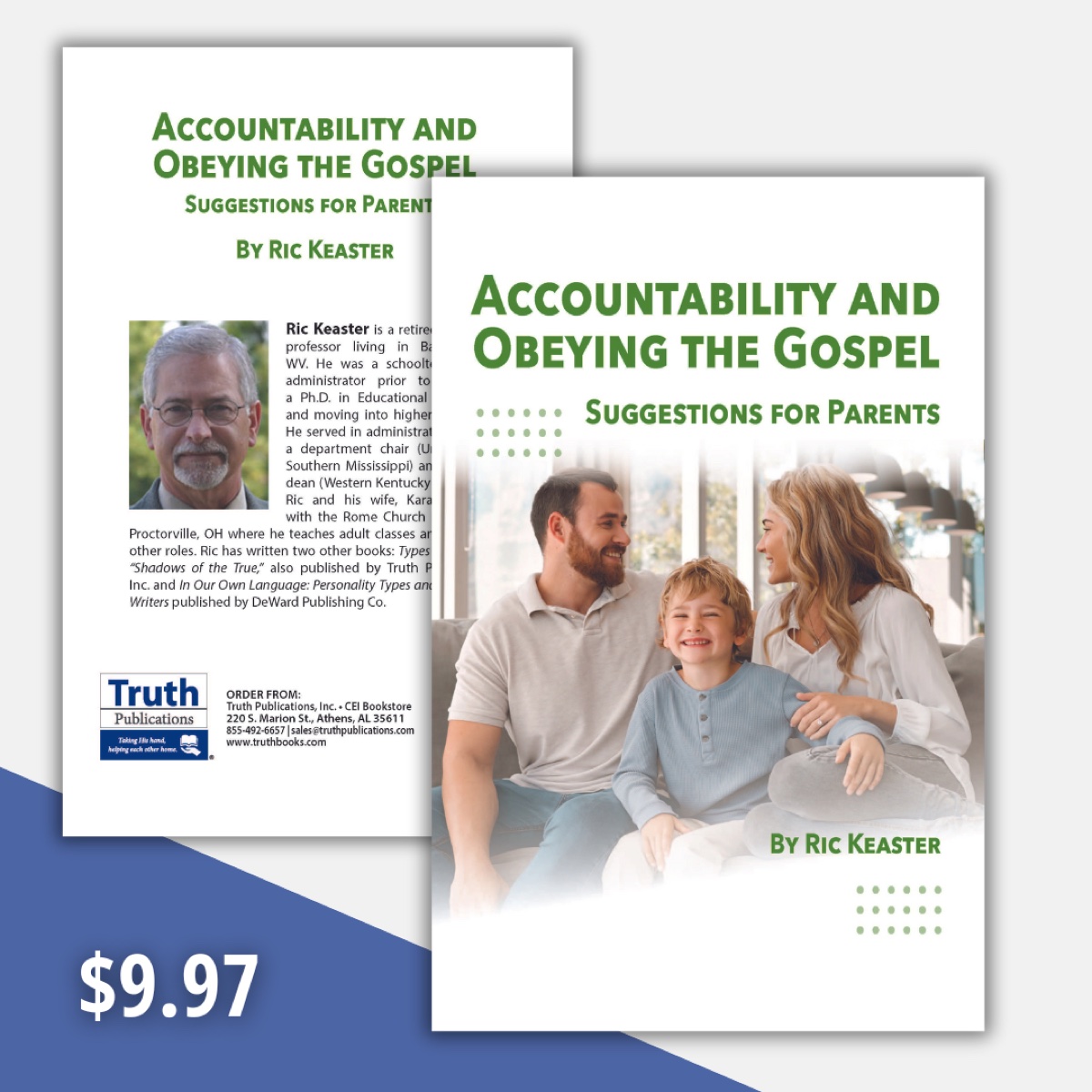
By Shawn Smith
Synopsis: Meditating upon some of the truths revealed in Matthew’s “Great Commission” will provide considerable encouragement in your effort to teach the lost. Let’s look together!
The last paragraph of Matthew’s Gospel (28:16-20) contains Jesus’s concluding words, commonly known as “The Great Commission,” to the eleven disciples prior to His ascension to heaven. I will confine our considerations to Matthew, ignoring Mark 16:14-20, Luke 24:45-53, and Acts 1:4-11, and will reference from the New King James Version.
The place Jesus spoke these words is “the mountain which Jesus had appointed for them” (v. 16), likely the mountain by the Sea of Galilee. Mountains were the scene of many of Jesus’s encounters with others (4:8-11), divine teachings (5:1-8:1), manifestations (17:1-9), answers to His disciples’ questions (24:3-51), and miraculous healings (15:29-31). Here again, a mountain figures in the story as the place where the risen Lord reveals Himself to His apostles.
A key word, “all,” ties Jesus’s commission together, a word denoting fullness and completeness: Jesus has “all authority” (v. 18), disciples will be made from “all the nations” (v. 19), these new disciples were to be taught “all things” Jesus had commanded (v. 20), and He would be with them “always” (v. 20).
David E. Garland, in his excellent 2001 book, “A Literary and Theological Commentary, Reading Matthew,” suggests several themes as coming to fruition in this “grand finale” that should be embedded in our minds when we are engaged in Bible study with a lost soul. Think of them as “Great Themes of the Great Commission” as I have in the past. I will refer to them here as “Abiding Truths” and make application of them to the work of teaching the lost.
Jesus manifested all authority when He taught, with His deity on full display. Matthew emphasizes this point: “. . .He taught them as one having (emphasis mine, ss) authority, and not as the scribes” (7:28). Jesus Himself said, “All things have been delivered to Me by My Father, and no one knows the Son except the Father. Nor does anyone know the Father except the Son, and the one to whom the Son wills to reveal Him” (11:27). Even the chief priests and Jewish elders recognized the source of Jesus’s authority as they confronted His teaching (21:25), their own police officers later telling them, “No man ever spoke like this Man!” (John 7:46).
Jesus’s authority is also underscored by the disciples’ reaction to Him and His announcement to them after He rose from the dead—the women (28:9) and later the eleven disciples “worshipped Him” (28:17). When tempted by Satan in the wilderness, Jesus said, “Away with you, Satan! For it is written, ‘You shall worship the Lord your God, and Him only you shall serve’” (4:9-10). The fact that Jesus accepted worship, and that He affirmed His equality with God, and performed miracles that confirmed His message, and also received worship proves that He is, indeed, God. After His resurrection, all acknowledge Jesus is due the same honor and service as God. Their worship means the story of Jesus has come full circle: the wise men from the East worshipped Him as the “King of the Jews” (2:2, 11), but Jesus declares He is supreme sovereign of the universe and is owed unconditional obedience.
While Satan impotently promised to give Jesus “all the kingdoms of the world,” Jesus received much more through His faithful submission to His Father, as the Holy Spirit promised: “. . .You are My Son, Today I have begotten You. Ask of Me, and I will give You the nations for Your inheritance, and the ends of the earth for Your possession” (Ps. 2:7-8). The promise Jesus made before the Sanhedrin, “. . .you will see the Son of Man sitting at the right hand of the Power, and coming on the clouds of heaven” (Matt. 26:64), alluding to Daniel 7:13, “I was watching in the night visions, and behold, One like the Son of Man, coming with the clouds of heaven,” is therefore considered by Matthew to be fulfilled in 28:18, which alludes to Daniel 7:14 (more on this later).
Teaching implies authority. The imperative of Jesus is that we teach, therefore we must teach with authority. We must teach with faith in the all-encompassing authority of Jesus Christ. Remember, the gospel is God’s power (authority) to save those who believe (Rom. 1:16)!
In Matthew’s gospel, Jesus taught His disciples of the necessity of faith (17:20; 21:21-22), expounded on the efficacy of the “great faith” of others (8:10, 13; 9:2, 22, 28-29; 15:28), and rebuked the “little faith” of His disciples (6:30; 8:26; 14:31; 16:8). In our text, we see the disciples torn between adoration and doubt (28:17). Jesus’s resurrection exceeded all their expectations despite His predictions. “Doubt” here refers to a person who is divided in his conviction. The facts are present, but the action on them is lacking, at least temporarily. It is similar to “little faith” (see above). Some of the eleven disciples were initially hesitant, as they’d always been. Matthew reveals Jesus’s understanding that to fluctuate between worship and uncertainty is something that a disciple may struggle with. What they needed, however, was confidence that Jesus is Lord of all and He is present with them at all times. That’s what He assures them of here.
Certainly, the lost must believe to be saved. However, strong faith in Jesus Christ as the Son of God is just as essential for the one teaching the gospel. Conviction in the Christ leads to confidence in declaring the Christ. Jesus commanded, “Go therefore and make disciples.” “Therefore” points back to the fact that Jesus is Lord of heaven and earth (v. 18).
In Matthew’s account, Jesus does not warn the disciples in advance that He would depart from them as He does in John (13:33; 16:5-7, 10, 17; 20:17). Nor is His ascension to heaven recorded as in Luke’s writings (Luke 24:51; Acts 1:9). Similarly, the Holy Spirit’s role is ignored (unlike John 14-16), but instead, Jesus promises His constant presence with them until the end of the age. This assurance harkens back to God’s past promises to Jacob (Gen. 26:24; 46:4), Moses (Ex. 3:12), Joshua (1:5, 9), and Israel as a people (Deut. 31:6; Isa. 41:10; 43:5). In like manner, Jesus assures the disciples He will be with them every step of the way to strengthen their weak faith and to continue to instruct them (28:20).
Should we not believe that He is with us in our efforts to do His will? What about our teaching efforts to the lost? God’s presence among us was personified in Jesus on earth. Though He is now at God’s right hand, His promise to be with us transcends time and space. He declared, “and lo, I am with you always, even to the end of the age.” As you teach someone the saving gospel of Christ, know that He is with you. That is a reality that is as sure as the name Immanuel accompanied the birth of Jesus into the world (Matt. 1:23), which fulfilled prophecy (Isa. 7:14). That is a reality that is as sure as the apostles went about their work of teaching (Matt. 18:18-20), God also manifesting His presence with them (cf. Acts 4:23-31; 18:8-11; 27:22-25), which brought us to this very point in time. Do we doubt the Lord was with them? Neither should we doubt His presence as we go about teaching the lost!
Matthew presents Jesus as the authoritative teacher (4:23; 5:2, 21-48; 7:29; 9:35; 11:29; 17:5; 23:8, 10). The Sermon on the Mount concludes with Jesus comparing those obedient to His words to a wise man who built his house on the rock (7:24-27). Unlike Luke and John, Matthew passes over in silence Jesus’s visual post-resurrection appearance and Jesus doesn’t ease their doubts by sight or touch. Instead, Matthew stresses Jesus’s words as important. He did not appear to them to satisfy their questions about the reality of the resurrection but to speak to them with a command and a promise (28:18-20).
Notice that the risen Jesus appears to His disciples when they are obedient to His words (28:8-10, 16-17). In our text, He commissions them to make disciples of the nations by teaching them to obey what He has taught. In so doing, it implies that His commands are as authoritative as the commands of God (see Exod. 7:2; 29:35; Deut. 4:2; 7:11; 12:14; 1 Chron. 22:13; 2 Chron. 33:8; Jer. 1:7). Jesus saves His people through His death and resurrection, but they find life, security, and rest only when they obey His will (7:14, 24-27; 11:29; cp. Heb. 5:9).
Teaching the lost concludes with the imperative to obey Jesus’s word. You cannot coddle anyone to salvation with words such as, “You just need to believe!” or “Make Christ your personal Savior!” The ten cases of conversion recorded in Acts reveal a pattern: all ended with obedience to the command to be baptized (Acts 2-22).
Matthew’s gospel, though written for a Jewish audience, presents God offering salvation to all the world, Jew and Gentile alike (2:11-12; 4:14-16; 8:11-12; 10:18, 22; 12:17-21; 13:31-32, 38, 47; 15:21-28; 22:9; 24:14, 31; 25:31-32; 26:13; 27:54). In our text (28:18-19), there is an allusion to Daniel 7:14. There in Daniel, dominion, glory, and a kingdom are given to the Son of Man, “that all peoples, nations, and languages should serve Him.” The scope of Jesus’s authority now extends beyond Israel (10:5-6) and He breaks down the geographical and racial barriers to command a universal mission to the nations centered on baptism in His name and the teaching of His commandments. When we teach others, we must be racially indifferent, color blind, and see others as God sees them. This is often one of the most difficult obstacles for us to overcome. We must set aside prejudices and stay focused on the task at hand: the saving of a lost soul (16:26)!
For Matthew, who was writing to the Jews, Jesus’s death and resurrection is the pivotal moment in salvation history, and it results in a transformation of Israel’s hope (see Isa. 2:2-3). Matthew’s conclusion revolutionizes this expression of Isaiah’s future hope for Israel in four ways: (1) It is Jesus, not Jerusalem, who is exalted (28:18), even though the gospel would first be preached at Jerusalem (Acts 2); (2) the nations are not to come to the temple where God is presumed to dwell because it would soon be destroyed (23:38; 24:2). Instead, Jesus’s disciples are to go out to the nations, and Jesus as “God with us” (1:23) and “One greater than the temple” (12:6) goes with them (28:20). Those in Israel who did not respond to the apostles’ preaching lost their special status as the people of God (21:43) and became one of the many nations that must be evangelized (Acts 1:8). That includes Jews all around the world today; (3) “The word of the Lord” has now become the teaching of Jesus, and salvation comes from walking in His paths (28:20; 17:5); and (4) the word of the Lord did not stay in Jerusalem; it only started there, for the kingdom of God is not located on earth in the Middle East, but is above all earthly kingdoms (Dan. 2:44). As a bonus, Millennial doctrine is arrested in the fulfilling of Isaiah’s prophecy.
The Lord’s disciples then were to make other disciples (Matt. 4:19; 5:13-16; 9:35-10:42). They were not in a closed and limited brotherhood of apostles, but were commanded to teach others to observe His commandments as well. It is necessarily implied that the task of making disciples of the nations will not be finished until the end of time. That is our task as well. All are to come under Jesus’s authority as they are added to His church through baptism and teaching (Acts 2:41, 47). Jesus said, “I will build My church” (16:18). That is accomplished one disciple at a time! You have a part in that great building program. Thus “the Great Commission” continues!
Shawn Smith has been working with the Crescent Park congregation in Odessa, TX, since 2018. In addition to other churches in Texas, he has labored with churches in Arizona and also served as an elder and evangelist with the formerly known East Florence church of Christ, in Florence, AL, for nineteen years. He and his wife, Marti, have four grown married children and currently have seven grandchildren. He can be reached here.



Note: Please send additions, corrections and updates here.
Updated: 10/1/2024
17312 Jones Rd, Athens, AL 35613
Sun. Bible Study 9:30 am | Sun. Worship: 10:20 am & 5:00 pm | Wed. Bible Study 7:00 pm
Evangelist: Jonathan Reeder | Website | 256-233-3160
24190 Wooley Springs Rd, Athens, AL 35613
Sun. Worship 9:30 am & 5:15 pm | Wed. Bible Class 7:00 pm
Evangelists: Bob Watson & Matt Taylor | Website
3955 Pine Lane, Bessemer, AL 35022
Sun. Bible Study 9:10 am | Sun. Worship 10:00 am & 5:00 pm | Wed. Bible Class 7:00 pm
Evangelist: David Deason | 256-497-8127 205-425-2352 | Email | Website
2325 Old Columbiana Rd. (near I-65 & Hwy. 31)
Sun. Bible Study 9:00 am | Worship 10:00 am & 5:00 pm | Wed. Bible Study 7:00 pm
Evangelist: Kyle Pope | 205-822-0018 | Website
19965 Sandlin Rd. Elkmont, AL 35620
Sun. Worship 9:30 am & 3:00 pm | Bible Classes: 10:45 am | Wed. Bible Study 7:00 pm
Evangelist: Lance R. Taylor | 256-777-0990 | Website
851 N. Pine St. (Located next to University campus)
Sun. Bible Study 9:30 am | Worship 10:15 am & 5:00 pm | Wed. Bible Study 7:00 pm
Evangelist: Kenny Moorer | 256-766-0403
601 Pineywood Road, Gardendale, AL, 35071 (Located 10 miles N of Birmingham)
Sun. Bible Study 9:30 am | Worship: 10:25 am & 5:00 pm | Wed. Bible Study: 7:00 pm
Evangelists: Andrew Smith & Jason Shackleford | 205-631-2131 | Website
129 Hillcrest Rd, Mobile, AL 36608
Sun. Worship 9-9:30 am | Bible Study 9:30-10:30 am | Worship 10:30-11:30 am | Wed. Bible Study 7:00 pm
Evangelist: Ken Sils | 765-307-8048 | 251-342-4144 or 342-2041 | Website
271 Highway 65 N, Conway, AR 72032
Sun. Bible Study 9:00 am | Worship 10:00 am & 5:00 pm | Wed. Bible Study 7:00 pm
Evangelist: Bruce Reeves | Bldg: 501-336-0052 | Website
2655 Prince St., Conway, AR 72034
Sun. Worship 9:00 pm | Bible class 9:50 am | Worship & Lord’s Supper: 10:40 am | Wed. Bible Class 7:00 pm
501-450-8640
2323 South 46th St.
Sun. Bible Study 9:45 am | Worship 10:30 am | Wed. Bible Study 7:00 pm
407 Bella Vista Dr.
Sun. Bible Study 9:30 am | Worship 10:15 am & 5:00 pm | Wed. Bible Study 7:00 pm
Evangelist: Norman E. Sewell | 870-741-9104 or 870-741-5151 | Website
514 Airport Rd.
Sun. Bible Study 10:00 am | Worship 11:00 pm & 6:00 pm | Wed. Bible Study 7:00 pm
Evangelist: Dick Blackford | 870-933-9134
145 N. Country Club Rd.
Sun. Bible Study 9:00 am | Worship 10:00 am & 6:00 pm | Wed. Bible Study 7:00 pm
Evangelist: Brenden Ashby | 520-326-3634 | Website
17903 Ibbetson Ave.
Sun. Bible Study 9:45 am | Worship 10:50 am & 6:00 pm | Wed. Bible Study 7:30 pm
562-866-5615 | Website
3433 Studebaker Rd.
Sun. Bible Study 9:50 am | Worship 10:45 am & 5:30 pm | Wed. Bible Study 7:00 pm
JP Flores | 562-420-2363 or Mark Reeves | 562-377-1674 | Website
449 W. Allen Ave., Suite 120, San Dimas, CA 91773
Sun. Bible study 10:00 am | Worship 11:00 pm & 4:00 pm | Wed. Bible Study 7:30 pm
909-788-9978 | Website
Meets at the Fort Collins Senior Center, 1200 Raintree Dr., Fort Collins, CO 80526
Sun. Bible Study 9:30 am | Worship 10:30 am
Evangelist: Richie Thetford | Website
1414 Hawk Parkway, Unit C
Sun. Worship 11:00 pm | Bible Study 2 pm & 1:30 pm
970-249-8116 |
64 Casting Lake Rd.
Sun. Bible Study 9:00 am | Worship 10:00 am & 6:00 pm | Wed. Bible Study 7:00 pm
850-622-3817 | Website | Location change coming in 2022: 497 Church St Santa Rosa Beach, FL 32459
196 Ave C, Geneva, FL 32732
Sun. Bible Study 10:00 am | Worship 10:45 am
(689) 229-9888 | Website
6 Lane Dr., Mary Esther, FL 32569
Sun. Bible Study 9:30 am | Worship 10:30 am & 5:00 pm | Wed. Bible Study 7:00 pm
850-244-9222 | Website | Evangelist: Chris Simmons | Email
3940 S. Bumby Ave.
Sun. Communion: 9:30 am | Bible Study 10:00 am | Praise & Preaching: 10:55 am (No pm Service) | Wed 7:00 pm
Evangelist: Ken Chapman
Office: 407-851-8031 | Website | Note: Please call for current worship and Bible study times.
621 E. Wheeler Rd.
Sun. Bible Study 10:00 am | Worship 10:50 am & 6:00 pm | Wed. Bible Study 7:30 pm
Evangelist: Bobby Witherington | 813-684-1297 | Website
Route 116 (near Callaway Gardens)
Sun. Bible Study 10:00 am | Worship 11:00 pm & 6:00 pm | Wed. Bible Study 7:30 pm
Evangelist: Tommy W. Thomas | 706-628-5117 or 628-5229 |
370 N. Shilling | P.O. Box 158-83221
Sun. Bible Study 10:00 am | Worship 11:00 pm | Wed. Bible Study 7:30 pm
208-785-6168 or 681-1552
1310 NE 54th Ave, Des Moines, IA 50313
Sun. Bible Study 9:45 am | Worship 10:40 am | Wed. Bible Study 7:00 pm
515-262-6799 | Website
1236 63rd St. (Dir: 1.5 miles E of I355)
Sun. Bible Study 9:00 am | Worship 9:55 am & 6:00 pm | Wed. Bible Study 7:30 pm
Evangelist: Steve Wolfgang | 630-968-0760 | Website
1100 S. 17th St.
Sun. Bible Study 9:30 am | Worship 10:30 am & 6:00 pm | Wed. Bible Study 7:00 pm
217-234-3702
16224 S Vincennes Ave.
Sun. Bible Study 9:00 am | Worship 10:00 am & 4 pm | Wed. Bible Study 7:00 pm
Evangelist: Donald Hawkins | 708-339-1008 | Website
Meeting @ Sleep Inn Suites and Motel | 1101 North Cummings Lane, Washington, IL 61571
Sun. Worship: 11:30 am | Bible Study: 12:30 pm | Wed. Bible Study 6:30 pm @ home of Tim Sundlie, call for address
Evangelist: Tim Sundlie | 608-796-9028 | Email | Website
407 W Lewis and Clark Parkway, Clarksville, IN 47129
Sun. Bible Study 9:30 am | Worship 10:30 am & 6:00 pm | Wed. Bible Study 7:30 pm
Elders: Allen L. Morris (812) 989-5838 and Stephen W. Nale (502) 727-7559 or (812) 944-2305 | Website
Sun. Bible Study 9:30 am | Worship 10:30 am | Wed. 7:00 pm
765-676-6404 | Website
15530 Herriman Blvd, 46060
Sun. Bible Study 10:00 am | Worship 11:00 am | Wed. Bible Study 7:00 pm
Evangelist: John Smith | Email | 317-501-8035 or 317-501-0249 or 317-701-1204
400 Lafayette Ave. | P.O. Box 34
Sun. Bible Study 9:45 am | Worship 10:30 am & 6:00 pm | Wed. 7:00 pm
812-279-4332
(First St. & Karnes Ct.)
Sun. Bible Study 9:45 am | Worship 10:30 am & 5:00 pm | Wed. Bible Study 7:00 pm
Evangelist: Jeremy Goen | 812-967-3437 or 967-3520 | Website
302 S. Fourth Ave., Mulvane KS 67110 | Mail: PO Box 11
Sun. Bible Classes: 10:00 am | Worship 11:00 am | Wed. Bible Study 7:00 pm
Evangelist: Jay Horsley | 316-644-8503 | Website | Email
5600 SW 17th St, Topeka, KS 66604
Sun. Bible Study 9:15 am | Sun. Worship 10:30 am | Wed. Bible Study 7:00 pm
785-235-8687 or 785-273-7977 | Website
1235 Williams St.
Sun. Worship 10:00 am | Bible Study After am Worship & 6:00 pm | Wed. Bible Study 7:00 pm
Evangelist: Jerid Gunter | 270-274-4451
8081 US Hwy 68-East, Benton, KY 42025
Sun. Bible Study 9:00 am | Worship 10:00 am | Wed. Bible Study 6:00 pm
270-354-9451 | Email | Website | Conveniently located near Kenlake State Resort Park on the western shore of Kentucky Lake.
612 Broadway
Sun. Bible Study 9:45 am | Worship 10:30 am & 5:00 pm | Wed. Bible Study 6:30 pm
Evangelist: Charles J. White | 270-422-3878
107 Sunny Hill Dr.
Worship 9:30 am & 11:30 am | Bible Study 10:30 am | Wed. Bible Study 7:00 pm
Evangelist: Steve Lee | 270-789-1651 | Website
103 N. Main St. | P.O. Box 233
Sun. Bible Study 10:00 am | Worship 10:45 am & 5:00 pm | Wed. Bible Study 7:00 pm
Evangelist: Jarrod Jacobs | 270-589-4167 or 270-274-3065
385 E. Lexington Ave.
Sun. Worship 10:00 am | Bible Study 11:15 am & 5:00 pm | Wed. Bible Study 7:00 pm
Evangelist: B.J. Sipe | 859-236-4204
18 Scott Drive, Florence, KY 41042
Sun. Worship 9:30 am & 5:30 pm | Sun. Bible Study 10:30 am | Wed. Bible Study 7:00 pm
859-371-2095 | Website
1733 Bowling Green Rd.
Sun. Bible Study 9:00 am | Worship 10:00 am & 6:00 pm | Wed. Bible Study 7:00 pm
Evangelist: Steve Monts | 270-776-9393 | Website
733 Mill St. Leitchfield, KY 42754
Sun. Bible Study 9:30 am | Worship 10:00 am Communion 10:55 am | Wed. Bible Study 6:00 pm
270-230-6144 | Website
1803 Dixie Garden Dr.
Sun. Bible Study 9:30 am | Worship 10:30 am & 6:00 pm | Wed. Bible Study 7:00 pm
Evangelist: Michael Hardin | Email | 502-937 2822
3221 East Hebron Lane
Sun. Bible Study 9:00 am | Worship 10:00 am & 5 pm | Wed. Bible Study 7:30 pm
Evangelist: Danny Linden & Ron Halbrook | 502-957-5115 or 502-955-1748 | Website
405 Orice Roth Rd. | 70737 (Baton Rouge area)
Sun. Bible Class 9:30 am | Worship 10:30 am & 6:00 pm | Wed. Bible Study 7:00 pm
Evangelist: R.J. Evans | Email | 225-622-4587
856 Brighton Ave. (Breakwater School) | Leave Maine Turnpike at Exit 48
Sun. Bible Study 10:00 am | Worship 11:00 pm w/ second service immediately following am worship | Mid-week Bible Study (please call for times & places)
207-839-3075 or 839-8409
3084 Creek Drive SE, #1-C, Kentwood, MI 49512 | P.O. Box 8446, Kentwood, Mich. 49508 (Grand Rapids area)
Sun. Worship 11:00 am | Sun. Bible Study 12:30 pm | Wed. Bible Study 7:00 pm
Evangelist: Joseph Gladwell | Email
414 South Main Street
Sun. Bible Study 10:00 am | Worship 11:00 am | Wed. Bible Study 6:00 pm
Evangelist: Ryan Thomas | 810-837-1302 or 989-389-3226 | Website
2820 Grandview Ave, Meridian, MS 39305
Sun. Bible Study 10:00 am | Sun. Worship 11:00 pm | Wed. 6:30 pm
Ron Cooper: 601-934-3675 | Email
Ricky Ethridge: 601-737-5778 | Email
2110 E State Line Rd. (Exit I-55) (Memphis area)
Sun. Bible Study 9:30 am | Worship 10:30 am | Wed. Bible Study 7:00 pm
Evangelist: James A. Brown | Bldg: 662-342-1132
805 Meadow Rd, Severn, MD 21144
Sun. Bible Study 10:00 am | Sun. Worship 11:00 pm & 6:00 pm | Wed. Bible Study 7:30 pm
Evangelist: Brandon Trout | 410-969-1420 or 410-551-6549 | Website
422 N Linton St., Blodgett, MO 63824
Sun. Worship 10:00 am | Wed. Bible Study 7:00 pm
Evangelist: Russell Rice | 573-475-0417
4000 SW Christiansen
Sun. Worship 9:00 pm | Bible Study 10:00 am | Worship 11:00 pm | Wed. Bible Study 7:00 pm
Evangelist: Brett Hogland | 816-228-9262
432 Eagle Rock Rd, Branson, MO 65616
Sun. Worship 9:30 am | Bible Study 10:30 am | Sun. Evening Worship 5:00 pm | Wed. Bible Study 6:00 pm
Evangelist: Philip North | 417-239-1036 | Email | Website
2912 Bloomfield Rd
Sun. Bible Study 9:15 am | Worship 10:00 am | Wed. Bible Study 7:00 pm
Seth McDonald & Jerry Lee Westbrook | 573-837-1001 | Email | Website
703 Harrison St.
Sun. Bible Study 10:00 am | Worship 11:00 pm & 6:00 pm | Wed. Bible Study 7:00 pm
Evangelist: Nolan Glover | 870-650-1648 | Website
685 Sidney St.
Sun. Bible Study 9:30 am | Worship 10:15 am & 5:00 pm | Wed. Bible Study 7:00 pm
Evangelist: Lynn Huggins | 573-265-8628
2727 County Line Rd.
Sun. Bible Study 9:00 am | Worship 9:50 am | Wed. Bible Study 7:00 pm
816-279-4737 | Website
Bell St & S 7th St. Beatrice, NE 68310
Sun. Bible Study 9:00 am | Worship 10:00 am & 6:30 pm
402-233-4102 or 402-228-3827 | Website
5327 S. Tryon Street, Charlotte, NC 28217
Sun. Bible Study 9:30 am | Sun. Worship 10:30 am | Wed. Bible Study 7:30 pm
704-525-5655 | Website
3781 East Highway 27, Iron Station, NC 28080
Sun. Bible Study: 10:00 am | Sun. Worship 11:00 am & 6:00 pm | Wed. Bible Study 7:00 pm
Evangelist: Stan Adams | 704-748-9777 (Bldg) & 704-748-3747 (Jerry) | Email | Website
1031 Welford Dr, Beavercreek, OH 45434 (located a few miles E of Dayton)
Sun. Short Worship: 9:30 am | Bible Study 10:05 am | Sun. Worship 11:00 am | Wed. Bible Study Adults: 1:00 pm & All ages: 7:00 pm
Evangelist: Heath Rogers | 937-426-1422 | Website
13501 Lorain Ave, Cleveland, OH 44111
Sun. Bible Study 10:00 am | Worship 11:00 am | Wed. Bible Study 7:00 pm (Call)
Evangelist: John Dicus | (330) 723-0111 or (330) 590-0227 or (216) 322-9392 | Website
28 W. Main St., Dayton, OH 45449
Sun. Worship 9:00 pm | Bible Study 9:30 am | Worship 10:25 am | Wed. Bible Study 7:00 pm
Evangelists: Michael Grushon 937-866-5162 or Alan Beck 937-469-3311 | Website
6417 Franklin-Lebanon Rd. Franklin, OH 45005
Sun. Bible Study 10:00 am | Worship 10:45 am | Tues. Bible Study 6:30 pm
Evangelist: Josh Lee | 937-789-8055 or 937-746-1249 | Website
1973 W Main St. New Lebanon, OH 45345
Sun. Bible Study 9:30 am | Worship 10:30 am, & 5:00 pm | Wed. Bible Study 7:00 pm
Evangelist: Bruce Hastings | 937-687-7150 or 937-478-0367
80 Sandhill Rd. Reno, OH 45773
Sun. Bible Study 9:30 am | Worship 10:30 am & 6:30 pm | Wed. Bible Study 7:00 pm
Evangelist: Mark Childers | 304-615-1091 | 740-374-9827 | Website
4110 Frey Rd., Northwood, OH 43619 (Toledo Area)
Sun. Worship 11:00 pm
Evangelist: Donald Jarabek | 419-893-3566 & 567-331-2269
33226 Children’s Home Rd., Pomeroy, OH 45769
Sun Worship 10:00 am & 5 pm | Bible Study 11:00 am | Wed. Bible Study 6:00 pm
Jack Hunt | Email | 740-645-4612 | Website
2120 No. A St.
Sun. Bible Study 9:45 am | Worship 10:45 am & 5:30 pm | Wed. Bible Study 7:00 pm
Evangelist: Rob Lungstrum | 918-931-1362 or 918-423-3445
4110 NE 122nd Ave #101, Portland, OR 97230
Sun. Bible Study 10:00 am | Worship 11:00 am | Thur. Bible Study 7:00 pm
Evangelist: Samuel A. Matthews | 971-331-2838 | Bldg: 503-432-8697 | Email | Website
3702 E. Long St.
Sun. Bible Study 9:30 am | Worship 10:30 pm & 5:30 pm | Wed. Bible Study 7:30 pm
Bldg: 541-367-1599 | Email | Website
7222 Germantown Ave, Philadelphia, PA 19119
Sun. Bible Study 10:15 am | Sun. Worship: 11:15 am | Tues. Bible Study: 7:00 pm
Evangelist: James H. Baker, Jr. | 215-248-2026 | Website
3370 Broad St. Extension
Sun. Bible Study 9:30 am | Worship 10:30 am & 5:30 pm | Wed. Bible Study 7:00 pm
Evangelist: A.A. Granke, Jr. | 803-499-6023
4013 Edmund Hwy. (Hwy. 302), West Columbia, SC 29170
Sun. Bible Study 9:30 am | Sun. Worship 10:30 am & 5:00 pm | Wed. Bible Study 7:00 pm
Evangelist: Jerry Cleek | 219-313-1108 | Website
326 Powell Road, Collierville, TN 38017
Sun. Bible Study 9:00 am | Worship 10:00 am | Wed. Bible Study 7:00 pm
Evangelist: Doug Seaton | 901-854-6816 or 901-634-7840
417 Mooresville Pike | (Located .8 mi. N. of Hwy. 50/Jas. Campbell)
Sun. Bible Study 9:30 am | Worship 10:30 am & 3:30 pm | Wed. Bible Study 7:00 pm
931-388-5828 or 931-381-7898 | Website
4894 Hooper Hwy. | 37722 | (Located 15 mi. E. of Gatlinburg on Hwy. 321)
Sun. Bible Study 10am | Worship 11:00 pm & 5:00 pm | Wed. Bible Study 6:00 pm
Evangelist: Olie Williamson | 423-487-5540 or 423-748-0844
350 N Main St. Kingston Springs, TN 37082
Sun. Bible Study 9:00 am | Worship 10:00 am & 5:00 pm | Wed. Bible Study 7:00 pm
108 Locust St.
Sun. Bible Study 9:30 am | Worship 10:30 am & 5:00 pm | Wed. Bible Study 7:00 pm
Evangelist: Daniel H. King, Sr. | 931-379-3704 or 931-964-3924 | Website
1110 Cason Lane
Sun. Bible Study 9:00 am | Worship 10:00 am & 5:00 pm | Wed. Bible Study 7:00 pm
Bldg: 615-896-0090 | Website
2091 Pitts Ln, Murfreesboro, TN 37130 (located at the corner of Northfield Blvd and Pitts Lane)
Sun. Bible Study 9:30 am | Sun. Worship 10:30 am & 6:00 pm | Wed. Bible Study 7:00 pm
Evangelist: David Bunting | 615-893-1200 | Website
7471 Charlotte Pike
Sun. Bible Study 9:00 am | Worship 10:00 am & 5:00 pm | Wed. Bible Study 7:00 pm
Evangelist: Lee Wildman | 615-952-5458 or 615-356-7318
1414 W. Exchange Pkwy
Sun. Bible Study 9:00 am | Worship 10:00 am & 5:00 pm | Wed. Bible Study 7:00 pm
Evangelist: Jerry King 214-504-0443 or 972-727-5355 | Website
E. Service Rd. off I-35, N. of Alvarado
Sun. Bible Study 10:00 am | Worship 11:00 pm & 6:00 pm | Wed. Bible Study 7:00 pm
817-295-7277 or 790-7253
605 E. Adoue St., Alvin, TX 77511
Sun. Bible Study 9:30 am | Worship 10:30 am & 5:00 pm | Wed. Bible Study 7:30 pm
Evangelist: Mark Mayberry | Email | Website
701 North Pruett St.
Sun. Bible Study 9:45 am | Worship 10:40 am & 6:30 pm | Wed. Bible Study 7:00 pm
Bldg: 281-422-5926 | Weldon: 713-818-1321 | Website
2919 Main St/FM 517 E., Dickinson, TX 77539
Sun. Bible Study 10:00 am | Sunday Worship 11:00 am & 6:00 pm | Wed. Bible Study 7:00 pm
713-298-6673
301 Robison St.
Sun. Bible Study 9:30 am | Worship 10:30 am & 6:00 pm | Wed. Bible Study 7:00 pm
Evangelist: Phillip Stuckey | 361-782-5506 or 361-782-2844 | Website
3277 Pendleton Rd.
Sun. Bible Study 9:30 am | Worship 10:30 am & 5:00 pm | Wed. Bible Study 7:00 pm
915-855-1524
4303 18th St, Bacliff, TX 77518
Sun. Bible Study 9:00 am | Sun. Worship 10:00 am & 6:00 pm | Wed. Bible Study 7:00 pm
Evangelist: Richard Lay | Website
6110 White Settlement Rd. 76114
Sun. Bible Study 9:30 am | Worship 10:30 am & 6:00 pm | Wed. Bible Study 7:30 pm
817-738-7269
Old Granbury Rd Church of Christ
4313 Old Granbury Rd, Granbury, TX 76049
Sun. Bible Study 9:30 am | Sun. Worship 10:30 am | Wed. Bible Study 7:00 pm
Evangelist: Chip Foster | 817-913-4209 or 817-279-3351 | Website
2510 Fry Rd, Houston, TX 77084
Sun. Bible Study 9:45 am | Worship 10:30 am & 6:00 pm | Wed. Bible Study 7:00 pm
Evangelist: David Flatt | Email | Website
6111 Indiana Ave, Lubbock, TX 79413
Sun. Bible Study 10:00 am | Sun. Worship 9:00 am & 11:00 am | Wed. Bible Study 7:00 pm
806-795-3377 | Website
1820 Mansfield Webb Rd, Mansfield, TX 76063
Sun. Bible Study 9:30 am | Sun. Worship: 10:20 am & 5:00 pm | Wed. Bible Study 5:30 pm.
Evangelist: Tom Roberts | 817-996-3926 | Website
612 S Shawnee St, Nacogdoches, TX 75961
Sun. Bible Study 9:45 am | Worship 10:30 am & 6:00 | Wed. Bible Study 6:00 pm
Minister: Van Dennis | 936-615-2950
3831 N.E. Stallings Dr.
Sun. Bible Study 9:30 am | Worship 10:20 am & 6:00 pm | Wed. Bible Study 7:00 pm
Evangelists: Randy Harshbarger & Jay Taylor
268 Utopia Ave. (Dir: I-37 S.E. Exit Pecan Valley)
Sun. Bible Study 9:30 am | Worship 10:30 am & 5:00 pm | Wed. Bible Study 7:00 pm
Evangelist: Jesse Garcia | 210-660 0409
314 N. Tolbert
Sun. Bible Study 9:30 am | Worship 10:30 am & 5:00 pm | Wed. Bible Study 7:00 pm
Evangelist: Ronald Stringer
4404 Twin City Blvd.
Sun. Bible Study 9:30 am | Worship 10:30 am & 6:00 pm | Wed. Bible Study 7:30 pm
Evangelist: Jason Garcia Email or Email | 254-939-0682 | Website
2301 Franklin Dr., Texarkana, AR 71854
Sun. Bible Study 9:30 am | Worship 10:15 am | Wed. Bible Study 7:00 pm
870-772-0746 | Website
340 E Warren St. (in Hewitt, a suburb of Waco)
Sun. Bible Class 9:30 am | Worship 10:30 am & 5:00 pm | Wed. Bible Study 7:00 pm
Evangelist: Marc Smith | 254-292-2482 or 652-7698
4500 Kell West Blvd, Wichita Falls, TX 76309
Sun. Bible Class 9:30 am | Worship 10:30 am & 3:30 pm | Wed. Bible Study 6:30 pm
Evangelist: Dennis L. Scroggins | 512-626- 5702 | Email | Website
Please mail all correspondence to 1504 Hayes St, Wichita Falls, TX 76309
Meeting in the Capital City Grange Hall, 6612 Route 12 Berlin, VT 05602
Sun. Bible Study 9:00 am | Worship 10 am | Tues. Evening in Homes
Evangelist: Open | Website | P.O. Box 70, Williamstown, VT 05679 | For questions or directions: Wade Holt 802-485-4311
217 Taxus St., Chesapeake, VA 23320
Sun. Bible Study 10:00 am | Worship 11:00 am & 5:00 pm | Wed. Bible Study 7:00 pm
Evangelist: Steven Matthews | 757-436-6900 | Website
8330 Doublecreek Court, Chesterfield, VA 23832 (Located in teh Metro Area; Courthouse Rd. at Double Creek Ct. 2.2 miles S of Rt. 288)
Sun. Bible Study 9:30 am | Worship 10:30 am & 5:00 pm | Wed. Bible Study 7:00 pm
Evangalist: Nathan L. Morrison | 804-778-4717 | Website
1208 W. 41st St.
Sun. Bible Study 10:00 am | Worship 11:00 pm & 6:00 pm | Wed. Bible Study 7:00 pm
Evangelist: Jack Bise, Jr.
2970 Old Leaksville Rd.
Sun. Bible Study 10:00 am | Worship 11:00 pm & 5:30 pm | Wed. Bible Study 7:00 pm
276-956-6049 | Website
929 Indiana Ave. NE (5 min. from Roanoke Convention Center)
Sun. 1st Lesson 9:15 am | Bible Study 10:00 am | Worship 11:00 pm | Wed. Bible Study 7:30 pm
Evangelist: Brent Paschall | 540-344-2755 | Website
5652 Haden Rd.
Sun. Bible Study 10:00 am | Worship 11:00 am
Robert Mallard | 757-464-4574
1860 Mt Baker Hwy, Bellingham, WA 98226,
Sun. Bible Study 9:30 am | Worship 10:30 am & 6:00 pm | Wed. Bible Study 7:00 pm
Evangelist: Steven J. Wallace | 360-752-2692 or 806-787-5088 | Website & Website
Meeting at Gray Middle School, 6229 S. Tyler St., Tacoma, WA 98409
Note: Please see webpage for updated meeting location and times.
Sun. Bible Study 10:00 am | Worship 11:00 pm | Wed. Bible Study 7:00 pm (Online)
253-242-3098 | Email | Website
7 Old Davisson Run Rd, Clarksburg, WV 26301
Sun. Bible Study 9:30 am | Worship 10:20 am
304-622-5433 | Website | Email
1929 Morgantown Ave.
Sun. Bible Study 10:00 am | Worship 10:45 am & 6:00 pm | Wed. Bible Study 7:00 pm
304-363-8696 or 304-844-2437
210 Cedar Ave, Moundsville, WV 26041
Sun. Bible Study 9:30 am | Sun. Worship 10:30 am & 6:00 pm | Wed. Bible Study 7:00 pm
Evangelist: Tony Huntsman | 304-845-4940 | Website

_~_Full_Elevation_%2B_Viewing_South.4.JPG)