
(September, 2024 | No. 9 | Vol. 68)
9/1/2024
Truth Magazine (ISSN 1538-0793) is published once a month by Truth Publications, Inc., 220 S. Marion, Athens, AL 35611.
© 2024 Truth Publications, Inc. All Rights Reserved.
Manuscripts should be sent to the editor, Mark Mayberry, at mark@truthpublications.com. Link.
Subscriptions, renewals & other correspondence should be sent to: Truth Magazine, 220 S. Marion, Athens, AL 35611 or by emailing us at subscriptions@truthmagazine.com. Link.
Book orders should be sent to: CEI Bookstore | truthbooks.com | Street Address: 220 S. Marion, Athens, AL 35611 | Phone: (855) 492-6657 | Email: sales@truthbooks.com Link.
Online Website: truthmagazine.com
DISCLAIMER: Books in ads are screened, but an ad does not mean unqualified endorsement. All books should be tested by Scripture. We appreciate readers notifying us if they find some glaring fault in the ads.
By Mark Mayberry
Synopsis: In this article, we offer counsel and encouragement to young people who are on the brink of adulthood. Using the metaphor of birds leaving the nest, we emphasize the importance of making wise decisions, taking personal responsibility, and continuing to develop one’s faith. Young adults let their lights shine, remain active in a faithful congregation, pursue wisdom, live with integrity, face challenges with courage, and choose a suitable lifelong companion. The overarching message is to maintain a strong, independent faith while navigating adulthood’s challenges and opportunities.
We have several young people in Alvin who have recently graduated from high school, or will do so in the next few years. As you stand on the threshold of a new chapter in your life, we offer some biblically based words of counsel and encouragement. You are about to embark on a journey filled with challenges and opportunities, along with perils and pitfalls.
The phrase “Leaving the Nest” is a metaphorical expression that describes the time when young adults move out of their parents’ home to live independently—a significant moment in life when a young person transitions from the dependency of childhood to the independence associated with being an adult.
It points to the time when young people make their own decisions, pay their own debts, and take full responsibility for the direction of their lives. It is a time of accomplishments and accountability, coupled with prayerful self-examination and courageously standing on your convictions.
The phrase “leaving the nest” is inspired by the natural behavior of birds. In the wild, young birds, known as fledglings, leave their parents’ nest once they are mature enough to survive on their own. They learn survival skills like flying and foraging under parental guidance. Birds have a natural instinct to fly, starting with wing flapping to build muscles. Parents teach fledglings to fly by coaxing and demonstrating techniques. Young birds improve their flying skills through repeated practice and by observing their parents and other birds, mastering skills like takeoff and landing. The timing of leaving the nest varies among species; some do so within weeks, while others stay longer. Young birds face risks like predators and finding food, but leaving the nest is crucial for their survival. This process is essential for birds to survive, find food, and become independent.
A family who worships with us has watched a succession of doves build nests and raise their young on their front porch. The kids named these doves “The Peckingtons.” Since the nests were precariously balanced on a narrow ledge high in the eaves of the porch, they would frequently fall to the ground. To solve this, Grandpa built a shelf with a low parapet to hold the nests more securely and prevent them from falling. When time drew near for the fledglings to leave the nest, momma dove would often wait out of sight on the roof while her offspring practiced flying—giving them freedom while still being there to protect them if necessary.
Young people here at Adoue Street enjoy significant advantages. You have been raised in Christian homes. Your lives have been molded by fathers and mothers who are committed to the biblical pattern. The transition you are facing is not a radical redirection but a steady continuation.
In every biblical era (i.e., when God dealt directly with the patriarchs, or when He interacted with Israel through the Law and the prophets, or in the present Christian age), genuine faith is counted as the essential characteristic of God’s people (Hab. 2:4).
Behold, as for the proud one, his soul is not right within him; but the righteous will live by his faith (Hab. 2:4).
Now faith is the assurance of things hoped for, the conviction of things not seen. For by it the men of old gained approval. By faith, we understand that the worlds were prepared by the word of God, so that what is seen was not made out of things which are visible. By faith, Abel offered to God a better sacrifice than Cain, through which he obtained the testimony that he was righteous, God testifying about his gifts, and through faith, though he is dead, he still speaks. By faith, Enoch was taken up so that he would not see death; AND HE WAS NOT FOUND BECAUSE GOD TOOK HIM UP; for he obtained the witness that before his being taken up, he was pleasing to God. And without faith it is impossible to please Him, for he who comes to God must believe that He is and that He is a rewarder of those who seek Him (Heb. 11:1-6).
Young people, your faith has been the foundation of your life. Through the godly influence of your family and brethren, the word of God has been a constant guiding light through your formative years. Commitment to the cause of Christ has been seen in the homes in which you have been raised, and in the church which you have attended, studied, and worshipped.
As you transition from the dependence of childhood to the independence of adulthood, it is essential that you continue nurturing that faith, making it truly your own:
So then, my beloved, just as you have always obeyed, not as in my presence only, but now much more in my absence, work out your salvation with fear and trembling; for it is God who is at work in you, both to will and to work for His good pleasure (Phil. 2:12-13, NASB).
The Lord’s work is not confined to the activities that occur in Christian assemblies, or the interactions we share in the comfort of our homes; rather, it extends to every aspect of our lives.
As you venture forth into the world, not as a child but as an adult, continue to exert a Christian influence—being salt and light (Matt. 5:13-16; Col. 4:5-6; Phil. 2:14-15). When Jesus said, “You are the salt of the earth” during the Sermon on the Mount, He emphasized His disciples’ importance and value. Just as salt preserves and enhances food, His followers are called to preserve goodness and positively influence the world by reflecting Christ’s teaching in their daily walk. Our Lord also stressed the importance of the disciples illuminating the world with their actions and teachings by saying, “You are the light of the world.” Just as light dispels darkness, His followers are called to shine brightly in a dark and depraved world by living according to biblical values, exemplifying truth and love, and guiding others toward a better understanding of God’s will.
You are the salt of the earth; but if the salt has become tasteless, how can it be made salty again? It is no longer good for anything, except to be thrown out and trampled under foot by men. You are the light of the world. A city set on a hill cannot be hidden; nor does anyone light a lamp and put it under a basket, but on the lampstand, and it gives light to all who are in the house. Let your light shine before men in such a way that they may see your good works, and glorify your Father who is in heaven (Matt. 5:13-16).
Conduct yourselves with wisdom toward outsiders, making the most of the opportunity. Let your speech always be with grace, as though seasoned with salt, so that you will know how you should respond to each person (Col. 4:5-6).
Do all things without grumbling or disputing; so that you will prove yourselves to be blameless and innocent, children of God above reproach in the midst of a crooked and perverse generation, among whom you appear as lights in the world (Phil. 2:14-15).
The church is not a brick-and-mortar building; instead, it is a community of believers, a family that offers strength and support. It can also be compared to a band of soldiers stationed in hostile territory, who not only project the power of their Commander but are also dedicated to protecting and providing for one another. As you venture forth into the independence of adulthood, seek a faithful congregation where you can continue to worship, learn, and grow (Heb. 10:19-25). When Paul came to Jerusalem after his conversion, he sought to associate with the disciples and share a mutually beneficial relationship with the brethren (Acts 9:26-28).
Therefore, brethren, since we have confidence to enter the holy place by the blood of Jesus, by a new and living way which He inaugurated for us through the veil, that is, His flesh, and since we have a great priest over the house of God, let us draw near with a sincere heart in full assurance of faith, having our hearts sprinkled clean from an evil conscience and our bodies washed with pure water. Let us hold fast the confession of our hope without wavering, for He who promised is faithful; and let us consider how to stimulate one another to love and good deeds, not forsaking our own assembling together, as is the habit of some, but encouraging one another; and all the more as you see the day drawing near (Heb. 10:19-25).
When he came to Jerusalem, he was trying to associate with the disciples; but they were all afraid of him, not believing that he was a disciple. But Barnabas took hold of him and brought him to the apostles and described to them how he had seen the Lord on the road, and that He had talked to him, and how at Damascus he had spoken out boldly in the name of Jesus. And he was with them, moving about freely in Jerusalem, speaking out boldly in the name of the Lord (Acts 9:26-28).
As you continue your education, whether in college classes or workplace-based training, pursue wisdom and understanding. According to the Christian Standard Bible’s rendition of Proverbs 4:7, Solomon said, “Wisdom is supreme—so get wisdom. And whatever else you get, get understanding.” From a biblical perspective, wisdom is the ability to make sound decisions based on knowledge, understanding, and discernment that align with God’s will. True wisdom comes from God and is rooted in a deep reverence for Him—leading to a life of purpose and promise (Prov. 4:1-9).
Hear, O sons, the instruction of a father, and give attention that you may gain understanding, For I give you sound teaching; Do not abandon my instruction. When I was a son to my father, Tender and the only son in the sight of my mother, Then he taught me and said to me, “Let your heart hold fast my words; keep my commandments and live; acquire wisdom! acquire understanding! Do not forget nor turn away from the words of my mouth. Do not forsake her, and she will guard you; love her, and she will watch over you. The beginning of wisdom is: acquire wisdom; and with all your acquiring, get understanding. Prize her and she will exalt you; she will honor you if you embrace her. She will place on your head a garland of grace; she will present you with a crown of beauty” (Prov. 4:1-9).
As Proverbs 10:9 says, “He who walks in integrity walks securely, but he who perverts his ways will be found out.” Complimentary truths are repeatedly echoed in the following chapters (Prov. 11:3; 19:1; 20:7; 28:6). In Psalm 15, David asks, “O LORD, who may abide in Your tent? Who may dwell on Your holy hill?” Upright citizens of Zion walk with integrity, act righteously, and speak truthfully. They do not slander, harm their neighbor, or reproach a friend. They despise the corrupt, honor those who fear the LORD, keep their promises even when it hurts, do not lend money at interest, nor accept bribes. Those who live this way will never be shaken (Ps. 15:1-5).
He who walks in integrity walks securely, but he who perverts his ways will be found out (Prov. 10:9).
The integrity of the upright will guide them, but the crookedness of the treacherous will destroy them (Prov. 11:3).
Better is a poor man who walks in his integrity than he who is perverse in speech and is a fool (Prov. 19:1).
A righteous man who walks in his integrity—how blessed are his sons after him (Prov. 20:7).
Better is the poor who walks in his integrity than he who is crooked though he be rich (Prov. 28:6).
O LORD, who may abide in Your tent? Who may dwell on Your holy hill? He who walks with integrity, and works righteousness, and speaks truth in his heart. He does not slander with his tongue, nor does evil to his neighbor, nor takes up a reproach against his friend; in whose eyes a reprobate is despised, but who honors those who fear the LORD; he swears to his own hurt and does not change; he does not put out his money at interest, nor does he take a bribe against the innocent. He who does these things will never be shaken (Ps. 15:1-5).
What is integrity? The Concise Oxford English Dictionary defines “integrity” as “(1) the quality of having strong moral principles; (2) the state of being whole.” In today’s world, it can describe the sound construction of a building, or the internal consistency of data. Our English word is derived from the Latin integer, an adjective that communicates the concept of someone or something that is “whole” or “entire.” What is an integer? It is a whole number, i.e., a number without fractions or decimals. Spiritually speaking, may we manifest undivided loyalty to the Lord: “Let your heart therefore be wholly devoted to the LORD our God, to walk in His statutes and to keep His commandments, as at this day” (1 Kings 8:61).
Near the end of his life, Moses charged Israel and Joshua, “Be strong and courageous” (Deut. 31:6-7). As the mantle of leadership passed to Joshua, the Lord encouraged him, saying, “Be strong and courageous, for you shall bring the sons of Israel into the land which I swore to them, and I will be with you” (Deut. 31:23; cf. Josh. 1:6, 9). The Psalmist David echoed similar sentiments (Ps. 27:14; 31:24).
Be strong and courageous, do not be afraid or tremble at them, for the LORD your God is the one who goes with you. He will not fail you or forsake you. Then Moses called to Joshua and said to him in the sight of all Israel, Be strong and courageous, for you shall go with this people into the land which the LORD has sworn to their fathers to give them, and you shall give it to them as an inheritance (Deut. 31:6-7).
Then He commissioned Joshua, the son of Nun, and said, “Be strong and courageous, for you shall bring the sons of Israel into the land which I swore to them, and I will be with you” (Deut. 31:23).
Be strong and courageous, for you shall give this people possession of the land which I swore to their fathers to give them (Josh. 1:6).
Have I not commanded you? Be strong and courageous! Do not tremble or be dismayed, for the LORD your God is with you wherever you go (Josh. 1:9).
Wait for the LORD; Be strong and let your heart take courage; Yes, wait for the LORD (Ps. 27:14).
Be strong and let your heart take courage, all you who hope in the LORD (Ps. 31:24).
Life will undoubtedly present you with challenges, but these are opportunities to strengthen your faith and character. On the night of His betrayal, Jesus sought to prepare the disciples for the ordeal that lay ahead: “Behold, an hour is coming, and has already come, for you to be scattered, each to his own home, and to leave Me alone; and yet I am not alone, because the Father is with Me. These things I have spoken to you, so that in Me you may have peace. In the world, you have tribulation, but take courage; I have overcome the world” (John 16:32-33). James 1:2-4 tells us to “count it all joy when you fall into various trials, knowing that the testing of your faith produces patience.” When temptations and trials arise, face them with courage and conviction, knowing that God will never forsake you, nor leave you (Heb. 13:5).
Consider it all joy, my brethren, when you encounter various trials, knowing that the testing of your faith produces endurance. And let endurance have its perfect result, so that you may be perfect and complete, lacking in nothing (Jas. 1:2-4).
Make sure that your character is free from the love of money, being content with what you have; for He Himself has said, “I WILL NEVER DESERT YOU, NOR WILL I EVER FORSAKE YOU,” so that we confidently say, “THE LORD IS MY HELPER, I WILL NOT BE AFRAID. WHAT WILL MAN DO TO ME?” (Heb. 13:5-6).
Choosing a spouse is one of the most important decisions in anyone’s life. Young Christians should carefully consider the spiritual implications: What effects will this choice have upon my faith? Will getting married to this person strengthen my relationship with God, or weaken it? Does this individual share my commitment to the biblical pattern? If God blesses us with children, what impact will it have upon them? According to Proverbs 19:14, a prudent wife is a gift from God. One who is prudent possesses insight and understanding in making wise decisions. Temporal success and eternal salvation hang in the balance:
House and wealth are an inheritance from fathers, but a prudent wife is from the LORD (Prov. 19:14).
An excellent wife is the crown of her husband, but she who shames him is like rottenness in his bones (Prov. 12:4).
To those on the brink of adulthood, we offer biblical counsel and encouragement. Using the metaphor of birds leaving the nest, we have emphasized the importance of making proper decisions, taking personal responsibility as you journey towards independence. Our hope and prayer are that you will keep nurturing your faith, letting your light shine, staying active in a faithful congregation, seeking wisdom, living with integrity, facing challenges with courage, and use wisdom in choosing a suitable lifelong companion.
Christian Standard Bible. Nashville, TN: Holman Bible Publishers, 2020.
“How Do Birds Learn To Fly? (Learn or Instinct + FAQs).” Birdfact. https://birdfact.com/articles/how-do-birds-learn-to-fly.
“How Do Birds Learn to Fly?” The Forest Preserve District of Will County. https://www.reconnectwithnature.org/news-events/the-buzz/nature-curiosity-how-do-birds-learn-how-to-fly/.
“Leaving the Nest.” In Wikipedia, August 2, 2024. https://en.wikipedia.org/w/index.php?title=Leaving_the_nest&oldid=1238214951.
Goldie, Julian. “Understanding Avian Flight: How Birds Learn to Soar.” Chipper Birds (blog), March 20, 2024. https://chipperbirds.com/how-birds-learn-to-fly/.
Worden, Richard. “How Do Birds Learn to Fly? The Answer May Surprise You.” We Know Birds. https://www.weknowbirds.com/how-do-birds-learn-to-fly.html.







By Kyle Pope
Synopsis: Priests have always played an important role in service to God. This remains true under Christ, but not as much of the religious world imagines. In Christ, He is our High Priest and all believers are His priests who offer spiritual sacrifices in service to Him.
A priest is one who is set apart unto God for a special service to Him and His people. Priests carry out particular acts of worship and offer sacrifices to honor and petition God. As long as men have worshipped God, there have been those who have performed this service.
The earliest mention of men who served God in this capacity comes from the first book of the Bible. Genesis 14:18-20 tells of a man by the name of Melchizedek. Verse 18 states, “he was the priest of God Most High” (NKJV). Abraham, the great man of faith, was not himself described as a priest; rather, he gave Melchizedek one tenth of all his spoils after the defeat of Chedorlaomer (Gen. 14:20; Heb. 7:4). Exodus 2:15-21 tells of a man named Reuel (or Jethro) who would later become Moses’s father-in-law. Verse 16 refers to him as the “priest of Midian.” After Moses began to lead Israel, heeding Jethro’s wise advice removed a great burden from his shoulders (Exod. 18:1-27). During this period, the heads of families, even though not described as priests, were permitted to offer their own sacrifices to God. Scripture has not revealed how priests were chosen at this time or what was involved in their service to God. We simply know that there were those who were considered priests in service to God.
When the Law of Moses was given, God set apart a special class of men to serve as priests. This priesthood involved a High Priest (Exod. 28:1) and those of the tribe of Levi who were descendants of Aaron (Num. 3:3). Not every Israelite could serve as a priest; it was necessary to trace one’s ancestry to Aaron and Levi. These men attended to the tabernacle (and later to the temple). They offered sacrifices for the people which the people were not permitted to offer for themselves. Even a king was not allowed to assume the responsibility of a priest (2 Chron. 26:16-21). This was a special role they alone could fill. The lifestyle of the priests was held to a special standard of conduct. They could marry only virgins and could not marry divorced women (Lev. 21). They could drink no wine or strong drink when they carried out their service (Lev. 10). This allowed them to have a clear mind in order to perform their service and offer a pure example before the people.
With the passing away of the Mosaic Law (2 Cor. 3:7-13), the Levitical and Aaronic priesthood passed away. We no longer must determine if someone is descended from Levi and Aaron, yet that does not mean there is no priesthood in the age of Christ. It is true that there are no men who serve as “clergy” through whom a separate class of “laity” may approach God. It is also true that under Christ, there are no individuals who perform the functions of worship for others. Worship is now collective in nature and every individual Christian is expected to offer up “spiritual sacrifices” in worship to God (1 Pet. 2:4-5). Yet, the age of Christ, like Mosaic Law, actually has both a High Priest and a priesthood.
Hebrews 4:14-15 teaches that Jesus Christ Himself serves in the role of High Priest on behalf of Christians. The nature of His work is that of intercession. Scripture says, “He is able to save to the uttermost those who come to God through Him, since He ever lives to make intercession for them” (Heb. 7:25).
The priesthood under Christ is now made up of all true believers (men, women, old, young, black, white, Jew, or Gentile). 1 Peter 2:4-5 teaches that all believers are a “holy priesthood, to offer up spiritual sacrifices acceptable to God through Jesus Christ.” Christians carry out this priestly service in the spiritual sacrifices we each offer up to God when we worship Him (1 Pet. 2:5; Heb. 13:15), and in daily obedience to Him, which is offered as a “living sacrifice” (Rom. 12:1).
If we are Christians, the question each of us must ask ourselves is, “Are we living our lives as priests of God Most High?” As Christians, we should offer up spiritual sacrifices to God every day. This is seen in the way we live our lives in reverence to God, and in our worship to Him—both individually and when we assemble as a church. That doesn’t mean that every act we perform is an approved act of worship for the church. Nor does it mean that I only serve God as a priest when I assemble with the local church. Instead, it means that in all that I do and say, I must live in recognition that I am serving God. In the Old Testament, priests were commanded to offer the best to God. We, too, should make certain that our spiritual sacrifices are the best we have! As priests of God, we are called to a special standard of conduct. The world should see the life of Christ in us and recognize that we are worshipers of God.
As Christians, may we recognize that we have been set apart to God as priests. Let us live up to this honor. Peter challenges Christians to understand, “You are a chosen generation, a royal priesthood, a holy nation, His own special people, that you may proclaim the praises of Him who called you out of darkness into His marvelous light” (1 Pet. 2:9).
Kyle Pope preaches for the Vestavia church of Christ in Vestavia Hills, AL. He has written several books published by Truth Publications. Go here for more information. The church website is here. He can be reached here.


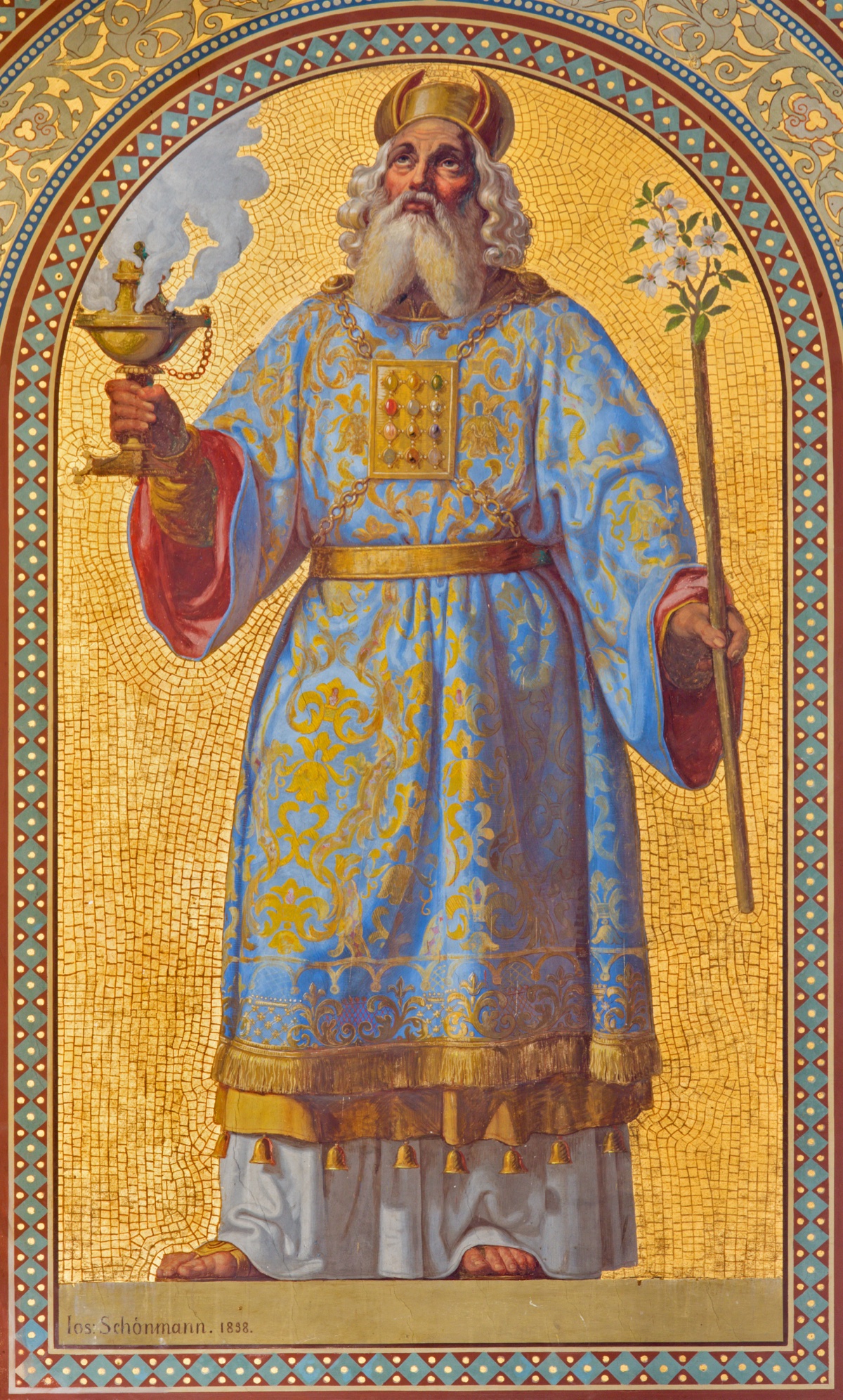

By Diana Dow
Synopsis: Sister Dow discusses the challenges and rewards of homeschooling, emphasizing parents’ responsibility to educate their children about God and to make wise choices. She highlights the need for realistic plans, appropriate curricula, and understanding state laws. Homeschooling is messy and challenging, but offers flexibility and real-life learning. She also addresses the emotional transition for parents after homeschooling, encouraging them to recognize their skills and find new ways to use their experience in their local congregations, the workforce, or the community.
As this series on home schooling comes to a close, I would like to bring to remembrance a few things we have discussed and add a personal note at the end.
God blesses us with children and expects us to raise them to know Him, to be wise in choosing their path, and to have a love for everyone (Prov. 22:6). This is a tremendous responsibility that will affect our children, their children, and generations to come (Deut. 4:9). Parents may choose to educate their children on their own or to delegate a portion of their children’s education to others (2 Tim. 1:5; Acts 22:3). However, delegating does not free parents of their responsibility (Eph. 6:4). Whether it is an occasional subject (violin lessons, biology class, etc.) or the whole package (public or private schooling), parents are still the ones answering to God for their children’s education.
Home schooling is hard. Preparing the home, the family’s schedule, living within limited financial resources, and having the children with you 24/7 is challenging, but the rewards are great. Before your child is school age or before you decide to pull him out of public school, set your home in order. Things do not have to be perfect, but having a realistic plan will go a long way toward making everything run much more smoothly.
Home schooling is not what you see on social media. All the smiles, the successful science projects, the lush gardens, the prodigy musicians are but a snapshot of that particular family’s day. Home schooling is messy, noisy, and sometimes chaotic. There are days it feels like not much has been accomplished. Burnout is real for both parents and children. Yes, there are even tears in home schooling, and it is not always the children doing the crying. Calmly dealing with distractions and imperfect days will help both parent and child learn patience and develop the ability to be flexible when the needs of others present themselves.
Home schooling is not the same as being home bound. The beauty of educating our own children is the flexibility to take it “on the road.” There are many things that are better learned in the community than from a textbook. Depending on your location, there might be museums, nature centers, libraries, and concerts. If you are in a more rural area, learning can occur in your own backyard, where the whole family benefits from down-to-earth hard work either as part of its income or as a hobby, provides experience that will be beneficial for life. There is no need for artificial scenarios. Your family can use real life as your children’s education.
Choose curriculum wisely. There is an abundance of choices available. Some are good. Some are excellent. Some are not. Everyone who writes a curriculum has an agenda—a reason for writing. Look beyond the bells and whistles to find out why this curriculum was written and determine if it would be a good choice for your family.
While we are talking about curriculum, keep in mind that you are the teacher. The curriculum is just a guide to point you in the right direction and keep you on track. Feel free to switch it up or change to another. In some states, you can even put together your own.
Speaking of states and their requirements, make sure you understand the home school laws in your state. Not all states look favorably on home schooling and some try to make it difficult. Follow the laws, keeping in mind what Paul told the Christians in Rome: “Let every soul be subject to the governing authorities. For there is no authority except from God, and the authorities that exist are appointed by God” (Rom. 13:1).
It has been said that it takes a village to raise a child. Our Maker knew this to be true. He created families as the foundation of our village. From there, our village extends to the church, making available godly mentors, friends, teachers, and counselors. What a blessing! There will probably be others we invite into our village to help our children grow and mature. We must choose these people carefully. Not everyone will have our children’s best interest at heart. Parents act as protectors against evil influences (and influencers)—guiding their children to live in the world without becoming part of it (John 17).
Peer pressure is real. . . for everyone. Home school moms are not immune. Just because there is a bandwagon that everyone is jumping on, does not mean I need to jump on it too. Trends come and go in home schooling as much as in anything else. New does not necessarily mean better. Just because the crowd claims “This is a must-have curriculum!” or “This is a must-do activity!” doesn’t make it so. Be discerning and courageous enough to stick with what you know is best for your family.
If you want something done, do it yourself. Unlike a public or private school setting, there are no activities available unless parents make them happen. This may mean that you step out of your comfort zone. It may mean learning something new, but that is what home school moms do. They are not afraid to learn new things to provide the best education possible for their children.
Bear with me a bit longer as I discuss life after home schooling—not life for the home-schooled children, but life for the “graduated” home school mom. After twenty-nine years of home schooling my six sons, I had been a home school mom for half my life. When I graduated my youngest son, there was a significant feeling of emptiness. Not only was my nest empty, but the network of other home school moms was gone as well. We were still friends, but no longer colleagues. What had bound us together was now missing. I had “graduated” out of the home school circle of friends that had sustained me through the joys and trials of all those years.
I bring this up because I want to encourage those who are in this same season of life and those who will soon be there to appreciate all that you have learned while educating your children. I have listened to women who “graduated” before me wonder what they were qualified to do now. Those who wanted to enter the workforce wondered who would hire someone who had spent the last few decades at home with their children? What did they have to offer?
It is time to take a good look at who you have become. Just look at what you have accomplished! How many women can say they have studied again and again the myriads of subjects you taught your children from how to read all the way through the more challenging subjects such as algebra, Latin, and biology? Despite never attending college classes on teaching, many home school moms have successfully taught children of all ages in their co-op.
You have managed your household, educated your children, volunteered at your church, taken care of your aging parents, all while maintaining a healthy relationship with your husband. These are significant skills. Do not underestimate your own personal growth during these years. Transfer that knowledge and those skills to something that will bring in extra income, if needed. If finances are not an issue, use your experience and wisdom to build up your local church. There is much to do, and you are in the perfect position to do mightily whatever your hands find to do (Eccl. 9:10).
Diana Dow home schooled her six boys for twenty-nine years. After the passing of her husband, Danny Dow, she now lives in Amarillo, TX where she teaches private music lessons in her home. She maintains a website about teaching Bible classes here, a website about home schooling here, and a website about her music studio here Diana can be reached here.




By Bruce Reeves
Synopsis: Are we giving in to a man-centered, experience-driven, self-focused approach, or are we devoting ourselves to a God-centered, Christ-focused, and Spirit-revealed service to our Savior? If our perspective is as it should be, we will be transformed both as individual disciples and as God’s people!
Numbers 7 is the longest chapter in the Bible other than Psalm 119, although for many, it is not the most familiar. It describes the offerings made to the Lord by the leaders of the tribes of Israel when the tabernacle was completed. Moses reviews an occasion which occurred a month before the census with which the book begins (Num. 1:1-2). When this chapter is understood in its historical and literary context, it draws us closer to the holiness and mercy of God. The types and shadows of the Pentateuch point to the New Covenant realities in Christ for which we are so thankful as believers (Rom. 15:4).
Numbers 7:1-9:23 relates to the time when the tabernacle was erected. These three chapters deal almost exclusively with the tabernacle and the worship centered there:
Offerings brought when the tabernacle was finished (7:1-88).
God’s communication with Moses within the tabernacle above the mercy seat (7:89).
Lampstand to provide light for the tabernacle (8:1-4).
Levites consecrated to serve the tabernacle (8:5-26).
Passover observed, involving the tabernacle (9:1-14).
Appearance of the cloud of God’s guidance over the tabernacle (9:15-23).
The fact that this section begins and ends with references to the day when the tabernacle was erected suggests both that it should be considered as a whole and that the tabernacle is the focus of the context (Num. 7:1; 9:15). Why is this section placed here? The first nine chapters of Numbers address organization, purification, and worship. These spiritual principles are central to the identity of Yahweh and His faithful people. The emphasis on worship in Numbers 7-9 makes it clear that Israel’s success in going to the Promised Land was conditioned on their fellowship with God and that their covenant with the Lord was expressed by the presence of the tabernacle in their midst. Too often today, we wrongfully detach our worship from our relationship with the Lord. However, such notions are nowhere found in Scripture.
Chapter 7 discusses the day that Moses had finished setting up the tabernacle (Num. 7:1-9). This information supplements what is presented in Exodus 40 and Leviticus 8. This flashback in Numbers 7 makes sense in the larger context. In Numbers 10:11, the Lord’s cloud will lift from the tabernacle, meaning the Israelites must break camp. As part of this, the Levites will have to dismantle and transport the tabernacle, needing carts and oxen to do so. Chapter 7 describes how the Israelites accomplished this task, preparing readers for the climactic moment to come in Numbers 10:11.
The largest part of the chapter is taken up with an account of how leaders of each of the twelve tribes brought an offering for the altar when it was anointed (Num. 7:10-11, 84, 88). The term “dedication” denotes structures being used for God’s designed purpose. In keeping with what the Lord said to Moses, an offering was presented by one leader each day for the dedication of the altar (Num. 7:12-83). In ancient times, repetition was used for memorization purposes and built to a crescendo of praise offered to the Lord. The total for twelve days of offerings given by the twelve tribes is emphasized for us to see that God’s people were making offerings to honor their King (Num. 7:84-88).
Moses entered the tabernacle to talk with God: “Now when Moses went into the tent of meeting to speak with Him, he heard the voice speaking to him from above the mercy seat that was on the ark of the testimony, from between the two cherubim, so He spoke to him” (Num. 7:89). God’s close and unique relationship with Moses is highlighted throughout Numbers. The text begins with a message from God in 7:11 and ends with God speaking to Moses in 8:1. The concluding verse of chapter 7 echoes Exodus 25:17-22, where the Lord promises to speak to Moses from above “the ark of the testimony,” which rested in the most holy place. Once the altar had been dedicated, the tabernacle could fully function. Included was its central role as the place where the Lord would speak personally with Moses, giving him commands and instructions for the Israelites.
As great as Moses was as a leader of Israel and servant of God, Jesus is greater. The Hebrew writer emphasizes the superiority of Christ’s nature, work, sacrifice, and covenant when he writes: “God, after He spoke long ago to the fathers in the prophets in many portions and in many ways, in these last days has spoken to us in His Son, whom He appointed heir of all things, through whom also He made the world” (Heb. 1:1-2). We are encouraged to listen diligently to Jesus as “the mediator of a new covenant” (Heb. 2:1-3; 3:1-6; 4:1-12; 12:24-25; cf. 8:6-13). Moses was a faithful servant in the house of God, but Christ was a faithful Son over His house (Heb. 3:5-6). Jesus was above the angels, Moses, the prophets, John the Baptist, and all others (Matt. 3:11; Heb. 1:1-14; 3:1-6). What an amazing blessing to know that God speaks to us today through His beloved Son and we can hear Him by receiving His word (1 Thess. 2:13; Heb. 4:12).
The Bible’s consistent story is that God has made us to share a relationship with Him. Through His lovingkindness, He has created ways for this to happen (Gen. 1:26-28). The tabernacle was His idea, not theirs. As the Scripture reveals the fullness of God’s redemptive purpose in Christ, focus shifts from Levitical priests offering sacrifices on a physical altar to the Son of God offering Himself as the perfect redeeming sacrifice for humanity and serving as the sinless High Priest for God’s people (Heb. 9:11-14; 10:14-18, 19-22). Christ is our Savior, Sacrifice, Redeemer, Lord, King, Intercessor, Mediator, High Priest, and Brother (Heb. 2:9-18; 4:14-16; 7:25-28). He is now our lifeline to God and the ladder the Lord has lowered from heaven that we might come to Him (John 1:51; 14:6). As the Son of God, He is “the radiance of His glory and the exact representation of His nature and upholds all things by the word of His power” and yet He, Himself, has “made purification of sins” and “sat down on the right hand of the Majesty on high” (Heb. 1:3). What an astonishing thought! God became flesh to save us from our sins. Does He not deserve our devotion and faithful love?
Under the Levitical system, great attention was given to the Lord’s tabernacle and temple. As we come to the New Testament, should Christ’s spiritual temple not receive our greatest devotion? The figure of the tabernacle and temple is applied to the incarnation, the church, our personal holiness, and the glorification of God’s people in eternity (John 1:14; 2:19; 1 Cor. 3:16-17; 6:18-20; Eph. 2:19-22; Rev. 21-22).
Jesus not only tabernacled among us in the flesh; He also described the resurrection of His body as the rebuilding of the temple in three days (John 1:14; 2:19-22). God’s presence was shining through Jesus Christ as His Son (John 1:1-5; 2 Cor. 4:4-6).
In like manner, the apostle Paul also describes our personal holiness and sanctification with temple language (1 Cor. 6:13-20). We know that the Lord cares what we do with our bodies because He has promised a future resurrection (1 Cor. 6:13-14). God’s desire is for the sanctification of our body, soul, and spirit (1 Thess. 5:23). Paul rhetorically asks, “Do you not know that your bodies are members of Christ? Shall I then take away the members of Christ and make them members of a prostitute? May it never be!” (1 Cor. 6:15). We are joined to the Lord in spirit and body, thus, to use our bodies for sexual immorality would be to dismember the body of Christ (1 Cor. 6:16-18; cf. Rom. 6:11-13) [See Note #1]. Flowing out of Paul’s encouragement to sanctification, he invites us to remember that our body is to be a temple of the Holy Spirit and as a result we should use our bodies to glorify God (1 Cor. 6:19-20). Because we are under the influence of the Spirit in the gospel, our inner and outward man is to be used for God’s adoration, not shame. The apostle is helping us to see that our sanctification is the outgrowth of our relationship with the Lord. The Spirit is to dwell in us, and we are to dwell in Him by living in His holiness (Rom. 8:9-14). When Paul speaks of our body, he is focusing on the outward life we live through our faith in Christ (Rom. 12:1-2). A person’s true nature is demonstrated through his words, actions and daily conduct. This is precisely how a person shows himself to be “in Christ.”
When we read of the holiness of the Old Testament tabernacle and temple, we must see the spiritual application of the holiness we are to express as God’s people. Likewise, we see that our participation as “a holy priesthood” in the Lord’s church calls us to spiritual sacrifices as “living stones” that compose a “holy temple to the Lord” (Eph. 2:19-22; 1 Pet. 2:5, 9). What type of sacrifices are we offering to the Lord? Are our sacrifices sick, lame, and defiled—or holy, sanctified, and reverent?
The Bible does not deny differences among the Lord’s people (1 Cor. 12:12-27). In Numbers 7, the Levites transport the tabernacle, not the other tribes; yet, the text emphasizes the unity of God’s people as they worshipped and served Him. In Numbers 7, the picture presented is that of the Lord dwelling in His people’s midst in the tabernacle, receiving all the honor and glory. The tribes surrounded Him, rejoicing as equal members of His people, assured of His love and care, and having the privilege of working together as one to make His praise and glory known. So, too, it should be for Christians today (John 17:20-23; 1 Cor. 1:10; Eph. 4:1-6; Phil. 2:1-5).
The New Testament depicts this concept as the Lord dwelling among His people, who form the spiritual temple, with Jesus as the cornerstone (Eph. 2:19-22). Once more, God is at the center, receiving the praise of His people. We would do well to ask, “Is this what people see from us?” “Are we focused on exalting Jesus as Lord and King or ourselves?” If not, then we should make dramatic changes. Are we giving in to a man-centered, experience-driven, self-focused approach, or are we devoting ourselves to a God-centered, Christ-focused, and Spirit-revealed service to our Savior? If our perspective is as it should be, we will be transformed both as individual disciples and as God’s people! The book of Numbers reveals God’s holiness, work, purpose, and mission among (and in) His people. The more we come to know about Him, the more we will see regarding our identity and hope as His children. Therefore, let us give offerings of devotion to the Lord by giving Him our hearts, lives, and allegiance as our divine King!
Note #1: The following is the citation of the thoughts regarding 1 Corinthians 6:15-18 regarding dismemberment or, as Thiselton says it, “wrenching our members or limbs away from Christ’s body.”
Anthony Thiselton, a respected biblical scholar, interprets the passage from 1 Corinthians 6:14-15 to emphasize the concept of “dismemberment” in a metaphorical sense. When Paul asks, “Shall I then take away the members of Christ and make them members of a prostitute?” he is highlighting the gravity of uniting oneself with a prostitute, which, according to Thiselton, involves “wrenching our members or limbs away from Christ body” (Thiselton, 265-270).
In this context, “dismember” means to sever or separate the members of Christ’s body (believers) from their holy union with Him. By engaging in immoral acts, believers are metaphorically tearing themselves away from their spiritual connection with Christ and joining themselves to something unholy. This interpretation underscores the seriousness of maintaining spiritual purity and the profound implications of our actions on our relationship with Christ.
Thiselton, Anthony. The New International Greek Testament Commentary: The First Epistle to Corinthians. Grand Rapids, MI: William B. Eerdmans Publishing Co., 2000.
Bruce Reeves has labored with the Highway 65 church of Christ in Conway, AR, since 2000. He and his wife, Rachel, have one child. The church website is here. He can be reached here.


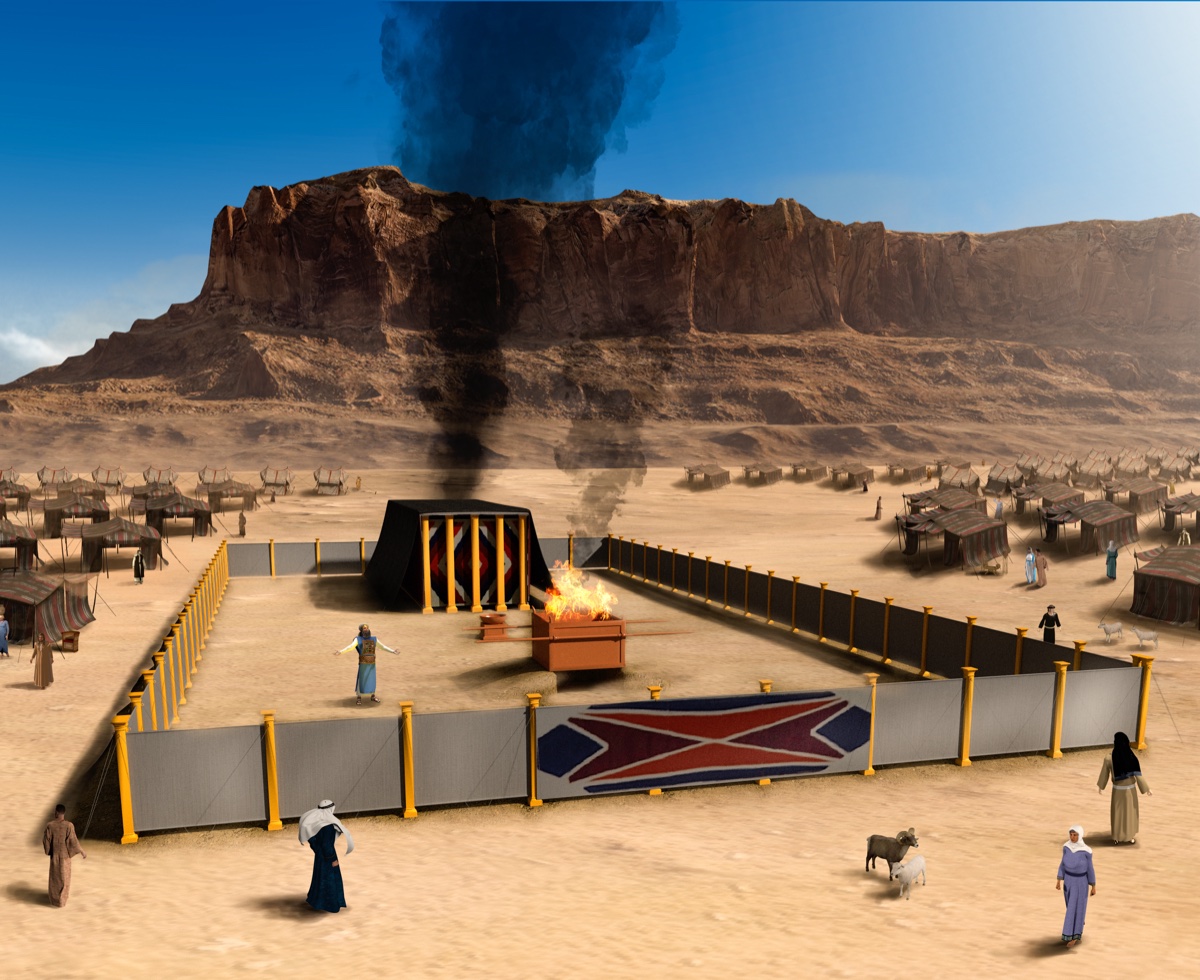

By Shane Carrington
Synopsis: As Jesus walked in areas close to the seashore around “His own city” of Capernaum, He taught lessons in unusual ways that help us learn to walk with Him in daily life.
Jesus walked the shores of Capernaum, a fishing village on the northern shores of the Sea of Galilee (Mark 2:1). He actually lived there for a time as “His own city” (Matt. 9:1), fulfilling prophecy along the way (Matt. 4:12-16).
Mark 2 describes three vignettes from Jesus’s life that occurred while He was teaching people near Capernaum and walking “by the seashore” (Mark 2:13). Journeying with Jesus teaches us many things, including how to live. Each of these stories would have been viewed as unusual by the original witnesses. While we can describe all the events in His life as “unusual,” these are notable for three different reasons.
Jesus did this in an unusual manner. Many people gathered together in a house to hear Him, so many in fact, “that there was no longer room, not even near the door” (Mark 2:2). Four men carrying a paralyzed friend approached, hoping that Jesus would heal him, but the crowd was too large for them to enter the house where Jesus taught. These relentless friends had so much faith that they came up with an ingenious plan: dig a hole in the roof and lower their friend right into His presence.
When Jesus saw their faith, His response was not what they anticipated. “Jesus seeing their faith said to the paralytic, ‘Son, your sins are forgiven’” (Mark 2:5). This was neither their request nor what they expected! The Jewish leaders who were in attendance heard His assertion and silently accused Jesus of blaspheming God: “Who can forgive sins but God alone?” (Mark 9:7). Jesus read the accusation in their hearts and responded with three statements:
“Why are you reasoning about these things in your hearts?” (Mark. 9:8). This proved His divinity, for only God can read hearts (1 Cor. 2:9-11).
“Which is easier to say, ‘Your sins are forgiven’; or to say, ‘Get up, and pick up your pallet and walk’?” (Mark 9:9). Only God can forgive sins, and He alone can empower miraculous healing. With these words, Jesus forces them to grapple with His true nature as God in the flesh.
“But so that you may know that the Son of Man has authority on earth to forgive sins—He said to the paralytic, ‘I say to you, get up, pick up your pallet and go home’” (Mark 2:10-11). By describing Himself as “Son of Man,” Jesus is alluding to His role as the divine Messiah (Dan. 7:13-14). The man was healed “immediately” (Mark 2:12), confirming Christ’s divine authority to forgive sins.
Jesus used an unusual manner for declaring His power over both sin and nature, proving His divinity for all to see! The crowds “were all amazed and were glorifying God, saying, ‘We have never seen anything like this’” (Mark 2:12).
This was an unusual choice. The Jewish people despised tax collectors because they were local folks collecting taxes for the occupying foreign power, Rome. Jesus chose Matthew from a tax booth in plain sight for all to see (Mark 2:14), showing that He understood how the community would view His choice.
Selecting Matthew is even more unusual when we consider that, among the apostles, Jesus not only chose this tax collector but also Simon the Zealot (Matt. 10:4). Zealots were the “freedom fighters” among first century Jews. Politically, these two could not have been further apart. They were enemies in the public square, yet Jesus called them both, causing them to grow together by changing their courses from worldly pursuits to the hope of God’s kingdom. Even today Jesus calls disciples to rise above culture and “hammer their swords into plowshares and their spears into pruning hooks,” so that, among disciples, “Nation will not lift up sword against nation, and never again will they learn war” (Isa. 2:2-4; cf. Eph. 2:17-22; 4:1-6).
Matthew then opens his home to host a place for Jesus to call sinners to repentance (Mark 2:15-17), for “many tax collectors and sinners were dining with Jesus and His disciples; for there were many of them, and they were following Him” (Mark 2:15).
Why did this diverse crowd of sinners spend time with Jesus (Mark 2:15)? They realized the emptiness with which sin had filled their lives. They approached Him, hungering for what He alone possessed (Matt. 5:6).
Why did Jesus allow them into His presence? When castigated for eating with them, He replied to His critics, “It is not those who are healthy who need a physician, but those who are sick; I did not come to call the righteous, but sinners” (Mark 2:17). Jesus did not eat with them to approve of their lives. He used this as an opportunity for them to hear the message of repentance that only He had. They needed to hear God’s gracious call for sinners to receive salvation.
In this scene, Jesus makes an unusual point. Disciples asked Him why He conducted Himself differently than both the Pharisees and John’s disciples, the recognized religious people of their day who fasted. They puzzled over why Jesus’s disciples refrained from this common practice (Mark 2:18).
Jesus responded that, during His earthly ministry, it was not the suitable time for fasting (Mark 2:19). He told them that the time for fasting would come. Christ said that when He “is taken away from them. . . then they will fast. . .” (Mark 2:20).
Jesus illustrated with two examples of incompatible things (Mark 2:21-22).
“No one sews a patch of unshrunk cloth on an old garment. . .” (Mark 2:21). With washing, the new patch will shrink and pull away from the well-worn garment, making the tear worse.
“No one pours new wine into old wineskins. . .” (Mark 2:22), because the old skins, having lost their flexibility, will burst as they swell.
With these illustrations, Jesus showed His disciples that they should not be fasting while He was walking among them.
A second point underlies this one. During His earthly ministry, Jesus was working toward the inauguration of the New Testament era. The “old garment” and “old wineskins” of the Old Testament would be fulfilled and give way to the “new and living way” of Jesus and His gospel (Heb. 10:19-20). Sewing pieces of the old Mosaic system to the new gospel of Jesus—or pouring the new wine of the gospel into the old wineskin of the Old Testament—would prove dysfunctional and disastrous. The types and shadows of the old system find their ultimate fulfillment through Jesus Christ and His New Covenant (cf. Col. 2:8-17 with Eph. 2:11-16). Jews needed to understand the temporal and transitory nature of the old system (Heb. 8:13). John’s disciples also needed to understand that his work was preparatory for introducing Jesus (Mark 1:7-8). God was bringing great blessings to the world through the work of Jesus: “He takes away the first in order to establish the second” (Heb. 10:9). The Jewish people found this concept challenging to understand, and Jesus conveyed it in a distinctive way.
Journeying by the seashore with Jesus reveals unexpected treasures delivered through unanticipated means. God sometimes surprises us, revealing His word in ways that we would not intuitively discern (1 Cor. 2:10-13). Jesus’s teaching and manner caught His society off guard, and following Jesus frequently leads us away from social norms (1 Cor. 1:26-31). Regardless, always choose to journey with Him, and He will transform you for service in His kingdom now, and He will prepare you for eternal service in heaven.
Shane Carrington has worked with the Southside church of Christ in Sulphur Springs, TX, since 1999. He has two children and four grandchildren. The church website is here. He can be reached here.


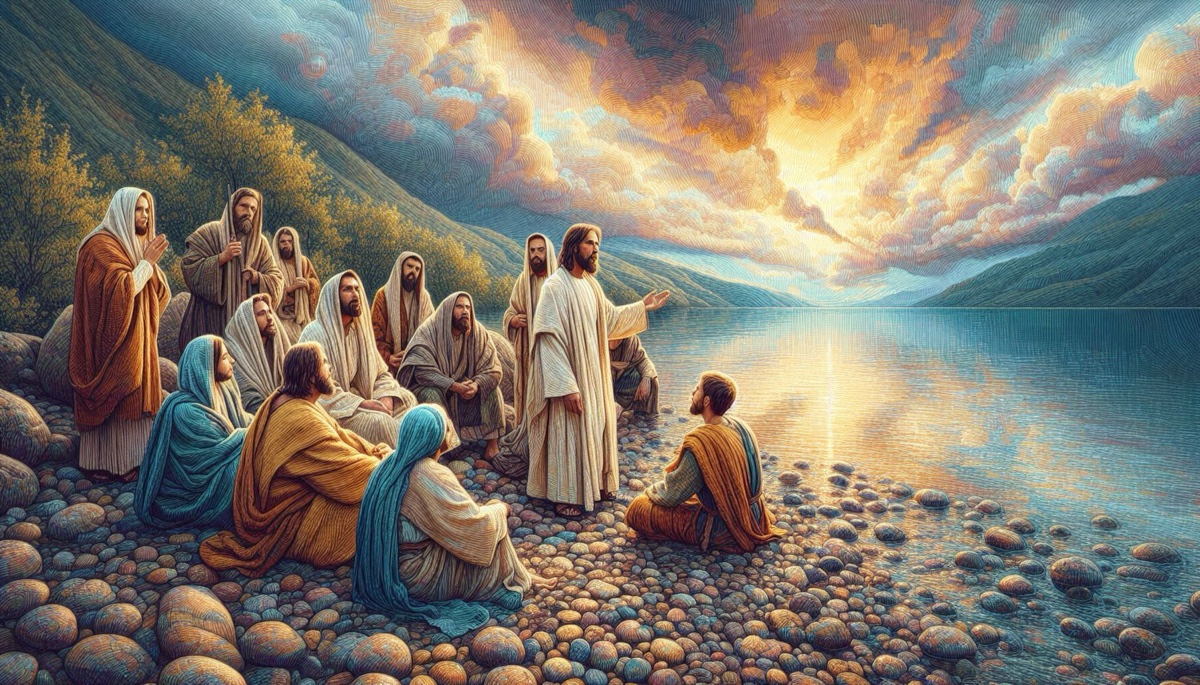
Caption:
By Bobby L. Graham
Synopsis: In addressing a question from Kenya, brother Graham highlights Jesus Christ’s central role in the Bible, emphasizing His identity and authority. He stresses the importance of obeying Jesus’ teachings, as shown in Matthew 7:21-27, and asserts that the apostles’ teachings, guided by the Holy Spirit, hold equal authority. True kingdom citizenship, he concludes, requires obedience to Christ’s words, which are relevant until the end of the world.
Jesus Christ is the central figure of the Bible. What is one of the [most important] things He said, and what does it mean to us today?
It is good to hear from far-away Kenya, and to know there is interest in what the Bible teaches about Jesus and in learning from Him.
Jesus taught many things about a variety of subjects: His purpose on earth, His fellowship and agreement with the Father, various matters in preparation for the coming kingdom, the kingdom’s spiritual nature, His own identity, the great commission/plan of salvation, the need for Him to ascend to His father, many matters pertaining to His death, and the coming of the Holy Spirit. What Jesus said in all of these connections is very important.
Arguably, the most crucial teachings of Jesus concern His own identity, as they form the foundation of who He is and the authority that supports all His other teachings. He said that He is the bread of life come down from heaven (John 6:33); the light of the world (John 9:5); the resurrection and the life (John 11:25); the way, the truth, and the life (John 14:6); eternal (John 8:58); one who came to bear testimony to the truth (John 18:37); one possessing all authority in heaven and on earth (Matt. 28:18); His words which will judge us in the last day—even if we fail to receive them (John 12:48). It is because of who Jesus always has been, who Jesus is now, and who He will be in time to come that His words concerning every matter make a profound difference!
The words spoken by Jesus Himself, along with those He authorized through the inspired apostles, represent the final authority on all matters. Since Jesus was unable to teach about every matter while on this earth (John 16:12), He sent the Spirit of truth to guide the apostles into all truth (John 16:13). This teaching was designed to last until the end of the world (Matt. 28:20). The testimony of the apostles, therefore, is as relevant, authoritative, and final as the personal teaching of Jesus. While useful in detecting the speaker, the red letters in some New Testaments are no more powerful or meaningful than the black letters of the words spoken by the apostles; in other words, Jesus’s commendation of the apostles makes all letters of the apostles’ teaching red. Truth can, and often must, be learned from what the apostles later taught, because Jesus did not address every matter.
As to which teaching of Jesus I would cite, and what its application today would be, Matthew 7:21-27 might well answer that question, because it illustrates why His words have significance. Here, Jesus instructed people in His day about entering the kingdom, which He would soon establish. Kingdom citizenship depends upon one’s obedience to Christ, not merely hearing His words. He affirmed His own authority by dealing with the objections of the disobedient in relation to their disregard of divine law (“lawlessness,” i.e., acting without law, or in an unauthorized manner). Finally, in the Parable of the Two Builders, He clearly delineated the need for obeying what one hears, thereby building upon Jesus Christ, not on the shifting sands of human opinion or man-made creeds. All who would enter the kingdom of God over which Christ is King must obey the King. Such is as true today as it was in the first century. Because the teachings of Jesus apply until the end of the world, all of us must obey them, not just be acquainted with them or read them—whether occasionally or often.
Bobby L. Graham actively participates in fill-in preaching, Belize trips, teaching an hour each day at Athens Bible School, and in gospel meeting work. He and his wife, Karen, have three children. He can be reached here.




By Luke Chandler
Synopsis: While archaeology never “proves” the Bible, it’s an essential tool that benefits Bible students and teachers.
As last month’s article by Mike Willis correctly reminds us, archaeology cannot prove the Bible. Many believers, seeking to confirm biblical events and people, use archaeology as a list of sensational discoveries, a limited approach that often yields misunderstandings and mistakes.
At the same time, archaeology is our only source of new “facts” to guide our view of the ancient past. Used correctly and wisely, it offers rich benefits for students and teachers of the Bible. Here are some of the practical benefits that archaeology provides.
The identities of many ancient cities were lost through millennia of destructions and displacements. Through archaeology, we have been able to restore the original identity and location of many ancient sites.
For example, Gezer was once a leading city in ancient Canaan. It was so influential, its kings corresponded with Pharaohs. Joshua defeated the city’s army and, generations later, Solomon converted the city into one of the three main administrative centers for his empire. When the modern renaissance of biblical geography began a couple of centuries ago, Gezer’s location had been lost. No one knew where to place it on a map until someone found a large field stone inscribed with the name “Gezer” near an ancient mound called Tel el-Jezari. Archaeological surveys eventually revealed more ancient “Gezer” stones marking the area around the site. Thanks to the discovery of these boundary stones, we can safely identify Tel el-Jezari as biblical Gezer.
The location of Ashdod, a principal Philistine city where the Ark of the Covenant resided for a time (1 Sam 5:1ff), was also forgotten until excavations of an ancient mound uncovered a stone dedicatory inscription with the name of the city. We now know that Ashdod sat inland along the international highway and had a river port providing access to the Mediterranean Sea. This location would have brought a steady flow of international commerce to the city, with merchants and other visitors from across the Ancient Near Eastern world. Does this setting give us new layers of understanding to the impact of the events in 1 Samuel 5? How many foreign people came to a knowledge of the Hebrews’ God because the Ark came to Ashdod?
The Bible doesn’t provide information that, on its own, converts to dates on our calendar, but some archaeological discoveries give historical synchronisms that help date biblical events.
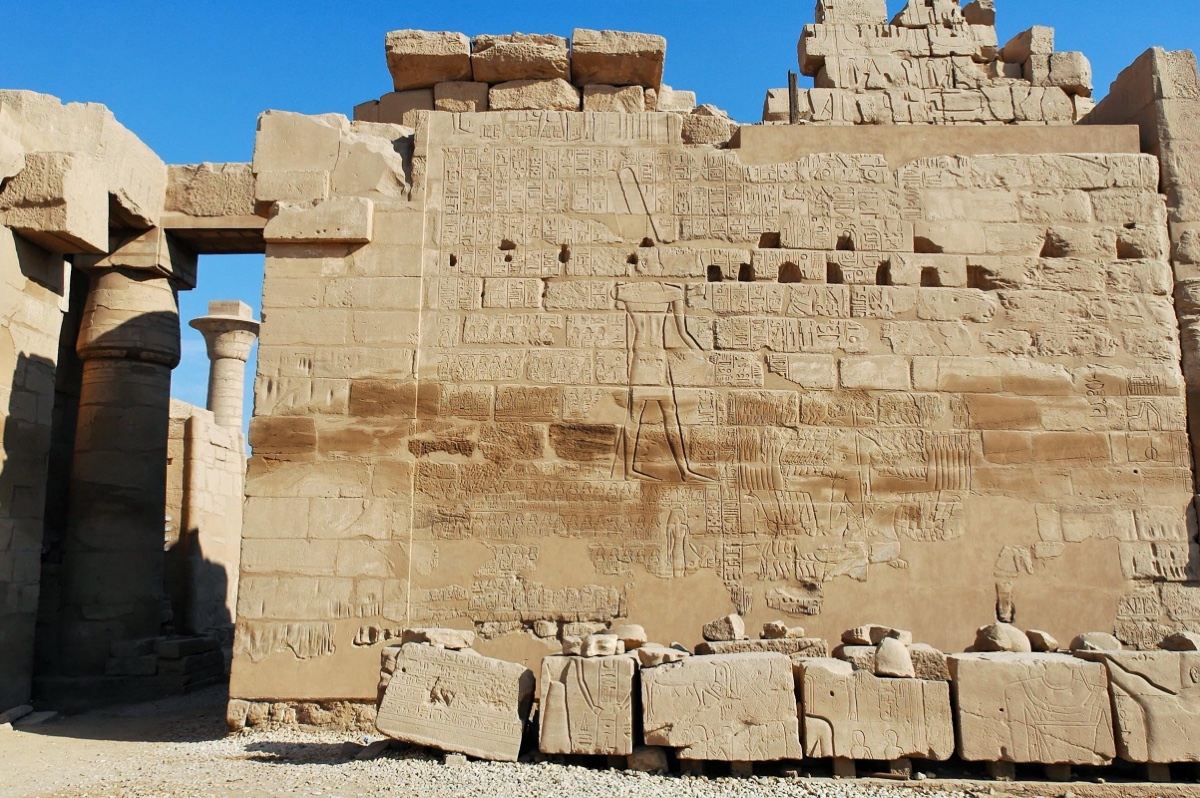
One example is the Karnak Temple’s Bubastite Portal in Egypt, an inscribed wall detailing a military campaign of the biblical Pharaoh Shishak. Generally, we can convert Egyptian records to our own calendar, so the inscription gives us an approximate date of 925 BC for Shishak’s invasion of Judah in Rehoboam’s fifth year as king (1 Kings 14; 1 Chron. 12). From this date we can extrapolate other biblical events such as the beginning of Rehoboam’s reign in ca. 930 BC (from 1 Kings 14:25), the beginning of Solomon’s reign in ca. 970 BC (1 Kings 11:42), the start of the temple’s construction around 966 BC (1 Kings 6:1), the start of David’s reign in Hebron around 1010 BC (2 Sam. 5:4-5), and more.
Other artifacts provide useful synchronisms, such as the Babylonian Chronicle, which lets us date Nebuchadnezzar’s assaults on Jerusalem, and the Gallio Inscription from Delphi, that helps us date Paul’s journeys. The next time you see dates for biblical people and events, recall that archaeology provides us with those details.
We commonly view Abraham as a wandering, aged rural shepherd but have little or no insight into his earlier life in the city of Ur. An artifact called the Standard of Ur, dating to a couple of centuries before Abraham, displays cultural scenes from Ur that include an army of uniformed soldiers and four-wheeled chariots. Knowing that military conscription was a standard obligation for younger men, this artifact highlights the possibility (or the likelihood?) that Abraham possessed military experience prior to his calling by God.
This connection gives us a fresh way to understand Abraham’s rescue of Lot in Genesis 14. The text states that Abraham led 318 trained men (v. 14, “born in his house”) on the rescue mission, and that he fought a successful night battle against an experienced enemy. Was it Abraham who had trained those 318 men and taught them the necessary skills for night fighting? Do we correctly infer from the text that Abraham personally led the men in the campaign? The Standard of Ur reminds us that, just as Abraham learned at some point how to be a shepherd, he may have learned how to be a soldier from mandatory military service in Ur. Does this make Abraham more relatable to us? Does it emphasize the importance of equipping ourselves in specific ways to serve the Lord and His people?
We are generally familiar with Elijah’s contest against the Baal prophets in 1 Kings 18. It began when Elijah proclaimed a drought in the name of God:
As the LORD, the God of Israel, lives, before whom I stand, there shall be neither dew nor rain these years, except by my word (1 Kgs 17:1).
In short, Elijah proposed that he and the Baal prophets should each build an altar on Mount Carmel. The question of which god to serve (Yahweh or Baal) would be publicly resolved by seeing which would light his own altar with lightning from above. The story naturally ends with Yahweh’s fire dramatically descending and the people recognizing God’s supremacy over the nonexistent Baal.
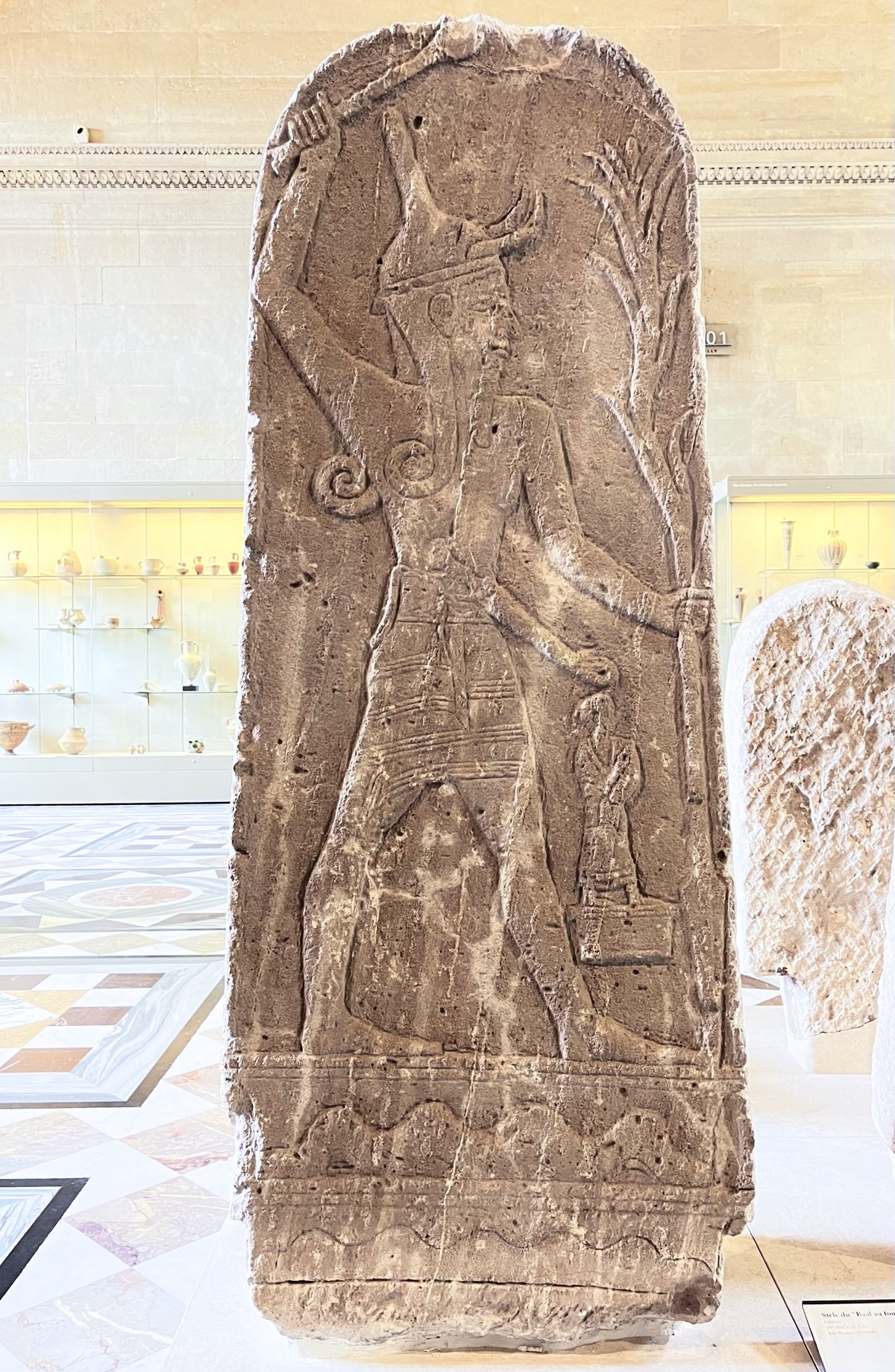
Why did Elijah declare this specific contest against the followers of Baal? Discoveries from Syrian excavations reveal that Baal was regarded as the god who sent rain, thunder, and lightning. This understanding from archaeology shows that Elijah specifically targeted Baal’s “powers” over rain and lightning in this contest. Instead of offering an arbitrary admonition against idols, Elijah tailored his challenge to discredit this particular god in the eyes of the people, and to great effect.
From archaeology, we also know that the annual eastern Mediterranean dry season from May-through-early October was explained by a mythology of Baal dying every year, and then being resuscitated to provide the annual rainy season from late October through April. Elijah’s initial drought proclamation in 1 Kings 17:1 seems to highlight this limitation of Baal: “As the LORD, the God of Israel, lives. . .” Archaeology helps us see this statement not just as a typical “praise” phrase, but as a declaration of God’s supremacy over death itself, and at the expense of the impotent Baal.
Thanks to archaeological discoveries, we can understand the Mount Carmel context more as the people of that time would have understood it. As Biblical Originalists, this is a vital perspective from which to operate. Archaeology plays the key role in bridging the millennia-wide cultural gap between modern and ancient times.
Caesarea’s ancient port, used by Paul and famous Roman governors like Pontius Pilate, was completely artificial. The coastline of Canaan lacks natural harbors, so Herod the Great constructed a large artificial breakwater and lighthouse atop massive sunken caissons of waterproof concrete. The port operated successfully for hundreds of years, and archaeology has revealed the construction materials and methods for this stunning project. However, the breakwater and piers were built on soft ocean silt, so when the harbor’s foundations gradually weakened from wind, waves and earthquakes, it eventually collapsed into the sea.
Does this sound familiar to something else in the Bible? We may recognize its similarity to Jesus’s parable at the end of Matthew 7, comparing godly obedience to building one’s house on the rock or on the sand. Archaeology gives a visual example of His warning to avoid building on the wrong foundation, helping us to better understand His words and more effectively teach them to others.
From archaeology, we have illustrations of other famous biblical objects such as millstones, grinding stones, denarii, a “Goliath-style” spear, Israelite swords, a first century fishing boat and fishing tackle, temples, high places, the kinds of idols that seduced God’s people, standing stones, altars, the expensive dye that colored priestly garments, and so much more.
Although archaeology will never “prove” the Bible, it provides tapestries of understanding to the words we read on its pages. Used properly, it is an essential tool for any serious Bible student.
The Karnak Temple’s Bubastite Portal wall, detailing Shishak’s campaign into Canaan. The inscription on this wall helps us to date Shishak’s invasion of Judah, and to date numerous other biblical people and events (Photo by Todd Bolen, used by permission).
The Standard of Ur, showing uniformed soldiers and chariots from close to Abraham’s time. Abraham grew up in this kind of culture, and may have been required to serve the local king’s military (Photo by Luke Chandler).
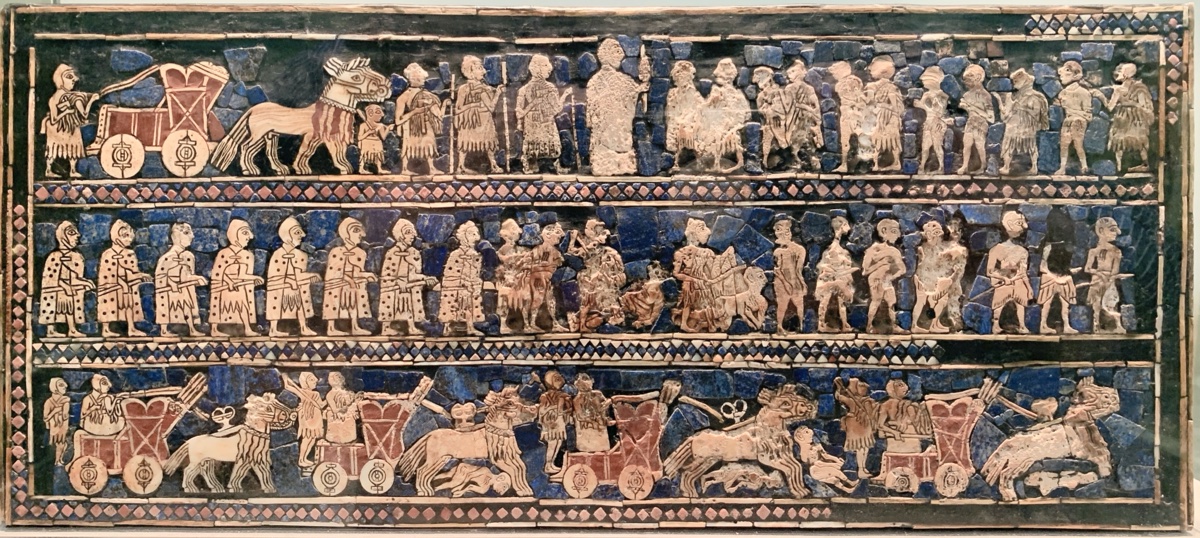
Image of Baal with a thunderbolt in his hand. Baal was believed to send the lightning, and Elijah’s contest was intended to demonstrate Baal’s impotence and God’s dominion (Photo by Luke Chandler).
Luke Chandler has worked with the North Terrace church of Christ in Tampa, FL, since 2006. He is a professor at Florida College, teaching Biblical Studies and Archaeology. He and his wife, Melanie, have five children. The church website is here. His Bible, Archaeology and Travel blog is here. Information about his Travel Tours is here. He can be reached here.



By Chris Reeves
Synopsis: In our spiritually chaotic world, it’s easy to turn inward and think only of self. However, Boaz and Ruth demonstrate that married couples can still care for others and serve God, even during difficult times.
Spiritual chaos and physical hardship! This is the setting for the story of Boaz and Ruth. This story unfolds during a tumultuous period in Israel’s history, marked by moral corruption (Judges 21:25) and famine (Ruth 1:1). Despite these challenges, these two individuals showed deep care for each other, for those around them, and for God. They did not use the turmoil and hardship of the day as an excuse to live selfishly or to be ungodly. Instead, they showed that goodness can thrive even in adversity. They cared during chaos and serve as an example for us today to do the same.
Christians today are surrounded by an evil society. Our country faces high rates of abortion, crime, murder, drug abuse, homosexuality, hate crimes, and divorce. Mass media and social media continue to fuel the fires of ungodliness with foul language, sexual immorality, and unrestrained behavior. Christians today can also fall on hard times. There may be the loss of a job, a spouse, a family member, or material possessions. One may experience severe illness, physical handicaps, etc.
Several questions come to mind: How do we, as Christians, react during these circumstances? How do Christian couples live in such a chaotic world? Do we let the evil and adversity around us hinder our service to God and others? We don’t have to! Can there be goodness in the midst of evil and adversity? Certainly so! This is the story of Boaz and Ruth, and it should be our story as well. Married couples today can care during chaos.
Ruth cared for Naomi in the midst of chaos and adversity. First, Naomi had to leave her homeland because of a famine (1:1-2) [Note #1]. Then, she lost her husband and her two sons to death (1:3-5). These events in her life surely troubled her.
After living in Moab for about ten years, Naomi decided to return to her homeland when the famine had ended. As she and her two daughters-in-law from Moab journeyed back to Naomi’s home, Naomi encouraged them to remain in their homeland of Moab. Orpah returned, but Ruth clave to Naomi and would not leave her (1:6-14). Ruth cared for Naomi by wanting to stay with her. She also cared for the one true God of Israel and not the false god, Chemosh, of the Moabites (1:15-18).
When Naomi (meaning pleasant) returned home to Bethlehem, she asked to be called “Mara” (meaning bitter) because she believed that the Almighty Lord had afflicted her with loss (1:19-22). Ruth helped Naomi overcome her bitterness—Naomi went from full, to bitter, to full again (1:21). Ruth stayed with Naomi, caring for her by working hard for long hours in the grain field to glean and gather food for the both of them (2:1-7).
Naomi cared for Ruth amid chaos and adversity. Naomi was deeply concerned about Ruth’s future well-being and desired for her to marry a good man. She gave Ruth advice on how to be with Boaz in such a way as to get his attention. At the threshing floor, Ruth was to “uncover his feet and lay down” and Boaz would tell her what to do regarding their relationship together (3:1-4) [Note #2]. Ruth cared enough for Naomi to do as she was instructed (3:5). Naomi would continue to care for Ruth later by taking care of Ruth’s child, Obed (4:16).
Boaz cared for Ruth in the midst of chaos and adversity. Boaz was not only a family relative, he was also a man of God. His mother, Rahab, was a former prostitute, but he was still raised to be a godly man (Matt. 1:5). He lived at a time when “every man did that which was right in his own eyes,” but he continued to believe in the Lord and follow His word (see 2:4; 3:10, 13). One day, when he found out that Ruth had been gleaning in his field, he told her she would be protected, fed, and given plenty of grain to harvest without any hindrance (2:8-16). Boaz saw Ruth as a kind, committed, and compassionate peson who had already shown great care for Naomi (see also 3:10). He believed that Ruth’s caring and sacrificial acts of kindness should be rewarded. Boaz said to her:
All that you have done for your mother-in-law after the death of your husband has been fully reported to me, and how you left your father and your mother and the land of your birth, and came to a people that you did not previously know. May the Lord reward your work, and may your wages be full from the Lord, the God of Israel, under whose wings you have come to take refuge (Ruth 2:11-12, NASB).
Note that Boaz showed godly character during this time of spiritual chaos. He was faithful to God’s word when others were not. The Law of Moses required that the Israelite land owner allow a poor person to glean from his field for food [Note #3]. Boaz could have ignored this law so that he could gather more grain to sell for a greater profit. However, he was not like many of his fellow-Israelites doing what was right in his own eyes. He was doing what was right in God’s eyes. He cared about God’s law! He even told his laborers to remove grain purposefully from their bundles to leave for Rahab to glean (2:16) [Note #4].
Boaz demonstrated his care for Ruth and his respect for God’s law by promising to be her kinsman-redeemer. When Boaz finally woke from his sleep and spoke to Ruth, she said to him, “spread your skirt over your handmaid” (3:6-9). This was her way of saying that she was ready and available for marriage [Note #5]. Boaz acknowledged the worthy character of Ruth and promised to marry her if the nearer kinsman did not want to (3:10-13) [Note #6]. He then gave Ruth and Naomi more barley (3:14-18). Boaz cared enough for Ruth and for God’s law to follow the law of the levirate marriage. The nearer kinsman did not want to buy the land of Naomi or marry Ruth, so Boaz, in front of the elders of the city, promised to do both (4:1-12) [Note #7]. Boaz and Ruth married, and they had a son named Obed (4:13-22).
Boaz also cared for Naomi in the midst of chaos and adversity. After Boaz took Ruth to be his wife, she bore him a son, and the women named him Obed. Boaz cared for Naomi as he became a “restorer of life” to her and a “nourisher of her old age” (4:13-17). Obed was the father of Jesse, who was the father of King David (4:18-21), and so, Boaz and Ruth continued to “build the house of Israel” (4:11).
Yes, we too live in chaotic and difficult times. However, Christians in general and married couples in particular can still care for one another as well as others around them. Most importantly, they can still care for God and His word. Caring for others through acts of kindness and service and obeying God’s word is how you live the blessed life of the Lord (Ruth 2:4, 19-20; 3:10; 4;14). Remember, when you care for others and for God, you will be greatly rewarded. Do you recall that Boaz and Ruth were a part of the prestigious genealogy of Jesus Christ (Matt. 1:5; Luke 3:32)?
For those of you who have just begun your marriage (like Boaz), know that chaotic and hard times ahead may be in store for you. If (and when) they come, determine now to continue caring for each other, serving others, and obeying God’s word. This is how you will continue to live the blessed life of the Lord.
For those of you who have been married for a while now (or have been married before, like Ruth), don’t let the chaos and corrosiveness of society corrupt you. Keep caring, sharing, and obeying. You can be spiritually stronger than the world around you!
For those of you who are elderly and have been married your whole life (or have lost your spouse, like Naomi), show to the younger generation how to care and remain faithful to the Lord throughout your entire life.
[Note #1] For a possible reason for this famine, see Leviticus 26:19, 26 and Deuteronomy 11:17; 28:18, 23).
[Note #2] Ruth lay at the feet of Boaz (3:7-8), not at his side, which would be indecent, improper, and immodest. We would say, “at the foot of the bed.” Laying at someone’s feet was a customary act of humility for a servant in those times. She was expressing her humility. Ruth was a “worthy woman” (3:11) and she would not act indecently on this occasion. Both Ruth and Boaz practiced premarital purity, not premarital promiscuity. Additionally, Ruth uncovered the feet of Boaz, which would cause him to wake up, see her, and speak to her.
[Note #3] See Leviticus 19:9-10; 23:22; and Deuteronomy 24:19-22.
[Note #4] The Hebrew verb shalal in 2:16 means “to draw out with purpose.” See the NASB, the NKJV, and the Legacy Standard Bible.
[Note #5]. The “skirt” (or wing) was an ancient term denoting protection and provision. It was used of the marriage relationship and the sexual union between a husband and wife (Deut. 22:30; 27:20; Ezek. 16:8). It is equivalent to saying, “Take me to be your wife.” The same Hebrew word is found in Ruth 2:13. Ruth had come under the protection of the Lord’s wing and now she asks to be under the wing of Boaz.
[Note #6] The Hebrew noun chayil speaks of “moral worth.” This word is found in Ruth 3:11 and 4:11. Both Ruth and Boaz were “worthy” in moral character.
[Note #7] The “levirate marriage law” is found in Deuteronomy 25:5-10. The English word “levirate” comes from the Latin levir, meaning “husband’s brother” or “brother-in-law.” See Matthew 22:23-28.
Chris Reeves has preached for the Warfield Blvd. church of Christ in Clarksville, TN, since 2016. He and his wife, Cheri, have four children and two grandchildren. His Bible study website is here. The church website is here. He can be reached here.




By Danny Linden
Synopsis: The book of Proverbs begins with three voices vying for our attention. Which one will we hear and heed?
The book of Proverbs occupies a unique place in the Bible. It is a collection of wise sayings and good advice to live a happy and fulfilling life while avoiding the pitfalls of foolishness. Solomon wrote these proverbs by inspiration to convince his son to make good choices in life.
The first chapter contains three voices competing for attention: (1) the voice of parental instruction, (2) the voice of foolishness, (3) and the voice of wisdom. How do these voices intersect, and which one will the son heed?
Hear, my son, your father’s instruction, and forsake not your mother’s teaching, for they are a graceful garland for your head and pendants for your neck. My son, if sinners entice you, do not consent (Prov. 1:8-10, ESV).
From an early age, children have little choice but to listen to their parents. Mom and Dad control their world and impose a system of discipline on them. As a child grows, he has more agency over his life. He can listen to his parents or he can reject their teachings. Many parents understandably feel anxious as their children approach adulthood and begin charting their own course.
Solomon entreats his son to listen to his father and mother, promising symbols of honor and royalty. The best application is not in Solomon’s position as king over Israel—there’s a more general point to be made here. Solomon’s son can experience a life of honor if he will remember and obey his parents’ teachings. “If you listen to me, you’ll live like a king!” This good advice is contrasted with the enticing words of sinners, which we’ll explore more in the next point. Sinners may offer an enticing alternative to your parents’ advice (cf. Prov. 1:15-19), but those who are spiritually discerning will see it as dangerous deceit.
Children, listen to your parents. There is value in their experience. They have seen people make choices that caused them terrible harm down the road. Maybe they made some of those choices themselves! Sometimes it takes years for the consequences to be felt, but the longer you live, the more you see how foolish some people can be.
Parents, teach your children! Teaching goes beyond simply telling them what to do; it involves showing them the destinations to which different paths can lead. Explain to your children how people can destroy their futures and even dig their own graves. Strive to pass on the weight of your knowledge and experience so your children can be better informed than you were.
If they say, “Come with us, let us lie in wait for blood; let us ambush the innocent without reason; like Sheol, let us swallow them alive and whole, like those who go down to the pit; we shall find all precious goods, we shall fill our houses with plunder; throw in your lot among us; we will all have one purse” (Prov. 1:11-14).
Why would anyone choose the foolish path that leads to destruction? It’s not always obvious at first how reckless it is. The voice of foolishness is enticing—if it weren’t, no one would listen to it. The specific example given here is the temptation to lie in wait and rob innocent passersby. What does this gratify? It satisfies a covetous spirit for dishonest gain and a desire to feel powerful. What could be stronger than overpowering someone—injuring, killing, or sparing them as you please while taking everything they own? It may even fulfill a need for belonging, as such violent acts are usually committed with compatriots who enjoy the collective thrill of criminal activity.
This particular temptation might not apply to everyone, but the voice of foolishness can entice us all. Every sin has an allure that needs to be answered by the voice of parents. We all, and young people especially, must see the practical dangers of sin so they don’t seem so enticing any longer.
It sounds great to be the big man on the block who picks fights and overpowers weaker people, but what happens when someone fights back? What will you do if someone lies in wait for you at a time when you are unprepared? How strong will you feel then?
If your life revolves around your possessions, you’re running on a treadmill of vanity. You’ll never truly be happy. The momentary pleasure derived from a new acquisition will quickly be replaced by a desire for something better or different.
Drugs and alcohol can alter your emotional state, but they are neither simple nor harmless. They often change your relationship with pleasure, leading to addiction, overdose, impaired awareness, financial ruin, and bring harm to your family and friends.
Sex promises pleasure and unique intimacy, and within a marriage it is a blessing from God. Outside of marriage, that blessing becomes a curse. Unwanted pregnancies and Sexually Transmitted Infections (STIs) are often the result. Marriages can be irreversibly damaged by adultery. Young people who are still learning about relationships can progress too quickly into a sexual relationship that leads to an entangling they are not fully prepared to process. We all know that relationships among young people can be short-lived and often end because of relatively petty things. This is part of the learning process, but when sex is involved, professionals note an increase in suicidal tendencies when these relationships end.
When you’re young, the idea of rebellion and anarchy might seem exciting, but rebellion undermines community. People who can’t respect authority often struggle within their community. They have difficulty holding down jobs, integrating into society, and contributing to order, safety, and peace. They weaken the foundations of a stable society.
Certainly, we have more reasons to avoid sin than just its negative earthly consequences. Parents should teach their children about the danger of inciting God’s anger. Nevertheless, a significant part of our teaching should also include warnings about the allure of sin. Succumbing to the voice of foolishness is not worth it—it will only bring you pain.
Wisdom cries aloud in the street, in the markets she raises her voice; at the head of the noisy streets she cries out; at the entrance of the city gates she speaks: “How long, O simple ones, will you love being simple? How long will scoffers delight in their scoffing and fools hate knowledge? If you turn at my reproof, behold, I will pour out my spirit to you; I will make my words known to you. Because I have called and you refused to listen, have stretched out my hand and no one has heeded, because you have ignored all my counsel and would have none of my reproof, I also will laugh at your calamity; I will mock when terror strikes you, when terror strikes you like a storm and your calamity comes like a whirlwind, when distress and anguish come upon you. Then they will call upon me, but I will not answer; they will seek me diligently but will not find me. Because they hated knowledge and did not choose the fear of the LORD, would have none of my counsel and despised all my reproof, therefore they shall eat the fruit of their way, and have their fill of their own devices. For the simple are killed by their turning away, and the complacency of fools destroys them; but whoever listens to me will dwell secure and will be at ease, without dread of disaster” (Prov. 1:20-33).
The third voice is the most important one of all. It is the voice that rings out above the hustle and bustle of the world. It is a voice beyond the experience of Mom and Dad—the voice of wisdom. Wisdom is personified in this passage and throughout Proverbs as a noble lady. Imagine a strong and graceful woman who challenges the simple, the scoffer, and the fool.
The simple man is naive and gullible. Because he doesn’t have good sense, he is easily led astray. He doesn’t know the importance of wisdom or how to recognize it when he sees it.
The scoffer may be aware of wisdom, but arrogantly believes he knows better. He dismisses and mocks wise admonitions as unnecessary. After all, he knows better!
The fool lacks spiritual desire. He refuses to listen to wise instruction because he is ruled by sinful motivations and habits.
Lady Wisdom calls out to them all—won’t you learn something from me? If you don’t listen to her, you will fall into the trap you made for yourself. When terror and calamity come upon you, it will be your own fault. Wisdom warned you this would happen, so if you ignore her call, she will only mock you.
Ideally, the voices of parental instruction and wisdom would be united in their message. Dad and Mom can learn something from this. Our advice must go beyond our own perspective on life. We must appeal to something higher—true wisdom. If we show our children that the rules of wisdom apply to us as well, we instantly gain credibility. I am not the ultimate voice of wisdom, but I can show you what I have learned so far.
This is also a relief to those who do not have righteous parents to give them good advice. Some people have no parents, or at least parents who care about them. Others have witnessed their parents fall in with the fools and need to reject any advice they would receive from them. Even if this is the case, Lady Wisdom still calls out to you. The Bible teaches you how to be righteous and live a wise life. We would all do well to listen to that voice.
Danny Linden has worked with the Hebron Lane church of Christ in Shepherdsville, KY, since March 2023. He and his wife, Lauren, have four children. The church website is here. His website is here. He can be reached here.



By Abraham Mayberry
Synopsis: When faced with times of in-between (i.e., transition) in life, look to the essential and formative wilderness wanderings experience for wisdom on learning to trust God during the unknown.
As summer draws to a close, many families make their way back home from their vacations. Whether heading to a scenic national park, an exciting theme park, or a favorite vacation spot, the journey often involves passing through an airport. It’s easy to overlook the crucial role airports play— serving as hubs of anticipation, connection, and even transformation.
First, airports are a place of transformation. Travelers drive to the airport, board a plane, and fly to their destinations, almost as if they were magically transported to where they need to be. Wherever airports are located, they also transform the economy, bringing more prosperity through tourism, quicker transportation, and business connections. Second, they are a place of connection. They not only link locations, but also people from many places. From diverse regions, ethnicities, or nations, people gather, maybe learning about and from each other. Last, airports are a place of anticipation for a new destination. Airports can be enjoyable until the intercom announces a delayed or canceled flight, disrupting travel plans, and extending the journey longer than expected.
Airports serve as the connection between where you are and where you want to be. The transitional and in-between roles of an airport are vital to making modern travel go smoothly.
When reflecting on the spiritual journey of life, those moments in “the in-between”—periods of transition and their associated unknowns—prove to be vital for our transformation in the present, connection with others, and anticipation of a new life to come.
In Scripture, Israel was in a place of transition and the unknown after leaving slavery in Egypt when they entered the wilderness. The wilderness was a vital moment in Israel’s life that brought them from Egypt to the Promised Land. Dr. Carmen Imes, in her book, Bearing God’s Name: Why Sinai Still Matters, says the wilderness was, “Far more than just a place to pass through, it is the workshop of Israel’s becoming. The wilderness is the temporary destination that makes them who they are” (Imes, 18).
Israel was in a moment of transition from being slaves in Egypt to becoming their own nation. They had to learn who they were to become. They left their old identities and the noise of Egypt to discover who God was and who they were. God could have led them directly to their destination; instead, He uses this transition to transform them and teach them to trust in Him.
When leaving Egypt, Exodus 13:17-18 says, “When Pharaoh let the people go, God did not lead them by way of the land of the Philistines, although that was near. For God said, ‘Lest the people change their minds when they see war and return to Egypt.’ But God led the people around by the way of the wilderness toward the Red Sea. . .” This verse shows that God had purposefully planned their route, but did not let Israel wander without direction. In Exodus 13:21-22, the text says, “The LORD went before them by day in a pillar of cloud to lead them along the way, and by night in a pillar of fire to give them light, that they might travel by day and by night. The pillar of cloud by day and the pillar of fire by night did not depart before the people.”
God guided them during the day and also at night, when they might have feared what was lurking in the darkness. With each demonstration of God’s power and guidance, Israel could slowly be transformed into what Exodus 19:5-6 says would be YHWH’s “treasured possession among all peoples. . . a kingdom of priests, and a holy nation.”
During Israel’s wanderings, Moses gave the people YHWH’s law (Hebrew torah, i.e., “direction, instruction”). Within these instructions, YHWH gave wisdom to create a new type of community united around Him based upon justice and righteousness for all, including slaves, immigrants, widows, orphans, and their legal practices (Exod. 21-23). Moses reflected on the righteousness of God’s instruction in Deuteronomy 4:7-8, by asking:
For what great nation is there that has a god so near to it as the LORD our God is to us, whenever we call upon Him? And what great nation is there that has statutes and rules so righteous as all this law that I set before you today?
Additionally, the Law created rhythms of ritual feasts connecting them to each other and YHWH (Lev. 23). These instructions provided in the wilderness were the foundations for creating a new nation before entering the Promised Land.
For Israel, the wilderness was not their destination, only the path toward their goal. Although the wilderness was deeply formative for their identity and development of knowing YHWH, they were not to stay in that place forever. God promised them a land of abundance that would be a place to let them flourish and grow. Recall the line in the Song of Moses, which says, “You will bring them in and plant them on your own mountain, the place, O LORD, which you have made for your abode, the sanctuary, O Lord, which your hands have established” (Exod. 15:17). This promise was their goal and motivation to make it through their period of wandering, giving them hope of some place better to come.
The beauty of Scripture is that readers can connect the stories of people from the past to their present situations. For Christians today, we are in moments in our lives that are similar to Israel’s wilderness wanderings. We are all being tested to see if we will trust God in the in-between phases of our lives. We are on a journey looking for rest.
Students who are in their senior year of high school await a new stage of college life or work. College students often feel they are in a transitional phase between childhood and the professional world. Expectant parents are in transition from a couple into a family. Some might experience times in between jobs. Those places of transition can cause people to feel anxious, stressed, and nervous about the future because of all the unknowns. People desire direction and guidance, but sometimes God does not provide a specific and clear path. Just like Israel, they are not given a direct path; instead, they were told to remember their goal and use the wisdom God provided them for their journey there, knowing God would be with them. This trust is not automatic, but something we learn along the journey. In the big picture, our lives turn out to be one long in-between moment preparing us for the New Creation.
Remember the words of Psalm 23:4, which says, “Even though I walk through the valley of the shadow of death, I will fear no evil, for you are with me; your rod and your staff, they comfort me.” In the in-betweens of life, cherish the moments of transition that teach us to trust because they are transforming us and connecting us with others as we journey to the new life to come.
Imes, Carmen Joy. Bearing God’s Name: Why Sinai Still Matters. (Downers Grove, IL, InterVarsity Press, 2019).
Abraham Mayberry grew up in Nashville, TN. He attended Lipscomb Academy K-12 and Florida College between 2019-2022. At FC, he received his BA with a major in History with minors in Biblical Literature and Education. He now works as a high school teacher at Florida College Academy Prep in Temple Terrace, FL. He can be reached here.




By Tyler Sams
Synopsis: In this article, Tyler Sams addresses the contemporary interpretation of the Ethiopian eunuch’s story as a biblical endorsement of homosexuality. Sams critiques this view, arguing that the term “eunuch” in biblical texts does not imply homosexuality and that such interpretations rely on logical fallacies and misreadings of Scripture. He emphasizes that the Ethiopian eunuch was not a practicing homosexual. Sams concludes by affirming that all sinners, including those once associated with homosexuality, can find forgiveness and acceptance in Jesus Christ through faith, repentance, and baptism.
The story of the Ethiopian eunuch is one with which many Christians are familiar. From reminding us of the simplicity of the message of salvation to the universal scope of redemption in Jesus, Luke’s account of the conversion of this sincere man strikes a chord with many. However, a growing number of readers and contemporary thinkers are seeing something new in the account of the Ethiopian eunuch: biblical approval of homosexuality. Is this the message we should take away from Acts 8:26-40?
Whatever conclusion to which God brings us through His word about homosexuality, we must remember that God never invites us to do evil so that good may come (Rom. 3:8). We should not view homosexuality as a sin that is worse than other sins (Gal. 5:19ff). Paul classifies the sin of sexual immorality alongside other sins, such as jealousy, wrath, and drunkenness. Additionally, we are called to be patient and kind, and to treat others the way we want to be treated (Gal. 5:22; Matt. 7:12). We cannot lose sight of these principles the moment biblical controversy appears.
A friend recently reached out to a local United Methodist Church with a simple question: “Does [local] United Methodist Church condone gay and lesbian clergy?” In a lengthy response, a man speaking on behalf of the church asked in response, “What about queer folks like the Ethiopian eunuch in acts [sic]? He asks a question. . . what is there to prevent me from being baptized?” Without any prompting or evidence, this leader identified the eunuch as “queer.” Unsurprisingly, this assumption is not rare.
Kittredge Cherry, writing in QSpirit, states, “A queer black man was welcomed as an early Christian convert in Biblical times, according to progressive Bible scholars. . . and his story shows that the early Christians welcomed all kinds of outcasts” [Note #1]. Writing for Bible Odyssey, Sean D. Burke presents, “From a queer perspective, the story of the Ethiopian eunuch (Acts 8:26-40) can be read productively as a drag show with implications for inclusion in early Christian communities” [Note: 2].
Cherry, as well as many others, argues that “the term translated as ‘eunuch’ included a variety of sexual minorities that today might be called queer or LGBT.” Further, she states, “Biblical eunuchs can stand for all sexual minorities.” Finally, she affirms the word eunuch “in the NT is used not only in the literal sense, to mean those who have been physically castrated, but also in a symbolic sense, for all those who for any reason do not marry and bear children.” In the latter group, she places homosexuals.
What is employed in the writing of Cherry, Burke, and others is the logical fallacy called “proof by example.” This fallacy reasons that because one part of a whole is X, then everything in the whole must be X. I am a preacher. I love soccer. Therefore, all preachers love soccer. The flaw in this reasoning is evident. The fallacy in such thinking is obvious. To argue that because some eunuchs were homosexuals thus, all eunuchs were homosexuals fails the test of logic—what assumes too much proves too little.
Logical fallacies notwithstanding, this argument also fails the biblical test. The Greek word for eunuch (eunochos) and the Hebrew word translated “eunuch” (saris) are never used in a sexual context. Interestingly, saris is even used to describe a married man—Potiphar (Gen. 37:36; 39:1). Thus, the argument that “eunuch” exclusively refers to those who “do not marry and bear children” fails. Moreover, this highly sexualized interpretation of “eunuch” refuses to recognize that the corresponding Hebrew word (saris) often identifies those who served as officers and officials, without reference to sexual ability or inability (cf. 1 Sam. 8:15; 1 Kings 22:9). It is true that, at times, saris can refer to those who have been physically castrated; however, it is also true that the term is not exclusively used in that fashion. The context must determine our understanding of the word.
It is worth pointing out that Cherry does what some other progressive scholars do. Instead of saying the eunuch was a practicing homosexual, Cherry and others simply identify him as “queer.” While we might think the words “homosexual” and “queer” are synonymous and interchangeable in our culture, these scholars would assert they are not. Burke, for example, argues that the eunuch fits into the category of sexually different, which fits in the category of “queer,” which fits into the broader category of LGBT+. Thus, this line of argumentation falls short of positively affirming the eunuch was a practicing homosexual, but rather paints him as an ally of homosexuals, occupying a place in that camp. Reading the articles by Burke, Cherry, and others, it is noteworthy how often terms such as “maybe,” “might,” “possibly,” and “perhaps” are used. For good reason, these scholars are hesitant to positively identify the eunuch as a practicing homosexual. Such hesitancy exists because they recognize their argument cannot be substantiated.
If the eunuch is placed into the LGBT+ camp because of his sexual difference/inability, what do we do with other people in Scripture who experienced sexual difference or inability? For example, are we to understand Hannah as an LGBT+ ally because of her inability to conceive for years? Hannah and her husband Elkanah were Jews who “[worshipped] and [sacrificed] to the Lord of hosts” (1 Sam. 1:3)—the Lord of hosts who declared to the Jews, “You shall not lie with a male as with a woman. It is an abomination” (Lev. 18:22). In spite of her time of sexual difference, it strains credulity to picture Hannah as an LGBT+ ally. Much the same could be said of Sarai (Gen. 12-21) and others throughout the history of Old Testament Israel.
Such attempts to rewrite history collapse upon themselves. Could anyone imagine telling an atheist that they actually are part of Christendom simply because they once walked into a church building or said the name “God” or “Jesus”? What is the difference between that and the LGBT+ movement telling people like the Ethiopian eunuch, Hannah, or those who today experience sexual inability that “you are one of us”? Such arguments leave much to be desired.
There is nothing in the biblical text that suggests the Ethiopian eunuch engaged in homosexual activity. The word “eunuch” does not demand a homosexual connotation; honest scholars on both sides of the issue admit such. Thus, to point to the Ethiopian eunuch as an example of the New Testament church accepting practicing homosexuals is inconsistent, unfair, and unbiblical. While eunuchs were barred from holding certain offices in the nation of Israel (Deut. 23:1; cf. “assembly of the Lord” [1 Chron. 13:1-4]), they were not barred from being servants of God (Isa. 56:4). The argument that the eunuch’s situation mirrors that of practicing homosexuals today (that is, unfairly excluded from a place among God’s people) is not accurate because it does not accurately adjudge a eunuch’s status under the Law of Moses.
What is true is that we do have an example of a New Testament church, with the sanction of an apostle of Jesus Christ, receiving into its fellowship some who had been identified with homosexuality. As Paul reminded the Corinthians of the need to live righteously, he stated the truth with clarity: “Do you not know that the unrighteous will not inherit the kingdom of God? Do not be deceived! The sexually immoral, idolaters, adulterers, passive homosexual partners, practicing homosexuals, thieves, the greedy, drunkards, the verbally abusive, and swindlers will not inherit the kingdom of God.” Guided by the Spirit, Paul followed that statement with this dose of reality: “Some of you once lived this way. But you were washed, you were sanctified, you were justified in the name of the Lord Jesus Christ and by the Spirit of our God” (1 Cor. 6:9-11). Yes, those once associated with homosexuality were accepted into the Corinthian church; however, they were considered righteous only after they repented, were baptized for the remission of their sins, and were set apart from their former transgressions.
Sin, of any sort, should be an affront to God’s people. Sin ruins our relationship with God and can ultimately see us eternally separated from Him (Rom. 6:23). What a blessing, then, that sin does not have to define us! Sure! Just as with the Corinthians, no matter what my sins might be, I can turn to Jesus and find forgiveness, sanctification, and justification.
[Note #1] Cherry, Kittredge. “Ethiopian Eunuch and Philip: Early Church Welcomed Queers in Bible Story.” Q Spirit (blog), July 31, 2024. https://qspirit.net/ethiopian-eunuch-church-queers/.
[Note #2] Burke, Sean D. “Ethiopian Eunuch from a Queer Perspective.” Bible Odyssey. https://fr.bibleodyssey.com/articles/ethiopian-eunuch-from-a-queer-perspective/.
Tyler Sams has worked with the University Oaks church of Christ in San Antonio, TX, since March 2021. He and his wife, Audrey, have two children. The church website is here. He can be reached here.


By Devan Harber
Synopsis: In this article, Devan Harber emphasizes the importance of how individuals respond to sermons, categorizing responses into three types: indifference, apathy, and eagerness to act. He stresses the need for listeners to evaluate sermons against God’s word, remain receptive and humble, and apply the teachings to their lives. Harber highlights the dangers of dismissing or ignoring sermons and the value of a heart that seeks to align with God’s will. Ultimately, he calls for a proactive and reflective approach to sermons, urging believers to continually seek spiritual growth and deeper commitment to God.
Every person responds to every sermon. The response may not be pushing people out of their way to get into the aisle and run to the front during the invitation, but there is no less a response to every sermon. There are multiple responses, but we will categorize them into three groups. You are one of them.
Before we evaluate our response to the preaching, we should evaluate the preaching. Our obligation as God’s covenant people is to ensure that what is stated in the pulpit harmonizes with the word (see the Bereans in Acts 17:11). Ask, “Is this consistent with the word of God?” We must demand Bible preaching. If the message is not in harmony with the word, the response should be a loving, humble correction. The word must be handled with care, caution, and concern by both those who proclaim it and those to whom it is proclaimed. Consider these responses:
Therefore, lay aside all filthiness and overflow of wickedness, and receive with meekness the implanted word, which is able to save your souls. But be doers of the word, and not hearers only, deceiving yourselves. For if anyone is a hearer of the word and not a doer, he is like a man observing his natural face in a mirror; for he observes himself, goes away, and immediately forgets what kind of man he was. But he who looks into the perfect law of liberty and continues in it, and is not a forgetful hearer but a doer of the work, this one will be blessed in what he does. If anyone among you thinks he is religious, and does not bridle his tongue but deceives his own heart, this one’s religion is useless (Jas. 1:21-26).
“This does not apply to me” can take many other forms, such as “I’m not interested” or “No, thanks.” Disinterest is the response that Paul got from the Jews in Acts 13 and the same response that Jesus got from the multitude in John 6. It is terribly sad. It begs the question: What do you see when you look into the mirror of God’s word? Apathy is a tragic condition that many of us know all too well. We all have friends, even brethren, who are content with mediocrity. They are oblivious to their lifestyle, and even after encouragement, they see no problem with their choices. Some people could be living “second-rate discipleship,” hear a sermon on it, and still walk up and say, “Good lesson.” They were probably right, and it was a good lesson. Sadly, the point never made it to their heart.
Some never make the connections; they never get it. The thought that they are wrong never enters their minds. Like the church at Laodicea, their eyes were closed to the obvious (Rev. 3:17). As you listen to sermons, you need to give your full attention to the word and think, “Am I in this verse?” and “How can I incorporate this into my life?” Once your thinking shifts to include yourself, you find that the sermons are more on the nose. Like a mirror, Scripture helps expose flaws; like a mirror, Scripture’s corrections can be painful, highlighting aspects of yourself that you may not want to see. Although sometimes painful, this experience is because of God’s great love for humankind: “Those whom I love, I rebuke and discipline; therefore be zealous and repent” (Rev. 3:19). God’s word instructs, corrects, and remains ever-relevant because it originates from One who loves His creatures.
And when they heard of the resurrection of the dead, some mocked, while others said, “We will hear you again on this matter” (Acts 17:32).
After almost every sermon, people say, “I do not care.” The exact words don’t come from their mouths, but from their actions. Most in the pew would never consider openly mocking the message, as Paul’s audience did in Acts 17, but their actions do. They are only deceiving themselves. We see it, and even more importantly, He sees it.
Some will reject the truth. We try to convince, convict, exhort, and edify, but folks harden their hearts and refuse to respond. All we can do is keep preaching. It is on them to obey. How many prayers have been offered for those who don’t get it? No matter how often we see it, it still tugs on our heartstrings. It should, too. We cannot let the inactivity of others cause us to become calloused. Remember, we are far from the first generation to witness such hardheartedness (e.g., Ezek. 33:30-32).
Many profess a desire to hear God’s word proclaimed, yet many refuse to accept its teachings. Guard your hearts, brethren! Don’t get so busy with the world and its cares that the word doesn’t penetrate as it should. Our mouths show much love for the word, but do our actions? Be proactive to prevent your heart from being unreceptive. From the pulpit comes the very word of God, the mighty Creator—lethargic listening is unacceptable. Don’t get caught going through the motions, following the routines, but failing to be moved by the word. Like our ancient predecessors, we too must tremble at the word (see Ezra 9:4; 10:3).
If you’ve ever thought, “I do not care,” you have not listened. You should care that every subject in Scripture is addressed from the pulpit. It remains crucial to proclaim the one true God, to acknowledge that hell is still hot, that sin still destroys, that institutionalism is still wrong, and that immodesty is still a problem, along with many other subjects that need to be addressed. Nod along and throw in the occasional “Amen,” but don’t forget to take it into everyday life for better service to King Jesus.
Now when they heard this, they were cut to the heart, and said to Peter and the rest of the apostles, “Men and brethren, what shall we do?” Then Peter said to them, “Repent, and let every one of you be baptized in the name of Jesus Christ for the remission of sins; and you shall receive the gift of the Holy Spirit” (Acts 2:37-38).
This eager-to-respond disposition is what we should imitate. Tender-hearted individuals who see how the word conflicts with their lives are deeply moved with remorse and driven to action. Instead of trying to murder the messenger, they thank him for his frankness; this is what we see in Acts 2. Peter preaches pointedly, leaving little to the imagination. He rebuked them to their faces, “Therefore let all the house of Israel know assuredly that God has made this Jesus, whom you crucified, both Lord and Christ” (Acts 2:36). He put it all out there, and the results were positive. The seed fell on good and honest hearts; there was a reflection on the message and a call to action. We must be willing to compare our lives with the word and humbly make necessary changes (see Jas. 1:21-26). Our approach to sermons today must be to listen with the intent to apply. Have a day of Pentecost heart that cries out, “What must I do?” Have a Paul on the road to Damascus heart that cries out, “Lord, what do you want me to do?” (Acts 9:6). Have a Philippian jailor heart that cries out, “Sirs, what must I do to be saved?” (Acts 16:30). All these occasions have something in common. They reflect a reverence and respect for God’s word—an unwavering commitment to be right with God and a desire to honor Jesus as King. Does that still describe you? With each lesson, take a moment to reflect on yourself, study the word, and honestly compare it to your life. What do you see in the mirror? Are you satisfied with the reflection? This drastic change, this desperation reaching for Jesus, is not a onetime action. Actions like this are lifetime commitments. Thus, this change goes far beyond the baptistry, and reflects the heart we must always have!
One final note: doubtless, not everything in every lesson will apply to you. However, every lesson has something you can take from it. For example, a baptism sermon might not apply to you if you obeyed the gospel decades earlier, but maybe you will hear something that will give you a deeper appreciation for your commitment to Christ. It could stir your memories of who you were before becoming a Christian and where you would be without Him. Those can be powerful reminders.
We can always say, “Amen,” when God’s word is preached. We can always seek ways to share it with someone else. We can always contemplate the magnificence of our great God. Every sermon has something for you; listen with that in mind. Praise be to God for His powerful word!
Unless otherwise noted, biblical quotations are taken from The New King James Version (NKJV). (Nashville, TN: Thomas Nelson, 1982).
Devan Harber has worked with the Northwest church of Christ in Beaumont, TX, since 2020. He and his wife, Meredith, have two children. The church website is here. He can be reached here.


By David Weaks
Synopsis: This article examines the concept of social drinking from a biblical perspective, arguing that the Bible condemns the use of modern intoxicants. It highlights various scriptures that denounce drunkenness, revelry, and even moderate drinking, emphasizing the negative physical, emotional, and spiritual consequences of alcohol. The author contends that social drinking is incompatible with Christian values and common sense, urging believers to avoid alcohol entirely.
Social drinking is defined by most people as “light” consumption of alcoholic beverages in a social setting. It also includes the practice of a man and wife having a glass of wine with their dinner or a man having a beer after work. Many people, including some Christians, see no sin in this practice. Their only objection is to drunkenness. Our purpose in this study is to see if the Bible can be called upon to justify this behavior.
Where does the Bible permit drinking alcohol in any quantity at all? The answer to this is that the Bible never grants such a liberty. In fact, it says the very opposite, nearly constantly. Paul said, “Let us walk properly, as in the day, not in revelry and drunkenness and lust, not in strife and envy” (Rom. 13:13). Paul also condemned “drunkenness, revelries, and the like” as practices that will not allow one to inherit the kingdom of God (Gal. 5:21). And then in the letter to the Ephesians, Paul said, “Do not be drunk with wine, in which is dissipation; but be filled with the Spirit” (Eph. 5:18). The Bible does not support the worldly argument that God only condemns drunkenness. Peter said: “For we have spent enough of our past lifetime in doing the will of the Gentiles—when we walked in lewdness, lusts, drunkenness, revelries, drinking parties, and abominable idolatries” (1 Pet. 4:3). This Bible verse tackles and equally condemns every stage of the practice of social drinking. Peter condemns drunkenness. He also condemns the revelries which go along with it. Revelry is the wild abandon and drunken behavior that comes along with consuming alcohol. Peter also condemns what he calls “banquetings” or “drinking parties.” This is from the Greek word potos and simply means “to drink.” Water is potable (drinkable) or non-potable (not for drinking). This word does not imply an amount. It could be a single glass or several glasses over an evening. Peter clearly says to us: don’t drink, don’t get drunk, and don’t revel.
Advocates tell us Paul approved of drinking a little alcohol. Paul told Timothy, “No longer drink only water, but use a little wine for your stomach’s sake and your frequent infirmities” (1 Tim. 5:23). Did Paul really advise drinking alcohol? If so, then the inspired apostle advised poison for an upset stomach. Ethanol (grain alcohol, or drinking alcohol) and methanol (wood alcohol) are separated by only one carbon atom, and both of them can be solvents to clean pavement, and will burn in combustion engines. Why would Paul, an apostle of Christ, urge his protege, Timothy, to drink poison for his stomach ailments? Surely, the gentle and pure juice of the grape is where the health benefits reside.
They tell us Jesus made alcohol because He was in favor of social drinking (cf. John 2:1-11). Such an argument strains common sense at the very least, and at worst, it indicts Jesus with hypocrisy. The wedding participants had already polished off what was supplied by their host, presumably the “six waterpots of stone, containing twenty or thirty gallons apiece” (v. 6), and then Jesus produced at least that much again. Where is the sense in that? Jesus Christ is the Son of God and He lived His life without sin (2 Cor. 5:21; 1 Pet. 2:22). He also taught people not to sin (John 8:11). How is it remotely sensible to portray Jesus as encouraging drunkenness and revelry by producing a complete refill of all the alcohol previously consumed? The most sensible view of the marriage feast is that the host provided oinos (grape juice), and then Jesus made oinos of a finer quality.
The Greek word oinos can refer to pure unfermented grape juice or to alcoholic wine, depending on the context. For example, in the parable of the wineskins, Jesus explained why “new wine” (grape juice, “must”) was not put in old wineskins, the brittle bottles would burst when carbon dioxide was produced as a byproduct of fermentation (Matt. 9:17; Luke 5:37, 38). New, pliable bottles were necessary in order to safely contain the fresh juice.
What good thing does alcohol supply in your life? Some people say that a little alcohol gives them courage. Others say that a little alcohol calms their nerves. Are these sensible arguments? No, because alcohol is a “depressant” or “downer” and it dims and dulls the senses; it doesn’t sharpen them. Alcohol doesn’t calm you; it inebriates you. What value is there in having your senses dulled? The Hebrew writer said we need to have our senses “exercised to discern both good and evil” (Heb. 5:14), rather than being “dull of hearing” (v. 11). Jesus said that people will not understand the Bible if their hearts have grown dull (Matt. 13:15). Alcohol blunts one’s ability to reason and think rationally, and it harms his ability to understand the Lord and His teachings. How does this aid one spiritually?
Alcohol is addictive. Addiction or “dependency” is a craving so intense that one feels he will die without a dose of some chemical substance to which one’s body has become accustomed. The Bible talks about the addictive nature of alcohol, likening it to a form of slavery. Hosea said his people were enslaved by evil things: “Harlotry, wine, and new wine enslave the heart” (Hos. 4:11). Isaiah railed against the “drunkards of Ephraim, whose beauty is a fading flower which is at the head of the verdant valleys, to those who are overcome with wine” (Isa. 28:1). The people of Ephraim were doomed because they “. . .erred through wine, and through intoxicating drink are out of the way; the priest and the prophet have erred through intoxicating drink, they are swallowed up by wine, they are out of the way through intoxicating drink; they err in vision, they stumble in judgment” (v. 7). This awful epitaph followed Isaiah’s warning: “For all tables are full of vomit and filth; no place is clean” (v. 8).
Alcohol is injurious to the body. Doctors can warn about things like cirrhosis of the liver, a life-threatening disease, and about how many millions of brain cells are destroyed with each drunken bout, but people will still spend their hard-earned money buying more and more booze. Solomon warned us about alcohol’s danger to life and limb long before doctors ever issued their first findings. Solomon said the drunk is the one who has “woe,” “sorrow,” and “wounds without cause” (Prov. 23:29). It seduces you to your doom, appealing to your lusts (v. 31). Yet, at the last, it “bites like a serpent and stings like a viper” (v. 32). Under its influence, you will see strange things and utter perverse things (v. 33). Delusions and hallucinations are commonplace in the lives of alcoholics. Under the influence of alcohol, typically calm individuals can transform into arrogant, foul-mouthed brawlers who instigate fights (v. 35).
Alcohol destroys one’s livelihood. American streets are filled with homeless people who are there because of alcohol. A Christian is supposed to work so he can take care of his family (1 Tim. 5:8). Anyone who refuses to fulfill this duty is worse than an unbeliever! God established at the beginning of time that a man is supposed to earn his bread in the sweat of his face (Gen. 3:19). Culture looks at drinkers as shiftless and lazy, because they are—especially those who “linger long at the wine.” The first sip of alcohol often marks the beginning of a profligate life. Sluggards are condemned by God (see: Prov. 6:6-9).
Alcohol destroys families. There is an overwhelming amount of evidence supporting this fact, making it unreasonable for anyone to deny it. Men are supposed to love their wives (Eph. 5:25), nourish their wives (vv. 28-29), and honor their wives (1 Pet. 3:7), but men who drink alcohol often ignore, curse, belittle, and abuse their wives. Fathers are supposed to be leaders who teach their children to love and obey God (Eph. 6:4), but children of drinkers grow up to hate their fathers, and many turn their backs on the Lord.
Finally, how does alcohol enhance your life as a Christian? Does it help you worship in spirit and in truth (John 4:24)? Does it help you preach the word (2 Tim. 4:2)? Does it help you walk in the light (1 John 1:5-7)? Does it help you be the salt and light of the world (Matt. 5:13-16)? Drinking alcohol is at odds with being a faithful Christian. Every single thing that God requires of a child of God is adversely affected by booze of every kind.
The argument that “drunk-only” is where sin lies just cannot be squared with the Bible. God’s word condemns drinking alcohol on any level—socially, recreationally, or addictively. Social drinking is also contrary to all common sense. It is a fool’s errand to defend the sin of social drinking from the Bible.
David Weaks, a former Catholic, obeyed the gospel in February 1985, and began preaching later that year. David and his wife, Perri, have lived in West Columbia, TX, where he has labored with the church since August 1997. They raised their two daughters in West Columbia. He can be reached here.


By Jim Deason
Synopsis: This article discusses the biblical principle of not being “bound together with unbelievers” (2 Cor. 6:14), focusing on the metaphor of yoking an ox and a donkey to illustrate the incompatibility of such relationships. Brother Deason emphasizes that this command is not merely advice but a divine directive, and while it does not forbid all interactions with non-Christians, it prohibits relationships that involve Christians in sin. He applies this principle to various aspects of life, including idolatry, employment, and school activities, urging believers to separate themselves from sinful influences and maintain their commitment to holiness.
Some things just seem to go together, especially in the south: peanut butter and jelly, mashed potatoes and gravy, salt and pepper, Jim and Paige, and so many other things that seem made for each other. On the other hand, some things do not go together. Oil and water don’t mix. Have you brushed your teeth immediately after drinking a glass of orange juice? I don’t recommend it. And someone said, “He who lives in glass houses should not throw stones.” Do you get the idea?
Under the Law of Moses, Israel was told, “You shall not plow with an ox and a donkey together” (Deut. 22:10). You can plow with either, but yoking them together doesn’t work well. One is stronger than the other; they move at different speeds; and sometimes, they even pull in different directions—making it difficult (if not impossible) to plow a straight furrow. Particularly in Israel’s case, yoking an ox (a clean beast) and a donkey (an unclean beast) together—given the context of this injunction—was something that was impure and defiling. One thing that strikes me is that the idea of an ox and a donkey yoked together presents an interesting and memorable word picture.
The reason that I mention this is that Paul is likely using this word picture in a statement he makes to the church in Corinth. “Do not be bound together with unbelievers; for what partnership have righteousness and lawlessness, or what fellowship has light with darkness?” (2 Cor. 6:14). The expression, “bound together with” translates a Greek word (heterozugeō) which means, “yoked with another of a different kind” (Omanson and Ellington, 119). Another lexicographer says it is descriptive of “draft animals that need different kinds of yokes, because they are of different species [e.g., an ox and a donkey]” and says it means to “be unevenly yoked, be mismated with someone” (BDAG, 399). The Christian Standard Bible interprets this phrase: “Do not be yoked together with those who do not believe.” This is a clear injunction against Christians forming relationships with certain individuals, yet it is being ignored by some today.
Paul wrote,
Do not be bound together with unbelievers; for what partnership have righteousness and lawlessness, or what fellowship has light with darkness? Or what harmony has Christ with Belial, or what has a believer in common with an unbeliever? Or what agreement has the temple of God with idols? For we are the temple of the living God; just as God said, “I WILL DWELL IN THEM AND WALK AMONG THEM; AND I WILL BE THEIR GOD, AND THEY SHALL BE MY PEOPLE. Therefore, COME OUT FROM THEIR MIDST AND BE SEPARATE,” says the Lord. “AND DO NOT TOUCH WHAT IS UNCLEAN; and I will welcome you.” And I will be a father to you, and you shall be sons and daughters to Me," says the Lord Almighty. Therefore, having these promises, beloved, let us cleanse ourselves from all defilement of flesh and spirit, perfecting holiness in the fear of God (2 Cor. 6:14-7:1).
As you think about what God is demanding of us in verse 14, let me make three observations.
Whatever this statement means, it is a command and not merely advice and opinion. Being inspired (1 Cor. 2:12-13; 14:37), Paul’s word carried the authority of God. Regardless of the statement’s meaning or its application to us, we must respect and comply with its teaching (Jas. 1:21-25).
Whatever Paul is teaching, he is not saying that Christians cannot associate with non-Christians in any way. I know this because other clear Bible passages tell us that Christians not only can, but we should and even must associate with non-Christians on some level. Paul said as much in 1 Corinthians 5:9-10 when he wrote, “I wrote you in my letter not to associate with immoral people; I did not at all mean with the immoral people of this world, or with the covetous and swindlers, or with idolaters, for then you would have to go out of the world.” Jesus frequently associated with unbelievers. The Pharisee’s accusation against Him, i.e., “This man receives sinners and eats with them” (Luke 15:2), was true. He was considered “a friend of tax collectors and sinners” (Luke 7:34). The work of evangelism, of seeking and saving that which is lost (Luke 19:10), necessarily involves some relationship with unbelievers (Mark 16:15-16). Thus, Paul is not saying we must avoid all contact with unbelievers and sinners.
What this statement DOES MEAN is this: As a Christian, you cannot be a part of any relationship with an unbeliever that involves you in sin of any kind. Paul follows the injunction of 2 Corinthians 6:14 with five rhetorical questions. A rhetorical question is a question asked for the purpose of making a point rather than requiring an answer. Basically rhetorical questions are statements put in the form of a question: “What partnership have righteousness and lawlessness? What fellowship has light with darkness? What harmony has Christ with Belial? What has a believer in common with an unbeliever? What agreement has the temple of God with idols?” Is an answer even necessary? No, the answer is obvious!
Paul’s point is this: Like an ox yoked to a donkey, there can be no fellowship of a believer with an unbeliever. They have nothing in common, there is no harmony, they’re pulling in different directions. While Jesus doesn’t call us to be hermits, cloister ourselves behind the walls of a monastery, or move to a remote commune in Montana to avoid all association with non-Christians, He does forbid us from engaging in anything that is inconsistent with our fellowship with Him.
“Do not be bound together with unbelievers” (2 Cor. 6:14). How do we make modern application to the Lord’s command?
Paul specifically applies this principle to idolatry. “What agreement has the temple of God with idols?” (2 Cor. 6:16). None! There’s no basis for fellowship at all. Would this not also apply to false religions today with whom we have little to nothing in common? Catholicism? Protestant denominationalism? What about apostate churches of Christ? Speaking of these, one man recently wrote, “He (God -jhd) wants us to set aside our differences and unite on common ground.” Really? Where does God say that? What “common ground” is there? Where does God say He wants us to set aside significant doctrinal differences that involve the organization, work, and worship of the church for the sake of union (because there is no unity)? Instead of merely setting aside our differences, wouldn’t it be better to resolve them through an appeal to Bible authority?
How would this principle apply to a Christian’s job relationship? I once knew a man who sold and delivered magazines to convenience stores. Among those magazines were several that were pornographic in nature. On one hand, he was a leader in a local congregation. On the other, he was peddling porn. Am I missing something? “What fellowship has light with darkness?” (2 Cor. 6:14). Further, what about a job where lying is encouraged (even required)? Can Christ and Belial hold hands? “Shall two walk together, except they have agreed” (Amos 3:3)? At some point, a Christian needs to ask, “Will this involve me in communion and fellowship with iniquity?”
What about our young people in school activities? Would this principle apply to sports activities that traditionally involve immodest dress? How does this principle apply to school social activities like proms and dances that involve people in unchastity and lasciviousness? We must realize that it is possible for young Christians in school and college to be unequally yoked with unbelievers by being involved in activities that are inconsistent with the purity God demands.
Actually, the list of places and issues where this principle can be applied is virtually endless, and I’ll leave it with you to make additional applications. Before closing, I want to ask you one more very important thing.
What must I do if I find myself bound in an unequal yoke with an unbeliever? God’s answer is not hard to understand: “Do not be bound together with unbelievers. . . COME OUT FROM THEIR MIDST AND BE SEPARATE,” says the Lord. “AND DO NOT TOUCH WHAT IS UNCLEAN; and I will welcome you” (2 Cor. 6:14, 17).
I realize that, sometimes, this is hard to do. It means making tough choices. It requires going against the grain of a culture that’s made so many compromises it hardly recognizes a compromise any longer. God’s requirement of us is this: “Let us cleanse ourselves from all defilement of flesh and spirit, perfecting holiness in the fear of God” (2 Cor. 7:1).
When you deeply long for peace and unity, and feel tempted to lay down your sword and remove your armor, God calls you to be different, embrace separation, and stand out. Refuse to compromise with sin and those who peddle or promote it.
Arndt, William, et al. A Greek-English Lexicon of the New Testament and Other Early Christian Literature (BDAG). Chicago, IL: University of Chicago Press, 2000.
Christian Standard Bible. Nashville, TN: Holman Bible Publishers, 2020.
Omanson, Roger L., and John Ellington. UBS Handbook Series: A Handbook on Paul’s Second Letter to the Corinthians. New York, NY: United Bible Societies, 1993.
Jim Deason began work with the South Cullman church of Christ in Cullman, AL, in 2006 and has served as one of her shepherds since 2010. He and his wife, Paige, have three children and twelve grandchildren. The church website is here. He can be reached here.


By Colton McDaniel
Synopsis: In this article, Colton McDaniel emphasizes the spiritual significance of experiencing wilderness periods in life. He argues that these challenging times are essential for deepening obedience, gratitude, humility, and commitment to God’s word. Drawing from Deuteronomy 8, the author explains that the wilderness teaches us to rely on God’s commandments for living a righteous life, recognize His blessings even in hardship, kill pride by acknowledging God’s provision, and remember Him to avoid idolatry. Ultimately, the wilderness is portrayed as a necessary journey to strengthen faith and trust in God.
We often find ourselves wandering in the wilderness—lost, directionless, and devoid of resources. “Why would God let this happen?” We cannot see these experiences as serving any real purpose. Then we start to believe God is not in the wilderness. We are wrong. Deuteronomy 8 establishes a lesson for us that only a wilderness can teach: “Man does not live by bread alone, but man lives by everything that proceeds out of the mouth of the Lord.” If we can’t learn this in the wilderness, we won’t learn it anywhere. God is in the wilderness. He brought us here to listen to Him and make the necessary changes.
All the commandments that I am commanding you today you shall be careful to do, that you may live and multiply, and go in and possess the land which the Lord swore to give to your forefathers.
Moses is speaking to the Israelites about Canaan, but the words still ring true. If we carefully follow God’s commandments, we’ll live. Even in the new covenant, we’re called to do all that Christ commands. As Paul says, “Whatever you do in word or deed, do all in the name of the Lord” (Col. 3:17). The core truth hasn’t changed: obeying all God teaches is life.
God wanted the Israelites to learn this not only in the Promised Land but also right there in the wilderness. When times were tough and uncertain, following God’s word brought life. Consider manna. They ate it that day. It gave them strength for that day. Then a new day came, and they had to eat again. Unlike manna, which provided physical nourishment for Israel, following God satisfies our spiritual hunger and brings eternal rewards.
When we apply this to our own wilderness experiences, we learn that real living comes from following God’s commands. Such “living” shows up in several ways:
We experience genuine, purposeful living, doing what we were made for—fearing God and keeping His commandments.
We become spiritually alive, no longer dead in our sins.
We’re promised eternal life, avoiding the second death and gaining life everlasting.
The wilderness teaches us how crucial God’s word is, especially when everything else seems shaky. If we can’t rely on God’s word in tough times, chances are we won’t pay much attention to His commands when life is good.
When God brings us into the wilderness, we might think He’s stripping away our resources. However, that’s not entirely true. Look at what He did for the Israelites: “Your clothing did not wear out on you, nor did your foot swell these forty years.” Even in the wilderness, God blessed them. He even promised Israel a land of plenty after the wilderness:
For the Lord your God is bringing you into a good land, a land of brooks of water, of fountains and springs, flowing forth in valleys and hills. . . a land where you will eat food without scarcity.
God did not bless them just so that their physical needs would be met. The blessings were shadows of what God really wanted His people to understand: “When you have eaten and are satisfied, you shall bless the Lord your God for the good land which He has given you.”
Maybe you’re going through a wilderness right now—struggling with something of which others may be unaware. Remember this: You have not been deserted by God. He is blessing you in the present, and He will continue to bless you in the future.
One of the most important actions we can take after trials is to look at what God has done for us and thank Him for it. I know it’s hard to remember gratitude when we’re in pain, but if we can remember to bless God in our wilderness, we’ll find that the wilderness itself has become a blessing.
After God counted the blessings that the Israelites would receive, you might expect the word “congratulations!” or the like. Instead, we get this word: “Beware!” It’s a warning, and for good reason.
Beware that you do not forget the Lord your God by not keeping His commandments. . . otherwise, when you have eaten and are satisfied, and have built good houses and lived in them, and when your herds and your flocks multiply, and your silver and gold multiply, and all that you have multiplies, then your heart will become proud and you will forget the Lord your God who brought you out from the land of Egypt, out of the house of slavery.
Look around America today. What happens when people are blessed and prosperous? Often, they start thinking, “Look at what I have accumulated,” and they forget God. They walk away from Him. God’s warning is right on point: “Watch out when those blessings come. You might be tempted to think you secured them yourselves.”
God reminds the Israelites of the wilderness. He led them through the serpents, scorpions, and desert. He brought them water. He gave them bread.
Why does God use the wilderness to give blessings? To humble us, test us, and do good for us in the end. Yet even after all He gives us in those trials and after the trials themselves, we still might be tempted to say, “My power and the strength of my hand made me this wealth.”
How dare we turn around and say, “Look at all the good I’ve done!” We need to read and reread James 1:17, which says:
Every good gift and every perfect gift is from above, and comes down from the Father of lights, with whom there is no variation or shadow of turning (NKJV).
Observe the all-encompassing nature of his statement: “Every. Good. Gift.” Every blessing we receive, whether spiritual or physical, is a gift from God. It is not the result of our own efforts.
If only we could see our wilderness as an opportunity to be humble and trust God rather than as an opportunity to pull ourselves up by our own bootstraps! Remember, we don’t live by bread alone, but by every word that comes from the mouth of God. We live by God.
It shall come about if you ever forget the Lord your God and go after other gods and serve them and worship them, I testify against you today that you will surely perish. Like the nations that the Lord makes to perish before you, so you shall perish; because you would not listen to the voice of the Lord your God.
We need the wilderness so that we remember the Lord. We must never forget God or the lessons we’ve learned through our trials.
How many of us feast on physical bread but only grab our Bibles as we walk out the door on Sunday and Wednesday? God’s word—it is the bread that brings life. If we consider it only occasionally, we’re ignoring the voice of the Lord. We’re starving ourselves, and we will die in the wilderness.
Forgetting God and His word eventually leads to idolatry. Idolatry has always been about trusting in the work of our own hands. “I have made this god; I trust in this god.” What this really means is, “I trust what I can do.” We’ve forgotten what God has done, we’ve forgotten the bread that brings life, and we’ve allowed the wilderness to swallow us up.
The Israelites ate spiritual food in the wilderness. They may have eaten bread, but bread was only an illustration to remind them of what (or who) actually gave them nourishment. In John 6, Jesus says, “I am the bread of life which comes down out of heaven. Eat my flesh, drink my blood.” Later, he institutes the Lord’s Supper: “Eat my flesh. Drink my blood.” Jesus is making a powerful connection: Only He can give us the life we need.
The Lord’s Supper is a reminder for us to trust God to give us life. The painful truth is that as long as we live in this world, we will always be in the wilderness. In this wilderness, I need the breaking of bread to remind me weekly that I cannot rely on myself or idols I create; I need the Lord. It’s not that we trust in the bread and the grape juice themselves; rather, we trust in the body and blood of Jesus and in the teachings His body and blood represent: “Man does not live by bread alone, but man lives by everything that proceeds out of the mouth of the Lord.”
Your current wilderness may be challenging. Do not let present trials make you forget God. It is during this time that you must remember Him. Though He may be hard to see now, He is with you, feeding you, and guiding you. Therefore, trust Him in the wilderness. His rest is yet to come.
I want to credit Brent Kercheville for the title of this article. At the time of writing, I’ve not yet listened to his sermon “Why We Need the Wilderness,” but I thought the title was an excellent way to approach Deuteronomy 8.
Colton McDaniel has worked with the Stone Canyon church of Christ in Owasso, OK, since October 2019. He and his wife, Keri, have three sons. The church website is here. He can be reached here.


By Shawn Chancellor
Synopsis: In this article, Shawn Chancellor warns against prioritizing the Gospels over the Epistles in Christian teaching. He argues that while the Gospels are essential for understanding Jesus’s life and message, neglecting the Epistles undermines their comprehensive guidance on the work, worship, and organization of the church, along with other important doctrines. Chancellor critiques the ecumenical movement’s call for unity based solely on shared beliefs about Jesus, cautioning that it can lead to a diluted faith. He emphasizes the importance of all Scripture, advocating for a balanced approach that values both the Gospels and the Epistles to maintain doctrinal integrity and true unity in the faith.
There is one body and one Spirit, just as also you were called in one hope of your calling; one Lord, one faith, one baptism, one God and Father of all who is over all and through all and in all (Eph. 4:4-6).
Paul wrote the letter to the Ephesians to promote unity among the Jewish and Gentile Christians who were struggling to worship together. In Ephesians 2:11-22, he reminded them that Jesus, through the cross, had removed all barriers to their fellowship to bring them together into one spiritual house. The unity for which Christ died was at risk because some disciples were focusing more on the differences among men than on the nature of the God who saved them.
In Ephesians 4:4-6, Paul reminds them that the unity believers are to enjoy is rooted in the nature of the Godhead. In John 17:21, Jesus speaks of His unity with the Father, saying, “. . .even as You, Father, are in Me and I in You, that they also may be in Us. . .” The Godhead offers a picture of perfect, all-encompassing unity. These three divine persons are united in purpose and function, i.e., they share a plan and carry out their part of that plan in perfect harmony.
For some time, there has been an ecumenical movement among the various denominations that differs considerably from Paul’s call for unity in Ephesians 4. The call has been sounded to unite around a shared faith that Jesus is the Son of God, even though this faith is demonstrated in various and often conflicting practices and doctrines. Some of our brethren, I am afraid, are dangerously close to sounding this same cry.
The call these individuals put forth is more subtle and wrapped in the language of grace and mercy, but if heeded, it will transform the definition of fellowship, the work of the local church, and the form of worship. The danger of this call is in its craftiness. It is often presented in a seemingly innocent suggestion to spend more time in the Gospels than in the Epistles. On the surface, this may not sound like a dangerous suggestion; however, we would do well to remember Paul’s warning about “the trickery of men” and their “deceitful scheming” (Eph. 4:14). A wolf in wolf’s clothing is easily guarded against. Yet, when dressed as sheep, they may walk directly into the flock and wreak havoc.
What is wrong with reading the Gospels? Nothing at all. I highly recommend it. The Gospels share the story of our salvation, the life of Jesus that we must imitate, the love of God in the sacrifice of His Son, and much more. We must spend time in the Gospels and glean the powerful lessons contained therein.
The less obvious but essential question is, what happens when we deprioritize the Epistles? If we turn our backs on the Epistles, we lose the majority of inspired writing about the function and purpose of the church. We lose passages like Ephesians 4:11-16, which help us understand the spiritual nature of the edification in which the church is involved. We lose Ephesians 5:18-21, Colossians 3:16-17, 1 Corinthians 14, and other passages that help us to understand what God desires from our worship. We lose the pattern that Paul lays out for the church and its activity in 1 Timothy that allows us to build healthy and strong churches.
A discerning examination of this call reveals a facade of Jesus-centered rhetoric that can only be supported by a very selective use of the Gospels. In an attempt to criticize pattern theology, we are told that the Epistles are descriptive rather than prescriptive. In other words, they tell us what happened without the intent to set an authoritative pattern.
This position fails to recognize two key points. First, Jesus utilized pattern theology when answering questions about what is “lawful.” In Matthew 19:4-9, He appealed to the example of Adam and Eve (v. 4), the express statement of God (v. 5), and applied the necessary inference of this pattern (v. 6). Next, in John 14-16, Jesus repeatedly states that He would soon depart. However, after returning to the Father, He would send the Helper (the Holy Spirit) to guide the apostles in their mission to testify about, and glorify, Him (John 15:26; 16:13). Does this only apply to the doxologies found in the Epistles, or should we understand that the instructions for the work and worship of the church aid us in glorifying our Lord (1 Tim. 3:14-15)? Are we really to believe that the passages from Ephesians, Colossians, and 1 Corinthians mentioned above are merely descriptive?
By the way, when treated properly, the Gospels are no easy pill to swallow. In their pages, we see the radical transformation that the gospel is intended to work in our hearts, minds, and lives. In them, we get a front-row seat to the high cost of discipleship. Interestingly, we find in the pages of the Gospels that some who call themselves believers will mislead those who seek to serve the Lord (Matt. 7:15-23).
During the Grace Unity movement of the 1970s, this call was advanced in a similar manner. A distinction was made between gospel and doctrine. Gospel, we were told, revolved around certain facts about Jesus that were considered core to the faith. These were necessary for fellowship. After all, the gospel is about Jesus. Doctrine referred to essentially everything else and was put into the realm of liberty. Thus, whatever was considered doctrine could be dismissed in the name of unity. As long as we are united over the core facts of the gospel, we were told that we can be in fellowship. At this point, you may think having a list of those core facts would be helpful, but interestingly, there was never a consensus. Some argued for seven, some for four, and others for three. I’m sure you can see the irony.
This illustrates the problem, does it not? By attempting to elevate one portion of God’s word over another in pursuit of “unity,” we leave God out of the mix. No longer are we seeking to be united with Him. We are simply attempting to find horizontal unity—which does not require unity with God. The failures of the Grace Unity movement highlight the arrogance required for individuals to forsake God’s wisdom in their pursuit of a corrupted form of unity, which differs from the one He enjoins.
In closing, let me appeal to the reader to be critical consumers of articles, Facebook posts, and sermons. By critical, I mean discerning. Why is the writer/speaker saying what they are saying? Does Scripture support the teaching that they offer? What are the logical consequences of what is being proposed? The answers to these questions are far more important than the skill of the writer/speaker or the emotions evoked by their work.
All Scripture is inspired by God and profitable for teaching, for reproof, for correction, for training in righteousness; so that the man of God may be adequate, equipped for every good work (2 Tim. 3:16-17, NASB).
Shawn Chancellor has worked with the South Georgia Street church of Christ in Amarillo, TX, since 2014. He and his wife, Bonnie, have one child. The church website is here. He can be reached here.


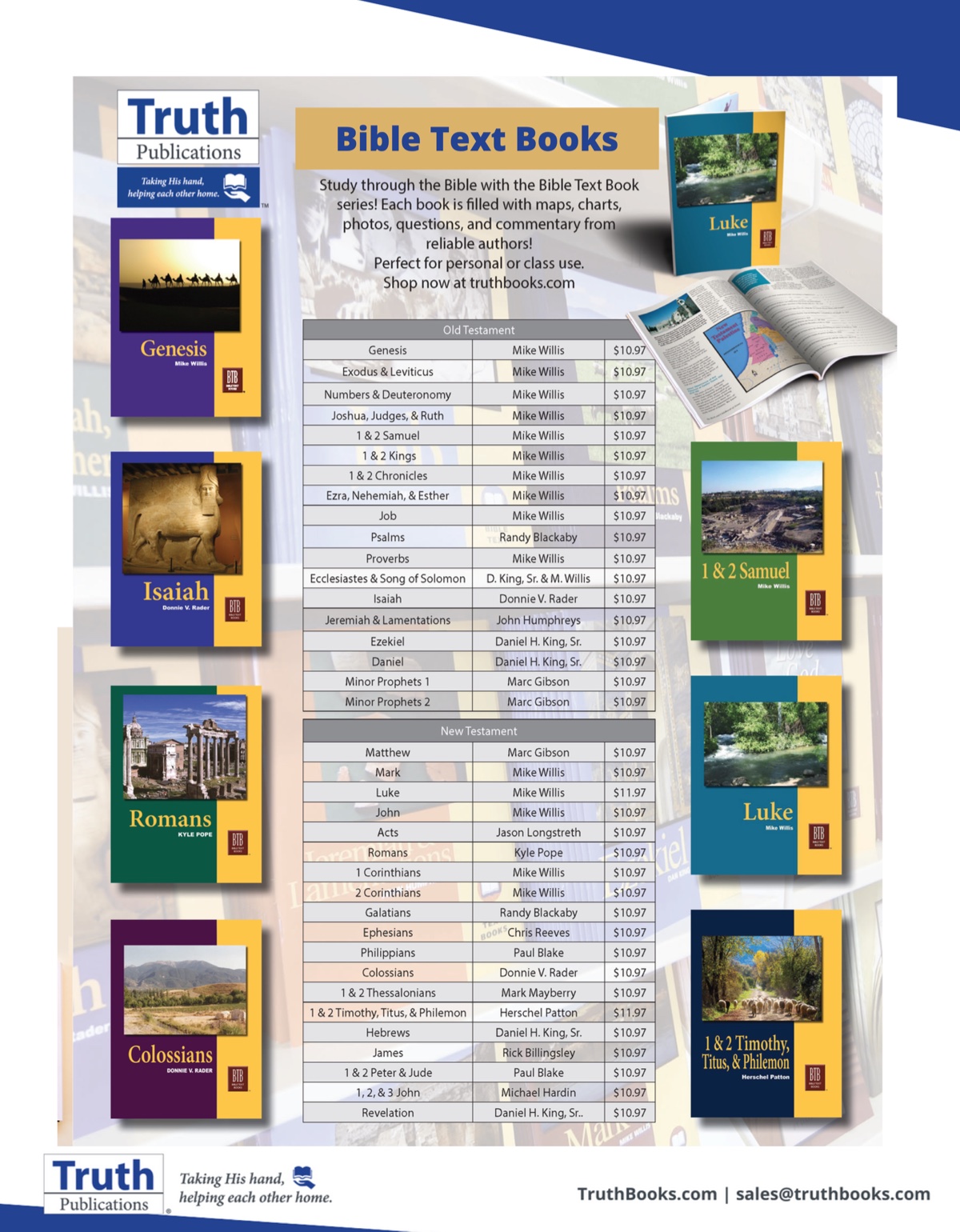
Note: Please send additions, corrections and updates here.
Updated: 6/1/2024
17312 Jones Rd, Athens, AL 35613
Sun. Bible Study 9:30 am | Sun. Worship: 10:20 am & 5:00 pm | Wed. Bible Study 7:00 pm
Evangelist: Jonathan Reeder | jonesroadchurch.org | 256-233-3160
514 W Market St, Athens, AL 35611
Sun. Bible Class 9:45 am | Sunday Worship 10:30 am & 5:00 pm | Wed. Bible Study 6:30 pm
Evangelist: David A. Cox | 256-232-1525 | marketstreet-church.com
24190 Wooley Springs Rd, Athens, AL 35613
Sun. Worship 9:30 am & 5:15 pm | Wed. Bible Class 7:00 pm
Evangelists: Bob Watson & Matt Taylor | mtzionchurchofchrist.org
3955 Pine Lane, Bessemer, AL 35022
Sun. Bible Study 9:10 am | Sun. Worship 10:00 am & 5:00 pm | Wed. Bible Class 7:00 pm
Evangelist: David Deason | 256-497-8127 205-425-2352 | Email | Website
2325 Old Columbiana Rd. (near I-65 & Hwy. 31)
Sun. Bible Study 9:00 am | Worship 10:00 am & 5:00 pm | Wed. Bible Study 7:00 pm
Evangelist: Kyle Pope | 205-822-0018 | Website
19965 Sandlin Rd. Elkmont, AL 35620
Sun. Worship 9:30 am & 3:00 pm | Bible Classes: 10:45 am | Wed. Bible Study 7:00 pm
Evangelist: Lance R. Taylor | 256-777-0990 | sandlinroadchurch.com
851 N. Pine St. (Located next to University campus)
Sun. Bible Study 9:30 am | Worship 10:15 am & 5:00 pm | Wed. Bible Study 7:00 pm
Evangelist: Kenny Moorer | 256-766-0403
601 Pineywood Road, Gardendale, AL, 35071 (Located 10 miles N of Birmingham)
Sun. Bible Study 9:30 am | Worship: 10:25 am & 5:00 pm | Wed. Bible Study: 7:00 pm
Evangelists: Andrew Smith & Jason Shackleford | 205-631-2131 | gardendalechurchofchrist.com
129 Hillcrest Rd, Mobile, AL 36608
Sun. Worship 9-9:30 am | Bible Study 9:30-10:30 am | Worship 10:30-11:30 am | Wed. Bible Study 7:00 pm
Evangelist: Ken Sils | 765-307-8048 | 251-342-4144 or 342-2041 | westmobilechurch.com
271 Highway 65 N, Conway, AR 72032
Sun. Bible Study 9:00 am | Worship 10:00 am & 5:00 pm | Wed. Bible Study 7:00 pm
Evangelist: Bruce Reeves | Bldg: 501-336-0052 | hwy65churchofchrist.org
2655 Prince St., Conway, AR 72034
Sun. Worship 9:00 pm | Bible class 9:50 am | Worship & Lord’s Supper: 10:40 am | Wed. Bible Class 7:00 pm
501-450-8640
2323 South 46th St.
Sun. Bible Study 9:45 am | Worship 10:30 am | Wed. Bible Study 7:00 pm
churchofchristfortsmith.com
407 Bella Vista Dr.
Sun. Bible Study 9:30 am | Worship 10:15 am & 5:00 pm | Wed. Bible Study 7:00 pm
Evangelist: Norman E. Sewell | 870-741-9104 or 870-741-5151 | cappsroad.org
514 Airport Rd.
Sun. Bible Study 10:00 am | Worship 11:00 pm & 6:00 pm | Wed. Bible Study 7:00 pm
Evangelist: Dick Blackford | 870-933-9134
145 N. Country Club Rd.
Sun. Bible Study 9:00 am | Worship 10:00 am & 6:00 pm | Wed. Bible Study 7:00 pm
Evangelist: Brenden Ashby | 520-326-3634 | churchofchristtucson.org
17903 Ibbetson Ave.
Sun. Bible Study 9:45 am | Worship 10:50 am & 6:00 pm | Wed. Bible Study 7:30 pm
562-866-5615 | roseavenue.org
3433 Studebaker Rd.
Sun. Bible Study 9:50 am | Worship 10:45 am & 5:30 pm | Wed. Bible Study 7:00 pm
JP Flores | 562-420-2363 or Mark Reeves | 562-377-1674 | justchristians.org
449 W. Allen Ave., Suite 120, San Dimas, CA 91773
Sun. Bible study 10:00 am | Worship 11:00 pm & 4:00 pm | Wed. Bible Study 7:30 pm
909-788-9978 | sandimaschurchofchrist.com
Meets at the Fort Collins Senior Center, 1200 Raintree Dr., Fort Collins, CO 80526
Sun. Bible Study 9:30 am | Worship 10:30 am
Evangelist: Richie Thetford | https://poudrevalleychurchofchrist.org
1414 Hawk Parkway, Unit C
Sun. Worship 11:00 pm | Bible Study 2 pm & 1:30 pm
970-249-8116 | sanjuanchurchofchrist.org
64 Casting Lake Rd.
Sun. Bible Study 9:00 am | Worship 10:00 am & 6:00 pm | Wed. Bible Study 7:00 pm
850-622-3817 | southwaltonchurchofchrist.com | Location change coming in 2022: 497 Church St Santa Rosa Beach, FL 32459
196 Ave C, Geneva, FL 32732
Sun. Bible Study 10:00 am | Worship 10:45 am
(689) 229-9888 | ChurchofChristatGeneva.com
6 Lane Dr., Mary Esther, FL 32569
Sun. Bible Study 9:30 am | Worship 10:30 am & 5:00 pm | Wed. Bible Study 7:00 pm
850-244-9222 | mecoc.org | Evangelist: Chris Simmons | chrissimmons6ten@gmail.com
3940 S. Bumby Ave.
Sun. Communion: 9:30 am | Bible Study 10:00 am | Praise & Preaching: 10:55 am (No pm Service) | Wed 7:00 pm
Evangelist: Ken Chapman
Office: 407-851-8031 | bumby.org | Note: Please call for current worship and Bible study times.
621 E. Wheeler Rd.
Sun. Bible Study 10:00 am | Worship 10:50 am & 6:00 pm | Wed. Bible Study 7:30 pm
Evangelist: Bobby Witherington | 813-684-1297 | seffnercoc.org
Route 116 (near Callaway Gardens)
Sun. Bible Study 10:00 am | Worship 11:00 pm & 6:00 pm | Wed. Bible Study 7:30 pm
Evangelist: Tommy W. Thomas | 706-628-5117 or 628-5229 | pmvchurch.com
370 N. Shilling | P.O. Box 158-83221
Sun. Bible Study 10:00 am | Worship 11:00 pm | Wed. Bible Study 7:30 pm
208-785-6168 or 681-1552
1310 NE 54th Ave, Des Moines, IA 50313
Sun. Bible Study 9:45 am | Worship 10:40 am | Wed. Bible Study 7:00 pm
515-262-6799 | www.dsmcoc.com
1236 63rd St. (Dir: 1.5 miles E of I355)
Sun. Bible Study 9:00 am | Worship 9:55 am & 6:00 pm | Wed. Bible Study 7:30 pm
Evangelist: Steve Wolfgang | 630-968-0760 | dgcoc.org
1100 S. 17th St.
Sun. Bible Study 9:30 am | Worship 10:30 am & 6:00 pm | Wed. Bible Study 7:00 pm
217-234-3702
16224 S Vincennes Ave.
Sun. Bible Study 9:00 am | Worship 10:00 am & 4 pm | Wed. Bible Study 7:00 pm
Evangelist: Donald Hawkins | 708-339-1008 | southeastchurchofchrist.com
Meeting @ Sleep Inn Suites and Motel | 1101 North Cummings Lane, Washington, IL 61571
Sun. Worship: 11:30 am | Bible Study: 12:30 pm | Wed. Bible Study 6:30 pm @ home of Tim Sundlie, call for address
Evangelist: Tim Sundlie | 608-796-9028 | sunbeads1@gmail.com | tazewellcococ.org
407 W Lewis and Clark Parkway, Clarksville, IN 47129
Sun. Bible Study 9:30 am | Worship 10:30 am & 6:00 pm | Wed. Bible Study 7:30 pm
Elders: Allen L. Morris (812) 989-5838 and Stephen W. Nale (502) 727-7559 or (812) 944-2305 | clarksvillechurchofchrist.org
Sun. Bible Study 9:30 am | Worship 10:30 am | Wed. 7:00 pm
765-676-6404 | jamestowncoc.com
15530 Herriman Blvd, 46060
Sun. Bible Study 10:00 am | Worship 11:00 am | Wed. Bible Study 7:00 pm
Evangelist: John Smith | preacherjohn54@att.net | 317-501-8035 or 317-501-0249 or 317-701-1204
400 Lafayette Ave. | P.O. Box 34
Sun. Bible Study 9:45 am | Worship 10:30 am & 6:00 pm | Wed. 7:00 pm
812-279-4332
(First St. & Karnes Ct.)
Sun. Bible Study 9:45 am | Worship 10:30 am & 5:00 pm | Wed. Bible Study 7:00 pm
Evangelist: Jeremy Goen | 812-967-3437 or 967-3520 | pekinchurchofchrist.com
302 S. Fourth Ave., Mulvane KS 67110 | Mail: PO Box 11
Sun. Bible Classes: 10:00 am | Worship 11:00 am | Wed. Bible Study 7:00 pm
Evangelist: Jay Horsley | 316-644-8503 | mulvanechurch.com | mulvanechurch@gmail.com
5600 SW 17th St, Topeka, KS 66604
Sun. Bible Study 9:15 am | Sun. Worship 10:30 am | Wed. Bible Study 7:00 pm
785-235-8687 or 785-273-7977 | 17thstreetchurchofchrist.org
1235 Williams St.
Sun. Worship 10:00 am | Bible Study After am Worship & 6:00 pm | Wed. Bible Study 7:00 pm
Evangelist: Jerid Gunter | 270-274-4451
8081 US Hwy 68-East, Benton, KY 42025
Sun. Bible Study 9:00 am | Worship 10:00 am | Wed. Bible Study 6:00 pm
270-354-9451 | fairdealingmarc@gmail.com | churchofchristatfairdealing.com | Conveniently located near Kenlake State Resort Park on the western shore of Kentucky Lake.
612 Broadway
Sun. Bible Study 9:45 am | Worship 10:30 am & 5:00 pm | Wed. Bible Study 6:30 pm
Evangelist: Charles J. White | 270-422-3878
107 Sunny Hill Dr.
Worship 9:30 am & 11:30 am | Bible Study 10:30 am | Wed. Bible Study 7:00 pm
Evangelist: Steve Lee | 270-789-1651 | sunnyhillcoc.com
103 N. Main St. | P.O. Box 233
Sun. Bible Study 10:00 am | Worship 10:45 am & 5:00 pm | Wed. Bible Study 7:00 pm
Evangelist: Jarrod Jacobs | 270-589-4167 or 270-274-3065
385 E. Lexington Ave.
Sun. Worship 10:00 am | Bible Study 11:15 am & 5:00 pm | Wed. Bible Study 7:00 pm
Evangelist: B.J. Sipe | 859-236-4204
18 Scott Drive, Florence, KY 41042
Sun. Worship 9:30 am & 5:30 pm | Sun. Bible Study 10:30 am | Wed. Bible Study 7:00 pm
859-371-2095 | nkcofc.com
1733 Bowling Green Rd.
Sun. Bible Study 9:00 am | Worship 10:00 am & 6:00 pm | Wed. Bible Study 7:00 pm
Evangelist: Steve Monts | 270-776-9393 | 31wchurchofchrist.com
733 Mill St. Leitchfield, KY 42754
Sun. Bible Study 9:30 am | Worship 10:00 am Communion 10:55 am | Wed. Bible Study 6:00 pm
270-230-6144 | millstreetchurchofchrist.org
1803 Dixie Garden Dr.
Sun. Bible Study 9:30 am | Worship 10:30 am & 6:00 pm | Wed. Bible Study 7:00 pm
Evangelist: Michael Hardin | michaelhardin1123@att.net | 502-937 2822
3221 East Hebron Lane
Sun. Bible Study 9:00 am | Worship 10:00 am & 5 pm | Wed. Bible Study 7:30 pm
Evangelist: Danny Linden & Ron Halbrook | 502-957-5115 or 502-955-1748 | hebronlanechurchofchrist.com
405 Orice Roth Rd. | 70737 (Baton Rouge area)
Sun. Bible Class 9:30 am | Worship 10:30 am & 6:00 pm | Wed. Bible Study 7:00 pm
Evangelist: R.J. Evans | rjevans@eatel.net | 225-622-4587
856 Brighton Ave. (Breakwater School) | Leave Maine Turnpike at Exit 48
Sun. Bible Study 10:00 am | Worship 11:00 pm w/ second service immediately following am worship | Mid-week Bible Study (please call for times & places)
207-839-3075 or 839-8409
3084 Creek Drive SE, #1-C, Kentwood, MI 49512 | P.O. Box 8446, Kentwood, Mich. 49508 (Grand Rapids area)
Sun. Worship 11:00 am | Sun. Bible Study 12:30 pm | Wed. Bible Study 7:00 pm
Evangelist: Joseph Gladwell | cedarsprings98@gmail.com
414 South Main Street
Sun. Bible Study 10:00 am | Worship 11:00 am | Wed. Bible Study 6:00 pm
Evangelist: Ryan Thomas | 810-837-1302 or 989-389-3226 | northernmichiganchurchofchrist.com
2820 Grandview Ave, Meridian, MS 39305
Sun. Bible Study 10:00 am | Sun. Worship 11:00 pm | Wed. 6:30 pm
Ron Cooper: 601-934-3675 | roncooper@bellsouth.net
Ricky Ethridge: 601-737-5778 | rickymarsha@bellsouth.net
2110 E State Line Rd. (Exit I-55) (Memphis area)
Sun. Bible Study 9:30 am | Worship 10:30 am | Wed. Bible Study 7:00 pm
Evangelist: James A. Brown | Bldg: 662-342-1132
805 Meadow Rd, Severn, MD 21144
Sun. Bible Study 10:00 am | Sun. Worship 11:00 pm & 6:00 pm | Wed. Bible Study 7:30 pm
Evangelist: Brandon Trout | 410-969-1420 or 410-551-6549 | swcofchrist.com
422 N Linton St., Blodgett, MO 63824
Sun. Worship 10:00 am | Wed. Bible Study 7:00 pm
Evangelist: Russell Rice | 573-475-0417
4000 SW Christiansen
Sun. Worship 9:00 pm | Bible Study 10:00 am | Worship 11:00 pm | Wed. Bible Study 7:00 pm
Evangelist: Brett Hogland | 816-228-9262
432 Eagle Rock Rd, Branson, MO 65616
Sun. Worship 9:30 am | Bible Study 10:30 am | Sun. Evening Worship 5:00 pm | Wed. Bible Study 6:00 pm
Evangelist: Philip North | 417-239-1036 | primrosenor@suddenink.net | eaglerockroadchurchofchrist.org
2912 Bloomfield Rd
Sun. Bible Study 9:15 am | Worship 10:00 am | Wed. Bible Study 7:00 pm
Seth McDonald & Jerry Lee Westbrook | 573-837-1001 | capecountycoc@gmail.com | capecountycoc.com
703 Harrison St.
Sun. Bible Study 10:00 am | Worship 11:00 pm & 6:00 pm | Wed. Bible Study 7:00 pm
Evangelist: Nolan Glover | 870-650-1648 | westsidechurchofchrist.us
685 Sidney St.
Sun. Bible Study 9:30 am | Worship 10:15 am & 5:00 pm | Wed. Bible Study 7:00 pm
Evangelist: Lynn Huggins | 573-265-8628
2727 County Line Rd.
Sun. Bible Study 9:00 am | Worship 9:50 am | Wed. Bible Study 7:00 pm
816-279-4737 | countylinechurchofchrist.com
Bell St & S 7th St. Beatrice, NE 68310
Sun. Bible Study 9:00 am | Worship 10:00 am & 6:30 pm
402-233-4102 or 402-228-3827 | churchofchrist7bell.org
5327 S. Tryon Street, Charlotte, NC 28217
Sun. Bible Study 9:30 am | Sun. Worship 10:30 am | Wed. Bible Study 7:30 pm
704-525-5655 | charlottechurchofchrist.org
3781 East Highway 27, Iron Station, NC 28080
Sun. Bible Study: 10:00 am | Sun. Worship 11:00 am & 6:00 pm | Wed. Bible Study 7:00 pm
Evangelist: Stan Adams | 704-748-9777 (Bldg) & 704-748-3747 (Jerry) | lincolnncchurch@gmail.com | lincolncoc.com
1031 Welford Dr, Beavercreek, OH 45434 (located a few miles E of Dayton)
Sun. Short Worship: 9:30 am | Bible Study 10:05 am | Sun. Worship 11:00 am | Wed. Bible Study Adults: 1:00 pm & All ages: 7:00 pm
Evangelist: Heath Rogers | 937-426-1422 | https://knollwoodchurch.org
13501 Lorain Ave, Cleveland, OH 44111
Sun. Bible Study 10:00 am | Worship 11:00 am | Wed. Bible Study 7:00 pm (Call)
Evangelist: John Dicus | (330) 723-0111 or (330) 590-0227 or (216) 322-9392 | https://www.lorainave-churchofchrist.com
28 W. Main St., Dayton, OH 45449
Sun. Worship 9:00 pm | Bible Study 9:30 am | Worship 10:25 am | Wed. Bible Study 7:00 pm
Evangelists: Michael Grushon 937-866-5162 or Alan Beck 937-469-3311 | wc-coc.org
6417 Franklin-Lebanon Rd. Franklin, OH 45005
Sun. Bible Study 10:00 am | Worship 10:45 am | Tues. Bible Study 6:30 pm
Evangelist: Josh Lee | 937-789-8055 or 937-746-1249 | franklin-church.org
1973 W Main St. New Lebanon, OH 45345
Sun. Bible Study 9:30 am | Worship 10:30 am, & 5:00 pm | Wed. Bible Study 7:00 pm
Evangelist: Bruce Hastings | 937-687-7150 or 937-478-0367
80 Sandhill Rd. Reno, OH 45773
Sun. Bible Study 9:30 am | Worship 10:30 am & 6:30 pm | Wed. Bible Study 7:00 pm
Evangelist: Mark Childers | 304-615-1091 | 740-374-9827 | mariettarenochurchofchrist.org
4110 Frey Rd., Northwood, OH 43619 (Toledo Area)
Sun. Worship 11:00 pm
Evangelist: Donald Jarabek | 419-893-3566 & 567-331-2269
33226 Children’s Home Rd., Pomeroy, OH 45769
Sun Worship 10:00 am & 5 pm | Bible Study 11:00 am | Wed. Bible Study 6:00 pm
Jack Hunt | wmhunt55@gmail.com | 740-645-4612 | Find us on Facebook!
2120 No. A St.
Sun. Bible Study 9:45 am | Worship 10:45 am & 5:30 pm | Wed. Bible Study 7:00 pm
Evangelist: Rob Lungstrum | 918-931-1362 or 918-423-3445
4110 NE 122nd Ave #101, Portland, OR 97230
Sun. Bible Study 10:00 am | Worship 11:00 am | Thur. Bible Study 7:00 pm
Evangelist: Samuel A. Matthews | 971-331-2838 | Bldg: 503-432-8697 | samatm@comcast.net | libertynwchurchofchrist.org
3702 E. Long St.
Sun. Bible Study 9:30 am | Worship 10:30 pm & 5:30 pm | Wed. Bible Study 7:30 pm
Bldg: 541-367-1599 | http://www.sweethomechurch.com | churchsweethome@yahoo.com
7222 Germantown Ave, Philadelphia, PA 19119
Sun. Bible Study 10:15 am | Sun. Worship: 11:15 am | Tues. Bible Study: 7:00 pm
Evangelist: James H. Baker, Jr. | 215-248-2026 | mtairychurchofchrist.org
3370 Broad St. Extension
Sun. Bible Study 9:30 am | Worship 10:30 am & 5:30 pm | Wed. Bible Study 7:00 pm
Evangelist: A.A. Granke, Jr. | 803-499-6023
4013 Edmund Hwy. (Hwy. 302), West Columbia, SC 29170
Sun. Bible Study 9:30 am | Sun. Worship 10:30 am & 5:00 pm | Wed. Bible Study 7:00 pm
Evangelist: Jerry Cleek | 219-313-1108 | Website
326 Powell Road, Collierville, TN 38017
Sun. Bible Study 9:00 am | Worship 10:00 am | Wed. Bible Study 7:00 pm
Evangelist: Doug Seaton | 901-854-6816 or 901-634-7840
417 Mooresville Pike | (Located .8 mi. N. of Hwy. 50/Jas. Campbell)
Sun. Bible Study 9:30 am | Worship 10:30 am & 3:30 pm | Wed. Bible Study 7:00 pm
931-388-5828 or 931-381-7898 | mooresvillepikecoc.com
4894 Hooper Hwy. | 37722 | (Located 15 mi. E. of Gatlinburg on Hwy. 321)
Sun. Bible Study 10am | Worship 11:00 pm & 5:00 pm | Wed. Bible Study 6:00 pm
Evangelist: Olie Williamson | 423-487-5540 or 423-748-0844
350 N Main St. Kingston Springs, TN 37082
Sun. Bible Study 9:00 am | Worship 10:00 am & 5:00 pm | Wed. Bible Study 7:00 pm
kscoc.com
108 Locust St.
Sun. Bible Study 9:30 am | Worship 10:30 am & 5:00 pm | Wed. Bible Study 7:00 pm
Evangelist: Daniel H. King, Sr. | 931-379-3704 or 931-964-3924 | lscoc.com
1110 Cason Lane
Sun. Bible Study 9:00 am | Worship 10:00 am & 5:00 pm | Wed. Bible Study 7:00 pm
Bldg: 615-896-0090 | casonlanechurch.org
2091 Pitts Ln, Murfreesboro, TN 37130 (located at the corner of Northfield Blvd and Pitts Lane)
Sun. Bible Study 9:30 am | Sun. Worship 10:30 am & 6:00 pm | Wed. Bible Study 7:00 pm
Evangelist: David Bunting | 615-893-1200 | GodsRedeemed.org
7471 Charlotte Pike
Sun. Bible Study 9:00 am | Worship 10:00 am & 5:00 pm | Wed. Bible Study 7:00 pm
Evangelist: Lee Wildman | 615-952-5458 or 615-356-7318
423 Donelson Pike
Sun. Bible Study 9:00 am | Worship 9:55 am & 5:00 pm | Wed. Bible Study 7:00 pm
Evangelist: Johnny Felker | 615-883-3118 | perryheights.faithweb.com
1414 W. Exchange Pkwy
Sun. Bible Study 9:00 am | Worship 10:00 am & 5:00 pm | Wed. Bible Study 7:00 pm
Evangelist: Jerry King 214-504-0443 or 972-727-5355 | twincreekscoc.com
E. Service Rd. off I-35, N. of Alvarado
Sun. Bible Study 10:00 am | Worship 11:00 pm & 6:00 pm | Wed. Bible Study 7:00 pm
817-295-7277 or 790-7253
605 E. Adoue St., Alvin, TX 77511
Sun. Bible Study 9:30 am | Worship 10:30 am & 5:00 pm | Wed. Bible Study 7:30 pm
Evangelist: Mark Mayberry | mark@ascoc.org | ascoc.org
701 North Pruett St.
Sun. Bible Study 9:45 am | Worship 10:40 am & 6:30 pm | Wed. Bible Study 7:00 pm
Bldg: 281-422-5926 | Weldon: 713-818-1321 | biblework.com
2919 Main St/FM 517 E., Dickinson, TX 77539
Sun. Bible Study 10:00 am | Sunday Worship 11:00 am & 6:00 pm | Wed. Bible Study 7:00 pm
713-298-6673
301 Robison St.
Sun. Bible Study 9:30 am | Worship 10:30 am & 6:00 pm | Wed. Bible Study 7:00 pm
Evangelist: Phillip Stuckey | 361-782-5506 or 361-782-2844 | ednachurchofchrist.org
3277 Pendleton Rd.
Sun. Bible Study 9:30 am | Worship 10:30 am & 5:00 pm | Wed. Bible Study 7:00 pm
915-855-1524
4303 18th St, Bacliff, TX 77518
Sun. Bible Study 9:00 am | Sun. Worship 10:00 am & 6:00 pm | Wed. Bible Study 7:00 pm
Evangelist: Richard Lay | bacliffchurchofchrist.org
6110 White Settlement Rd. 76114
Sun. Bible Study 9:30 am | Worship 10:30 am & 6:00 pm | Wed. Bible Study 7:30 pm
817-738-7269
Old Granbury Rd Church of Christ
4313 Old Granbury Rd, Granbury, TX 76049
Sun. Bible Study 9:30 am | Sun. Worship 10:30 am | Wed. Bible Study 7:00 pm
Evangelist: Chip Foster | 817-913-4209 or 817-279-3351 | oldgranburyrdchurch.org
2510 Fry Rd, Houston, TX 77084
Sun. Bible Study 9:45 am | Worship 10:30 am & 6:00 pm | Wed. Bible Study 7:00 pm
Evangelist: David Flatt | fryroad.org | church@fryroad.org
6111 Indiana Ave, Lubbock, TX 79413
Sun. Bible Study 10:00 am | Sun. Worship 9:00 am & 11:00 am | Wed. Bible Study 7:00 pm
806-795-3377 | lubbockchurch.com
1820 Mansfield Webb Rd, Mansfield, TX 76063
Sun. Bible Study 9:30 am | Sun. Worship: 10:20 am & 5:00 pm | Wed. Bible Study 5:30 pm.
Evangelist: Tom Roberts | 817-996-3926 | northsidecofc.us
612 S Shawnee St, Nacogdoches, TX 75961
Sun. Bible Study 9:45 am | Worship 10:30 am & 6:00 | Wed. Bible Study 6:00 pm
Minister: Van Dennis | 936-615-2950
3831 N.E. Stallings Dr.
Sun. Bible Study 9:30 am | Worship 10:20 am & 6:00 pm | Wed. Bible Study 7:00 pm
Evangelists: Randy Harshbarger & Jay Taylor
268 Utopia Ave. (Dir: I-37 S.E. Exit Pecan Valley)
Sun. Bible Study 9:30 am | Worship 10:30 am & 5:00 pm | Wed. Bible Study 7:00 pm
Evangelist: Jesse Garcia | 210-660 0409 | pecanvalleychurchofchrist.org
314 N. Tolbert
Sun. Bible Study 9:30 am | Worship 10:30 am & 5:00 pm | Wed. Bible Study 7:00 pm
Evangelist: Ronald Stringer
4404 Twin City Blvd.
Sun. Bible Study 9:30 am | Worship 10:30 am & 6:00 pm | Wed. Bible Study 7:30 pm
Evangelist: Jason Garcia (yourfriendjgar@gmail.com) or (leonvalleychurch@gmail.com) | 254-939-0682 | leonvalleychurch.org
2301 Franklin Dr., Texarkana, AR 71854
Sun. Bible Study 9:30 am | Worship 10:15 am | Wed. Bible Study 7:00 pm
870-772-0746 | txkchurch.com
340 E Warren St. (in Hewitt, a suburb of Waco)
Sun. Bible Class 9:30 am | Worship 10:30 am & 5:00 pm | Wed. Bible Study 7:00 pm
Evangelist: Marc Smith | 254-292-2482 or 652-7698
4500 Kell West Blvd, Wichita Falls, TX 76309
Sun. Bible Class 9:30 am | Worship 10:30 am & 3:30 pm | Wed. Bible Study 6:30 pm
Evangelist: Dennis L. Scroggins | 512-626- 5702 | dennis.scroggins@gmail.com | floralheightschurchofchrist.org
Please mail all correspondence to 1504 Hayes St, Wichita Falls, TX 76309
Meeting in the Capital City Grange Hall, 6612 Route 12 Berlin, VT 05602
Sun. Bible Study 9:00 am | Worship 10 am | Tues. Evening in Homes
Evangelist: Open | montpelierchurchofchrist.com | P.O. Box 70, Williamstown, VT 05679 | For questions or directions: Wade Holt 802-485-4311
217 Taxus St., Chesapeake, VA 23320
Sun. Bible Study 10:00 am | Worship 11:00 am & 5:00 pm | Wed. Bible Study 7:00 pm
Evangelist: Steven Matthews | 757-436-6900 | tidewaterchurchofchrist.com
8330 Doublecreek Court, Chesterfield, VA 23832 (Located in teh Metro Area; Courthouse Rd. at Double Creek Ct. 2.2 miles S of Rt. 288)
Sun. Bible Study 9:30 am | Worship 10:30 am & 5:00 pm | Wed. Bible Study 7:00 pm
Evangalist: Nathan L. Morrison | 804-778-4717 | courthousechurchofchrist.com
1208 W. 41st St.
Sun. Bible Study 10:00 am | Worship 11:00 pm & 6:00 pm | Wed. Bible Study 7:00 pm
Evangelist: Jack Bise, Jr.
2970 Old Leaksville Rd.
Sun. Bible Study 10:00 am | Worship 11:00 pm & 5:30 pm | Wed. Bible Study 7:00 pm
276-956-6049 | churchofchristatridgeway.com
929 Indiana Ave. NE (5 min. from Roanoke Convention Center)
Sun. 1st Lesson 9:15 am | Bible Study 10:00 am | Worship 11:00 pm | Wed. Bible Study 7:30 pm
Evangelist: Brent Paschall | 540-344-2755 | blueridgecoc.org
5652 Haden Rd.
Sun. Bible Study 10:00 am | Worship 11:00 am
Robert Mallard | 757-464-4574
1860 Mt Baker Hwy, Bellingham, WA 98226,
Sun. Bible Study 9:30 am | Worship 10:30 am & 6:00 pm | Wed. Bible Study 7:00 pm
Evangelist: Steven J. Wallace | 360-752-2692 or 806-787-5088 | mtbakercoc.com & revelationandcreation.com
Meeting at Gray Middle School, 6229 S. Tyler St., Tacoma, WA 98409
Note: Please see webpage for updated meeting location and times.
Sun. Bible Study 10:00 am | Worship 11:00 pm | Wed. Bible Study 7:00 pm (Online)
253-242-3098 | tacomachurch@gmail.com | tacomachurch.com
7 Old Davisson Run Rd, Clarksburg, WV 26301
Sun. Bible Study 9:30 am | Worship 10:20 am
304-622-5433 | wsccoc.com | info@wsccoc.com
1929 Morgantown Ave.
Sun. Bible Study 10:00 am | Worship 10:45 am & 6:00 pm | Wed. Bible Study 7:00 pm
304-363-8696 or 304-844-2437
210 Cedar Ave, Moundsville, WV 26041
Sun. Bible Study 9:30 am | Sun. Worship 10:30 am & 6:00 pm | Wed. Bible Study 7:00 pm
Evangelist: Tony Huntsman | 304-845-4940 | cedarsower.com