
(July, 2024 | No. 7 | Vol. 68)
7/1/2024
Truth Magazine (ISSN 1538-0793) is published once a month by Truth Publications, Inc., 220 S. Marion, Athens, AL 35611.
© 2024 Truth Publications, Inc. All Rights Reserved.
Manuscripts should be sent to the editor, Mark Mayberry, at mark@truthpublications.com. Link.
Subscriptions, renewals & other correspondence should be sent to: Truth Magazine, 220 S. Marion, Athens, AL 35611 or by emailing us at subscriptions@truthmagazine.com. Link.
Book orders should be sent to: CEI Bookstore | truthbooks.com | Street Address: 220 S. Marion, Athens, AL 35611 | Phone: (855) 492-6657 | Email: sales@truthbooks.com Link.
Online Website: truthmagazine.com
DISCLAIMER: Books in ads are screened, but an ad does not mean unqualified endorsement. All books should be tested by Scripture. We appreciate readers notifying us if they find some glaring fault in the ads.
By Mark Mayberry
Synopsis: Contrary to the widely held belief in innate human goodness, Sacred Scripture affirms that all have sinned and come short of the glory of God. As sinners, we stand in need of redemption. Apart from Jesus Christ, we have no hope.
“What about people who have never heard the gospel of Christ?” What about folks who live in remote regions of the world, like Pitcairn Island in the South Pacific (located 428 miles west of Polynesia with a population of fifty), or Longyearbyen, Norway (one of the northernmost towns on earth), or Kalga Village in India (a Himalayan village that is only accessible by foot, requiring a river crossing and a steep climb after the road ends)? Many such individuals might be counted as “good folks” who exhibit virtuous qualities—such as bravery, diligence, and loyalty? Are they lost?
Shifting our focus closer to home, we might ask, “What about our neighbors who may be trustworthy and helpful but are irreligious and uninterested in having a Bible study or attending worship services? Are they lost? How could a loving God condemn them to eternal torment simply because they are not faithful Christians?”
Merriam-Webster’s Collegiate Dictionary defines “noble savage” as a noun that refers to “a mythic conception of people belonging to non-European cultures as having innate natural simplicity and virtue uncorrupted by European civilization.”
The concept originated in the 16th century with Michel de Montaigne’s essay “Of Cannibals” (1580). Montaigne focused on the Tupinambá people of Brazil, whom he portrayed as living in harmony with nature. He extolled their simple communal lifestyle and commended their expressions of love and bravery. His essay describes their cannibalistic practices, not with revulsion, but as a symbolic expression of revenge against their enemies. Reflecting a spirit of moral equivalence, he condemned certain European practices as being even more barbaric.
This concept gained prominence in the seventeenth century, with John Dryden’s play “The Conquest of Granada” (1672) containing the first usage of the term “noble savage” in English literature. This two-part tragedy is set during the Spanish conquest of Granada in the late fifteenth century. It focuses on the fall of Muhammad XII of Granada. The central character, Almanzor, embodies the concept of the “noble savage.” He is a heroic Moorish warrior who fights against the Spanish forces but possesses qualities highly esteemed in European culture, such as bravery, honor, and nobility. This portrayal challenges the audience’s perceptions of cultural differences and the notion of “barbarism.”
In the eighteenth century, the noble savage became a stock character representing the innate goodness of primitive peoples, contrasted with the vices of European civilization. Although Jean-Jacques Rousseau never actually used the term “noble savage” in his writings, he argued that primitive peoples were pure and inherently peaceful. Uncorrupted by civilization, they allegedly lived in harmony with nature and were characterized by equality. [Sadly, Rousseau reflected the hypocritical depravity of many utopian thinkers. He fathered five children with his domestic partner, Thérèse Levasseur, but he abandoned all of them to a foundling hospital in Paris shortly after their births.]
Charles Dickens satirized and criticized the romanticization of the noble savage in his 1853 essay, calling it an “enormous superstition” and portraying many Native American tribes as cruel and uncivilized. The American archaeologist Lawrence H. Keeley, known for his work on prehistoric warfare, also challenged the concept. His 1996 book, War Before Civilization: The Myth of the Peaceful Savage, argues against the notion that prehistoric and tribal societies were largely peaceful. He presented compelling evidence that warfare and violence were common in primitive cultures. In summary, the noble savage concept is not a harmless myth; rather, it is a false stereotype that dehumanizes indigenous peoples by portraying them in a way which denies their moral accountability.
The only pristine paradise that man has known was the Garden of Eden. Sin entered the world while Adam and Eve dwelt in that perfect environment (Gen. 2:15-17; 3:1ff). Cain killed Abel his brother before the development of advanced civilizations (Gen. 4:1-8). While technological advances occurred the opening chapters of Genesis (Gen. 4:17-22), the critical difference between the lineage of Cain and Seth was spiritual, not societal. The contrast is not between an urban versus rural existence, or an advanced versus primitive society, but between those who delved ever more deeply into the quagmire of sin (Gen. 4:23-24; 6:5, 12-13) and those who called upon the name of the Lord and walked with God (Gen. 4:26; 5:22; 6:9).
Jonah, a prophet of God, was commissioned to warn Nineveh of the Lord’s impending judgment. During this period, Assyria represented a growing threat to the nation of Israel. As a Jewish patriot, Jonah wanted Nineveh to suffer calamity. However, if he travelled to Assyria and communicated God’s warning message, its inhabitants might repent and enjoy divine mercy. So, instead of following the fertile crescent to Mesopotamia, Jonah found a ship that was sailing westward. He fled in the opposite direction.
In some ways, the sailors of this Tarshish bound vessel could be called “noble savages.” When God sent a great storm that threatened to capsize the ship, the sailors had more compassion for Jonah than the prophet had for them. Their question, “How could you do this?” suggests they were incredulous at his callous disregard for their safety (Jonah 1:10). Despite Jonah’s suggestion that they cast him into the sea, they continued their desperate efforts to reach a safe harbor (Jonah 1:12–13).
At the beginning of this ordeal, the sailors are depicted as pagan idolaters: “the sailors became afraid and every man cried to his god” (Jonah 1:5). Yet, at the end, they called upon Yahweh, saying, “We earnestly pray, O LORD, do not let us perish on account of this man’s life and do not put innocent blood on us; for You, O LORD, have done as You have pleased” (Jonah 1:14). Although they may have previously been ignorant of the One True God, they came to recognize His omnipotence, omniscience, and omnipresence. In both a physical and spiritual sense, they needed a Savior! So also did Jonah.
The LORD appointed a great fish to swallow Jonah, and he was in the stomach of the fish for three days and three nights (Jonah 1:17). From the belly of the great fish, Jonah prayed to God. In summary, he said, “I was in distress, facing both physical and spiritual peril—having been cast into the deep, and having been expelled from God’s sight.” Jonah declared, “I was fainting. . . I remembered. . . I prayed.” He promised to offer a sacrifice to God with the voice of thanksgiving, and to pay what he had vowed. Accordingly, the LORD commanded the fish, and it vomited Jonah up onto the dry land (Jonah 2:10).
After travelling to Nineveh, Jonah fulfilled his mandate—proclaiming a message of impending judgment. The pagan city repented at the preaching of Jonah, and God relented of the calamity that He had determined to send upon the city.
Please note that the city was not spared because it was populated by noble savages. The Old Testament repeatedly denounced the ancient empire of Assyria and its capital city, Nineveh. While the book of Jonah records an instance of temporary repentance, the overall prophetic message is one of eventual judgment and complete destruction. Although God employed Assyria as the “rod of His anger” against wayward Israel, it would eventually be overthrown (Isa. 10:5-19; 14:24-27). The book of Nahum contains a strongly worded rebuke against Nineveh because of its arrogance, violence, and wickedness. In time, God destroyed this wicked city along with its idols.
In Romans 1-3, the inspired apostle Paul declares the universality of sin. Chapter 1 reveals the guilt of the Gentiles. Chapter 2 offers a similar indictment of the Jews. Chapter 3 drives the point home: all have sinned and come short of God’s glory (Rom. 3:23).
Consider the fallen state of the Gentiles (Rom. 1:18-32). Note their actions. They are without excuse. They knew God, but did not honor Him as God or give thanks. They became futile in their speculations, and their foolish heart was darkened. While professing themselves to be wise, they became fools. They exchanged the glory of the incorruptible God for an image in the form of corruptible man and of birds and four-footed animals and crawling creatures. They exchanged the truth of God for a lie, and worshiped and served the creature rather than the Creator, who is blessed forever. They did not see fit to acknowledge God any longer. Through gossip and slander, they abused the gift of speech. Hatred and insolence filled their hearts—being directed upward toward God and outwardly at their fellowman. They were disobedient to earthly parents and their heavenly Father. Notwithstanding their preening arrogance and boastfulness, they were without understanding. They were untrustworthy, unloving, and unmerciful. Despite knowing the ordinance of God, that those who practice such things are worthy of death, they not only did the same but also gave hearty approval to those who practiced them.
How did God respond? He gave them over in the lusts of their hearts to impurity, so that their bodies would be dishonored among them through sexual deviancy (Rom. 1:24). God gave them over to degrading passions (Rom. 1:26). He gave them over to a depraved mind, to do those things which are not proper (Rom. 1:28).
The Enlightenment argued that human nature is essentially good, while the Reformation promoted the Calvinistic concept of original sin. The biblical message is distinct from both. Holy Scripture affirms that man is made in the image of God—possessing a free will. We were not created as puppets, but as creatures of choice.
Sin entered the world when Adam and Eve disobeyed God’s commandment and ate of the forbidden fruit. We stand condemned, not because we inherit the guilt of Adam’s transgression, but because each one of us ratified Adam’s rebellion (Rom. 5:12-17). As noted earlier, all have sinned and come short of the glory of God (Rom. 3:23). Sin is a transgression of divine law: “Everyone who practices sin also practices lawlessness; and sin is lawlessness” (1 John 3:4).
We are not born sinners, but struggle with selfishness, which, in time, leads to sin. As Solomon reflects upon the realities of life, he makes two relevant statements in Ecclesiastes 7. First, he acknowledges the universality of sin: “Indeed, there is not a righteous man on earth who continually does good and who never sins” (Eccl. 7:20). Second, he lays the blame at our feet. Verse 29 affirms that “God made man upright,” but they sought out many “devices” (NASB) or “schemes” (ESV). According to Koehler, the Hebrew word chishshabon, derived from a root meaning “to think,” generally refers to (1) a plan or invention (Eccl. 7:29), or specifically, (2) an elaborately devised war machine, especially for shooting (2 Chron. 26:15) (HALOT, 361). Perhaps the NIV comes closest to communicating the underlying message: “This only have I found: God made mankind upright, but men have gone in search of many schemes” (Eccl. 7:29, NIV84).
Brother Melvin Curry offered the following observations on the flawed concept of humanity embraced modern intellectuals:
However, modernism had revealed its weaknesses almost from the beginning as the rise of Romanticism challenged Enlightenment rationalism. Industrial technocrats opted for the freedom of the noble savage, and selfish indulgence gave way to free love and the passion for possessions. But the violent competition intensified to the point that not even the fittest could survive. Nevertheless, observes Thomas Oden, “modernity still persists in fantasizing history as a progressive evolution toward ever-better forms wherein our most vexing ills will finally be cured through improved education, technology and moral suasion. This talk continues precisely while society is falling to pieces” (Curry, 197).
“Lost” is a significant biblical concept. Apart from the salvation made possible through Christ’s death on the cross, we are lost in sin and hopelessly undone (Eph. 2:1-3, 11-16). However, Jesus offers hope: He came to seek and save that which was lost (Matt. 18:11; Luke 19:10).
“Found” also communicates a contrasting meaning, especially in Luke 15, where the phrase, “I have found. . .” is employed by the shepherd who finds a lost sheep, the woman who finds a lost coin, and the father who is reunited with his prodigal son—and each calls upon friends and family to share in their joy (Luke 15:6, 9, 24, 32).
Instead of ignoring or excusing our wrongs, let us strive to be like Noah, Moses, David, Mary, and suffering New Testament saints—all of whom are described as having “found favor in the eyes of the Lord.” None were perfect. All were sinners. Yet, through God’s grace, they enjoyed forgiveness and fellowship with their heavenly Father. What about us? Will we avail ourselves of the forgiveness that Jesus Christ offers?
Curry Jr., Melvin D. “The Rise of Unbelief: Apologetics in Today’s World.” 1999 Florida College Lectures A Place to Stand. Edited by Ferrell Jenkins. Temple Terrace, FL: Florida Bookstore, 1999.
Koehler, Ludwig, et al. The Hebrew and Aramaic Lexicon of the Old Testament. Leiden: E.J. Brill, 1994–2000.
“Noble Savage.” Merriam-Webster’s Collegiate Dictionary. Springfield, MA: Merriam-Webster, 1996.




By Kyle Pope
Synopsis: American culture has a heritage born out of certain aspects of rebellion against authorities that had abused their power. If Christians are not careful, we can allow this mindset to influence the general attitudes that we hold toward authority in different areas of our lives.
One of the challenges that Christians face is determining what characteristics of the culture in which they find themselves in can co-exist with Christian character and which must be put away. If my culture teaches that being an American, a Canadian, a Mexican, or a German means that I violate the teachings of Jesus, it is more important that I am a Christian than it is that I am a good citizen. One characteristic of modern American culture that presents us with such a challenge has to do with attitudes towards authority. Some of this is a part of our heritage.
We honor the challenge our ancestors made to the authority of the king of England, which was formalized in the Declaration of Independence. We consider this a great moment in our history that shapes our national identity. This has taught us to be cautious in attitudes towards authority. In religion, unlike many Roman Catholic countries, the strong Protestant background of many US citizens has led to the rejection of the idea that there is a “pope” who holds religious authority over all churches. This independent spirit has even bled over to professing Catholics. In America, many Catholics may honor the pope but reject some of his teachings. Since the 1960s, there has been an increasing push to resist authority. The anti-war counterculture of that era taught that older people are “out of touch,” so it’s OK to speak to them with contempt and disrespect. From this thinking (directly or indirectly) has been born children that may curse their parents and teachers, teenagers that lie and defy instruction, leading to a generation of young adults who think nothing of breaking laws they don’t like so long as they don’t get caught! Since the pandemic and the social unrest of 2020, this has been magnified. Some have advocated absolute anarchy and imagined that the solution is not reform but the rejection of all authority.
As Christians, we must consider what the Bible teaches us about respect for authority. Should Christians demonstrate respect for authority? Must this respect only be shown when authorities demonstrate themselves to be worthy of respect? Should the attitudes of Christians differ from that of the surrounding culture?
Paul taught husbands and wives, “Wives, submit to your own husbands, as to the Lord. For the husband is head of the wife, as also Christ is head of the church; and He is the Savior of the body” (Eph. 5:22-23, NKJV). Parents and children are commanded, “Children, obey your parents in the Lord, for this is right. ‘Honor your father and mother,’ which is the first commandment with promise” (Eph. 6:1-2).
After talking about elders in the local congregation, Peter wrote, “Likewise you younger people, submit yourselves to your elders. Yes, all of you be submissive to one another, and be clothed with humility, for ‘God resists the proud, but gives grace to the humble’” (1 Pet. 5:5). In the church, God has set specific roles of leadership. Paul, through inspiration, wrote, “I do not permit a woman to teach or to have authority over a man, but to be in silence” (1 Tim. 2:12).
Paul wrote, “Let every soul be subject to the governing authorities. For there is no authority except from God, and the authorities that exist are appointed by God” (Rom. 13:1). Peter commanded, “Therefore submit yourselves to every ordinance of man for the Lord’s sake, whether to the king as supreme, or to governors, as to those who are sent by him for the punishment of evildoers and for the praise of those who do good” (1 Pet. 2:13-14).
Peter instructed servants, “Servants, be submissive to your masters with all fear, not only to the good and gentle but also to the harsh” (1 Pet. 2:18). This sets forth a general principle about those times when we find ourselves under the authority of those to whom it may be difficult to submit. This applies to other relationships as well. In our work, we can choose the job we work, but while employed by an employer, we must behave respectfully toward him. The same is true of the attitude of students towards their teachers. If Christians make their faith known but are irresponsible and rebellious employees or students, we bring shame to the God whom we claim to follow.
What should Christians do when authorities seek to compel them to violate God’s will? When the apostles faced this challenge in the early church, they boldly declared, “We ought to obey God rather than men” (Acts 5:29). That doesn’t sanction disobedience in order to change policies we don’t like. The Bible doesn’t teach children to break rules their parents make if they disagree with them. Students are not urged to talk back or disobey teachers who are too strict or boring (Rom. 13:2). We must do right regardless of the circumstance. Certainly, Christians can try to affect the beliefs and practices of those in authority. Peter taught wives married to unbelieving husbands the value of such influence (1 Pet. 3:1), but this is not accomplished by defiance and insubordination.
Paul told the Thessalonians, “We urge you, brethren, to recognize those who labor among you, and are over you in the Lord and admonish you, and to esteem them very highly in love for their work’s sake. Be at peace among yourselves” (1 Thess. 5:12-13). We should submit to them so that their work may be pleasant and not a burden. The Hebrew writer wrote, “Obey those who rule over you, and be submissive, for they watch out for your souls, as those who must give account. Let them do so with joy and not with grief, for that would be unprofitable for you” (Heb. 13:17). When Paul converted Onesimus, a slave who had run away from Philemon, in writing to his master, he did not command, “Set him free!” Nor did he tell Onesimus, “Don’t go back!” Instead, he taught these two Christians in different positions of submission and authority how to make each other’s tasks bearable. That’s what true Christians must do!
We don’t obey and respect authority because those over us are better, smarter, wiser, or more important than we are. In Acts, Paul came before the Roman governor Felix (Acts 24:10; 24-25). According to history, Felix was a wicked and ruthless man, but Paul treated him with the respect due his office. In Israelite history, after Saul’s sin, David was appointed by God to be the next king of Israel. Saul violently opposed David, but David maintained respect for his position as God’s anointed king (1 Sam. 24:3-7). As God in the flesh, Jesus was worthy of all respect and honor, but as a child, He faithfully yielded Himself in submission to the authority and guidance of His parents (Luke 2:51-52). Jesus’s parents were not flawless, but Jesus submitted to their authority, nevertheless.
A number of years ago, a friend who was in the military shared with me some of the frustration enlisted men often felt towards their officers. He was not an officer and handled communications. He told me of instances in which the officers that had authority over him might not understand as much as their underlings about the equipment or how it was used—but they were still in charge!
As Christians, there will be times when. . .
• We must respect our parents, even if we don’t understand the reasons for their instructions.
• We must use a respectful tone with our teachers, even if they are rude to us.
• We must be good employees even if our bosses don’t deserve our respect.
• We must be submissive to our husbands even when they disappoint us.
• We must submit to the elders, even when we disagree with judgments they make.
• We must honor our political officials “for the work’s sake.”
We do all these things, not because all the people in positions of authority are worthy of our respect, but because when we do so, we are displaying the honor and respect that we feel for God. As we serve others, we are serving God (Col. 3:22-25).
Kyle Pope preaches for the Vestavia church of Christ in Vestavia Hills, AL. He has written several books published by Truth Publications. Go here for more information. The church website is here. He can be reached here.



By Sherelyn Mayberry
Synopsis: The hymn originated from a Swedish poem titled “O Store Gud” written by Carl Boberg in 1885, inspired by a thunderstorm experience. Stuart K. Hine, a British missionary, translated and adapted the hymn into English in the 1940s, adding his own verses. “How Great Thou Art” is one of the most beloved Christian hymns. Its lyrics praise God’s greatness as evidenced in creation, His love in sending Jesus Christ, and His promise of eternal life for those who are faithful.
The powerful hymn, “How Great Thou Art” (PHSS #107), praises God for His awesome grandeur. This characteristic encompasses every fiber of His being. It is evidenced in His creation of the universe and the earth where we abide. His greatness in compassion is seen in His willingness to send His Son to die for lost mankind, so we can have a hope of salvation. When this hope is realized, the redeemed will proclaim His glory and majesty throughout eternity.
Living on this awe-inspiring planet, we constantly observe its beauty and complexity. How did it come into being? Was there a designer? If so, who was it? Since design demands a designer and complexity does not derive from chaos, the reasonable answer is found in an all powerful being—God. In Psalm 19, David says that the heavens declare the glory of God and the expanse shows His handiwork. Stars and planets orbit in consistent paths. The earth’s rotation creates day and night, with the sun appearing to rise from one end of the earth to the other, east to west. Nothing is hidden from the sun’s heat. God founded the earth, and the heavens are the work of His hands (Ps. 102:25). The figment “gods” of man’s imagination are powerless and perish as they are forgotten. However, the Lord is the true God, and it is He that made the earth by His power. He spoke the universe into existence and by His voice, there are tumultuous rains, clouds, lightning for the rain, and winds from His storehouses (Jer. 10:10-13; Ps. 96:5).
In the 38th chapter of Job, God responds to the suffering patriarch’s provocative accusations with a series of questions:
Where were you, Job, when I laid the foundation of the earth?
Who measured the heavens, set the orbits of planets, the rising and setting of the sun, and placed stars in the heavens?
Who set the seas with boundaries to come no farther with their crashing waves?
Who brings forth snow and hail from the storehouses? Who brings dew, rain, frost and ice?
Can you place the constellations in their proper place?
Can you provide food for all animals?
God did all this by His great power! Let the earth fear the Lord. Let the inhabitants stand in awe of Him. For He spoke, and it was done. He commanded, and it stood firm (Ps. 33:8-9).
God so loved the world that He gave His only begotten Son to be lifted up on the cross to bear our sins. Great compassion was shown by God through sending His Son to die. In believing in Him, one can have eternal life through practicing the truth in obedience and coming to Him (John 3:14-16, 21). It is hard to fathom that while we were yet sinners, God sent His Son to die for us. Nevertheless, we can be justified by His blood and saved from God’s wrath to come (Rom. 5:8-9). “In Him, we have redemption through His blood, the forgiveness of our trespasses, according to the riches of His grace” (Eph. 1:7). God showed grace for a debt all sinners owe—sending His Son into the world that we might live through Him, being the propitiation for our sins, paying our debt of sin (1 John 4:9-10).
Christ bore our sins in His body on the cross, so we might die to sin and live to righteousness (1 Pet. 2:24). Our old self of sin is crucified with Him, so having died, we are freed from sin (Rom 6:6-7). Those baptized into Christ are baptized into His death and then are raised to walk in newness of life (Rom. 6:3-4). Paul was told to “Arise and be baptized, and wash away your sins, calling on the name of the Lord” (Acts 22:16). By putting on the new man of true righteousness and holiness, and by being renewed in the spirit of our minds, we can proclaim to the world how great God is!
When Christ returns at the end of time, He will appear in the sky with power and glory. He will send forth His angels with a great trumpet to gather the elect from the earth (Matt.24:30-31). The Lord will descend with a shout and the dead in Christ will rise first, being victorious through Jesus Christ the Lord (1 Thess. 4:16-17; 1 Cor. 15:52, 57). Then, those who are the faithful, still living on the earth, will be caught up together with the faithful dead and meet the Lord in the air. Clothed with immortality, all the redeemed will be with the Lord for eternity proclaiming His greatness.
Having exalted Christ to His right hand, God gave Him the name of Jesus, at which every knee will bow. All will confess that Jesus Christ is Lord, to the glory of God the Father (Phil. 2:9-11). We will all stand before God in judgment, bow the knee to Him, and praise Him. Then we will give an account of ourselves to God (Rom. 14:10-11). Have we humbled ourselves in obedience under the mighty hand of God that He may exalt us on that great day (1 Pet. 5:6)? While Christ’s death on the cross is counted as foolishness to those who doubt and are perishing, yet for those who believe and avail themselves of His sacrifice, it is the power of God to salvation (1 Cor. 1:18).
In Revelation 11:17, the twenty-four elders—representative of the faithful from all ages—fell on their faces and worshipped God saying, “We give you thanks, O Lord God, the Almighty, who are and who were, because You have taken Your great power and have begun to reign.” David says, “Great is the Lord, and greatly to be praised; and His greatness is unsearchable. . . . Men shall speak of the might of your awesome acts, and I will tell of Your greatness” (Ps. 145:3, 6).
In 1 Chronicles 16:8-12, 23-29, a song of thanksgiving by David is recorded:
Oh, give thanks to the Lord! Call upon His name; Make known His deeds among the peoples! Sing to Him, sing psalms to Him; Talk of all His wondrous works! Glory in His holy name; Let the hearts of those rejoice who seek the Lord! Seek the Lord and His strength; Seek His face evermore! Remember His marvelous works which He has done, His wonders, and the judgments of His mouth.
Sing to the Lord, all the earth; Proclaim the good news of His salvation from day to day. Declare His glory among the nations, His wonders among all peoples.
For the Lord is great and greatly to be praised; He is also to be feared above all gods. For all the gods of the peoples are idols, but the Lord made the heavens. Honor and majesty are before Him; strength and gladness are in His place.
Give to the Lord, O families of the peoples, give to the Lord glory and strength. Give to the Lord the glory due His name; bring an offering and come before Him. Oh, worship the Lord in the beauty of holiness!
What does the Lord require from you, but to fear Him, walk in His ways, love Him, and serve Him with all your heart and soul? Keep the Lord’s commandments for your good. He is God of gods, Lord of lords, the great, mighty, and awesome God. He is your praise, and He is your God. Praise Him and be blessed (Deut. 10:12-13, 17, 21). After all is said and done, we humbly proclaim, “How Great Thou Art!”
Sherelyn is the wife of Mark Mayberry, who labors with the Adoue Street congregation in Alvin, TX, as an evangelist and elder. She labors as a homemaker and Bible class teacher. She and Mark have two sons- and daughters-in-law, and two grandchildren. She can be reached here.



By Bruce Reeves
Synopsis: This article draws on both Old and New Testament Scriptures to illustrate its points about repentance, purity, and God’s forgiveness. It outlines several components of true repentance: Recognition of sin—acknowledging and confessing one’s wrongdoings; Godly sorrow—a deep remorse for violating God’s will, not just regret for consequences; Reformation—changing one’s behavior as a result of repentance; coupled with Resolve—making a firm decision to turn away from sin and toward God.
Understanding repentance has always been essential to maintaining a healthy relationship with God. It is a principle we see in both Testaments (Rom. 15:4). The concept of ceremonial purity was well known among Israel and some of her neighbors. Numbers presents three main ritual states that affected worship: (1) holy, (2) pure, and (3) unclean. These states guided the Israelites in their offerings to the Lord. Ritual or ceremonial purity was not necessarily moral impurity. The sense of purity emphasized both the holiness of God and the blessing of participating in worship. Those with impurities such as a “defiling skin disease,” “discharge of any kind,” or “ceremonially uncleanness because of a dead body” were to be sent outside of the camp (Num. 5:1-4; 19:11-19; cf. Lev. 15:2-18, 25-30). Such individuals had to leave the camp out of respect for the Lord’s dwelling in Israel’s midst or else the consequences would be dire.
In Numbers 5:6-10, the writer emphasizes the need for moral purity. When a person committed “any of the sins of mankind, acting unfaithfully against the Lord” then he was considered “guilty” before Yahweh (Num. 5:6). To enjoy God’s forgiveness, the offender was to “confess” the sins he had committed and make “restitution” before the Lord, as well as with anyone that he had wronged (Num. 5:6-7). Understanding the role of godly sorrow, confession, reformation, and restoration in true repentance is essential if we are to share fellowship with our blessed King.
To be pure before Yahweh, we must first recognize or acknowledge our sin. To “confess” is to “say again” or “say the same thing,” i.e., to admit our wrong. Notice that the Lord’s instruction was for the sinner to “confess his sins which he has committed” (Num. 6:7). David highlighted the power of confession in writing, “How blessed is he whose transgression is forgiven. . . When I kept silent about my sin, my body wasted away through my groaning all day long. For day and night, your hand was heavy upon me; my vitality was drained away as with the fever heat of summer. I acknowledged my sin to You, and my iniquity, I did not hide; I said, ‘I will confess my transgressions to the Lord;’ and you forgave the guilt of my sin. Therefore, let everyone who is godly pray to You in a time when you can be found. . .” (Ps. 32:1-6). One of the most touching confessions we read in all the Bible occurs in Psalm 51, when David begs God for His mercy. He cries out, “Be gracious to me, O God, according to your lovingkindness; according to the greatness of your compassion blot out my transgressions. Wash me thoroughly from my iniquity and cleanse me from my sin. For I know my transgressions and my sin is ever before me” (vv. 1-2).
When Simon the Sorcerer attempted to buy the gift of the Holy Spirit, Peter told him that his “heart was not right before God,” and then commanded him to repent: “Therefore repent of this wickedness of yours, and pray the Lord that, if possible, the intention of your heart may be forgiven you” (Acts 8:21-22).
The apostle John reassures believers of God’s mercy if they acknowledge their sins and strive to turn away from them: “If we confess our sins, He is faithful and just to forgive us and to cleanse us from all unrighteousness.” When we have godly sorrow, we will not resist confessing our sins and entreating the Lord for His cleansing (1 John 1:9). Sincere confession turns one from self-justification to honest acknowledgement.
Although godly sorrow is not itself repentance, there can be no repentance without godly sorrow. Paul explains that one can be sorrowful about his sin, but still not manifest godly sorrow that leads to true repentance. Commending the Corinthians for having repented of their former sins and compromises, he said:
For though I caused you sorrow by my letter, I do not regret it; though I did regret it—for I see that the letter caused you sorrow, though only for a while—I now rejoice, not that you were made sorrowful, but that you were made sorrowful to the point of repentance; for you were made sorrowful according to the will of God, so that you might not suffer loss in anything through us. For the sorrow that is according to the will of God produces a repentance without regret, leading to salvation, but the sorrow of this world produces death. For behold what earnestness this very thing, this godly sorrow, has produced in you: what vindication of yourselves, what indignation, what fear, what longing, what zeal, what avenging of wrong! In everything you demonstrated yourselves to be innocent in the matter (2 Cor. 7:8-11).
Paul derived no pleasure from writing a letter of rebuke to the Corinthians. The apostle did not enjoy reprimanding the Corinthians, but he did rejoice in the outcome of doing so. His letter convicted their hearts and led them to godly sorrow, which then resulted in the brethren there truly repenting. He even says they had “demonstrated themselves to be innocent in the matter.” Godly sorrow produces repentance, i.e., a change of mind, and repentance brings forth the fruits of a changed life (Matt. 3:8). Godly sorrow is not merely being remorseful about the consequences of the sin, but it is an expression of deep sorrow for bringing pain to God and violating His will. In contrast, the “sorrow of this world” involves being sorry that we face the consequences of wrongdoing, but not being truly sorry for the sin itself—which may wrong our fellow man, but is ultimately against the Lord. Godly sorrow leads to repentance, life, and salvation, whereas the sorrow of this world leads to death. In Numbers 5, Yahweh called His people to confess their sins and genuinely turn back to His grace and truth.
Repentance itself is the change of our minds. The Thessalonians are described as having “turned to God from idols to serve the living and true God” (1 Thess. 1:9). Repentance is turning away from sin, but also turning to God. It is the full repudiation and renouncement of our rebellion against the Lord. When Peter was asked by those on Pentecost what they should do about the sin of having crucified Jesus, they were commanded to “repent and each of you be baptized in the name of Jesus Christ for the forgiveness of your sins. . .” (Acts 2:38). Later, Peter proclaimed to another audience, “Therefore repent and return, so that your sins may be wiped away, in order that times of refreshing may come from the presence of the Lord” (Acts 3:19). Even if we stop committing certain sins for a while, if we do not change our minds and resolve to turn to the Lord, we have not truly repented. The wise man wrote, “He who conceals his transgressions will not prosper, but he who confesses and forsakes them will find compassion” (Prov. 28:13). When the temple was dedicated, the Lord appeared to Solomon and said:
If I shut up the heavens so that there is no rain, or if I command the locust to devour the land, or if I send pestilence among My people, and My people who are called by My name humble themselves and pray and seek My face and turn from their wicked ways, then I will hear from heaven, will forgive their sin and will heal their land (2 Chron. 7:13-14).
Repentance and confession will not defend, justify, rationalize, evade, minimize, manipulate, or blame others. These are all signs that we have not repented with godly sorrow.
God has always associated restitution with repentance (Num. 5:7). We often use the term “repentance” to include the reformation of our conduct, and that is certainly understandable. There are texts that seem to use repentance in the same way because they are emphasizing the need for a change of behavior. However, it is interesting to note that several passages speak of those who “repent and turn.” When John the Baptist and Jesus were preparing people for the Messianic kingdom, they preached “repentance” (Matt. 3:2; 4:23). In proclaiming this message, they not only walked in the steps of the prophets but fulfilled Old Testament prophecy. Isaiah wrote, “The voice of one crying in the wilderness, make ready the way of the Lord, make his paths straight!” (Matt. 3:3). Those who received John’s baptism were “confessing their sins” (Matt. 3:6) and accepting “God’s purpose” (Luke 7:30). John told the Pharisees and Sadducees that they should “bear fruit in keeping with repentance.” Just as godly sorrow is not itself repentance, but leads us to repentance, so saving repentance produces the fruits of reformation. There is fruit that is “in keeping” or in harmony with repentance before God. The prophet Ezekiel told the people that they must change their hearts, “If a wicked man turns from all his sins which he has committed, keeps all My statutes, and does what is lawful and right, he shall surely live; he shall not die. None of the transgressions which he has committed shall be remembered against him; because of the righteousness which he has done, he shall live. . . Again, when a wicked man turns away from the wickedness which he committed, and does what is lawful and right, he preserves himself alive. Because he considers and turns away from all the transgressions which he committed, he shall surely live; he shall not die” (Ezek. 18:21-22, 27-28).
Thank God for His mercy and longsuffering, which provides us the opportunity to repent and embrace His grace. Peter explained why the Lord has not already returned, “The Lord is not slow about His promise, as some count slowness, but is patient toward you, not wishing for any to perish but for all to come to repentance” (2 Pet. 3:9). What a blessing to know that Jesus, our Holy King, is in our midst. Although we all have experienced the impurity of sin, Christ is our atoning sacrifice (Rom. 3:23-26). It is interesting that in Jesus’s ministry He touches lepers to heal them (Mark 1:40-45), a woman who had been suffering with hemorrhages for twelve years (Mark 5:25-34), and corpses to raise them to life (Mark 5:21-24, 35-43). Even though He is God in the flesh, His power is exercised against impurity itself. What in Numbers was considered as an extremely dangerous act, Jesus accomplished in cleansing the unclean, delivering the enslaved, and forgiving sinners. During Christ’s ministry, an unclean woman deliberately brought herself into physical contact with the Holy One of Israel. However, in Jesus, she found both physical and spiritual wholeness. She had been an outsider, alienated from God and His people—but was now brought in through the touch of Jesus.
God’s hatred for (and incompatibility with) impurity has not changed (1 John 1:5). Rather, in His desire to have fellowship with His people, He has made a way through Jesus Christ for us to be in His presence (Heb. 2:17-18; 4:14-16; 10:14, 22-23; 12:18-29). This gives us confidence to come boldly before the Lord Jesus Christ—who serves as our High Priest and Advocate (1 John 2:1-2). No defilement is too difficult for Him to cleanse, no sin too corruptible for Him to forgive. It remains for us to come to Him, seeking His touch, and turning from a life of corruption through faith and repentance.
Bruce Reeves has labored with the Highway 65 church of Christ in Conway, AR, since 2000. He and his wife, Rachel, have one child. The church website is here. He can be reached here.



By Shane Carrington
Synopsis: Jesus walked in the area of His hometown, teaching us many important lessons about worship and life along the way.
Jesus traveled to many places, from the areas adjacent to His home at Nazareth of Galilee to Jerusalem. As He trod that rough terrain, He encountered many people in a variety of circumstances. Regardless of their plight, Jesus brought aid to their doorstep. Some readily accepted His help, while others took either a more distant or hardened stance. With whichever attitude they responded, He provided for them the most wondrous opportunity of their lifetime: an audience with the Son of God, who is also their Redeemer and King.
In Scripture, the term “walk” often refers to one’s journey of life: the manner in which people choose to conduct themselves, whether following the path God prescribed or on their own misguided path.
If we say that we have fellowship with Him and yet walk in the darkness, we lie and do not practice the truth; but if we walk in the Light as He Himself is in the Light, we have fellowship with one another, and the blood of Jesus His Son cleanses us from all sin (1 John 1:6-7).
Following Jesus on His personal journeys allows us to learn many things. How did He walk? Where did He go, and why? Whom did He encounter, and how did He interact with them? How can my “walk” improve due to following Him and learning how He did these things? Those questions will be the focus of this series. By walking with Jesus, we will improve our own walk.
For the first leg of our journey, we will walk with Jesus in His hometown of Nazareth. After Jesus fasted in the wilderness for forty days and was tempted by Satan, He returned home “in the power of the Spirit” (Luke 4:14). Soon He journeyed to His hometown (Nazareth), teaching along the way (Luke 4:15-16). During this portion of His life, Jesus imparted many impactful lessons.
He came to Nazareth, where He had been brought up; and as was His custom, He entered the synagogue on the Sabbath. . . (Luke 4:16).
Jesus was a first-century Jew, and He worshipped like them. The form of worship would change once the New Covenant was inaugurated, but several principles are found in both covenants.
Worship is a habit or practice. It is something God’s people become “accustomed” to doing. Jesus set a wonderful example of consistency in this passage in assembling for worship. If He faithfully assembled, so should we. Early Christians followed His lead in this.
They were continually devoting themselves to the apostles’ teaching and to fellowship, to the breaking of bread and to prayer (Acts 2:42).
Let us consider how to stimulate one another to love and good deeds, not forsaking our own assembling together, as is the habit of some, but encouraging one another; and all the more as you see the day drawing near (Heb. 10:24-25).
Worshipping together draws us nearer to God and one another, and it equips us for service. Jesus exemplified this, and as His disciples, we must walk in His steps!
In assemblies, Jesus did more than merely stand by. He participated.
. . .as was His custom, He entered the synagogue on the Sabbath, and stood up to read (Luke 4:16).
He took the Isaiah scroll, read, and commented on the passage—declaring that He had come to fulfill what the prophet wrote (Luke 4:16-21).
For us, whether leading or being led, we must participate in assemblies like Jesus. This allows us to “Let the word of Christ richly dwell within you, with all wisdom” (Col. 3:16), or, as the parallel passage says, “be filled with the Spirit” (Eph. 5:18-19). This makes us a people who are “teaching and admonishing one another with psalms and hymns and spiritual songs” (Col. 3:16). Again, as the parallel says, this equips us to be people who are “speaking to one another in psalms and hymns and spiritual songs” (Eph. 5:19). This prepares us to sing “with thankfulness [grace, NKJV] in your hearts to God” (Col. 3:16), or, as the parallel reads, to be a people who are “singing and making melody with your heart to the Lord” (Eph. 5:19).
Participating in such assemblies ingrains the word of God more deeply into our being, so we can edify one another while praising and honoring our Father. Jesus exemplified a proper spirit in worship, and by following Him, we can also worship faithfully.
The portion from Isaiah that Jesus read in the synagogue focused on the gospel Jesus brought to the world:
The Spirit of the Lord is upon Me, because He anointed Me to preach the gospel to the poor. He has sent Me to proclaim release to the captives, and recovery of sight to the blind, to set free those who are oppressed, to proclaim the favorable year of the Lord (Luke 4:18-19; cf. Isa. 61:1-2).
Today, our assemblies should also reflect the change in our relationship with God that Jesus makes available to the world. The gospel is a message of repentance (Luke 13:3), which brings participation in God’s grace. The new life and manner of living that Jesus brings blesses us and others, both now and eternally. Jesus showed us this gospel-centered approach of assemblies, and we should follow His example.
In Isaiah’s description of those who need the gospel, the list included the poor, captives, the blind, and the oppressed (Luke 4:18-21). By journeying with Jesus and hearing Him speak, we learn that He came for the outcasts, the unfortunate, and the helpless. That is who we are! The hope Jesus came to instill is for people who are broken and see their need for spiritual healing.
Wretched man that I am! Who will set me free from the body of this death? Thanks be to God through Jesus Christ our Lord! (Rom. 7:24).
If we see ourselves for what we are, and submit to God’s grace, He can mold us into His image (Rom. 5:6-11). What a gift God has given; what a blessing we receive!
As we journey with Jesus, our preconceived conclusions sometimes create confusion. That was certainly the case when Jesus did His work on earth (read Luke 4:22-30). The gospel often declares unexpected things in unexpected ways, and it rarely fits our predetermined ideas. What Jesus taught was often challenging to both minds and hearts, but for people willing to listen well, He declared a rich storehouse of teaching that would transform many people in a godly way. Our assemblies should focus on clearly explained teaching designed to challenge and illuminate the hearers. Trust Jesus and listen to the message of God that He proclaimed. Let Him win you over, and He will change you and your destiny for the better. Walk with Him by following the path He trod as revealed in the gospels. Listen to and follow His example and teaching. Jesus walked in the areas surrounding His hometown, illuminating the way as He went. May we also shine His light in the communities in which we live.
Shane Carrington has labored with the Southside church of Christ in Sulphur Springs, TX, since 1999. He has two children. The church website is here. He can be reached here.



Caption: View of of the Jezreel Valley from the Mount Precipice, located near Nazareth in Lower Galilee of Israel.
By Bobby L. Graham
In your sermon about the Ethiopian nobleman seeking the truth, I noticed that you used Acts 17:11 in relation to Acts 8:31. In Acts 17:11, you emphasized the individual’s need to seek the truth for himself, but in Acts 8:31, you emphasized one’s humble dependence on another for help in studying the Scriptures. It seems to me that these two ideas conflict with each other. How do you explain the conflict?
I always appreciate good listeners when I preach. It is evident here from the question that the listener was paying attention and thinking seriously about the lesson.
While there might superficially seem to be a conflict between these two passages in Acts, it can be easily and quickly resolved when we understand that different people, and sometimes the same person, need to use both approaches in searching for truth. In Acts 17, the Bereans were commended for their noble/fair-minded attitude when they received the word Paul preached with all readiness of mind and searched the Scriptures daily to see whether his message was true. In Acts 8, the Ethiopian requested help that he might understand whom the prophet spoke about in the Isaiah 53 prophecy, thereby indicating his humility when he sought Philip’s help.
Basically, what I was teaching in the lesson was that each individual is responsible to God to search for truth, not depending upon others to study for him. If that person also realizes his need for help, he should humbly seek that help from someone able to help.
The Bible, in reality, teaches both principles. In Galatians 6, Paul referred to both principles. He said (1) each person should bear his own burden/carry his own weight/study for himself (6:4-5) and (2) we should bear each other’s burdens/render aid to one needing it (6:2-3). Because the Holy Spirit encourages both practices, we ought not to create a conflict where there is none! Even simple logic does not demand that the first principle of individual responsibility excludes the second one of accepting help from another person.
In the Parable of the Sower, Jesus showed that (1) each individual is responsible for properly receiving the word into his heart, and (2) a failure to do so ends in spiritual disaster (Matt. 13:3-9). The Lord also charged His disciples to teach all people, indicating that some is in order so that they might believe and obey the gospel (Matt. 28:19-20; Mark 16:15-16; Luke 24:46-47). Every example of conversion in the book of Acts demonstrates these two principles—the individual’s willingness to hear and examine truth for himself, and his willingness to accept spiritual help from another.
Let us be careful not to over-scrutinize what the Bible says and avoid creating conflicts between passages where there is no conflict. The Bible is always right, and man can be right only in accord with its teachings (Rom. 3:4).
Bobby L. Graham actively participates in fill-in preaching, Belize trips, teaching an hour each day at Athens Bible School, and in gospel meeting work. He and his wife, Karen, have three children. He can be reached here.




By Leon Mauldin
Synopsis: Ostia Antica was the harbor city of ancient Rome, located at the mouth of the Tiber River. It served as Rome’s major seaport for several centuries, playing a crucial role in the city’s trade and commerce. Today, Ostia Antica is a popular tourist destination, offering visitors a glimpse into the daily life of ancient Romans, and also providing valuable insights into ancient Roman urban life and architecture.
Ostia was the seaport for the city of Rome. Like many of the great cities in ancient times (i.e., Ephesus, Antioch, etc.), Rome was not on the coast but upriver some twenty-three miles from Ostia. It was into this harbor that the riches of the world poured in as tribute to Imperial Rome.
Over time, the port silted up, but in antiquity, it was of vital importance for Rome. The Lexham Bible Dictionary has the following information:
OSTIA: An ancient port of Rome located at the mouth of the Tiber River. A vital strategic and commercial site of the Roman Empire.
Location and Biblical Relevance
Ostia was the nearest port that granted access to Rome for seafaring travelers of the New Testament world. Its name is derived from the Latin term ostium, meaning “doorway” or “entryway.” The name encapsulates the importance of the site, for it served as the maritime gateway to the capital of the Roman Empire.
The city and port of Ostia were located twenty-two miles downstream from Rome at the mouth of the Tiber River. It was associated with sea trade, which brought in wares and cultural goods from throughout the Mediterranean.
Ostia was also an early base for Roman naval activities. In its first centuries, the city was hardly more than a Roman army camp populated by citizen colonists (Salmon, Roman Colonization, 26-27). Ostia was not an excellent harbor; its anchorage was exposed, leaving it vulnerable to storms and pirates. These problems would not be solved until the first and second centuries AD, when the rival port of Portus was constructed.
Brand, Steele. “Ostia.” in The Lexham Bible Dictionary. Edited by John D. Barry, et al. Bellingham, WA: Lexham Press, 2016.
As one first enters the archaeological area, there is a statue of Minerva-Victory.

The theater was constructed at the directive of Caesar Augustus and was enlarged by Commodus and restored by Septimius Severus.

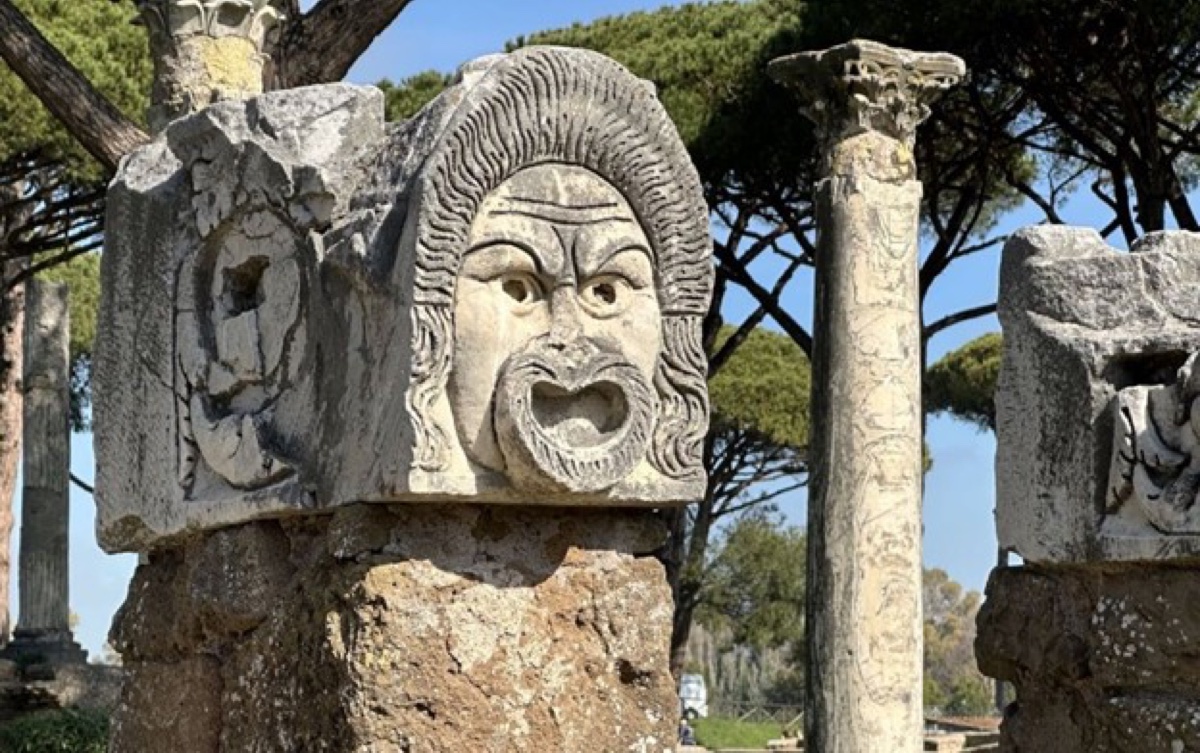
There are some typical masks on the site behind the stage area.
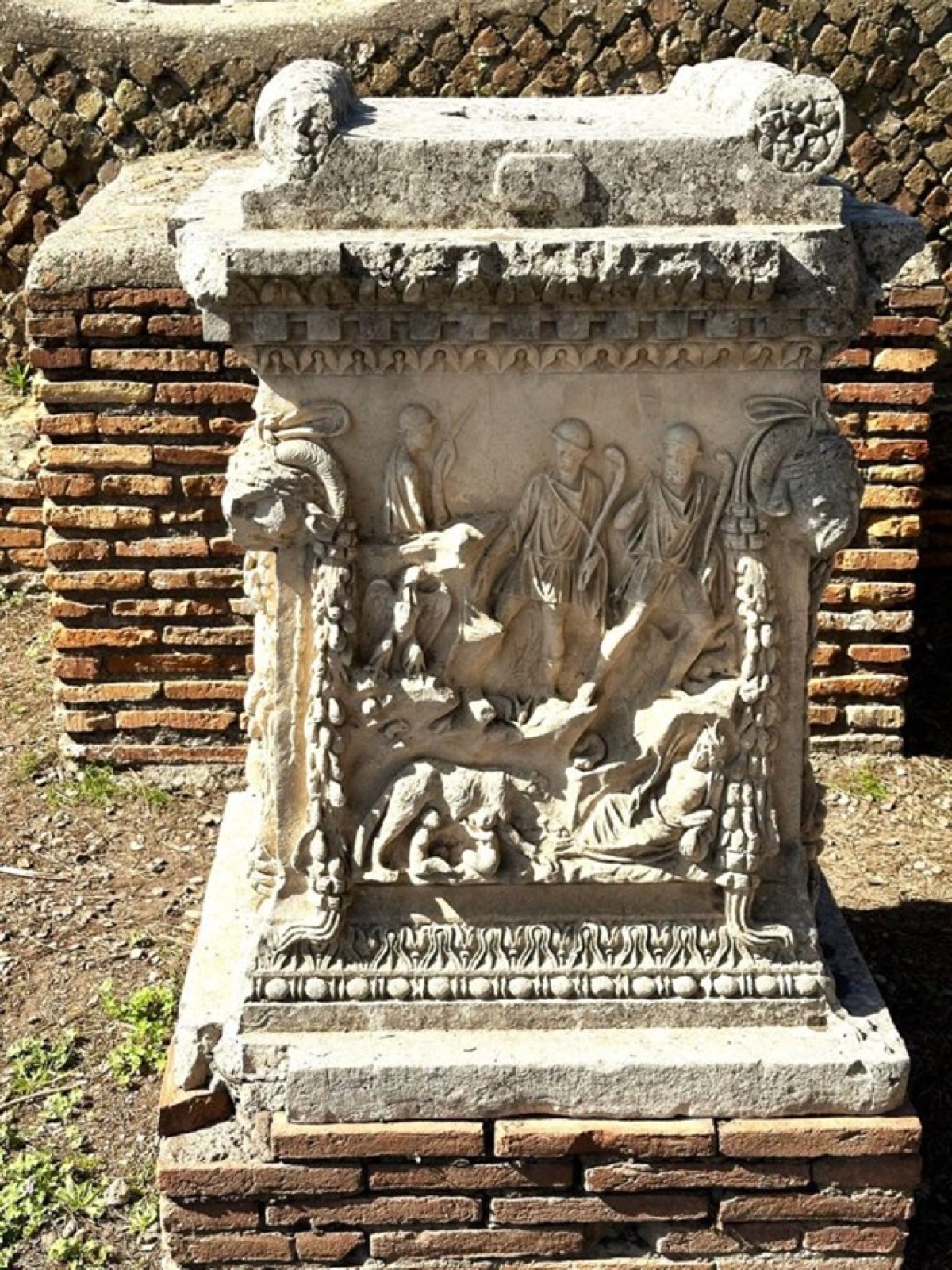
We also saw an altar dedicated to Mars and Venus with the representation of the Tiber river god, the she-wolf and the twins Romulus and Remus.
At the necropolis, there are numerous sepulchral buildings, including the Tomb of the Little Arches.

Ostia Antica, overview of the archaeological park with the excavation areas, the Roman necropolis and the ruins.

Ostia Antica, overview of the archaeological park with the excavation areas, the Roman necropolis and the ruins.

Leon Mauldin has worked with the Hanceville church of Christ in Hanceville, AL, for over thirty-four years. He and his wife, Linda, have three children and nine grandchildren (one deceased). The church website is here. His personal blog is here and info about his Bible Land Tours is here. He can be reached here.


By Chris Reeves
Synopsis: God has a special plan to save the world from sin, and godly couples today can serve a special place in that plan. Like Joseph and Mary, when couples learn to sacrifice, serve, and suffer for the Lord’s plan, great things will happen.
God’s plan from the beginning of time, and before, included providing a Savior for the world—Jesus Christ. He chose Mary to be the mother of Jesus. The Lord’s plan to save the world involved a married couple, Joseph and Mary. Think about the weight of that responsibility that was laid on the shoulders of these two. Consider how Joseph and Mary would have thought and lived each day knowing that Mary was the actual “mother of my Lord” (Luke 1:43)! The story of Joseph and Mary is one of trust and sacrifice. Both had to trust God’s plan (and also each other), and they both had to sacrifice for God’s plan.
We live in a world where many people are “lovers of self” (2 Tim. 3:2). Many people learn from an early age to be selfish and not to serve others. Yet, Christians can, and should, be different. They can sacrifice for the Lord and serve others for good. Married couples can learn from Joseph and Mary how to be the Lord’s servant’s and carry out His plan for the world today.
Consider some things that Joseph and Mary sacrificed to be the parents of Jesus and help the Lord fulfill His plan to save the world. First, Joseph sacrificed when he accepted the truth that Mary was pregnant and the baby she carried was not his child. He had to trust the Lord and Mary about what he was being told. The two were betrothed to each other, and Mary was a virgin (Luke 1:27, 34), but the child would be by the Holy Spirit, not Joseph (Matt. 1:18-20) [Note #1].
The news that Mary was pregnant supernaturally must have been a difficult thing for Joseph to grasp. Both Joseph and Mary had to sacrifice and forego the normal conception process for the Lord’s plan. They also sacrificed naming their son; the angel of the Lord would do that (see also Luke 2:21).
Second, Joseph sacrificed when he accepted the truth that Mary’s son, Jesus, would save the world. The angel told Joseph:
And she shall bring forth a son; and thou shalt call His name Jesus; for it is He that shall save His people from their sins. Now all this is come to pass, that it might be fulfilled which was spoken by the Lord through the prophet, saying, “Behold, the virgin shall be with child, and shall bring forth a Son, and they shall call His name Immanuel;” which is, being interpreted, God with us (Matt. 1:21-23) [Note #2].
Joseph heard that Jesus would save His people from their sins and that Jesus was the fulfillment of a 700-year-old prophecy from Isaiah 7:14. What did Joseph do with all of this new and shocking information? He did not resist. He did not break down or fall apart. He complied and sacrificed and he would continue to do so all the way through Jesus’s birth and childhood [Note #3]. Matthew records:
And Joseph arose from his sleep, and did as the angel of the Lord commanded him, and took unto him his wife; and knew her not till she had brought forth a son: and he called His name Jesus (Matt. 1:24-25).
Third, Joseph and Mary sacrificed when it came time for Mary to give birth. When Jesus was born, Mary “wrapped Him in swaddling clothes, and laid Him in a manger, because there was no room for them in the inn” (Luke 2:7, see also 2:16).
Fourth, Joseph and Mary sacrificed when they were told to leave Bethlehem. After the visit of the wise men who came and worshipped Jesus (Matt. 2:1-12), Herod sought to kill Jesus, and Joseph was told by the angel of the Lord in a dream to leave and flee to Egypt about 200 miles south. Joseph did what he was told (Matt. 2:13-15).
Fifth, Joseph and Mary sacrificed again when they were told to return to Israel. After the death of many male children in, and around, Bethlehem by Herod (Matt. 2:16-18), Joseph was told again by an angel of the Lord in a dream to return to the land of Israel. Once again, he did what he was told (Matt. 2:19-21).
Lastly, Joseph and Mary sacrificed when they moved to Nazareth. Joseph was “warned of God in a dream” and he moved to Nazareth in Galilee where Jesus would grow up (Matt. 2:22-23). Joseph was not an important political figure, religious leader, or military officer. He was just a humble carpenter (Matt. 13:55; Mark 6:3) and as such, he knew how to work hard and sacrifice. This is what he and Mary did to fulfill the Lord’s plan.
In Luke 1, the angel Gabriel told Mary that her son would be a ruler over a kingdom and that He would come about by the power of the Holy Spirit (Luke 1:30-35). Mary responded: “Behold, the handmaid of the Lord; be it unto me according to thy word” (Luke 1:38). Notice that she described herself as the “handmaid” of the Lord. Later, in her well-known “Magnificat” she described herself again as the Lord’s “handmaid” (Luke 1:48).
The English word “handmaid” here comes from the Greek word doulē meaning a female slave or bondmaid. Yes, Mary was “highly favored” and the Lord was with her (Luke 1:28, 30). Although she would be honored as the “mother of my Lord” (Luke 1:43), Mary viewed herself as the Lord’s slave in carrying out His plan to save mankind. She believed her Master’s word (Luke 1:38, 45), and obeyed His will as a female slave would. She trusted the Lord with the consequences.
After Jesus was born and circumcised (Luke 2:1-21), it was time for Joseph and Mary to present their son to the Lord in Jerusalem. While in the temple, Simeon said to Mary, “Behold, this child is set for the falling and the rising of many in Israel; and for a sign which is spoken against; yea and a sword shall pierce through thine own soul; that thoughts out of many hearts may be revealed” (Luke 2:34-35). Simeon prophesied that Mary would be “pierced” as with a sword passing through her soul. That is, she would suffer grief, anguish, pain, and sorrow in her soul over the mistreatment, rejection, and eventual death of her own son, Jesus [Note #4]. She and her husband had already sacrificed for the Lord’s plan and would continue to do so. She would serve the Lord’s plan like a female slave. Now, she would also have to suffer greatly in her soul. What a virtuous woman, wife, and mother. . . and all for God’s plan!
Married couples today should view their marriage as a relationship in which they can sacrifice for the Lord’s plan. Yes, marriage is a beautiful relationship for a husband and wife and it is meant to be a joyful thing for them both (Eccl. 9:9), but we must remember that the Lord is a part of the marriage as well. Married couples would do well to ask themselves, “What can we sacrifice to carry out the Lord’s plan for all people today? What difficulties are we willing to face in order to achieve this end?”
All Christians in general are to be “servants of Christ” (Eph. 6:6; Col. 4:12; 2 Tim. 2:24; etc.). However, married couples in particular should view their life together as the Lord’s servants. They should work together in their marriage to serve the Lord’s plan for the church and for the world. Married couples can serve the Lord by teaching others, being fellow-workers, and being hospitable like Priscilla and Aquila (Acts 18:26; Rom. 16:3; 1 Cor. 16:19).
A great challenge for today with our married couples is the challenge of service. Couples, will God be able to use you to serve His plan today? Can He use you to share the gospel with the lost? Can He use you to edify the church through Bible teaching? Can He use you to be benevolent to needy saints and even those outside of Christ? Can He use you to raise children to become Christians? Can He use you to help each other go to heaven? Can He use you to open your home and share your blessings with others? Couples, be willing to sacrifice for the Lord, serve the Lord, and suffer for the Lord, just like Joseph and Mary. You’ll be glad you did.
While it is easy as newlyweds to be focused on yourselves, let me encourage you to remember that the Lord is a part of your marriage too and He wants you to be serving His purposes. Start a good habit early in your marriage to spend some time each week serving the Lord and doing His work.
Those of you who have been married a few years may need to reassess your schedules and priorities. It is easy in the midlife of marriage to become so consumed with jobs, homes, hobbies, kids’ schooling and sports, etc., that you can fall out of serving the Lord.
One great service you can provide as an elderly couple is to pass on your wisdom and knowledge of God’s word to younger people. You can also tell the Christians how to sacrifice and serve the Lord and the rewards that will follow.
[Note #1] If Gabriel’s announcement to Mary came chronologically before Joseph’s dream in Matthew 1, then Joseph probably did not know, for a time, what Mary knew (Luke 1:26-38). Unfaithfulness during the betrothal period was also punishable by death (Deut. 22:23-29).
[Note #2] All Scripture quotations are taken from the American Standard Version, 1901.
[Note #3] Joseph and Mary were an obedient couple. They complied with the Roman law of taxation (Luke 2:1-5); they complied with the law of Moses (Luke 2:21, 22-23, 41-42), and they complied each time the Lord commanded them to do something.
[Note #4] Mary may have suffered people speaking ill of her when they found out she was pregnant and it was not Joseph who got her pregnant. She may have felt the pain of ridicule on different occasions during Jesus’s ministry (Mark 3:21-35). At the base of the cross, she would have heard the gross verbal abuse of her Son and seen His intense agony on the cross (John 19:25-27).
Chris Reeves has preached for the Warfield Blvd. church of Christ in Clarksville, TN, since 2016. He and his wife, Cheri, have four children and two grandchildren. His Bible study website is here. The church website is here. He can be reached here.



By Danny Linden
Synopsis: Psalm 3 poetically illustrates David’s reliance on God even in dark days and teaches us to do the same.
The heading for Psalm 3 indicates that it was written at one of the most terrible times in David’s life. When his own son fomented an uprising against him, how would David survive? The historical account in 2 Samuel 15-19 reveals that the attempted coup failed: Absalom was killed, and David regained the throne. Psalm 3 offers insight into David’s emotional and spiritual struggle during this time. From this psalm, we can learn how to trust in God for deliverance from our problems.
O LORD, how many are my foes! Many are rising against me; many are saying of my soul, “There is no salvation for him in God” (Ps. 3:1-2).
The opposition against David was formidable—perhaps approaching more than he could bear. Of course, no father even wants to imagine his son waging literal war against him, but that was not the only betrayal David faced. Ahithophel had loyally advised David for many years, yet he defected to Absalom’s side (2 Sam. 15:12). Despite David’s great popularity among the people during Saul’s reign, and his ability to unite the nation during a messy transition of power, a sizable percentage of the population joined the insurrection. How could David view this as anything other than a rejection of his life’s work and the position that God had given him?
Another factor that made Absalom’s rebellion painful was David’s guilt toward his children. Absalom was not the typical glory seeker. His relationship with David had been strained for years, and his grudge against David directly led to his rebellion against him. Several years before the insurrection, David’s oldest son Amnon raped his half-sister, Tamar, who was Absalom’s full-sister. This is described for us in 2 Samuel 13 and is one of the most heart-wrenching and shameful stories in all of Scripture. Tamar never got over what happened to her and lived as a “desolate woman” in Absalom’s house (2 Sam. 13:20).
David was “very angry” with Amnon (2 Sam. 13:21), but doesn’t seem to actually address the terrible thing he had done [ Note #1]. This led Absalom to plot to kill Amnon, which he successfully does two years later (2 Sam. 13:23-29). Absalom fled to preserve his own life, and David continued his pattern of inaction for three more years before Absalom returned to a sort of uneasy truce in Jerusalem. Even then, David kept his distance.
Why did David have such a difficult time leading his own children? The biblical narrative connects this to David’s sexual sin with Bathsheba and the subsequent lies and murder that came from it (2 Sam. 11). David’s sins were flagrant and impossible to justify, and when confronted by Nathan, he earnestly repented (2 Sam. 12). Though God was willing to forgive him, many of the consequences remained. The son born to David and Bathsheba died, Uriah was still dead, and there was a stain on David’s honor and integrity that he would struggle with going forward. In David’s mind, how could he rebuke his son for his sexual violence when he had been guilty of the very same thing? Lacking the moral credibility to act decisively, he simply fumed in anger. In reality, David should have used his own failure as an example for his sons and helped guide Amnon to repentance like Nathan guided him. His neglect did not make things better.
David probably thought he was doing the best he could with his sons, but when everything fell apart, there was an opportunity for introspection. What could he have done better? Was there anything to be salvaged from the situation? David wasn’t even sure if God was still with him. He refused to take the Ark of the Covenant with him when he fled the capital, saying that he would leave it up to God to decide if he should ever see it and Jerusalem again (2 Sam. 15:25-26).
Many claimed that there was no salvation in God for David, and for a time, he was tempted to agree with them. Whatever dark thoughts we see in 2 Samuel 15, though, are tempered by the enduring faith revealed in this psalm.
But you, O LORD, are a shield about me, my glory, and the lifter of my head. I cried aloud to the LORD, and He answered me from His holy hill (Ps. 3:3-4).
Although David was a mighty warrior and still had loyal soldiers and allies, he knew that his only hope and trust was in God. God was his shield, his glory, and the lifter of his head.
David was familiar with the need for a shield in battle. He knew how to use his shield to protect himself from blows that would otherwise maim or kill him. God protected him on every side, even from enemies that David was unprepared to fight against. Where David’s skill failed, God’s protection was still sound.
David attributed all of his glory to God. Every accomplishment and accolade was due to God’s favor and blessings. This demonstrates a humility in David that is rare among kings. Truly, he was a man after God’s own heart and worthy of our imitation.
In antiquity, when one army was defeated by another, the victorious conqueror often demonstrated his domination by putting his foot on the defeated king’s neck (cf. Josh. 11:24-25). From that position, the king would have no ability to defend himself and would totally rely on the mercy of his conqueror. This is what David feared would happen to him—that it would be Absalom’s foot on his throat. However, God is the lifter of David’s head. From his position of vulnerability as he fled Jerusalem, David knew that he was not in control of his own destiny. Only God could restore him to the throne.
This shows David’s total reliance on God. All that remains is to see if God will answer David’s prayers. David cried out, and the LORD heard and answered in power. Praise the LORD!
I lay down and slept; I woke again, for the LORD sustained me. I will not be afraid of many thousands of people who have set themselves against me all around (Ps. 3:5-6).
David was able to sleep peacefully once he brought his petition to God. Importantly, David’s problems were not yet actually solved. The thousands of enemies still pursued him and he was still on the run. This is what trust looks like: being able to know that whatever end may come, God is with us. I don’t have to wait for the final resolution to have peace today. God will act in the way that He sees fit, but I also know that He seeks what is good for me, even when I don’t deserve it.
Arise, O LORD! Save me, O my God! For You strike all my enemies on the cheek; You break the teeth of the wicked. Salvation belongs to the LORD; Your blessing be on your people! (Ps. 3:7-8).
David’s trust is seen in how he calls upon God to act. Rise up and save me! Break the teeth of my enemies! Certainly, David knows that God is not at his command to order and direct. This is a prayer of faith, not one of authority. Since God had promised to protect David and glorify his house, he knew he could humbly ask for salvation—but humble does not mean timid. There is a boldness to this prayer that can only be the result of a lifetime of practiced faith. God’s promises are true and can be counted on, and David knew that beyond any doubt.
We are always in need of God to be our shield and salvation. He is the only One who can protect us from sin and death and give us eternal life. God is our solution and protection for whatever problems that we face, even when our lives are at risk or our enemies seem too great for us to overcome. It becomes especially complicated when we have made the problem worse through our own sin and neglect. Guilt may eat away at us, but God offers forgiveness and cleansing.
When feeling overwhelmed or facing danger, we need to echo this psalm and the spirit behind it. Do I know that my power is not sufficient to overcome my trouble? Can I sleep peacefully once I have turned my anxiety over to God? If not, there is still more work to do in developing our trust and dependence on God.
[Note #1] The LXX and the Dead Sea Scrolls add some clarification about this in 13:21—“But he would not punish his son Amnon, because he loved him, since he was his firstborn.” This is plausible, but probably does not fully explain David’s inaction.
Danny Linden has worked with the Hebron Lane church of Christ in Shepherdsville, KY, since March 2023. He and his wife, Lauren, have four children. The church website is here. His website is here. He can be reached here.



By Eli Dalton
Synopsis: Let’s briefly consider some of the common challenges that young Christians face in college and how we can overcome them.
The degree to which a Christian faces immorality and related temptations in college will vary. Even at “Christian” colleges, there will be challenges that believers must face and overcome. I want to share some common ones from my recently concluded collegiate experience, and consider how we can successfully face such challenges. Before delving into this, I want to be clear: there are plenty of things I should have done better in college, even concerning some of what we will discuss. I am sharing these things in order to help myself grow. Hopefully, these observations will help others be aware of potential challenges and be better prepared to face them.
In 1 Peter 4:1-3, the apostle teaches that Christians are not to live according to fleshly lusts. He specifically mentions “drunkenness,” “revelries,” and “drinking parties.” Paul taught the Christians at Corinth that one’s body is the temple of God and God will destroy those who defile His temple (1 Cor. 3:16-17). Alcohol consumption and recreational drug use directly violate these commands, yet these activities permeate our society.
While I was never offered drugs or was in an environment where they were being used, I quickly learned that others were. In my freshman orientation during a small group period where no faculty member was present, I was shocked hearing most other students discuss the accessibility of drugs in this area compared to where they were from. We know the consumption of alcohol is commonplace. Bellarmine University in Louisville itself provided alcohol at various university events. It became abundantly clear through my conversations with other students that many had access to alcohol, and would regularly drink, even when below the legal age.
Sadly, immoral behavior did not stop there. Probably the single most prolific immoral behavior that I witnessed was foul language. Ephesians 4:29 states, “Let no corrupt word proceed out of your mouth, but what is good for necessary edification, that it may impart grace to the hearers.” This is how Christians are to speak. In college, the cussing seemed almost constant. This is not just a student problem either; I heard profanity from many professors as well.
Some other common problems I observed during college include rampant immodesty, challenges to one’s faith in the classroom, opportunities to compromise the truth, and the common problem of becoming so busy that one’s spiritual responsibilities are neglected.
Now that we have considered some major challenges that young people face in college, the question arises, “How can we overcome them?” While the following is not an exhaustive list, we offer some principles and practices that can help young Christians successfully face the struggles and temptations of life.
First, let us keep our priorities straight. In Matthew 6:33, Jesus said that we are to “seek first the kingdom of God and His righteousness.” We must keep service to God as the number one priority, no matter what our stage of life. This will serve as an anchor and decision guide throughout college and life.
Flowing from our top priority is the necessity of filling our minds with God’s word. Time is limited during college. I worked part time through my college years while being a full-time student, fulfilling church obligations, and trying to maintain some degree of a social life. One learns quickly that while some responsibilities will change, our time is always limited. This is true throughout our lives. However, if God is our top priority, then we will (and must) make the time to study His word regularly. Paul wrote, “Be diligent to present yourself approved to God, a worker who does not need to be ashamed, rightly dividing the word of truth” (2 Tim. 2:15). If we diligently study God’s word and apply it to our lives, then we will be more ready to stand for the truth, spread the gospel, and better able to overcome temptation.
Another important principle that will have a bearing on what temptations we face and how difficult they may be is found in Paul’s exhortation: “Do not be deceived: ‘Evil company corrupts good habits’” (1 Cor. 15:33). As a Christian in college, you must be very careful in choosing those with whom you spend time. The closer the relationship we develop with someone, the greater influence he will have on us. It is not wrong to have friends who are non-Christians, but we must choose wisely and be on guard. We live in the world and must interact with those around us in order to teach them God’s word, and there are good people out there. I found non-Christian friends in college who were not the type of people who were always trying to engage in immoral behavior, and they were respectful of my choices; these kinds of relationships can become excellent opportunities for spreading the gospel.
The last point I want to make is to encourage every Christian, whether presently in school, or moving into the workforce, to lead by example. Despite varying amounts of interaction others may have with us, many will observe our behavior. If we are faithful Christians, we will stand out. We must let our light shine so that those around us may glorify God (Matt. 5:16). May we lead in our actions academically, in the workforce, and most importantly, in our service to God.
We must also set a good example in how we communicate. This area particularly can be one of the first to be noticed by others; I had friends who noticed that my speech was different. We should be encouraging to others. Good attitudes will cause us to stand out in the world.
Christians must also set a proper example by not compromising the truth, either in the classroom or with friends. I made some friends in college who are denominational. They are very good, moral people which helps avoid a lot of worldliness; however, this can create the opportunity to compromise the truth. It is great to have religious conversations with such individuals, but we must be careful not to condone sinful religious practices by silence or association. May we take advantage of what opportunities arise to stand for the truth in love!
We live in a very wicked world. Colleges are no exception to this, and can pose potent trials and temptations for young Christians. It can be difficult to remain pure no matter where we are in life. If we keep God first, fill ourselves with His word, surround ourselves with good influences, and unashamedly live our faith in day-to-day life, we will increase in readiness to face any trial or temptation and to seize opportunities to spread God’s word. It is my hope and prayer that the thoughts I have shared will help you shine your Christian light in college and beyond.
Eli Dalton has been a member of Hebron Lane church of Christ in Shepherdsville, KY, since 2001. He is an employee at Cherry Bekaert. The church website is here. He can be reached here.



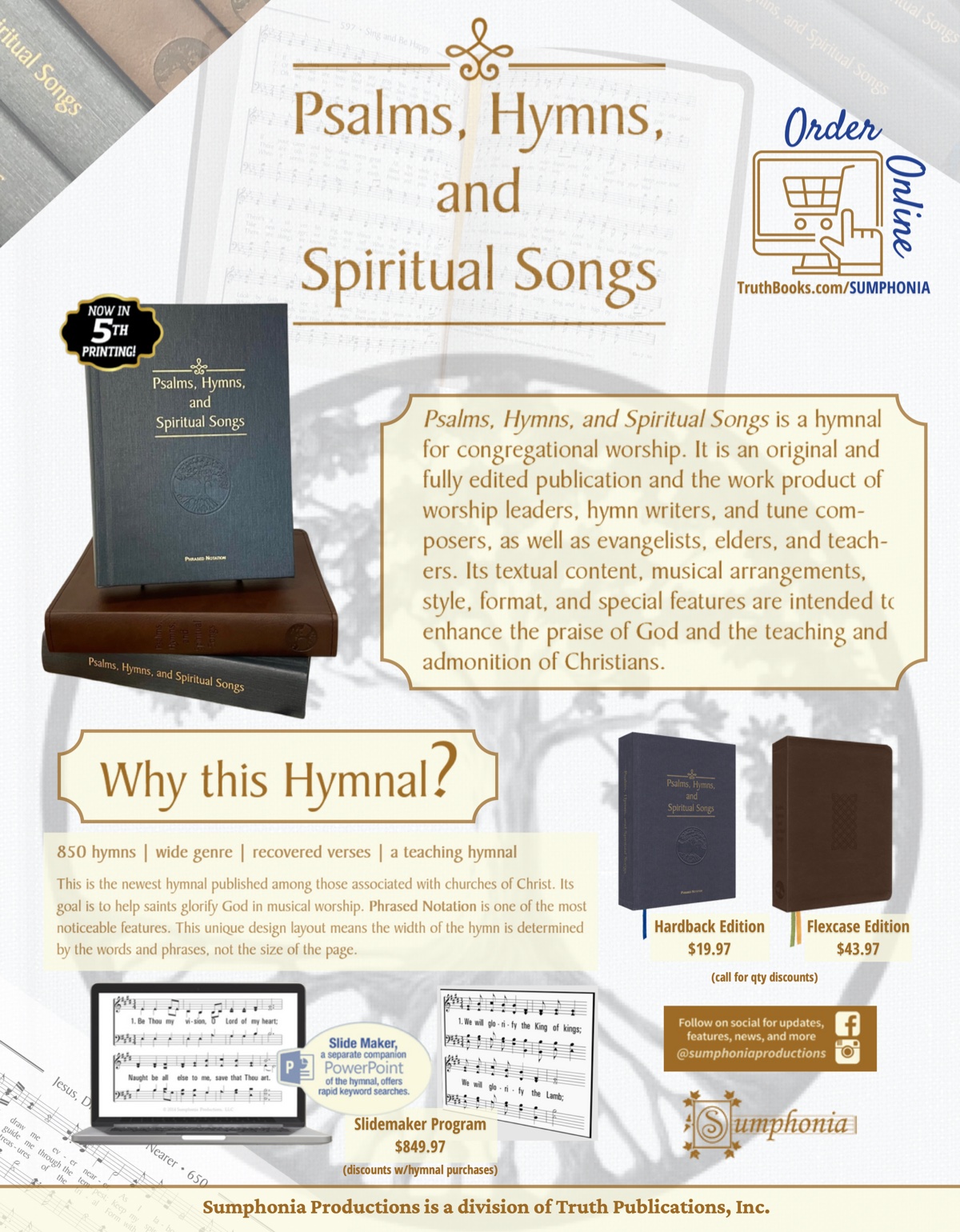

By Daniel H. King, Sr.
Synopsis: In contrast with premillennialism, which expects the mass conversion of Jews to Christianity when Jesus Christ comes again, the Scriptures consistently affirm that Jews and Gentiles come to faith individually, by hearing and heeding the evidence. The apostle Paul regularly visited synagogues when he arrived in a new city. He reasoned with the Jews using the Scriptures as his primary source—explaining and providing evidence from the Old Testament that Jesus was the promised Messiah.
There is therefore now no condemnation for those who are in Christ Jesus. For the law of the Spirit of life has set you free in Christ Jesus from the law of sin and death. For God has done what the law, weakened by the flesh, could not do. By sending His own Son in the likeness of sinful flesh and for sin, He condemned sin in the flesh, in order that the righteous requirement of the law might be fulfilled in us, who walk not according to the flesh but according to the Spirit (Rom. 8:1-4).
Jewish people are like others who live in a Western, secular, and generally non-religious society: a great many of them do not practice the religion of their forefathers. Although they may consider themselves Jewish, many do not go to a synagogue or temple, and a great number of them may actually be atheists in both belief and practice. In the text above, Paul the Jewish Christian described his understanding of the fulfillment of the law through the realization of all the Messianic promises of the Hebrew Scriptures in the person and work of Jesus, whom he firmly believed to be the Jewish Messiah. In his way of thinking, the Law of Moses was “fulfilled” at the cross by Jesus. Thus, the obligations of the legislation delivered by Moses at Sinai were past and done. It no longer holds sway over God’s people. This is the Christian view of what lies at the heart of Jewish piety. The Christian system is the realization of the Jewish hope. It was Paul’s firm conviction that all Jews needed what Jesus came to offer, namely, “that the righteous requirement of the law might be fulfilled” through the sacrifice of the Messiah for the sins of the whole world.
Traditional Jews, however, do not follow what we would call “the Old Testament” alone. They follow their present understanding of how the Torah, or Law of Moses, is to be obeyed. They are guided by the distilled traditional materials which came together during the two hundred years before Jesus, and the first six hundred years of the present era. Words like Torah, oral law, Mishnah, Talmud, Halachah, Gemara, etc., are at the heart of their ancestral religion and its requirements. Essentially, this is according to the Rabbinic, Pharisaic, post-Temple, post-priestly, post-sacrifice, method of “obeying” the prescriptions of the five books of Moses, even though some of this is to be dated prior to the first century. The destruction of the Second Temple by the Romans in AD 70 proved to be a decisive event for the Jewish people. That is not fully appreciated by everyone. Before that time, Judaism was a religion centered upon the sacrificial cult of the Temple. Afterward, everything was different, and always will be different for Jews who value the traditions of Rabbinic Judaism. Before AD 70, Pharisaism was the favored approach to Scripture for most of the common people. After AD 70, Pharisaism persisted at Yavneh or Jamnia, and the formative figure of Yohannan ben Zakai, a rabbi who was given permission by Vespasian who commanded the Roman forces to settle there and teach his students, was the center of this new reality. The teachings and general approach to the Hebrew Bible of the ancient school of Hillel were prioritized at the school, and so the nature of post-Temple Judaism was set in stone.
Yohannan had opposed the insurrection against the Romans, so Vespasian and the Roman authorities permitted him to continue with his work at Yavneh. Most importantly, knowing that the Romans would never allow the Temple to be rebuilt, he saw Judaism as continuing despite this sad reality. Things had to change. His teaching included the recognition that the will of God was done through deeds of loving kindness, as Hosea said: “I desire mercy (lovingkindness), not sacrifice” (Hos. 6:6). What this meant to Yohannan is, “We have a means of atonement as effective as the Temple, and it is doing deeds of loving kindness” (quoted in Jacob Neusner, From Politics to Piety: The Emergence of Pharisaic Judaism, 152). Building another Temple would never have to be seen as a necessity again. Chesed had taken the place of sacrifice. It will be remembered that Jesus quoted this identical text more than once but with a different emphasis (Matt. 9:13; 12:7). This same principle was taught elsewhere in Scripture as well (Ps. 51:7-15, 23).
Apparently, most Jewish savants recognized that the Temple had become more than it was originally intended to be. The priesthood itself had become slovenly, wealthy beyond all due bounds, careless about true piety, and concerned more regarding its own political fate than with true justice or for observance of true religion. The treatment of Jesus and the apostles in the Gospels and Acts proves this to be so. The Pharisees recognized the truthfulness of this and the later documents of Pharisaism make many allusions to it. There was much agreement between the disciples of Jesus and the Pharisees. All Pharisees were not hypocrites. Remember that Jesus had friends among the Pharisees like Nicodemus, who was a disciple in secret, but who later assisted in His honorable burial.
So, how ought a Christian to go about reaching a neighbor or friend who is from a Jewish background?
First, one ought to approach both the subject and the person with a loving and compassionate perspective. Jewish people are accustomed to being persecuted for their faith, and even in the present environment, merely for their national identity (even if they have no faith at all), so clearly the matter of first priority should be to show them the love of Christ. Such love should not be feigned or faked, it must come from the heart. Jews are generally very intelligent people, so they will see through a veneer of pretense.
Second, it has often been observed that in order for us to be able to reach others for the Lord Jesus, we must show appropriate respect for the other person and for their heritage, whatever it may be. Judaism was the heir apparent to the covenant of God with Abraham in Genesis (12:1ff.), up until the arrival of the Messiah, whom we believe to be Jesus. God loved the Jewish people in spite of their many sins against Him and repeatedly showed them compassion. Insults and bigoted remarks ought to never be found on the lips of the Lord’s disciples, and in the case where someone is trying to save a soul from death, great care must be evidenced in order to bring them into the fold of the Lamb of God “who takes away the sins of the world.” Showing disrespect for Jews and Judaism will win you no friends in the Jewish community. Moreover, in general, Jewish people deserve our respect. Most are law-abiding, highly capable, intelligent, and hard-working individuals. Therefore, they deserve appropriate respect.
Third, it is necessary, as we approach any topic wherein we have differences with others, first to make note of and recognize our similarities and commonalities. Jews and Christians are more alike than they are different. In fact, as we intend to show below, we are far more alike than we are different. It is not accidental that we speak about the Judeo-Christian heritage in the West. Our civilization is based on our moral and ethical similarities. On this account, we should always begin with our commonalities.
Here are some areas that need to be recognized and understood:
We need to make it clear to a Jewish prospect that we believe every single word of the Hebrew Bible. This is important. Our differences with Jews do not have to do with the Jewish Bible, but with Jewish traditions that have come to be accumulated atop the truths found in Scripture. Jesus of Nazareth never cast a single aspersion on the Sacred Scriptures of the Jewish people. In fact, He argued that every word of them was true and worthy of acceptance, and that they would ultimately be accomplished (Matt. 5:17-19). Moreover, He said the Scripture “cannot be broken” (John 10:35). When it is thoroughly analyzed, this is the most profound and powerful statement about the veracity of written Scripture ever made by any prophet or preacher. Paul later affirmed the same with regard to the ancient writings (2 Tim. 3:15ff).
We need for them to know that we hold as sacred exactly those books of the Hebrew Bible that they do. Other religious bodies and their adherents hold to other works of literature (such as the Apocrypha) as inspired, or even as semi-sacred (“deuterocanonical”), but we hold only to those books which the Jewish community considered then, and considers now, to be of divine origin. Our list of canonical Scriptures from the Hebrew and Aramaic Era of writing is precisely the same as theirs. Those books that they deemed to be spurious have been rejected by us just as they were rejected by their earliest Jewish brethren.
We need to tell them that Jesus and all the apostles, along with most of the writers of the New Testament literature, were Jews. Neither Jesus nor the apostles were the enemies of Judaism. They were, in fact, its truest friends and fiercest advocates. It is no accident that a large element of the early Jerusalem church were Pharisees (Acts 15:5). What that means is that they were yet Pharisaic in their approach to Scripture, even after conversion. So was Paul, as he himself said (Gal. 1:14; Acts 23:6; 26:5; Phil. 3:5). This simply meant that he rejected the liberal approach to the Bible espoused by Sadducees, and adopted a conservative, traditional, believer’s perspective on the Holy Writings, viewing them as inspired by God and valuable for an understanding of the nature of God and of His will for mankind. We believe today exactly what they did then.
We should express our confidence and hope in all the great promises and prophecies of the Hebrew Scriptures. Isaiah, Jeremiah, Ezekiel, Hosea, Joel, Amos, and all the rest of these prophetic works are our sacred writings, just as they are theirs. We read and study from them and believe that they were all led by God’s Holy Spirit, and their predictions are considered by us to be the very voice of heaven. God’s word is “a light to our path and a lamp to our pathway” (Ps. 119:105). The prophets and sages of Israel were the penmen of those writings. We therefore honor those great heroes of the faith and gain an understanding of righteous behavior through the lessons we may glean from their stories. In our view, their writings represent true historical writing, not fiction or fabrication. Some “Christians” may aver that what is found in the Hebrew Bible is often myth or legend, just as some progressive Jews do, but we do not share that viewpoint. We hold to the identical view that is believed by orthodox, conservative rabbis and their followers.
Finally, we should underscore the fact that our conviction that Jesus is the Messiah, the Christ of God, is derived from the Messianic promises and prophecies of the Hebrew Bible as they have been compared with the events of the life and teachings of Rabbi Jesus of Nazareth. A few selected prophetic instances should be enough to be convincing, especially Psalm 22 and Isaiah 53, but there are, of course, many others besides. Although a venue such as this one is not appropriate to summarize them (for they are too extensive and would require much more space than we have allotted to us here), a simple study of them would produce an impressive number that are most convincing for an average student.
Now, here is a point that needs badly to be understood and communicated to any prospective convert: If Jesus is not the Messiah, then who is (or was)? The answer to this question is critical in thinking about this topic. The fellow who denies that He is so must be prepared to respond when asked about who or what this shadowy figure inhabiting the prophecies of ancient Israel was to be. It is unacceptable merely to suggest that no Messiah has ever come, or that he has not come yet. Some of the prophetic texts have a very specific timeframe associated with them (as with Daniel 2:44 “In the days of these kings. . .”).
We believe the Hebrew prophets were inspired by God to make these predictions. Down through history, thousands of students of the Hebrew Scriptures have identified Jesus as God’s Messiah, because He through the events of His life and the nature of His teachings fitted the descriptions and satisfied the requirements. If Jewish people are still awaiting the Messiah (and some obviously still are), then the time has already passed for them to be fulfilled because that era was gone millennia ago. That means, then, that they are looking for a vain hope to be realized. Most would admit that when Jesus came, Messianic enthusiasm was at its height, and ever afterward, it has barely had any semblance at all of its former self. Too, the events of AD 70 left the Jewish people smarting and reeling from this seeming “final rejection” (see Paul, the Jew, and his appraisal of the situation in 1 Thessalonians 2:14-16). What can we gather from this? In our view, it is not easy to answer this query without considerable thought, and that thought leans powerfully in only one direction.
On the other hand, if the whole project itself was nothing more than a pipedream in the first place, and the prophets were no more than pretenders, then why carry on the traditions and practices of Judaism at all? Why not shut the whole thing down? Why not cease and desist from it altogether? This admission would lead us to conclude that Judaism itself was a false religion in the first place, no more valid than the beliefs set forward by the disaffected pretender of Deuteronomy 18:20-22. However, that is not the case with the true religion of Israel. It never was and is not now.
We must try to stress to a Jewish prospect that Jesus is indeed their Messiah, and if He is rejected, then the beautiful religion of Abraham, Moses, David, and Isaiah has no real future. His is, in fact, the fulfillment of all the magisterial prophecies of Hebrew Scripture. Jesus is, in fact, the very confirmation of the validity of the Jewish religion and of its way of life. To reject Him is to abandon Judaism to a dismal place in human history: a pitiful people still looking for a promised figure who never came! To see Him as the true Messiah, on the other hand, is to validate the divine origin of Jewish religion, law, morality, and history. Jesus is the personal justification of the Jewish faith in the first place. He is the Immanuel of Isaiah 7:14, the Mighty God of Isaiah 9:6, the Root of Jesse who stands as a banner for the nations (Isa. 11:10), the Suffering Servant of Isaiah 53, the Lord, our righteousness (Jer. 23:6), the Messenger of the covenant (Mal. 3:1), Messiah the Prince (Dan. 9:25), the Sun of Righteousness (Mal. 4:2), etc. He was meant to be all of these things for them also, and He surely will become so if they will but look to Him for salvation (Micah 7:7).
Neusner, Jacob. From Politics to Piety: The Emergence of Pharisaic Judaism. Englewood Cliffs, NJ: Prentice-Hall, Inc., 1973.
Daniel H. King, Sr. lives in Columbia, TN. He and his wife, Donna, have two children. He has preached for the Locust St. church of Christ in Mt. Pleasant, TN, since 2015. Presently, he is also serving as an elder of the congregation. The church website is here. He can be reached at here.
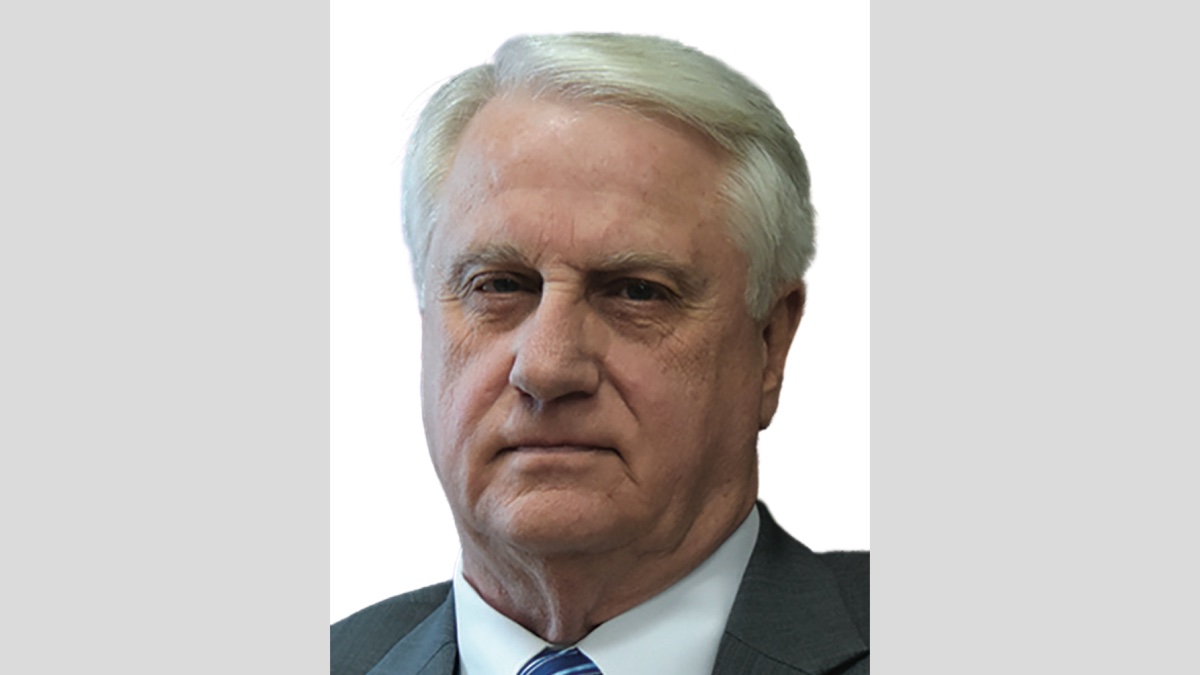

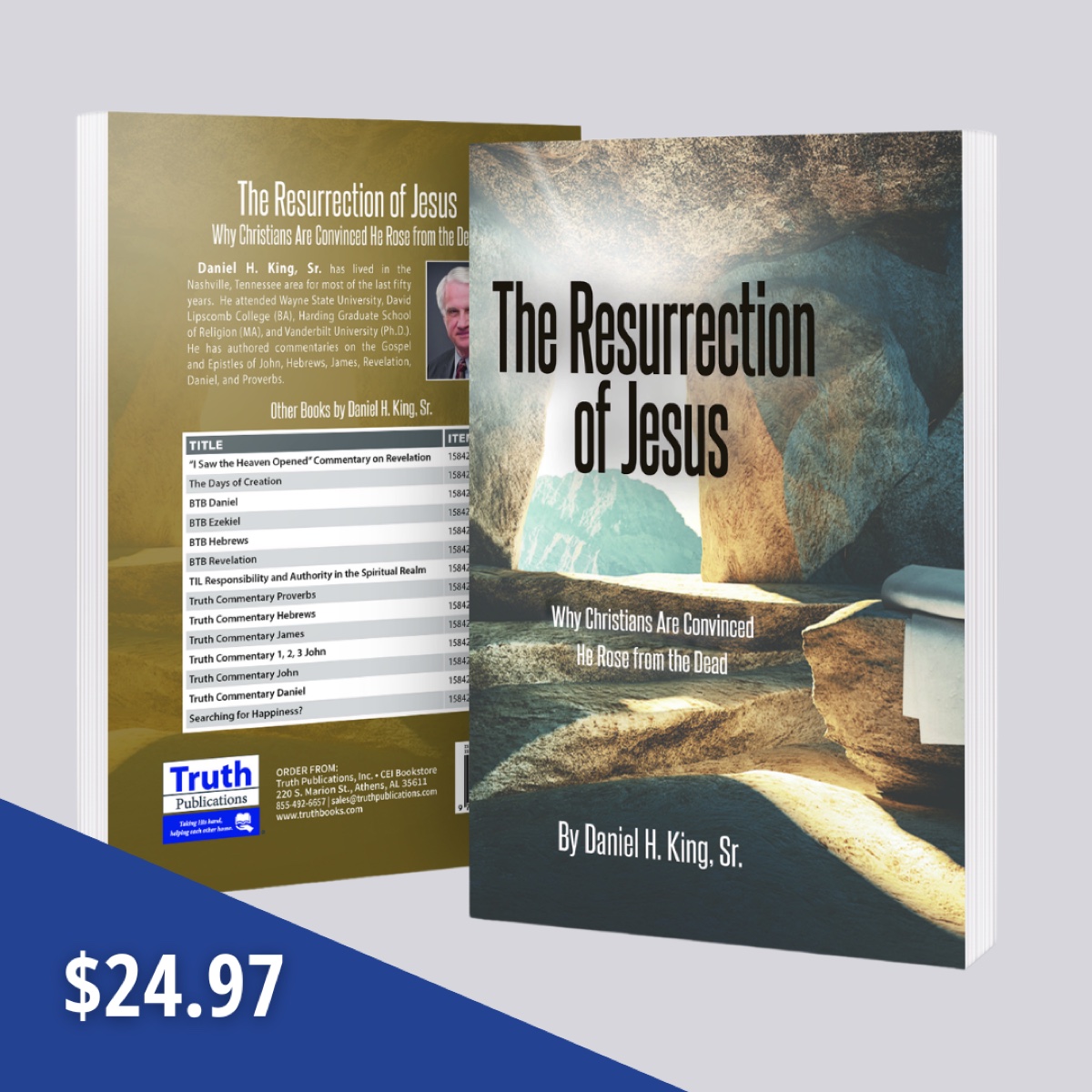
By Jerry King
Synopsis: Islam is a religion with a serious identity disorder—with some claiming it is a religion of peace, and others affirming it is a religion that demands oppression and subjugation of unbelievers. At its heart, it is based on salvation by a system of works. It is a religion of many faults, but its principle one is that it denies that Jesus is the Christ, the Son of God.
Islam is a monotheistic Abrahamic religion based on the teachings of the Quran, a religious text considered by Muslims to be the verbatim word of God (Allah). Today, there are approximately 1.9 billion Muslims in the world, making up around 24.9% of the global population.
According to traditional Islam, in 610 AD, a forty-year-old Arab merchant from Mecca, Saudi Arabia, named Muhammad was visited by the angel Gabriel in a cave and told that he had been selected as Allah’s ultimate prophet of Islam (“to surrender”) to the world. He would be the fifth major prophet of Islam (behind Noah, Abraham, Moses, and Jesus), and was charged with verbally delivering Allah’s message. Islam’s followers would be called Muslims (“one who surrenders”).
The principle creed of Islam is the Shahada (testimony of faith)—“There is no God but Allah, and Muhammad is His servant and messenger.” That reveals two important things about Islam: (1) it is monotheistic, and (2) it unquestioningly and strictly follows the teachings of Muhammad. To become a Muslim, one must recite the Shahada in Arabic.
Muhammad’s teachings come from two sources: (1) the Quran (or Koran), which claims to be the inspired prophecies of Muhammad, written over a space of twenty-three years by his comrades, and (2) the Hadiths (Narrations), documents written starting about 200 years after Muhammad’s death that purport to be true stories about what he said and did. The Hadiths operate on the principle that Muhammad was the “Perfect Man,” and thus what he said is perfect truth and what he did is the perfect example.
According to traditional teaching, Muhammad’s claims were initially ridiculed by Mecca’s citizens and Islam’s growth was slow. Muhammad even faced persecution when he challenged Mecca’s polytheism. However, that changed in AD 622, when he severed ties in Mecca and moved to Medina, about 200 miles north. Fortunate events made him wealthy and influential in Medina, and his teaching was favorably received. Muhammad used his newfound wealth and power to force out of Medina, or kill, any who refused to surrender to his Islamic government.
Muhammad became a warlord, claiming to have received a revelation that it was okay to overthrow Mecca, which he did in AD 630. In the two years before his death, he took his army into northern and eastern Arabia, abolished paganism, and established Islam as the political and religious government. Then, under the leaders who followed Muhammad (called caliphs), the Islamic state grew rapidly until it controlled the vast majority of the Middle East, and even spread into Africa, Spain, and Indonesia. The growth of the mighty Islamic Ottoman Empire in the sixteenth and seventeenth centuries was curtailed by the Byzantine Empire of Eastern Europe when the Muslims suffered a humiliating defeat in the Battle of Vienna on September 11, 1683. After its defeat, the Ottoman Empire went into a tailspin from which Islam has never fully recovered. For over 300 years, Islam has not been able to mount a conquering army like those of its first 1000 years. At present, there is no united Muslim kingdom (caliphate).
I do not know of another religion that suffers more from “Dissociative Identity Disorder.” Islam is divided into two distinct personalities. On one side, you have the “religion of peace and toleration” mindset, on the other you have the “religion of oppression and subjugation of the infidels by jihad (holy war)” mindset. Which is the true Islam? Well, both sides can accurately quote the Quran to defend their position. That does not seem to make sense!
Consider Surah 2:256, which says, “Let there be no compulsion in religion,” and 21:1-7, which says “We have not sent you except to be a mercy to all mankind,” and 60:8, which says, “God does not forbid you to be kind and equitable to those who have neither fought against your faith nor driven you out of your homes.” According to my copy of the Quran, these verses were written in Muhammad’s early years, when he lived in Mecca, and Islam was an unpopular, minority religion in the land.
Then there is Surah 9:123, which says, “O you who believe! Fight those of the unbelievers who are near you and let them find in you hardness,” and 8:12, which says, “I will strike terror into the hearts of those who disbelieve. Therefore strike off their heads and strike off every fingertip of them.” Consider also 9:29, which says, “Fight those who believe not in Allah nor the Last Day. . . until they pay the Jizya with willing submission, and feel themselves subdued.” Care to guess when these passages were written? They date from Muhammad’s later years, when he lived in Medina, and after Islam had become the popular, majority religion in the land.
Modern Islam is a reflection of Muhammad’s change from merchant to warlord. Is Islam a religion of peace and toleration, or a religion of oppression and subjugation? That is according to where you live! In America, the minority Muslim community preaches peace and toleration to the unbeliever. Try teaching that in Iran! What would happen in America if Islam became the dominant religion? Just take a look at any country where Islam rules.
Based on Islamic teachings, there are typically considered to be six core beliefs that are necessary to be considered a full believer in Islam:
Belief in Allah (Islam’s conception of the One God).
Belief in the existence of angels as creations of Allah.
Belief in prophets and messengers: Accepting all prophets sent by Allah, including Adam, Abraham, Moses, Jesus, and Muhammad as the final prophet.
Belief in Holy Books: Accepting the divine scriptures revealed by Allah, including the Torah, Psalms, Gospel, and the Quran as the final revelation.
Belief in the Day of Judgment: Believing in the Day of Resurrection and the final judgment of all souls.
Belief in Divine Predestination (Qadar): Accepting that Allah has knowledge of and control over all that happens, both good and bad.
According to Islam, faith alone does not save the Muslim. Islamic literature is masterful at showing the folly of faith only salvation, dealing with it in the same way that James 2:14-26 does. (In fact, Islam’s defenders against Christianity are quick to quote James 2.) Islam teaches the “Five Pillars of Islam,” each pillar being a mandatory act of Islam that results in the forgiveness of sins. The pillars are: (1) Recitation of the Shahadah (see above) in Arabic before at least two Muslim witnesses; (2) Ritual prayer, five times each day, facing the direction of the Ka’ba in Mecca; (3) Fasting and celibacy from dawn to sunset during the sacred month of Ramadan; (4) Alms-giving, collected much like a tax; and (5) Pilgrimage to Mecca during the annual Hajj at least once in a person’s lifetime, provided they are able.
There are verses in the Quran that read similar to biblical truths. So why didn’t the monotheistic Muhammad not turn to Judaism or Christianity? I believe there is one central reason: Muhammad considered himself an Ishmaelite. The Bible teaches that Ishmael (Abraham’s firstborn) was rejected in favor of Isaac (a foundational truth of Judaism), and that was unacceptable to Muhammad. Sibling jealousy is at the heart of Islam, and that is why the Jews must be driven “from the land to the sea.”
Today, Islam is recognized as the second largest worldwide religion at 1.8 billion adherents, and remains the fastest growing major religion. If current trends continue, Pew Research estimates that by 2050, Islam will surpass Christianity (currently 2.3 billion) as the world’s largest religion. There are several reasons for its popularity, but no doubt simplicity is at the forefront. Islam is, at its heart, a laundry list of “dos and don’ts.” It is very structured (eat this way, pray this way, give this way) and very authoritarian. It appeals to people who are used to having their thinking done for them, or else function best when an authority figure tells them exactly what to do. That is why Islam is so popular in authoritarian societies and prison systems. (See Colossians 2:20-23 for a similar example from first-century religion.)
In conclusion, please allow me to recommend some things to you about sharing the gospel with your Muslim neighbor:
Focus on the Scriptures (Acts 17:1-3). The Scriptures make reasonable arguments for our faith. You must trust the Bible, knowledgeably used, to make its reasonable case.
Focus on the truth about Jesus (1 Cor. 2:1-2). Islam claims to honor Jesus, but their “honor” is hollow. The Quran denies His deity (Surah 5:78), His sonship (19:88-92), His eternity (3:59), and His death on the cross (4:157). Familiarize yourself with Scriptures that identify Jesus as the Son of God. Be sure to emphasize John 1:1-18 and collect a number of verses that identify Jesus as the Son of God. Push aside all the propaganda about Islam being a religion of peace, wisdom, and purity, and focus on what Islam says about Jesus. Emphasize the truths contained in 1 John 4:15 and 5:12.
Focus on the sinner’s need for atonement. Jesus paid the price for our sins on the cross (Rom. 3:23-26) when we were dead in our sins (Eph. 2:1-9). His blood cleanses our sins, not our work in obeying the Five Pillars. Hit hard at the Islam concept of salvation based on good deeds outweighing bad.
Focus on these facts that the Islamic world tends to misunderstand: America is not Christianity, Roman Catholicism is not Christianity, and the doctrine of “faith only” is not true biblical doctrine.
Focus on your task. Know that converting a Muslim is possible, but not easy. Our task is to defend the truth. When we have done that, we have done what God requires of us.
Jerry King is in his fortieth year of preaching the gospel. He and his wife, Amy, live in McKinney, TX, and have worked with the Twin Creeks church in Allen for the last eighteen years. They have three children and four grandchildren. The church’s website is here. He can be reached here.



By Joe R. Price
Synopsis: Eastern religions offer followers considerable flexibility in practice and interpretation. Unlike some Western religions, many Eastern faiths have less rigid organizational structures. They emphasize mystical spirituality over dogma. The unfamiliarity and perceived exoticism of Eastern religions can be appealing to Westerners. The appearance of offering pseudo-philosophical depth, alignment with societal modern values, and perceived lack of negative stigma also contribute to their popularity. Yet, despite their focus on inner peace and self-awareness, they do not bring one into a covenant relationship with the Creator. Hinduism and Buddhism are powerless to enlighten our souls of life’s meaning and purposes (i.e., who we are, where we came from, why we are here, and where we are going).
In answer to the question, “What is religion?,” McDowell and Stewart replied, “The term ‘religion’ has many definitions. None is agreed upon by everyone, but certain common aspects and implications of religion can be observed. We define religion as that aspect of one’s experience in which he attempts to live harmoniously with the power or powers he believes are controlling the world” (McDowell and Stewart, 9-10). This general definition is far from the biblical one. “Pure and undefiled religion before God and the Father is this: to visit orphans and widows in their trouble, and to keep oneself unspotted from the world” (Jas. 1:27, NKJV). The Scriptures given by Jehovah God reveal, define, and direct true religion (2 Tim. 3:15-17; John 4:23-24).
When people reject the Creator’s powerful testimony of His presence and sovereignty, they are left with futile endeavors in search of life’s meaning and purpose (Rom. 1:20-21; Ps. 90:10-12; Eccl. 12:13). Spiritual yearnings have driven men to seek purpose and meaning in life from within themselves (Rom. 1:21; Acts 17:22-23). However, all such quests are in vain. Having forsaken the true God, men have, for centuries, fruitlessly created deities and philosophies to fill the void left by their unbelief (Rom. 1:22-23; Col. 2:2-3, 8; Ps. 115:1-8; Isa. 44:9-20; Acts 17:24-31).
The true and living God has consistently warned against the futile and darkened ways of idolatry, mysticism, astrology, and human wisdom (Exod. 20:1-7; Deut. 4:15-19; Isa. 47:12-15; etc.). The gospel of Christ holds the immense power to save lost and dying souls (Rom. 1:16). In contrast, the religions of men stand impotent and foolish before Almighty God (1 Cor. 1:18-25; Acts 17:23).
As we attempt to reach lost souls with the gospel of the One True God, it helps to understand their beliefs, customs, and superstitions (cf. Paul at the Areopagus in Athens [Acts 17:16-31]). So, we turn our attention to two of the most prominent Eastern religions to equip us to reach honest souls with the truth of the gospel of Christ (Matt. 28:18-20).
Hinduism is recognized as one of, if not the oldest, continuous religions on earth. Because no single person can be identified as its founder, pinpointing Hinduism’s time of origin is problematic, if not impossible. “Most scholars believe Hinduism started somewhere between 2300 BC and 1500 BC in the Indus Valley, near modern-day Pakistan. But many Hindus argue that their faith is timeless and has always existed” (History.com). Hinduism is the third largest religion worldwide, behind Christianity (in its broadest term) and Islam. “There are more than 1.1 billion Hindus in the world and roughly 94% of them live in India, according to Pew Research Center projections for 2020” (Evans and Pew Research).
Evans said, “The prevailing view, held by 61% of Hindus, is that there is one God with many manifestations.” About three in ten Indian Hindus (29%) say, “There is only one God” (Ibid). These “many manifestations” (literally millions of gods in Hinduism), emanate from the Hindu god Brahman, a “Three-in-One” god composed of Brahma (the Creator), Vishnu (the Preserver), and Shiva (the Destroyer) (McDowell and Stewart, 18). “Most forms of Hinduism are henotheistic, which means they worship a single deity, known as”Brahman," but still recognize other gods and goddesses. Followers believe there are multiple paths to reaching their god" (History.com).
We must not think of Brahman as a personal god. “Most Hindus believe in brahman, an uncreated, eternal, infinite, transcendent, and all-embracing principle. Brahman contains in itself both being and nonbeing, and it is the sole reality—the ultimate cause, foundation, source, and goal of all existence. As the All, Brahman either causes the universe and all beings to emanate from itself, transforms itself into the universe, or assumes the appearance of the universe. Brahman is in all things and is the self (atman) of all living beings. Brahman is the creator, preserver, or transformer and reabsorber of everything” (Editors of Encyclopaedia Britannica).
The true and living God who created the universe is a personal God who is self-sustaining, ruling, purposeful, merciful, and authoritative (Acts 17:24-31; Gen. 1:1; John 1:1-3, 14-18; Heb. 1:1-2). God has revealed Himself as God the Father, Son, and Holy Spirit (Gen. 1:1; John 1:1-3; Deut. 6:4; Matt. 3:16-17; 28:19).
Hinduism has many volumes of holy writings. Its primary sacred texts are the Vedas (Veda means wisdom or knowledge) (McDowell and Stewart, 20). Written in Sanskrit, the Vedas (plural) is the entire collection of books (composed of the Rig Veda, Samaveda, Yajurveda, and Atharvaveda). These collections contain hymns, prayers, ritual texts, and revelations by ancient saints and sages (History.com). Additional texts contain legends, stories of gods and men interacting, long epics, philosophical dissertations, and religious and social law (Mayberry).
Although most Westerners are unfamiliar with Hinduism’s doctrinal intricacies, we are familiar with Hindu terms such as karma, reincarnation, the cycle of life (rebirth), the caste system, and yoga. These are among the elements of Hinduism that define and direct man’s search for release (deliverance or “salvation”) from “the seemingly endless cycle of birth, death, and rebirth” (McDowell and Stewart, 31).
1. Karma. “The universal causal law by which good or bad actions determine the future modes of an individual’s existence” (Olivelle). As one ancient Hindu theologian put it, “A man turns into something good by good action and into something bad by bad action.”
The “law of karma” developed into an explanation of why there is evil in the world (Ibid). The Bible teaches that evil, suffering, and death are in the world because of sin (Gen. 2:16-17; 3:16-19).
2. Reincarnation. Hindus believe in an endless cycle of rebirth. To them, living beings have successive existences. Karma (the law of cause and effect) “states that what one does in this present life will have its effect in the next life. In Hinduism, the process of birth and rebirth—i.e., transmigration of souls—is endless until one achieves moksha, or liberation (literally ‘release’) from that process. Moksha is achieved when one realizes that the eternal core of the individual (atman) and the Absolute reality (brahman) are one. Thus, one can escape from the process of death and rebirth (samsara)” (Editors of Encyclopaedia Britannica). Consequently, “life everlasting (at least of the type already sampled) is the last thing a Hindu would aspire to. Moksha (liberation from the cycle of death and rebirth, JRP) can be achieved only by the saintly, or perhaps by those who have died in Vārānasi and had their ashes strewed on the Ganges River. For others, the wages of worldliness is inevitable reincarnation” (Pallis). In contrast, the Bible says human efforts cannot restrain physical death. “What man can live and not see death? Can he deliver his life from the power of the grave” (Ps. 89:48)? No.
We are appointed to live and die on the earth once (Gen. 3:19; Heb. 9:27; Luke 16:19-31). Salvation is deliverance from sin’s enslavement and eternal death, not escape from an endless process of birth, death, and rebirth (John 8:34-36; Eph. 2:1-10; Rom. 6:23).
3. Castes. The caste system is unique to Hinduism. From Hindu mythology, Brahma created Manu (the first man). Four types of people came from Manu: the Brahmins from his head (priests, the holiest people), the Kshatriyas from his hands (rulers and warriors), the Vaisyas from his thighs (the craftsmen), and the Sudras from his feet (laborers and servants). Over time, literally thousands of subcastes have come into existence. Outlawed by the Indian Constitution, it continues to be integral to the social order of India (McDowell and Stewart, 26-27). These social groupings inform such things as marriage partners in arranged marriages. It has ingrained prejudices, discrimination, and favoritism that the gospel of Christ overthrows (Jas. 2:1-13; Acts 10:34-35; Gal. 3:28).
4. Yoga. While Westerners think of yoga as a meditative exercise technique, its origin is in the Hindu philosophy of exerting the body and mind to achieve “higher consciousness and thereby find supreme knowledge, achieve spiritual autonomy, and realize oneness with the Highest” (Editors of Encyclopaedia Britannica). “There are many different forms of Yoga, and the practices vary according to the stage of advancement of the adepts. All serious yogis, however, agree in disapproving the use of Yogic methods for worldly purposes (i.e., only exercise, JRP)” (Ibid).
Christians are cautioned not to be drawn into Hinduism’s search for knowledge and spirituality through yoga techniques. We should be mindful of spiritual influences that are not aligned with Christianity. Let us recognize the differences between Hindu and Christian theology. Blending yoga practices with Christianity could lead to spiritual confusion or syncretism. Therefore, let us be discerning and prioritize practices that are clearly aligned with biblical teaching.
The founder of Buddhism was Siddhartha Gautama, a Hindu who lived in northern India from 560 to 480 BC. “Buddha” is Sanskrit for the “Awakened (or Enlightened) One,” “an enlightened being who has awakened from the sleep of ignorance and achieved freedom from suffering” (Lopez). His early life consisted of luxury and exclusion from the surrounding suffering. After witnessing human suffering and death, Siddhartha left his wife, son, and all his possessions. For the next six years, he searched for the meaning of life from Hindu masters and a severe life of asceticism. While meditating under a fig tree (called the Bo-tree, or tree of enlightenment), Buddha “received the knowledge that he would later teach. For the next forty-five years, Buddha would travel through India, teaching his message of enlightenment and gathering followers. He died at the age of eighty (c. 480 BC)” (Reeves).
Buddhism originated in Hinduism and offers enlightenment that frees one from the cycle of life, death, and rebirth. The Four Noble Truths of Buddhism are (1) Life inherently means suffering, (2) The origin of suffering is craving and attachment, (3) Suffering can be ended by eliminating craving and attachment, and (4) The path to the cessation of suffering. The Eightfold Path guides the adherent to this liberation and includes right understanding, intention, speech, action, livelihood, effort, mindfulness, and concentration.
The Buddhist’s goal is to achieve the state of Nirvana (“extinction,” or “blowing out”), the complete cessation of suffering, desire, and ignorance. “Nirvana is neither being nor not being. It is removing oneself from the framework of existence so entirely that it can’t even be talked about in the negative” (Downey and Whittemore). Reality becomes nothingness, “extinguishing the self so completely that the illusion of reality has no more impact” (Ibid).
Buddhism denies the presence of a personal God. Buddhists believe there is a “force” that penetrates all life (think Star Wars). Zen Buddhists believe God is man, man is God, all is God, and God is all. Buddhism is an expression of naturalism (i.e., the philosophy that only natural laws and forces, not supernatural ones, operate in the universe).
While offering enlightenment, Buddhism enslaves people in the futile darkness of human reasoning (Eph. 4:17-18; 2 Pet. 2:19). The gospel assures enlightenment by the life and light of truth revealed in Jesus Christ (John 1:4-9; 8:12; Eph. 1:18). Divine revelation, not human meditation, provides truth (John 1:14-17). All the treasures of wisdom and knowledge are found in Jesus Christ, not in one’s mind, illuminated by becoming one with your surroundings through meditation, etc. (Col. 2:2-3). The gospel offers true light and liberation—freedom from sin’s bondage and death (Acts 26:18; 1 Pet. 2:9).
Hinduism and Buddhism cannot reveal the truth of who we are, where we came from, why we are here, and where we are going (Eccl. 12:13-14; Gen. 1:26-31; Ps. 8:4-9). They seek to escape hopeless journeys of endless life, death, and rebirth cycles. They strive to be one with everything and nothing. Such efforts are devoid of faith in the true God and of living in the sure and eternal blessings which are available to all in Jesus Christ (Heb. 11:6; 5:8-9; Acts 10:34-35; Eph. 1:3; Eccl. 12:13-14).
“Hindus: The Future of World Religions: Population Growth Projections, 2010-2050.” Pew Research Center, April 2, 2015. https://www.pewresearch.org/religion/2015/04/02/hindus/.
Downey, Kevin, and Jessica Whittemore. “Nirvana in Buddhism | Definition, Beliefs & Methods.” Study.com. https://study.com/academy/lesson/nirvana-enlightenment-and-buddhist-salvation.html.
Editors of Encyclopaedia Britannica. “Hinduism.” Encyclopedia Britannica, May 20, 2024. https://www.britannica.com/topic/Hinduism.
Editors of Encyclopaedia Britannica. “Reincarnation.” Encyclopedia Britannica, May 20, 2024. https://www.britannica.com/topic/reincarnation.
Editors of History.com. “Hinduism.” A&E Television Network, November 16, 2023. https://www.history.com/topics/religion/hinduism.
Evans, Jonathan. “Seven Facts About Hindus around the World.” Pew Research Center, October 26, 2022. https://www.pewresearch.org/short-reads/2022/10/26/7-facts-about-hindus-around-the-world/.
Mayberry, Mark. “Hinduism.” Truth Magazine, July 24, 2012. https://www.truthmagazine.com/hinduism.
McDowell, Josh and Stewart, Don. Understanding Non-Christian Religions (A Handbook of Today’s Religions). San Bernardino, CA: Here’s Life Publishers, Inc., 1982.
Olivelle, Patrick. “Karma.” Encyclopedia Britannica, February 23, 2024. https://www.britannica.com/topic/karma.
Pallis, Christopher A. “Death.” Encyclopedia Britannica, May 27, 2024. https://www.britannica.com/science/death.
Reeves, Chris. “Buddhism.” Truth Magazine. July 24, 2012. https://www.truthmagazine.com/hinduism.
Reynolds, Frank E., David Llewelyn Snellgrove, Joseph M. Kitagawa, Hajime Nakamura, Donald S. Lopez, and Giuseppe Tucci. “Buddhism.” Encyclopedia Britannica, May 25, 2024. https://www.britannica.com/topic/Buddhism.
Joe Price has preached the gospel for 46 years and has worked with the Vegas Drive church of Christ, Las Vegas, NV, since October 2022. He also makes annual preaching trips to India. His teaching material is available online here, here, and here. He can be reached here.
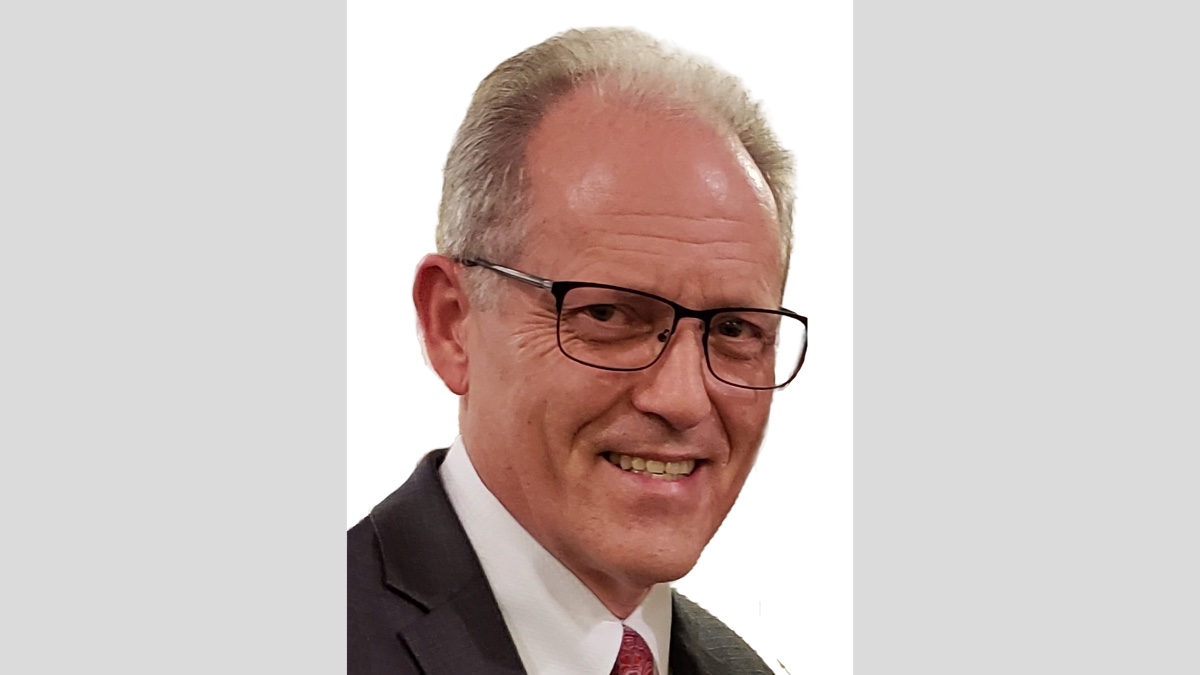


By Kyle Campbell
Synopsis: Indigenous religions reflect the spiritual traditions and practices of peoples native to particular landscapes, often predating colonization or outside influence. While there is great diversity among indigenous religions, there are common characteristics, such as a strong connection to nature and the land, reliance on oral transmission of traditions, a belief in spirits, and a focus on interconnectedness with all beings. How can a Christian help such practitioners adopt a biblical worldview and come to know the blessings that Jesus Christ alone offers?
Most of us are comfortable addressing the needs and questions of those who are “moderately” religious. They believe in God and Jesus Christ. They know He died on the cross for our sins. However, they may not know the mechanisms by which people are saved as detailed in the book of Acts.
When it comes to indigenous people, however, we have a lot harder time trying to talk to them about the gospel. “Indigenous” means inhabiting or existing in a land from the earliest times or from before the arrival of colonists [Note #1]. In America, there are over 500 Federally Recognized Native American Tribes. These are the original indigenous people of our land [Note #2].
Amnesty International reports that there are more than 5,000 different Indigenous Peoples around the world, comprising 476 million people—around 6.2% of the global population. They’re spread across more than 90 countries in every region and speak more than 4,000 languages [Note #3].
The religious beliefs and practices of North American Indigenous Peoples may be monotheistic, polytheistic, henotheistic, animistic, shamanistic, pantheistic, or any combination thereof, among others [Note #4]. Within the monotheistic and henotheistic traditions, many Native American tribes revere a supreme being or god called the Great Spirit, who is a creator and an omnipresent life force. This Creator god was a mythological figure who was responsible for causing the universe to form. Some tribes believe the Great Spirit is present in everything, including land, water, sky, plants, and animals. The Great Spirit is a central component in many, but not all, indigenous cultures in Canada and the United States, and interpretations of it vary between cultures. The Great Spirit is also known as the Master Spirit and is sometimes depicted as a being that can take on different forms and genders. Eagle feathers are a symbol of the Great Spirit, and are often used to decorate sacred pipes because they represent the strength and power that comes from the Great Spirit [Note #5].
Several Christians are involved in various countries around the world. I’ve been familiar with the Philippines for over twenty years. The indigenous Philippine religions are known as Anito or Anitism. These religions are based on the idea that the world is inhabited by spirits and supernatural entities, both good and bad, and that people should respect them through worship [Note #6].
In recent years, I’ve become involved in the work in Nigeria. Many good men “fight the good fight of faith” against Islam and Protestant denominations. Samuel Omaka, an evangelist with whom I’ve enjoyed a great spiritual relationship, continually attempts to bring people out of the darkness of the worship of hundreds of false idols, including Obatala, Ala, Idenga, Ogun, and Eshu. The native Nigerian religions resemble voodoo to us in North America. While most worship idols by sacrificing animals, some people, especially women, are killed and dismembered for sacrifices and to renew their powers in their dark practices. History has constantly shown that people who are left to themselves generally descend into extreme wickedness. This was true in antiquity and remains true today.
One indigenous group that has gained notoriety in the last 20 years is the Sentinelese tribe, who live on North Sentinel Island in the Indian Ocean, west of Myanmar and Thailand. They are fiercely protective of their small island. In 2006, the Sentinelese killed two fishermen who were fishing in North Sentinel’s waters illegally. In November 2018, the tribe killed American missionary John Allen Chau. Chau had illegally traveled to the island three times to try to convert the Sentinelese to Christianity. On his third attempt, the Sentinelese shot arrows at him in warning, and then killed him with bows and arrows on the beach. The next morning, the Sentinelese were seen dragging Chau’s body across the beach and burying it in the sand [Note #7]. Describing the Sentinelese tribe in his travel journals, the 13th-century explorer Marco Polo described them as “a most brutish and savage race, having heads, eyes, and teeth like those of dogs. They are a most violent and cruel generation who seem to eat everybody they catch” [Note #8].
Since we have 5,000 different Indigenous Peoples, and they each have their own beliefs about a Great Spirit or supreme being and the origin of the Universe, how can we show that the God of the Bible is superior? Can they be taught the gospel? Let’s see how it happened in the New Testament.
When Paul was in Lystra (Acts 14:8-18), he healed a lame man and the people exclaimed, “The gods have come down to us in the likeness of men” (v. 11). Both Paul and Barnabas were called Greek gods. However, they appealed to the Lycaonians by telling them that the true God made the Universe and that He blessed all of mankind with rain, food, and gladness. These Indigenous People saw the miracles that Paul and Barnabas worked. Paul told the Corinthians, “Truly the signs of an apostle were accomplished among you with all perseverance, in signs and wonders and mighty deeds” (2 Cor. 12:12). They knew there was power in the gospel message!
Acts 17:16-34 details Paul’s approach to people who had a similar incomplete knowledge of God. He told them that God created the world and everything in it, and He made all men from one blood. This knowledge helps mankind to seek the Lord and repent of their sins. The miracle of Jesus’s resurrection gave validity to what Paul was saying. In the world of the first century, the resurrection was a verifiable miracle, even for people who lived in Athens (cf. 1 Cor. 5:5-8).
While Indigenous Peoples could claim that their Great Spirit could work supernaturally today, the miracles performed by Jesus and His apostles were witnessed and undeniable—even for the enemies of the gospel (John 11:47).
Although we don’t have representatives from God working miracles to prove His existence to Indigenous Peoples today, we do have the Bible. This is what Indigenous Peoples must be shown and convinced is true if they are going to turn to God properly.
Traditional beliefs of Indigenous Peoples are usually passed down in the forms of oral histories, stories, allegories, and principles. However, the existence of the Bible is incredibly significant because God is the only One (as opposed to the Great Spirit or any other conception of a supreme being) who has given a written communication to all of mankind.
This written communication was produced by dozens of individuals over 1,500 years of history. They were from different countries and continents, with different backgrounds and occupations. Despite such diversity, they produced a text that is comprehensive and consistent, having been confirmed by signs, wonders, and miracles (1 Kings 17:23-24; Mark 16:17-20; Heb. 2:3-4). The text of the Bible reveals an intricate narrative about the creation of the Universe, the first sin of Adam and Eve, and the extensive plan God had to secure redemption for mankind through the sacrifice of Jesus Christ.
Not only does the Bible reveal the truth about history’s miracles, signs, and wonders, it also reveals the power of God in being able to foretell the future. Scholars have estimated that over a quarter of the Bible is prophecy. Some of its longest books, such as Isaiah, Jeremiah, and Ezekiel, are prophetic. Many of its other books, such as Genesis, Psalms, and Paul’s epistles, also contain significant prophecies.
One of Jesus Christ’s longest recorded discourses, found in Matthew 24-25 (cf. Mark 13; Luke 21), is an extensive prophecy given shortly before He was crucified. Of course, the Bible ends with the book of Revelation, a series of prophetic visions describing the period from the early church to the day of judgment—and beyond.
Isaiah makes the case that among all the gods worshiped in the Old Testament world, only Israel’s God is real because He has the ability to tell the end from the beginning (Isa. 42:5, 8-9; 46:9-10). He even challenged the false idols to match the power of God in predictive prophecy (41:22-23). If the other concepts of supreme beings can’t do this, then they don’t have the power to direct and advise people spiritually.
When you discuss Indigenous Peoples, the age-old question comes up of whether people from an uncontacted tribe who’ve never heard of God and Jesus will go to heaven. Would you do more spiritual damage by teaching Indigenous Peoples the gospel?
It doesn’t matter if a tribe did or didn’t know about Jesus Christ. They’re sinners, just like the Sentinelese are murderers and condemned by God. The same could be said of all Indigenous Peoples. These people aren’t “safe” by virtue of never having heard the gospel. These people need the gospel because it’s their only way to be saved from their sins (Rom. 3:23; 6:23).
The Old Testament develops the relationship between God and His covenant people, Israel. Nevertheless, there are countless instances of God dealing with non-Israelites (the Indigenous Peoples of antiquity, if you will), and He always held them accountable to acting within their level of revelation (cf. Ps. 19:1-6; Rom. 1:18-23). The Gentiles “suppressed” the truth instead of accepting it and being saved. The same will happen to Indigenous Peoples today unless they’re taught and accept the gospel of Jesus Christ. The reason being, eternal salvation is only in Christ and not in other manifestations of supreme beings (John 8:24; 14:6; Acts 4:7-12; Eph. 1:3; 2 Tim. 2:10; 1 John 5:11-12).
God’s word challenges its readers to “flee idolatry” and treat idolatry as a “work of the flesh” (1 Cor. 10:14; Gal. 5:19-21). It also challenges them to believe and obey Jesus Christ, radically transforming their lives through the power of the word that was revealed through the Holy Spirit.
[Note #1] “Indigenous.” New Oxford American Dictionary, 2024. https://www.oxfordreference.com/.
[Note #2] “Tribal Leaders Directory.” Bureau of Indian Affairs, 2024. https://www.bia.gov/service/tribal-leaders-directory/.
[Note #3] “Indigenous Peoples’ Rights.” Amnesty International, 2024. https://www.amnesty.org/en/what-we-do/indigenous-peoples/.
[Note #4] “Native American Religions.” Wikipedia, 2024. https://en.wikipedia.org/wiki/Native_American_religions.
[Note #5] Custer, Shawn. “Native American Gods: Mythology, Names and Functions.” Study.com, 2024. https://study.com/academy/lesson/native-american-gods-mythology.html.
[Note #6] “Indigenous Philippine Folk Religions.” Wikipedia, 2024. https://en.wikipedia.org/wiki/Indigenous_Philippine_folk_religions.
[Note #7] Smith, Kiona N. “Everything We Know About the Isolated Sentinelese People of North Sentinel Island.” Forbes, November 30, 2018. https://www.forbes.com/sites/kionasmith/2018/11/30/everything-we-know-about-the-isolated-sentinelese-people-of-north-sentinel-island/.
[Note #8] Goodheart, Adam. “They Choose to Live in Isolation—but the World Won’t Leave Them Alone.” National Geographic Online, October 13, 2023. https://www.nationalgeographic.com/culture/article/north-sentinel-islanders-live-in-isolation.
Kyle Campbell has worked with the Loop 287 church of Christ in Lufkin, Texas since 2004. He and his wife, Jenni, have two children. The church website is here. He can be reached here



By Brent Paschall
Synopsis: Some notable New Religious Movements (NRMs) that have emerged or gained prominence in the last forty years include (1) Falun Gong—founded in China in 1992 by Li Hongzhi; (2) Heaven’s Gate—active in the 1990s, culminating in the mass suicide in 1997; (3) Scientology—while founded earlier by L. Ron Hubbard, it has gained significant attention, especially in Hollywood; (4) Neo-paganism and Wicca—while older, these movements saw significant growth and diversification in the modern era; (5) Some are satirical, such as Pastafarianism (Church of the Flying Spaghetti Monster), some are rooted in the self-help movement, and others are syncretistic (combining elements of Christianity with other traditions, particularly in Africa and Latin America).
Interspersed with the vast array of traditional religions in our society is an ever-varying mix of new religions sprouting up. Most of these religions flourish for a while and then fade away, but some, like Mormonism, become a permanent part of the mainstream religious scene. How do we share the gospel with our neighbors who are drawn to one of these new religious movements?
The article for new religious movements in Britannica online defines a new religious movement as “any religion originating in recent centuries having characteristic traits including eclecticism and syncretism, a leader who claims extraordinary powers, and a ‘countercultural’ aspect” (Rubinstein). Typically, a charismatic leader founds a religion, selecting practices and beliefs that make sense to him (resulting in the eclecticism) and combining them into their own religious system (resulting in the syncretism). As you might expect, the results are, “extremely diverse but include millennialist movements (e.g., the Jehovah’s Witnesses), Westernized Hindu or Buddhist movements (e.g., the Hare Krishna movement), so-called ‘scientific’ groups (e.g., Scientology), and nature religions” (ibid).
A couple of years ago, I inadvertently became a member of a new religious movement, so I will share my experiences with you and try to draw some lessons from that experience that may be helpful to you in reaching your neighbors for Christ.
In early May 2021, an advertisement on Facebook caught my attention. A man name Garrett White was calling on men who were husbands, fathers and business owners to become all they could be. He appeared to be offering tools and motivation for increasing productivity and fulfilling our purpose in life. I was not a business owner, but when I realized that Garrett’s understanding of male excellence also recognized our need for connection with God, I decided to join his 30-day Wake-Up Warrior challenge for $100.
The challenge primarily consisted of listening to audio books that Garrett had written on authentic manhood and productivity and then journaling our thoughts and impressions, along with weekly live training via Zoom. On the positive side, one of the primary problems Garrett identified was people deceiving themselves and others about how they are doing and what they really want in life. He encouraged us to consider that most of our difficulties and frustrations result from the lies present in our minds and hearts, and to live by a code of only speaking the truth to ourselves and others. I also got to meet a diverse group of other men who were also in the challenge, sharing their reflections on what we were learning via a two-minute video posted to a private Facebook group.
On the negative side, Garrett’s version of authenticity included a liberal seasoning of profanity and vulgarity. In addition, he used the term, “Voice,” to refer to our source of divine guidance, which allowed people from any religious worldview to interact with his teachings.
“What exactly is this voice? Some call it the Divine, God, Universal Source, Power, Jesus, Buddha, Allah. I don’t care what you call it inside of your own life, so long as you recognize what it is” (White, 2019, chapter 2).
The second book we studied taught his journaling tools, called “stacks.” A stack consists of a series of questions intended to process emotions you are feeling, and extract learning and action steps from them. In the case of negative emotions, the rage and anger stacks guide you to identify inner thoughts and personal desires, triggering those emotions, challenge those thoughts, and guide you to view the situation differently in a way that is more realistic and productive. In the case of the happy and gratitude stacks, you are guided to discover and capture the lessons and principles in the positive situation to apply and enable further growth. They are very useful tools.
However, there was a problem. According to Garrett White, he was given these tools supernaturally beginning in 2016, when he was experiencing a marital crisis. He was taking a three-hour flight and while he was in the air, the iMessage app on his Apple laptop received a series of text messages from the Voice, despite there being no internet or cell data access. These text messages became the rage stack and helped him resolve his marriage problem. The other stacks were “revealed” in a similar fashion.
He also told us, “I want you to consider that what we call Scripture is the writing of people who are recording their personal experiences with God and are therefore essentially the same in nature as our own direct communication with the Voice” (White, 2021).
I wasn’t familiar with the term “New Religious Movement” at the time, but I had found one!
It took me a few days to think and pray about how best to address the dangers presented by Garrett’s view of spiritual guidance and the Scripture. Eventually, I posted a video in the Facebook group, telling the participants about my experience over several years trying to ground a new Christian spiritually, who I referred to as “Chrissy.” One of her struggles involved hearing voices telling her she was Jesus’s physical wife.
It concluded with this appeal:
Garrett believes that communication with God is safe, easy and direct for every human being. There is no need to confirm the identity of any spiritual being we might encounter or the truth of what they reveal with any external source. If Garrett is right, there are no deceiving spirits, Satan does not exist, his ministers do not transform themselves into angels of light, and we are not wrestling against the spiritual hosts of wickedness in the heavenly places, and we don’t need the armor of God to stand in the evil day, just our stacks and clarity about what we want.
If Garrett is right, I should go over to Chrissy’s house this afternoon and say, “I was wrong, if the voice is telling you that you are Jesus’s wife and you want to believe that nothing else matters!” But if I did that, I would not be liberating Chrissy from the stories that have kept her chained. I would be throwing her to the lions!
My plea and appeal to you is: don’t throw yourself to the lions. Don’t open yourself and follow unquestioningly any spirit, human being, or voice. The only reason I can help Chrissy is because I have a source of spiritual knowledge that is external to myself and external to Chrissy that can be objectively examined and verified. It protects me from spiritual deception. I need that, Chrissy needs that, and I humbly suggest that you need that, too.
Of those who responded to this post, three were good opportunities to further follow-up about spiritual truth. In one case, I was able to recommend The Case for Christ to a completely non-religious person.
Through the influence of denominational Christians close to him, Garrett “accepted Jesus” and was “baptized” into a denominational church during the same month that I was a warrior in training. Nearly all his trainings now includes prayer and Bible study as part of the experience. I hope and pray that through the truth of God’s word and some additional planting and watering, God will give the increase of true Christianity in Garrett’s life.
What are some lessons that I learned from this experience?
First, it is easier to become part of a new religious movement than I would have guessed!
Beloved, do not believe every spirit, but test the spirits, whether they are of God; because many false prophets have gone out into the world (1 John 4:1).
Second, there are people sincerely seeking God and truth in the world and in the new religious movements around us. They need to know that we know God and have His truth.
You are the light of the world. A city that is set on a hill cannot be hidden. Nor do they light a lamp and put it under a basket, but on a lampstand, and it gives light to all who are in the house. Let your light so shine before men, that they may see your good works and glorify your Father in heaven (Matt. 5:14-16).
Third, take every opportunity to follow-up on spiritual discussions and questions. In my case, there were several promising discussions that I only partially pursued by not seeing that another comment had been posted, or not recognizing an opportunity that was there.
Walk in wisdom toward those who are outside, redeeming the time. Let your speech always be with grace, seasoned with salt, that you may know how you ought to answer each one (Col. 4:5-6).
Rubinstein, Murray Rubinstein. “New Religious Movement.” Encyclopedia Britannica, March 22, 2024. https://www.britannica.com/topic/new-religious-movement.
White, Garrett J. “Benchmark #10 - Learn the Rage (Mega) Stack,” Wake Up Warrior, accessed May 22, 2021. https://wakeupwarrior.com/experiences/wuwc/sections/benchmark10/.
White, Garrett J. We Live by a Code: Stop Lying Start Living Today! Brand Elevate, 2019.
Brent Paschall has labored with the Blue Ridge church of Christ since 2007. He and his wife, Rachel, have five children. The church website is here. He can be reached here.


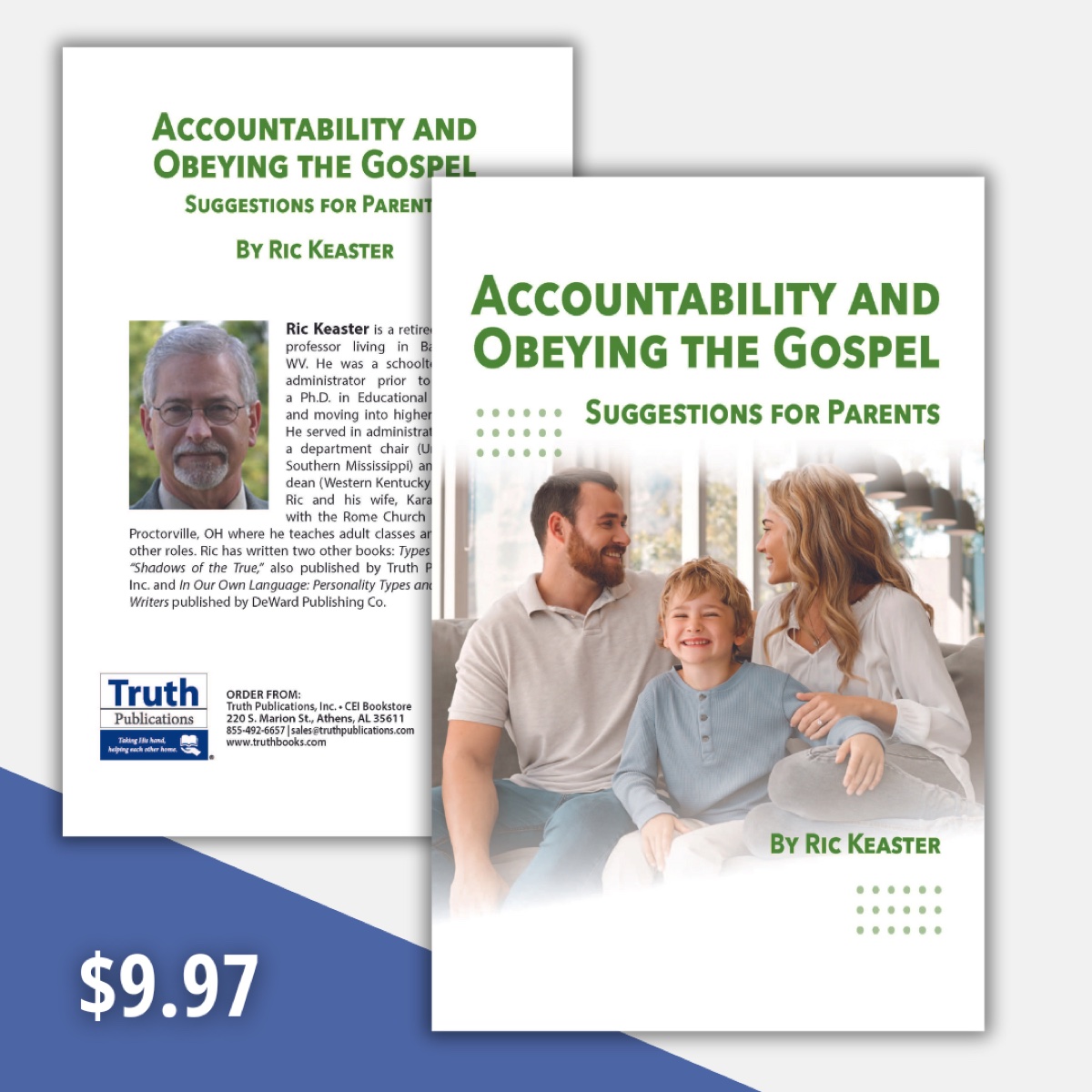
By Kevin Maxey
Synopsis: Christians are blessed with the responsibility and privilege to interest their non-interested neighbors with the glorious gospel.
“Not interested.” We have all perfected this evasive two-word response. Someone approaches you with a clipboard at the mall and you quickly reply, “not interested.” Two salespeople strategically located at a table in front of the grocery store look your way and you immediately say, “not interested.” You accidentally answer a sales call on your phone and you respond, “not interested.”
Despite our determination to keep salespeople at bay, Fortune 500 companies, zealous entrepreneurs, and determined businesses spend millions of dollars each year hoping to capture the attention of those who are not interested. The “not interested” demographic is the target audience that businesses must reach in order to grow their sales. Instead of being defeated and discouraged by the uninterested, they believe that capturing the attention of the “not interested” is an important opportunity for growth. Some are so convicted about the importance of their message they are determined to get the attention of even the non-interested. Advertising companies are experts in gaining the interest of the not interested.
As Christians, we are familiar with audiences who are uninterested. Our non-religious and sectarian neighbors are often not interested in learning more about the Lord and His church. We have knocked on doors, started religious conversations, and invited people to Bible studies, only to hear the words, “I’m not interested.” Sadly, we all have neighbors, co-workers, classmates, and family members who respond in this manner.
What are we to do with our non-religious and sectarian neighbors who are not interested? Are they impossible to reach? Should we be discouraged and defeated? Are we responsible for interesting the uninterested? Or can we view situations of disinterest as exciting opportunities for growth and God’s glory? What can we do to ignite the interest of our non-interested friends and neighbors?
First, it is wise to ask, “Why is my neighbor not interested in the first place?” Where are they coming from? Why are people not interested in religion? Many are not interested because they are satisfied, swamped, and suspicious.
Why do we tell salespeople we are not interested? We are satisfied with what we already have. We think we don’t need what others are offering. Similarly, many are not interested because they think they don’t need God. We live in a prosperous society that finds no need or time for God. In prosperous cultures, who needs a Savior when it feels like we already have heaven on earth? Moses, in Deuteronomy 8:11-14, warned the Israelites about the danger of self-satisfaction.
Take care lest you forget the LORD your God by not keeping His commandments and His rules and His statutes, which I command you today, lest, when you have eaten and are full and have built good houses and live in them, and when your herds and flocks multiply and your silver and gold is multiplied and all that you have is multiplied, then your heart be lifted up, and you forget the LORD your God, who brought you out of the land of Egypt, out of the house of slavery.
The non-interested neighbor believes himself to be self-sufficient and self-reliant. He says, “I’m not interested. I am good on my own. I make my own way. I don’t need anyone or anything.” Some are convinced religion is only for the weak.
We walk by the sales table at the grocery store because we are busy. In the same way, many of our neighbors are uninterested in “religion” because they too are busy. People are swamped with career advancement, home maintenance, children’s sports, social calendars, expensive hobbies, travel, etc. Sadly, they don’t have time for spiritual things because their eyes, hands, and hearts are busy pursuing secular things. The non-interested neighbor often has a secular mindset. He is immersed in a physical, secular, modernistic, humanistic world where there is no room for God. There is no place for God in the secular world. He thinks science and faith don’t mix.
When a stranger approaches us with a flier, we are not interested because we are suspicious. Similarly, many of our secular neighbors are suspicious of the religious. Perhaps they have seen religious hypocrisy. Some may even be former church members who now say they have church PTSD (Post Traumatic Stress Disorder). Maybe he had bad church experiences growing up. As a result, he now lives in trying to be free from religion and the church.
We tend to think we are not responsible to interest the non-interested. What are we to do with those who act uninterested? We may think of passages like, “Do not cast your pearls before swine” (Matt. 7:6), or “Whoever will not receive you or hear your words. . . shake off the dust from your feet” (Matt. 10:14; Acts 13:51). Yes, these are biblical principles, but I fear we may use them out of context in order to justify inaction on our part. Notice the context. These passages imply an initial first effort has been made. Before the disciples were to engage in dust shaking, they first were to go and teach (Mark 6:12; Matt. 10:14). The disciples proactively took the gospel to others. They sparked interest first, and worried about dust later.
Too often I have been guilty of prejudging my neighbor of being uninterested, and as a result, failed to initiate spiritual conversation. It is our job to spark the uninterested. The non-interested have not had the opportunity to hear you. Remember the watchman principle found in Ezekiel 33:8. The watchman’s job was to get the attention of the people. He was to sound the alarm to the unaware. Watchmen are accountable for attention getting.
A Non-Interested Military Man (2 Kings 5:1-5). Naaman was a powerful military commander of the whole Syrian Army. He had no interest in the God of Israel. He had might, money, power, prestige, status, and the pagan gods. He was not interested in Yahweh. He was satisfied, self-sufficient, and busy with other things. Yet, at the end of the story, he becomes very interested, saying, “I know there is no God in all the earth but in Israel” (2 Kings 5:15).
What was the reason for Naaman’s new interest in the divine?
A distinct problem. He was a leper. This powerful, wealthy, important man was now an outcast. His money, his power, his status, his government, and his gods could not save him.
A distinct life. A humble, faithful Israelite girl sparked his interest. She saw his distinct problem and took action. She sent him to God’s prophet. Why did he listen to her? He trusted her because of her distinct manner of life. If she assimilated to the pagan world around her, if she was a hypocrite, or if she was bitter, depressed, and angry with her lot in life, Naaman would not have listened to her!
A distinct answer. The servant girl did not hesitate or water down her answer. Go to God’s prophet Elisha. Perhaps he will cure your leprosy. There is only one God who can save you! Similarly, without hesitation, God, through Elijah, gave Naaman a direct and distinct answer.
Learn how to spark the interest of the uninterested from the story of Naaman the leper through a distinct problem, a distinct life, and a distinct answer. Notice when others have distinct problems. Live such a distinct life that people will notice and ask you for help (1 Pet. 3:15). Live your life in an honorable, trustworthy manner, so that—when the non interested souls around you face their times of crisis (distinct problem) and they see that their world does not save them, then you give a distinct answer. This faith-filled slave girl lived out 1 Peter 3:13-17. Even though she was suffering, she remained righteous, and she was ready to give an answer for the hope within her.
How do we interest the non interested? Live with faith, hope and joy, even and especially during difficult trials. Remember that the non interested are watching you. How you handle being laid off, car accidents, being sued by relentless enemies, dealing with health crises resulting from accidents, illness, or cancer, being exhausted from raising young children, staying married for life, handling church conflicts, being mistreated by the world, facing an unknown and uncertain future, dealing with friends who betray you, abusive parents, the unexpected death of loved ones, or your own coming death. . . will spark the interest of honest souls. Are you living your life in such a way that people come up to you and ask you about God?
It is possible to interest the uninterested. We can reach our non-religious and secular neighbors. Live a distinct life. Speak a distinct message. Belong to a distinct church. “Come to Me, all you who labor and are heavy laden, and I will give you rest” (Matt. 11:28). Will you dare say to Him “not interested?” Come, believe, repent, confess, and be baptized. Find rest, peace and forgiveness in Christ!
Kevin Maxey has worked with the Port Royal church of Christ in Spring Hill, TN, since 2009. He and his wife, Jennifer, have five children. The church website is here. He can be reached here.


Note: Please send additions, corrections and updates here.
Updated: 6/1/2024
17312 Jones Rd, Athens, AL 35613
Sun. Bible Study 9:30 am | Sun. Worship: 10:20 am & 5:00 pm | Wed. Bible Study 7:00 pm
Evangelist: Jonathan Reeder | jonesroadchurch.org | 256-233-3160
514 W Market St, Athens, AL 35611
Sun. Bible Class 9:45 am | Sunday Worship 10:30 am & 5:00 pm | Wed. Bible Study 6:30 pm
Evangelist: David A. Cox | 256-232-1525 | marketstreet-church.com
24190 Wooley Springs Rd, Athens, AL 35613
Sun. Worship 9:30 am & 5:15 pm | Wed. Bible Class 7:00 pm
Evangelists: Bob Watson & Matt Taylor | mtzionchurchofchrist.org
3955 Pine Lane, Bessemer, AL 35022
Sun. Bible Study 9:10 am | Sun. Worship 10:00 am & 5:00 pm | Wed. Bible Class 7:00 pm
Evangelist: David Deason | 256-497-8127 205-425-2352 | Email | Website
2325 Old Columbiana Rd. (near I-65 & Hwy. 31)
Sun. Bible Study 9:00 am | Worship 10:00 am & 5:00 pm | Wed. Bible Study 7:00 pm
Evangelist: Kyle Pope | 205-822-0018 | Website
19965 Sandlin Rd. Elkmont, AL 35620
Sun. Worship 9:30 am & 3:00 pm | Bible Classes: 10:45 am | Wed. Bible Study 7:00 pm
Evangelist: Lance R. Taylor | 256-777-0990 | sandlinroadchurch.com
851 N. Pine St. (Located next to University campus)
Sun. Bible Study 9:30 am | Worship 10:15 am & 5:00 pm | Wed. Bible Study 7:00 pm
Evangelist: Kenny Moorer | 256-766-0403
601 Pineywood Road, Gardendale, AL, 35071 (Located 10 miles N of Birmingham)
Sun. Bible Study 9:30 am | Worship: 10:25 am & 5:00 pm | Wed. Bible Study: 7:00 pm
Evangelists: Andrew Smith & Jason Shackleford | 205-631-2131 | gardendalechurchofchrist.com
129 Hillcrest Rd, Mobile, AL 36608
Sun. Worship 9-9:30 am | Bible Study 9:30-10:30 am | Worship 10:30-11:30 am | Wed. Bible Study 7:00 pm
Evangelist: Ken Sils | 765-307-8048 | 251-342-4144 or 342-2041 | westmobilechurch.com
271 Highway 65 N, Conway, AR 72032
Sun. Bible Study 9:00 am | Worship 10:00 am & 5:00 pm | Wed. Bible Study 7:00 pm
Evangelist: Bruce Reeves | Bldg: 501-336-0052 | hwy65churchofchrist.org
2655 Prince St., Conway, AR 72034
Sun. Worship 9:00 pm | Bible class 9:50 am | Worship & Lord’s Supper: 10:40 am | Wed. Bible Class 7:00 pm
501-450-8640
2323 South 46th St.
Sun. Bible Study 9:45 am | Worship 10:30 am | Wed. Bible Study 7:00 pm
churchofchristfortsmith.com
407 Bella Vista Dr.
Sun. Bible Study 9:30 am | Worship 10:15 am & 5:00 pm | Wed. Bible Study 7:00 pm
Evangelist: Norman E. Sewell | 870-741-9104 or 870-741-5151 | cappsroad.org
514 Airport Rd.
Sun. Bible Study 10:00 am | Worship 11:00 pm & 6:00 pm | Wed. Bible Study 7:00 pm
Evangelist: Dick Blackford | 870-933-9134
145 N. Country Club Rd.
Sun. Bible Study 9:00 am | Worship 10:00 am & 6:00 pm | Wed. Bible Study 7:00 pm
Evangelist: Brenden Ashby | 520-326-3634 | churchofchristtucson.org
17903 Ibbetson Ave.
Sun. Bible Study 9:45 am | Worship 10:50 am & 6:00 pm | Wed. Bible Study 7:30 pm
562-866-5615 | roseavenue.org
3433 Studebaker Rd.
Sun. Bible Study 9:50 am | Worship 10:45 am & 5:30 pm | Wed. Bible Study 7:00 pm
JP Flores | 562-420-2363 or Mark Reeves | 562-377-1674 | justchristians.org
449 W. Allen Ave., Suite 120, San Dimas, CA 91773
Sun. Bible study 10:00 am | Worship 11:00 pm & 4:00 pm | Wed. Bible Study 7:30 pm
909-788-9978 | sandimaschurchofchrist.com
126 West Harvard St. | Suite 6
Sun. Bible Study 9:30 am | Worship 10:30 am
Evangelist: Richie Thetford | poudrevalleychurchofchrist.org
1414 Hawk Parkway, Unit C
Sun. Worship 11:00 pm | Bible Study 2 pm & 1:30 pm
970-249-8116 | sanjuanchurchofchrist.org
64 Casting Lake Rd.
Sun. Bible Study 9:00 am | Worship 10:00 am & 6:00 pm | Wed. Bible Study 7:00 pm
850-622-3817 | southwaltonchurchofchrist.com | Location change coming in 2022: 497 Church St Santa Rosa Beach, FL 32459
196 Ave C, Geneva, FL 32732
Sun. Bible Study 10:00 am | Worship 10:45 am
(689) 229-9888 | ChurchofChristatGeneva.com
6 Lane Dr., Mary Esther, FL 32569
Sun. Bible Study 9:30 am | Worship 10:30 am & 5:00 pm | Wed. Bible Study 7:00 pm
850-244-9222 | mecoc.org | Evangelist: Chris Simmons | chrissimmons6ten@gmail.com
3940 S. Bumby Ave.
Sun. Communion: 9:30 am | Bible Study 10:00 am | Praise & Preaching: 10:55 am (No pm Service) | Wed 7:00 pm
Evangelist: Ken Chapman
Office: 407-851-8031 | bumby.org | Note: Please call for current worship and Bible study times.
621 E. Wheeler Rd.
Sun. Bible Study 10:00 am | Worship 10:50 am & 6:00 pm | Wed. Bible Study 7:30 pm
Evangelist: Bobby Witherington | 813-684-1297 | seffnercoc.org
Route 116 (near Callaway Gardens)
Sun. Bible Study 10:00 am | Worship 11:00 pm & 6:00 pm | Wed. Bible Study 7:30 pm
Evangelist: Tommy W. Thomas | 706-628-5117 or 628-5229 | pmvchurch.com
370 N. Shilling | P.O. Box 158-83221
Sun. Bible Study 10:00 am | Worship 11:00 pm | Wed. Bible Study 7:30 pm
208-785-6168 or 681-1552
1310 NE 54th Ave, Des Moines, IA 50313
Sun. Bible Study 9:45 am | Worship 10:40 am | Wed. Bible Study 7:00 pm
515-262-6799 | www.dsmcoc.com
1236 63rd St. (Dir: 1.5 miles E of I355)
Sun. Bible Study 9:00 am | Worship 9:55 am & 6:00 pm | Wed. Bible Study 7:30 pm
Evangelist: Steve Wolfgang | 630-968-0760 | dgcoc.org
1100 S. 17th St.
Sun. Bible Study 9:30 am | Worship 10:30 am & 6:00 pm | Wed. Bible Study 7:00 pm
217-234-3702
16224 S Vincennes Ave.
Sun. Bible Study 9:00 am | Worship 10:00 am & 4 pm | Wed. Bible Study 7:00 pm
Evangelist: Donald Hawkins | 708-339-1008 | southeastchurchofchrist.com
Meeting @ Sleep Inn Suites and Motel | 1101 North Cummings Lane, Washington, IL 61571
Sun. Worship: 11:30 am | Bible Study: 12:30 pm | Wed. Bible Study 6:30 pm @ home of Tim Sundlie, call for address
Evangelist: Tim Sundlie | 608-796-9028 | sunbeads1@gmail.com | tazewellcococ.org
407 W Lewis and Clark Parkway, Clarksville, IN 47129
Sun. Bible Study 9:30 am | Worship 10:30 am & 6:00 pm | Wed. Bible Study 7:30 pm
Elders: Allen L. Morris (812) 989-5838 and Stephen W. Nale (502) 727-7559 or (812) 944-2305 | clarksvillechurchofchrist.org
Sun. Bible Study 9:30 am | Worship 10:30 am | Wed. 7:00 pm
765-676-6404 | jamestowncoc.com
15530 Herriman Blvd, 46060
Sun. Bible Study 10:00 am | Worship 11:00 am | Wed. Bible Study 7:00 pm
Evangelist: John Smith | preacherjohn54@att.net | 317-501-8035 or 317-501-0249 or 317-701-1204
400 Lafayette Ave. | P.O. Box 34
Sun. Bible Study 9:45 am | Worship 10:30 am & 6:00 pm | Wed. 7:00 pm
812-279-4332
(First St. & Karnes Ct.)
Sun. Bible Study 9:45 am | Worship 10:30 am & 5:00 pm | Wed. Bible Study 7:00 pm
Evangelist: Jeremy Goen | 812-967-3437 or 967-3520 | pekinchurchofchrist.com
302 S. Fourth Ave., Mulvane KS 67110 | Mail: PO Box 11
Sun. Bible Classes: 10:00 am | Worship 11:00 am | Wed. Bible Study 7:00 pm
Evangelist: Jay Horsley | 316-644-8503 | mulvanechurch.com | mulvanechurch@gmail.com
5600 SW 17th St, Topeka, KS 66604
Sun. Bible Study 9:15 am | Sun. Worship 10:30 am | Wed. Bible Study 7:00 pm
785-235-8687 or 785-273-7977 | 17thstreetchurchofchrist.org
1235 Williams St.
Sun. Worship 10:00 am | Bible Study After am Worship & 6:00 pm | Wed. Bible Study 7:00 pm
Evangelist: Jerid Gunter | 270-274-4451
8081 US Hwy 68-East, Benton, KY 42025
Sun. Bible Study 9:00 am | Worship 10:00 am | Wed. Bible Study 6:00 pm
270-354-9451 | fairdealingmarc@gmail.com | churchofchristatfairdealing.com | Conveniently located near Kenlake State Resort Park on the western shore of Kentucky Lake.
612 Broadway
Sun. Bible Study 9:45 am | Worship 10:30 am & 5:00 pm | Wed. Bible Study 6:30 pm
Evangelist: Charles J. White | 270-422-3878
107 Sunny Hill Dr.
Worship 9:30 am & 11:30 am | Bible Study 10:30 am | Wed. Bible Study 7:00 pm
Evangelist: Steve Lee | 270-789-1651 | sunnyhillcoc.com
103 N. Main St. | P.O. Box 233
Sun. Bible Study 10:00 am | Worship 10:45 am & 5:00 pm | Wed. Bible Study 7:00 pm
Evangelist: Jarrod Jacobs | 270-589-4167 or 270-274-3065
385 E. Lexington Ave.
Sun. Worship 10:00 am | Bible Study 11:15 am & 5:00 pm | Wed. Bible Study 7:00 pm
Evangelist: B.J. Sipe | 859-236-4204
18 Scott Drive, Florence, KY 41042
Sun. Worship 9:30 am & 5:30 pm | Sun. Bible Study 10:30 am | Wed. Bible Study 7:00 pm
859-371-2095 | nkcofc.com
1733 Bowling Green Rd.
Sun. Bible Study 9:00 am | Worship 10:00 am & 6:00 pm | Wed. Bible Study 7:00 pm
Evangelist: Steve Monts | 270-776-9393 | 31wchurchofchrist.com
733 Mill St. Leitchfield, KY 42754
Sun. Bible Study 9:30 am | Worship 10:00 am Communion 10:55 am | Wed. Bible Study 6:00 pm
270-230-6144 | millstreetchurchofchrist.org
1803 Dixie Garden Dr.
Sun. Bible Study 9:30 am | Worship 10:30 am & 6:00 pm | Wed. Bible Study 7:00 pm
Evangelist: Michael Hardin | michaelhardin1123@att.net | 502-937 2822
3221 East Hebron Lane
Sun. Bible Study 9:00 am | Worship 10:00 am & 5 pm | Wed. Bible Study 7:30 pm
Evangelist: Danny Linden & Ron Halbrook | 502-957-5115 or 502-955-1748 | hebronlanechurchofchrist.com
405 Orice Roth Rd. | 70737 (Baton Rouge area)
Sun. Bible Class 9:30 am | Worship 10:30 am & 6:00 pm | Wed. Bible Study 7:00 pm
Evangelist: R.J. Evans | rjevans@eatel.net | 225-622-4587
856 Brighton Ave. (Breakwater School) | Leave Maine Turnpike at Exit 48
Sun. Bible Study 10:00 am | Worship 11:00 pm w/ second service immediately following am worship | Mid-week Bible Study (please call for times & places)
207-839-3075 or 839-8409
3084 Creek Drive SE, #1-C, Kentwood, MI 49512 | P.O. Box 8446, Kentwood, Mich. 49508 (Grand Rapids area)
Sun. Worship 11:00 am | Sun. Bible Study 12:30 pm | Wed. Bible Study 7:00 pm
Evangelist: Joseph Gladwell | cedarsprings98@gmail.com
414 South Main Street
Sun. Bible Study 10:00 am | Worship 11:00 am | Wed. Bible Study 6:00 pm
Evangelist: Ryan Thomas | 810-837-1302 or 989-389-3226 | northernmichiganchurchofchrist.com
2820 Grandview Ave, Meridian, MS 39305
Sun. Bible Study 10:00 am | Sun. Worship 11:00 pm | Wed. 6:30 pm
Ron Cooper: 601-934-3675 | roncooper@bellsouth.net
Ricky Ethridge: 601-737-5778 | rickymarsha@bellsouth.net
2110 E State Line Rd. (Exit I-55) (Memphis area)
Sun. Bible Study 9:30 am | Worship 10:30 am | Wed. Bible Study 7:00 pm
Evangelist: James A. Brown | Bldg: 662-342-1132
805 Meadow Rd, Severn, MD 21144
Sun. Bible Study 10:00 am | Sun. Worship 11:00 pm & 6:00 pm | Wed. Bible Study 7:30 pm
Evangelist: Brandon Trout | 410-969-1420 or 410-551-6549 | swcofchrist.com
422 N Linton St., Blodgett, MO 63824
Sun. Worship 10:00 am | Wed. Bible Study 7:00 pm
Evangelist: Russell Rice | 573-475-0417
4000 SW Christiansen
Sun. Worship 9:00 pm | Bible Study 10:00 am | Worship 11:00 pm | Wed. Bible Study 7:00 pm
Evangelist: Brett Hogland | 816-228-9262
432 Eagle Rock Rd, Branson, MO 65616
Sun. Worship 9:30 am | Bible Study 10:30 am | Sun. Evening Worship 5:00 pm | Wed. Bible Study 6:00 pm
Evangelist: Philip North | 417-239-1036 | primrosenor@suddenink.net | eaglerockroadchurchofchrist.org
2912 Bloomfield Rd
Sun. Bible Study 9:15 am | Worship 10:00 am | Wed. Bible Study 7:00 pm
Seth McDonald & Jerry Lee Westbrook | 573-837-1001 | capecountycoc@gmail.com | capecountycoc.com
703 Harrison St.
Sun. Bible Study 10:00 am | Worship 11:00 pm & 6:00 pm | Wed. Bible Study 7:00 pm
Evangelist: Nolan Glover | 870-650-1648 | westsidechurchofchrist.us
685 Sidney St.
Sun. Bible Study 9:30 am | Worship 10:15 am & 5:00 pm | Wed. Bible Study 7:00 pm
Evangelist: Lynn Huggins | 573-265-8628
2727 County Line Rd.
Sun. Bible Study 9:00 am | Worship 9:50 am | Wed. Bible Study 7:00 pm
816-279-4737 | countylinechurchofchrist.com
Bell St & S 7th St. Beatrice, NE 68310
Sun. Bible Study 9:00 am | Worship 10:00 am & 6:30 pm
402-233-4102 or 402-228-3827 | churchofchrist7bell.org
5327 S. Tryon Street, Charlotte, NC 28217
Sun. Bible Study 9:30 am | Sun. Worship 10:30 am | Wed. Bible Study 7:30 pm
704-525-5655 | charlottechurchofchrist.org
3781 East Highway 27, Iron Station, NC 28080
Sun. Bible Study: 10:00 am | Sun. Worship 11:00 am & 6:00 pm | Wed. Bible Study 7:00 pm
Evangelist: Stan Adams | 704-748-9777 (Bldg) & 704-748-3747 (Jerry) | lincolnncchurch@gmail.com | lincolncoc.com
1031 Welford Dr, Beavercreek, OH 45434 (located a few miles E of Dayton)
Sun. Short Worship: 9:30 am | Bible Study 10:05 am | Sun. Worship 11:00 am | Wed. Bible Study Adults: 1:00 pm & All ages: 7:00 pm
Evangelist: Heath Rogers | 937-426-1422 | knollwoodchurch.org
28 W. Main St., Dayton, OH 45449
Sun. Worship 9:00 pm | Bible Study 9:30 am | Worship 10:25 am | Wed. Bible Study 7:00 pm
Evangelists: Michael Grushon 937-866-5162 or Alan Beck 937-469-3311 | wc-coc.org
6417 Franklin-Lebanon Rd. Franklin, OH 45005
Sun. Bible Study 10:00 am | Worship 10:45 am | Tues. Bible Study 6:30 pm
Evangelist: Josh Lee | 937-789-8055 or 937-746-1249 | franklin-church.org
1973 W Main St. New Lebanon, OH 45345
Sun. Bible Study 9:30 am | Worship 10:30 am, & 5:00 pm | Wed. Bible Study 7:00 pm
Evangelist: Bruce Hastings | 937-687-7150 or 937-478-0367
80 Sandhill Rd. Reno, OH 45773
Sun. Bible Study 9:30 am | Worship 10:30 am & 6:30 pm | Wed. Bible Study 7:00 pm
Evangelist: Mark Childers | 304-615-1091 | 740-374-9827 | mariettarenochurchofchrist.org
4110 Frey Rd., Northwood, OH 43619 (Toledo Area)
Sun. Worship 11:00 pm
Evangelist: Donald Jarabek | 419-893-3566 & 567-331-2269
33226 Children’s Home Rd., Pomeroy, OH 45769
Sun Worship 10:00 am & 5 pm | Bible Study 11:00 am | Wed. Bible Study 6:00 pm
Jack Hunt | wmhunt55@gmail.com | 740-645-4612 | Find us on Facebook!
2120 No. A St.
Sun. Bible Study 9:45 am | Worship 10:45 am & 5:30 pm | Wed. Bible Study 7:00 pm
Evangelist: Rob Lungstrum | 918-931-1362 or 918-423-3445
4110 NE 122nd Ave #101, Portland, OR 97230
Sun. Bible Study 10:00 am | Worship 11:00 am | Thur. Bible Study 7:00 pm
Evangelist: Samuel A. Matthews | 971-331-2838 | Bldg: 503-432-8697 | samatm@comcast.net | libertynwchurchofchrist.org
3702 E. Long St.
Sun. Bible Study 9:30 am | Worship 10:30 pm & 5:30 pm | Wed. Bible Study 7:30 pm
Bldg: 541-367-1599 | http://www.sweethomechurch.com | churchsweethome@yahoo.com
7222 Germantown Ave, Philadelphia, PA 19119
Sun. Bible Study 10:15 am | Sun. Worship: 11:15 am | Tues. Bible Study: 7:00 pm
Evangelist: James H. Baker, Jr. | 215-248-2026 | mtairychurchofchrist.org
3370 Broad St. Extension
Sun. Bible Study 9:30 am | Worship 10:30 am & 5:30 pm | Wed. Bible Study 7:00 pm
Evangelist: A.A. Granke, Jr. | 803-499-6023
4013 Edmund Hwy. (Hwy. 302), West Columbia, SC 29170
Sun. Bible Study 9:30 am | Sun. Worship 10:30 am & 5:00 pm | Wed. Bible Study 7:00 pm
Evangelist: Jerry Cleek | 219-313-1108 | Website
326 Powell Road, Collierville, TN 38017
Sun. Bible Study 9:00 am | Worship 10:00 am | Wed. Bible Study 7:00 pm
Evangelist: Doug Seaton | 901-854-6816 or 901-634-7840
417 Mooresville Pike | (Located .8 mi. N. of Hwy. 50/Jas. Campbell)
Sun. Bible Study 9:30 am | Worship 10:30 am & 3:30 pm | Wed. Bible Study 7:00 pm
931-388-5828 or 931-381-7898 | mooresvillepikecoc.com
4894 Hooper Hwy. | 37722 | (Located 15 mi. E. of Gatlinburg on Hwy. 321)
Sun. Bible Study 10am | Worship 11:00 pm & 5:00 pm | Wed. Bible Study 6:00 pm
Evangelist: Olie Williamson | 423-487-5540 or 423-748-0844
350 N Main St. Kingston Springs, TN 37082
Sun. Bible Study 9:00 am | Worship 10:00 am & 5:00 pm | Wed. Bible Study 7:00 pm
kscoc.com
108 Locust St.
Sun. Bible Study 9:30 am | Worship 10:30 am & 5:00 pm | Wed. Bible Study 7:00 pm
Evangelist: Daniel H. King, Sr. | 931-379-3704 or 931-964-3924 | lscoc.com
1110 Cason Lane
Sun. Bible Study 9:00 am | Worship 10:00 am & 5:00 pm | Wed. Bible Study 7:00 pm
Bldg: 615-896-0090 | casonlanechurch.org
2091 Pitts Ln, Murfreesboro, TN 37130 (located at the corner of Northfield Blvd and Pitts Lane)
Sun. Bible Study 9:30 am | Sun. Worship 10:30 am & 6:00 pm | Wed. Bible Study 7:00 pm
Evangelist: David Bunting | 615-893-1200 | GodsRedeemed.org
7471 Charlotte Pike
Sun. Bible Study 9:00 am | Worship 10:00 am & 5:00 pm | Wed. Bible Study 7:00 pm
Evangelist: Lee Wildman | 615-952-5458 or 615-356-7318
423 Donelson Pike
Sun. Bible Study 9:00 am | Worship 9:55 am & 5:00 pm | Wed. Bible Study 7:00 pm
Evangelist: Johnny Felker | 615-883-3118 | perryheights.faithweb.com
1414 W. Exchange Pkwy
Sun. Bible Study 9:00 am | Worship 10:00 am & 5:00 pm | Wed. Bible Study 7:00 pm
Evangelist: Jerry King 214-504-0443 or 972-727-5355 | twincreekscoc.com
E. Service Rd. off I-35, N. of Alvarado
Sun. Bible Study 10:00 am | Worship 11:00 pm & 6:00 pm | Wed. Bible Study 7:00 pm
817-295-7277 or 790-7253
605 E. Adoue St., Alvin, TX 77511
Sun. Bible Study 9:30 am | Worship 10:30 am & 5:00 pm | Wed. Bible Study 7:30 pm
Evangelist: Mark Mayberry | mark@ascoc.org | ascoc.org
701 North Pruett St.
Sun. Bible Study 9:45 am | Worship 10:40 am & 6:30 pm | Wed. Bible Study 7:00 pm
Bldg: 281-422-5926 | Weldon: 713-818-1321 | biblework.com
2919 Main St/FM 517 E., Dickinson, TX 77539
Sun. Bible Study 10:00 am | Sunday Worship 11:00 am & 6:00 pm | Wed. Bible Study 7:00 pm
713-298-6673
301 Robison St.
Sun. Bible Study 9:30 am | Worship 10:30 am & 6:00 pm | Wed. Bible Study 7:00 pm
Evangelist: Phillip Stuckey | 361-782-5506 or 361-782-2844 | ednachurchofchrist.org
3277 Pendleton Rd.
Sun. Bible Study 9:30 am | Worship 10:30 am & 5:00 pm | Wed. Bible Study 7:00 pm
915-855-1524
4303 18th St, Bacliff, TX 77518
Sun. Bible Study 9:00 am | Sun. Worship 10:00 am & 6:00 pm | Wed. Bible Study 7:00 pm
Evangelist: Richard Lay | bacliffchurchofchrist.org
6110 White Settlement Rd. 76114
Sun. Bible Study 9:30 am | Worship 10:30 am & 6:00 pm | Wed. Bible Study 7:30 pm
817-738-7269
Old Granbury Rd Church of Christ
4313 Old Granbury Rd, Granbury, TX 76049
Sun. Bible Study 9:30 am | Sun. Worship 10:30 am | Wed. Bible Study 7:00 pm
Evangelist: Chip Foster | 817-913-4209 or 817-279-3351 | oldgranburyrdchurch.org
2510 Fry Rd, Houston, TX 77084
Sun. Bible Study 9:45 am | Worship 10:30 am & 6:00 pm | Wed. Bible Study 7:00 pm
Evangelist: David Flatt | fryroad.org | church@fryroad.org
6111 Indiana Ave, Lubbock, TX 79413
Sun. Bible Study 10:00 am | Sun. Worship 9:00 am & 11:00 am | Wed. Bible Study 7:00 pm
806-795-3377 | lubbockchurch.com
1820 Mansfield Webb Rd, Mansfield, TX 76063
Sun. Bible Study 9:30 am | Sun. Worship: 10:20 am & 5:00 pm | Wed. Bible Study 5:30 pm.
Evangelist: Tom Roberts | 817-996-3926 | northsidecofc.us
612 S Shawnee St, Nacogdoches, TX 75961
Sun. Bible Study 9:45 am | Worship 10:30 am & 6:00 | Wed. Bible Study 6:00 pm
Minister: Van Dennis | 936-615-2950
3831 N.E. Stallings Dr.
Sun. Bible Study 9:30 am | Worship 10:20 am & 6:00 pm | Wed. Bible Study 7:00 pm
Evangelists: Randy Harshbarger & Jay Taylor
268 Utopia Ave. (Dir: I-37 S.E. Exit Pecan Valley)
Sun. Bible Study 9:30 am | Worship 10:30 am & 5:00 pm | Wed. Bible Study 7:00 pm
Evangelist: Jesse Garcia | 210-660 0409 | pecanvalleychurchofchrist.org
314 N. Tolbert
Sun. Bible Study 9:30 am | Worship 10:30 am & 5:00 pm | Wed. Bible Study 7:00 pm
Evangelist: Ronald Stringer
4404 Twin City Blvd.
Sun. Bible Study 9:30 am | Worship 10:30 am & 6:00 pm | Wed. Bible Study 7:30 pm
Evangelist: Jason Garcia (yourfriendjgar@gmail.com) or (leonvalleychurch@gmail.com) | 254-939-0682 | leonvalleychurch.org
2301 Franklin Dr., Texarkana, AR 71854
Sun. Bible Study 9:30 am | Worship 10:15 am | Wed. Bible Study 7:00 pm
870-772-0746 | txkchurch.com
340 E Warren St. (in Hewitt, a suburb of Waco)
Sun. Bible Class 9:30 am | Worship 10:30 am & 5:00 pm | Wed. Bible Study 7:00 pm
Evangelist: Marc Smith | 254-292-2482 or 652-7698
4500 Kell West Blvd, Wichita Falls, TX 76309
Sun. Bible Class 9:30 am | Worship 10:30 am & 3:30 pm | Wed. Bible Study 6:30 pm
Evangelist: Dennis L. Scroggins | 512-626- 5702 | dennis.scroggins@gmail.com | floralheightschurchofchrist.org
Please mail all correspondence to 1504 Hayes St, Wichita Falls, TX 76309
Meeting in the Capital City Grange Hall, 6612 Route 12 Berlin, VT 05602
Sun. Bible Study 9:00 am | Worship 10 am | Tues. Evening in Homes
Evangelist: Open | montpelierchurchofchrist.com | P.O. Box 70, Williamstown, VT 05679 | For questions or directions: Wade Holt 802-485-4311
217 Taxus St., Chesapeake, VA 23320
Sun. Bible Study 10:00 am | Worship 11:00 am & 5:00 pm | Wed. Bible Study 7:00 pm
Evangelist: Steven Matthews | 757-436-6900 | tidewaterchurchofchrist.com
8330 Doublecreek Court, Chesterfield, VA 23832 (Located in teh Metro Area; Courthouse Rd. at Double Creek Ct. 2.2 miles S of Rt. 288)
Sun. Bible Study 9:30 am | Worship 10:30 am & 5:00 pm | Wed. Bible Study 7:00 pm
Evangalist: Nathan L. Morrison | 804-778-4717 | courthousechurchofchrist.com
1208 W. 41st St.
Sun. Bible Study 10:00 am | Worship 11:00 pm & 6:00 pm | Wed. Bible Study 7:00 pm
Evangelist: Jack Bise, Jr.
2970 Old Leaksville Rd.
Sun. Bible Study 10:00 am | Worship 11:00 pm & 5:30 pm | Wed. Bible Study 7:00 pm
276-956-6049 | churchofchristatridgeway.com
929 Indiana Ave. NE (5 min. from Roanoke Convention Center)
Sun. 1st Lesson 9:15 am | Bible Study 10:00 am | Worship 11:00 pm | Wed. Bible Study 7:30 pm
Evangelist: Brent Paschall | 540-344-2755 | blueridgecoc.org
5652 Haden Rd.
Sun. Bible Study 10:00 am | Worship 11:00 am
Robert Mallard | 757-464-4574
1860 Mt Baker Hwy, Bellingham, WA 98226,
Sun. Bible Study 9:30 am | Worship 10:30 am & 6:00 pm | Wed. Bible Study 7:00 pm
Evangelist: Steven J. Wallace | 360-752-2692 or 806-787-5088 | mtbakercoc.com & revelationandcreation.com
Meeting at Gray Middle School, 6229 S. Tyler St., Tacoma, WA 98409
Note: Please see webpage for updated meeting location and times.
Sun. Bible Study 10:00 am | Worship 11:00 pm | Wed. Bible Study 7:00 pm (Online)
253-242-3098 | tacomachurch@gmail.com | tacomachurch.com
7 Old Davisson Run Rd, Clarksburg, WV 26301
Sun. Bible Study 9:30 am | Worship 10:20 am
304-622-5433 | wsccoc.com | info@wsccoc.com
1929 Morgantown Ave.
Sun. Bible Study 10:00 am | Worship 10:45 am & 6:00 pm | Wed. Bible Study 7:00 pm
304-363-8696 or 304-844-2437
210 Cedar Ave, Moundsville, WV 26041
Sun. Bible Study 9:30 am | Sun. Worship 10:30 am & 6:00 pm | Wed. Bible Study 7:00 pm
Evangelist: Tony Huntsman | 304-845-4940 | cedarsower.com