
(June, 2024 | No. 6 | Vol. 68)
6/1/2024
Truth Magazine (ISSN 1538-0793) is published once a month by Truth Publications, Inc., 220 S. Marion, Athens, AL 35611.
© 2024 Truth Publications, Inc. All Rights Reserved.
Manuscripts should be sent to the editor, Mark Mayberry, at mark@truthpublications.com. Link.
Subscriptions, renewals & other correspondence should be sent to: Truth Magazine, 220 S. Marion, Athens, AL 35611 or by emailing us at subscriptions@truthmagazine.com. Link.
Book orders should be sent to: CEI Bookstore | truthbooks.com | Street Address: 220 S. Marion, Athens, AL 35611 | Phone: (855) 492-6657 | Email: sales@truthbooks.com Link.
Online Website: truthmagazine.com
DISCLAIMER: Books in ads are screened, but an ad does not mean unqualified endorsement. All books should be tested by Scripture. We appreciate readers notifying us if they find some glaring fault in the ads.
By Mark Mayberry
Synopsis: In this issue of Truth Magazine, we offer two articles that consider “issues” that confront brethren. As Donnie Rader reminds us, “Old Issues Do Not Fade Away,” but repeatedly arise to threaten the church. My editorial approaches the same subject from a different perspective: Progressive change agents assault the biblical pattern in various ways, but with one consistent aim: “Out with the Old, In with the New!” Nonetheless, like the Athenians, who spend their time in nothing other than telling or hearing something new (Acts 17:21), their modern counterparts sneer at foundational truths (Acts 17:32).
Saul Alinsky, the radical community organizer and mentor of Barack Obama and Hillary Clinton, is famous for the quote “The issue is never the issue. The issue is always the revolution.” This statement captured Alinsky’s belief that various social causes championed by radicals were not the actual goal, but merely a means of accumulating power and fomenting revolution against the established order.
Alinsky would scream at his followers that their true aim should be “to organize for power,” not just to help the poor or oppressed, as they claimed. The quote suggests that causes like racial justice, women’s rights, or environmentalism are exploited by radicals not out of genuine concern, but as “occasions to advance the real cause which is the accumulation of power to make the revolution.”
Radicals in the 1960s embraced this philosophy of using any available issue as a revolutionary vehicle. It remains the guiding principle of the progressive movement today in the cultural, political, and religious arenas. It reveals the underlying agenda of overthrowing the existing social and political system, rather than addressing the stated problems. Alinsky’s tactics and mindset continue to influence modern activist movements seeking the fundamental transformation of America.
In the United States, culture norms and political institutions have been under constant assault for the past 100 years—starting with Woodrow Wilson’s belief that the Constitution should be treated as a living document, and thus subject to wholesale alteration. “Out with the old, in with the new” has been the guiding principle of the progressive movement ever since, resulting in the New Deal, the Great Society, the Sexual Revolution, Abortion Rights and Reproductive Freedoms, the Gay Rights Movement, the Environmental Movement (Global Cooling, Global Warming, Climate Change), the Green New Deal (Cows Are Bad, Bugs Are Good), the COVID Censorship and Clampdown, the George Floyd Riots, Black Lives Matter, Gender Fluidity and Diaspora, and more recently, Support for Palestine Protests that have “spontaneously” that have crippled elite universities, which started with ill-informed professors and students chanting “From the River to the Sea, Palestine Shall Be Set Free,” but culminated with shouts of “Death to Israel,” and “Death to America!”
In the first century, the church was buffeted by a variety of false teachers, such as the Judaizers (Acts 15:1-2), the Gnostics (1 John 4:1-3), Hymenaeus and Philetus (2 Tim. 2:16-18), those who promoted the doctrines of Balaam (Rev. 2:14), the Nicolaitans (Rev. 2:15), and that woman, Jezebel (Rev. 2:20).
Contemporary Christians have been similarly buffeted by a denial of divine creation, a denial of biblical inspiration, a denial of biblical morality, rejection of biblically defined gender roles in marriage, etc. In the church, brethren have faced controversies over the missionary society and instrumental music, institutionalism, and the social gospel, etc. In more recent years, we have witnessed the rise of those who promote neo-Calvinism and the grace-unity movement, the gospel-doctrine distinction, the A.D. 70 doctrine, acceptance of error on marriage, divorce and remarriage, an increasing tolerance for worldliness, immodesty, social drinking, etc.
In the garden of Eden, the issue was not simply avoiding fruit from a tree that was especially potent or poisonous (Gen. 3:1-6); rather, it was a question of whether Adam and Eve would submit to God’s simple decree of abstinence (Gen. 2:15-17).
Now the serpent was more crafty than any beast of the field which the LORD God had made. And he said to the woman, “Indeed, has God said, ‘You shall not eat from any tree of the garden’?” The woman said to the serpent, “From the fruit of the trees of the garden we may eat; but from the fruit of the tree which is in the middle of the garden, God has said, ‘You shall not eat from it or touch it, or you will die.’” The serpent said to the woman, “You surely will not die! For God knows that in the day you eat from it your eyes will be opened, and you will be like God, knowing good and evil.” When the woman saw that the tree was good for food, and that it was a delight to the eyes, and that the tree was desirable to make one wise, she took from its fruit and ate; and she gave also to her husband with her, and he ate (Gen. 3:1-6).
Then the LORD God took the man and put him into the garden of Eden to cultivate it and keep it. The LORD God commanded the man, saying, “From any tree of the garden you may eat freely; but from the tree of the knowledge of good and evil you shall not eat, for in the day that you eat from it you will surely die” (Gen. 2:15-17).
After the flood, as the descendants of Noah centralized their cultural aspirations on the plains of Shinar (Gen. 11:1-9), the issue was not the tower; rather, it was a refusal to comply with God’s mandate to Noah: “Be fruitful and multiply, and fill the earth. . . Populate the earth abundantly and multiply in it” (Gen. 9:1, 7).
Now the whole earth used the same language and the same words. It came about as they journeyed east, that they found a plain in the land of Shinar and settled there. They said to one another, “Come, let us make bricks and burn them thoroughly.” And they used brick for stone, and they used tar for mortar. They said, “Come, let us build for ourselves a city, and a tower whose top will reach into heaven, and let us make for ourselves a name, otherwise we will be scattered abroad over the face of the whole earth.” The LORD came down to see the city and the tower which the sons of men had built. The LORD said, “Behold, they are one people, and they all have the same language. And this is what they began to do, and now nothing which they purpose to do will be impossible for them. Come, let Us go down and there confuse their language, so that they will not understand one another’s speech.” So the LORD scattered them abroad from there over the face of the whole earth; and they stopped building the city. Therefore, its name was called Babel, because there the LORD confused the language of the whole earth; and from there the LORD scattered them abroad over the face of the whole earth (Gen. 11:1-9).
And God blessed Noah and his sons and said to them, “Be fruitful and multiply, and fill the earth” (Gen. 9:1).
As for you, be fruitful and multiply; populate the earth abundantly and multiply in it (Gen. 9:7).
When Jeroboam changed the site of worship for the northern ten tribes, the issue was not the unsuitability of Dan or Bethel (1 Kings 12:25-33); rather, he sinned by not recognizing that God alone had the right to choose where He was to be worshipped (Deut. 12:8-14; 16:5-6, 16-17).
Then Jeroboam built Shechem in the hill country of Ephraim and lived there. And he went out from there and built Penuel. Jeroboam said in his heart, “Now the kingdom will return to the house of David. If this people go up to offer sacrifices in the house of the LORD at Jerusalem, then the heart of this people will return to their lord, even to Rehoboam king of Judah; and they will kill me and return to Rehoboam, king of Judah.” So the king consulted, and made two golden calves, and he said to them, “It is too much for you to go up to Jerusalem; behold your gods, O Israel, that brought you up from the land of Egypt.” He set one in Bethel, and the other he put in Dan. Now this thing became a sin, for the people went to worship before the one as far as Dan. And he made houses on high places and made priests from among all the people who were not of the sons of Levi. Jeroboam instituted a feast in the eighth month on the fifteenth day of the month, like the feast which is in Judah, and he went up to the altar; thus he did in Bethel, sacrificing to the calves which he had made. And he stationed in Bethel the priests of the high places which he had made. Then he went up to the altar which he had made in Bethel on the fifteenth day in the eighth month, even in the month which he had devised in his own heart; and he instituted a feast for the sons of Israel and went up to the altar to burn incense (1 Kings 12:25-33).
You shall not do at all what we are doing here today, every man doing whatever is right in his own eyes; for you have not as yet come to the resting place and the inheritance which the LORD your God is giving you. When you cross the Jordan and live in the land which the LORD your God is giving you to inherit, and He gives you rest from all your enemies around you so that you live in security, then it shall come about that the place in which the LORD your God will choose for His name to dwell, there you shall bring all that I command you: your burnt offerings and your sacrifices, your tithes and the contribution of your hand, and all your choice votive offerings which you will vow to the LORD. And you shall rejoice before the LORD your God, you and your sons and daughters, your male and female servants, and the Levite who is within your gates, since he has no portion or inheritance with you. Be careful that you do not offer your burnt offerings in every cultic place you see, but in the place which the LORD chooses in one of your tribes, there you shall offer your burnt offerings, and there you shall do all that I command you (Deut. 12:8-14).
You are not allowed to sacrifice the Passover in any of your towns which the LORD your God is giving you; but at the place where the LORD your God chooses to establish His name, you shall sacrifice the Passover in the evening at sunset, at the time that you came out of Egypt (Deut. 16:5-6).
Three times in a year all your males shall appear before the LORD your God in the place which He chooses, at the Feast of Unleavened Bread and at the Feast of Weeks and at the Feast of Booths, and they shall not appear before the LORD empty-handed. Every man shall give as he is able, according to the blessing of the LORD your God which He has given you (Deut. 16:16-17).
What’s the point of all of this? The issue is never the issue. The issue wasn’t the fruit of the Tree of Knowledge of Good and Evil. The issue wasn’t that Shinar was a bad place to live. The issue wasn’t that Dan and Bethel were poor locations for large assemblies; rather, Jeroboam’s innovations violated the will of God. Individuals acted in direct opposition to divine revelation, and each instance reflected a spirit of rebellion. So, the issue is not the issue; the issue is always revolution.
Alinsky’s slogan captures the spirit that dominates the media, academia, Silicon Valley, much of the corporate world, and the wealthy elites. Their goal is to fundamentally transform America. They dream of replacing capitalism with socialism. They would replace the rule of law with Soros’s inspired lawlessness. They would replace our founding documents with a living constitution. They attack any and all vestiges of our Judeo-Christian heritage with an atheistic, materialistic, hedonistic worldview.
However, that’s not our present primary focus. Instead, our concern is with those that would substitute man’s preference for God’s pattern. Consider how these principles play out in the spiritual realm.
As our Creator, God may impose upon humanity whatever obligations or prohibitions that He might choose (Jer. 18:1-6), and we are in no position to argue or object (Isa. 29:15-16; 45:9-10; 64:8). He is the Potter, and we are the clay. We must be conformed to His will and allow Him to mold us and make us as He directs.
The word which came to Jeremiah from the LORD saying, “Arise and go down to the potter’s house, and there I will announce My words to you.” Then I went down to the potter’s house, and there he was, making something on the wheel. But the vessel that he was making of clay was spoiled in the hand of the potter; so he remade it into another vessel, as it pleased the potter to make. Then the word of the LORD came to me saying, “Can I not, O house of Israel, deal with you as this potter does?” declares the LORD. “Behold, like the clay in the potter’s hand, so are you in My hand, O house of Israel” (Jer. 18:1-6).
Woe to those who deeply hide their plans from the LORD, and whose deeds are done in a dark place, and they say, “Who sees us?” or “Who knows us?” You turn things around! Shall the potter be considered as equal with the clay, that what is made would say to its maker, “He did not make me;” or what is formed say to him who formed it, “He has no understanding”? (Isa. 29:15-16).
Woe to the one who quarrels with his Maker—an earthenware vessel among the vessels of earth! Will the clay say to the potter, “What are you doing?” or the thing you are making say, “He has no hands”? Woe to him who says to a father, “What are you begetting?” or to a woman, “To what are you giving birth?” (Isa. 45:9-10).
But now, O LORD, You are our Father, we are the clay, and You our potter; and all of us are the work of Your hand (Isa. 64:8).
Unfortunately, men frequently manifest a spirit of rebellion. Sin entered the world when Adam and Eve ate the forbidden fruit (Rom. 5:12-14). Spiritual alienation reflects the human condition because all have sinned (Rom. 7:7-13). We inherit the consequences of Adam’s sin (physical death) and suffer the same spiritual alienation because we all—through individual acts of defiance—have transgressed God’s law (Rom. 3:9, 23).
Therefore, just as through one man sin entered into the world, and death through sin, and so death spread to all men, because all sinned—for until the Law sin was in the world, but sin is not imputed when there is no law. Nevertheless, death reigned from Adam until Moses, even over those who had not sinned in the likeness of the offense of Adam, who is a type of Him who was to come (Rom. 5:12-14).
What shall we say then? Is the Law sin? May it never be! On the contrary, I would not have come to know sin except through the Law; for I would not have known about coveting if the Law had not said, “YOU SHALL NOT COVET.” But sin, taking opportunity through the commandment, produced in me coveting of every kind; for apart from the Law, sin is dead. I was once alive apart from the Law; but when the commandment came, sin became alive, and I died; and this commandment, which was to result in life, proved to result in death for me; for sin, taking an opportunity through the commandment deceived me and through it killed me. So then, the Law is holy, and the commandment is holy and righteous and good. Therefore, did that which is good become a cause of death for me? May it never be! Rather, it was sin, in order that it might be shown to be sin by effecting my death through that which is good, so that through the commandment sin would become utterly sinful (Rom. 7:7-13).
What then? Are we better than they? Not at all; for we have already charged that both Jews and Greeks are all under sin. . . for all have sinned and fall short of the glory of God (Rom. 3:9, 23).
Sin was evident in the Garden of Eden, and on the plains of Shinar. Jeroboam caused Israel to sin when he set up shrines at Dan and Bethel. When we transgress biblical precepts that govern our individual lives, we sin. The same principle holds true when we violate divine instructions that govern our collective activities. As John declares, “Everyone who practices sin also practices lawlessness; and sin is lawlessness” (1 John 3:4).
Note some areas of application to our collective obligations as the people of God. Is the church of which we are members sound? In reality, any number of issues might arise that indicate a congregation has departed from the biblical pattern. For example, consider. . .
What about the plan of salvation? The Scriptures clearly set forth the terms of salvation in the Christian era: we must hear, believe, repent, confess, be baptized, and continue walking the divinely prescribed pathway. Although the New Testament reveals the proper form and function of baptism, today there is a wide variety in how it is administered (i.e., by sprinkling, pouring, or immersion) and its purpose (i.e., to remove the stain of original sin, as an outward sign of an inward grace, or to receive the remission of sins and be added to God’s kingdom/church). We must decide if we will conform to contemporary customs, or follow clear biblical instruction and examples.
What about acceptable worship? Regarding the proper expression of praise, we must decide if we will adopt the practices of men, or follow biblical examples and instruction in rendering acceptable worship. Will we drift with evangelical currents by adopting worship practices that emphasize entertainment and extravaganza? Will we compete with the denominations to see who can put on the most dramatic show with entertainers, and orchestras, lasers and light shows, percussion instruments, pianos, and performers? Will we adopt such popular and pervasive techniques, or will we worship God in spirit (i.e., with proper attitudes) and truth (i.e., in the prescribed manner)?
Regarding the organization of the home and the church, we must decide if we will pursue the chaotic path of our age, or follow biblical examples and instruction. The family has been under assault for years. Did you notice what happened when the kicker for the Kansas City Chiefs was invited to speak at the graduation ceremony of a religious college, and commended the biblical pattern for the home as an aspirational goal for young women? Insults poured down upon his head because he publicly endorsed a traditional view that has been universally repudiated by those who occupy the commanding heights of contemporary culture.
What about our concept of the Lord’s church? How should it be structured? What is its work, worship, and organization? Will we adopt the infinitely flexible approach of evangelicals? Will we allow contemporary Christendom to set the norm, or will we follow biblical teaching regarding the organization and structure of the home and the church?
What about our preaching and teaching? We must decide if we will adopt the “Anything Goes” mindset of the present, or follow biblical examples and instruction. It’s not a question of what is currently popular. It’s not a matter of personal preference (i.e., what we like or what we dislike). The issue is not, “What is convenient?” Rather, the essential questions are, (1) “What saith the Scriptures?” and, (2) “What does God require?”
The choice that we must make is simple: Are we going to follow the traditions of men, or conform to God’s precepts (Mark 7:1-13)? While specifics may vary, apostasy always involves a rejection of divine authority (Ezek. 20:10-13; Amos 2:4-5).
The Pharisees and some of the scribes gathered around Him when they had come from Jerusalem, and had seen that some of His disciples were eating their bread with impure hands, that is, unwashed (For the Pharisees and all the Jews do not eat unless they carefully wash their hands, thus observing the traditions of the elders; and when they come from the market place, they do not eat unless they cleanse themselves; and there are many other things which they have received in order to observe, such as the washing of cups and pitchers and copper pots.) The Pharisees and the scribes asked Him, “Why do Your disciples not walk according to the tradition of the elders, but eat their bread with impure hands?” And He said to them, “Rightly did Isaiah prophesy of you hypocrites, as it is written: ‘THIS PEOPLE HONORS ME WITH THEIR LIPS, BUT THEIR HEART IS FAR AWAY FROM ME. BUT IN VAIN DO THEY WORSHIP ME, TEACHING AS DOCTRINES THE PRECEPTS OF MEN.’ Neglecting the commandment of God, you hold to the tradition of men.” He was also saying to them, “You are experts at setting aside the commandment of God in order to keep your tradition. For Moses said, ‘HONOR YOUR FATHER AND YOUR MOTHER’; and, ‘HE WHO SPEAKS EVIL OF FATHER OR MOTHER, IS TO BE PUT TO DEATH’; but you say, ‘If a man says to his father or his mother, whatever I have that would help you is Corban (that is to say, given to God),’ you no longer permit him to do anything for his father or his mother; thus invalidating the word of God by your tradition which you have handed down; and you do many things such as that” (Mark 7:1-13).
So I took them out of the land of Egypt and brought them into the wilderness. I gave them My statutes and informed them of My ordinances, by which, if a man observes them, he will live. Also, I gave them My sabbaths to be a sign between Me and them, that they might know that I am the LORD who sanctifies them. But the house of Israel rebelled against Me in the wilderness. They did not walk in My statutes and they rejected My ordinances, by which, if a man observes them, he will live; and My sabbaths they greatly profaned. Then I resolved to pour out My wrath on them in the wilderness, to annihilate them (Ezek. 20:10-13).
Thus says the LORD, “For three transgressions of Judah and for four I will not revoke its punishment, because they rejected the law of the LORD and have not kept His statutes; their lies also have led them astray, those after which their fathers walked. So I will send fire upon Judah and it will consume the citadels of Jerusalem” (Amos 2:4-5).
While symptoms may vary, the sickness is always the same: rebellion against God’s revealed pattern results in spiritual alienation, and leads to divine punishment (Dan. 9:7-11).
Righteousness belongs to You, O Lord, but to us open shame, as it is this day—to the men of Judah, the inhabitants of Jerusalem and all Israel, those who are nearby and those who are far away in all the countries to which You have driven them, because of their unfaithful deeds which they have committed against You. Open shame belongs to us, O Lord, to our kings, our princes and our fathers, because we have sinned against You. To the Lord our God belong compassion and forgiveness, for we have rebelled against Him; nor have we obeyed the voice of the LORD our God, to walk in His teachings which He set before us through His servants, the prophets. Indeed, all Israel has transgressed Your law and turned aside, not obeying Your voice; so the curse has been poured out on us, along with the oath which is written in the law of Moses the servant of God, for we have sinned against Him (Dan. 9:7-11).
If Saul Alinsky remains an inspiration for modern progressives, whom did he revere as a role model? On the dedication page of his book, Rules for Radicals, Alinsky made the following infamous statement: “The very first radical known to man who rebelled against the establishment and did it so effectively that he at least won his own kingdom—Lucifer.”
So, the essential question is: “Are we going to cast our lot with Satan, or will we recognize the devil’s impending doom?” While he might momentarily be the god of this world (2 Cor. 4:3-4), and may claim dominion over the nations of the earth (Matt. 4:8-9), Satan is a usurper. Whatever power he possesses is temporary. Even his first triumph was overshadowed by the prophetic pronouncement of his ultimate downfall and destruction (Gen. 3:15).
And I will put enmity between you and the woman, and between your seed and her seed; He shall bruise you on the head, and you shall bruise Him on the heel (Gen. 3:15).
Spiritually speaking, all forms of sin and transgression reflect the rebellious spirit of Satan. Whatever dominion that the devil might achieve will be short-lived. Satan, and all who walk in his lawless ways, are doomed (Rom. 16:17-20; Rev. 20:10).
Now I urge you, brethren, keep your eye on those who cause dissensions and hindrances contrary to the teaching which you learned, and turn away from them. For such men are slaves, not of our Lord Christ but of their own appetites; and by their smooth and flattering speech, they deceive the hearts of the unsuspecting. For the report of your obedience has reached to all; therefore, I am rejoicing over you, but I want you to be wise in what is good and innocent in what is evil. The God of peace will soon crush Satan under your feet. The grace of our Lord Jesus be with you (Rom. 16:17-20).
And the devil who deceived them was thrown into the lake of fire and brimstone, where the beast and the false prophet are also; and they will be tormented day and night forever and ever (Rev. 20:10).
Through His death on the cross, resurrection from the dead, and subsequent ascension to heaven, the Seed of Woman dealt a death-blow to Satan (Gen. 3:15). On Calvary, Jesus paid the penalty for our transgressions, cancelled the Mosaic covenant (that revealed, but could not solve, the problem of sin), and instituted a new and better covenant. In addition, He disarmed rulers and authorities, making a public display of them, having triumphed over them (Col. 2:13-15). When Christ ascended on high, He led captive a host of captives, and gave gifts to men (Eph. 4:7-10).
When you were dead in your transgressions and the uncircumcision of your flesh, He made you alive together with Him, having forgiven us all our transgressions, having canceled out the certificate of debt consisting of decrees against us, which was hostile to us; and He has taken it out of the way, having nailed it to the cross. When He had disarmed the rulers and authorities, He made a public display of them, having triumphed over them through Him (Col. 2:13-15).
But to each one of us, grace was given according to the measure of Christ’s gift. Therefore, it says, “WHEN HE ASCENDED ON HIGH, HE LED CAPTIVE A HOST OF CAPTIVES, AND HE GAVE GIFTS TO MEN” (Now this expression, “He ascended,” what does it mean except that He also had descended into the lower parts of the earth? He who descended is Himself also He who ascended far above all the heavens, so that He might fill all things.) (Eph. 4:7-10).
Through His redemptive work, Jesus broke the grip that Satan had over death—thus rendering him powerless and alleviating our fears (Heb. 2:14-15). Trusting in Christ’s certain triumph (“The Son of God appeared for this purpose, to destroy the works of the devil”), let us walk in His footsteps (“the one who practices righteousness is righteous, just as He is righteous”), recognizing the doom that awaits the devil and his followers (1 John 3:7-8).
Therefore, since the children share in flesh and blood, He Himself likewise also partook of the same, that through death He might render powerless him who had the power of death, that is, the devil, and might free those who through fear of death were subject to slavery all their lives (Heb. 2:14-15).
Little children, make sure no one deceives you; the one who practices righteousness is righteous, just as He is righteous; the one who practices sin is of the devil; for the devil has sinned from the beginning. The Son of God appeared for this purpose, to destroy the works of the devil (1 John 3:7-8).
Mark Mayberry has labored with the Adoue Street church of Christ in Alvin, TX, since 1998, where he serves as the evangelist and an elder. The church website is here. His website is here. He can be reached here.




By Kyle Pope
Synopsis: What caused the death of Jesus on the cross? In the second part of a two-part study on the crucifixion of Jesus, Kyle Pope explores what is understood about this horrible method of execution in general—and specifically what led to the death of Jesus.
In our previous study, we examined what we can know about the ancient practice of crucifixion in order to better understand what Jesus experienced for us, as recorded in the simple biblical statement “then they crucified Him” (Matt. 27:35a, NKJV). In this article, we will conclude our study by examining what we know about death by crucifixion in general.
Since the mid-twentieth century, with the publication of A Doctor at Calvary by French surgeon Pierre Barbet, many commentators have explained Jesus’s death as the result of asphyxia. According to Barbet’s theory, built upon the earlier work of his predecessor, Dr. A. LaBec, a victim suspended on a cross suffered intense constriction of the rib cage compressing the lungs. Barbet argued that when exhaustion (or the breaking of legs) took place, the victim could no longer push himself up, allowing the lungs to expand, resulting in a sustained inhalation and ultimately depriving the victim of oxygen (74-80). Barbet cited eyewitness accounts of European prisoners of war suspended by their wrists with their feet weighted dying within six to ten minutes from asphyxia, due to the inability to exhale (76, 174). Barbet also challenged the view that a victim of crucifixion would be nailed through the palm of the hands. He argued that the weight of a suspended body would tear through the palms where the nails had been driven into the cross (92-105). This led to numerous theories that argued that the arms would have been nailed through the wrist or even the forearm in crucifixion.
In recent years, Barbet’s theory has been seriously challenged by Dr. Fredrick Zugibe. In his book, The Crucifixion of Jesus: A Forensic Study, Zugibe tested the effects of suspension on a cross within a laboratory and found that with arms extended, the effects on respiration were not as pronounced as Barbet theorized (101-122). Zugibe argued, instead, that the effects of severe scourging, followed by crucifixion, would produce two conditions known as hypovolemic and traumatic shock, ultimately resulting in cardiac arrest. Zugibe explains hypovolemic shock as resulting from “a significant fall in the blood volume due to hemorrhage or a loss of body fluids” and traumatic shock as “resulting from a serious injury” sometimes associated with “severe pain” (130-131). This is not necessarily external blood loss, but internal hemorrhaging.
One of the strengths of Barbet’s theory was that it appeared to explain the practice of crurifragium (breaking the legs of the victim). We noted in our previous study that this was generally considered the third and final stage of Roman crucifixion. The gospel of John clearly records the breaking of a victim’s legs as a means of hastening death (John 19:31-33). Barbet argued that the reason the legs were broken was to hasten asphyxiation (Barbet, 78). His theory, however, failed to acknowledge the use of the sedile (or seat) commonly used on some crosses, and said to have been present on the cross of Christ according to church writers in the second century (Irenaeus, Against Heresies 2.24.4; Tertullian, Ad Nationes 1.12; Contra Marcian 3.18). Barbet cited the testimony of early church writers, and even Seneca, regarding the common use of the sedile (45), and even acknowledged the problems that its use would pose to his theory (78), but even so he did not believe that it was used in the case of Christ’s crucifixion (100-101). Wilkinson explains, “If this were present, then the arms would not pull on the ribs to the same degree as if it were absent, and the chest would not be kept in a position” that impaired breathing in the same way (106).
If a sedile was used, why would a victim’s legs be broken? Zugibe argues that the fracture of a single thigh bone would result in the internal blood loss of two liters. This would not only accelerate hypovolemic and traumatic shock, but would be a final “coup de grace blow to hasten death” (106). If the sedile was used, it would also take some of the weight off of the hands. Zugibe argues, from studies he has done on the hands of wound victims, that the upper palm, just under the thumb, is “very strong and anatomically sound” and would be capable of supporting the body (78). It has been argued that the Aramaic word for “hand” could refer to the wrist as well as the hand properly (Sava, “The Wounds of Christ,” 441). It is true that even in modern Hebrew, the wrist is called “the joint of the hand.” However, since the crucified remains from Giv’at ha-Mivtar are no longer believed to support the idea of a nail through the forearm (Zias and Charlesworth, 280), and one of the earliest depictions of Christ on the cross, from a fifth century ivory casket now housed in the British Museum show nails through the palms, there seems little reason to even consider a broader definition of “hands” (cf. Luke 24:39; John 20:27).
Jesus’s legs were not broken, as Scripture had prophesied (cf. Num. 9:12; John 19:33-36), when His side was pierced, and it was determined that He was already dead. Why did “blood and water” flow from His side? Why did this indicate that He was dead? A common explanation is that the spear pierced Jesus’s heart and the pericardial sac surrounding the heart. Medical doctor Anthony Sava, rejects this conclusion as a result of his own experiments on cadavers within six hours after death. He found that no such clear separation of blood and water resulted from this type of wound (“The Wound in the Side of Christ,” 344). He argues, instead, that trauma caused by scourging could have led to conditions which have been observed. He explains:
. . .Non-penetrating injuries of the chest are capable of producing an accumulation of hemorrhagic fluid in the space between the ribs and the lung. . . . Such collections of blood in closed cavities do not clot. The red blood cells tend by their weight to gravitate toward the bottom of the containing cavity, thus dividing it into a dark red cellular component below, while the lighter clear serum accumulates in the upper half of the collection as a separate although contiguous layer. . . the settling by this fluid into layers and its ultimate evacuation by opening the chest below the level of separation must inevitably result in the “immediate” flow of blood followed by the water (Sava, 345).
Scripture records that when Jesus died, He “cried out again with a loud voice, and yielded up His spirit” (Matt. 27:50, NKJV). John and Luke seem to record what He “cried out.” John records that He uttered the simple words, “It is finished” (John 19:30). Luke records His cry, “Father, into thy hands I commend my spirit” (Luke 23:46, KJV). After these words, Jesus “yielded up His spirit,” or literally from the Greek, “sent away the spirit.” The other gospels record, “He breathed out His life” (Mark 15:37) and “He gave up the spirit” (John 19:30), which Vincent suggests, “seems to imply a voluntary yielding up of His life” (145). In some of the earliest texts that addressed the cause of Jesus’s death, the voluntary choice on the part of Christ to release His spirit at His will was the accepted explanation. Tertullian wrote, “At His own free-will, He with a word dismissed from Him His spirit” (Apology 21).
We can certainly appreciate some of the medical theories above that offer explanations for the physical and biological factors involved in crucifixion. Perhaps some or all of these factors played a role. Even so, we must not discount the fact that, in Jesus, we are not talking about One who could simply be overtaken by death. Jesus declared:
Therefore My Father loves Me, because I lay down My life that I may take it again. No one takes it from Me, but I lay it down of Myself. I have power to lay it down, and I have power to take it again. This command I have received from My Father (John 10:17-18, NKJV).
Wilkinson writes, “We believe. . . that the view which most satisfactorily explains our Lord’s death is that He voluntarily surrendered His life on the cross before the usual physical causes of death in crucifixion could operate. He did not die from some inevitable physical necessity or pathological process” (107). We must not allow the consideration of science and medicine to blind us to who Jesus truly was: He was God in the flesh, laying down His life for man by His own choice!
Augustine, commenting on Jesus’s declaration, “It is finished,” wrote that Jesus said this “as if He had been waiting for this, like One, indeed, who dies when He willed it to be so” (Harmony of the Gospels 3.18). He wrote further, “He came to the death of the flesh, because He did not leave it against His will, but because He willed, when He willed, as He willed” (On the Trinity 4.13 [16]). Amen! Why did Jesus do this? Out of love for a lost and dying world. Brother Sewell Hall is correct: “Above all other things, the cross provides the strongest evidence of God’s love. The Man on the cross is the very Son whom God loved so much that He desired other sons ‘conformed to His image, that He might be the firstborn among many brethren’ (Rom. 8:29)” (“The Cross,” 23).
Barbet, Pierre. A Doctor at Calvary: The Passion of Our Lord Jesus Christ as Described by a Surgeon. Harrison, New York: Roman Catholic Books, 1953. Available online here and here.
Haas, N. “Anthropological Observations on the Skeletal Remains from Giv’at ha-Mivtar,” Israel Exploration Journal 20 (1970): 38-59.
Hall, Sewell. “The Cross.” Biblical Insights 8.5 (May 2008): 23.
Sava, Anthony F. “The Wound in the Side of Christ.” The Catholic Biblical Quarterly 19 (1957): 343-346.
_____. “The Wounds of Christ.” The Catholic Biblical Quarterly 16 (Oct. 1954): 438-443.
Vincent, Marvin R. Word Studies in the New Testament. Vol. 1. Peabody: Hendrickson Publishers, 1886.
Wilkinson, John. “The Physical Cause of the Death of Christ.” Expository Times 83.4 (Jan. 1972): 104-107.
Zias, Joe and James H. Charlesworth. “Crucifixion: Archaeology, Jesus, and the Dead Sea Scrolls.” Jesus and the Dead Sea Scrolls. Ed. James H. Charlesworth. New York: Doubleday, 1992.
Zugibe, Fredrick T. The Crucifixion of Jesus: A Forensic Inquiry. New York: M. Evans and Co. Inc., 2005.
Kyle Pope preaches for the Vestavia church of Christ in Vestavia Hills, AL. He has written several books published by Truth Publications. Go here for more information. The church website is here. He can be reached here.



By Diana Dow
Synopsis: In the Old Testament, God instituted the Sabbath, along with their annual festivals, so that each successive generation "may know that I am the LORD (Exod. 31:13; Lev. 23:43). Parents have the responsibility of sharing their spiritual heritage with their children (Ps. 78:5-8)
Therefore, you shall love the LORD your God, and keep His charge, His statutes, His judgments, and His commandments always (Deut. 11:1).
In Deuteronomy 11, Moses pleads with the children of Israel to obey God’s will. He reminds them how God saved them as He destroyed the Egyptian army in the Red Sea. He reminds them of the devastating punishment of Abiram and Dathan as they, their families and all their belongings were swallowed up by the earth. He encourages them to teach their children about all the things they had seen, and all the commands God had given them.
You shall teach them to your children, speaking of them when you sit in your house, when you walk by the way, when you lie down, and when you rise up (Deut. 11:19).
Fast forward to the second chapter of Judges where we find that the children of Israel “served the LORD all the days of Joshua, and all the days of the elders who outlived Joshua, who had seen all the great works of the LORD which He had done for Israel.” According to verse seven, things went well. Those who had witnessed all the Lord had done as they fled Egypt and wandered in the wilderness served the Lord; yet, by the tenth verse, things had gone very wrong.
When all that generation had been gathered to their fathers, another generation arose after them who did not know the LORD nor the work which He had done for Israel (Judg. 2:10).
What happened? How could one generation please and serve God, and the next generation not know Him? This new generation was “raised in the church,” so to speak. The next two verses show just how far from their “raising” this generation had gone.
Then the children of Israel did evil in the sight of the LORD and served the Baals; and they forsook the LORD God of their fathers, who had brought them out of the land of Egypt; and they followed other gods from among the gods of the people who were all around them, and they bowed down to them; and they provoked the LORD to anger (Judg. 2:11-12).
When the children of Israel entered the land of promise, God told them to take the land but, while battles happened, they did not conquer the land by their own military strength and expertise. God gave them the victory. They were not only handed the victory, but they even moved their families into the homes of the people God had helped them conquer. Fully furnished homes with gardens ready for harvest. Life was good. All God required of them was to love and obey Him. Their grandparents were slaves in Egypt waiting for deliverance from God. Their parents were freed from slavery and became the chosen nation of God. Yet they turned from God to worship man-made idols.
This is a pattern we see even today. Parents struggle to reach a level of comfort and security. These struggles could be to make a better life for their family. They could be fighting for freedom. They could be struggling with issues within the church. The struggles are real. Those who bravely face such hardships come out stronger. Once the struggle is over, they relax. They begin to enjoy the fruits of their labor. If they are not wise, they fail to teach the children about the struggles they faced. The children are born into relative luxury and, without a battle or a struggle to strengthen their character, they look beyond their home and family to find something new. Something to set themselves apart from their parents’ generation. In the case of the Israelites, their children looked to the neighbors that their parents had not completely eradicated from the land and began to serve their gods. In the case of our children, if we do not teach our children, they will look to the world’s religions for a new source of excitement and fulfillment. Their lives of ease and lack of training have left them looking for something deeper than the pablum they have been fed by their parents. They have become a “generation that knows not God.”
It is the parents’ challenge to see to it that their children do not become like the generation of Judges 2. This is a tall order, indeed, which takes time and effort. The home school family is blessed with an abundance of time to fulfill this responsibility. Lack of time does not give a pass to those who choose to allow others to educate their children. Nor does it mean that all home school families use their time wisely. By the very nature of home schooling, these families have ample opportunity for spiritual discussions as they work alongside each other doing everyday tasks—from morning to night, whether sitting in the family room or walking down the street.
The way to train our children to know God is to fill them with His word. Read it to them. Tell it to them. Sing it to them. From the first day of their lives, saturate their minds with the truths revealed by God Himself. While this sounds easy in theory, how it plays out in practical, everyday life can be a challenge. Below are some suggestions to aid in training children in the ways of God:
Read God’s word to your children. Let them read the Bible to you. Let them see you reading the Bible on your own and encourage them to do the same. Adopt the morning basket concept to get the school day going—keeping a Bible and any other reading to be done together in a basket sitting by your favorite chair. The first thing every day, sit down together to read the Bible. Make it a part of the morning routine. Read it from cover to cover. Read it chronologically. Read a book several times in a row. Create a habit of reading the Bible daily.
Narration is a wonderful way of taking something that has been read and make it your own by putting it in your own words. The Scripture that was part of the morning basket routine is a great source for narration. After reading, ask the child to retell what was read, trying to include as much detail as possible. Saying the words aloud will solidify them in their minds and make talking to others about Scripture easier. Narration requires careful listening and will set your child up for success as they teach others about God.
Set aside a few minutes each day to copy Scripture. It could be a chapter or even a book that is copied a little each day. Copying Scripture requires the reader to slow down and look at each word, thinking about it for more than the moment it takes to read it. There is no need to rush when copying Scripture. Slow and steady progress will eventually produce an entirely handwritten chapter, book, or even the entire Bible.
Memorize large chunks of Scripture. Many times, we think in terms of memory verses—a verse here this week, there the next week, but with no apparent connection between the two. Scripture gets memorized, but too often it is placed in short-term memory, but never makes it into long-term memory that will serve the child for a lifetime. A favorite passage of mine to memorize is Matthew 5-7, which records the Sermon on the Mount. Within this sizeable section of Scripture, there are many smaller chunks that can be copied, discussed, and placed deep in the heart. With daily diligence, the entire sermon can be memorized.
Memorization is hard work. The method I used to memorize Matthew 5-7 at home with my kids was simple: Read it, write it, say it.
Read it in its entirety once a week and read the portion being memorized every day.
Copy it daily in small, manageable portions. A verse a day is a reasonable amount or set a timer for ten or fifteen minutes. Older children can copy out of the Bible while younger children will find it easier to copy from a handwritten or printed copy with just the words being copied that day on each page.
Say it aloud. Each day, recite the smaller chunk being memorized. This can be done in unison or individually. At the end of the week, do the same with as much of the sermon as has already been memorized.
Other passages that have been memorized with success are Paul’s sermon in Acts 17, his discussion of love found in 1 Corinthians 13, and his description of the whole armor of God in Ephesians 6. The list could go on and on.
We are instructed to sing as a means of teaching others and praising God. Our Creator recognized the impact singing would have on us. Good hymns touch the heart and plant truths deep inside. The combination of beautiful music and spiritual words has an impact on both old and young alike. Teach a new hymn by reading the lyrics and talking about them. Then sing together in unison or harmony depending on the family’s ability. Even the reluctant child will benefit from listening to the family sing hymns. He is still learning even if he is not singing. Before long, he will find that he cannot help but participate. The joy experienced when hearing a child singing a hymn unconsciously and without any inhibition while deeply involved in playing is indescribable.
Study the Bible class lesson together. Don’t be that family that leaves the lesson book in the pew. Once home, ensure your child does the lesson. Some children will happily do their lesson on their own, but most need some gentle persuasion and even active participation by the parent. Instead of waiting until Saturday night to begin thinking about the lesson, start early. As the family drives home from church in the car, ask about the day’s lesson and have them look at the next lesson to get them thinking about what is coming up. Talk about the lesson during the week. Tell the story in your own words. Read the Scripture listed in the lesson book. Make application as the opportunity arises. All this discussion and Bible reading will make it easy to “do the lesson,” when it is time to open the lesson book.
Up to this point, the supplies needed to teach children have been limited to items most Christians possess: a Bible, a hymnal, a lesson book. These are more than enough and much more than parents in times past have had to be successful. Today, though, there are many more helpful resources available to parents. There are resources for very good visual aids online that require payment and there are those that are free. There are podcasts and websites where our brethren share their knowledge of Scripture, their suggestions for teaching the Bible to children in the form of songs written on their level and activities to get their minds and their hands involved in the learning process. Using wisdom to determine which, if any, of these will be helpful to your family is essential.
One thing not mentioned here is to take your child to Bible class. Most Bible classes are excellent, but they should not be considered the focus of your child’s spiritual training. There is no way a couple of 45-minute classes are going to fulfill the requirement by God to train the children. The parents have been given this responsibility. Delegating to someone else will not work. Consider the child’s Bible class to be a bonus. It is a time to enjoy hearing the same truths that their parents have previously taught them now being taught by another adult who loves children and loves the Lord.
Every Christian parent’s desire is that their child will grow to love the Lord and to obey His will. Due diligence given to serving our Lord and teaching our children to do the same will help us raise a generation that does know God.
And these words which I command you today shall be in your heart. You shall teach them diligently to your children, and shall talk of them when you sit in your house, when you walk by the way, when you lie down, and when you rise up (Deut. 9:6-7).
Diana Dow homeschooled her six boys for twenty-nine years. After the passing of her husband, Danny Dow, she now lives in Amarillo, TX, where she teaches private music lessons in her home. She maintains a website about teaching Bible classes here, a website about homeschooling here, and a website about her music studio here. She can be reached here.




By Bruce Reeves
Synopsis: No service for the Lord is small. . . What we do as disciples to help our brethren and to serve our God matters! What husbands and wives do for one another, what fathers and mothers do for their children, and what preachers and Bible class teachers do for those who hear them matters. It matters because it is the work of the Lord; it matters because we are helping one another go to heaven; and it matters because it is part of God’s redemptive purpose for His people!
When we are studying detailed aspects of Scripture, it is helpful for us to consider the function of the text in the word of God. What are we learning about God? What are we learning about our relationship with the Lord? This is especially helpful when we are reading Numbers. It is critical that we ask ourselves, “How does this text relate to the book of Numbers, the biblical accounts in both the Old and New Testament, and my life as a Christian?”
Of course, the Pentateuch frequently speaks of the Levites, but who were they? After numbering the non-Levitical tribes and describing their placement in the camp (Num. 1-2), the text turns to the Levites (Num. 3-4). They were not included in the military census, since they had special obligations regarding the tabernacle. The Levites were to guard the tabernacle, and it was a capital offense if they did not do so. The Lord was dwelling in their midst and was to be reverenced. All tabernacle personnel were from Levi’s tribe, which included priestly Levites (Aaron and his family) and non-priestly Levites (those not in Aaron’s family, Num. 3:9; 8:13; 18:6). The priests alone had the right to handle the sacrificial blood, to touch the altar, and enter the tent of meeting (Lev. 10:11). They led the tribe and are described first by Moses (Num. 3:9, 32; 4:28, 33). Aaron had four sons, but Nadab and Abihu served as a reminder of the consequences of disobedience (Num. 3:1-4; Lev. 10:1-10). The Levites served God and the priests in tabernacle work—carrying and guarding the tent, whereas the priests worked within the tabernacle (Num. 3:6-9).
It is interesting to note that the Levites were taken by the Lord in place of the firstborn (Num. 3:11-13). During the final plague on Egypt, the Lord provided for the Israelite firstborn to be saved by means of the blood of a Passover lamb and then led them out of slavery (Exod. 12:1-13). God’s people were to participate in the Passover and set every firstborn aside for Him. At this point, the Levites are seen as a substitute for the firstborn. Therefore, the Levites were to be a constant reminder that Yahweh had delivered Israel from Egyptian slavery (Num. 3:13; 8:16-18). He declares, “They shall be mine; I am the Lord” (Num. 3:13), a phrase which emphasizes His faithful promises and gracious covenant with Israel throughout the Old Testament. The phrase should have caused Israel to remember God’s merciful redemption when He led them out of Egyptian bondage, thus leading them to devoted obedience. We must remember that any service that is assigned by God should lead us to surrender to the Lord as our King, Deliverer, and Redeemer.
Two different Levitical censuses were taken. The first counted all the Levites to see if there were enough to substitute for the firstborn Israelites (Num. 3:14-48). To fight in the army, men had to be twenty years old, and mature enough to engage in battle, whereas those who served at the tabernacle had to be thirty years of age (Num. 4:3). Those who worked in transporting the tabernacle were to retire at fifty years of age, although they could still help assist their brothers in other ways (Num. 8:25-26). What a wonderful example for us today. We must give our whole heart to support and encourage our brethren, whether we are actively leading them or working behind the scenes.
We see the Levites working together, but each fulfilling their respective duties, for the sake of the Lord and His people. Before the census for the Levites began, the chapter describes the different responsibilities that are assigned to each of the three Levitical tribal branches for moving the tabernacle (Num. 4:1-33). The Kohathites were to move the most holy furniture with care (Num. 4:1-20; cf. Exod. 25-30). Priests were to wrap the most holy objects first. Aaron and his sons would start in the most holy place (Num. 4:5-6), then move outward to the holy place (Num. 4:7-12), and then to the court (Num. 4:13-14). Only then could the Kohathites carry these objects away (Num. 4:15). They wrapped these things in a color-coded manner so they would be easily recognizable. For instance, items from the tent were wrapped in blue (scarlet in one case), and items from the courtyard were wrapped in purple. The differing colors reflected different levels of holiness (Exod. 28:28, 31, 37). The durable leather was the final covering for all items except the ark. It was first covered with the veil, which separated the most holy place from the holy place and was taken down in such a way that the ark remained hidden from view (Exod. 26:31-33; Lev. 16:13). This was followed by a leather covering and finally a blue covering because it set the ark apart visually from the other elements. The holy items were carefully and reverently carried by hand (Num. 7:7-9). Four of the packages had square items made with rings that could be carried by poles. Such was not the case for the items of the remaining two packages, so they were wrapped and carried by means of a “carrying frame” or perhaps “pole” (Num. 4:10-12) and the Kohathites were warned specifically about overstepping their boundaries, lest they die (Num. 4:15-20). The Gershonites removed the various fabrics that formed the tent walls, coverings, and courtyard and then carried these to the next place (Num. 4:21-28). The amount of material moved totaled about one-quarter the size of an American football field. Tabernacle curtains, the tent and tent covering, tent outer covering, tent entrance curtain, courtyard curtains, and entrance curtain were to be transported. What an astonishing feat! All of this was done because Israel followed God’s pattern and directions. The Merarites were involved in moving the last tabernacle items such as the tent frame and courtyard (Exod. 26:15-29, 37). They carried gold, silver, bronze, and wood, which would have been a tremendous amount of weight. The Gershonites were given two carts (Num. 7:7), whereas the Merarites were given four carts (Num. 7:8).
Everything about the organization of the camp, the tabernacle, and the worship of Israel was to keep Yahweh before the minds of the Israelites as their divine King and God. It was crucial to Israel’s mission that the Lord be sanctified in their hearts and lives.
If we were to build an organizational chart that outlined tabernacle roles and responsibilities, the priests would be at the top—they are in charge (Num. 3:6, 9, 32; 4:16, 28, 33), and only they can do priestly duties (Num. 3:10; 4:15). The Levites would be next—they cannot serve as priests but are responsible for moving the holy tabernacle (Num. 3:7-8; 4:1-33). The remaining Israelites would be at the bottom—they would participate in worship at the tabernacle but were not permitted to do the things assigned to the priests and Levites (Lev. 1-5; 23). Therefore, the priests and Levites are in positions of spiritual authority.
Nevertheless, the Lord made it clear that those given spiritual authority were to carry out their roles on behalf of the rest of Israel. Aaron and his sons “were responsible for the care of the sanctuary on behalf of the Israelites” (Num. 3:38). The Levites were serving God, the priests, and their people (Num. 3:7). Jay Sklar emphasizes this thought in his work on Numbers, “In short, the Lord establishes a hierarchy among His people not to concentrate power or privilege in the hands of some but to ensure the community can continue in relationship with Him” (The Story of God Bible Commentary: Numbers, 85). Although there is authority involved in leadership, it is not a tyrannical authority which lords over the flock of God (1 Pet. 5:2-3). It is a sacrificial leadership that puts the interests of the Lord’s people over oneself. Jesus is the ultimate example of this principle in His incarnation when He, as God, humbled Himself to live in the “form of a servant” and in the “likeness of men” (Phil. 2:6-11). Christ also emphasizes this truth to His apostles in their work as well (John 13:5-17). If the King of kings and Lord of lords serves those under His authority so humbly, how could we refuse to do the same? Paul illustrates what sacrificial love and headship look like by appealing to the amazing sacrifice of our Savior (Eph. 5:22-33).
For the priests and Levites to do their work on behalf of the people, Israel had to be willing to be spiritually led by those in places of authority. The same is true in local congregations today. We are encouraged to have a submissive attitude toward those who are serving as shepherds in the congregations of which we are members.
But we request of you, brethren, that you appreciate those who diligently labor among you, and have charge over you in the Lord and give you instruction, and that you esteem them very highly in love because of their work. Live in peace with one another (1 Thess. 5:12-13).
The elders who rule well are to be considered worthy of double honor, especially those who work hard at preaching and teaching (1 Tim. 5:17).
Obey your leaders and submit to them, for they keep watch over your souls as those who will give an account. Let them do this with joy and not with grief, for this would be unprofitable for you (Heb. 13:17).
The words used here are direct: commanding us to “hold them in the highest regard in love,” “give them double honor,” “submit to their authority. . . so that their work will be a joy.” It is true that some leaders abuse the spiritual authority given them, and the New Testament provides direction for a congregation to deal with such sins (1 Tim. 5:20). However, most elders love the Lord and, despite their imperfections, try their best to serve their spiritual family for Christ’s sake. We might all ask ourselves what we can do to encourage rather than discourage faithful elders. Are we bringing them joy or grief? Ultimately, we are all under the authority of God, which leads us to our next consideration.
This section of Numbers focuses on God’s holiness by recognizing the boundaries He put in place regarding the tabernacle and Israelite worship. To cross such boundaries not only demonstrated irreverence and disobedience to Yahweh, but also also exposed an individual to a deadly demonstration of God’s power and judgement.
Some might respond that Jesus’s sacrifice dealt so fully with sin and spiritual defilement that all boundaries have been erased. It is true that we have been given access to the Father through the offering of His Son (Heb. 4:14-16; 10:19-22), but to assume this somehow negates the need to show deep respect for God as our holy King would be a grave mistake (Rom. 6:1-2). The Hebrew writer encourages us to rejoice in the blessings of Christ and His covenant, but it also calls us to recognize that although we are under the new covenant, we serve the same God that Israel did: “Therefore, since we receive a kingdom which cannot be shaken, let us show gratitude, by which we may offer to God an acceptable service with reverence and awe; for our God is a consuming fire” (Heb. 12:28-29). His blazing purity and holiness burn as brightly today as they ever have, and we must keep Him in our hearts, teaching, and service in the kingdom. We do this when we express His grace, purity, and goodness. This does not lead us to despair or insecurity, but motivates us to walk in the assurance of obedience and the confidence of faithfulness (1 John 2:3-6). What do our non-believing friends and family members see from our conduct? Do we lead them to hunger and thirst for Jesus, or do they see no difference between their lives and ours? If we miss out on God’s grace and holiness in Numbers, we miss out on its message altogether.
Several times in Numbers 3, the Lord emphasizes He has taken the Levites in place of the firstborn Israelites because they served as a substitute (Num. 3:12-14, 41, 45). The theme of sacrifice on behalf of others is central to the love and grace of God. In the Old Testament sacrificial system, the sacrifice was a blameless animal whose lifeblood the Lord accepted for the sinner’s lifeblood: “For the life of the flesh is in the blood, and I have given it to you on the altar to make atonement for your souls; for it is the blood by reason of the life that makes atonement” (Lev. 17:11). There is significant correspondence between the language of the Day of Atonement and the prophesied sacrifice of Christ for the sins of the world (Lev. 16; Isa. 53). Animal sacrifices were but foreshadows of the supreme and perfect sacrifice of the Messiah (Heb. 10:1-4, 10, 14). Jesus was the ultimate Suffering Servant and sacrificial lamb. The apostle Peter focuses on Christ’s redeeming sacrifice:
Knowing that you were not redeemed with perishable things like silver and gold from your futile way of life inherited from your forefathers, but with precious blood, as of a lamb unblemished and spotless, the blood of Christ (1 Pet. 1:18-19).
No service for the Lord is small. The Levites did what some might consider menial labor, however, all this work was honorable and significant because it was honoring their divine King and serving their spiritual family. Sometimes we might think that what we are doing is of little importance, but nothing could be further from the truth! What we do as disciples to help our brethren and to serve our God matters. What husbands and wives do for one another, what fathers and mothers do for their children, and what preachers and Bible class teachers do for those who hear them matters. It matters because it is the work of the Lord; it matters because we are helping one another go to heaven; and it matters because it is part of God’s redemptive purpose for His people!
Sklar, Jay. The Story of God Bible Commentary: Numbers. Grand Rapids, MI: Zondervan Academic, 2023.
Bruce Reeves has labored with the Highway 65 church of Christ in Conway, AR, since 2000. He and his wife, Rachel, have one child. The church website is here. He can be reached here.



By Shane Carrington
Synopsis: In this fallen world, the eternal covenant of Christ gives us structure and stability as we journey toward eternity.
As this series draws to a close, we consider that, despite the brokenness of the world, “Jesus Christ is the same yesterday and today and forever” (Heb. 13:8). Whether during the Patriarchal, Mosaic, or New Covenant times, He does not change. God’s promises that accompanied man’s sin in Genesis 3 described consequences for both Satan and the first human pair. Thankfully, those promises also included a prophecy of the Messiah who would come to provide the opportunity of spiritual healing for broken humanity (Gen. 3:15; Isa. 53:5-6).
The people who were sitting in darkness saw a great Light, and those who were sitting in the land and shadow of death, upon them a Light dawned (Matt. 4:16).
The Spirit of the Lord is upon Me, because He anointed Me to preach the gospel to the poor. He has sent Me to proclaim release to the captives, and recovery of sight to the blind, to set free those who are oppressed, to proclaim the favorable year of the Lord (Luke 4:18-19).
None of us escape sin’s impact, “for all have sinned” (Rom. 3:10, 23; cf. 5:6-11). Each of us has sinned; each of us lives in the company of other sinners whose choices impact our lives. We live as broken people amongst other broken people, but Jesus came to provide spiritual healing.
In this series, we have studied the incredibly rich book of Hebrews, observing many eternal truths that strengthen our faith as we live in a broken, uncertain world. We have considered God, who is the healer of broken lives. This great book declares that the Old Testament, and Jewish religion, was a shadow of the things revealed through Jesus and His New Testament. Angels give way to the Son of God. Moses, the lawgiver, gives way to Jesus and His good news. Joshua, the imperfect leader, gives way to Jesus, the ultimate King. The tabernacle gives way to heaven. So do the promised land of Canaan and the Sabbath rest. The Levitical high priest gives way to Jesus, our intercessor. The many varied animal sacrifices of the Old Testament find fulfillment in Jesus, the Lamb of God. We could continue, but what a rich backdrop Jesus fulfills!
As we conclude our brief sketch of this powerful book, let’s consider its words regarding the eternal covenant of Christ (Heb. 13:20). The text does not mean that the covenants have not changed. They have! Yet, Jesus’s purpose and character have not. He always fulfilled His promises in the Old Testament. He does the same today! Through the Old Covenant, He began working toward our redemption, and that salvation is fully available in our New Covenant times! After describing many worthies in the first Testament, the writer continues,
And all these, having gained approval through their faith, did not receive what was promised, because God had provided something better for us, so that apart from us they would not be made perfect (Heb. 11:39-40).
The promises and prophecies of the Old Testament led to Jesus and the New. “He is the same”—His nature has not changed—but His work through incarnation, humiliation, expiation, resurrection, and glorification provided the opportunity for blessings to all people who ever lived, from the dawn of humanity until His advent (Heb. 9:15-28). Consequently, His eternal covenant provides us with many rich blessings.
Through His death upon the cross, Jesus fulfilled the Old Covenant and instituted the New. As a result, in Hebrews chapter 13, we read of several benefits available. Consider a few of them found in this great text. The eternal covenant of Christ:
And do not neglect doing good and sharing, for with such sacrifices God is pleased (Heb. 13:16).
Jesus’s work of redemption forms a servant spirit in His disciples toward fellow disciples (Heb. 13:1, 3, 16, 18, 19), strangers (Heb. 13:2), earthly family members (Heb. 13:4), and their spiritual leaders (Heb. 13:7, 17). This servant spirit is part of what it means to participate in the eternal covenant of Christ. It reminds us of who we are in Christ and helps us to focus on helping others. This takes our minds off of ourselves, our “importance,” our worries, and our struggles. This servant spirit makes us more like Jesus (Heb. 12:1-2)!
Jesus Christ is the same. . . (Heb. 13:8).
He is the foundation of God’s work in us (Acts 4:11-12; Eph. 2:20; 1 Cor. 3:10-11; Matt. 16:18-19). The Father, Son, and Spirit make it possible for us to be who we are, do what we do, and live in the hope that we have (Heb. 13:5, 6, 8, 12, 20; 9:14). Through the word, they establish us, guide us, strengthen us, and grow us toward eternity (Heb. 13:7-9, 22). Consequently, people “have need of endurance, so that when you have done the will of God, you may receive what was promised” (Heb. 10:36). As we look to God and live in the word, we are gradually transformed into the image of Christ (Rom. 12:1-2; 8:29-30).
Now the God of peace, who brought up from the dead the great Shepherd of the sheep through the blood of the eternal covenant, even Jesus our Lord, equip you in every good thing to do His will, working in us that which is pleasing in His sight, through Jesus Christ, to whom be the glory forever and ever. Amen (Heb. 13:20-21).
What a blessed hope we have in Christ! Through Jesus and the eternal covenant, we find a three-fold salvation.
We are saved from our past, because His blood takes away the sins of our previous manner of living. We have been blessed by “having our hearts sprinkled clean from an evil conscience and our bodies washed with pure water” (Heb. 10:22).
We are also saved to live in the present as God’s faithful servants. We “draw near with a sincere heart in full assurance of faith” (Heb. 10:22).
As disciples, we also anticipate eternal glory with Him. “Let us hold fast the confession of our hope without wavering, for He who promised is faithful” (Heb. 10:23).
Through His eternal covenant, we live under the gracious providence of God. We are especially thankful for the spiritual provisions through which He equips us “in every good thing to do His will. . .” (Heb. 13:20-21).
His eternal covenant keeps us focused on heaven. “For here we do not have a lasting city, but we are seeking the city which is to come” (Heb. 13:14). Like the patriarchs of old, we are “looking for the city which has foundations, whose architect and builder is God” (Heb. 11:10). We cleave to their hope:
But as it is, they desire a better country, that is, a heavenly one. Therefore, God is not ashamed to be called their God; for He has prepared a city for them (Heb. 10:16).
What a blessed hope it is! While our heavenly hope comes with earthly struggles (Heb. 13:11-14), so does everything worthwhile, meaningful, and lasting. Through Jesus, we cleave to this hope, regardless of what trials may accompany it. He gives us strength for the day and nourishes us toward eternity.
In this fallen world, we stand firmly planted upon the Rock of Ages. We stand because of what He has done. We stand through Him who graciously allows us to participate in His eternal covenant. We stand in the present, and we stand with an eye toward eternity. By patterning our lives after the faithfulness of Jesus (Heb. 5:8-9), we will live in this hope. Let us serve Him; let us serve others. Let us praise Him with every breath that He providentially allows to animate our bodies. Let us follow Jesus through this broken world, and He will lead us home!
Shane Carrington has labored with the Southside church of Christ in Sulphur Springs, TX, since 1999. He has two children. The church website is here. He can be reached here.




By Bobby L Graham
I know a brother who denied he ever sinned, because the apostle John wrote, “Whoever has been born of God does not sin, for His seed remains in him; and he cannot sin, because he has been born of God.” Most of the members of the congregation did not agree with him, but I wonder whether he used this verse correctly.
While the brother might have been sincere in his denial of sin, he was mistaken-wrong about what the Bible teaches.
The first chapter of 1 John includes denial of what the brother claims in verses 8 and 10. In verse eight, John said, “If we say that we have no sin, we deceive ourselves, and the truth is not in us.” In verse ten, John wrote, “If we say that we have not sinned, we make Him [i.e., God] a liar, and His word is not in us.” In 1 John 2:1, the inspired author certainly showed the possibility of a Christian sinning when he discouraged it and even identified God’s remedy for sin in Christ, our Advocate. Likewise, John showed the possibility of sin in a Christian’s life when he wrote about not loving the world in 1 John 2:15-17. 1 John 4:20 opens the door to sin in a Christian’s life when it mentions hating one’s brother; otherwise, why would John even speak about such when a Christian could not do it? Finally, 1 John 5:16 speaks specifically about “a brother sinning a sin which does not lead to death,” and then speaks about sinning “a sin leading to death” in the same verse. A reasonable person can easily understand that the case is already made that this brother in our question was mistaken in his thinking.
Other passages in the Bible are just as clear—forcefully demonstrating that a Christian can sin. Some insist that a sanctified Christian lives completely above sin, never even desiring to sin, much less acting to commit sin; but God says differently. “Surely there is not a righteous man upon earth, that doeth good, and sinneth not,” says Ecclesiastes 7:20. In accord with this principle, Paul declared, “All have sinned and fall short of the glory of God” in Romans 3:23. Furthermore, Paul showed that sanctification (holiness) is a personal growth, not a miraculous gift, in 2 Corinthians 7:1.
1 John 3:9 speaks of the disciple who allows God’s word (seed in this verse), by which he was spiritually begotten and by which he must be sustained in spiritual life, to abide in him, thereby preventing his practice of sin. It is the continuation of sin as a way of life to which John here points. If John denied the possibility of any sin in a Christian’s life here, he would contradict himself because of what he wrote, guided by the Spirit, elsewhere in this epistle, as we have already seen. John here declared the importance of the spiritual seed in begetting spiritual life and in transmitting the spiritual characteristics of our Father in heaven to His spiritual offspring. As long as that seed remains to influence and govern us in life, we cannot continue the practice of sin.
Because a Christian can sin, John’s warnings found throughout his writings are especially meaningful to us, ever alerting us to the possibility of sin and the need to avoid it. Because a Christian can sin, he ought to allow the spiritual seed to abide in his heart as a guard/prevention against the practice of sin: “Your word have I hidden in my heart, that I might not sin against You” (Ps. 119:11).
Bobby L. Graham actively participates in fill-in preaching, Belize trips, teaching an hour each day at Athens Bible School, and in gospel meeting work. He and his wife, Karen, have three children. He can be reached here.



By Barry Britnell
Synopsis: Despite its small size, there is substantial power in the seed. This marvel from nature communicates an even greater spiritual lesson.
A few weeks ago, I was privileged to sit in an audience while an expert in agriculture discussed everything that is packed into a single seed of corn. It was fascinating. The seed has water. It has food. It even has a protective shell that allows the proper amount of moisture and heat that passes through its barriers. Once the seed of corn germinates and grows, the plant could yield several ears of corn. On each of these ears, hundreds of corn kernels (which will become the new seeds) are produced. It was an incredible presentation.
Over the years, as I have been approached by people asking about the land of Israel, they are often surprised to hear me talk about how fertile the land is. They have seen pictures of the Wilderness of Judea, or the area of the Negev, and jump to the conclusion that the entire land looks similar, parched and barren. The fact is that most of the land of Israel is not only fertile, but green and lush. Even today, it truly is a “land that flows with milk and honey.”
In the hill country, you will pass hillside after hillside that has been terraced for the growing of olive trees. In the Galilee, you can not drive more than a minute or two without passing groves of mango and banana trees. The Jezreel valley has beautiful wheat and cotton fields. The Shephelah has grape arbors that would rival anything that you would see in central California.
Even in the parts of the Jordan Valley, a place that only receives about five inches of rain per year, modern farmers have irrigated the land where they are currently growing thousands of date palm trees. Agriculture is, and has always been, a huge industry in the land.
Jesus knew this. In His teaching, Jesus used this information and the experience of the people living in the land. In Matthew 13, beginning in verse 3, we read:
And He told them many things in parables, saying: “A sower went out to sow. And as he sowed, some seeds fell along the path, and the birds came and devoured them. Other seeds fell on rocky ground, where they did not have much soil, and immediately they sprang up, since they had no depth of soil, but when the sun rose, they were scorched. And since they had no root, they withered away. Other seeds fell among thorns, and the thorns grew up and choked them. Other seeds fell on good soil and produced grain, some a hundredfold, some sixty, some thirty. He who has ears, let him hear.”
I have heard this parable given several titles. Some call it “The Parable of the Sower” while others call it “The Parable of the Soils.” I think that either one is suitable and appropriate. What strikes me about this parable is this: With the exception of the rocky ground (where the seed was not given a chance), seeds sown in it germinated and grew. Now, in some situations, once it started growing, external influences affected the plant’s ability to flourish. Nevertheless, the seed did exactly what it was designed to do. It grew. As the man I listened to aptly testified, there truly is power in the seed.
As good students of God’s word, it is easy to see the spiritual application here. In Jesus’s parable, the seed is the word of God. It is interesting to me that even when Jesus explains the parable to His disciples, He does not tell them “do not sow the seed on the rocky ground,” or “do not sow the seed on the thorny ground.” He simply says that the “sower sows the seed.”
It is not our job to pick and choose which ground into which we seek to sow God’s word. We just need to sow the seed. We need to be like the sower in the parable and sow the seed everywhere. Do you know why? Because, just like the seed of corn, the seed of God’s word contains everything that it needs to germinate and grow. It just needs to be sown.





Barry Britnell is the founder of Exploring Bible Lands, LLC and leads Bible Study tours to the land of Israel. He also works with Appian Media to produce biblically sound videos used in teaching others about the Bible. He and his wife, Tabatha, have three children. They live in Athens, AL, and worship with the Capshaw church of Christ. He can be reached here.
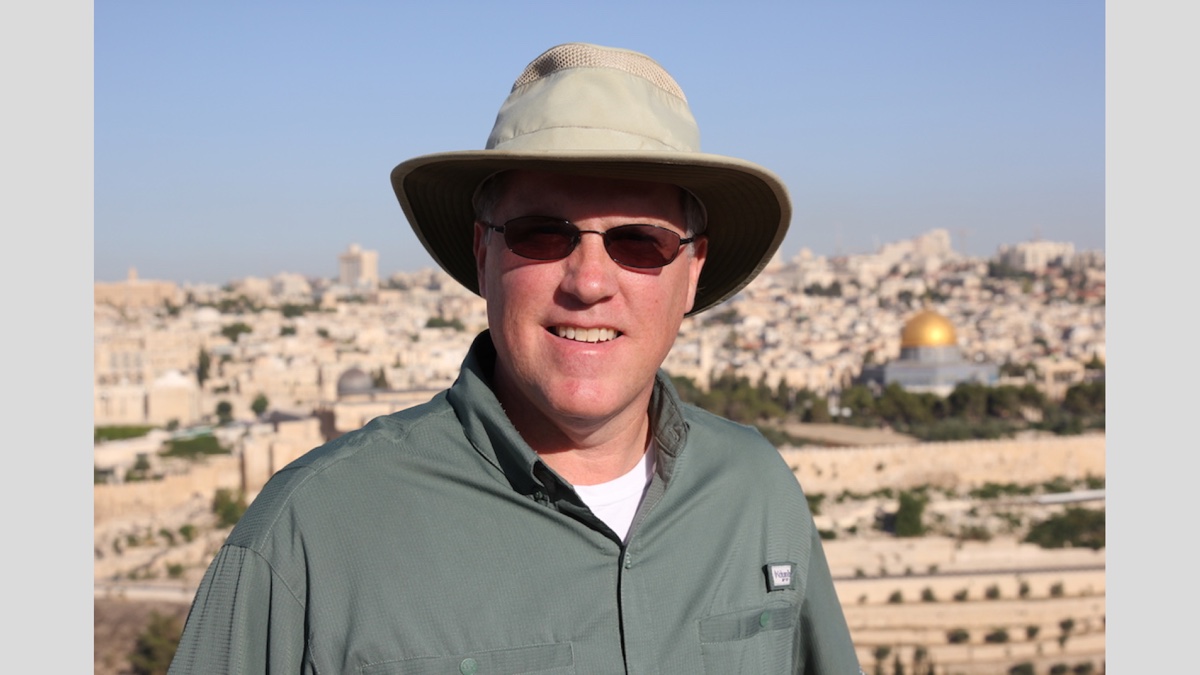

By Chris Reeves
Synopsis: Couples who choose to have children will certainly be blessed, but they must be careful to avoid common parenting mistakes. Learning from the story of Isaac and Rebekah will help us to avoid three parenting mistakes.
The love story of Isaac and Rebekah begins with Abraham’s servant seeking a wife for Isaac in Mesopotamia (Gen. 24:1-9). By the Lords’ providence, this servant eventually met a young woman named Rebekah who was “very fair to look upon” and a virgin. She was also friendly, kind, hard-working, and one who was willing to serve others. She showed this by giving the servant and his camels water to drink (Gen. 24:10-27, 42-46) [Note #1]. After the servant told Bethuel, Rebekah’s father, and Laban, her brother, of his plan to seek a wife for Isaac, Rebekah said, “I will go,” and she went with the servant to meet Isaac (Gen. 24:28-60). She was submissive, obedient, and adventurous. She returned with the servant, met Isaac, and became his wife (Gen. 24:61-67). She skipped the “blind date” and went straight for the “blind marriage.” Rebekah was a pure woman who served others and Isaac was a gentle man who loved her (Gen. 24:61-67). These two good people were made for each other.
There is no question that Isaac and Rebekah were good people and their marriage was good from the beginning. Abraham gave all that he had to Isaac and God blessed Isaac (Gen. 25:1-11). However, good people don’t necessarily make good parents. Isaac and Rebekah were good for each other, but when they started their family, they did not act right toward each other and toward their children. They made some serious parenting mistakes. Let’s consider three big mistakes that Isaac and Rebekah made and the biblical solution to each [Note #2].
Isaac was forty years old when he married Rebekah (Gen. 25:20) and he was sixty years old when Rebekah gave birth to Esau and Jacob (Gen. 25:26). We are not told what kind of marriage they had for those first twenty years of their life. We know that Rebekah was barren and when Isaac prayed to the Lord, He gave her twins and He also pronounced a prophecy that “the elder shall serve the younger” (Gen. 25:19-23). All is well in their marriage, but that will soon change. After the two boys grew up, we are told that Isaac loved Esau because of the food that he brought him (see also Gen. 27:4) and Rebekah loved Jacob (Gen. 25:28). Isaac and Rebekah made the mistake of playing favorites with their children. Later, Esau was aware of the favoritism (Gen. 28:6-9).
Parents today need to be careful not to make the same mistake of playing favorites with their children. Favoritism can divide the children emotionally and it can also divide the parents. Resentment, bitterness, and mistreatment can arise within the family as a result of favoritism (see Gen. 37:3-4). God does not show favoritism (Rom. 2:11; Eph. 6:9; Col. 3:25; etc.) neither should parents. Instead, they should work hard to give the same love, provisions, discipline, protection, time, etc., to all their children equally. Couples with adopted children, stepchildren, or foster children have to work especially hard to treat all the children the same.
After some time passed, there was a famine in the land and the Lord also gave the same blessing to Isaac that He had given to his father Abraham (Gen. 26:1-5). When Isaac was in Gerar and the men asked him about his wife, he said, “She is my sister.” He lied to them because he feared that they might kill him (Gen. 26:6-9). His lie showed disrespect for Rebekah and could have put her in danger. Despite Isaac’s lie, the Lord continued to bless him with prosperity and the Lord repeated the blessing to Isaac again (Gen. 26:12-33).
It is now Rebekah’s turn to be deceitful. When Isaac grew old, he wanted to bless Esau before he died, so he sent Esau to get him some of the food that he loved (Gen. 27:1-3). While he was gone, Rebekah helped Jacob to carry out a deception and a lie. She helped Jacob to present himself as Esau so that Isaac would bless Jacob instead of Esau (Gen. 27:5-16). Her deceit showed disrespect for Isaac. Sadly, it worked. While Esau was gone, Jacob lied to his father about being Esau (twice) and Isaac blessed him (Gen. 27:18-29). Jacob learned from his “loving” mother how to be a deceiver (Gen. 27:12). Jacob came to his father “with guile” (Gen. 27:35). When Esau eventually returned, he received his own (lesser) blessing from his father and then he turned his anger toward his brother (Gen. 27:41-45).
Parents today often make the same mistake of living a lie and a life of deceit while raising their children. They live right while in front of their children, but they live wrong when they are out of their sight. However, in time, children often learn of a parent’s “double life” and it hurts them. It can cause them to distrust their parents and it may even cause them to live the same way later in life. Jacob and Esau actually took on some of the same sinful and selfish traits of their parents. Today, all parents would do well to listen to the apostle Peter’s words: “Putting away therefore all wickedness, and all guile, and hypocrisies, and envies, and all evil speakings” (1 Pet. 2:1).
Lastly, Isaac and Rebekah made their children the center of their marriage. Their marriage took a backseat to the twins. They both favored one child over the other. Rebekah helped Jacob deceive his father. She did not like the wives of Esau and she encouraged Isaac to send Jacob away to find a wife elsewhere (Gen. 26:34-35; 27:46-28:5). Isaac and Rebekah were so focused on their boys that, at times, they hurt each. It is true that on one occasion, Abimelech saw that “Isaac was sporting with Rebekah his wife” (Gen. 26:8). Here, they appear happy to be together [Note #3]. Yet later, their marriage would deteriorate to where Rebekah would not hesitate to deceive her own husband.
Parents today can make the same mistake. They can focus so much on their children that they neglect their own marital relationship. Some couples seek emotional gratification in their children, but not in themselves. Yes, parents must meet their child’s needs, but not at the expense of losing their marriage. Couples can grow apart if they are not careful because they are so busy with work, raising the kids, and life in general. Focusing too much on your children can also cause a parent to overlook a child’s weaknesses. A child-focused marriage can cause a parent to coddle their child’s misbehavior instead of offering effective correction.
Having children is a good thing (Ps. 127:3-5), but you still have to “live joyfully with the wife whom you love all the days of your life” (Eccl. 9:9) after the children are born. Right before Paul wrote about raising children in Ephesians 6:1-4, he reminded the husband and wife in Ephesians 5:28-33 that they were to live in a loving and cherished “one flesh” relationship.
Two good people can get married and begin their marriage well together. However, these same two good people can make lousy parents if they are not careful. This is one lesson that we can learn from Isaac and Rebekah.
There are a number of common mistakes that parents make. I know because I made my fair share of them while raising our four children. Some parents are too hard on their children (over-bearing), while others are too soft (permissive). Some parents do not spend enough time with their children, while others spend too much time with them. Some parents give their children too much of what they don’t need, while others don’t give them enough of the necessary things. Some parents ignore their children, while others treat them as “the center of the universe.” Some parents give their children all the worldly and material things of this life, but they don’t give them the spiritual and eternal things (Bible reading, prayer, worship assemblies, becoming a Christian, good-work habits). Some parents make sure their children can get into Harvard, but they don’t make sure they can get into heaven [Note #4]. If parents will follow God’s plan for marriage and for raising children, it will help them to avoid these common mistakes.
Married couples who are new to their marriage need to be mindful of the possibility of making parental mistakes. Because parenting is new to you, you lack personal experience on how to raise your children properly. Work hard to raise your children according to God’s word from the beginning and don’t be ashamed to get help and advice from older, wiser parents.
Couples who have been parents for several years may recognize that they have made mistakes. Don’t be proud. Be willing to admit your mistakes, learn from them, and correct them. You may even have time to correct your mistakes before raising the younger children who are coming along.
Couples who are now older and have grown children can see the value of learning from their mistakes. Take some time to mentor younger couples about these mistakes. Talk with them about the common mistakes that parents make and what they can do to avoid them.
[Note #1] It has been said that just one thirsty camel can drink up to twenty-five gallons of water, and the servant had ten camels!
[Note #2] The idea of Isaac and Rebekah being good people but making parenting mistakes is adapted from David Clark in The Top 10 Most Outrageous Couples of the Bible (pp. 165-175).
[Note #3]. The Hebrew verb tsachaq means “to laugh.” It has been translated in Genesis 26:8 as “laughing” (ESV), “sporting” (KJV), “playing” (LSV), “showing endearment” (NKJV), and “caressing” (NASV).
[Note #4] I heard Mike Richardson make this point recently in a sermon that he preached at the Oak Ave. church in Dickson, TN (April 30, 2024).
Chris Reeves has preached for the Warfield Blvd. church of Christ in Clarksville, TN, since 2016. He and his wife, Cheri, have four children and two grandchildren. His Bible study website is here. The church website is here. He can be reached here.


By Danny Linden
Synopsis: The story of King Saul’s battles against the Philistines in 1 Samuel 13 teaches us a lesson about knowing our primary purpose in life—serving God.
When Samuel grew old, the elders of Israel told him they did not want his sons to lead them (1 Sam. 8:4-5). Samuel’s sons were not righteous (8:1-3), but this was not the real reason the people rejected their leadership. They wanted a king like the surrounding nations. God’s assessment of the situation was that they were really rejecting Him (8:7-9).
Samuel tried to dissuade them, but eventually anointed Saul as king over all Israel at the Lord’s command (10:20-25). Saul quickly showed himself to be an effective military leader who could bring Israel victory over their enemies (11:1-11).
Despite this, Saul got his priorities mixed up. He forgot that his first purpose was to serve the Lord. If he was faithful, God would give him the victory. 1 Samuel 13 tells the story of some of Saul’s early battles against the Philistines and how he grew impatient and presumptuous when things didn’t go his way.
Saul lived for one year and then became king, and when he had reigned for two years over Israel [Note #1], Saul chose three thousand men of Israel. Two thousand were with Saul in Michmash and the hill country of Bethel, and a thousand were with Jonathan in Gibeah of Benjamin. The rest of the people he sent home, every man to his tent. Jonathan defeated the garrison of the Philistines that was at Geba, and the Philistines heard of it. And Saul blew the trumpet throughout all the land, saying, “Let the Hebrews hear.” And all Israel heard it said that Saul had defeated the garrison of the Philistines, and also that Israel had become a stench to the Philistines. And the people were called out to join Saul at Gilgal (1 Sam. 13:1-4).
The deliverance of Jabesh-gilead from Nahash the Ammonite was the first of Saul’s military victories (11:1-11), but he didn’t stop there. The Philistines were a major threat to the Israelites from the moment Joshua led Israel into Canaan. In the years that followed, the Israelites were frequently oppressed by the Philistines. The situation was dire when Saul took over as king, so it was critical that he relieve some of this pressure on Israel. This was a test of Saul’s capabilities as king. Would Israel be able to thrive under his rule?
The next victory happened under the leadership of Jonathan at Geba. He and the company of troops under his command defeated a Philistine garrison, and the effects were immediate. The Israelites and Philistines alike heard of the decisive battle, and hostilities flared. Although Saul had a larger army at Michmash than Jonathan did at Geba, the Philistines were quickly amassing their own army in response.
And the Philistines mustered to fight with Israel, thirty thousand chariots and six thousand horsemen and troops like the sand on the seashore in multitude. They came up and encamped in Michmash, to the east of Beth-aven. When the men of Israel saw that they were in trouble (for the people were hard pressed), the people hid themselves in caves and in holes and in rocks and in tombs and in cisterns, and some Hebrews crossed the fords of the Jordan to the land of Gad and Gilead. Saul was still at Gilgal, and all the people followed him, trembling. He waited seven days, the time appointed by Samuel. But Samuel did not come to Gilgal, and the people were scattering from him (1 Sam. 13:5-8).
The Philistine army not only far outnumbered Saul’s two thousand men, but also outclassed them with superior technology. While Saul and Jonathan were the only Israelites who even had metal weapons (13:19-22), the Philistines had thousands of chariots and horsemen in addition to the innumerable foot soldiers. The Israelites were in grave danger and they scattered in every direction, looking for safety.
Saul was waiting for Samuel to arrive and provide spiritual direction, but every day that passed resulted in more desertions. Samuel was late and might never come at all, so far as Saul was concerned. With the situation rapidly falling apart, Saul felt he needed to take decisive action.
So Saul said, “Bring the burnt offering here to me, and the peace offerings.” And he offered the burnt offering. As soon as he had finished offering the burnt offering, behold, Samuel came. And Saul went out to meet him and greet him. Samuel said, “What have you done?” And Saul said, “When I saw that the people were scattering from me, and that you did not come within the days appointed, and that the Philistines had mustered at Michmash, I said, ‘Now the Philistines will come down against me at Gilgal, and I have not sought the favor of the LORD.’ So I forced myself, and offered the burnt offering” (1 Sam. 13:9-12).
Saul’s solution went beyond decisiveness. He offered a sacrifice to the Lord in an attempt to win God’s favor for the battle. Ironically, as soon as Saul finished his offering, Samuel showed up. The prophet was obviously displeased—Saul circumvented the roles that had been ordained by God and allowed his impatience to make him presumptuous.
Saul’s reasoning seems sensible at a glance. No one can deny the urgency of the situation—he and his people were in grave danger. Saul claimed that he was uncomfortable going into battle without the Lord’s favor, so he “forced himself” to make the offering. He knew he technically should not do it, but the situation was just too dire!
I do not know if this accurately reflects Saul’s thought process in the moment or if he gave Samuel a cleaned-up version to make himself look better, but there’s a more important question to ask. What did God think of this reasoning?
And Samuel said to Saul, “You have done foolishly. You have not kept the commandment of the LORD your God, with which He commanded you. For then the LORD would have established your kingdom over Israel forever. But now your kingdom shall not continue. The LORD has sought out a man after His own heart, and the LORD has commanded him to be prince over His people, because you have not kept what the LORD commanded you” (1 Sam. 13:13-14).
Samuel was not impressed with Saul’s story and delivered the Lord’s judgment of the situation. This was foolish disobedience and a serious misstep. God expected Saul to remember that He would give him the victory, even if they were outnumbered. Conventional military strategy was not the reason for Israel’s strength or success in battle.
Through his disobedience, Saul showed that he was not fit to lead Israel. He had the potential to be successful, but he mixed up his first priority. When Samuel anointed Saul as king, he told the people to continue to trust in the Lord and be faithful (1 Sam. 12:19-25). God would not forsake them and would keep all the promises that He made. They simply needed to trust and obey or be swept away in their wickedness—“both you and your king” (12:25).
Saul’s mistake was in thinking that his first priority was to protect Israel and that serving God would help him accomplish that goal. It’s a subtle distinction, but it makes all the difference when under pressure. Saul should have been devoted to the Lord first, and then carried out his duties to the nation. If he had done so, he never would have offered such a foolish sacrifice.
Saul learned nothing from this failure. Just two chapters later, he made another egregious error in judgment when he spared King Agag and a host of animals of Amalek. His excuses were even worse when Samuel confronted him, which reveals how much he relied on his own judgment instead of a firm commitment to obey God. Saul remained king for many years after these events, but he lost the help of God and the right to pass on the kingdom to His son.
We can do better than Saul. Let us not lose the subtle distinction in our priorities because God doesn’t find it to be subtle at all. Our purpose is to serve the Lord who made us and saved us. That responsibility dwarfs everything else. Our relationship with God does not enhance the life we lead—it gives us life and the hope of eternity with God. This is why Jesus said, “Whoever loves father or mother more than Me is not worthy of Me, and whoever loves son or daughter more than Me is not worthy of Me. And whoever does not take up his cross and follow Me is not worthy of Me. Whoever finds his life will lose it, and whoever loses his life for My sake will find it” (Matt. 10:37-39). Nothing should stand between us and God.
If we want to be found worthy by our Lord, we must know why He made us and fulfill His purpose in full faith and devotion. Modifying God’s commands is presumptuous and unacceptable, no matter the reason.
[Note #1] The Hebrew text of 1 Samuel 13:1 is difficult and appears to be corrupted or incomplete. Translations vary widely in how they render this verse. The ESV is used here, but compare the NKJV and NASB renderings. How you translate this verse affects the timeline, but not the order of events or the lessons we can draw from this text.
Danny Linden has worked with the Hebron Lane church of Christ in Shepherdsville, KY, since March 2023. He and his wife, Lauren, have four children. The church website is here. His website is here. He can be reached here.




By Ron Halbrook
Synopsis: There is a stark contrast between the biblical terminology that is used to identify God’s people, and the denominational names that reflect the fragmented state of contemporary Christendom.
The New Testament uses descriptive names or terms in reference to the church but does not employ any exclusive formal or denominational name.
Acts 20:28 admonishes men who lead the local church “to feed the church of God, which He hath purchased with His own blood.” Those men are called elders or presbyters (v. 17), pastors or shepherds (i.e., those who “feed”) (v. 28), and bishops or overseers (v. 28). Those are not separate offices or formal titles, but are descriptive terms or names for men appointed to lead by the qualifications given in 1 Timothy 3:1-7 and Titus 1:5-11. The church is “of God” because it originated in His plan for our salvation from eternity and He brought it into existence by fulfilling that plan (Eph. 3:10-11).
As Paul journeyed toward Rome, visiting congregations along the way, he sent a letter ahead to the saints there which included this: “The churches of Christ salute you” (Rom. 16:16). Christ established His church, having purchased it with His blood on the cross, and He gathers His followers into local bodies which are His—“churches of Christ.” If they are churches of Christ in the plural, each one is a church of Christ because each one belongs to Him.
We can also read of “the churches of the saints” (1 Cor. 14:33) because the members in each congregation are set apart from the world as holy unto God.
“The church of the firstborn” (Heb. 12:23) is used not in reference to a local congregation but in reference to the universal church composed of all people who have submitted to Christ by obeying the gospel of Christ. These people have believed in Christ, repented of their sins, confessed His name, and submitted to Him in water baptism for the remission of their sins (Mark 16:15-16; Acts 2:38-41, 47; 8:37; 22:16; Rom. 10:9-10; 1 Pet. 3:21). They are added to the one church or body of Christ by Christ Himself when they submit to Him (Acts 2:47; 1 Cor. 12:13). Christians are described or named as “firstborn” because they are favored with preeminent privileges, including the eternal inheritance promised in Christ.
It is proper to say the Lord’s church has “names” by which it is designated and identified in the New Testament. The definition and usage of the word “name” is not limited to a formal name or an exclusive name. It can refer simply to descriptive terms. Descriptive terms are names. Here is the first definition of the noun “name” as given in the American Heritage Dictionary: “A word or words by which an entity is designated and distinguished from others.”
Descriptive terms designate and distinguish things from other things. This may be done by assigning a formal exclusive name such as Southern Baptist Church, or it may be done by using descriptive terms which are not formal and exclusive such as “church of Christ,” “church of God,” and “church of the firstborn.” God’s people are distinguished from other groups of people by terms which describe our unique relationship to the Lord. Such terms “name” us by describing our nature and character as belonging to the Lord.
A denominational name designates and identifies a group of churches formally joined together (there is a formal process for joining) in and under a human organization not authorized by Christ and, therefore, not found in Scripture. That organization is actually an institutional entity separate from any particular local church. It is an institutional collectivity of churches, something not found in the New Testament because Christ never authorized the formation of such bodies.
Some people reason as follows, “If denominations have a ‘name’ and we also designate ourselves by some ‘name,’ then we are a denomination.” By this reasoning, “If denominations have a church building and we also have a meeting house, then we are a denomination.” No, God’s people use descriptive names which simply describe something unique about our relationship to the Lord, whereas denominations have formal institutional names, and the two are not equivalent. God’s people have and use church buildings, and denominations have them, but they are conceived and used in very different ways. We have in mind nothing more than a place to assemble so that we can worship the Lord according to His pattern of truth. Denominations conceive of the church building as a “sanctuary,” and also as a place for engaging in all sorts of activities not authorized by Christ as functions of the local church including social gatherings, recreational events, civic functions, community services, and other activities.
We must teach the difference in biblical names for God’s people and denominational names with an open Bible. Eradicating the term “name” or eliminating church buildings (or signs on the buildings) will not solve the problem of confusion over names in the least degree. We call Bible things by Bible names when we refer to God’s people as the church of God or the church of Christ or the firstborn ones or any other biblical designation.
In terms of advertising, and using terms for location and identification, “church of Christ” is both biblical and expedient. When followers of Christ are called “Christians” and local groups of them are called “churches of Christ,” the emphasis is put on Christ rather than on human leaders and human religions and human institutions. Denominational names such as Roman Catholic Church, Greek Orthodox Church, Episcopal Church, Methodist Church, Pentecostal Church, or Southern Baptist Church are neither biblical nor expedient but are contrary to Scripture. 1 Peter 4:11 says, “If any man speak, let him speak as the oracles of God; if any man minister, let him do it as of the ability which God giveth: that God in all things may be glorified through Jesus Christ, to whom be praise and dominion for ever and ever. Amen.”
“Name.” The American Heritage Dictionary of the English Language, Fifth Edition. HarperCollins Publishers, 2022. Available Online here
Ron Halbrook and Danny Linden labor with the Hebron Lane church of Christ in Shepherdsville, KY. Ron also engages in foreign evangelism, laboring in the Philippines and elsewhere. He and his wife, Donna, have three children. The church website is here He can be reached here.



By Allen Dvorak
Synopsis: Paul reminded the Philippians that they possessed a citizenship even more valuable than their Roman citizenship.
About forty years before Jesus was born, the armies of Antony and Octavian defeated the forces of Brutus and Cassius on a plain near the city of Philippi. After the battle, some of the veteran soldiers of Marc Antony were settled in Philippi. However, the alliance between Octavian and Antony was destined to crumble, and about ten years after their combined victory over Brutus and Cassius, the armies of these two men faced each other at Actium. After his defeat of Antony, Octavian deposed the supporters of Antony in Rome and exiled them to the city of Philippi. At the same time (31 BC), Philippi was declared a Roman colony (Acts 16:12) [Note: 1].
Becoming a Roman colony was a great boon for Philippi. The citizens of Philippi were granted Roman citizenship and enjoyed the special privileges that such citizenship conveyed. Although many people were governed by the Romans, across the empire, relatively few were considered Roman citizens, a status that was highly prized (Acts 22:26-28) [Note: 2]. As Roman citizens, the people of Philippi were no longer subject to poll taxes or land taxes. They were given all the protection and rights that Rome afforded its citizens. As a Roman colony, the city was ruled by special governmental leaders known as praetors (Greek strategoi) who were attended by officers called lictors (Greek rhabdouxoi).
Fast forward about eighty years. Paul, Silas, Timothy and Luke walked the Via Egnatia from Neapolis to Philippi, where they stayed for “some days” (Acts 16:12). Although Paul customarily would go to the synagogue on the Sabbath in cities that he visited (e.g., Acts 17:1-2), the Sabbath saw Paul and his companions at a nearby riverside, talking with women, including one named Lydia, who had come there to pray. Their teaching resulted in the baptism of Lydia and her household and so a congregation of Christians was begun at Philippi.
Not all of Paul’s experiences at Philippi were so positive. There was a slave girl in the city who was possessed by a spirit of divination and she made a habit of following Paul and his companions, announcing that “these men are the servants of the Most High God, who proclaim to us the way of salvation” (16:17-18). Paul found this annoying and exorcised the spirit. The masters of the girl, who had profited greatly from her “gift,” were also annoyed now that this source of income had dissipated, and they dragged Paul and Silas before the magistrates of the city (16:19-20).
Rather than complain to the magistrates that Paul had destroyed their fortune-telling business, the masters of the slave girl identified Paul and Silas as Jews and troublemakers, alleging that the two men were teaching “customs which are not lawful for us, being Romans, to receive or observe” (16:21). The charge was shrewd because, although it was not true, it appealed both to the pride of the Philippians concerning their Roman citizenship and perhaps also to the risk of losing that citizenship by harboring such troublemakers. Their charge produced the desired response. Apparently, with little or no investigation, Paul and Silas were assumed to be guilty of the fabricated charge and were severely beaten by the lictors. Their punishment continued as they were cast into prison, with their feet in the stocks.
The Lord intervened with an earthquake that loosed the chains of all the prisoners and opened all the doors. The jailor, aroused from his sleep, assumed that the prisoners had escaped and was about to kill himself when Paul informed him that all the prisoners were still there! Following the preaching of Paul and Silas to the jailor, the early morning hours would see him and all his family baptized.
Later that morning, the magistrates sent the lictors (“police,” ESV) with orders to release Paul and Silas. If Paul and Silas had not truly been any threat to the status of the city as a Roman colony the day before, the actions of the magistrates now were! Paul responded to the release order, saying, “They have beaten us publicly, uncondemned, men who are Roman citizens, and have thrown us into prison; and do they now throw us out secretly? No! Let them come themselves and take us out” (16:37, ESV).
The words of Paul brought fear into the hearts of the magistrates. By punishing these two Roman citizens without an official condemnation, the magistrates themselves had violated Roman law! The magistrates came to the prison and apologized to Paul and Silas, asking them to leave the city, evidently hoping, with their departure, to “close the book” on this unfortunate event (16:39) [Note: 3].
Fast forward approximately a decade. Paul was in Rome under house arrest, awaiting the resolution of charges brought against him by the Jews of Jerusalem. He wrote a letter to the Christians in Philippi, a letter that reveals the apostle’s affection and longing for them. Note the beginning of the epistle:
I thank my God in all my remembrance of you, always in every prayer of mine for you all making my prayer with joy, because of your partnership in the gospel from the first day until now. And I am sure of this, that he who began a good work in you will bring it to completion at the day of Jesus Christ. It is right for me to feel this way about you all, because I hold you in my heart, for you are all partakers with me of grace, both in my imprisonment and in the defense and confirmation of the gospel. For God is my witness, how I yearn for you all with the affection of Christ Jesus (Phil. 1:3-8, ESV).
The Philippians were aware of the apostle’s imprisonment and Paul wrote to let them know that the gospel had actually been advanced by his confinement (1:12-13). He also took the opportunity to thank them for the gifts they had sent to him by the hand of Epaphroditus (4:18). From the time that Paul and Silas left Philippi, the Philippian congregation had shown their concern for Paul by sending help for his needs on multiple occasions (4:10, 14-16). He encouraged the Philippians to be of one mind, in full accord (2:1-4) and mentioned two women who were perhaps having some difficulty getting along with each other (4:2-3). Despite his own circumstances, joy is a thread woven through the epistle. Of Paul’s letters to churches, Philippians is perhaps the “warmest,” with very little criticism of the Christians and expressing obvious affection toward them and confidence in them.
Paul warned the Philippians about some who acted as enemies of the cross of Christ, describing them as people whose “god is their belly. . . with minds set on earthly things” (3:18-19). Lest the Philippians glory in their privileged status as Roman citizens (an “earthly thing”; it was likely that many of the Philippian Christians were Roman citizens), Paul reminded them that they had a higher citizenship, a heavenly citizenship (3:20). As he wrote these words, perhaps Paul was thinking of his own Roman citizenship and the events at Philippi a decade earlier, how he and Silas had been denied the legal protection from arbitrary punishment that their Roman citizenship was supposed to provide.
Like the Philippians who were Roman citizens, I also possess a valuable citizenship. I am an American citizen, born in the United States. Despite the current efforts of some to blur the distinction between citizen and non-citizen in this country, U.S. citizenship still offers advantages and privileges. Nevertheless, as much as I prize that citizenship, I am like the Philippian Christians in another respect—I am a citizen of the Lord’s kingdom. I possess that spiritual citizenship because of my relationship with Christ and it conveys greater privileges and blessings than any earthly citizenship, bar none! As Paul and Silas experienced at Philippi, sometimes the rights and privileges of an earthly citizenship are not faithfully delivered. Every citizen in the Lord’s kingdom, however, enjoys all the spiritual blessings that pertain to that citizenship—without exception—because the Lord is faithful (Eph. 1:3; 1 Cor. 1:9; 10:13).
[Note: 1] Utley, Robert James. Paul Bound, the Gospel Unbound: Letters from Prison (Colossians, Ephesians and Philemon, Then Later, Philippians). Bible Lessons International, 1997.
[Note: 2] Estimates of the percentage of citizens to the entire population, free and slave, range from less than 5% to about 10%. That percentage varied by location and period of time.
[Note: 3] A similar reaction is seen in Acts 22:23-29. A non-citizen could be whipped just for the purpose of obtaining information. When Paul asked about the legality of flogging an uncondemned Roman citizen, the centurion warned the tribune who then questioned Paul about his citizenship. When Paul confirmed his citizenship, those who had been preparing to flog Paul made themselves scarce and even the tribune was afraid because he had commanded Paul to be bound!
Allen Dvorak has worked with the Kelly Spring Road congregation in Harvest, AL, since its inception in 2006. He also serves as one of the congregation’s elders. He and his wife Debbie have two sons, David and Jonathan. The church website is here. He can be reached here.


By Donnie V. Rader
Synopsis: Like the One True God who gave us the Bible, truth does not change. Truth remains constant, and error remains a continuing threat. Since Jesus Christ is the same yesterday and today and forever, saints should guard against being carried away by varied and strange teachings (Heb. 13:8-9). The article underscores the importance of recognizing and addressing doctrinal errors, as they do not naturally fade away with time.
Religious controversy and doctrinal differences are found in nearly every book of the Bible. I suppose it would be nice if doctrinal error or an unscriptural practice would just “fade away” in time, so that the wrong is no longer wrong! We could look back at some issue wherein we stood firm against an error or practice that was contrary to the Bible, but now we can accept (or at least tolerate) the same since those things just “fade away.”
Before you laugh and dismiss this idea, that is exactly how some doctrinal errors and unscriptural practices are treated. In time, the seriousness of those issues fades and becomes insignificant to some. They treat those issues as if they don’t matter anymore. I’m guessing the old issues just “faded away.”
Jesus said, “thy word is truth” (John 17:17). The Psalmist said, “your law is truth” (Ps. 119:142), “all your commandments are truth” (v. 151), and “the entirety of your word is truth” (v. 160). When testing the spirits, one must compare what he hears to the teaching of the apostles to distinguish truth from error (1 John 4:1, 6).
Paul contrasted truth to deception, delusion and lies (2 Thess. 2:10-12). When Scripture is twisted (2 Pet. 3:16), it is called error (v. 17). Again, error is that which does not agree with the apostles’ teaching (1 John 4:6).
If God’s word does not change, neither does truth. If truth doesn’t change, error doesn’t change. That means that what was true many years ago is still true today! Likewise, what was error many years ago is still error today!
Our point in looking at issues of the first century is to see that these errors are still error today. They have not faded with time.
The Sadducees taught there is no resurrection (Matt. 22:23; Mark 12:18; Luke 20:27; Acts 23:8).
The Pharisees taught circumcision was binding and essential to salvation (Acts 15:5, 24; Rom. 4:9-12; Gal. 5:2-6).
There were some at Corinth who taught there is no resurrection (1 Cor. 15:12-13).
Hymenaeus and Philetus taught the resurrection is already past (2 Tim. 2:17-18).
The Jews and some Gnostics taught that Jesus is not the Son of God (John 5:17-18; 2 John 7).
Again, the point to see is that these are old issues, but they have not faded away. These errors are still error!
For example, the AD 70 doctrine that teaches the second coming is already past is very similar to the doctrine that said the resurrection is already past (2 Tim. 2:18). The doctrine that says that Jesus gave up His divinity while on earth is like the doctrine that said Jesus of Nazareth was not divine (2 John 7; the Ebionites of the second century).
The institutional issues of the 1950s-60s (supporting a separate organization in benevolence) were a repeat of the principles of the issues that arose in the 1800s (the missionary society). When you hear any uncertain sound, it is altogether likely an old sound coming around again!
Perhaps we fail to teach on issues of the past because we think the issues have “faded away.” We may assume that everyone in the congregation already knows, thus no need to say anymore.
If we preach the whole counsel of God (Acts 20:27), we will continue to preach the basics and warn of the errors of the past. I once asked Irven Lee what one piece of advice he would give to a young preacher. His response was simply one line: “Just remember that when we teach school, we teach first grade every year.” When we fail to do that, we have a generation grow up that doesn’t possess the fundamental knowledge or discernment to know when error is taught (cf. 2 Pet. 3:16-18).
If we don’t preach on the first principles and controversies now, it won’t be long until we can’t preach on those subjects without offending weak members.
The truth is, no issue fades, for reasons we have already considered. Thus, any past issue is an issue that does not fade away.
This is a question that concerns Bible authority (Col. 3:17). There is no scriptural authority for using mechanical instruments of music in worship. Man made churches used the instruments in the reformation movement. Later in the restoration movement, it was introduced among brethren at Midway, KY, in 1859. Now, some progressive churches of Christ are using the instrument (including some in the Nashville, TN, area). Among non-institutional brethren, some are not standing firm against it. They will agree that it is not authorized, but will not affirm that it is sinful and will break fellowship with God and faithful brethren.
This too is a question of Bible authority (Col. 3:17). This was about churches supporting separate organizations such as schools, benevolent societies, and sponsoring churches as well as sundry social gospel efforts. Some now think this is an outdated issue. To them, there is no deed to beat a dead horse. Apparently, the conclusion is that the fight is over. Yet, today, some non-institutional brethren will have fellowship with those among the institutional churches. Some will invite preachers from among them for meetings. Others will accept gospel meeting invitations from those churches.
We have already noted that this issue involved many of the things the church faced about a hundred years before (1800s). There are elements of this issue that are likely to surface again.
The concept here is there is a difference between the “core gospel” (the deity of Christ, salvation, etc.) and “doctrine.” However, the New Testament makes no such distinction. Paul wrote to the saints at Rome saying they became children of God when they obeyed the “doctrine” (Rom. 6:17), but later said they obeyed the “gospel” (Rom. 10:16).
The anti-located preacher doctrine made such a distinction. Its advocates said we preach the gospel to the world and teach doctrine to the saints. Some who held that view eventually swung like a pendulum from this ultra-conservative view to an extremely liberal view (using the same distinction). They advocated the grace-unity concept, arguing that we must be united on the gospel, but could differ on doctrine (including worship and the work of the church).
The “progressive” churches of Christ make the same distinction, saying they emphasize the “man, not the plan.” Those who advocate that the teaching of Christ on divorce and remarriage (Matt.19:9) does not apply to alien sinners, but only to God’s covenant people are making the same basic distinction. The gospel (the deity of Christ and what to do to be saved) applies to the alien, but the teaching of Christ does not. We are not done with this concept. It is well alive today!
This is a concept that advocates part of the Calvinistic thought while denying Calvinism. The Neo-Calvinist advocate the vicarious imputation of the righteousness of Christ upon the child of God. Neither Romans 4 nor any other text speaks of the righteousness of Christ being transferred to man.
Here is how the doctrine works: God takes the perfect righteousness of Christ and transfers it to my account so that when God looks at me, He doesn’t see my sin, but the perfection of Christ. It works like an umbrella that covers us. Beneath that umbrella, I may be practicing something unscriptural or sinning in ignorance. However, God doesn’t take note of that, but sees the perfect righteousness of Christ.
This doctrine was advocated by the proponents of the grace-unity movement in the 1960s-70s (i.e., Ed Fudge, etc.). The same concept is advocated by some “non-institutional” preachers today. You will hear them talk about Christ’s righteousness being imputed to us. We are not done with that doctrine.
With every controversy, fellowship becomes an issue. Appeals are often made to Romans 14 to say that doctrinal differences are not issues of fellowship (though that text deals with matters of indifference).
Fellowship was discussed with the instrumental music issue (1800s), institutionalism (1950s-60s), and divorce and remarriage (1980s-90s).
Not only is the one who practices the wrong condemned (2 John 9), but the one whose teaching encourages the wrong is condemned (v. 10). Likewise, the one who fellowships the teacher of error is also condemned (v. 11).
Today, some (including some who have stood strong on fellowship in the past) will have fellowship and use those whose teaching they will admit is wrong. It appears that some think the fellowship issue (including the discussion of Romans 14) has just faded away. However, old issues don’t just fade away.
Donnie V. Rader has worked with the El Bethel church of Christ (Shelbyville, TN) since 1994. He and his wife, Joan, have two children and six grandchildren. The church website is here. He can be reached here.


By Joe R. Price
Synopsis: Christians confidently anticipate eternal life, a hope rooted in our unwavering trust in God’s amazing grace and our steadfast obedience to His word.
As Christians, we can be assured of our salvation. Early disciples, as depicted in the New Testament, were filled with expectant joy and living hope through the resurrection of Jesus Christ. Our salvation, a product of God’s grace and our faith, is not just a promise but an expectation (John 16:20-22; Rom. 5:1-2; Phil. 4:4; 1 Cor. 15:19; 1 Pet. 1:3). These saints didn’t just desire heaven, they expected the promised, eternal reward (Phil. 3:13-14, 20-21; 1 Thess. 4:13-18; 2 Tim. 4:7-8). Our hope as Christians is a combination of our desire and expectation of receiving the eternal inheritance that is reserved in heaven, as we are “kept by the power of God through faith” until the end (1 Pet. 1:3-5).
Early saints did not live under a cloud of dread and gloom, constantly doubting whether they were saved or “good enough” to enter the eternal home of the soul (Eph. 2:10). Jesus promised eternal life to His sheep, i.e., to those who hear His voice and follow Him (John 10:27-29). There is promise and power in these words of Christ, not uncertainty, anxiety, or fear. Christ’s promise remains true today and is worthy of our trust. Our salvation is not a precarious thread, but a secure anchor when we meet the Lord’s condition of hearing and following Him (Matt. 7:21; John 14:15, 21, 23). This assurance of our salvation is a significant solace we have in Christ. “Let not your heart be troubled. . .” (John 14:1; Phil. 2:12-13).
John wrote his first epistle to assure Christians of our eternal life. “These things I have written to you who believe in the name of the Son of God, that you may know that you have eternal life, and that you may continue to believe in the name of the Son of God” (1 John 5:13). Our assurance is much more than thinking or wishing we are going to heaven. Our confidence in a heavenly home is based on the apostolic truth that was “written. . . that you may know that you have eternal life. . .” 1 John teaches when our lives conform to divine truth (when we “practice the truth,” i.e., “walk in the light” [1 John 1:5-9]), our assurance of eternal life is genuine. Remember, John wrote so that “your joy may be full” (1:4). Fellow Christian, is your joy full (Phil. 4:4-9)? Yes, as you practice the truth (i.e., walk in the light). This is God’s assurance that our “life is in the Son” that fills us with contentment and confidence in Christ (1 John 5:11-12).
Now by this we know that we know Him, if we keep His commandments. He who says, “I know Him,” and does not keep His commandments, is a liar, and the truth is not in him. But whoever keeps His word, truly the love of God is perfected in him (1 John 2:3-5a).
Through the apostle John, the Holy Spirit teaches us that Christians are assured of “knowing” Christ (being in fellowship with, communing with, being in a relationship with) if we obey Him. Far from minimizing the role of obedience in our eternal salvation, the inspired apostle emphatically and unequivocally shows that obedient faith is essential. When we follow Christ’s commands, we are assured of our salvation. John leaves no doubt on this matter. He describes the disobedient person who says, “I know Him” as “a liar.” Such a person is not speaking the truth (1 John 2:4). It takes more than saying “Lord, Lord” to be saved by Jesus (Matt. 7:21-23; Luke 6:46). Importantly, 1 John 2:5 connects the love of God (grace) with the obedience of man (faith). “But whoever keeps His word, truly the love of God is perfected in him. By this we know that we are in Him” (1 John 2:5). God’s love is fully developed in disciples who keep God’s word. God’s love will not save a person during and despite his disobedience. If so, what Scripture teaches such a strange doctrine (Heb. 13:9)?
The apostle of love insists that confidence regarding our fellowship with God and our hope of eternal life in Christ exists when we obey the commandments of Christ. This is another way of saying those who “hear” His voice and “follow” Him will never perish (John 10:27-28).
By this we know that we are in Him. He who says he abides in Him ought himself also to walk just as He walked (1 John 2:5a-6).
To walk as Jesus walked is to live as He lived. John had previously said Christians must “walk in the light, as He is in the light” if they hope to have fellowship with God and receive the cleansing effect of Christ’s blood (1 John 1:7). Since “God is light, and in Him is no darkness at all,” it can be no other way (1 John 1:5). We must live in harmony with the truths that God has revealed, and that we believe. When we fall short and sin against our Lord, He assures forgiveness if we confess our sins to Him (1 John 1:8-2:1). Notwithstanding, there is no assurance of eternal life if we continue to walk in sin, refusing to look to Jesus and follow His example (Heb. 12:1-2; 1 Pet. 2:21).
If you know that He is righteous, you know that everyone who practices righteousness is born of Him (1 John 2:29).
Practicing righteousness means doing what is right in God’s sight. Since the inspired Scriptures thoroughly instruct us in righteousness, practicing righteousness is synonymous with keeping His commandments (which are always right [2 Tim. 3:16-17; Ps. 19:8-9; 119:172]). The apostle Peter taught lost souls that God would accept them if they feared God and worked righteousness (Acts 10:34-35). Such people are born of God (1 John 2:29; cf. Gal. 3:26-27). God is not unmerciful by rejecting those who choose not to fear Him and work unrighteousness. God assures us He will show mercy on those who obey Him (do what He says is right, Titus 3:4-7; Rom. 9:15-16). One who lives unrighteously has no hope and assurance of heaven. Christians’ salvation is secure by doing what is right according to God’s will.
We know that we have passed from death to life because we love the brethren. He who does not love his brother abides in death. Whoever hates his brother is a murderer, and you know that no murderer has eternal life abiding in him (1 John 3:14-15).
The Christian who does not love fellow Christians has no assurance of eternal life. The one who loves the brethren is a child of God and knows God (1 John 4:7). The one who does not love does not know God (1 John 4:8). How do we know we love one another? The Holy Spirit provides the answer: “By this we know that we love the children of God when we love God and keep His commandments. For this is the love of God, that we keep His commandments. And His commandments are not burdensome” (1 John 5:2-3). Loving one another requires that we obey the Lord. We understand what love is because Jesus lovingly obeyed the Father’s will and “laid down His life for us” (1 John 3:16). Since God expects us to love each other the same way, “we also ought to lay down our lives for the brethren” by loving “in deed and truth” (1 John 3:16-18). When we love each other as Christ loves us, “we know that we are of the truth, and shall assure our hearts before Him” (1 John 3:19).
Yes, our assurance of eternal life is conditioned upon our faith in Christ. Make no mistake, the Christian’s confidence of eternal life is not earned or merited (Luke 17:10). Each Christian is assured of life everlasting when he lives by faith and obeys God’s will. “For we walk by faith, not by sight. We are confident, yes, well pleased, rather to be absent from the body and to be present with the Lord. Therefore, we make it our aim, whether present or absent, to be well pleasing to Him” (2 Cor. 5:7-9). Obedient faith pleases God and is rewarded by Him (Heb. 11:6, 7-8). Walking by faith (trusting and obeying the Lord) instills confident hope, not doubtful anxiety (Phil. 4:4-7). “For God has not given us a spirit of fear, but of power and of love and of a sound mind” (2 Tim. 1:7).
We rejoice with enthusiastic strength, comfort, and peace in the testimony of apostolic truth as we faithfully obey the Son of God, our Lord and Savior Jesus Christ. “And this is the testimony: that God has given us eternal life, and this life is in His Son. He who has the Son has life; he who does not have the Son of God does not have life” (1 John 5:11-12).
Joe Price has preached the gospel for forty-six years and has worked with the Vegas Drive church of Christ, Las Vegas, NV, since October 2022. He also makes annual preaching trips to India. His teaching material is available online here, here, and here. He can be reached here.


By Joshua Gurtler
Synopsis: Neo-Darwinism, the supposed mechanism for macroevolution, has been discredited by evolutionists themselves for at least seventy years, yet is still taught to children in public schools in all fifty U.S. states, because scientists cannot agree on a new evolutionary mechanism, of which over two dozen have been proposed.
Neo-Darwinism, the supposed mechanism of macroevolution, has been discredited for decades, yet is still taught in public schools. If it has been scientifically disproven, then why isn’t it opposed by the scientific community? I will suggest two reasons.
First, (1) God’s word consistently warns us about those who will favor lies over truth: “And this is the condemnation, that light has come into the world, and men loved darkness rather than light, because their deeds were evil” (John 3:19).
Another reason may be (2) man’s fear of challenging the majority. Accordingly, Jesus spoke of the Jewish elite who, although they believed in Christ, were afraid to confess Him: “Nevertheless even among the rulers many believed in Him, but because of the Pharisees they did not confess Him, lest they should be put out of the synagogue; for they loved the praise of men more than the praise of God” (John 12:42-43). Those who know neo-Darwinism is scientifically dead, yet refuse to denounce it’s teaching in schools, may fall into one of these two camps.
Darwinism was Charles Darwin’s proposed mechanism for “microbe to man” macroevolution, stemming from his 1859 book, On The Origin of Species. Darwin’s mechanism was based on natural selection, and something he called “pangenesis” and “gemmules.” Darwin imagined that gemmules would be transmitted from the somatic cells (e.g., the giraffe’s neck stretching for food), to the germ cells (reproductive cells), causing giraffes to evolve with longer necks. By 1900, however, evolutionists dispensed with this idea and invented a new hypothesis they called neo-Darwinism.
In neo-Darwinism, evolutionists resurrected the forgotten research of creationist and anti-Darwinist Gregor Mendel, the father of genetics, published in 1866. Mendel’s gene theory was then melded with Darwin’s natural selection (survival of the fittest) into neo-Darwinism. It was imagined that animals with random genetic mutations would be more fit for survival, could outcompete others in the wild, and leave more mutant offspring (natural selection), such that evolution would gradually occur over millions of years. By 1942, Julian Huxley branded neo-Darwinism as “the modern synthesis.” Since then, neo-Darwinism has been taught to children in public schools as the mechanism by which all life forms evolved from the first bacterium; namely, random mutations plus natural selection equals macroevolution.
Known problems with neo-Darwinism stem back as early as the 1950s. Volumes can and have been written by creationists and agnostics alike, undermining the hypothesis. Their greatest quandary is that evolutionists have no agreed-upon mechanism to replace neo-Darwinism, and have been at war with one another for decades over this dilemma. In short, evolutionists admit that random mutations plus natural selection alone cannot account for macroevolution.
To mark the 200th anniversary of Darwin’s birth, a historic private conference was held in Altenberg, Austria in 2009 with sixteen of the world’s greatest evolutionary minds to discuss a mechanism to replace neo-Darwinism. Attendees hailed from Harvard, Oxford, Yale, Duke, University of Chicago, University of Vienna, Tel Aviv University, etc. The conference was described in the book, The Altenberg 16: An Exposé of the Evolution Industry, by Suzan Mazur (see Sources). Here are some telling quotes from Mazur’s book, as well as from other evolutionists whom Mazur interviewed, who were not invited to the conference:
“The Altenberg 16. . . recognize that the theory of evolution, which most practicing biologists accept, and which is taught in classrooms today, is inadequate in explaining our existence” (Mazur, p. 19).
“At that meeting Ayala agreed with me when I stated that this doctrinaire neo-Darwinism is dead. He was a practitioner of neo-Darwinism, but advances in molecular genetics, evolution, ecology, biochemistry, and other news had led him to agree that neo-Darwinism is dead. . . The source of purposeful inherited novelty in evolution, the underlying reason the new species appear, is not random mutation” (Dr. Lynn Margulis, pp. 278-279).
“If, as I claim, variation mostly does not come from gradual accumulation of random mutation, what does generate Darwin’s variation upon which his natural selection can act? A fine scientific literature on this theme actually exists and grows every day but unfortunately it is scattered, poorly understood, and neglected nearly entirely by the money-powerful, the publicity mongers of science and the media” (Margulis, p. 281).
“Darwinism and the neo-Darwinian synthesis, last dusted off 70 years ago, actually hinder discovery of the mechanism of evolution” (Dr. Antonio Lima-de-Faria, p. 83).
“The experimental results have been available for the last 35 years but have been ignored or silenced to avoid creating cracks in an edifice based on randomness and selection” (Lima-De-Faria, p. 86).
“Unless the discourse around evolution is opened up to scientific perspectives beyond Darwinism, the education of generations to come is at risk of being sacrificed for the benefit of a dying theory” (Dr. Stuart Newman, p. 104).
“It works by selection of traits produced by random variations in the genes. That’s essentially Darwin’s hypothesis. I think not. . . There’s something wrong with the theory. It goes deep. . . Basically, I don’t think anybody knows how evolution works” (Dr. Jerry Fodor, pp. 33-34).
“Oh, sure natural selection’s been demonstrated. . . the interesting point, however, is that it has rarely if ever been demonstrated to have anything to do with evolution in the sense of long-term changes in populations” (Dr. Stanley Salthe, p. 21).
Drs. Jerry Fodor and Massimo Piatelli-Palmarini (Rutgers University and the University of Arizona), expanded on this predicament in their 2010 book, What Darwin Got Wrong (see Sources). The authors argue that, because there is no agreed upon mechanism to replace neo-Darwinism, the evolutionary community hides this fact from the public, while simultaneously encouraging it being taught in public schools.
The authors said, “We’ve been told by more than one of our colleagues that, even if Darwin was substantially wrong to claim that natural selection is the mechanism of evolution, nonetheless we shouldn’t say so. Not, anyhow, in public. To do that is, however inadvertently, to align oneself with the Forces of Darkness, whose goal is to bring science into disrepute. Well, we don’t agree” (p. xx). The professors go on to admit, “‘OK; so, if Darwin got it wrong, what do you guys think is the mechanism of evolution?’ Short answer: we don’t know what the mechanism of evolution is. As far as we can make out, nobody knows exactly how phenotypes evolve” (p. 153).
What’s astounding is that, at least since the early 1950s, evolutionists have admitted that neo-Darwinism, driven by supposed beneficial mutations, could not account for microbe to man evolution. In 1953, Dr. Cecil Martin, Chair of the Department of Anatomy, McGill University, wrote, “The truth is that there is no clear evidence of the existence of such helpful mutations. In natural populations, endless millions of small and great genic differences exist, but there is no evidence that they arose by mutation” (“A Non-Geneticist Looks at Evolution,” American Scientist, 41:101). In the same year, Dr. Nills Nilsson, Swedish Geneticist at Lund University, wrote, “The proof of the occurrence of mutations is by no means a proof of a current evolution. . . they are always constitutionally weaker than their parent form or species, and in a population with free competition they are eliminated. . . It is therefore absolutely impossible to build a current evolution on mutations or on recombinations” (Synthetic Speciation, Verlag CWK Gleerup, English summary, pp. 1186-1212).
In summary, although more than two dozen alternative mechanisms to neo-Darwinism have been proposed by evolutionists (e.g., punctuated equilibrium, saltationism, epigenetic inheritance, nearly neutral theory, the Gaia hypothesis, etc.), most of these concepts have even more opposition from evolutionists than does neo-Darwinism. This leaves proponents of macroevolution at a stalemate—unable to unite on a new evolutionary mechanism, yet, at the same time, entirely unwilling to denounce neo-Darwinism being taught in public schools. Why? Put simply, because they have nothing with which to replace it.
Should we be surprised? God’s word warns us of those who will embrace lies while suppressing the truth that is clearly revealed in the surrounding creation:
For the wrath of God is revealed from heaven against all ungodliness and unrighteousness of men, who suppress the truth in unrighteousness, because what may be known of God is manifest in them, for God has shown it to them. For since the creation of the world, His invisible attributes are clearly seen, being understood by the things that are made, even His eternal power and Godhead, so that they are without excuse (Rom. 1:18-20).
So, the next time you strike up a conversation with an evolutionist, here are two things to discuss: (1) Tell them that neo-Darwinism, as taught in public schools, has been denounced by leading evolutionists for more than seventy years, and (2) ask them the question: “If neo-Darwinism is dead, then what do you propose is the scientific mechanism for macroevolution?”
Fodor, Jerry and Massimo Piatelli-Palmarini. What Darwin Got Wrong. London: Picador Books, 2010.
Mazur, Suzan. The Altenberg 16: An Exposé of the Evolution Industry. Berkeley: North Atlantic Books, 2010.
Joshua Gurtler is a research scientist, having received degrees specializing in pathogenic food microbiology from the University of Georgia and Auburn University. He has preached full time for churches in Georgia and Alabama, as well as overseas, and currently holds lecture series addressing creation, evolution, and intelligent design. Truth Publications publishes his 13-lesson workbook, entitled, Unraveling Evolution, available here. He and his wife, Jana, have three children, worship with the church in Exton, PA. He can be reached here.


By Shawn Chancellor
Synopsis: The doctrine of the imputation of Jesus’s personal righteousness to the sinner fails to comprehend the true nature of biblical justification and forgiveness.
Sin is a universal problem. Sin is the root cause of suffering and death. Sin is why the Son of God had to leave heaven and come to suffer and die. Sin separates us from our Creator.
Fortunately, God has provided a solution to the sin problem. Sinners can be “justified as a gift by His grace through the redemption which is in Christ Jesus; whom God displayed publicly as a propitiation in His blood through faith” (Rom. 3:24-25).
This leaves us with the question, “How are we justified?” The answer that many have formulated is that the personal righteousness of Christ is transferred (imputed) to the sinner. That is to say, sinners are called righteous (justified) when God chooses to see the righteousness of Jesus instead of the sinfulness of the sinner. Some will go so far as to teach that Jesus’s personal righteousness covers us like a robe or an umbrella. Their view is that God merely sees the sinner differently while the sinner remains unchanged.
This doctrine is the beating heart of Calvinism. While many think of T.U.L.I.P. (and the doctrines associated with that acronym) when they hear Calvinism, the system depends on imputation to work. According to Calvinism, mankind is depraved, unable to even will anything good toward his salvation because the guilt of Adam’s sin is transferred to all of his progeny. At the cross, this guilt is transferred to Jesus. However, our problem goes deeper than guilt because man’s nature remains corrupted. Therefore, according to Calvinism, the personal righteousness of Jesus is transferred to our account [See Note #1]. Because man cannot be righteous, God transfers Jesus’s personal righteousness to the elect.
Some, even among our brethren, despite rejecting classic Calvinism, teach that Jesus’s righteousness is transferred to the believer. These brethren rightly deny the transfer of Adam’s guilt to man or man’s guilt to Jesus. However, they would argue for the imputation of Christ’s righteousness to the believer. This is often rooted in a belief that man, on some level, cannot overcome temptation. While these brethren do not typically argue for inherited inability, they see obedience to God as a burden too great for the believer to bear. As a result, imputation bridges the gap between the expectation of righteousness and the reality of a person’s life.
Both versions of this doctrine share a fundamental problem—they deny the reality of God’s forgiveness and the gospel’s transformative power.
The doctrine of imputation attempts to address this issue: How can God treat one who has sinned as righteous? Paul addresses this question in Romans 3:21-26. Having demonstrated that all men, Jew and Gentile alike, are “under sin” (Rom. 3:9) and thus “accountable to God” (Rom. 3:19), he explains what God has done to justify us.
Romans 3:24 states that God justifies sinners “by His grace through the redemption which is in Christ Jesus.” How we define the term “justify” will determine what we understand to be accomplished by Jesus and His sacrifice and how God allows us into His fellowship. In the passage, “justified” (dikaioō) is typically understood to mean either: “to render (one) righteous or such as he ought to be” or “to declare, pronounce, one to be just, righteous, or such as he ought to be” (Strong’s). Notice the difference: according to the first definition, the justified person is rendered or transformed from unrighteous to righteous. According to the second definition, the justified one is pronounced just—without reference to transformation.
Are sinners called righteous, or are they made righteous? Is justification a change in status, or is it a change of state? If justification refers only to a change in status, how can God call the unrighteous righteous?
If we accept that justification is just a change in status, with no underlying transformation, we can understand why some have argued for the imputation of Christ’s righteousness to the believer. If, in reality, the justified person remains an unrighteous sinner, there must be some intermediate mechanism that allows God to call them righteous. However, if justification refers to a state change (i.e., from unjust to just), we find a very different understanding of how God brings those who have sinned into His fellowship.
Notice the rest of verse 24, “through the redemption which is in Christ Jesus.” Justification is made possible because sinners are redeemed through Jesus’s sacrifice to free them. The concept of redemption can be traced back to Exodus and refers to purchasing one out of slavery (Exod. 6:6; Deut. 7:8). This idea came to be applied to God’s freeing men from slavery to sin (Ps. 130:7-8). Redemption is the predominant manner in which the sacrificial work of Jesus is viewed in the New Testament (Matt. 20:28; Gal. 3:13-14; Eph. 1:7-8; 1 Pet. 1:18-19).
Paul does not say that true believers are called redeemed. He says true believers are redeemed. Redemption is a change of state from slavery to freedom.
We see a similar concept in Romans 6. According to verse 3, in baptism, we are buried with Christ “into death. . . so we too might walk in newness of life.” In verse 6, he states that “our old self was crucified with Him, in order that our body of sin might be done away with, so that we would no longer be slaves to sin.” Again, we see a change of state: death to life, slave to free. He does not say, “called alive” or “called free,” but, in fact, alive and free.
In verses 12-13, we learn that this transformation includes a practical change in our relationship to sin. Baptized, justified, and redeemed believers no longer allow sin to “reign in their mortal body” because they “do not go on presenting the members of their body to sin as instruments of unrighteousness; but present themselves to God as those alive from the death and their members as instruments of righteousness to God” (cf. 2 Cor. 5:17-21).
Believers are called righteous because they are righteous through divine forgiveness. This righteousness is made possible by Christ’s death, burial, and resurrection and is enjoyed by those who live faithfully to their covenant with God.
Some might push back, arguing that this means only the sinlessly perfect can be righteous before God. How terrible would that be? If this were the case, we would be no better off today than the first-century Jew trying to be justified by the Law. No, God, in His wisdom and grace, did not replace one condemning law system with another.
To help us understand the principles in Romans 3:21-26, Paul uses Abraham as the prime example of justification/righteousness. In Romans 4:3, Paul quotes Genesis 15:6, which states, “Abraham believed God, and it was counted unto him for righteousness” (KJV).
The traditional argument about whether Abraham was justified apart from obedience often distracts us from Paul’s point: Abraham was faithful throughout his life. We know this because Genesis 15:6 is applied to multiple points in his life. Along with Romans 4:3, Romans 4:22 applies it to the conception of Isaac (Gen. 22). We also see it applied to leaving Haran to receive the promises in Galatians 3:8, and James 2:23 applies it to Genesis 22. Did Abraham live a sinlessly perfect life? Hardly. He lied, betrayed his wife, and had a child with another woman.
How, then, could he be righteous? Because repentance is righteousness. Notice the pattern in Abraham’s life:
After his sin in Genesis 12, “Abram called on the name of the Lord” (Gen. 13:4).
After his sin with Hagar, he was circumcised (Gen. 17).
After allowing Abimelech to take Sarah, Isaac was conceived (Gen. 20-21).
“By faith, Abraham obeyed God” (Heb. 11:6). Like the statement in Genesis 15:6, this is a comprehensive description of Abraham’s life (see Heb. 11:9). Scripture does not present Abraham as living a life above that of which we are capable. He had moments of weakness and failure, but we also see a constant pattern in his life of faith that was demonstrated through obedience and often repentance. When Scripture portrays Abraham as righteous, it is not divine pretense. It is reality.
In Romans 3:26, we learn that Jesus’s sacrificial death allowed God to be both “just and the justifier.” How can this be true if God calls the unrighteous righteous based on another’s obedience? Our fellowship with God is not based on such legal fiction; rather, it is grounded in the love of God demonstrated on the cross (Rom. 5:6-8), accomplished through the transformative power of the gospel (Rom. 1:16), and conditioned on our faithful response (Rom. 3:22, 26).
[Note #1] For more information see The Westminster Confession of Faith, chapters VI, IX, XI, and XIII, available online here.
Strong, James. Enhanced Strong’s Lexicon. Woodside Bible Fellowship, 1995.
Shawn Chancellor has worked with the South Georgia Street church of Christ in Amarillo, TX, since 2014. He and his wife, Bonnie, have one child. The church’s website is here. He can be reached here.



By Samuel Stinson
Synopsis: The article compares the Legacy Standard Bible (LSB) with the New American Standard Bible (NASB) 1995 and 2020 updates. While the NASB 2020 aims for gender neutrality, the LSB prioritizes original context accuracy, but incorporates gender accuracy where fitting. The LSB enhances translation by more consistently using terms from biblical languages and consistently rendering “Yahweh” for the covenant name of God in the Old Testament. The LSB also opts for “slave” over “servant,” aligning with John MacArthur’s writing. Ten sample changes from the NASB 1995 illustrate the LSB’s improvements, showcasing its fidelity to original contexts and consistent translation philosophy. Ultimately, the article recommends the LSB as a replacement for the NASB editions.
Sanctify them in the truth; Your word is truth (John 17:17, NASB 1995 & 2020, LSB).
In this article, I will review the Legacy Standard Bible (LSB), published in 2021 in coordination with Three Sixteen Publishing, The Lockman Foundation, and the John MacArthur Charitable Trust. I will start by briefly summarizing my earlier article, from the March 2021 issue of Truth Magazine, in which I reviewed the New American Standard Bible, 2020 Update (NASB). I will also provide a few examples of where the LSB differs from the NASB 1995 in translation philosophy. Finally, I will conclude with a recommendation for the LSB.
In my review of the NASB 2020, I provided a general comparison of the NASB 2020 with the earlier NASB 1995, noting that the NASB 2020 remains a mostly literal translation, though it is closer to the dynamic equivalence side. In addition to general updates reflected by more recent scholarship and smaller necessary improvements of the NASB 1995 text, the NASB 2020 also carried the aim of being gender neutral in its translation of gender pronouns, something which The Lockman Foundation instead called gender accurate. For the NASB 2020, this meant largely the elimination of the generic masculine pronoun in instances in which the word man, or the pronouns he/him/his, inclusively refer to men and women. As mentioned in the earlier article, gender accurate means using accurate and exclusive language when rendering their translation in English or other modern languages, even in the case where the original languages had used generic masculine pronouns. The NASB 2020 arguably removed references to the generic masculine pronoun to the point where this led to confusion in certain places, working against items #2 and #3 of the fourfold aim of The Lockman Foundation, the translation philosophy stated by the editors.
In contrast to the NASB 2020, the aim of the LSB is not specifically to be gender accurate but instead to be what we might call original context accurate. However, there are places in the translation that implement gender accuracy where this is appropriate. Moreover, the LSB is an incremental improvement of the NASB 1995. For instance, the LSB uses specific terms from the original context of biblical languages where the value of a translated term may have impacted meaning. Revelation 6:6, a timely passage dealing with the threat of inflation, in the KJV reads this way: “And I heard a voice in the midst of the four beasts say, A measure of wheat for a penny, and three measures of barley for a penny; and see thou hurt not the oil and the wine.” Where the KJV has used “measure” for the instrument of measurement, the NASB 1995 had used “quart.” Where the KJV has used “penny” to represent the pay for a day’s labor, the NASB 1995 used the term “denarius.” The LSB goes further with respect to accuracy, using “choinix” for the unit of measurement for wheat and barley. Again, incremental changes of this type emphasize accuracy to the original context of biblical languages, which is also item #1 of the fourfold aim of The Lockman Foundation.
With accuracy to the original context in mind, another stated goal of the LSB is to translate the covenant name of God in the Old Testament as “Yahweh” instead of “LORD.” This is a refreshing change, given that the Hebrew tetragrammaton has historically proven challenging to represent consistently in translations. However, this does bring to the surface some interesting readings. For instance, in Genesis 19:24, the LSB says, “And Yahweh rained on Sodom and Gomorrah brimstone and fire from Yahweh out of heaven.” This translation choice may make it easier when reading the LSB to trace the usage of the Old Testament in the New Testament Scriptures and how these relate to Jesus and the Father.
Another stated goal of the LSB is to maintain more consistency in the translation of the Greek term doulos as the English word “slave.” As other reviewers have noted, this is in keeping with the central thesis of John MacArthur’s book, Slave: The Hidden Truth about Your Identity in Christ, which argues for the greater accuracy of using the term in translations instead of the English word “servant.” Given the over 100 appearances of the term in the New Testament, this emphasis impacts the reading of the text and the relationship of God’s people with the Father through Christ. However, this specific term is complicated somewhat in English by Paul’s discussion in Galatians 4.
In keeping with my earlier review of the NASB 2020, I am including a brief list with comparisons from various passages in both the NASB 1995 and LSB 2021 versions. The first term in each list is the 1995 version, while the second term is the LSB replacement. The reader can follow along in the 1995 version and observe these word substitutions to see the general differences in rendering in the LSB version. Viewing these changes as a sample can demonstrate how the LSB contains demonstrated improvements also introduced in the NASB 2020, while emphasizing the translation philosophy that has been noted.
Hebrews 10:24-25: Identical.
Hebrews. 13:5: “character” / “way of life”
Psalm 23:2: Identical.
Jeremiah 15:16: “delight” / “gladness”
1 Peter 2:15-17: (v. 15): “right” / “good”; (v. 16): “men” / “people” (similar to NASB 2020); (v. 16): “bondslaves” / “slaves”; (v. 17): “brotherhood” / “brethren”
Numbers 6:22-27: “LORD” / “Yahweh”; (v. 26): “countenance” / “face” (similar to NASB 2020)
Matthew 19:9: “immorality” / “sexual immorality” (similar to NASB 2020)
Psalm 42: (v. 5): includes poetic “O” of address (contrast with NASB 2020); “And why have you become disturbed within me?” / “And why are you disturbed within me?”; “help” / “salvation”; (v. 11): “Hope in” / “Wait for” (similar to NASB 2020). See also the end of verse 11.
Micah 6:8: includes poetic “O” of address; includes “man” instead of NASB 2020 “mortal one”; “LORD” / “Yahweh”; “kindness” " / “lovingkindness for the Hebrew term chesed, which off the tongue reads as”to love lovingkindness."
Galatians 3:26: identical.
Is the LSB update to be recommended over the NASB 1995 or NASB 2020 editions? Yes. Though the NASB 2020 translation remains a meaningful placeholder in the ongoing conversation regarding Bible translations, the fact that three years after reviewing the NASB 2020, I still use NASB 1995 as my primary translation speaks to my own preference for the translation principles reviewed here reflected in the earlier translation and now in the LSB. My recommendation is this: The LSB is a worthy replacement for the NASB 1995. Where groups using the NASB 1995 meet for worship and study, reading along with the LSB successfully complements the earlier translation and meshes well in ways that the NASB 2020 does not. In summary, I remain confident establishing doctrinal points using translations such as the LSB and NASB 1995, as both include meaningful attempts to represent the contexts of the original languages, with historical, grammatical, and rhetorical accuracy.
| Verses | NASB (1995) | LSB (2021) |
|---|---|---|
| Heb. 10:24-25 | and let us consider how to stimulate one another to love and good deeds, not forsaking our own assembling together, as is the habit of some, but encouraging one another; and all the more as you see the day drawing near (Heb. 10:24-25, NASB). | And let us consider how to stimulate one another to love and good deeds, not forsaking our own assembling together, as is the habit of some, but encouraging one another, and all the more as you see the day drawing near (Heb. 10:24-25, LSB). |
| Heb. 13:5 | Make sure that your character is free from the love of money, being content with what you have; for He Himself has said, “I WILL NEVER DESERT YOU, NOR WILL I EVER FORSAKE YOU” (Heb. 13:5, NASB). | Make sure that your way of life is free from the love of money, being content with what you have; for He Himself has said, “I WILL NEVER DESERT YOU, NOR WILL I EVER FORSAKE YOU” (Heb. 13:5, LSB). |
| Psalm 23:2 | He makes me lie down in green pastures; He leads me beside quiet waters (Ps. 23:2, NASB). | He makes me lie down in green pastures; He leads me beside quiet waters (Ps. 23:2, LSB). |
| Jer. 15:16 | Your words were found and I ate them, And Your words became for me a joy and the delight of my heart; For I have been called by Your name, O LORD God of hosts (Jer. 15:16, NASB). | Your words were found, and I ate them, And Your words became for me joy and gladness in my heart, For I have been called by Your name, O Yahweh God of hosts (Jer. 15:16, LSB). |
| 1 Pet. 2:15-17 | For such is the will of God that by doing right you may silence the ignorance of foolish men. Act as free men, and do not use your freedom as a covering for evil, but use it as bondslaves of God. Honor all people, love the brotherhood, fear God, honor the king (1 Pet. 2:15-17, NASB). | For such is the will of God that by doing good you may silence the ignorance of foolish men. Act as free people, and do not use your freedom as a covering for evil, but use it as slaves of God. Honor all people, love the brethren, fear God, honor the king (1 Pet. 2:15-17, LSB). |
| Num. 6:22-27 | Then the LORD spoke to Moses, saying, “Speak to Aaron and to his sons, saying, ‘Thus you shall bless the sons of Israel. You shall say to them: The LORD bless you, and keep you; The LORD make His face shine on you, And be gracious to you; The LORD lift up His countenance on you, And give you peace.’ So they shall invoke My name on the sons of Israel, and I then will bless them” (Num. 6:22-27, NASB). | Then Yahweh spoke to Moses, saying, “Speak to Aaron and to his sons, saying, ‘Thus you shall bless the sons of Israel. You shall say to them: Yahweh bless you, and keep you; Yahweh make His face shine on you, And be gracious to you; Yahweh lift up His face on you, And give you peace.’ So they shall invoke My name on the sons of Israel, and I then will bless them” (Num. 6:22-27, LSB). |
| Matt. 19:9 | And I say to you, whoever divorces his wife, except for immorality, and marries another woman commits adultery (Matt. 19:9, NASB). | And I say to you, whoever divorces his wife, except for sexual immorality, and marries another woman commits adultery (Matt. 19:9, LSB). |
| Psalm 42:5 | Why are you in despair, O my soul? And why have you become disturbed within me? Hope in God, for I shall again praise Him For the help of His presence (Ps. 42:5, NASB). | Why are you in despair, O my soul? And why are you disturbed within me? Wait for God, for I shall still praise Him, For the salvation of His presence (Ps. 42:5, LSB). |
| Micah 6:8 | He has told you, O man, what is good; And what does the LORD require of you But to do justice, to love kindness, And to walk humbly with your God? (Micah 6:8, NASB). | He has told you, O man, what is good; And what does Yahweh require of you But to do justice, to love lovingkindness, And to walk humbly with your God? (Micah 6:8, LSB). |
| Gal. 3:26 | For you are all sons of God through faith in Christ Jesus (Gal. 3:26, NASB). | For you are all sons of God through faith in Christ Jesus (Gal. 3:26). |
Samuel Stinson began preaching shortly after he obeyed the gospel in Kentucky in 2004. He has preached in Florida, Kansas, West Virginia, and Nevada and continues teaching college English at Minot State University, in Minot, ND. He and his wife, LaKisha, have two children. He can be reached here.


Note: Please send additions, corrections and updates here.
Updated: 6/1/2024
17312 Jones Rd, Athens, AL 35613
Sun. Bible Study 9:30 am | Sun. Worship: 10:20 am & 5:00 pm | Wed. Bible Study 7:00 pm
Evangelist: Jonathan Reeder | jonesroadchurch.org | 256-233-3160
514 W Market St, Athens, AL 35611
Sun. Bible Class 9:45 am | Sunday Worship 10:30 am & 5:00 pm | Wed. Bible Study 6:30 pm
Evangelist: David A. Cox | 256-232-1525 | marketstreet-church.com
24190 Wooley Springs Rd, Athens, AL 35613
Sun. Worship 9:30 am & 5:15 pm | Wed. Bible Class 7:00 pm
Evangelists: Bob Watson & Matt Taylor | mtzionchurchofchrist.org
3955 Pine Lane, Bessemer, AL 35022
Sun. Bible Study 9:10 am | Sun. Worship 10:00 am & 5:00 pm | Wed. Bible Class 7:00 pm
Evangelist: David Deason | 256-497-8127 205-425-2352 | Email | Website
2325 Old Columbiana Rd. (near I-65 & Hwy. 31)
Sun. Bible Study 9:00 am | Worship 10:00 am & 5:00 pm | Wed. Bible Study 7:00 pm
Evangelist: Kyle Pope | 205-822-0018 | Website
19965 Sandlin Rd. Elkmont, AL 35620
Sun. Worship 9:30 am & 3:00 pm | Bible Classes: 10:45 am | Wed. Bible Study 7:00 pm
Evangelist: Lance R. Taylor | 256-777-0990 | sandlinroadchurch.com
851 N. Pine St. (Located next to University campus)
Sun. Bible Study 9:30 am | Worship 10:15 am & 5:00 pm | Wed. Bible Study 7:00 pm
Evangelist: Kenny Moorer | 256-766-0403
601 Pineywood Road, Gardendale, AL, 35071 (Located 10 miles N of Birmingham)
Sun. Bible Study 9:30 am | Worship: 10:25 am & 5:00 pm | Wed. Bible Study: 7:00 pm
Evangelists: Andrew Smith & Jason Shackleford | 205-631-2131 | gardendalechurchofchrist.com
129 Hillcrest Rd, Mobile, AL 36608
Sun. Worship 9-9:30 am | Bible Study 9:30-10:30 am | Worship 10:30-11:30 am | Wed. Bible Study 7:00 pm
Evangelist: Ken Sils | 765-307-8048 | 251-342-4144 or 342-2041 | westmobilechurch.com
271 Highway 65 N, Conway, AR 72032
Sun. Bible Study 9:00 am | Worship 10:00 am & 5:00 pm | Wed. Bible Study 7:00 pm
Evangelist: Bruce Reeves | Bldg: 501-336-0052 | hwy65churchofchrist.org
2655 Prince St., Conway, AR 72034
Sun. Worship 9:00 pm | Bible class 9:50 am | Worship & Lord’s Supper: 10:40 am | Wed. Bible Class 7:00 pm
501-450-8640
2323 South 46th St.
Sun. Bible Study 9:45 am | Worship 10:30 am | Wed. Bible Study 7:00 pm
churchofchristfortsmith.com
407 Bella Vista Dr.
Sun. Bible Study 9:30 am | Worship 10:15 am & 5:00 pm | Wed. Bible Study 7:00 pm
Evangelist: Norman E. Sewell | 870-741-9104 or 870-741-5151 | cappsroad.org
514 Airport Rd.
Sun. Bible Study 10:00 am | Worship 11:00 pm & 6:00 pm | Wed. Bible Study 7:00 pm
Evangelist: Dick Blackford | 870-933-9134
145 N. Country Club Rd.
Sun. Bible Study 9:00 am | Worship 10:00 am & 6:00 pm | Wed. Bible Study 7:00 pm
Evangelist: Brenden Ashby | 520-326-3634 | churchofchristtucson.org
17903 Ibbetson Ave.
Sun. Bible Study 9:45 am | Worship 10:50 am & 6:00 pm | Wed. Bible Study 7:30 pm
562-866-5615 | roseavenue.org
3433 Studebaker Rd.
Sun. Bible Study 9:50 am | Worship 10:45 am & 5:30 pm | Wed. Bible Study 7:00 pm
JP Flores | 562-420-2363 or Mark Reeves | 562-377-1674 | justchristians.org
449 W. Allen Ave., Suite 120, San Dimas, CA 91773
Sun. Bible study 10:00 am | Worship 11:00 pm & 4:00 pm | Wed. Bible Study 7:30 pm
909-788-9978 | sandimaschurchofchrist.com
126 West Harvard St. | Suite 6
Sun. Bible Study 9:30 am | Worship 10:30 am
Evangelist: Richie Thetford | poudrevalleychurchofchrist.org
1414 Hawk Parkway, Unit C
Sun. Worship 11:00 pm | Bible Study 2 pm & 1:30 pm
970-249-8116 | sanjuanchurchofchrist.org
64 Casting Lake Rd.
Sun. Bible Study 9:00 am | Worship 10:00 am & 6:00 pm | Wed. Bible Study 7:00 pm
850-622-3817 | southwaltonchurchofchrist.com | Location change coming in 2022: 497 Church St Santa Rosa Beach, FL 32459
196 Ave C, Geneva, FL 32732
Sun. Bible Study 10:00 am | Worship 10:45 am
(689) 229-9888 | ChurchofChristatGeneva.com
6 Lane Dr., Mary Esther, FL 32569
Sun. Bible Study 9:30 am | Worship 10:30 am & 5:00 pm | Wed. Bible Study 7:00 pm
850-244-9222 | mecoc.org | Evangelist: Chris Simmons | chrissimmons6ten@gmail.com
3940 S. Bumby Ave.
Sun. Communion: 9:30 am | Bible Study 10:00 am | Praise & Preaching: 10:55 am (No pm Service) | Wed 7:00 pm
Evangelist: Ken Chapman
Office: 407-851-8031 | bumby.org | Note: Please call for current worship and Bible study times.
621 E. Wheeler Rd.
Sun. Bible Study 10:00 am | Worship 10:50 am & 6:00 pm | Wed. Bible Study 7:30 pm
Evangelist: Bobby Witherington | 813-684-1297 | seffnercoc.org
Route 116 (near Callaway Gardens)
Sun. Bible Study 10:00 am | Worship 11:00 pm & 6:00 pm | Wed. Bible Study 7:30 pm
Evangelist: Tommy W. Thomas | 706-628-5117 or 628-5229 | pmvchurch.com
370 N. Shilling | P.O. Box 158-83221
Sun. Bible Study 10:00 am | Worship 11:00 pm | Wed. Bible Study 7:30 pm
208-785-6168 or 681-1552
1310 NE 54th Ave, Des Moines, IA 50313
Sun. Bible Study 9:45 am | Worship 10:40 am | Wed. Bible Study 7:00 pm
515-262-6799 | www.dsmcoc.com
1236 63rd St. (Dir: 1.5 miles E of I355)
Sun. Bible Study 9:00 am | Worship 9:55 am & 6:00 pm | Wed. Bible Study 7:30 pm
Evangelist: Steve Wolfgang | 630-968-0760 | dgcoc.org
1100 S. 17th St.
Sun. Bible Study 9:30 am | Worship 10:30 am & 6:00 pm | Wed. Bible Study 7:00 pm
217-234-3702
16224 S Vincennes Ave.
Sun. Bible Study 9:00 am | Worship 10:00 am & 4 pm | Wed. Bible Study 7:00 pm
Evangelist: Donald Hawkins | 708-339-1008 | southeastchurchofchrist.com
Meeting @ Sleep Inn Suites and Motel | 1101 North Cummings Lane, Washington, IL 61571
Sun. Worship: 11:30 am | Bible Study: 12:30 pm | Wed. Bible Study 6:30 pm @ home of Tim Sundlie, call for address
Evangelist: Tim Sundlie | 608-796-9028 | sunbeads1@gmail.com | tazewellcococ.org
407 W Lewis and Clark Parkway, Clarksville, IN 47129
Sun. Bible Study 9:30 am | Worship 10:30 am & 6:00 pm | Wed. Bible Study 7:30 pm
Elders: Allen L. Morris (812) 989-5838 and Stephen W. Nale (502) 727-7559 or (812) 944-2305 | clarksvillechurchofchrist.org
Sun. Bible Study 9:30 am | Worship 10:30 am | Wed. 7:00 pm
765-676-6404 | jamestowncoc.com
15530 Herriman Blvd, 46060
Sun. Bible Study 10:00 am | Worship 11:00 am | Wed. Bible Study 7:00 pm
Evangelist: John Smith | preacherjohn54@att.net | 317-501-8035 or 317-501-0249 or 317-701-1204
400 Lafayette Ave. | P.O. Box 34
Sun. Bible Study 9:45 am | Worship 10:30 am & 6:00 pm | Wed. 7:00 pm
812-279-4332
(First St. & Karnes Ct.)
Sun. Bible Study 9:45 am | Worship 10:30 am & 5:00 pm | Wed. Bible Study 7:00 pm
Evangelist: Jeremy Goen | 812-967-3437 or 967-3520 | pekinchurchofchrist.com
302 S. Fourth Ave., Mulvane KS 67110 | Mail: PO Box 11
Sun. Bible Classes: 10:00 am | Worship 11:00 am | Wed. Bible Study 7:00 pm
Evangelist: Jay Horsley | 316-644-8503 | mulvanechurch.com | mulvanechurch@gmail.com
5600 SW 17th St, Topeka, KS 66604
Sun. Bible Study 9:15 am | Sun. Worship 10:30 am | Wed. Bible Study 7:00 pm
785-235-8687 or 785-273-7977 | 17thstreetchurchofchrist.org
1235 Williams St.
Sun. Worship 10:00 am | Bible Study After am Worship & 6:00 pm | Wed. Bible Study 7:00 pm
Evangelist: Jerid Gunter | 270-274-4451
8081 US Hwy 68-East, Benton, KY 42025
Sun. Bible Study 9:00 am | Worship 10:00 am | Wed. Bible Study 6:00 pm
270-354-9451 | fairdealingmarc@gmail.com | churchofchristatfairdealing.com | Conveniently located near Kenlake State Resort Park on the western shore of Kentucky Lake.
612 Broadway
Sun. Bible Study 9:45 am | Worship 10:30 am & 5:00 pm | Wed. Bible Study 6:30 pm
Evangelist: Charles J. White | 270-422-3878
107 Sunny Hill Dr.
Worship 9:30 am & 11:30 am | Bible Study 10:30 am | Wed. Bible Study 7:00 pm
Evangelist: Steve Lee | 270-789-1651 | sunnyhillcoc.com
103 N. Main St. | P.O. Box 233
Sun. Bible Study 10:00 am | Worship 10:45 am & 5:00 pm | Wed. Bible Study 7:00 pm
Evangelist: Jarrod Jacobs | 270-589-4167 or 270-274-3065
385 E. Lexington Ave.
Sun. Worship 10:00 am | Bible Study 11:15 am & 5:00 pm | Wed. Bible Study 7:00 pm
Evangelist: B.J. Sipe | 859-236-4204
18 Scott Drive, Florence, KY 41042
Sun. Worship 9:30 am & 5:30 pm | Sun. Bible Study 10:30 am | Wed. Bible Study 7:00 pm
859-371-2095 | nkcofc.com
1733 Bowling Green Rd.
Sun. Bible Study 9:00 am | Worship 10:00 am & 6:00 pm | Wed. Bible Study 7:00 pm
Evangelist: Steve Monts | 270-776-9393 | 31wchurchofchrist.com
733 Mill St. Leitchfield, KY 42754
Sun. Bible Study 9:30 am | Worship 10:00 am Communion 10:55 am | Wed. Bible Study 6:00 pm
270-230-6144 | millstreetchurchofchrist.org
1803 Dixie Garden Dr.
Sun. Bible Study 9:30 am | Worship 10:30 am & 6:00 pm | Wed. Bible Study 7:00 pm
Evangelist: Michael Hardin | michaelhardin1123@att.net | 502-937 2822
3221 East Hebron Lane
Sun. Bible Study 9:00 am | Worship 10:00 am & 5 pm | Wed. Bible Study 7:30 pm
Evangelist: Danny Linden & Ron Halbrook | 502-957-5115 or 502-955-1748 | hebronlanechurchofchrist.com
405 Orice Roth Rd. | 70737 (Baton Rouge area)
Sun. Bible Class 9:30 am | Worship 10:30 am & 6:00 pm | Wed. Bible Study 7:00 pm
Evangelist: R.J. Evans | rjevans@eatel.net | 225-622-4587
856 Brighton Ave. (Breakwater School) | Leave Maine Turnpike at Exit 48
Sun. Bible Study 10:00 am | Worship 11:00 pm w/ second service immediately following am worship | Mid-week Bible Study (please call for times & places)
207-839-3075 or 839-8409
3084 Creek Drive SE, #1-C, Kentwood, MI 49512 | P.O. Box 8446, Kentwood, Mich. 49508 (Grand Rapids area)
Sun. Worship 11:00 am | Sun. Bible Study 12:30 pm | Wed. Bible Study 7:00 pm
Evangelist: Joseph Gladwell | cedarsprings98@gmail.com
414 South Main Street
Sun. Bible Study 10:00 am | Worship 11:00 am | Wed. Bible Study 6:00 pm
Evangelist: Ryan Thomas | 810-837-1302 or 989-389-3226 | northernmichiganchurchofchrist.com
2820 Grandview Ave, Meridian, MS 39305
Sun. Bible Study 10:00 am | Sun. Worship 11:00 pm | Wed. 6:30 pm
Ron Cooper: 601-934-3675 | roncooper@bellsouth.net
Ricky Ethridge: 601-737-5778 | rickymarsha@bellsouth.net
2110 E State Line Rd. (Exit I-55) (Memphis area)
Sun. Bible Study 9:30 am | Worship 10:30 am | Wed. Bible Study 7:00 pm
Evangelist: James A. Brown | Bldg: 662-342-1132
805 Meadow Rd, Severn, MD 21144
Sun. Bible Study 10:00 am | Sun. Worship 11:00 pm & 6:00 pm | Wed. Bible Study 7:30 pm
Evangelist: Brandon Trout | 410-969-1420 or 410-551-6549 | swcofchrist.com
422 N Linton St., Blodgett, MO 63824
Sun. Worship 10:00 am | Wed. Bible Study 7:00 pm
Evangelist: Russell Rice | 573-475-0417
4000 SW Christiansen
Sun. Worship 9:00 pm | Bible Study 10:00 am | Worship 11:00 pm | Wed. Bible Study 7:00 pm
Evangelist: Brett Hogland | 816-228-9262
432 Eagle Rock Rd, Branson, MO 65616
Sun. Worship 9:30 am | Bible Study 10:30 am | Sun. Evening Worship 5:00 pm | Wed. Bible Study 6:00 pm
Evangelist: Philip North | 417-239-1036 | primrosenor@suddenink.net | eaglerockroadchurchofchrist.org
2912 Bloomfield Rd
Sun. Bible Study 9:15 am | Worship 10:00 am | Wed. Bible Study 7:00 pm
Seth McDonald & Jerry Lee Westbrook | 573-837-1001 | capecountycoc@gmail.com | capecountycoc.com
703 Harrison St.
Sun. Bible Study 10:00 am | Worship 11:00 pm & 6:00 pm | Wed. Bible Study 7:00 pm
Evangelist: Nolan Glover | 870-650-1648 | westsidechurchofchrist.us
685 Sidney St.
Sun. Bible Study 9:30 am | Worship 10:15 am & 5:00 pm | Wed. Bible Study 7:00 pm
Evangelist: Lynn Huggins | 573-265-8628
2727 County Line Rd.
Sun. Bible Study 9:00 am | Worship 9:50 am | Wed. Bible Study 7:00 pm
816-279-4737 | countylinechurchofchrist.com
Bell St & S 7th St. Beatrice, NE 68310
Sun. Bible Study 9:00 am | Worship 10:00 am & 6:30 pm
402-233-4102 or 402-228-3827 | churchofchrist7bell.org
5327 S. Tryon Street, Charlotte, NC 28217
Sun. Bible Study 9:30 am | Sun. Worship 10:30 am | Wed. Bible Study 7:30 pm
704-525-5655 | charlottechurchofchrist.org
3781 East Highway 27, Iron Station, NC 28080
Sun. Bible Study: 10:00 am | Sun. Worship 11:00 am & 6:00 pm | Wed. Bible Study 7:00 pm
Evangelist: Stan Adams | 704-748-9777 (Bldg) & 704-748-3747 (Jerry) | lincolnncchurch@gmail.com | lincolncoc.com
1031 Welford Dr, Beavercreek, OH 45434 (located a few miles E of Dayton)
Sun. Short Worship: 9:30 am | Bible Study 10:05 am | Sun. Worship 11:00 am | Wed. Bible Study Adults: 1:00 pm & All ages: 7:00 pm
Evangelist: Heath Rogers | 937-426-1422 | knollwoodchurch.org
28 W. Main St., Dayton, OH 45449
Sun. Worship 9:00 pm | Bible Study 9:30 am | Worship 10:25 am | Wed. Bible Study 7:00 pm
Evangelists: Michael Grushon 937-866-5162 or Alan Beck 937-469-3311 | wc-coc.org
6417 Franklin-Lebanon Rd. Franklin, OH 45005
Sun. Bible Study 10:00 am | Worship 10:45 am | Tues. Bible Study 6:30 pm
Evangelist: Josh Lee | 937-789-8055 or 937-746-1249 | franklin-church.org
1973 W Main St. New Lebanon, OH 45345
Sun. Bible Study 9:30 am | Worship 10:30 am, & 5:00 pm | Wed. Bible Study 7:00 pm
Evangelist: Bruce Hastings | 937-687-7150 or 937-478-0367
80 Sandhill Rd. Reno, OH 45773
Sun. Bible Study 9:30 am | Worship 10:30 am & 6:30 pm | Wed. Bible Study 7:00 pm
Evangelist: Mark Childers | 304-615-1091 | 740-374-9827 | mariettarenochurchofchrist.org
4110 Frey Rd., Northwood, OH 43619 (Toledo Area)
Sun. Worship 11:00 pm
Evangelist: Donald Jarabek | 419-893-3566 & 567-331-2269
33226 Children’s Home Rd., Pomeroy, OH 45769
Sun Worship 10:00 am & 5 pm | Bible Study 11:00 am | Wed. Bible Study 6:00 pm
Jack Hunt | wmhunt55@gmail.com | 740-645-4612 | Find us on Facebook!
2120 No. A St.
Sun. Bible Study 9:45 am | Worship 10:45 am & 5:30 pm | Wed. Bible Study 7:00 pm
Evangelist: Rob Lungstrum | 918-931-1362 or 918-423-3445
4110 NE 122nd Ave #101, Portland, OR 97230
Sun. Bible Study 10:00 am | Worship 11:00 am | Thur. Bible Study 7:00 pm
Evangelist: Samuel A. Matthews | 971-331-2838 | Bldg: 503-432-8697 | samatm@comcast.net | libertynwchurchofchrist.org
3702 E. Long St.
Sun. Bible Study 9:30 am | Worship 10:30 pm & 5:30 pm | Wed. Bible Study 7:30 pm
Bldg: 541-367-1599 | http://www.sweethomechurch.com | churchsweethome@yahoo.com
7222 Germantown Ave, Philadelphia, PA 19119
Sun. Bible Study 10:15 am | Sun. Worship: 11:15 am | Tues. Bible Study: 7:00 pm
Evangelist: James H. Baker, Jr. | 215-248-2026 | mtairychurchofchrist.org
3370 Broad St. Extension
Sun. Bible Study 9:30 am | Worship 10:30 am & 5:30 pm | Wed. Bible Study 7:00 pm
Evangelist: A.A. Granke, Jr. | 803-499-6023
4013 Edmund Hwy. (Hwy. 302), West Columbia, SC 29170
Sun. Bible Study 9:30 am | Sun. Worship 10:30 am & 5:00 pm | Wed. Bible Study 7:00 pm
Evangelist: Jerry Cleek | 219-313-1108 | Website
417 Mooresville Pike | (Located .8 mi. N. of Hwy. 50/Jas. Campbell)
Sun. Bible Study 9:30 am | Worship 10:30 am & 3:30 pm | Wed. Bible Study 7:00 pm
931-388-5828 or 931-381-7898 | mooresvillepikecoc.com
4894 Hooper Hwy. | 37722 | (Located 15 mi. E. of Gatlinburg on Hwy. 321)
Sun. Bible Study 10am | Worship 11:00 pm & 5:00 pm | Wed. Bible Study 6:00 pm
Evangelist: Olie Williamson | 423-487-5540 or 423-748-0844
350 N Main St. Kingston Springs, TN 37082
Sun. Bible Study 9:00 am | Worship 10:00 am & 5:00 pm | Wed. Bible Study 7:00 pm
kscoc.com
108 Locust St.
Sun. Bible Study 9:30 am | Worship 10:30 am & 5:00 pm | Wed. Bible Study 7:00 pm
Evangelist: Daniel H. King, Sr. | 931-379-3704 or 931-964-3924 | lscoc.com
1110 Cason Lane
Sun. Bible Study 9:00 am | Worship 10:00 am & 5:00 pm | Wed. Bible Study 7:00 pm
Bldg: 615-896-0090 | casonlanechurch.org
2091 Pitts Ln, Murfreesboro, TN 37130 (located at the corner of Northfield Blvd and Pitts Lane)
Sun. Bible Study 9:30 am | Sun. Worship 10:30 am & 6:00 pm | Wed. Bible Study 7:00 pm
Evangelist: David Bunting | 615-893-1200 | GodsRedeemed.org
7471 Charlotte Pike
Sun. Bible Study 9:00 am | Worship 10:00 am & 5:00 pm | Wed. Bible Study 7:00 pm
Evangelist: Lee Wildman | 615-952-5458 or 615-356-7318
423 Donelson Pike
Sun. Bible Study 9:00 am | Worship 9:55 am & 5:00 pm | Wed. Bible Study 7:00 pm
Evangelist: Johnny Felker | 615-883-3118 | perryheights.faithweb.com
1414 W. Exchange Pkwy
Sun. Bible Study 9:00 am | Worship 10:00 am & 5:00 pm | Wed. Bible Study 7:00 pm
Evangelist: Jerry King 214-504-0443 or 972-727-5355 | twincreekscoc.com
E. Service Rd. off I-35, N. of Alvarado
Sun. Bible Study 10:00 am | Worship 11:00 pm & 6:00 pm | Wed. Bible Study 7:00 pm
817-295-7277 or 790-7253
605 E. Adoue St., Alvin, TX 77511
Sun. Bible Study 9:30 am | Worship 10:30 am & 5:00 pm | Wed. Bible Study 7:30 pm
Evangelist: Mark Mayberry | mark@ascoc.org | ascoc.org
701 North Pruett St.
Sun. Bible Study 9:45 am | Worship 10:40 am & 6:30 pm | Wed. Bible Study 7:00 pm
Bldg: 281-422-5926 | Weldon: 713-818-1321 | biblework.com
2919 Main St/FM 517 E., Dickinson, TX 77539
Sun. Bible Study 10:00 am | Sunday Worship 11:00 am & 6:00 pm | Wed. Bible Study 7:00 pm
713-298-6673
301 Robison St.
Sun. Bible Study 9:30 am | Worship 10:30 am & 6:00 pm | Wed. Bible Study 7:00 pm
Evangelist: Phillip Stuckey | 361-782-5506 or 361-782-2844 | ednachurchofchrist.org
3277 Pendleton Rd.
Sun. Bible Study 9:30 am | Worship 10:30 am & 5:00 pm | Wed. Bible Study 7:00 pm
915-855-1524
4303 18th St, Bacliff, TX 77518
Sun. Bible Study 9:00 am | Sun. Worship 10:00 am & 6:00 pm | Wed. Bible Study 7:00 pm
Evangelist: Richard Lay | bacliffchurchofchrist.org
6110 White Settlement Rd. 76114
Sun. Bible Study 9:30 am | Worship 10:30 am & 6:00 pm | Wed. Bible Study 7:30 pm
817-738-7269
Old Granbury Rd Church of Christ
4313 Old Granbury Rd, Granbury, TX 76049
Sun. Bible Study 9:30 am | Sun. Worship 10:30 am | Wed. Bible Study 7:00 pm
Evangelist: Chip Foster | 817-913-4209 or 817-279-3351 | oldgranburyrdchurch.org
2510 Fry Rd, Houston, TX 77084
Sun. Bible Study 9:45 am | Worship 10:30 am & 6:00 pm | Wed. Bible Study 7:00 pm
Evangelist: David Flatt | fryroad.org | church@fryroad.org
6111 Indiana Ave, Lubbock, TX 79413
Sun. Bible Study 10:00 am | Sun. Worship 9:00 am & 11:00 am | Wed. Bible Study 7:00 pm
806-795-3377 | lubbockchurch.com
1820 Mansfield Webb Rd, Mansfield, TX 76063
Sun. Bible Study 9:30 am | Sun. Worship: 10:20 am & 5:00 pm | Wed. Bible Study 5:30 pm.
Evangelist: Tom Roberts | 817-996-3926 | northsidecofc.us
612 S Shawnee St, Nacogdoches, TX 75961
Sun. Bible Study 9:45 am | Worship 10:30 am & 6:00 | Wed. Bible Study 6:00 pm
Minister: Van Dennis | 936-615-2950
3831 N.E. Stallings Dr.
Sun. Bible Study 9:30 am | Worship 10:20 am & 6:00 pm | Wed. Bible Study 7:00 pm
Evangelists: Randy Harshbarger & Jay Taylor
268 Utopia Ave. (Dir: I-37 S.E. Exit Pecan Valley)
Sun. Bible Study 9:30 am | Worship 10:30 am & 5:00 pm | Wed. Bible Study 7:00 pm
Evangelist: Jesse Garcia | 210-660 0409 | pecanvalleychurchofchrist.org
314 N. Tolbert
Sun. Bible Study 9:30 am | Worship 10:30 am & 5:00 pm | Wed. Bible Study 7:00 pm
Evangelist: Ronald Stringer
4404 Twin City Blvd.
Sun. Bible Study 9:30 am | Worship 10:30 am & 6:00 pm | Wed. Bible Study 7:30 pm
Evangelist: Jason Garcia (yourfriendjgar@gmail.com) or (leonvalleychurch@gmail.com) | 254-939-0682 | leonvalleychurch.org
2301 Franklin Dr., Texarkana, AR 71854
Sun. Bible Study 9:30 am | Worship 10:15 am | Wed. Bible Study 7:00 pm
870-772-0746 | txkchurch.com
340 E Warren St. (in Hewitt, a suburb of Waco)
Sun. Bible Class 9:30 am | Worship 10:30 am & 5:00 pm | Wed. Bible Study 7:00 pm
Evangelist: Marc Smith | 254-292-2482 or 652-7698
4500 Kell West Blvd, Wichita Falls, TX 76309
Sun. Bible Class 9:30 am | Worship 10:30 am & 3:30 pm | Wed. Bible Study 6:30 pm
Evangelist: Dennis L. Scroggins | 512-626- 5702 | dennis.scroggins@gmail.com | floralheightschurchofchrist.org
Please mail all correspondence to 1504 Hayes St, Wichita Falls, TX 76309
Meeting in the Capital City Grange Hall, 6612 Route 12 Berlin, VT 05602
Sun. Bible Study 9:00 am | Worship 10 am | Tues. Evening in Homes
Evangelist: Open | montpelierchurchofchrist.com | P.O. Box 70, Williamstown, VT 05679 | For questions or directions: Wade Holt 802-485-4311
217 Taxus St., Chesapeake, VA 23320
Sun. Bible Study 10:00 am | Worship 11:00 am & 5:00 pm | Wed. Bible Study 7:00 pm
Evangelist: Steven Matthews | 757-436-6900 | tidewaterchurchofchrist.com
8330 Doublecreek Court, Chesterfield, VA 23832 (Located in teh Metro Area; Courthouse Rd. at Double Creek Ct. 2.2 miles S of Rt. 288)
Sun. Bible Study 9:30 am | Worship 10:30 am & 5:00 pm | Wed. Bible Study 7:00 pm
Evangalist: Nathan L. Morrison | 804-778-4717 | courthousechurchofchrist.com
1208 W. 41st St.
Sun. Bible Study 10:00 am | Worship 11:00 pm & 6:00 pm | Wed. Bible Study 7:00 pm
Evangelist: Jack Bise, Jr.
2970 Old Leaksville Rd.
Sun. Bible Study 10:00 am | Worship 11:00 pm & 5:30 pm | Wed. Bible Study 7:00 pm
276-956-6049 | churchofchristatridgeway.com
929 Indiana Ave. NE (5 min. from Roanoke Convention Center)
Sun. 1st Lesson 9:15 am | Bible Study 10:00 am | Worship 11:00 pm | Wed. Bible Study 7:30 pm
Evangelist: Brent Paschall | 540-344-2755 | blueridgecoc.org
5652 Haden Rd.
Sun. Bible Study 10:00 am | Worship 11:00 pm
Robert Mallard | 757-464-4574
1860 Mt Baker Hwy, Bellingham, WA 98226,
Sun. Bible Study 9:30 am | Worship 10:30 am & 6:00 pm | Wed. Bible Study 7:00 pm
Evangelist: Steven J. Wallace | 360-752-2692 or 806-787-5088 | mtbakercoc.com & revelationandcreation.com
Meeting at Gray Middle School, 6229 S. Tyler St., Tacoma, WA 98409
Note: Please see webpage for updated meeting location and times.
Sun. Bible Study 10:00 am | Worship 11:00 pm | Wed. Bible Study 7:00 pm (Online)
253-242-3098 | tacomachurch@gmail.com | tacomachurch.com
7 Old Davisson Run Rd, Clarksburg, WV 26301
Sun. Bible Study 9:30 am | Worship 10:20 am
304-622-5433 | wsccoc.com | info@wsccoc.com
1929 Morgantown Ave.
Sun. Bible Study 10:00 am | Worship 10:45 am & 6:00 pm | Wed. Bible Study 7:00 pm
304-363-8696 or 304-844-2437
210 Cedar Ave, Moundsville, WV 26041
Sun. Bible Study 9:30 am | Sun. Worship 10:30 am & 6:00 pm | Wed. Bible Study 7:00 pm
Evangelist: Tony Huntsman | 304-845-4940 | cedarsower.com