(April, 2024 | No. 4 | Vol. 68)
4/1/2024
Truth Magazine (ISSN 1538-0793) is published once a month by Truth Publications, Inc., 220 S. Marion, Athens, AL 35611.
© 2024 Truth Publications, Inc. All Rights Reserved.
Manuscripts should be sent to the editor, Mark Mayberry, at mark@truthpublications.com. Link.
Subscriptions, renewals & other correspondence should be sent to: Truth Magazine, 220 S. Marion, Athens, AL 35611 or by emailing us at subscriptions@truthmagazine.com. Link.
Book orders should be sent to: CEI Bookstore | truthbooks.com | Street Address: 220 S. Marion, Athens, AL 35611 | Phone: (855) 492-6657 | Email: sales@truthbooks.com Link.
Online Website: truthmagazine.com
DISCLAIMER: Ads are screened, but an ad does not mean an unqualified endorsement. All books should be tested by Scripture. We appreciate readers notifying us if they find some glaring fault in the ads.
By Mark Mayberry
Synopsis: The theme section of this issue of Truth Magazine focuses upon the uniqueness of John’s gospel. It depicts Jesus in a unique manner that emphasizes His divinity, His glory, and His relationship with the Father. It has a unique structure that differs from Matthew, Mark and Luke—collectively known as the Synoptic Gospels. John records seven miracles that are unique to his account and not found in the other gospels. These miracles are also called “signs” because they reveal the glory and identity of Jesus as the Son of God. He cites several unique encounters that Jesus had with different people, which reveal His identity and mission. John’s gospel is rich in allusions to the Old Testament, which show the continuity and fulfillment of God’s plan of salvation in Jesus Christ. It also mentions some locations that are unique to his account and not found in the other gospels. This editorial examines some of the unique questions that Jesus asked during His ministry, during His passion, and after His resurrection.
The gospel accounts record many questions that men asked of Jesus, and also questions that Jesus asked of men (cf. Matt. 22:41-46). On at least one occasion, Jesus questioned not only the Gerasene demoniac but also the host of unclean spirits who possessed his body: Jesus asked him, “What is your name?” He answered, “Legion;” for many demons had entered him (Luke 8:26-31, esp. v. 30). In this lesson, let us focus on various questions of Jesus that are recorded in John’s gospel.
Early in His ministry, two disciples heard John’s famous declaration: “Behold, the Lamb of God!” When they began following Jesus, He turned and asked, “What do you seek?” (John 1:35-42, esp. v. 38). Other versions read, “What are you looking for?” (CSB, NRSV), or “What do you want” (NIV84). Please note, Jesus’s initial encounter with Andrew and Simon Peter predated their formal call to discipleship (Matt. 4:18-22). This can easily be adapted to the essential questions that each individual should ask about his earthly existence: “Why am I here? How should I live? Where am I going? Why follow Jesus?”
In His encounter with Nicodemus, Jesus proclaimed the importance of being born again. Despite being a Pharisee and a ruler of the Jews, Nicodemus did not comprehend the Lord’s teaching: “Are you the teacher of Israel and do not understand these things?” (John 3:1-10, esp. v. 10). Those who presume to teach God’s word bear responsibility, not only for their own souls but also for individuals whom they influence: “Let not many of you become teachers, my brethren, knowing that as such we will incur a stricter judgment” (Jas. 3:1).
To fulfill their charge, gospel preachers and Bible teachers must understand and articulate, not only the milk of the word but also the meat (Heb. 5:12). Elementary principles should be clearly proclaimed—including the gospel plan of salvation (i.e., the necessity of hearing, believing, repenting, confessing, being baptized, and remaining faithful), the spiritual nature of the kingdom, and the fact that the kingdom and the church are two ways of looking at the same spiritual relationship. Through diligent study, harder concepts (i.e., those that are understandable, but only with great effort) must be mastered (2 Pet. 3:16).
A lack of understanding was is a real problem among disciples. A Bible search for “not understand” in the NASB yields 24 results in 24 verses. Misunderstanding can be rooted in a spirit of hard-hearted rebellion (Matt. 13:10-16; 24:36-39). However, it can also result from a lack of spiritual perceptiveness, which may be overcome through continued study and committed discipleship (Matt. 16:5-12; John 12:12-16). As Paul reminds us, a proper understanding of divine revelation is not only possible (Eph. 3:1-5), it is demanded: “So then do not be foolish, but understand what the will of the Lord is” (Eph. 5:15-17).
Encountering a lame man at the pool of Bethesda, Jesus said to him, “Do you wish to get well?” Having suffered from this malady for thirty-eight years, this man’s future was bleak. Jesus said to him, “Get up, pick up your pallet, and walk.” Immediately the man became well and picked up his pallet and began to walk. Spiritually speaking, this parallels the sin-sick state of all humanity apart from Jesus Christ. In performing this miracle, Jesus shows His sovereignty over time and His grace for those who are helpless and hopeless.
During the first century, many of Jesus’s disciples stumbled over certain of His teachings—especially when His message did not fit with their preconceptions (John 6:60-65, esp. v. 61). He immediately challenges their misconceptions concerning the impending establishment of an earthly messianic kingdom: “What then if you see the Son of Man ascending to where He was before?” The same problem can occur today. Our prejudices and preconceptions can cause us to stumble at the word. The choice is ours. For those who respond in faith and obedient, Jesus Christ is a precious corner stone, but for those who are disobedient to the word, He is a stone of stumbling and a rock of offense (1 Pet. 2:6-8).
Judas, accompanied by the chief priests and Pharisees, along with a cohort of Roman soldiers (which BDAG says referred to a tenth part of a legion, normally 600 men, but the number varied) crossed the Kidron and came to the Garden of Gethsemane. Knowing everything that was about to happen, Jesus took full control of the situation. Jesus went out to meet them, and asked "“Whom Do You Seek?” (John 18:1-9, esp. vv. 4, 7). When they answered, “Jesus the Nazarene,” He said to them, “I am He.” Hearing this divine declaration, which echoes God’s self-identification to Moses at the burning bush—“I AM that I AM”), they drew back and fell to the ground (v. 6). Biblical scholars have describe such encounters with the Latin phrase, “mysterium tremendum,” i.e., “great or profound mystery,” which encompasses the overwhelming sense of awe that man experiences in the presence of God or an angelic representative (Ezek. 1:28; 3:22-23; Dan. 10:8-9; Acts 9:3-4; Rev. 1:17-19; etc.).
To make application of this event in our lives, let us ask, "Why do we seek Jesus? What is our understanding of God in relation to humankind? Do we recognize His greatness? Do we understand the seriousness of our choices in life? Why do we read our Bibles? Why do we attend church? What is our motivation? This group was seeking Jesus for an entirely different reason than was Andrew (John 1:38).
Attempting to defend Jesus from the mob, Simon Peter drew a sword and struck the high priest’s slave, cutting off his right ear. After rebuking Peter, Jesus confidently said, “The cup which the Father has given Me, shall I not drink it?” (John 18:10-11). This statement stands in stark contrast to His earlier thrice-uttered prayer in the garden: “My Father, if it is possible, let this cup pass from Me; yet not as I will, but as You will” (Matt. 26:36-46, esp. vv. 39, 42, 44).
When Jesus was tried before the high priest, they questioned Him about His disciples and His teaching. In reply, He emphasized the openness of His ministry: “Why do you question Me? Question those who have heard what I spoke to them; they know what I said” (John 18:19-21). Mystery religious were popular in the Greco-Roman world. Secrecy was their hallmark. Details of initiation and ritual practices were closely guarded and not disclosed to outsiders. These include the Eleusinian Mysteries (which centered on goddess Demeter and her daughter Persephone, and took place at the Panhellenic Sanctuary of Eleusis), and the Mithraic Mysteries (in which devotees of the god Mithras engaged in secret ceremonies, often held in underground sanctuaries). First-century Judaism also had its secretive sectarian/political groups, including the Essenes, the Sicarrii, and the Zealots. Even today, religious cults are often secretive. In contrast, Jesus taught openly, as did the apostle Paul (Acts 28:30–31), who endeavored to bring to light the mystery, which had previously been hidden in God, but was made manifested as the gospel was proclaimed (Eph. 3:8-11; Col. 1:25-27).
During His trial before Annas, one of the officers standing nearby struck Jesus, saying, “Is that the way You answer the high priest?” Jesus answered him, “If I have spoken wrongly, testify of the wrong; but if rightly, why do you strike Me?” (John 18:22-23). The Mosaic Law was designed to honor God and protect the civil liberties of all Israelites, including foreigners who dwelt in their midst. The law emphasized equal treatment for all individuals, regardless of background, social status, or wealth. Favoritism was not permitted. Property rights were protected. Strict guidelines ensured that trials were fairly decided. Multiple witnesses were essential. False testimony was severely punished. Judges were required to be impartial (Exod. 23:2-3, 6; Lev. 19:15; Deut. 1:17; 10:17; 16:18-20). In like manner, Jesus calls upon His followers to judge with righteous judgment (John 7:24). Moreover, a day is coming when God will judge the world in righteousness through His Son, the Lord Jesus Christ (Acts 17:30-31; cf. 2 Cor. 5:10-11).
When Jesus was brought before Pilate, the Roman governor asked, “Are You the King of the Jews?” Jesus answered, “Are you saying this on your own initiative, or did others tell you about Me?” (John 18:33-37, esp. v. 34). With one question, Jesus unmasked Pilate’s essential character flaw: Despite possessing enormous political power, Pilate was not his own man. Although he strutted like a playground bully, Pilate was (in reality) a cowardly weakling.
Pontius Pilate, a Roman prefect (governor), held the position in Judaea from 26 to 36 CE under Emperor Tiberius. His most notable role was presiding over the final trial of Jesus and issuing the order for his crucifixion. Pilate incurred the enmity of Jews in Roman-occupied Palestine by insulting their religious sensibilities, such as hanging imperial standards adorned with the image of Caesar into Jerusalem. He further provoked Jewish resentment by minting coins that bore Roman religious symbols. Pilate presided over the trial of Jesus. Despite finding no fault in Jesus, the governor lacked the strength of his conviction. Yielding to Jewish pressure, he ordered Christ’s crucifixion. Pilate faced continued criticism of his cruelty and oppression. With the passing of time, Pilate lost his protective patrons and was ordered back to Rome to stand trial. According to Eusebius of Caesarea, Pilate took his own life on orders from Emperor Caligula.
Returning to the tomb on the first day of the week, Mary found it empty. Being overcome with grief, she wept. Jesus appeared to her, but she did not recognize Him, supposing that He was the gardener. His question, “Woman, why are you weeping? Whom are you seeking?” and His subsequent interjection, “Mary!” awakened her to the reality of the resurrection. This encounter reminds us that we serve a risen Savior (John 20:11-18, esp. v. 15).
The closing scene of John’s gospel occurs on the shores of Galilee—where it all had started three years earlier. Discouraged and demoralized by his three-fold denial of Jesus, Simon Peter said, “I am going fishing.” The other disciples followed him. They had spent the night fishing, but had caught nothing. When the day was breaking, Jesus Jesus stood on the beach; yet the disciples did not know that it was Jesus. So Jesus said to them, “Children, you do not have any fish, do you?” They answered Him, “No.” And He said to them, “Cast the net on the right-hand side of the boat and you will find a catch.” So they cast, and then they were not able to haul it in because of the great number of fish (John 21:4-6).
Four questions that were directed at Peter followed the breakfast that was eaten in silence. The first three, “Simon, son of John, do you love Me more than these?” coupled with Jesus’s responses: “Tend/Shepherd My lambs/sheep,” restored Peter to his apostleship (John 21:15-17). The last question-and-answer coupling in John’s gospel reminded Peter of the need to focus upon his responsibilities, and avoid being sidetracked by secondary considerations (John 21:20-23). We would do well to remember this lesson ourselves!
Christian Standard Bible (CSB). Nashville, TN: Holman Bible Publishers, 2020.
Mark Mayberry has labored with the Adoue Street church of Christ in Alvin, TX, since 1998, where he serves as the evangelist and an elder. The church website is here. His personal website is here. He can be reached here.




By Kyle Pope
Synopsis: The New Testament forbids social meals as a work of the church, but some appeal to Jude 12 and its reference to “love feasts” as a justification for this practice. What was the “love feast”? What is the evidence from early church history?
Brethren have struggled over the years to understand the proper role Scripture teaches that social interaction should have in our relationships with one another in Christ. Clearly, Christians should spend time together. The apostolic example for the church is that individual Christians spent time with one another “breaking bread from house to house” (Acts 2:46). It is also clear, however, that abuses which mingled the Lord’s Supper with common social meals led to the prohibition of Christians eating together as a church. When the Corinthians committed such abuse, the command was given, “If anyone is hungry let him eat at home, lest you come together for judgment” (1 Cor. 11:34). This prohibits churches from sponsoring meals and recreation, building kitchens and dining halls, or observing the Lord’s Supper in the context of a full meal.
Despite such clear teachings, churches have done these very things. Some will use church-sponsored meals as tools for evangelism or benevolence. Others will argue that the Lord’s Supper is incomplete if it is not in the context of a full meal. When asked to show scriptural authority for their practices, they invariably appeal to a passage in Jude’s epistle. While warning of wicked men among their number, Jude wrote, “These are spots in your love feasts, while they feast with you without fear, serving only themselves” (Jude 12, NKJV).
The word translated “love feasts” is the familiar Greek noun agapē, which is generally translated simply “love” (1 Cor. 13:4-7; Rom. 12:9; 1 John 4:16; etc.). In Jude alone in the New Testament, it takes on a special meaning referring to a feast (in some sense). Unfortunately, the biblical text leaves a number of questions unanswered about how to understand this. Was Jude speaking of the Lord’s Supper? Was he speaking of some meal Christians ate together in a context outside of the church assembly? In Acts, “breaking bread from house to house” and eating “their food with gladness and simplicity of heart” (Acts 2:46b) was set in contrast to the assembly of the whole church which involved, “continuing daily with one accord in the temple” (Acts 2:46a). On the other hand, was Jude even speaking literally? Jesus described feeding upon His life and teaching as eating His flesh and drinking His blood (John 6:48-56, 63). Was Jude referring to the spiritual feast which these wicked men had defiled? In a nearly parallel text, Peter speaks of the same wicked men among the Lord’s people, “who count it pleasure to carouse in the daytime. They are spots and blemishes, carousing in their own deceptions while they feast with you” (2 Pet. 2:13b). Unfortunately, the same questions arise from Peter’s words, but this comprises the full extent of the biblical evidence regarding the “love feast.”
Despite this, many reference works look at the use of the term “love feasts” in church history and interpret its meaning retroactively to Jude 12 in light of its later application. J. C. Lambert, for example, in his entry for “Agape” in the well-respected International Standard Bible Encyclopedia, edited by James Orr writes, “The fact that the name agapē or love-feast used in Jude 12 is found early in the second century and often afterward as a technical expression for the religious common meals of the church puts the meaning of Jude’s reference beyond doubt” (1.69). The Oxford Dictionary of the Christian Church takes a similar approach. After addressing the general meaning of agapē, it states, “The term is applied also to the religious meal which seems to have been in use in the early Church in close relation to the Eucharist [i.e. the denominational term sometimes applied to the Lord’s Supper]” (26). Is this truly “beyond doubt”? If this was a literal meal, was it truly connected to the Lord’s Supper in Scripture? Brother W. Frank Walton, in his excellent article on “Love Feasts” featured in the April-May, 2011 issue of Focus Magazine, accurately stated the problem. He wrote, “Those who claim that a ‘love feast’ universally preceded the Lord’s Supper in the second-century church, supposedly reflecting first-century apostolic doctrine, are vastly overstating the claim” (28).
Brother Walton is absolutely correct. The evidence from the second century is nowhere near as conclusive as Lambert asserts. For example, the two texts that give full descriptions of the observance of the Lord’s Supper in the second century make no reference to a common meal at all (Didache 9-10, 14; Justin, First Apology 65-67). Some have argued that the Didache attests a connection between the Lord’s Supper and a common meal because, after the memorial, some translators use the expression “after you are filled” (Roberts-Donaldson); “after ye are satisfied” (J. B. Lightfoot); or “after you are satisfied with food” (Kirsopp Lake). We should note, however, the original Greek text of this work does not contain the word “food” nor a second person plural pronoun “ye.” The phrase uses a form known as an articular infinitive [to emplēsthēnai] that acts as a verbal noun with no specified subject. The idea is “after the fulfillment [of the instructions just given].” Charles H. Hoole’s translation puts this “after it has been completed.”
The earliest text to refer to the “love-feast (agapē)” is an epistle written by Ignatius, the bishop of Antioch (ca. AD 35-108) to the church in Smyrna. By the time of Ignatius, an apostasy had already developed by which a single bishop was appointed over a church. Ignatius teaches the brethren to respect this bishop and to consider no Lord’s Supper valid unless it is “under the bishop or one to whom he shall have committed it” (8.1). Shortly after this, he writes, “It is not lawful apart, from the bishop, either to baptize or to hold a love-feast” (8.2). Is he restating what he had just taught—calling the Lord’s Supper “a love-feast”? Some have understood a statement Ignatius makes in a letter to the church in Rome as a reference to the Lord’s Supper as “an incorruptible love-feast (agapē)” (To the Romans 7.3). If he is not referring to the Lord’s Supper, he demonstrates a distinction between the two. Is he instructing them to make sure a bishop was present at times when their common meals were eaten away from the church assembly, or is he inferring that these meals were conducted as a church? We must be careful not to read more into the text than it actually states.
Another early piece of evidence comes in some correspondence between the emperor Trajan and Pliny the Younger, the governor of Bithynia-Pontus around AD 112. He described his treatment of Christians, forcing some to renounce their faith in Christ while torturing and executing others. In this description, Pliny related to the emperor what some Christians had told him about their custom of meeting on a “certain day” for a morning worship, adding, “When this was over, it was their custom to depart and to assemble again to partake of food—but ordinary and innocent food” (Epistles 10.96). No reference is made to a “love-feast,” but this clearly shows a separation between Christians worshipping and a separate get-together for food. This sounds more like what we would call a “potluck” than a common meal in connection with the Lord’s Supper.
Finally, near the end of the second-century and early into the third-century, we have two clear references to “love-feasts” yet from dramatically different perspectives. The Carthaginian apologist, Tertullian (ca. 155-240 A. D.), wrote in defense of the meals among Christians that had received false criticism from pagans for being wild and uncontrolled. Writing in Latin, he says, “Our feast explains itself by its name. The Greeks call it agapē, i.e., affection” (Apology 39). He goes on to describe such meals as chaste, controlled, charitable occasions in which food was shared to help the poor. Although he mentions singing of songs and reading of Scripture, no mention is made of the Lord’s Supper. In contrast to this, a teacher named Clement of Alexandria (ca. AD 150-215) was highly critical of calling meals “agapai” that involve “pots and pouring of sauce” with “drink and delicacies,” by which some imagine “the promise of God might be bought with suppers.” He declares firmly, “such entertainments the Lord has not called agapai” (The Instructor 2.1 On Eating). Clement also does not connect the Lord’s Supper with these feasts, even though some appear to have done this.
There is a disputed text some attribute to Hippolytus of Rome (ca. AD 365), called either Apostolic Traditions or Egyptian Church Order, that describes an odd mix of a common meal and the Lord’s Supper within a church assembly. This unusual text also describes the use of cups of water (symbolizing baptism) and milk and honey (symbolizing the promised land)—practices never taught in Scripture! Scholars are divided over whether Hippolytus was actually the author, when this text was composed, and whether or not it reflects customs that were ever actually practiced. Because of this, its witness to the historical record is highly suspect. By the fourth and fifth centuries, the Councils of Gangra (ca. AD 365), Laodicea (AD 365), and Carthage (AD 419) issued declarations prohibiting bishops from holding “love-feasts” in the churches. While this may show that some churches had (like Corinth) observed common meals as a church (with or without a connection to the Lord’s Supper) the preserved evidence from history does not allow us to interpret the reference to the “love-feast” in Jude 12 retroactively as authorization for the church to sponsor meals, or connect a common meal with the Lord’s Supper.
Cross, F. L. and Elizabeth A. Livingstone, eds. The Oxford Dictionary of the Christian Church. Oxford; New York: Oxford University Press, 2005.
Lambert, J. C. “Agape.” The International Standard Bible Encyclopaedia. Edited by James Orr et al. Chicago: The Howard-Severance Company, 1915.
Kyle Pope preaches for the Vestavia church of Christ in Vestavia Hills, AL. He has written several books published by Truth Publications. Go here for more information. The church website is here. He can be reached here.




By Sherelyn Mayberry
Synopsis: According to Isaiah, when God’s eternal purpose is realized, “sorrow and sighing will flee away” (Isa. 35:10; 51:11). How so? Christ, a Man of sorrows and One acquainted with grief, will bear our griefs and carry our sorrows (Isa. 53:3-4).
“He Carried My Sorrows” (PHSS #229) is a hymn focusing on Christ’s death and suffering. It is necessary for every one of us to avail ourselves of His cleansing blood to be saved. While we incur condemnation by sinning, He is the means by which our guilt can be removed (Isa. 53:3-4). He bore our sins on the cross and redeemed us as a guilt offering, so we might have our sins forgiven through repentance and baptism. Then, we kneel before Him as our Savior and King.
Christ was wounded to bear my sins on the cross. The guilt of sin in a penitent heart brings genuine sorrow. This godly sorrow produces repentance that leads to salvation without regret (2 Cor. 7:10). David says, “For my life is spent with grief, and my years with sighing; My strength fails because of my iniquity, and my bones waste away” (Ps. 31:10). David’s burden of sin was heavy: he groaned because of the turmoil in his life and sorrow was continually before him. He suffered in anguish over his sin (Ps. 38:4, 6, 17-18). However, when awakened from his spiritual stupor, David confessed his iniquity. He speaks of the Lord preserving the faithful and strengthening the heart of all who hope in Him (Ps. 31:23-24). This is possible because Christ was wounded for you and me.
How does the Lord bear our griefs? My soul melts with the heavy grief of sin, so I must turn to His testimonies. Then I choose to be strengthened and repent. He promises to remove from me reproach and contempt (Ps. 119:22, 28).
This occurs when I allow the gospel to pierce my heart—bringing me to a state of genuine repentance. When I humbly submit to His will, and rely upon Him in trusting obedience, He will bear my burden (Ps. 34:18). A contrite heart, He will not despise; rather, He will revive my lowly spirit (Isa. 57:15). I can have a clean heart with a renewed steadfast spirit that is faithful to His covenant (Ps. 51:10, 17; 78:37).
The prophecy of Jesus’s death in Zecharaiah 12:10 was fulfilled and recorded in John 19:37—“They shall look on Him whom they pierced.” As a member of spiritual Israel, I am shamed by the One pierced for my transgressions when I forsake the fountain of living water (Zech. 13:1; Jer. 17:13). Christ was crushed, putting Himself to grief, rendering Himself as a guilt offering. He bore the sin of many and interceded for all transgressors in His death, bringing the promise of peace (Isa. 53:10, 12).
There is no peace for the wicked (Isa. 48:22), but Christ is called the “Prince of Peace” (Isa. 9:6). We are brought near by the blood of Christ, who is our peace. He abolished the enmity between the old and new covenants through His death, so we are reconciled in the one body, the church, through His affliction. Thus, we have access to God the Father (Eph. 2:13-18).
Jesus suffered in heart and body to provide an avenue of forgiveness for my sins. God saw the anguish of Jesus’s soul and thus, we can be justified as He bore our iniquities to the cross (Isa. 53:11). He was deeply grieved and distressed in the garden of Gethsemane. He prayed twice, that, if it was possible, this cup of suffering pass would from Him. He always ended with “Your will be done” (Matt. 26:37-39, 42). Christ knew that His purpose for coming into this world was to save men’s souls (John 12:27).
Before His crucifixion, Christ told the twelve apostles that He would be mocked, spit on, scourged, and killed (Mark 10:34). Later, when Jesus was tried before Caiaphas and the Council, He was accused by false witnesses, as they were seeking to put Him to death. At times, He stood silent, and then, when He did answer, He was falsely accused of blasphemy. These men spat in His face, beat Him with their fists and rods, and slapped Him (Matt. 26:60-67).
Later, Jesus was mocked with a crown of thorns and a purple robe. He was adjured to save Himself like He saved others (Mark 15:31). The robbers on the cross were insulting Him with the same words (Matt. 27:44). Suffering in anguish upon the accursed tree (Gal. 3:13), Jesus fulfilled the Scriptures. At the end of His agony, He thirsts and is given sour wine. “Therefore, when Jesus had received the sour wine, He said, ‘It is finished!’ And He bowed His head and gave up His spirit” (John 19:28-30). Christ suffered for my sins.
In 1 Peter 2:21-23, Simon Peter writes:
For you have been called for this purpose, since Christ also suffered for you, leaving you an example for you to follow in His steps, WHO COMMITTED NO SIN, NOR WAS ANY DECEIT FOUND IN HIS MOUTH; and while being reviled, He did not revile in return; while suffering, He uttered no threats, but kept entrusting Himself to Him who judges righteously; and He Himself bore our sins in His body on the cross, so that we might die to sin and live to righteousness; for by His wounds you were healed (1 Pet. 2:21-24).
Christ did not return violence for violence, thus committing sin, nor did He threaten when suffering, or revile in response (Isa. 53:9). He was a perfect example of responding to hatred with agapē love. He, the sinless, was crushed for all sinners, that we might be reconciled to God, not having our trespasses counted against us (2 Cor. 5:19-21). Before His death, He had foretold, “But for this purpose, I came to this hour” (John 12:27). The Jews delivered and disowned the holy and righteous One. Then, they put to death the Author of life, because they despised Him (Acts 3:13-15).
He carried my sorrows and bore my griefs. Christ was pierced for my transgressions, crushed for my iniquities, and the chastening I deserved fell on Him. By His scourging, I am healed. All of us have sinned and turned to our own way, but the iniquity of us all was laid on Him (Isa. 53:4-6; Rom. 3:23). As we turn back to God, we can rejoice in our salvation. Having died to sin, we live to righteousness, for by His wounds we are healed. Having strayed like sheep, we can return to the Shepherd and Guardian of our souls (1 Pet. 2:24-25). Tears that have fallen in repentance will be wiped away and our reproach will be removed (Isa. 25:8-9).
Having seen Christ’s willingness to die for His people, God raised Him from the dead. Jesus has triumphed over Satan and sin. He is the victor and receives spoils of greatness, being enthroned at the right hand of God (Isa. 53:12). Therefore, God has exalted Him and I will bow before the name of Jesus, confessing Him as Lord to the glory of God the Father. I will worship my Savior and King (Phil. 2:5-11)!
Sherelyn is the wife of Mark Mayberry, who labors with the Adoue Street congregation in Alvin, TX, as an evangelist and elder. She labors as a homemaker and Bible class teacher. She and Mark have two sons and daughters-in-law, and two grandchildren. She can be reached here.




By Bruce Reeves
Synopsis: Any serious undertaking requires preparation. Recovering from setbacks necessitates a spirit of renewal.
The book of Numbers describes people on a journey. They are the Israelites, Abraham’s descendants, and heirs of the promises. Their journey is to Canaan, the land that the Lord had promised to Abraham. The Canaanites will not be welcoming, but the Israelites need not fear because the Lord is their Warrior-King (Exod. 15:1-21). YHWH will strengthen them even when they face powerful nation groups (Num. 14:7-9). In chapter 1, God begins to prepare His people for the coming conflict and promises victory if they walk faithfully in His will.
The first major section of Numbers focuses on the first generation of Israelites (1-25), whom the Lord rescued from slavery in Egypt. Their story begins very well. In Numbers 1:1-10:10, they are faithful, obedient, and careful to do “just as the Lord commanded them” (Num. 1:54; cf. 2:34; 4:49; 8:3, 22; 9:5, 23). Unfortunately, this disposition does not last. In Numbers 10:11-25:18, they disbelieve, disobey, and ultimately rebel against the Lord (14:1-10; cf. 11:1-9; 14:39-45; 16:1-14; 20:2-5; 25:1-3). Consequently, God disciplines them. Although they will not be permitted to enter the promised land, their children will inherit the promises (Num. 14:26-35). The second major section of Numbers will turn its attention to them (Num. 26-36).
The text commences by saying that the “Lord spoke to Moses” and it ends in a similar way: “These are the commandments and the ordinances which the Lord commanded. . . through Moses in the plains of Moab by the Jordan opposite Jericho” (Num. 1:1; 36:13). Numbers emphasizes God’s revelation to His spokesman Moses for the sake of His people. During Israel’s time in the wilderness, God had given His Law, and they had constructed the tabernacle or “tent of meeting.” In the holy of holies, the Lord would dwell among His people. This would prepare them for dwelling in the promised land.
Chapter 1 opens with the Israelites encamped at Mount Sinai, where they arrived eleven months before in Exodus 19. Since then, the books of Exodus and Leviticus provided instructions and laws that guided the people in holy living (Exod. 20-23; 34; Lev. 11-27) and holy worship (Exod. 25-31; 35-40; Lev. 1-10). Now, Numbers focuses on preparations for their marching into battle in the promised land with the Lord in their midst (1:1-10:10) and covers such practical matters as troop numbers (1:1-46), tabernacle assignments (1:47-53), and war camp organization (2:1-34).
Rather than getting bogged down in the details of the censuses in Numbers, we should ask why it was taken in the first place. It reveals God’s faithfulness, preparation, and renewal. In this chapter, God begins to prepare Israel for the battle and reception of His promises through faithful obedience.
The Lord was preparing His people for the organization and unity to travel from place to place. He revealed how they were to march and camp, how they would be guided through the wilderness, and the signals that would be used on their journey. Worship was central to their identity, purpose, and mission. Thus, God’s pattern was not a cold, ritualistic expression of formalism, but a demonstration of His love, wisdom, power, and fellowship. Why was it important that God’s people be instructed on how to worship? Because it enabled Israel to be in fellowship with an infinitely holy Creator and King. Therefore, we see the camp being cleansed of impurity ethically, spiritually, morally, and ritually. The Levitical priesthood was established to offer mediation for their approach to the Lord. The Passover was observed in memory of God’s past mercy and deliverance, as well as a foreshadowing of Christ (1 Cor. 5:7). The notion that worship is secondary to our identity as the Lord’s people is not found in the Old or New Testaments!
While the battle was ultimately the Lord’s, He called His people to show their faith by participating in His work. The Lord commanded the census of Israelite men who would be able to fight. Since the kings of the Ancient Near East ordered censuses, YHWH may have been communicating to His people that He was their true King in battle. Interestingly, there were exemptions from war. Numbers 1:3 limits the census to men twenty years of age and older. The newly married had exemptions from war for the first year of their marriage (Deut. 20:7; 24:5). This was a military census and therefore excluded Levites, women, children, and foreigners.
It was imperative that Israel understood that God was their King, and it is He alone that would bring them to victory (2 Sam. 24:2). Tribal leaders helped Moses with the census, which involved the people in the census (Num. 1:14, 16). One leader is listed from each tribe except the tribe of Levi, which is not counted. Next, the congregation would assemble, and all the fighting men were counted. Therefore, not only is their military prepared and equipped, but the Lord is shown to be faithful to His promises.
It is perhaps an understatement to say that many readers of Numbers do not find a census to be an inspiring beginning! However, the book starts this way for an important reason, which we want to consider by asking three questions.
The census list in Numbers 1:20-46 identified God’s people and His power to work among them. It was vital that Israel recognize that they would conquer powerful enemies by God’s power and not their own strength. Taking the promised land seemed impossible and the only way they could experience victory was through faith in their Warrior-King (Num. 13:28-29, 32-33). Their faithfulness had to be grounded in the far greater reality of God’s faithfulness (1 Cor. 1:9; Heb. 6:13-19).
The same is true for Christians today. Just as God rescued Israel from Egyptian bondage, so He has rescued us from spiritual bondage through Christ (Rom. 6:1-7; 1 Cor. 10:1-13; Gal. 1:4); He is leading us to a better land (Rev. 7:17). The Lord dwells in His church (1 Cor. 3:16-17; Eph. 2:20-22). We can find all the courage we need to obey God in all things in His promises. When fear confronts us, let us remember that Jesus is our Faithful King! We are “more than conquerors through Him that has loved us” (Rom. 8:35-39).
The opening of Numbers communicates that our redeeming God seeks a relationship with us and blesses us with His mission. His redemption is manifested in the reminder that Israel “came out of Egypt” (Num. 1:1). The phrase “tent of meeting” emphasizes the truth that the Lord desires fellowship with His people (Num. 1:1). The giving of His Law and revelation of His worship encouraged Israel to reflect His character to the world.
The New Testament highlights the same themes of redemption, relationship, and purpose. Christ came that we would no longer be servants of sin, but servants of the Lord (Rom. 6:6). Through Jesus’s sacrifice we can share a relationship with Him (Rom. 3:23-26; Eph. 1:7; 1 John 1:7). Our Savior has redeemed us to participate in His work, purpose, and mission. We are not freed by His grace to serve ourselves, but we are free from the slavery of sin and the flesh so that we might bring glory to Him and exhibit His spirit of grace to those around us (Matt. 5:13-16). Are we embodying and revealing to the world the “mind of Christ” (Phil. 2:5)?
Israel’s obedience to God as their King honored and praised Him. For them to have defiled His dwelling place would have been blasphemous and dishonorable. The New Testament speaks of God dwelling among His people, not a building. A strong warning is given to those who would “destroy the temple of God” through their lives or teachings (1 Cor. 3:17-18). We are also warned about defiling the temple of our bodies through sexual immorality, rather than living in holiness (1 Cor. 6:12-18). It is sobering to realize that if we vandalize and defile God’s holy property, we are telling Him that He is no longer welcome in His home.
Bruce Reeves has labored with the Highway 65 church of Christ in Conway, AR, since 2000. He and his wife, Rachel, have one child. The church website is here. He can be reached here.




By Shane Carrington
Synopsis: While God demonstrates His love for us in various ways, the discipline that He provides through His word is at the heart of them all.
There has never been any doubt that my parents love me. They communicate that to me in many important ways. They always have. When I was growing up, they taught me and commended me. They also cared enough to set boundaries in order to protect and guide me. They had high and appropriate expectations of me. Their care in this variety of ways is part of our family identity, sense of belonging, and means of growth. In these ways, they protected me, channeled me in a good direction, and helped shape my character. That is discipline.
“Discipline” has become a despised word among some, equated with mechanical, unloving, and stifling upbringing. The word in our text, though, means “to teach, educate. . . to chasten, punish” (Heb. 12:5, 6, 7, 10). Consider this full range of meaning, which centers on the word “teach.” While it is true that discipline includes punishment, even this is constructively used for the purpose of teaching. Appropriate chastening, on an as-needed basis, to drive home lessons, is part of how God educates us to become more like His Son (Heb. 5:8-9). As the Proverb says,
My son, do not reject the discipline of the Lord or loathe His reproof, for whom the Lord loves He reproves, even as a father corrects the son in whom he delights (Prov. 3:11-12).
The Lord, better than any mortal, knows how to educate us appropriately. Our faith can erode, and we can drift, unless God uses measures to strengthen our resolve (Heb. 12:1-3). Thankfully, we have such a Father in heaven!
What does God use to educate, chasten, and strengthen our resolve as part of His spiritual family, the church? Scripture says, “whom the Lord loves He disciplines” (Heb. 12:6). How do we participate in this powerful training of the Lord? Whatever appropriate responses to this that we may see in Scripture, the reality is that the lens through which we must view them all is Scripture itself. Neither feelings, experiences, opinions, alleged mystical leadings of the Holy Spirit, nor human traditions are our guide. God’s word instructs us about everything that He wants us to know and do (Deut. 29:29; 2 Tim. 3:16-17). This same word also teaches us all that He wants us to understand concerning what He does and how (Ps. 119:105).
The five senses that we possess are often a means of temptation (1 John 2:15-17), but God’s word is the primary source of discipline/teaching He gives, and He expects us to trust His word (Prov. 3:5; Rev. 22:18-19; 2 John 9-11), not deceptive human emotions (Jer. 17:9). To grow us in Jesus, God uses. . .
While these are not the context of Hebrews 12, we face many difficult things in this life. These symptoms of a broken world include natural catastrophes, sicknesses, societal unrest, the ungodly actions of others, etc. Many of these are beyond our control, but all can sharpen our focus on spiritual truths. James describes the means through which God educates us with the following:
Consider it all joy, my brethren, when you encounter various trials, knowing that the testing of your faith produces endurance. And let endurance have its perfect result, so that you may be perfect and complete, lacking in nothing (Jas. 1:2-4).
God uses a variety of trials to bring us to maturity in Christ. A life without struggles would leave us spiritually immature—in such a state, we lack the strength to serve God faithfully in the capacities to which He longs for us to grow.
Thankfully, as disciples of Jesus, forgiveness is always available.
If we confess our sins, He is faithful and righteous to forgive us our sins and to cleanse us from all unrighteousness (1 John 1:9).
My little children, I am writing these things to you so that you may not sin. And if anyone sins, we have an Advocate with the Father, Jesus Christ the righteous; and He Himself is the propitiation for our sins; and not for ours only, but also for those of the whole world (1 John 2:1-2).
While forgiveness is attainable, the consequences of our sins are not always alleviated. The writer references Esau as a graphic illustration of this:
For you know that even afterwards, when he desired to inherit the blessing, he was rejected, for he found no place for repentance, though he sought for it with tears (Heb. 12:17).
Esau wanted the repercussions of his bad choice to disappear, but that is not always possible. A murderer, for example, can be forgiven for that violation, but incarceration is still a consequence. These lingering results of forgiven sins can remind us to be sober-minded, reflective, and godly in our attitudes and choices. Focus on God’s forgiveness, and be responsible stewards of that forgiveness, even when earthly circumstances remain difficult.
Unlike Jesus, the recipients of this epistle had “not yet resisted to the point of shedding blood in [their] striving against sin” (Heb. 12:4). In light of this, they were urged to:
. . .consider Him who has endured such hostility by sinners against Himself, so that you will not grow weary and lose heart (Heb. 12:3).
Then the writer describes his writing as an “exhortation which is addressed to you as sons:”
My son, do not regard lightly the discipline of the Lord, nor faint when you are reproved by Him; for those whom the Lord loves, He disciplines, and He scourges every son whom He receives (Heb. 12:5-6).
Even persecution can be part of God’s education process for His children. Suffering for our faith helps us realize the importance of God’s continued presence in our lives (Heb. 13:5-6), the seriousness of His teaching (Heb. 4:11-12), and the preciousness of His promises (Heb. 11:10, 16).
Human family interactions are vital to human development. In our society where the breakdown of the family finds such prevalence, the stability children need is sorely missing. Fathers and mothers sometimes selfishly put personal desires above family love and cohesiveness. This manifests itself in a variety of ways: unscriptural divorce, sexual infidelity, physical abuse, lack of cooperation in raising the children, etc. All of these are sinful, and none of these is excusable. Children need better than this, and God deserves more.
God also designed our spiritual family’s identity in such a way as to further our growth in Jesus. The expectations, structure, and identity we find in our church family are designed to:
. . .strengthen the hands that are weak and the knees that are feeble, and make straight paths for your feet, so that the limb which is lame may not be put out of joint, but rather be healed (Heb. 12:12-13).
This includes such things as helping one another pursue peace, holiness, and thankfulness (Heb. 12:12-17). God also commissioned spiritual leaders to help protect His people from harm while simultaneously providing them opportunities for growth (Heb. 13:7, 17). When members actively participate with one another in a faithful congregation, God uses that family atmosphere as an incubator to foster spiritual growth.
I know my parents love me. They always have. I know this, because of what they taught me—and how they helped me implement that teaching into my life. Their work continues to shape me, even to this day.
God also loves and shapes us as His children. At the heart of this is the teaching of His word (Heb. 2:1-4; 4:1-2; 5:12-14; 13:7, 22). Some of the things we face in life might challenge our faith in His word, but committing ourselves to what He expects shapes us into the true family of Jesus (Rom. 12:1-2; Eph. 4:11-16). May we follow His word in everything, trusting Him more than anyone else.
Every discipline passage either discusses our hope or turns us back to hope. That is why God declares the importance of loving Him, cleaving to His holy word, and loving each other enough to help one another overcome (Heb. 12:12-16).
All discipline for the moment seems not to be joyful, but sorrowful; yet to those who have been trained by it, afterwards it yields the peaceful fruit of righteousness (Heb. 12:11).
May we commit ourselves to the Lord as true disciples, being continually trained for devoted service. That shapes us into faithful children of God and true family to one another in Christ.
Shane Carrington has labored with the Southside church of Christ in Sulphur Springs, TX, since 1999. He has two children. The church website is here. He can be reached here.




By Bobby L. Graham
Is there a book, chapter, and verse that lets us know that Acts 20:7 is part of the pattern that we are to follow? Also, how do we distinguish it from recorded examples of offering prayer at scheduled/given hours (such as in Acts 3:1 and Acts 10:9) that reflect Jewish customs and not part of the pattern that we are to follow?
This question was a response to my article “Patternism—Plague or Pleasure?” appearing in the August 2012 issue of Truth Magazine. In addition to the question came the writer’s brief statement that (1) he believes that we should follow a pattern; and (2) different times of prayer are found acceptable, yet neither is part of the practice of any “church of Christ member,” as he terms it; and (3) the example of Acts 20:7 is followed by “all church of Christ members” in the matter of time.
Some believe that no example is binding, or else that it is not binding by itself, thus disregarding important passages commending examples (1 Cor. 10:11; Phil. 4:9; 1 Pet. 2:21). Others believe that only certain examples are binding. Certain examples are clearly intended to warn against a certain course of behavior—that of Judas Iscariot, Demas, or Satan. Other examples are beyond our capacity to imitate, therefore not binding—miracles; dying as sacrifice for sins; work peculiar to apostles or prophets; practices uniquely the customs of the day when observed—greeting by kiss, washing feet as hospitality. Some examples that are useful are not necessarily binding—meeting in an upper room, using lights in the place of gathering, praying at the Jewish Temple in Jerusalem. Personal choice is permitted in these areas, even when such practices are available.
Is the time to eat the Lord’s Supper merely a matter of personal choice, as some would contend? No. Drawing proper conclusions from New Testament authority demands the use of reason and judgment, because the New Testament is not a “church manual” as such, but the inspired writings of the first century. It is not always possible to find in a specific verse all that one must consider in interpreting the Scriptures. For example, how does a Gentile today conclude that Acts 2:38 applies to him, even though he was not a Jew and had no part in Jesus’s crucifixion? It takes some reasoning to reach a correct conclusion. You see by this question that even commands have to be properly interpreted. So it is with examples.
Some rules have been suggested for determining when examples are binding: (1) Uniformity—agreement on essential details when the same matter is exemplified; (2) Harmony—consistency with all other teaching of the New Testament; (3) Universal Application—within the capacity of all people to observe for all time to come; (4) Materiality—more than incidental to a practice, bearing an essential relationship to the practice; (5) Limited Application—details applicable to a practice not relevant today are not applicable today (Example: Paul’s urging some not to marry during the current distress of 1 Corinthians 7); (6) Competence—evidence used to support a practice must be competent (Jerusalem elders in Acts 11:27-30 serving as sponsoring elders for distributing the funds to all congregations throughout Judea is a practice unsupported by the evidence).
Careful students will note that similar rules are essential when working with commands, not all of which are binding upon people today. These rules are fair to all. Most of all, they are respectful of the Scriptures. They impose no agenda on the Bible but simply allow the Scriptures to direct us.
Have we constructed a human system for interpreting the Scriptures? No. We have simply carefully set forth those principles that help us when studying the Bible to reach the conclusions that God intended. We must not begin with our own conclusions that we wish to reach and then construct a system allowing us to reach them!
Another approach that reaches the same conclusion regarding the first day of the week as the time for eating the Lord’s Supper begins with the premise that early Christians ate the Supper when they met together (1 Cor. 11:20). It next affirms their practice of thus meeting on the first day of every week (1 Cor. 16:2, by the distributive force of kata, Paul mandated their regular observance of the Lord’s Supper). From their eating while meeting together and their meeting together on the first day of every week, we can easily and reasonably conclude that their practice was to eat the Supper on the first day of every week. I think that this approach also works.
Bobby L. Graham actively participates in fill-in preaching, Belize trips, teaching an hour each day at Athens Bible School, and in gospel meeting work. He and his wife, Karen, have three children. He can be reached here.



By Mike Willis
Synopsis: King Hezekiah, the 13th king of Judah, is remembered for his significant religious reforms, and the defensive measures he implemented to counter the Assyrian threat, including strengthening Jerusalem’s fortification, securing its water supply, and other strategic military moves.
In a previous article, I wrote about archaeological confirmation of Hezekiah’s reign as Judah’s king (716-687 BC). Particularly, we looked at the Assyrian threat when Sennacherib invaded Judah in 701 BC. Like any wise ruler who can see the dangers facing his nation, Hezekiah worked to prepare Israel for the coming conflict. The author of 2 Chronicles describes Hezekiah’s preparation for a defensive war:
After these things and these acts of faithfulness, Sennacherib, king of Assyria, came and invaded Judah and encamped against the fortified cities, thinking to win them for himself. And when Hezekiah saw that Sennacherib had come and intended to fight against Jerusalem, he planned with his officers and his mighty men to stop the water of the springs that were outside the city; and they helped him. A great many people were gathered, and they stopped all the springs and the brook that flowed through the land, saying, “Why should the kings of Assyria come and find much water?” He set to work resolutely and built up all the wall that was broken down and raised towers upon it, and outside it he built another wall, and he strengthened the Millo in the city of David. He also made weapons and shields in abundance (2 Chron. 32:1-5).
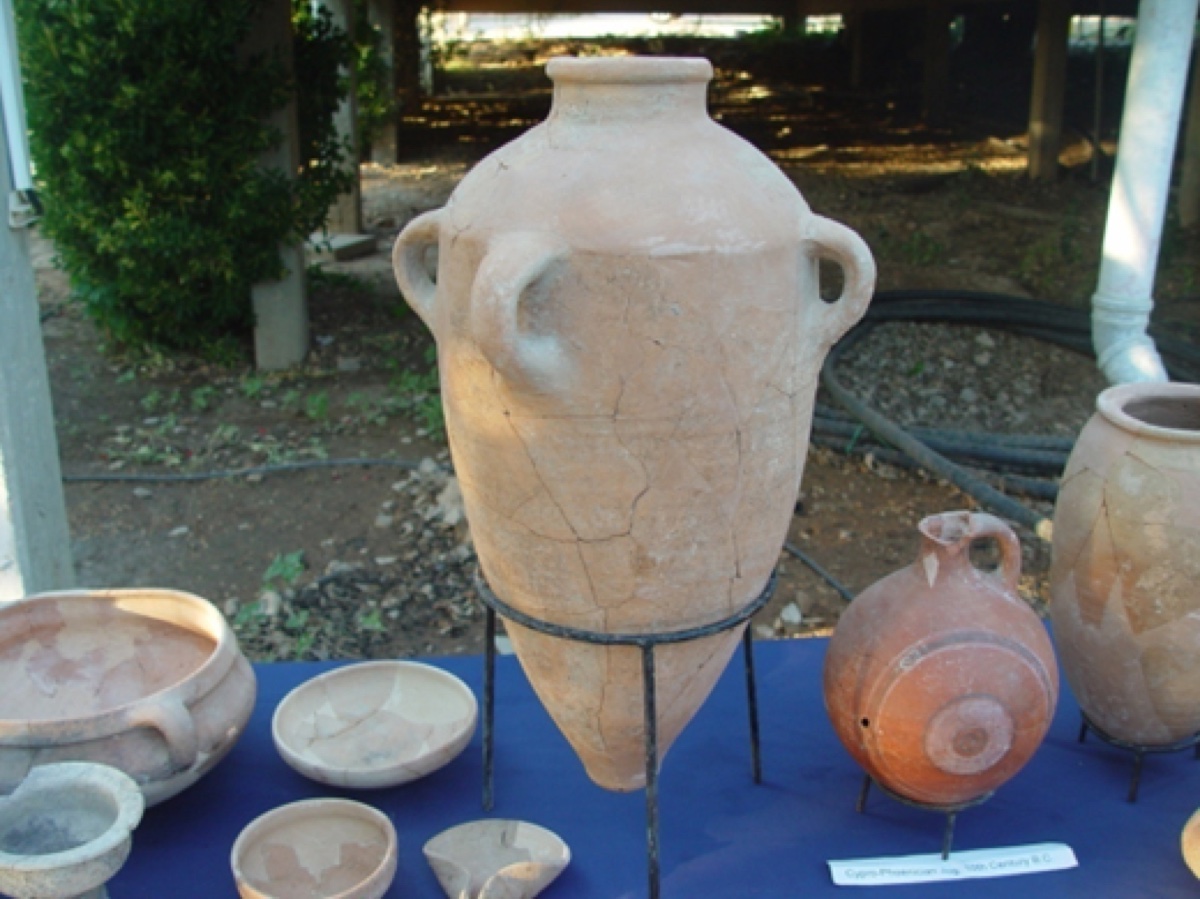
Archaeology has uncovered evidences of the preparation Hezekiah made for war.
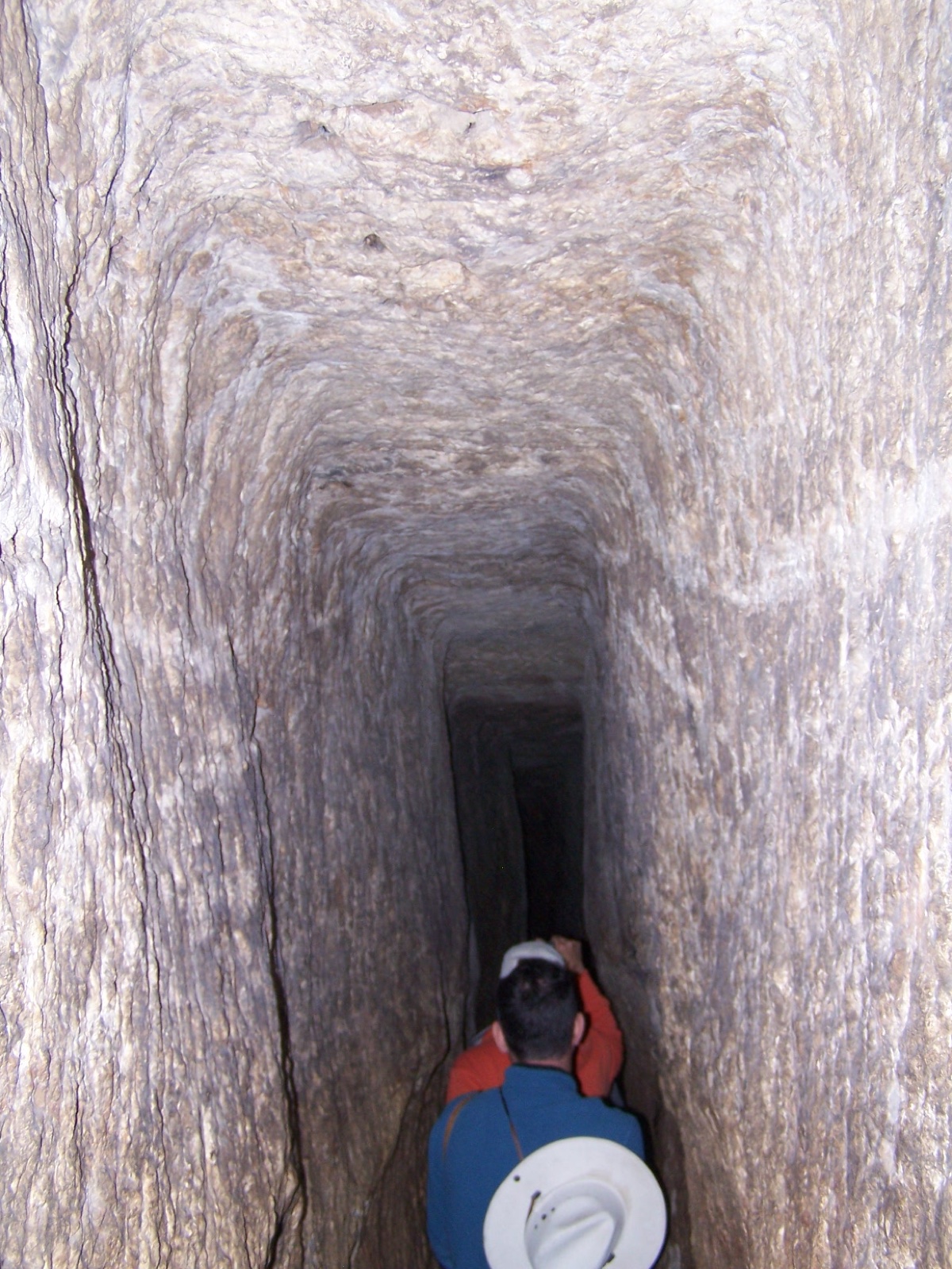
The city depended to a great degree upon the water from the Gihon Spring, which lay outside the eastern walls of Jerusalem. One of the things Hezekiah did was to make a conduit to bring water from the spring inside the walls of the city. “The rest of the deeds of Hezekiah and all his might and how he made the pool and the conduit and brought water into the city, are they not written in the Book of the Chronicles of the Kings of Judah?” (2 Kings 20:20). Tourists to Israel have the opportunity to walk through that 1,750-foot tunnel, which was one of the greatest works of water engineering in the pre-Classical period. The tunnel from the Gihon Spring to the Pool of Siloam is known as Hezekiah’s tunnel.
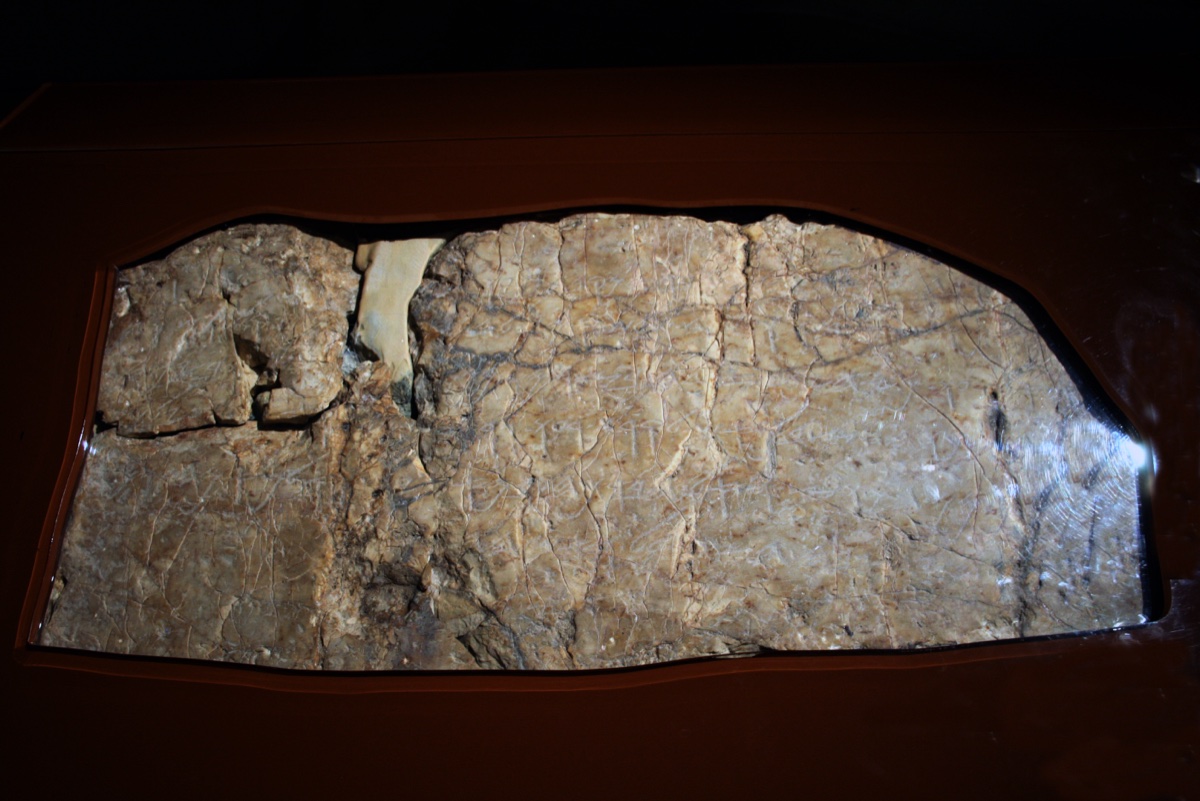
Another artifact relating to Hezekiah’s tunnel is the Siloam inscription. It was discovered by a 16-year-old pupil in 1880. Archaeologists removed the 15 x 29 inch inscription from walls of the Siloam tunnel and it is now housed in the Istanbul (Turkey) Archaeology Museum (several museums have replicas of the inscription). It records the workers from one end of the tunnel meeting another group of workers from the other end of the tunnel at a spot near the middle of the tunnel. When they heard the sounds from each other, they turned and headed toward the sounds of the other laborers. The translation of the inscription is by W. F. Albright:
(. . .) [when the tunnel] was driven through. And this was the way in which it was cut through:—While (. . .) [were] still (. . .) axe[s], each man toward his fellow, and while there were still three cubits to be cut through, (there was heard) the voice of a man calling to his fellow, for there was an overlap in the rock on the right (and on the left). And when the tunnel was driven through, the quarrymen hewed [the rock], each man toward his fellow, axe against axe; and the water flowed from the spring toward the reservoir for 1,200 cubits, and the height of the rock above the heads of the quarrymen was one hundred cubits (Pritchard, 321).
Also relevant to the Gihon Spring and tunnel is a recent article in Biblical Archaeology Review (49:3 [Fall 2023]). A group of archaeologists are proposing that the biblical term “Millo” (see 2 Sam. 5:8-9; 1 Kings 9:15, 24; 11:27; 2 Kings 12:20; 1 Chron. 11:8; 2 Chron. 32:5) is used to describe a “monumental fortification that guarded the city’s most precious resource: water.” Protrusions from the original walls were likely built to provide defensive walls and towers to secure the Gihon spring, especially before Hezekiah’s tunnel was dug (“The Millo: Jerusalem’s Lost Monument,” Chris McKinny, Aharon Tavger, Nahshon Szanton, and Joe Uzieul, 35). This seems a likely explanation of what the Millo was.
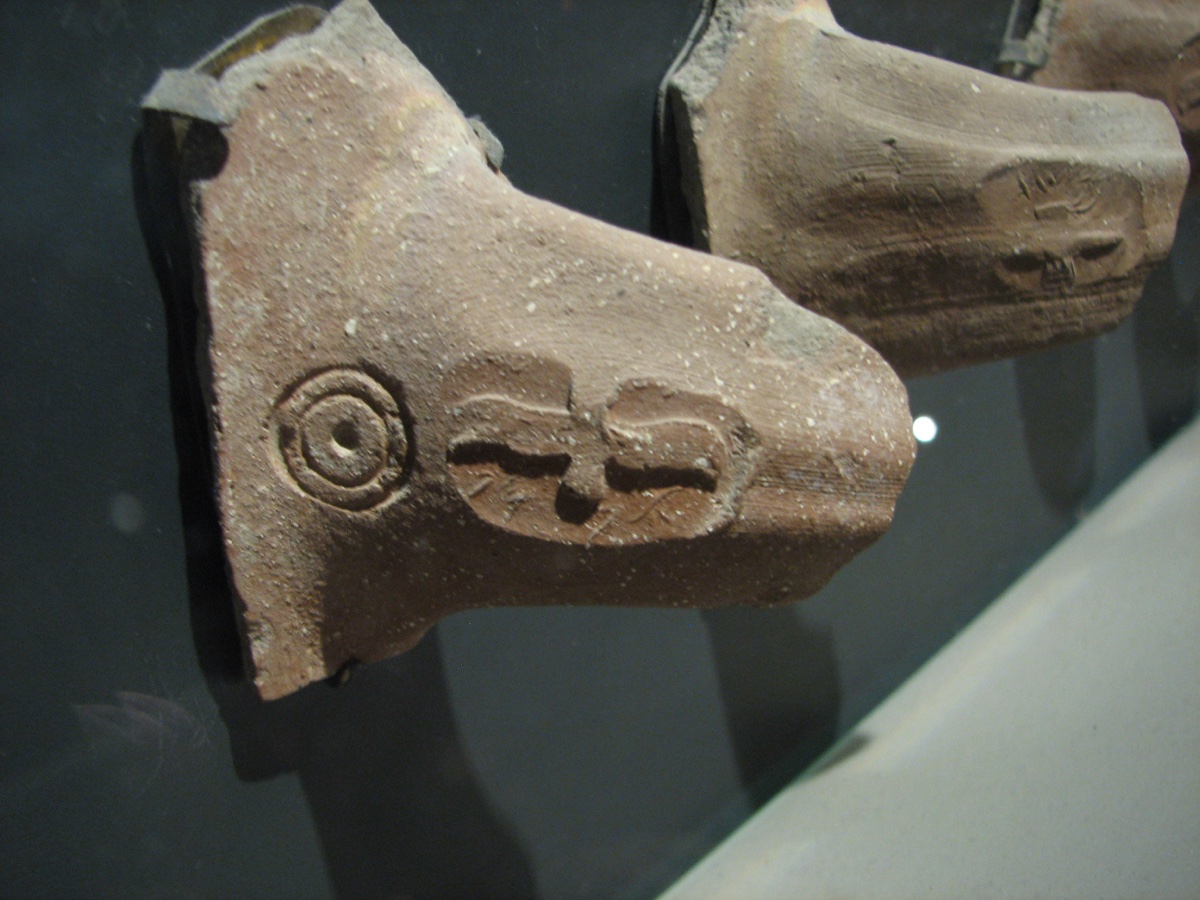
Not only did Hezekiah need to protect Jerusalem’s water supply, he also needed to prepare the city for a prolonged siege outside their city walls. One evidence of this preparation is stamped handles on storage jars. Over 2000 “lmlk” stamped jar handles have been found in a number of different cities. The inscription “lmlk” means “[belonging] to the king.” A significant number of the stamps read “lmlk Ziph,” “lmlk Hebron,” “lmlk Socoh,” and “lmlk mmst.” Three of these are known place names (“mmst” is not). Since the excavations at Lachish under the direction of David Ussishkin during the 1970s, the sealed jar handles have been assigned to the reign of King Hezekiah. These jars of supplies could have been used as a means of paying taxes or preparations for a prolonged war. It is very likely that these jars stored provisions for war supplies, much as the U.S. government has strategic oil reserves in case of war.
The author of 2 Chronicles wrote about Hezekiah’s work on the city wall, saying, “He set to work resolutely and built up all the wall that was broken down and raised towers upon it, and outside it he built another wall, and he strengthened the Millo in the city of David. He also made weapons and shields in abundance” (2 Chron. 32:5).
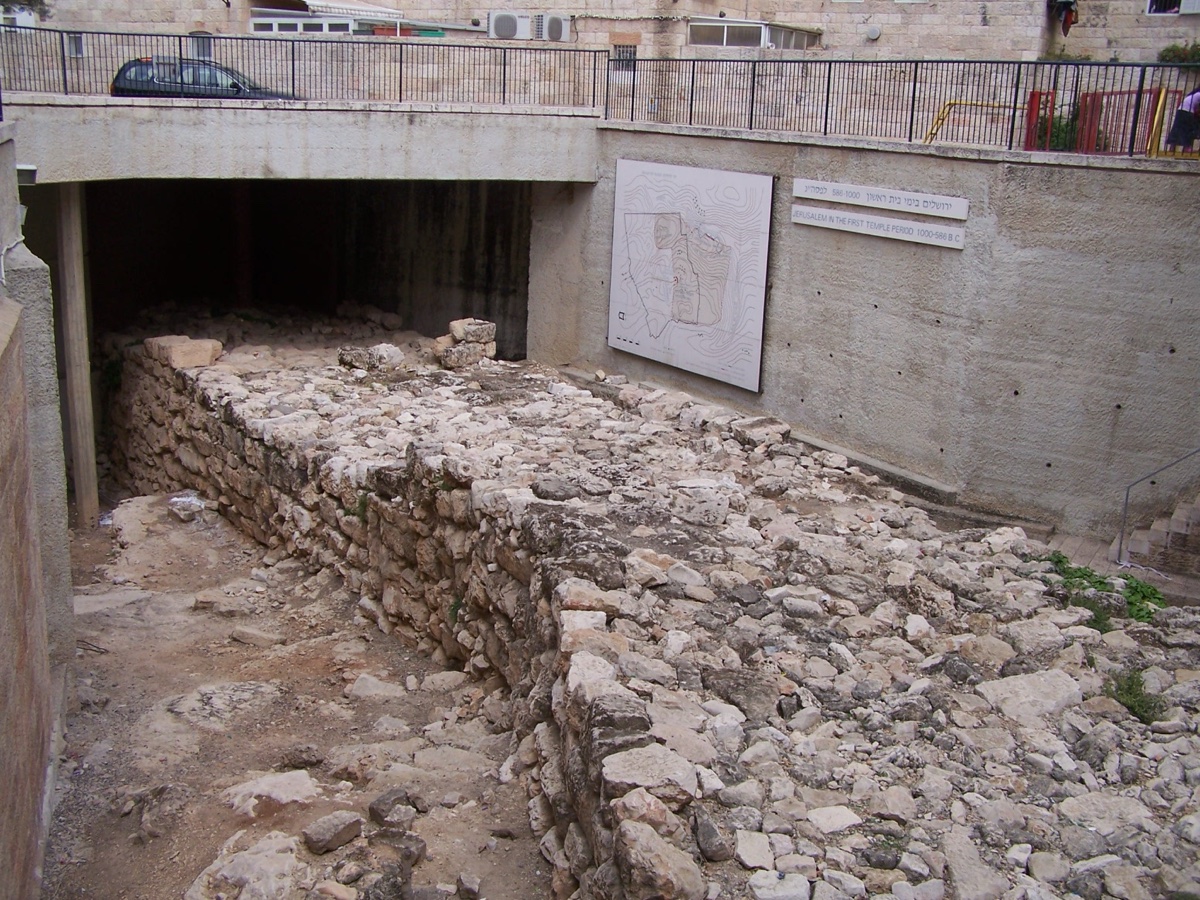
Only a small section of Hezekiah’s broad wall has been left exposed (see “City Walls in Hezekiah’s Time.”.) The “Broad Wall” is located in the Jewish Quarter of the Old City and was unearthed by Nahman Avigad in the 1970s. It is dated to Hezekiah’s reign and identified as “Hezekiah’s Broad Wall.” The portion of the uncovered wall is over seventy-one yards long and is preserved in places to a height of 3.6 yards. Some Bible scholars believe that Hezekiah’s wall (“the broad wall”) is mentioned in Nehemiah 3:8 in his account of the rebuilding of the walls of Jerusalem. In working on the broad wall, archaeologists uncovered evidence that houses had been destroyed in order to construct the wall and this too is likely mentioned by Isaiah—“He has taken away the covering of Judah. In that day you looked to the weapons of the House of the Forest, and you saw that the breaches of the city of David were many. You collected the waters of the lower pool, and you counted the houses of Jerusalem, and you broke down the houses to fortify the wall. You made a reservoir between the two walls for the water of the old pool. But you did not look to Him who did it, or see Him who planned it long ago” (22:8-11).
In summation, the first article provides archaeological evidence that shows that Hezekiah lived and was king of Judah (the bullae confirms this). He was mentioned in Assyrian King Sennacherib’s account of his wars in three prisms with identical text. In this second article relating to Hezekiah, we have seen how archaeological evidences give us greater historical context about his life and reign as Judah’s king.
Fink, Todd M. “Hezekiah’s Broad Wall: Jerusalem History, Assyrian Invasion.” HolyLandSite.com. https://www.holylandsite.com/hezekiah-broad-wall.
Pritchard, James Bennett, ed. The Ancient Near Eastern Texts Relating to the Old Testament, 3rd ed. with Supplement. Princeton: Princeton University Press, 1969.
Mike Willis served as editor of Truth Magazine for forty years. Presently, he is preaching for the Decatur Township church southwest of Indianapolis, IN. The church website is here. He can be reached here.

By Chris Reeves
Synopsis: Marriage is all about trust—trusting your mate in their fidelity and trusting the Lord in His guidance. Abraham and Sarah’s trust in the Lord is a model for all married couples today.
The proverb writer wrote, “Trust in Jehovah with all thy heart, and lean not upon thine own understanding” (Prov. 3:5), and again, “The heart of her husband trusts in her, and he shall have no lack of gain” (Prov. 31:11) [Note #1]. I can think of no better wise advice for a happy marriage than to trust in the Lord and trust in your mate.
Abraham and Sarah are two individuals whose life together as a married couple can be summed up in one word: “trust.” The Lord had great things planned for this couple all their lives and they had to learn to trust Him from beginning to end. They had to learn to trust the Lord’s call, along with His plan, His testings, and His promises.
By faith Abraham, when he was called, obeyed to go out unto a place which he was to receive for an inheritance; and he went out, not knowing whither he went. By faith he became a sojourner in the land of promise, as in a land not his own, dwelling in tents, with Isaac and Jacob, the heirs with him of the same promise: for he looked for the city which hath the foundations, whose builder and maker is God (Heb. 11:8-10).
The first act of trust came when the Lord called Abraham and Sarah to leave their home. They had to trust the Lord when He called them to come out of the Ur of the Chaldees (Gen. 11:27-32; see also Acts 7:1-8) and again when He called them in Haran (Gen. 12:1-9). It takes a lot of trust to listen to the Lord when He asks you to leave your comfortable home and make other great changes in your life [Note #2]. After they entered Canaan, they had to deal with a famine (12:10-20), the need to move to find pasture (13:1-18), and the rescue of Lot (14:1-24).
Married couples today also have to learn to trust the Lord’s call. When God calls a man and a woman to a marriage relationship, they must both believe it is a good and right thing to do (Gen. 2:18-24). When the Lord calls a husband to be a loving head and a wife to be respectfully submissive, they must both trust this divine call (Eph. 5:22-33; Col. 3:18-19; 1 Pet. 3:1-6). When the Lord calls the father to be a teacher and trainer of his children and the mother to be a caregiver to the children, they must both trust this divine call (Eph. 6:1-4; Col. 3:20-21; 1 Thess. 2:7-11; 1 Tim. 3:3-4, 12; Titus 1:6; 2:4-5). Married couples must trust that the Lord’s way is best.
By faith even Sarah herself received power to conceive seed when she was past age, since she counted him faithful who had promised: wherefore also there sprang of one, and him as good as dead, so many as the stars of heaven in multitude, and as the sand, which is by the sea-shore, innumerable (Heb. 11:11-12).
The second act of trust came when the Lord told Abraham and Sarah that they would have their own son in their old age. The Lord planned to bring about physical and spiritual blessings through a child of promise—Isaac. Abraham and Sarah had to learn to trust the Lord and not their own human wisdom [Note #3]. The child of promise would not be Eliezer, as Abraham thought (15:1-21), nor would it be Ishmael through Hagar, as Sarah thought (Gen. 16:1-16). The child of promise would come through Abraham and Sarah even though both of them were old and even though both of them laughed at the idea of having a son (Gen. 17:1-18:15). Eventually, Abraham and Sarah manifested faith, and Sarah soon gave birth to Isaac (“he laughs”) just as the Lord had planned (Gen. 21:1-7; see also Rom. 4:17-22; 9:6-9; and Gal. 4:21-31).
Married couples today must know that the Lord has a specific plan for their marriage and they must trust that plan. The Lord plans for a marriage to be lifelong (Mal. 2:16; Matt. 19:6; Rom. 7:2-3; 1 Cor. 7:10-11, 27, 39), that marriage be intimate (1 Cor. 7:1-4), and that marriage be mutually supportive (Prov. 2:17; Eccl. 9:9; Mal. 2:14; 1 Cor. 7:33-34; 1 Pet. 3:7). Do you trust the Lord’s plan for marriage?
By faith Abraham, being tried, offered up Isaac: yea, he that had gladly received the promises was offering up his only begotten son; even he to whom it was said, In Isaac shall thy seed be called: accounting that God is able to raise up, even from the dead; from whence he did also in a figure receive him back (Heb. 11:17-19).
The third act of trust came when the Lord proved (tested) Abraham and told him to take his son Isaac and offer him for a burnt-offering. Abraham (likely after telling Sarah of God’s test) did as he was told and when he showed the Lord that he would sacrifice his son (manifesting a faith that works), the Lord provided a ram for the sacrifice instead of Isaac (Gen. 22:1-19; cf. Jas. 2:21-24).
Couples today need to realize that their marriage will be tested, but they can pass the test. One test of marriage comes from the Devil, who wants a couple to lose their self-control and sin (1 Cor. 7:5). Marriages may also be tested by things like money, debt, hobbies, work, friends, co-workers, societal ideologies, technology, etc. Trust the Lord’s way and don’t ever let these tests cause you to end your marriage.
These all died in faith, not having received the promises, but having seen them and greeted them from afar, and having confessed that they were strangers and pilgrims on the earth. For they that say such things make it manifest that they are seeking after a country of their own. And if indeed they had been mindful of that country from which they went out, they would have had opportunity to return. But now they desire a better country, that is, a heavenly: wherefore God is not ashamed of them, to be called their God; for He hath prepared for them a city (Heb. 11:13-16).
The fourth and final act of trust came when Abraham and Sarah died before they saw the Lord’s promises completely fulfilled in their life. They were told that a nation would come from them, but they did not live long enough to see it. They were told that this nation would live in the land of Canaan, but they did not live long enough to see it. They were told that all nations would be blessed through them (ultimately, through Jesus Christ), but they did not live long enough to see it [Note #4].
What happened? Abraham and Sarah “died in faith” (literally, according to faith). Abraham and Sarah (along with the other patriarchs) died believing that the Lord’s promises would be fulfilled after their death. They died believing that they were a part of something special that the Lord had started, but it would not be completed for years to come.
Married couples today need to trust that their life together now will one day bear good fruit later after they die. They must trust that the teaching and training of their children will live on in their children after they die (Ps. 128:6; Prov. 13:22; 17:6; 22:6). They must trust that their hard work in the kingdom will keep bearing fruit long after they die. They must trust that their loyalty to each other will one day be rewarded in heaven.
Abraham and Sarah were greatly blessed by the Lord because they trusted in the Lord and obeyed Him (for the most part) all throughout their life. As the song says, “Trust and obey, for there’s no other way. . .” This is also true in marriage. When husbands and wives trust and obey the Lord’s call, plan, test, and promises, they will be greatly blessed now and in the future.
When a man and woman come together in marriage for the first time, they will be challenged to either trust their own instincts or trust the Lord’s word. Know for certain that trusting the Lord at the beginning of your marriage is always the better way (Prov. 3:5-8).
When a man and woman have been married for several years, the matter of trust will be tested. Because of the various pressures and stresses of life, you will be tempted to stop trusting in the Lord, but don’t do it.
When a man and woman have been married most of their lives, they can look back over the years and honestly say that they were glad that they trusted in the Lord and not in their own understanding.
[Note #1] All Scripture quotations are taken from the American Standard Version, 1901.
[Note #2] Apparently, they also left behind a life of idolatrous worship (Josh. 24:2).
[Note #3] Abraham did not trust in the Lord when he planned to lie about Sarah in Egypt (Gen. 12:13) and in Gerar (Gen. 20:2). Sarah did not trust in the Lord when she planned to give Hagar to Abraham (Gen. 16:2). They both did not trust the Lord when they laughed at the prospect of having their own son (Gen. 17:17; 18:12). This shows that even the faithful (trusting) sometimes live faithless (untrusting) lives.
[Note #4] For the Lord’s promises to Abraham and Sarah, see Genesis 12:1-3; 13:14-17; 15:1-6, 14; 17:1-8, 16; 18:18; and 22:17-18.
Chris Reeves has preached for the Warfield Blvd. church of Christ in Clarksville, TN, since 2016. He and his wife, Cheri, have four children and two grandchildren. His Bible study website is here. The church website is here. He can be reached here.



By Danny Linden
Synopsis: Two seemingly contradictory teachings in the Sermon on the Mount help us to see the difference between public and performative religion.
What does it mean to seek God and His kingdom? Jesus’s Sermon on the Mount, as recorded in Matthew 5-7, answers this question through a collection of teachings that painted an unexpected picture for those who heard it. To this day, seekers of God read this memorable passage and are challenged by the life-changing words within.
Two teachings in the sermon are particularly difficult to reconcile. In one place, Jesus exhorts us to be salt and light so that our righteousness may be seen by all. In the very next chapter, He seemingly says the opposite: keep your righteousness secret so that you are rewarded only by God. How can these two teachings coexist? How can we obey both?
You are the salt of the earth, but if salt has lost its taste, how shall its saltiness be restored? It is no longer good for anything except to be thrown out and trampled under people’s feet. You are the light of the world. A city set on a hill cannot be hidden. Nor do people light a lamp and put it under a basket, but on a stand, and it gives light to all in the house. In the same way, let your light shine before others, so that they may see your good works and give glory to your Father who is in heaven (Matt. 5:13-16, ESV).
Disciples of Jesus must be publicly righteous. This is illustrated as being salt and light, which make similar points but with different shades of meaning.
Salt has several well-known qualities that are applicable to our role in the world. It is an effective preservative and was used to keep meat from decaying long before refrigeration was an option. It enhances the flavor of food and makes it more appealing. Additionally, though this is not always desirable, salt stimulates thirst. Christians affect the world in these ways, too.
Our righteous influence preserves our communities against moral decay and (at least for a time) the judgment of God. While most people find increasingly inventive ways to indulge the lusts of the flesh, kingdom citizens stem the tide of evil. We have examples of God delaying punishment against cities and nations because of the righteous behavior of a few (cf. 2 Kings 22:16-20; Ezek. 22:30-31; Gen. 18:22-33) [Note #1].
The righteous lives of disciples make our communities more palatable. The world can be harsh and unyielding, especially since it is under the influence of sin. Yet, everywhere a Christian goes should be a little more reasonable. We should be lightening burdens, providing comfort, and generally being a relief from the depravity of the world. “Let your reasonableness (lit.,”gentleness“) be known to everyone” (Phil. 4:5).
Kingdom citizens create a thirst for righteousness in those around them. Admittedly, not everyone responds in this way. Our good behavior is a threat to those who are still committed to their sins. However, for those who are looking for something different, even if they don’t know exactly what they are looking for, a disciple’s example is refreshing. In fact, this feeling of being fed up with sin and trying to feel our way toward God is exactly what Jesus describes in the beginning of His sermon. “Blessed are the poor in spirit. . . blessed are those who mourn. . . blessed are those who hunger and thirst for righteousness” (Matt. 5:3, 4, 6).
The second metaphor of light treads similar ground, but with a slightly different emphasis. The salt showed us the various effects disciples have in the world, while the illustration of light better emphasizes the contrast. Different scopes of light are described (“the light of the world” like the sun illuminating the earth; “a city set on a hill” that is seen for miles all around; and “a lamp on a lampstand” that gives light to a house), but they all operate in the same way. The impenetrable darkness is instantly and undeniably broken by the light. Even when you squeeze your eyes shut, a bright light is surprisingly noticeable. The contrast is simply too great.
The lives of disciples exhibit this same contrast. Sin and righteousness are alarmingly different, even to someone who isn’t paying close attention. True righteousness is so shocking that it catches the eye of those living in the dark. It may even be painful when the darkness of sin is familiar. Our light does not come from within us—we were once in the world and guilty of the same degenerate practices as everyone else. Our righteousness is a reflected light that comes from the only true source of light (John 1:4-14). When we seek and obey God, His righteousness fills us. Though we are never as brilliant as God Himself, we can and must still be beacons of righteousness to all of creation.
Beware of practicing your righteousness before other people in order to be seen by them, for then you will have no reward from your Father who is in heaven. Thus, when you give to the needy, sound no trumpet before you, as the hypocrites do in the synagogues and in the streets, that they may be praised by others. Truly, I say to you, they have received their reward. But when you give to the needy, do not let your left hand know what your right hand is doing, so that your giving may be in secret. And your Father who sees in secret will reward you. And when you pray, you must not be like the hypocrites. For they love to stand and pray in the synagogues and at the street corners, that they may be seen by others. Truly, I say to you, they have received their reward. But when you pray, go into your room and shut the door and pray to your Father who is in secret. And your Father who sees in secret will reward you (Matt. 6:1-6).
Just a little later in the same sermon, Jesus gives another instruction that seems contradictory. Beware of practicing your righteousness before others! He applies this to charity (6:1-4), prayer (6:5-6), and fasting (6:16-18). What is the danger of public righteousness in these and other areas?
The key phrase is “in order to be seen by them,” which should be a clue that Jesus was not concerned with public good deeds per se but was specifically addressing an issue of motivation. If we are righteous for the purpose of being praised by others, we have utterly misunderstood our duty as disciples. It is easy to parade our charity, prayers, or self-discipline before others to court their admiration and even to be seen spiritually superior to everyone else. To this, Jesus says, “They have received their reward.”
There is real benefit in a willingness to serve God, even when no one is watching. In matters of charity, this tests our motivations. If I am less likely to be kind and generous when others aren’t around to notice, does this not reveal a way in which I need to grow? The charity itself is also sometimes more effective when it is secret. In certain cases, the person in need may be embarrassed by their vulnerability and our discretion may prevent more pain. In prayer and fasting, our private practices serve to reinforce our public ones. Our service to God can never be complete if it is restricted to our outward-facing life. Jesus’s teaching on this matter is important in challenging us to make our righteousness as complete and sincere as possible. When we are faithful, even in private, God will reward us openly.
Most of us have probably known others who made a show of righteousness. The effect of this is worse than doing nothing at all because it gives others a reason to discredit their good deeds. If they are self-motivated, then their service is a mere farce and does not challenge me to follow their example. It is only evil dressed up in a guise of righteousness.
This explanation doesn’t remove all the difficulties from this passage. Is it good for others to see my service to God or not? These verses help us stay away from two harmful extremes.
If I am prone to timidity and fear, I need to consider my place in the world as a reflector of God’s light. Am I ashamed of God? Am I ashamed of how He saved me? I should shout my praises from the rooftop and my life should be unabashedly righteous. When friends and neighbors see that I act differently than I once did, I should point them to God and His work within me.
If I am inclined to care too much about what others think of me, I should think seriously about my motivations for serving God. Do I need others to praise me? Do I believe that I am better than others? Honestly answering those questions requires self-awareness and humility. Making a deliberate effort to do more good in the background may be the best thing for my spiritual growth and for the cause of the kingdom.
These teachings harmonize when we properly understand them. Our service to God must be public, but not performative. Do not worry about what others think of us, except that we want a consistent, faithful example to be set for the sake of the kingdom. When we practice this properly, God is glorified and many can be brought to the kingdom to become His disciples.
[Note #1] In Gen. 18, Abraham is not able to persuade God to spare Sodom. However, God’s responses show that Abraham’s intercession was not out of line. If there had been enough righteous people in Sodom, God would have spared the city to allow that righteousness opportunity to grow. Sadly, the state of Sodom was worse than Abraham realized.
Danny Linden has worked with the Hebron Lane church of Christ in Shepherdsville, KY, since March 2023. He and his wife, Lauren, have four children. The church website is here. His website is here. He can be reached here.



By Owen Partain
Synopsis: Let us consider the Book of Job, and the necessity of faith and perseverance. We should trust in God, maintaining our faith through trying times and hardships.
These opening verses describe Job as a man of high praise. He was very wealthy and successful, and was counted as the greatest of all the men in the east.
There was a man in the land of Uz whose name was Job; and that man was blameless, upright, fearing God and turning away from evil. Seven sons and three daughters were born to him. His possessions also were 7,000 sheep, 3,000 camels, 500 yoke of oxen, 500 female donkeys, and very many servants; and that man was the greatest of all the men of the east. His sons used to go and hold a feast in the house of each one on his day, and they would send and invite their three sisters to eat and drink with them. When the days of feasting had completed their cycle, Job would send and consecrate them, rising up early in the morning and offering burnt offerings according to the number of them all; for Job said, “Perhaps my sons have sinned and cursed God in their hearts.” Thus Job did continually (Job 1:1-5).
In communicating with Satan, God praised Job’s integrity. May we all strive to live so that God would view with similar confidence.
Now there was a day when the sons of God came to present themselves before the LORD, and Satan also came among them. The LORD said to Satan, “From where do you come?” Then Satan answered the LORD and said, “From roaming about on the earth and walking around on it.” The LORD said to Satan, “Have you considered My servant Job? For there is no one like him on the earth, a blameless and upright man, fearing God and turning away from evil” (Job 1:6-8).
Despite being highly regarded by God, Satan was allowed to take away everything that Job possessed: Sometimes we feel like this happens to us as well. Whenever we encounter these trials, let us consider Job and remember the trials he endured.
Then Satan answered the LORD, “Does Job fear God for nothing? Have You not made a hedge about him and his house and all that he has, on every side? You have blessed the work of his hands, and his possessions have increased in the land. But put forth Your hand now and touch all that he has; he will surely curse You to Your face.” Then the LORD said to Satan, “Behold, all that he has is in your power, only do not put forth your hand on him.” So Satan departed from the presence of the LORD (Job 1:9-12).
Consider Job chapter 1, verses 13-22.
Now on the day when his sons and daughters were eating and drinking wine in their oldest brother’s house, a messenger came to Job and said, “The oxen were plowing and the donkeys feeding beside them. And the Sabaeans attacked and took them. They also slew the servants with the edge of the sword, and I alone have escaped to tell you.” While he was still speaking, another also came and said, “The fire of God fell from heaven and burned up the sheep and the servants and consumed them, and I alone have escaped to tell you.” While he was still speaking, another also came and said, “The Chaldeans formed three bands and made a raid on the camels and took them and slew the servants with the edge of the sword, and I alone have escaped to tell you.” While he was still speaking, another also came and said, “Your sons and your daughters were eating and drinking wine in their oldest brother’s house. And behold, a great wind came from across the wilderness, and struck the four corners of the house. And it fell on the young people, and they all died, and I alone have escaped to tell you.” Then Job arose and tore his robe, shaved his head, and he fell to the ground and worshipped. He said, “Naked I came from my mother’s womb, and naked I shall return there. The Lord gave, and the Lord has taken away. Blessed be the name of the Lord.” Through all this, Job did not sin, nor did he blame God.
The thing that I most admire about this passage is the last verse: “Through all this, Job did not sin, nor did he blame God” (v. 22). After everything that he went through, Job did not curse God. He didn’t sin. He was not consumed with bad feelings. I find that remarkable.
Although we will reflect upon the second chapter of Job, we will not read all of it. Verses 3 through 6 records a conversation that God had with Satan, similar to the one that was recorded in the first chapter, so we’re going to briefly skip that. Job 2:1 states,
Again, there was a day when the sons of God came to present themselves before the Lord, and Satan also came among them to present himself before the Lord.
Let’s skip down to verse 7.
Then Satan went out from the presence of the Lord and smoked Job with sore boils, from the sole of his foot to the crown of his head. And he took a pot-shard to scrape himself while he was sitting among the ashes. Then his wife said to him, “Do you still hold fast to your integrity? Curse God and die.” But he said to her, “You speak as one of the foolish women speaks. Shall we indeed accept good from God and not accept adversity?” In all this, Job did not sin with his lips.
For the sake of our present study, let’s stop here. We’re not going to read about Job’s friends for now, because that leads to a different set of lessons. Job’s testing continued. God praised the patriarch:
The LORD said to Satan, “Have you considered My servant Job? For there is no one like him on the earth, a blameless and upright man fearing God and turning away from evil. And he still holds fast his integrity, although you incited Me against him to ruin him without cause” (Job 2:3).
Despite the trials that God allowed Job to endure, he held fast to his faith and integrity. Consider Job’s accumulated loss and suffering: He lost his oxen, donkeys, sheep and camels. He lost all of his servants. All ten of his children died. He lost the support of his wife, who should have stood beside him and encouraged him. As Job’s ordeal continued, he experienced discouragement, accusations of sinning, and scolding from his friends.
If we put ourselves in Job’s place, what would be the effect of such calamity? It might come close to destroying us. He was probably thinking to himself, “What could happen to me now? I have nothing left.” Yet, consider the remarkable statement at the end of chapter 1:
Through all this Job did not sin nor did he blame God (Job 1:22).
Turning to the New Testament, consider Paul’s declaration in Romans 5 and several statements of James in the first chapter of his epistle:
And not only this, but we also exult in our tribulations, knowing that tribulation brings about perseverance; and perseverance, proven character; and proven character, hope; and hope does not disappoint, because the love of God has been poured out within our hearts through the Holy Spirit who was given to us (vv. 3-5).
Consider it all joy, my brethren, when you encounter various trials, knowing that the testing of your faith produces endurance. And let endurance have its perfect result, so that you may be perfect and complete, lacking in nothing. But if any of you lacks wisdom, let him ask of God, who gives to all generously and without reproach, and it will be given to him. But he must ask in faith without any doubting, for the one who doubts is like the surf of the sea, driven and tossed by the wind (Jas. 1:2-6).
Blessed is a man who perseveres under trial; for once he has been approved, he will receive the crown of life which the Lord has promised to those who love Him (Jas. 1:12).
I feel like these two passages would have been great for Job to read had he lived in the New Testament era. These are really encouraging verses whenever you’re going through trials and hardships.
For the purposes of this lesson, I will not cover Job chapters 3 through 37, which basically record the back-and-forth conversations that Job had with his friends. However, let us briefly consider Job chapters 38 through 40.
In chapter 38, God enters the picture and interrupts the conversation. He speaks of His power. He asks Job many rhetorical questions. He asks Job, “Can you do the things that I can?” God is omnipotent, while Job is a mere mortal. He can do what Job cannot.
Chapter 39 is similar: God’s power is seen through His creation, the realm of nature, and all the works that He has done.
Chapter 40, I do want to read the first five verses of chapter 40.
Then the LORD said to Job, “Will the faultfinder contend with the Almighty? Let him who reproves God answer it.” Then Job answered the LORD and said, “Behold, I am insignificant; what can I reply to You? I lay my hand on my mouth.”Once I have spoken, and I will not answer; Even twice, and I will add nothing more" (vv. 1-5).
Here God confronts Job, and asks, “What say you?” Job is left speechless.
In essence, Job acknowledges his insignificance, and says, “I have nothing to say to you—no defense or justification. I submit fully to you.” He leaves it at that.
In verses 6 through 14, God continues to question Job—challenging his assertions and confronting his accusations. These three chapters remind us that we should never question God’s power. We should have complete trust in God. He sets the physical creation before us. His power is shown through His mighty works. No matter what trials we face, let us trust in God, and trust in His plan for us,
Now, let’s turn to Proverbs 4, which builds upon that point:
Let your eyes look directly ahead and let your gaze be fixed straight in front of you. Watch the path of your feet and all your ways will be established. Do not turn to the right nor to the left; turn your foot from evil (Prov. 4:25-27).
Consider also Psalms 32:8-11.
I will instruct you and teach you in the way which you should go; I will counsel you with My eye upon you. Do not be as the horse or as the mule which have no understanding, whose trappings include bit and bridle to hold them in check, otherwise they will not come near to you. Many are the sorrows of the wicked, but he who trusts in the LORD, lovingkindness shall surround him. Be glad in the LORD and rejoice, you righteous ones; and shout for joy, all you who are upright in heart (vv. 8-11).
These passages show us that God is saying, “You need to trust in me. I have set the path before you. I have my plan for you, so you need to submit fully to that, no matter what I permit to come into your life.”
To conclude, I want to turn to Philippians 4, which is one of my favorite chapters in the Bible. This chapter reveals what it means to be faithful Christian. It holds all the keys to remaining in Christ and maintaining faith in God throughout your whole life.
Be anxious for nothing, but in everything by prayer and supplication with thanksgiving, let your requests be made known to God. And the peace of God, which surpasses all comprehension, will guard your hearts and your minds in Christ Jesus. Finally, brethren, whatever is true, whatever is honorable, whatever is right, whatever is pure, whatever is lovely, whatever is of good repute, if there is any excellence and if anything worthy of praise, dwell on these things. The things you have learned and received and heard and seen in me, practice these things, and the God of peace will be with you. But I rejoiced in the Lord greatly, that now at last you have revived your concern for me; indeed, you were concerned before, but you lacked opportunity. Not that I speak from want, for I have learned to be content in whatever circumstances I am. I know how to get along with humble means, and I also know how to live in prosperity; in any and every circumstance I have learned the secret of being filled and going hungry, both of having abundance and suffering need. I can do all things through Him who strengthens me (Phil. 4:6-13).
This is one of my favorite passages in the Bible. I’m going to go ahead and list out again all things mentioned by Paul that are the keys to faith. The first one is to rejoice in the Lord. Secondly, let your gentle spirit be made known to men. Thirdly, be anxious for nothing, going to God in prayer and supplication for all requests and also thanking Him. Fourth, having the peace of God on your side, knowing that He guards the heart and the mind. Fifth, dwell on whatever is true, honorable, right, pure, lovely, and what is of good repute. Then also put these things to practice, that’s number six, and apply them correctly throughout your whole life. Once again, rejoicing in the Lord, as verse ten says. Verses eleven and twelve offer instructions for dealing with the good and the bad, prosperity and poverty. Finally, verse 13 declares that we can have full confidence in God in any circumstance.
Please turn to Job chapter 42 and read verses 10 through 17. The Lord restored the fortunes of Job when he prayed for his friends. He increased all that Job had twofold. His brothers and sisters, and all who had previously known him, came and broke bread with him in his house. They comforted Job for all the adversities that the Lord had brought upon him.
The Lord blessed the latter days of Job more than his beginning. . . After this, Job lived 140 years and saw his sons and his grandsons, four generations. Finally, Job died an old man, full of days. God rewarded Job for his faith and perseverance. Jesus promises to do the same for His disciples: “Therefore, you too have grief now; but I will see you again, and your heart will rejoice, and no one will take your joy away from you” (John 16:22). Heaven is the ultimate reward for those who persevere and keep the faith. He said, “No one will take your joy away from you.” Underline or highlight the phrase, “no one.” No one will take your joy away from you if you endure to the end.
May we remember the example of Job whenever we face hardships. He was human, as we are. We face trials and temptations. They are not the same as Job experienced, but similar. Because Job held to his faith, and trusted in God, he was highly praised. In the end, he was rewarded for his continuous faith in God.
Owen Partain grew up and currently resides in Alvin, TX, and is the son of John and Leah Partain. He is currently studying to be a court reporter at the University of Houston. He is a member of the Adoue Street church of Christ. He can be reached here.


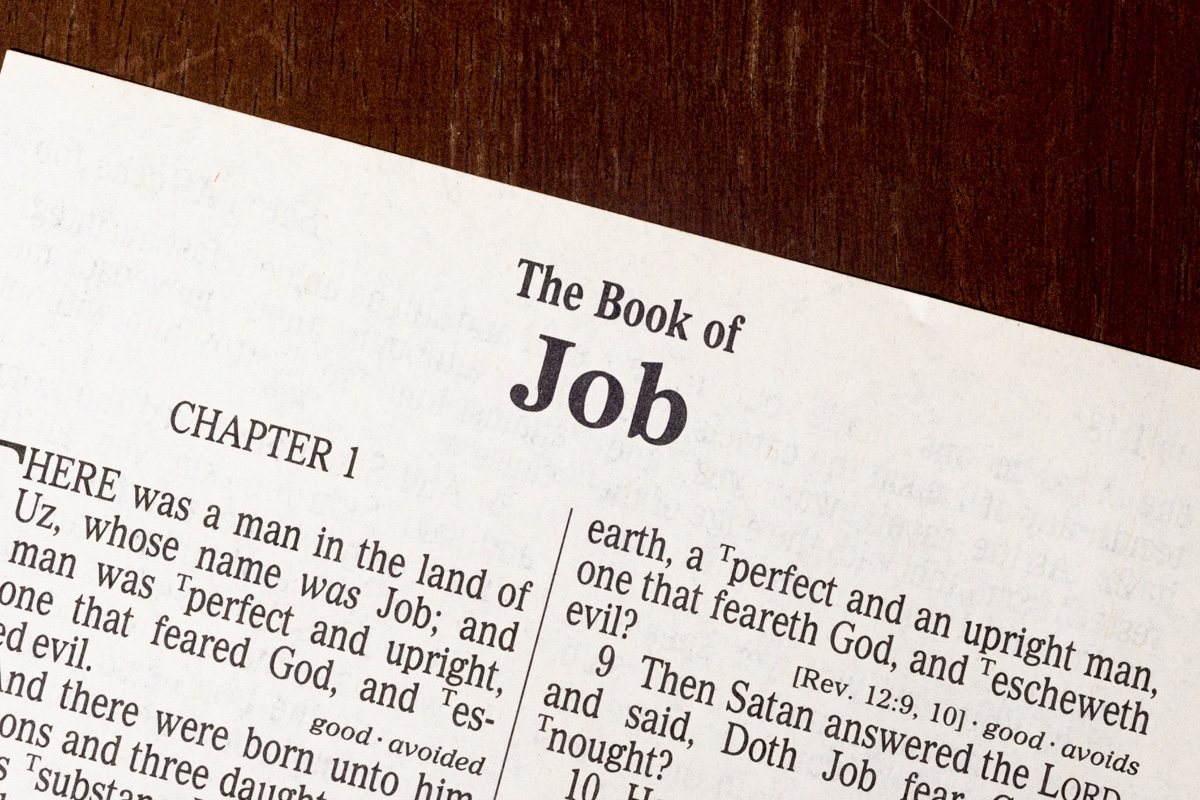

By David Deason
Synopsis: John introduces his readers to Jesus as a unique Savior by virtue of His identity, an uncommon use of time, and an unprecedented focus upon His role on earth.
“In the beginning was the Word, and the Word was with God, and the Word was God” (John 1:1). As John begins his narrative on the life of Christ, he sets forth Jesus as a unique individual. “The Word,” “the Creator,” “the Light of man,” and other designations place Jesus and His mission among man as different from any other leader ever known to mankind. The power, influence, and love that He possessed were unlike that of any other king, conqueror, or hero that has ever lived. He possessed His power by virtue of His deity. He used His influence as directed by His Father. His love was displayed in everything He said and did. In all things, Jesus’s complete focus was on completing the redemptive task for which the Father had sent Him into the world.
History paints a picture of many influential individuals who were charismatic and powerful. Many of these even claimed to be deity. In ancient Egypt, Pharaohs were considered gods and sons of gods. As he sought to conquer the world, Alexander the Great traveled to the oasis at Siwa, Egypt, where he claimed to visit the oracle who pronounced him a god. This pronouncement legitimized his rule over Egypt. When Antiochus IV came to power, he sought to rule from a position of fear. “By taking the epitaph Epiphanes (i.e., God Manifest), Antiochus even claimed to be Zeus incarnate” [Note: 1]. Time and time again, men portrayed themselves as something that they were not in an effort to gain submission or power. However, when Jesus comes into this world, John identifies Him as someone different from every leader before Him, as well as every leader to follow.
Beginning with his first words, John depicts Jesus as something more than special—He possesses a completely unique identity. John begins his description of the Savior by speaking of His divine purpose. Jesus is “the Word” (1:1). He is divine correspondence between the Father and mankind. The Hebrew writer begins his letter with a similar thought. “God, after He spoke long ago to the fathers in the prophets in many portions and in many ways, in these last days has spoken to us in His Son, whom He appointed heir of all things, through whom also He made the world” (Heb. 1:1-2). This divine correspondence began with creation and continues in His word. Jesus is “Life” (1:4). He was the creative agent the Father used to breathe physical life into existence. He is also the source for eternal life for those who are His disciples. Jesus is “Light” (1:4). As light dispels darkness, Jesus entered the world and “enlightened” men as He displayed “glory as of the only begotten from the Father, full of grace and truth” (1:14).
John highlights the Savior’s identity as he records seven miracles that only God could perform. Beginning at Cana, Jesus displayed His miraculous power for the first time by turning the water into wine (John 2). Then He was approached by a royal official who desperately wanted his son healed. Jesus didn’t even have to be present by the boy’s side to extend His healing hand (John 4). John then tells about the lame man who was healed at the pool of Bethesda. Jesus commanded this man to stand and walk, and through His divine power, the man was able to do as told (John 5). Five thousand ate the food He miraculously provided, and the disciples witnessed Him walk on the water upon the Sea of Galilee (John 6). The blind man was healed (John 9) and Lazarus rose from the tomb four days after his burial (John 11). John later tells his readers, “Therefore, many other signs Jesus also performed in the presence of the disciples, which are not written in this book; but these have been written so that you may believe that Jesus is the Christ, the Son of God; and that believing you may have life in His name” (John 20:30-31). Story after story could have been told to verify Jesus’s identity as the Son of God. However, with these seven, John proves definitively that Jesus was exactly who He claimed to be. No other king, conqueror, hero, or villain could ever make such a boast and back up his words as this Jesus of Nazareth!
Jesus’s uniqueness as a Savior is also displayed by John as he shows us how our Lord made the most of His time. From His revelation as the Son of God to His crucifixion on Golgotha’s hill, only about three and a half years passed. In such a short amount of time, most would carefully arrange the weeks, days, and hours in an effort to be most efficient and to minimize what others might view as wasted time. However, John shows Jesus as unique in His willingness to take time, even for things others might see as insignificant.
Why would Jesus waste His precious time by meeting and talking with a Pharisee who was a “ruler of the Jews” (John 3)? Members of this sect were notorious for their jealousy and hatred toward Him. Still, Jesus took the time to explain to Nicodemus important truths about spiritual rebirth, the love of God, and the purpose of the Savior’s coming into the world.
Why would Jesus waste His precious time by sitting and talking with a sinful woman from Samaria (John 4)? John even emphasizes the fact that “Jews have no dealings with Samaritans.” However, Jesus engaged in an extensive conversation with this woman that led her to recognize His unique identity and the blessings that only He could offer. For this obscure woman, He took the time and revealed Himself as Messiah.
Even when His life was in jeopardy, this unique Savior took the time to be with and teach those He loved. Through the first eleven chapters of his gospel, John often reveals the jeopardy that Jesus faced. This peril concerned the disciples greatly. In chapter eleven, John informs his readers about Mary, Martha, and their brother Lazarus. When Jesus told the disciples of His plan to return to Judea to be with His friends, they reminded Him of the danger that awaited them: “Rabbi, the Jews were just now seeking to stone You, and are You going there again?” (John 11:8). Yet, Jesus willingly took the time, even at significant risk, to be with those whom He loved. Many kings and rulers, significant people, think selfishly regarding their time and attention, but this is not how John portrays the King of kings!
Finally, John also portrays the Savior as unique in regard to His focus. When establishing an earthly dominion, kings and rulers focus on themselves, their own rules, their own desires. However, John shows his audience a Savior who is unique in that His focus was not on Himself, but on those whom He served. From the outset, John tells of the Savior and His service to the Father. “No one has seen God at any time; the only begotten God who is in the bosom of the Father, He has explained Him” (John 1:18). Jesus understood that His role was to submit humbly to the Father, and point others to Him. It was a role that He accepted passionately. As He came to Jerusalem for the Passover, John tells us, “He made a scourge of cords, and drove them all out of the temple, with the sheep and the oxen; and He poured out the coins of the money changers and overturned their tables; and to those who were selling the doves, He said, ‘Take these things away; stop making My Father’s house a place of business.’ His disciples remembered that it was written, ‘Zeal for Your house will consume me’” (John 2:15-17). Regarding the lessons He taught, John reveals Jesus’s acknowledgment: “My teaching is not Mine, but His who sent Me” (John 7:16). As John records some of the last conversations that Jesus had with His disciples, the reader finds that Jesus’s focus was not just on pleasing the Father, but also on supplying the one thing that all men desperately need and that only He can supply—a perfect sacrifice.
Jesus came to this earth for His disciples, prayed for them, and ultimately bled for them. In that sacrifice, Jesus showed all of mankind the perpetual truth that “God so loved the world, that He gave His only begotten Son, that whoever believes in Him shall not perish, but have eternal life” (John 3:16). Through His identity, unlike anyone’s before or since, with His unexpected use of time, and by His dedicated focus to His purpose on earth, Jesus showed Himself to be the truly unique Savior of the world.
[Note: #1] Drummond, John Gregory. “Antiochus Epiphanes—The Bible’s Most Notoriously Forgotten Villain.” Biblical Archaeology Society. November 24, 2023. https://www.biblicalarchaeology.org/daily/ancient-cultures/ancient-israel/antiochus-epiphanes-the-bibles-most-notoriously-forgotten-villain/.
David Deason has worked with the Pine Lane church of Christ in Bessemer, AL since September 2011. He and his wife, Janet, have five children. The Pine Lane website is here. He can be reached here.



By Steven Russell
Synopsis: John’s gospel is structured differently from the three synoptic gospels, largely because he writes with a unique purpose.
The structure of the fourth gospel in our canon is certainly unique from the first three. Our goal in this brief article is to articulate just how that is so. Let’s establish one thing at the outset. Each of the gospels has a unique and specific structure to accomplish a particular goal. The uniqueness of John is that its structure varies more even at first glance, but the other three have striking differences as well. Often, our goal has been to figure out how all four go together instead of figuring out what they are doing separately. While there is benefit in seeing what the gospels can tell us in composite form, we rob ourselves of great treasure if we ignore their primary value as distinct works. They were delivered one at a time. Each conveys an entire message about Jesus. None of them tell us all there is to say about Jesus, but each means to tell us completely something about Him.
There are a few ways to look at the primary focus of John’s gospel account. One is to use the stated purpose for its writing in John 21:31, “but these have been written so that you may believe that Jesus is the Christ, the Son of God; and that believing you may have life in His name.” This is helpful as far as it goes, but this point really encompasses all the gospels at some level. It does not get to what makes John distinct. Getting to that comes by seeing the structure and emphasis John makes all along the way.
A more specific description of John’s major emphasis can be found in the opening words of the book. “In the beginning was the Word, and the Word was with God, and the Word was God” (John 1:1). John’s overriding message is that Jesus is God. He communicates this reality from the very start with an explicit proclamation. While the other three gospels prove the deity of Jesus, none states it so straightforwardly as John. Certainly they do not do so in the first sentence. Mark comes quite close but requires some exegesis of the phrase Son of God.
Slightly less explicit references are scattered throughout the book of John. For instance, Jesus refers to Himself as “I AM” on multiple occasions. The most well-known occurs in John 8:58, where Jesus said to them, “Truly, truly, I say to you, before Abraham was, I am.” He also tells His disciples that if they have seen Him, they have seen God (John 14:6-11).
Coming back to the beginning of John, we can see more than the explicit statement “the Word was God.” In John 1:1, the author uses the language of Genesis 1:1 to introduce Jesus. John starts with “In the beginning,” just as Moses does. Also, just as Moses introduces God as the creator of all the world, so John borrows those words to introduce us to the Word (Jesus) as the creator of all the world.
Not only is the deity of Jesus more prominent, but other themes are deemphasized. For instance, the idea of the kingdom is almost absent compared to the other gospel accounts. The Greek word for kingdom shows up fifty-five times in Matthew, forty-six times in Luke, twenty times in Mark, but only five times in three non-sequential verses in John. This does not indicate that the theme of God’s kingdom is unimportant, but it is not as important to what John wants to communicate as it is to Matthew, Luke, and, to some degree, Mark.
Because John is focusing more on a distinct aspect of Jesus and minimizing attention on other aspects, the stories he includes, and the details of those stories, are going to differ from writers who have other goals. It is why, even when he tells the same story, he does so with a different approach.
One of the main distinctions in John’s approach is the lengthy discourses he records for us. The longest of these, and the longest discourse recorded in any gospel, is often referred to as “the Farewell Discourse” in John 14-17. This extended message of Jesus to His apostles is not even referenced in any of the other three gospels. It perhaps speaks not only to the uniqueness of the point of John’s gospel but perhaps the uniqueness of the timing. If John’s gospel is written as late as is often supposed, then he may have more reason to reassure the followers of Jesus about where He has gone and the nature of our continued hope, which is the major subject of those four chapters.
In John 6, we have an extension of a story recorded in all the gospel accounts. The feeding of the 5,000 is recounted at the beginning of the chapter, but John adds the subsequent conversation that occurs when the people show up looking for more. It is a telling conversation and extremely helpful in understanding the full meaning of the miracle.
In John’s account, Jesus is shown to be the true bread of life, which is a hard truth for the Jewish audience to comprehend. He exposes that they are shallow in their understanding of Israel’s history and how it points forward to greater truths. Of course, we also see that many depart as a result of this difficult teaching.
What we find in the extended discourses that John records is more developed theology of the life of Christ. These include not just the miracles, but the consequent questions and explanations that follow them. Not just the Last Supper, but the questions that followed along with the answers. While Matthew, Mark, and Luke lay the groundwork to give us the fuller picture of Jesus’s ministry, John takes the time to develop a majority of the events he records. This brings us to our final point.
The concluding words of John’s account are, “There are also many other things which Jesus did, which if they were written one after the other, I suppose that even the world itself could not contain the books that would be written” (20:30). John tells us what we already know: that there is much more he could have included. Nevertheless, as he has already said, he has included what was needed to produce the desired effect—that is allegiance to God in the form of Jesus Christ.
John has included the least number of miracles registering even less than Mark’s comparatively short record. One might suppose that a man intent on proving the deity of Christ would include more miracles in order to solidify the point. However, I believe this disparity points to an important aspect of miracles in the work of Jesus. Miracles were never an end in themselves, but always pointed to an inescapable end—namely, that Jesus is the Messiah, God in the flesh. It is the meaning of the miracles that finally brings us to where we need to be, and while the meaning is often left implied in the other gospel accounts, John blesses us with more instruction attached to those miracles. This leaves less space for additional miracles, but we are at no loss for the tradeoff.
Like John, I can say that much more could be written. We could examine the way his gospel is outlined. There seems to be some level of chiastic structure and various narratives pointing to Old Testament structures. Yet, these are not unique aspects of John. Our goal here is to point to the ways in which John distinguishes himself from the synoptics.
I hope that this article shows not only how John’s structure differs from the other gospels, but why it does. It isn’t terribly profitable to observe that his gospel looks different from Matthew, Mark, and Luke if we don’t understand why. It is not random. John doesn’t simply have a distinct style. There is a purpose behind these distinctions.
Not only this, but we find that these differences tell us more than the similarities. Where one gospel tells us something that another leaves out, or where there is a conspicuous absence in one gospel present in the other three, it gives us an opportunity to ask, “Why?” So let us ponder the unique gospel of John. Then let that spur us to ponder the uniqueness of each of the other gospels—then each book of the Bible. They all have something to say, and each one has a distinct purpose from the others. All this while, they each lead us to one great conclusion: That Jesus Christ is the Lord and King of all creation!
Stephen Russell has worked with the Pepper Road church of Christ in Athens, AL, since 2015. He and his wife, Amy, have three children. The church website is here. He can be reached here.


By Marshall McDaniel
Synopsis: The unique signs in the Gospel of John provide additional glimpses of Jesus that sound a common refrain: Jesus is the Christ, the Son of God.
The Gospel of John repeatedly speaks of signs. The word translated “sign(s)” (semeion) occurs seventeen times in John. It occurs thirteen times in Matthew, seven in Mark, and eleven in Luke, but not all the instances in these gospels refer to miraculous signs. In John, signs are always miraculous, but they are not only demonstrations of power; they are also instructive. Signs communicate the divine truth about Jesus.
A few of the signs in John parallel those found in the other gospels, but most are unique. Only John chronicles the following signs: Jesus turning water into wine (2:1-11), healing the official’s son (4:43-54), healing the invalid at the pool of Bethesda (5:1-15), healing the man born blind (9:1-41), and raising Lazarus from the dead (11:1-53). John is also the only gospel writer to record Peter’s second supernatural catch of fish (21:1-14), though he does not specifically refer to this miracle as a sign. Still, even the signs paralleled in other gospels—such as Jesus feeding the multitudes (6:1-15; cf. Matt 14:13-21; Mark 6:30-44; Luke 9:10-17) and walking on the water (John 6:16-21; cf. Matt 14:22-33; Mark 6:45-52)—are exceptional in that John often follows these events with extensive teaching, explaining their significance.
Near the end of his gospel, John reveals why he records signs: “Therefore many other signs Jesus also performed in the presence of the disciples, which are not written in this book; but these have been written so that you may believe that Jesus is the Christ, the Son of God; and that believing you may have life in His name” (John 20:30-31, NASB). John documents select signs to produce in his readers faith that Jesus is the Christ (“the Anointed One,” that is, “the King”), the Son of God. The signs in John offer unique glimpses of Jesus—who He is and what He does: “[T]hese deeds bespoke something unusual in Christ’s person, and were themselves signposts pointing in the direction of something altogether new and different about him” (King, xliii). John records signs so that we may know that Jesus is Lord and God.
The sovereignty of Christ is evident from the first and second of His signs (John 2:1-11; 4:43-54). John ends his record of these signs with a similar phrase: “This is the beginning of His signs Jesus did in Cana of Galilee, and manifested His glory, and His disciples believed in Him” (2:11, NASB) and “This is again a second sign that Jesus performed when He had come out of Judea into Galilee” (4:54, NASB). While the New American Standard Bible (and many other English versions) provides the general sense of John 2:11 and 4:54, the translation inadvertently masks the implied authority of Jesus when it renders the underlying Greek as “this is the beginning of His signs Jesus did” and “this is again a second sign that Jesus performed.” These translations make it sound as though the focus is merely on the sequence.
The NET Bible supplies a helpful translation that emphasizes both sequence and sovereignty: “Jesus did this as the first of His miraculous signs” (2:11, NET) and “Jesus did this as His second miraculous sign” (4:54, NET). The translators of the NET provide footnotes for both John 2:11 and 4:54 that include a similar alternative: “Jesus made this to be.” Using the alternative translation, John 2:11 reads, “Jesus made this to be the first of His miraculous signs.” Greek grammarian Daniel B. Wallace prefers the marginal reading and contends that “the evangelist’s emphasis becomes clearer: Jesus was both powerful and sovereign” (Wallace, 187; cf. p. 242). Jesus (in accordance with the will of the Father) determined His first and second signs. Neither familial (Mary) nor social (official) obligations forced Him into compliance. Jesus made the signs of turning water into wine and of healing the official’s son to be His first and second signs.
Clearly, then, Jesus decided when to perform His signs, but He also determined what to accomplish through them. As John 2:11 relates, Jesus ultimately performed His signs to manifest His glory and establish faith in His disciples. The signs in the Gospel of John thus reveal a powerful and purposeful Jesus.
The self-disclosure of Christ is apparent in each of His signs. Jesus uses signs to teach us who He is. Homer Hailey offers the following descriptions of Jesus based on signs in John 1-12 (Hailey, 110-113):
| Miracle | Meaning |
|---|---|
| Turning Water into Wine (2:1-11) | He is “the master of matter” (p. 110) |
| Healing the Official’s Son (4:43-54) | He is “the master of distance and space” (p. 111) |
| Healing the Invalid (5:1-15) | He is “the master of time” (p. 111) |
| Feeding the Multitudes (6:1-15) | He is “the [master] of quantity” (p. 112) |
| Walking on the Water (6:16-21) | He is “the master of natural forces” and “of gravity” (p. 112) |
| Healing the Man Born Blind (9:1-41) | He is “the master of light” and “over adversity” (p. 112) |
| Raising Lazarus from the Dead (11:1-53) | He is “the master over death” (p. 113) |
Though Hailey rightly appreciates the theme of authority (“master of/over”) in the signs and his understanding of the significance of the signs is helpful in many ways, the surrounding narratives/teachings in the Gospel of John itself provide the clearest explanations of the identity of Jesus. We would do well to read and meditate on each of the signs (and the surrounding contexts) with this question in our minds: What does this sign teach me about the person—especially the deity—of Jesus? When we do, Jesus shows Himself to be the Master of a (spiritual) feast/wedding (John 2:1-11; cf. vv. 12-22; Isa. 25:6-8; Rev. 19:6-8), the King of Israel (= “royal official;” John 4:43-54; cf. 20:30-31), and so much more. The remaining signs portray Jesus as the Lord of the Sabbath and the Son of God (5:1-47), the Prophet like Moses and the Bread (“Manna”) of heaven/God/life (6:1-14, 22-65), the LORD (“I AM”) of the wind and the sea (vv. 15-21; cf. Isa. 43:1-7), the Light of the world (John 8:12-9:41), and the Resurrection and the Life (11:1-53; cf. 12:1-50).
Jesus chose to reveal Himself through His signs. His signs prove that He is Lord. Jesus is Lord, first, in the sense that He is the Master of all things (e.g., nature, illness, death), but He is also—and more importantly—Lord in the sense that He is God (= Yahweh [or Jehovah], the LORD, the great I AM). In short, the signs in John cry out, “Jesus is God!”
The sign of signs is the resurrection of Jesus. Jesus, in a sense, then, becomes a sign. Sometime after His first sign in Cana of Galilee, Jesus traveled to Jerusalem and “infamously” cleansed the temple. The Jews challenged Him, “What sign do You show us as your authority for doing these things?” (John 2:18, NASB). “Destroy this temple,” Jesus replied, “and in three days I will raise it up” (v. 19, NASB). John explains that Jesus was speaking of His own death and resurrection (vv. 21-22). The resurrection, then, is the ultimate proof that Jesus is the Christ, the Son of God, that He possesses (divine) authority (20:30-31). Paul likewise affirms that Jesus “was declared to be the Son of God with power. . . by the resurrection from the dead” (Rom. 1:4, NKJV). Near the end of the Gospel of John, Thomas recognizes the implications of the resurrection when he sees Jesus and exclaims, “My Lord and my God” (John 20:28, NASB). Will we too “see” the significance of the sign of signs and submit to the authority of Christ? The resurrection should cause us to bend the knee to Jesus. Will we do so?
The signs in the Gospel of John instill wonder, impart instruction, lead us to Jesus, and persuade us that He is the Christ, the Son of God (i.e., God; John 20:30-31). During the time of Christ’s earthly ministry, some who saw the signs believed (2:23; 10:40-41; cf. 3:2; 7:31). Others did not (11:47-48; 12:37-41; cf. vv. 42-43). The hardhearted dismiss the signs of Jesus; the honest appreciate them (and their implications). How will we respond to the signs in the Gospel of John? John recorded them for people like us. If we accept them, and believe in the One who performed such miracles, and humbly submit to His will, we will inherit eternal life. May we join the faithful company of “those who have not seen and yet have believed” so that we too may receive this intended end of the miraculous signs of Jesus (John 20:29, NKJV)!
Hailey, Homer. That You May Believe: Studies in the Gospel of John. Grand Rapids: Baker Books, 1973.
King, Daniel H., Sr. The Gospel of John. Truth Commentaries. Bowling Green, KY: Guardian of Truth Foundation, 1998.
Wallace, Daniel B. Greek Grammar Beyond the Basics. Grand Rapids: Zondervan, 1996.
Marshall McDaniel has worked with the Pepper Road church of Christ in Athens, AL, since 2021. He and his wife, Emily, have four children. The church website is here. He can be reached here.


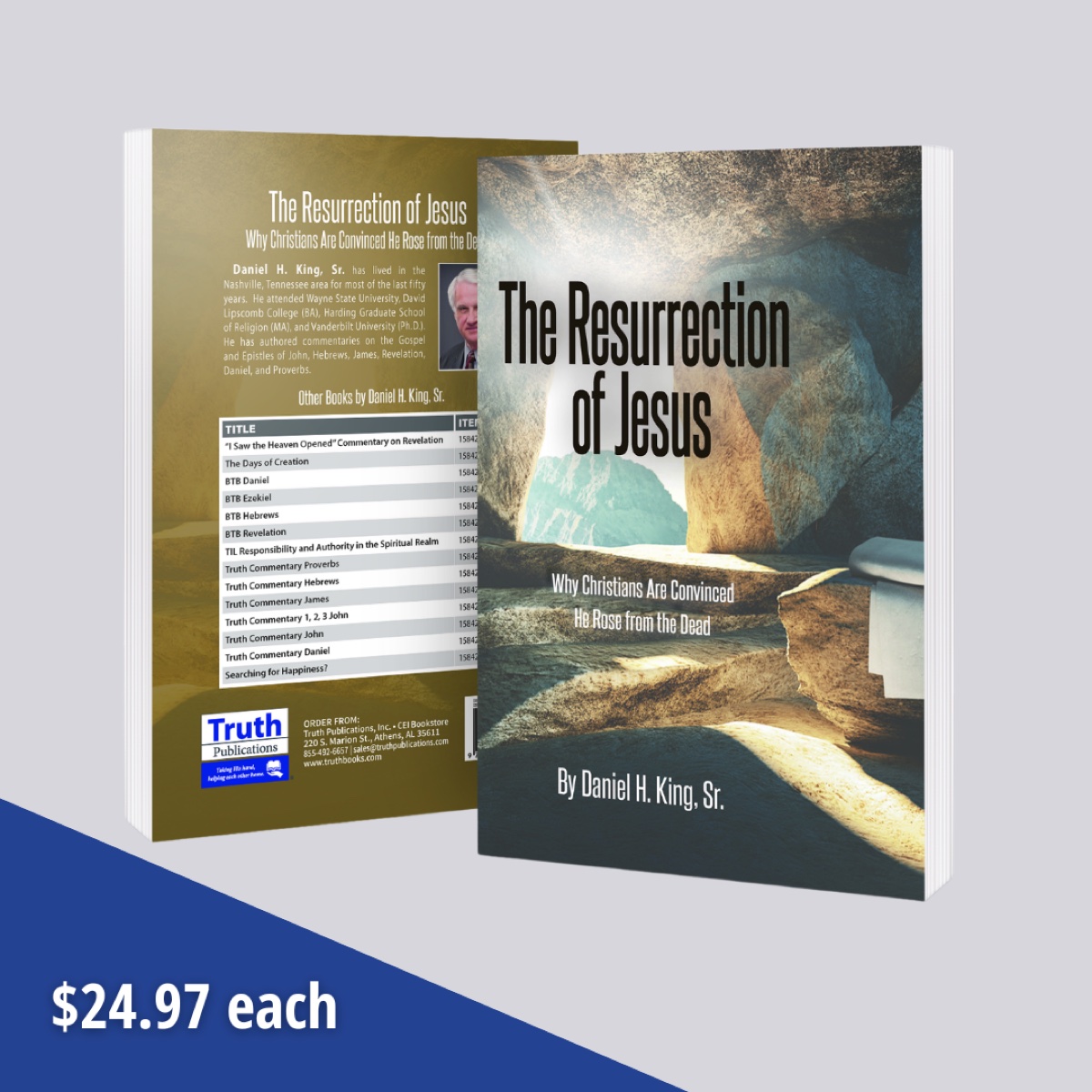
By Keith Hamilton
Synopsis: You may never know the influence that you may have on others from a brief, unique encounter.
This is the disciple which testifieth of these things, and wrote these things: and we know that his testimony is true. And there are also many other things which Jesus did, the which, if they should be written every one, I suppose that even the world itself could not contain the books that should be written. Amen (John 21:24-25).
One of the unique features of the John’s gospel is the brief way that the life of our Lord is portrayed. So much could have been written, but was not, which makes what he revealed even more outstanding. The written record of the people Jesus encountered, and their interaction, becomes special learning moments in our study of the life of our Lord. What can we learn from each unique encounter the Lord had? What can we take away from our learning experience that will help us in the personal encounters we experience during our journey through life? There are many beautiful and unique things in this world that bring us delight and pleasure, along with many wonders in nature that inspire us—causing us to pause and give thanks to our Creator.
The unique encounters and relationships we share with others make life truly beautiful. Even when I have fond memories of some special place I have visited, those memories are dear to me because of the people with whom I shared the experience. Standing for the first time on the Pacific Coast and looking out over that vast ocean for the first time is a memory I will always cherish because of the presence of my wife and two children who also shared the experience. I dearly love my Tennessee. It is the state where I was born, and Lord willing, the place where my body will be returned to the ground. In many places, its natural features are breath-taking. Yet, it is the people who are the salt of the earth that make this place so special and give me great pride to say to others, “I am from Tennessee.” Yes, life is about the people with whom we have unique encounters. What we take away from those experiences and what others share with us gives special meaning to our journey through life. As we examine the Gospel of John and its unique features, we see the unique encounters Jesus had and His effect on each person. One could not and cannot meet Jesus and walk away as the same person they were before their unique encounter with Him. That much is astoundingly apparent. Jesus, the Master Teacher and Leader, was always seeking an opportunity to teach and influence everyone with whom He interacted. Oh, that we had such a spirit to imitate our Lord in that way too! I think this is what the Lord is doing with us as we are influenced by His life to become like Him.
Sometimes the gospel records general encounters that Jesus had with groups or crowds. However, the specific encounters Jesus had which are individually unique, are the ones that leave the strongest impressions. Some people that are recorded in the gospel of John remain anonymous to us. They are referred to as “a woman” of Samaria (4:5-26); a “certain nobleman” (4:46-54); “a man” with an infirmity (5:5-9); “a woman” taken in adultery (8:3-11); and “a man” born blind (9:1-7). Others with whom Jesus had unique encounters are known to us by name. John the baptizer (1:29-34); Andrew, Simon, Philip, and Nathanael (1:35-51); Nicodemus (3:1-21); Lazarus (11:1-44); Mary (12:3-8); Judas (18:19-24); Annas and Caiaphas (18:19-24); Pilate (18:33-19:22); Mary Magdalene (20:11-18); Thomas (20:26-29); and Peter (21:1-18). It is worth our consideration to note that the unique encounters Jesus had with others were not always positive. We should always desire a positive outcome to occur with the unique encounters we experience. However, even our Lord did not have a positive effect on everyone whom He encountered. Why so? Could it be that, while each person Jesus encountered was individually distinct, all were affected by a common ailment?
For all have sinned, and come short of the glory of God (Rom. 3:23)
For those Jesus encountered and continues to encounter, each can claim that he is somehow unique. Separating humanity into groups: race, gender, social status, religion, national identity, etc. as well as all the things that cause us to be affected by our upbringing or environment result in a diversity of experiences and circumstances. Yet, for all the things that make men unique and diverse, everyone of us is sin sick. This is what Jesus saw when He came to this earth. This motivated Him in every unique interaction He had with people. He saw each person for whom he was, and, being the Master Teacher, He met each person where he was in his life’s journey. Every unique interaction Jesus had was an opportunity to teach and try to have a positive effect on that individual’s life. If only all of them had listened. If only we would listen.
We spend our lives encountering people. Some will pass through our lives remaining anonymous. Others we know closely by name and their circumstances. Do we see the opportunities with each person to teach him about Jesus—to be one who shares the gospel?
As I write this article per the request to do so, I am recovering from emergency surgery to repair a detached retina in my right eye. Last Sunday evening after worship services, one brother was talking to me and expressed his regret for my circumstances. I thanked him but told him this experience has been a blessing for me. He looked at me questioningly. Don’t get me wrong, I do not look forward to bad circumstances or physical pain. However, I emphasized to him that we should try to see the opportunities that arise in the face of obstacles that life throws at us. I have had what Morris Massey called a S.E.E. experience (Significant Emotional Event).
These events open our hearts’ eyes to circumstances in life. At the Tennessee Retina Center, I saw the suffering of others I would never have seen or previously known. I am haunted by a young man I saw in the waiting room with a condition much worse than mine. I have prayed for him several times and for the other poor souls that were being served by the center. I have met doctors, nurses, and administrative staff for whom I have prayed that God would use the talents and training they received to serve their patients successfully. Besides that, I have experienced unique encounters with people I never would have met without my condition, and had the chance to share the gospel with them. Thank God for that, because no matter how dire my physical need is at this moment, their need for salvation from sin is much greater. If God in His providence is using me in this manner to proclaim the glory of my Lord, then so be it!
You never know the influence you may have on others from a brief, unique encounter. One thing that we do each Sunday is to give a handout to each member of our congregation. I ask them to give that handout to someone they meet during the week and invite them to our worship services. The handout contains information about our services, radio program, and a couple of Bible lessons. Two of our members own a business and give the handouts to their customers. A young lady who was in their shop took one and accepted the invitation to come to our worship services. We began a home Bible correspondence course with her and, as we were doing so, she abruptly moved to another city to begin a new job. I reached out to the local preacher I knew there and put him in contact with her as we continued our Bible study by correspondence. About three weeks later, he sent me a video of her obeying the Lord in baptism. All of that began with a casual encounter that was very simple. Giving someone a handout and inviting him to worship services. May we all see the opportunities we have to share the gospel of our Lord with each unique encounter we have. May we learn to be more like Jesus to meet people where they are and teach them the good news of salvation. May God bless you all.
Keith Hamilton has worked with the Midway church of Christ in Sewanee, TN, since 2009. He and his wife, Carlin, have two daughters and five grandchildren. He can be reached here.


By Jeremy Paschall
Synopsis: Old Testament allusions in John’s gospel account offer rich color and enhanced meaning to the texts where they are found. Consider three examples and what we can learn from them.
“In the beginning. . .” From the first three words of John’s gospel, its uniqueness is apparent, because no other account of Jesus’s story reaches further back into history. Mark begins with Jesus’s work, Matthew begins with His birth, and Luke begins with Jesus’s “forerunner” (Luke 1:17); but John uniquely begins with Creation and unabashedly proclaims the eternal pre-existence of “the Word” (John 1:1-3), through Whom all things were created, who “became flesh, and dwelt among us” (verse 14) in the person of Jesus Christ.
The beginning of John’s gospel account is clearly informed by his apologetic purpose—“so that you may believe that Jesus is the Christ, the Son of God; and that believing you may have life in His name” (John 20:31)—and that purpose further distinguishes the balance of John’s content from the Synoptics (Matthew, Mark, and Luke). John did not intend simply to offer another historical account of Jesus—the Synoptics almost certainly pre-date John’s gospel and thoroughly document that story—thus John was free (under the inspiration of the Holy Spirit, of course) to focus sharply his narrative on the doings and discourses of Jesus by which He accomplished his specific aim.
Considering its unique purpose and carefully curated content, perhaps John’s relative dearth of Old Testament quotations and fulfillment statements should not surprise us—especially compared to Jewish-audience Matthew or exact-detail Luke (Luke 1:1-4). On the other hand, it would be unfortunate to overlook John’s expert use of the Old Testament to inform context, provide chronological markers, and offer fulfilled-prophecy evidence for Jesus’s deity and Messiahship. Furthermore, as we will explore in this article, John’s gospel is rich with clear, and sometimes unique, allusions to Old Testament events, images, and people.
The New Oxford American Dictionary defines allusion as “an expression designed to call something to mind without mentioning it explicitly; an indirect or passing reference.” Merriam-Webster adds, “an implied or indirect reference, especially in literature,” or “the act of making an indirect reference to something.” For our purposes here, an allusion will call to mind (sometimes subtly) an Old Testament person, place, event, or image without providing “book, chapter, and verse,” or specifically naming the allusion’s object. Such references offer rich color and enhanced meaning to the texts where they are found.
John’s prologue unmistakably recalls the Creation narrative of Genesis 1. The God (plural Elohim) of Creation, whose word brought all creation into existence from nothing, includes “the Word” (John 1:1-3). This Word could uniquely speak light into existence (Gen. 1:1-5, 14-19) because He is Light (John 1:4, 7, 8; cf. 1 John 1:5); and what He accomplished in the physical realm, i.e. to dispel the darkness, He came to accomplish in the spiritual realm (John 1:4-13), i.e. “to destroy the works of the devil” (1 John 3:8). The Word who brought life to His creation (Gen. 1:11-31) was uniquely qualified to do so, because He is Life (John 1:4); and what He accomplished in the physical realm, i.e. to create life, He came to accomplish in the spiritual realm (John 1:12-13), i.e. to offer “newness of life” (Rom. 6:4). The Word who created flesh (Gen. 1:20-31) “became flesh, and dwelt among us” (John 1:14); “since the children share in flesh and blood, He Himself likewise also partook of the same, that through death He might render powerless him who had the power of death, that is, the devil” (Heb. 2:14); i.e. He came “in the likeness of sinful flesh and as an offering for sin, He condemned sin in the flesh” (Rom. 8:3). The Word who is the Creator became the created for our benefit (Phil. 2:5-11). What the Word accomplished in the physical realm, making something out of nothing that had neither power nor hope on its own (Gen. 1:1-2), He came to accomplish in the spiritual realm, as One who is “full of grace and truth” (John 1.14); “For of His fullness we have all received, and grace upon grace” (1:16); “For while we were still helpless, at the right time Christ died for the ungodly” (Rom. 5:6).
When Nathanael marveled at Jesus’s foreknowledge of him (John 1:47-49), “Jesus answered and said to him, ‘Because I said to you that I saw you under the fig tree, do you believe? You will see greater things than these.’ And He said to him, ‘Truly, truly, I say to you, you will see the heavens opened and the angels of God ascending and descending on the Son of Man’” (1:50-51). Anyone familiar with Genesis could scarcely read these words of Jesus without thinking of Jacob’s dream, in which “a ladder was set on the earth with its top reaching to heaven; and behold, the angels of God were ascending and descending on it” (Gen. 28.12). Jacob’s dream happened as he fled his home, toward Haran and away from the wrath of his brother Esau, and it served to reaffirm God’s promises (which were first made to Abram [Gen. 12])—despite the trying circumstances, God remained active in the life of Jacob and his family (28.13-15). The ladder seen in the dream served to connect heaven and earth, and caused Jacob to conclude, “Surely the LORD is in this place, and I did not know it. . .This is none other than the house of God, and this is the gate of heaven” (28:16-17). The Lord’s use of this allusion communicates rich truths regarding Himself: He is reaffirming and fulfilling those same Abrahamic promises; and Jesus is our ladder, our connection to heaven, “the house of God” and “gate of heaven” by whom we may have fellowship with God (John 10:9; 14:6; Acts 4:12; 1 Tim. 2:5; Heb. 4:14-16; 6:19-21; 10:19-22).
In His exchange with Nicodemus, Jesus said, “As Moses lifted up the serpent in the wilderness, even so must the Son of Man be lifted up; so that whoever believes will in Him have eternal life” (John 3:14-15), referring to the events of Numbers 21:4-9. As with ancient Israel, so it is in Christ—the problem is rebellion against God. Death is the consequence (Num. 21:5-6; Isa. 59:1-2; Rom. 6:23), and thus an intercessor is needed (Num. 21:7; Rom. 5:6-8); God’s plan is simple, and the remedy bears a striking resemblance to the curse; healing is available for all afflicted, and to be healed, one is required to respond in faith (Num. 21:8; John 3.14-16); those who submit to God’s plan are saved from death, without fail, but those who refuse God’s plan are left condemned to die, because God’s plan is their only hope (Num. 21:9; John 3:18; Acts 4:12; Heb. 5:8-9). By His grace, God made provisions by which the Israelites could be saved from the deadly bite of the serpent if they would respond in obedient faith; and by His grace, God has made provisions by which we can be saved from the deadly venom of Satan if we will respond in obedient faith.
First, New Testament use of the Old Testament, always complementary, never contradictory—including John’s use of context, chronology, quotations, fulfillments, themes, and allusions—speaks to the united, divine authorship of the Bible: “All Scripture is inspired by God” (2 Tim. 3:16), “for no prophecy was ever made by an act of human will, but men moved by the Holy Spirit spoke from God” (2 Pet. 1:21).
Second, New Testament use of the Old Testament, including allusions in John’s gospel, underscores the importance of knowing the Old Testament Scriptures: “For whatever was written in earlier times was written for our instruction, so that through perseverance and the encouragement of the Scriptures we might have hope” (Rom 15.4), and “the Law has become our tutor to lead us to Christ, so that we may be justified by faith” (Gal. 3.24).
Third, John’s use of the Old Testament supports his apologetic purpose, “so that you may believe that Jesus is the Christ, the Son of God; and that believing you may have life in His name” (John 20:31). Despite gross misconceptions and faulty expectations regarding the Messiah prevalent among first-century Jews, Jesus perfectly fulfilled every prophecy, satisfied every description, and served every purpose articulated in the Old Testament. Jesus is God’s Messiah, “the Word [who] became flesh, and dwelt among us, and we saw His glory—glory as of the only begotten from the Father, full of grace and truth” (John 1:14), for the salvation of our souls.
All Scripture quotations are from the New American Standard Bible: 1995 Update (NASB). La Habra, CA: The Lockman Foundation, 1995.
Jeremy Paschall has worked with the Greenwood church of Christ in Greenwood, IN, since February 2022. He and his wife, Laura, have one daughter. The church website is here. He can be reached here.



By Leon Mauldin
Synopsis: John’s gospel mentions some locations that are unique to his account and not found in the other gospels, including (1) Sychar, a town in Samaria, where Jesus met the Samaritan woman at Jacob’s well and offered her living water (John 4:1-42); (2) Bethesda, a pool in Jerusalem, where Jesus healed a man who had been an invalid for 38 years (John 5:1-15); (3) the Kidron Valley, a ravine east of Jerusalem, where Jesus crossed with His disciples on the night of His betrayal (John 18:1), and (4), the garden tomb, where Jesus was buried and where He appeared to Mary Magdalene after His resurrection (John 19:41-20:18).
I never tire of reading John 4, which narrates Jesus’s stop at Jacob’s well as He left Judea and was en route to Galilee. This was early in Jesus’s ministry, prior to the Galilean ministry. On this occasion, He skillfully led an unnamed woman from the mundane task of coming to draw water, to a point of manifesting faith in Him as the Messiah. It turned out that there were many in the area that became believers in Him. Jacob’s well is very near the ruins of ancient Shechem. It is housed inside a Greek Orthodox Church, the interior of which was completed in 2007.
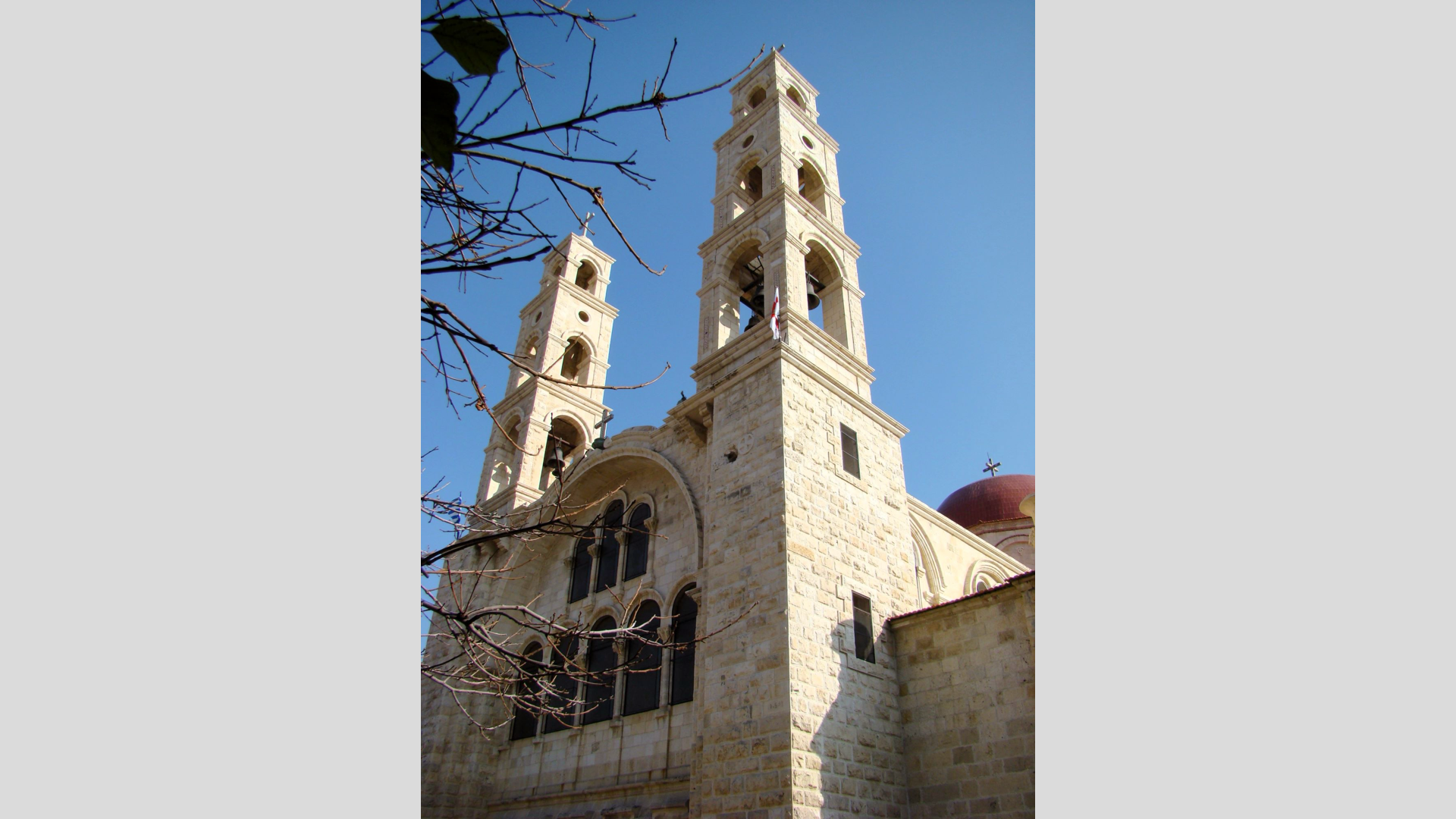
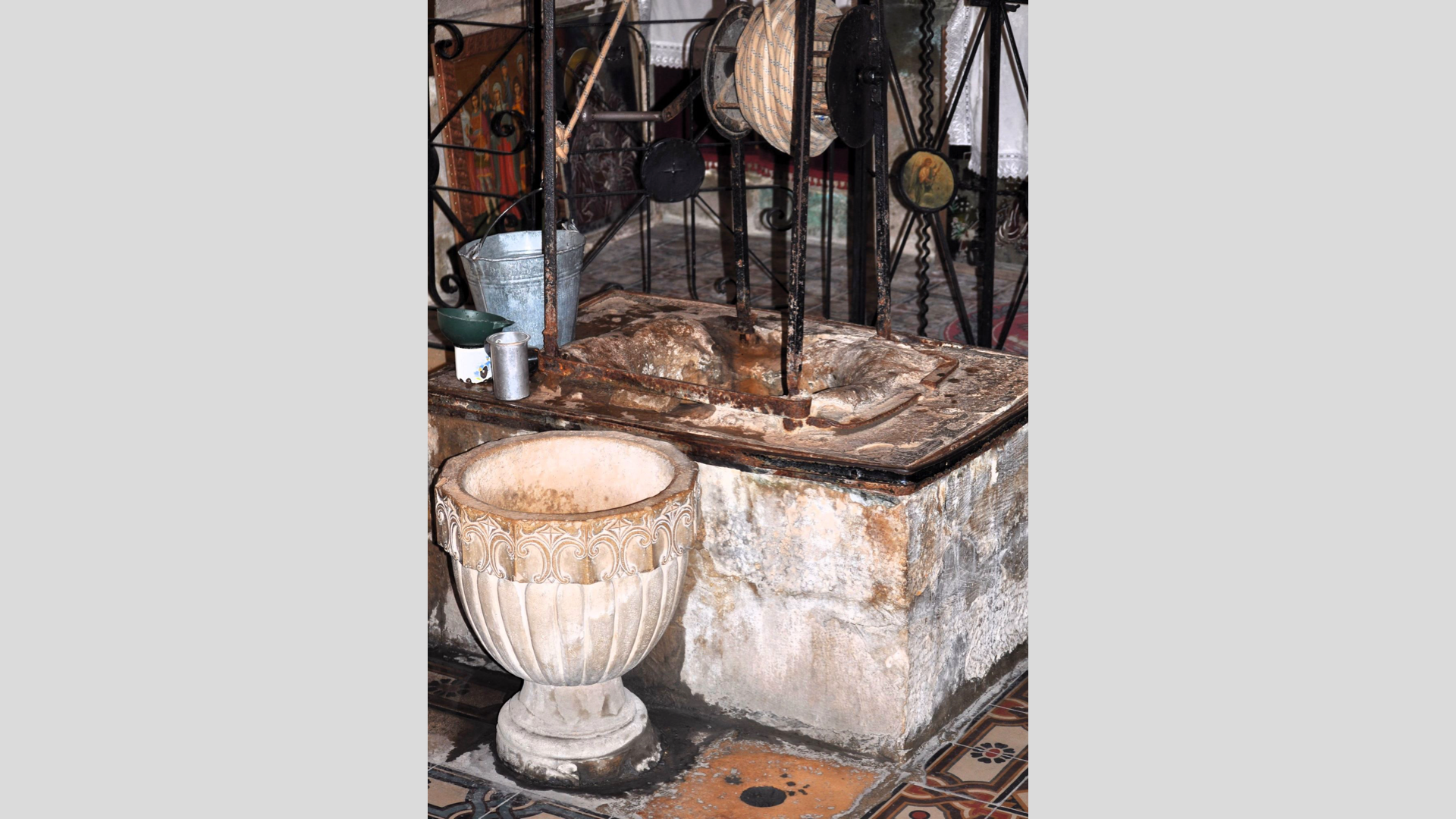
On the north end of Jerusalem, one can see the ruins of the pool(s; actually there were twin pools) of Bethesda, mentioned in John 5 as the location where Jesus healed a lame man. (These pools date back to about 200 BC, and furnished water for the temple, and are located in what is now the NE section of the Old City in the Muslim Quarter). This was one of seven miracles recorded by divine selection in the Gospel of John to provide reasons for believing in Jesus, evidence for faith in Him as the Christ, the Son of God (John 20:30-31). The lame man in John 5 had been in his immobile state for thirty-eight years. The miracles in John are called “signs.” They show who Jesus is: He has power over disease. He has power over time; the fact that the man had been in that condition for his entire life did not in any way lessen Jesus’s ability to heal. Jesus came to deliver and redeem man from sin. The good news of the gospel is that, though one may have been in the bondage of sin for many years, Jesus has the power to save.
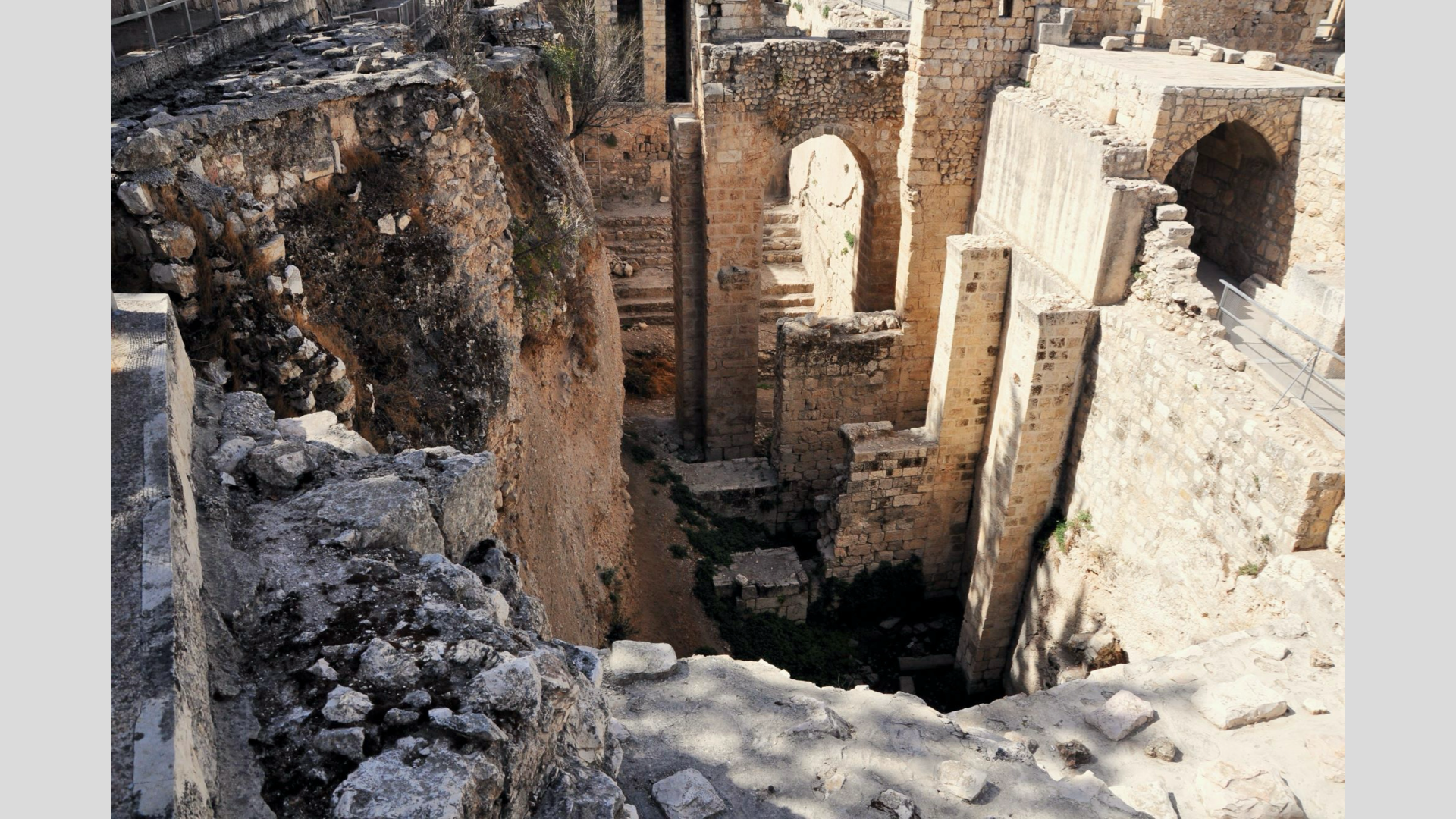
Jerusalem was defined by three valleys: the Tyropoeon (west), the Gehenna (south), and the Kidron (east). The Kidron separates Jerusalem from the Mount of Olives. It is known in modern times as Wadi Sitti Maryan, and Wadi en-Nar. In biblical times, the brook Kidron flowed down the valley. Today it is a dry creek bed except during periods of rain. The brook bed eventually makes its way on down to the Dead Sea.
The Kidron (Cedron, KJV) takes on special significance in John’s gospel, as he narrates that night in which Jesus was betrayed. After a lengthy discourse with the disciples, and then prayer (John 13-17), John states, “When Jesus had spoken these words, He went out with His disciples over the Brook Kidron, where there was a garden, which He and His disciples entered” (18:1). That garden, an “olive grove” (NIV), Gethsemane (Matt. 26:36), would be the site of Jesus’s betrayal and arrest.
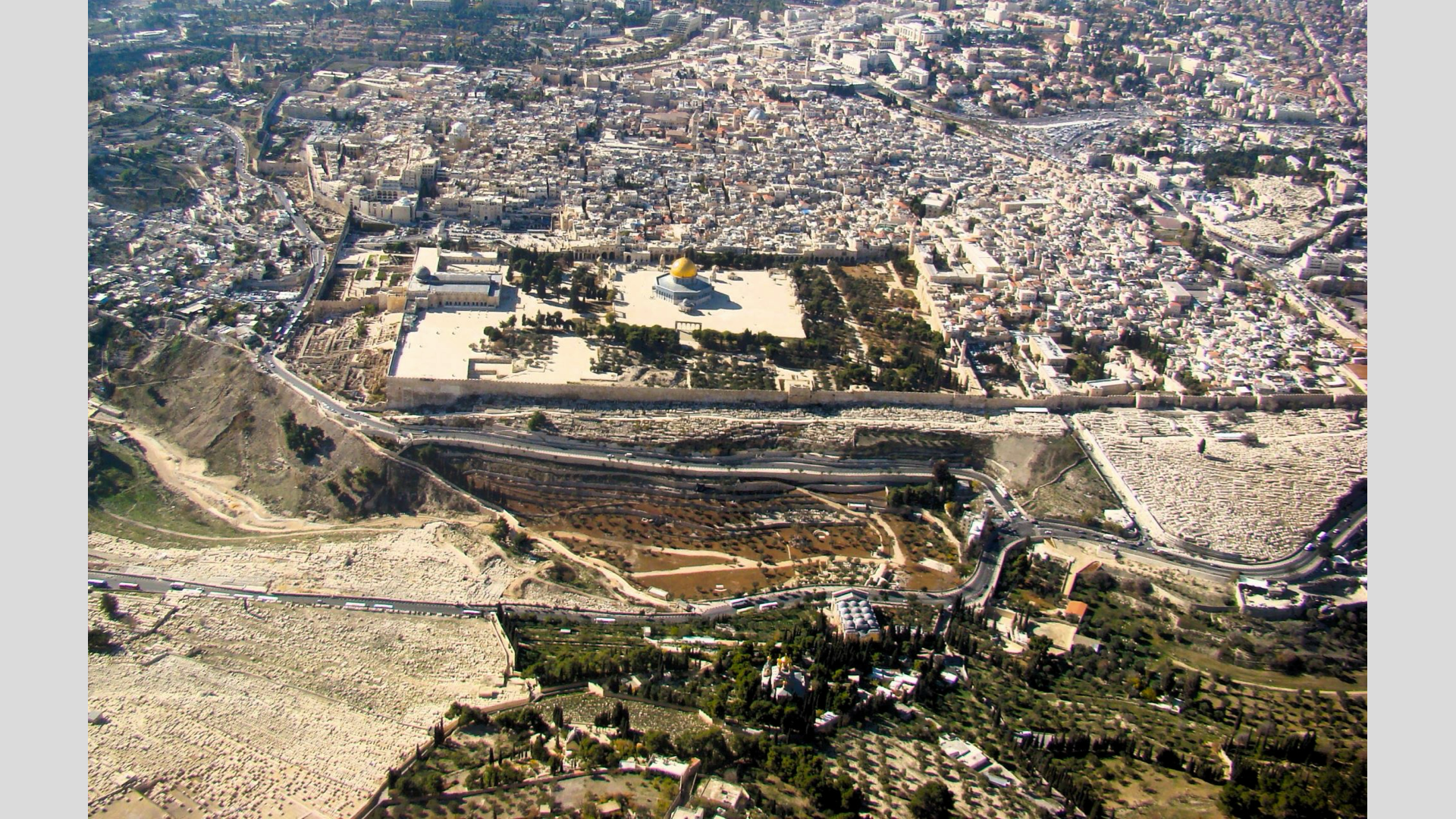
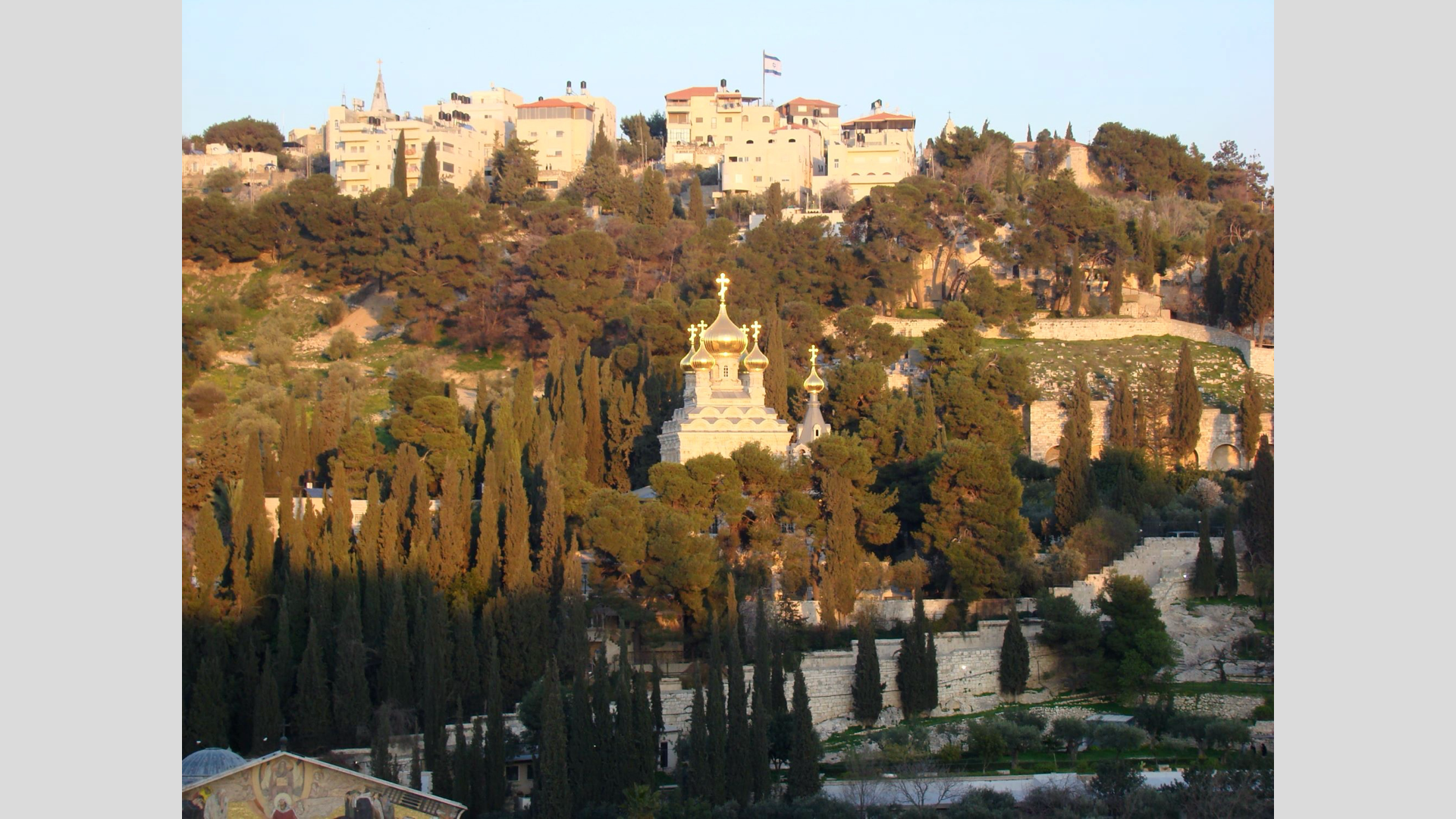
Gordon’s Calvary and the Garden Tomb are located a short distance north of the Damascus Gate. John records that Joseph of Arimathea provided his own tomb for Jesus’s burial. He, along with Nicodemus—“took the body of Jesus, and bound it in strips of linen with the spices, as the custom of the Jews is to bury. Now in the place where He was crucified, there was a garden, and in the garden a new tomb in which no one had yet been laid. So there they laid Jesus, because of the Jews’ Preparation Day, for the tomb was nearby” (19:40-42). The best evidence indicates that the Church of the Holy Sepulchre marks the site of the crucifixion and entombment, but the Garden tomb provides a helpful visual.
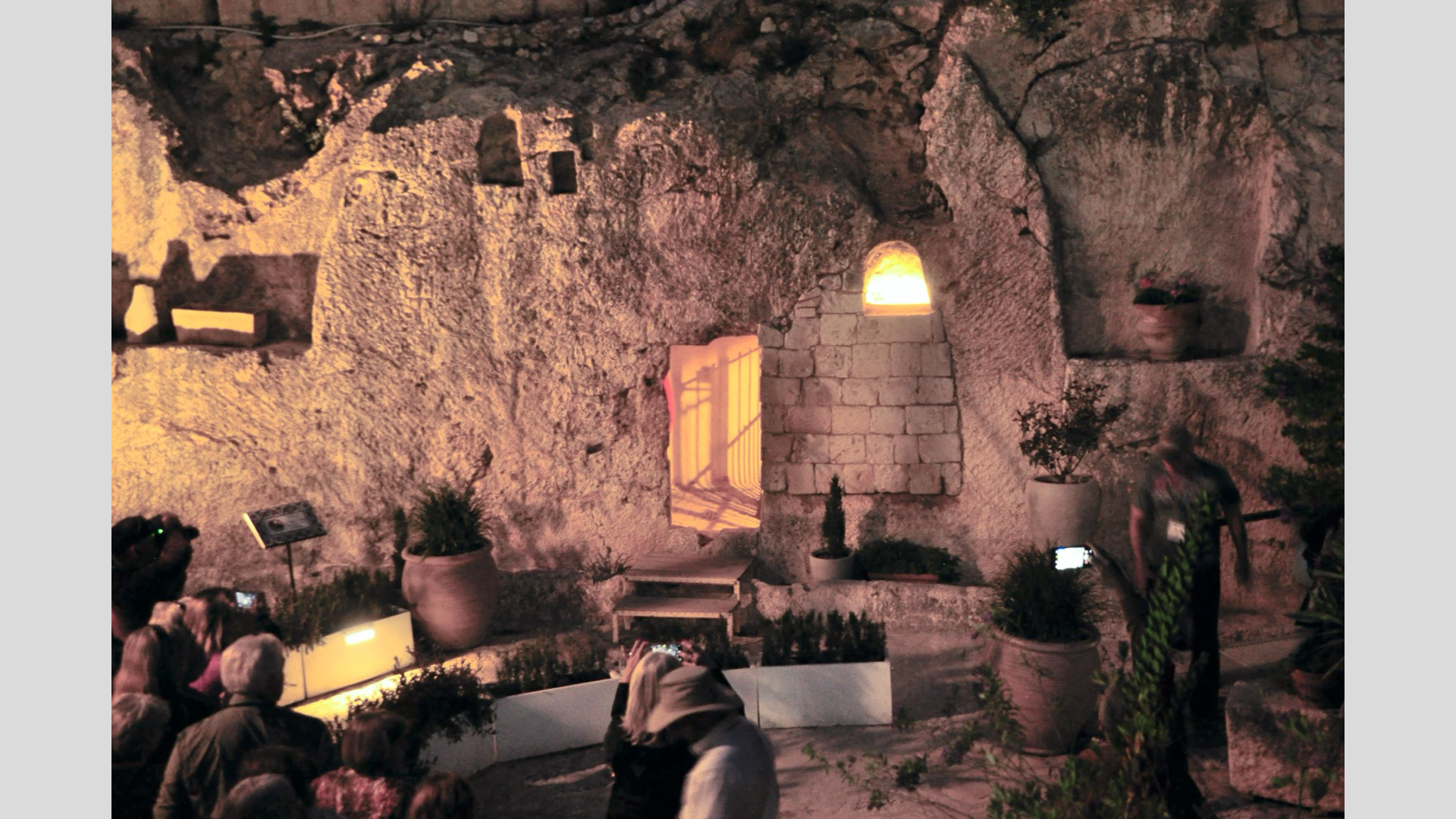
Leon Mauldin has worked with the Hanceville church of Christ in Hanceville, AL, for thirty-four years. He and his wife, Linda, have three children and nine grandchildren (one deceased). The church website is here. His personal blog is here and info about his Bible land tours is here. He can be reached here.



Note: Please send additions, corrections and updates here.
Updated: 4/1/2024
17312 Jones Rd, Athens, AL 35613
Sun. Bible Study 9:30 am | Sun. Worship: 10:20 am & 5:00 pm | Wed. Bible Study 7:00 pm
Evangelist: Jonathan Reeder | jonesroadchurch.org | 256-233-3160
514 W Market St, Athens, AL 35611
Sun. Bible Class 9:45 am | Sunday Worship 10:30 am & 5:00 pm | Wed. Bible Study 6:30 pm
Evangelist: David A. Cox | 256-232-1525 | marketstreet-church.com
24190 Wooley Springs Rd, Athens, AL 35613
Sun. Worship 9:30 am & 5:15 pm | Wed. Bible Class 7:00 pm
Evangelists: Bob Watson & Matt Taylor | mtzionchurchofchrist.org
3955 Pine Lane, Bessemer, AL 35022
Sun. Bible Study 9:10 am | Sun. Worship 10:00 am & 5:00 pm | Wed. Bible Class 7:00 pm
Evangelist: David Deason | 256-497-8127 205-425-2352 | Email | Website
2325 Old Columbiana Rd. (near I-65 & Hwy. 31)
Sun. Bible Study 9:00 am | Worship 10:00 am & 5:00 pm | Wed. Bible Study 7:00 pm
Evangelist: Kyle Pope | 205-822-0018 | Website
19965 Sandlin Rd. Elkmont, AL 35620
Sun. Worship 9:30 am & 3:00 pm | Bible Classes: 10:45 am | Wed. Bible Study 7:00 pm
Evangelist: Lance R. Taylor | 256-777-0990 | sandlinroadchurch.com
851 N. Pine St. (Located next to University campus)
Sun. Bible Study 9:30 am | Worship 10:15 am & 5:00 pm | Wed. Bible Study 7:00 pm
Evangelist: Kenny Moorer | 256-766-0403
601 Pineywood Road, Gardendale, AL, 35071 (Located 10 miles N of Birmingham)
Sun. Bible Study 9:30 am | Worship: 10:25 am & 5:00 pm | Wed. Bible Study: 7:00 pm
Evangelists: Andrew Smith & Jason Shackleford | 205-631-2131 | gardendalechurchofchrist.com
129 Hillcrest Rd, Mobile, AL 36608
Sun. Worship 9-9:30 am | Bible Study 9:30-10:30 am | Worship 10:30-11:30 am | Wed. Bible Study 7:00 pm
Evangelist: Ken Sils | 765-307-8048 | 251-342-4144 or 342-2041 | westmobilechurch.com
271 Highway 65 N, Conway, AR 72032
Sun. Bible Study 9:00 am | Worship 10:00 am & 5:00 pm | Wed. Bible Study 7:00 pm
Evangelist: Bruce Reeves | Bldg: 501-336-0052 | hwy65churchofchrist.org
2655 Prince St., Conway, AR 72034
Sun. Worship 9:00 pm | Bible class 9:50 am | Worship & Lord’s Supper: 10:40 am | Wed. Bible Class 7:00 pm
501-450-8640
2323 South 46th St.
Sun. Bible Study 9:45 am | Worship 10:30 am | Wed. Bible Study 7:00 pm
churchofchristfortsmith.com
407 Bella Vista Dr.
Sun. Bible Study 9:30 am | Worship 10:15 am & 5:00 pm | Wed. Bible Study 7:00 pm
Evangelist: Norman E. Sewell | 870-741-9104 or 870-741-5151 | cappsroad.org
514 Airport Rd.
Sun. Bible Study 10:00 am | Worship 11:00 pm & 6:00 pm | Wed. Bible Study 7:00 pm
Evangelist: Dick Blackford | 870-933-9134
145 N. Country Club Rd.
Sun. Bible Study 9:00 am | Worship 10:00 am & 6:00 pm | Wed. Bible Study 7:00 pm
Evangelist: Brenden Ashby | 520-326-3634 | churchofchristtucson.org
17903 Ibbetson Ave.
Sun. Bible Study 9:45 am | Worship 10:50 am & 6:00 pm | Wed. Bible Study 7:30 pm
562-866-5615 | roseavenue.org
3433 Studebaker Rd.
Sun. Bible Study 9:50 am | Worship 10:45 am & 5:30 pm | Wed. Bible Study 7:00 pm
JP Flores | 562-420-2363 or Mark Reeves | 562-377-1674 | justchristians.org
449 W. Allen Ave., Suite 120, San Dimas, CA 91773
Sun. Bible study 10:00 am | Worship 11:00 pm & 4:00 pm | Wed. Bible Study 7:30 pm
909-788-9978 | sandimaschurchofchrist.com
126 West Harvard St. | Suite 6
Sun. Bible Study 9:30 am | Worship 10:30 am
Evangelist: Richie Thetford | poudrevalleychurchofchrist.org
1414 Hawk Parkway, Unit C
Sun. Worship 11:00 pm | Bible Study 2 pm & 1:30 pm
970-249-8116 | sanjuanchurchofchrist.org
64 Casting Lake Rd.
Sun. Bible Study 9:00 am | Worship 10:00 am & 6:00 pm | Wed. Bible Study 7:00 pm
850-622-3817 | southwaltonchurchofchrist.com | Location change coming in 2022: 497 Church St Santa Rosa Beach, FL 32459
196 Ave C, Geneva, FL 32732
Sun. Bible Study 10:00 am | Worship 10:45 am
(689) 229-9888 | ChurchofChristatGeneva.com
6 Lane Dr., Mary Esther, FL 32569
Sun. Bible Study 9:30 am | Worship 10:30 am & 5:00 pm | Wed. Bible Study 7:00 pm
850-244-9222 | mecoc.org | Evangelist: Chris Simmons | chrissimmons6ten@gmail.com
3940 S. Bumby Ave.
Sun. Communion: 9:30 am | Bible Study 10:00 am | Praise & Preaching: 10:55 am (No pm Service) | Wed 7:00 pm
Evangelist: Ken Chapman
Office: 407-851-8031 | bumby.org | Note: Please call for current worship and Bible study times.
621 E. Wheeler Rd.
Sun. Bible Study 10:00 am | Worship 10:50 am & 6:00 pm | Wed. Bible Study 7:30 pm
Evangelist: Bobby Witherington | 813-684-1297 | seffnercoc.org
Route 116 (near Callaway Gardens)
Sun. Bible Study 10:00 am | Worship 11:00 pm & 6:00 pm | Wed. Bible Study 7:30 pm
Evangelist: Tommy W. Thomas | 706-628-5117 or 628-5229 | pmvchurch.com
370 N. Shilling | P.O. Box 158-83221
Sun. Bible Study 10:00 am | Worship 11:00 pm | Wed. Bible Study 7:30 pm
208-785-6168 or 681-1552
1310 NE 54th Ave, Des Moines, IA 50313
Sun. Bible Study 9:45 am | Worship 10:40 am | Wed. Bible Study 7:00 pm
515-262-6799 | www.dsmcoc.com
1236 63rd St. (Dir: 1.5 miles E of I355)
Sun. Bible Study 9:00 am | Worship 9:55 am & 6:00 pm | Wed. Bible Study 7:30 pm
Evangelist: Steve Wolfgang | 630-968-0760 | dgcoc.org
796 Prairie Ave.
Glen Ellyn, IL 60137
Sun. Bible Study 9:30 am | Sun. Worship 10:30 am & 5:00 pm
Evangelist: Keith E. Brown | 630-858-2290 & 630-377-3990
1100 S. 17th St.
Sun. Bible Study 9:30 am | Worship 10:30 am & 6:00 pm | Wed. Bible Study 7:00 pm
217-234-3702
16224 S Vincennes Ave.
Sun. Bible Study 9:00 am | Worship 10:00 am & 4 pm | Wed. Bible Study 7:00 pm
Evangelist: Donald Hawkins | 708-339-1008 | southeastchurchofchrist.com
Meeting @ Sleep Inn Suites and Motel | 1101 North Cummings Lane, Washington, IL 61571
Sun. Worship: 11:30 am | Bible Study: 12:30 pm | Wed. Bible Study 6:30 pm @ home of Tim Sundlie, call for address
Evangelist: Tim Sundlie | 608-796-9028 | sunbeads1@gmail.com | tazewellcococ.org
407 W Lewis and Clark Parkway, Clarksville, IN 47129
Sun. Bible Study 9:30 am | Worship 10:30 am & 6:00 pm | Wed. Bible Study 7:30 pm
Elders: Allen L. Morris (812) 989-5838 and Stephen W. Nale (502) 727-7559 or (812) 944-2305 | clarksvillechurchofchrist.org
Sun. Bible Study 9:30 am | Worship 10:30 am | Wed. 7:00 pm
765-676-6404 | jamestowncoc.com
15530 Herriman Blvd, 46060
Sun. Bible Study 10:00 am | Worship 11:00 am | Wed. Bible Study 7:00 pm
Evangelist: John Smith | preacherjohn54@att.net | 317-501-8035 or 317-501-0249 or 317-701-1204
400 Lafayette Ave. | P.O. Box 34
Sun. Bible Study 9:45 am | Worship 10:30 am & 6:00 pm | Wed. 7:00 pm
812-279-4332
(First St. & Karnes Ct.)
Sun. Bible Study 9:45 am | Worship 10:30 am & 5:00 pm | Wed. Bible Study 7:00 pm
Evangelist: Jeremy Goen | 812-967-3437 or 967-3520 | pekinchurchofchrist.com
302 S. Fourth Ave., Mulvane KS 67110 | Mail: PO Box 11
Sun. Bible Classes: 10:00 am | Worship 11:00 am | Wed. Bible Study 7:00 pm
Evangelist: Jay Horsley | 316-644-8503 | mulvanechurch.com | mulvanechurch@gmail.com
5600 SW 17th St, Topeka, KS 66604
Sun. Bible Study 9:15 am | Sun. Worship 10:30 am | Wed. Bible Study 7:00 pm
785-235-8687 or 785-273-7977 | 17thstreetchurchofchrist.org
1235 Williams St.
Sun. Worship 10:00 am | Bible Study After am Worship & 6:00 pm | Wed. Bible Study 7:00 pm
Evangelist: Jerid Gunter | 270-274-4451
8081 US Hwy 68-East, Benton, KY 42025
Sun. Bible Study 9:00 am | Worship 10:00 am | Wed. Bible Study 6:00 pm
270-354-9451 | fairdealingmarc@gmail.com | churchofchristatfairdealing.com | Conveniently located near Kenlake State Resort Park on the western shore of Kentucky Lake.
612 Broadway
Sun. Bible Study 9:45 am | Worship 10:30 am & 5:00 pm | Wed. Bible Study 6:30 pm
Evangelist: Charles J. White | 270-422-3878
107 Sunny Hill Dr.
Worship 9:30 am & 11:30 am | Bible Study 10:30 am | Wed. Bible Study 7:00 pm
Evangelist: Steve Lee | 270-789-1651 | sunnyhillcoc.com
103 N. Main St. | P.O. Box 233
Sun. Bible Study 10:00 am | Worship 10:45 am & 5:00 pm | Wed. Bible Study 7:00 pm
Evangelist: Jarrod Jacobs | 270-589-4167 or 270-274-3065
385 E. Lexington Ave.
Sun. Worship 10:00 am | Bible Study 11:15 am & 5:00 pm | Wed. Bible Study 7:00 pm
Evangelist: B.J. Sipe | 859-236-4204
18 Scott Drive, Florence, KY 41042
Sun. Worship 9:30 am & 5:30 pm | Sun. Bible Study 10:30 am | Wed. Bible Study 7:00 pm
859-371-2095 | nkcofc.com
1733 Bowling Green Rd.
Sun. Bible Study 9:00 am | Worship 10:00 am & 6:00 pm | Wed. Bible Study 7:00 pm
Evangelist: Steve Monts | 270-776-9393 | 31wchurchofchrist.com
733 Mill St. Leitchfield, KY 42754
Sun. Bible Study 9:30 am | Worship 10:00 am Communion 10:55 am | Wed. Bible Study 6:00 pm
270-230-6144 | millstreetchurchofchrist.org
1803 Dixie Garden Dr.
Sun. Bible Study 9:30 am | Worship 10:30 am & 6:00 pm | Wed. Bible Study 7:00 pm
Evangelist: Michael Hardin | michaelhardin1123@att.net | 502-937 2822
3221 East Hebron Lane
Sun. Bible Study 9:00 am | Worship 10:00 am & 5 pm | Wed. Bible Study 7:30 pm
Evangelist: Danny Linden & Ron Halbrook | 502-957-5115 or 502-955-1748 | hebronlanechurchofchrist.com
405 Orice Roth Rd. | 70737 (Baton Rouge area)
Sun. Bible Class 9:30 am | Worship 10:30 am & 6:00 pm | Wed. Bible Study 7:00 pm
Evangelist: R.J. Evans | rjevans@eatel.net | 225-622-4587
856 Brighton Ave. (Breakwater School) | Leave Maine Turnpike at Exit 48
Sun. Bible Study 10:00 am | Worship 11:00 pm w/ second service immediately following am worship | Mid-week Bible Study (please call for times & places)
207-839-3075 or 839-8409
3084 Creek Drive SE, #1-C, Kentwood, MI 49512 | P.O. Box 8446, Kentwood, Mich. 49508 (Grand Rapids area)
Sun. Worship 11:00 am | Sun. Bible Study 12:30 pm | Wed. Bible Study 7:00 pm
Evangelist: Joseph Gladwell | cedarsprings98@gmail.com
414 South Main Street
Sun. Bible Study 10:00 am | Worship 11:00 am | Wed. Bible Study 6:00 pm
Evangelist: Ryan Thomas | 810-837-1302 or 989-389-3226 | northernmichiganchurchofchrist.com
2914 7th St.
Sun. Bible Study 9:00 am | Worship 10:00 am
2820 Grandview Ave.
Sun. Bible Study 10:00 am | Sun. Worship 11:00 pm | Wed. 6:30 pm
Ron Cooper: 601-934-3675 | roncooper@bellsouth.net
Ricky Ethridge: 601-737-5778 | rickymarsha@bellsouth.net
2110 E State Line Rd. (Exit I-55) (Memphis area)
Sun. Bible Study 9:30 am | Worship 10:30 am | Wed. Bible Study 7:00 pm
Evangelist: James A. Brown | Bldg: 662-342-1132
805 Meadow Rd, Severn, MD 21144
Sun. Bible Study 10:00 am | Sun. Worship 11:00 pm & 6:00 pm | Wed. Bible Study 7:30 pm
Evangelist: Brandon Trout | 410-969-1420 or 410-551-6549 | swcofchrist.com
422 N Linton St., Blodgett, MO 63824
Sun. Worship 10:00 am | Wed. Bible Study 7:00 pm
Evangelist: Russell Rice | 573-475-0417
4000 SW Christiansen
Sun. Worship 9:00 pm | Bible Study 10:00 am | Worship 11:00 pm | Wed. Bible Study 7:00 pm
Evangelist: Brett Hogland | 816-228-9262
432 Eagle Rock Rd, Branson, MO 65616
Sun. Worship 9:30 am | Bible Study 10:30 am | Sun. Evening Worship 5:00 pm | Wed. Bible Study 6:00 pm
Evangelist: Philip North | 417-239-1036 | primrosenor@suddenink.net | eaglerockroadchurchofchrist.org
2912 Bloomfield Rd
Sun. Bible Study 9:15 am | Worship 10:00 am | Wed. Bible Study 7:00 pm
Seth McDonald & Jerry Lee Westbrook | 573-837-1001 | capecountycoc@gmail.com | capecountycoc.com
217 N. Orchard Blvd.
Sun. Bible Study 9:00 am & 10:00 am | Worship 11:00 pm | Wed. Bible Study 7:00 pm
Evangelist: Walter Myers | 417-830-8972 or 417-736-2663
703 Harrison St.
Sun. Bible Study 10:00 am | Worship 11:00 pm & 6:00 pm | Wed. Bible Study 7:00 pm
Evangelist: Nolan Glover | 870-650-1648 | westsidechurchofchrist.us
685 Sidney St.
Sun. Bible Study 9:30 am | Worship 10:15 am & 5:00 pm | Wed. Bible Study 7:00 pm
Evangelist: Lynn Huggins | 573-265-8628
2727 County Line Rd.
Sun. Bible Study 9:00 am | Worship 9:50 am | Wed. Bible Study 7:00 pm
816-279-4737 | countylinechurchofchrist.com
Bell St & S 7th St. Beatrice, NE 68310
Sun. Bible Study 9:00 am | Worship 10:00 am & 6:30 pm
402-233-4102 or 402-228-3827 | churchofchrist7bell.org
5327 S. Tryon Street, Charlotte, NC 28217
Sun. Bible Study 9:30 am | Sun. Worship 10:30 am | Wed. Bible Study 7:30 pm
704-525-5655 | charlottechurchofchrist.org
3781 East Highway 27, Iron Station, NC 28080
Sun. Bible Study: 10:00 am | Sun. Worship 11:00 am & 6:00 pm | Wed. Bible Study 7:00 pm
Evangelist: Stan Adams | 704-748-9777 (Bldg) & 704-748-3747 (Jerry) | lincolnncchurch@gmail.com | lincolncoc.com
1031 Welford Dr, Beavercreek, OH 45434 (located a few miles E of Dayton)
Sun. Short Worship: 9:30 am | Bible Study 10:05 am | Sun. Worship 11:00 am | Wed. Bible Study Adults: 1:00 pm & All ages: 7:00 pm
Evangelist: Heath Rogers | 937-426-1422 | knollwoodchurch.org
28 W. Main St., Dayton, OH 45449
Sun. Worship 9:00 pm | Bible Study 9:30 am | Worship 10:25 am | Wed. Bible Study 7:00 pm
Evangelists: Michael Grushon 937-866-5162 or Alan Beck 937-469-3311 | wc-coc.org
6417 Franklin-Lebanon Rd. Franklin, OH 45005
Sun. Bible Study 10:00 am | Worship 10:45 am | Tues. Bible Study 6:30 pm
Evangelist: Josh Lee | 937-789-8055 or 937-746-1249 | franklin-church.org
687 Mansfield-Lucas Rd. Mansfield, OH 44907
Sun. Bible Study 10:00 am | Worship 10:45 am | Wed. Bible Study 4:30 pm
James Bond: 419-564-3878 | Mr. Kim Walton: 419-651-3488 | Bldg: 419-522-8982 | northsidecofc.us
1973 W Main St. New Lebanon, OH 45345
Sun. Bible Study 9:30 am | Worship 10:30 am, & 5:00 pm | Wed. Bible Study 7:00 pm
Evangelist: Bruce Hastings | 937-687-7150 or 937-478-0367
80 Sandhill Rd. Reno, OH 45773
Sun. Bible Study 9:30 am | Worship 10:30 am & 6:30 pm | Wed. Bible Study 7:00 pm
Evangelist: Mark Childers | 304-615-1091 | 740-374-9827 | mariettarenochurchofchrist.org
4110 Frey Rd., Northwood, OH 43619 (Toledo Area)
Sun. Worship 11:00 pm
Evangelist: Donald Jarabek | 419-893-3566 & 567-331-2269
33226 Children’s Home Rd., Pomeroy, OH 45769
Sun Worship 10:00 am & 5 pm | Bible Study 11:00 am | Wed. Bible Study 6:00 pm
Jack Hunt | wmhunt55@gmail.com | 740-645-4612 | Find us on Facebook!
2120 No. A St.
Sun. Bible Study 9:45 am | Worship 10:45 am & 5:30 pm | Wed. Bible Study 7:00 pm
Evangelist: Rob Lungstrum | 918-931-1362 or 918-423-3445
4110 NE 122nd Ave #101, Portland, OR 97230
Sun. Bible Study 10:00 am | Worship 11:00 am | Thur. Bible Study 7:00 pm
Evangelist: Samuel A. Matthews | 971-331-2838 | Bldg: 503-432-8697 | samatm@comcast.net | libertynwchurchofchrist.org
3702 E. Long St.
Sun. Bible Study 9:30 am | Worship 10:30 pm & 5:30 pm | Wed. Bible Study 7:30 pm
Bldg: 541-367-1599 | http://www.sweethomechurch.com | churchsweethome@yahoo.com
7222 Germantown Ave, Philadelphia, PA 19119
Sun. Bible Study 10:15 am | Sun. Worship: 11:15 am | Tues. Bible Study: 7:00 pm
Evangelist: James H. Baker, Jr. | 215-248-2026 | mtairychurchofchrist.org
3370 Broad St. Extension
Sun. Bible Study 9:30 am | Worship 10:30 am & 5:30 pm | Wed. Bible Study 7:00 pm
Evangelist: A.A. Granke, Jr. | 803-499-6023
4013 Edmund Hwy. (Hwy. 302), West Columbia, SC 29170
Sun. Bible Study 9:30 am | Sun. Worship 10:30 am & 5:00 pm | Wed. Bible Study 7:00 pm
Evangelist: Jerry Cleek | 219-313-1108 | Website
417 Mooresville Pike | (Located .8 mi. N. of Hwy. 50/Jas. Campbell)
Sun. Bible Study 9:30 am | Worship 10:30 am & 3:30 pm | Wed. Bible Study 7:00 pm
931-388-5828 or 931-381-7898 | mooresvillepikecoc.com
4894 Hooper Hwy. | 37722 | (Located 15 mi. E. of Gatlinburg on Hwy. 321)
Sun. Bible Study 10am | Worship 11:00 pm & 5:00 pm | Wed. Bible Study 6:00 pm
Evangelist: Olie Williamson | 423-487-5540 or 423-748-0844
350 N Main St. Kingston Springs, TN 37082
Sun. Bible Study 9:00 am | Worship 10:00 am & 5:00 pm | Wed. Bible Study 7:00 pm
kscoc.com
108 Locust St.
Sun. Bible Study 9:30 am | Worship 10:30 am & 5:00 pm | Wed. Bible Study 7:00 pm
Evangelist: Daniel H. King, Sr. | 931-379-3704 or 931-964-3924 | lscoc.com
1110 Cason Lane
Sun. Bible Study 9:00 am | Worship 10:00 am & 5:00 pm | Wed. Bible Study 7:00 pm
Bldg: 615-896-0090 | casonlanechurch.org
2091 Pitts Ln, Murfreesboro, TN 37130 (located at the corner of Northfield Blvd and Pitts Lane)
Sun. Bible Study 9:30 am | Sun. Worship 10:30 am & 6:00 pm | Wed. Bible Study 7:00 pm
Evangelist: David Bunting | 615-893-1200 | GodsRedeemed.org
7471 Charlotte Pike
Sun. Bible Study 9:00 am | Worship 10:00 am & 5:00 pm | Wed. Bible Study 7:00 pm
Evangelist: Lee Wildman | 615-952-5458 or 615-356-7318
423 Donelson Pike
Sun. Bible Study 9:00 am | Worship 9:55 am & 5:00 pm | Wed. Bible Study 7:00 pm
Evangelist: Johnny Felker | 615-883-3118 | perryheights.faithweb.com
1414 W. Exchange Pkwy
Sun. Bible Study 9:00 am | Worship 10:00 am & 5:00 pm | Wed. Bible Study 7:00 pm
Evangelist: Jerry King 214-504-0443 or 972-727-5355 | twincreekscoc.com
E. Service Rd. off I-35, N. of Alvarado
Sun. Bible Study 10:00 am | Worship 11:00 pm & 6:00 pm | Wed. Bible Study 7:00 pm
817-295-7277 or 790-7253
605 E. Adoue St., Alvin, TX 77511
Sun. Bible Study 9:30 am | Worship 10:30 am & 5:00 pm | Wed. Bible Study 7:30 pm
Evangelist: Mark Mayberry | mark@ascoc.org | ascoc.org
701 North Pruett St.
Sun. Bible Study 9:45 am | Worship 10:40 am & 6:30 pm | Wed. Bible Study 7:00 pm
Bldg: 281-422-5926 | Weldon: 713-818-1321 | biblework.com
2919 Main St/FM 517 E., Dickinson, TX 77539
Sun. Bible Study 10:00 am | Sunday Worship 11:00 am & 6:00 pm | Wed. Bible Study 7:00 pm
713-298-6673
301 Robison St.
Sun. Bible Study 9:30 am | Worship 10:30 am & 6:00 pm | Wed. Bible Study 7:00 pm
Evangelist: Phillip Stuckey | 361-782-5506 or 361-782-2844 | ednachurchofchrist.org
3277 Pendleton Rd.
Sun. Bible Study 9:30 am | Worship 10:30 am & 5:00 pm | Wed. Bible Study 7:00 pm
915-855-1524
4303 18th St, Bacliff, TX 77518
Sun. Bible Study 9:00 am | Sun. Worship 10:00 am & 6:00 pm | Wed. Bible Study 7:00 pm
Evangelist: Richard Lay | bacliffchurchofchrist.org
6110 White Settlement Rd. 76114
Sun. Bible Study 9:30 am | Worship 10:30 am & 6:00 pm | Wed. Bible Study 7:30 pm
817-738-7269
Old Granbury Rd Church of Christ
4313 Old Granbury Rd, Granbury, TX 76049
Sun. Bible Study 9:30 am | Sun. Worship 10:30 am | Wed. Bible Study 7:00 pm
Evangelist: Chip Foster | 817-913-4209 or 817-279-3351 | oldgranburyrdchurch.org
2510 Fry Rd, Houston, TX 77084
Sun. Bible Study 9:45 am | Worship 10:30 am & 6:00 pm | Wed. Bible Study 7:00 pm
Evangelist: David Flatt | fryroad.org | church@fryroad.org
2320 Imperial Dr. (Located close to DFW Airport)
Sun. Bible Study 9:00 am | Worship 9:50 am & 6:00 pm | Wed. Bible Study 7:30 pm
Evangelist: Mark Roberts | 972-986-9131 | justchristians.com
6111 Indiana Ave, Lubbock, TX 79413
Sun. Bible Study 10:00 am | Sun. Worship 9:00 am & 11:00 am | Wed. Bible Study 7:00 pm
806-795-3377 | lubbockchurch.com
1820 Mansfield Webb Rd, Mansfield, TX 76063
Sun. Bible Study 9:30 am | Sun. Worship: 10:20 am & 5:00 pm | Wed. Bible Study 5:30 pm.
Evangelist: Tom Roberts | 817-996-3926 | northsidecofc.us
612 S Shawnee St, Nacogdoches, TX 75961
Sun. Bible Study 9:45 am | Worship 10:30 am & 6:00 | Wed. Bible Study 6:00 pm
Minister: Van Dennis | 936-615-2950
3831 N.E. Stallings Dr.
Sun. Bible Study 9:30 am | Worship 10:20 am & 6:00 pm | Wed. Bible Study 7:00 pm
Evangelists: Randy Harshbarger & Jay Taylor
268 Utopia Ave. (Dir: I-37 S.E. Exit Pecan Valley)
Sun. Bible Study 9:30 am | Worship 10:30 am & 5:00 pm | Wed. Bible Study 7:00 pm
Evangelist: Jesse Garcia | 210-660 0409 | pecanvalleychurchofchrist.org
314 N. Tolbert
Sun. Bible Study 9:30 am | Worship 10:30 am & 5:00 pm | Wed. Bible Study 7:00 pm
Evangelist: Ronald Stringer
4404 Twin City Blvd.
Sun. Bible Study 9:30 am | Worship 10:30 am & 6:00 pm | Wed. Bible Study 7:30 pm
Evangelist: Jason Garcia (yourfriendjgar@gmail.com) or (leonvalleychurch@gmail.com) | 254-939-0682 | leonvalleychurch.org
2301 Franklin Dr., Texarkana, AR 71854
Sun. Bible Study 9:30 am | Worship 10:15 am | Wed. Bible Study 7:00 pm
870-772-0746 | txkchurch.com
340 E Warren St. (in Hewitt, a suburb of Waco)
Sun. Bible Class 9:30 am | Worship 10:30 am & 5:00 pm | Wed. Bible Study 7:00 pm
Evangelist: Marc Smith | 254-292-2482 or 652-7698
4500 Kell West Blvd, Wichita Falls, TX 76309
Sun. Bible Class 9:30 am | Worship 10:30 am & 3:30 pm | Wed. Bible Study 6:30 pm
Evangelist: Dennis L. Scroggins | 512-626- 5702 | dennis.scroggins@gmail.com | floralheightschurchofchrist.org
Please mail all correspondence to 1504 Hayes St, Wichita Falls, TX 76309
Meeting in the Capital City Grange Hall, 6612 Route 12 Berlin, VT 05602
Sun. Bible Study 9:00 am | Worship 10 am | Tues. Evening in Homes
Evangelist: Open | montpelierchurchofchrist.com | P.O. Box 70, Williamstown, VT 05679 | For questions or directions: Wade Holt 802-485-4311
217 Taxus St., Chesapeake, VA 23320
Sun. Bible Study 10:00 am | Worship 11:00 am & 5:00 pm | Wed. Bible Study 7:00 pm
Evangelist: Steven Matthews | 757-436-6900 | tidewaterchurchofchrist.com
8330 Doublecreek Court, Chesterfield, VA 23832 (Located in teh Metro Area; Courthouse Rd. at Double Creek Ct. 2.2 miles S of Rt. 288)
Sun. Bible Study 9:30 am | Worship 10:30 am & 5:00 pm | Wed. Bible Study 7:00 pm
Evangalist: Nathan L. Morrison | 804-778-4717 | courthousechurchofchrist.com
1208 W. 41st St.
Sun. Bible Study 10:00 am | Worship 11:00 pm & 6:00 pm | Wed. Bible Study 7:00 pm
Evangelist: Jack Bise, Jr.
2970 Old Leaksville Rd.
Sun. Bible Study 10:00 am | Worship 11:00 pm & 5:30 pm | Wed. Bible Study 7:00 pm
276-956-6049 | churchofchristatridgeway.com
929 Indiana Ave. NE (5 min. from Roanoke Convention Center)
Sun. 1st Lesson 9:15 am | Bible Study 10:00 am | Worship 11:00 pm | Wed. Bible Study 7:30 pm
Evangelist: Brent Paschall | 540-344-2755 | blueridgecoc.org
5652 Haden Rd.
Sun. Bible Study 10:00 am | Worship 11:00 pm
Robert Mallard | 757-464-4574
1860 Mt Baker Hwy, Bellingham, WA 98226,
Sun. Bible Study 9:30 am | Worship 10:30 am & 6:00 pm | Wed. Bible Study 7:00 pm
Evangelist: Steven J. Wallace | 360-752-2692 or 806-787-5088 | mtbakercoc.com & revelationandcreation.com
Meeting at Gray Middle School, 6229 S. Tyler St., Tacoma, WA 98409
Note: Please see webpage for updated meeting location and times.
Sun. Bible Study 10:00 am | Worship 11:00 pm | Wed. Bible Study 7:00 pm (Online)
253-242-3098 | tacomachurch@gmail.com | tacomachurch.com
7 Old Davisson Run Rd, Clarksburg, WV 26301
Sun. Bible Study 9:30 am | Worship 10:20 am
304-622-5433 | wsccoc.com | info@wsccoc.com
1929 Morgantown Ave.
Sun. Bible Study 10:00 am | Worship 10:45 am & 6:00 pm | Wed. Bible Study 7:00 pm
304-363-8696 or 304-844-2437
210 Cedar Ave, Moundsville, WV 26041
Sun. Bible Study 9:30 am | Sun. Worship 10:30 am & 6:00 pm | Wed. Bible Study 7:00 pm
Evangelist: Tony Huntsman | 304-845-4940 | cedarsower.com
803 20A Ave NE, Calgary AB T2E 1S1
Sun. Bible Study 10:00 am | Sun. Worship 11:00 am & 6:00 pm | Wed. Bible Study 7:00 pm
Evangelist: Eric Castillo | +1-403-619-1249 | churchofchristcalgary.com