
(March, 2024 | No. 3 | Vol. 68)
3/1/2024
Truth Magazine (ISSN 1538-0793) is published once a month by Truth Publications, Inc., 220 S. Marion, Athens, AL 35611. Postage paid at Decatur, AL, and additional mailing offices.
© 2023 Truth Publications, Inc. All Rights Reserved.
Manuscripts should be sent to the editor, Mark Mayberry, at mark@truthpublications.com. Link.
Subscriptions, renewals & other correspondence should be sent to: Truth Magazine, 220 S. Marion, Athens, AL 35611 or by emailing us at subscriptions@truthmagazine.com. Link.
Book orders should be sent to: CEI Bookstore | truthbooks.com | Street Address: 220 S. Marion, Athens, AL 35611 | Phone: (855) 492-6657 | Email: sales@truthbooks.com Link.
Online Website: truthmagazine.com
DISCLAIMER: Books in ads are screened but an ad does not mean unqualified endorsement. All books should be tested by Scripture. We appreciate readers notifying us if they find some glaring fault in ads.
By Mark Mayberry
Synopsis:
The church at Ephesus serves as a case study of how the passing of years can impact local congregations. Paul spent approximately three years at Ephesus (AD 52-55), resulting in the establishment of a strong congregation (Acts 19). At the end of his third missionary journey, he summoned the Ephesian elders to meet him at Miletus, a seaport town located 36 miles south of Ephesus. The inspired apostle warned them of spiritual perils that lay ahead and reminded them of the path to spiritual preservation. Since he did not expect to see them again, Paul’s meeting with the Ephesian elders was a deeply moving and heartfelt moment (Acts 20:17-39).
On another occasion, we can consider John’s letter to the church at Ephesus, which was written approximately forty years later (Rev. 2:1-7). However, for the moment, let’s focus on Paul’s aforementioned admonition.
Be on guard for yourselves and for all the flock, among which the Holy Spirit has made you overseers, to shepherd the church of God which He purchased with His own blood (Acts 20:28).
In his farewell address to the Ephesian elders, the apostle Paul warned against dangers arising from within and without (Acts 20:17-38, esp. v. 28-32).
Just as leaders of sovereign nations must guard against domestic and foreign threats, so spiritual overseers of local churches must guard against dangers that may arise from without and within—in other words, the corrosive influence of sin and false doctrine can come from inside the local congregation (and even from within its leadership) and also from outside sources.
Elders need to be on guard—carefully watching themselves and the flock which they are entrusted to oversee and shepherd. Focus is required. The Greek word prosechō, here rendered “be on guard,” means “(1) to remain in a high state of alert, or (2) to pay close attention to something” (BDAG, 880).
Louw and Nida, a lexicon designed for translating biblical Greek into modern languages, say prosechō means “to be in a continuous state of readiness to learn of any future danger, need, or error, and to respond appropriately.” They recommend that it be translated “to pay attention to, to keep on the lookout for, to be alert for, to be on one’s guard against” (27.59; 332-333).
Occurring 26 times in 24 verses, this word is used in the following ways:
Individually, we can fail to be sincere through hypocrisy (Matt. 6:1; Luke 12:1; 20:46), and also through dissipation and drunkenness (Luke 21:34; 1 Tim. 3:8). We can fail to be properly supportive of our brethren by not confronting sin or not forgiving sin (Luke 17:3). Just as Gamaliel warned the council, we can also fail to be prudent through rash action (Acts 5:35).
Like the inspired apostles of the first century, we must be prepared to face persecution (Matt. 10:17-18). All disciples of Christ must be alert to spiritual threats—vigilantly guarding against false teachers and false teaching (Matt. 7:15; 16:6, 11-12). In particular, this is a solemn duty of those who shepherd local congregations (Acts 20:28). The New Testament repeatedly admonishes disciples to be spiritually perceptive. Rather than being easily deceived and gullible (Acts 8:9-11), we must be able to recognize and reject error. Therefore, we must not pay attention to error or those who promote it (1 Tim. 1:3-4; Titus 1:10-14, esp. v. 14).
In contrast, we must pay attention to the truth, and those who promote it. Like Lydia, we must respond to the gospel message with obedient and submissive faith (Acts 16:14-15). Like Timothy, let us give attention to the public reading of Scripture, to exhortation and teaching (1 Tim. 4:13). Like the Hebrew disciples, may we pay close attention to the inspired message of truth, lest through negligence, we drift into apostasy (Heb. 2:1-4, esp. v. 1). Like the saints scattered throughout Pontus, Galatia, Cappadocia, Asia, and Bithynia, we would do well to pay attention to the message of inspired apostles and prophets (2 Pet. 1:19-21, esp. v. 19). In this regard, let us also pay attention to self-evident principles of biblical interpretation, including the concepts of necessary inference and the limitations imposed by silence (Heb. 7:11-16, esp. v. 13).
I know that after my departure savage wolves will come in among you, not sparing the flock; and from among your own selves men will arise, speaking perverse things, to draw away the disciples after them (Acts 20:29-30).
Savage wolves will come in among you, not sparing the flock. If unqualified men are appointed to positions of oversight, or if formerly qualified men depart from the truth, danger will arise from within a local eldership. Men will speak perverse things—seeking to draw away disciples after them.
The Greek word barus, here translated “savage,” communicates a variety of meanings, but here refers to “arrogant leaders likened to wolves who prey on sheep” who manifest an “unbearable temperament,” who are thus “fierce, cruel, savage” (BDAG, 167-168).
Wolves were used as a symbol of danger in the Bible. In ancient Israel, people lived close to the land—pasturing flocks and herds. Wolves were predators that preyed on sheep, in both a physical and figurative sense—denoting ravenous greed and stealthy deception, especially when contrasted with faithful shepherds who protect and provide for the flock.
Prophets of the Lord employed such imagery in describing the corrupt state of Israelite society (Ezek. 22:23-31; Zeph. 3:1-5), or oppressive foreign nations (Habbak. 1:8). In like manner, Jesus warned of false prophets, whose outward appearance would cause no alarm, but inwardly were ravenous wolves (Matt. 7:15-20).
Beware of the false prophets who come to you in sheep’s clothing, but inwardly are ravenous wolves. You will know them by their fruits. Grapes are not gathered from thorn bushes nor figs from thistles, are they? So every good tree bears good fruit, but the bad tree bears bad fruit. A good tree cannot produce bad fruit, nor can a bad tree produce good fruit. Every tree that does not bear good fruit is cut down and thrown into the fire. So then, you will know them by their fruits (Matt. 7:15-20).
Describing the difficulties that His disciples would face in carrying out the Great Commission, Jesus said, “I send you out as sheep in the midst of wolves; so be shrewd as serpents and innocent as doves” (Matt. 10:16; Luke 10:3).
Warning the Ephesian elders of dangers that would arise on multiple fronts, Paul said, “I know that after my departure, savage wolves will come in among you, not sparing the flock; and from among your own selves men will arise, speaking perverse things, to draw away the disciples after them” (Acts 20:29-30).
The Greek word diastrephō, here rendered “perverse,” means “to distort, figuratively, misinterpret, corrupt” (Thomas, 1294). Arndt suggests several distinct meanings: (1) to cause [something] to be distorted, deform, like a vessel on the potter’s wheel: become misshapen; (2) to cause to depart from an accepted standard of oral or spiritual values, make crooked, pervert; (3) to cause to be uncertain about a belief or to believe something different, mislead (BDAG, 237).
On one occasion, the disciples were unable heal to a child who suffered from a severe form of demon possession. Expressing frustration with their lack of spiritual growth, Jesus said, “You unbelieving and perverted generation, how long shall I be with you? How long shall I put up with you?” (Matt. 17:14-18, esp. v. 17; cf. Luke 9:41).
When Jesus was tried before Pilate, His accusers said, “We found this man misleading our nation and forbidding to pay taxes to Caesar, and saying that He Himself is Christ, a King.” While the first two accusations were false, the latter declaration was true (Luke 23:1-3, esp. v. 2).
Elymas, the magician, employed such tactics in seeking to turn the proconsul, Sergius Paulus, away from the faith (Acts 13:4-12, esp. v. 8, 10).
When they had gone through the whole island as far as Paphos, they found a magician, a Jewish false prophet whose name was Bar-Jesus, who was with the proconsul, Sergius Paulus, a man of intelligence. This man summoned Barnabas and Saul and sought to hear the word of God. But Elymas, the magician (for so his name is translated), was opposing them, seeking to turn the proconsul away from the faith. But Saul, who was also known as Paul, filled with the Holy Spirit, fixed his gaze on him, and said, "You who are full of all deceit and fraud, you son of the devil, you enemy of all righteousness, will you not cease to make crooked the straight ways of the Lord?
Corrupt leaders in the Lord’s church act in the same manner (Acts 20:29-30).
I know that after my departure savage wolves will come in among you, not sparing the flock; and from among your own selves men will arise, speaking perverse things, to draw away the disciples after them (Acts 20:29-30).
Despite living in the midst of a crooked and perverse generation, children of God pursue a higher standard (Phil. 2:14-16).
Do all things without grumbling or disputing; so that you will prove yourselves to be blameless and innocent, children of God above reproach in the midst of a crooked and perverse generation, among whom you appear as lights in the world, holding fast the word of life, so that in the day of Christ I will have reason to glory because I did not run in vain nor toil in vain (Phil. 2:14-16).
Therefore, be on the alert, remembering that night and day for a period of three years, I did not cease to admonish each one with tears (Acts 20:31).
The Ephesian elders must be constantly on the alert—heeding the example of Paul, who ceaselessly admonished the saints for three years.
The Greek word grēgoreō, translated “be on the alert,” in this context, means “to be in constant readiness” (BDAG, 207-208). This was a frequent refrain of Paul (1 Cor. 16:13; Col. 4:2-4; 1 Thess. 5:4-8).
Be on the alert, stand firm in the faith, act like men, be strong (1 Cor. 16:13).
Devote yourselves to prayer, keeping alert in it with an attitude of thanksgiving; praying at the same time for us as well, that God will open up to us a door for the word, so that we may speak forth the mystery of Christ, for which I have also been imprisoned; that I may make it clear in the way I ought to speak (Col. 4:2-4).
But you, brethren, are not in darkness, that the day would overtake you like a thief; for you are all sons of light and sons of day. We are not of night nor of darkness; so then let us not sleep as others do, but let us be alert and sober. For those who sleep do their sleeping at night, and those who get drunk get drunk at night. But since we are of the day, let us be sober, having put on the breastplate of faith and love, and as a helmet, the hope of salvation (1 Thess. 5:4-8).
And now I commend you to God and to the word of His grace, which is able to build you up and to give you the inheritance among all those who are sanctified (Acts 20:32).
The safeguard is simple: “I commend you to God and the word of His grace.” Christians must cultivate a close relationship with God—walking with Him, talking with Him, trusting in Him, submitting to Him through obedience to His word. Living and active, and sharper than a two-edged sword, God’s word is able to build up local congregations—empowering us with knowledge, enabling us to distinguish between truth and error, emboldening us to defend the faith that was once delivered to the saints.
Arndt, William, et al. A Greek-English Lexicon of the New Testament and Other Early Christian Literature (BDAG). Chicago, IL: University of Chicago Press, 2000.
Louw, Johannes P. and Eugene Albert Nida. Greek-English Lexicon of the New Testament: Based on Semantic Domains. New York: United Bible Societies, 1996.
Mark Mayberry has labored with the Adoue Street church of Christ in Alvin, TX, since 1998, where he serves as the evangelist and an elder. The church website is here. His website is here. He can be reached here.




By Kyle Pope
Synopsis: Communication is hard! Expressing the thoughts in our head to another person in a way that accurately conveys our intentions but in a manner that actually makes those intentions understandable is not always an easy thing. What does the Bible teach us that can help us through this challenging work of communication?
Jesus taught, “Therefore, whatever you want men to do to you, do also to them, for this is the Law and the Prophets” (Matt. 7:12, NKJV). Paul, through the Holy Spirit, taught the Christians in Philippi, “Let each of you look out not only for his own interests but also for the interests of others” (Phil. 2:4). He urged the Colossians, “Let your speech always be with grace, seasoned with salt, that you may know how you ought to answer each one” (Col. 4:6).
My wife, Toni, and I laugh about something I do to her from time to time. If I see her doing something and I’m not quite sure what she’s doing, I’ll say, “What are you doing?” I don’t mean anything by it—I’m just curious, but apparently, I sometimes use a tone of voice that makes it seem as if I’m getting on to her or scolding her as if she were a little child. That’s not my intention, and that’s not what I want to communicate. So, I am trying to work on doing better and not come across in that way.
Communication is hard! Expressing the thoughts in our head to another person in a way that accurately conveys our intentions but in a way that actually makes those intentions understandable is not always an easy thing. Sometimes we’re tempted to just say, “Well that’s not what I meant, so it’s just too bad if they don’t understand,” but that’s not communication—that’s a failure to communicate.
Jesus challenges us to think about how we would want to be treated. The challenge is that human beings often see (and hear) things much differently. Would I want Toni to speak to me in a way that seems as if she was scolding me? No. Would I want to feel as if she was talking to me as if I were a child? No. So, regardless of my intentions Jesus calls me to put myself in her place, think about how my words (and tone of voice) come across to her and try my best to act in a way that is how I would want to be treated.
How do we do that? What does the Bible teach that can help us through this challenging work of communication? Let’s consider a few helpful principles:
1. Communication Requires Respect. Paul’s words to the Philippians challenge us to think beyond simply how things affect us. I love my wife. I don’t want her to feel bad. As her husband, God wants me to nourish and cherish her “just as the Lord does the church” (Eph. 5:20). To disregard or minimize how a tone of voice makes her feel would not be respectful. It would not be dwelling with her “with understanding” nor “giving honor to” her (1 Pet. 3:7). If we don’t respect those with whom we are trying to communicate or care about the impact of our words, then true communication becomes impossible.
2. Communication Requires Empathy. Empathy is defined as “the ability to understand and share the feelings of another” (New Oxford American Dictionary). Jesus doesn’t use this word in Matthew 7:12, but “do also to” others “whatever you want” them “to do to you” demands empathy. Some are better at this than others. For some, it is very difficult. If we don’t understand how someone feels about something we have said or done, it might be easy to get defensive or angry. That doesn’t lead to better understanding. It often stops all communication. Instead, we need to stop, take a breath, and listen. James commands, “let every man be swift to hear, slow to speak, slow to wrath” (Jas. 1:19). Ask questions and accept what the other person tells you. Don’t minimize or belittle his (or her) feelings, but validate those feelings by expressing understanding.
3. Communication Requires Forethought. The wise man wrote, “The heart of the righteous studies how to answer, but the mouth of the wicked pours forth evil” (Prov. 15:28). To the Colossians, Paul put it, “Let your speech always be with grace, seasoned with salt, that you may know how you ought to answer each one” (Col. 4:6). Grace involves a kind and considerate disposition that uses tact and thoughtfulness in the things we say. “Seasoned with salt” is not describing a cutting sarcasm, but a preservative and tasteful influence that tempers our words. Knowing how (or studying) “how to answer” is not just talking about readiness in evangelism (cf. 1 Pet. 3:15)—it’s talking about thinking before we speak in general. Forethought doesn’t guarantee good communication, but it certainly helps it occur more often.
4. Communication Requires a Willingness to Apologize. Pride destroys good communication. We don’t like being misunderstood and our pride can lead us to fight for our imagined honor rather than just acknowledging, “I should have said that differently” or “I’m sorry, I didn’t say that right!” In our relationship with God, the Christian has the wonderful promise, “If we confess our sins, He is faithful and just to forgive us our sins and to cleanse us from all unrighteousness” (1 John 1:9). Confession to God is more than just saying we’re sorry. It is acknowledging we’ve done wrong and committing ourselves to genuine repentance. In our communication with others, some of the same principles should govern our behavior. James wrote, “For we all stumble in many things. If anyone does not stumble in word, he is a perfect man, able also to bridle the whole body” (Jas. 3:2). We must have the courage to own our own words and commit to do better in the future.
As I grow older, I am realizing that communication is a challenge in ways it wasn’t when I was younger. I don’t hear as well as I once did. Without even realizing it, I can easily speak louder than I mean to, and seem as if I am yelling at someone. That’s not what I intend to do—but when I come across that way it affects communication. As an older man with gray hair (where I still have hair) when I get excited or passionate about something, it sometimes doesn’t come off as enthusiasm, but with more of a “get off my lawn” kind of attitude to those who are younger than I am. That’s not how I want to seem, but I must recognize that danger and work to overcome it.
Every generation develops new and shortened ways of expressing things. I can’t quite get used to some of the latest. Just about the time I got used to hearing some people say “sup?” (to express the greeting, “hey, what’s up?”) that fell out of use. Now every time I hear people say “100 percent” (to express the idea “I agree 100 percent”) I want to ask “100 percent of what?” Communication is hard!
Despite of the difficulties, we must remember that communication is very important. Every time we engage in it, we are striving to connect with the heart of souls made in the image of God. That fact is why James urges us to be cautious in how we speak to those “made in the similitude of God” (Jas. 3:9). May we always do so with respect, with empathy, and with forethought. At times, we all will say the wrong thing, in the wrong way, but may we ever have a willingness to apologize, correct it, and change when that happens. “A word fitly spoken is like apples of gold in settings of silver” (Prov. 25:11).
Kyle Pope preaches for the Vestavia church of Christ in Vestavia Hills, AL. He has written several books published by Truth Publications. Go here for more information. The church website is here. He can be reached here.




By Diana Dow
Synopsis: Parents play a vital role in developing the skills needed for their children to become proficient in the arts.
With His creation as inspiration, God has blessed us with the desire to create and the ability to appreciate what others have created (Ps. 19:1-3). As children discover the world around them and begin to explore their ability to bring about a response from others, their journey to creativity has begun. They learn that words can be fun, that words can rhyme and have rhythm. They create poetry. They discover that their voice can make high and low sounds. They create music. They experiment with crayons and Playdough. They create art.
While children enjoy experimenting with various art forms, they lack skills necessary to take their ideas to the level of proficiency that brings confidence and satisfaction. How does a home school family bridge the divide between artistic experimentation and mature, proficient skills? Believe it or not, talent has nothing to do with it. Given the proper tools, every child can learn to be a musician, an artist, a poet. Art, music, and poetry each have techniques that are unique and are their very foundation. God recognized the need for training in the arts when He taught Bezalel the artistic skills necessary to complete the tabernacle (Exod. 31:2-4). David recognized the need for training when he assigned Asaph to teach his family the skills needed to become the temple musicians (1 Chron. 25:7). Whether or not a parent can teach the skills like Asaph, parental involvement is key. There are three things every parent can do to instill a desire in their children to become more proficient in their chosen artistry: exposure, training, support.
Listen to good music. Music of all genres. Your child will enjoy the music he sees you enjoy. Introduce your child to the masters: Bach, Beethoven, Tchaikovsky. Choose one, and for several weeks, listen to recordings of his music. Your child will become familiar with his style, bringing a greater understanding and appreciation of the composer’s music. Take advantage of live performances in your area. Hearing music on a recording is great, but seeing it performed live is amazing.
Surround your children with excellent art. Look for children’s books with beautiful artwork. Introduce your child to the masters: Da Vinci, Rembrandt, Picasso. Choose several works from one artist. Each week observe one piece of his art. Discuss the different elements and methods used. Give opportunity to recreate the artwork. Go to art museums. Seeing a print of a great piece of art is wonderful, but seeing it in person can bring a whole new point of view. Let your children experience the art just as the artist intended.
Read beautiful poetry. Spend a few minutes each day reading a poem by one of the greats: Frost, Poe, Dickinson. Choose a poem or two from each poet to memorize. Gather friends and family for a poetry recitation. Making an event of it will foster a love of listening to and sharing poetry with others.
Learning good technique will increase your child’s ability and allow him to move from the sometimes-tedious job of learning skills to creating his own beautiful art. A painter must learn how to hold the brush, to mix and use color, to use perspective, foreshortening, shading, etc. A poet must learn about rhyme, meter, form and be able to critique poetry others have written as well as his own. A violinist must learn to manipulate the instrument properly, to read music and train his ear to know if a note is in tune, all while interpreting what the composer has written on the page.
All these skills take time, patience, and, yes, money. Purchasing proper supplies is necessary. Paying for an instructor is expensive. Attending classes is time consuming. Commitment from the child and the parents is essential. Expecting a child to master an art form without proper tools or instruction is setting him up for failure. The child sees others around him succeeding and does not understand that his lack of ability has nothing to do with a lack of talent but is because his instrument is subpar, or he is taken to lessons sporadically, or he is not given adequate time at home to practice. It is the parents’ responsibility to determine what commitment the family is willing to make and then keep that commitment.
When the baby is learning to walk and talk, he is praised for every effort. Cheers, when a baby takes his first steps, bring a big smile to his face, and he wants to do it again. Saying, “Bye-bye,” inevitably gets a “Bye-bye” in return. He has spoken, been understood, and received a response. He wants to do it again. He learns because those around him enthusiastically support his efforts.
As with the baby, encouragement appropriate for the age and ability of the child is essential. Display his artwork. See to it he has a place to store the necessary pencils, paints, and papers. Create a workspace so he does not have to put everything away when he takes a break. Help him enter his artwork in county fairs and art shows so others can see his work. Be sure to attend those art shows and take lots of pictures of him with his work. The same goes for the budding musician and poet. Provide the proper equipment in a convenient place. Participate in the classes and lessons if the teacher allows. Organize the poetry contest. Attend the concert, and, on the way home, stop for ice cream. Celebrate your child’s accomplishments.
It is important to have realistic expectations for your child. Learning to become excellent in an art form does not mean your child is going to become the next Rembrandt or Mozart. It could happen, but your child will have learned so much more than just how to play a violin, paint a picture, or write a poem. Your child will have learned the value of working diligently to accomplish a goal. Your child will have gained confidence that he can do what he sets his mind to do. Your child will gain empathy for others as he learns to give encouragement just as he has received it. Whether at an art show, poetry recitation or music ensemble, your child will learn to work with others. He will learn that while he is number one in his family’s eyes, he is not the most important person on the stage. He may end up playing second fiddle and that is okay. Important life lessons have been learned.
Artistic skills are beneficial as the child begins to grow in the Lord. The many music lessons will allow him to sing beautifully from the heart what he sees on the page as he worships God and edifies others. The artistic eye that has been trained from childhood will turn into powerful visual presentations that will aid in teaching the lost. The poetry that has been hidden in his heart may inspire a beautifully written hymn, or enable him to use words effectively when teaching others about God. While we enjoy seeing our children blossom into amazing artists of all kinds, what greater joy is there than seeing them use their skills to lead others to Christ?
Diana Dow homeschooled her six boys for twenty-nine years. After the passing of her husband, Danny Dow, she now lives in Amarillo, TX, where she teaches private music lessons in her home. She maintains several websites: one about teaching Bible classes is here, one about homeschooling is here, and her music studio is here. Diana can be reached here.




By Bruce Reeves
Synopsis:
The book of Numbers should resonate with believers perhaps more than it does. It presents the narrative of God’s people in the wilderness between the Exodus and the Promised Land. We, too, are living between salvation from sin and the final completion of our redemption (Rom. 8:23-25; Eph. 2:8-9). The story of Numbers alternates between the highs of obedience, resulting in the outpouring of divine blessings, and the lows of rebellion, which resulted in divine judgment (Num. 1:1-10:10; 26:1-36:13). Yahweh’s faithfulness, holiness, righteousness, and mercy are presented vividly and dramatically.
In some cases, the title of the book scares away non-mathematicians like myself. Obviously, the two censuses played a role in the title. The name comes from the Septuagint (the pre-Christian Greek translation of the Old Testament). The Hebrew term means “in the wilderness,” from the words in Numbers 1:1 and describes the journey of Israel under God’s guiding hand. The theme of God’s faithfulness unfolds in the wilderness as Israel moves toward the Promised Land. Despite the thinking of more liberal scholarship, it is the conviction of this writer that Moses is the author of the book, and the date is around 1440 BC. The setting opens at Mt. Sinai, where Israel had arrived and leads to the southern border of the Promised Land (Exod. 19; Num. 13-14).
Organization, pattern, and preparation
Holiness of the Lord and His people
Rebellion and sin of Israel
God’s righteous judgment
YHWH’s steadfast faithfulness to His promises
Redemption: a new beginning
The Lord’s presence is a recurring theme in God’s relationship with His people in the Old Testament. It continues into the New Testament through the incarnation of Christ (John 1:14), the church (Eph. 2:19-22), and our hope of heaven (2 Cor. 5:1-10). His presence is manifested in “the tent of meeting,” which serves as His royal residence (Num. 1:1). The Lord appears there in a cloud of divine glory, assuring the Israelites that He is with them and will march before them into the Promised Land (Num. 10:33-36).
The Lord welcomes them into His courts with their burdens, prayers, worship, and praise. Nevertheless, He is infinitely holy, meaning that His people must maintain reverence for Him and the purity of His tabernacle (Num. 19:11-13, 20), camp (Num. 5:1-4), and land (Num. 35:33-34). God’s people were to be obedient as His “kingdom of priests and holy nation” so they reflect His holiness to the watching world (Exod. 19:6). As His people, Israel was to respond to the Lord’s holy presence among them by following Him with confidence into the Promised Land (Num. 21:1-13, 21-35; 36:13). Christians must also deeply reverence the greatness and majesty of God (Heb. 12:28-29).
God’s faithfulness continues after Numbers as His people experience the covenant blessings and specifically as they make it to the Promised Land under Joshua’s leadership. The New Testament also affirms that those who follow Jesus can trust the Lord’s faithfulness with full confidence (Heb. 6:13-20). He not only demonstrates His righteous judgment and faithfulness, but He also reveals His mercy in the Old Testament (Num. 14:10-19).
It is not surprising to see God’s judgment in the Old Testament, but it should be remembered that He had the divine right to bring more judgment than He did. We must never forget that the Lord’s mercy and patience does not prevent His justice from coming (Num. 11:33-34; 12:9-10; 15:32-36; 16:31-35, 47-49). His judgment serves as a strong warning to His people today (Heb. 10:26-31). The notion that the God of the Old Testament is not the God of the New Testament is entirely false. While His holiness and righteous judgment are highlighted in the Old Testament, His grace and steadfast love are as well. Although the New Testament emphasizes God’s love and grace in Jesus, it also reveals the severity of His judgment (Acts 5:1-11; Rom. 11:22; 2 Thess. 1:6-9).
The Lord’s people were to be unified in carrying out the mission of God. This is emphasized in the census lists, which make it clear that they are the “sons of Israel” (Num. 1:20-46; 264-51). Tabernacle dedication gifts (Num. 7), sending spies to scout the land (Num. 13), sending 1,000 from each tribe to fight Midian (Num. 31:4), and requiring the tribes that settled east of the Jordan River to join the battle for Canaan on the west (Num. 32) show that all participated. The solidarity of Israel was an expression of the unity of the one true and living God (Deut. 6:5). The New Testament, likewise, emphasizes that God’s people should endeavor to maintain unity (John 17:17-20; Eph. 4:1-16). For such unity to exist, everyone had to respect the gifts of others (Lev. 1:47-53; 3:5-39; 4:1-49; 16-17). Although the first generation of Israelites failed to appreciate this truth, nonetheless, it is the will of God for all those who serve Him (Num. 12; 16). It is critical that we understand and apply this same principle in the body of Christ today (Rom. 12:3-8; 1 Cor. 12:4-31).
Warnings are easily found in the second section of the book (Num. 10:11-25:18). Disobedience often begins among those who doubt the Lord’s provisions and, therefore, rebel against Him (Num. 11:1-9; 14:1-10; 20:2-5; 21:4-5). Questioning the authority structures of the Lord is where the path to apostasy and idolatry always began for Israel (Num. 25:1-3). This rebellion resulted in the first generation not receiving the promises, and dying in the wilderness (Num. 14:22-23, 28-35).
YHWH requiring the conditions of faith on the part of His people does not deny His grace or faithfulness, but affirms both. The theme of Israel’s disobedience in the book of Numbers is revisited both in the Psalms and in the New Testament (Ps. 95:7-11; 1 Cor. 10:1-13; Heb. 3:6-4:13). As God’s New Covenant people, if we turn away from Christ, we will fail to inherit the eternal rest awaiting those who follow Him (Heb. 4:1-3; 10:19-31). The people of Israel needed mediation, thus, God provided Moses as the Lawgiver, as well as the Levitical priesthood (Num. 16:47-48; 25:7-9, 11-13). Through Jesus, our perfect High Priest, we enjoy access to the Father, and are counted as His royal priesthood of believers (1 Tim. 2:5; Heb. 4:14-17; 7:23-25; 9:24; 1 Pet. 2:5, 9; 1 John 2:1-2; Rev. 1:6).
The Israelites’ obedience is seen in the book’s first section (Num. 1:54; 2:33-34; 4:49; 8:20, 22; 9:5) and the second generation in the final section of Numbers (Num. 26:4-63; 31:7, 31; 36:10). Initially, the first generation was faithful to the Lord and “did just as He commanded them” (Num. 1:54; 2:34; 4:49). The New Testament emphasizes the same principle of faith. Saving faith is rightly described as steadfast faithfulness and surrendering obedience. The faith of the Bible, whether in the Old or New Testament, is expressed as faithfulness to God. It is never demonstrated as a mere mental assent or non-doing trust. Jesus says, “If you love Me, keep my commandments” (John 14:15). Paul exhorts the Galatians to greater faithfulness when he writes, “For in Christ Jesus neither circumcision nor uncircumcision means anything, but faith working through love” (Gal. 5:6). Again, Paul brackets the entire book of Romans with the phrase “obedience of faith” (Rom. 1:5; 16:26). We become the servants of Jesus Christ as our Lord when we “obey unto righteousness” (Rom. 6:16). As James writes to Christians, he illustrates the nature of saving faith by appealing to Abraham as a child of God, and to Rahab as an alien sinner. The nature of saving faith that leads us into Christ is the same type of faith that keeps us in Christ (Jas. 2:14-26).
The very first verse of Numbers emphasizes the need for obedience to God’s revelation and pattern. The text commences by saying the “Lord spoke to Moses,” and it ends in a similar way, “These are the commandments and the ordinances which the Lord commanded. . .” (Num. 1:1; 36:13). While Moses was God’s special spokesman to Israel, we learn an important and enduring lesson—namely, that all faithful servants of the Lord will hear Him and submit to His teachings. During Israel’s time in the wilderness, God had given His Law, and they had constructed the tabernacle or “tent of meeting.” The Lord would dwell among them, and they would dwell with Him. God was preparing His people for the future in the Promised Land. We must recognize that His pattern is an expression of His love, holiness, and wisdom. If we rebel against His teaching and His patterns, we are in reality rebelling against His love, holiness, and wisdom. Israel was preparing for the Promised Land of Canaan, and we are preparing for the Promised Land of heaven (Heb. 8:5; 9:23-24).
Bruce Reeves has labored with the Highway 65 church of Christ in Conway, AR, since 2000. He and his wife, Rachel, have one child. The church website is here. He can be reached here.




By Shane Carrington
Synopsis: The reward that comes from Christ draws us through faithfulness toward the eternal home He has promised.
Imagine living in a world where humanity was so wicked that God decided to destroy all but eight people with a global flood (Heb. 11:7-8; Gen. 6-9). Or what if God told you to leave home permanently, sojourn in a foreign land, and live in a place with which you were unfamiliar (Heb. 11:8-10). What if you lived under such an oppressive government that you had to hide your baby boy from the authorities to save him from certain death (Heb. 11:23). Or if you
were tortured. . . experienced mockings and scourgings, yes, also chains and imprisonment. . . were stoned. . . sawn in two. . . tempted. . . put to death with the sword. . . destitute, afflicted, ill-treated. . . wandering in deserts and mountains and caves and holes in the ground (Heb. 11:35-38).
How would you survive? Rather, how would you cling to God, knowing that, through following Him, you were facing certain death?
One word: FAITH!
Now faith is the assurance of things hoped for, the conviction of things not seen (Heb. 11:1, NASB).
This is true because,
. . .faith is the substance of things hoped for, the evidence of things not seen (Heb. 11:1, NKJV).
Our assurance as disciples comes from substantial evidence that leads us to conviction.
Ancient worthies faced this broken world through full-bodied faith, not a one-dimensional “non-doing trust.” Their storied history, catalogued in Hebrews 11, uses this same basic description each time: “By faith, the walls of Jericho fell down after they had been encircled for seven days” (Heb. 10:30). In each occurrence, Scripture mentions their faithfulness to God’s instructions. Re-read the chapter and look for this.
To what does faithfulness lead? In this chapter, they looked for “the reward” (Heb. 11:26). They had assurance of this, because God “is a rewarder of those who seek Him” (Heb. 11:6).
This “reward” is neither carnal or worldly in nature, but is described in heavenly terms.
Abraham “. . .was looking for the city which has foundations, whose architect and builder is God” (Heb. 11:10).
The patriarchs “. . .desire a better country, that is, a heavenly one” (Heb. 11:16).
They lived as they did, “so that they might obtain a better resurrection” (Heb. 11:35).
Consequently, “God is not ashamed to be called their God; for He has prepared a city for them” (Heb. 11:16).
The term “reward” signifies “wages” and “compensation.” Comparing Hebrews 11 to Ephesians 2:8-9 shows that we do not strictly earn a right relationship with God. Nevertheless, because Jesus died and arose to redeem us, when we respond appropriately to His grace, He saves us (Mark 16:16; Acts 2:38-41; 22:16). If we do not obey Him in faith, we remain outside of Christ (Matt. 7:7-8; 11:28-30; 25:1-13; 28:18-20). As a result of their allegiance to God,
. . .all these, having gained approval through their faith, did not receive what was promised, because God had provided something better for us, so that apart from us they would not be made perfect (Heb. 11:39-40).
The promises they received (Heb. 11:4-5, 7-8, 11-12, 17-22, 28-35) were amazing, but fleeting. Their blessings foreshadowed and prepared the way for the coming of Jesus, the source of God’s ultimate promise (Heb. 11:13-16, 39-40).
We also face many difficulties, but God offers us assurances as well. As the writer declared, “Therefore do not throw away your confidence, which has a great reward” (Heb. 11:35). What is the basis of such confidence? How can we have such assurance? This chapter emboldens us by revealing many comforting reasons for our hope. Consider a few of them.
God, by His word, created the universe (Gen. 1). Evidence showing God’s creative genius permeates everything around us (Ps. 19:1-6; Rom. 1:20). Knowing our Creator, who made everything so beautifully and wonderfully, assures us of His love (John 1:1-4, 14-18; 3:16-17). This instills confidence so that we may lovingly trust Him.
From Noah to Abraham to David and beyond—sharing a relationship with God forged their faith, strengthened their service, and instilled great hope in their hearts. Considering their examples assures us that, by walking with Him, we can have the same hope.
In His grace, God blesses us through a multi-dimensional faith:
Faith is “the assurance of things hoped for” (Heb. 11:6, NASB), which undergirds our spiritual expectations.
Faith is “the conviction of things not seen” (Heb. 11:6), or “evidence” (NKJV) that forms and fortifies our faith. Faith is not blind trust; rather, it is formed and fortified by evidence that God has given us (Rom. 10:17; John 20:30-31).
Faith is the reason the worthies “of old gained approval” (Heb. 11:2). We find peace with God for the same reason (Rom. 5:1; 1:5; 16:26).
Faith is the source of our understanding about how the invisible God created “the worlds. . . by the word of God, so that what is seen was not made out of things which are visible” (Heb. 11:3). God spoke, and creation came into being (Gen. 1; John 1:1-4). He is the reason the universe exists. This truth fortifies our faith.
Faith involves our belief in God’s existence—“that He is” (Heb. 11:6). However, faith is more than a conviction that He exists. It involves. . .
While these verses might not technically define “faith,” they describe faith in practical terms, leaving us no doubt as to its true substance.
The reward that comes from Christ strengthens us through important means. As we read of the ancient worthies, we learn to trust God as they did. They become for us “so great a cloud of witnesses surrounding us” (Heb. 12:1), encouraging us to learn that, as their struggles were worthwhile, so are ours. God was with them, and He is with us. God brought them from earthly obscurity to victory. In like manner, eternal glory awaits us. As we observe living disciples, God grows our faith. Interacting with fellow saints strengthens our anticipation of our eternal reward (Heb. 10:24-25). Even thinking about deceased disciples we have known helps us follow their example. They are at peace right now, and they beckon us from the presence of the Lord to follow in their footsteps of faithfulness, so that we too might one day experience the joys they possess (Phil. 1:21-23).
Finally, Jesus experienced the harshness of this world beyond anything that we can fathom. Yet He, “for the joy set before Him endured the cross, despising the shame, and has sat down at the right hand of the throne of God” (Heb. 12:2). From there, He implores us to fix our eyes on Him, and “consider Him who has endured such hostility by sinners against Himself, so that [we] will not grow weary and lose heart” (Heb. 12:3). He did that for us, to give us the opportunity to live for Him.
An eternal reward awaits us, dear Christians. Follow “Jesus, the author and perfecter of faith” (Heb. 12:2), and He will lead us home.
The New King James Version (NKJV). Nashville: Thomas Nelson, 1982.
New American Standard Bible: 1995 Update (NASB). La Habra, CA: The Lockman Foundation, 1995.
Shane Carrington has labored with the Southside church of Christ in Sulphur Springs, TX, since 1999. He has two children. The church website is here. He can be reached here.




By Bobby L. Graham
Synopsis
What does Paul mean when he refers to “the unbeliever” in 1 Corinthians 14?
The answer to this question provides both information about Paul’s meaning and some conclusions (lessons) that I hope will prove helpful to our readers. In 1 Corinthians 14, Paul thrice refers to an outsider being present in the congregational assembly at Corinth (1 Cor. 14:16, 23, 24). Please note the ways in which these verses are rendered in modern versions:
The NASB95 says, “Otherwise if you bless in the spirit only, how will the one who fills the place of the ungifted say the ‘Amen’ at your giving of thanks, since he does not know what you are saying?”
The NKJV says, “Otherwise, if you bless with the spirit, how will he who occupies the place of the uninformed say ‘Amen’ at your giving of thanks, since he does not understand what you say?”
The CSB says, “Otherwise, if you praise with the spirit, how will the outsider say ‘Amen’ at your giving of thanks, since he does not know what you are saying?”
The ESV says, “Otherwise, if you give thanks with your spirit, how can anyone in the position of an outsider say ‘Amen’ to your thanksgiving when he does not know what you are saying?”
The NASB95 says, “Therefore if the whole church assembles together and all speak in tongues, and ungifted men or unbelievers enter, will they not say that you are mad? But if all prophesy, and an unbeliever or an ungifted man enters, he is convicted by all, he is called to account by all.”
The NKJV says, “Therefore if the whole church comes together in one place, and all speak with tongues, and there come in those who are uninformed or unbelievers, will they not say that you are out of your mind? But if all prophesy, and an unbeliever or an uninformed person comes in, he is convinced by all, he is convicted by all.”
The CSB says, “If, therefore, the whole church assembles together and all are speaking in tongues and people who are outsiders or unbelievers come in, will they not say that you are out of your minds? But if all are prophesying and some unbeliever or outsider comes in, he is convicted by all and is called to account by all.”
The ESV says, “If, therefore, the whole church comes together and all speak in tongues, and outsiders or unbelievers enter, will they not say that you are out of your minds? But if all prophesy, and an unbeliever or outsider enters, he is convicted by all, he is called to account by all.”
What happened at Corinth regarding outsiders might also happen elsewhere in the New Testament world and, also, in today’s world. It is for this reason that I will go somewhat beyond the questioner’s intent by presenting some lessons for us.
Regardless of whether one can definitely establish that all three passages refer to the same persons or not, it remains true that at least some of them necessitate the conclusion that outsiders who were not Christians were present at times when the church met (vv. 23-24). It is highly likely that the other verse (v. 16) also speaks of the non-Christian coming into their midst when they meet and being perplexed by what he observes. For a more detailed examination of this aspect of the passage, I refer the reader to A Commentary on Paul’s First Epistle to the Corinthians by Mike Willis (in the Truth Commentaries Series) and The First Epistle to the Corinthians by C.K. Barrett.
The practical part of our answer involves seeing the reaction of the unbeliever to a confused, disorderly assembly of the brethren, and Paul’s instructions given to correct their situation, so that both believers and unbelievers could derive benefit. The miraculous nature of the gifts around which this chapter revolves, including tongues and prophecy, does not invalidate the instructive value of what the Spirit moved Paul to write. While the immediate application involved gatherings in which these gifts were being rightly and wrongly exercised, the Spirit also revealed some timeless principles of truth as the foundation of His instruction to the Corinthians.
Edification was God’s concern and should be ours (v. 26). Their tongues did not edify in the present situation.
Peaceful conditions were what God wanted, not confusion (v. 33). They had created confusion, which God does not want.
The submission of women to men in congregational meetings harmonizes with the role assigned to them throughout time under all dispensations (v. 34).
Decency and orderliness are urged for them and for us (v. 40).
The importance of these unchanging principles is easily seen in gatherings today, just as then—whether or not non-Christians are present. Christians cannot profit spiritually when they cannot understand what is being said, nor can unbelievers benefit. Some practical lessons suggest themselves concerning our assemblies:
Let us plan our gatherings to harmonize with God’s plan, and then to produce the maximum benefit to saints. Honoring God and encouraging one another are our chief concerns as we meet together (Heb. 10:24-25). Let us also be alert to the presence of outsiders, even non-Christians, in our every act and aspect of our worship. Greeting of all outsiders is right and makes sense, as we seek to be light and salt. It is especially important that we greet unbelievers and help them feel at ease, just as Paul became all things to all men. This is more important than standing in a corner with your friends to make plans for lunch.
Truth must be taught, and none deliberately avoided; but all truth is not necessarily needed at the same time (immature minds and hearts must be accommodated and developed, so that truth is understood, desired and accepted). Wise discretion should be used in deciding what to teach first, when to teach the meatier and more difficult parts, and the manner with which to present them. “Sound doctrine” does not justify being deliberately vicious, offensive, or caustic. Nobody, including this writer, can make all truth palatable to one who detests truth; but we ought to try to present it in a way that one can walk in the narrow way of truth without having to wade through the ditch of unnecessary personality assaults, name-calling, or smear tactics.
Thought should be given to elementary teaching that addresses the needs of unbelievers in the audience. What is fit for the mature saint is not necessarily needed fare (diet) for the non-Christian, or the newborn babe in Christ. Think of the opportunity for evangelism that is afforded when an outsider is present, both on that occasion and later. While it is not always wise to do so, changing one’s lesson topic for the sake of someone who is present sometimes makes sense.
When visitors leave, whether unbelievers or believers, they should feel welcome to return and wish to do so because they have been spiritually stimulated and edified by all that happened.
While offering an invitation at the end of a lesson is not scripturally mandated, though certainly allowed, failing to do so when outsiders or unfaithful members are present might well neglect an opportunity to urge them to be obedient to the Lord. The take-it-or-leave-it approach that some have adopted in recent times, with no expressed concern for any to act with urgency right then, is almost inexcusable when souls are involved. I am not even talking about singing an invitation song, though it can be useful. When a teacher of the word sits down, no one in the audience (who is able to understand the message) should doubt what he needs to do to become a Christian or to return to Christ.
Brothers and sisters in the Lord, let’s think about how we act when outsiders attend our gatherings and how we react to them. If we do not acknowledge their presence at all, we do wrong. If we react in the improper manner, we do wrong. However, if we turn them heavenward by what we do and say, we act wisely.
Bobby L. Graham actively participates in fill-in preaching, Belize trips, teaching an hour each day at Athens Bible School, and in gospel meeting work. He and his wife, Karen, have three children. He can be reached here.




By Leon Mauldin
Synopsis: Mareshah was a significance location in Judah’s foothills during the days of the Divided Kingdom. By New Testament times, it was part of Idumea.
Mareshah in southern Israel was a city “in the lowland” (Hebrew: Shephelah), the foothills going westward from the central hill country of Judah. Mareshah was allotted to the tribe of Judah (Josh. 15:44).
After the Kingdom of Israel divided (922 BC), Solomon’s son King Rehoboam fortified several cities “for defense in Judah” (2 Chron. 11:5), including Mareshah (v. 8). He supplied these cities with stores of food, oil, and wine. In every city he put shields and spears, and made them very strong (vv. 11-12).
Later, Judah’s King Asa met a military force of Ethiopians (Cushites, cf. CSB) at Mareshah (2 Chron. 14:9) which greatly outnumbered Judah’s forces. Zerah the Ethiopian had an army of 1,000,000 men, a truly staggering number. It was here, against all odds, that “Asa cried out to the LORD his God, and said, ‘LORD, it is nothing for You to help, whether with many or with those who have no power; help us, O LORD our God, for we rest on You, and in Your name we go against this multitude. O LORD, You are our God; do not let man prevail against You!’ So the LORD struck the Ethiopians before Asa and Judah, and the Ethiopians fled” (2 Chron. 14:11-12). As a result of Asa’s prayer, YAHWEH granted a great deliverance to Judah(2 Chron. 14:9ff).
Subsequently, Asa’s son King Jehoshaphat was rebuked by Eliezer, the son of Dodavahu of Mareshah, because he made an alliance with Israel’s King Ahaziah, the wicked son of Ahab (2 Chron. 20:37). Their (doomed) partnership was an agreement “to make ships to go to Tarshish, and they made the ships in Ezion Geber” (v. 36). However, the prophet said, “Because you have allied yourself with Ahaziah, the LORD has destroyed your works. Then the ships were wrecked, so that they were not able to go to Tarshish” (v. 37). Jehoshaphat is an example of a good and godly man who failed to see that the “fear of the LORD is to hate evil” (Prov. 8:13).
By the time of the Persian period, this area, including Mareshah, was settled by the Edomites, would become known afterward as the Idumeans. The region of Idumea is mentioned only once in the New Testament (Mark 3:8).
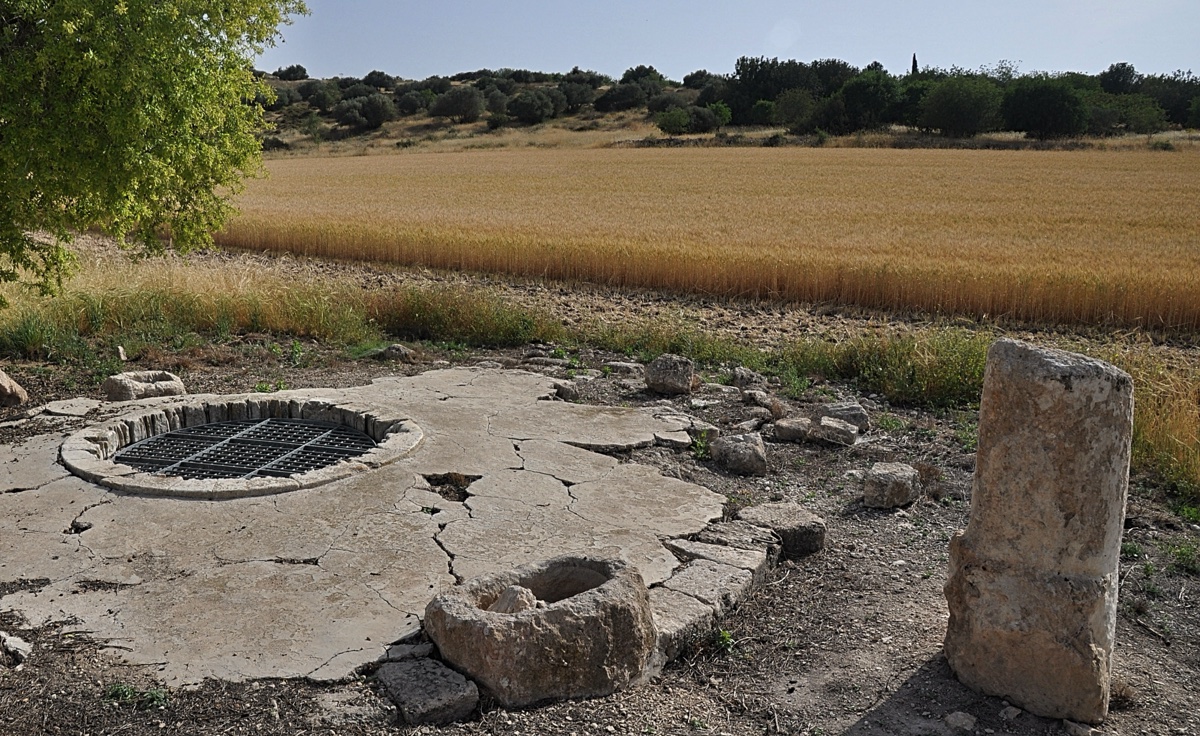
See the location of Mareshah on our map here. Our photos include: the tel of Mareshah as well as a view of a wheat field, with well (note the scoring of the sides due to ropes being pulled up), manger, and milestone!


Leon Mauldin has worked with the Hanceville church of Christ in Hanceville, AL, for thirty-four years. He and his wife, Linda, have three children and nine grandchildren (one deceased). The church website is here. His personal blog is here and infomation about his Bible land tours is here. He can be reached here.



By Chris Reeves
Synopsis: In some ways, marriage is like a team sport—it is best played when everyone works together. When you open your Bible looking for married couples who were teammates, Priscilla and Aquila fit that description perfectly, and they are an outstanding model for all marriages today.
You may have heard someone say when they are looking for a person to marry that they are looking for their “soulmate.” We know what that means. It means that someone is looking for a person to marry with whom they have a deep and close connection. They want to marry one who will be their close friend. While closeness in marriage is indeed important, I would suggest another quality to look for in a marriage partner. You should marry someone who will be your spiritual teammate.
Each time Priscilla and Aquila are mentioned in the New Testament, they are mentioned together, never apart, and they are described as working together to advance the Lord’s kingdom. They are mentioned six times in the New Testament and you can read about them in Acts 18:2; 18:18; 18:26; Romans 16:19; 1 Corinthians 16:19; and, 2 Timothy 4:19 [Note #1]. When you survey the inspired record of their marriage, you find that they were tent-makers, travelers, teachers, and teammates [Note #2]. This married couple really “had their act together” [Note #3].
Luke introduces us to Priscilla and Aquila in Acts 18:1-3. Here, we learn that Priscilla and Aquila had been expelled from Rome (c. AD 49/50) by Emperor Claudius because they were Jews [Note #4]. They came to Corinth, where they labored together as tentmakers. Think about what it would have taken for them to work together as a couple all day long. For one thing, it would have required patience and maturity. Then, when Paul came to Corinth, they allowed him to make tents with them as well.
You may be thinking at this point, “There’s no way I could work with my spouse all day long. He (or she) would drive me nuts!” However, it can be done. Whether or not a couple actually has the same job is not the point. Priscilla and Aquila complimented each other and supported each other in their work together. Husbands and wives can and should do the same whether they are working inside the home (like more people are doing today) or outside of it.
When it came time for Paul to leave Corinth and go to Ephesus, he took Priscilla and Aquila with him. Luke records this in Acts 18:18-19. They both were willing to move and make the sacrifices necessary to travel together with Paul to do the Lord’s work. They were not travelling to do sight-seeing or vacationing. They left their home in Corinth, just like they had left Rome, and all for the cause of Christ [Note #5].
This is a great example for married couples today. Can we do things together with our spouse for the cause of Christ? Can we travel together to a gospel meeting? Can we go together to visit the sick, the shut-ins, or to encourage someone who needs our help? Can we make time in our busy lives to stop and do the Lord’s work together?
After a short time in Ephesus, Paul returned to Antioch and left Priscilla and Aquila in Ephesus to work with the newly formed church. We read in Acts 18:24-28 that Priscilla and Aquila were not only tent-makers, but were also teachers. They took the time and initiative to teach a fellow-Jew and preacher named Apollos. This man needed some correction and more accurate information concerning the way of God, so Priscilla and Aquila built a relationship with him.
Luke records that Priscilla and Aquila “expounded unto him the way of God more accurately” [Note #6]. The English word “expound” comes from the Greek verb ektithēmi and it means “to expose or explain.” They brought out or set out (Greek: ex) the meaning of the truth so that Apollos could understand it better [Note #7]. This couple cared enough for Apollos to hear him and then work with him to bring him to a fuller knowledge of the truth. What sacrifice and love for others and the truth. No doubt they were patient, understanding, gentle, and tactful with Apollos. As a result, he was able to take his newfound knowledge of the truth and go to Achaia, where he would help the brethren and debate with the Jews using the Scriptures.
Today, married couples can do the same with the word of God. They can invite others into their home for a Bible study, or they can teach a Bible class of young people together. They can read their Bible together, discuss it together, and work on their class lessons together. They can talk to engaged couples about the importance of marriage or do marriage counselling with couples who are struggling. They can work together and with their children to make sure the husband/father is qualified to be an elder or deacon. The wife of the preacher can support him on his preaching travels and trips. One way a married couple can increase their usefulness and influence among brethren, and in the world, is to help another person be better like Priscilla and Aquila did with Apollos.
There are three other places in the New Testament where Priscilla (Prisca) and Aquila are mentioned [Note #8]. When Paul wrote his letter to the Corinthians from Ephesus (c. AD 56), he included greetings from Aquila and Prisca “with the church that is in their house” (1 Cor. 16:19). They were warm and welcoming—opening their home so that the church at Ephesus could meet there. What commitment, sacrifice, and hospitality.
Later, Paul wrote to the saints in Rome (c. AD 57) and wanted to send his greetings to Prisca and Aquila who were among the Christians there. First, Paul described them as “my fellow-workers in Christ Jesus.” Second, he noted their dedication in saying that they “laid down their own necks” for him. Third, he thanked them along with “all the churches of the Gentiles.” Finally, he greeted “the church that is in their house” (Rom. 16:3-5). They allowed the church to meet in their home just like they had done in Ephesus. Not only did this couple work well together, but they also worked well with Paul and other brethren. At the close of his life, Paul mentioned his dear friends in one last greeting (2 Tim. 4:19). Clearly, they were active, Christian workers and teammates for the Lord.
Today, couples can, and should, work together to advance the Lord’s cause. They can serve others together and they can take risks together for the Lord’s work. They can be couples for whom many would say, “I’m so thankful that Bro. and Sis. So-and-So were a part of my life.” As for opening up one’s home to the brethren, I have personally witnessed this recently in Ghana, Africa, where Francis and Gladys Brown open their home each week to the Sun City church which has an attendance of about 100 in the community of Buduburam outside of Accra.
Unfortunately, some married couples are more like roommates than teammates. However, this should not be—togetherness is the key. Priscilla and Aquila did many things together. This is what marriage is all about. I would encourage all married couples to be teammates. Join your hands and your hearts together in serving the Lord. Don’t allow the things of this life like work, hobbies, troubles, illnesses, friends, financial problems, old age, etc., to pull you apart. Solomon had it right: “Two are better than one. . .” (Eccl. 4:9) [Note #9].
Married couples, God is looking for you to be on the same team, not to be in competition with each other. So why not talk more together, do more things together, work together, serve the Lord together, help others together, make sacrifices together, open your home together, read and study your Bible together, pray together, and attend the worship services together? Remember, God made you “one” (Mal. 2:15) and joined you “together” (Matt. 19:6), and you are “joint-heirs of the grace of life” (1 Pet. 3:7). Now, go out and live that life for the Lord—standing side by side and remaining together all the way to the end!
For those of you who have been married just a short time, it is easy right now for you to function as a team. Keep it up, but know that your teamwork will be tested eventually down the road.
The challenges of life mount for those who have been married several years. Life has a way of tearing marriages apart, but you have to keep working together as a team and not let anyone, or anything, break it up.
Elderly married couples often have special health challenges and they will eventually need to let others into their life to help them with those issues. Be willing to let others join your lifelong team so they can give you the care you need as you face the sunset of life.
[Note #1] Many commentators make the point that Priscilla is mentioned first in four of the six references, so there must be something to this. They suggest that Priscilla was mentioned first because she was more prominent due to her education, social status, character, faithfulness, talent, etc. However, we simply do not know this to be the case. What we do know is that she and her husband were important enough to be mentioned in sacred history and every time they are mentioned, they are mentioned together and in a positive way.
[Note #2] The main headings of this article follow that of Leslie B. Flynn in his book, The Other Twelve, (Wheaton, IL: Victor Books, 1988), pages 119-131.
[Note #3] Other Bible couples who worked well together as teammates were Noah and his wife, Moses and Zipporah, Zechariah and Elizabeth, along with Joseph and Mary.
[Note #4] Confirmation of this historical event can be found in the writings of the Roman historian, Seutonius, in his Lives of the Twelve Caesars (Divus Claudius, 25).
[Note #5] The life and travels of Priscilla and Aquila can be traced over a period of about seventeen years, from AD 50 to 67. They left Rome (c. AD 50) and went to Corinth for about two years. After that, they went to Ephesus (c. AD 52) where they stayed about three years. They left Ephesus and went to Rome for some time, and then they returned to Ephesus (c. AD 67) by the time of Paul’s second imprisonment.
[Note #6] All Scripture quotations are taken from the American Standard Version, 1901.
[Note #7] See also Acts 11:4 and Acts 28:23, where this word is found.
[Note #8] “Prisca” was her formal name and “Priscilla” was her familiar name. This is similar to “Silvanus” and “Silas,” and “Sosipater” and “Sopater.”
[Note #9] The power of two can also be seen in Jesus’s wisdom to send the twelve apostles out “two by two” (Mark. 6:7).
Chris Reeves has preached for the Warfield Blvd. church of Christ in Clarksville, TN, since 2016. He and his wife, Cheri, have four children and two grandchildren. His Bible study website is here. The church website is here. He can be reached here.



By Danny Linden
Synopsis: God tells Jeremiah not to intercede on behalf of the people of Judah because their time of judgment is already set and will not be changed.
Jeremiah prophesied to the people of Judah for many years about the coming destruction from the LORD. God had endured their evil for generations and now judgment was quickly approaching. Throughout Jeremiah’s life, he vainly sought to convince the people to turn to God, which further illustrates why God was so angry with them. In Jeremiah 7, God gives Jeremiah a very unusual command. It may seem strange at first glance, but He explains why it is necessary.
As for you, do not pray for this people, or lift up a cry or prayer for them, and do not intercede with me, for I will not hear you. Do you not see what they are doing in the cities of Judah and in the streets of Jerusalem? (Jer. 7:16-17).
God gave Jeremiah a shocking instruction: do not pray for the people of Judah. Why would He say such a thing? We know that God desires our prayers. He wants to hear our pleas. He promises to always hear the prayers of the righteous (Prov. 15:29). Of course, we know that God does not give us everything for which we might ask. There are some things He withholds from us for reasons that may only make sense to Him in His perfect wisdom. Provided that we ask in reverence with the spirit of one who wants the will of God to be accomplished in every place, there is no harm in us asking God for something that He rejects. He knows that we ask from a position of relative naivete compared to His wisdom.
Is the problem that God doesn’t want intercessory prayer on behalf of sinful people? This is not a satisfactory explanation. He asks that supplications, prayers, intercessions, and thanksgivings be made for all people (1 Tim. 2:1). We should to pray for those who have committed sin so they can be forgiven (Jas. 5:13-16). The principle of intercession is well-established in Scripture and is not why God said this to Jeremiah.
Why did God forbid Jeremiah from praying for the people? In this case, it’s because the decision was already made. There is a time when God’s mind can be changed. He will hear our pleas, and may offer time and opportunity for repentance. However, God’s patience will not last forever. Eventually, He decides that the time for judgment is now and there is nothing anyone can do to stop it. Intercession will do nothing once God has reached that point.
God rarely informs us when He has come to that decision for a person or nation, so we just continue to pray to Him in hopes of mercy. Yet, in Jeremiah 7, He actually revealed this to the prophet, which is why the prohibition was in place.
“The children gather wood, the fathers kindle fire, and the women knead dough, to make cakes for the queen of heaven. And they pour out drink offerings to other gods, to provoke me to anger. Is it I whom they provoke?” declares the LORD. “Is it not themselves, to their own shame? Therefore thus says the Lord GOD: ‘Behold, my anger and my wrath will be poured out on this place, upon man and beast, upon the trees of the field and the fruit of the ground; it will burn and not be quenched’” (Jer. 7:18-20).
What had Judah done to deserve God’s wrath? The Lord describes to Jeremiah how united the nation was in their idolatry. The children, fathers, and mothers all had a role to play in the worship of the “queen of heaven.” This understandably provoked God to wrath. At the core of His covenant with Israel is the statement that He alone is God, and they were forbidden from worshiping any idol from the nations around them or creating any with their hands (Exod. 20:2-6). Yet, the people were obviously skilled in worshiping false gods.
How long does it take to get a group of people united in purpose and actions? We frequently wander through life doing whatever seems good to us. Breaking that pattern requires some strong motivation to coordinate with others around us.
The people of Judah had found a way to work together in unity—but it was a unity of evil! No wonder God was provoked by their choices. How long had they worked toward this goal of worshiping the queen of heaven and become so skillful at accomplishing this shameful end?
In the church, may we set aside our selfish desires and work together for the benefit of God’s kingdom, and in the promotion of His word.
Thus says the LORD of hosts, the God of Israel: “Add your burnt offerings to your sacrifices, and eat the flesh. For in the day that I brought them out of the land of Egypt, I did not speak to your fathers or command them concerning burnt offerings and sacrifices. But this command I gave them: ‘Obey my voice, and I will be your God, and you shall be my people. And walk in all the way that I command you, that it may be well with you.’ But they did not obey or incline their ear, but walked in their own counsels and the stubbornness of their evil hearts, and went backward and not forward. From the day that your fathers came out of the land of Egypt to this day, I have persistently sent all my servants the prophets to them, day after day. Yet they did not listen to me or incline their ear, but stiffened their neck. They did worse than their fathers” (Jer. 7:21-26).
Even in this period of utter faithlessness, Judah continued to offer sacrifices to God and observe the holy days. They believed that worshiping God was an important, but not an exclusive, duty. Sadly, they continued to worship every other god they could imagine at the same time.
Since God was so angry with them, He would not accept their burnt offerings or their sacrifices. The law of Moses gave careful instructions for many kinds of sacrifices, all with different purposes and rules to follow. God now tells His people: throw all that away. Take your burnt offerings and sacrifices, mix them together, and eat them as a regular meal. That will do you more good than offering them to God!
The Sinai covenant was never primarily about the sacrifices and offerings. Those were ways that Israel showed their faithfulness and submission to God. What He desired most of all was purity of heart. If their hearts are this divided, there is no benefit to any of these sacrifices.
So you shall speak all these words to them, but they will not listen to you. You shall call to them, but they will not answer you. And you shall say to them, “This is the nation that did not obey the voice of the LORD their God, and did not accept discipline; truth has perished; it is cut off from their lips” (Jer. 7:27-28).
Jeremiah can tell the people of Judah all these things—in fact, God expects him to do so. He is the prophet of the LORD who brings a divine message. However, God warns Jeremiah that the people will not listen to him. This message will mean nothing to them because, fundamentally, they do not respect God anymore.
Truth has perished among God’s people. They can no longer be shaped by the Lord’s discipline. The clay in the potter’s hand has grown hard and can only be broken in disgust.
God expects us to obey Him in sincerity and truth, just like He did with the people of Judah. We benefit from the Lord’s patience and mercy, but we must remember that we cannot keep testing Him. If truth perishes in us, we will reach the end of His patience and be subjected to His wrath.
On the day of judgment, every lost soul will bow before God in a desperate attempt to beg for pardon. That plea will not be heard. No prayer that we could then offer will convince God to change His mind regarding His ultimate judgment. His justice must be satisfied.
As we pray for others, we should know that God wants to hear our intercessions and they do matter to Him. They may even extend His patience, but only to a point. Therefore, let us have a sense of urgency in sharing the gospel with others while they still have time and opportunity to obey.
Danny Linden has worked with the Hebron Lane church of Christ in Shepherdsville, KY, since March 2023. He and his wife, Lauren, have four children. The church website is here. He can be reached here.



By Madeline Locklear
Synopsis: Young people in the church can serve through being a good example spiritually and physically.
As a young adult, I find myself wondering how I can be involved in other ways than just singing, and being attentive during class and worship. Especially as a woman, we can’t contribute in ways men can, such as leading in worship and serving at the table. Nevertheless, there are many ways younger people can be involved in the church without being in the actual worship service. By inspiration, Paul encourages us, “Let no one look down on your youthfulness, but rather in speech, conduct, love, faith, and purity, show yourself and example of those who believe” (1 Tim. 4:12).
The most significant way we, as youth, can be impactful in the church is simply by how we conduct ourselves as Christians. A big part of how we carry ourselves and how people see us is by the way we talk to others and the language we use. Ephesians 4:29 says, “Let no corrupting talk come out of your mouths, but only such as is good for building up, as fits the occasion, that it may give grace to those who hear” (ESV). Obviously, we should not use the tongue for cursing or swearing; may we also be mindful that our language is kind and gentle—not rash or aggressive. In Titus 2:7-8, we are instructed “In all good things, show yourself to be an example of good deeds, with purity in doctrine, dignified, sound in speech which is beyond reproach, in order that the opponent may be put to shame, having nothing bad to say about us.” The way we speak also influences the things we do, affecting others by the things we say. Our conduct (the way we act), is also something that can be impactful in the church. Since the younger kids look up to us and are always watching what we do, we should behave in a righteous manner. In Romans 12:2 it tells us not to be conformed to the world, that we should not act like them. Providing a good example of how to live righteously in today’s sinful world makes a huge difference to the people who look up to us all the time.
Loving others in the church helps us view ourselves as servants of God and shows our brotherly/sisterly bond for one another. Jesus says, “Love each other as I have loved you. Greater love has no one than this: to lay down one’s life for one’s friends” (John 15:12-13). Although we might not necessarily “like” everyone we will encounter, it is very important to manifest agapē and brotherly love to all. Praying for and with people who need God’s guidance shows love to others just because you’re showing you care for them. Good things you can do to show acts of love within the church are praying for people, visiting the elderly who can’t get out as often (or even call them to check up on them), or by offering to make meals for other people.
The New Testament offers examples of women who served with kindness and generosity. Now in Joppa, there was a disciple named Tabitha (Dorcas). This woman abounded with deeds of kindness and charity, which she continually did. She made tunics and garments and gave them to needy widows (Acts 9:36-43, esp. vv. 36, 39). In Acts 16, the Bible tells us of a woman named Lydia who, after her conversion, opened her house to Paul and his companions. Luke says, “She urged us, saying, ‘If you have judged me to be faithful to the Lord, come into my house and stay.’ And she prevailed upon us” (Acts 16:15).
Showing our faith and purity as young Christians today is influential and encouraging to others! In James 2:18, we are told that our faith without good works is worth nothing. Our good deeds, such as setting righteous examples, teaching others about the Bible, and being faithful, show our faith in God. In Psalm 119:9, God’s word tells us we can stay on a path of faithfulness by “living according to the word.” This indicates that we can also show our faithfulness by living a righteous lifestyle, and by showing others our light, we create an impact and encourage others to live the same way—especially at a young age.
One of the most impactful things I’ve ever done in my youth is teaching a Bible class for the toddlers. Not only did I benefit myself, I helped influence a younger generation of children who look up to me and want to live the way that I, and other teenagers, carry ourselves. By teaching the toddlers, I learned more about Bible lessons than I had already known. By so doing, we also influenced and encouraged others around our age to be more comfortable being involved in teaching others and leading them to shine their light as well.
So in conclusion, even though those of us who are young might not be given very many ways to be involved and impactful in the church worship, the way we act and talk influences everyone around us. So go talk to that elderly person who sits by themselves, go talk to the younger kids, it makes them feel important and cared for. Little things really go a long way in encouraging others. So do as much as possible to influence others in your daily lives. You’ll never know what type of impact you might have.
Maddie Locklear is a junior in high school. She is a member of the Adoue Street church of Christ. She can be reached here.






By Allen Dvorak
Synopsis: We can learn important lessons from God’s summaries of the reigns of the kings of Israel.
It seems the leaders of nations have always desired to be remembered. The Pharaohs built towering pyramids atop their tombs. Other rulers used statues or elaborate architectural structures to testify to their greatness, to guarantee that they would be remembered long after their deaths.
Even U.S. presidents, who hold authority for a relatively short time, are concerned with their legacies. How will each president be remembered? For accomplishments? For failures? How will their presidencies be summarized in the history books?
The historical books of the Old Testament tell of the kings who ruled over the United Kingdom of Israel and those who later ruled over the northern and southern kingdoms after the division of the United Kingdom. Of course, we are given extensive information about Saul, David and Solomon (kings of the United Kingdom), who each ruled forty years. Typically, however, there is much less material about the lives of the kings who followed. Some of the kings receive little more than passing mention, particularly those of the Northern Kingdom in its waning years.
Some kings receive more space in the inspired record because they lived in pivotal times or their actions had huge consequences for God’s people. For example, the reign of Ahab and his Sidonian princess wife, Jezebel, receives a good bit of attention because of their efforts to promote Baal worship in the Northern Kingdom. On the other side of the ledger, Jehu, the “son of a nobody,” also receives considerable attention because he purged the house of Ahab and attempted to stamp out Baal worship in the Northern Kingdom.
Another king who received significant attention from the inspired writers was Jeroboam, the son of Nebat. A thorn in the side of Solomon, he became the first king over the northern tribes after the kingdom divided, following Solomon’s death. It was Jeroboam who installed a golden calf at Bethel and another at Dan for the people to worship. His legacy was that he introduced the idolatry that would influence the Northern Kingdom for its entire existence!
How does one summarize the reign of a king who ruled for decades? Imagine all the things done by a king like Manasseh, who ruled in the Southern Kingdom of Judah for fifty-five years! What about Uzziah, who ruled for fifty-two years? It would be so much easier to summarize the reign of Jehoiachin who ruled for only three months, or Zimri who ruled in the Northern Kingdom for only seven days, hardly enough time to warm the seat of the throne!
A pattern emerges in the history of the kings. The inspired historians did not attempt to recount all the deeds of the kings, good or evil. We read about the family of the new king (his mother or father is identified) and the length of his reign. There is also usually some summary statement about the spiritual character of his reign in which he is compared to a predecessor. There were no good kings in the Northern Kingdom; each successive ruler followed in the error of Jeroboam. Note these examples:
In the third year of Asa, king of Judah, Baasha, the son of Ahijah, began to reign over all Israel at Tirzah, and he reigned twenty-four years. He did what was evil in the sight of the Lord and walked in the way of Jeroboam and in his sin, which he made Israel to sin (1 Kings 15:33-34).
Omri did what was evil in the sight of the Lord and did more evil than all who were before him. For he walked in all the way of Jeroboam the son of Nebat, and in the sins that he made Israel to sin, provoking the Lord, the God of Israel, to anger by their idols (1 Kings 16:25-26).
Consider these two examples from the kings of Judah:
Now in the eighteenth year of King Jeroboam, the son of Nebat, Abijam began to reign over Judah. He reigned for three years in Jerusalem. His mother’s name was Maacah, the daughter of Abishalom. And he walked in all the sins that his father did before him, and his heart was not wholly true to the Lord his God, as the heart of David his father (1 Kings 15:1-3).
In the third year of Hoshea, son of Elah, king of Israel, Hezekiah, the son of Ahaz, king of Judah, began to reign. He was twenty-five years old when he began to reign, and he reigned twenty-nine years in Jerusalem. His mother’s name was Abi, the daughter of Zechariah. And he did what was right in the eyes of the Lord, according to all that David, his father, had done (2 Kings 18:1-3).
In the Northern Kingdom, the comparison was to Jeroboam. In the Southern Kingdom, the conduct of David was the gold standard by which the kings were measured. These kings did many things not recorded in the inspired literature and perhaps some of those accomplishments were impressive, but when their reigns were summarized, the spiritual quality of their rule was emphasized rather than their earthly achievements. The important detail about each king’s reign was whether he “did what was right in the eyes of the Lord.”
Omri (father of Ahab) is a prime example of this truth. The Assyrians were so impressed by Omri that they would refer to Israel as “the land of Omri” long after his death. On the Black Obelisk of Shalmaneser III, Jehu is identified as “the son of Omri” even though he was unrelated to Omri and was actually responsible for the destruction of Omri’s descendants! Yet the biblical summary of Omri’s reign is brief and blunt—he walked in the sin of Jeroboam and was worse than the kings before him. Another example of this truth is Jeroboam II (great grandson of Jehu), a strong king who introduced a period of prosperity in Israel and expanded the borders of the Northern Kingdom, but spiritually was a failure (2 Kings 14:23-29).
It is also important to remember that the only life summary that matters is the one that God composes. God didn’t sugarcoat the life summaries of the kings. By contrast, when some modern notable person dies, the news media will publish articles about his life, perhaps recounting the individual’s accomplishments or, in some cases, the difficulties of that person’s life. Of course, the news media’s focus is often on worldly accomplishments that have only temporal significance. It is not unusual for someone who lived a morally reprehensible life to be lauded by the public because he could run fast, sing well, or be counted as financially successful.
The same thing happens at funerals. Those who eulogize the deceased usually try to focus on positive character traits or habits. Sometimes the truth about someone’s life is not very uplifting. Occasionally, the eulogy of the deceased is so “nuanced” that one wonders if he came to the wrong funeral! We are seldom as blunt, or forthright, about the failures of the deceased as the authors of Kings and Chronicles were about the kings. God’s assessment of our lives will be true and just. “Shall not the Judge of all the earth do what is just?” (Gen. 18:25).
The summaries of the kings suggest another important truth—how we finish our lives is more important than how we started.
There were several kings who made a good start, but finished poorly. Solomon showed such promise in the beginning of his reign, but became involved in idolatry through the influence of his many foreign wives (1 Kings 11). Joash, king of Judah, did what was right while Jehoiada, the godly high priest, guided him, but fell into idolatry after Jehoiada’s death (2 Kings 14; 2 Chron. 24). Amaziah and his son, Uzziah, kings over Judah, both made a good start, but didn’t finish well (2 Chron. 25-26). By contrast, the beginning of Manasseh’s reign was filled with terrible evil, but he repented and sought the favor of the Lord in the latter part of his reign (2 Chron. 33). The end is more important than the beginning.
How will God summarize our lives? We are writing the summaries of our lives every day as we decide how we will live. Are we devoting our time to things that will have no significance in eternity? If we have set a course of evil, it is not too late to tack (or set) our sails, so that we do what is right in the eyes of the Lord. At the final judgment, how fast we could run, how much money we made each year, and our popularity or notoriety with others will be inconsequential. The only thing that will matter is whether we served the Lord faithfully.
All biblical quotations are from The Holy Bible: English Standard Version (ESV). Wheaton, IL: Crossway Bibles, 2016.
Allen Dvorak has worked with the Kelly Spring Road congregation in Harvest, Alabama since its inception in 2006. He also serves as one of the congregation’s elders. He and his wife, Debbie, have two sons, David and Jonathan. The church website is here. Allen can be reached here.



By John B. Weaver
Synopsis: Past journal articles about the debate over the use of human institutions to do the work of the church reveal that the differences were as much about spiritual disposition as about sound doctrine.
In a 1979 article on the emergence of the “Church of Christ Denomination,” Ed Harrell reflects wistfully on the generation of preachers that fought the theological battles over institutionalism in the 1950s. “How I loved those lean and hungry preachers who lost their jobs in the 1950s and 1960s,” Harrell recalls. “Those were exhilarating times, times that did indeed try men’s souls. Churches [today] are becoming filled with bright young people who say all the right things but leave me wondering” [Note: 1]. The self-sacrifice and self-emptying that Harrell describes pertained to both the physical livelihood of having enough to eat because of job loss, and a spiritual abnegation and self-denial that preferred God’s will over one’s own tradition and penchants.
What emerges in Harrell’s description of the old-style preachers of his day is indicative of more broadly held spirituality that is positively cultivated among other writers of periodical articles from the 1950s into the 1980s. This is accurately described as a “spirituality,” insofar as it is a principled and reproducible way of relating to God and especially Jesus Christ’s humble service in His self-emptying incarnation of deity. As is broadly recognized in the history of Christianity, the Greek term for Jesus’s self-emptying incarnation in Philippians 2:7 is “kenosis.”
. . .though He was in the form of God, [He] did not count equality with God a thing to be grasped, but emptied (ekenōsen from the verb kenoō) Himself, by taking the form of a servant, being born in the likeness of men (Phil. 2:6-7, ESV).
To empty oneself of already held or attainable power, and to adopt a lower status that purposefully serves God and other people, is a “kenotic” spirituality. What is seen in the mid-twentieth century (although its roots extend back much further and would continue to the present day) is a kenotic spirituality that views the self-denial (or “abnegation”) of Christians and churches through the lens of the intentional humiliation and self-emptying service of Jesus. As Jesus emptied Himself in obedience, so Christians should empty themselves of pretensions to power, especially in relation to using human institutions to do the church’s work.
Evidence of this kenotic spirituality is seen in the early years of the periodical, Gospel Guardian, including an article on the “Tricks of Pride” by Cled E. Wallace in 1949. Wallace argues for the need for humility among Christians. To overcome the institutionalism of their day, Wallace explains that Christians must divest themselves of human traditions and personal pride and empty themselves of human conceits in the interest of the restoration plea to return to the New Testament pattern [Note: 2].
A similar spirituality of abnegation towards worldly and financial power is seen throughout early articles in The Preceptor. During its early years of publication, The Preceptor alternates between both didactic articles, making a variety of doctrinal arguments, especially against institutionalism, and devotional articles describing the character of the Christian heart and spirit that would believe and teach these positions. For example, articles on congregational independence and non-institutional evangelism and benevolence are often adjacent to articles on the “spirituality” of Jesus and the simplicity, humility, and self-abasement that characterized His person and ministry [Note: 3]. Editor James R. Cope captured the connection between the congregational doctrine and Christ-like abnegation and self-emptying in an early editorial on “Consistency and Character,” arguing that Christians should not be afraid or ashamed when they change their perspective on the institutional issues, as long as the result is greater accord with the spirit of Christ and the truth of Scripture. Cope calls for his readers to be willing to root their Christian conviction in a revised understanding of Scripture, despite possible loss of popularity and influence. This conscientious self-denial was, Cope observed, characteristic of many in the American Restoration Movement:
One of the fundamental reasons why the Restoration Movement commended itself to the sober thinkers of the times and progressed as it did was the disposition of its leaders to surrender former views in the light of newly found truths. Once they were convinced of error, they gladly gave it up and espoused the truth learned. True enough, they had their verbal battles, but many of the fundamental principles upon which the church stood in Apostolic days and at the present came to be taught and practiced by the Restorers as these principles were forged into unmistakable clarity in the fires of controversy. Disciples today have gone too far too fast if either they surrender these eternal principles found or forsake the attitude of mind and heart which characterized the search for them [Note: 4].
This positive spirituality of Christlikeness in the non-institutional movement is perhaps best seen in the early years of Truth Magazine. In addition to articles on church cooperation and congregational autonomy, the periodical also provided extended attention to Christian spiritual life and discipline [Note: 5]. This attention to Christian spirituality is seen, for example, in an early article on attitudes toward issues of the day by the well-known preacher and author, Robert Turner. He makes clear that the key issue in addressing institutionalism is whether one knows God’s way, is willing to be humble in acknowledging it, and is willing to obey it even when it means self-correction or self-denial. “Our first step in settling the current church problems,” Turner writes, “is to settle ourselves” [Note: 6]. Similarly, Earl Kimbrough warns against an overly zealous approach to purity in church work and worship, calling his readers to self-emptying and humility in their thinking about worship and how it should genuinely engage the heart and not just the mind set on orthodoxy:
Let us not become so filled with worldly pride and conceit and so desirous of worldly applause that we forget to whom and for what purpose our worship is rendered. Let us not in our zeal for order and perfection in carrying out the acts of worship lose the heart in the shuffle [Note: 7].
A similar kenotic spirituality is seen in the Bible Standard, a periodical that began in November 1972. The inaugural issue includes facing pages focused on spiritual self-denial, on the one hand, and avoidance of the “purposes and structures of denominationalism” on the other [Note: 8]. This paralleling of spiritual renewal and doctrinal restoration is seen also in the writings of a regular Bible Standard author, Dee Bowman, who critiqued a spiritual pride in those who would go “too far” in opposing church support for evangelistic and educational organizations so that they “become guilty of doing nothing at all” [Note: 9]. Bowman’s effort to provide a balanced and positive approach to the debates over institutionalism are seen in his willingness to identify proactive steps that congregations should take in lieu of institutional support, including active scheduling of Bible classes at the church building or in the local neighborhood throughout the week, direct funding of domestic and foreign missionaries, and congregational training of preachers. Bowman’s self-critical and positive approach to the non-institutional doctrines among churches of Christ points a way forward for those not seeking to be part of any worldly “kind” or network of churches, but truly congregational and “kenotic” in spirit, seeking to work humbly for God both individually and with a local body of other believers as God has prescribed in His word.
[Note: 1] David Edwin Harrell," Emergence of the Church of Christ Denomination Update," Vanguard 5.2 (January 25, 1979): 38-39.
[Note: 2] Cled E. Wallace, “Tricks of Pride,” Gospel Guardian 1.13 (August 4, 1949): 1; Cf. J. Herman Campbell, “When Unity Ceases—No. 3,” Gospel Guardian 1.21 (September 29, 1949): 5; Eldridge B. Linn, “Let Him Deny Himself,” Gospel Guardian 1.34 (January 5, 1950): 3; W. W. Otey, “What Will You Leave?” Gospel Guardian 1.37 (January 26, 1950): 1.
Eldridge B. Linn, “Let Him Deny Himself,” Gospel Guardian 1.34 (January 5, 1950): 3.
[Note: 3] Bond Stocks, “Why Christ Was Persecuted,” The Preceptor 13.2 (December 1951): 12-13; Harris J. Dark, “Congregational Independence,” The Preceptor 1.2 (December 1951): 22-23; See also the combination of noninstitutional doctrine and selfless spirituality in James R. Cope, “Majorities and Manners,” The Preceptor 1.4 (February 1952): 4-5. Cf. Bill Humble, “Restoration and Reaction,” The Preceptor 2:10 (August 1953): 6-7.
[Note: 4] James R. Cope, “Consistency and Character,” The Preceptor 1.2 (December 1951): 4.
[Note: 5] H. Leo Boles, “Voices from the Past: Church Cooperation,” Truth Magazine 1.3 (December 1956): 8-9; Ray Ferris, “What Is ‘Autonomy’?” Truth Magazine 1.5 (February 1957): 6-7, 19; Cf. Ollie Duffield, Jr. “The Outlet of the Heart,” Truth Magazine 1.6 (March 1957): 14-15; Bryan Vinson Jr., “I Recommend . . .,” Truth Magazine 1.11 (August 1957): 2, 13.
[Note: 6] Robert F. Turner, “Attitudes toward Current Issues,” Truth Magazine 1.9, (June 1957): 2, 17-18. Cf. Bill Echols, “Humility,” Truth Magazine 2.2 (May 1958): 20-21, 23.
[Note: 7] Earl Kimbrough, “Landmarks of the Lord’s Church (No. 3)” Truth Magazine 2.10 (July 1958): 21-23.
[Note: 8] Donald R. Givens, “Slay the Sinful Self,” The Bible Standard 1.2 (November 20, 1972): 16; Larry Ray Hafley, “The Church vs Denominationalism,” The Bible Standard 1.2 (November 20, 1972): 17. The same juxtaposition of themes is seen repeatedly, including Donald R. Givens, “Putting Self in God’s Place,” The Bible Standard 1.5 (January 5, 1973): 52 and David Smitherman, “The Work of the Local Church?” The Bible Standard 1.5 (January 5, 1973): 53.
[Note: 9] Dee Bowman., “Going Too Far (The Other Way),” The Bible Standard 1.5 (January 5, 1973): 58; Cf. Dee Bowman, “What It Means to Love God,” The Bible Standard 1.1 (November 5, 1972): 1-2; Ibid., “Wrong Tendencies and Broadway’s Out-of-the-Church Religion” The Bible Standard 1.12 (April 20, 1973): 138-40.
John B. Weaver has worked with the Mariner Boulevard church of Christ (Spring Hill, FL) since 2021. He is the sixth president of Florida College (Temple Terrace, FL), where he also teaches Church History. He and his wife, Vivi, have five children. He can be reached here.

By Austin Lewis
Synopsis: A challenge to reclaim the Great Commission and make Jesus’s final words our first work.
Jesus came to earth with a clear mission and purpose. He came to seek and save the lost. The focus on the salvation of souls was present when Jesus began to preach, “Repent, because the kingdom of heaven has come near” (Matt. 4:17). It was a straightforward message followed by an invitation to follow Jesus (Matt. 4:19).
Although simple, the invitation to follow Jesus had life-altering implications. It was a challenge to submit to Him as Lord, proclaim His message, and live as a disciple of Jesus Christ. Twelve men accepted this invitation.
In only a few short years, Jesus transformed twelve ordinary men into leaders of a spiritual revolution. Now, as Jesus prepares to ascend to the Father, He gathers His disciples one final time.
Matthew 28:16 tells us that this takes place on a mountain. Matthew’s Gospel is filled with mountain-top moments. Jesus defeats the devil on a mountain (Matt. 4:8). He preaches the sermon on the mount (Matt. 5-7). He feeds the 4,000 on a mountain (Matt. 15:29). Also, the transfiguration takes place atop a high mountain (Matt. 17:1).
Pivotal moments in Jesus’s ministry frequently take place on a mountain. It is no different in Matthew 28 when Jesus gathers His disciples and teaches them one final lesson on a mountain:
All authority has been given to me in heaven and on earth. Go, therefore, and make disciples of all nations, baptizing them in the name of the Father and of the Son and of the Holy Spirit, teaching them to observe everything I have commanded you. And remember, I am with you always, to the end of the age (Matt. 28:18-20).
This lesson is different. It takes the form of a commission, but it is no ordinary commission—it is the Great Commission coming directly from the King of Kings and Lord of Lords. He commanded His disciples to proclaim the gospel to all creation.
This commission, however, was not given to perfect men. There were moments when Jesus criticized their lack of faith (Matt. 8:26). They struggled to understand the nature of the kingdom. Peter denied Jesus (Matt. 26:69-75). Some of the disciples doubted (Matt. 28:17). Nevertheless, Jesus gave the Great Commission to eleven ordinary men and empowered them to take the gospel message to a lost and dying world.
The Great Commission is the final message from Jesus, and they are the focus of their work as disciples of Christ. Now, two thousand years later, the Great Commission has been passed down to us. The privilege of proclaiming the gospel is now ours.
Somewhere along the way, we began to neglect the Great Commission. In some cases, the Great Commission has become the great omission, and the consequences are devastating. Many in the current generation are walking away from Jesus, perhaps, in part, because we have not prepared them to defend their faith. Souls are being lost because we have not made evangelism a priority.
It is time to rediscover the Great Commission and find our place in the work God has given us to do.
Jesus told the eleven disciples to “Go.” He is clear. He is concise. He is direct. The disciples did not object, or make excuses. They went everywhere preaching the word. They left behind family and friends. They left behind homes and businesses, but they still preached the word. Jesus said “go” so the disciples went everywhere preaching the gospel.
Jesus’s message has not changed. The Great Commission was not just a commandment for the eleven disciples; rather, it is for every disciple who follows in the footsteps of Jesus. The Great Commission is for us.
In the Great Commission, Jesus is telling us to “go.” He is not asking us to wait for visitors to walk through the church door. Jesus did not tell us to wait by the phone. Jesus commanded us to go. This is not a onetime command. It is a way of life for all followers of Christ.
Still, going is costly. We must sacrifice our time, our energy, and our money. Proclaiming the gospel will change our lives. We may be rejected. We may be despised. We may face serious consequences, but our King has commissioned us to go proclaim His message, so we must go.
When Jesus told the eleven to “make disciples of all nations,” it was not a request. It was not an option. It was a command given to them by the King of Kings. Jesus did not want the eleven to stay in Jerusalem. He wanted them to take the gospel message to Judea, Samaria, and to the ends of the earth (Acts 1:8).
Our mission has not changed. We are still commissioned to make disciples. Jesus still expects us to proclaim the gospel message across the world, but He also wants us to take the gospel message across the street.
We are surrounded by people who need the gospel. They are our friends and family members. They are our neighbors and coworkers. They need to hear the gospel message, and we must share it with them.
In a polarized world, it is easy to show partiality. Yet, we must remember the gospel is not just for people who look like us. The gospel is not just for people who talk like us. The gospel is not just for people who vote with us. The gospel is for all people.
The inclusion of baptism in the Great Commission underscores the importance of baptism in the eyes of Jesus and in the lives of His followers. Indeed, Mark’s account of the Great Commission clearly states, “Whoever believes and is baptized will be saved” (Mark 16:16).
The purpose and importance of baptism was not up for debate among early Christians. Peter concluded his sermon on Pentecost with a call to repent and be baptized for the forgiveness of sins. They believed and preached baptism saves (1 Pet 3:21). Baptism is the moment when one becomes a disciple of Christ.
The Great Commission does not end with baptism. Instead, baptism is just the beginning of a new walk with Christ. Jesus also tells the disciples to teach others “to observe everything I have commanded you” (Matt. 28:20). He reminds us that a critical and often overlooked part of the Great Commission is the teaching that follows baptism. Jesus expected His disciples to pass on everything that He had taught. That is exactly what the early disciples did.
One of the defining traits of the biblical church was their devotion to the apostle’s teaching (Acts 2:42). The apostles constantly proclaimed what they had learned from Jesus, and subsequently received by inspiration of the Holy Spirit—instilling these truths in the hearts of obedient believers who constituted the early church, and urging them to pass them along to each successive generation.
We also see this principle in the life and ministry of the apostle Paul. In 2 Timothy 2:2, Paul reminds the young preacher Timothy, “What you have heard from me in the presence of many witnesses, commit to faithful men who will be able to teach others also.” Paul passed down what he had learned, and he expected Timothy to do the same.
Passing down what we have learned is how we edify and equip disciples for the work of the ministry. Passing down what we have learned is how we raise up a new generation who know the Lord and are prepared to tell the world about His salvation.
Jesus’s final words are abundantly clear. Jesus expects disciples to make disciples. Two thousand years ago, the early Christians constantly proclaimed the gospel. When they were scattered by persecution, they continued to preach the gospel and make disciples of all nations (Acts 11:19-21). They knew Jesus expected every disciple of Christ to share the gospel boldly.
We must remember the Great Commission is not a calling for a select few, but a command to be obeyed by every Christian. We cannot diminish the responsibility of making disciples and still expect to reach the lost with the gospel. We all have a part to play in the Great Commission.
Let us commit to setting aside our desires, our time, and our energy to spread the good news. Let us live every day compelled by a passionate desire to follow Jesus and make disciples of every nation. Let us urgently look for opportunities to proclaim the gospel in our communities and around the world.
It is time that we reclaim the Great Commission. It is time that we make Jesus’s final words our first work.
Austin Lewis has worked with the Union Road church of Christ in Lufkin, TX, since July 2021. He and his wife, Allison, have one son. The church website is here. He can be reached here.



By Bob McPherson
Synopsis: By looking at Jesus’s words and Matthew’s and Luke’s inspired commentary during discussions of the baptism of John, we can see the connection the Lord made between baptism and belief.
No single verse in Scripture surpasses the plain wording of Mark 16:16 in illustrating the New Testament relationship between baptism and belief:
Whoever believes and is baptized will be saved, but whoever does not believe will be condemned (ESV).
It is difficult to think of plainer words to convey the notion that to be saved, one must believe and be baptized. Yet despite the great plainness of speech attributed to the Lord in Mark’s account of the Great Commission, since the Protestant reformation, most of the religious world is quite sure that the Lord did not mean exactly what He said. So, for generations, Mark 16:16 was the go-to text for those who would restore the ancient pattern.
Unfortunately, though perhaps not coincidentally, no single textual variant is better known nor more clearly identified in modern translations than the long ending of Mark. Scholars (and brethren) come to different conclusions about whether Mark 16:9-20 really belongs in the text. It is not my intention to re-examine those arguments here, because able Bible students on both sides of the debate agree that the truth so plainly worded in Mark 16:16 is affirmed in many other places in Scripture from Pentecost forward. Baptism is “for the forgiveness of your sins” (Acts 2:38), to “wash away your sins” (Acts 22:16), an act that puts one “into Christ” (Rom. 6:3, Galatians 3:27) and “does now save you” (1 Pet. 3:21). We can teach the principle so clearly stated in Mark’s account of the Great Commission by simply showing what was preached in carrying out the Great Commission. Still, what about looking backwards historically from Mark 16? Can we establish a background of baptism and belief?
Yes, we can! By referencing inspired accounts in both Luke (7:24-30) and Matthew (21:23-32), we can learn how the Lord used these same words in a parallel discussion. By looking at Jesus’s words in discussing the baptism of John, we can see the connection that He made between baptism and belief.
As prophesied by Isaiah, John came to prepare the way for the Lord. John came to the wilderness in the area around the Jordan “proclaiming a baptism of repentance for the forgiveness of sins” (Mark 1:4; Luke 3:3). He admonished the people to repent and be baptized and be prepared to receive the Messiah. His preaching brought about a great response among the common people of the region, including tax-gatherers and prostitutes, who “were being baptized by him in the river Jordan, confessing their sins” (Mark 1:5). Although “many of the Pharisees and Sadducees” came to investigate John’s baptism (Matt. 3:7), the majority of the rich and learned leaders of the people (Pharisees, lawyers, priests, and elders) rejected John’s preaching. Jesus noted a contrasting response to John’s preaching between the societal elites and the common people as a teaching tool when He began His ministry.
After sending John’s disciples back to John with reports of what they had seen and heard (Luke 7:22), Jesus began speaking to the people about John (Luke 7:24-30). Commentary at the end of Jesus’s words split the audience into two distinct groups separated by their reaction to John’s preaching: “When all the people heard this, and the tax collectors too, they declared God just, having been baptized with the baptism of John” (Luke 7:29). What the people and the tax collectors heard, as well as the Pharisees and leaders, was John “proclaiming a baptism of repentance for the forgiveness of sins” (Mark 1:4; Luke 3:3). The peoples’ and the publicans’ acknowledgement of God’s justice was “having been baptized with the baptism of John.” Notice that it does not say “having believed and having been baptized of John.” Nor does it say that their baptism was an outward symbol of an inward acknowledgement of God’s justice. Their baptism was their acknowledgement. This point is underscored in the next verse. “But the Pharisees and the lawyers rejected the purpose of God for themselves, not having been baptized by him” (Luke 7:30). The inspired writer here equates their “not having been baptized” with the Pharisees and leaders’ rejection of God’s purpose for them. Baptism was the test of acceptance or rejection of God’s plan. Notice that Jesus did not say “not having believed and not having been baptized by him.” Their refusal of baptism represented their rejection of John’s message, which Jesus reaffirms in a later commentary on the same subject.
In another discussion (Matt. 21:23-32; Luke 20:4-7) Jesus says to the chief priests and the elders, “For John came to you in the way of righteousness, and you did not believe him, but the tax collectors and the prostitutes believed him. And even when you saw it, you did not afterward change your minds and believe him” (Matt. 21:32). Remember from Luke 7, the difference in the reactions of the two groups was “having been baptized with the baptism of John” and “not having been baptized by him.” Here, Jesus describes the same reactions of the same two groups as those who “believed him” and those who “did not believe him.” He is describing the same thing! Jesus teaches that refusal or neglect of baptism was tantamount to disbelief. He reveals that by the obedient act one demonstrates belief, and that by refusing the obedient act, one demonstrates unbelief. Baptism is synonymous with belief, and not being baptized is synonymous with unbelief.
Notice, too, how Jesus phrases the question. “The baptism of John, from where did it come? From heaven or from man?” And they discussed it among themselves, saying, “If we say, ‘From heaven,’ He will say to us, ‘Why then did you not believe him?’” (Matt. 21:25). Note that Jesus used the term “the baptism of John” in phrasing His question to represent succinctly the totality of John’s preaching. The act of obedience commanded by John was so central to his teaching that the Lord used it to represent the whole of John’s message to repent and be baptized and be prepared to receive the Messiah. Note too that these men reasoned that Jesus would question their rejection of John’s message by asking why they “did not believe him.” Jesus had asked about the “baptism of John.” Yet, these men, in the honest, internal reasoning of their hearts, knew that a question regarding their reaction to John’s baptism was equivalent to a question regarding their belief of his message. That is how the original audience understood it. Even dishonest hearers understood that believing John corresponded to being baptized by John. Now, Jesus’s audience was ready to hear the Parable of the Two Sons (Matt. 21:28-32).
The father gave both sons the same command. The first son was initially rebellious, but later repented and obeyed the father’s command. The second son made a pretense of regard for the father’s will but did not perform the required act of obedience. “Which of the two did the will of his father?” Jesus asked. The Lord’s listeners answered, “the first.” They recognized that he was the one who obeyed the father’s command. With that, the hook is set for the application. Jesus’s point was to contrast the different responses of the two groups. The common people made no pretense of special devotion to God, but, when John came preaching, they believed and were baptized. The leaders professed to be zealous for God but refused to believe and be baptized. That is why He would say, “the tax collectors and the prostitutes go into the kingdom of God before you” (Matt. 21:31).
Through the discourses on John’s baptism, Jesus made clear that belief and baptism were synonymous. One demonstrated their belief in John’s message by being baptized. One demonstrated unbelief by refusing the baptism of John. Now consider how the Lord’s view of John’s command to repent and be baptized reflects upon the principle established in Mark 16:16 and upheld through the rest of the New Testament. Those who do not believe and therefore are not baptized “will be condemned.” Likewise, those who are not baptized therefore do not believe and “will be condemned.”
In Mark 16:16, Jesus commanded belief and baptism as the way into His kingdom. If, however, one objects to the long ending of Mark, the inspired authors Matthew and Luke record that Jesus considered belief and baptism to be synonymous with obedience to John’s preaching about His coming kingdom. Jesus said that by refusing John’s command to be baptized, the leaders “rejected the purpose of God for themselves.” He equated their refusal to be baptized with unbelief. Doubt about the textual veracity of Mark 16:16 is not a death blow to the clear New Testament teaching that to be saved, one must believe and be baptized. Before we turn to Acts, we can look back to Jesus. There is a background of baptism and belief.
Bob McPherson began full-time work with the Eastside church of Christ in Bowling Green, KY, in July 2018. He and his wife, Marlene, have two sons. The Eastside website is here. He can be reached here.



By Johnny Felker
Synopsis: Knowing who you are, and valuing who you are, will enable you to withstand the pressure to compromise the truth in a hostile unbelieving world and enable you to fulfill the special role that God planned for you.
The night that the apostle Peter denied the Lord, he was unwilling to admit who he was. The voices of the forces of evil came to him saying, “You were one of them.” Peter would answer, “I don’t know what you’re talking about” (cf. Luke 22:56-57). His failure of faith resulted in bitter regret.
Educated by the experiences of his temptation and failure, Peter, in his first epistle, wrote to God’s people with a clear and powerful message: Remember who you are! He wanted his readers to affirm their Christian identity—knowing who they were, valuing who they were, and living consistently with who they were. In that way, they would find strength to remain true to the Lord in the midst of a hostile world. Consequently, in the first two chapters of his letter, Peter reminded his readers of who they were with an encouraging series of “you are” statements.
In the opening paragraph Peter reminded his readers that they had been born again by incorruptible seed—by the living and abiding word of God (1 Pet. 1:3, 23). Implicitly he was saying to them, “You are the true family of God.” As God’s true family, they had been blessed with a living and joyful hope of an inheritance from their Father (1 Pet. 1:4). While sojourning here on earth, they experienced His fatherly protection through faith, His loving discipline through trials, and the privilege of a sharing relationship with His son Jesus, the Messiah of Old Testament prophecy (1 Pet. 1:5-12).
In addition, Peter reminded his readers that they were the fulfillment of God’s Old Testament administration in three distinct ways.
First, he affirmed that they were the true temple of God. He wrote, “You also, as living stones, are being built up as a spiritual house. . .” (1 Pet. 2:5) It was an important and significant description of God’s people; for in Peter’s world, a temple was regarded as a house for a deity in which his image was displayed. Throughout the Gentile world, great temples were built in honor the Greco-Roman pantheon with their images proudly on display. Likewise, the Jewish temple, though without a physical image of the Lord, was God’s dwelling among His covenant people. If you had asked a Jew in Peter’s day to point out the most special building in his world, he would have no doubt answered, “The temple.” Yet, Peter had come to understand that the Old Testament temple was but a foreshadowing of a far greater one, a spiritual house made—not of physical stones—but of living stones. So then, just as the tabernacle/temple had been the dwelling of God among His people, so Peter affirms that Christians are the spiritual temple in which God’s image is now displayed.
Second, Peter affirmed that they were the true spiritual priesthood of God. Again he wrote, “You also, as living stones, are being built up as a spiritual house for a holy priesthood, to offer up spiritual sacrifices acceptable to God through Jesus Christ” (1 Pet. 2:5) If you could have asked the ancient Jew who were the most privileged people in Israel, he would have answered, “The priests.” Why? Because they were those closest to God; they alone could enter the holy place and serve on behalf of the people. Yet Peter wanted the saints to see that they had stepped into that privileged position! In fact, though the priests were still serving at the temple, it would become clear in time, when the Herodian temple was destroyed, that the physical temple and its priesthood had given place to a spiritual temple and spiritual priesthood. Christians are the true temple and priesthood of God!
Third, Peter affirmed that they were God’s true covenant people. Ironically, people today continue to believe that physical Jews are the “chosen people” and that, as Jews, they are saved in that relationship. However, Peter, as a Jew, makes it clear that God’s new covenant people are those who have put their faith in Jesus as the Messiah, and not those who have rejected Him. With prophetic insight, he uses the words of Isaiah (28:8; 8:14) and the psalmist (118:22) to contrast two groups: (1) one which trusts in the stone that God had laid in Zion, and (2) the other which had stumbled over that stone (1 Pet. 2:6-8) Consequently Peter takes the language spoken to God’s old covenant people at Mt. Sinai (Exod. 19:5-6; Deut. 7:6) and makes a new application of it to those who had believed in Jesus: “But you are a chosen race, a royal priesthood, a holy nation, a people for God’s own possession, that you may proclaim the excellencies of Him who has called you out of darkness into His marvelous light” (1 Pet. 2:9) Clearly Christians are God’s true covenant people.
Each of these descriptions underscores the special relationship and role that Christians have in this age. If you have placed your faith in Jesus as the Christ through obedience to the truth, you are a member of God’s true family, a living stone in His spiritual temple, a holy priest in His priesthood, and one of His new covenant people!
If it is important to remember who we are, it is equally important to remember how we were made who we are! Peter affirmed that it was not on the basis of human merit but upon the basis of God’s compassion that the saved occupy their unique place in the world. Once more, Peter marshals the prophecies of the Old Testament to make his point. Hosea’s symbolic naming of his son, Lo-Ammi (“not my people”) and his daughter Lo-Ruhamah (“not having obtained mercy”) declared in Hosea’s time God’s rejection of Israel because of their sin (Hos. 1:6, 9). However, the prophet anticipated a day when those disowned by God would once more be His people (Hos. 1:10), and that those upon whom he had no compassion would become the beneficiaries of His compassion (Hos. 1:7).
Peter explains that these prophetic promises find their fulfillment in those who believe in Jesus as the Messiah. They are those who have been selected by the Father, sanctified by the Spirit, and sprinkled with the blood of Jesus (1 Pet. 1:1-2). Through a faith that submits to Him, they have become God’s family, God’s temple, God’s priesthood, and God’s covenant people. To know who we are is to realize that we have become all this because of His compassion and grace. Though we may humbly and gratefully glory in what God has made of us, His grace and compassion eliminate all arrogance about our place in the world.
As Christians, we must own this identity and not be ashamed of who we are. More than this, we must realize that knowing who we are affects how we live. Each of these “you are” statements implies a new way of life for us. As His children, we must understand that all the blessings of being a part of His family demand that we behave as good children behave. We must obey the Father’s will, imitate the Father’s holiness, respect the Father’s name, love the Father’s other children, and develop and grow in the Father’s word! (1 Pet. 1:14-2:3). As His temple, we must bear His image (Col. 3:10), bringing glory to Him by partaking of the divine nature (2 Pet. 1:4). As His holy priesthood, we must offer up continually the sacrifice of praise, the fruit of lips that give praise to His name, and doing good and sharing with others (Heb. 13:15-16). We must seek to spread His word to others (Phil. 4:18). As His covenant people, we must remain faithful to our agreement with Him to love and serve Him, remembering that we exist to “proclaim the praises of Him who called us out of darkness into His marvelous light” (1 Pet. 2:9).
So then, do you give the heavenly Father the same response you require from your own children? Can people see the image of the Lord in you? What sacrifices have you offered as a priest this week? Have you been motivated by your unique calling to speak to others about Him? Let us acknowledge who we are as the people of God. Let us not be ashamed to confess it to others. Let us let it shape how we live every day. Knowing who you are and valuing who you are will enable you to withstand the pressure to compromise the truth in a hostile, unbelieving world and enable you to fulfill the special role God planned for you. There is nothing the world can offer us that can compare to who we are and what we have as His people. Brethren, remember who you are!
Johnny Felker has worked with the Perry Heights congregation in Nashville, TN, since 1999. He and his wife, Martha, have four children and ten grandchildren. His personal website is here. He can be reached here.



By Greg Prince
Synopsis: Jacob is seen as an example of striving with God in an overwhelming situation, despite the unrighteous reaction of his sons.
We often remember Jacob for being the “heal grabber” who bargained for Esau’s inheritance and deceived his father to receive the blessing. Maybe when we think of Jacob’s story, we focus on his redeeming qualities as he responds to his vision of the Lord in heaven (Gen. 28.10-22) and the unique scene of him wrestling with God and prevailing (Gen. 32.22-32). A recent study of his life left me wondering if we have too often overlooked the incredible man that Jacob became as he learned to strive with God properly and serve Him faithfully. Have we thought too much about the man, Jacob, and not thought enough about the man, Israel, who wrestled with God and prevailed?
There is a tragic moment in Jacob’s life that all too often is overlooked in most studies, because it is one of the most wicked actions of man—an experience that inflicts pain for all those close to the victim. Yet, it is in this moment, where God’s name is not mentioned, that we see Jacob continuing to strive with God.
What a horrific scene in Genesis 34:1-2! Dinah, the only named daughter of Jacob, goes out into the community to visit with the women of Canaan. Shechem, the son of the local ruler (v. 2), commits an atrocious act. It was so grotesque that some translations seemingly felt the need to spare the reader the thought and softened the language to say he “humiliated” (ESV) or “humbled” (ASV) her. Others come closer by saying he “violated” (NKJV) or “defiled” (KJV) her. With only a few being more forward by clarifying that he “raped” her (CSB, LEB, NIV-2011). Whatever term is used in verse 2 to describe the act, no translation dares to soften the blow of verse 7 in recognizing that “such a thing must not be done” (ESV).
This act was so repulsive that it is uncomfortable to consider the brief mention of it, and even more unfathomable to understand the resulting emotions and pain that followed. The Scriptures spare us from reading the details of the pain and anguish that Dinah felt throughout the days and years to follow, but we gain insight into the responses of her brothers and her father, Jacob.
Shechem’s father, Hamor, comes to Jacob and lays out an offer to regain peace between the families. An offer that would be extremely difficult to hear suggested, or even consider as a viable solution. Marriage. Shechem wants to marry Dinah! According to the cultural norms of antiquity, the humility of a woman being defiled in this way would be relived daily, as she was no longer worthy of being married. Despite our current culture, which thankfully does not consider marriage the proper response to such situations, it would have been more common for a man to assume responsibility for his role in damaging the woman’s reputation by taking her as a bride and caring for her needs.
Hamor continues in Genesis 34:8-10 to extend a greater offer of a covenant relationship between the families. Marrying their families together for future generations, living in the same land, and trading goods and property. Shechem follows up in verse 11 with a sort of “blank-check” offer for the bride-price. This offer was more generous than the standard bride price, which would be set as the standard for all future violated women (Exod. 22:16-17).
Dinah’s brothers cannot bear the idea of watching Dinah marry the man who treated her so wickedly. They are angry, and rightfully so—where would be the justice in this arrangement? No bride-price could erase the pain and damage that was felt from Shechem’s heinous act. Continuing in Gen 34:13-29, the brothers deceptively agree to the terms on the condition that all the men become circumcised. Hamor and Shechem agree to the terms and every man in the city submitted to the terms of the agreement.
The truth about the brother’s plan is later revealed. On the third day after the circumcisions, Simeon and Levi took their swords and killed all the males of the city, including Hamor and Shechem, to ensure they could bring Dinah home safely. Nevertheless, that was not enough. The two brothers plunder the entire city, taking for themselves the flocks, herds, donkeys, and everything else in the city—including the wives and children. What a terrible overreaction!
Clearly, their actions were unrighteous. Jacob clarifies his disdain for their actions in verse 30 and uses this moment as the basis for later pronouncing a curse upon them instead of a blessing (Gen. 49:5-7).
We might ask, “Weren’t they just seeking justice? Weren’t they simply holding Shechem accountable for the pain he caused?”
Let’s begin by clarifying that Simeon and Levi had failed at enacting justice. These two brothers are angry, and rightfully so. They are arguably within their rights to want to prevent their sister from marrying the man who defiled her. Yet, they don’t just stop there: they take it out on the entire city—by killing every man and stealing what was not theirs: livestock, wealth, property. If that wasn’t enough, they captured the women and children. Their response was sinful and unjust.
While we may never consider killing an entire city of men, we can easily find ourselves overreacting. When we are acting emotionally to a painful situation, we feel entitled to any response because we didn’t do anything wrong. Someone has to pay! Then when someone asks us about how we reacted, we act like the brothers, “What?! I just wanted justice!”
Romans 12:19-21 tells us that this is not justice, this is vengeance. This is not holding evil accountable, it is self-serving revenge. We simply cannot excuse our anger responses towards anyone or any situation as justice. We defile ourselves before God and man when we act in vengeance, or overreact in the name of justice.
What comes next is not an argument against working within our legal systems to hold any unlawful act accountable. Nor does it deny any wise actions that must be taken by local families of God or their shepherds to provide for the safety of the flock.
Each of us must take it to God. The one who is directly violated and all those who are compassionately involved in caring for the wounded. Without each affected person falling to their knees in prayer, we fall short of relying on the justice of God.
Take it to God in prayer to submit to His justice. This is where, I must admit, I am not always the boldest in taking my fears, concerns, emotions, and pains to God. At least not as boldly as the psalmists and prophets. Reflect back to the prayer of Habakkuk 1:1-4, “How long shall I. . . cry out to you ‘Violence!’ and you will not save?” Consider Psalm 44, as the sons of Korah boldly express their frustrations against God saying, “You have made us like sheep for slaughter. . . You have made us the taunt of our neighbors. . . You have made us a byword among the nations. . .” These are bold statements to take to God in prayer.
They are recorded as prayers and prophecy, as examples of the righteous interactions between God and His people, because each of them balanced their frustrations and fears with a reaffirmation of God’s faithfulness and righteousness in their prayers. More than that, Isaiah 9:6-7 reminds us that we have a king who judges righteously. God will not allow the wickedness of man to go unpunished. We must rely upon His righteous justice.
Despite all the wickedness and suffering of Genesis 34, there is a passing statement made in verse 5. Where we see Jacob as a changed man, acting more like Israel, and less like a heal-grabber.
It could not have been easy to watch your daughter endure the weight of such a demeaning deed, and experience feelings of helplessness, anger, and grief as your precious child is robbed of her innocence—which makes it even more incredible “Jacob held his peace.” When every fiber of his being was possibly telling him to seek revenge, he held himself back. Such a short statement with inexpressible power and strain packed so tightly.
Where did he get the strength to hold his peace? By striving with God and prevailing (Gen. 32:22-32). If we had a record of Jacob’s prayer in that moment, I would imagine it would be worded boldly like Habakkuk or Psalm 44.
So be bold in letting God know how your pain is overwhelming you. Be bold in your request for justice. Be bold in your faith that God will rise and act righteously, but be humbled in His presence, for we are but dust. Justice is not ours to exact or demand. Strive with God, and you, too, will be delivered.
Greg Prince is an evangelist working with the Santee church of Christ in Santee, CA. The church website is here. He can be reached here.



Note: Please send additions, corrections and updates here.
Updated: 3/1/2024
17312 Jones Rd, Athens, AL 35613
Sun. Bible Study 9:30 am | Sun. Worship: 10:20 am & 5:00 pm | Wed. Bible Study 7:00 pm
Evangelist: Jonathan Reeder | jonesroadchurch.org | 256-233-3160
514 W Market St, Athens, AL 35611
Sun. Bible Class 9:45 am | Sunday Worship 10:30 am & 5:00 pm | Wed. Bible Study 6:30 pm
Evangelist: David A. Cox | 256-232-1525 | marketstreet-church.com
24190 Wooley Springs Rd, Athens, AL 35613
Sun. Worship 9:30 am & 5:15 pm | Wed. Bible Class 7:00 pm
Evangelists: Bob Watson & Matt Taylor | mtzionchurchofchrist.org
3955 Pine Lane, Bessemer, AL 35022
Sun. Bible Study 9:10 am | Sun. Worship 10:00 am & 5:00 pm | Wed. Bible Class 7:00 pm
Evangelist: David Deason | 256-497-8127 205-425-2352 | Email | Website
2325 Old Columbiana Rd. (near I-65 & Hwy. 31)
Sun. Bible Study 9:00 am | Worship 10:00 am & 5:00 pm | Wed. Bible Study 7:00 pm
Evangelists: Zack Lee | 205-822-0018
19965 Sandlin Rd. Elkmont, AL 35620
Sun. Worship 9:30 am & 3:00 pm | Bible Classes: 10:45 am | Wed. Bible Study 7:00 pm
Evangelist: Lance R. Taylor | 256-777-0990 | sandlinroadchurch.com
851 N. Pine St. (Located next to University campus)
Sun. Bible Study 9:30 am | Worship 10:15 am & 5:00 pm | Wed. Bible Study 7:00 pm
Evangelist: Kenny Moorer | 256-766-0403
601 Pineywood Road, Gardendale, AL, 35071 (Located 10 miles N of Birmingham)
Sun. Bible Study 9:30 am | Worship: 10:25 am & 5:00 pm | Wed. Bible Study: 7:00 pm
Evangelists: Andrew Smith & Jason Shackleford | 205-631-2131 | gardendalechurchofchrist.com
129 Hillcrest Rd, Mobile, AL 36608
Sun. Worship 9-9:30 am | Bible Study 9:30-10:30 am | Worship 10:30-11:30 am | Wed. Bible Study 7:00 pm
Evangelist: Ken Sils | 765-307-8048 | 251-342-4144 or 342-2041 | westmobilechurch.com
271 Highway 65 N, Conway, AR 72032
Sun. Bible Study 9:00 am | Worship 10:00 am & 5:00 pm | Wed. Bible Study 7:00 pm
Evangelist: Bruce Reeves | Bldg: 501-336-0052 | hwy65churchofchrist.org
2655 Prince St., Conway, AR 72034
Sun. Worship 9:00 pm | Bible class 9:50 am | Worship & Lord’s Supper: 10:40 am | Wed. Bible Class 7:00 pm
501-450-8640
2323 South 46th St.
Sun. Bible Study 9:45 am | Worship 10:30 am | Wed. Bible Study 7:00 pm
churchofchristfortsmith.com
407 Bella Vista Dr.
Sun. Bible Study 9:30 am | Worship 10:15 am & 5:00 pm | Wed. Bible Study 7:00 pm
Evangelist: Norman E. Sewell | 870-741-9104 or 870-741-5151 | cappsroad.org
514 Airport Rd.
Sun. Bible Study 10:00 am | Worship 11:00 pm & 6:00 pm | Wed. Bible Study 7:00 pm
Evangelist: Dick Blackford | 870-933-9134
145 N. Country Club Rd.
Sun. Bible Study 9:00 am | Worship 10:00 am & 6:00 pm | Wed. Bible Study 7:00 pm
Evangelist: Brenden Ashby | 520-326-3634 | churchofchristtucson.org
17903 Ibbetson Ave.
Sun. Bible Study 9:45 am | Worship 10:50 am & 6:00 pm | Wed. Bible Study 7:30 pm
562-866-5615 | roseavenue.org
3433 Studebaker Rd.
Sun. Bible Study 9:50 am | Worship 10:45 am & 5:30 pm | Wed. Bible Study 7:00 pm
JP Flores | 562-420-2363 or Mark Reeves | 562-377-1674 | justchristians.org
449 W. Allen Ave., Suite 120, San Dimas, CA 91773
Sun. Bible study 10:00 am | Worship 11:00 pm & 4:00 pm | Wed. Bible Study 7:30 pm
909-788-9978 | sandimaschurchofchrist.com
126 West Harvard St. | Suite 6
Sun. Bible Study 9:30 am | Worship 10:30 am
Evangelist: Richie Thetford | poudrevalleychurchofchrist.org
1414 Hawk Parkway, Unit C
Sun. Worship 11:00 pm | Bible Study 2 pm & 1:30 pm
970-249-8116 | sanjuanchurchofchrist.org
64 Casting Lake Rd.
Sun. Bible Study 9:00 am | Worship 10:00 am & 6:00 pm | Wed. Bible Study 7:00 pm
850-622-3817 | southwaltonchurchofchrist.com | Location change coming in 2022: 497 Church St Santa Rosa Beach, FL 32459
196 Ave C, Geneva, FL 32732
Sun. Bible Study 10:00 am | Worship 10:45 am
(689) 229-9888 | ChurchofChristatGeneva.com
6 Lane Dr., Mary Esther, FL 32569
Sun. Bible Study 9:30 am | Worship 10:30 am & 5:00 pm | Wed. Bible Study 7:00 pm
850-244-9222 | mecoc.org | Evangelist: Chris Simmons | chrissimmons6ten@gmail.com
3940 S. Bumby Ave.
Sun. Communion: 9:30 am | Bible Study 10:00 am | Praise & Preaching: 10:55 am (No pm Service) | Wed 7:00 pm
Evangelist: Ken Chapman
Office: 407-851-8031 | bumby.org | Note: Please call for current worship and Bible study times.
621 E. Wheeler Rd.
Sun. Bible Study 10:00 am | Worship 10:50 am & 6:00 pm | Wed. Bible Study 7:30 pm
Evangelist: Bobby Witherington | 813-684-1297 | seffnercoc.org
Route 116 (near Callaway Gardens)
Sun. Bible Study 10:00 am | Worship 11:00 pm & 6:00 pm | Wed. Bible Study 7:30 pm
Evangelist: Tommy W. Thomas | 706-628-5117 or 628-5229 | pmvchurch.com
370 N. Shilling | P.O. Box 158-83221
Sun. Bible Study 10:00 am | Worship 11:00 pm | Wed. Bible Study 7:30 pm
208-785-6168 or 681-1552
1310 NE 54th Ave, Des Moines, IA 50313
Sun. Bible Study 9:45 am | Worship 10:40 am | Wed. Bible Study 7:00 pm
515-262-6799 | www.dsmcoc.com
1236 63rd St. (Dir: 1.5 miles E of I355)
Sun. Bible Study 9:00 am | Worship 9:55 am & 6:00 pm | Wed. Bible Study 7:30 pm
Evangelist: Steve Wolfgang | 630-968-0760 | dgcoc.org
796 Prairie Ave.
Glen Ellyn, IL 60137
Sun. Bible Study 9:30 am | Sun. Worship 10:30 am & 5:00 pm
Evangelist: Keith E. Brown | 630-858-2290 & 630-377-3990
1100 S. 17th St.
Sun. Bible Study 9:30 am | Worship 10:30 am & 6:00 pm | Wed. Bible Study 7:00 pm
217-234-3702
16224 S Vincennes Ave.
Sun. Bible Study 9:00 am | Worship 10:00 am & 4 pm | Wed. Bible Study 7:00 pm
Evangelist: Donald Hawkins | 708-339-1008 | southeastchurchofchrist.com
Meeting @ Sleep Inn Suites and Motel | 1101 North Cummings Lane, Washington, IL 61571
Sun. Worship: 11:30 am | Bible Study: 12:30 pm | Wed. Bible Study 6:30 pm @ home of Tim Sundlie, call for address
Evangelist: Tim Sundlie | 608-796-9028 | sunbeads1@gmail.com | tazewellcococ.org
407 W Lewis and Clark Parkway, Clarksville, IN 47129
Sun. Bible Study 9:30 am | Worship 10:30 am & 6:00 pm | Wed. Bible Study 7:30 pm
Elders: Allen L. Morris (812) 989-5838 and Stephen W. Nale (502) 727-7559 or (812) 944-2305 | clarksvillechurchofchrist.org
Sun. Bible Study 9:30 am | Worship 10:30 am | Wed. 7:00 pm
765-676-6404 | jamestowncoc.com
15530 Herriman Blvd, 46060
Sun. Bible Study 10:00 am | Worship 11:00 am | Wed. Bible Study 7:00 pm
Evangelist: John Smith | preacherjohn54@att.net | 317-501-8035 or 317-501-0249 or 317-701-1204
400 Lafayette Ave. | P.O. Box 34
Sun. Bible Study 9:45 am | Worship 10:30 am & 6:00 pm | Wed. 7:00 pm
812-279-4332
(First St. & Karnes Ct.)
Sun. Bible Study 9:45 am | Worship 10:30 am & 5:00 pm | Wed. Bible Study 7:00 pm
Evangelist: Jeremy Goen | 812-967-3437 or 967-3520 | pekinchurchofchrist.com
302 S. Fourth Ave., Mulvane KS 67110 | Mail: PO Box 11
Sun. Bible Classes: 10:00 am | Worship 11:00 am | Wed. Bible Study 7:00 pm
Evangelist: Jay Horsley | 316-644-8503 | mulvanechurch.com | mulvanechurch@gmail.com
5600 SW 17th St, Topeka, KS 66604
Sun. Bible Study 9:15 am | Sun. Worship 10:30 am | Wed. Bible Study 7:00 pm
785-235-8687 or 785-273-7977 | 17thstreetchurchofchrist.org
1235 Williams St.
Sun. Worship 10:00 am | Bible Study After am Worship & 6:00 pm | Wed. Bible Study 7:00 pm
Evangelist: Jerid Gunter | 270-274-4451
8081 US Hwy 68-East, Benton, KY 42025
Sun. Bible Study 9:00 am | Worship 10:00 am | Wed. Bible Study 6:00 pm
270-354-9451 | fairdealingmarc@gmail.com | churchofchristatfairdealing.com | Conveniently located near Kenlake State Resort Park on the western shore of Kentucky Lake.
612 Broadway
Sun. Bible Study 9:45 am | Worship 10:30 am & 5:00 pm | Wed. Bible Study 6:30 pm
Evangelist: Charles J. White | 270-422-3878
107 Sunny Hill Dr.
Worship 9:30 am & 11:30 am | Bible Study 10:30 am | Wed. Bible Study 7:00 pm
Evangelist: Steve Lee | 270-789-1651 | sunnyhillcoc.com
103 N. Main St. | P.O. Box 233
Sun. Bible Study 10:00 am | Worship 10:45 am & 5:00 pm | Wed. Bible Study 7:00 pm
Evangelist: Jarrod Jacobs | 270-589-4167 or 270-274-3065
385 E. Lexington Ave.
Sun. Worship 10:00 am | Bible Study 11:15 am & 5:00 pm | Wed. Bible Study 7:00 pm
Evangelist: B.J. Sipe | 859-236-4204
18 Scott Drive, Florence, KY 41042
Sun. Worship 9:30 am & 5:30 pm | Sun. Bible Study 10:30 am | Wed. Bible Study 7:00 pm
859-371-2095 | nkcofc.com
1733 Bowling Green Rd.
Sun. Bible Study 9:00 am | Worship 10:00 am & 6:00 pm | Wed. Bible Study 7:00 pm
Evangelist: Steve Monts | 270-776-9393 | 31wchurchofchrist.com
733 Mill St. Leitchfield, KY 42754
Sun. Bible Study 9:30 am | Worship 10:00 am Communion 10:55 am | Wed. Bible Study 6:00 pm
270-230-6144 | millstreetchurchofchrist.org
1803 Dixie Garden Dr.
Sun. Bible Study 9:30 am | Worship 10:30 am & 6:00 pm | Wed. Bible Study 7:00 pm
Evangelist: Michael Hardin | michaelhardin1123@att.net | 502-937 2822
3221 East Hebron Lane
Sun. Bible Study 9:00 am | Worship 10:00 am & 5 pm | Wed. Bible Study 7:30 pm
Evangelist: Danny Linden & Ron Halbrook | 502-957-5115 or 502-955-1748 | hebronlanechurchofchrist.com
405 Orice Roth Rd. | 70737 (Baton Rouge area)
Sun. Bible Class 9:30 am | Worship 10:30 am & 6:00 pm | Wed. Bible Study 7:00 pm
Evangelist: R.J. Evans | rjevans@eatel.net | 225-622-4587
856 Brighton Ave. (Breakwater School) | Leave Maine Turnpike at Exit 48
Sun. Bible Study 10:00 am | Worship 11:00 pm w/ second service immediately following am worship | Mid-week Bible Study (please call for times & places)
207-839-3075 or 839-8409
3084 Creek Drive SE, #1-C, Kentwood, MI 49512 | P.O. Box 8446, Kentwood, Mich. 49508 (Grand Rapids area)
Sun. Worship 11:00 am | Sun. Bible Study 12:30 pm | Wed. Bible Study 7:00 pm
Evangelist: Joseph Gladwell | cedarsprings98@gmail.com
414 South Main Street
Sun. Bible Study 10:00 am | Worship 11:00 am | Wed. Bible Study 6:00 pm
Evangelist: Ryan Thomas | 810-837-1302 or 989-389-3226 | northernmichiganchurchofchrist.com
2914 7th St.
Sun. Bible Study 9:00 am | Worship 10:00 am
2820 Grandview Ave.
Sun. Bible Study 10:00 am | Sun. Worship 11:00 pm | Wed. 6:30 pm
Ron Cooper: 601-934-3675 | roncooper@bellsouth.net
Ricky Ethridge: 601-737-5778 | rickymarsha@bellsouth.net
2110 E State Line Rd. (Exit I-55) (Memphis area)
Sun. Bible Study 9:30 am | Worship 10:30 am | Wed. Bible Study 7:00 pm
Evangelist: James A. Brown | Bldg: 662-342-1132
805 Meadow Rd, Severn, MD 21144
Sun. Bible Study 10:00 am | Sun. Worship 11:00 pm & 6:00 pm | Wed. Bible Study 7:30 pm
Evangelist: Brandon Trout | 410-969-1420 or 410-551-6549 | swcofchrist.com
422 N Linton St., Blodgett, MO 63824
Sun. Worship 10:00 am | Wed. Bible Study 7:00 pm
Evangelist: Russell Rice | 573-475-0417
4000 SW Christiansen
Sun. Worship 9:00 pm | Bible Study 10:00 am | Worship 11:00 pm | Wed. Bible Study 7:00 pm
Evangelist: Brett Hogland | 816-228-9262
432 Eagle Rock Rd, Branson, MO 65616
Sun. Worship 9:30 am | Bible Study 10:30 am | Sun. Evening Worship 5:00 pm | Wed. Bible Study 6:00 pm
Evangelist: Philip North | 417-239-1036 | primrosenor@suddenink.net | eaglerockroadchurchofchrist.org
2912 Bloomfield Rd
Sun. Bible Study 9:15 am | Worship 10:00 am | Wed. Bible Study 7:00 pm
Seth McDonald & Jerry Lee Westbrook | 573-837-1001 | capecountycoc@gmail.com | capecountycoc.com
217 N. Orchard Blvd.
Sun. Bible Study 9:00 am & 10:00 am | Worship 11:00 pm | Wed. Bible Study 7:00 pm
Evangelist: Walter Myers | 417-830-8972 or 417-736-2663
703 Harrison St.
Sun. Bible Study 10:00 am | Worship 11:00 pm & 6:00 pm | Wed. Bible Study 7:00 pm
Evangelist: Nolan Glover | 870-650-1648 | westsidechurchofchrist.us
685 Sidney St.
Sun. Bible Study 9:30 am | Worship 10:15 am & 5:00 pm | Wed. Bible Study 7:00 pm
Evangelist: Lynn Huggins | 573-265-8628
2727 County Line Rd.
Sun. Bible Study 9:00 am | Worship 9:50 am | Wed. Bible Study 7:00 pm
816-279-4737 | countylinechurchofchrist.com
Bell St & S 7th St. Beatrice, NE 68310
Sun. Bible Study 9:00 am | Worship 10:00 am & 6:30 pm
402-233-4102 or 402-228-3827 | churchofchrist7bell.org
5327 S. Tryon Street, Charlotte, NC 28217
Sun. Bible Study 9:30 am | Sun. Worship 10:30 am | Wed. Bible Study 7:30 pm
704-525-5655 | charlottechurchofchrist.org
3781 East Highway 27, Iron Station, NC 28080
Sun. Bible Study: 10:00 am | Sun. Worship 11:00 am & 6:00 pm | Wed. Bible Study 7:00 pm
Evangelist: Stan Adams | 704-748-9777 (Bldg) & 704-748-3747 (Jerry) | lincolnncchurch@gmail.com | lincolncoc.com
1031 Welford Dr, Beavercreek, OH 45434 (located a few miles E of Dayton)
Sun. Short Worship: 9:30 am | Bible Study 10:05 am | Sun. Worship 11:00 am | Wed. Bible Study Adults: 1:00 pm & All ages: 7:00 pm
Evangelist: Heath Rogers | 937-426-1422 | knollwoodchurch.org
28 W. Main St., Dayton, OH 45449
Sun. Worship 9:00 pm | Bible Study 9:30 am | Worship 10:25 am | Wed. Bible Study 7:00 pm
Evangelists: Michael Grushon 937-866-5162 or Alan Beck 937-469-3311 | wc-coc.org
6417 Franklin-Lebanon Rd. Franklin, OH 45005
Sun. Bible Study 10:00 am | Worship 10:45 am | Tues. Bible Study 6:30 pm
Evangelist: Josh Lee | 937-789-8055 or 937-746-1249 | franklin-church.org
687 Mansfield-Lucas Rd. Mansfield, OH 44907
Sun. Bible Study 10:00 am | Worship 10:45 am | Wed. Bible Study 4:30 pm
James Bond: 419-564-3878 | Mr. Kim Walton: 419-651-3488 | Bldg: 419-522-8982 | northsidecofc.us
1973 W Main St. New Lebanon, OH 45345
Sun. Bible Study 9:30 am | Worship 10:30 am, & 5:00 pm | Wed. Bible Study 7:00 pm
Evangelist: Bruce Hastings | 937-687-7150 or 937-478-0367
80 Sandhill Rd. Reno, OH 45773
Sun. Bible Study 9:30 am | Worship 10:30 am & 6:30 pm | Wed. Bible Study 7:00 pm
Evangelist: Mark Childers | 304-615-1091 | 740-374-9827 | mariettarenochurchofchrist.org
4110 Frey Rd., Northwood, OH 43619 (Toledo Area)
Sun. Worship 11:00 pm
Evangelist: Donald Jarabek | 419-893-3566 & 567-331-2269
33226 Children’s Home Rd., Pomeroy, OH 45769
Sun Worship 10:00 am & 5 pm | Bible Study 11:00 am | Wed. Bible Study 6:00 pm
Jack Hunt | wmhunt55@gmail.com | 740-645-4612 | Find us on Facebook!
2120 No. A St.
Sun. Bible Study 9:45 am | Worship 10:45 am & 5:30 pm | Wed. Bible Study 7:00 pm
Evangelist: Rob Lungstrum | 918-931-1362 or 918-423-3445
4110 NE 122nd Ave #101, Portland, OR 97230
Sun. Bible Study 10:00 am | Worship 11:00 am | Thur. Bible Study 7:00 pm
Evangelist: Samuel A. Matthews | 971-331-2838 | Bldg: 503-432-8697 | samatm@comcast.net | libertynwchurchofchrist.org
3702 E. Long St.
Sun. Bible Study 9:30 am | Worship 10:30 pm & 5:30 pm | Wed. Bible Study 7:30 pm
Bldg: 541-367-1599 | http://www.sweethomechurch.com | churchsweethome@yahoo.com
7222 Germantown Ave, Philadelphia, PA 19119
Sun. Bible Study 10:15 am | Sun. Worship: 11:15 am | Tues. Bible Study: 7:00 pm
Evangelist: James H. Baker, Jr. | 215-248-2026 | mtairychurchofchrist.org
3370 Broad St. Extension
Sun. Bible Study 9:30 am | Worship 10:30 am & 5:30 pm | Wed. Bible Study 7:00 pm
Evangelist: A.A. Granke, Jr. | 803-499-6023
4013 Edmund Hwy. (Hwy. 302), West Columbia, SC 29170
Sun. Bible Study 9:30 am | Sun. Worship 10:30 am & 5:00 pm | Wed. Bible Study 7:00 pm
Evangelist: Jerry Cleek | 219-313-1108 | Website
417 Mooresville Pike | (Located .8 mi. N. of Hwy. 50/Jas. Campbell)
Sun. Bible Study 9:30 am | Worship 10:30 am & 3:30 pm | Wed. Bible Study 7:00 pm
931-388-5828 or 931-381-7898 | mooresvillepikecoc.com
4894 Hooper Hwy. | 37722 | (Located 15 mi. E. of Gatlinburg on Hwy. 321)
Sun. Bible Study 10am | Worship 11:00 pm & 5:00 pm | Wed. Bible Study 6:00 pm
Evangelist: Olie Williamson | 423-487-5540 or 423-748-0844
350 N Main St. Kingston Springs, TN 37082
Sun. Bible Study 9:00 am | Worship 10:00 am & 5:00 pm | Wed. Bible Study 7:00 pm
kscoc.com
108 Locust St.
Sun. Bible Study 9:30 am | Worship 10:30 am & 5:00 pm | Wed. Bible Study 7:00 pm
Evangelist: Daniel H. King, Sr. | 931-379-3704 or 931-964-3924 | lscoc.com
1110 Cason Lane
Sun. Bible Study 9:00 am | Worship 10:00 am & 5:00 pm | Wed. Bible Study 7:00 pm
Bldg: 615-896-0090 | casonlanechurch.org
2091 Pitts Ln, Murfreesboro, TN 37130 (located at the corner of Northfield Blvd and Pitts Lane)
Sun. Bible Study 9:30 am | Sun. Worship 10:30 am & 6:00 pm | Wed. Bible Study 7:00 pm
Evangelist: David Bunting | 615-893-1200 | GodsRedeemed.org
7471 Charlotte Pike
Sun. Bible Study 9:00 am | Worship 10:00 am & 5:00 pm | Wed. Bible Study 7:00 pm
Evangelist: Lee Wildman | 615-952-5458 or 615-356-7318
423 Donelson Pike
Sun. Bible Study 9:00 am | Worship 9:55 am & 5:00 pm | Wed. Bible Study 7:00 pm
Evangelist: Johnny Felker | 615-883-3118 | perryheights.faithweb.com
1414 W. Exchange Pkwy
Sun. Bible Study 9:00 am | Worship 10:00 am & 5:00 pm | Wed. Bible Study 7:00 pm
Evangelist: Jerry King 214-504-0443 or 972-727-5355 | twincreekscoc.com
E. Service Rd. off I-35, N. of Alvarado
Sun. Bible Study 10:00 am | Worship 11:00 pm & 6:00 pm | Wed. Bible Study 7:00 pm
817-295-7277 or 790-7253
605 E. Adoue St., Alvin, TX 77511
Sun. Bible Study 9:30 am | Worship 10:30 am & 5:00 pm | Wed. Bible Study 7:30 pm
Evangelist: Mark Mayberry | mark@ascoc.org | ascoc.org
701 North Pruett St.
Sun. Bible Study 9:45 am | Worship 10:40 am & 6:30 pm | Wed. Bible Study 7:00 pm
Bldg: 281-422-5926 | Weldon: 713-818-1321 | biblework.com
2919 Main St/FM 517 E., Dickinson, TX 77539
Sun. Bible Study 10:00 am | Sunday Worship 11:00 am & 6:00 pm | Wed. Bible Study 7:00 pm
713-298-6673
301 Robison St.
Sun. Bible Study 9:30 am | Worship 10:30 am & 6:00 pm | Wed. Bible Study 7:00 pm
Evangelist: Phillip Stuckey | 361-782-5506 or 361-782-2844 | ednachurchofchrist.org
3277 Pendleton Rd.
Sun. Bible Study 9:30 am | Worship 10:30 am & 5:00 pm | Wed. Bible Study 7:00 pm
915-855-1524
4303 18th St, Bacliff, TX 77518
Sun. Bible Study 9:00 am | Sun. Worship 10:00 am & 6:00 pm | Wed. Bible Study 7:00 pm
Evangelist: Richard Lay | bacliffchurchofchrist.org
6110 White Settlement Rd. 76114
Sun. Bible Study 9:30 am | Worship 10:30 am & 6:00 pm | Wed. Bible Study 7:30 pm
817-738-7269
Old Granbury Rd Church of Christ
4313 Old Granbury Rd, Granbury, TX 76049
Sun. Bible Study 9:30 am | Sun. Worship 10:30 am | Wed. Bible Study 7:00 pm
Evangelist: Chip Foster | 817-913-4209 or 817-279-3351 | oldgranburyrdchurch.org
2510 Fry Rd, Houston, TX 77084
Sun. Bible Study 9:45 am | Worship 10:30 am & 6:00 pm | Wed. Bible Study 7:00 pm
Evangelist: David Flatt | fryroad.org | church@fryroad.org
2320 Imperial Dr. (Located close to DFW Airport)
Sun. Bible Study 9:00 am | Worship 9:50 am & 6:00 pm | Wed. Bible Study 7:30 pm
Evangelist: Mark Roberts | 972-986-9131 | justchristians.com
6111 Indiana Ave, Lubbock, TX 79413
Sun. Bible Study 10:00 am | Sun. Worship 9:00 am & 11:00 am | Wed. Bible Study 7:00 pm
806-795-3377 | lubbockchurch.com
1820 Mansfield Webb Rd, Mansfield, TX 76063
Sun. Bible Study 9:30 am | Sun. Worship: 10:20 am & 5:00 pm | Wed. Bible Study 5:30 pm.
Evangelist: Tom Roberts | 817-996-3926 | northsidecofc.us
612 S Shawnee St, Nacogdoches, TX 75961
Sun. Bible Study 9:45 am | Worship 10:30 am & 6:00 | Wed. Bible Study 6:00 pm
Minister: Van Dennis | 936-615-2950
3831 N.E. Stallings Dr.
Sun. Bible Study 9:30 am | Worship 10:20 am & 6:00 pm | Wed. Bible Study 7:00 pm
Evangelists: Randy Harshbarger & Jay Taylor
268 Utopia Ave. (Dir: I-37 S.E. Exit Pecan Valley)
Sun. Bible Study 9:30 am | Worship 10:30 am & 5:00 pm | Wed. Bible Study 7:00 pm
Evangelist: Jesse Garcia | 210-660 0409 | pecanvalleychurchofchrist.org
314 N. Tolbert
Sun. Bible Study 9:30 am | Worship 10:30 am & 5:00 pm | Wed. Bible Study 7:00 pm
Evangelist: Ronald Stringer
4404 Twin City Blvd.
Sun. Bible Study 9:30 am | Worship 10:30 am & 6:00 pm | Wed. Bible Study 7:30 pm
Evangelist: Jason Garcia (yourfriendjgar@gmail.com) or (leonvalleychurch@gmail.com) | 254-939-0682 | leonvalleychurch.org
2301 Franklin Dr., Texarkana, AR 71854
Sun. Bible Study 9:30 am | Worship 10:15 am | Wed. Bible Study 7:00 pm
870-772-0746 | txkchurch.com
340 E Warren St. (in Hewitt, a suburb of Waco)
Sun. Bible Class 9:30 am | Worship 10:30 am & 5:00 pm | Wed. Bible Study 7:00 pm
Evangelist: Marc Smith | 254-292-2482 or 652-7698
4500 Kell West Blvd, Wichita Falls, TX 76309
Sun. Bible Class 9:30 am | Worship 10:30 am & 3:30 pm | Wed. Bible Study 6:30 pm
Evangelist: Dennis L. Scroggins | 512-626- 5702 | dennis.scroggins@gmail.com | floralheightschurchofchrist.org
Please mail all correspondence to 1504 Hayes St, Wichita Falls, TX 76309
Meeting in the Capital City Grange Hall, 6612 Route 12 Berlin, VT 05602
Sun. Bible Study 9:00 am | Worship 10 am | Tues. Evening in Homes
Evangelist: Open | montpelierchurchofchrist.com | P.O. Box 70, Williamstown, VT 05679 | For questions or directions: Wade Holt 802-485-4311
217 Taxus St., Chesapeake, VA 23320
Sun. Bible Study 10:00 am | Worship 11:00 am & 5:00 pm | Wed. Bible Study 7:00 pm
Evangelist: Steven Matthews | 757-436-6900 | tidewaterchurchofchrist.com
8330 Doublecreek Court, Chesterfield, VA 23832 (Located in teh Metro Area; Courthouse Rd. at Double Creek Ct. 2.2 miles S of Rt. 288)
Sun. Bible Study 9:30 am | Worship 10:30 am & 5:00 pm | Wed. Bible Study 7:00 pm
Evangalist: Nathan L. Morrison | 804-778-4717 | courthousechurchofchrist.com
1208 W. 41st St.
Sun. Bible Study 10:00 am | Worship 11:00 pm & 6:00 pm | Wed. Bible Study 7:00 pm
Evangelist: Jack Bise, Jr.
2970 Old Leaksville Rd.
Sun. Bible Study 10:00 am | Worship 11:00 pm & 5:30 pm | Wed. Bible Study 7:00 pm
276-956-6049 | churchofchristatridgeway.com
929 Indiana Ave. NE (5 min. from Roanoke Convention Center)
Sun. 1st Lesson 9:15 am | Bible Study 10:00 am | Worship 11:00 pm | Wed. Bible Study 7:30 pm
Evangelist: Brent Paschall | 540-344-2755 | blueridgecoc.org
5652 Haden Rd.
Sun. Bible Study 10:00 am | Worship 11:00 pm
Robert Mallard | 757-464-4574
1860 Mt Baker Hwy, Bellingham, WA 98226,
Sun. Bible Study 9:30 am | Worship 10:30 am & 6:00 pm | Wed. Bible Study 7:00 pm
Evangelist: Steven J. Wallace | 360-752-2692 or 806-787-5088 | mtbakercoc.com & revelationandcreation.com
Meeting at Gray Middle School, 6229 S. Tyler St., Tacoma, WA 98409
Note: Please see webpage for updated meeting location and times.
Sun. Bible Study 10:00 am | Worship 11:00 pm | Wed. Bible Study 7:00 pm (Online)
253-242-3098 | tacomachurch@gmail.com | tacomachurch.com
7 Old Davisson Run Rd, Clarksburg, WV 26301
Sun. Bible Study 9:30 am | Worship 10:20 am
304-622-5433 | wsccoc.com | info@wsccoc.com
1929 Morgantown Ave.
Sun. Bible Study 10:00 am | Worship 10:45 am & 6:00 pm | Wed. Bible Study 7:00 pm
304-363-8696 or 304-844-2437
210 Cedar Ave, Moundsville, WV 26041
Sun. Bible Study 9:30 am | Sun. Worship 10:30 am & 6:00 pm | Wed. Bible Study 7:00 pm
Evangelist: Tony Huntsman | 304-845-4940 | cedarsower.com
803 20A Ave NE, Calgary AB T2E 1S1
Sun. Bible Study 10:00 am | Sun. Worship 11:00 am & 6:00 pm | Wed. Bible Study 7:00 pm
Evangelist: Eric Castillo | +1-403-619-1249 | churchofchristcalgary.com