
(January, 2024 | No. 1 | Vol. 68)
1/1/2024
Truth Magazine (ISSN 1538-0793) is published once a month by Truth Publications, Inc., 220 S. Marion, Athens, AL 35611. Postage paid at Decatur, AL, and additional mailing offices.
© 2023 Truth Publications, Inc. All Rights Reserved.
Manuscripts should be sent to the editor, Mark Mayberry, at mark@truthpublications.com. Link.
Subscriptions, renewals & other correspondence should be sent to: Truth Magazine, 220 S. Marion, Athens, AL 35611 or by emailing us at subscriptions@truthmagazine.com. Link.
Book orders should be sent to: CEI Bookstore | truthbooks.com | Street Address: 220 S. Marion, Athens, AL 35611 | Phone: (855) 492-6657 | Email: sales@truthbooks.com Link.
Online Website: truthmagazine.com
DISCLAIMER: Books in ads are screened, but an ad does not mean unqualified endorsement. All books should be tested by Scripture. We appreciate readers notifying us if they find some glaring fault in the ads.
By Mark Mayberry
Synopsis: The theme section of this issue of Truth Magazine, entitled “Meet Your Neighbors,” focuses upon evangelism—one of the essential tasks assigned to the people of God, both individually and collectively. Let us, therefore, rededicate ourselves to becoming “fishers of men.”
In the New Testament, Jesus used the expression, “fishers of men,” to describe His disciples’ responsibility of spreading the gospel and converting lost souls to Christianity:
Now as Jesus was walking by the Sea of Galilee, He saw two brothers, Simon who was called Peter, and Andrew his brother, casting a net into the sea; for they were fishermen. And He said to them, “Follow Me, and I will make you fishers of men.” Immediately they left their nets and followed Him. Going on from there He saw two other brothers, James the son of Zebedee, and John his brother, in the boat with Zebedee their father, mending their nets; and He called them. Immediately they left the boat and their father, and followed Him (Matt. 4:18-22; cf. also Mark 1:16-20).
Fish are aquatic animals that breathe through gills and have fins to swim. They are cold-blooded and have a backbone. Fish can be classified into different groups such as jawless fish (having cylindrical and long bodies, lacking fins and scales, feeding by suction via a rounded mouth and rows of teeth), cartilaginous fish (having a skeleton made of cartilage instead of bone, such as sharks and rays), and bony fish (a diverse and abundant group with over 28,000 species).
Fish are frequently mentioned in the Bible, being referenced sixty-five times in sixty verses in the NASB. From the beginning, man was placed in a position of supremacy over the fish of the sea, birds of the sky, the beasts of the field (Gen. 1:26-28; Ps. 8:3-9). In his many proverbs and songs, Solomon spoke of animals and birds and creeping things and fish (1 Kings 4:32-34).
Many of Jesus’s miracles involved fish. The call of Peter, Andrew, James and John involved a great catch of fish, as did Simon’s subsequent restoration (Matt. 4:18-22; John 21). On two occasions, Jesus fed the multitudes with a few loaves and fishes (Matt. 14:15-21; 15:32-38). He paid the two-drachma tax with a coin taken from the mouth of a fish (Matt. 17:24-27). Various proverbial sayings involve fish, such as Solomon’s description of life’s uncertainty (Eccl. 9:11-12), Jesus’s description of God’s goodness (Matt. 7:7-11), and His depiction of the separation that will occur at the final judgment (Matt. 13:47-50).
Divine judgment resulted in the removal of fish (Hos. 4:1-3), while God’s blessings occasioned the multiplication of fish (Ezek. 47:3-12). As judgment was poured out upon idolatrous and oppressive Egypt, the plague of turning the water of the Nile into blood caused the fish to die, and the river to become foul and undrinkable (Exod. 7:17-21; Ps. 105:29). When Jonah refused to obey God’s commandment, sailing westward to Tarshish rather than journeying eastward to Nineveh, the Lord appointed a great fish to swallow Jonah. The disobedient prophet was in the fish’s stomach for three days and three nights (Jonah 1:17; 2:1, 10). God promised to restore the faithful remnant to their own land, but inescapable judgment would fall upon those who turned aside to idols: “Behold, I am going to send for many fishermen,” declares the LORD, “and they will fish for them; and afterwards I will send for many hunters, and they will hunt them from every mountain and every hill and from the clefts of the rocks” (Jer. 16:14-18, esp. v. 16; cf. Amos 4:2).
Throughout Sacred Scripture, fish are usually depicted as prey, destined to be caught and consumed. However, Jesus upends this formula—describing them, not as prey, but as precious. As fishers of men, disciples bring the blessing of salvation to those who believe and obey the gospel message. The gospel is “Good News,” not only to those who proclaim it but to those who receive it.
Luke 5:1-11 provides additional details of the calling of Peter, Andrew, James, and John. As Jesus was teaching the multitudes on the shore of Lake Gennesaret, the crowds were pressing close. Seeing two boats at the edge of the lake, He got into one of them, and asked the owner (Simon) to position the boat a little way from the land, and continued teaching. Afterward, Jesus instructed Simon to put out into the deep water and let down his nets for a catch. Simon was hesitant because they had worked hard all night and caught nothing. Moreover, he and his brother had been cleaning his nets while Jesus taught. Nevertheless, Simon obeyed—putting out into the deep, letting down the nets. Immediately, they caught so many fish that their nets begin to break. Signaling their partners, James and John, to come and help, they filled both boats with fish. After hauling the catch to shore, Peter fell at Jesus’s feet, saying, “Go away from me, Lord, for I am a sinful man!” However, despite his shortcomings, Jesus saw great potential in Peter: “Do not fear, from now on you will be catching men.” Simon and his companions left everything and followed Jesus.
Let us consider Jesus’s command, “Follow Me, and I will make you fishers of men,” along with His parallel statement, “From now on you will be catching men.” What lessons we can learn from this analogy?
Effective fishermen are skilled at baiting, casting and reeling. They recognize the characteristics of different fish species, tailoring their techniques to each, reading the water, etc. They are proficient at culling and cleaning their catch. They are not negligent at mending their nets or repairing their equipment.
Just as a successful fisherman knows his equipment, fishers of men accurately handle the word of truth (Ezra 7:10; John 8:31-32; 2 Tim. 2:14-15). A skilled angler knows his prey, while a fisher of men evidences a knowledge of mankind. Not everyone will be receptive to the gospel message. Trusting in their own wisdom, many reject the truth that comes through divine revelation (1 Cor. 1:18-31). Jesus’s parable of the dragnet (cited earlier) communicates the same concept: at the end of the age, the angels will separate the good fish (the righteous) from the bad (the wicked) (Matt. 13:47-50). While the metaphor is different, the parable of the sower reminds us that, despite its potency, the seed (i.e., God’s word) will not germinate, thrive, and bear fruit in all soil types. We must be prepared for failure, if those with whom we are studying possess hearts that are hardened, shallow, or cluttered (Matt. 13:3-9, 13:18-23). Therefore, let us continue casting the dragnet (hoping to catch good fish) and continue sowing the seed (hoping it will fall in good and honest hearts).
A successful fisherman is patient and persistent; a fisher of men manifests these same qualities. Winning souls is hard work (Rom. 16:12; 1 Tim. 5:17) and requires great determination: “preach the word; be ready in season and out of season; reprove, rebuke, exhort, with great patience and instruction” (2 Tim. 4:1-2).
Catching physical fish requires stealth and deception; catching spiritual fish requires sincerity and truth. Addressing the Corinthians, Paul said, “For we are not like many, peddling the word of God, but as from sincerity, but as from God, we speak in Christ in the sight of God” (2 Cor. 2:17; cf. 4:1-2). Comparing himself to a loving parent, the apostle affirmed, “I do not seek what is yours, but you” (2 Cor. 12:14-18, esp. v. 14).
Catching physical fish benefits the fisherman, not the fish; catching spiritual fish benefits both (1 Cor. 3:10-15; 9:19-23; 10:31-33). This stands in contrast with the fable of the egg and bacon that illustrates differing levels of commitment that people bring to a project. In providing a breakfast meal for Farmer Brown, the chicken is nominally involved (providing the eggs, which are easy to produce), while the pig is “all in” (having “skin in the game”). The work of evangelism benefits all who are involved.
In preparation for this article and the related lesson I presented at Adoue Street, I sent the following email to several members of the Alvin congregation who enjoy fishing:
Dear John, Craig, Forrest, and Ryan, I am working on a sermon (and an article) entitled “Fishers of Men,” and wanted to benefit from your fishing experience. In the natural realm, different fish species have varying habits, dwell in diverse environments, and are attracted to different bait. To be effective fishers, we need to understand the fish we are seeking to catch, their habits, habitats, etc. There are parallels to the spiritual realm, of course, along with differences. While individuals come from various backgrounds, the gospel is for all. Yet, we need to understand our audience if we are going to be effective in seeking lost souls. Could each of you share a few sentences describing the type of fishing that you have engaged in times past, citing their unique habits and habitats of each? What do you need to know to catch freshwater fish (bass, catfish, trout, etc.) or the various salt-water fish that live in Galveston bay and the Gulf? Yours, Mark.
I used to think that I had to fish or hunt every time I had a chance! Over the years, that has drastically changed. However, when I went fishing, I took it seriously. I used to go flounder gigging from dark until almost daylight. It was a lot of fun, but it sure messed up the next day, since it was spent catching up on sleep.
Flounders are odd creatures, positioning themselves on the edge of a cut of deeper water, or near the edge of the shoreline, waiting on their prey. They are flat, which allows them to burrow down into the mud or sand bottom. They are color camouflaged, so they blend with their surroundings. When smaller fish, or shrimp, etc., come along, they are sucked into the flounder’s mouth before they know it. They are so good at hiding that you sometimes step on them while floundering.
Interestingly, baby flounder are born with an eye on each side of their head, like other fish. However, after a while, one moves to the other side, so both eyes are on the same side of their head.
I fished for largemouth bass fish a lot as a kid, and even now, I love it. You can rig up the most obnoxiously loud top-water-buzz-bait, cast so violently that the lure splashes in the water near (or even atop a bass), and the water will immediately explode, as the fish hits the lure (sometimes even jumping out of the water at it), allowing you to quickly set the hook and land the fish.
Then I went fly fishing for rainbow trout. I walked up on a clear water bank and I could see two large fish about six feet under water on the bottom of the rocky river bead. Before I even cast my lure, they saw and heard me step on the gravel bank through the clear water. They spooked and swam off immediately. I patiently moved away from the bank, took a ten-minute break, and then slowly re-approached the water, staying in the grass, this time about ten feet from the shoreline. I saw the two trout regrouped together in the same spot on the rocky bottom. I cast my 1/16 ounce tiny fly on top of the water above their heads, but my tippet line slapped the water with a light splash, and I spooked them again and they swam off. I repeated the process, taking another ten-minute break to allow the fish regroup, stood in the tall grass ten feet from the shore, cast my line about fifteen-feet upstream from the fish (not right above their heads as I had previously done). With dexterity, I cast lighter than before, so that the fly landed on the water without a splash and remained afloat on the water surface. The current slowly moved the tiny fly toward the fish, finally, and one slowly swam up and took the lure.
Anyway, that was a very lengthy story to explain that people are different. Some need spiritual truths stated straightforwardly (i.e., in their face), and it takes effect quickly. Others may need things said/explained with more time, patience, love, and be explained with a more tender approach. Both methods are fine and have their place, but you need to develop empathy towards others in order to recognize the best and most effective approach depending on the type of person to whom you are talking.
Enjoyed Forrest’s and Craig’s fishy stories! One story that you might use involves Daryl, one of my best friends from FC. I was spending the summer in North Carolina with Terry, my brother. Daryl lived forty-five minutes away, so we would often meet up and fish for bass. One time, we decided we would fish at night and target Walleye. I knew nothing about fishing for that species, but Daryl grew up fishing for them.
We geared up and got plenty of worms, a.k.a. Nightcrawlers, a bait with which you couldn’t go wrong. We got to our spot in the dark of night on a tranquil lake. Daryl put out a floating surface light that would attract minnows, which would then attract Walleye. It wasn’t long before hundreds of small shiny minnows started circling the light shining down into the water. Then a number of Walleye showed up. We could look down below our boat and could clearly see them as their eyes reflected the light back at us. It was pretty cool. So, we drop our worms down below with great confidence that we were about to fill our coolers with fish!
The walleye approached our bait and no takers. We were surprised! Everything likes worms! They are like French fries, we all love em! But… nothing. Hour after hour went by, but nothing! The fish were there, but they had no interest in feeding on worms. So we started trying various lures. Everything we had that made sense for Walleye—but with no luck. There’s nothing more frustrating than knowing the fish are there and you can’t get them to bite. Perhaps another night, things would have been different, but not this night.
Catching fish successfully depends a lot on your knowledge and experience of a particular fish’s feeding pattern at various times and circumstances throughout the year, but sometimes even the best fishermen just throw up their hands and say, “I have no clue!”
I would not consider myself an experienced fisherman. I enjoy fishing, but the results unfortunately speak for themselves and I rarely achieve success. Forrest, John, and Craig are far more talented in this realm than I. So, while I may not give additional instruction on tying correct knots, bait/lure recommendations, or proper casting techniques, I will take a different tack. When I look back in my life on the many times I have been fishing, I was almost always with someone who had far more experience than I did. I would always ask questions of those who had more knowledge than I. I would see their successes and ask them how they were achieved.
I consider my grandfather Finley to be an example of a master fisherman. He had an entire room dedicated to his fishing gear. In my mind, I can still smell all the artificial lures. I remember spending hours with him preparing to go fishing, picking out all the correct baits for the specific pond that we were planning to visit that day. My granddad taught me much of what I know about fishing, from a very young age. He had decades of experience, and I was always willing to learn from him. He was a kind, patient teacher, always willing to impart instruction.
I also remember our elderly neighbor at our first house in Alvin over on Bayou Drive, taking Nathan and me down to the bayou to fish for bass and bluegills. These two men willingly imparted their knowledge to young and impressionable minds. So while I might not have specific knowledge I can share in this situation, I simply recommend that you always consider the source of your instruction and learn from those who demonstrate accomplishments in their field.
The sport of fishing requires different approaches, depending on the species/types of fish. Likewise, people are different; reaching them with the gospel may require varying approaches. While the gospel of Christ reflects the perfection of its Giver (Jesus is the same yesterday, today and forever), and is not subject to revision, addition or subtraction—the manner in which we share the good news may vary depending upon the audience. For example, Peter’s approach in Acts 2 differs from Paul’s approach in Acts 17. The former spoke to an assembly of devout Jews, while the latter addressed a diverse group of Greek philosophers.
Each of the four gospels takes a different approach to the life of Christ. Matthew wrote to a Jewish audience that would be familiar with Old Testament prophecy. Mark addressed an audience of Romans who would be impressed by power and action. Luke chronicles the life of Christ and the spread of the gospel during the apostolic era for the benefit of Theophilus—who was probably a prominent Gentile Christian but may also serve as an idealized depiction of all who love God. John wrote for everyone, focusing upon specific events in our Lord’s life that help us realize His divine power over life and death, quality and quantity, sickness and disease, the natural and spiritual realms, etc.
Therefore many other signs Jesus also performed in the presence of the disciples, which are not written in this book; but these have been written so that you may believe that Jesus is the Christ, the Son of God; and that believing you may have life in His name (John 20:30-31).
The concept of catching fish can also be used in another negative sense. Temptation to do evil arises from within the human heart: “Each one is tempted when he is carried away and enticed by his own lust” (Jas. 1:13-17, esp. v. 14). Please note that James uses two Greek words that are associated with fishing: exelkō, rendered “carried away,” and deleazō, rendered “enticed.”
Let no one say when he is tempted, “I am being tempted by God;” for God cannot be tempted by evil, and He Himself does not tempt anyone. But each one is tempted when he is carried away (exelkō) and enticed (deleazō) by his own lust. Then, when lust has conceived, it gives birth to sin; and when sin is accomplished, it brings forth death. Do not be deceived, my beloved brethren. Every good thing given and every perfect gift is from above, coming down from the Father of lights, with whom there is no variation or shifting shadow (Jas. 1:13-17).
The Greek word deleazō, occurring three times (Jas. 1:14; 2 Pet. 2:14, 18), comes from the verb delear (bait), meaning “to lure” (Thomas, 1185). Arndt says that deleazō, which literally means “to lure by the use of bait,” by extension means “to arouse someone’s interest in something by adroit measures, lure, entice (in figurative sense) to sin” (Jas. 1:14). Also, since exelkō is likewise a technical term of a fisher’s speech, a fishing metaphor is probable: ‘drawn out and enticed by his own desire’). This word is also used of false teachers who entice unstable Christians to veer from the true path (2 Pet. 2:14, 18) (BDAG, 774).
When an individual yields to their own lusts, turning away from God and yielding to temptation, he once again becomes prey. The influence of false teachers is similarly perilous to those unstable souls who they manipulate. Satan attempts to trick us and trap us. The hook/trap/net is often disguised, and not visible to those unstable souls who place themselves in harm’s way. The lust of the flesh, the lust of the eyes, and the pride of life come straight from the devil’s playbook. Temptation arises from within, as what I want becomes more important than what God wants. False teachers successfully employ the same approach with those who are weak and self-willed (2 Pet. 2:12-19; 1 John 2:15-17).
Endeavoring to become more effective fishers of men, let us recognize the need for preparation and persistence, sincerity of purpose, and a genuine concern for the souls of lost humanity.
Truth Publications is planning two Bible class workbooks entitled “Meet You Neighbors” and “Study with Your Neighbors,” designed to help concerned Christians be more evangelistic. Over the next two years, we plan to devote four theme issues of Truth Magazine to develop this material, with two occurring in 2024 and two in 2025.
Over the course of its 250 year history, America has changed from a White Anglo Saxon Protestant (WASP) society to one that is increasingly multicultural. In many regions, Roman Catholics, members of the Greek Orthodox Church, Protestants, and Pentecostals live side by side with members of modern megachurches (or community churches) along with assorted esoteric cults. Through immigration, belief systems that were once isolated in remote regions now surround us: Jewish synagogues, Muslim mosques, Hindu and Buddhist temples dot the landscape. Non-religious neighbors probably represent the fastest growing percentage of the population.
Our vision for this project is to provide workbooks that will help concerned Christians be more effective in evangelism. One hindrance to such efforts is, “Where do I start?” The first workbook, entitled “Meeting Your Neighbors,” will provide an introductory understanding of the origins and distinctive belief systems of our “Christian” and “Non-Christian” neighbors. The second workbook, entitled, “Studying with Your Neighbors,” will provide a biblical foundation for answering the most common questions that arise when we engage in personal work. Besides serving the needs of individual Christians, each workbook will be appropriate for a 13-week Bible class study, with questions provided at the end of each chapter.
Arndt, William, et al. A Greek-English Lexicon of the New Testament and Other Early Christian Literature (BDAG). Chicago, IL: University of Chicago Press, 2000.
New American Standard Bible: 1995 Update (NASB). La Habra, CA: The Lockman Foundation, 1995.
Thomas, Robert L. New American Standard Hebrew-Aramaic and Greek Dictionaries: Updated Edition. Anaheim, CA: Foundation Publications, Inc., 1998.
Mark Mayberry has labored with the Adoue Street church of Christ in Alvin, TX, since 1998, where he serves as the evangelist and an elder. The church website is here. His website is here. He can be reached here.
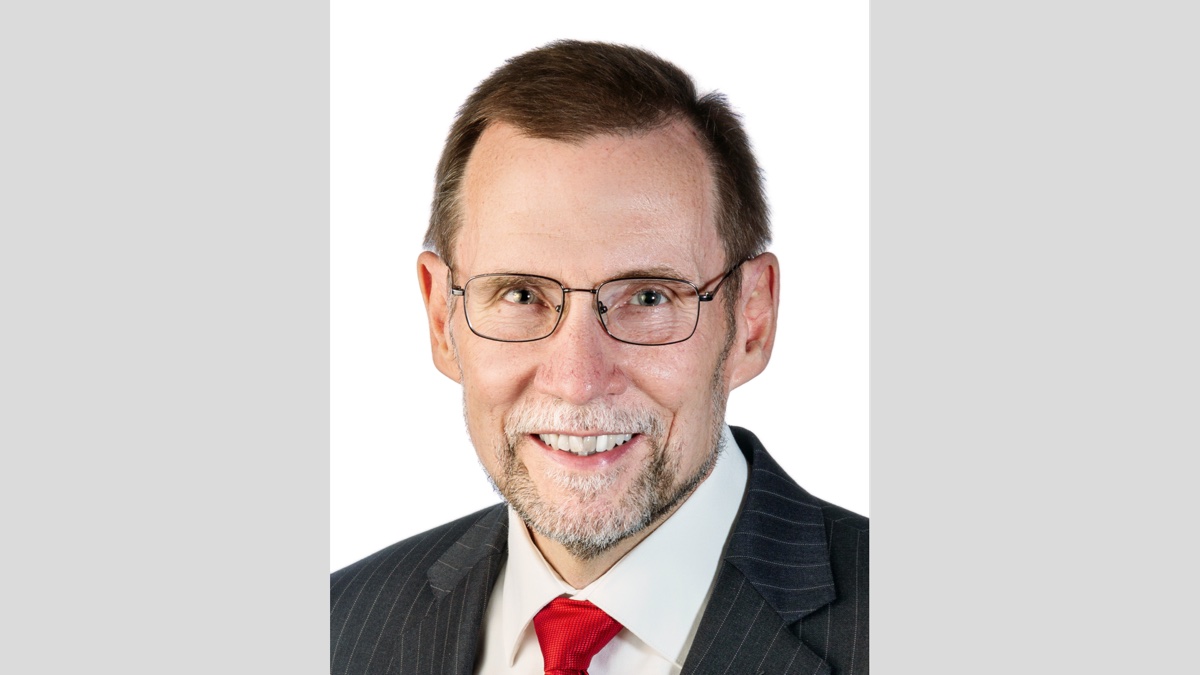



By Kyle Pope
Synopsis: Disciples of Christ not only live by faith and seek to be faithful. Our word should be our bond. In contrast with men, who often lie, let us strive to be like God, whose word is entirely reliable: “God is not a man, that He should lie, nor a son of man, that He should repent; Has He said, and will He not do it? Or has He spoken, and will He not make it good?” (Num. 23:19).
In Matthew 5:33-37, Jesus offers the fourth of a series of antitheses by which He contrasts His own teaching with Mosaic Law and rabbinical tradition. This contrast addresses the issue of swearing. This is not swearing in the sense of foul language, but making oaths. Jesus summarizes Old Testament laws on the subject, then declares, “But I say to you, do not swear at all” (Matt. 5:34a, NKJV). What does Jesus prohibit with these words and how must His commands be applied today?
The Law of Moses permitted oaths made to the Lord. Leviticus 19:12 taught, “You shall not swear by My name falsely, nor shall you profane the name of your God: I am the Lord.” This is probably what Jesus summarizes in Matthew 5:33, when He said, “You have heard that it was said to those of old, ’You shall not swear falsely.” The Law even declared, “If a man makes a vow to the Lord, or swears an oath to bind himself by some agreement, he shall not break his word; he shall do according to all that proceeds out of his mouth” (Num. 30:2). God expected the Israelites to do what they said they would do, but as J.W. McGarvey points out, “The only oath authorized by the law of Moses was one taken in the name of God (Deut. 6:13),” other oaths made by places and things, “were all unauthorized by the law” (Commentary on Matthew, 57). Deuteronomy 6:13 commanded, “You shall fear the Lord your God and serve Him, and shall take oaths in His name.”
In the three contrasts Jesus offered before these verses, He showed how the New Covenant standard raises the bar of conduct above rabbinical tradition and even the Law of Moses. Schneider writes, “Jesus issues a new commandment binding on His disciples. They are to be so truthful that no oaths are needed to back their statements” (178). Early Christian writers understood Jesus’s words to prohibit all oaths. Justin Martyr quoted portions of Matthew 5:34 and 37 in explanation of why Christians “do not swear at all, but always speak truthfully,” explaining that Jesus taught, “Swear not at all, but let your yes be yes, and your no no, for whatever is more than this is from the evil one” (First Apology 16.5, Pope). If this was understood in its strictest sense, it would prohibit any contract or assertion in which God acts as witness. Yet, Jesus has just strengthened the binding nature of the marriage covenant in the previous verses (5:31-32)—a covenant to which God acts as witness (Mal. 2:14). James may help us clarify this in his use of similar wording, writing, “do not swear, either by heaven or by earth or with any other oath” (Jas. 5:12a). W.T. Hamilton argues, “for ‘other’ He used the word allos which means a ‘numerical distinction of objects of similar character.’ Had He intended to make a blanket condemnation of every kind of oath, He would have used heterous and thus indicated those of a different kind” (96).
The second-century writer Clement of Alexandria offers one of the most thorough discussions concerning how swearing was viewed by early Christians. He records that Christians always preferred to say simply “yes” or “no,” but he did not see it as swearing to say “I speak truly.” Although Clement speaks of Christians making no oaths, he did not understand this as an absolute prohibition of any oath, writing that the Christian is one “rarely coming to the point of swearing,” but generally, even when “being asked for an oath, does not swear.” Instead, he teaches that one’s life should be shown to be “a firm and clear oath” as the Christian “lives and governs himself and shows, both in life and in word, the faithfulness of his profession—unchangeable and steady” (Stromata 7.8, Pope).
In our text, Jesus qualifies (at least in part) the type of oaths He forbids—those “by heaven” (5:34b)—“by the earth”—“by Jerusalem” (5:35), and in the next verse by one’s head (5:36). He explores this issue further later in this same gospel (23:16-22). To swear by places or things was a pagan practice that the Jews had adopted. Theophilus claimed that Socrates swore oaths “by the dog, and the goose, and the plane-tree” (Theophilus to Autolycus 3.2). In the early persecution of the church, a Christian named Polycarp was given the opportunity to be spared execution if he would swear “by the fortune of Caesar”—which he refused (The Martyrdom of Polycarp 9.2). It was common among the Greeks and Romans to confirm an oath, swearing by the head (Apollonius Rhodius, Argonautica 3.151; Virgil, Aeneid 9.300). The Mishnah echoes Jesus’s words, recording that the Jews followed this same practice, swearing “by the life of your head” (Sanhedrin 24a). Nevertheless, an oath by one’s own head presumes that one has control over that which he cannot control. Humans have no power to control the natural color of the hairs of the head. To condition one’s word by something he cannot control is foolish and presumptuous. Jesus clearly forbids His disciples from making these types of oaths.
The Jews had developed elaborate standards by which oaths held varying degrees of force binding people to their word. The Mishnah taught that a man was exempt from liability if he broke an oath made “by heaven and earth” (Shebuoth 35a). The Talmud records debates among the Jewish rabbis over the binding force of vows made “by Jerusalem” as opposed to those made “by the altar” (Nedarim 10b-11a). Jesus cites these practices in our text. This is not the attitude a Christian should possess. Instead, if one of Christ’s disciples says something, it should be counted as trustworthy without anything additional to confirm it.
The word omnuō, translated “swear” is used elsewhere in the New Testament. Later in Matthew, Peter sins by swearing that he did not know Jesus (26:74; cf. Mark 14:71). Herod sinned, swearing impulsively to the daughter of Herodias (Mark 6:23), Matthew describes this as having “promised with an oath” (14:7). Omnuō is also used in reference to oaths that God has made with man (Luke 1:73; Acts 2:30; 7:17; Heb. 3:11; 3:18; 4:3; 6:13; 7:21) [Note #1]. In the vision on Patmos, an angel swears to John “by Him who lives forever and ever” (Rev. 10:6). Finally, the Hebrew writer refers to the practice of men swearing by one greater, with no comment on whether this is right or wrong (Heb. 6:16).
Many have argued that Jesus swore under oath later in this gospel when Caiaphas declared, “I adjure thee by the living God, that Thou tell us whether Thou be the Christ, the Son of God” (26:63, KJV). An adjuration was an appeal by one party calling another party to act or answer under oath. We see adjurations by demons (Mark 5:7), Jewish exorcists (Acts 19:13), and even by Paul, when he commanded the Thessalonians—“I adjure you by the Lord that this epistle be read unto all the brethren” (1 Thess. 5:27, ASV). Did Paul and Jesus violate the prohibition against oaths? First, we should note that an adjuration does not automatically bind a second party under oath. Brant notes, “Jesus’s rejoinder to the adjuration is enigmatic but clearly causes the adjuration to misfire. Many exegetes note that Jesus’s response to the adjuration is an indirect affirmative, but He does not actually take an oath” (15). Numbers 5:19-22 taught that one put under oath accepted this adjuration with the words “Amen, amen”—which Jesus did not do. This method of accepting adjuration is further attested in the Mishnah (Shebuoth 29b). Beyond this, we must ask if Jesus is defining an oath or swearing in the same way that it was defined under the Law of Moses or by the Tradition of the Elders? If so, Paul would be calling the Thessalonians to violate Jesus’s command. If so, Paul and others later violated Jesus’s command by making vows (cf. Acts 18:18; 21:23). On the other hand, if Jesus here changes the definition of an oath or swearing to no longer include adjurations, agreements, or affirmations that call God to act as witness, there is no violation. In Matthew 5:32-33, Jesus changed the definition of adultery—would it be any wonder if He changed definitions once again? If so, Jesus broadens the responsibility of His followers to be honest in all things, recognizing our accountability before God as the sole confirmation of our word [Note #2].
After forbidding oaths by places and things, Jesus adds, “But let your ‘Yes’ be ‘Yes,’ and your ‘No,’ ‘No.’ For whatever is more than these is from the evil one” (Matt. 5:37). Jesus here stresses that the word of a Christian should be such that a “yes” or a “no” carries binding force. I appreciate Schneider’s point: “In the order of life ruled by the kingdom of God, there is no further place for the oath. It makes sense only when there is reason to question the veracity of men” (178). The Mosaic command regarding oaths was never intended to give greater weight to certain types of oaths. Instead, the Law stressed the importance that one “do according to all that proceeds out of his mouth” (Num, 30:2). Instead of oaths, Jesus commands the simple affirmative “Yes” or negative “No.” The Greek word perissos, translated “more than” here, means “exceeding some number or measure or rank or need, over and above, more than is necessary” (Thayer). Any testimony, agreement, or contract (even if God acts as witness) must not exceed the basic sense of an affirmation or a negation. Otherwise, it is from Satan in that it allows one to think that there is room for dishonesty. James 5:12 puts it, “lest you fall into judgment.” To imagine that our word must be kept only if a certain type of oath accompanies it is an evil mindset that seeks to excuse dishonesty.
[Note #1] Carl Allen uses this to argue that Jesus is not restricting all oaths, arguing that it would be contradictory for God to forbid something of man that He allows of Himself and of angels (26). While I agree with most of Allen’s conclusions, this argument does not follow. We are not told what (if any) law governs angels, and there are many things God prohibits human beings from doing that do not restrict His own behavior (e.g. vengeance—Rom. 12:19; calling someone a fool—5:22; 23:17, 19; etc.).
[Note #2] I would add, as a matter of judgment, in our language to say, “I swear,” is understood to carry a more emphatic force than a simple affirmation. U.S. courts still allow a witness the option to affirm one’s testimony rather than to swear. In my judgment, this is a better option that allows the Christian’s “Yes” to be “Yes” and “No,” “No.”
Allen, Carl. “Swear Not At All.” Guardian of Truth 40.3 (Feb. 1, 1996) 27-27.
Brant, Jo-Ann A. “Infelicitous Oaths in the Gospel of Matthew.” Journal for the Study of the New Testament 63 (1996) 3-20.
Hamilton, W. T. “Difficult Texts from the Gospel Accounts: Matt. 5:17; Matt. 5:33-37; Matt. 5:42.” Difficult Text of the New Testament Explained. The Fourth Annual Fort Worth Lectures, Ed. Windell Winkler. Hurst TX: Winkler Publications, 1981. 92-99.
McGarvey, J. W. New Testament Commentary: Vol. I. Matthew and Mark. Delight, AR: Gospel Light Publishing Company, 1875, Reprinted.
Schneider, Johannes. “Omnuō.” Theological Dictionary of the New Testament Vol. 5. Edited by Gerhard Kittel and Gerhard Friedrich. Grand Rapids, Michigan: Wm. B. Eerdmans Publishing Co., 1967. 176-185.
Kyle Pope preaches for the Vestavia church of Christ in Vestavia Hills, AL. He has written several books published by Truth Publications. Go here for more information. The church website is here. He can be reached here.
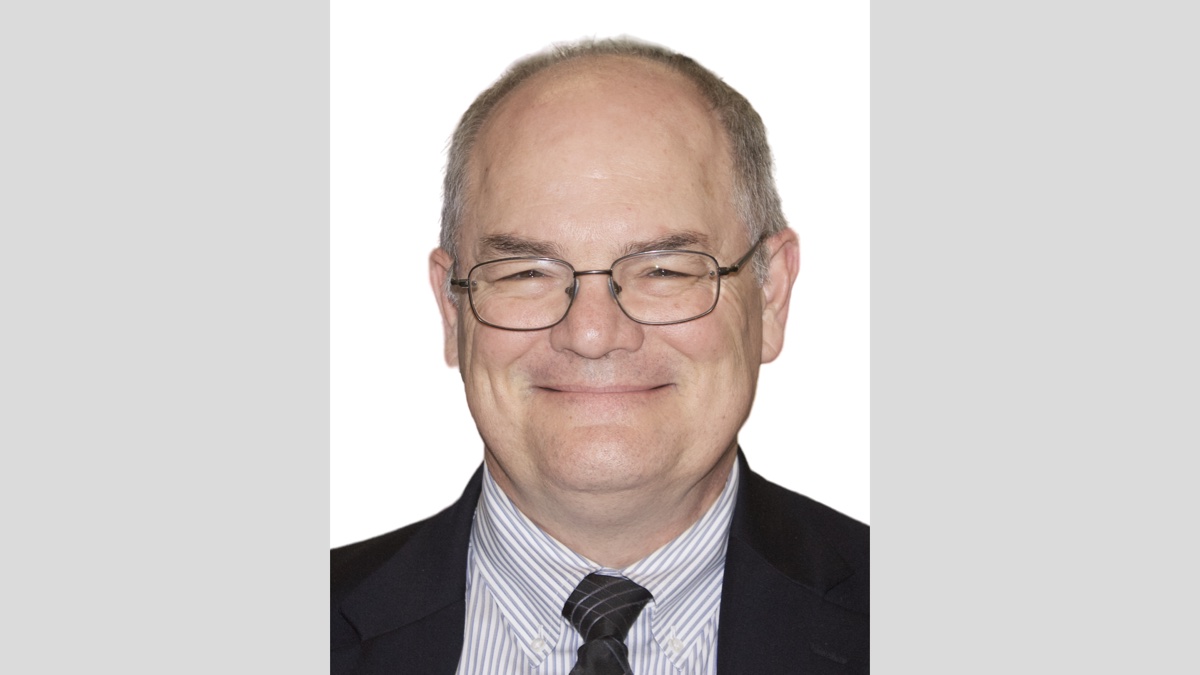




by Sherelyn Mayberry
Synopsis: Explaining His willingness to visit Zaccheus’s house, Jesus said, “For the Son of Man has come to seek and to save that which was lost” (Luke 19:10). May we manifest similar devotion in “Seeking the Lost!”
In the song “Seeking the Lost” (PHSS #785), we are exhorted to go forth, find the wandering sinners, and help bring them into the fold of the Good Shepherd. In Numbers 6:24-26, Moses invoked blessings on Israel through Aaron:
The Lord bless you and keep you; the Lord make His face shine on you, and be gracious to you; the Lord lift up His countenance on you, and give you peace.
This blessing was on the Israelites when they called on God’s name, humbled themselves, prayed, sought His face, and turned from their wicked ways. Then, the Lord would forgive their sin (2 Chron. 7:14). We, all sinners, need to come to Jesus, the Shepherd who leads us back to the fold through His death. Through hearing the word, believing it, confessing Christ as the Son of God, repenting of our sins, and being baptized for the remission of those sins, we are brought into the fold of our Redeemer.
The Father does not want anyone to be lost and perish (Matt. 18:14). If a man has 100 sheep, he will leave the ninety-nine to seek the one that is lost until it is found. He then rejoices over the sheep that was lost, then found. Each of us, sinners, are that lost sheep. When we are found, there is more joy in heaven over one sinner who repents than over ninety-nine just persons who need no repentance (Luke 15:4-7). Jeremiah speaks of Israel needing to return to Zion and join themselves to the Lord. They were lost because their shepherds led them astray to the mountains and they sinned. They needed to return to their resting place—their sheepfold (Jer. 50:5-6). Some are unwilling to search the Scriptures to find rest for eternity. Refusing to obey Jesus, they evidence their lack of love for God. By not seeking the glory offered from the one and only God, they manifest a spirit of unbelief (John 5:39-44). Jesus says, “Come to Me, all who are weary and heavy-laden, and I will give you rest. Take My yoke upon you and learn from Me, for I am gentle and humble in heart, and you will find rest for your souls” (Matt. 11:28-30).
Lead sin-sick souls to Jesus, because He is the path to salvation. The word of faith being preached to lost souls leads to the confession of Jesus as Lord and belief that He was raised from the dead, resulting in righteousness and salvation (Rom 10:8-10). Paul endured hardship to help those who cry to the Lord for mercy find an opportunity to obtain salvation in Christ Jesus and eternal glory (2 Tim. 2:8-10). Coming to God requires belief that He is, and that He rewards those who diligently seek Him (Heb. 11:6).
Leading the lost to salvation requires patience. Hearts are in different states of spirituality. Bearing this in mind, admonish the undisciplined, encourage the fainthearted, help the weak with patience for all (1 Thess. 5:14). Build yourself up in the holy faith through constantly delving into God’s word to keep yourself in the love of God. Then help others—have mercy on others with temporary doubts, snatch others from the fire, or have merciful fear for some, hating the sin in their lives and its influence on others (Jude 20-23).
God’s mercy is toward all those who fear Him (Ps. 103:17; Luke 1:50). Paul was strengthened by the mercy that he received. His apostolic ministry was then based on preaching Christ as Lord. Christ is the Light that leads men out of darkness (2 Cor. 4:1, 5-6). He is the Way. God, being rich in mercy, made us alive with Christ as we are raised from baptism to walk in newness of life. Being saved by grace through faith, we are created to walk in good works (Eph. 2:4-10; Rom. 6:3-4). “In the way of righteousness is life, and in its pathway there is no death” (Prov. 12:28).
We, like many before, can go on missions of mercy. John the Baptist pointed the way to Jesus, so all flesh could see His salvation (Luke 3:4-6; Isa. 40:3). When Thomas said he did not know the way, Jesus replied, “I am the way, the truth, and the life; no one comes to the Father but through Me” (John 14:5-6). When Apollos fervently preached the baptism of John, Priscilla and Aquila took him aside and explained to him the way of God more accurately. Apollos then preached Jesus the Messiah and pointed the lost to Him (Acts 18:24-26).
Since we all sin and fall short of the glory of God, we and others need to find our way to Jesus for mercy (Rom. 3:23). Laying aside sin, we can run the spiritual race with endurance, fixing our eyes on Jesus. Considering Him and how He endured the cross, let us press toward the mark and not grow weary and lose heart (Heb. 12:1-3). As we seek the lost, we can cheer the fainting and raise the fallen by showing them the straight path to Jesus, so they can be healed (Heb. 12:12). Pursuing missions of mercy, may we help sinners recognize that salvation is far from the wicked, because they do not seek God’s statutes. Rather, God’s great mercy is for those revived by His ordinances (Ps. 119:155-156).
The prophet Ezekial speaks of a time when the Lord would restore Israel after their captivity. He would search for His sheep and seek them out. Caring for His sheep and feeding them, He would bring them to rest. Seeking the lost, He would bring back the scattered, bind up the broken and strengthen the sick. This prophecy also has Messianic fulfillment in Christ. Having gone astray, we were redeemed with the precious blood of an unblemished lamb, the blood of Christ (1 Pet. 1:18-19). Jesus laid down His life for the sheep. He feeds us and is our Good Shepherd, bringing us back to the fold (Ezek. 34:11-16, 23-24).
The Lord is my shepherd; I shall not want. He makes me to lie down in green pastures; He leads me beside the still waters. He restores my soul; He leads me in the paths of righteousness for His name’s sake (Ps. 23:1-3).
The Jews first heard the Shepherd and some followed. Then, the other sheep, the Gentiles, heard His voice and became part of the one flock, following the one Shepherd (John 10:14-16). All sinners, lost and undone, need to follow their Redeemer into the fold.
Dear reader, incline your ear and come to the Lord. Hear and heed the everlasting covenant, so that you may live. Seek the Lord, while He may be found (Isa. 55:3, 6). After the joy of salvation has been restored to you, then teach other transgressors God’s ways. Convert sinners to the Lord (Ps. 51:12-13). Proclaim His good tidings from day to day (Ps. 96:2).
All we, like sheep, have gone astray; we have turned, every one, to his own way; and the Lord has laid on Him the iniquity of us all (Isa. 53:6).
Sherelyn is the wife of Mark Mayberry, who labors with the Adoue Street congregation in Alvin, TX, as an evangelist and elder. She labors as a homemaker and Bible class teacher. She and Mark have two sons- and daughters-in-law, and two grandchildren. She can be reached here.




By Bruce Reeves
Synopsis: For the carnal-minded, joy is connected with external circumstances (and is therefore fleeting and fragile); for Christians, joy it is rooted in the relationship we share with Jesus Christ (and is therefore firmly fixed).
Many today are consumed by the passionate pursuit of happiness. Self-help books, motivational speakers, and advice columnists claim to offer the key to fulfillment, but for many people, the door remains locked. Unable to control their circumstances, they find themselves instead controlled by their circumstances. When their job, relationship, or family fails to bring happiness, they dump it and look for a new one. Yet, on the merry-go-round of life, they never quite seem to reach the brass ring. Having fruitlessly pursued fulfillment through physical pleasure and self-gratification, they arrive at a jaded view of life as expressed in Ecclesiastes 1:2, which says, “Vanity of vanities! All is vanity.”
However, G. K. Chesterton well said, “Joy is the gigantic secret of the Christian.” It is Jesus Christ who provides the deepest spiritual joy available to humanity. We find this incomprehensible joy in the principles of Christ’s kingdom in the Sermon on the Mount (Matt. 5:3-12). While earthly happiness may be elusive, biblical joy is not.
Surprisingly, when the apostle Paul wrote this epistle to his beloved brethren, he was a prisoner in Rome. Since his conversion, he had faced fierce and unrelenting opposition, both from Gentiles and from his Jewish kinsmen. For all the strengths of the Philippian congregation, they still had to face the threat of possible disunity. Worse, they were being attacked by false teachers and faced the threat of persecution (3:2, 18-19; 4:2).
Nevertheless, the entire epistle radiates spiritual joy and fulfillment on the highest level. It is only in a meaningful and deep relationship with Christ that the Holy Spirit produces joy (Phil. 2:5; 4:4).
Paul calls on his beloved fellow-believers to “stand firm” in the Lord (Phil. 4:1; cf. 1:27; 2:2; 3:1). It is revealing that standing firm in the Lord, and rejoicing in the Lord, are inseparably connected by the apostle in the beginning verses of the chapter. The summary admonition of 4:1 to stand firm leads into Paul’s direct admonitions to specific characters, Euodia and Syntyche, in Philippians 4:2. It is critical that we stand harmoniously side-by-side in fighting against threats to the cause of Christ. Although these sisters were encouraged to resolve their conflict, Paul still describes them as having “shared my struggle in the cause of the gospel together with Clement” (Phil. 4:3). Although we know little about these individuals, the text affirms that they were engaged in the struggle for the cause of Christ as Paul’s fellow-workers, and that they had their “names written in the book of life” (Phil. 4:3). The phrase “book of life” occurs seven times in the New Testament, six of which are found in Revelation (3:5; 13:8; 17:8; 20:12, 15; 21:27). Our names can remain in the book of life, or they can be blotted out of the book of life. Therefore, Paul encourages his readers to stand firm in the gospel.
The only unwavering and unchanging source of joy is God. Thus, Paul commands believers to “rejoice in the Lord” (Phil. 4:4). Our view of God shapes, transforms, and renews our joy every day of our lives. Spiritual stability and joy are directly related to what we think about God.
In his work on The Attributes of God: The Knowledge of the Most Holy, A. W. Tozer wrote:
What comes into our mind when we think about God is the most important thing to us…the history of mankind will probably show that no people have ever risen above its religion and man’s history will positively demonstrate that no religion has ever been greater than its idea of God. Worship is pure or base as the worshipper entertains high or low thoughts of God…Were we able to extract from any man a complete answer to the question, “What comes into your mind when you think about God?” we might predict with certainty the spiritual future of that man" (Tozer, 9).
The knowledge of God not only includes an understanding of truths about the Lord, but it is a knowledge that comes from walking in His fellowship and is only experienced in a genuine relationship with Christ (Phil. 3:8-11; 2 Pet. 1:2-4). If we have a distorted view of God, then we will have a distorted view of ourselves. To rejoice “in the Lord” emphasizes the realm in which we experience joy that is not based on circumstances, but on our trust and faith in Jesus. Therefore, Paul would rejoice in the proclamation of Christ even on the part of those who afflicted Him, and he could joy in the God of his salvation, even while he was suffering for the sake of Christ and experiencing conflict for the gospel (Phil. 1:12-18, 29-30). Hear the words of the battle-tested and aged apostle: “Rejoice in the Lord always; again, I will say, rejoice!” (Phil. 4:4).
The joyful heart shows a gracious spirit to all men (Phil. 4:5). Those who are bitter within express bitterness without (Heb. 12:15). The term “gracious” (epiekes) is rendered with various English terms: “sweet reasonableness,” “generosity,” “goodwill,” “charity toward the faults of others,” “bigheartedness,” “moderation,” “forbearance,” “gentleness,” or “graciousness.” Perhaps the most accurate of these terms is the word “graciousness.” It is the graciousness of humility that leads to patient endurance, even in the face of mistreatment. Those whose focus is not on themselves cannot be knocked off balance by injustice or persecutions because they are firmly grounded and settled in the faith (Col. 1:23).
Where do we learn this humble graciousness? It is in the great paradox of Christianity which is ultimately summed up in our Savior’s incarnation that we see God’s love in all its purity and beauty (Phil. 2:5-8). When we lose ourselves in service, we find the greatest spiritual joy. The attitude of our Lord is seen in a selflessness that conquers sin and overcomes any thread of selfish ambition or conceit (2 Cor. 8:9; Heb. 12:2). Our gracious Redeemer did not selfishly cling to heavenly advantages, but as the Son of God, He assumed the form of a servant and humbled Himself even to the point of death (Phil. 2:6-8).
Distrustful anxiety and worry are enemies of the joy of Christ. Paul indicates that the Lord’s “nearness” and presence serves as the solution to the adversity that bursts into the lives of disciples (Phil. 4:5-6, cf. Ps. 55:16-17, 22; Ps. 139:1-18; Rom. 8:35-39). Whether we are in the prison of tribulation, the wilderness of temptation, or facing the hostility of oppressors, we are living in the presence of God and the blessing of His promises (Matt. 6:25-34; Heb. 6:12-18). What if we were to replace our worry time with prayer, study, and meditation (Ps. 1:1-6)? While we cannot control every situation (whether natural events, economic devastation, physical sickness, or the actions of others), we can control our attitude and conduct and leave those things beyond our reach to God’s wisdom and providence.
After describing the nearness of the Lord, Paul encourages his brethren to “be anxious for nothing, but in everything by prayer and supplication with thanksgiving, let your requests be made known to God. And the peace of God, which surpasses all comprehension, will guard your hearts and your minds in Christ Jesus” (Phil. 4:6-7).
The antidote for anxiety is trust in and dependence on God through prayer characterized by “thanksgiving.” While the term prayer can be used generically or specifically, in this context, the probability is that all three phrases (“making requests known to God,” “supplication,” and “prayer” refer to the same thing—expressing our needs to God. The term “everything” shows that in all circumstances, we should offer thanksgiving and supplication to our Father. To “make known to God” does not mean we are informing the Lord of anything (Matt. 6:8). It simply means that we bring our needs and thanksgiving into the presence of the Lord (1 Pet. 5:7).
As a result, we enjoy peace from God and in God (Phil. 4:7). The “peace of God” comes to those who have “peace with God” by grace through faith and brings about peace within Christ’s body (Eph. 2:12-22). Peace enables one to have genuine joy (Rom. 14:17; 15:13). This peace is the deep tranquility of a soul resting entirely on God. It surpasses all human comprehension (4:7; cf. Eph. 3:19). How do we comprehend something that is incomprehensible? While embracing the truth that God’s love is vast, we recognize that it is only in sharing a relationship with the Lord that we can experience true peace (Rom. 5:1). The peace of God is beyond anything that the human mind could ever imagine! We comprehend that it is incomprehensible! In contrast to our thoughts going into overdrive and producing anxiety, the peace of God will “guard our hearts and minds through Jesus Christ” (4:7b). The term “guard” is a military term that speaks of God protecting our hearts and minds by His power (1 Pet. 1:5). This is why joy in Christ is not circumstantially defined but Christ-based!
Joy is produced by godly thinking. Paul writes, “Finally, brethren, whatever is true, whatever is honorable, whatever is right, whatever is pure, whatever is lovely, whatever is of good repute, if there is any excellence and if anything is worthy of praise, dwell on these things. The thing you have learned and received and heard and seen in me, practice these things, and the God of peace will be with you” (Phil. 4:8-9).
The battle for our soul is waged in our mind. The wise man said, “Watch over your heart with all diligence, for from it flow the springs of life” (Prov. 4:23). Jesus identifies the source of all kinds of sins when He says, “From within, out of the heart proceed the evil thoughts, fornications, thefts, murders, adulteries, deeds of coveting and wickedness, as well as deceit, sensuality, envy, slander, pride, and foolishness. All these evil things proceed from within and defile the man” (Mark 7:20-23). Likewise, Paul defines the nature of our spiritual conflict when he writes, “For though we walk in the flesh, we do not war according to the flesh, for the weapons of our warfare are not of the flesh, but divinely powerful for the destruction of fortresses. We are destroying speculations and every lofty thing raised up against the knowledge of God, and we are taking every thought captive to the obedience of Christ” (2 Cor. 10:3-5).
Yet, Paul declares “but in all these things we overwhelmingly conquer through Him that loved us” (Rom. 8:37). The word “think” means to "consider, ponder, or to let one’s mind dwell on certain virtues. Our thinking is a theme that runs throughout the book of Philippians. We read of having a focused mind, a submissive mind, a spiritual mind, and now a joyful mind.
Verse eight delineates the focus of the godly mind:
True—includes a Christian’s words, conduct and character is to value truth and faithfulness
Honest—refers to that which is holy and worthy
Just—references that which is right in the sight of God and before our fellowman
Pure—means that which is unstained and undefiled
Lovely—describes what is pleasing, that is those qualities that are inherently right
Good Report—suggests that which rings true to the highest standards
Virtue—signifies moral excellence
Praise—identifies commendation corresponding to the moral value of virtue.
The characteristics enumerated in Philippians 4:8 not only refer to thoughts but also to the demonstration of such thoughts in action, as is evidenced in 4:9.
Remember, godly thinking cannot be divorced from behavior; a disciplined mind leads to a disciplined life. Those things we have learned, received, heard, and seen must be practiced in our lives continuously. We speak of a lawyer or doctor’s “practice” not merely because of what he claims to be but because of what he does! Jesus said,
If you keep my commandments, you shall abide in my love; even as I have kept my Father’s commandments and abide in His love. These things have I spoken unto you that my joy might remain in you, and that your joy might be full (John 15:11-12).
Living in the joy of the Lord calls us to stand firm in the faith, devote our hearts to dwelling in Christ, and focus our minds on godly virtues. By so doing, we are thinking, living, and loving like Jesus.
Tozer, A. W. The Knowledge of the Most Holy. New York: Harper & Row, 1975.
Bruce Reeves has labored with the Highway 65 church of Christ in Conway, AR, since 2000. He and his wife, Rachel, have one child. The church website is here. He can be reached here.




By Shane Carrington
Synopsis: When it occurred, “the fall” changed our circumstances, but it did not change our nature.
This series is entitled, “Firm Faith in A Fallen World,” in which we have shown how sections in the book of Hebrews strengthen our faith. We are addressing important truths about Jesus that give us help and hope as we face the brokenness that is all around us.
The question arises, “What do you mean by ‘fallen world’?” Many Bible students describe the cascading consequences that occurred when sin entered the world as “the fall.” Adam and Eve sinned, and fell from their right relationship with God (Rom. 5:12-14). As a result of their sin, we experience many repercussions both physically (earthly hardships like illness, death, etc.) and spiritually (because of the presence of temptation that is produced either by our physical circumstances or through the influence of sinful people in our lives).
In this series, we are addressing these two related concepts discussed in Scripture, especially emphasizing the trials and temptations we face while living in this world. Let’s consider the corruption that sin brings into this world, both physically and spiritually.
Since sin entered the world, there are physical consequences that did not exist before sin’s introduction into the garden of Eden. On that day, God pronounced judgments that would affect the physical world. Consequently, this world has fallen and is no longer in the pristine form in which God originally created it.
These curses to be experienced by men and women are described in Gen. 3:16-19.
To the woman He said, “I will greatly multiply your pain in childbirth, in pain you will bring forth children; yet your desire will be for your husband, and he will rule over you” (Gen. 3:16).
Then to Adam He said, “Because you have listened to the voice of your wife, and have eaten from the tree about which I commanded you, saying, ‘You shall not eat from it’; Cursed is the ground because of you; in toil you will eat of it all the days of your life. Both thorns and thistles it shall grow for you; and you will eat the plants of the field; by the sweat of your face you will eat bread, till you return to the ground, because from it you were taken. . .” (Gen. 3:17-19).
Among the many consequences of their sin were the greater difficulties involved in bearing children and increased struggles in providing for ourselves and our families. The most severe of these is physical death: “You are dust, and to dust you shall return” (Gen. 3:19).
This is evident when Paul described Adam’s sin as introducing physical death into humanity: “For since by a man came death. . . for as in Adam, all die. . .” (1 Cor. 15:21-22).
Physical death is a reality today because of what the first human pair did in the garden of Eden.
Because we are humans living in a broken world, we continue experiencing these consequences today. While we can take precautions that sometimes prolong life, we will suffer ailments and tragedies, and will ultimately die. With physical death looming over us, we need firm faith in order to navigate this difficult world! The condition of the world has “fallen” (or changed). We no longer have the security Adam and Eve that originally enjoyed in the garden. However, through Christ we can overcome by faith, despite facing various earthly hardships.
Prior to the resurrection, we have no way of escaping the physical repercussions of the first sin, but we must combat the spiritual consequences brought into the world through their transgression.
Scripture describes the first sin in this fashion: “The woman being deceived, fell into transgression” (1 Tim. 2:14). Eve’s fall affected Adam. She “gave also to her husband with her, and he ate” (Gen. 3:6). Once sin had been introduced into the world, it spread like wildfire:
Genesis 4 records the first murder.
Chapters 6-9 describe the increasing wickedness of humanity, culminating in the destruction of the antediluvian world (Gen. 6:1-6).
Then Genesis 11 describes humanity’s arrogance—evidenced in their building of the tower of Babel, and God subsequently dispersing them across the globe.
This cascade of events continues to play out in our world today. Because so many people have rebelled against God, we are surrounded by various forms of wickedness (Rom. 1:18-32). This is discouraging to everyone striving to honor the Lord! In fact, many of the temptations we face result from the alluring ways in which some people act. When we are treated with disregard by others, that can tempt us toward discouragement, frustration, anger, etc.
A positive change in the narrative begins in earnest with our introduction to Abraham and God’s plan to restore lost humans into fellowship with Himself (Gen. 11:27-32). To do this, God made promises to Abraham about His descendants becoming a great nation, inheriting the land of promise, and bringing ultimate hope to the world in the form of Jesus (Gen. 12:1-3; 22:15-18; cf. Gal. 3:16; 4:4). Within the framework of these promises, God brought forth Jesus, the seed of woman, to defeat Satan (Gen. 3:15) and the seed of Abraham, to bless humanity (Gen. 12:3; 22:18).
Our circumstances place many temptations in our way, testing our resolve to live for Jesus, making the path of least resistance look more alluring. The wide gate opens to “the way” that “is broad that leads to destruction” (Matt. 7:13). Those who live in sin develop a “nature” of being “children of wrath” (Eph. 2:3). This was an apt description of pagan, Gentile cultures. Yet, since no one is born that way (Ezek. 18:20), we must diligently strive to make wise choices in order to develop a nature more like the Father and the Son (Eph. 5:1-17). When Paul described the repercussions Adam’s sin has on us today, he wrote, “and so death spread to all men, because all sinned” (Rom. 5:12). Adam may have introduced the first transgression into the human family, but the ultimate repercussions are only ours if we walk in his footsteps. Sin holds powerful influence in this world to such a degree that the devil is described as, “the god of this world” who has “blinded the minds of the unbelieving” (2 Cor. 4:4). May we look to the light of Christ (John 8:12)!
When we view Biblical concepts through distorted lenses, faulty theology is the result. This is central to all religious errors. Both five-point Calvinists and more moderate Calvinists view human nature through faulty lenses.
For example, when people connect “the fall” to human depravity or our alleged inability to exercise free will and make godly choices, they miss a lot of important Bible teaching.
Humans are born innocent, not depraved (Ezek. 18:1-20; Matt. 18:1-6).
Every passage about repentance declares that we have a choice between good and evil, and that God holds us personally responsible for making right choices (Josh. 24:15; Luke 13:1-5). Therefore, let us heed the charge: “Choose for yourselves today whom you will serve”!
While we live in a world that inundates us with temptation, God holds us responsible and accountable for the choices that we make (1 John 2:15-17). “Do not love the world…”!
Jesus died and arose to give us the opportunity for redemption. We are responsible for making an informed choice to be redeemed: “With many other words, he solemnly testified and kept on exhorting them, saying, ‘Be saved from this perverse generation!’” (Acts 2:36-40)
Contextual, Biblical teaching enlightens us, showing us the difference between truth and error, sin and righteousness, heaven and hell. Through Scripture, God corrects us, persuades us, and saves us, but we must hear and heed Him in order to receive these blessings (John 6:59-69; 8:30-32; 20:30-31).
A lot has changed in the world because of the first sin. When it occurred, “the fall” changed our circumstances, but it did not change our nature. God created us in His image, which we still bear. Living in sin distorts that image, but through Jesus, we can receive forgiveness and be transformed into His image.
. . .you have heard Him and have been taught in Him, just as truth is in Jesus, that, in reference to your former manner of life, you lay aside the old self, which is being corrupted in accordance with the lusts of deceit, and that you be renewed in the spirit of your mind, and put on the new self, which in the likeness of God has been created in righteousness and holiness of the truth (Eph. 4:21-24).
May we follow Jesus through this difficult world, because God “. . .made us alive together with Christ (by grace you have been saved), and raised us up with Him. . .” (Eph. 2:5-6)!
Shane Carrington has labored with the Southside church of Christ in Sulphur Springs, TX, since 1999. He has two children. The church website is here. He can be reached here.





By Bobby L. Graham
Synopsis: In providing offices of revelation, oversight, instruction, Jesus Christ graciously “gave gifts to men”—enabling us to grow individually and collectively.
Please explain from Ephesians 4:11-16 how Christians and congregations grow to maturity?
When Christians grow individually, they do so in response to the same principles and causes that produce maturity in local congregations, and in the universal church. Because this passage is so important and so relevant to answering this question, I take the space to quote the entire passage.
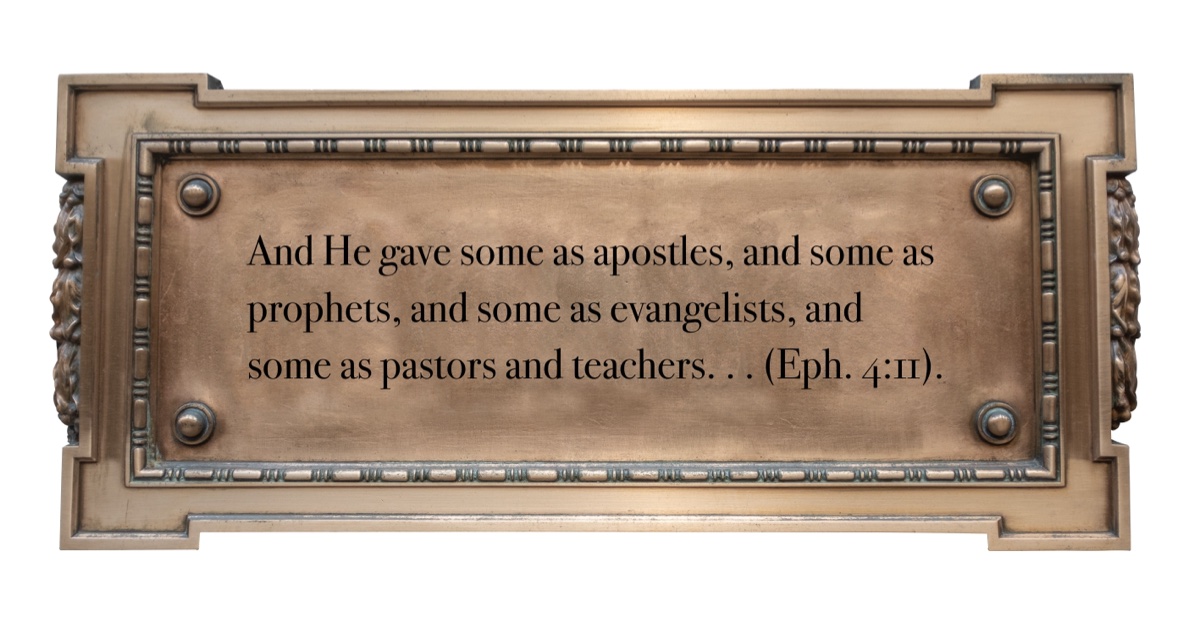
And He Himself gave some to be apostles, some prophets, some evangelists, and some pastors and teachers, for the equipping of the saints for the work of ministry, for the edifying of the body of Christ, till we all come to the unity of the faith and of the knowledge of the Son of God, to a perfect man, to the measure of the stature of the fullness of Christ; that we should no longer be children, tossed to and fro and carried about with every wind of doctrine, by the trickery of men, in the cunning craftiness of deceitful plotting, but, speaking the truth in love, may grow up in all things into Him who is the head—Christ—from whom the whole body, joined and knit together by what every joint supplies, according to the effective working by which every part does its share, causes growth of the body for the edifying of itself in love (Eph. 4:11-16, NKJV).
The verses quoted set forth (1) the divine provision for such growth, (2) the divine measurement of the growth, and (3) the divine model of maturity. Through it all, it becomes clear that growing toward maturity is an active process, never passive. No Christian will ever become mature by sitting on the sideline and watching others work. The noble desire stated by our questioner is here met with God’s solution for growth.
Christ’s Provisions for Growth appear in verses 11-13. We must trust all such provisions: (1) Apostles: Jesus’s primary successors in revealing truth, thus forever the teachers of the world (John 14-16), working in the universal church from its beginning; (2) Prophets: Spirit-guided men/women functioning in the realm of revelation wherever needed in the church, aided by the apostolic distribution of miraculous power (Acts 2:17); (3) Evangelists: bearers of the good news of the gospel, working to spread it abroad and to edify local churches (Acts 21:8; 2 Tim. 4:5); (4) Pastors: local elders functioning in shepherding the flock and overseeing the work of a local church (Acts 20:28; Phil. 1:1; 1 Pet. 5:2ff); (5) Teachers: Christians able to impart the knowledge of Jesus Christ to the lost, and to the saved (Acts 13:1; 2 Tim. 2:2).
Holy Spirit-guidance was inherent in the first two gifts, but not in the others three. The first two functioned in the church in general, while the other three, primarily in local churches. As all of these share the word in common (2 Tim. 3:16-17), it is their means of equipping saints to be joyful servants We must accept such equipping and prepare ourselves to be built up, realizing that edification is necessary for use to attain the unity demanded by the gospel and for the full knowledge of Christ.
Christ’s Measurement of Growth: Perfect Man, as Measured by Christ’s Full Stature is the focus of verses 14 and 15. God does not want us to be childish or unstable, as indicated by being tossed to and fro and blown about by every doctrinal wind, being vulnerable to men’s deceiving subtlety and sophistry. He wants us to be people of integrity, speaking the truth in love, thereby growing up in a balanced way (in all things), as molded and measured by Christ.
Christ’s Model for Spiritual Maturity comes to our attention in verse 16. First, our connection to the Head is mentioned, as the body is joined and knit together, picturing the unity introduced as the chapter begins and traced through verse 16. Yes, every member of Christ’s body shares in this maturing and subsequent growth, because what every joint supplies, and the work performed by each part, is essential in order for the growth leading to self-edification in love of Christ’s body to happen. It becomes clear that growth to maturity demands the active participation of all in the church. This passage requires practical participation by all, not mere theoretical thinking, wishing, or speaking. All must believe the gospel, all must work toward those ends set by the gospel, and all must love all others. Spiritual and numerical increase will follow.
Bobby L. Graham actively participates in fill-in preaching, Belize trips, teaching an hour each day at Athens Bible School, and in gospel meeting work. He and his wife, Karen, have three children. He can be reached here.

By Luke Chandler
Synopsis: Why were Moses and Joshua (and only they) told to remove their sandals? An Egyptian artifact may give a clue.
A famous biblical scene includes an unusual command from God for Moses to remove his sandals. Have we considered its uniqueness in the Bible? Archaeology may give us a clue to understand the reason for it.
The angel of the LORD appeared to [Moses] in a flame of fire out of the midst of a bush. He looked, and behold, the bush was burning, yet it was not consumed. And Moses said, “I will turn aside to see this great sight, why the bush is not burned.” When the LORD saw that he turned aside to see, God called to him out of the bush, “Moses! … Do not come near; take your sandals off your feet, for the place on which you are standing is holy ground.” And He said, “I am the God of your father, the God of Abraham, the God of Isaac, and the God of Jacob” (Exod. 3:2-6, ESV).
This command to for Moses to remove his sandals was not subsequently included in the Law, and exists almost nowhere else in Scripture. Why do we find it here with Moses?
The only similar example is found in a story with Joshua, after the Hebrews had crossed the Jordan river and were preparing to move against Jericho.
When Joshua was by Jericho, he lifted up his eyes and looked, and behold, a man was standing before him with his drawn sword in his hand. And Joshua went to him and said to him, “Are you for us, or for our adversaries?” And he said, “No; but I am the commander of the army of the LORD” … And the commander of the LORD’s army said to Joshua, “Take off your sandals from your feet, for the place where you are standing is holy.” And Joshua did so (Josh. 5:13-15).
Moses and Joshua are the only biblical people instructed to remove their footwear in this way. Why was this command not given to anyone else in the Bible? An ancient Egyptian artifact called the Narmer Palette may provide some insight.
The Narmer Palette depicts a scene from Early Kingdom Egypt with Pharaoh Narmer and the god Horus, represented by a Falcon. Narmer is shown holding a mace, ready to smite a prostrated enemy whom he has by the hair. Above the enemy, the falcon god, Horus, presents Narmer with a man, perhaps a rival king from elsewhere in Egypt, bundled in lotus flowers and with a hook through his mouth. This inscribed scene presents Narmer’s victory as a divine blessing from Horus.
Looking closely, we observe that Pharaoh Narmer is barefoot. This may seem unimportant until we notice a diminutive servant on the left, holding the king’s sandals. The sandals are portrayed in high detail, intended to draw the viewer’s attention. Every representation and inclusion in art is a conscious choice, so why did the artist want to depict a servant holding Pharaoh’s sandals? That message must be relevant to the scene. While we do not have full details, the Egyptians seem to have believed that a person, even a Pharoah, should remove his footwear in the presence of a god.
Does the Narmer Palette help to answer why Moses and Joshua were told to remove their sandals? Both men grew up in Egypt and would have been familiar with its culture and customs. The command to remove their sandals may have helped them innately understood that they were in God’s presence.
Furthermore, when God first spoke to Moses, He had not yet designated any sacred space such as the Tabernacle (the “tent of meeting”) where people could anticipate interaction with His presence (Num. 1:1; 7:89; 12:1-9) Moses had no expectation of meeting God at a random wilderness shrub. The command to remove his sandals may have immediately confirmed in his mind who was speaking from the burning bush.
The Tabernacle’s sacred space was designated under Moses’ leadership, but Joshua was not at the “tent of meeting” in Gilgal for his own conversation sans sandals. The text places Joshua “by Jericho” and records his tense challenge for the sword-bearing angel to declare a side. Joshua clearly did not expect to hear from God in that place but the command to remove his sandals linked to Moses’ first encounter, confirmed God was present in that place by Jericho, and would have affirmed the Lord’s promise to deliver the city up to Israel.
Do we find it uncomfortable that God would hack pagan ideas as tools to interact with humanity? The Lord has consistently reached out to people on whatever level they already exist, guiding them toward the truth from whatever background they possessed. Jesus could talk comfortably with educated elites and also on the level of common people. Paul taught Jesus to the Athenians by using their own background in Greek literature. God used circumcision, already practiced in Egypt during Abraham’s time, as a mark of His covenant. People who knew the brutality of Roman crucifixion were taught to see it as a symbol of hope.
Perhaps the greatest lesson from the Narmer Palette and the stories of Moses and Joshua is understanding how the Lord’s grace can reach us at any level—regardless of our own backgrounds. We don’t need extensive Bible experience for the gospel to affect our hearts, and we shouldn’t limit our efforts to those with existing knowledge of the written word. As teachers seeking to imitate the Lord, we may find new avenues for carrying God’s message to more types of people in the world.
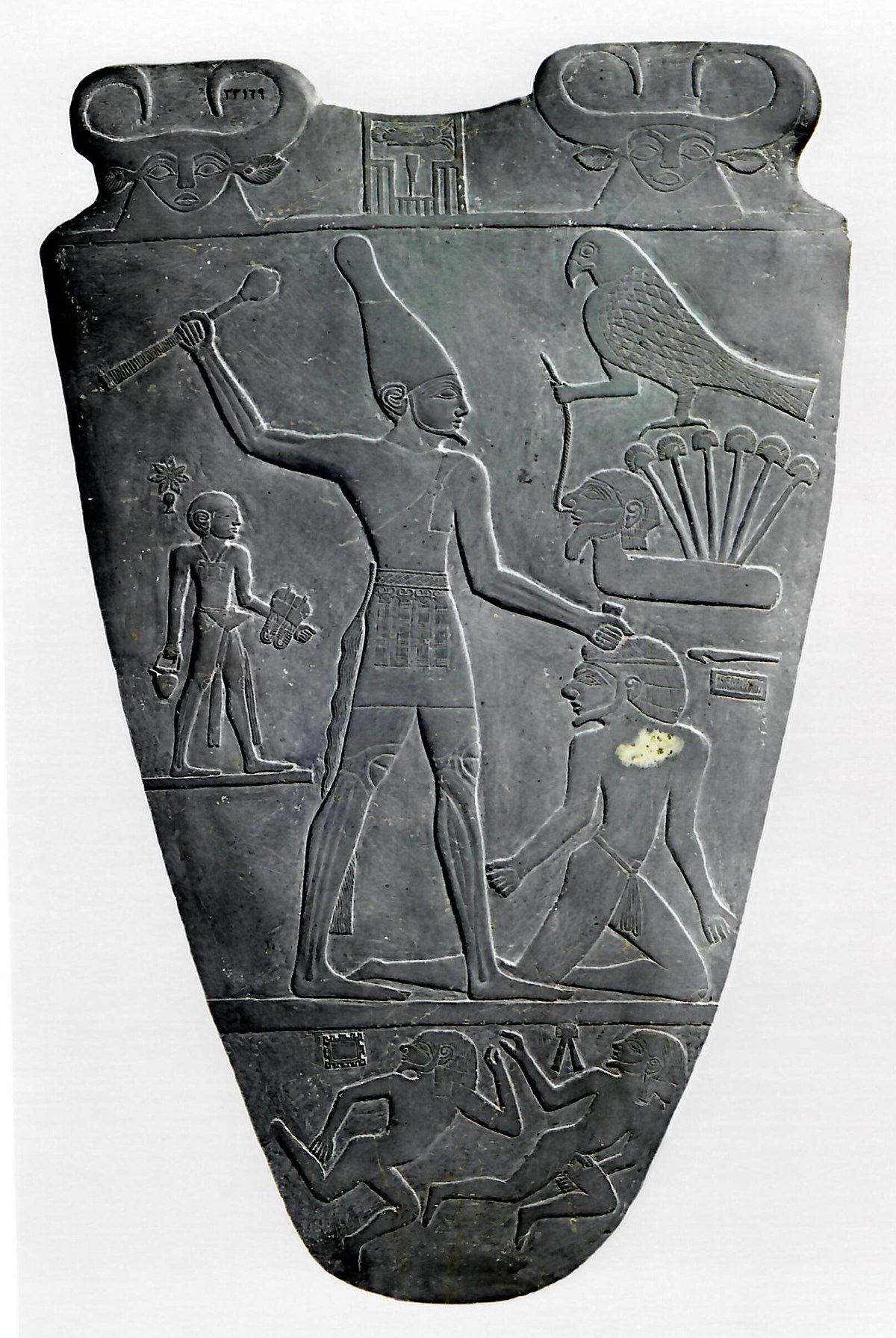
Caption 1: The Narmer Palette, also known as the Great Hierakonpolis Palette or the Palette of Narmer, is a significant Egyptian archaeological find, dating from about the 31st century BC, belonging, at least nominally, to the category of cosmetic palettes. It contains some of the earliest hieroglyphic inscriptions ever found. The tablet is thought by some to depict the unification of Upper and Lower Egypt under the king Narmer. Wikipedia
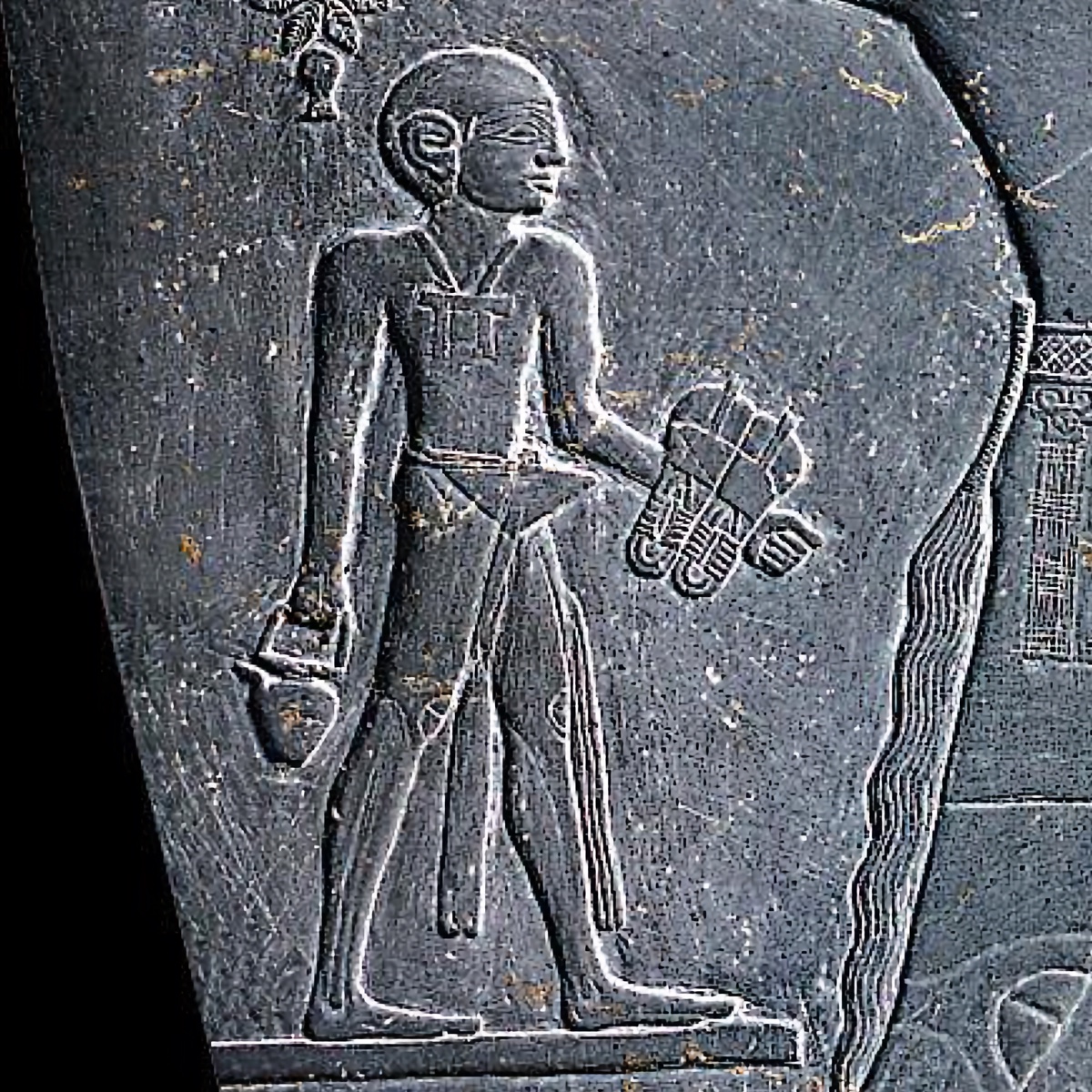
Caption 2: Closeup of Pharaoh’s servant holding the sandals.
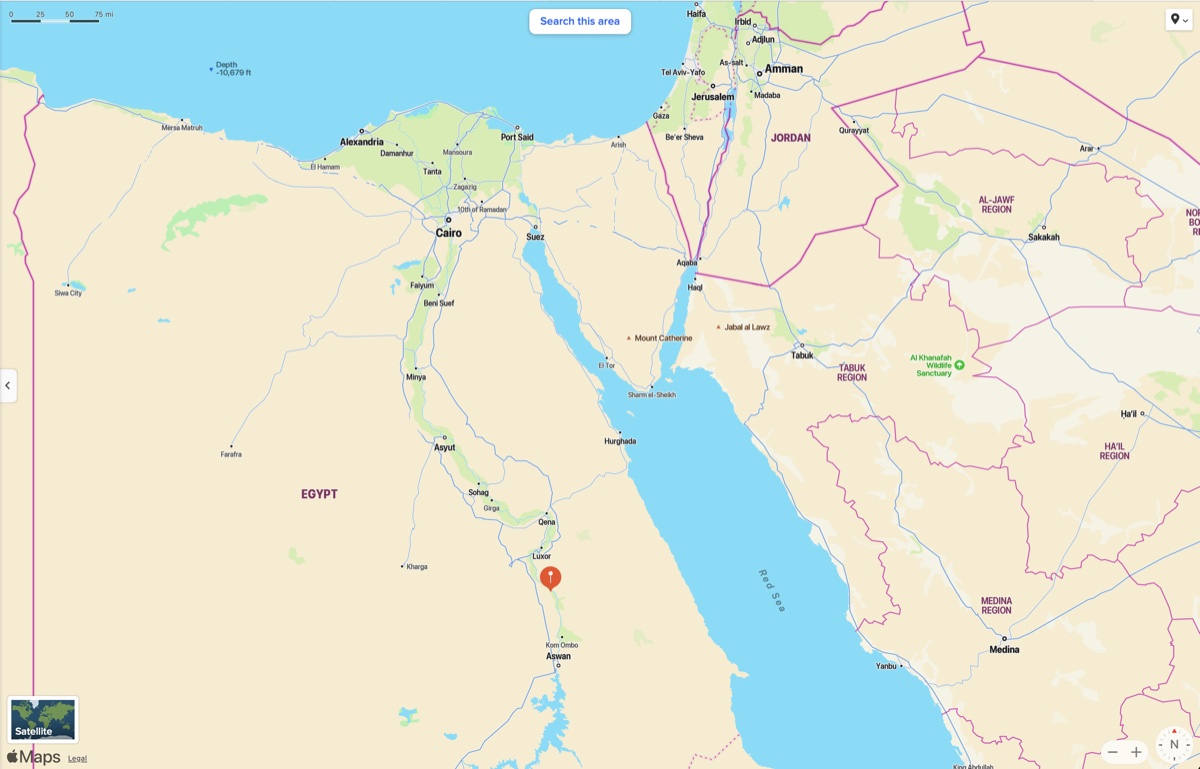
Caption 3: Nekhen, also known as Hierakonpolis was the religious and political capital of Upper Egypt at the end of prehistoric Egypt and probably also during the Early Dynastic Period. Wikipedia

Caption 4: “The angel of the LORD appeared to him in a blazing fire from the midst of a bush; and he looked, and behold, the bush was burning with fire, yet the bush was not consumed. So Moses said, ‘I must turn aside now and see this marvelous sight, why the bush is not burned up’” (Exod. 3:2-3).
Luke Chandler labors with the North Terrace church of Christ near Tampa, FL. He and his wife, Melanie, have five children. The church website is here. Luke holds an MA in Ancient History and has worked ten archaeological seasons in Israel. His Bible, Archaeology and Travel blog is here. Information about his Travel Tours is here. He can be reached here.


By Chris Reeves
Synopsis: So many people with whom you associate need in developing a better relationship with the Lord and you, faithful Christian, can be the very one to mentor them to a better life.
Over the past year, I have written several mentoring articles in Truth Magazine. I want to thank Mark Mayberry, editor of Truth Magazine, for graciously giving me the time and space to offer some advice and biblical teaching on various topics that have been on my mind. I feel blessed by the good Lord above who, through His providence, has given me some knowledge and wisdom in life that I can now pass on to others. It is my prayer that these articles will have helped.
There is a much-needed work in the Lord’s church and world today and that work is the work of mentoring. I know the value of good mentors myself. I was mentored by good Christian parents to live right and become a disciple of Jesus. I had Bible class teachers and older siblings growing up who mentored me in proper behavior.
Once I started preaching right out of high school, I had my father and older preaching brothers to mentor me in what to expect in preaching. When I was in college, I had experienced Bible teachers to mentor me in how to study the scriptures properly. When I got married, I had my father-in-law to mentor me, especially in the area of personal evangelism and office organization. Many times in life, I have reached out to older preachers for help with some important Bible matter or spiritual issue, and I continue to do that to this day. I am grateful to men like Ron Halbrook and Dan King for being my mentors, whether or not they realized they were mentoring me.
The Bible is full of mentors. Jethro mentored Moses concerning his challenge of leading the Israelites (Exod. 18). Moses mentored Joshua to be the next leader of Israel (Deut. 31; 34). Elijah mentored Elisha to become a prophet (1 Kings 19-2 Kings 2). Naomi mentored Ruth to become Boaz’s wife (Ruth 1-4). Mordecai mentored Esther to save her people (Esther 4).
Jesus mentored individuals like the woman at the well (John 4) and Peter (John 21), small groups like the twelve apostles (Mark 3), and large crowds as assembled to hear in His sermon on the mount (Matt. 5-7). Pricilla and Aquila mentored Apollos to be more accurate in his teaching (Acts 18). Paul mentored many brethren, especially young men like Timothy and Titus (2 Tim. 1:2; 3:10). Except for Job’s friends (Job 4-37), mentoring in the Bible was very helpful and rewarding for the one being mentored. Let’s now explore some important questions that will help you become a good mentor.
Christian mentoring is simply the act of helping someone else improve their life in some way to be more faithful in serving the Lord. You are mentoring to help someone become a Christian, or become a stronger, more faithful Christian. A mentor wants to share his wisdom with another person to make him better. A mentor helps provide others with problem-solving, support, character building, a sounding board, and a role model. A mentor becomes involved in the lives of others to offer trust, expectation, knowledge, and communication. A mentor is competent to help others, has a good character to help others, has compassion to help others, and is willing to connect with others.
A mentor “sharpens” the lives of others to make them more effective in life. The Proverb writer says: “Iron sharpens iron; so a man sharpens the countenance of his friend” (Prov. 27:17). A mentor tries to keep another individual on the right path to avoid the “snares of death.” The Proverb writer says: “The law of the wise is a fountain of life, that one may depart from the snares of death” (Prov. 13:14).
A mentor gives someone (often a younger, less-experienced person) help in the form of knowledge, advice, insight, wisdom, and counsel (Prov. 1:5; 9:9; 11:14; 13:20; 15:22; 27:9). Many people today need faithful Christians to reach out to them and help them live their lives in a better way. There are many people who live isolated lives and they just need a friend who can help them through their adversity (Prov. 17:17; 18:24). There are also people with heavy hearts who need mentoring (Prov. 25:20). They need someone to pick them up when they fall (Eccl. 4:10).
While some people do not want your help, there are many others who do. There are many people today, both Christians and non-Christians, who are humble and searching for help. They would gladly appreciate you mentoring them. Some will ask for your help. Others may not ask, but you can tell that they need help. Let me encourage you, especially older, faithful Christians, to mentor those around you. Yes, you can help someone grow (Matt. 13:32; 2 Cor. 10:15; Eph. 2:21; 4:15; 2 Thess. 1:3; 1 Pet. 2:2; 2 Pet. 3:18)!
It is good to mentor others because mentoring is encouraged in the Bible. God wants you to share your Bible knowledge and wisdom with others. He wants others to listen, learn, and grow. This principle, for example, is found all throughout the Proverbs. Mentoring is also a good way to practice your stewardship. God has given you so much, now you can turn around and give it to others.
Mentoring is a much-needed work in a world where many need help with the basics of life. More and more people do not know the Bible. More and more people do not have godly parents to help them. More and more people are raised in broken environments full of human wisdom that is taking them down the wrong path. Godly Christians who know their Bible, practice their Bible, and have experienced spiritual success in their own lives are in great demand today to mentor others.
Here are a few suggestions. First, be aware of what is going on in the lives of others around you. Keep your eyes and ears open to opportunities to help others. Make time for what is going on in their lives. Invest in, and be interested in, others (Phil. 2:4; 1 Thess. 2:8). Make and keep a schedule to meet regularly with the one you are mentoring. Listen compassionately, observe carefully, and then offer biblical, faith-based advice. Read the Bible with them and pray together. Give them the light of God’s truth (Ps. 119:130). Pray regularly for the one you are mentoring. Finally, you can invite the one you are mentoring to spend time together with you doing normal, daily activities besides your Bible study.
There are several categories of Christians who make good mentors. Parents, of course, need to be mentoring their children. This is a part of training up a child in the way that he should go (Prov. 1:8-9; 22:6). Other mentors include elders and preachers. These men set an example for the local church through their lives and their mentoring (Eph. 4:11-12; Heb. 13:7; 1 Pet. 5:3; 1 Thess. 2:7-12). In addition to instructing their students in God’s word, Bible class teachers can mentor others both in and out of the classroom. Barnabas the teacher (Acts 13:1), was Barnabas the mentor to so many first century disciples. Concerned Christians can mentor those brethren who fall into sin (Gal. 6:1), who are weak and need encouragement (1 Thess. 5:14; Heb. 10:24-25), or who are falling away (Heb. 3:13). Older brethren can pass on a knowledge of God and His word to younger generations through mentoring (Ps. 71:18; 145:4). Older preachers can train younger men to preach (2 Tim. 2:2). Older women in the church can teach and train the younger women. Through such mentoring efforts, they become “teachers of that which is good” (Titus 2:3-5).
So many people today need mentoring. There are people in every stage of life that need your help: teenagers facing societal pressures; college students facing difficult workloads and stressful schedules; singles who wonder if they will ever find a Christian mate for themselves; newlyweds facing the challenges of marriage; new parents facing the challenge of caring for a child; middle-aged couples dealing with the pressures of life or marriage “burnout.” You may also encounter people experiencing a job loss, a move across the country, or a death in the family; adults taking care of their elderly parents; and older adults themselves who are facing various health problems. There are plenty of opportunities all around you for mentoring.
You can mentor at any time and in any place. You can take the time to talk to anyone who needs help in whatever situation you find yourself through the day. You can mentor at home, in your neighborhood, in the workplace, in the local church, at the grocery store, etc. You can even mentor long-distance now through online platforms like Zoom or Google Meet. I am currently doing three Zoom Bible studies a week with gospel preachers in the US, in the Philippines, and in Ghana, Africa. During these zoom sessions, I not only spend time studying God’s word with my brethren, but I also purposely try to mentor those who attend the sessions.
In Psalm 32:8, David wrote these words to Israel: “I will instruct thee and teach thee in the way which thou shalt go: I will counsel thee with mine eye upon thee.” Whether the subject of this sentence is God (which is probable), or the psalmist (which is possible), the point is still the same: Someone who cares about others looks at them with an eye of wanting to counsel them in the right way to go in life. You can be that someone who cares. You can be that someone who has an eye for mentoring.
In Romans 15:14, Paul wrote these words to the saints at Rome: “I myself also am persuaded of you, my brethren, that ye yourselves are full of goodness, filled with all knowledge, able also to admonish one another.” When you read these words, think of the great opportunity that you have today to mentor others. There are many faithful brethren today who are filled with goodness and a knowledge of God’s word. These things can be used to admonish others. Now go out and mentor others. Help them have a better relationship with the Lord. You will find that you are blessed as well in the process.
Chris Reeves has preached for the Warfield Blvd. church of Christ in Clarksville, TN, since 2016. He and his wife, Cheri, have four children and two grandchildren. His Bible study website is here. The church website is here. He can be reached at here.




By Danny Linden
Synopsis: Israel’s experience at Mount Sinai and the church’s experience at Mount Zion are contrasted in Hebrews 12:18-29 to illustrate the differences in the two major covenants of the Bible.
The book of Hebrews draws a detailed contrast between the two major covenants of the Bible. The author makes the argument that God’s covenant with Israel through Moses has served its purpose and that the law of Christ is better in every way. One way the covenants are compared is found in Hebrews 12:18-29, where the respective approaches to the covenant mountains are outlined, with Mount Sinai representing the old covenant and Mount Zion representing the new covenant.
For you have not come to what may be touched, a blazing fire and darkness and gloom and a tempest and the sound of a trumpet and a voice whose words made the hearers beg that no further messages be spoken to them. For they could not endure the order that was given, “If even a beast touches the mountain, it shall be stoned.” Indeed, so terrifying was the sight that Moses said, “I tremble with fear” (Heb. 12:18-21).
The beginning of the exodus from Egypt was the working of God, with almost nothing required of the Israelites. God worked through Moses to conquer Pharaoh and the Egyptian gods through a series of ten plagues. The Israelites observe the first nine plagues and only during the tenth does God command them to show faith in His ability to deliver. They paint the blood of the Passover lamb on their doorposts to be spared by the angel of death that struck the firstborn throughout the land. They then have their opportunity to leave Egypt with plunder in their arms and an eye toward a glorious land that God has promised will be theirs.
Not long after they escape Pharaoh’s clutches, God brings them to Mount Sinai. There are some rules they need to know before they go any further. God has been their Benefactor and Deliverer up to this point, but He also intends to be their King and Lawgiver (Exod. 19:4-6). The people must be prepared for the LORD to descend on the mountain and tell them His expectations going forward.
Preparing to hear the covenant of the LORD was serious. God told them to consecrate themselves and wash their clothes in anticipation of His arrival on the third day (Exod. 19:10-11). A strict boundary was established—no one was permitted to touch even the edge of the mountain. Any person or animal that crosses the boundary should be put to death immediately (Exod. 19:12-13).
The presence of God finally envelops the mountain on the third day (Exod. 19:16-20). The Israelite assembly is invited to the base where they witness the mountain consumed with plumes of fire and smoke and shaking as if it were a volcano ready to erupt. The sound of a trumpet blast filled the air and grew louder and louder until a voice of thunder called Moses to come to the peak. God began to give Moses the covenant but then tells him to go back down and ensure that the people respect the established boundaries (Exod. 19:21-25).
Once the people witness the effect that the presence of the LORD has on the mountain, they are struck with fear (Exod. 20:18-21). There is no chance that anyone would cross the boundary! They don’t even want to hear the voice of God because they fear they will not survive if they do. It is enough for Moses to be their mediator so that they can remain at a safe distance from God. Hebrews 12:21 reveals that even Moses was afraid to go up when called. All of this shows that Mount Sinai was a place of power and dread. Approaching God was terrifying, and His covenant was dangerous, even though it was a blessing.
But you have come to Mount Zion and to the city of the living God, the heavenly Jerusalem, and to innumerable angels in festal gathering, and to the assembly of the firstborn who are enrolled in heaven, and to God, the judge of all, and to the spirits of the righteous made perfect, and to Jesus, the mediator of a new covenant, and to the sprinkled blood that speaks a better word than the blood of Abel (Heb. 12:22-24).
We are not under the old covenant today. It was a covenant made with the nation of Israel for a specific time. Today we approach a different mountain and have a different experience. Mount Zion is our mountain, and it is not marked with such fear and separation from God. Instead of darkness and terror, there is a joyful assembly with the angels and all of God’s people. We don’t stand at the base of the mountain, keeping our distance from a God who may consume us at any moment. Instead, we enter the city of God and are made perfect by Him, so we are granted close fellowship with Him.
The testimony of the blood of Abel was one of guilt and punishment (Gen. 4:10-12). God heard the voice of Abel’s blood crying out from the ground and pronounced a curse upon his killer; similarly, sins under the old covenant brought a curse upon the offender. Under the new covenant, we benefit from the power of the blood of Christ. His blood does not bring us guilt and death—it brings reconciliation and forgiveness. In Christ alone, we have a relationship with God that exceeds anything the Israelites ever had through Moses.
See that you do not refuse him who is speaking. For if they did not escape when they refused him who warned them on earth, much less will we escape if we reject Him who warns from heaven. At that time, His voice shook the earth, but now He has promised, “Yet once more I will shake not only the earth but also the heavens.” This phrase, “Yet once more,” indicates the removal of things that are shaken—that is, things that have been made—in order that the things that cannot be shaken may remain. Therefore, let us be grateful for receiving a kingdom that cannot be shaken, and thus let us offer to God acceptable worship, with reverence and awe, for our God is a consuming fire (Heb. 12:25-29).
We must not allow the joy of our covenant with God on Mount Zion to cause us to take it any less seriously. Though we have closer fellowship and a better Mediator, our God still shakes heaven and earth. He has forfeited none of His power and He remains King of all creation.
The kingdom of God is unique in that it cannot be shaken by the judgment of the Lord. In the kingdom, we enjoy security and salvation as God’s people. Notwithstanding, what a tragic mistake it would be if we let that security embolden us to sin! The Hebrew writer clarifies that we have the same responsibility to offer God acceptable worship with reverence and awe. God is worthy of our adoration and praise. He has the right to be worshiped in the way that He chooses. For people in the kingdom, this should be only natural.
Though much of this passage has contrasted the two mountains and the covenants they represent, the Hebrew writer concludes the illustration by bringing them back together. “Our God is a consuming fire” (v. 29) is a direct reference to Deuteronomy 4:24. The Israelites were told to watch themselves carefully and avoid corruption and idolatry (Deut. 4:15-19). Moses learned how serious it was to anger God—he disobeyed at Meribah when he took credit for the miraculous provision of water, striking the rock instead of speaking to it, as God had commanded (Num. 20:2-12). Because of this failure, Moses faced the anger of the Lord, and could not enter the promised land (Deut. 4:21-22). Moses had resigned himself to this judgment, but used it as an opportunity to warn the people not to forget God’s covenant. If they failed to obey Him, they would face His furious wrath. God is a jealous God who will not accept partial obedience or halfhearted service. He is a consuming fire toward all who take Him lightly (Deut. 4:23-24).
When the Hebrew writer quotes this description of God, he reminds us that God has not changed. Approach God with joy and earnest expectation of fellowship with Him, but do not think that He is any less of a consuming fire now than He was in ancient times.
Danny Linden has worked with the Hebron Lane church of Christ in Shepherdsville, KY, since March 2023. He and his wife, Lauren, have four children. The church website is here. He can be reached here.




By Sarah Paschall
Synopsis: A proper understanding of Habakkuk 2:4, thrice quoted in the New Testament, is key to achieving spiritual stability in an unstable world: "Behold, as for the proud one, his soul is not right within him; but the righteous will live by his faith (Habbak. 2:4).
How long will I cry, and you do not hear? Why is there violence, sin, and trouble? I am surrounded by evil individuals who never face justice. The righteous are overwhelmed by the wicked.
Have you ever been overwhelmed by the injustice in our world? Have you ever felt that despite your best efforts, your voice is drowned out by the sin, immorality, and evil that surrounds you? Have you ever called out to God asking for an answer to this painful reality and felt that your entreaty was not heard? If you have ever felt this way, you have asked the same questions as did Habakkuk.
Habakkuk is a book of prophecy regarding God’s coming judgement on the nation of Judah by the hand of the Babylonians. Contrary to most books of prophecy, Habakkuk is not called to confront Judah; instead, the prophet shares a private conversation with God—confronting his own doubts and complaints. Outlined in a question-and-answer format, Habakkuk presents his entreaty before God, and God answers. The book starts with doubt regarding God’s justice in allowing sin to prevail in the world, but it concludes we see an attitude of humility, worship, and praise from Habakkuk as he is confronted by who God is.
The way this book addresses Habakkuk’s doubt and fear begs us to ask ourselves not why there is injustice, but how we ought to respond to it. So let us look at Habakkuk and see what God’s answer is to our burning question.
O Lord, how long shall I cry, and You will not hear?
Habakkuk’s question tears at my heart because it carries with it such deep despair and hopelessness. Have we ever felt this way? Why was the prophet so despairing? What tore at his heart so deeply that it drove him to question God?
Habakkuk served Judah in the last decades before the Babylonian invasion. This impending disaster was not unwarranted and undeserved, but brought on as divine judgement for the sin and corruption of God’s chosen people. God’s chosen people (who should have been holy and set apart) had fallen to the very immorality of the Canaanites they had been sent to punish. Habakkuk mourns the moral decay of God’s chosen people and confronts Him for allowing such vile defiance of His law to go unpunished.
I see violence without salvation. Why is there such evil in the world? The righteous are overwhelmed by evil and cannot bring about justice. Aren’t You eternal? Why do You not act when evil seems to win? Why do you allow wicked men to act lawlessly? Will evil forever prevail?
Habakkuk’s anger and despair are justified. It is right to be troubled by sin in this world. We ask these same questions, and God desires us to do so, but that is just the first step. If we allow ourselves to remain in this state of doubt and confrontation, it will lead to anger and bitterness. To properly take my doubt, anger, and worry to God, I must willingly accept His answer. So, let us continue, and observe how God answers the prophet?
In response to Habakkuk’s complaint, God answers by affirming that He will soon bring justice against sinful Judah by enlisting Babylon to defeat and deport them. Sin will not go unpunished. Habakkuk’s prayer will be answered, because divine justice will prevail. However, this is where things “GET REAL,” so to speak, for Habakkuk, and also for us. Sometimes God’s justice, His works, His ways, and His answers are not what we expect or want.
Habakkuk is surprised and upset by God’s answer. He was executing His justice upon His people by sending those who were far more sinful than them as punishment. That doesn’t seem fair, does it? Do we have times when we feel that God’s laws or judgements are unfair? When the resolution to our complaint is not what we expected? Confused and frustrated, Habakkuk asks God for clarification: “Why Lord would you allow a vastly more sinful nation to punish your own sinful people?”
“For my thoughts are not your thoughts, neither are your ways my ways,” declares the LORD. “As the heavens are higher than the earth, so are my ways higher than your ways and my thoughts than your thoughts” (Isa. 55:8-9).
Habakkuk did not understand, just as we cannot fully understand the vast complexity of God’s omnipotence and justice. How can we? We only see what is right in front of us; our life, and those things which directly influence and affect it.
Sometimes we are filled with doubt, and the injustice of the world overwhelms us. We cry to God for help and He doesn’t seem to answer. Sometimes His very answer seems to contradict our expectation and understanding of Him. What then? The book of Habakkuk offers a much needed reminder. Despite our confusion, God’s way is perfect, His works are awesome, His glory and power overwhelming. God will execute His justice and uphold righteousness in His time and in His way.
God’s answer to Habakkuk is as simple as it is powerful. Habakkuk presents to Him the injustice of the world, and God affirms that He will judge it perfectly in His time. Since our God is omnipotent, omniscient, omnipresent, no problem is too large, no question is too difficult, and no injustice is so pervasive that He cannot prevail. So, God answers the pleading prophet:
I will punish injustice. My justice will come in my time, and you must wait for it. The wicked man will not go unpunished. He is like death. He will be taunted and ridiculed. Sin always has consequences. The wicked destroy their own soul. Woe unto them. I will always be against them. My glory will fill the earth. I am always here. All will ultimately submit to my will.
“Trust in Me. I am perfect and powerful. I am in control.” That is His answer. Those who sin will eventually face the consequences of their rebellion and receive their just punishment. Those who voluntarily submit to God will receive divine protection and provision. This is the crux of the matter, stated most clearly in the following verse:
Behold the proud, his soul is not upright in him; but the just shall live by faith (Habbak. 2:4).
God will punish the sinful man, but the just shall live by faith. The injustice of this world is sad and wrong, God knows and will punish, but what must we, His just and righteous followers, do?
Awed by God’s perfect judgement, Habakkuk is brought to his knees, humbled and full of awe. His questions answered, his complaint rested, his doubts cleared, and his path forward enlightened. Habakkuk praises God and recommits himself to God’s service.
So, when I question God’s justice, like Habakkuk, I must submit myself to Him. I must praise Him and serve Him, remembering that His ways are not my ways. No matter the suffering, injustice, or pain, I can rejoice in the God who saves me. He is my strength and my shield. He will lead me in His paths, both today and tomorrow, into eternity.
We live in a world full of evil and wickedness. When overwhelmed by fear and doubt, we turn to God’s word, desperate for answers. If we listen and learn, we discover that God’s justice is perfect. Let us learn to wait, and live by faith—anchoring ourselves in the truth, trusting that He is in control and works His will in His time.
Sarah Paschall has worshipped with the Blue Ridge church of Christ in Roanoke, VA, for the past sixteen years. She is the daughter of Brent and Rachel Paschall, and one of five children. The church website is here. She can be reached here.




By Steve Wolfgang
Synopsis: While the Roman Catholic Church is the largest and oldest sub-division of Christendom, it differs dramatically from the church that Christ established in the first century. Its organization, doctrine, and practices are rooted, not in the New Testament, but in human traditional and papal pronouncements.
The Catholic Church is the largest denomination claiming the name “Christian.” Indeed, it is the oldest of all such denominations, declaring that it is the “One, Holy, Catholic, and Apostolic church” founded by Jesus Christ, that its bishops are the successors of Christ’s apostles, and that the Pope is the successor to Peter, to whom primacy was ostensibly conferred by Jesus himself and maintained by tradition.
The Pope is also the “Bishop of Rome,” who claims infallibility in the proclamation of doctrine. Catholic theology can be traced to the Nicene Creed with many additions and modifications throughout the centuries. The Latin Church, the Eastern Catholic Churches, and institutes such as monastic, teaching, and mendicant orders (e.g., Augustinian, Benedictine, Carmelite, Dominican, Franciscan, Jesuit, Lasallian, etc.) reflect various theological emphases across a spectrum of beliefs.
International in scope, the Catholic Church has absorbed and altered a variety of often seemingly contradictory doctrines and teachings. Its global span and ethnic variety make it difficult to define or even describe in a few words. Yet, while it claims to preserve traditions, it is an institution which has survived through history not by remaining static, but by changing slowly over time and accommodating itself to new circumstances.
Claiming approximately 1.3 billion members worldwide, in the US the Catholic Church has about 71 million members (about 22% of a total US population of 332 million). By comparison, the largest single Protestant denomination—the Southern Baptist Convention—claims about 13 million, while Protestants of all varieties compose approximately 105 million (roughly 32% of the US population). Of course, in each of these groups, one can find a spectrum of participation, from devout, knowledgeable, and committed believers, to lukewarm, minimum-standard occasional pew-warmers, to non-participatory, disaffected, lapsed, and alienated members.
Perhaps the diversity of the American version of Roman Catholicism can best be seen by identifying the bewildering array of well-known members of the church from all points on the ideological map, including entertainers from Bing Crosby to Madonna, and political and judicial figures from Ted Kennedy and Cesar Chavez to Antonin Scalia, Clarence Thomas and Amy Coney Barrett. Throughout American history, and even today, local parishes often have reflected the ethnic and national varieties of Catholic constituencies (e.g., Irish, Italian, Hispanic, Polish, Asian, etc.).
Theological descriptions of Catholic doctrines often center on issues such as papal primacy, succession, and infallibility; the magisterium, the authority of tradition, the role of the priesthood, auricular confession, absolution, transubstantiation, Mariology, etc. From another perspective, many of our religious neighbors with whom we interact may experience “popular” or “practical” Catholicism more in the different but overlapping “lived experience” of the Mass, communion, penance, baptism, confirmation, the liturgical calendar and observance of festivals and holidays, etc. [Note #1].
In the centuries after the apostles and other first-century Christians had died, various doctrinal controversies arose. Following the conversion experience of the emperor Constantine, and the “Constantinian shift” which reversed widespread persecutions and aligned the affairs of government and religion, a series of “ecumenical councils,” beginning at Nicea (325) and continuing for centuries, debated an evolving set of doctrines. Promulgated as various creeds over several centuries, evolving doctrinal controversies ultimately led to the separation of the Eastern or “Orthodox” churches, which often formed according to national interests (thus, Greek Orthodox, Russian Orthodox, etc.) [Note #2].
Arguably, the most formative influence in the development of present-day Roman Catholicism was the Protestant Reformation, which famously challenged not only the political, doctrinal, and moral corruption and hypocrisy of church leaders, but was also a widespread rejection of many foundational Catholic dogmas [Note #3]. Despite alterations, much of the present-day Catholic doctrine still derives from the Counter-Reformation’s Council of Trent (1545-1563, the 19th Ecumenical Council).
Roman Catholicism was a part of the American religious landscape from the early days of European exploration, but waves of immigration in the 19th century, largely from southern and eastern Europe, rapidly made Catholicism the majority religion in the US by the 20th century. Increasing involvement in political affairs at local, state, and national levels ultimately led to the election of a Catholic president, John F. Kennedy, in 1960. Increasingly, both the numerical dominance and cultural influence of Catholic institutions (private schools, colleges, hospitals, etc.) normalized Roman Catholicism from a marginalized phenomenon to an integral part of American society.
During roughly the same period, the ecumenical councils known as Vatican I (1870) and Vatican II (1962-65) transformed many doctrinal and cultural aspects of Roman Catholicism. The dogma of papal infallibility was not fully formed and implemented until Vatican I. It stipulated the limitations of infallible pronouncements to those regarding matters of faith and morals, issued ex cathedra (from the chair or seat of authority) and to the universal church. Vatican II allowed the Latin Mass to be said in English in American services. Many Protestants and others who had been regarded as “heretics” became “separated brethren” (reversing decrees from the Council of Trent) [Note #4].
The Catholic Church “does not derive her certainty about all revealed truths from the holy Scriptures alone. Both Scripture and Tradition must be accepted and honored with equal sentiments of devotion and reverence” (CCC, 82). Rather than “Sola Scriptura,” Catholicism’s authority derives not only from Tradition but the ongoing work of the Magisterium, which claims authority by the doctrine of apostolic succession. Doctrine “continues to be taught, sanctified, and guided by the apostles until Christ’s return, through their successors in pastoral office: the college of bishops, ‘assisted by priests, in union with the successor of Peter, the Church’s supreme pastor’” (CCC, 857). Such novel claims about Tradition (a relatively late development not appearing until the 14th century and unknown in the New Testament) privileged the pronouncements of church leaders, granting them “authoritative” status [Note #5].
“Through Baptism we are freed from sin and reborn as sons of God; we become members of Christ, are incorporated into the Church and made sharers in her mission” (CCC, 1213; see also 1257-1261, 1265, 1267). Teaching the necessity of baptism is one thing which causes strong Protestant antipathies toward Catholicism. However, the baptism of infants, a cardinal Catholic doctrine, lacks any Biblical support, since the clear pattern in the NT is that baptism is preceded by repentance and faith (e.g., Acts 2:38; 8:12; 18:8).
“By the consecration of the bread and wine there takes place a change of the whole substance of the bread into the substance of the body of Christ our Lord and of the whole substance of the wine into the substance of His blood” (CCC, 1376; see also 1106, 1374, 1377, 1392) [Note #6]. Catholics are enjoined to partake of the Eucharist daily, if possible, but at least once annually, at Easter (CCC, 1389) [Note #7].
A significant portion of Catholic theology—one which for many lay Catholics is a central part of their devotion—is dedicated to Mariology (sometimes derided as “Mariolatry” or “Madonna Theology”). The mother of Jesus—the “Blessed Virgin Mary” (BVM) has been the subject of various dogmas, including her Immaculate Conception—free from sin—her perpetual virginity, and bodily assumption into heaven. Though often referred to as a “Mediatrix” or “Co-Redemptrix” (with Christ) and as a “Dispenser of Grace” and the “Queen of Heaven,” Catholics will sometimes deny worshiping Mary. To that end, theological verbiage has been constructed, attempting to distinguish veneration which belongs only to God (latria), as opposed to veneration offered to saints (dulia), with Mary said to be worthy of hyperdulia. The lack of Biblical evidence for such doctrines is conspicuous.
It is impossible to ignore one last issue, which has been a significant factor in many ex-Catholics’ disenchantment with their church—not just recently but also through the centuries. That is the doctrine of celibacy and related issues of sexual (and other forms of) abuse. Despite their vows, a significant percentage of priests are known to be sexually active, whether in same-sex or opposite-sex relationships [Note #8]. Recent evidence establishes that there is significant sexual abuse of minors by priests. While sexual abuse is certainly present in many religious groups—more than is commonly acknowledged publicly—the Catholic Church, more than others, has significant resources to devote to coverup, re-assignment of offending priests, and massive financial capital to litigate, settle privately, or whitewash such claims. The reaction of many disaffected Catholics over such issues is reflected not only in the passion of groups such as SNAP (Survivors Network of those Abused by Priests) and other such networks, but in the decline of financial support of Catholic institutions. Neither unbiblical teaching nor sinful behavior is acceptable to God.
The Word, who became flesh and dwelt among us, is “full of grace and truth” (John 1:14). May we ever strive to attain that balance in our discussions of the word with others—“speaking the truth in love” (Eph. 4:15)!
[Note #1] See Urs Altermatt, "Popular Catholicism, in The Encyclopedia of Christianity (Eerdmans, 2005), 282.
[Note #2] John H. Leith, Creeds of the Churches (3rd ed; Louisville: John Knox Press, 1963, 1982) is a frequently cited reference on various creeds, Roman Catholic and otherwise, through the late 20th century.
[Note #3] Henry Denzinger and Karl Rahner, eds., The Sources of Catholic Dogma, translated by Roy J. Deferrari (St. Louis and London: B. Herder Book Co., 1954). Based on the 30th Edition of Denzinger’s Enchiridion Symbolorum, this is a definitive compilation of papal encyclicals, conciliar decrees, and other official sources of Catholic teaching.
[Note #4] A significant resource for the study of, and challenges to, Roman Catholic dogmas, is James G. McCarthy, The Gospel According to Rome (Eugene, OR: Harvest House, 1995). McCarthy, a former Roman Catholic, has documented Catholic doctrines, cross-referencing the 2,685 numbered paragraphs of the Catechism of the Catholic Church, which was commissioned by Pope John Paul II and prepared by Roman Catholic officials led by Joseph Cardinal Ratzinger (later to become Pope Benedict XVI). For those who wish to be informed, a literate defense and advocacy of Roman Catholicism is Peter Kreeft, Catholic Christianity (San Francisco: Ignatius Press, 2001).
[Note #5] See Gregg R. Allison and Chris Castaldo (a former Catholic), The Unfinished Reformation: What Unites and Divides Catholics and Protestants after 500 Years (Zondervan, 2016), Chapter 3. Also instructive is Allison’s 40 Questions about Roman Catholicism (Kregel Academic, 2021).
[Note #6] Catechism of the Catholic Church. Second Edition. (Vatican City: Libreria Editrice Vaticana, 1997), 347, Logos/Verbum Edition; hereafter abbreviated CCC. Link
[Note #7] See also Robert Barron, This is My Body: A Call to Eucharistic Revival (Elk Grove Village, IL: Word on Fire, 2023). Barron, Auxiliary Bishop of Los Angeles and founder of Word on Fire Catholic Ministries, reports a stunning 2019 Pew Study which found that only 31% of Catholics today believe in the “real presence” of Christ in the Eucharist.
[Note #8] For documentation, see Walter V. Robinson, et al., Betrayal: The Crisis in the Catholic Church (New York and Boston: Little, Brown, 2015), which summarizes the extensive investigative reporting of the Boston Globe regarding the international sexual abuse scandal and coverup by the Roman Catholic hierarchy. The Globe’s reporting won the 2003 Pulitzer Prize for Public Service, and the movie Spotlight, based on that reporting, was awarded “Best Picture” at the 88th Academy Awards.
Steve Wolfgang has worked with the church in Downers Grove (in suburban Chicago) since 2008. He and his wife, Bette, have two adult children and three grandchildren. His eklektikos blog is here. He can be reached here.

By David Dann
Synopsis: Despite centuries of tradition, members of the Greek Orthodox Church cannot validate its claim to be the faithful continuation of the Lord’s church that was established in the days of the apostles.
The apostle Paul warned Timothy, saying, “Now the Spirit expressly says that in latter times some will depart from the faith, giving heed to deceiving spirits and doctrines of demons, speaking lies in hypocrisy, having their own conscience seared with a hot iron” (1 Tim. 4:1-2, NKJV). The departures from the faith which arose after the deaths of the apostles resulted in the formation of Catholicism, and out of Catholicism grew what came to be known as Eastern Orthodoxy.
The largest Orthodox denomination in the U.S. is the Greek Orthodox Church [Note #1]. To be “Orthodox,” in a religious sense, is defined as follows: “Orthodox, (from Greek orthodoxos, ‘of the right opinion’), true doctrine and its adherents as opposed to heterodox or heretical doctrines and their adherents. The word was first used in early 4th-century Christianity by the Greek Fathers” [Note #2]. The Eastern Orthodox tradition claims to be the original church founded by the apostles of Christ. According to the Greek Orthodox Archdiocese of America, “the Orthodox Church considers herself the Mother Church of Christendom” [Note #3]. The Greek Orthodox Church in the U.S. is composed of 540 parishes, 800 priests, and approximately 1.5 million members [Note #4]. What is the truth concerning the claims of our Greek Orthodox neighbors?
1. Catholicism suffered from division between the East and West. When Constantine moved his capital to Constantinople in 330 AD, the groundwork was laid for a separation between the Eastern and Western portions of Catholicism (Cairns, 203) [Note #5]. “The church in the East was under the jurisdiction of the emperor, but the pope in Rome was too far away to be brought under his control…Emperors were almost popes in the East, and in the West popes were almost emperors” (Ibid.). Finally, in 1054, the pope of Rome and the patriarch of Constantinople excommunicated each other, resulting in the formal division between two distinct religious groups, with the Roman Catholic Church dominating the West and the Eastern Orthodox Church dominating the East (Mead, 224) [Note #6]. This “Great Schism” came about as a result of certain key factors: (1) Language differences—the Eastern Church spoke Greek, while the Roman Church spoke Latin; (2) The Western Church added the “filioque” clause to the Nicene Creed, proclaiming that the Holy Spirit proceeded from the Father and the Son, while the Eastern Church insisted that the Spirit proceeded only from the Father; (3) The Roman Church used unleavened bread in communion, while the Eastern Church used leavened bread; (4) East and West held differing views of ecclesiastical authority and church government (Boffey) [Note #7]. The origin of the Greek Orthodox Church can be traced directly back to the Catholic division of 1054 AD.
2. The Eastern Orthodox Church formed its own religious hierarchy. Instead of operating as a monarchy with one all-powerful ruler at the top, as was the case with the pope of Rome, the Eastern Orthodox Church established an oligarchy of patriarchs based on a body of bishops (Mead, 224). However, the Ecumenical Patriarch, the Archbishop of Constantinople, is essentially the head of the Eastern Orthodox Church, as he is considered the “First Among Equals” (Boffey). Along with its patriarchs and bishops, the Greek Orthodox Church also employs a separate priesthood and, as the local clergy, the priests preside over the worship of each congregation (goarch.org).
3. The Eastern Orthodox Church devised its own standard of authority. Its claim to be “the direct heir and true conservator of the original primitive church” is contradicted by its practice (Mead, 225). “The Orthodox Church has two great sources of authority: Holy Scripture comprises the writings of both the New and the Old Testaments. . . Holy Tradition, of which Holy Scripture is a part, includes the writings, teachings, and acts of the apostles, saints, martyrs, and fathers of the Church, and her liturgical and sacramental traditions throughout the ages, the oral tradition of the early Church, and the decisions of the Ecumenical Councils. All of this collective wisdom and experience through the centuries are combined to form this second great source of sacred authority” (goarch.org). The Lord promised that His apostles would be directed from heaven in their teaching (John 14:26; 15:26-27; 16:13). Having been sent out by Him to deliver His doctrine to the world, they presented the inspired traditions to be kept by all believers until the end of time (cf. 1 Cor. 11:2; 2 Thess. 2:15). However, the apostles never instructed Christians to conform to the decisions of later church councils or to the decrees of men who would come after them. Instead, Paul instructed Timothy, saying, “Hold fast the pattern of sound words which you have heard from me, in faith and love which are in Christ Jesus” (2 Tim. 1:13). The fundamental problem with the Greek Orthodox Church is that it appeals directly to the uninspired traditions and doctrines of men as the basis for its teachings and practices, which is an approach condemned by the Lord (Matt. 15:7-9; Mark 7:1-13).
1. Nationality. Eastern Orthodox denominations are divided into various national and social groups, such as Syrian, Russian, Serbian, Bulgarian, Romanian, Albanian, Greek, and Georgian (Mead, 225). While one can become part of the Greek Orthodox Church without being Greek, part of its appeal is based upon physical heritage or nationality. Christ’s church, on the other hand, is not identified by any ethnic or national names. Paul writes, “For as many of you as were baptized into Christ have put on Christ. There is neither Jew nor Greek, there is neither slave nor free, there is neither male nor female; for you are all one in Christ Jesus” (Gal. 3:27-28).
2. History. Orthodox members often make the following claims: “We Orthodox believe that we are the continuation of the ancient Orthodox Christian Church, that we trace our history back to Christ and the apostles, and that the Church was ‘formally’ established on the day of Pentecost” [Note #8]. As a result of these sweeping claims, many are led to believe that they are attaching themselves to an unbroken line of succession from the apostles when they join the Orthodox tradition. This supposed mysterious unbroken connection to the original church appeals to the intellectual yearnings of those who believe a visible, organized institution should be present throughout the centuries to represent what was established in the days of the apostles. However, any religious organization that includes things foreign to the teaching of Christ’s apostles, such as patriarchs, a separate priesthood, and sacraments, simply cannot be the same as the church that was established in the days of the apostles (2 John 9).
3. Pageantry. The Greek Orthodox approach to religion involves the building of ornate cathedrals featuring stunning architecture, intricate artwork, and detailed craftsmanship. Its worship comprises a blend of some features of Old Testament tabernacle worship, rebranded ancient pagan customs, and New Testament instruction wrapped together and given a “Christian” veneer. The result is a mystical, theatrical, ritualistic form of worship emphasizing visual beauty, ceremony, and mystery. As one Greek Orthodox writer puts it, “We light candles, we cross ourselves, we are blessed with a priest’s hand in the sign of the cross, we venerate the cross and icons, we bow and prostrate, we use prayer ropes…it is through the physical motions of prayer that we reach out and grasp at something mystical, completely non-physical, that surpasses emotion and intellect” (Williams) [Note #9]. Sadly, the Greek Orthodox approach appeals to carnality and emotion, disguising itself as a deeper spirituality. Any organization that changes the worship prescribed in the New Testament in order to appeal to man’s senses is one that has disqualified itself from being considered the same as the church that Jesus established (John 4:24).
1. The Greek Orthodox Church engages in its own form of Catholic error. “The Eastern church used icons—two-dimensional pictures of Jesus, Mary, and the disciples—in their worship, whereas the Western church allowed statues. The East baptized infants by immersion, whereas the West allowed sprinkling. The East gave the people both bread and wine in the communion meal, while after the tenth century, the West gave them only bread. The East allowed its clergy the possibility of marriage before ordination, whereas the West came to insist on celibacy” (Hopfe, 365). [Note #10]. While the Greek Orthodox Church rightly rejects the Catholic doctrine of “Original Sin,” which teaches that all men inherit the guilt of Adam’s transgression, it promotes the equally unscriptural concept of “Ancestral Sin,” which holds that man inherits a corrupt sin nature as a consequence of Adam’s sin [Note #11]. The Bible, on the other hand, teaches that neither the guilt nor the nature of sin can be transferred from one person to another (cf. Ezek. 18:20; Eccl.7:29; Jas. 1:13-15; 1 John 3:4). Since Eastern Orthodoxy separated itself from Roman Catholicism after several centuries of shared communion, it is not surprising that Orthodoxy continues to share in its own variations of many Catholic errors.
2. The Greek Orthodox Church promotes many unauthorized practices. Although the Greek Orthodox Church practices baptism by immersion and refrains from using instrumental music in worship, it engages in many practices that are contrary to the word of God. Greek Orthodox worshipers kiss, bow down before, and pray toward “icons,” which are artistic pictures designed to be likenesses of Jesus, Mary, various Bible characters, and “saints” [Note #12]. However, the worship or “veneration” of manmade likenesses is thoroughly condemned throughout the Bible (cf. Exod. 20:4-5; Rom. 1:22-23; 1 John 5:21). Greek Orthodox worshipers also pray to Mary, the mother of Jesus, and ask her and other “saints” to intercede for them [Note #13]. Yet, Jesus instructed His followers to pray to the Father in heaven (Matt. 6:9), and Christ Himself serves as the only Mediator between God and man (cf. 1 Tim. 2:5; Rom. 8:34; Heb. 7:25). Greek Orthodox worshipers must have a “priest,” whom they call “Father,” present to intercede for them in their worship rituals [Note #14]. Yet, the New Testament teaches that every Christian is part of the “royal priesthood” (1 Pet. 2:9) and no man is allowed to be called “Father” in a religious sense (Matt. 23:9). Old covenant concepts, such as the use of candles, incense, the observance of certain religious feast days, and anointment with holy oil (“Chrismation”), are incorporated into Greek Orthodox worship (goarch.org). However, according to God’s word, old covenant practices are not to be imposed upon worshipers under the new covenant (cf. Col. 2:14-17; Heb. 8:6-13). Infant baptism is heavily encouraged and practiced as one of the “sacraments” of the Greek Orthodox Church [Note #15]. However, infant baptism is entirely absent from the New Testament record since, according to Scripture, baptism into Christ is for those who are capable of believing and repenting of their sins (cf. Mark 16:15-16; Acts 2:38; 22:16; etc.). The distinctive doctrines and practices of the Greek Orthodox Church are based on the traditions of men rather than having been approved by the word of God.
The Greek Orthodox Church is not the same as the church of which we read in the New Testament. While it claims to be the original church established in the days of the apostles, it is really just one of the oldest man-made denominations. The Greek Orthodox Church is simply a longstanding example of what happens when men continually add to, and subtract from, what is prescribed by the word of God.
[Note #1] Masci, David. 2017. “Q&A: A Closer Look at Orthodox Christians.” Pew Research Center (blog). November 14, 2017. https://www.pewresearch.org/short-reads/2017/11/14/qa-a-closer-look-at-orthodox-christians/
[Note #2] “Orthodox Religious Doctrine.” n.d. Britannica. https://www.britannica.com/topic/orthodox
[Note #3] “Introduction: What Is the Greek Orthodox Church?” 2015. Greek Orthodox Archdiocese of America. August 26, 2015. https://www.goarch.org/-/introduction-what-is-the-greek-orthodox-church-
[Note #4] “About the Greek Orthodox Archdiocese of America.” n.d. Greek Orthodox Archdiocese of America. https://www.goarch.org/about
[Note #5] Cairns, Earle E. Christianity through the Centuries. 2nd Rev. Ed. Grand Rapids, MI: Zondervan, 1981.
[Note #6] Mead, Frank S. Handbook of Denominations in the United States. 10th Ed. Nashville, TN: Abingdon Press, 1995.
[Note #7] Boffey, Matthew. 2019. “What Is the Orthodox Faith? 9 Facts about the Orthodox Church.” Logos: Word by Word. June 20, 2019. https://www.logos.com/grow/what-is-the-orthodox-faith-9-facts-about-the-orthodox-church/
[Note #8] “The Original Christian Church: Questions & Answers.” n.d. Orthodox Church in America. https://www.oca.org/questions/history/the-original-christian-church
[Note #9] Williams, Sam. “Why I’m an Orthodox Christian.” n.d. Greek Orthodox Archdiocese Blog. https://blogs.goarch.org/blog/-/blogs/why-i-m-an-orthodox-christian
[Note #10] Hopfe, Lewis M. Religions of the World. 5th Ed. New York, NY: MacMillan, 1991.
[Note #11] “What Is ‘Original Sin?’” n.d. Saint George Greek Orthodox Cathedral. https://stgeorgegreenville.org/our-faith/catechism/the-ofall/original-sin
[Note #12] “The Blessing and Hallowing of Icons.” n.d. Greek Orthodox Archdiocese of America. https://www.goarch.org/-/the-blessing-and-hallowing-of-icons
[Note #13] Hyatt, D. Trent. “How Is Eastern Orthodoxy Different?” n.d. Answers in Genesis. https://answersingenesis.org/world-religions/eastern-orthodoxy/
[Note #14] “Worship in the Orthodox Church.” n.d. Greek Orthodox Archdiocese of America. https://www.goarch.org/-/worship
[Note #15] “Understanding the Sacraments of the Orthodox Church.” n.d. Greek Orthodox Archdiocese of America. https://www.goarch.org/-/the-sacraments
David Dann has worked with the newly formed University church of Christ in Athens, GA, since 2021. He and his wife, Cynthia, have been blessed with six children. The church website is here. He can be reached here.



By Jim Deason
Synopsis: Protestant denominationalism refers to the thousands of different religious groups that exist today, each claiming allegiance to Jesus Christ, but each with its own set of doctrines, practices, and organization. Beginning in the 16th century, the Protestant Reformation resulted in the creation of a multiplicity of distinctive denominations: Lutheranism, Anglicism, Reformed churches, Methodism, Baptist and Anabaptist groups, etc.—each having its own interpretation of the Bible and its own traditions.
I first encountered the question many years ago: What is your religious preference? It was a multiple choice question with only four options: (1) Jewish, (2) Catholic, (3) Protestant, or (4) Other (with a blank left to fill in what “other” meant). At the time, I didn’t know how to answer the question. What was I? I knew I wasn’t Jewish, and I certainly wasn’t Catholic. I didn’t know what the word “Protestant” meant. So, next to “Other,” I simply wrote “Christian.” What I wrote then in ignorance I now realize was the Biblically accurate answer from the beginning, but my questions I then had in my mind are worthy of our consideration now. What is a Protestant? Where did the movement start? Who are the Protestants today? What teachings set them apart from others?
The Lord’s church was established on the first Jewish feast day of Pentecost following the resurrection of Jesus (Acts 2). For the next three centuries, the story of Christianity was one of terrible persecution and immense pain for those who confessed Christ. In 313 AD, however, the Roman Emperor Constantine issued the Edict of Milan which ended the persecution of Christians. Shortly thereafter, following the Counsel of Nicea in 325 AD, an early form of Catholicism became the state religion of Rome.
From the 5th to the 15th century, for over 1,000 years, the Catholic church grew powerful politically exercising control over almost every aspect of life. These were the Dark Ages. The Catholic church did not tolerate those who disagreed, excommunicating and often executing anyone who challenged their authority. The Bible was a sealed book kept from the common man. Only Catholic priests were allowed to read and interpret the Scriptures.
Despite this suppression of thought, courageous men began to speak out. The work of men like John Wycliff (1330-1384), William Tyndale (1494-1536), Martin Luther (1483-1546), and Ulrich Zwingli (1482-1531) blessed the world. During this period Johannes Gutenberg (1440) invented the printing press, and the Bible was subsequently translated and put into the language and hands of the common student. These also were men who “protested” Catholic doctrines such as the infamous sale of indulgences, the doctrine of transubstantiation, the power of the clergy, and more.
In the ensuing years Protestant Churches were formed around the teachings of these men. The Lutheran Church was established in 1520 by the followers of Martin Luther in Germany. The Episcopalian church was established in 1534 by Henry VIII of England. The Presbyterian church was established soon afterward in 1536 by John Calvin in Switzerland. The Baptist church began in 1607 in Holland through the efforts of John Smythe. The well-known Methodist church dates from 1739, growing out of the work of John Wesley in England. None of these churches were established with the purpose of restoring the New Testament church. Each had as its intent to reform the existing Catholic church and were formed in protest to Catholic false teaching and the excesses in Catholic political control. Hence, the name Protestant and the movement known as the Protestant Reformation.
John Calvin (1509-1564) was born and educated in France, and like many Protestants, was influenced by Martin Luther. In 1541, he moved to Switzerland, where he wielded not only great spiritual influence but was also politically powerful. Calvin believed and taught that the Bible is an infallible guide and that every man had the right to interpret it. Still, Calvin left a significant mark on the religious world of his day (and continues to exert a powerful influence the current era), through his voluminous Institutes of the Christian Religion, first published in 1536 but enlarged and published again in 1539.
His five principle doctrines are known today by the acronym T.U.L.I.P.
Arising from Augustinian theology of the 4th and early 5th century, Calvin popularized the teaching that man inherits the guilt of the sin of Adam and is thus born totally depraved. This teaching contradicts such plain passages as Ezekiel 18:20 and Matthew 1:14, etc.
Calvin taught that certain individuals were unconditionally chosen and foreordained from before creation to be saved or lost. Yet, this doctrine denies man a choice in his own salvation (cf. Matt. 11:28; John 3:16).
This doctrine claims that Jesus died only for those chosen and foreordained to be saved. However, this contradicts the biblical concept of “whosoever will” (cf. John 3:16; Heb. 2:9).
Calvin taught that, if you are among the elect, the Holy Spirit will directly, miraculously, and irresistibly operate on your heart so as to produce faith and obedience. If Calvin is correct, one cannot refuse this election (cf. 1 Thess. 5:19; Acts 7:51).
Probably one of the most well-known aspects of Calvin’s teaching is that, once a person has been elected to salvation, nothing he does from that point forward will cause him to lose his salvation (resulting in the “once saved, always saved” doctrine). Nevertheless, such passages as 2 Peter 2:20-22, Galatians 5:4, and Hebrews 6:4-6 deny this doctrine.
The T.U.L.I.P doctrine has permeated, either in part or in whole, every Protestant denomination for over 500 years. Nearly all of your neighbors, the good moral people in your community who are members of the churches mentioned above (or their off-shoots), have been influenced (to some degree) by Calvin’s teachings. Most people likely would not recognize the name John Calvin. Most would not agree with all the tenants of his systemized theology, though they are logically and inextricably linked so that they stand or fall together. Yet, most of your denominational friends have been influenced by Calvin’s thinking.
The denominations arising out of the Protestant Reformation have changed immensely since their beginning. It is this writer’s opinion that most of these changes are mirrored in the general trends of our culture. After saying there are some who hold to a form of godliness while denying its power (2 Tim. 3:5) Paul added, “But evil men and imposters will proceed from bad to worse, deceiving and being deceived” (1 Tim. 5:13). This explains in how the character of an evil man, once he has chosen and started on that downward path, only gets worse. He will stop at nothing to accomplish his purposes. There’s no end to the evil things he will do. It is hard for me to resist making this application to generations of men, especially in a snapshot of history and the rise and fall of nations. Once a nation gives itself to evil, there seldom is any turning around. The same generally is true in religious affairs.
There are local churches within each of the aforementioned Protestant Denominations who have held fast to their old conservative principles, who believe in the infallibility and inerrancy of Scripture, even if they disagree and debate what the Bible teaches on any given issue. On the other hand, there are those of a more progressive mind-set, who have adopted the post-modern “truth-is-whatever-you-believe-it-to-be” approach, who view the Bible to have little present value. To these people, the Bible is no longer authoritative because it is not culturally relevant nor its precepts socially acceptable. To them, the Bible has simply become outdated.
In this conservative versus progressive contrast, I have noticed some interesting things. For example, in June of this last year (2023) the Southern Baptist Convention voted to expel Rick Warren’s Saddleback church in Lake Forest, CA, and the Fern Creek Baptist church in Louisville, KY, for ordaining women as pastors. The SBC is struggling to hold the “old line,” and they have temporarily done so, it seems, but they may be fighting a losing battle.
Another illustration is the Presbyterian Church (U.S.A.) who in “the past decade has voted to allow the ordination of LGBTQIA+ people, to permit the performing of same-sex marriages in church buildings and by Presbyterian ministers, and to commit to advocacy for equal rights in church and society for all sexual orientations and gender identities” Stances of Faiths on LGBTQ Issues: Presbyterian Church (USA). I suspect that John Calvin would turn over in his grave if he knew what his successors have done.
May I several words of caution when attempting to teach your Protestant neighbor. You cannot assume, because they are members of a Baptist, Methodist, or Presbyterian church, that the issues today are the same as in your grandparents’ days—for they are not. More fundamentally, you cannot assume that any specific issue (ordination of women, LGBTQ+, etc.) will be approached in the same way because one individual will regard the Bible with respect, while another will shrug their shoulders and treat the Bible with irrelevance. “The mind of the wise makes their speech judicious and adds persuasiveness to their lips” (Prov. 16:23).
Jim Deason began work with the South Cullman church of Christ in Cullman, AL, in 2006 and has served as one of her shepherds since 2010. He and his wife, Paige, have three children and twelve grandchildren. The church website is here. He can be reached here.

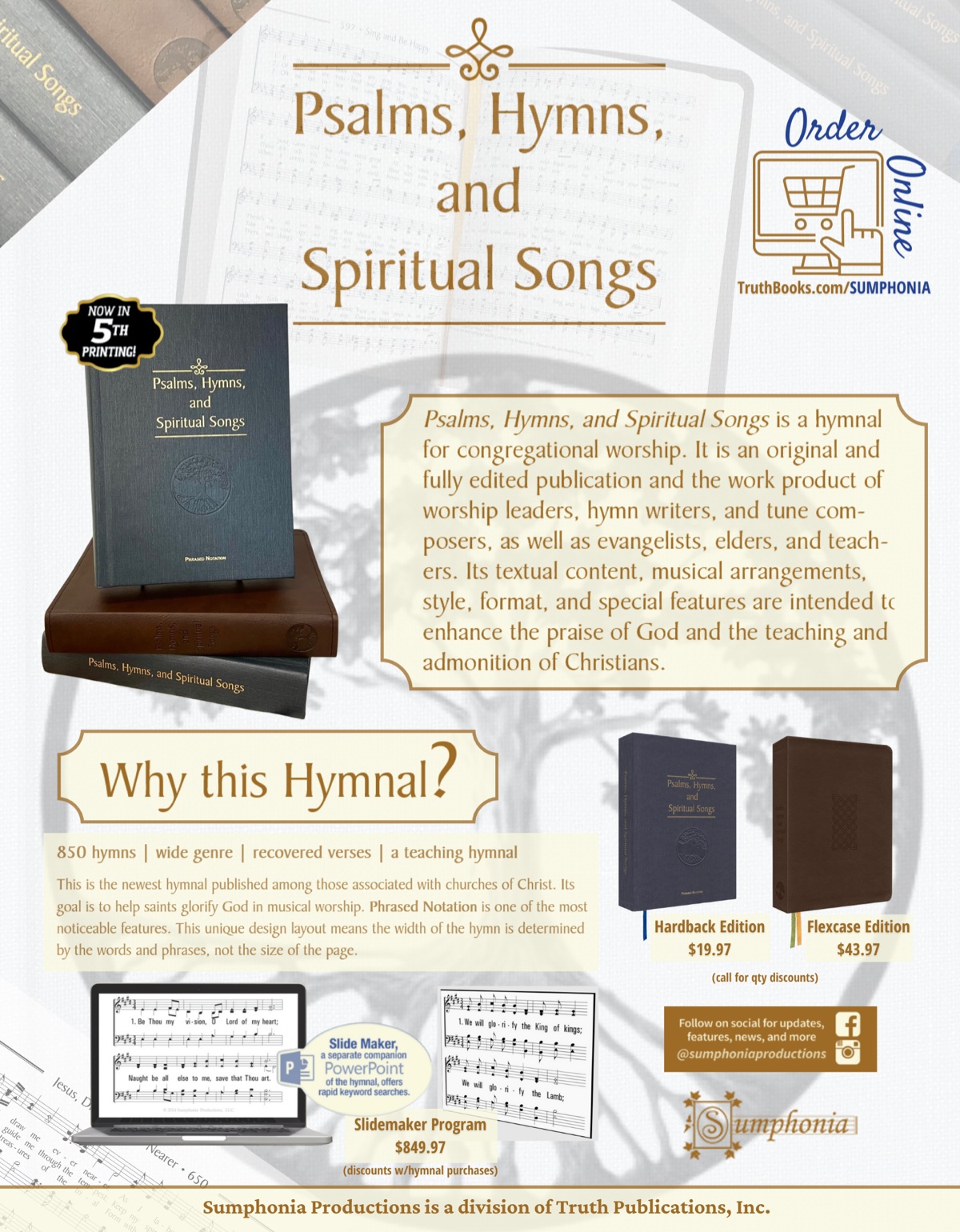
By Bruce Reeves
Synopsis: Let us trust what God has taught in His word and allow His gospel to shape how we feel and think, rather than allowing our feelings to shape what we think His truth is for our lives!
The Charismatic movement is most known for its claims to have miraculous spiritual gifts such as the gifts of prophecy, tongues, and the power to perform miraculous healings. While in the past these perspectives seem to have been restricted for the most part to Pentecostal churches and those groups connected with them theologically, in more recent years, it has spread into various denominations, ranging from Roman Catholicism to mainline Protestant churches and even into inter-denominational groups.
To appreciate this movement, one must consider its origins. In the 19th century, what has been called the Holiness movement can be traced back to John Wesley, who argued that Christians could become sinless through the process of the sanctification of the Holy Spirit. He asserted that a “second work of grace” was available to believers. This led to the development of pentecostalism and its claim for spiritual and ecstatic experiences. This movement stressed the personal, direct, and sensational work of the Holy Spirit in their religious life. Faith was alleged to be a powerful experience with physical demonstration, not just the transformation of thought and conduct.
In 1901, in Topeka, Kansas, Agnes Ozmen, a student at Bethel College, requested Charles Parham to put his hands on her and pray “for the baptism of the Holy Spirit.” It was reported that for the next three days, she only spoke and wrote in Chinese. As more denominations move toward experiential claims in a craving for emotionalism, we see the Charismatic movement expand. Hotbeds of the Charismatic movement may be found in the United States, Brazil, the Philippines, and Africa (MacArthur, 21-28).
In many ways, today’s religious culture is driven by personal and emotional experiences. Truth has become a byword that has been replaced by subjective experiences and personal feelings. Yet, the apostle John encourages us to examine all teachings by God’s revealed word: “Beloved, do not believe every spirit, but test the spirits to see whether they are from God, because many false prophets have gone out into the world” (1 John 4:1). How do we know if a person is teaching the truth? Again, the apostle writes, “We are from God; he who knows God listens to us; he who is not from God does not listen to us. By this we know the spirit of truth and the spirit of error” (1 John 4:6). We must test each teacher and every teaching by the gospel of Christ and the inspired writings of His apostles (1 Cor. 2:9-16; 1 Thess. 5:21). Appeals to subjective feelings over the written word provide a red flag of concern (Prov. 14:12; Jer. 10:23).
We are to serve God with our whole heart, which involves our will, emotions, intellect, and reasoning (Ps. 119:10). Formalism (or merely going through the motions) is not what God has in mind for our sacrificial lives and fervent worship of His name (Rom. 12:1-2; Heb. 13:15). Such empty ritualism is the equivalent of ancient Israel’s practice of robbing God with sick and lame sacrifices (Mal. 1:6-14). On the other hand, there is a vast difference between serving God emotionally and giving in to emotionalism. When our emotional “highs” become the final authority for our spirituality, the standard for truth in our minds, and the gauge of our relationship with God, we have allowed our own desires to supersede divine revelation (Isa. 55:8-9). Even when miraculous gifts were operative in the first century, Paul encouraged the Corinthians to exercise them for edification, not sensationalism; for encouragement, not to put on a show; and in an orderly manner, not in chaotic disarray (1 Cor. 14:1-40). Dramatic experiences and ecstatic demonstrations that influence the physical senses are not what it means to be “spiritual,” “mature,” and “wise” in Christ (1 Cor. 1:18-31; Eph. 3:3-5).
The question is not if someone has had a “religious experience;” rather, the question is “What do the Scriptures teach?” Authentic fellowship with God can never be experienced outside of the written revelation of God’s word. We honor the Spirit by honoring the Scriptures. Although charismatics claim to represent the Holy Spirit, their movement has shown a persistent tendency to pit Him against the Scriptures, as if a commitment to biblical truth somehow might quench, grieve, or otherwise inhibit the Spirit’s ministry. Nothing could be further from the truth! The Scriptures serve as the Holy Spirit’s instrument to influence, convict, and edify our hearts. To ignore, minimize, twist, or disobey the word of God is to reject the Spirit’s revelation (Eph. 6:17). The Bible is a living book because the living Spirit of God is its author (2 Tim. 3:16-17). This is why it is so imperative that our beliefs, teachings, and lives be shaped and molded by the Scriptures (1 Tim. 4:15-16; 2 Tim. 2:15). Jesus said, “It is the Spirit who gives life; the flesh profits nothing; the words that I have spoken to you are spirit and are life” (John 6:63).
The gospel narratives, along with the book of Acts, record the most extensive and awe-inspiring miracles that have occurred in human history. The Hebrew writer crystallizes this point when he says, “How will we escape if we neglect so great a salvation? After it was at the first spoken through the Lord, it was confirmed to us by those who heard, God also testifying with them, both by signs and wonders and by various miracles and by gifts of the Holy Spirit according to His own will” (Heb. 2:3-4). Mark records that the apostles “went out and preached everywhere, while the Lord worked with them, and confirmed the word by the signs that followed” (Mark 16:20). The purpose of miracles and signs was to confirm God’s message by authenticating both the messengers who spoke and wrote and the message that was expressed. God gave a variety of gifts to the first century church according to 1 Corinthians 12-14. Yet, once the completed revelation of God’s word had been provided, miraculous spiritual gifts ceased (1 Cor. 13:8-13). During the infancy of the church, God gave these gifts as the means of revealing and verifying His truth. However, we possess the completed revelation in written form (John 20:30-31; Jude 3). Because God revealed His word by inspiration, we can have supreme confidence in it. Truly, God revealed His word, “not in words taught by human wisdom, but those taught by the Spirit, combining spiritual thoughts with spiritual words” (1 Cor. 2:13). What a great blessing!
When we are studying with our charismatic friends, it is critical that we be able to focus on God’s word as the perfect revelation, the inspired pattern of sound words, and infallible guide in our quest for truth (2 Tim. 1:13; Jas. 1:22-25). God is involved in our lives in the teaching, guidance, and encouragement of His word, as well as His providence. Let us trust what He has taught in His word and allow His gospel to shape how we feel and think, rather than allowing our feelings to shape what we think His truth is for our lives!
MacArthur, John. Strange Fire: The Danger of Offending the Holy Spirit Counterfeit Worship. Nashville, TN: Thomas Nelson Publishers, 2013.
Bruce Reeves has labored with the Highway 65 church of Christ in Conway, AR, since 2000. He and his wife, Rachel, have one child. The church website is here. He can be reached here.

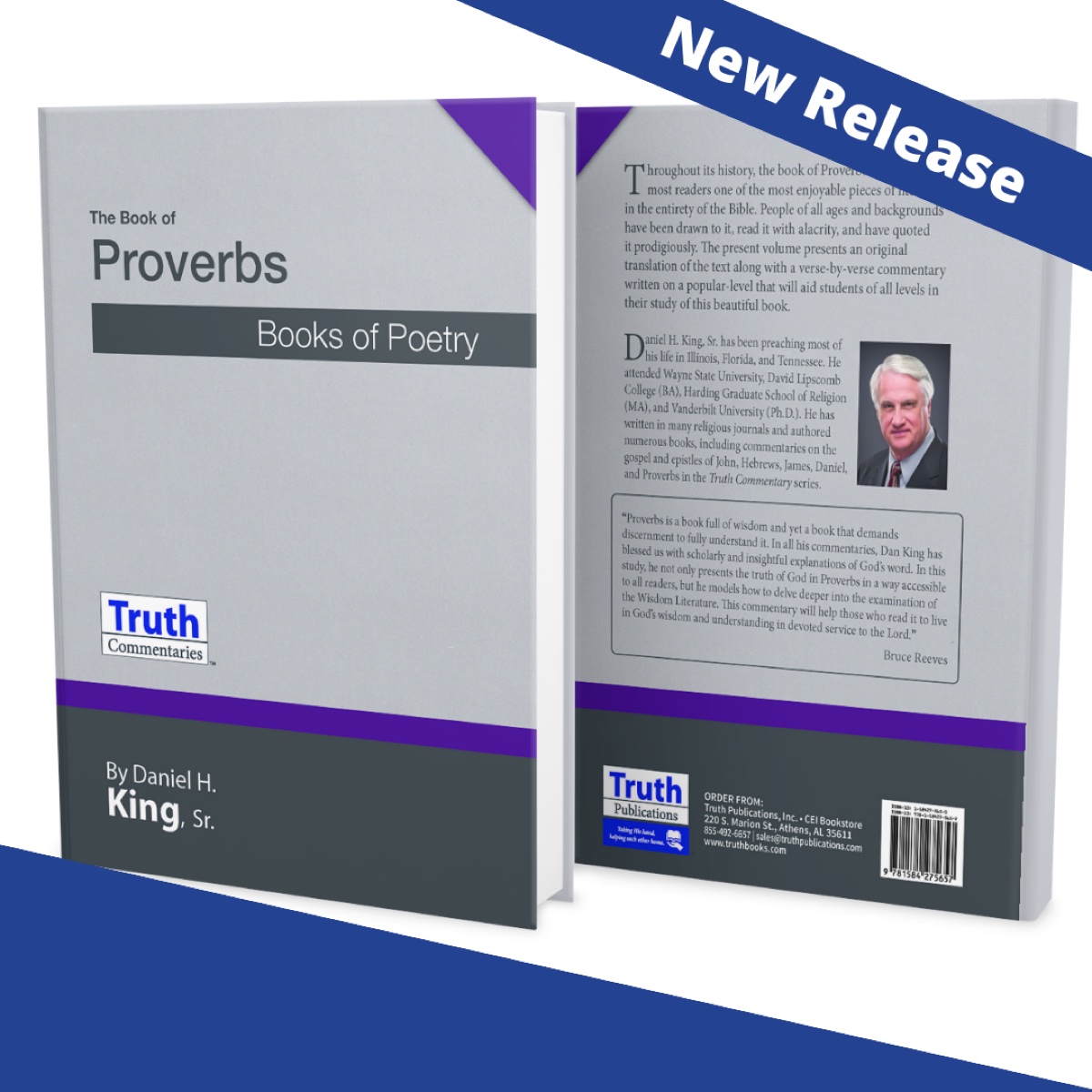
by Heath Rogers
Synopsis: Community churches and megachurches enjoy numerical success because they cater to spiritually shallow people, giving them what they want in a church in exchange for their monetary support.
Many of us are used to talking with members of Catholic or mainline Protestant churches. However, it is becoming difficult to identify some of the new churches that are popping up in our communities. What do we need to know about community churches and megachurches?
The term “Community Church” applies to several types of churches that have similar characteristics.
In the 1800s, pioneers brought religious beliefs and practices with them as they spread westward in our nation. It was common for a relatively small community to have various denominational churches, each with 30-50 members. As some of these towns shrank, so did these churches. Sometimes two or three churches would merge, crossing denominational lines and pooling their resources, to support a single church. To avoid the uncomfortable tension of one denomination winning and others losing, an entirely new name would sometimes be used. They would become a Community Church.
In more recent years, “Community Church” has been applied to newly placed churches that don’t want to be identified with any particular denomination or religious hierarchy. These independent churches have various beliefs and practices. They may be charismatic or traditional, ecumenical or isolationist, contemporary or old-fashioned.
The term “Community Church” can also be applied to mainstream denominational congregations that have renamed themselves in an effort to become more appealing to the unchurched and religiously disenfranchised in their area. This is called “rebranding.” Some denominational congregations in the town where I live have rebranded themselves in recent years. A local Nazarene Church is now called “Be Hope” and a Methodist Church now calls itself “Mosaic Church.”
Unity in community churches is established and maintained through doctrinal compromise, not by contending for the faith (Jude 3) and endeavoring to keep the unity of the Spirit in the bond of peace (Eph. 4:3-6). Emphasis is placed on accepting “core beliefs” while overlooking doctrinal matters that can cause contention within the group. As a result, many community churches have loosely defined beliefs that allow various convictions among their members.
The Hartford Institute for Religious Research defines a Megachurch as any Protestant Christian church having 2,000 or more people in average weekly attendance. The Megachurch movement expanded rapidly in the United States through the 1980s-90s. Today, there are over 1,000 megachurches in the United States. They also exist in other countries. Most are found in the suburbs of large cities.
Megachurches are built on the dynamic relationship between the pastor and the members. The senior pastor is usually a man with great personal charisma. Members are drawn to his charm and personality. While the pastor is the drawing power, few members get to spend any significant time with him. In the megachurch model, senior pastors are usually supported by teams of associate pastors and a full-time staff.
The worship services of a megachurch can be likened to a rock concert. The stage, contemporary music, strobe lights, fog machine, beautiful and wealthy people dressed to impress, big smiles, big hugs, coffee shops, and gift shops are all combined to entice visitors to return with open pocketbooks.
One individual has written of his experience in visiting a megachurch:
When one enters a megachurch, there is usually a feeling that you are entering an exciting and vibrant community that is glad you are there. Most people come early for the service and gather in a large area where they enjoy coffee and conversation. It is a time to meet people whom you know and to make new acquaintances. It is a time to congratulate, console, share, inquire, and chat with others.
If you have brought children, they can be taken off to the area where little ones can have fun, be taught, and be cared for by a competent and trusted staff. Then, often, ushers will greet you and take you to the seat of your choice.
The worship service in the megachurch is the central event of the community. It is lively with full participation, including gestures and manifestations of praise. Evangelicals are not shy about expressing their feelings in church, and during the services they express their worship to God and their love of Jesus—both physically and verbally.
Music is an integral part of the service and is robust and loud. Singing is accompanied by a group of musicians and led by someone who is full-voiced. There is nothing halfhearted about congregational participation!
Those planning megachurch services recognize that variety is indeed the spice of life. Sometimes brief dramatizations might be included, or perhaps PowerPoint visuals or a film clip. A witness from someone who has just returned from a missionary trip in a developing country might be offered, or someone who has recently experienced a conversion might share his story.
The growth model of the megachurch resembles modern marketing strategies. Rick Warren, the well-known pastor and founder of the Saddleback megachurch in Orange County, CA, wrote of his experience in planting this congregation in the book “The Purpose Driven Church.” He explains how he canvased the community, asking about their most pressing needs. The results helped form the philosophy of their ministry statement. “It became the blueprint for our evangelistic strategy” (Warren, 41). In other words, he found out what most people wanted in a church and built the Saddleback church for them.
Those who attend megachurches will not hear sermons on sin or hell. Neither will they hear deep doctrinal sermons filled with Scripture. Instead, they will hear well-polished pep talks that address their felt needs and scratch their itching ears.
David J. Lupinetti, a former megachurch member, wrote, “The teachers leading Sunday worship in the megachurches I attended seem to rely on an emotional experience over theological conviction. The emphasis on emotionalism through loud music, dimmed lights, and an abundance of illustrations that over-emphasized personal experiences rather than exegetical truths led the philosophy of ministry for the megachurches growth.”
The prosperity gospel is often found in megachurches. This is the false teaching that physical well-being and material riches are always God’s will for the faithful. Salvation through Jesus Christ not only brings deliverance from eternal damnation, but also from illness and poverty. If a believer expresses their faith through positive thoughts and donations to the church, they will be rewarded with health, wealth, and happiness. Such is the message of preachers like Joel Osteen at the Lakewood Church in Houston, TX.
Community churches and megachurches usually make doctrinal statements available on their websites or in literature available at their buildings. However, when talking with a member of such a church, it is best to ask them what they believe instead of assuming they hold to the church’s beliefs. Remember, the appeal of these organizations is the experience and the activities, not their doctrine.
It is difficult to convince a satisfied member of a community church or megachurch to study and consider leaving. These churches are designed to attract those who are disenfranchised with traditional “Christianity.” There may be exceptions, but as a rule, their members are not deeply interested in spiritual matters. They attend where they do because it appeals to them emotionally.
However, people leave community churches and megachurches for various reasons. These are the people for whom we need to be searching.
Some leave because of shallow teaching. A steady diet of non-offensive and non-challenging preaching can’t satisfy spiritual hunger. If one really desires to hear and learn God’s word, you need to tell them this is always available in the Lord’s church.
Some leave because they have become disillusioned with the pastor. Remember, these churches grow and thrive on their pastors being the chief attraction. Anyone who puts himself on a pedestal is destined to fall. When they do, some members will realize they are in the wrong place. Christians are to be disciples of Jesus, not disciples of religious celebrities. We need to be ready to redirect people to Jesus.
Some leave because of what they call “Toxic Positivity.” Churches that emphasize the prosperity gospel will suppress the harsh realities of the Christian life. An all positive/no negative approach is unrealistic. Such a false standard will ultimately frustrate and discourage people. God designed the local church to be a body where members care for one another and bear one another’s burdens (1 Cor. 12:25-26; Gal. 6:2). Sometimes members need to acknowledge sorrows and weep (Rom. 12:15). We need to be ready to invite these people to the Lord’s church, where their needs can be acknowledged and met in a spiritually healthy manner.
Those who are involved in religious error are caught in Satan’s trap (2 Tim. 2:24-26). Community churches and megachurches are just modern versions of this trap. Along with gentleness, patience, and humility, we need to equip ourselves with knowledge to help direct lost souls to a correct understanding of God’s word.
“3 Reasons Why I Left the Mega-Church.” 2021. Fight the Good Fight (blog). June 7, 2021. https://the-good-fight.com/2021/06/07/3-reasons-why-i-left-the-mega-church/.
“5 Lessons from Megachurches.” 2020. Franciscan Media. May 13, 2020. https://www.franciscanmedia.org/st-anthony-messenger/5-lessons-from-megachurches/.
“Prosperity Gospel.” 2023. Britannica.com. November 23, 2023. https://www.britannica.com/topic/prosperity-gospel.
“The Definition of a Megachurch.” n.d. Hartford Institute for Religion Research. http://hirr.hartsem.edu/megachurch/definition.html.
Warren, Rick. The Purpose Driven Church: Growth Without Compromising Your Message & Mission. Zondervan, 1995.
Heath Rogers has preached for the Knollwood church of Christ in Beavercreek, OH, since 2011. He and his wife, Christy, have two adult children. Many of his sermons and articles can be found at here. He can be reached here.

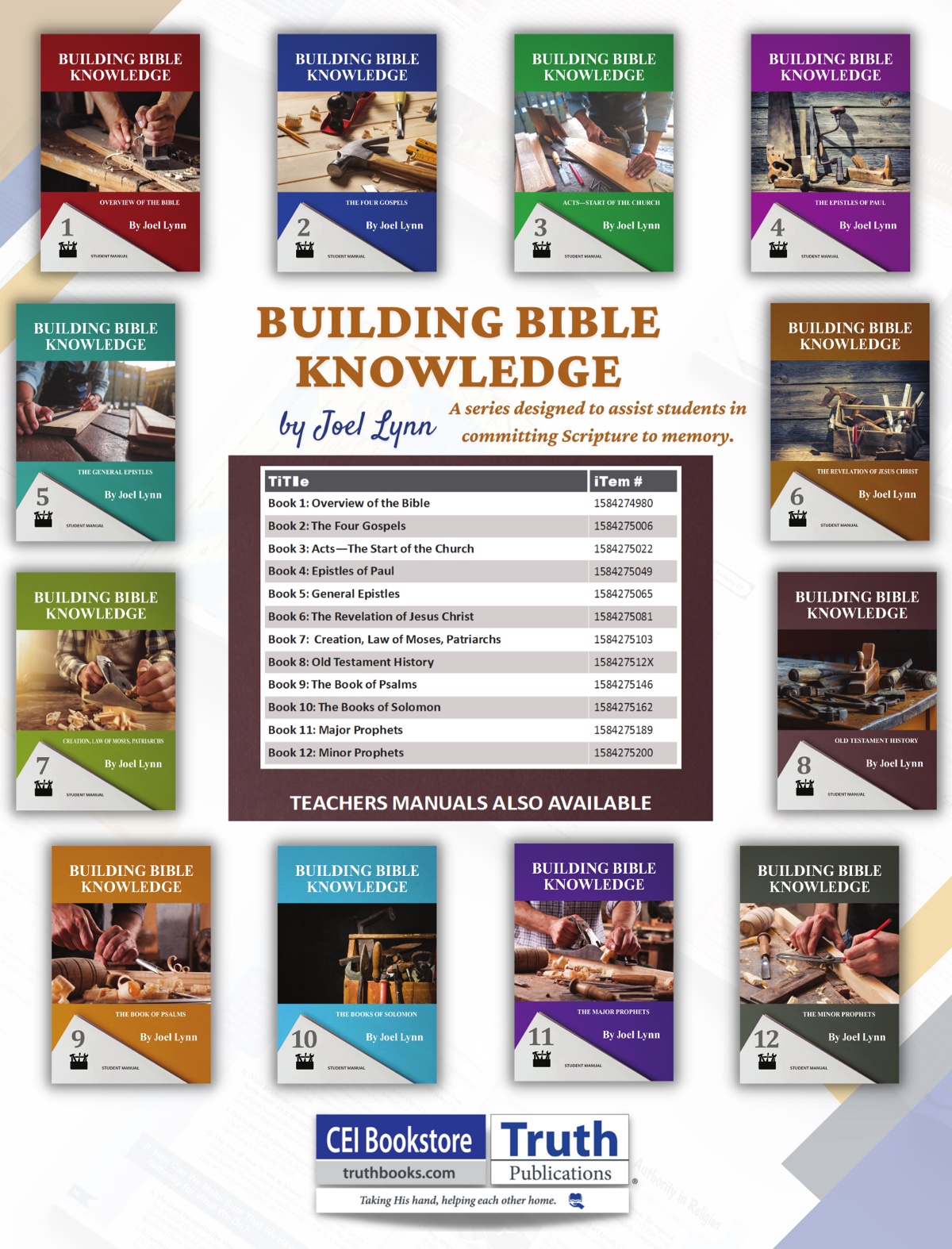
By Shawn Chancellor
Synopsis: The “Christian cults,” a phrase often used to describe the Mormons, Jehovah’s Witnesses, and the Seventh-Day Adventists, teach doctrines regarding the nature of Scripture, God, and man that are fundamentally opposed to faith in God that must be dealt with before any hope of conversion can begin to be realized.
In this article, we focus on the Jehovah’s Witnesses, the Church of Jesus Christ of the Latter-Day Saints, and the Seventh-day Adventists. These groups are often referred to as the “Christian cults.” This phrase does not indicate their beliefs are scriptural; rather, it is used to distinguish these groups from the cults practicing Eastern Religions and secular cults.
Merriam-Webster defines “cult” as “a religion regarded as unorthodox or spurious.” Others define “cult” as a religious group that does not hold to orthodox elements of Christianity. These ambiguous definitions have led some religious scholars to note that “cult” has come to identify “any religion I dislike.” However, we can identify a pattern of behavior that distinguishes the cults from other religious denominations.
Cults are relatively new from a historical standpoint. They often hold novel beliefs about one or more fundamental tenets of Christianity (like denying the deity of Jesus or the personhood of the Holy Spirit). Scripture is often viewed as important but not ultimately authoritative. The movement will typically begin with a charismatic leader with excessive authority. Doctrines will change often and capriciously. Cults often engage in emotionally manipulative practices through social isolation, food restrictions, and ostracism of wayward members.
Mormon is the popular name for the Church of Jesus Christ of Latter-Day Saints. This church was founded in 1830 by Joseph Smith, who claimed to receive a series of revelations recorded in the Book of Mormon. From 1839 to 44, the church was located in Nauvoo, Illinois. They migrated to Salt Lake City, Utah, when Smith was killed by a mob in a gun battle after being arrested for destroying the printing press of a newspaper. The paper printed an expose on the Mormon practice of polygamy, which they abandoned in 1890 after this practice brought them into conflict with the Federal government (see Farkas and Reed, 17-20).
Also known as the Watch Tower Bible and Tract Society, this group began with the teachings of Charles Taze Russell.
His main claim was that Jesus Christ, a perfect man, had returned invisibly to earth in 1874 in order to prepare for the Kingdom of God, which was expected to materialize after the Battle of Armageddon in 1914. The overriding responsibility of believers was to study the Bible and to warn as many people as possible about the impending “end time” so that they might survive on earth, in turn, a First Judgement, Christ’s millennial reign on earth, and a Second Judgement. Only a “small flock” of 144, 000 people drawn from the whole of human history were to expect eternal life in heaven (Cross and Livingstone, 870).
The Seventh-Day Adventists descended from the Millerites, named after William Miller, a Baptist who announced the return of Christ would occur in 1844.
When Christ did not return, Miller’s followers wondered why. Hiram Edison (1806-1882) concluded that Christ would not reign on earth but would judge from heaven for a time. . . . Following Edison’s interpretation of the millennial reign as heavenly rather than earthly, Ellen Gould White published visions she had allegedly received. These visions confirmed what many Adventists suspected. Christ had delayed the millennium because the church was worshiping on the week’s first day (Sunday) rather than the Sabbath (Saturday) (D. F. Mills, “Seventh-Day Adventists”).
Such groups appeal to people who feel disenfranchised by society. Each offers some special knowledge that sets them apart from other religious groups and often leads to some level of persecution. There is a sense of brotherhood and belonging in these cult movements for those who feel disconnected or excluded by more mainstream denominations. Because of the sense of isolation from broader society encouraged by these groups, members find leaving the cult difficult.
All three groups have many doctrines that conflict with Scripture. However, in our attempts to study with and convert our neighbors, we would be better served to focus on the fundamental errors preventing one from coming to faith. These would include false concepts about the nature of God, the deity of Jesus, and the Holy Spirit, a lack of appreciation for the authority and sufficiency of Scripture, and the nature of man.
The Mormons “believe the KJV Bible to be the word of God as far as it is translated correctly; we also believe the Book of Mormon to be the word of God” (Smith, Article 8). Three other books are included in the Mormon Canon: The Doctrine and Covenants, The Pearl of Great Price, and the Book of Mormon.
The Jehovah’s Witnesses consider the Bible to be the word of God, but they argue all translations “have fallen victim to the power of human traditionalism in varying degrees” (Martin, 93). Thus, they have produced the New World Translation of the Holy Scriptures in an effort to “avoid this snare of religious traditionalism” (ibid.). However, much of what the Witnesses teach is found in various Watchtower publications.
The Seventh-Day Adventists accept the Bible as authoritative. However, they believe that prophecy is “an identifying mark of the remnant church and. . . was manifested in the ministry of Ellen G. White” (28 Fundamental Beliefs, #18).
In contrast to these groups, the New Testament offers an all-or-none proposition regarding the authority and sufficiency of its contents.
All Scripture is inspired by God and profitable for teaching, for reproof, for correction, for training in righteousness; so that the man of God may be adequate, equipped for every good work (2 Tim. 3:16-17).
This is an essential concept because continuing revelation means the truth of God’s word is constantly changing, and we have no reason for confidence in any biblical doctrine. However, the gospel message was delivered in the first century—one time for all time (Jude 3).
In their “Articles of Faith,” the Mormon church states that “We believe in God, the Eternal Father, and in His Son, Jesus Christ, and in the Holy Ghost” (Smith, Article 1). However, Joseph Smith wrote that God was the head of the gods and was once a man “as we are now and is an exalted man” (Martin, 235). Apostle Orson Hyde wrote that “our heavenly father was once a child and mortal like we ourselves” and “has moved forward and overcome until He has arrived at the point where He now is” (Hyde, Vol 1, Discourse 21).
The Jehovah’s Witnesses deny the biblical doctrine of the Trinity. They teach that Jesus Christ “was created before all the other spirit sons of God and that he is the only one directly created by God” (You Can Live Forever in Paradise on Earth, 58). They even go so far as to retranslate Colossians 1:16 to say, “because, by means of him, all other things were created in the heavens and on the earth…” (NWT).
Furthermore, the Witnesses deny the deity of the Holy Spirit. They teach that “The holy spirit is God’s power in action, his active force” (s.v. “What is the Holy Spirit.” [jw.org]).
These doctrines deny the most fundamental teachings of Scripture. The Bible teaches that the divine nature is possessed by three persons: the Father, the Son, and the Holy Spirit (Gen. 1:27; Acts 5:3-4; John 1:1-3, 14).
The Mormon view of the nature of man is unique among those who claim faith in God’s word. As noted above, they teach that God was a mortal at one time, just as we are. Furthermore, they teach a doctrine called Eternal Progression. According to this doctrine, humans have existed as spirits eternally and “must learn to make yourselves God” (Smith, 135).
This idea is entirely foreign to the teaching of Scripture. The Bible consistently teaches that God is unique and transcendent (Deut. 6:4; Ps. 90:2; Gal. 3:20). While we do see the term god (Elohim) used to describe certain men, such as Moses in Exodus 7:1, this refers to authority given them by Jehovah to act as judges or representatives of God, not that they intrinsically possess the divine nature (cf. Ps 82).
The Jehovah’s Witnesses and the Seventh-Day Adventists have a more traditional view of man’s nature. However, both groups teach that the dead are in a state of soul sleep until final judgment and that the wicked will be annihilated rather than spend eternity in torment. Scripture uses sleep as a metaphor for death; yet, this refers to the temporary nature of physical death, not to a lack of consciousness or state of annihilation (John 11:11; 1 Cor. 15:51). Likewise, we see clear teaching that those who do not serve the Lord will suffer eternal punishment (Matt. 25:45-46; John 5:29; Mark 9:42-48; Matt. 10:28; Luke 12:5).
Time would be well spent noting the contradictions and translation errors in the Book of Mormon and the New World Translation. Other doctrines, such as the Mormon Priesthood and the Adventist insistence on observing the Sabbath, might be helpful to consider. However, the issues addressed above are essential to have faith in the God of the Bible. We should seek agreement with Scripture on these issues before we debate further about less fundamental questions. These studies will require patience and understanding. Furthermore, we should always encourage the individual to tell us what they believe before we charge them with all the teachings of the particular group with which they identify.
Cross, F. L., and Elizabeth A. Livingstone, eds. The Oxford Dictionary of the Christian Church. Oxford; New York: Oxford University Press, 2005.
Haykin, Michael A. G., ed. The Essential Lexham Dictionary of Church History. Bellingham, WA: Lexham Press, 2022.
Hyde, Orson. “The Man to Lead God’s People—Overcoming—A Pillar in the Temple of God— Angel’s Visits— the Earth.” (Journal of Discourses, Vol. 1, Discourse 21). https://journalofdiscourses.com/1/21.
Jehovah’s Witnesses. “What is the Holy Spirit.” https://www.jw.org/en/bible-teachings/questions/what-is-the-holy-spirit/.
Martin, Walter R. The Kingdom of the Cults. Revised, Updated, and Expanded Edition. Bloomington, MN: Bethany House Publishers, 2003.
Merriam-Webster’s Collegiate Dictionary. Springfield, MA: Merriam-Webster, Inc., 2003.
Reed, David A., and John R. Farkas. Mormons: Answered Verse by Verse. Electronic ed. Grand Rapids: Baker Book House, 1992.
Seventh-day Adventist Church. “Official Beliefs of the Seventh-day Adventist.” https://www.adventist.org/beliefs/.
Smith, Joseph. “The Articles of Faith.” The Church of Jesus Christ of Latter-Day Saints. https://www.churchofjesuschrist.org/comeuntochrist/article/articles-of-faith.
Smith, Joseph. “Discourse, 7 April, 1844, as Reported by Wilford Woodruff.” in The Joseph Smith Papers. https://josephsmithpapers.org/paper-summary/discourse-7-april-1844-as-reported-by-wilford-woodruff.
You Can Live Forever in Paradise on Earth. Brooklyn, NY: Watchtower Bible and Tract Society of New York, 1989.
Shawn Chancellor has worked with the South Georgia St. congregation in Amarillo, TX, for seven years. He and his wife, Bonnie, have one daughter. The church website is here. He can be reached at here.


Note: Please send additions, corrections and updates here.
Updated: 1/1/2024
17312 Jones Rd, Athens, AL 35613
Sun. Bible Study 9:30 am | Sun. Worship: 10:20 am & 5:00 pm | Wed. Bible Study 7:00 pm
Evangelist: Jonathan Reeder | jonesroadchurch.org | 256-233-3160
514 W Market St, Athens, AL 35611
Sun. Bible Class 9:45 am | Sunday Worship 10:30 am & 5:00 pm | Wed. Bible Study 6:30 pm
Evangelist: David A. Cox | 256-232-1525 | marketstreet-church.com
24190 Wooley Springs Rd, Athens, AL 35613
Sun. Worship 9:30 am & 5:15 pm | Wed. Bible Class 7:00 pm
Evangelists: Bob Watson & Matt Taylor | mtzionchurchofchrist.org
2325 Old Columbiana Rd. (near I-65 & Hwy. 31)
Sun. Bible Study 9:00 am | Worship 10:00 am & 5:00 pm | Wed. Bible Study 7:00 pm
Evangelists: Zack Lee | 205-822-0018
19965 Sandlin Rd. Elkmont, AL 35620
Sun. Worship 9:30 am & 3:00 pm | Bible Classes: 10:45 am | Wed. Bible Study 7:00 pm
Evangelist: Lance R. Taylor | 256-777-0990 | sandlinroadchurch.com
851 N. Pine St. (Located next to University campus)
Sun. Bible Study 9:30 am | Worship 10:15 am & 5:00 pm | Wed. Bible Study 7:00 pm
Evangelist: Kenny Moorer | 256-766-0403
601 Pineywood Road, Gardendale, AL, 35071 (Located 10 miles N of Birmingham)
Sun. Bible Study 9:30 am | Worship: 10:25 am & 5:00 pm | Wed. Bible Study: 7:00 pm
Evangelists: Andrew Smith & Jason Shackleford | 205-631-2131 | gardendalechurchofchrist.com
129 Hillcrest Rd, Mobile, AL 36608
Sun. Worship 9-9:30 am | Bible Study 9:30-10:30 am | Worship 10:30-11:30 am | Wed. Bible Study 7:00 pm
Evangelist: Ken Sils | 765-307-8048 | 251-342-4144 or 342-2041 | westmobilechurch.com
271 Highway 65 N, Conway, AR 72032
Sun. Bible Study 9:00 am | Worship 10:00 am & 5:00 pm | Wed. Bible Study 7:00 pm
Evangelist: Bruce Reeves | Bldg: 501-336-0052 | hwy65churchofchrist.org
2655 Prince St., Conway, AR 72034
Sun. Worship 9:00 pm | Bible class 9:50 am | Worship & Lord’s Supper: 10:40 am | Wed. Bible Class 7:00 pm
501-450-8640
2323 South 46th St.
Sun. Bible Study 9:45 am | Worship 10:30 am | Wed. Bible Study 7:00 pm
churchofchristfortsmith.com
407 Bella Vista Dr.
Sun. Bible Study 9:30 am | Worship 10:15 am & 5:00 pm | Wed. Bible Study 7:00 pm
Evangelist: Norman E. Sewell | 870-741-9104 or 870-741-5151 | cappsroad.org
514 Airport Rd.
Sun. Bible Study 10:00 am | Worship 11:00 pm & 6:00 pm | Wed. Bible Study 7:00 pm
Evangelist: Dick Blackford | 870-933-9134
145 N. Country Club Rd.
Sun. Bible Study 9:00 am | Worship 10:00 am & 6:00 pm | Wed. Bible Study 7:00 pm
Evangelist: Brenden Ashby | 520-326-3634 | churchofchristtucson.org
17903 Ibbetson Ave.
Sun. Bible Study 9:45 am | Worship 10:50 am & 6:00 pm | Wed. Bible Study 7:30 pm
562-866-5615 | roseavenue.org
3433 Studebaker Rd.
Sun. Bible Study 9:50 am | Worship 10:45 am & 5:30 pm | Wed. Bible Study 7:00 pm
JP Flores | 562-420-2363 or Mark Reeves | 562-377-1674 | justchristians.org
449 W. Allen Ave., Suite 120, San Dimas, CA 91773
Sun. Bible study 10:00 am | Worship 11:00 pm & 4:00 pm | Wed. Bible Study 7:30 pm
909-788-9978 | sandimaschurchofchrist.com
126 West Harvard St. | Suite 6
Sun. Bible Study 9:30 am | Worship 10:30 am
Evangelist: Richie Thetford | poudrevalleychurchofchrist.org
1414 Hawk Parkway, Unit C
Sun. Worship 11:00 pm | Bible Study 2 pm & 1:30 pm
970-249-8116 | sanjuanchurchofchrist.org
64 Casting Lake Rd.
Sun. Bible Study 9:00 am | Worship 10:00 am & 6:00 pm | Wed. Bible Study 7:00 pm
850-622-3817 | southwaltonchurchofchrist.com | Location change coming in 2022: 497 Church St Santa Rosa Beach, FL 32459
196 Ave C, Geneva, FL 32732
Sun. Bible Study 10:00 am | Worship 10:45 am
(689) 229-9888 | ChurchofChristatGeneva.com
6 Lane Dr., Mary Esther, FL 32569
Sun. Bible Study 9:30 am | Worship 10:30 am & 5:00 pm | Wed. Bible Study 7:00 pm
850-244-9222 | mecoc.org | Evangelist: Chris Simmons | chrissimmons6ten@gmail.com
3940 S. Bumby Ave.
Sun. Communion: 9:30 am | Bible Study 10:00 am | Praise & Preaching: 10:55 am (No pm Service) | Wed 7:00 pm
Evangelist: Ken Chapman
Office: 407-851-8031 | bumby.org | Note: Please call for current worship and Bible study times.
621 E. Wheeler Rd.
Sun. Bible Study 10:00 am | Worship 10:50 am & 6:00 pm | Wed. Bible Study 7:30 pm
Evangelist: Bobby Witherington | 813-684-1297 | seffnercoc.org
Route 116 (near Callaway Gardens)
Sun. Bible Study 10:00 am | Worship 11:00 pm & 6:00 pm | Wed. Bible Study 7:30 pm
Evangelist: Tommy W. Thomas | 706-628-5117 or 628-5229 | pmvchurch.com
370 N. Shilling | P.O. Box 158-83221
Sun. Bible Study 10:00 am | Worship 11:00 pm | Wed. Bible Study 7:30 pm
208-785-6168 or 681-1552
1310 NE 54th Ave, Des Moines, IA 50313
Sun. Bible Study 9:45 am | Worship 10:40 am | Wed. Bible Study 7:00 pm
515-262-6799 | www.dsmcoc.com
1236 63rd St. (Dir: 1.5 miles E of I355)
Sun. Bible Study 9:00 am | Worship 9:55 am & 6:00 pm | Wed. Bible Study 7:30 pm
Evangelist: Steve Wolfgang | 630-968-0760 | dgcoc.org
796 Prairie Ave.
Glen Ellyn, IL 60137
Sun. Bible Study 9:30 am | Sun. Worship 10:30 am & 5:00 pm
Evangelist: Keith E. Brown | 630-858-2290 & 630-377-3990
1100 S. 17th St.
Sun. Bible Study 9:30 am | Worship 10:30 am & 6:00 pm | Wed. Bible Study 7:00 pm
217-234-3702
16224 S Vincennes Ave.
Sun. Bible Study 9:00 am | Worship 10:00 am & 4 pm | Wed. Bible Study 7:00 pm
Evangelist: Donald Hawkins | 708-339-1008 | southeastchurchofchrist.com
Meeting @ Sleep Inn Suites and Motel | 1101 North Cummings Lane, Washington, IL 61571
Sun. Worship: 11:30 am | Bible Study: 12:30 pm | Wed. Bible Study 6:30 pm @ home of Tim Sundlie, call for address
Evangelist: Tim Sundlie | 608-796-9028 | sunbeads1@gmail.com | tazewellcococ.org
407 W Lewis and Clark Parkway, Clarksville, IN 47129
Sun. Bible Study 9:30 am | Worship 10:30 am & 6:00 pm | Wed. Bible Study 7:30 pm
Elders: Allen L. Morris (812) 989-5838 and Stephen W. Nale (502) 727-7559 or (812) 944-2305 | clarksvillechurchofchrist.org
Sun. Bible Study 9:30 am | Worship 10:30 am | Wed. 7:00 pm
765-676-6404 | jamestowncoc.com
15530 Herriman Blvd, 46060
Sun. Bible Study 10:00 am | Worship 11:00 am | Wed. Bible Study 7:00 pm
Evangelist: John Smith | preacherjohn54@att.net | 317-501-8035 or 317-501-0249 or 317-701-1204
400 Lafayette Ave. | P.O. Box 34
Sun. Bible Study 9:45 am | Worship 10:30 am & 6:00 pm | Wed. 7:00 pm
812-279-4332
(First St. & Karnes Ct.)
Sun. Bible Study 9:45 am | Worship 10:30 am & 5:00 pm | Wed. Bible Study 7:00 pm
Evangelist: Jeremy Goen | 812-967-3437 or 967-3520 | pekinchurchofchrist.com
302 S. Fourth Ave., Mulvane KS 67110 | Mail: PO Box 11
Sun. Bible Classes: 10:00 am | Worship 11:00 am | Wed. Bible Study 7:00 pm
Evangelist: Jay Horsley | 316-644-8503 | mulvanechurch.com | mulvanechurch@gmail.com
5600 SW 17th St, Topeka, KS 66604
Sun. Bible Study 9:15 am | Sun. Worship 10:30 am | Wed. Bible Study 7:00 pm
785-235-8687 or 785-273-7977 | 17thstreetchurchofchrist.org
1235 Williams St.
Sun. Worship 10:00 am | Bible Study After am Worship & 6:00 pm | Wed. Bible Study 7:00 pm
Evangelist: Jerid Gunter | 270-274-4451
8081 US Hwy 68-East, Benton, KY 42025
Sun. Bible Study 9:00 am | Worship 10:00 am | Wed. Bible Study 6:00 pm
270-354-9451 | fairdealingmarc@gmail.com | churchofchristatfairdealing.com | Conveniently located near Kenlake State Resort Park on the western shore of Kentucky Lake.
612 Broadway
Sun. Bible Study 9:45 am | Worship 10:30 am & 5:00 pm | Wed. Bible Study 6:30 pm
Evangelist: Charles J. White | 270-422-3878
107 Sunny Hill Dr.
Worship 9:30 am & 11:30 am | Bible Study 10:30 am | Wed. Bible Study 7:00 pm
Evangelist: Steve Lee | 270-789-1651 | sunnyhillcoc.com
103 N. Main St. | P.O. Box 233
Sun. Bible Study 10:00 am | Worship 10:45 am & 5:00 pm | Wed. Bible Study 7:00 pm
Evangelist: Jarrod Jacobs | 270-589-4167 or 270-274-3065
385 E. Lexington Ave.
Sun. Worship 10:00 am | Bible Study 11:15 am & 5:00 pm | Wed. Bible Study 7:00 pm
Evangelist: B.J. Sipe | 859-236-4204
18 Scott Drive, Florence, KY 41042
Sun. Worship 9:30 am & 5:30 pm | Sun. Bible Study 10:30 am | Wed. Bible Study 7:00 pm
859-371-2095 | nkcofc.com
1733 Bowling Green Rd.
Sun. Bible Study 9:00 am | Worship 10:00 am & 6:00 pm | Wed. Bible Study 7:00 pm
Evangelist: Steve Monts | 270-776-9393 | 31wchurchofchrist.com
733 Mill St. Leitchfield, KY 42754
Sun. Bible Study 9:30 am | Worship 10:00 am Communion 10:55 am | Wed. Bible Study 6:00 pm
270-230-6144 | millstreetchurchofchrist.org
1803 Dixie Garden Dr.
Sun. Bible Study 9:30 am | Worship 10:30 am & 6:00 pm | Wed. Bible Study 7:00 pm
Evangelist: Michael Hardin | michaelhardin1123@att.net | 502-937 2822
3221 East Hebron Lane
Sun. Bible Study 9:00 am | Worship 10:00 am & 5 pm | Wed. Bible Study 7:30 pm
Evangelist: Danny Linden & Ron Halbrook | 502-957-5115 or 502-955-1748 | hebronlanechurchofchrist.com
405 Orice Roth Rd. | 70737 (Baton Rouge area)
Sun. Bible Class 9:30 am | Worship 10:30 am & 6:00 pm | Wed. Bible Study 7:00 pm
Evangelist: R.J. Evans | rjevans@eatel.net | 225-622-4587
856 Brighton Ave. (Breakwater School) | Leave Maine Turnpike at Exit 48
Sun. Bible Study 10:00 am | Worship 11:00 pm w/ second service immediately following am worship | Mid-week Bible Study (please call for times & places)
207-839-3075 or 839-8409
3084 Creek Drive SE, #1-C, Kentwood, MI 49512 | P.O. Box 8446, Kentwood, Mich. 49508 (Grand Rapids area)
Sun. Worship 11:00 am | Sun. Bible Study 12:30 pm | Wed. Bible Study 7:00 pm
Evangelist: Joseph Gladwell | cedarsprings98@gmail.com
414 South Main Street
Sun. Bible Study 10:00 am | Worship 11:00 am | Wed. Bible Study 6:00 pm
Evangelist: Ryan Thomas | 810-837-1302 or 989-389-3226 | northernmichiganchurchofchrist.com
2914 7th St.
Sun. Bible Study 9:00 am | Worship 10:00 am
2820 Grandview Ave.
Sun. Bible Study 10:00 am | Sun. Worship 11:00 pm | Wed. 6:30 pm
Ron Cooper: 601-934-3675 | roncooper@bellsouth.net
Ricky Ethridge: 601-737-5778 | rickymarsha@bellsouth.net
2110 E State Line Rd. (Exit I-55) (Memphis area)
Sun. Bible Study 9:30 am | Worship 10:30 am | Wed. Bible Study 7:00 pm
Evangelist: James A. Brown | Bldg: 662-342-1132
805 Meadow Rd, Severn, MD 21144
Sun. Bible Study 10:00 am | Sun. Worship 11:00 pm & 6:00 pm | Wed. Bible Study 7:30 pm
Evangelist: Brandon Trout | 410-969-1420 or 410-551-6549 | swcofchrist.com
422 N Linton St., Blodgett, MO 63824
Sun. Worship 10:00 am | Wed. Bible Study 7:00 pm
Evangelist: Russell Rice | 573-475-0417
4000 SW Christiansen
Sun. Worship 9:00 pm | Bible Study 10:00 am | Worship 11:00 pm | Wed. Bible Study 7:00 pm
Evangelist: Brett Hogland | 816-228-9262
432 Eagle Rock Rd, Branson, MO 65616
Sun. Worship 9:30 am | Bible Study 10:30 am | Sun. Evening Worship 5:00 pm | Wed. Bible Study 6:00 pm
Evangelist: Philip North | 417-239-1036 | primrosenor@suddenink.net | eaglerockroadchurchofchrist.org
2912 Bloomfield Rd
Sun. Bible Study 9:15 am | Worship 10:00 am | Wed. Bible Study 7:00 pm
Seth McDonald & Jerry Lee Westbrook | 573-837-1001 | capecountycoc@gmail.com | capecountycoc.com
217 N. Orchard Blvd.
Sun. Bible Study 9:00 am & 10:00 am | Worship 11:00 pm | Wed. Bible Study 7:00 pm
Evangelist: Walter Myers | 417-830-8972 or 417-736-2663
703 Harrison St.
Sun. Bible Study 10:00 am | Worship 11:00 pm & 6:00 pm | Wed. Bible Study 7:00 pm
Evangelist: Nolan Glover | 870-650-1648 | westsidechurchofchrist.us
685 Sidney St.
Sun. Bible Study 9:30 am | Worship 10:15 am & 5:00 pm | Wed. Bible Study 7:00 pm
Evangelist: Lynn Huggins | 573-265-8628
2727 County Line Rd.
Sun. Bible Study 9:00 am | Worship 9:50 am | Wed. Bible Study 7:00 pm
816-279-4737 | countylinechurchofchrist.com
Bell St & S 7th St. Beatrice, NE 68310
Sun. Bible Study 9:00 am | Worship 10:00 am & 6:30 pm
402-233-4102 or 402-228-3827 | churchofchrist7bell.org
5327 S. Tryon Street, Charlotte, NC 28217
Sun. Bible Study 9:30 am | Sun. Worship 10:30 am | Wed. Bible Study 7:30 pm
704-525-5655 | charlottechurchofchrist.org
3781 East Highway 27, Iron Station, NC 28080
Sun. Bible Study: 10:00 am | Sun. Worship 11:00 am & 6:00 pm | Wed. Bible Study 7:00 pm
Evangelist: Stan Adams | 704-748-9777 (Bldg) & 704-748-3747 (Jerry) | lincolnncchurch@gmail.com | lincolncoc.com
1031 Welford Dr, Beavercreek, OH 45434 (located a few miles E of Dayton)
Sun. Short Worship: 9:30 am | Bible Study 10:05 am | Sun. Worship 11:00 am | Wed. Bible Study Adults: 1:00 pm & All ages: 7:00 pm
Evangelist: Heath Rogers | 937-426-1422 | knollwoodchurch.org
28 W. Main St., Dayton, OH 45449
Sun. Worship 9:00 pm | Bible Study 9:30 am | Worship 10:25 am | Wed. Bible Study 7:00 pm
Evangelists: Michael Grushon 937-866-5162 or Alan Beck 937-469-3311 | wc-coc.org
6417 Franklin-Lebanon Rd. Franklin, OH 45005
Sun. Bible Study 10:00 am | Worship 10:45 am | Tues. Bible Study 6:30 pm
Evangelist: Josh Lee | 937-789-8055 or 937-746-1249 | franklin-church.org
687 Mansfield-Lucas Rd. Mansfield, OH 44907
Sun. Bible Study 10:00 am | Worship 10:45 am | Wed. Bible Study 4:30 pm
James Bond: 419-564-3878 | Mr. Kim Walton: 419-651-3488 | Bldg: 419-522-8982 | northsidecofc.us
1973 W Main St. New Lebanon, OH 45345
Sun. Bible Study 9:30 am | Worship 10:30 am, & 5:00 pm | Wed. Bible Study 7:00 pm
Evangelist: Bruce Hastings | 937-687-7150 or 937-478-0367
80 Sandhill Rd. Reno, OH 45773
Sun. Bible Study 9:30 am | Worship 10:30 am & 6:30 pm | Wed. Bible Study 7:00 pm
Evangelist: Mark Childers | 304-615-1091 | 740-374-9827 | mariettarenochurchofchrist.org
4110 Frey Rd., Northwood, OH 43619 (Toledo Area)
Sun. Worship 11:00 pm
Evangelist: Donald Jarabek | 419-893-3566 & 567-331-2269
33226 Children’s Home Rd., Pomeroy, OH 45769
Sun Worship 10:00 am & 5 pm | Bible Study 11:00 am | Wed. Bible Study 6:00 pm
Jack Hunt | wmhunt55@gmail.com | 740-645-4612 | Find us on Facebook!
2120 No. A St.
Sun. Bible Study 9:45 am | Worship 10:45 am & 5:30 pm | Wed. Bible Study 7:00 pm
Evangelist: Rob Lungstrum | 918-931-1362 or 918-423-3445
4110 NE 122nd Ave #101, Portland, OR 97230
Sun. Bible Study 10:00 am | Worship 11:00 am | Thur. Bible Study 7:00 pm
Evangelist: Samuel A. Matthews | 971-331-2838 | Bldg: 503-432-8697 | samatm@comcast.net | libertynwchurchofchrist.org
3702 E. Long St.
Sun. Bible Study 9:30 am | Worship 10:30 pm & 5:30 pm | Wed. Bible Study 7:30 pm
Bldg: 541-367-1599 | http://www.sweethomechurch.com | churchsweethome@yahoo.com
7222 Germantown Ave, Philadelphia, PA 19119
Sun. Bible Study 10:15 am | Sun. Worship: 11:15 am | Tues. Bible Study: 7:00 pm
Evangelist: James H. Baker, Jr. | 215-248-2026 | mtairychurchofchrist.org
3370 Broad St. Extension
Sun. Bible Study 9:30 am | Worship 10:30 am & 5:30 pm | Wed. Bible Study 7:00 pm
Evangelist: A.A. Granke, Jr. | 803-499-6023
4013 Edmund Hwy. (Hwy. 302)
Note: See our web site for current assembly schedule.
Evangelist: Terry W. Benton | 803-834-6978 | airport-church-of-christ.com
417 Mooresville Pike | (Located .8 mi. N. of Hwy. 50/Jas. Campbell)
Sun. Bible Study 9:30 am | Worship 10:30 am & 3:30 pm | Wed. Bible Study 7:00 pm
931-388-5828 or 931-381-7898 | mooresvillepikecoc.com
4894 Hooper Hwy. | 37722 | (Located 15 mi. E. of Gatlinburg on Hwy. 321)
Sun. Bible Study 10am | Worship 11:00 pm & 5:00 pm | Wed. Bible Study 6:00 pm
Evangelist: Olie Williamson | 423-487-5540 or 423-748-0844
350 N Main St. Kingston Springs, TN 37082
Sun. Bible Study 9:00 am | Worship 10:00 am & 5:00 pm | Wed. Bible Study 7:00 pm
kscoc.com
108 Locust St.
Sun. Bible Study 9:30 am | Worship 10:30 am & 5:00 pm | Wed. Bible Study 7:00 pm
Evangelist: Daniel H. King, Sr. | 931-379-3704 or 931-964-3924 | lscoc.com
1110 Cason Lane
Sun. Bible Study 9:00 am | Worship 10:00 am & 5:00 pm | Wed. Bible Study 7:00 pm
Bldg: 615-896-0090 | casonlanechurch.org
2091 Pitts Ln, Murfreesboro, TN 37130 (located at the corner of Northfield Blvd and Pitts Lane)
Sun. Bible Study 9:30 am | Sun. Worship 10:30 am & 6:00 pm | Wed. Bible Study 7:00 pm
Evangelist: David Bunting | 615-893-1200 | GodsRedeemed.org
7471 Charlotte Pike
Sun. Bible Study 9:00 am | Worship 10:00 am & 5:00 pm | Wed. Bible Study 7:00 pm
Evangelist: Lee Wildman | 615-952-5458 or 615-356-7318
423 Donelson Pike
Sun. Bible Study 9:00 am | Worship 9:55 am & 5:00 pm | Wed. Bible Study 7:00 pm
Evangelist: Johnny Felker | 615-883-3118 | perryheights.faithweb.com
1414 W. Exchange Pkwy
Sun. Bible Study 9:00 am | Worship 10:00 am & 5:00 pm | Wed. Bible Study 7:00 pm
Evangelist: Jerry King 214-504-0443 or 972-727-5355 | twincreekscoc.com
E. Service Rd. off I-35, N. of Alvarado
Sun. Bible Study 10:00 am | Worship 11:00 pm & 6:00 pm | Wed. Bible Study 7:00 pm
817-295-7277 or 790-7253
605 E. Adoue St., Alvin, TX 77511
Sun. Bible Study 9:30 am | Worship 10:30 am & 5:00 pm | Wed. Bible Study 7:30 pm
Evangelist: Mark Mayberry | mark@ascoc.org | ascoc.org
701 North Pruett St.
Sun. Bible Study 9:45 am | Worship 10:40 am & 6:30 pm | Wed. Bible Study 7:00 pm
Bldg: 281-422-5926 | Weldon: 713-818-1321 | biblework.com
2919 Main St/FM 517 E., Dickinson, TX 77539
Sun. Bible Study 10:00 am | Sunday Worship 11:00 am & 6:00 pm | Wed. Bible Study 7:00 pm
713-298-6673
301 Robison St.
Sun. Bible Study 9:30 am | Worship 10:30 am & 6:00 pm | Wed. Bible Study 7:00 pm
Evangelist: Phillip Stuckey | 361-782-5506 or 361-782-2844 | ednachurchofchrist.org
3277 Pendleton Rd.
Sun. Bible Study 9:30 am | Worship 10:30 am & 5:00 pm | Wed. Bible Study 7:00 pm
915-855-1524
4303 18th St, Bacliff, TX 77518
Sun. Bible Study 9:00 am | Sun. Worship 10:00 am & 6:00 pm | Wed. Bible Study 7:00 pm
Evangelist: Richard Lay | bacliffchurchofchrist.org
6110 White Settlement Rd. 76114
Sun. Bible Study 9:30 am | Worship 10:30 am & 6:00 pm | Wed. Bible Study 7:30 pm
817-738-7269
Old Granbury Rd Church of Christ
4313 Old Granbury Rd, Granbury, TX 76049
Sun. Bible Study 9:30 am | Sun. Worship 10:30 am | Wed. Bible Study 7:00 pm
Evangelist: Chip Foster | 817-913-4209 or 817-279-3351 | oldgranburyrdchurch.org
2510 Fry Rd, Houston, TX 77084
Sun. Bible Study 9:45 am | Worship 10:30 am & 6:00 pm | Wed. Bible Study 7:00 pm
Evangelist: David Flatt | fryroad.org | church@fryroad.org
2320 Imperial Dr. (Located close to DFW Airport)
Sun. Bible Study 9:00 am | Worship 9:50 am & 6:00 pm | Wed. Bible Study 7:30 pm
Evangelist: Mark Roberts | 972-986-9131 | justchristians.com
6111 Indiana Ave, Lubbock, TX 79413
Sun. Bible Study 10:00 am | Sun. Worship 9:00 am & 11:00 am | Wed. Bible Study 7:00 pm
806-795-3377 | lubbockchurch.com
1820 Mansfield Webb Rd, Mansfield, TX 76063
Sun. Bible Study 9:30 am | Sun. Worship: 10:20 am & 5:00 pm | Wed. Bible Study 5:30 pm.
Evangelist: Tom Roberts | 817-996-3926 | northsidecofc.us
612 S Shawnee St, Nacogdoches, TX 75961
Sun. Bible Study 9:45 am | Worship 10:30 am & 6:00 | Wed. Bible Study 6:00 pm
Minister: Van Dennis | 936-615-2950
3831 N.E. Stallings Dr.
Sun. Bible Study 9:30 am | Worship 10:20 am & 6:00 pm | Wed. Bible Study 7:00 pm
Evangelists: Randy Harshbarger & Jay Taylor
268 Utopia Ave. (Dir: I-37 S.E. Exit Pecan Valley)
Sun. Bible Study 9:30 am | Worship 10:30 am & 5:00 pm | Wed. Bible Study 7:00 pm
Evangelist: Jesse Garcia | 210-660 0409 | pecanvalleychurchofchrist.org
314 N. Tolbert
Sun. Bible Study 9:30 am | Worship 10:30 am & 5:00 pm | Wed. Bible Study 7:00 pm
Evangelist: Ronald Stringer
4404 Twin City Blvd.
Sun. Bible Study 9:30 am | Worship 10:30 am & 6:00 pm | Wed. Bible Study 7:30 pm
Evangelist: Jason Garcia (yourfriendjgar@gmail.com) or (leonvalleychurch@gmail.com) | 254-939-0682 | leonvalleychurch.org
2301 Franklin Dr., Texarkana, AR 71854
Sun. Bible Study 9:30 am | Worship 10:15 am | Wed. Bible Study 7:00 pm
870-772-0746 | txkchurch.com
340 E Warren St. (in Hewitt, a suburb of Waco)
Sun. Bible Class 9:30 am | Worship 10:30 am & 5:00 pm | Wed. Bible Study 7:00 pm
Evangelist: Marc Smith | 254-292-2482 or 652-7698
4500 Kell West Blvd, Wichita Falls, TX 76309
Sun. Bible Class 9:30 am | Worship 10:30 am & 3:30 pm | Wed. Bible Study 6:30 pm
Evangelist: Dennis L. Scroggins | 512-626- 5702 | dennis.scroggins@gmail.com | floralheightschurchofchrist.org
Please mail all correspondence to 1504 Hayes St, Wichita Falls, TX 76309
Meeting in the Capital City Grange Hall, 6612 Route 12 Berlin, VT 05602
Sun. Bible Study 9:00 am | Worship 10 am | Tues. Evening in Homes
Evangelist: Open | montpelierchurchofchrist.com | P.O. Box 70, Williamstown, VT 05679 | For questions or directions: Wade Holt 802-485-4311
217 Taxus St., Chesapeake, VA 23320
Sun. Bible Study 10:00 am | Worship 11:00 am & 5:00 pm | Wed. Bible Study 7:00 pm
Evangelist: Steven Matthews | 757-436-6900 | tidewaterchurchofchrist.com
8330 Doublecreek Court, Chesterfield, VA 23832 (Located in teh Metro Area; Courthouse Rd. at Double Creek Ct. 2.2 miles S of Rt. 288)
Sun. Bible Study 9:30 am | Worship 10:30 am & 5:00 pm | Wed. Bible Study 7:00 pm
Evangalist: Nathan L. Morrison | 804-778-4717 | courthousechurchofchrist.com
1208 W. 41st St.
Sun. Bible Study 10:00 am | Worship 11:00 pm & 6:00 pm | Wed. Bible Study 7:00 pm
Evangelist: Jack Bise, Jr.
2970 Old Leaksville Rd.
Sun. Bible Study 10:00 am | Worship 11:00 pm & 5:30 pm | Wed. Bible Study 7:00 pm
276-956-6049 | churchofchristatridgeway.com
929 Indiana Ave. NE (5 min. from Roanoke Convention Center)
Sun. 1st Lesson 9:15 am | Bible Study 10:00 am | Worship 11:00 pm | Wed. Bible Study 7:30 pm
Evangelist: Brent Paschall | 540-344-2755 | blueridgecoc.org
5652 Haden Rd.
Sun. Bible Study 10:00 am | Worship 11:00 pm
Robert Mallard | 757-464-4574
1860 Mt Baker Hwy, Bellingham, WA 98226,
Sun. Bible Study 9:30 am | Worship 10:30 am & 6:00 pm | Wed. Bible Study 7:00 pm
Evangelist: Steven J. Wallace | 360-752-2692 or 806-787-5088 | mtbakercoc.com & revelationandcreation.com
Meeting at Gray Middle School, 6229 S. Tyler St., Tacoma, WA 98409
Note: Please see webpage for updated meeting location and times.
Sun. Bible Study 10:00 am | Worship 11:00 pm | Wed. Bible Study 7:00 pm (Online)
253-242-3098 | tacomachurch@gmail.com | tacomachurch.com
7 Old Davisson Run Rd, Clarksburg, WV 26301
Sun. Bible Study 9:30 am | Worship 10:20 am
304-622-5433 | wsccoc.com | info@wsccoc.com
1929 Morgantown Ave.
Sun. Bible Study 10:00 am | Worship 10:45 am & 6:00 pm | Wed. Bible Study 7:00 pm
304-363-8696 or 304-844-2437
210 Cedar Ave, Moundsville, WV 26041
Sun. Bible Study 9:30 am | Sun. Worship 10:30 am & 6:00 pm | Wed. Bible Study 7:00 pm
Evangelist: Tony Huntsman | 304-845-4940 | cedarsower.com
803 20A Ave NE, Calgary AB T2E 1S1
Sun. Bible Study 10:00 am | Sun. Worship 11:00 am & 6:00 pm | Wed. Bible Study 7:00 pm
Evangelist: Eric Castillo | +1-403-619-1249 | churchofchristcalgary.com