
(December, 2023 | No. 12 | Vol. 67)
12/1/2023
Truth Magazine (ISSN 1538-0793) is published once a month by Truth Publications, Inc., 220 S. Marion, Athens, AL 35611. Postage paid at Decatur, AL, and additional mailing offices.
© 2023 Truth Publications, Inc. All Rights Reserved.
Manuscripts should be sent to the editor, Mark Mayberry, at mark@truthpublications.com. Link.
Subscriptions, renewals & other correspondence should be sent to: Truth Magazine, 220 S. Marion, Athens, AL 35611 or by emailing us at subscriptions@truthmagazine.com. Link.
Book orders should be sent to: CEI Bookstore | truthbooks.com | Street Address: 220 S. Marion, Athens, AL 35611 | Phone: (855) 492-6657 | Email: sales@truthbooks.com Link.
Online Website: truthmagazine.com
DISCLAIMER: Books in ads are screened but an ad does not mean unqualified endorsement. All books should be tested by Scripture. We appreciate readers notifying us if they find some glaring fault in ads.
By Mark Mayberry
Synopsis: Before the foundation of the world, God formulated a plan by which He would save mankind by sending His Son as a sacrifice for sin (John 17:24; Eph. 1:3-4; 1 Pet. 1:20-21). There was nothing accidental or ad-hoc about the Lord’s life, death, burial, resurrection, and ascension. Those who hope to benefit from the abundant spiritual blessings that are found in Christ Jesus will conform their lives to God’s pattern.
The concept of God’s counsel, plan, and purpose is communicated by the Greek word boulē. Arndt says it refers to “(1) that which one thinks about as a possibility for action, plan, purpose, intention; (2) that which one decides, resolution, decision; (a) of humans; (b) of the divine will; (3) an assembly that takes up proposals or deliberates, council meeting” (BDAG, 181-182).
Louw and Nida say this word, which comes from a root that means “to purpose, to plan, to intend,” refers to “that which has been purposed and planned,” and should be rendered “plan, intention, purpose” (30.57, 356).
Occurring eighteen times in twelve verses (Luke 7:30; 23:51; Acts 2:23; 4:28; 5:38; 13:36; 20:27; 27:12, 42; 1 Cor. 4:5; Eph. 1:11; Heb. 6:17), it is rendered “counsel” (1x), “decision” (1x), “motives” (1x), “plan” (4x), and “purpose” (5x) in the NASB. Studying these passages yields significant insights relating to God and man.
God’s counsel was predetermined. Before the world began, our heavenly Father had a plan to redeem lost humanity through the perfect sacrifice of His Son, the Lord Jesus Christ. On the day of Pentecost, Peter revealed that the death, burial and resurrection of Jesus occurred according to “the predetermined plan and foreknowledge of God” (Acts 2:22-24, esp. v. 23; 4:27-28).
Men of Israel, listen to these words: Jesus the Nazarene, a man attested to you by God with miracles and wonders and signs which God performed through Him in your midst, just as you yourselves know—this Man, delivered over by the predetermined plan and foreknowledge of God, you nailed to a cross by the hands of godless men and put Him to death. But God raised Him up again, putting an end to the agony of death, since it was impossible for Him to be held in its power (Acts 2:22-24).
After being threatened and released by the Sanhedrin, Peter and John returned to the disciples and reported all that had happened. Afterwards, with one accord, they praised God as Creator and King. Reflecting upon sinful humanity’s rebellion to His rule, they quoted Psalm 2, and then added:
For truly in this city there were gathered together against Your holy servant Jesus, whom You anointed, both Herod and Pontius Pilate, along with the Gentiles and the peoples of Israel, to do whatever Your hand and Your purpose predestined to occur (Acts 4:27-28).
God’s eternal purpose is revealed through the gospel of Christ, in whom we have obtained an inheritance (Eph. 1:9-12, esp. v. 11). Paul begins this passage by affirming that God has “made known to us the mystery of His will” (v. 9). The Greek word mustērion, translated “mystery,” refers to the plan of salvation, which formerly was hidden in the mind of God, but has now been revealed (Eph. 3:3-5)
He made known to us the mystery of His will, according to His kind intention which He purposed in Him with a view to an administration suitable to the fullness of the times, that is, the summing up of all things in Christ, things in the heavens and things on the earth. In Him also we have obtained an inheritance, having been predestined according to His purpose who works all things after the counsel of His will, to the end that we who were the first to hope in Christ would be to the praise of His glory (Eph. 1:9-12, esp. v. 11).
that by revelation there was made known to me the mystery, as I wrote before in brief. By referring to this, when you read you can understand my insight into the mystery of Christ, which in other generations was not made known to the sons of men, as it has now been revealed to His holy apostles and prophets in the Spirit (Eph. 3:3-5).
God’s counsel/purpose is reliable and trustworthy. After Abraham demonstrated his faith by being willing to offer Isaac as a sacrifice, God swore that his descendants would be as numerous as the stars of the heavens and the sand on the seashore. Although His promise would have been sufficient, His oath offered added assurance: “In the same way God, desiring even more to show to the heirs of the promise the unchangeableness of His purpose, interposed with an oath.” Like Abraham, we can confidently trust in God’s promises (Gen. 22:15-18; Heb. 6:13-18).
Then the angel of the LORD called to Abraham a second time from heaven, and said, “By Myself I have sworn, declares the LORD, because you have done this thing and have not withheld your son, your only son, indeed I will greatly bless you, and I will greatly multiply your seed as the stars of the heavens and as the sand which is on the seashore; and your seed shall possess the gate of their enemies.”In your seed all the nations of the earth shall be blessed, because you have obeyed My voice" (Gen. 22:15-18).
For when God made the promise to Abraham, since He could swear by no one greater, He swore by Himself, saying, “I WILL SURELY BLESS YOU AND I WILL SURELY MULTIPLY YOU.” And so, having patiently waited, he obtained the promise. For men swear by one greater than themselves, and with them an oath given as confirmation is an end of every dispute. In the same way God, desiring even more to show to the heirs of the promise the unchangeableness of His purpose, interposed with an oath, so that by two unchangeable things in which it is impossible for God to lie, we who have taken refuge would have strong encouragement to take hold of the hope set before us (Heb. 6:13-18).
Sinful men often make improper decisions regarding God’s counsel.
Men often hesitate to commit themselves to God’s path. Gamaliel was a respected rabbi, and knowledgeable in the Scriptures. Although he did not endorse the rabid approach advocated by other members of the Sanhedrin, who intended to kill Peter and John, he remained non-committal, even when faced with undeniable evidence that Jesus was the Christ:
So in the present case, I say to you, stay away from these men and let them alone, for if this plan or action is of men, it will be overthrown; but if it is of God, you will not be able to overthrow them; or else you may even be found fighting against God (Acts 5:38-39).
Men often make the wrong decisions, especially when they follow the majority. When Paul was being transported to Rome, the ship’s captain and the centurion faced a hard decision—whether to remain in their present port on the island of Crete or press forward to a harbor suitable for wintering. Although Paul warned them of perils involved (“Men, I perceive that the voyage will certainly be with damage and great loss, not only of the cargo and the ship but also of our lives”), they determined to press onward (Acts 27:9-12, esp. v. 12; cf. Exod. 23:2-3).
When considerable time had passed, and the voyage was now dangerous, since even the fast was already over, Paul began to admonish them, and said to them, “Men, I perceive that the voyage will certainly be with damage and great loss, not only of the cargo and the ship but also of our lives.” But the centurion was more persuaded by the pilot and the captain of the ship than by what was being said by Paul. Because the harbor was not suitable for wintering, the majority reached a decision to put out to sea from there, if somehow they could reach Phoenix, a harbor of Crete, facing southwest and northwest, and spend the winter there (Acts 27:9-12).
You shall not follow the masses in doing evil, nor shall you testify in a dispute so as to turn aside after a multitude in order to pervert justice; nor shall you be partial to a poor man in his dispute (Exod. 23:2-3).
Men often make decisions that are selfish. After Paul’s vessel was caught in a violent storm, it struck a reef near the island of Malta and began to disintegrate in the crashing waves. Fearing that the prisoners would escape, the Roman soldiers planned to kill them all, so that none would escape. This callous decision was based entirely on a desire for self-preservation—if the prisoners were to escape, their guards would be held accountable, and potentially be executed for dereliction of duty (Acts 27:41-44, esp. v. 42; cf. Acts 16:25-30).
But striking a reef where two seas met, they ran the vessel aground; and the prow stuck fast and remained immovable, but the stern began to be broken up by the force of the waves. The soldiers’ plan was to kill the prisoners, so that none of them would swim away and escape; but the centurion, wanting to bring Paul safely through, kept them from their intention, and commanded that those who could swim should jump overboard first and get to land, and the rest should follow, some on planks, and others on various things from the ship. And so it happened that they all were brought safely to land (Acts 27:41-44).
Selfishness lies at the heart of sin. The lust of the flesh, the lust of the eyes, and the pride of life reflect a carnal mindset (1 John 2:15-17). A selfish man does not freely share (Prov. 23:6-8). Like the scribes and Pharisees, who refused John’s call to repentance, selfishly ambitious individuals reject God’s purpose (Luke 7:29-30, esp. v. 30; cf. Rom. 2:6-10).
When all the people and the tax collectors heard this, they acknowledged God’s justice, having been baptized with the baptism of John. But the Pharisees and the lawyers rejected God’s purpose for themselves, not having been baptized by John (Luke 7:29-30).
[God] . . .WILL RENDER TO EACH PERSON ACCORDING TO HIS DEEDS: to those who by perseverance in doing good seek for glory and honor and immortality, eternal life; but to those who are selfishly ambitious and do not obey the truth, but obey unrighteousness, wrath and indignation. There will be tribulation and distress for every soul of man who does evil, of the Jew first and also of the Greek, but glory and honor and peace to everyone who does good, to the Jew first and also to the Greek (Rom. 2:6-10).
In contrast, faithful men make proper decisions regarding God’s counsel.
Faithful men do not consent to sinful counsel. Although Joseph of Arimathea was a member of the Council, he had not consented to their plan and action. This good and righteous man was waiting for the kingdom of God. Gathering up courage, he went in before Pilate and asked for the body of Jesus. After determining that He was dead, the governor granted the body to Joseph (Luke 23:50-56, esp. v. 51).
And a man named Joseph, who was a member of the Council, a good and righteous man (he had not consented to their plan and action), a man from Arimathea, a city of the Jews, who was waiting for the kingdom of God; this man went to Pilate and asked for the body of Jesus. And he took it down and wrapped it in a linen cloth, and laid Him in a tomb cut into the rock, where no one had ever lain. It was the preparation day, and the Sabbath was about to begin. Now the women who had come with Him out of Galilee followed, and saw the tomb and how His body was laid. Then they returned and prepared spices and perfumes. And on the Sabbath they rested according to the commandment (Luke 23:50-56).
When evening had already come, because it was the preparation day, that is, the day before the Sabbath, Joseph of Arimathea came, a prominent member of the Council, who himself was waiting for the kingdom of God; and he gathered up courage and went in before Pilate, and asked for the body of Jesus. Pilate wondered if He was dead by this time, and summoning the centurion, he questioned him as to whether He was already dead. And ascertaining this from the centurion, he granted the body to Joseph. Joseph bought a linen cloth, took Him down, wrapped Him in the linen cloth and laid Him in a tomb which had been hewn out in the rock; and he rolled a stone against the entrance of the tomb (Mark 15:42-46).
Faithful men serve God’s purpose in their lives. In Paul’s sermon at Pisidian Antioch, he affirmed that Jesus Christ is our resurrected Savior. While David’s body decayed in a tomb, Jesus’s tomb is empty. However, note the following significant aside: “David. . . served the purpose of God in his own generation.” Each of us must do the same. We discern God’s purpose by rightly dividing the word of truth. We demonstrate God’s purpose by conforming our lives to His pattern. Like David, let us cultivate our hearts to do God’s will (Acts 13:36-37, cf. also vv. 21-22).
For David, after he had served the purpose of God in his own generation, fell asleep, and was laid among his fathers and underwent decay; but He whom God raised did not undergo decay (Acts 13:36-37).
Then they asked for a king, and God gave them Saul, the son of Kish, a man of the tribe of Benjamin, for forty years. After He had removed him, He raised up David to be their king, concerning whom He also testified and said, “I HAVE FOUND DAVID, the son of Jesse, A MAN AFTER MY HEART, who will do all My will” (Acts 13:21-22).
Faithful men proclaim the whole counsel of God (Acts 20:18-21, 26-27).
And when they had come to him, he said to them, “You yourselves know, from the first day that I set foot in Asia, how I was with you the whole time, serving the Lord with all humility and with tears and with trials which came upon me through the plots of the Jews; how I did not shrink from declaring to you anything that was profitable, and teaching you publicly and from house to house, solemnly testifying to both Jews and Greeks of repentance toward God and faith in our Lord Jesus Christ” (Acts 20:18-21).
Therefore, I testify to you this day that I am innocent of the blood of all men. For I did not shrink from declaring to you the whole purpose of God (Acts 20:26-27).
Sadly, many present a partial gospel, saying, “Preach Christ, not the church. Preach the Man, not the plan.” They emphasize divine mercy while neglecting divine justice. They highlight God’s love, but neglect God’s wrath. They focus on grace but diminish the necessity of active and obedient faith. Such preaching does not reflect the whole plan/purpose/counsel of God!
Noah found favor (grace) in the eyes of the Lord because he was a righteous man, blameless in his time, and he walked with God. Furthermore, Noah was obedient to God’s detailed instructions. According to all that God had commanded him, so he did (Gen. 6:5-9, 13-22; cf. Heb. 11:7).
Then the LORD saw that the wickedness of man was great on the earth, and that every intent of the thoughts of his heart was only evil continually. The LORD was sorry that He had made man on the earth, and He was grieved in His heart. The LORD said, “I will blot out man whom I have created from the face of the land, from man to animals to creeping things and to birds of the sky; for I am sorry that I have made them.” But Noah found favor in the eyes of the LORD. These are the records of the generations of Noah. Noah was a righteous man, blameless in his time; Noah walked with God (Gen. 6:5-9).
Thus Noah did; according to all that God had commanded him, so he did (Gen. 6:22).
Then God said to Noah, “The end of all flesh has come before Me; for the earth is filled with violence because of them; and behold, I am about to destroy them with the earth. Make for yourself an ark of gopher wood; you shall make the ark with rooms, and shall cover it inside and out with pitch. This is how you shall make it: the length of the ark three hundred cubits, its breadth fifty cubits, and its height thirty cubits. You shall make a window for the ark and finish it to a cubit from the top; and set the door of the ark in the side of it; you shall make it with lower, second, and third decks. Behold, I, even I am bringing the flood of water upon the earth, to destroy all flesh in which is the breath of life, from under heaven; everything that is on the earth shall perish. But I will establish My covenant with you; and you shall enter the ark—you and your sons and your wife, and your sons’ wives with you. And of every living thing of all flesh, you shall bring two of every kind into the ark, to keep them alive with you; they shall be male and female. Of the birds after their kind, and of the animals after their kind, of every creeping thing of the ground after its kind, two of every kind will come to you to keep them alive. As for you, take for yourself some of all food which is edible, and gather it to yourself; and it shall be for food for you and for them.” Thus Noah did; according to all that God had commanded him, so he did (Gen. 6:13-22).
By faith Noah, being warned by God about things not yet seen, in reverence prepared an ark for the salvation of his household, by which he condemned the world, and became an heir of the righteousness which is according to faith (Heb. 11:7).
During the wilderness wanderings, the Israelites became impatient and spoke against God and Moses. In punishment, the Lord sent fiery serpents among the people and they bit the people, so that many people of Israel died. When they cried out and confessed their sin, God provided a way of deliverance from the judgment they had incurred. His provision of mercy toward Israel in the wilderness through the bronze serpent parallels His provision of mercy for all humanity through the person of Jesus Christ (Num. 21:4-9; John 3:14-21). In the former instance, Moses was commanded to do something (“Make a fiery serpent, and set it on a standard”) and also the people of Israel (“it shall come about, that everyone who is bitten, when he looks at it, he will live”). In like manner, Jesus Christ offers deliverance from the curse of sin to those who believe and obey.
Then they set out from Mount Hor by the way of the Red Sea, to go around the land of Edom; and the people became impatient because of the journey. The people spoke against God and Moses, “Why have you brought us up out of Egypt to die in the wilderness? For there is no food and no water, and we loathe this miserable food.” The LORD sent fiery serpents among the people and they bit the people, so that many people of Israel died. So the people came to Moses and said, “We have sinned, because we have spoken against the LORD and you; intercede with the LORD, that He may remove the serpents from us.” And Moses interceded for the people. Then the LORD said to Moses, “Make a fiery serpent, and set it on a standard; and it shall come about, that everyone who is bitten, when he looks at it, he will live.” And Moses made a bronze serpent and set it on the standard; and it came about, that if a serpent bit any man, when he looked to the bronze serpent, he lived (Num. 21:4-9).
As Moses lifted up the serpent in the wilderness, even so must the Son of Man be lifted up; so that whoever believes will in Him have eternal life. For God so loved the world, that He gave His only begotten Son, that whoever believes in Him shall not perish, but have eternal life. For God did not send the Son into the world to judge the world, but that the world might be saved through Him. He who believes in Him is not judged; he who does not believe has been judged already, because he has not believed in the name of the only begotten Son of God. This is the judgment, that the Light has come into the world, and men loved the darkness rather than the Light, for their deeds were evil. For everyone who does evil hates the Light, and does not come to the Light for fear that his deeds will be exposed. But he who practices the truth comes to the Light, so that his deeds may be manifested as having been wrought in God (John 3:14-21).
The decisions and motives of all mankind will be disclosed at the judgment (1 Cor. 4:1-5, esp. v. 5).
Let a man regard us in this manner, as servants of Christ and stewards of the mysteries of God. In this case, moreover, it is required of stewards that one be found trustworthy. But to me, it is a very small thing that I may be examined by you, or by any human court; in fact, I do not even examine myself. For I am conscious of nothing against myself, yet I am not by this acquitted; but the one who examines me is the Lord. Therefore, do not go on passing judgment before the time, but wait until the Lord comes who will both bring to light the things hidden in the darkness and disclose the motives of men’s hearts; and then each man’s praise will come to him from God (1 Cor. 4:1-5).
How does this apply to disciples? In contrast with wayward Israel, we must follow God’s plan, and submit to His pattern: “Woe to the rebellious children,” declares the LORD, “Who execute a plan, but not Mine, and make an alliance, but not of My Spirit, in order to add sin to sin” (Isa. 30:1).
How does this apply to teachers? In contrast with men-pleasers who tickle the ears of their audience, faithful evangelists will heed Paul’s parting admonition to Timothy:
I solemnly charge you in the presence of God and of Christ Jesus, who is to judge the living and the dead, and by His appearing and His kingdom: preach the word; be ready in season and out of season; reprove, rebuke, exhort, with great patience and instruction. For the time will come when they will not endure sound doctrine; but wanting to have their ears tickled, they will accumulate for themselves teachers in accordance to their own desires, and will turn away their ears from the truth and will turn aside to myths. But you, be sober in all things, endure hardship, do the work of an evangelist, fulfill your ministry (2 Tim. 4:1-5).
How does this apply to the spiritual shepherds of a local congregation? They will heed the inspired apostolic injunction given to the Ephesian elders:
Be on guard for yourselves and for all the flock, among which the Holy Spirit has made you overseers, to shepherd the church of God which He purchased with His own blood. I know that after my departure, savage wolves will come in among you, not sparing the flock; and from among your own selves men will arise, speaking perverse things, to draw away the disciples after them. Therefore, be on the alert, remembering that night and day for a period of three years, I did not cease to admonish each one with tears. And now I commend you to God and to the word of His grace, which is able to build you up and to give you the inheritance among all those who are sanctified (Acts 20:28-32).
What about you and me? Are we making sound decisions or sinful decisions? Have you decided to follow Jesus? Have you rendered obedience to the Lord in baptism? If you are a Christian, are you walking in newness of life?
Arndt, William, et al. A Greek-English Lexicon of the New Testament and Other Early Christian Literature (BDAG). Chicago, IL: University of Chicago Press, 2000.
Louw, Johannes P. and Eugene Albert Nida. Greek-English Lexicon of the New Testament: Based on Semantic Domains. New York: United Bible Societies, 1996.
Thomas, Robert L. New American Standard Hebrew-Aramaic and Greek Dictionaries: Updated Edition. Anaheim, CA: Foundation Publications, Inc., 1998.
Mark Mayberry has labored with the Adoue Street church of Christ in Alvin, TX, since 1998, where he serves as the evangelist and an elder. The church website is here. His website is here. He can be reached at here.





By Kyle Pope
Synopsis: Serving God is easy when things go the way that we expect. However, the real test comes when God allows conditions in our lives that are not what we wanted. How will we react when God allows us to face things that are difficult, or even oppressive? Will we serve Him regardless?
During the Babylonian Exile, a trial of faith came upon three of the young Israelites who had been carried off from their homeland by Nebuchadnezzar. In his idolatrous arrogance, he had set up a golden image sixty cubits high on the plain of Dura, near Babylon (Dan. 3:1). The king commanded all of his people and the nations he had subjugated to “fall down and worship” the image at the sound of a musical call to worship (Dan. 3:4-5). It is unclear if this image represented a Babylonian false god, a symbol of national grandeur, or perhaps even Nebuchadnezzar himself. Whatever the case, the penalty for failing to worship this image was severe. Violators of this order were to be “cast immediately into the midst of a burning fiery furnace” (Dan. 3:6, NKJV). In many ancient cultures, a compulsion to worship the king or deities and symbols tied to national identity was a common requirement of conquered peoples. In the late first century, the refusal of Christians to burn incense to Caesar and proclaim, “Hail Caesar” led many men and women of faith in Christ to their deaths. This is likely part of that which John spoke of as worshipping “the beast and his image” (Rev. 14:9, 11). With Rome, as was likely the case with Nebuchadnezzar, this was not so much about religious faith as it was about political loyalty. Those who showed reverence for the symbols of the ruling authority would likely remain loyal to the one in power.
For Shadrach, Meshach, and Abed-Nego, three Israelite exiles—like Christians of the late first century and early second century, to bow before an image was more than simply showing political loyalty. Mosaic Law taught:
You shall have no other gods before Me. You shall not make for yourself a carved image, or any likeness of anything that is in heaven above, or that is in the earth beneath, or that is in the water under the earth; you shall not bow down to them nor serve them. For I, the LORD your God, am a jealous God (Exod. 20:3-5a).
In His own temptation by Satan, Jesus quoted Deuteronomy 6:13 declaring, “You shall worship the LORD your God, and Him only you shall serve” (Matt. 4:10). To bow before an image would violate the command of God. Thus, for Shadrach, Meshach, and Abed-Nego, although they had attained prominent positions “over the affairs of the province of Babylon” (Dan. 3:12a), their refusal to worship the image was seen as an insult and as an act of rebellion to the king himself. The accusation was made that in this refusal, “these men, O king, have not paid due regard to you. They do not serve your gods or worship the gold image which you have set up” (Dan. 3:12b).
Upon learning this, Nebuchadnezzar was enraged (Dan. 3:13a), but oddly enough, he does not have them “cast immediately” into the fiery furnace, as his own decree had demanded. He actually commands them to be brought before him to question them in order to verify the truth of the accusation (Dan. 3:13b). This likely showed the esteem he held for these men, who had already distinguished themselves earlier in their exile (see Dan. 1:1-21). His interrogation carried with it what surely would have seemed like a generous offer to his fellow Babylonians. First, he asked if the accusation was true (Dan. 3:14). Yet, before they could even answer, he extended a second chance to them to “fall down and worship the image” (Dan. 3:15a). However, with this second chance, he adds a warning that strikes at the heart of his own idolatrous arrogance, while inadvertently offering the reason these faithful men could not worship this image. He warns, “If you do not worship, you shall be cast immediately into the midst of a burning fiery furnace. And who is the god who will deliver you from my hands?” (Dan. 3:15b).
The very reason Shadrach, Meshach, and Abed-Nego could not worship a false god was because they knew the true God who held the power to “deliver” them from the hands of a mere mortal. It is this faith that led them to respond courageously. Let us, therefore, focus on their brave response. First, they tell him, “we have no need to answer you in this matter” (Dan. 3:16). They didn’t wait until the hour of testing to make up their minds about their loyalties. Like Paul, they knew the one in whom they believed and were confident in His power of deliverance (cf. 2 Tim. 1:12). So, they tell the king, “If that is the case, our God whom we serve is able to deliver us from the burning fiery furnace, and He will deliver us from your hand, O king” (Dan. 3:17).
We might imagine from these words that these men, as they had with Daniel earlier in the book (cf. Dan. 2:1-49), had been given some prophetic insight into the future. Yet, Scripture does not tell us that such a revelation was given to them. In fact, their next words make it clear that this was not the case. They were not speaking with prophetic foreknowledge. They were demonstrating a faith in God’s ability and power. They say that God “is able to deliver them,” adding their firm hope that “He will deliver us.” Yet they add, “But if not, let it be known to you, O king, that we do not serve your gods, nor will we worship the gold image which you have set up” (Dan. 3:18).
Most of us know the rest of the story. They are cast into the fiery furnace (Dan. 3:19-23), God delivers them (Dan. 3:24-27), and Nebuchadnezzar actually praises God, punishes their accusers, and promotes them to higher positions than they held before (Dan. 3:28-30). Let’s consider some things that their bold response should teach us.
If it had been revealed to Shadrach, Meshach, and Abed-Nego that God would definitely deliver them from the furnace, it would have been meaningless to tell the king “but if not . . . .” These words tell us that their confidence in telling Nebuchadnezzar, “He will deliver us from your hand” was based on their trust, hope, and assurance of God’s power—not their absolute certainty. We often face hardships and trials and in our trust in God foresee exactly how we imagine God will deliver us from them. Like these men, we don’t know the future by revelation, but it isn’t wrong to trust in God’s power to carry us through. Peter taught that you should cast “all your care upon Him, for He cares for you” (1 Pet. 5:7). Nevertheless, we must also recognize . . .
If God had not delivered these men, would it have changed the fact that God is still the only true and living God? No. God didn’t keep Abel from being killed or Stephen from being stoned, but that didn’t discount His existence or power. John taught, “Now this is the confidence that we have in Him, that if we ask anything according to His will, He hears us” (1 John 5:14). How important it is for us to recognize of God: “For My thoughts are not your thoughts, nor are your ways My ways,” says the LORD (Isa. 55:8). This is why we must see that . . .
The faith of these men was shown, not merely in the recognition and hope that God could deliver them, but more so in the bold declaration, “but if not” their obedience to Him would not change. It’s easy to serve God when every trial we face is brought to a happy resolution, but the real question is, will we continue to serve God even if His deliverance differs from that for which we had hoped? Far too often, we put ourselves in the place of God and imagine “if there really is a God, here is what He will do!” When things turn out differently, we ask, “Where is God?” or, “If there really is a God, why didn’t He act?”
How important it is for us to have the kind of confidence shown by Shadrach, Meshach, and Abed-Nego! We serve a God who can, and often does, deliver us from life’s trials. The greatest deliverance He will one day grant is redemption from sin and death unto eternal life. May we have the faith—as we hope for certain types of deliverance—to say with confidence, “But if not, let it be known” to all that “we do not serve” the gods of this world! We will serve God no matter what!
Kyle Pope preaches for the Olsen Park church of Christ in Amarillo, TX. He has written several books published by Truth Publications, including Thinking About AD 70: Challenging Realized Eschatology. Go here for more information. The church website is here. He can be reached here.





By Diana Dow
Synopsis: Offering children a feast of ideas through living books allows them to have conversations with great thinkers from the past and encourages their imagination and curiosity.
An African proverb states that “When an old man dies, a library burns to the ground.” All the wisdom, knowledge, and experience that was gained in life is instantly wiped away at the moment of death. It is a sobering thought. If it were not for those who have taken time to write their words of wisdom for future generations to read, each generation would be dependent on the spoken word to learn from others.
While this method of learning is effective, it is limited to interactions within a small circle of family, friends, and acquaintances.
God expects parents to teach His word using this method:
You shall teach them to your children, speaking of them when you sit in your house, when you walk by the way, when you lie down, and when you rise up (Deut. 11:19).
God also left His instructions in written form to be studied by future generations: "This will be written for the generation to come, that a people yet to be created may praise the LORD (Ps. 102:18).
King Josiah did not have the benefit of a wise father to teach him the ways of God, but we read in 2 Kings 22 that because of the discovery of the Book of the Law he was able to turn the kingdom of Judah from a people who served false gods to one who served the true and living God. It was by reading words written years before that Josiah was able to learn what God desired for His people.
Through written words, we learn about the world in which we live. These writings can be nonfiction, recounting details of notable events in history. They can be historical fiction, using an imagined story set in a historic setting, allowing the reader to witness a moment in history through the eyes of the characters in the story. Writings of fiction, while written to entertain, teach us about people, their relationships to one another, and the results of their behavior, whether it be good or bad.
The written word is powerful. When a person reads, it is an opportunity to have a conversation with the author: reading his thoughts, asking questions, receiving answers, being challenged to think deeper, to change behavior, to become familiar with a foreign culture. What a privilege to be able to have this conversation with someone who lived long ago. Someone like Solomon, the preacher. In Ecclesiastes 12:9-11, he tells his purpose in writing:
And moreover, because the Preacher was wise, he still taught the people knowledge; yes, he pondered and sought out and set in order many proverbs. The Preacher sought to find acceptable words; and what was written was upright—words of truth. The words of the wise are like goads, and the words of scholars are like well-driven nails, given by one Shepherd.
Reading the words of the wise will penetrate our hearts and cause us to change. It is important to note the word “wise” here because the opposite is true as well. Reading the words of the foolish will penetrate our hearts and cause us to change. We must choose the words we read carefully. Walk into any public library and it becomes apparent that we must be on guard when choosing what to read. This is especially true for our children. Their hearts are tender. Their minds are impressionable. Allowing a child to have free rein in a library full of all kinds of books invites a child to not only read from the minds of the greatest thinkers but also from the minds of the most debased thinkers. It is important to teach children to be discerning readers. Talk about the books being read with your child. Read aloud together. By reading and listening to good literature, a child becomes intuitively aware of what makes a book a worthy read.
Solomon continued his discussion of his writings with the following warning:
And further, my son, be admonished by these. Of making many books there is no end, and much study is wearisome to the flesh (Eccl. 12:12).
Publishing a book is easier now than ever before. No longer does the publishing house have sole discretion as to what is published, but anyone with a computer can self-publish a book. This is great in one sense. Points of view that were once ignored and even suppressed are now made available to the public. However, the vetting process that allowed good literature to rise to the top is muddied with the sheer amount of printed and digital material available. Truly, there is no end.
With such a vast selection of reading material, sifting through the dross to discover the gold can be a challenge. The goal should be to introduce the child to a beautiful feast of ideas from a variety of genres, subjects, time periods and authors. Literature that comes to life by drawing in the child, exciting his imagination, and increasing his curiosity at every turn of the page—is a living book. It is thus described because the author has a passion for the subject or has experienced the event firsthand. It is living because the author uses his knowledge and enthusiasm to present even the most tedious subject in such a way that the child is learning without even realizing it.
A good library should have a wide variety of living books on their shelves, but all too often these books are removed to make room for newer, less desirable twaddle. Another way to discover the best living books is to visit used bookstores. Seek out trusted resources, online and off, that offer reading lists. Ask advice from others who have a love for living books. Create a list and stock your shelves with the books that you would like your child to read. Well-stocked shelves will encourage the entire family to indulge in the satisfying feast spread before them.
The effort exerted to find the best literature available is a worthy endeavor because reading well is work. The conversation one has with the author requires mental alertness, concentration, and introspection. It takes time. It takes energy. It is, as Solomon stated, “wearisome to the flesh.” Our bodies are made for movement. Our hearts are made for service. Balancing the time we spend reading and learning with the time we spend doing and producing is important for our well-being. Children need to be taught to find that balance. Reading for pleasure and reading for learning has their place, as does getting up and doing the things about when we read. Teach children by example. Let them see you reading, but let them also see you put the books down and be about the business of living a life that glorifies God.
While reading good literature is time well spent, we as parents must remember not to relinquish our God-given duties to books on the shelf. God expects us to teach our children. We are to teach them as we go about our day. We are to teach them through discussions as well as actions. A good book can be an asset in the education of children, but the best teachers for children are their parents.
Diana Dow homeschooled her six boys for twenty-nine years. After the passing of her husband, Danny Dow, she now lives in Amarillo, TX, to be near her aging father where she teaches private music lessons in her home. She maintains a website about teaching Bible classes here and one about homeschooling and other endeavors here. She can be reached here.




By Bruce Reeves
Synopsis: This context offers us a life-changing application if we will receive it! As Christians, we should be ever-growing in our knowledge of God and Christ. To know Christ is to be in fellowship with Him. Therefore, let us run the race of faith confidently, but also humbly.
We have seen in our study of Philippians that the Christian’s greatest goal is to gain Christ and be found in Him. As believers we participate in the fellowship of Jesus’s sufferings, we are strengthened by the power of His resurrection, and we are conformed to His death in our walk with Him (Phil. 3:10). It is in our life with Christ that we have hope of attaining to the resurrection and glorification in Him (Phil. 3:11). If there is life left in our fleshly bodies, there is room for spiritual growth and service to our King (Phil. 1:21-26). The more we know about Christ, the more we value maturing in His grace (Eph. 4:11-16).
Although Paul had relinquished the privileges of his past life to gain Christ and rejoiced to be in Jesus, he was not claiming that God was finished with him. He had not yet reached the mountain top of his hope. What an encouraging lesson for us. If Paul was still focused on spiritually growing and obtaining his future glory, should we not feel the same way? Paul had not yet reached the final goal, but he continued to pursue Christlikeness and anticipated the redemption of his body in the resurrection (Phil. 3:13, cf. Rom. 8:23-25).
Verse 12 contains both a negative and positive assertion. Paul often uses the phrase “not that” in his writings to balance his argument rhetorically and introduce a somewhat distinct subject (Rom. 9:6; 2 Cor. 3:5; Phil. 3:12). The positive assertion in 3:12b continues the quest language of 3:11. The phrase “but I press on,” which, given the racecourse imagery developed in verses 13-14, could well have been translated as “I race on” (Holloway, 173). Paul’s present life was focused on “pressing on toward the goal for the prize of the upward call of God in Christ Jesus” (Phil. 3:14). Interestingly, the Greek term diōkō for pursuing his goal (“pressing on”) is the same term used for “persecuting the church” (3:6). The single-minded focus that Paul had in pursuing Christians was now being exercised in pursuing the will and purpose of Christ. This play on words is compelling: “So that I may lay hold of that for which also I was laid hold of by Christ Jesus” (3:12). The one who had been captured by Christ is now himself in pursuit of capturing the knowledge of Jesus as Lord. The Savior had captured Paul by His love and grace. Therefore, the aged apostle treasured his relationship with His Savior (John 12:32; 1 Tim. 1:12-17). “We love Him because He first loved us” (1 John 4:19). Our goal must be to live our faith out in harmony with the calling of the gospel (Phil. 3:12; cf. 1:21-23)
Paul writes, “Brethren, I do not regard myself as having laid hold of it yet; but one thing I do: forgetting what lies behind and reaching forward to what lies ahead, I press on toward the goal for the prize of the high calling of God in Christ Jesus” (Phil. 3:13-14a). Sadly, some saints reach a point in life where they think that they have done all they need to do in the Lord’s kingdom. However, devoted disciples will never think this way. We must continue to be reminded of the foundations of our faith and give our whole heart to grow deeper in an understanding of God and His word (2 Pet. 1:12-15; 3:1). Israel of old teaches us the danger of rejecting the “old paths” and allowing arrogant self-sufficiency to dull our minds to the threat of the deception of sin and error (Jer. 6:16; 1 Cor. 10:1-13; Heb. 3:12-14). Our greatest desire must be to become more like Jesus in our faith, character, and walk.
Recognizing our need to grow should lead us to intensify our focus on Christ. Notice the single-minded perspective of Paul: “This one thing I do…” (Phil. 3:13). When attempting to go in different directions at the same time, we sometimes exclaim, “I have too many irons in the fire!” While we may be busy in many endeavors, we must always strive to have a determined and single focus on His purpose for our lives (Heb. 12:1-2).
What did Paul mean when he said, “forgetting what lies behind”? The term “forget” is not referring to erasing our memories but to removing our past as an impediment and hindrance to our future growth in Christ. Paul’s past status and accomplishments in Judaism, prior sacrifices for Christ, or the suffering he had endured for the Lord were not the object of his focus or the motivation of his heart (Phil. 3:4-11). He did not dwell on the past, nor did he allow it to distract him from what he needed to do in the present.
When Paul recalled his former life or sufferings for Christ, it was only to glorify and magnify the Lord. Even when he defended his apostleship, it was not for personal reasons, but to advance the cause of the gospel (2 Cor. 12:19; Gal. 1:11-14, 21-23). The runner who keeps looking back over his shoulder is unlikely to win the race; instead, victory belongs to the one who fixes his eyes on the goal. Paul made a break with anything in his past that would serve as a hindrance to serving the Messiah. As believers, we cannot live on past victories, nor should the guilt of past sins be debilitating (Heb. 7:25). Jesus encourages disciples to keep their focus on His kingdom: “No one, after putting his hand to the plow and looking back, is fit for the kingdom of God” (Luke 9:62). Those who focus on Jesus Christ obtain the clearest vision and realize the “upward call of God in Christ Jesus.”
Paul continues the metaphor of the runner in a race with the phrase “pressing on,” which describes the strenuous effort in finishing strong (Phil. 3:13). We have all seen marathon runners leaning forward to finish the race, and, sometimes, falling in exhaustion once they cross the finish line. They gave all they had to give with an uncompromising and undistracted focus. That is the spirit of the faithful of God!
Paul did not pursue the prize of Christ without purpose or aim (1 Cor. 9:24-27). This world does all it can to derail and distract us from obeying God. Yet we must renew our hearts in faithful resolve and steadfast determination. The “high calling of God in Christ Jesus” is a call to be conformed into the image of Christ (Rom. 8:16-18; 1 Pet. 1:9-11). The term “calling” is often used with the concept of “salvation” and “deliverance” (Gal. 1:2-4; Eph. 4:4; 1 Thess. 2:12; 1 Tim. 6:12; Heb. 3:1). Just as our initial salvation begins in Jesus (as we respond in obedience to His grace by hearing, believing, repenting, and being baptized for the remission of our sins), our final salvation (i.e., sharing in the glories of heaven throughout all eternity) will be realized in Him (1 Cor. 15:24-28, 57-58). Paul was fighting the good fight, keeping the faith, and finishing the course to receive the “crown of righteousness” on the final day, and so must we (2 Tim. 4:6-8).
While Paul speaks of not yet being “perfect” in the sense of having completed in every way what God had in store for Him in the future (Phil. 3:12), he then uses the word “perfect” to refer to those who are spiritually mature: “Let us therefore, as many as are perfect, have this attitude; and if in anything you have a different attitude, God will reveal that also to you…” (Phil. 3:15). The RSV translates the term in verse 15 as “mature” to help the reader see the distinction. It is also interesting that Paul shifts from using “I” and “me” in Philippians 3:4-14 to using “us” in verse 15. He has only been using auto-biographical language to help us grasp the concept of conversion to Christ. There may even be a play on words to say in effect, “If you are mature, you know God is not finished with you yet.” The truly mature in Christ will understand the truth of what the apostle has written to them. The immature are puffed up with pride and arrogance, but God’s revelation of truth will correct those who are fleshly minded (Phil. 3:15-18). If we are going to please God, we must continue to follow the teachings of Jesus and His apostles (Phil. 3:16). While Paul often reminds his readers that he had the authority of apostleship behind his words, here he is rather gentle in his correction (1 Cor. 14:37-38; 1 Thess. 2:13). He expresses confidence that, over time, they would come to understand the truth that Jesus was teaching through inspired men as they pointed Christians toward the mind of Christ for their beliefs and lives.
The word “standard” has been supplied by the translators for clarity of understanding. However, Paul writes, “Let us keep living by the same thing.” The phrase “keep living” is translated from the word stoicheō, which means “a row” or a “line.” It means “to walk in line with” someone or something. To reach the heavenly prize of Christ, we must walk in line with His teachings.
This context offers us a life-changing application if we will receive it! As Christians, we should be ever-growing in our knowledge of God and Christ. To know Christ is to be in fellowship with Him, we must run the race of faith confidently, but also humbly. Let us focus on the “high calling of God in Christ Jesus.”
Bruce Reeves has labored with the Highway 65 church of Christ in Conway, AR, since 2000. He and his wife, Rachel, have one child. The church website is here. He can be reached here.





By Shane Carrington
Synopsis: In a world of instability and uncertainty, when the sacrifice of Jesus becomes foundational in our lives, our commitment and faith grow stronger.
We get too anchored in this world. We have homes, friends, family, occupations, material resources, physical health, human tradition, secular education, national patriotism, and other earthly connections. When these are our foundation, they are uncertain, unsatisfying, and unstable. When these crumble—and they will—so might our stability, comfort, peace, and hope.
Many earthly gifts come from God. He provides for our material resources: “He causes His sun to rise on the evil and the good, and sends rain on the righteous and the unrighteous” (Matt. 5:44). He entrusts these to us, expecting us to be good stewards of His gifts (Gen. 1:26-28; 2:15; Eph. 4:28; 1 Cor. 4:2). When we faithfully manage what God has entrusted, He grows us to become even more responsible. Yet, if we view material blessings as our source of stability, when they crumble—and they will—so also will our comfort, peace, and hope.
For ancient Israel, the Mosaic system was a great blessing. While it was temporary in nature (Eph. 2:11-16; Col. 2:13-17), it offered guidance and understanding. Unfortunately, though, Jewish disciples were tempted to leave Jesus and His gospel and go back to Moses and the law. For them, it was a more familiar system that sheltered them like a comfort zone. Some of them viewed it as safer, because following it would protect them from Jewish persecution that they experienced for being Christians. Further, the ritual system of Israel was a more tangible system with many physical, outward attributes like animal sacrifices, the tabernacle/temple, priestly garments, etc. A more ritualistic system also appeals to many people today. While the Mosaic system was a great blessing, its temporary nature gave way to the permanent way of Jesus.
For if that first covenant had been faultless, there would have been no occasion sought for a second (Heb. 8:7).
He takes away the first in order to establish the second. By this will we have been sanctified through the offering of the body of Jesus Christ once for all (Heb. 10:9b-10).
God’s temporal gifts bless humanity, whether you are pondering earthly blessings common to us all, or the 1,500-year Mosaic system given to Israel. In Hebrews 9:1-10:18, Scripture describes the divine sanctuary of Christ through which we gain eternal hope, even in the midst of an uncertain world. Consider some important points about this eternal truth.
The Mosaic system was inaugurated with animal sacrifices comprising the blood of many calves and goats throughout their generations (Heb. 9:18-23; 10:1-4). They needed a better, more permanent sacrifice. Jesus came as the One, True sacrificial Lamb of God (John 1:29), inaugurating the New Testament through His death upon the cross (Heb. 9:23-28; 10:5-18). His sacrifice reached back to the ancient worthies who were faithful to the revelation God offered during their time (Heb. 9:15), but Jesus’s sacrifice also reaches through the end of time (Heb. 9:24-28).
Israel’s “sanctuary” (Heb. 9:1) was the “tabernacle” (Heb. 9:2-3, 6, 8, 11, 21), which is also described as the “holy place” (Heb. 9:2, 8, 24-25; 13:11). That tent had to be transported to each new locale as Israel wandered in the wilderness, marched toward victory in Canaan, and lived in the promised land. For 400-500 years, until Solomon’s temple was constructed, they erected the tabernacle, packed it up and moved it as God directed. The old tabernacle was consecrated with blood sacrifices (Heb. 9:18-22). From its outset, this action showed that the entire system was temporary, “fading” (2 Cor. 3:7, 13). It represented God’s presence and glory in a temporary economy, but it was also a pointed contrast to the heavenly tabernacle or holy place (Heb. 9:8, 12, 24; 10:19), which is heaven itself.
For Christ did not enter a holy place made with hands, a mere copy of the true one, but into heaven itself, now to appear in the presence of God for us (Heb. 9:24).
At Jesus’s death, the veil of the temple was torn in two from top to bottom (Mark 15:38). This indicated the fulfillment and conclusion of that system and the inauguration of the gospel. In Christ, we approach the throne of grace directly (Heb. 4:14-16), not through a temporary, ritual system composed of repeated animal sacrifices and a physical tabernacle. This system of shadows gave way to substance: the gospel of Christ (Col. 2:16-17). We are blessed to live under the covenant inaugurated by the blood of Jesus (Heb. 9:18).
God blessed Israel with the Mosaic system of sacrifice and service. As a temporary measure, it was exactly what they needed. The purpose of that system was both to foreshadow and lead to the coming of Jesus. Let us briefly consider five ways in which the covenant that God made with Israel at Sinai pointed toward the new and better covenant of Jesus Christ (Heb. 7:18-19; 8:6; 9:23; 11:39-40).
Old Testament Israel had a hidden holy place (Heb. 9:1-5, 8), located “behind the second veil” (Heb. 9:3), into which only the high priest had access (Heb. 9:7). As long as that ancient tabernacle stood, “the way into the holy place” remained restricted (Heb. 9:8). Thankfully, Jesus came and opened the way to heaven for us (Heb. 4:14-16).
Old Testament Israel had imperfect sacrifices which the Levites offered to God (Heb. 9:9, 13; 10:1-4). Jesus came, saying, “Sacrifice and offering You have not desired, but a body You have prepared for Me” (Heb. 10:5). Consequently, “we have been sanctified through the offering of the body of Jesus Christ once for all” (Heb. 10:10). What a blessing that He came as the perfect sacrifice for all time (Heb. 9:12-15; 10:5-10)!
Old Testament Israel had continual reminders of sin (Heb. 10:3-4) which were visible with every animal sacrifice offered according to that physical system. Through Christ, though, we have a cleansed conscience (Heb. 9:9, 14; 10:19-23), because “now once at the consummation of the ages He has been manifested to put away sin by the sacrifice of Himself” (Heb. 9:26). Jesus gave humanity access to this great gift.
Old Testament Israel had a “temporary system” that was only intended to last until the “time of reformation” (Heb. 9:6-10). Through Christ, we enjoy a superior system, because He “entered through the greater and more perfect tabernacle” described as “the holy place,” and He did this “once for all, having obtained eternal redemption” (Heb. 9:11-12). Jesus provided what the Levitical system could not.
The book of Hebrews describes this in different ways, some of which we have enumerated above. Through Christ we have “the greater and more perfect tabernacle, not made with hands, that is to say, not of this creation” (Heb. 9:11). Rather than “through the blood of goats and calves,” Jesus, “through His own blood, entered the” permanent “holy place once for all” (Heb. 9:12). Christ offers the fullness of what the old system could only foreshadow and approximate.
Through what we see in Hebrews 9-10, the divine sanctuary of Christ (heaven) transcends everything temporary (Heb. 9:11, 23-24; 10:11-14; 8:1-2, 4-5a). God made the Mosaic system glorious with its tabernacle, sacrifices, and worship. Despite this glory, it was only a temporary and distant shadow compared to the perfect and permanent work of Jesus Christ. Consequently, “He has been counted worthy of more glory than Moses, by just so much as the builder of the house has more honor than the house” (Heb. 3:3). “He takes away the first in order to establish the second. By this will we have been sanctified through the offering of the body of Jesus Christ once for all” (Heb. 10:9b-10).
In a world of instability and uncertainty, when the sacrifice of Jesus becomes the foundation of our lives, our faith grows stronger. Let us trust in Him through prayer, and find strength and hope while living in a fallen world.
Therefore, let us draw near with confidence to the throne of grace, so that we may receive mercy and find grace to help in time of need (Heb. 4:16).
Shane Carrington has labored with the Southside church of Christ in Sulphur Springs, TX, since 1999. He has two children. The church website is here. He can be reached here.






By Bobby L. Graham
Synopsis: Many in the religious world celebrate the birth of Jesus on December 25th. While Christ’s incarnation is central to God’s redemptive plan, misconceptions and myths have been layered atop the biblical account, creating considerable confusion and misunderstanding.
I have noticed some discrepancies between what the Bible says about Jesus’s birth and the traditional Christmas celebration of this event. Please write concerning the differences which you have noticed.
The Christmas season, when I am writing this answer, has become such an ingrained part of our national life that it is practically impossible to isolate oneself from it. At this time of the year, we see evidence of it everywhere: manger scenes, the “Christmas story” in some schools and on television programs, Christmas music for much of November and December, and constant appeals from some sources to “put Christ back in Christmas.” All such trappings leave the impression that what we have been told is fact, when much of it is actually fiction. Answering this question gives us an occasion to delineate the difference between the facts and fiction surrounding the birth of Jesus Christ.
Consider the following facts from the scriptural account:
It is a fact that a baby boy named Jesus was born in Bethlehem about 2,000 years ago and that he became one of history’s most influential men. Both biblical and extra-biblical sources prove His birth, including Josephus the Jew, Tacitus, Suetonius, and Pliny the Younger.
It is a fact that he was born in a stable (Luke 2:7). Archaeological discoveries of papyrus documents have confirmed three earlier denied facts related to His birth in Jerusalem: (1) the imperial census taken (2) in the reign of Cyrenius (3) when all reported to their ancestral homes for taxation. In fact, they held a census every fourteen years; Cyrenius was governor on two different occasions, allowing him to serve when Jesus was born; and people in Roman-ruled countries had to report to their ancestral homes.
Also, factual is the announcement of Jesus’s birth to shepherds by the angels (Luke 2:8-14).
That the wise men (magi) came from the East to worship God’s Son is another fact of the inspired record (Matt. 2).These were possibly priests or philosophers from the Euphrates Valley schooled in Eastern learning, whom God guided by means of “His star.”
It is a fact that Jesus was born of a virgin, one who had never known a man intimately (Matt. 1:22-23). Acceptance of this prepares one to accept all else the Bible says of Him, but its repudiation undermines the trustworthiness of the entire Bible.
Finally, the Lord Jesus’s spiritual mission of salvation is a fact (Matt. 1:21).
Readers are urged to embrace every fact here identified, fully trusting the divine record.
Just as there are facts, so also is there fiction about the birth of our Lord:
It is fictional to assert that there were three wise men.Though the three gifts are usually cited as evidence for this belief, the conclusion is not a necessary one. Three gifts could have been delivered by two men, four, or more. We simply do not know their number!
It is also fiction that the wise men visited Jesus in the stable, as depicted by manger scenes around the world. Matthew 2:11 establishes that they came to see the Savior in a house. The visit of the wise men followed His public presentation in the Temple when He was forty days old (Lev. 12:1-4; Luke 2:22), after which His parents took him to Egypt for safety, possibly as much as two years later (Matt. 2:13-15).
The principal fiction is that Jesus was born on December 25. While learned men have chosen various dates for His birth, the Bible does not dabble in such. Any encyclopedia article will adequately show that evidence is lacking for His being born on Christmas Day, despite the carols which so affirm. Also lacking is historical evidence of any celebration of His birth on Christmas Day for several centuries after His birth. The reality in Palestine/Israel is that the cold, rainy season during that time of year makes it highly unlikely that shepherds kept their flocks in the fields.
Consequently, it also is fiction that Christ wants us to observe a special day in honor of His birth. Too many incline toward special, man-made observances (often in spurts) instead of regularly participating in biblically-authorized practices. Christians remember His death, which necessarily implies His birth, on the only special day mentioned in the New Testament teaching—-the First Day of the Week—-even as did early Christians (Acts 20:7; 1 Cor. 16:1-2). Because we walk by faith, which is always based on what the Bible says, not what it doesn’t say, we cannot make a special religious observance of any day in the absence of justification from Scripture (1 Cor. 4:6; Gal. 4:8-11).
In view of such fiction, may we honor Christ as He has taught us to do, not as we have decided to do apart from His instruction.
December 25 is more than a “holy day,” for it is a national holiday in the United States. Christians may refrain from their normal work schedule, gather with family, give seasonal gifts, and otherwise enjoy the pleasantries of the season without attaching religious significance to the day or festivities, according to such allowance in Romans 14 and 1 Corinthians 8. On every day of the year, including December 25, we should all thank God that Jesus was born and serve Him in fervent devotion and praise (Heb. 12:28).
Bobby L. Graham actively participates in fill-in preaching, Belize trips, teaching an hour each day at Athens Bible School, and in gospel meeting work. He and his wife, Karen, have three children. He can be reached here.



By Mike Willis
Synopsis: Hezekiah reigned for twenty-nine years as king of Judah in the 8th-7th century BC. He was known for his religious reforms, his defense of Jerusalem from the Assyrians, and his miraculous recovery from a fatal illness. Considerable archaeological evidence supports the biblical account of King Hezekiah’s reign.
A primary contribution of archaeology is the confirmation of Bible history. While not every fact mentioned in the Bible has been independently confirmed by archaeological artifacts, many events have been demonstrated to be part of human history. There are many examples that can be shown, but I will limit this article to considering one man—King Hezekiah, who ruled Israel from 729 to 687 BC (he was co-regent with his father from 729 to 716, see Steinmann, 156). The dates of his reign place Hezekiah in the time of the Assyrian threat to Israel. Samaria, the capital of the northern kingdom, was besieged in 725 BC and conquered in 722 BC. Judah’s existence was constantly menaced by the Assyrians.
Hezekiah was a person of history. A bullae (i.e., a piece of clay on which a seal was pressed) that was recently discovered in Jerusalem confirms this. The impressed image was equivalent to having a document notarized today. When the bullae dried, it left an impression of the authorizing seal. Dr. Eilat Mazar excavated the Temple Mount in Jerusalem from 2009 to 2010. In 2015, he released a report of the Hezekiah bullae (½ inch by ½ inch) that he found there. It reads, “Belonging to Hezekiah [son of] Ahaz king of Judah” (Photos 01, 02). This bullae provides additional evidence that King Hezekiah was a historical person.
Hezekiah was known from other sources discovered much earlier. In 1830, Colonel Robert Taylor is thought to have found three copies of the same text in Nineveh. The three inscribed documents are found in three prestigious museums: the Taylor Prism in the British Museum, the Oriental Institute Prism of Sennacherib (Oriental Institute is now known as The Institute for the Study of Ancient Cultures, West Asia & North Africa) in Chicago, and the Jerusalem Prism in the Israel Museum in Jerusalem (Photo 03).
Sennacherib was king of Assyria (705-681 BC). In his record of the siege of Jerusalem, he mentions two important events involving Hezekiah. The first event is Hezekiah’s rebellion against the Assyrians. The Bible accounts relate that King Hezekiah “rebelled against the king of Assyria and would not serve him. He struck down the Philistines as far as Gaza and its territory, from watchtower to fortified city” (2 Kings 18:7-8). The Assyrians could not ignore this. In the fourteenth year of King Hezekiah (ca. 701 BC), the Assyrians retaliated. Hezekiah sent a message to Sennacherib, saying, “I have done wrong; withdraw from me. Whatever you impose on me I will bear” (2 Kings 18:14). Hezekiah tried to buy off the Assyrians with 300 talents of silver and thirty talents of gold, but Assyria would not be bought off.
The Prism of Sennacherib has King Sennnacherib’s account of what happened. Here is what is written:
The officials, the patricians and the (common) people of Ekron—who had thrown Padi, their king, into fetters (because he was) loyal to (his) solemn oath (sworn) by the god Ashur, and had handed him over to Hezekiah the Jew—and he (Hezekiah) held him in prison, unlawfully, as if he (Padi) be an enemy—and had become afraid and had called (for help) upon the kings of Egypt. . . . I assaulted Ekron and killed the officials and patricians who had committed the crime and hung their bodies on poles surrounding the city. . . . I made Padi, their king, come from Jerusalem and set him as their lord on the throne, imposing upon him the tribute (due) to me (as) overlord (Pritchard, 287-288).
Piecing the two accounts together, one concludes that Hezekiah’s actions were part of a larger anti-Assyrian insurrection that included Sidon, Ashkelon, and the citizens of Ekron, who turned their king, Padi, over to Hezekiah (Brisco, 143-144). Perhaps in a later article, we can consider the things Hezekiah did to prepare his nation and capital city for the Assyrian threat.
The second event in Hezekiah’s life is the narrative of the Lord’s deliverance of Sennacherib’s siege of Jerusalem. Bible students will recall that Sennacherib sent his messengers to Jerusalem, who appealed to the inhabitants of the city to deliver over King Hezekiah and surrender to the Assryians. Hezekiah refused to surrender, so the prism records King Sennacherib’s account of his siege of Jerusalem. The bragging king of Assyria wrote:
As to Hezekiah, the Jew, he did not submit to my yoke, I laid siege to 46 of his strong cities, walled forts and to the countless small villages in their vicinity, and conquered (them) by means of well-stamped (earth-)ramps, and battering-rams brought (thus) near (to the walls) (combined with) the attack by foot soldiers, (using) mines, breeches as well as sapper work. I drove out (of them) 200,150 people, young and old, male and female, horses, mules, donkeys, camels, big and small cattle beyond counting, and considered (them) booty. Himself I made a prisoner in Jerusalem, his royal residence, like a bird in a cage. I surrounded him with earthwork in order to molest those who were leaving his city’s gate. His towns which I had plundered, I took away from his country and gave them (over) to Mitinti, king of Ashdod, Padi, king of Ekron, and Sillibel, king of Gaza (Pritchard, 288).
Those familiar with Bible history recall God’s miraculous deliverance of Jerusalem, smiting and killing 185,000 soldiers and forcing Sennacherib to withdraw the siege of the city and go back to Assyria. Significantly, Sennacherib did not say that he captured the city.
There can be no reasonable doubt that the biblical account of Hezekiah is speaking of actual historical figures and events.
Brisco, Thomas V. Holman Reference: Holman Bible Atlas. Nashville, TN: Broadman & Holman Publishers, 1998.
Pritchard, James Bennett. ed. The Ancient Near Eastern Texts Relating to the Old Testament, 3rd ed. with Supplement. Princeton, NJ: Princeton University Press, 1969.
Steinmann, Andrew E. From Abraham to Paul: A Biblical Chronology. St. Louis, MO: Concordia Publishing, 2011.

Caption 1: This picture, taken from the Israel Museum in Jerusalem, shows the Hezekiah bullae found by Dr. Mazor.

Caption 2: This drawing of the image on the bullae is part of the display in the Israel Museum.

Caption 3: The Oriental Institute Prism of Sennacherib.
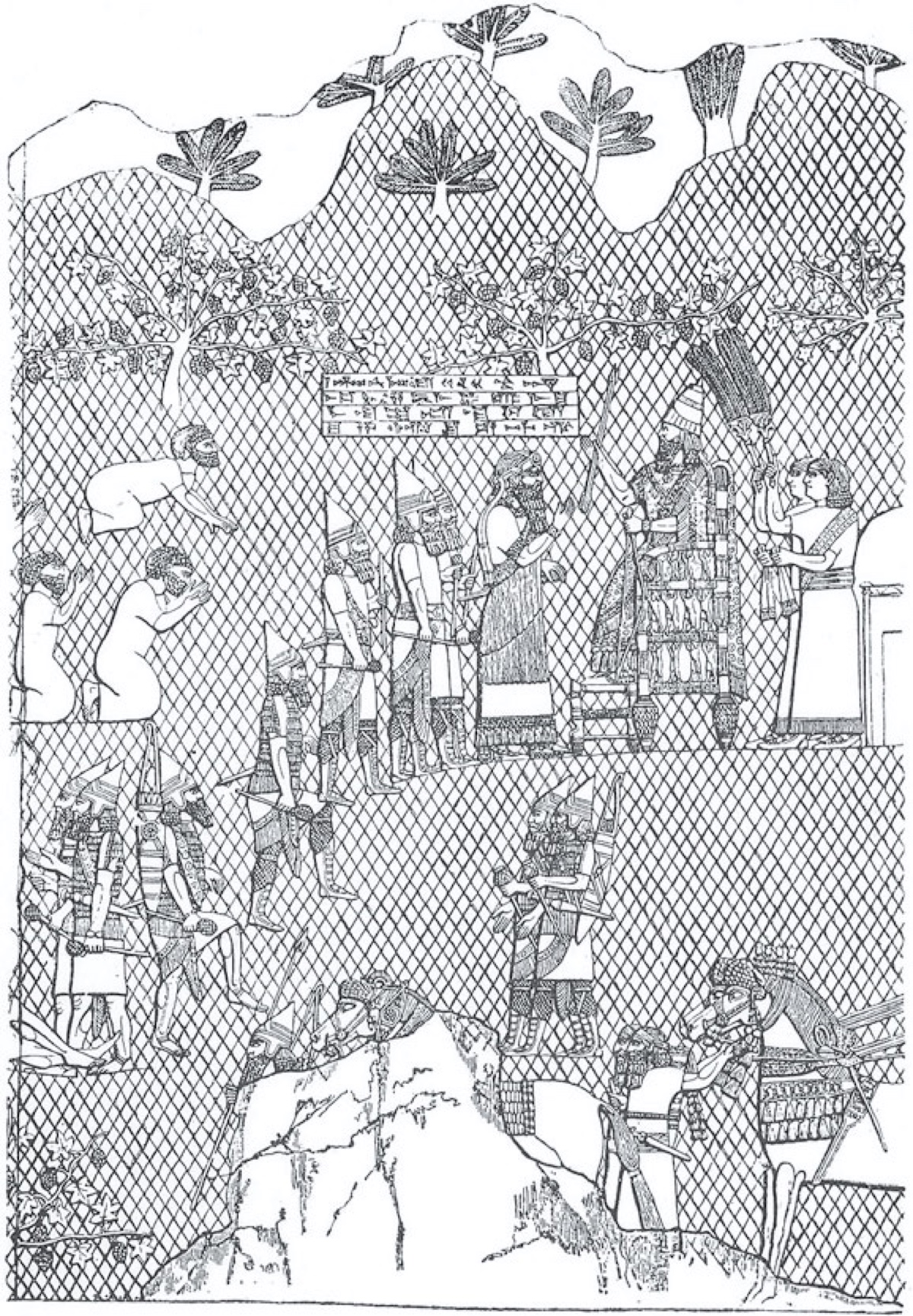
Caption 4: The original bas-relief of this image came from Sennacherib’s palace at Nineveh and is now on display at the British Museum in London. My copy is reproduced from my Logos Bible Software.
Mike Willis served as editor of Truth Magazine for forty years. Presently, he is preaching for the Decatur Township church southwest of Indianapolis, IN. The church website is here. He can be reached here.



By Chris Reeves
Synopsis: Preaching the gospel of Jesus Christ is a great blessing. We need more men today who will commit to this great work, and who will do it according to God’s plan for preachers set forth in the Scriptures.
This past June 2023 marked my thirty-fifth year of preaching the gospel full-time. The four years prior to that, I preached “off and on” as much as I could while I was in college. I can honestly say that preaching the gospel of Christ is the greatest work in all the world. If I had an opportunity today to mentor other men regarding the work of preaching, I would encourage them in the following matters:
Fewer and fewer men today are willing to preach on a regular basis for a local church [Note #1]. Fewer men have the desire to preach. Fewer men are learning and training to preach [Note #2]. I’m also hearing that some congregations who have an older preacher are looking for a younger man to mentor, but these congregations are having a hard time finding young men who are interested. Why is that? The lost still need saving and the saved still need edifying. Could it be that young men know that they might have to work with a church without elders? Could it be that they believe the pay will be too small?
Why are men today not wanting to preach? Men, will you please consider doing the greatest work in the world: gospel preaching? Whether you do it full-time or part-time, the Lord needs you to proclaim His gospel. I would like to see more older preachers training men. I would like to see more congregations encouraging men to preach. Who will preach “the unsearchable riches of Christ” today? Preachers, remember Paul’s words:
Thou therefore, my child, be strengthened in the grace that is in Christ Jesus. And the things which thou hast heard from me among many witnesses, the same commit thou to faithful men, who shall be able to teach others also (2 Tim. 2:1-2) [Note #3].
Let me say here that I enjoy reading religious books! There is nothing wrong with having them. Even Paul, at the end of his life, wanted his books and parchments (2 Tim. 4:13). I continue to buy religious books (mostly used, of course) and I have a large library [Note #4]. I have profited many times through the years from these Bible reference works. Still, I have also learned that one can easily be led astray by the words of men.
Today, it is very common to hear a young preacher talk about his favorite denominational author. Many in the Lord’s church today talk about books that they have read from authors like N.T. Wright, Timothy Keller, Francis Chan, Philip Yancey, Christopher J.H. Wright, Sarah Young, Kay Arthur, Beth Moore, Joyce Meyer, and Nancy Leigh DeMoss. While there may be some truths found in these books, they are often filled with errors as well. Years ago, older preachers warned about “drinking from denominational wells.” They meant that Christians can be negatively influenced by reading denominational literature. This, I fear, is going on today among our brethren. Can we get back to spending more time in the word of God and less time with the words of men? Preachers need to “preach the word” (2 Tim. 4:2), not parrot their favorite denominational authors [Note #5].
Along the same lines, I’m hearing that fewer preachers want books by sound brethren. Why would you turn to a denominational author to learn about a biblical subject rather than a faithful, sound brother or sister in Christ? Why not read from a member of the church who has both a love for Scripture and a sound hermeneutic which keeps him from teaching error? Are you looking for the latest “scholarship,” or are you looking for a proper interpretation of Scripture?
I would encourage preachers today to include in their libraries (whether traditional or electronic) works by faithful brethren. Get those older books by sound brethren before they go out of print. I would be glad to help you find good books (old and new) by brethren. The good folks at CEI Bookstore would be glad to help you as well. Preachers, remember Paul’s words:
As I exhorted thee to tarry at Ephesus, when I was going into Macedonia, that thou mightest charge certain men not to teach a different doctrine, neither to give heed to fables and endless genealogies, which minister questionings, rather than a dispensation of God which is in faith; so do I now (1 Tim. 1:3-4).
If thou put the brethren in mind of these things, thou shalt be a good minister of Christ Jesus, nourished in the words of the faith, and of the good doctrine which thou hast followed until now: but refuse profane and old wives’ fables. And exercise thyself unto godliness (1 Tim. 4:6-7).
Till I come, give heed to reading [the public reading of Scripture—CHR], to exhortation, to teaching (1 Tim. 4:13).
If any man teacheth a different doctrine, and consenteth not to sound words, even the words of our Lord Jesus Christ, and to the doctrine which is according to godliness; he is puffed up, knowing nothing, but doting about questionings and disputes of words, whereof cometh envy, strife, railings, evil surmisings, wranglings of men corrupted in mind and bereft of the truth, supposing that godliness is a way of gain (1 Tim. 6:3-5).
O Timothy, guard that which is committed unto thee, turning away from the profane babblings and oppositions of the knowledge which is falsely so called; which some professing have erred concerning the faith (1 Tim. 6:20-21).
But flee youthful lusts, and follow after righteousness, faith, love, peace, with them that call on the Lord out of a pure heart. But foolish and ignorant questionings refuse, knowing that they gender strifes (2 Tim. 2:22-23).
but shun foolish questionings, and genealogies, and strifes, and fightings about the law; for they are unprofitable and vain (Titus 3:9).
It seems like many younger preachers today are making assertions about Bible doctrines before taking time to study thoroughly the matter at hand. Preachers, along with other brethren, will jump on social media and say something about what they believe a verse in the Bible is teaching before they have properly studied that verse.
Years ago, preachers took their time to study thoroughly a Bible passage before speaking about it. They would take their time to do word studies, consider the context, look up all the supporting passages, etc. They would study, study, study. Debates and exchanges between preachers over Bible matters would take weeks and even months because preachers were taking their time to give due diligence to a study of Scripture. Today, Bible matters are brought up on social media and decided within the first thirty minutes of posting. Brethren, this is not good Bible study, and it’s irresponsible. Preachers, remember Paul’s words:
Of these things put them in remembrance, charging them in the sight of the Lord, that they strive not about words, to no profit, to the subverting of them that hear. Give diligence to present thyself approved unto God, a workman that needeth not to be ashamed, handling aright the word of truth. But shun profane babblings: for they will proceed further in ungodliness (2 Tim. 2:14-16).
We live in a world where much of our preaching is now posted online. This can be a good thing. We are blessed to have the technology today to broadcast the gospel message locally and around the world.
However, let us beware that we do not preach a message in such a way simply to get “likes” and “fans” from our regular “followers.” Our Facebook “friends” and “groups” do not determine the truthfulness of our message, the Scriptures do. As preachers, we are not aiming for a “recommendation,” “reply,” or “retweet” each week, but for accuracy with the Scriptures. We are not trying to promote our FB “story,” but the story of God’s word. We are not looking for what is “trending,” but what is truth. We are not wanting to go “viral,” but to be pleasing to God.
A preacher today can fall into a social media trap very quickly. Some preachers today may be looking for a large following with their posts, podcasts, and blogs. If they are seeking to gain a social media following, they can be tempted to change the gospel message ever so slightly so as to please their audience. If the audience does not really know God’s word themselves, they will want “their” favorite online preacher to preach it the way they believe it should be preached. Some preachers may also be aware of audiences who say something like “our generation has different needs,” so they change the gospel to meet those needs. Other preachers have a message that they want to just “put out there” on social media, but they don’t necessarily want to back it up with sound, scriptural arguments.
A preacher today can easily find himself teaching elements of denominational thinking, like Calvinism, in order to please his audience. Sometimes, he will avoid touching on certain topics that do not get good “reviews” from his followers. A preacher may even find himself focused more on what his audience wants and how to present it to them, than on the text of Scripture and his accurate study of it. His “sound” will be great, while his “substance” will be lacking. Preachers need to be concerned about their “sound” doctrine, not how they “sound” in the pulpit.
Preachers need to be concerned with being right with God’s word and not being right with the virtual world. Preachers, remember Paul’s words:
Hold the pattern of sound words which thou hast heard from me, in faith and love which is in Christ Jesus. That good thing which was committed unto thee guard through the Holy Spirit which dwelleth in us (2 Tim. 1:13-14).
But abide thou in the things which thou hast learned and hast been assured of, knowing of whom thou hast learned them; and that from a babe thou hast known the sacred writings which are able to make thee wise unto salvation through faith which is in Christ Jesus. Every Scripture inspired of God is also profitable for teaching, for reproof, for correction, for instruction which is in righteousness: (2 Tim. 3:14-16).
For the time will come when they will not endure the sound doctrine; but, having itching ears, will heap to themselves teachers after their own lusts; and will turn away their ears from the truth, and turn aside unto fables (2 Tim. 4:3-4).
Preachers, your work as an evangelist is just that, work [Note #6]. Faithful gospel preachers of years gone by made great sacrifices to preach the gospel. They labored for little pay. They often moved themselves and their families to meet the needs of the lost or other brethren. Frequently, they did not own a home. They preached protracted gospel meetings. They wrote tirelessly, travelled extensively, preached on the radio, held debates, etc. They put much of their own time and money into preaching. They suffered hardship for the gospel, and were completely devoted to their work [Note #7].
A preacher today needs to be careful not to become a “professional speaker” who does only the bare minimum. It’s relatively easy to be a public speaker and that may be why some men are getting into preaching these days. However, preaching is not just a nice “gig” where you get up a couple of times a week, speak, and get paid for it. Preachers need to resist the urge to waste time throughout the week, procrastinate, and then download someone else’s lesson from online at the end of the week in preparation for Sunday. Preaching, when done right, is a hard work. When we do that hard work, there will be great blessings and results in the Lord’s kingdom. Preachers, remember Paul’s words:
that thou keep the commandment, without spot, without reproach, until the appearing of our Lord Jesus Christ (1 Tim. 6:14).
For which cause I put thee in remembrance that thou stir up the gift of God, which is in thee through the laying on of my hands. For God gave us not a spirit of fearfulness; but of power and love and discipline. Be not ashamed therefore of the testimony of our Lord, nor of me his prisoner: but suffer hardship with the gospel according to the power of God (2 Tim. 1:6-8).
Suffer hardship with me, as a good soldier of Christ Jesus. No soldier on service entangleth himself in the affairs of this life; that he may please him who enrolled him as a soldier. And if also a man contend in the games, he is not crowned, except he have contended lawfully. The husbandman that laboreth must be the first to partake of the fruits (2 Tim. 2:3-6).
But be thou sober in all things, suffer hardship, do the work of an evangelist, fulfil thy ministry (2 Tim. 4:5).
We all have issues that we believe need to be addressed at a particular time in our work. I have addressed them from the pulpit and in writing some myself and I will continue to do so. Yet, while we are contending earnestly for the faith (Jude 3) against a particular error, let us also remember to proclaim the whole counsel of God (Acts 20:20, 27).
Let us be mindful of all the needs of the brethren who hear us from week-to-week. The congregations where we labor need to hear all of God’s word on a regular basis. Visitors and the lost will probably not know the details of the “issue” that we are addressing. They too require lessons geared toward their needs. Yes, stand for truth and against error, but remember, all of God’s word needs to be regularly proclaimed. Preachers, remember Paul’s words:
preach the word; be urgent in season, out of season; reprove, rebuke, exhort, with all longsuffering and teaching (2 Tim. 4:2).
But speak thou the things which befit the sound doctrine (Titus 2:1).
These things speak and exhort and reprove with all authority. Let no man despise thee (Titus 2:15).
Faithful is the saying, and concerning these things I desire that thou affirm confidently, to the end that they who have believed God may be careful to maintain good works. These things are good and profitable unto men (Titus 3:8).
We live in a time when it is popular to preach in such a way as to condone sin and error. Years ago, faithful evangelists would preach hard against sin, worldliness, dancing, drinking, gambling, etc. They would preach against the denominations and they would debate with denominationalists.
Yet, today you see less of that being done. Some preachers today will not preach any more about the “one true church.” They will not denounce and repudiate the denominations. It has been reported to me that some say that the church of Christ is a denomination just like the other denominations [Note #8]. Brethren, whether or not we want to admit it, there is a spiritual war going on and preachers need to continue to fight against sin and error, both in the world and in the church. Preachers, remember Paul’s words:
This charge I commit unto thee, my child Timothy, according to the prophecies which led the way to thee, that by them thou mayest war the good warfare… (1 Tim. 1:18).
These things write I unto thee, hoping to come unto thee shortly; but if I tarry long, that thou mayest know how men ought to behave themselves in the house of God, which is the church of the living God, the pillar and ground of the truth (1 Tim. 3:14-15).
But thou, O man of God, flee these things; and follow after righteousness, godliness, faith, love, patience, meekness. Fight the good fight of the faith, lay hold on the life eternal, whereunto thou wast called, and didst confess the good confession in the sight of many witnesses (1 Tim. 6:11-12).
And the Lord’s servant must not strive, but be gentle towards all, apt to teach, forbearing, in meekness correcting them that oppose themselves; if peradventure, God may give them repentance unto the knowledge of the truth, and they may recover themselves out of the snare of the devil, having been taken captive by him unto his will (2 Tim. 2:24-26).
This testimony is true. For which cause reprove them sharply, that they may be sound in the faith, not giving heed to Jewish fables, and commandments of men who turn away from the truth (Titus 1:13-14).
Often, a gospel preacher today will be doing a good work, but his wife or his children will be causing a problem in some way in the church, which negatively affects his work. Some preachers are also spending so much time with their work that they are neglecting their wife and the proper raising of their children. If a preacher is married with children, then the whole family, not just the preacher, needs to be faithful to the Lord. Preachers, remember Paul’s words:
Let no man despise thy youth; but be thou an ensample to them that believe, in word, in manner of life, in love, in faith, in purity (1 Tim. 4:12).
in all things showing thyself an ensample of good works; in thy doctrine showing uncorruptness, gravity, sound speech, that cannot be condemned; that he that is of the contrary part may be ashamed, having no evil thing to say of us (Titus 2:7-8).
Growing up, I was blessed to have a father (Bill Reeves) who was a faithful gospel preacher. Once I started preaching, I also had three brothers who were, and continue to be, faithful gospel preachers (Steve Reeves, Tim Reeves, and Mark Reeves). When I got married, my father-in-law (Charles G. Goodall) was a faithful gospel preacher. Today, my three sons (Jacob, Mason, and Carlin) and son-in-law (Caleb Chapman) preach from time-to-time in the congregations where they are members.
Because I have been surrounded by so many good gospel preachers in my life, I see the great importance and value of being a gospel preacher today. I hope that good men will want to do that same great work of preaching in days to come. May the good Lord raise up servants to proclaim His word. May you, my good brother who is reading this article, be the one who does it.
[Note #1] Preacher shortages, in fact, are not new. Brother James Needham wrote back in 1969 about the preacher shortages of his day in his book, Preachers and Preaching. Second Edition. Bulwarks Bookstore and Bindery, 1985.
[Note #2] The following good books can be used in preacher training: Letters to Young Preachers, edited by Warren Berkley and Mark Roberts (Spiritbuilding Publishing, 2011); Behind the Preacher’s Door, edited by Warren Berkley (Spiritbuilding Publishing, 2009); and, Common Sense Preaching, by Dee Bowman (Florida College Press, 1999).
[Note #3] All Scripture references in this article are taken from the American Standard Version (1901).
[Note #4] I am indebted to my mother-in-law, Vernita Goodall, who managed the Florida College Bookstore for many years and helped me to get many of the books that I have in my library to this day.
[Note #5] See The Bible in Preaching, by Roy E. Cogdill (Largo Church of Christ, n.d.).
[Note #6] For a good examination of the different Greek words and their meanings associated with the work of preaching, see Homer Hailey’s Carrying Out the Great Commission: According to the New Testament Pattern (Religious Supply, Inc., n.d.) and The Preacher—His Spirit and Work: 2 Corinthians, 1-2 Timothy, Titus. Bible Class Notes (Florida College Bookstore, n.d.).
[Note #7] I would encourage preachers today to read the biographies of hard-working, sacrificial preachers from years gone by and see what real preaching is all about. While many have been written, here are two: Preaching in A Changing World, by Irven Lee (Privately Published, 1975) and What It Is, Is Preaching, by Robert F. Turner (Harwell/Lewis Publishing, Co., 1998).
[Note #8] It appears that some preachers today are suffering from the terrible effects of modern society; namely, pluralism, all-positive preaching, and unity-in-diversity. My father-in-law, Charles G. Goodall, discussed these effects and how they have infiltrated the non-institutional segment of the Lord’s church in his excellent book, Evangelizing in the 21st Century: Strategies for Bringing Souls to Christ Beyond the Pulpit. Truth Publications, 2014.
Chris Reeves has preached for the Warfield Blvd. church of Christ in Clarksville, TN, since 2016. He and his wife, Cheri, have four children and two grandchildren. His Bible study website is here. The church website is here. He can be reached at here.





By Ben Mayberry
Synopsis: Hypocrisy is a major failing among many people, and we need to be wary so as to avoid this snare of the devil.
During His ministry, some of Jesus’s main adversaries were the Pharisees, Sadducees, and scribes (the chief religious leaders of the day). One of the greatest failings of this “religious” group was hypocrisy. Two thousand years later, hypocrisy is still a major problem among the people of the world and, sadly, even among some members of the Lord’s church. In Matthew 23, Jesus gives a series of examples of the Pharisees’ hypocritical failings. There are many lessons that could be gathered from this valuable chapter, but I will focus on three that jumped out at me as the most applicable to us today.
The scribes and the Pharisees sit on Moses’ seat, so do and observe whatever they tell you, but not the works they do. For they preach, but do not practice. They tie up heavy burdens, hard to bear, and lay them on people’s shoulders, but they themselves are not willing to move them with their finger (Matt. 23:2-4).
Too often, individuals are overly eager to point out every little fault of others (brethren and those of the world), but they ignore the sin in their own lives. We are too busy looking at other’s lives and berating them for their faults to recognize the train wreck of our own lives. In Luke 6:40-42, Jesus offered a graphic example.
A disciple is not above his teacher, but everyone, when he is fully trained, will be like his teacher. Why do you see the speck that is in your brother’s eye, but do not notice the log that is in your own eye? How can you say to your brother, ‘Brother, let me take out the speck that is in your eye,’ when you yourself do not see the log that is in your own eye? You hypocrite, first take the log out of your own eye, and then you will see clearly to take out the speck that is in your brother’s eye (Luke 6:40-42).
What if a Christian endeavors to convert an unbeliever, but that same Christian lives a life of sin? Do you think that the unbeliever will be likely to come to Christ? We need to be sure that we are always applying what we teach in our own lives; otherwise, we are no better than the flawed religious leaders of Jesus’s day.
They do all their deeds to be seen by others. For they make their phylacteries broad and their fringes long, and they love the place of honor at feasts and the best seats in the synagogues and greetings in the marketplaces and being called rabbi by others. But you are not to be called rabbi, for you have one teacher, and you are all brothers. And call no man your father on earth, for you have one Father, who is in heaven. Neither be called instructors, for you have one instructor, the Christ. The greatest among you shall be your servant. Whoever exalts himself will be humbled, and whoever humbles himself will be exalted (Matt. 23:5-12).
Another character flaw seen in the Jewish leaders that was addressed by Jesus was that they would do good deeds only to be seen by men. They loved the honors and praises of men, but gave no consideration to how God viewed their actions. When they prayed, they did so on the street corners, so men couldn’t help but see them and admire their religious zeal. When they gave, they did so to be witnessed of men and with no thought of God or the poor. Many people today are the same. They love the praises and admiration of men, but don’t give a thought about pleasing God. Today, whenever people do a good deed, they often post pictures of themselves doing so on social media. This is not at all what God wants of Christians today. In Matthew 6, Jesus gives us a pattern that should be our guide in doing good deeds.
Beware of practicing your righteousness before other people in order to be seen by them, for then you will have no reward from your Father who is in heaven. Thus, when you give to the needy, sound no trumpet before you, as the hypocrites do in the synagogues and in the streets, that they may be praised by others. Truly, I say to you, they have received their reward. But when you give to the needy, do not let your left hand know what your right hand is doing, so that your giving may be in secret. And your Father who sees in secret will reward you. And when you pray, you must not be like the hypocrites. For they love to stand and pray in the synagogues and at the street corners, that they may be seen by others. Truly, I say to you, they have received their reward. But when you pray, go into your room and shut the door and pray to your Father who is in secret. And your Father who sees in secret will reward you (Matt. 6:1-6).
Woe to you, scribes and Pharisees, hypocrites! For you, clean the outside of the cup and the plate, but inside they are full of greed and self-indulgence. You blind Pharisee! First clean the inside of the cup and the plate, that the outside also may be clean. Woe to you, scribes and Pharisees, hypocrites! For you are like whitewashed tombs, which outwardly appear beautiful, but within are full of dead people’s bones and all uncleanness. So you also outwardly appear righteous to others, but within you are full of hypocrisy and lawlessness (Matt. 23:25-28)
The apparent religious nature of the Jewish leaders fooled most of the nation, but Jesus saw right through them. As God did in the days of Samuel with the sons of Jesse, Jesus saw through the outward appearance of religion and saw the filthy nature of their hearts and minds. Many people today are fooling their spouses, friends, and brothers in Christ by an outward show of faith. They show up to all the services and act godly on Sunday, but when Monday rolls around, they act exactly like the world. They are like a bad apple. They look good and wholesome on the outside, but are rotten on the inside. God has warned us about the sin of leading a double life by the example of the scribes and Pharisees. We may be able to hide our sins from everyone in this world. No matter what we do, God will always know and hold us accountable.
Let us therefore strive to enter that rest, so that no one may fall by the same sort of disobedience. For the word of God is living and active, sharper than any two-edged sword, piercing to the division of soul and of spirit, of joints and of marrow, and discerning the thoughts and intentions of the heart. And no creature is hidden from His sight, but all are naked and exposed to the eyes of Him to whom we must give account (Heb. 4:11-13)
Hypocrisy was a significant issue among religious people in Jesus’s day, and not much has changed. Some Christians are driving people away from God’s message by their hypocritical lives. The Pharisees, Sadducees, and scribes often had a problem with preaching but not practicing, doing their deeds only to be seen of men, and having an outward appearance of cleanliness but being inwardly filthy. Someday we will meet the Lord, and I am sure you don’t want to go where all the hypocrites are going. As followers of Christ, let us guard against the pitfall of hypocrisy.
Ben has lived in middle Tennessee all of his life. He is the son of James and Amy Mayberry. He is a freshman in high school. He and his family attend Collegevue church of Christ in Columbia, TN. The church website is here. He can be reached here.






By Jeff Cason
Synopsis: God’s word teaches us that His love, mercy, and grace are linked to His commandments, truth, and will—thus “super-gluing” our attitudes to our actions.
Occasionally, you and I are confronted by someone who wants to emphasize and elevate God’s love, mercy, and grace over His commandments, truth, patterns, and will. Such individuals may also emphasize and elevate our attitudes, heart, and emotions over the necessity of our actions and obedience. The person who emphasizes these attitudes over actions can be your neighbor, your co-worker, your social contact, religious leaders, and sometimes, our brethren. Examples may include:
“I’m saved by grace, not baptism.”
“You’re being Pharisaical.”
“I feel like I’m saved.”
“Just pray the sinner’s prayer and ask Jesus to come into your heart.”
“I’m inclined to give more grace.”
When confronted with these and similar statements, we may feel unprepared and embarrassed that we haven’t memorized the appropriate Scriptures that present what God’s word says about the connection between attitudes and actions.
This article shows that attitudes and actions are “super-glued” together in Sacred Scripture. We don’t have to memorize passages that are unfamiliar to us. Most of the passages below that link attitudes and action are very well known to us. We memorized some of them as children. These verses below can be used by us to show our neighbor, our co-worker, our social contact, religious leaders, and our brethren that God doesn’t elevate attitudes over actions but regards both as equally important in the life of one who seeks to walk with God and love Him with all of his heart, soul, and mind (Matt. 22:37).
As with all the characteristics of God, we could never say enough or be thankful enough for His awesome attributes. His love, mercy, grace, and ways are immeasurable (Rom. 11:33; Isa. 55:8-11). However, we benefit from these attributes only when coupled with faithful action on our part. Consider the following Scriptures and note the connection between attitudes and actions in the highlighted words:
John 3:16 says, “For God so loved the world, that He gave His only begotten Son, that whoever believes in Him shall not perish, but have eternal life.”
John 14:15 says, “If you love Me, you will keep My commandments.”
Ephesians 4:15 says, “but speaking the truth in love, we are to grow up in all aspects into Him who is the head, even Christ.”
1 Peter 1:22 says, “Since you have in obedience to the truth purified your souls for a sincere love of the brethren, fervently love one another from the heart.”
Titus 2:11-14 says, “For the grace of God has appeared, bringing salvation to all men, instructing us to deny ungodliness and worldly desires and to live sensibly, righteously and godly in the present age, looking for the blessed hope and the appearing of the glory of our great God and Savior, Christ Jesus, who gave Himself for us to redeem us from every lawless deed, and to purify for Himself a people for His own possession, zealous for good deeds.”
2 Peter 3:18 says, “but grow in the grace and knowledge of our Lord and Savior Jesus Christ. To Him be the glory, both now and to the day of eternity. Amen.”
2 John 1-3 says, “The elder to the chosen lady and her children, whom I love in truth; and not only I, but also all who know the truth, for the sake of the truth which abides in us and will be with us forever: Grace, mercy and peace will be with us, from God the Father and from Jesus Christ, the Son of the Father, in truth and love.”
Romans 6:17 says, “Thanks be to God that though you were slaves of sin, you became obedient from the heart to that form of teaching to which you were committed.”
Acts 2:37-38 says, “Now when they heard this, they were pierced to the heart, and said to Peter and the rest of the apostles, ‘Brethren, what shall we do?’ Peter said to them, ‘Repent, and each of you be baptized in the name of Jesus Christ for the forgiveness of your sins; and you will receive the gift of the Holy Spirit.’”
Matthew 7:21 says, “Not everyone who says to Me, ‘Lord, Lord,’ will enter the kingdom of heaven, but he who does the will of My Father who is in heaven will enter.”
Deuteronomy 32:46 says, “He said to them, ‘Take to your heart all the words with which I am warning you today, which you shall command your sons to observe carefully, even all the words of this law.’”
Hebrews 10:19-25 says, “Therefore, brethren, since we have confidence to enter the holy place by the blood of Jesus, by a new and living way which He inaugurated for us through the veil, that is, His flesh, and since we have a great priest over the house of God, let us draw near with a sincere heart in full assurance of faith, having our hearts sprinkled clean from an evil conscience and our bodies washed with pure water. Let us hold fast the confession of our hope without wavering, for He who promised is faithful; and let us consider how to stimulate one another to love and good deeds, not forsaking our own assembling together, as is the habit of some, but encouraging one another; and all the more as you see the day drawing near.”
Notice the inextricable connection and equality of God’s love, mercy, and grace with His commandments, truth, patterns, and will in these passages. Notice the inextricable connection and equality of our attitudes, heart, and emotions with our actions and obedience.
Originally from Nashville, TN, Jeff Cason has been a Christian for over fifty years, having served as a deacon and an elder. He had a forty-one-year career in the accounting profession and brings the practicality of an accountant to the Bible studies he develops and leads. He is passionate about the distinctive plea for the church that is revealed by God in His word. His book, The Distinctive Plea, is an example of that passion. He lives in Huntsville, AL, and can be reached here.



By Ron Halbrook
Synopsis: A book falsely claiming to have been written by the biblical character Enoch is often paraded as one of the so-called lost books of the Bible. There are no such books, but the Bible warns against adding anything to God’s word!
Enoch’s life is recorded in Genesis 5:18-24, and he lived long before the Flood of Noah’s time. The so-called book of Enoch is a fake book which stole his name to give it credibility. It was written sometime in the period between 200 BC and AD 200, when many such books were written by Jewish authors. It is one of many well-known books called pseudepigrapha. This word means books written by authors who attribute their writings to someone in the Bible to give these fake books some credibility.
Jude 14-15 quotes something the Bible character Enoch said, but it does not mean Jude quoted the fake book which hijacked Enoch’s name. “And Enoch also, the seventh from Adam, prophesied of these, saying, Behold, the Lord cometh with ten thousands of His saints, to execute judgment upon all, and to convince all that are ungodly among them of all their ungodly deeds which they have ungodly committed, and of all their hard speeches which ungodly sinners have spoken against Him.” Jude wrote by the inspiration of God and that is how he knew what the true Enoch had said many millennia before his time.
Any similarity between Jude’s quotation and the pseudepigraphal Enoch may be the result of the latter author plagiarizing Jude’s epistle (the actual dating and possible editing/editings of the pseudepigraphical Enoch are uncertain). For an actual book of Enoch to have survived the Flood would have required Noah taking it on the ark with him. In that case, how would we explain that the authors of the Old Testament books made no reference to the existence of such a book?
Romans 3:1-2 affirms that God gave His oracles or divine revelation to the Jews. The Jewish Bible was written between the time of Moses (author of the first five books, written about 1400 BC) and Malachi (written about 400 BC). The Jewish Scriptures never included the so-called book of Enoch. Jesus and the Jews of the first century had the complete Old Testament and Jesus referred to it in Luke 24:44: “And he said unto them, These are the words which I spake unto you, while I was yet with you, that all things must be fulfilled, which were written in the law of Moses, and in the prophets, and in the psalms, concerning me.” The so-called book of Enoch has never been part of the Law of Moses, the Prophets, or the Psalms.
2 Peter 3:1-2 says, “This second epistle, beloved, I now write unto you; in both which I stir up your pure minds by way of remembrance: That ye may be mindful of the words which were spoken before by the holy prophets, and of the commandment of us the apostles of the Lord and Saviour.” The so-called book of Enoch was never counted among the Old Testament prophets, nor was it written by the apostles of Christ. It has never been part of the true Bible.
The Bible warns several times that it is a sin to try to add anything to God’s true holy word such as in Revelation 22:18, “For I testify unto every man that heareth the words of the prophecy of this book, If any man shall add unto these things, God shall add unto him the plagues that are written in this book.” We should not attempt to add the false so-called book of Enoch to the true Bible, lest we incur the wrath of God.
It is common for pseudepigrapha to attempt to build and elaborate on information given in the Bible in order to give the appearance of being additional Scripture, but the added stories are inconsistent and contradictory to the true events recorded in God’s word. Enoch chapters 6-7 attempt to build on Genesis 6:1-4 by claiming that 200 angels came to earth to marry and impregnate females in order to produce giants and “taught them charms and enchantments, and the cutting of roots, and made them acquainted with plants” (Enoch 7:1-2). Enoch 7:2 says of the giants, “whose height was three thousand ells,” (i.e., a measure equaling over 11,000 feet tall)!
No, the sons of God or godly descendants of Seth married the wicked family of Cain and produced people who became very wicked in Genesis 6, leading to the Flood. Jesus taught that angels are not sexual creatures and are not capable of marriage (Matt. 22:29-30).
The fake book of Enoch claims that Enoch was alive in Noah’s time and that he told Methuselah to relay a message to Noah’s father to name his son Noah. Enoch 107:2-3 says, “And now, my son, go and make known to thy son Lamech that this son, which has been born, is in truth his son, and that (this) is no lie.’ And when Methuselah had heard the words of his father Enoch—for he had shown to him everything in secret—he returned and showed (them) to him and called the name of that son Noah; for he will comfort the earth after all the destruction.” Enoch 106:18 also says that Enoch told Methuselah to name the child Noah.
Enoch 106:3 claims that Noah spoke as soon as he was born: “And when he arose from the hands of the midwife, he opened his mouth and spoke to the Lord with righteousness.”
While the Bible clearly teaches that God commanded Noah to build the ark, and he built it exactly according to God’s pattern in Genesis 6, Enoch 67:1-3 claims that God sent angels to build the ark.
Let us heed God’s warning in Revelation 22:18, “For I testify unto every man that heareth the words of the prophecy of this book, If any man shall add unto these things, God shall add unto him the plagues that are written in this book.”
Ron Halbrook and Danny Linden labor with the Hebron Lane church of Christ in Shepherdsville, KY. Ron also engages in foreign evangelism, frequently travelling to the Philippines and elsewhere. He and his wife, Donna, have three children. The church website is here He can be reached at here.


By Warren E. Berkley
Synopsis: In human affairs, “Keeping it simple” helps avoid confusion and complexity. Occam’s razor states that the simplest explanation is usually the best one. “Less is More!” is a design principle based upon the concept that reducing the number of elements in a product or procedure can increase its impact and value. This concept applies in the spiritual realm.
What if I said to you, just the imperative: “Follow.” Your inquisitive response would sound something like this: “Follow what, follow whom?” The word “follow” just doesn’t stand alone, missing context.
Like an echo that comes after the sound, like the shadow that requires an image, like other imperatives that require context, just the word “follow” begs for context: “Follow what, follow whom?”
The Bible never just says “follow.” There is always context identifying who or what to follow.
Jesus said, “Whoever follows me will not walk in darkness” (John 8:12).
Jesus said “If anyone serves Me, he must follow me” (John 12:26).
Peter wrote about Jesus, commanding his readers to “follow in His steps” (1 Pet. 2:21).
“Follow,” as an imperative begs for context: “Follow what, follow whom?” In 2 Timothy 1:13, the context is, “follow the pattern of the sound words.” Timothy had heard a pattern, sound words, from the apostle Paul. Those words delivered by Paul were given to Him by the Holy Spirit (see 1 Cor. 2:1-5, 13; 14:37; 1 Thess. 2:13).
So the charge to Timothy was: “Follow the pattern of sound words that came from God through me.” Timothy was not granted permission to change the message, revise the message, replace the message, or edit the message. He was to “guard the good deposit entrusted to” him (v. 14). It is this simple. Timothy was to live out the pattern of sound words in his life and teach and preach only what had been revealed through the apostles. This is following the pattern, and sometimes we legitimately refer to this as Bible authority.
With that introduction in mind, give your attention to the entire passage:
Therefore, do not be ashamed of the testimony about our Lord, nor of me His prisoner, but share in suffering for the gospel by the power of God, who saved us and called us to a holy calling, not because of our works but because of His own purpose and grace, which He gave us in Christ Jesus before the ages began] and which now has been manifested through the appearing of our Savior Christ Jesus, who abolished death and brought life and immortality to light through the gospel, for which I was appointed a preacher and apostle and teacher, which is why I suffer as I do. But I am not ashamed, for I know whom I have believed, and I am convinced that He is able to guard until that day what has been entrusted to me. Follow the pattern of the sound words that you have heard from me, in the faith and love that are in Christ Jesus. By the Holy Spirit who dwells within us, guard the good deposit entrusted to you (2 Tim. 1:8-14, ESV).
“The testimony about our Lord” or “the gospel by the power of God” are phrases identifying the message Paul delivered that was “the pattern of sound words.” Timothy is charged with following that pattern in his life and teaching. Follow what? The pattern of sound words. No permission is given for Timothy to just make something up or revise the pattern.
Timothy is to “not be ashamed” of the message, suffer for it and be faithful to the One who called us to a holy calling. He was to guard the deposit (what was given to Him through Paul).
What does all this have to do with us today?
Are we justified in concluding that while Timothy was limited to the pattern, we are not? The pattern (i.e., the faith [Jude 3]) was “once for all delivered to the saints.”
What would lead us to think that we have some broad permissiveness and right to edit the pattern—a “right” that Paul said Timothy did not have? Some who argue for a “new method,” “new hermeneutic” or a new journey to biblical interpretation ignore the charge to follow the pattern of sound words we have in the New Testament. They are claiming to have the right to do what Paul and other New Testament writers forbade.
In the Legacy Standard Bible, it is rendered, “hold to the standard of sound words.” In the NIV, it reads, “what you heard from me, keep as the pattern of sound teaching, with faith and love in Christ Jesus.” The NASB95 reads “retain.”
Unchanging patterns also dominate congregational behavior in the New Testament. Paul taught the same things “everywhere in every church” (1 Cor. 4:17; 7:17; 14:33; 16:1). He told Titus, “For this reason I left you in Crete, that you might set in order what remains, and appoint elders in every city as I directed you” (Titus 1:5). After discussing public prayer, the role of women, and the appointment of elders and deacons, Paul says to Timothy, “I am writing these things to you … so that you may know how one ought to conduct himself in the household of God, which is the church of the living God, the pillar and ground of the truth” (1 Tim. 3:14-15). In what may have been his last letter, he instructed Timothy, “Retain the standard (hypotyposis—model, example) of sound words which you have heard from me, in the faith and love which are in Christ Jesus” (2 Tim. 1:13).
The New Testament contains authoritative instruction. It is also crammed full of normative patterns involving real people. The reason their examples are preserved for us is inextricably tied to the authority of the Lord who preserved them. God evidently wanted to show us how to apply His truth through their real-life situations. Unless we find adequate reason in Scripture to demote an approved pattern of behavior to non-binding or optional status, we must assume God has something specific in mind (Wilson, 26).
Whatever you may hear or read, no matter the disturbing changes in the religious culture or among our brethren, this passage will always tell us to follow the pattern. It is that simple!
Further, should you hear or read remarks claiming that “patternism” is in conflict with love—note from this passage: “Follow the pattern of the sound words that you have heard from me, in the faith and love that are in Christ Jesus.”
Then again, should there be a suggestion that “patternism” conflicts with grace? Check the context again: “the power of God … saved us and called us to a holy calling, not because of our works but because of His own purpose and grace, which He gave us in Christ Jesus before the ages began.”
Follow the pattern. It is that simple.
New American Standard Bible: 1995 Update (NASB95). La Habra, CA: The Lockman Foundation, 1995.
Wilson, Mike (1993). “Does the New Testament Mean Now What It Meant Then?” Christianity Magazine, 10(8), 26.
Warren Berkley worships with the Northside church of Christ in Greenwood, AR, where he performs teaching and preaching duties but not in a full-time capacity. Previously he labored with the Laurel Heights congregation in McAllen, TX, for thirty-three years. He and his wife, Paula, have three children and eleven grandchildren, and four great grandchildren. The church website is here. His blog is here. He is also an active contributor to Pressing On Magazine. He can be reached here.



By Daniel H. King, Sr.
Synopsis: In the Old Testament, Israel worshipped God in the tabernacle, and later the temple. In the New Testament, the temple of God is not a physical building but a spiritual reality—reflected in the lives of individual Christians and the church of our Lord Jesus Christ. Individually and collectively, we must be set apart for God’s purpose and glory. Instead of tearing down the temple of God, let us built it up by pursuing and promoting the truth of the gospel.
People whose attitudes and actions are destructive to the peace and goodwill of the local church have not given ample consideration of the immediate or ultimate ramifications of their activities. Usually, in such circumstances, there are personal grudges or proclivities toward factionalism that they wish to exercise to a degree that it will have disruptive results in the local fellowship of the saints of God. Their feelings may be so strong in the matter that their desire for vengeance on another party to the affair that everything else pales into relative insignificance. Whatever else may follow in the end, even if it results in the dissolution of the church body, it must be brought to a satisfactory conclusion for the “injured” party. Certainly, there is also in evidence an ignoring of the ultimate consequences for them personally. They fail to consider the price they someday will pay for their heedless behavior regarding the divine directives about such things.
Those of us who have lived more than a few decades and have been involved in local church “politics” for a good space of time can testify to the truthfulness of this sad testimonial to church division. Davidson County, Tennessee, where I have spent most of my already long life, once had over 250 churches of Christ meeting regularly. If my own experience in this regard is worth anything at all in consideration of such matters, my guess would be that at least one third of those congregations came to exist, not out of a desire to spread the gospel into a new community, but from a personal quarrel between brethren who were not able to worship together because of injured feelings or because someone did not get his way on some issue that was of relatively little significance. It amounts to “growth by division”—a method that was never blessed by the Lord or His apostles for the expansion of the kingdom of God. Church division is never a desirable outcome, even when truth is at stake. Someone or some people have sinned whenever there is turbulence and trouble in a local church. Yes, sometimes it is essential because some person or group is insistent on having their own way at the expense of the word of God, but in each and every case there has been “sin in the camp” of spiritual Israel, and the Lord is never pleased with such an outcome.
Divisiveness, quarrelsomeness, the party spirit, and other such attitudes and actions are, of course, roundly and authoritatively condemned in Scripture (Rom. 16:17; Gal. 5:20). The church at Corinth is a case study of division over many issues, some important and having broad consequences for the Christian way of thinking and acting, while others are relatively less so. Is it not interesting that the Lord utilized this troubled congregation to teach us so many lessons about a variety of topics, while the church at Philippi is precisely the opposite? The latter congregation was mostly at peace, save for the personal quarrel between Euodia and Syntyche that still needed to be addressed (4:2), and which Paul hoped might yet be settled and the congregation be left entirely at peace and in harmony.
Corinth, on the other hand, was a church at war with itself on a multitude of different fronts. Those who were at the heart of these issues may have been many in number, given that there are so many difficulties and challenges represented in the two surviving letters that we have to study. Paul, at one point in his presentation, makes a declaration that cannot be ignored by anyone who is serious regarding spiritual matters. Pushing such issues, especially those of little merit, to the decimation of the congregation surely is not an action plan that is worth the cost that must ultimately be paid by all concerned. He writes:
Do you not know that you are a temple of God, and that the Spirit of God dwells in you? If any man destroys the temple of God, him shall God destroy; for the temple of God is holy, and such are you (1 Cor. 3:16-17).
This is a singularly important text, deserving further consideration and analysis, so we will make a few observations regarding it at this point:
Clearly, Paul has something specific in mind as he gives this depiction. Temples spotted the landscape throughout the ancient Greek and Roman world. They were located in the city-centers of many of their cities, but were also found in rural and mountainous regions. The gods of the ancient peoples numbered in the hundreds, and perhaps even into the thousands. Such sacred spots were considered to be holy places by virtue of the perceived presence of the deities worshipped in those locations. Israel’s tabernacle, and later her temple, was deemed sacred for the identical reason. God hallowed it by His presence.
In this passage, Paul clearly has one of three things in mind as he addressed the problems of the Corinthians. He could have had in mind the individual believer as the “sacred space” of the deity, but his use in this case of the plural pronouns in both verses seems to militate against this theory. Secondly, he could have the church in mind in its universal sense, all Christians everywhere. However, that does not seem likely either, given the broader context of his remarks. Thirdly, the local congregation of the saints at Corinth could be his meaning. In our view, this designation seems to be the best, given what he has to say in 3:5-15 in leading up to these verses. The church at Corinth was being splintered and torn asunder by the many divisive positions being entertained by various ones within its communion, and Paul was worried that ultimately it would be destroyed by these different perspectives on a whole host of matters (cf. 1 Cor. 1:10-11, 13).
Here, we must attempt to gain an even broader perspective on his remarks by considering the first several chapters of 1 Corinthians leading up to these comments, for that is the more remote context. What kind of destruction is he talking about? It will be recalled that he criticized the Corinthians because some of them tended to lean on human wisdom as a source of information regarding spiritual things (1:10-2:16). What was the outcome of this? It resulted in jealousy, envy, strife, and division (3:1-4:21). Hence, the church was fractured and split into various subdivisions on the basis of these resulting opinions. In Paul’s view, the message of the cross of Jesus Christ must prevail over the world and its wisdom (1:18-25), or else local church dissolution will result. After all, the unity of a church locally is essentially a fellowship regarding those things had in common. The more differences there are, the less cement there is to hold it together. This is precisely how and why a congregation must seek to stress those things that lead to unity. The alternative leads to division and so, finally, to the destruction of the local body.
In short, according to a right and proper interpretation of Paul’s language, anyone who works toward the damaging of a local fellowship of Christians is a destroyer of the temple of God, whether it is done mindlessly or on purpose. There is little doubt that some of those who troubled the work at Corinth were unaware of how the sordid attitudes and actions of which they were guilty were affecting the unity of the congregation. It is for this reason that Paul writes to them as he does. He is attempting to show them how destructive they are. Even where there was almost no trouble, as in the case with the congregation at Philippi, he encourages the brethren there to “help these women” to settle their differences and work together in harmony. Even a little trouble can lead eventually to larger fissures in the body; so even those should be worked on if it is at all possible to settle them in a timely manner.
Most of us, at one time or another, have experienced the carnage and chaos of a local church division. Unfortunately, such tragedies have happened so frequently over the years that this has become almost a regular feature of church life. I have heard people make the claim that this is a characteristic almost solely of churches of Christ, but the facts of the case negate this silly notion. Those who are observant see them happening in all the religious bodies around us. How else could we explain the hundreds of different denominations and the innumerable separatist movements independent of large sectarian organizations? It is a problem with the human condition rather than a condition associated with a particular religious movement (i.e., Restorationism). Paul warned the Corinthians elsewhere that there would be factions among them, so “that those who are approved may be made manifest among you” (1 Cor. 11:19).
We should expect nothing less in our own case. Let us, therefore, make it our aim not to be the cause of such divisions. This passage has been characterized as the most stringent of the warnings found in Paul’s letters. Assuredly, it ought to be seen as a powerful admonition against allowing our passions to motivate our attitudes or actions, rather than a resorting to a calm study of the word of God, dispassionate discussion of issues, and a desire to keep the “unity of the Spirit in the bond of peace” (Eph. 4:3). We ought always to recall the words of the apostle: “If any man destroys the temple of God, him shall God destroy.”
Daniel H. King, Sr. lives in Columbia, TN. He and his wife, Donna, have two children. He has preached for the Locust St. church of Christ in Mt. Pleasant, TN, since 2015. Presently he is also serving as an elder of the congregation. The church website is here. He can be reached here.

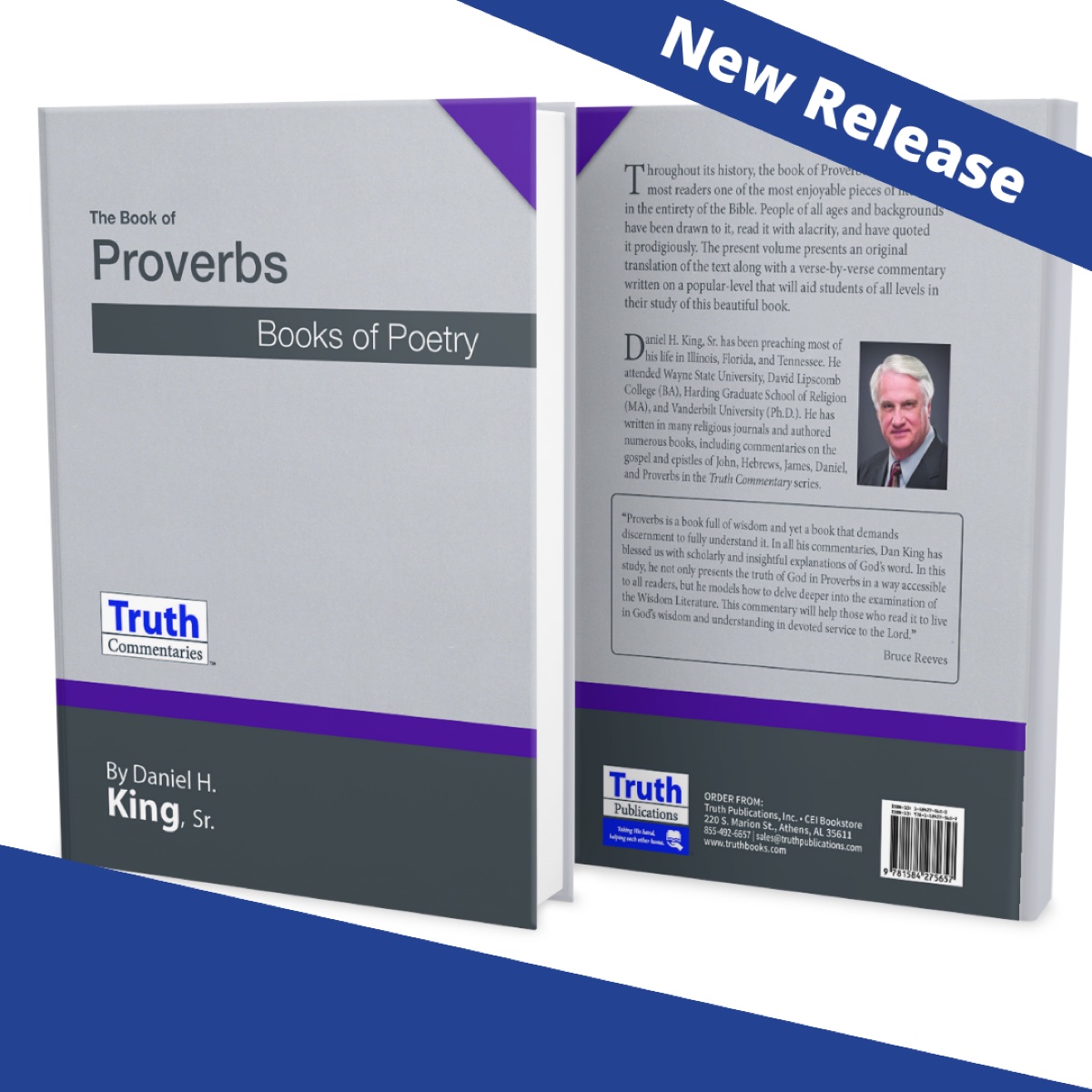
By Bruce Reeves
Synopsis: As gospel preachers, we must pursue our Lord zealously, love His word passionately, and share His heart with our families, our brethren, and the lost. Pride is our enemy, but grace leads us to humility.
There has been some discussion lately about preachers and jealousy. Once I knew a man who told a gospel preacher that he did not think that it was fair that he had more personal time to study the Bible than he did. All I know to say about that is “Wow!” At the heart of the forces of jealousy and fleshly attitudes among brethren is pride. Such egotism manifests itself in a variety of ways.
It is hard to imagine a more significant work than teaching and preaching the gospel of Christ (Matt. 28:18-20; Mark 16:15-16). Paul wrote, “How will they preach unless they are sent? Just as it is written, ‘How beautiful are the feet of those who bring good news of good things!’” (Rom. 10:15). When we fully realize that we are serving the blessed Savior, our hearts will be filled with reverence and humility before our divine King.
As we preach the gospel, it is critical that we appreciate our role as servants of Christ as well as our brethren. Apparently, because of the carnality in the church at Corinth, there was an unhealthy attitude toward certain teachers. Paul encouraged them to be “complete in the same mind and in the same judgment” (1 Cor. 1:10). Some were claiming to be “of Paul,” some of “Apollos,” and others of “Cephas.” Rather than recognizing the importance of the One who had died for them and in whose name they had been baptized (1 Cor. 1:13), the Corinthians were boasting about mortal men who had baptized them (1 Cor. 1:15-17).
Because of this thinking, Paul addressed their view of their teachers (1 Cor. 3:1-3) and clarifies the role of preachers in the kingdom of God (1 Cor. 3:4-11). Notice Paul’s admonition, “For when one says, ‘I am of Paul,’ and another, ‘I am of Apollos,’ are you not mere men? What then is Apollos? And what is Paul? Servants through whom you believed, even as the Lord gave opportunity to each one” (1 Cor. 13:4-5). As we proclaim the gospel, let us always give glory to God for the opportunity to do good and acknowledge that it is “God who causes growth,” not ourselves. There is no room for “jealousy and strife” among “fellow-workers” (1 Cor. 3:3, 9), but we must determine to preach “Christ and Him crucified,” so that those who hear us will depend on the “power of God” and not the “wisdom of men” (1 Cor. 2:1-2, 5).
With that said, sinful pride can defile any of us. Moreover, it is quite deceptive. There is no greater tool of Satan in destroying faithful preachers of the gospel than through pride, selfishness, and conceit. Paul warned Timothy of these very dangers, “The Lord’s bond-servant must not be quarrelsome, but be kind to all, able to teach, patient when wronged, with gentleness correcting those who are in opposition, if perhaps God may grant them repentance leading to the knowledge of the truth, and that they may come to their senses and escape from the snare of the devil, having been held captive by him to do his will” (2 Tim. 2:24-26). While teachers of God’s word should be confident in the Scriptures and zealously proclaim Christ, we must do so with the attitude of Jesus (Phil. 2:5). John warns that the love of the world entices us through “the desire of the flesh, desire of the eyes, and boastful pride of life” (1 John 2:16).
There are those who seem to think that if one is speaking the truth, nothing else matters. However, Paul encourages the brethren at Ephesus to “preach truth in love” even as the “deceitful scheming” of false teaching is reproved (Eph. 3:14-15). The apostle describes both those who preach the truth “sincerely,” and also those who preach Christ out of “selfish ambition,” “envy,” and “strife” (Phil. 1:15-18). He is not describing Judaizers whom he later depicts as “dogs,” “evil workers,” and “enemies of the cross” (Phil. 3:2, 18). Rather, he is describing those who are teaching the truth about Christ with the wrong motives. Paul could rejoice that they were preaching Christ and commit the final judgment to God regarding their motives.
What this shows us, however, is that pride can enter the hearts even of those who are teaching the truth of the gospel. Even when we are defending the hope of Christ, we must do so with “meekness and fear” (1 Pet. 3:15).
It is an obvious red flag! When our goal is advancing our own personal agenda, notoriety, and objectives, rather than the advancement of the message of the gospel and the wellbeing of God’s people, there is a definite problem in our thinking. One of the significant differences between the apostle Paul and the false teachers in Corinth was their motive for teaching. For instance, Paul’s boasting was not in himself, but in Christ Jesus (2 Cor. 10:1-6, 17; 11:13-14; 12:1-10). Likewise, in Galatians, he describes the fleshly boasting of the Judaizing teachers who were troubling the brethren (Gal. 1:6-9; 5:7-15; 6:12-14). If our work is designed to gain a personal following more than it is to bring people closer to Christ, if our teaching is intended to feed our egotism, rather than to glorify God, or if we are more concerned about people supporting us than the truth, then there should be a serious concern about our perspective of what it means to preach the gospel.
Another sign of pride in our lives as preachers is the thought that our “sins” are more defensible than those of others. We too must constantly examine our hearts and confess our sins (1 John 1:9). Satan has destroyed many a preacher’s influence because of immorality. As gospel preachers, we must exercise constant diligence to resist the wicked one. We should never think, “Well, that could never happen to me.” Paul warns us all to “take heed lest you fall” (1 Cor. 10:12-13). Pride has led preachers to move from offering counseling and instruction to engaging in extra-marital affairs, consuming pornography, embracing doctrinal error, maliciously slandering their own brethren, including their fellow-laborers in the gospel. Pride has led men to neglect their own wives and children because, after all, they are “preaching the gospel.” Remember, the gospel calls us all to love our wives and children, to love our brothers and sisters, and to glorify our Creator through sanctified lives (2 Cor. 6:14-7:1; Eph. 5:22-33; 1 Pet. 1:22).
Pride can also be seen in those who depart from clear biblical truth to absurdly unbiblical teachings because they have allowed bitterness and a carnal desire for notoriety to fill their hearts. Our aim must always be to teach the truth “in season and out of season” out of our love for our God (2 Tim. 4:1-6). Many condescendingly dismiss faithful and sacrificial brothers and sisters from the past to blindly follow those who advocate divisive and unbiblical teachings.
In other words, although jealousy is a problem we have all seen before—we must always be concerned about the danger and deception of pride in our own hearts (1 John 2:15-17). We may begin to believe that anyone who offers constructive critique or expresses concern about our teaching must be “jealous” or “envious.” Of course, we know better than that or Peter would not have listened to Paul (Gal. 2), nor would the overtaken brother listen to the spiritual believer who is helping him (Gal. 6:1-2). Pattern of conduct can be quite revealing. Is this a person who has shown a pattern of conduct of serving the Lord faithfully? Do they love and support me in doing good? Perhaps there are those who seem to be envious of others—but that doesn’t mean I should jump to that conclusion about brothers who are genuinely concerned for me. “The wounds of a friend are faithful, but the kisses of an enemy are deceitful” (Prov. 27:6).
Let us realize as gospel preachers that we must pursue our Lord zealously, love His word passionately, and share His heart with our families, our brethren, and the lost. Pride is our enemy, but grace leads us to humility. “But He gives a greater grace. Therefore, it says, ‘God is opposed to the proud, but gives grace to the humble.’ Submit therefore to God. Resist the devil and he will flee from you. Draw near to God and He will draw near to you. . . Humble yourselves in the presence of the Lord, and He will exalt you” (Jas. 4:6-7, 10). Great good comes when we preach the truth in love with humility!
Bruce Reeves has labored with the Highway 65 church of Christ in Conway, AR, since 2000. He and his wife, Rachel, have one child. The church website is here. He can be reached here.



By Steve Wallace
Synopsis: Deism and Christianity offer two radically different ways of understanding God and his relationship with the world. Deists view God as a distant and impersonal being who created the world and then left it to run according to natural laws. Christians believe that God is a loving and personal being who seeks a relationship with mankind, whom He created in His own image. The apostle Paul affirmed this latter concept in the sermon he presented in Athens.
In Acts 17, Paul spoke before a skeptical, critical audience, some of whom would subsequently mock him. Among the things he said were the following:
. . .He made of one every nation of men to dwell on all the face of the earth, having determined their appointed seasons, and the bounds of their habitation; that they should seek God, if haply they might feel after Him and find Him, though He is not far from each one of us: for in Him we live, and move, and have our being; as certain even of your own poets have said, For we are also His offspring (vv. 26-28).
Let us focus on what Paul said in verse 27 about God’s proximity to all men. What would these words have meant to His audience? Paul is speaking before idolaters, many of whom believed in gods who were distant, only bothering to interact with man when aroused by some emotion. The God of whom Paul speaks differs greatly from gods of the Athenians. Let us notice some texts that emphasize God’s nearness.
Consider some of the miraculous visions granted to saints in the first century. Stephen saw a vision of Jesus standing at the right hand of God (Acts 7:55). The Lord appeared to Paul in Corinth and spoke to him again in Jerusalem (Acts 18:9; 23:11). Christ is seen to be “not far” from man in these verses. He has promised, “Lo, I am with you always, even unto the end of the world” (Matt. 28:20).
Think of Jesus’s position as mediator for His people (1 Tim. 2:4, 5). What a comfort it is for Christians to be able to call on the Father at any time and any place—at home, at work, at school, or while driving down the road. Jesus is not distant. Truly, “He ever liveth to make intercession for them” (Heb. 7:25).
Let us reflect on the conversion of the Ethiopian eunuch. He and Philip were in the desert. There was no nearby organization; they were far from the temple and the religious figures of the day. The eunuch heard the gospel and was able to obey it, responding to God’s word in so doing, because He was not far even in that remote place (Acts 8:35-39).
As we ponder these evidences of the nearness of God, let us consider cases where people saw a glorious vision of the divine presence (Isa. 6:1-5; Ezek. 1:28). The prospect of seeing God was terrifying—even to righteous men. In Revelation 1, before a glorious vision of the risen Christ, the apostle John wrote, “When I saw him, I fell at His feet as one dead” (v. 17). Seeing the glory of God is not an easy thing to do.
With all this in mind, how do you feel right now about God not being far from any of us? Are you comfortable with that thought? John’s experience in Revelation 1 shows that consciousness of divine nearness should be sobering to even faithful Christians. If you feel discomfort at the thought, why is this so? Is it caused by an awareness that you are not in a right relationship with Him? Is this because you have not sought salvation on the Lord’s terms? If so, the way is clear. Believe His word, repent of your sins, confess your faith in Christ and be baptized, and you can be like the eunuch, rejoicing in your salvation (Acts 8:39). Does the Lord’s proximity make you feel uneasy because of your awareness of habitual sin in your life? Again, the way to calm this feeling is clear: confession and repentance (Acts 8:22; 1 John 1:9). He is there for you! Please do not fail to come to Him.
Steve Wallace has worked with the church in Round Lake Beach, IL, since 2015. Previously, he and his wife, Mary, labored for many years in Germany. He can be reached here.




Note: Please send additions, corrections and updates here.
Updated: 12/1/2023
17312 Jones Rd, Athens, AL 35613
Sun. Bible Study 9:30 am | Sun. Worship: 10:20 am & 5:00 pm | Wed. Bible Study 7:00 pm
Evangelist: Jonathan Reeder | jonesroadchurch.org | 256-233-3160
514 W Market St, Athens, AL 35611
Sun. Bible Class 9:45 am | Sunday Worship 10:30 am & 5:00 pm | Wed. Bible Study 6:30 pm
Evangelist: David A. Cox | 256-232-1525 | marketstreet-church.com
24190 Wooley Springs Rd, Athens, AL 35613
Sun. Worship 9:30 am & 5:15 pm | Wed. Bible Class 7:00 pm
Evangelists: Bob Watson & Matt Taylor | mtzionchurchofchrist.org
2325 Old Columbiana Rd. (near I-65 & Hwy. 31)
Sun. Bible Study 9:00 am | Worship 10:00 am & 5:00 pm | Wed. Bible Study 7:00 pm
Evangelists: Zack Lee | 205-822-0018
19965 Sandlin Rd. Elkmont, AL 35620
Sun. Worship 9:30 am & 3:00 pm | Bible Classes: 10:45 am | Wed. Bible Study 7:00 pm
Evangelist: Lance R. Taylor | 256-777-0990 | sandlinroadchurch.com
851 N. Pine St. (Located next to University campus)
Sun. Bible Study 9:30 am | Worship 10:15 am & 5:00 pm | Wed. Bible Study 7:00 pm
Evangelist: Kenny Moorer | 256-766-0403
601 Pineywood Road, Gardendale, AL, 35071 (Located 10 miles N of Birmingham)
Sun. Bible Study 9:30 am | Worship: 10:25 am & 5:00 pm | Wed. Bible Study: 7:00 pm
Evangelists: Andrew Smith & Jason Shackleford | 205-631-2131 | gardendalechurchofchrist.com
129 Hillcrest Rd, Mobile, AL 36608
Sun. Worship 9-9:30 am | Bible Study 9:30-10:30 am | Worship 10:30-11:30 am | Wed. Bible Study 7:00 pm
Evangelist: Ken Sils | 765-307-8048 | 251-342-4144 or 342-2041 | westmobilechurch.com
271 Highway 65 N, Conway, AR 72032
Sun. Bible Study 9:00 am | Worship 10:00 am & 5:00 pm | Wed. Bible Study 7:00 pm
Evangelist: Bruce Reeves | Bldg: 501-336-0052 | hwy65churchofchrist.org
2655 Prince St., Conway, AR 72034
Sun. Worship 9:00 pm | Bible class 9:50 am | Worship & Lord’s Supper: 10:40 am | Wed. Bible Class 7:00 pm
501-450-8640
2323 South 46th St.
Sun. Bible Study 9:45 am | Worship 10:30 am | Wed. Bible Study 7:00 pm
churchofchristfortsmith.com
407 Bella Vista Dr.
Sun. Bible Study 9:30 am | Worship 10:15 am & 5:00 pm | Wed. Bible Study 7:00 pm
Evangelist: Norman E. Sewell | 870-741-9104 or 870-741-5151 | cappsroad.org
514 Airport Rd.
Sun. Bible Study 10:00 am | Worship 11:00 pm & 6:00 pm | Wed. Bible Study 7:00 pm
Evangelist: Dick Blackford | 870-933-9134
145 N. Country Club Rd.
Sun. Bible Study 9:00 am | Worship 10:00 am & 6:00 pm | Wed. Bible Study 7:00 pm
Evangelist: Brenden Ashby | 520-326-3634 | churchofchristtucson.org
17903 Ibbetson Ave.
Sun. Bible Study 9:45 am | Worship 10:50 am & 6:00 pm | Wed. Bible Study 7:30 pm
562-866-5615 | roseavenue.org
3433 Studebaker Rd.
Sun. Bible Study 9:50 am | Worship 10:45 am & 5:30 pm | Wed. Bible Study 7:00 pm
JP Flores | 562-420-2363 or Mark Reeves | 562-377-1674 | justchristians.org
449 W. Allen Ave., Suite 120, San Dimas, CA 91773
Sun. Bible study 10:00 am | Worship 11:00 pm & 4:00 pm | Wed. Bible Study 7:30 pm
909-788-9978 | sandimaschurchofchrist.com
126 West Harvard St. | Suite 6
Sun. Bible Study 9:30 am | Worship 10:30 am
Evangelist: Richie Thetford | poudrevalleychurchofchrist.org
1414 Hawk Parkway, Unit C
Sun. Worship 11:00 pm | Bible Study 2 pm & 1:30 pm
970-249-8116 | sanjuanchurchofchrist.org
64 Casting Lake Rd.
Sun. Bible Study 9:00 am | Worship 10:00 am & 6:00 pm | Wed. Bible Study 7:00 pm
850-622-3817 | southwaltonchurchofchrist.com | Location change coming in 2022: 497 Church St Santa Rosa Beach, FL 32459
196 Ave C, Geneva, FL 32732
Sun. Bible Study 10:00 am | Worship 10:45 am
(689) 229-9888 | ChurchofChristatGeneva.com
6 Lane Dr., Mary Esther, FL 32569
Sun. Bible Study 9:30 am | Worship 10:30 am & 5:00 pm | Wed. Bible Study 7:00 pm
850-244-9222 | mecoc.org | Evangelist: Chris Simmons | chrissimmons6ten@gmail.com
3940 S. Bumby Ave.
Sun. Communion: 9:30 am | Bible Study 10:00 am | Praise & Preaching: 10:55 am (No pm Service) | Wed 7:00 pm
Evangelist: Ken Chapman
Office: 407-851-8031 | bumby.org | Note: Please call for current worship and Bible study times.
621 E. Wheeler Rd.
Sun. Bible Study 10:00 am | Worship 10:50 am & 6:00 pm | Wed. Bible Study 7:30 pm
Evangelist: Bobby Witherington | 813-684-1297 | seffnercoc.org
Route 116 (near Callaway Gardens)
Sun. Bible Study 10:00 am | Worship 11:00 pm & 6:00 pm | Wed. Bible Study 7:30 pm
Evangelist: Tommy W. Thomas | 706-628-5117 or 628-5229 | pmvchurch.com
370 N. Shilling | P.O. Box 158-83221
Sun. Bible Study 10:00 am | Worship 11:00 pm | Wed. Bible Study 7:30 pm
208-785-6168 or 681-1552
1310 NE 54th Ave, Des Moines, IA 50313
Sun. Bible Study 9:45 am | Worship 10:40 am | Wed. Bible Study 7:00 pm
515-262-6799 | www.dsmcoc.com
1236 63rd St. (Dir: 1.5 miles E of I355)
Sun. Bible Study 9:00 am | Worship 9:55 am & 6:00 pm | Wed. Bible Study 7:30 pm
Evangelist: Steve Wolfgang | 630-968-0760 | dgcoc.org
796 Prairie Ave.
Glen Ellyn, IL 60137
Sun. Bible Study 9:30 am | Sun. Worship 10:30 am & 5:00 pm
Evangelist: Keith E. Brown | 630-858-2290 & 630-377-3990
1100 S. 17th St.
Sun. Bible Study 9:30 am | Worship 10:30 am & 6:00 pm | Wed. Bible Study 7:00 pm
217-234-3702
16224 S Vincennes Ave.
Sun. Bible Study 9:00 am | Worship 10:00 am & 4 pm | Wed. Bible Study 7:00 pm
Evangelist: Donald Hawkins | 708-339-1008 | southeastchurchofchrist.com
Meeting @ Sleep Inn Suites and Motel | 1101 North Cummings Lane, Washington, IL 61571
Sun. Worship: 11:30 am | Bible Study: 12:30 pm | Wed. Bible Study 6:30 pm @ home of Tim Sundlie, call for address
Evangelist: Tim Sundlie | 608-796-9028 | sunbeads1@gmail.com | tazewellcococ.org
407 W Lewis and Clark Parkway, Clarksville, IN 47129
Sun. Bible Study 9:30 am | Worship 10:30 am & 6:00 pm | Wed. Bible Study 7:30 pm
Elders: Allen L. Morris (812) 989-5838 and Stephen W. Nale (502) 727-7559 or (812) 944-2305 | clarksvillechurchofchrist.org
Sun. Bible Study 9:30 am | Worship 10:30 am | Wed. 7:00 pm
765-676-6404 | jamestowncoc.com
15530 Herriman Blvd, 46060
Sun. Bible Study 10:00 am | Worship 11:00 am | Wed. Bible Study 7:00 pm
Evangelist: John Smith | preacherjohn54@att.net | 317-501-8035 or 317-501-0249 or 317-701-1204
400 Lafayette Ave. | P.O. Box 34
Sun. Bible Study 9:45 am | Worship 10:30 am & 6:00 pm | Wed. 7:00 pm
812-279-4332
(First St. & Karnes Ct.)
Sun. Bible Study 9:45 am | Worship 10:30 am & 5:00 pm | Wed. Bible Study 7:00 pm
Evangelist: Jeremy Goen | 812-967-3437 or 967-3520 | pekinchurchofchrist.com
302 S. Fourth Ave., Mulvane KS 67110 | Mail: PO Box 11
Sun. Bible Classes: 10:00 am | Worship 11:00 am | Wed. Bible Study 7:00 pm
Evangelist: Jay Horsley | 316-644-8503 | mulvanechurch.com | mulvanechurch@gmail.com
5600 SW 17th St, Topeka, KS 66604
Sun. Bible Study 9:15 am | Sun. Worship 10:30 am | Wed. Bible Study 7:00 pm
785-235-8687 or 785-273-7977 | 17thstreetchurchofchrist.org
1235 Williams St.
Sun. Worship 10:00 am | Bible Study After am Worship & 6:00 pm | Wed. Bible Study 7:00 pm
Evangelist: Jerid Gunter | 270-274-4451
8081 US Hwy 68-East, Benton, KY 42025
Sun. Bible Study 9:00 am | Worship 10:00 am | Wed. Bible Study 6:00 pm
270-354-9451 | fairdealingmarc@gmail.com | churchofchristatfairdealing.com | Conveniently located near Kenlake State Resort Park on the western shore of Kentucky Lake.
612 Broadway
Sun. Bible Study 9:45 am | Worship 10:30 am & 5:00 pm | Wed. Bible Study 6:30 pm
Evangelist: Charles J. White | 270-422-3878
107 Sunny Hill Dr.
Worship 9:30 am & 11:30 am | Bible Study 10:30 am | Wed. Bible Study 7:00 pm
Evangelist: Steve Lee | 270-789-1651 | sunnyhillcoc.com
103 N. Main St. | P.O. Box 233
Sun. Bible Study 10:00 am | Worship 10:45 am & 5:00 pm | Wed. Bible Study 7:00 pm
Evangelist: Jarrod Jacobs | 270-589-4167 or 270-274-3065
385 E. Lexington Ave.
Sun. Worship 10:00 am | Bible Study 11:15 am & 5:00 pm | Wed. Bible Study 7:00 pm
Evangelist: B.J. Sipe | 859-236-4204
18 Scott Drive, Florence, KY 41042
Sun. Worship 9:30 am & 5:30 pm | Sun. Bible Study 10:30 am | Wed. Bible Study 7:00 pm
859-371-2095 | nkcofc.com
1733 Bowling Green Rd.
Sun. Bible Study 9:00 am | Worship 10:00 am & 6:00 pm | Wed. Bible Study 7:00 pm
Evangelist: Steve Monts | 270-776-9393 | 31wchurchofchrist.com
733 Mill St. Leitchfield, KY 42754
Sun. Bible Study 9:30 am | Worship 10:00 am Communion 10:55 am | Wed. Bible Study 6:00 pm
270-230-6144 | millstreetchurchofchrist.org
1803 Dixie Garden Dr.
Sun. Bible Study 9:30 am | Worship 10:30 am & 6:00 pm | Wed. Bible Study 7:00 pm
Evangelist: Michael Hardin | michaelhardin1123@att.net | 502-937 2822
3221 East Hebron Lane
Sun. Bible Study 9:00 am | Worship 10:00 am & 5 pm | Wed. Bible Study 7:30 pm
Evangelist: Danny Linden & Ron Halbrook | 502-957-5115 or 502-955-1748 | hebronlanechurchofchrist.com
405 Orice Roth Rd. | 70737 (Baton Rouge area)
Sun. Bible Class 9:30 am | Worship 10:30 am & 6:00 pm | Wed. Bible Study 7:00 pm
Evangelist: R.J. Evans | rjevans@eatel.net | 225-622-4587
856 Brighton Ave. (Breakwater School) | Leave Maine Turnpike at Exit 48
Sun. Bible Study 10:00 am | Worship 11:00 pm w/ second service immediately following am worship | Mid-week Bible Study (please call for times & places)
207-839-3075 or 839-8409
3084 Creek Drive SE, #1-C, Kentwood, MI 49512 | P.O. Box 8446, Kentwood, Mich. 49508 (Grand Rapids area)
Sun. Worship 11:00 am | Sun. Bible Study 12:30 pm | Wed. Bible Study 7:00 pm
Evangelist: Joseph Gladwell | cedarsprings98@gmail.com
414 South Main Street
Sun. Bible Study 10:00 am | Worship 11:00 am | Wed. Bible Study 6:00 pm
Evangelist: Ryan Thomas | 810-837-1302 or 989-389-3226 | northernmichiganchurchofchrist.com
2914 7th St.
Sun. Bible Study 9:00 am | Worship 10:00 am
2820 Grandview Ave.
Sun. Bible Study 10:00 am | Sun. Worship 11:00 pm | Wed. 6:30 pm
Ron Cooper: 601-934-3675 | roncooper@bellsouth.net
Ricky Ethridge: 601-737-5778 | rickymarsha@bellsouth.net
2110 E State Line Rd. (Exit I-55) (Memphis area)
Sun. Bible Study 9:30 am | Worship 10:30 am | Wed. Bible Study 7:00 pm
Evangelist: James A. Brown | Bldg: 662-342-1132
805 Meadow Rd, Severn, MD 21144
Sun. Bible Study 10:00 am | Sun. Worship 11:00 pm & 6:00 pm | Wed. Bible Study 7:30 pm
Evangelist: Brandon Trout | 410-969-1420 or 410-551-6549 | swcofchrist.com
422 N Linton St., Blodgett, MO 63824
Sun. Worship 10:00 am | Wed. Bible Study 7:00 pm
Evangelist: Russell Rice | 573-475-0417
4000 SW Christiansen
Sun. Worship 9:00 pm | Bible Study 10:00 am | Worship 11:00 pm | Wed. Bible Study 7:00 pm
Evangelist: Brett Hogland | 816-228-9262
432 Eagle Rock Rd, Branson, MO 65616
Sun. Worship 9:30 am | Bible Study 10:30 am | Sun. Evening Worship 5:00 pm | Wed. Bible Study 6:00 pm
Evangelist: Philip North | 417-239-1036 | primrosenor@suddenink.net | eaglerockroadchurchofchrist.org
2912 Bloomfield Rd
Sun. Bible Study 9:15 am | Worship 10:00 am | Wed. Bible Study 7:00 pm
Seth McDonald & Jerry Lee Westbrook | 573-837-1001 | capecountycoc@gmail.com | capecountycoc.com
217 N. Orchard Blvd.
Sun. Bible Study 9:00 am & 10:00 am | Worship 11:00 pm | Wed. Bible Study 7:00 pm
Evangelist: Walter Myers | 417-830-8972 or 417-736-2663
703 Harrison St.
Sun. Bible Study 10:00 am | Worship 11:00 pm & 6:00 pm | Wed. Bible Study 7:00 pm
Evangelist: Nolan Glover | 870-650-1648 | westsidechurchofchrist.us
685 Sidney St.
Sun. Bible Study 9:30 am | Worship 10:15 am & 5:00 pm | Wed. Bible Study 7:00 pm
Evangelist: Lynn Huggins | 573-265-8628
2727 County Line Rd.
Sun. Bible Study 9:00 am | Worship 9:50 am | Wed. Bible Study 7:00 pm
816-279-4737 | countylinechurchofchrist.com
Bell St & S 7th St. Beatrice, NE 68310
Sun. Bible Study 9:00 am | Worship 10:00 am & 6:30 pm
402-233-4102 or 402-228-3827 | churchofchrist7bell.org
5327 S. Tryon Street, Charlotte, NC 28217
Sun. Bible Study 9:30 am | Sun. Worship 10:30 am | Wed. Bible Study 7:30 pm
704-525-5655 | charlottechurchofchrist.org
3781 East Highway 27, Iron Station, NC 28080
Sun. Bible Study: 10:00 am | Sun. Worship 11:00 am & 6:00 pm | Wed. Bible Study 7:00 pm
Evangelist: Stan Adams | 704-748-9777 (Bldg) & 704-748-3747 (Jerry) | lincolnncchurch@gmail.com | lincolncoc.com
1031 Welford Dr, Beavercreek, OH 45434 (located a few miles E of Dayton)
Sun. Short Worship: 9:30 am | Bible Study 10:05 am | Sun. Worship 11:00 am | Wed. Bible Study Adults: 1:00 pm & All ages: 7:00 pm
Evangelist: Heath Rogers | 937-426-1422 | knollwoodchurch.org
28 W. Main St., Dayton, OH 45449
Sun. Worship 9:00 pm | Bible Study 9:30 am | Worship 10:25 am | Wed. Bible Study 7:00 pm
Evangelists: Michael Grushon 937-866-5162 or Alan Beck 937-469-3311 | wc-coc.org
6417 Franklin-Lebanon Rd. Franklin, OH 45005
Sun. Bible Study 10:00 am | Worship 10:45 am | Tues. Bible Study 6:30 pm
Evangelist: Josh Lee | 937-789-8055 or 937-746-1249 | franklin-church.org
687 Mansfield-Lucas Rd. Mansfield, OH 44907
Sun. Bible Study 10:00 am | Worship 10:45 am | Wed. Bible Study 4:30 pm
James Bond: 419-564-3878 | Mr. Kim Walton: 419-651-3488 | Bldg: 419-522-8982 | northsidecofc.us
1973 W Main St. New Lebanon, OH 45345
Sun. Bible Study 9:30 am | Worship 10:30 am, & 5:00 pm | Wed. Bible Study 7:00 pm
Evangelist: Bruce Hastings | 937-687-7150 or 937-478-0367
80 Sandhill Rd. Reno, OH 45773
Sun. Bible Study 9:30 am | Worship 10:30 am & 6:30 pm | Wed. Bible Study 7:00 pm
Evangelist: Mark Childers | 304-615-1091 | 740-374-9827 | mariettarenochurchofchrist.org
4110 Frey Rd., Northwood, OH 43619 (Toledo Area)
Sun. Worship 11:00 pm
Evangelist: Donald Jarabek | 419-893-3566 & 567-331-2269
33226 Children’s Home Rd., Pomeroy, OH 45769
Sun Worship 10:00 am & 5 pm | Bible Study 11:00 am | Wed. Bible Study 6:00 pm
Jack Hunt | wmhunt55@gmail.com | 740-645-4612 | Find us on Facebook!
2120 No. A St.
Sun. Bible Study 9:45 am | Worship 10:45 am & 5:30 pm | Wed. Bible Study 7:00 pm
Evangelist: Rob Lungstrum | 918-931-1362 or 918-423-3445
4110 NE 122nd Ave #101, Portland, OR 97230
Sun. Bible Study 10:00 am | Worship 11:00 am | Thur. Bible Study 7:00 pm
Evangelist: Samuel A. Matthews | 971-331-2838 | Bldg: 503-432-8697 | samatm@comcast.net | libertynwchurchofchrist.org
3702 E. Long St.
Sun. Bible Study 9:30 am | Worship 10:30 pm & 5:30 pm | Wed. Bible Study 7:30 pm
Bldg: 541-367-1599 | http://www.sweethomechurch.com | churchsweethome@yahoo.com
7222 Germantown Ave, Philadelphia, PA 19119
Sun. Bible Study 10:15 am | Sun. Worship: 11:15 am | Tues. Bible Study: 7:00 pm
Evangelist: James H. Baker, Jr. | 215-248-2026 | mtairychurchofchrist.org
3370 Broad St. Extension
Sun. Bible Study 9:30 am | Worship 10:30 am & 5:30 pm | Wed. Bible Study 7:00 pm
Evangelist: A.A. Granke, Jr. | 803-499-6023
4013 Edmund Hwy. (Hwy. 302)
Note: See our web site for current assembly schedule.
Evangelist: Terry W. Benton | 803-834-6978 | airport-church-of-christ.com
417 Mooresville Pike | (Located .8 mi. N. of Hwy. 50/Jas. Campbell)
Sun. Bible Study 9:30 am | Worship 10:30 am & 3:30 pm | Wed. Bible Study 7:00 pm
931-388-5828 or 931-381-7898 | mooresvillepikecoc.com
4894 Hooper Hwy. | 37722 | (Located 15 mi. E. of Gatlinburg on Hwy. 321)
Sun. Bible Study 10am | Worship 11:00 pm & 5:00 pm | Wed. Bible Study 6:00 pm
Evangelist: Olie Williamson | 423-487-5540 or 423-748-0844
350 N Main St. Kingston Springs, TN 37082
Sun. Bible Study 9:00 am | Worship 10:00 am & 5:00 pm | Wed. Bible Study 7:00 pm
kscoc.com
108 Locust St.
Sun. Bible Study 9:30 am | Worship 10:30 am & 5:00 pm | Wed. Bible Study 7:00 pm
Evangelist: Daniel H. King, Sr. | 931-379-3704 or 931-964-3924 | lscoc.com
1110 Cason Lane
Sun. Bible Study 9:00 am | Worship 10:00 am & 5:00 pm | Wed. Bible Study 7:00 pm
Bldg: 615-896-0090 | casonlanechurch.org
2091 Pitts Ln, Murfreesboro, TN 37130 (located at the corner of Northfield Blvd and Pitts Lane)
Sun. Bible Study 9:30 am | Sun. Worship 10:30 am & 6:00 pm | Wed. Bible Study 7:00 pm
Evangelist: David Bunting | 615-893-1200 | GodsRedeemed.org
7471 Charlotte Pike
Sun. Bible Study 9:00 am | Worship 10:00 am & 5:00 pm | Wed. Bible Study 7:00 pm
Evangelist: Lee Wildman | 615-952-5458 or 615-356-7318
423 Donelson Pike
Sun. Bible Study 9:00 am | Worship 9:55 am & 5:00 pm | Wed. Bible Study 7:00 pm
Evangelist: Johnny Felker | 615-883-3118 | perryheights.faithweb.com
1414 W. Exchange Pkwy
Sun. Bible Study 9:00 am | Worship 10:00 am & 5:00 pm | Wed. Bible Study 7:00 pm
Evangelist: Jerry King 214-504-0443 or 972-727-5355 | twincreekscoc.com
E. Service Rd. off I-35, N. of Alvarado
Sun. Bible Study 10:00 am | Worship 11:00 pm & 6:00 pm | Wed. Bible Study 7:00 pm
817-295-7277 or 790-7253
605 E. Adoue St., Alvin, TX 77511
Sun. Bible Study 9:30 am | Worship 10:30 am & 5:00 pm | Wed. Bible Study 7:30 pm
Evangelist: Mark Mayberry | mark@ascoc.org | ascoc.org
701 North Pruett St.
Sun. Bible Study 9:45 am | Worship 10:40 am & 6:30 pm | Wed. Bible Study 7:00 pm
Bldg: 281-422-5926 | Weldon: 713-818-1321 | biblework.com
2919 Main St/FM 517 E., Dickinson, TX 77539
Sun. Bible Study 10:00 am | Sunday Worship 11:00 am & 6:00 pm | Wed. Bible Study 7:00 pm
713-298-6673
301 Robison St.
Sun. Bible Study 9:30 am | Worship 10:30 am & 6:00 pm | Wed. Bible Study 7:00 pm
Evangelist: Phillip Stuckey | 361-782-5506 or 361-782-2844 | ednachurchofchrist.org
3277 Pendleton Rd.
Sun. Bible Study 9:30 am | Worship 10:30 am & 5:00 pm | Wed. Bible Study 7:00 pm
915-855-1524
4303 18th St, Bacliff, TX 77518
Sun. Bible Study 9:00 am | Sun. Worship 10:00 am & 6:00 pm | Wed. Bible Study 7:00 pm
Evangelist: Richard Lay | bacliffchurchofchrist.org
6110 White Settlement Rd. 76114
Sun. Bible Study 9:30 am | Worship 10:30 am & 6:00 pm | Wed. Bible Study 7:30 pm
817-738-7269
Old Granbury Rd Church of Christ
4313 Old Granbury Rd, Granbury, TX 76049
Sun. Bible Study 9:30 am | Sun. Worship 10:30 am | Wed. Bible Study 7:00 pm
Evangelist: Chip Foster | 817-913-4209 or 817-279-3351 | oldgranburyrdchurch.org
2510 Fry Rd, Houston, TX 77084
Sun. Bible Study 9:45 am | Worship 10:30 am & 6:00 pm | Wed. Bible Study 7:00 pm
Evangelist: David Flatt | fryroad.org | church@fryroad.org
2320 Imperial Dr. (Located close to DFW Airport)
Sun. Bible Study 9:00 am | Worship 9:50 am & 6:00 pm | Wed. Bible Study 7:30 pm
Evangelist: Mark Roberts | 972-986-9131 | justchristians.com
6111 Indiana Ave, Lubbock, TX 79413
Sun. Bible Study 10:00 am | Sun. Worship 9:00 am & 11:00 am | Wed. Bible Study 7:00 pm
806-795-3377 | lubbockchurch.com
1820 Mansfield Webb Rd, Mansfield, TX 76063
Sun. Bible Study 9:30 am | Sun. Worship: 10:20 am & 5:00 pm | Wed. Bible Study 5:30 pm.
Evangelist: Tom Roberts | 817-996-3926 | northsidecofc.us
612 S Shawnee St, Nacogdoches, TX 75961
Sun. Bible Study 9:45 am | Worship 10:30 am & 6:00 | Wed. Bible Study 6:00 pm
Minister: Van Dennis | 936-615-2950
3831 N.E. Stallings Dr.
Sun. Bible Study 9:30 am | Worship 10:20 am & 6:00 pm | Wed. Bible Study 7:00 pm
Evangelists: Randy Harshbarger & Jay Taylor
268 Utopia Ave. (Dir: I-37 S.E. Exit Pecan Valley)
Sun. Bible Study 9:30 am | Worship 10:30 am & 5:00 pm | Wed. Bible Study 7:00 pm
Evangelist: Jesse Garcia | 210-660 0409 | pecanvalleychurchofchrist.org
314 N. Tolbert
Sun. Bible Study 9:30 am | Worship 10:30 am & 5:00 pm | Wed. Bible Study 7:00 pm
Evangelist: Ronald Stringer
4404 Twin City Blvd.
Sun. Bible Study 9:30 am | Worship 10:30 am & 6:00 pm | Wed. Bible Study 7:30 pm
Evangelist: Jason Garcia (yourfriendjgar@gmail.com) or (leonvalleychurch@gmail.com) | 254-939-0682 | leonvalleychurch.org
2301 Franklin Dr., Texarkana, AR 71854
Sun. Bible Study 9:30 am | Worship 10:15 am | Wed. Bible Study 7:00 pm
870-772-0746 | txkchurch.com
340 E Warren St. (in Hewitt, a suburb of Waco)
Sun. Bible Class 9:30 am | Worship 10:30 am & 5:00 pm | Wed. Bible Study 7:00 pm
Evangelist: Marc Smith | 254-292-2482 or 652-7698
4500 Kell West Blvd, Wichita Falls, TX 76309
Sun. Bible Class 9:30 am | Worship 10:30 am & 3:30 pm | Wed. Bible Study 6:30 pm
Evangelist: Dennis L. Scroggins | 512-626- 5702 | dennis.scroggins@gmail.com | floralheightschurchofchrist.org
Please mail all correspondence to 1504 Hayes St, Wichita Falls, TX 76309
Meeting in the Capital City Grange Hall, 6612 Route 12 Berlin, VT 05602
Sun. Bible Study 9:00 am | Worship 10 am | Tues. Evening in Homes
Evangelist: Open | montpelierchurchofchrist.com | P.O. Box 70, Williamstown, VT 05679 | For questions or directions: Wade Holt 802-485-4311
217 Taxus St., Chesapeake, VA 23320
Sun. Bible Study 10:00 am | Worship 11:00 am & 5:00 pm | Wed. Bible Study 7:00 pm
Evangelist: Steven Matthews | 757-436-6900 | tidewaterchurchofchrist.com
8330 Doublecreek Court, Chesterfield, VA 23832 (Located in teh Metro Area; Courthouse Rd. at Double Creek Ct. 2.2 miles S of Rt. 288)
Sun. Bible Study 9:30 am | Worship 10:30 am & 5:00 pm | Wed. Bible Study 7:00 pm
Evangalist: Nathan L. Morrison | 804-778-4717 | courthousechurchofchrist.com
1208 W. 41st St.
Sun. Bible Study 10:00 am | Worship 11:00 pm & 6:00 pm | Wed. Bible Study 7:00 pm
Evangelist: Jack Bise, Jr.
2970 Old Leaksville Rd.
Sun. Bible Study 10:00 am | Worship 11:00 pm & 5:30 pm | Wed. Bible Study 7:00 pm
276-956-6049 | churchofchristatridgeway.com
929 Indiana Ave. NE (5 min. from Roanoke Convention Center)
Sun. 1st Lesson 9:15 am | Bible Study 10:00 am | Worship 11:00 pm | Wed. Bible Study 7:30 pm
Evangelist: Brent Paschall | 540-344-2755 | blueridgecoc.org
5652 Haden Rd.
Sun. Bible Study 10:00 am | Worship 11:00 pm
Robert Mallard | 757-464-4574
1860 Mt Baker Hwy, Bellingham, WA 98226,
Sun. Bible Study 9:30 am | Worship 10:30 am & 6:00 pm | Wed. Bible Study 7:00 pm
Evangelist: Steven J. Wallace | 360-752-2692 or 806-787-5088 | mtbakercoc.com & revelationandcreation.com
Meeting at Gray Middle School, 6229 S. Tyler St., Tacoma, WA 98409
Note: Please see webpage for updated meeting location and times.
Sun. Bible Study 10:00 am | Worship 11:00 pm | Wed. Bible Study 7:00 pm (Online)
253-242-3098 | tacomachurch@gmail.com | tacomachurch.com
7 Old Davisson Run Rd, Clarksburg, WV 26301
Sun. Bible Study 9:30 am | Worship 10:20 am
304-622-5433 | wsccoc.com | info@wsccoc.com
1929 Morgantown Ave.
Sun. Bible Study 10:00 am | Worship 10:45 am & 6:00 pm | Wed. Bible Study 7:00 pm
304-363-8696 or 304-844-2437
210 Cedar Ave, Moundsville, WV 26041
Sun. Bible Study 9:30 am | Sun. Worship 10:30 am & 6:00 pm | Wed. Bible Study 7:00 pm
Evangelist: Tony Huntsman | 304-845-4940 | cedarsower.com
803 20A Ave NE, Calgary AB T2E 1S1
Sun. Bible Study 10:00 am | Sun. Worship 11:00 am & 6:00 pm | Wed. Bible Study 7:00 pm
Evangelist: Eric Castillo | +1-403-619-1249 | churchofchristcalgary.com