(November, 2023 | No. 11 | Vol. 67)
11/1/2023
Truth Magazine (ISSN 1538-0793) is published once a month by Truth Publications, Inc., 220 S. Marion, Athens, AL 35611. Postage paid at Decatur, AL, and additional mailing offices.
© 2023 Truth Publications, Inc. All Rights Reserved.
Manuscripts should be sent to the editor, Mark Mayberry, at mark@truthpublications.com. Link.
Subscriptions, renewals & other correspondence should be sent to: Truth Magazine, 220 S. Marion, Athens, AL 35611 or by emailing us at subscriptions@truthmagazine.com. Link.
Book orders should be sent to: CEI Bookstore | truthbooks.com | Street Address: 220 S. Marion, Athens, AL 35611 | Phone: (855) 492-6657 | Email: sales@truthbooks.com Link.
Online Website: truthmagazine.com
DISCLAIMER: Books in ads are screened but an ad does not mean unqualified endorsement. All books should be tested by Scripture. We appreciate readers notifying us if they find some glaring fault in ads.
By Mark Mayberry
Synopsis: Christians must avoid the wrong kind of change, while embracing the right kind of change. God does not change and neither does His word (Mal. 3:1-7; Ps. 19:7-11). In contrast, men need to change their sinful conduct in order to conform to God’s perfect pattern (Ps. 19:12-14).
Let us examine the concept of “change agents”—good and bad, ancient and modern. Simply stated, “A change agent, or agent of change, is someone who promotes and enables change to happen within any group or organization”—TechTarget.com.
In the business realm, when corporations experience declining sales and/or diminished growth, the board will often hire a consulting firm, or install a new Chief Executive Officer (CEO) in order to promote needed changes. Consider the changes that Steve Jobs brought to the world of personal technology, or that Elon Musk has brought to social media.
The same is true in the athletic arena. Consider the significant impact that Dusty Baker has had as the coach of the Astros. Reflect on the amazing changes Andy Reid has brought to the Kansas City Chiefs.
What does it mean to change? When used as a verb, “change” means “(1) to make (someone or something) different; alter or modify; or (2) replace (something) with something else, especially something of the same kind that is newer or better; substitute one thing for (another).”
When is change needed? It depends. What sort of change is being contemplated? Who is expected to change? When should it occur? Why is it necessary? Who decides? Obviously, sometimes change is needed in our lives. The same is true in business, politics and sports. However, what about in the realm of religion? Does God change? Does truth change? Should sinful humanity change? Should the church change?
In the Old Testament, God graciously established His covenant with the nation of Israel at Mount Sinai. Sadly, the people repeatedly departed from the divine pattern, eventually resulting in the Assyrian and Babylonian captivities. Although men often vacillate, the Lord remains constant: “I, the LORD, do not change.” Still, God wants His wayward people to change: “Return to Me, and I will return to you,” says the LORD of hosts" (Mal. 3:1-7a).
What about times when God’s message no longer resonates among the masses? In the days of Noah, the wickedness of man was great on the earth, and every intent of the thoughts of his heart was only evil continually (Gen. 6:5). Who was at fault: God or man? Who bore the blame for the ensuing deluge? Man chose violence, carnality, and wickedness—sinking deeper and deeper into the morass of moral depravity. In contrast, God remained true to His character, judging unrepentant sinners while graciously preserving Noah.
[God] did not spare the ancient world, but preserved Noah, a preacher of righteousness, with seven others, when He brought a flood upon the world of the ungodly (2 Pet. 2:5).
Consider Christ’s counsel on the narrow and wide gates: “Enter through the narrow gate; for the gate is wide, and the way is broad that leads to destruction, and there are many who enter through it. For the gate is small, and the way is narrow that leads to life, and there are few who find it” (Matt. 7:13-14). We live in a time when the majority walk the broad way, and few are seeking the narrow way. Do we need to change the truth to broaden its appeal? Do we need to hire a team from “Change Agents, Inc.” to demolish the old, creaky edifice of the church and rebuild a bright, shiny denomination in its place? Some among us seem to think so, judging from their constant criticism of the Lord’s church.
While Moses remained on Mt. Sinai, receiving the Law, the people demanded that Aaron construct a graven image: “Come, make us a god who will go before us; as for this Moses, the man who brought us up from the land of Egypt, we do not know what has become of him” (Exod. 32:1). Thus, Israel disobeyed the first of the Ten Commandments, which they had received only weeks earlier (Exod. 20:3-6).
During the days of Samuel, the people lost faith in God’s pattern of raising up judges: “No, but there shall be a king over us, that we also may be like all the nations, that our king may judge us and go out before us and fight our battles” (1 Sam. 8:4-20, esp. vv. 19-20). While Israel complained about Samuel’s evil sons, in reality, they were rebelling against God’s established order:
The LORD said to Samuel, "Listen to the voice of the people in regard to all that they say to you, for they have not rejected you, but they have rejected Me from being king over them (1 Sam. 8:7).
After the division of the kingdom (when the northern ten tribes rebelled against the house of David), Jeroboam instituted wholesale changes in the worship of Israel (1 Kings 12:26-33). Therefore, it is no surprise that Old Testament writers refer to Jeroboam as “the one who made Israel to sin” (1 Kings 14:16).
Jeroboam changed the symbols of worship. Obviously influenced by the idolatrous practices of Egypt, he erected two golden calves. To God’s great displeasure, Jeroboam mixed idolatry with the prescribed pattern. As a result of this change, Israel’s worship became much more culturally accommodative.
Jeroboam changed the place of worship. The Israelites were required by the Law to assemble in Jerusalem three times a year. However, in an effort to weaken their sense of national unity, Jeroboam set up altars at Dan and Bethel. As a result of this change, Israel’s worship became more convenient.
Jeroboam changed the priesthood. The Mosaic law specified that only the Levites were to serve as priests, but Jeroboam opened the priesthood to all the tribes. As a result of this change, Israel’s worship became more democratic and less restrictive than the older Mosaic order.
Jeroboam altered the religious calendar. The Feast of Tabernacles was supposed to be held in the seventh month, but Jeroboam changed the observance to the eighth month. As a result of this change, Israel’s worship became more flexible. Surely, Jeroboam could argue, “What difference does one month make?”
Eventually, the nation of Israel (i.e., the northern ten tribes) were carried into Assyrian captivity (2 Kings 17:6). Why did Israel fall? The reasons were manifold: They sinned against the Lord and feared other gods. They walked according to the customs of the surrounding nations. They secretly did things that were wrong, such as building high places, sacred pillars and Asherim, burning incense, and serving idols. They rejected God’s commandments and His covenant and refused to heed prophetic warnings. They made molten images, even two calves, and bowed before Baal and Asherah, and worshipped the host of heaven. They made their sons pass through the fire, and practiced divination and enchantment, and sold themselves to do evil in the sight of the Lord—provoking Him to wrath (2 Kings 17:7-23).
Sadly, this pattern of apostasy continued during the Assyrian captivity, as reflected by the Samaritans—inhabitants of the region of Samaria who came into existence during Israel’s Assyrian captivity, and continued as a distinctive people into the New Testament era. The tense relationship between Jews and Samaritans, which had existed for centuries, is reflected in the opening dialogue between Jesus and the woman of Samaria that He encountered at the well:
There came a woman of Samaria to draw water. Jesus said to her, “Give Me a drink.” For His disciples had gone away into the city to buy food. Therefore, the Samaritan woman said to Him, “How is it that You, being a Jew, ask me for a drink since I am a Samaritan woman?” (For Jews have no dealings with Samaritans.) (John 4:7-9).
Who were the Samaritans? When the northern ten tribes of Israel were deported to Assyria in 722 BC, a few Israelites were permitted to remain in the land. Over time, they intermarried with assorted foreigners who had been removed from their homelands by their Assyrian overlords, and relocated to the land of Israel. As a result, the Samaritans were a people of mixed blood and blended religious traditions (2 Kings 17:24-41).
Initially, their belief system was a mixture of corrupted Judaism combined with various pagan practices. With the passing of time, their practices became less idolatrous and more orthodox, but many of their customs, ceremonies, and convictions differed from the Law given at Sinai. The Samaritans considered Mt. Gerizim, not the Temple mount in Jerusalem, to be the proper place where God should be worshipped. Like the first century Sadducees, they only accepted the Torah, i.e., the five Books of Moses, as authoritative. Yet, their holy book, the Samaritan Pentateuch, had been altered in various places to reflect their conviction that their temple on Mt. Gerizim was the proper place for worship to be offered. Despite the multiple ways in which they changed the Law of the Lord to suit their personal preferences, they considered their faith to be the true religion of the ancient Israelites while regarding Judaism as a related but distorted religion.
What lessons can we learn from the Samaritans? First and foremost, a synergistic approach to religion is displeasing to God. Oxford’s English Dictionary defines “synergistic” as an adjective “relating to the interaction of two or more things to produce a combined effect.” In physiology (i.e., the branch of biology that deals with the functioning of living organisms), it relates to “the interaction or cooperation of two or more organizations, substances, or other agents to produce a combined effect greater than the sum of their separate effects.” For example, it may describe the interaction of the mind and the body: physical exercise helps our cognitive ability. Alternatively, it may describe the positive effects of combining separate drugs in the treatment of specific illnesses. However, a synergistic approach to religion never has a positive effect on our relationship with God. We have no right to set aside the plan and pattern that God has revealed in Sacred Scripture, and substitute our preferred forms of worship and service.
In 2006, the Richland Hills church of Christ in Fort Worth, Texas, made “history” by incorporating the use of instrumental music in their worship. In a sermon delivered on December 10, 2006, preacher Rick Atchley made the following statement regarding one of his reasons for making this departure from the New Testament pattern. Pointing behind himself on the stage, he announced,
Right there at that spot about 1994, the Holy Spirit said to me in the middle of my sermon, “and that’s what you and all the preachers like you were doing, who haven’t for years believed that the worship of God with instruments is wrong. But you continue by your silence to let people think it’s wrong, to allow the body to be disrupted, and you do so under the plea, ‘Well, we’re just maintaining peace.’ But that’s not peace; that’s cowardice.” I knew then the day would come [when] I’d have to teach this lesson, Atchley concluded (Richland Hills & Instrumental Music—A Plea to Reconsider, 5).
Atchley claims the Holy Spirit spoke directly to him as he was preaching a sermon in 1994. Despite being slow on the uptake—It took him a dozen years to respond!—he pompously presented himself as a courageous agent of change:
“My e-mail is flooded with messages from elders and preachers across the country encouraging this church and praising us for the decisions we’ve made,” Atchley told the church. “I know this: If our fellowship stays on the course we’re on, our future looks bleak. Someone has got to be a leader.”
It is amazing to me that the alleged prompting of the Holy Spirit today is always in a culturally accommodative direction! From this perspective, Paul had it backwards in Romans 12:1-2, and should have said:
Instead of being doctrinally distinctive, be conformed to this world, so you may reflect that which is currently popular in the broader religious community and contemporary culture.
In the seventeen years that have passed since Atchley’s infamous declaration, many others who formerly stood for the truth have adopted the same rationale for adding to, subtracting from, and otherwise altering the biblical pattern for the work, worship, and organization of the church.
Atchley’s spiritual digression has continued unabated. Consider how the Hills church (which is how the congregation, formerly known as the Richland Hills church of Christ, is currently identified) promotes itself on its website. Instead of following the New Testament pattern, where local congregations are independent and autonomous—operating under the leadership of local elders, the Hills church is now composed of three congregations operating under one executive committee. They have expanded their roster to include a woman who serves as “Next Gen Minister.” Their belief system has become so watered down that it reflects contemporary evangelical theology more than the doctrine of Christ.
Could this happen to us? Yes, if we quit preaching on first-principles. Yes, if we stop stressing the importance of Bible authority. Yes, if we cease speaking as the Bible speaks, and remaining silent where the Bible is silent. Yes, if we cease emphasizing the whole counsel of God.
Earlier this year, a relatively young preacher in a neighboring state presented a lesson at his home congregation entitled, “It’s a Lot Deeper Than That,” in which he dismissed preaching on Bible authority as irrelevant and unnecessary. Remember, he labors for a non-institutional church of Christ that exists because faithful brethren in past generations courageously stood against error and fought the battle for truth. Reflecting on his experience of growing up in the Lord’s church, he said,
When I was growing up, a lot of the teaching that was being done, at that time was more about what we can’t do or shouldn’t do as far as the worship assemblies, than it was about reaching for something that we should be doing. . .
If you have been paying attention very long at all, you know that I have not done lessons like that. I have not done lessons where I used gopher wood as an example of God’s authority and what He has spoken. You’ve never heard me do a lesson on specific or generic authority. We’ve not had any lessons on instrumental music, or how the church should spend its money.
In contrast with such spiritual negligence, Paul declared, “I am innocent of the blood of all men. For I did not shrink from declaring to you the whole purpose of God” (Acts 20:26-27). He exhorted Timothy, “Preach the word; be ready in season and out of season; reprove, rebuke, exhort, with great patience and instruction” (2 Tim. 4:2).
A young evangelist once asked an aged preacher, who had faithfully fought many spiritual battles, “Where’s the next apostasy coming from?” The older brother responded by asking, “What are you not addressing in your sermons? What applications are you not making? What truths are you not emphasizing? What part of the whole counsel of God are you neglecting?”
More recently, another gospel preacher among us, who has quite a following in some circles, made these comments while preaching a lesson on “Spirit and Truth” adapted from John 4.
Let’s talk about collective worship for a minute, what we’re doing here this morning. Let’s say you are someone who believes that authorized collective worship and song is only singing. You do not believe that the instrument is authorized. Let’s play a little game of “Would you rather?” if that’s what you believe.
Would you rather worship at a location where the instrument was present, even though you don’t believe it’s the truth, but where even you would readily acknowledge that it is a worship filled with heart and devotion and praise and where you’re hanging on every word that is in every verse and they resonate with you throughout the whole week?
Would you rather worship with that kind of intensity and the instrument or would you rather worship at a place that gets the truth as far as you believe it right? Only singing. But by your own admission, while there is only singing there, it is very flat, very mundane. There is a repetition, there is an emotionlessness to it. [Placing himself in this position, he added:] I rarely even think about the words that I am singing anymore. They certainly don’t affect me during the week, and we’re actually a little bit, like, “low-key judgmental” of any kind of emotional showings.
Question, which one do you choose?
I still haven’t bought you in. You’re like, “I ain’t choosing. They both need to make changes. There needs to be readdressing on both ends.” I get it, but if you had to pick one, where you thought you’d be at least safer, which would you choose?
The speaker, having already acknowledged that many of his hearers would wisely respond by saying, “I ain’t choosing,” still pressured his audience to make a choice between one side or the other—neither of which is an acceptable solution. He concluded by focusing on those who (against their better judgment and in response to his pressure) might hypothetically choose truth over attitude, and then criticized them for the choice they refused to make, but he arbitrarily imposed upon them:
I want you to understand that when we end up kind of making these choices, it puts us in a world of danger that we won’t address the other thing because the other thing becomes less important.
Did you notice that, in the aforementioned challenge, the speaker never shares his convictions on what kind of music God authorizes, commands, and prefers in the Christian age? Does he believe that instrumental music is scriptural or unscriptural? Is it acceptable or not? Hearers are left to wonder.
Brethren, this is not gospel preaching. It is confusing. It lacks clarity. It is self-contradictory. He presented a false dichotomy. His foolish attempts to force his audience to choose either “spirit” or “truth” fall flat. Instead of approaching the issue from the standpoint of “EITHER/OR,” he should embrace the power of “AND.” Jesus said, “God is spirit, and those who worship Him must worship in spirit and truth” (John 4:24). It is not a matter of choosing one or the other, but embracing both.
My question is simple: How can we praise those who worship God in an unauthorized manner? Would it be appropriate to reframe Elijah’s contest with the prophets of Baal on Mt. Carmel in a way that criticized the former and commended the latter (cf. 1 Kings 18:20-40)?
Yes, the prophets of Baal worship a non-existent God, but look at their enthusiasm; Elijah merely prayed while they danced upon the altar, and cut themselves with knives!
Since when do gospel preachers hold up those who engage in unscriptural forms of worship in such a glowing manner—praising them for “worship filled with heart and devotion and praise and where you’re hanging on every word that is in every verse and they resonate with you throughout the whole week?”
This same individual, in an earlier lesson entitled “What is a ‘Sound’ Church?” suggested that we should not connect the soundness of a local church with how brethren conduct their worship, or use their funds, or perform their collective work.
In his earlier days as a preacher, he was shocked to hear gospel preachers refer to certain congregations as “unsound.” He said, “I was confused. So I started asking preachers, like, ‘What are we talking about here? Can you break it down for me?’” Through such discussions, he said, “I learned that it had to do with the way a church conducted worship. With the way a church used their funds. With the way a church engaged in their collective work. It was a lot about churches and their work and their organization and their money.”
So, he decided to study the issue. “I’m just going to look for soundness. I’m going to find out everywhere the Bible talks about what is sound and unsound.” Here is the conclusion he reached: “Jesus never said those words. Peter never said those words. Those words are not in the book of Acts. . . And so the first surprise I learned is the only time that term is used is when the Apostle Paul wrote a letter to a preacher named Timothy and a preacher named Titus about preaching and teaching. My second surprise is that. . . none of these verses [is] about the stuff that the preachers told me they were about.”
In the middle of his lesson, he said, “Let me back up a minute. . . Talking about restrictions in worship is a needful discussion. Talking about following the pattern of Scripture for how we live. . . is a needful discussion. And there are brethren who believe different things on some of those things and that’s all needful discussion. I’m going to be a lot more wary in the future of just deciding that you’re not sound if you’re a baptized believer focused on Christ and the truth, living in sincerity and reading the word of God, but there’s some ilk of it that you hold that’s different from me. ‘Well, you’re unsound and I’m sound.’ I’m not doing that. I would be taking, kidnapping, the word from its text and assigning a value to someone that I have no right to assign.”
In a separate article, cited in the Sources below, I examine the biblical concept of soundness. I encourage you to read it as an antidote to the aforementioned quotations. Brethren, such statements are unworthy of one who claims to be a gospel preacher. They provide cover for sharing fellowship with all baptized believers, regardless of how they might conduct worship, employ the collective treasury, engage in their collective work, or be organized. Brethren, this kind of faulty reasoning will open the door to apostasy.
Interestingly, over the last thirty years in the business world, seventy percent of transformation programs fail. More than half of the businesses that implemented such policies experienced lower productivity. The same is often true in the church, especially when most brethren are still committed to walking in the old paths set forth in the pages of Scripture.
Change agents rarely survive in the organizations that they seek to alter. Why is this so? Why do others who manifest a steady style of leadership often endure?
Change agents often face resistance from those who occupy positions of power within an organization. They often fail because of character deficiencies and self-destructive behavior. In the spiritual arena, “change agents” are often narcissistic and self-willed—trusting in their supposed superiority. Inevitably, they pursue a path that leads away from “the faith” that was once delivered to the saints. In other words, they drift into denominationalism, liberalism, progressivism, and sometimes, outright unbelief.
A substitute religion, rather than no religion at all, has always been Satan’s most effective weapon. The devil is a great supporter of man-made religion. He knows that God will not accept unauthorized worship. If men want a form of religion, fine! If Satan can get us committed to a false system, he has won the battle (Isa. 29:13-14; Matt. 15:7-9; Mark 7:5-9).
What is the solution? (1) Let us hold fast to things that do not change: God does not change. The truth does not change. His pattern for the work, worship, and organization of the church is not subject to alteration, addition, or subtraction; (2) Yet, we must also be flexible enough to change our hearts, lives, words, deeds, etc. in conformity to the image of Christ. In both the Old and New Testaments, faithful servants of the Lord called sinners to repentance—urging them to undergo a change of heart followed by a change of life.
This is reflected in Joel’s challenge. Warning God’s wayward people of impending calamity, the prophet Joel depicted a devastating plague of locusts descending upon the land and devouring everything in its path. Despite this terrible visitation, their relationship with God could be restored:
“Yet even now,” declares the LORD, “Return to Me with all your heart, and with fasting, weeping and mourning; and rend your heart and not your garments. Now return to the LORD your God, for He is gracious and compassionate, slow to anger, abounding in lovingkindness and relenting of evil. Who knows whether He will not turn and relent and leave a blessing behind Him, even a grain offering and a drink offering for the LORD your God?” (Joel 2:12-14).
Hope remained if the people of Israel would blow a trumpet in Zion, consecrate a fast, proclaim a solemn assembly, and sanctify the entire congregation. . . If they would gather the people and the priests, assemble the elders and the children, even summoning newlyweds from their honeymoon chamber. . . If they would assemble in God’s house, penitently weep, and say, “Spare Your people, O LORD, and do not make Your inheritance a reproach, a byword among the nations. Why should they among the peoples say, ‘Where is their God?’” (Joel 2:12-17).
This is reflected in Simon’s sermon on Pentecost. Peter exhorted his hearers, “Repent, and each of you be baptized in the name of Jesus Christ for the forgiveness of your sins; and you will receive the gift of the Holy Spirit” (Acts 2:38). Hearing and believing are not enough. Crying out, “Brethren, what shall we do?” is a good start, but conviction must be followed by conversion. Repentance and baptism are also required.
The Greek word metanoeō, here rendered “repent,” means “to change one’s mind or purpose” (Thomas, 3340). Bauer defines it as “(1) change one’s mind; (2) feel remorse, repent, be converted (in a variety of relationships and in connection with varied responsibilities, moral, political, social or religious)” (BDAG, 640). Louw and Nida say it means “to change one’s way of life as the result of a complete change of thought and attitude with regard to sin and righteousness,” and recommend that it be rendered “to repent, to change one’s way, repentance” (41.52, 509).
It is also reflected in Jesus’s encounter with the Samaritan woman at the well (John 4:7-26). In response to her leading statement: “Our fathers worshiped in this mountain, and you people say that in Jerusalem is the place where men ought to worship,” Jesus sidestepped the implication that one’s geographic location in worship was of central importance, and focused her attention (and ours) upon non-negotiable essentials:
Woman, believe Me, an hour is coming when neither in this mountain nor in Jerusalem will you worship the Father. You worship what you do not know; we worship what we know, for salvation is from the Jews. But an hour is coming, and now is, when the true worshipers will worship the Father in spirit and truth; for such people, the Father seeks to be His worshipers. God is spirit, and those who worship Him must worship in spirit and truth (vv. 21-24).
Note the following points:
In contrast with the Mosaic dispensation, when Israel was to worship in the place where the Lord chose to establish His name (Deut. 12:5; 11, 14, 18, 26, 15:20; 16:1-2), in the present Christian dispensation, saints in every place may call upon His name (Mal. 1:11; 1 Cor. 1:2; 1 Tim. 2:8; etc.).
The Samaritans acted in ignorance, while the Jews were blessed with statutes and judgements received by divine revelation (Deut. 4:7-8).
Anticipating the establishing of the New Covenant and the Messianic kingdom, Jesus said, “An hour is coming, and now is, when the true worshipers will worship the Father in spirit and truth.” In other words, Christians must manifest the right attitude and worship according to the directives set forth in the gospel.
Therefore, let us renew our commitment to walk in the paths that God has prescribed. Recognizing that God’s word does not change, may we faithfully follow the pattern set forth therein for our individual lives and our collective work. Understanding the need for growth, let us press on to maturity.
Thus says the LORD, “Stand by the ways and see and ask for the ancient paths, where the good way is, and walk in it; and you will find rest for your souls. . .” (Jer. 6:16).
Aaron, Elijah. 2023. “It’s a Lot Deeper Than That!” Northside Church of Christ in Conway, AR. March 19, 2023. https://www.northsidecofc.com/sermons/its-a-lot-deeper-than-that/. Link
Arndt, William, et al. 2000. A Greek-English Lexicon of the New Testament and Other Early Christian Literature (BDAG). Chicago, IL: University of Chicago Press.
Emerson, Kris. 2022. “What Is a ‘Sound’ Church?” Lindale Church of Christ in Lindale, TX. August 21, 2022. https://www.lindalechurchofchrist.com/player/2696. Link
———. 2023. “In Spirit and Truth.” Lindale Church of Christ in Lindale, TX. June 25, 2023. https://www.lindalechurchofchrist.com/sermons2222/sermons222/2023/06/25/in-spirit-and-truth. Link
Louw, Johannes P. and Eugene Albert Nida. 1996. Greek-English Lexicon of the New Testament: Based on Semantic Domains. New York: United Bible Societies.
Lutkevich, Ben. “What Is a Change Agent or Agent of Change?” TechTarget.com. https://www.techtarget.com/searchcio/definition/change-agent. Link
Mayberry, Mark. 2023. “Soundness.” Truth Magazine. September, 2023 (No 9, Vol 67). https://www.TruthMagazine.com/soundness. Link
Miller, Dave. 2007. Richland Hills & Instrumental Music—A Plea to Reconsider. Montgomery, AL: Apologetics Press, Inc. Link
Ross, Jr, Bobby. 2007. “Nation’s Largest Church of Christ Adding Instrumental Service.” The Christian Chronicle (blog). January 1, 2007. https://christianchronicle.org/nations-largest-church-of-christ-adding-instrumental-service/. Link
“The Hills Church.” 2023. The Hills Church. https://thehills.org/. Link
Thomas, Robert L. 1998. New American Standard Hebrew-Aramaic and Greek Dictionaries: Updated Edition. Anaheim, CA: Foundation Publications, Inc.
Mark Mayberry has labored with the Adoue Street church of Christ in Alvin, TX, since 1998, where he serves as the evangelist and an elder. The church website is here. His website is here. He can be reached here.





By Kyle Pope
Synopsis: Change is one constant we can expect in life. This can be frightening and unsettling. What a comfort it is to know that in a world filled with change, we serve a God who does not change. His eternal nature offers us the assurance and security we need in an ever-changing world.
It will soon be a new year. Behind us are memories of joys, new beginnings, achievements, but also losses, times of sadness and heartbreak. We cannot turn back the clock, nor should we waste our time wishing that it was possible. The wise man said that it is foolish to ask, “Why were the former days better than these?” (Eccl. 7:10, NKJV). All the good things that occurred in the past came with their own share of pain and hardship. While the Lord allows the world to stand, in the time that lies ahead, there will be more of both good and bad, in varying degrees. It is impossible to take the good and cause time to stand still so that it may endure longer. Every passing moment brings a new assortment of circumstances and situations that never existed before, nor can ever be repeated. The Greek philosopher, Heraclitus, compared this to a river. Just as we can never step into the same river twice, because the water displaced by each step flows on and never returns, so time is an ever-flowing and ever-changing stream. As he put it, “everything changes, and nothing stands still” (Plato, Cratylus 402a).
Heraclitus was right insofar as it pertains to earthly things. Change is constant. The phone you buy today will be outdated before the year is over. The skill you learn to earn a living will be modified and refined and you will probably need to receive ongoing training. People whom you love and trust will change, and your role in their lives will also change. Those who cared for you may come to need your care. Those who filled your life with joy may no longer be there. Relationships that shaped your view of your own life and family may leave you empty. Even the places and surroundings you considered constant will change. That restaurant you liked will close. The park where you played as a child may become a parking lot. Even the values and attitudes of the surrounding culture will change, until one day you look around and feel like a stranger in your own hometown. This can be quite unsettling.
Heraclitus was a pagan. He did not know the God of the Bible. He lived 500 years before Christ was born. He could not know what we are now privileged to understand. The Hebrew writer made the simple and profound revelation: “Jesus Christ is the same yesterday, today, and forever” (Heb. 13:8).
This does not mean that Jesus always does the same thing. In the beginning, Jesus “was with God” and “was God” (John 1:1). It was not until He came to this world that He “became flesh and dwelt among us” (John 1:14). As God in the flesh, He was “offered once to bear the sins of many” (Heb. 9:28a). As our High Priest, He is now “at the right hand of God” and “makes intercession for us” (Rom. 8:34). One day for “those who eagerly wait for Him, He will appear a second time, apart from sin, for salvation” (Heb. 9:28b). Even so, His deity, His nature, and His character have not changed.
That Jesus is “the same” does not mean that His law for man has never changed. Before the Law of Moses was given, God did not expect man to follow the specific requirements that would be therein revealed. That “law was given through Moses” (John 1:17). In it, God “made known to them” all the “precepts, statutes and laws, by the hand of Moses” (Neh. 9:14). Yet, the Law of Moses foretold the coming of Christ as a “lawgiver” from the tribe of Judah (Gen. 49:10). Now, “in these last days,” God “has spoken to us by His Son” (Heb. 1:2). Now, all are accountable to “the law of Christ” (Gal. 6:2), and all will be judged by His word (John 12:48).
While the revelation that “Jesus Christ is the same yesterday, today, and forever” doesn’t mean His deeds or laws have never changed, it offers us great comfort in the midst of this ever-changing world. It means. . .
A prayer written by Moses and included in the book of Psalms reads, “Before the mountains were brought forth, or ever You had formed the earth and the world, even from everlasting to everlasting, You are God” (Ps. 90:2). The changes that occur around us can easily make us forget the eternal nature of God. We can’t allow ourselves to think that advancing technology, modern tolerance of immorality, or increased knowledge of science, philosophy, or medicine has the power to change God. These tiny ripples in the flow of the stream of time that bears along our brief lives are nothing to a God that has always been and will always be. “Jesus Christ is the same yesterday, today, and forever.”
People will let us down! This occurs because we place unfair expectations on their behavior, or through their own freewill, they choose to do things that are wrong. Sometimes we allow this to shake our faith, but the truth is if every human soul who has ever lived rejected the will of God and pursued a path of falsehood, sin, and rebellion, it would not change in the slightest anything about God or the covenant He makes with His people. Jesus promised His disciples, “I am with you always, even to the end of the age” (Matt. 28:20). Even in a faithless world, “Jesus Christ is the same yesterday, today, and forever.”
Peter declared centuries ago, “The grass withers, and its flower falls away, but the word of the Lord endures forever” (1 Pet. 1:24b-25a). Centuries earlier, the Psalmist proclaimed, “Forever, O Lord, Your word is settled in heaven” (Ps. 119:89). Why do we imagine that changes in our thinking somehow will alter what God has commanded? Why do we suppose that because His word was first revealed to people with no cars, computers, or airplanes, it is somehow less relevant? The same eternal God who sent Jesus to die for our sins thousands of years ago still offers salvation through the message of Christ’s coming. Nothing that changes around us can remove the demands that His word places upon our lives. “Jesus Christ is the same yesterday, today, and forever.”
How will your life change in the coming year? Perhaps there are changes for the better that you need to make. Change is never easy, but if you have put off making changes that jeopardize your soul, you need to prepare yourself to stand before the unchangeable Christ. “Jesus Christ is the same yesterday, today, and forever.”
Kyle Pope preaches for the Olsen Park church of Christ in Amarillo, TX. He has written several books published by Truth Publications, including Thinking About AD 70: Challenging Realized Eschatology. Go here for more information. The church website is here. He can be reached here.




By Bette Wolfgang
Synopsis: Are we more like King Saul, who blamed everybody but himself for his failures, or King David, who humbly accepted responsibility for his sins?
Imagine your attitude toward a member of your congregation with this past:
After a responsible career and job history, he chose to stay at home, leaving his co-workers to handle a difficult job without his supervision and support.
He had taken advantage of the fact that one of his employees was on the job, and had committed adultery with the man’s wife.
In order to cover up the sin and shame of his actions when one consequence was the woman’s pregnancy, he entered a criminal conspiracy to have the husband killed.
Now, imagine that a preacher confronted this man, and he confesses, “I have sinned.” Add to this that the man then goes through a period of deep depression.
An array of responses is possible, including thoughts that this man should be banished from the face of the earth, or, at the very least, shunned—as obviously, he is not fit to share a pew with decent people and good Christians. Besides his list of crimes, now he’s depressed, of all things! Doesn’t that just prove that he’s never going to make it as a Christian? After all, surely you’ve heard that if you are just a good enough Christian, and have enough faith, you won’t suffer from depression or anxiety. . .
As you’ve probably already surmised, the man thinly disguised above is actually David, King of Israel—God’s Anointed and “a man after [God’s] own heart” (1 Sam. 13:14; Ps. 89:20). After reading the list of David’s crimes, it is difficult to understand. However, these traits were not the sum of David’s characteristics. His character flaws are glaring and extraordinary, to say the least. His transgressions are reprehensible and inexcusable. David was not totally absolved of these crimes even after he confessed, for he continued to suffer the natural consequences of his sinful actions for the rest of his life.
So, we ask, which of David’s qualities elicited God’s graciousness and compassion? True, anyone can say, “I have sinned.” However, David both said it and meant it, as evidenced by his words and by his behavior.
David’s deep grief over his sin is recorded in Psalm 51. Some notable characteristics are as follows:
Verse 1 shows that David knew God, knew His love, greatness and compassion, and appealed to Him on those bases.
In verse 2, David asked for forgiveness, an act of humility, acknowledging that only God could cleanse him from sin.
His awareness of his sins is clearly expressed in verse 3.
Verse 4 shows David’s deep understanding that the most grievous part of his sin was that he had personally affronted God Almighty, and that he was willing to accept God’s just judgment in this matter.
Later in the chapter (verses 10-13), David acknowledges that only through God can purity of heart, spirituality, joy, and salvation be obtained.
In verse 17, we find the key to why David is still a “man after God’s own heart” (Acts 13:22). His “broken and contrite spirit” describe what happens inside a godly person who has allowed himself to succumb to temptation, and who subsequently has been confronted with and forced to awareness of his separation from God. Also, his own self-will is broken, and he is contrite; bruised in spirit, and the reality of his sin grinds against his true desire to be right with God. This produced real grief for the loss of that right relationship with his Creator, and sorrow for what he has done to cause that terrifying loss. Depression (sadness and anger at one’s self-results) is a verifiable stage of grief.
Nevertheless, David does not allow himself to stay in that stage to the point of self-defeat. By talking to the Lord, admitting his own responsibility regarding his actions rather than blaming others, and by accepting God’s ability and desire to forgive, David, in time and with God’s help, ascended from the depths into which he had sunk. Then he became strong enough to deal more effectively with the consequences of his sins.
David ends this psalm of penitence on a triumphant note: rather than continuing to beat himself down mentally, he allowed himself to accept God’s grace and forgiveness. Knowing that God would listen and not “despise” or ignore the prayer of penitence by one of His children, and would restore the former relationship, shows us that God will do the same for us!
Bette Wolfgang is retired from a thirty-year career as a board-certified psychologist. She and her husband, Steve, worship with the Downers Grove church in the western suburbs of Chicago, IL. She can be reached here.





By Bruce Reeves
Synopsis: There was nothing that meant more to Paul than being in Jesus, and there is nothing that should mean more to us!
Hearing a gospel preacher warn about the “works of the flesh,” certain sins may immediately come to mind. We may expect that the sermon will focus on sins against the body, such as sexual immorality (1 Cor. 6:12-19). We might even think of such sins as drunkenness and gluttony—which are also counted as fleshly sins (Gal. 5:19-21).
Yet, in this context, Paul has in mind something more subtle, but just as threatening to our salvation. In fact, the two are related (Gal. 5:18). A fleshly view of salvation leads to a fleshly life. There were those who were falsely accusing Paul of preaching some type of antinomianism, or lawless doctrine, which gave license to sin; yet nothing could be further from the truth. He declared, “What shall we say, then? Are we to continue in sin so that grace may increase? May it never be! How shall we who died to sin still live in it?” (Rom. 6:1-2). The concept that Paul had in mind by the term “flesh” was the self-centered Jewish pride in ethnic, cultural, and religious identity-markers which they perceived as essential to salvation (Acts 15:1-15; Gal. 2:4-5). Their view led them to rely on the flesh and, thus, be vulnerable to the influence of sin. Only the life that surrenders to the Spirit through the gospel is truly “spiritual,” “free,” and “transformed” (Rom. 12:2; Gal. 5:1-2; Phil. 3:3).
Paul’s change from the pronoun of “we” to “I” reveals that he is going to use himself as an example of someone who had learned to place His confidence in Christ rather than the flesh. If anyone was going to offer his Jewish resume, it would have been Paul: “. . .although I, myself, might have confidence even in the flesh. If anyone else has a mind to put confidence in the flesh, I far more. . .” (Phil. 3:4). The apostle beat his opponents at their own game. If they have grounds for confidence in the flesh, he has more. To demonstrate this claim, he produces a description of his former life. The first four identity markers reflect topics regarding his birth (3:5) and the second grouping of the list enumerates his religious achievements (3:5-6). Paul insists that he was born into a Torah-observant family, where ethnic and ritual affiliations were maintained. He begins with his circumcision, occurring when he was eight days old, as required by the Law (Phil. 3:5a, cf. Gen. 17:12; Lev. 12:3; Luke 1:59; 2:21). He then says that he was “of the nation of Israel” and “of the tribe of Benjamin.” The tribe of Benjamin was not large, but it distinguished itself in the history of Israel as being loyal to the house of David (1 Kings 12:21). Paul summarizes his ethnic and religious origins by declaring that he was “a Hebrew of Hebrews.” This terminology says several things about Paul, including his lineage, loyalties, language, and authenticity as a Jewish man. He often appeals to this line of reasoning in his writings. “Are they Hebrews? So am I. Are they Israelites? So am I. Are they descendants of Abraham? So am I” (2 Cor. 11:22; cf. Acts 21:39; 22:3; Rom. 11:1).
After citing his heritage, Paul then speaks to his religious achievements within Judaism. This part of the list begins with his commitment to the Law of Moses when he says, “as to the Law, a Pharisee” (Phil. 3:5). He had been a part of “the strictest sect” of the Jewish religion and he had been instructed under the greatest teacher of the Pharisees, Gamaliel (Acts 5:34; 22:3). He not only had been taught the Law, but he had given his heart to following it (Gal. 1:14). This text also shows that Paul did not convert to Christ because of some sort of personal crisis stemming from his inability to obey the Law. He came to realize his spiritual condition under the Law through the revelation of the gospel (Gal. 1:10-12; 3:22-29). While criticizing the Law’s limited efficacy apart from Christ, he proclaimed Jesus as the fulfillment of the Law and the prophets (Rom. 1:1-4; 8:1-3). The Abrahamic promise was fulfilled through the New Covenant of Christ (Gal. 3:6-14).
Next, Paul says, “As to zeal, a persecutor of the church” (Phil. 3:6; cf. Acts 8:1b, 3; 9:1-2). This might surprise us because Paul was ashamed of his past sins when he reflected on them in other passages (Acts 22:4-5; 26:9-11; 1 Cor. 15:9; Gal. 1:13; 1 Tim. 1:13). It must be remembered that Paul was referencing his religious achievements prior to Christ. Zeal was highly prized by the Jews as a spiritual virtue (Acts 22:3; Rom. 10:2). Paul’s zeal was so intense that when he saw the rise of Christianity, he sought to destroy what he thought was heresy (Acts 26:9-11). No one had more zeal than the apostle Paul, nor was anyone more sincere (Acts 23:1).
This list of achievements is concluded when Paul says, “As to the righteousness which is in the Law, found blameless” (Phil. 3:6). From other usages in the New Testament, we understand that the term “blameless” refers to acceptability rather than sinlessness. He was perceived as a very faithful Jewish man. Paul will show that this righteousness was not equivalent to the righteousness of God. Without Christ, once the Law had been violated, it only had the power to reveal and condemn (Rom. 3:20; Gal. 3:10-14). The Law only had life in it as it pointed to Jesus Christ and His sacrifice (Luke 24:44; Heb. 10:1). Once Christ and His covenant had been rejected, the Law was only an instrument of death (Rom. 7:10-13; 8:1-3).
The statement “but whatever things were gain to me, those things I have counted as loss for the sake of Christ” summarizes the dramatic transformation that took place in Paul’s life following his conversion. All the things in his loss column before Christ were moved to his profit column by the grace of God. The things he thought were a profit to him became nothing but “rubbish.”
In Paul’s conversion, we see the living Christ breaking through the spiritual blindness of unbelief. As a result, his trust in his religious accomplishments was shattered, and the root of his self-confidence was forever uprooted as conviction and truth flooded his soul. In this passage, Paul speaks of salvation as a transaction or an exchange. He even uses business and accounting terminology in verses 7 and 8, which form the heart of the passage: “gain” describes what is in the profit column, whereas “loss” is in the loss column. The term “count” simply means to “reckon.” Paul lists seven items that he once put in his spiritual profit column, but now places in his loss column.
He considered the “surpassing value of knowing” Christ Jesus as the ultimate prize and pursuit of his life (Phil. 3:8). The knowledge spoken of in this passage is more than knowing facts about Jesus. It is to know Jesus and walk with Him, to be incorporated in His body, and to be spiritually crucified and raised with Him (Rom. 6:3-4; Gal. 2:20; 3:26-27). This knowledge embraces Jesus as Lord of our lives and surrenders to His authority as King (Phil. 3:8; cf. 2:9-11). Paul considered the loss he had experienced as “rubbish” or “dung.” The derivation of the word for “dung” is uncertain. In Greek literature outside the New Testament, the word came to be used in a popular sense for what is thrown to the dogs, which developed from its being used of table scraps and explains the translation of “rubbish” (NKJV). The word was also used for excrement, and food that had gone bad. The apostle uses a vivid and strong word to describe what he had held in high estimation before Christ.
Only when we are “found in Him” will we participate in full communion and fellowship with the Lord. To be found in Him is to be found in His body, His church, His kingdom, and to be “found faithful” (1 Cor. 4:2). There was nothing that meant more to Paul than being in Jesus and there is nothing that should mean more to us!
If Paul was to be “found in Him” at the Lord’s coming, it would not be by his “own righteousness,” but the “righteousness of God” (Phil. 3:9). It is noteworthy that Paul never actually used the phrase, “the righteousness of Christ,” in this context and yet some proof-text these passages to teach the false doctrine of the imputation of the perfect, righteous life of Christ to the believer, which is integral in Calvinistic theology. This text is describing the righteousness provided by God through faith in forgiveness by His divine promises (Phil. 3:9; cf. Rom. 1:1-3; 3:22-27). We must submit to God’s righteousness in obedience to the gospel in order to be declared righteous by His grace (Rom. 9:30-10:3). We are made righteous through God’s forgiveness because He “cleanses us of all sin” as we “walk in the light” (1 John 1:7, 9). The death of Christ suffices to make us right with our heavenly Father (Heb. 10:14; 1 Pet. 2:21-23). Emphasis on faith never minimizes obedience to Christ, but embraces it. The notion that we should define faith as some sort of “non-doing trust” runs against the teaching of Scripture as a whole and is certainly inconsistent with Paul’s writings (Rom. 1:5; 6:16; 16:26).
To be found in Christ is also to know the “power of His resurrection.” This power is appropriated and realized in the life of the Christian in loyal obedience to Christ (Eph. 1:18-2:8). To know the power of his resurrection demands the fellowship of His suffering (Phil. 3:10; cf. Rom. 8:16-17). Suffering for Christ should be recognized as a gift from God because it helps us to conform to Christ’s image (Phil. 3:10; cf. 1:29). The term “power” and “fellowship” focus on Jesus as the centerpiece of our hope. Every day we come to know our Lord better and, as a result, we become more and more conformed to His spirit and love. He is not only our hope of forgiveness but also of our future bodily resurrection and complete transformation (Phil. 3:20-21). What amazing hope we have through God’s grace and power!
Bruce Reeves has labored with the Highway 65 church of Christ in Conway, AR, since 2000. He and his wife, Rachel, have one child. The church website is here. He can be reached here.




by Shane Carrington
Synopsis: Christ, the minister of the true tabernacle and mediator of the better covenant, strengthens us in an uncertain world, as we live by faith.
We see many changes in this old world as we observe the movements described in Bible history. We read of pristine creation (Gen. 1-2) and the advent of sin that led to the fall of humanity (Gen. 3). We are introduced to the first prophecy of Jesus (Gen. 3:15) and God’s work through Abraham’s descendants to bring Him and the healing He provides to humanity (Gen. 12:1-3; 22:15-18). We read about the world-wide flood (Gen. 6-9), the bondage and exodus of Israel (Exod. 1-18), and many other momentous events. All culminate in Jesus. These over-arching themes are interwoven into a beautiful tapestry in the book of Hebrews.
As we experience many changes and challenges in our own lives, the hope Jesus brings provides us with spiritual stability in this uncertain world. In Hebrews 8, we read of important truths about Jesus that buoy our faith as we live in a fallen world. Let’s consider Jesus as “minister in the sanctuary and in the true tabernacle” (Heb. 8:2) and “mediator of a better covenant” (Heb. 8:6).
The Old Testament tabernacle was the centerpiece of the nation of Israel. Priestly activities took place in the heart of their nomadic nation. The tribes encamped around it in the wilderness with three tribes flanking each side: north, south, east, and west. Regardless of where they sojourned, the central feature of their encampment was this beautiful structure. Travel brings some uncertainty, but God’s presence at their core gave them strength and hope.
When Jesus came as our High Priest (Heb. 8:1), He became “a minister in the sanctuary and in the true tabernacle, which the Lord pitched, not man” (Heb. 8:2). Rather than serving in an outdated, earthly tabernacle, Jesus is enthroned “at the right hand of the throne of the Majesty in the heavens” (Heb. 8:1). Human hands constructed that old tabernacle, but “the Lord. . . not man” pitched “the true tabernacle” (Heb. 8:2). Earthly things are temporary, but heavenly things are eternal. Therefore, the ministry of Jesus gives us greater strength and hope than what the old economy provided.
The Hopkins County Courthouse is the central feature in Sulphur Springs, TX. It is beautifully constructed with pink granite and majestic turrets. In the almost twenty-five years I have lived here, it has undergone renovation three times. They always begin by erecting scaffolding around the courthouse. While that is a temporary measure, we know three things: it is necessary for performing renovations; it is not the final product; and it will be removed once the project is complete. Scaffolding is perfectly suited for its purposes, but its service is fleeting. The same is true of the old economy, including the old tabernacle. All the elements of the Mosaic system were perfectly suited for bringing Jesus into this world, but those elements were temporary. Jesus is the permanent solution.
But now He has obtained a more excellent ministry, by as much as He is also the mediator of a better covenant, which has been enacted on better promises (Heb. 8:6).
The “more excellent ministry” of Jesus—including His priestly service, covenant, and promises—contrasts with the Old Testament system. As scaffolding, it was perfectly suited for its purpose, but Jesus has come, and He is the purpose of the project. In this uncertain world, Jesus gives us assurance and hope that the old covenant could only foreshadow. Priests of the ancient Mosaic system had an excellent ministry, but Jesus has “a more excellent ministry” (Heb. 8:6). Why? Because He is. . .
Scaffolding facilitates construction, but afterwards is removed to allow the functional, and often beautiful structure to be seen and used. The Mosaic system was beautiful, meaningful, and powerful in its own right. The tabernacle was a sight to behold! Animal sacrifices had important purposes in showing the seriousness of sin, the holiness of God, and Israel’s need for His forgiveness. Far from being mundane like our scaffolding illustration, that system was created by God to draw Israel closer to Him. Yet, it was not designed to be permanent, or capable of bringing them fully into His fellowship.
For if that first covenant had been faultless, there would have been no occasion sought for a second (Heb. 8:7).
For it is impossible for the blood of bulls and goats to take away sins (Heb. 10:4).
For finding fault with them, He says, “Behold, days are coming, says the Lord, when I will effect a new covenant. . .” (Heb. 8:8).
Jesus came to fulfill what the law of Moses foreshadowed. This is why He is described as “the mediator of a better covenant, which has been enacted on better promises” (Heb. 8:6). There is a lot to consider in the writer’s reference to Jeremiah 31:31-34 (quoted in Heb. 8:8-12), but consider two contrasts between the Old and New Covenants that he references.
He describes the “second” (Heb. 8:7), “new covenant” (Heb. 8:8) as different from the Mosaic, or Old Covenant (Heb. 8:9), because,
They shall not teach everyone his fellow citizen, and everyone his brother, saying, “Know the Lord,” for all will know Me, from the least to the greatest of them (Heb. 8:11).
Under the Mosaic system, Israelites were born into that covenant relationship, and their infant sons were circumcised on their eighth day. As they matured, they would be taught to “know the Lord.” However, in the present gospel era, knowing the Lord is how we come into covenant with Him in the first place (Matt. 28:18-20; Mark 16:15-16). Rather than being born, then taught, we must be taught in order to be born again (John 3:1-5).
Another distinction between the two systems he references is that,
I will be merciful to their iniquities, and I will remember their sins no more (Heb. 8:12).
Although those under the old covenant could be forgiven (Ps. 51), their forgiveness was contingent upon the coming of Jesus and the fulfillment of His ministry (cf. Heb. 9:15). The old system did not possess the grounds of forgiveness (Heb. 10:1-4), but it foreshadowed Jesus, who is the foundation of redemption (Heb. 10:5-10; Rom. 3:25).
By this will we have been sanctified through the offering of the body of Jesus Christ once for all (Heb. 10:10).
As our redeemer, Jesus provides us with stability, comfort, and peace.
While we live in a changing world of uncertainty and instability, God gives us assurance in the unchanging Christ, our high priest, who is there for us. He also strengthens our faith and guides us in life through the unchanging gospel, which will continue to illuminate the path as long as this world lasts. Look to Him and lean upon Him, and He will lead you through the struggles of life toward eternal glory.
Shane Carrington has labored with the Southside church of Christ in Sulphur Springs, TX, since 1999. He has two children. The church website is here. He can be reached here.





by Bobby L. Graham
Synopsis: Were Israelites affected by the plagues that wrought havoc and destruction upon the Egyptians?
Do you think the Israelites suffered any of the plagues God sent upon Egypt? In some cases, the text says the plague would not affect the Israelites. Others make no such distinction.
This difficult question involves Israel’s need for water in their appointed place, Goshen, which was considered a part of Egypt. How could the people of the Lord survive even seven days without water being available? Medical “experts” say that the “average” human can survive only a few days without water. Some have thought that they were therefore affected when Moses turned the water of Egypt into blood, which also killed the fish (Exod. 7:19). Did they have to do as the Egyptians did in digging around the area of the River Nile, because they could not drink from the waters of the Nile (Exod. 7:24)? Even drinking water in stone and wooden vessels was changed (Exod. 7:19). In this instance, Moses simply does not say. However, in other instances, he indicates that the Lord made a distinction in how the plagues affected His people (Exod. 8:22; 19:4, 6, 26; 1:7). How, then, shall we address this potentially troubling issue?
We know that on other occasions God miraculously provided their sustenance, as in the wilderness He gave them manna, quail, and water from the rock. Did He also sustain them with a miraculous supply of water during the time of the first plague in Egypt? He certainly could have done so, but the text is silent, so we do not know.
Did He allow some of them to die for lack of water during the plague? Perhaps, but we recognize God’s great love that was moving Him to secure their place in His plan:
Indeed, ask now concerning the former days which were before you, since the day that God created man on the earth, and inquire from one end of the heavens to the other. Has anything been done like this great thing, or has anything been heard like it? Has any people heard the voice of God speaking from the midst of the fire, as you have heard it, and survived? Or has a god tried to go to take for himself a nation from within another nation by trials, by signs and wonders and by war and by a mighty hand and by an outstretched arm and by great terrors, as the Lord your God did for you in Egypt before your eyes? To you it was shown that you might know that the Lord, He is God; there is no other besides Him. Out of the heavens, He let you hear His voice to discipline you; and on earth, He let you see His great fire, and you heard His words from the midst of the fire. Because He loved your fathers, therefore He chose their descendants after them. He personally brought you from Egypt by His great power, driving out from before you nations greater and mightier than you, to bring you in and to give you their land for an inheritance, as it is today. Know therefore today, and take it to your heart, that the Lord, He is God in heaven above and on the earth below; there is no other (Duet. 4:32-39).
I find it highly unlikely that God allowed some to grow weak and die, while also rescuing them and using them to fulfill His earlier promises to Abraham, Isaac, and Jacob. Why would He produce in them that great nation while in Egypt, as affirmed in Deuteronomy 26:5, if He was brought harm to the weak and sickly among them—allowing some to die as a result of some plagues which He inflicted on Egypt? Why would He be their shield from enemies in warfare but allow them to suffer and sometimes die during this plague, as in other plagues? It is important to understand that no deaths resulting from the plague, either among Egyptians or Hebrews, are mentioned in the Mosaic account. The purpose of this first plague was to prove who their God was and to show His power to be greater than the gods of Egypt (Exod. 4:17).
In summary, I must admit that I do not know for sure whether the Israelites suffered the effects of this plague along with the Egyptians. I have an opinion, but I do not push my opinions. However, if you read carefully what I have written, you might well discern what it is.
Bobby L. Graham actively participates in fill-in preaching, Belize trips, teaching an hour each day at Athens Bible School, and in gospel meeting work. He and his wife, Karen, have three children. He can be reached here.



By Leon Mauldin
Synopsis: It is helpful for us to be familiar with the tabernacle and its furnishings because of the many biblical references to it. Yet, we are fortunate to have a life-size model to help us visualize it.
Leviticus begins, “Now the LORD called to Moses, and spoke to him from the tabernacle of meeting . . .” (Lev. 1:1). It is a direct sequel to Exodus, which concludes with the setting up of the tabernacle. From the tabernacle, the LORD spoke to Moses, hence it is called the “tent of meeting.” Because so many (literally dozens) of verses (in Leviticus) reference the tabernacle as the site of the specified activities of worship, it seems prudent to become familiar with the tabernacle and its furnishings. Please consider this insightful comment about what is going on here in Leviticus and how relevant it is for us today:
God had been speaking to Moses on Mount Sinai. The first verse of Leviticus says that God spoke to Moses in the tabernacle, called “the tent of meeting.” The last verse of Leviticus says, “These are the commands the Lord gave Moses for the Israelites on Mount Sinai” (27:34). Over and over again, like the beat of a drum, the book of Leviticus says, “God spoke,” “God commanded,” and the book opens and closes with that beat. It would be good for us to meditate on the fact that the worship by Israel described in Leviticus was at God’s initiative and according to God’s words that He spoke to His people. These days, when the topic of conversation is worship, people often speak of their preferences. When God speaks about worship in His word, He doesn’t address our personal preferences about styles of preaching or styles of music. Since that is not what God says about worship, why do we talk about it so much? Why are our preferences in worship so important to us when they’re not important in God’s word? Who determined the worship forms of Israel? God did. Who was at the center of the worship of Israel? God was. So when we talk about worship, why do we talk so little about God and so much about what we like? God spoke to Moses about Israel’s worship; Moses listened and obeyed. Let us listen to what God says about worship, and let us obey (Moseley, 12).
A life-size model of the tabernacle is on display at Timna, twenty miles north of Eilat (at the extreme southern tip of Israel) in the Arabah. See the photos and captions below for details. I hope this article will be helpful, not only in your study of Leviticus, but in the multitude of references to the tabernacle, including Hebrews!

Caption 1: Here in our first photo, we see the tabernacle model.

Caption 2: So many references, beginning with Leviticus 1, refer to the altar of burnt offering, depicted here.

Caption 3: Our next photo shows a view inside the holy place, with the lampstand at left, altar of incense at back, and table of showbread at right. In the back you see a priest and the high priest; behind them is the veil.

Caption 4: Here is a closeup of the breastplate worn by the high priest.
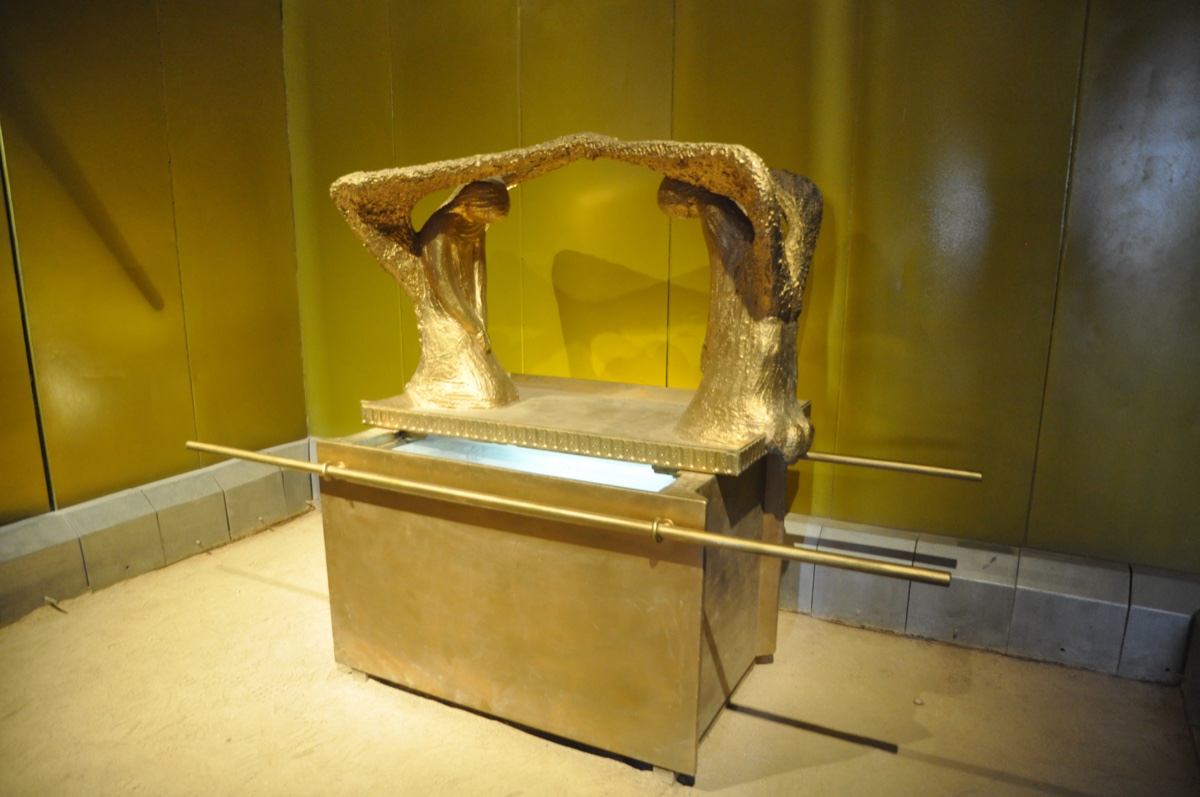
Caption 5: Our last photo shows the view behind the veil, the most holy place, which contained the Ark of the Covenant, the mercy seat, and the two cherubim facing one another.
Moseley, Allan. Christ-Centered Exposition Commentary: Exalting Jesus in Leviticus. Nashville, TN: Holman Reference; B&H Publishing Group, 2015. ISBN 978-0-8054-9782-3. Link
Leon Mauldin has worked with the Hanceville church of Christ in Hanceville, AL, for thirty-four years. He and his wife, Linda, have three children and nine grandchildren (one deceased). The church website is here. His personal blog is here and info about his Bible land tours is here. He can be reached here.



By Chris Reeves
Synopsis: There are valid biblical reasons for having a healthy body. When we maintain a healthy lifestyle, we can potentially serve the Lord better.
About the time that this article appears in Truth Magazine, my wife and I will have been dieting and exercising for about two years. We have made a concerted effort to live a healthier lifestyle now that we both have passed the “midlife” point of our lives. These past two years for me have been the first time in my whole life that I have become serious about my diet and exercise. I guess before that, I didn’t feel that it was necessary. Now, at my age, I need to do it. I truly believe that my wife and I both look better, feel better, and are healthier for it. I have made some good progress and I want to keep doing more. If I had an opportunity to mentor someone concerning his physical health, I would encourage him to live healthier in order to serve the Lord better. Let’s begin by answering this question: What are some biblical reasons for living a healthy lifestyle today?
I would encourage you to live a healthy lifestyle because of the biblical principle of stewardship. Maintaining a healthy body is a part of being a good steward of God. Good stewardship means that we will be responsible and accountable for the good things that God has bestowed upon us. A good steward is faithful and trustworthy with God’s provisions. A good steward gives back to God the best possible life that God has given him. God gives us all kinds of good things. He gives us time, talents, marriage, family, physical things, an earth, a Bible, a local church, a job, an education, etc. We are to be good stewards of all these things. God has also given us physical bodies. We need to take care of them in order to serve Him to the best of our ability. Consider these Bible verses:
Let a man so account of us, as of ministers of Christ, and stewards of the mysteries of God. Here, moreover, it is required in stewards, that a man be found faithful (1 Cor. 4:1-2).
. . .according as each hath received a gift, ministering it among yourselves, as good stewards of the manifold grace of God (1 Pet. 4:10).
I would encourage you to live a healthy lifestyle because of the better service you will have for the Lord. Having a healthy body will allow you to get out and do the Lord’s work in a more effective manner. You will have better physical strength to stay active in the Lord’s work. You will be able to take the gospel to the lost, visit the needy, volunteer to do work at the church building, serve your brethren, help your neighbors, go door-knocking, attend the services, teach Bible classes, lead in the worship service, serve as an elder or deacon, perform foreign evangelism, etc. Consider these Bible verses:
. . .neither present your members unto sin as instruments of unrighteousness; but present yourselves unto God, as alive from the dead, and your members as instruments of righteousness unto God (Rom. 6:13, ASV).
. . .because for the work of Christ he came nigh unto death, hazarding his life to supply that which was lacking in your service toward me (Phil. 2:30, ASV).
I would encourage you to live a healthy lifestyle because of the better mental health you will experience. Having a healthy body will cause you to have a healthy mind and brain. Your brain is an organ with tissue that must be fed properly, just like the rest of your body. Both the body and the mind are inseparably connected. When you have a healthy body, you will actually have better thoughts and attitudes. Poor physical health often leads to depression, while good health leads to positive thoughts. Do you know that God wants to use not only your mind but also your body for His service? Both your mind and your body are to be used in service to God and to His glory. Consider these Bible verses:
I beseech you therefore, brethren, by the mercies of God, to present your bodies a living sacrifice, holy, acceptable to God, which is your spiritual service. And be not fashioned according to this world: but be ye transformed by the renewing of your mind, that ye may prove what is the good and acceptable and perfect will of God (Rom. 12:1-2, ASV).
Meats for the belly, and the belly for meats: but God shall bring to nought both it and them. But the body is not for fornication, but for the Lord; and the Lord for the body. . . Or know ye not that your body is a temple of the Holy Spirit which is in you, which ye have from God? And ye are not your own; for ye were bought with a price: glorify God therefore in your body (1 Cor. 6:13, 19-20, ASV).
I would encourage you to live a healthy lifestyle because it will help you to maintain your spiritual lifestyle as well. Having a healthy body can lead to having a healthy, spiritual life. The person who practices disciplines to have a healthy body will typically apply those same disciplines to his spiritual health. For example, if you are very careful and disciplined in what you eat, it’s likely that you will be very careful in what you put into your mind. If you are exercising your body, you will likely be exercising your Christianity as well. If you are putting off fat, you will hopefully be putting off sin as well. A disciplined person is often disciplined in all areas of his life. Consider these Bible verses:
And exercise thyself unto godliness: for bodily exercise is profitable for a little; but godliness is profitable for all things, having promise of the life which now is, and of that which is to come (1 Tim. 4:7-8, ASV).
Therefore, let us also, seeing we are compassed about with so great a cloud of witnesses, lay aside every weight, and the sin which doth so easily beset us, and let us run with patience the race that is set before us (Heb. 12:1, ASV).
In a previous mentoring article, I wrote on personal growth and mentioned the FITT principle. Following a FITT program will help you have a healthy lifestyle. The acronym FITT stands for Frequency, Intensity, Time, and Type. It is used in the fitness and exercise world to encourage growth. For example, if I walk two times a week, it would be good if I could increase the frequency to three to five times a week. If I am walking slowly, it would be good if I could increase the intensity to walk at a faster pace. If I am walking for 10 minutes, it would be good if I could increase the time to 25-30 minutes. If my exercise is walking only, it would be good if I could change the type of exercise to include other activities like jogging, biking, hiking, swimming, etc. The whole point of FITT is to bring about genuine growth in your health and fitness routine, so that you will achieve the results that you want. This principle is not only good for physical activities but also for spiritual activities.
To have a healthy lifestyle, you will need at least four things, and, believe it or not, they don’t cost a lot of money. You will need the right information, the right attitude, the right diet, and the right exercise.
First, you will need the right information. It would be good if you could talk with someone who really knows about a proper diet. Don’t guess, get the facts. I would suggest paying a small amount of money to visit your local registered dietician. He can tell you what you need to eat to balance all your calories, carbohydrates, proteins, fats, sugars, etc., as well as the portions of foods you should be eating, and when you need to eat. Get back to following the basic “food groups” pyramid that some of us learned while growing up. I would also recommend stepping on some scales, checking your blood pressure regularly, and have your blood work done. Blood work doesn’t lie and it will help you realize what is actually going on in your body so that you can address issues as they arise. Blood work will tell you if your “bad” cholesterol (LDL), sugar, etc., is elevated. It will tell you if you have anemia, diabetes, kidney, liver, or heart disease, thyroid problems, infections, cancer, etc.
Second, you will need the right attitude. You will not work on your physical health without the right mindset. You have to believe that you need to take care of your health and change your eating habits for yourself and for God. Put out of your mind all your past food and eating habits, and start thinking and acting healthy. This may be challenging, I will admit, but you need to do it. Old eating habits may be hard to break—but not impossible to break. Change your thinking and set some new health and wellness goals.
Third, you will need the right diet. You cannot keep putting “bad” food in you and expect to have a healthier body. Start eating healthier by changing what you eat, how much you eat, and how you prepare your food. Typically, you will need to cut back on (or eliminate all together) things like saturated fats, white sugar, salt, margarine, white flour, caffeine, sugary drinks and sodas, fried foods, artificial flavorings and preservatives, “instant” and processed foods, candy, etc. You will need to eat more fresh fruits, vegetables, chicken, fish, and turkey. You will need to eat less red meat and pork products. A good rule of thumb is to eat more natural, whole-foods and less man-made, processed foods.
Fourth, you will need the right exercise. A few people can lose weight by simply changing their diet, but the typical person, like myself, needs exercise as well. You have to exercise to “burn off” all those calories that you have put on through the years and you have to exercise to keep them off. Walking regularly will help. Even if you are not needing to lose weight, exercise will be good for you—strengthening your body, heart, and mind.
Brethren, let’s get out there and get healthy for ourselves and the Lord. You can do it! Now’s the time to start a “fall fitness” program for yourself. Start small and work your way up. Take a walk (8,000 to 10,000 steps a day is recommended). Go on a hike. Get some fresh air. Work out at the gym. Take a fitness class. Get help from a personal trainer or physical therapist. Get fit at home. Try something new like Tai Chi, yoga, or strength training. Get your spouse, a family member, a fellow-Christian, or your neighbor to join you in your exercise routine. You will, in time, enjoy a better life. You will look better, feel better, and you will see how the Lord’s work is getting accomplished in your life to a greater degree.
“FITT Principle.” Physiopedia 2023. https://www.physio-pedia.com/FITT_Principle. Link
Chris Reeves has preached for the Warfield Blvd. church of Christ in Clarksville, TN, since 2016. He and his wife, Cheri, have four children and two grandchildren. His Bible study website is here. The church website is here. He can be reached at here.





By Jacob Lawrence
Synopsis: Winning is defined as “gaining, resulting in, or relating to victory in a contest or competition.” While normally associated with earthly endeavors, this concept is applicable to our spiritual endeavors, especially our struggle against sin and temptation.
Most sermons and biblical discussions talk about sin at some point, whether in the beginning, at the end, or throughout the discussion. Yet, the question remains, how do we win against sin? Sure, baptism saves us from our past sins, but how can we overcome temptations? First, let us recognize that we can, indeed, be victorious.
1 Corinthians 10:13-14 talks about how every sin with which man is presented is not new. God will not allow us to go through temptations that are too much for us. He believes we can get through our temptations. He won’t overwhelm us. He also provides us with a way of escape out of every sin or temptation.
For example, if you’re presented with a temptation through your phone, there’s always a home button on your cell phone to take you out of that window, thus taking you out of that position.
Recognizing that we can win against temptation, how can we achieve success? Let’s consider the examples of two individuals who successfully fled temptation: Joseph and Jesus.
Joseph is our first example. Joseph is a great example of someone who fled from temptation—literally! Genesis 39:4-13 takes place after Joseph was sold into slavery thanks to his brothers. After spending time under Potiphar, he received favor and became Potiphar’s right-hand man. He was in charge of everything in the house—all except Potiphar’s wife. Joseph respected that rule and his master’s wife, but Potiphar’s wife did not. On multiple occasions, she tried to seduce Joseph into the bed of adultery. Every time, Joseph refused and did not succumb to temptation. One fateful day, Potiphar’s wife caught Joseph by his garment and pleaded with him to lie with her. Because of his commitment to God, and his respect for Potiphar, Joseph literally fled from temptation. We know the rest of the story, but the point is that Joseph fled from temptation!
It came about after these events that his master’s wife looked with desire at Joseph, and she said, “Lie with me.” But he refused and said to his master’s wife, “Behold, with me here, my master does not concern himself with anything in the house, and he has put all that he owns in my charge.”There is no one greater in this house than I, and he has withheld nothing from me except you, because you are his wife. How then could I do this great evil and sin against God?" As she spoke to Joseph day after day, he did not listen to her to lie beside her or be with her. Now it happened one day that he went into the house to do his work, and none of the men of the household were there inside. She caught him by his garment, saying, “Lie with me!” And he left his garment in her hand and fled, and went outside (Gen. 39:7-12).
Our second and final example is the perfect Jesus. In Matthew 4:1-11, we are given an account of Jesus being tempted by Satan himself. In this section, we see the three ways in which Satan tempts all humanity: the lust of the eyes, the lust of the flesh, and the pride of life.
In verse 3, we see Satan tempting Jesus through the lust of the flesh. He challenges Jesus, saying, “If You’re the Son of God, turn these rocks into bread.” Jesus had been fasting for the past forty days, so his physical hunger was probably begging him to do so, and Satan knew that. However, Jesus didn’t succumb to temptation and refused.
Then Jesus was led up by the Spirit into the wilderness to be tempted by the devil. And after He had fasted forty days and forty nights, He then became hungry. And the tempter came and said to Him, “If You are the Son of God, command that these stones become bread.” But He answered and said, “It is written, ‘MAN SHALL NOT LIVE ON BREAD ALONE, BUT ON EVERY WORD THAT PROCEEDS OUT OF THE MOUTH OF GOD’” (Matt. 4:1-4).
The next time, Satan tempted Him through the pride of life, saying, “If You really are the Son of God, throw Yourself down from the peak of this mountain. Angels will save You, and You will not be hurt.” In fact, Satan used Scripture against Jesus as well! Yet, Satan—as he does with all things—twisted the Scripture and bent it to his will. Jesus replied with non-twisted Scripture (i.e., He properly and consistently applied God’s word to His present circumstances) and didn’t give in to temptation.
Then the devil took Him into the holy city and had Him stand on the pinnacle of the temple, and said to Him, “If You are the Son of God, throw Yourself down; for it is written, ‘HE WILL COMMAND HIS ANGELS CONCERNING YOU’; and ‘ON their HANDS THEY WILL BEAR YOU UP, SO THAT YOU WILL NOT STRIKE YOUR FOOT AGAINST A STONE.’” Jesus said to him, “On the other hand, it is written, ‘YOU SHALL NOT PUT THE LORD YOUR GOD TO THE TEST’” (Matt. 4:5-6).
The final temptation Satan presented was the lust of the eyes, saying, “All the kingdoms of the earth will be given to you if you bow down before me.” Jesus resisted Satan and did not bow down before the tempter. Each time Jesus was tempted, Jesus combated the devil with Scripture. That tells us that all temptation can be defied and beat by the holy word of God. One other thing we can see is that the devil left Jesus (v. 11). Jesus didn’t literally flee like Joseph did, but the devil (in a way) fled from Him! This tells us that if we resist Satan enough, he will depart! Still, he won’t be gone forever. He’ll be back to tempt us in a different way.
Again, the devil took Him to a very high mountain and showed Him all the kingdoms of the world and their glory; and he said to Him, “All these things I will give You, if You fall down and worship me.” Then Jesus said to him, “Go, Satan! For it is written, ‘YOU SHALL WORSHIP THE LORD YOUR GOD, AND SERVE HIM ONLY.’” Then the devil left Him; and behold, angels came and began to minister to Him (Matt. 4:7-11).
When the devil had finished every temptation, he left Him until an opportune time (Luke 4:13).
Remember, God won’t allow us to go through temptation that is too great for us to face. So, we can resist and escape. Well, how? As we saw in the account of Jesus’s temptation, Jesus combated the devil with Scripture, and so can we! No matter what we’re dealing with in our lives, the Bible discusses our trials and temptations and there’s always a way to put it down. So, studying the Bible is one way. Another way is confiding in people. Fellow Christians are there for you. It’s their job as brothers and sisters in Christ. Whether you need to get your temptations off your chest, or if you need an accountability partner, Christians will be there. They will listen, encourage, and help you. They will not “judge you” harshly, or look at you differently, because they know they’ve sinned. We all have, so there’s no reason for them to see you differently than themselves.
One additional way we can resist temptation is through prayer. God provides that path of communication because He wants us to confide in Him. He wants us to talk to Him and present our temptations and struggles before Him. If we do, He’ll help us and forgive us—if we ask for it.
God won’t automatically solve the problem for you. You’ll have to put some work in and search for the answers. We have to want to stop sinning, otherwise, we never will stop. As our great high priest, Christ will help us in time of need:
Therefore, since we have a great high priest who has passed through the heavens, Jesus the Son of God, let us hold fast our confession. For we do not have a high priest who cannot sympathize with our weaknesses, but One who has been tempted in all things as we are, yet without sin. Therefore, let us draw near with confidence to the throne of grace, so that we may receive mercy and find grace to help in time of need (Heb. 4:14-16).
We all struggle with sin. Sometimes it seems overwhelming. On occasions, it seems as if we can’t win. However, we can! God provides various ways in which we can escape sin. We can do so either from studying our sins in the Bible, confiding in fellow Christians, or confiding in God Himself through prayer and supplication. We can beat sin! You just have to want to and put in the work to do so. So, will you beat temptation, or will you succumb to it instead?
Jacob is a sixteen year old sophomore who worships with the Adoue Street Church of Christ in Alvin, TX. He can be reached here.





by Kyle Sanders
Synopsis: Despite its relative obscurity, the book of Nahum offers valuable lessons about God’s judgment—emphasizing the importance of continued faithfulness to avoid the consequences of turning away from righteousness.
Few sections of the Old Testament have less underlined verses, wrinkled pages, and marginal notes in the Bibles of most Christians than the “Minor Prophets.” Among these twelve brief books, Nahum likely receives the least airtime. After all, it starts with “The oracle of Nineveh.” This alone causes many to skip to something “more applicable” for New Testament Christians.
What can we learn from a book describing the destruction of Nineveh? As it turns out—a great deal! Upon closer inspection, Nahum strengthens Paul’s assertion that “whatever was written in earlier times was written for our instruction, so that through perseverance and the encouragement of the Scriptures we might have hope” (Rom 15:4). Specifically, Nahum reveals the awesome judgment of God in vivid and sobering language. He twice declares, “Behold, I am against you” (2:13; 3:5). This book records the devastating results of God’s opposition.
Written by “Nahum the Elkoshite” (1:1), the book of Nahum can be dated between the fall of No-Amon (i.e., city of Amon, or Thebes, [Jer. 46:25]) in 633 BC to the Assyrian king Ashurbanipal and the subsequent fall of Nineveh to the Medes and Chaldeans in 612 BC (Hailey, 248). The name “Nahum” translates to “Consolation” or “Consoler,” which is ironic since there is absolutely no consolation nor comfort afforded to the city of Nineveh! However, the faithful remnant would find comfort in Nahum’s message.
God’s Power and Wrath Against His Foes (1:2-8)
Nineveh Is Condemned, While Judah Is Comforted (1:9-15)
The Overthrow of Nineveh (2:1-13)
Nineveh’s Disgrace and Devastation for Her Sins (3:1-7)
As They Had Done to Thebes, So Shall It Be Done to Them (3:8-15)
The Aftermath of God’s Fury (3:16-19)
From Nahum, we learn that God’s judgment is characteristic, catastrophic, comforting, certain, and correct.
God has always been described as a God of vengeance, one who is “slow to anger” (1:3; Exod. 34:6; Num. 14:18) and yet punishes the guilty (Exod. 34:7; Ps. 99:8). Even the cry of Nahum to “Behold, upon the mountains, the feet of him who brings good news” is familiar (cf. Isa. 40:9-10; 52:7). Nahum also describes the Creator as shaking His creation upon arrival (2 Sam. 22:8; Judg. 5:5). God’s momentous arrival and response to wickedness in Nahum is consistent with the rest of Sacred Scriptures. The Hebrew writer echoes Nahum’s emphasis on power and judgment: “It is a terrifying thing to fall into the hands of the living God” (Heb. 10:31).
Many balk at Nahum’s depiction of God and His response to wickedness, especially if one suggests (as the Scriptures clearly teach) that similarly severe sanctions await all those who defy Him today. Those who elevate sentimentality over Scripture say, “Surely a God of love would not destroy sinners!” However, for a Holy God to respond to human wickedness in any other fashion would be catastrophic, for it would signal a change in His changeless character: “For I, the LORD, do not change” (Mal. 3:6a). From Sinai to Nineveh to the current day, God is consistently and characteristically One who judges the wicked and rewards the righteous. Nahum reminds us that though our culture’s palate for the judgment of God may have changed, the flavor of divine vengeance against the wicked has not. [Many today are like spoilt children, who turn up their nose at the healthy food on their plates. Even though denominationally minded folks today dislike the concept of divine justice, God’s word does not change, and they still gotta eat their spinach—spiritually speaking!-ed.]
Hyperbole is nigh-impossible when describing the outcome of the Creator’s fury. The questions of Nahum 1:6 rightly stand unanswerable: “Who can stand before His indignation? Who can endure the burning of His anger?” In truth, none has in the past, nor can any do so in the present. God’s judgment against Nineveh was “overflowing” (1:8), “a complete end” (1:9), without relief (3:19), and “incurable” (3:19). If mighty Nineveh could not resist God, what city or nation can stand against His unfathomable fury? Amid the Lovecraftian depiction of the Leviathan in Job 41, God asks Job a similar rhetorical question: “None is so fierce that he dares to arouse him; Who then is he that can stand before Me?” (v. 10).
The final judgment awaiting the wicked is likewise catastrophic. The God who dissolves the hills at His arrival (1:5) will one day dissolve all creation prior to final judgment (2 Pet. 3:11, ESV). He who pursues His enemies into “darkness” (1:8) has promised to cast all who defy Him into “outer darkness” (Matt. 8:12; 22:13; 25:30) where they will weep and gnash their teeth for all eternity. “Incurable” and “without relief” are apt descriptions of the punishment that await all who reject the gospel of Christ and shake their feeble fists against the Creator. Nahum calls us to remember and resume our reverent fear of the One who can destroy both body and soul in hell (Matt. 10:28).
How can this “Comforter” comfort Israel with such devastating language against Nineveh? Who would be soothed by words of wrath? Captives are comforted at the calamity of their captors. The fall of Berlin was no doubt welcome news to those imprisoned in Nazi concentration camps! To the ancient Israelites languishing under the brutal yoke of Assyria, Nineveh’s obliteration was cause for celebration and renewed commitment to obedience (1:15b). Though Nineveh was at “full strength” (1:12), they would no longer be a cause for concern, for God would break them once and for all. The oracle concludes with all who hear of Nineveh’s downfall clapping their hands, relieved that her “unceasing evil” (3:19, ESV) has finally been snuffed out.
While God’s people should not derive pleasure from the deaths of the wicked (Ezek. 18:31; 33:11), we anticipate God’s judgment of all evil when Jesus returns. On that day, the yoke of our ultimate enemy will be broken: “The last enemy that will be abolished is death” (1 Cor. 15:26). Indeed, the only time the exhortation “comfort one another” occurs in the New American Standard Bible is in reference to Jesus’s return (1 Thess. 4:18), which will precede the final judgment of God. All captives to the brutality of sickness, tragedy, and death in this world ache for the final trumpet to sound! Nahum comforts those who serve God in anticipation of His deliverance.
Once God’s sentence against the wicked has been decreed, no amount of fortification or fighting spirit suffices for victory. Note, in 2:1, that God instructs Nineveh to prepare for the inevitable: “Man the ramparts, watch the road, dress for battle, collect all your strength.” Nineveh is told to collect supplies and build up their walls (3:14). Such preparations would have no consequence, other than glorifying God—for He is only glorified further when His enemies do all they can to thwart His will. In Psalm 2, when the nations rage and take counsel together against God and His anointed, “He who sits in the heavens laughs, the LORD scoffs at them” (v. 4). Ultimate destruction is the sole result for all who refuse to repent.
This aspect of God’s judgment motivates us to make peace with Him! Jesus taught His disciples to reach an agreement with their accuser before facing the judge, lest he condemn them and “you will never get out until you have paid the very last penny” (Luke 12:57-59, ESV). If this applies to civil disputes, and earthly courts, consider the greater peril of being unprepared to stand before the judgment seat of Christ! Once the books have been opened and judgment commences (Rev. 20:12), the time for repentance, seeking forgiveness, and making things right with God will have passed. The wicked will be left as Nineveh in Nahum: Looking directly down the barrel of the wrath of God, where there is no escape, quarter, pardon or parole. Nahum warns us that, once the gavel of God’s judgment falls, there is no going back.
From Jonah, we learn that, previously, Nineveh repented upon hearing of their pending demise (Jonah 3:10). Irwin Himmel describes the date for Jonah’s writing as “in the range between 780 and 750 BC” (Himmel, 672). So what happened between 750 and 633-612 BC? In short, Nineveh repented, but they did not remain penitent. When they thanklessly regressed, they returned to “worthless” rulers, and became a harlot to the nations (cf. Ezek. 16:15-16). Nineveh’s earlier repentance was not a “Get out of Jail Free” card against judgment for future wickedness. This is consistent with God’s justice, which always depends on one’s current spiritual state—not one’s history: “When a righteous man turns away from his righteousness, commits iniquity and dies because of it, for his iniquity which he has committed he will die” (Ezek. 18:26).
Nineveh’s downfall serves as a warning to all who have once walked in God’s way. Their destruction is tragic in that their experience of God’s mercy did not lead them toward continued faithfulness. The same sort of judgment is promised against those who “go on sinning willfully after receiving the knowledge of the truth” (Heb. 10:26). Indeed, their latter state “has become worse for them than the first” (2 Pet. 2:20). Whether we remain true to God or abandon His ways, “He remains faithful, for He cannot deny Himself” (2 Tim. 2:13). As Christians who have repented and committed to serving God faithfully, Nahum stands as a stark reminder that continuing in that commitment is of utmost importance.
Hailey, Homer. A Commentary on the Minor Prophets. Grand Rapids, MI: Baker Publishing Group, 1972.
Himmel, Irvin. “Nahum.” Truth Commentaries: Minor Prophets: II. Edited by Mike Willis. Athens, AL: Truth Publications, 2007.
Unless otherwise noted, all Scripture references are from the New American Standard 1995 Update (NASB95).
Kyle Sanders has worked with the Jamestown church of Christ in Jamestown, IN, since January 2022. He and his wife, Myah, have five children. The church website is here. He can be reached here.



By Danny Linden
Synopsis: We can learn through Habakkuk how to live by faith even when faced with uncertainty. We can trust the Lord even though we possess an incomplete picture of His plans for the future.
Habakkuk lived in a difficult time in Judah’s history. The constant threat of Assyria had just begun to fade, but Babylon was rising quickly. Among the people of Judah, many thought this heralded a new era of peace and prosperity. However, righteous people recognized that the persistent sin that led to the defeat and captivity of Israel was present in Judah as well. Furthermore, it was only growing worse. Will this apparent peace last? Contemporaries like Jeremiah and Zephaniah prophesied doom on the horizon.
The divine revelation given to Habakkuk takes the form of a conversation between God and the prophet. The conversation does not begin with a vision or a dream, but with a cry and even an accusation from Habakkuk. As short as the book is, its existence teaches us how to live by faith—even in uncertainty.
In Habakkuk’s first complaint against the LORD (1:2-4), he asked if God would tolerate the excessive evil in the land forever. Habakkuk had grown tired of the violence and injustice that he witnessed all around him, yet God seemed to sit idly by. Even though he prayed on behalf of himself and other innocent people who were regularly oppressed by evildoers, nothing happened. As far as Habakkuk was concerned, God did not hear and would not save.
Of course, that’s a troubling conclusion for a man of faith to reach, and I’m not sure that he even fully believed it as he said it. This is the desperate cry of a man who cannot reconcile his understanding of the God in whom he believed with the injustices that he observed day by day.
God gave Habakkuk a direct response (1:5-11), though not one that would be easy to swallow. God was preparing to do something that Habakkuk would scarcely believe. The evil that Habakkuk witnessed, and of which he had grown weary, had not escaped God’s notice: He was raising up the Babylonians to bring a terrible judgment against Judah.
The Babylonians are depicted as fearsome foes who could overwhelm Judah with incredible violence. There would be no protection from God as in previous wars because this judgment’s source was actually God Himself.
God also described the Babylonians as arrogant, contemptuous people who worshiped their own power. This seems to make them worse than Judah, and in fact, God makes no excuses for Babylon.
This answer was shocking to Habakkuk—raising even more questions (1:12-2:1). The prophet expressed relief that God intended to judge the wicked, but he struggled to see how this could be the right way for it to happen. Since God is holy and free from all evil, how can He use a people as wicked as the Babylonians as His instrument of destruction? This appeared to Habakkuk to be a change in God’s nature. The God that he knew was one who protected His people from the surrounding nations. God is unchanging (1:12), so such a radical change shouldn’t be possible. Does this mean that God will simply stand by as wicked nations devour wicked nations until the end of time?
Habakkuk was at a complete loss, but waited to hear what the Lord had to say. He needed a response from God because it would be Habakkuk’s task to deliver this prophetic word to the people. They would almost certainly respond in the same way as did Habakkuk, and he did not have an answer for them. Of course, it’s not Habakkuk’s place to demand a response from God, but he waited in faith for God to help him understand.
God did something for Habakkuk that He rarely did for others. He pulled back the curtain, allowing insight into the mind of God (2:2-20). In the chaos of impending judgment, God still distinguished between the proud and the just, whether in Judah or in Babylon. National judgment would not invalidate the promise given to the righteous—“The righteous shall live by his faith” (2:4).
The Babylonians will also face judgment in God’s time. God asserts that He will not allow them to perpetuate injustice and oppression forever. None of their sin escapes Him and He pronounces a series of five woes upon them:
Woe to him who is greedy and plunders the nations of the earth without end (2:6-8).
Woe to him who accumulates his fortunes by dishonest gain (2:9-11).
Woe to him who builds his city by shedding innocent blood (2:12-14).
Woe to him who entices others to become drunk and expose themselves to their shame (2:15-17).
Woe to him who trusts in powerless idols (2:18-20).
God revealed these things to Habakkuk for at least two reasons: First, it proved that God was not ignorant of the abominations going on in the world. Habakkuk has at least implied that God was at fault (cf. 1:13), even if that was tempered by an incredulous acknowledgment that he was trying to keep his faith. God is defending His holy name. Second, this was not just a private conversation between God and Habakkuk. The prophet was tasked with sharing this message with the people of Judah, to convince them to turn to God and to wait in faith. Even after they are taken into captivity, they will stand as witnesses of God’s covenant. There will be an opportunity to influence positively even the Babylonians to turn from their wickedness before their judgment comes.
God’s conclusion of the final woe in 2:20 (“The LORD is in His holy temple; let all the earth keep silence before Him”) also serves as a conclusion of God’s explanations to Habakkuk. The conversation has ended abruptly; God revealed all that He saw fit to reveal. Now it is time to be silent before Him in faith and let Him do His work.
Finally Habakkuk realized that he was in over his head (3:1-19). He questioned things he did not understand and needed to rely upon the LORD. The final chapter of the book transitions to a song of faith and praise. No more will the prophet question the workings of God. God lives, rules, and judges with power and purpose far beyond what we can perceive. “I hear, and my body trembles; my lips quiver at the sound; rottenness enters into my bones; my legs tremble beneath me. Yet I will quietly wait for the day of trouble to come upon people who invade us” (3:16). The implications of God’s judgment were not any easier for Habakkuk to bear, but after this conversation with God, he more faithfully remembered his place as one who quietly waits on the LORD.
Yet Habakkuk does more than resign himself to God’s plan. He took joy in it! “Though the fig tree should not blossom, nor fruit be on the vines, the produce of the olive fail and the fields yield no food, the flock be cut off from the fold and there be no herd in the stalls, yet I will rejoice in the LORD; I will take joy in the God of my salvation. GOD, the Lord, is my strength; He makes my feet like the deer’s; He makes me tread on my high places” (3:17-19). There was joy in the realization that God would make the evildoers answer for their deeds, even if some of those evildoers were Habakkuk’s own countrymen. There was also joy in the personal salvation that Habakkuk knew was guaranteed by a God who is both powerful and motivated enough to save the righteous.
We do not always understand what God is doing—or why. Habakkuk teaches us that the proper response to that uncertainty is to pray to God for guidance and understanding and to be assured that He has it all under control. I don’t know exactly how long God’s patience will last for any person or nation, but I know that God is watching and will execute His perfect justice in His own time. We can take our lead from Paul, who prayed for nations, leaders, and individuals who needed to turn to God (Rom. 9:1-5; 10:1-4; 1 Tim. 2:1-4; 2 Tim. 4:16), yet also prayed for the Lord’s return and judgment (2 Tim. 4:14; 1 Cor. 16:22). As long as we realize that the judgment is in the hands of the only One in the perfect position to execute it, our faith will remain strong—even if the implications of judgment are hard to swallow.
Danny Linden has worked with the Hebron Lane Church of Christ in Shepherdsville, KY, since March 2023. He and his wife, Lauren, have four children. The church website is here. He can be reached here.


By Andrew Dow
Synopsis: Prophesying to the Israelites around the time of Josiah’s restoration, Zephaniah challenges God’s people brace for the day in which God would set things straight and encourages them to take hope in the promise that God would preserve a faithful remnant.
Certain minor prophets are better known than others. For instance, many people know the story of Jonah, or the tragic details of Hosea’s life. Some people may be familiar with Haggai and Zechariah’s role in building the second temple. However, the Book of Zephaniah does not sit atop many “favorite books of the Bible” lists. Despite Zephaniah’s relative obscurity, the message it contains remains powerful and timeless.
Prophetic literature in the Bible typically begins with an introduction to the prophetic source of the material. In this case, the human agent God used to reveal this prophetic material is “Zephaniah son of Cushi, son of Gedaliah, son of Amariah, son of Hezekiah” (1:1a). This particular Zephaniah is probably not to be identified with other Zephaniahs in Scripture (e.g., 2 Kings 25:18; 1 Chron. 6:21; Jer. 21:1; Zech. 6:10). All we know of the prophet Zephaniah is what is recorded in the opening verse. The text traces his lineage back, apparently, four generations. This is a long genealogy compared to other prophetic introductions (Hall, 592-600). Because of the lengthy ancestry provided, Bible students have largely concluded that there must be some significance to the final ancestor recorded—namely, Hezekiah.
The text does not give any explicit indications concerning the identity of this Hezekiah. However, that Zephaniah’s lineage is extended to include this name leads many to conclude that this must be the famed reformer and king of Judah. We may not know much about Zephaniah, but we learn that he is apparently a member of the royal family. This may have given him access to the king’s ear at a crucial time in Judah’s history.
The other detail we learn about Zephaniah from the book’s prophetic introduction is that he prophesied “in the days of Josiah, son of Amon, king of Judah” (1:1b). Josiah’s story is told in 2 Kings 22-23 and 2 Chronicles 34-35. Josiah and Zephaniah’s common ancestor—Hezekiah—is fondly remembered in Scripture for his eradication of idolatry and his restoration of temple worship. After Hezekiah’s God-honoring reign, his son and grandson—Manasseh and Amon—effectively undid all the positive, spiritual reforms that Hezekiah instated. Josiah (the great grandson of Hezekiah) was thrust onto the throne at the age of eight after the untimely death of his father. As he grew toward maturity, Josiah began to “seek the God of his father,” “purge Judah and Jerusalem” of idolatry, and “repair the house of the Lord” (2 Chron 34:2, 8).
The book’s introduction clues us to the fact that Zephaniah’s prophetic work coincides in some way with Josiah’s restoration. The exact sequence of events remains unclear. It may be that Zephaniah’s prophetic work predated and prompted Josiah’s correctives. It may be that Zephaniah’s words came in the midst of Josiah’s reformation as a way to encourage Judah to continue the process. Maybe Zephaniah was speaking after the reforms of Josiah were completed, but with an aim of maintaining the newly restored order. Though many details certainly remain fuzzy, the setting of these prophetic words becomes clearer based on the details provided at the beginning of the book.
With a rough sketch of Zephaniah’s background in place, perhaps we can appreciate more fully his message. For the sake of simplicity, Zephaniah’s prophetic book can be summarized in two overarching themes: (1) the day of the Lord and (2) the remnant of Israel.
Zephaniah begins with—and is largely consumed by—two declarations of divine judgment. First, Zephaniah warns about judgment against Judah and Jerusalem (1:2-2:3). Zephaniah uses apocalyptic, earth-shattering language to shock God’s people into opening their ears. In cataclysmic terminology, Zephaniah foretells how God intends to judge idol worshippers harshly (1:4-5) and the apathetic rulers alike (1:9-13). Second, Zephaniah warns about similar judgment coming upon all the nations around Judah (2:4-3:8). Four nations are specifically called out for judgment: the Philistines (2:4-7), the Moabites (2:8-11), the Ethiopians (2:12), and the Assyrians (2:13-15). Perhaps the author highlights these nations for a larger geographical point, since these nations surround Judah on all four sides (Hall, 596-567). Judah has surrounded herself with evil and, in reality, has become the most wicked of them all.
The recurring phrase throughout these judgments is “the day of the Lord” (e.g., 1:7, 8, 14, 15, 16, 18; 2:2, 3; 3:8). Though concentrated here in Zephaniah, “the day of the Lord” is an expression used throughout the literary prophets. It is ominously used to denote some future day in which God will intervene in human affairs. There are times in history when humanity so distorts God’s arrangement that He is forced to take corrective action to set things straight. In Zephaniah, “the day of the Lord” is when God intends to set straight the Israelites’ distortion of His covenant, His Law, and His temple.
The day of the Lord which Zephaniah foretold would only be a small foretaste of a greater day, which is described in the New Testament (e.g., 1 Cor. 5:5; 1 Thess. 5:2; 2 Thess. 2:2; 2 Pet. 3:10). While we may be accustomed to reading these kinds of passages and accepting them as descriptions of “the day of judgment” or “the last day,” we should also come to appreciate their relationship to prophetic usage. These New Testament passages are describing a day like Zephaniah foretold: a day in which—on a much larger scale—God would again intervene in history to set in order what had been misused and abused by humanity. We should heed Zephaniah’s warnings—“The day of the Lord” is coming for us as well. May we have the strength to put away our idols and be fully devoted to Yahweh!
The book of Zephaniah concludes with a brief note of hopefulness. Though it is true that “the day of the Lord” is coming with cataclysmic destruction, Zephaniah points out that on the other side of that judgment is a greater existence—a people more in-line with God’s intentions for humanity. Out of the “burning anger” and “the fire of My zeal” (3:8), God “will give to the peoples purified lips” (3:9). In judgment, God will “remove from your midst your proud, exulting ones” (3:11), but will leave “a humble and lowly people” who “take refuge in the name of the Lord” (3:12). Zephaniah calls this small, purified group of people “the remnant of Israel” (3:13).
The description of “the remnant of Israel” is striking. Zephaniah suggests that they will do no wrong, tell no lies, have no fears, and have no enemies (see 3:13-15). This is a challenging set of ideals which Israel never truly lives up to—even when they returned to the land post-captivity as a remnant. These descriptions can only fully be appreciated when we read it in concert with the descriptions of judgment at the beginning of the book (Hall, 595-596). Remember, in judgment God removed “all things from the face of the earth” (1:2), but in the remnant He will be praised “in all the earth” (3:19). In judgment, God demanded that His people “be silent” and then “wail” (1:7, 11), but the remnant is instructed to “shout for joy” and “rejoice and exult” (3:14). God’s judgment was brought on (in part) because of Judah’s deceit (1:9), but the remnant will not be deceitful (3:13). Other examples could be given, but the point has been illustrated. The Remnant of Israel as a concept is, for Zephaniah, a group of people living out God’s intentions for humanity.
This is why this terminology can be so readily used by New Testament authors to describe all of God’s people. The term—especially as Zephaniah used it—has little to do with being an ethnic Israelite. Zephaniah said that God’s purification process would include the “nations” (3:8) and that this remnant included God’s worshipers “from beyond the rivers of Ethiopia” (3:10). The remnant of Israel—as a broader, eschatological concept—identifies that group of people who live within God’s authority. This is why Paul can say, “they are not all Israel who are descended from Israel” (Rom 9:6). May God help us to live as God intended humanity to live—in keeping with His order and as part of His remnant.
Zephaniah’s prophetic oracles were written for the benefit of Israelites in need of restoration. Though not the original target audience, God’s people today can continue to benefit from the book of Zephaniah as we try constantly to align our lives with God’s authority. To be sure, all things will be set straight when “the day of the Lord comes.” In the meantime, however, let us begin living now as a faithful remnant belonging to God.
Note: As cited in several places in my article, I found the following reference to be very helpful:
Hall, Gary. “Zephaniah” The College Press NIV Commentary: Old Testament Introduction. Edited by Mark Mangano. Joplin, MO: College Press, 2005.
Andrew Dow has worked with the Woodland Hills church of Christ in Conroe, TX, since 2015. He and his wife, Heather, have four children. The church website is here. He can be reached at here.


By Jesse Flowers
Synopsis: Haggai’s basic theme is clear: the remnant must reorder its priorities and complete God’s house before it can expect the blessings of the LORD.
The book of Haggai is second only to the book of Obadiah in brevity among Old Testament books. Yet, in two concise chapters, this post-exilic prophet delivers an ancient message that continues to carry much modern relevance to the people of God today.
Haggai the prophet (whose name means: “festival, festive, or joyous one”) played a major role in the history of the Jewish nation and the overall story of the Bible. He preached side by side with Zechariah, joining forces to stir up and motivate the Jewish remnant to complete the rebuilding of the temple.
Then the prophet Haggai and Zechariah, the son of Iddo, prophets, prophesied to the Jews who were in Judah and Jerusalem, in the name of the God of Israel, who was over them. So Zerubbabel, the son of Shealtiel, and Jeshua, the son of Jozadak, rose up and began to build the house of God, which is in Jerusalem; and the prophets of God were with them, helping them (Ezra 5:1-2).
So the elders of the Jews built, and they prospered through the prophesying of Haggai the prophet and Zechariah the son of Iddo. And they built and finished it, according to the commandment of the God of Israel, and according to the command of Cyrus, Darius, and Artaxerxes, king of Persia. Now the temple was finished on the third day of the month of Adar, which was in the sixth year of the reign of King Darius (Ezra 6:14-15).
Haggai began his prophecy in the second year of Darius’ reign (1:1), which would be in the year 520 BC. The Darius of Haggai’s book is also known as Darius I, the son of Hystaspes, or Darius the Great, who ruled from 522 to 485 BC. Four oracles are dated in the book covering a period of four months (1:1; 2:1, 10, 20). Each of the four prophecies falls within the second year of King Darius. The historical setting of Haggai’s work can be found in Ezra 1-6.
Following the seventy-year Babylonian captivity, Cyrus, king of Persia, issued an edict in 536 BC stating that the people belonging to the LORD God were to return to Jerusalem (Ezra 1:1-4) and build the house of the LORD God of Israel, as prophesied 150 years prior (Isa. 44:24-45:7). Thus, 49,897 Jews returned under the leadership of Zerubbabel (2 Chron. 36:20-23; Ezra 1).
The people gathered as one man to Jerusalem (Ezra 3:1). Their first act was to build the altar of God and offer burnt offerings on it (Ezra 3:2-6). They also gathered the necessary materials for rebuilding the temple, which began in the second year (Ezra 3:7-8). The builders even laid the foundation of the temple (Ezra 3:10). However, they were quickly sidetracked by interference and resistance by certain “adversaries” (Ezra 4:1ff). Ultimately, the Israelites abandoned the entire temple project, and it lay dormant for sixteen long years! It was for this reason that God sent Haggai and Zechariah to rebuke and exhort the Jews to return to the great work they had begun but never finished. Finally, the work on the Lord’s house was completed in 516 BC (Ezra 6:15).
Haggai’s basic theme is clear: the remnant must reorder its priorities and complete the house of the LORD before it can expect the blessings of the LORD. The prophet uses the appeal, “says the LORD,” “thus says the LORD of hosts,” etc., twenty-six times in the four short addresses of these thirty-eight verses. As Homer Hailey wrote, “The basis of all successful preaching is ‘says the LORD.’ It got results then, and such preaching will get results today” (Hailey, 301).
Hoyt Houchen stated that the book of Haggai consists of four messages by the prophet:
Rebuke for indifference (1:1-15).
Encouragement to the discouraged (2:1-9)
Blessings assured if the temple is completed (2:10-19)
Promise of salvation renewed (2:20-23)
The first message of the prophet Haggai is directed to Zerubbabel, the governor, and to Joshua, the high priest (1:1). As leaders of the people, they were responsible for the temple being built and bore some blame for the people’s lack of enthusiasm toward the project.
Jehovah declares how “this people says” (instead of “My people” indicating God’s frustration and anger toward the Jews). “The time has not come, the time that the LORD’s house should be built” (1:2). Why had the time not come to rebuild the temple? The people might claim because of persecution from their adversaries and being ordered to cease building. However, the real reason was procrastination and a lack of zeal, which has always plagued God’s people.
Through Haggai, the Lord rebukes His people for devoting time and energy to build their own nice “paneled houses” (1:3-4), while the temple still lay in ruins. They were guilty of indifference and selfishness. It is rather easy for the people of God, in any generation, to lose sight of what is most important, such as what and who should come first in our lives (Matt. 6:33; 22:36-38). How often do our physical priorities (such as family, school, work, sports, hobbies, vacations, etc.) trump our spiritual priorities (such as serving in the local church, teaching the lost, distributing to the needs of the saints, encouraging the fainthearted, supporting the weak, devotion to prayer and meditation upon the Scriptures)?
They are admonished to consider their ways (1:5, 7). Each of us would also do well to consider our ways, and to do so regularly. Let us do some honest self-reflection and self-examination of our present spiritual condition and relationship with God. Have our priorities and values become distorted? Are we setting our mind on things above or things on the earth (Col. 3:2)? Have we ceased being steadfast, immovable, and always abounding in the work of the Lord (1 Cor. 15:58)? Do our “wants and desires” take precedence over the Lord’s house and work?
Haggai urges his readers to reflect upon the difficulties and deprivations they had faced since returning from captivity. Throughout those years, all they had experienced was a lack of blessings and trouble. The reason for their hardships and shortages was because the Lord’s house lay in ruins while they ran to take care of their own house (1:5-11; 2:15-19). Hailey observed that “faithfulness and material blessings are directly connected” (301). The people are viewed as unclean by the Lord, as well as every work of their hands, and what they offered to the Lord on the altar, because they had not built the Lord’s house (2:10-14).
The response of the leaders and the remnant of the people to Haggai’s preaching was that “all obeyed the voice of the LORD their God, and the words of Haggai the prophet, as the LORD their God has sent him” (1:12). If only God’s people would always thus respond to the preaching of His word—with immediate acceptance and obedience. As a result, God promised them, “From this day I will bless you” (2:19).
It was obvious to the older generation that this second temple couldn’t compare to the glory of the original temple that Solomon had built. The people of God then and now must be careful not to dwell too much on the past (i.e., longing for the good old days when it was so much better). Rather, they must be strong and work! “I am with you,” says the LORD of hosts (2:1-4).
Haggai the prophet also looked to Messianic times (2:6-9, 20-23). In a short while, God would “shake” heaven and earth, sea, dry land, and all nations. These expressions describe the upheavals among nations and their overthrow (Isa. 13:10, 13; 24:18-20; Joel 2:10). This points to the divinely decreed rise and fall of nations from those days to the coming of the Messiah. He declared that “the glory of this latter temple shall be greater than the former” (2:9). “This is fulfilled in the temple built by Christ, the church, now filled with the glory of the divine presence. ‘In this place,’ the spiritual temple in the spiritual Zion to which all saints have come, God gives peace” (Hailey, 311). “These promises are quoted in Hebrews 12:26-29, where a contrast is drawn between the kingdoms of men (including Judah and Jerusalem with its temple) and the kingdom of God. The shaking by God of the heavens and the earth would reveal the kingdom which cannot be shaken” (Waldron, 79).
The fourth and final message is addressed to Zerubbabel, the governor of Judah (2:20-23). “I will shake heaven and earth” repeats the promise of the second speech (2:6). It’s a promise that looks beyond the material blessings to the fulfillment of the spiritual hope in Zerubbabel. God declares a complete overthrow of the Gentile kingdoms, their thrones, and all the implements of war on which they depended. God would make Zerubbabel “like a signet ring.” A signet, or seal, was a ring or cylinder engraved with the owner’s name or some identifying design. The signet was considered precious because it was the authentic designation of the owner. “For I have chosen you” gives validity and assurance to the promise. This was fulfilled in that Zerubbabel was in the direct lineage of Jesus Christ (Matt. 1:12; Luke 3:27).
May the people of God today ever be mindful of the enduring lessons from the book of Haggai. Let us examine ourselves often to ensure that the Lord, His spiritual kingdom, and His work always come first in our lives (2 Cor. 13:5; Jas. 1:22-25). Let us be sure that we are laying up our treasures in heaven and not on the earth (Matt. 6:19-21). Let us glorify and praise God that we are citizens of the kingdom that shall never be shaken or moved!
Hailey, Homer. A Commentary on the Minor Prophets. Grand Rapids, MI: Baker Book House Company, 1972.
Houchen, Hoyt. What is in the Book? A Survey of Each Book of the Bible. Part One: The Old Testament Books. Louisville, KY: Religious Supply Center, 2001.
Waldron, Bob and Sandra. A Remnant Shall Return. Athens, AL: Truth Publications, 1996.
Jesse Flowers has worked with the Jere Whitson Road church of Christ in Cookeville, TN, since December of 2020. Jesse and his wife, April, have four children, with plans to adopt in the near future. The church website is here. He can be reached here.



By David Dann
Synopsis: The prophet Zechariah presents God’s instruction to the post-exile remnant in vivid imagery while pointing His people to the coming of the great King.
The prophet introduces himself as, “Zechariah, the son of Berechiah, the son of Iddo” (Zech. 1:1, NKJV) and consistently identifies the God of heaven as the Originator of his message (cf. 1:1; 2:8; 3:7; 6:12; 7:9; 8:2; 11:4, 12:1). His name fittingly means “Jehovah has remembered,” just as his message emphasizes that God has remembered His people and will fulfill His plans and promises concerning them (1:12-17) (Archer, 470). Together with the prophet Haggai, Zechariah prophesied to the Jewish remnant in Jerusalem following the return from Babylonian captivity (cf. Ezra 5:1; 6:14). Since Iddo is mentioned among the priests who returned from Babylon under the leadership of Zerubbabel, Zechariah was likely a prophet whom God called from a priestly family (cf. Neh. 12:1, 4, 16).
At a pivotal point in the history of His people in the Old Testament era, God used Zechariah’s message to encourage the Jewish remnant to seriously address its task of rebuilding the temple while offering assurance that the project would be completed (Zech. 1:12-17; 4:8-10). Zechariah precisely dates the starting point for the delivery of his message at the “eighth month of the second year of Darius” (Zech. 1:1), indicating that his work began in 520 BC (Dyer and Merrill, 813). Though the foundation of the temple was laid shortly after the captives returned from Babylon, it is evident that the work ceased for almost sixteen years before finally being completed in 516 BC (cf. Ezra 3:8-13; 4:22-23; 6:15) (Dann, 69-70). Ezra emphasized the vital role these prophets played in the bringing the task to completion, saying, “So the elders of the Jews built, and they prospered through the prophesying of Haggai the prophet and Zechariah the son of Iddo” (Ezra 6:14).
Along with encouraging the post-exile community to complete the rebuilding of the temple, Zechariah’s message also promises a glorious future to the faithful among the Jewish remnant (Zech. 1:3; 8:1-3, 7-8; 9-23; 9:11-10:12). Writing in the apocalyptic style, the prophet discloses his message through a series of eight prominent visions (1:8, 18; 2:1; 3:1; 4:1-2; 5:1; 6:1), as well as through the use of symbolic language (14:8-9) and acts (6:9-15; 11:10-17).
The prophet is instructed by God to begin his message with a call to repentance and faithfulness:
The LORD has been very angry with your fathers. Therefore say to them, “Thus says the LORD of hosts: ‘Return to Me,’ says the LORD of hosts, ‘and I will return to you,’ says the LORD of hosts. ‘Do not be like your fathers, to whom the former prophets preached, saying, “Thus says the LORD of hosts: ‘Turn now from your evil ways and your evil deeds.’” But they did not hear nor heed Me,’ says the LORD” (Zech. 1:2-4).
Following his call to repentance, Zechariah exhorts the Jewish remnant using eight symbolic visions:
The Vision of the Rider and the Horses (1:7-17), emphasizing the all-encompassing knowledge of God and His ability to accomplish His purposes.
The Vision of the Four Horns and Four Craftsmen (1:18-21), emphasizing God’s ability to defeat those who threaten to destroy His people.
The Vision of the Man with the Measuring Line (2:1-13), emphasizing the restoration and protection of Jerusalem.
The Vision of the Changing of the High Priest’s Garments (3:1-10), emphasizing God’s removal of the sins of His people so their fellowship with Him can be restored.
The Vision of the Lampstand and the Olive Trees (4:1-14), emphasizing God’s empowerment of His faithful remnant to complete the task of rebuilding the temple.
The Vision of the Flying Scroll (5:1-4), emphasizing God’s ability to judge and overcome the wicked.
The Vision of the Woman in the Basket (5:5-11), emphasizing how wickedness must depart from the land of Israel.
The Vision of the Four Chariots (6:1-8), emphasizing God’s sovereign control over the nations as He establishes peace for His people.
These vivid visions of Zechariah drive home the point that the true God of heaven is able to completely fulfill what He has promised.
Besides calling His people to repent, and disclosing God’s assurance and instruction to them, Zechariah includes two prophetic burdens, or oracles:
The first burden speaks against the surrounding nations, including Syria (Zech. 9:1-2), Phoenicia (vv. 2-4), and Philistia (vv. 5-7), while at the same time promising protection and restoration for the faithful (vv. 8, 11-17; 10:1-12) and offering hope in the form of the coming of the everlasting King (9:9-10).
The second burden speaks of the survival of God’s covenant people in the midst of hostile nations (Zech. 12:1-6). Also the restoration of the house of David through which forgiveness and fellowship with God would be available to all (vv. 7-14; 13:1-9). The prophet emphasized that the worship of the everlasting King would become the one true religion for all nations (14:1-21).
Through these burdens, Zechariah offers hope to the post-exile community in the future fulfillment of God’s plan.
Zechariah stands out among the books of the Minor Prophets in vividly describing the coming of the Christ, who would reign as the great and final King over the people of God. In connection with the Christ, Zechariah twice refers to the “Branch.” “Hear, O Joshua, the high priest, You and your companions who sit before you, For they are a wondrous sign; For behold, I am bringing forth My Servant the BRANCH” (Zech. 3:8).
“Thus says the LORD of hosts, saying: ‘Behold, the Man whose name is the BRANCH! From His place He shall branch out, and He shall build the temple of the LORD; yes, He shall build the temple of the LORD. He shall bear the glory, and shall sit and rule on His throne; so He shall be a priest on His throne, and the counsel of peace shall be between them both.’” (6:12-13). Initially drawing attention to Zerubbabel as the servant of God from the royal line of David and rebuilder of God’s house, it is evident that Zerubbabel serves as a type of Christ. He would come into the world as the ultimate Servant of God from the lineage of David, being the Builder of God’s spiritual house. Prior to Zechariah, the prophet Jeremiah prophetically referred to the Christ, who would spring from the house of David, according to the flesh, as the “Branch” (Jer. 23:5; 33:15; cf. Isa. 4:2). Zechariah uses both Zerubbabel, who would rebuild the physical temple of God (Zech. 3:8-10) and Joshua, who would serve as high priest of the rebuilt temple (6:12-13) to foreshadow the coming of the Messiah. Zerubbabel would never be an earthly king and could not be a priest. Although Joshua was a priest, he could never be king. However, the ultimate fulfillment of the “Branch” prophecies is found in One who would reign as both Priest and King, in that, “He shall be a priest on His throne” (v. 13; cf. Heb. 5:9-10; 8:1-2; Col. 1:13-14, 18).
Zechariah prophesies of Christ as the triumphant King, “just and having salvation, lowly and riding on a donkey” (Zech. 9:9; cf. Matt. 21:1-11). According to Zechariah, as God in the flesh, the Christ would be the firstborn Son, “whom they pierced” (Zech. 12:10; cf. John 19:17-18, 31-37). He is portrayed as the good, but stricken Shepherd of God’s people whose flock would be scattered. “‘Awake, O sword, against My Shepherd, Against the Man who is My Companion,’ Says the LORD of hosts. ‘Strike the Shepherd, and the sheep will be scattered; then I will turn My hand against the little ones’” (Zech. 13:7; cf. John 10:14-18; Matt. 26:31, 47-56). Zechariah even prophetically names the very price that would be paid for the betrayal of the Christ as “thirty pieces of silver” (Zech. 11:12-13; cf. Matt. 26:14-16). However, the prophet’s messianic message closes with Christ enthroned as the everlasting King whom all must honor and obey (Zech. 14:16-21). The prophecies of Zechariah concerning the “Branch” would ultimately be fulfilled following the death and resurrection of Jesus Christ. He is now seated on the throne of God in heaven as the King of Kings and Lord of Lords. All nations must come to Him for forgiveness of sins and salvation (cf. Matt. 28:18-20; Mark 16:15-16; Acts 4:12; 1 Tim. 6:13-16).
Arriving on the scene at a critical moment in the history of Israel and unfolding of God’s plan of redemption, the prophet Zechariah spurred God’s people on to complete their divinely appointed task. He also drew attention to the coming of the everlasting King. The prophetic descriptions of the Christ were recorded by Zechariah nearly five hundred years before Jesus was born. They are both striking in their detail and distinct in their meaning. The post-exile community completed its task, and the King has come!
Archer Jr., Gleason L. A Survey of Old Testament Introduction. Chicago, IL: Moody Press, 1994.
Dann, David. Overview of the Bible (Part 3). Athens, AL: Truth Publications, 2012.
Dyer, Charles and Eugene Merrill. Nelson’s Old Testament Survey. Nashville, TN: Thomas Nelson Publishers, 2001.
David Dann has worked with the newly formed University church of Christ in Athens, GA, since 2021. He and his wife, Cynthia, have been blessed with six children. The church website is here. He can be reached here.

By Kevin Maxey
Synopsis: Malachi reveals how God communicates with us, how we communicate with God, and how we communicate with others.
Most known for being the last book of the Old Testament, Malachi calls God’s people to repent and prepare for the highly anticipated coming of the Lord. Malachi, written approximately 100 years following Israel’s return from Babylonian captivity, is God’s call to mend their broken relationship. After the restoration recorded in the books of Ezra and Nehemiah, a new generation teeters yet again on the brink of apostasy.
A closer examination of this short prophecy reveals Malachi as a text filled with questions and answers. The unique “question-answer” structure of Malachi reveals powerful lessons about how God communicates with us, how we communicate with God, and also with others.
So, join us in opening the book of Malachi. Through reading and reflecting upon this book, we have a front-row seat to a 2,400-year-old conversation that remains applicable and relevant.
Malachi is a book filled with questions. This brief text of fifty-five verses contains twenty-three probing back-and-forth questions between God and mid-fifth-century Israel (ten in chapter 1, seven in chapter 2, and six in chapter 3). The Lord asks direct questions of Israel such as, “Where is my honor?” (1:6), “Where is my reverence?” (1:6), and “Will a man rob God?” (3:8). In return, Israel asks accusatory questions of the Lord such as, “How have you loved us?” (1:2), “How have we despised your name?” (1:6), and “Where is the God of justice?” (2:17).
Malachi is a book filled with answers. These twenty-three questions are key structural elements contained within a larger conversation between God and His people. Malachi repeats the phrase, “Says the Lord” 24 times (1:2, 6, 8, 9, 10, 11, 13, 14; 2:2, 4, 8, 16; 3:1, 5, 7, 10, 11, 12, 13, 17; 4:1, 3) and the phrases “But you say” or “when you say” 10 times (1:2, 6, 7, 12, 13; 2:14, 17; 3:7, 8, 13).
Malachi gives modern readers a front-row seat to an ancient but ever relevant conversation. God speaks. Israel speaks. God speaks again. Why does the Lord use this “question-answer” structure in the book of Malachi, and what does this unique dialogue teach us about how God communicates with us, how we communicate with God and others?
Why doesn’t God just tell Malachi, “Here is my list of proclamations. Go tell your people their offenses. Demand repentance. The end”? While God has every right to proclaim authoritatively His will and be “done,” He instead invites and engages His people in dialogue. Why?
The English word “dialogue” is a compound of logos, meaning “word,” and the prefix dia, meaning “through or between.” Therefore, a dialogue involves a back-and-forth conversation between two or more people. How and why does God engage in dialogue with sinful man? God is not like some dismissive politicians who, after speaking, take no questions and walk immediately away from the podium. Why does God engage His people in conversation? The interaction recorded in Malachi between God and His people shows how God, in dialogue, declares, sees, listens, and responds.
In dialogue, God declares. Malachi opens his prophecy by identifying the divine source of this declaration. “The oracle of the word of the Lord to Israel by Malachi” (1:1). The whole of Malachi is a conversational affirmation of God’s steadfast love and sovereign will. The whole of Scripture is God’s declaration to mankind that He wants to (and can be) understood. God speaks through declarations that we find today in His creation and His word (Ps. 19; Rom. 1:20; 10:17; 2 Tim. 3:16-17). God speaks to us.
In dialogue, God sees. A God who speaks to His creation is a God who sees His creation. In His opening words, Malachi continues, “‘I have loved you,’ says the Lord” (1:2). In other words, God is affirming, “I see you, I love you, and I care enough to communicate with you.” God is not a distant creator. He speaks to His creation because He sees His creation. Meanwhile, God’s people are blind to His love, provision, and holiness. Though currently blind to God’s love, God promises one day they will see. “Your own eyes shall see this, and you shall say, ‘Great is the Lord’” (1:6). The book of Malachi specifically details how God sees their sinful ways. God sees us.
In dialogue, God listens. God hears well enough to repeat what He has been told. “But you say” (3:18). God doesn’t carry on a one-sided conversation. He listens. God is even willing to listen to those who wrongfully accuse Him. “‘Your words have been hard against me,’ says the Lord” (3:13). He listens to Israel’s responses, whether or not they are valid. Listening is necessary for accurate refutation. God also hears those who fear and hear Him. “Then those who feared the Lord spoke with one another. The Lord paid attention and heard them” (3:16). God hears us.
In dialogue, God responds. He is not a dismissive hearer. Nevertheless, God refutes poor reasoning with undeniable evidence, specific examples, and piercing logic. He also answers questions. When Israel asked, “How have you loved us?” (1:2), God answered by pointing to His abundant favor shown to them, the descendants of Jacob, compared to the ruin that He brought upon the descendants of Esau (1:2-5). When Israel asked, “How have we despised your name?” (1:6), He cites specific examples (1:7-14). He does not let false accusations stand. God responds with questions. Despite their rebellion, God still graciously responds with invitation. “Return to me, and I will return to you” (3:7). God answers us.
The question-answer dialogue is not unique to the book of Malachi. God engaged in a similar discussion with Adam and Eve in the Garden of Eden (Gen. 3). Jesus was a master of questions. We find Jesus, as early as age 12, “in the temple, sitting among the teachers, listening to them and asking them questions” (Luke 2:46). The gospel writers combined record Jesus asking 307 questions and being asked 183 questions. Questions are invaluable.
Our front-row seat to this conversation teaches us how God communicates with His people, but also reveals how people communicate with Him.
Many lie to God. Israel actually thought they could get away with lying to the God who knows and sees all things! They denied the truth that God loved them (1:2). God said He loved them and they brashly replied, “No you don’t.” Like stubborn and selfish children, they denied the reality of their own sin. The book of Malachi is filled with their lies. They brazenly denied that they despised His name (1:6), polluted His altar (1:7), wearied Him (2:17), robbed Him (3:8), and spoke against Him (3:13). Despite a mound of evidence in God’s divine courtroom, they foolishly pled, “Not guilty!” How foolish it is to argue with and contradict God? Are you lying to yourself and to God? Speak the truth.
Many refuse to listen. God spoke, but Israel refused to hear. God told His priests, “‘If you will not listen, if you will not take to heart to give honor to my name,’ says the Lord of hosts, ‘then I will send the curse upon you’” (2:2). Having ears to hear, they did not hear (Matt. 13:13-15). Are you closing your ears to God? Listen.
Many speak too much. Some weary God with foolish words, “you have wearied the Lord with your words” (2:17). They keep talking when they should be silent. The fool condemns himself by his many words (Eccl. 5:3; 10:12-14; Prov. 13:3; 17:27-28). Some complain that God is unfair, asking, “Where is the God of justice?” (2:17). The wise man warns, “Be not rash with your mouth, nor let your heart be hasty to utter a word before God, for God is in heaven and you are on the earth. Therefore, let your words be few” (Eccl. 5:2). Are you arguing with God? Speak carefully.
Some repent and return. Near the end of Malachi, we read these encouraging words: “Then those who feared the Lord spoke with one another” (3:16). They accepted God’s invitation to return (3:7). “Take with you words and return to the Lord” (Hos. 14:2). Thank God for a faithful remnant who hears, repents, and returns. Will you repent and return? Confess His praise.
How can we communicate the gospel to the world today? Our front-row seat to this ancient conversation teaches us how to communicate with others.
Speak declarations of God’s love. Start how God started, with words of love. “I have loved you” (1:2). Some feel their life is so bad they are convinced God doesn’t love them. People today may feel the same way. Like the men of Malachi’s day, they ask, “How have you loved us?” Be ready through personal and biblical examples to show how God loves even those who are seemingly unlovable.
See people. See people enough to know and speak to their situation. If we don’t truly see lost souls around us, we will never speak. Or if we do speak, but we don’t really see the needs of the people we are speaking to, then our words will be empty. Jesus saw people. He saw the woman at the well, Zacchaeus in the tree, Matthew in the tax booth. He saw them first. He loved them. Then he spoke, “Come, follow me.”
Hear people. Listen as God listens. Learn from Malachi how God patiently listened. He listened closely enough to be able to repeat what other people said. Do you communicate to listen, or only to be heard? “Let every person be quick to hear, slow to speak” (Jas. 1:19-20). Do you have an “I am always right” and “You are always wrong” method of communication? Do you use the Bible to start conversations or to end them? Listening is necessary for accurate refutation.
Ask questions. Learn from God in Malachi how to engage others in conversation. God asked questions. Jesus asked questions. God invites and encourages discussion. Follow His example and probe deeper. Think of ways you can engage people in conversations. Ask questions. Get people thinking. Questions reveal attentive observation. Attentive observation inspires appropriate and accurate questions. Questions invite engagement. Asking questions produces introspection in honest hearts. Questions stir accountability in others. Questions require honest hearts to search for truth.
Refute error. Engage in the debate with love and humility. Do not leave error unanswered. Stand on Scripture, answer questions, and give a defense for the hope that is within you (1 Pet. 3:15).
Live with integrity. God condemned the religious leaders and people of sinfulness, hypocritical worship, and left-over service. Live in harmony with God’s will and be light in this dark world.
Invite. Finally, always share the Lord’s invitation. Constantly extend the gracious call, “Return to me and I will return to you” (Mal. 3:7).
While the 2,400-year-old conversation between God and the people of Malachi is long over, our loving heavenly Father still is seeking souls. “The Lord is not slow to fulfill His promise as some count slowness, but is patient toward you, not wishing that any should perish, but that all should reach repentance” (2 Pet. 3:9). Let us learn from God to engage with our neighbors in loving and godly dialogue.
One day, you will have a conversation with Jesus on the day of judgment. What will your conversation be like? Prepare yourself now. Be thankful God has spoken His will and continues inviting wayward humanity to return to Him.
Kevin Maxey has worked with the Port Royal church of Christ in Spring Hill, TN, since 2009. He and his wife, Jennifer, have five children. The church website is here. He can be reached here.




Note: Please send additions, corrections and updates here.
Updated: 11/1/2023
17312 Jones Rd, Athens, AL 35613
Sun. Bible Study 9:30 am | Sun. Worship: 10:20 am & 5:00 pm | Wed. Bible Study 7:00 pm
Evangelist: Jonathan Reeder | jonesroadchurch.org | 256-233-3160
514 W Market St, Athens, AL 35611
Sun. Bible Class 9:45 am | Sunday Worship 10:30 am & 5:00 pm | Wed. Bible Study 6:30 pm
Evangelist: David A. Cox | 256-232-1525 | marketstreet-church.com
24190 Wooley Springs Rd, Athens, AL 35613
Sun. Worship 9:30 am & 5:15 pm | Wed. Bible Class 7:00 pm
Evangelists: Bob Watson & Matt Taylor | mtzionchurchofchrist.org
2325 Old Columbiana Rd. (near I-65 & Hwy. 31)
Sun. Bible Study 9:00 am | Worship 10:00 am & 5:00 pm | Wed. Bible Study 7:00 pm
Evangelists: Zack Lee | 205-822-0018
19965 Sandlin Rd. Elkmont, AL 35620
Sun. Worship 9:30 am & 3:00 pm | Bible Classes: 10:45 am | Wed. Bible Study 7:00 pm
Evangelist: Lance R. Taylor | 256-777-0990 | sandlinroadchurch.com
851 N. Pine St. (Located next to University campus)
Sun. Bible Study 9:30 am | Worship 10:15 am & 5:00 pm | Wed. Bible Study 7:00 pm
Evangelist: Kenny Moorer | 256-766-0403
601 Pineywood Road, Gardendale, AL, 35071 (Located 10 miles N of Birmingham)
Sun. Bible Study 9:30 am | Worship: 10:25 am & 5:00 pm | Wed. Bible Study: 7:00 pm
Evangelists: Andrew Smith & Jason Shackleford | 205-631-2131 | gardendalechurchofchrist.com
129 Hillcrest Rd, Mobile, AL 36608
Sun. Worship 9-9:30 am | Bible Study 9:30-10:30 am | Worship 10:30-11:30 am | Wed. Bible Study 7:00 pm
Evangelist: Ken Sils | 765-307-8048 | 251-342-4144 or 342-2041 | westmobilechurch.com
271 Highway 65 N, Conway, AR 72032
Sun. Bible Study 9:00 am | Worship 10:00 am & 5:00 pm | Wed. Bible Study 7:00 pm
Evangelist: Bruce Reeves | Bldg: 501-336-0052 | hwy65churchofchrist.org
2655 Prince St., Conway, AR 72034
Sun. Worship 9:00 pm | Bible class 9:50 am | Worship & Lord’s Supper: 10:40 am | Wed. Bible Class 7:00 pm
501-450-8640
2323 South 46th St.
Sun. Bible Study 9:45 am | Worship 10:30 am | Wed. Bible Study 7:00 pm
churchofchristfortsmith.com
407 Bella Vista Dr.
Sun. Bible Study 9:30 am | Worship 10:15 am & 5:00 pm | Wed. Bible Study 7:00 pm
Evangelist: Norman E. Sewell | 870-741-9104 or 870-741-5151 | cappsroad.org
514 Airport Rd.
Sun. Bible Study 10:00 am | Worship 11:00 pm & 6:00 pm | Wed. Bible Study 7:00 pm
Evangelist: Dick Blackford | 870-933-9134
145 N. Country Club Rd.
Sun. Bible Study 9:00 am | Worship 10:00 am & 6:00 pm | Wed. Bible Study 7:00 pm
Evangelist: Brenden Ashby | 520-326-3634 | churchofchristtucson.org
17903 Ibbetson Ave.
Sun. Bible Study 9:45 am | Worship 10:50 am & 6:00 pm | Wed. Bible Study 7:30 pm
562-866-5615 | roseavenue.org
3433 Studebaker Rd.
Sun. Bible Study 9:50 am | Worship 10:45 am & 5:30 pm | Wed. Bible Study 7:00 pm
JP Flores | 562-420-2363 or Mark Reeves | 562-377-1674 | justchristians.org
449 W. Allen Ave., Suite 120, San Dimas, CA 91773
Sun. Bible study 10:00 am | Worship 11:00 pm & 4:00 pm | Wed. Bible Study 7:30 pm
909-788-9978 | sandimaschurchofchrist.com
126 West Harvard St. | Suite 6
Sun. Bible Study 9:30 am | Worship 10:30 am
Evangelist: Richie Thetford | poudrevalleychurchofchrist.org
1414 Hawk Parkway, Unit C
Sun. Worship 11:00 pm | Bible Study 2 pm & 1:30 pm
970-249-8116 | sanjuanchurchofchrist.org
64 Casting Lake Rd.
Sun. Bible Study 9:00 am | Worship 10:00 am & 6:00 pm | Wed. Bible Study 7:00 pm
850-622-3817 | southwaltonchurchofchrist.com | Location change coming in 2022: 497 Church St Santa Rosa Beach, FL 32459
196 Ave C, Geneva, FL 32732
Sun. Bible Study 10:00 am | Worship 10:45 am
(689) 229-9888 | ChurchofChristatGeneva.com
6 Lane Dr., Mary Esther, FL 32569
Sun. Bible Study 9:30 am | Worship 10:30 am & 5:00 pm | Wed. Bible Study 7:00 pm
850-244-9222 | mecoc.org | Evangelist: Chris Simmons | chrissimmons6ten@gmail.com
3940 S. Bumby Ave.
Sun. Communion: 9:30 am | Bible Study 10:00 am | Praise & Preaching: 10:55 am (No pm Service) | Wed 7:00 pm
Evangelist: Ken Chapman
Office: 407-851-8031 | bumby.org | Note: Please call for current worship and Bible study times.
621 E. Wheeler Rd.
Sun. Bible Study 10:00 am | Worship 10:50 am & 6:00 pm | Wed. Bible Study 7:30 pm
Evangelist: Bobby Witherington | 813-684-1297 | seffnercoc.org
Route 116 (near Callaway Gardens)
Sun. Bible Study 10:00 am | Worship 11:00 pm & 6:00 pm | Wed. Bible Study 7:30 pm
Evangelist: Tommy W. Thomas | 706-628-5117 or 628-5229 | pmvchurch.com
370 N. Shilling | P.O. Box 158-83221
Sun. Bible Study 10:00 am | Worship 11:00 pm | Wed. Bible Study 7:30 pm
208-785-6168 or 681-1552
1310 NE 54th Ave, Des Moines, IA 50313
Sun. Bible Study 9:45 am | Worship 10:40 am | Wed. Bible Study 7:00 pm
515-262-6799 | www.dsmcoc.com
1236 63rd St. (Dir: 1.5 miles E of I355)
Sun. Bible Study 9:00 am | Worship 9:55 am & 6:00 pm | Wed. Bible Study 7:30 pm
Evangelist: Steve Wolfgang | 630-968-0760 | dgcoc.org
796 Prairie Ave.
Glen Ellyn, IL 60137
Sun. Bible Study 9:30 am | Sun. Worship 10:30 am & 5:00 pm
Evangelist: Keith E. Brown | 630-858-2290 & 630-377-3990
1100 S. 17th St.
Sun. Bible Study 9:30 am | Worship 10:30 am & 6:00 pm | Wed. Bible Study 7:00 pm
217-234-3702
16224 S Vincennes Ave.
Sun. Bible Study 9:00 am | Worship 10:00 am & 4 pm | Wed. Bible Study 7:00 pm
Evangelist: Donald Hawkins | 708-339-1008 | southeastchurchofchrist.com
Meeting @ Sleep Inn Suites and Motel | 1101 North Cummings Lane, Washington, IL 61571
Sun. Worship: 11:30 am | Bible Study: 12:30 pm | Wed. Bible Study 6:30 pm @ home of Tim Sundlie, call for address
Evangelist: Tim Sundlie | 608-796-9028 | sunbeads1@gmail.com | tazewellcococ.org
407 W Lewis and Clark Parkway, Clarksville, IN 47129
Sun. Bible Study 9:30 am | Worship 10:30 am & 6:00 pm | Wed. Bible Study 7:30 pm
Elders: Allen L. Morris (812) 989-5838 and Stephen W. Nale (502) 727-7559 or (812) 944-2305 | clarksvillechurchofchrist.org
Sun. Bible Study 9:30 am | Worship 10:30 am | Wed. 7:00 pm
765-676-6404 | jamestowncoc.com
15530 Herriman Blvd, 46060
Sun. Bible Study 10:00 am | Worship 11:00 am | Wed. Bible Study 7:00 pm
Evangelist: John Smith | preacherjohn54@att.net | 317-501-8035 or 317-501-0249 or 317-701-1204
400 Lafayette Ave. | P.O. Box 34
Sun. Bible Study 9:45 am | Worship 10:30 am & 6:00 pm | Wed. 7:00 pm
812-279-4332
(First St. & Karnes Ct.)
Sun. Bible Study 9:45 am | Worship 10:30 am & 5:00 pm | Wed. Bible Study 7:00 pm
Evangelist: Jeremy Goen | 812-967-3437 or 967-3520 | pekinchurchofchrist.com
302 S. Fourth Ave., Mulvane KS 67110 | Mail: PO Box 11
Sun. Bible Classes: 10:00 am | Worship 11:00 am | Wed. Bible Study 7:00 pm
Evangelist: Jay Horsley | 316-644-8503 | mulvanechurch.com | mulvanechurch@gmail.com
5600 SW 17th St, Topeka, KS 66604
Sun. Bible Study 9:15 am | Sun. Worship 10:30 am | Wed. Bible Study 7:00 pm
785-235-8687 or 785-273-7977 | 17thstreetchurchofchrist.org
1235 Williams St.
Sun. Worship 10:00 am | Bible Study After am Worship & 6:00 pm | Wed. Bible Study 7:00 pm
Evangelist: Jerid Gunter | 270-274-4451
8081 US Hwy 68-East, Benton, KY 42025
Sun. Bible Study 9:00 am | Worship 10:00 am | Wed. Bible Study 6:00 pm
270-354-9451 | fairdealingmarc@gmail.com | churchofchristatfairdealing.com | Conveniently located near Kenlake State Resort Park on the western shore of Kentucky Lake.
612 Broadway
Sun. Bible Study 9:45 am | Worship 10:30 am & 5:00 pm | Wed. Bible Study 6:30 pm
Evangelist: Charles J. White | 270-422-3878
107 Sunny Hill Dr.
Worship 9:30 am & 11:30 am | Bible Study 10:30 am | Wed. Bible Study 7:00 pm
Evangelist: Steve Lee | 270-789-1651 | sunnyhillcoc.com
103 N. Main St. | P.O. Box 233
Sun. Bible Study 10:00 am | Worship 10:45 am & 5:00 pm | Wed. Bible Study 7:00 pm
Evangelist: Jarrod Jacobs | 270-589-4167 or 270-274-3065
385 E. Lexington Ave.
Sun. Worship 10:00 am | Bible Study 11:15 am & 5:00 pm | Wed. Bible Study 7:00 pm
Evangelist: B.J. Sipe | 859-236-4204
18 Scott Drive, Florence, KY 41042
Sun. Worship 9:30 am & 5:30 pm | Sun. Bible Study 10:30 am | Wed. Bible Study 7:00 pm
859-371-2095 | nkcofc.com
1733 Bowling Green Rd.
Sun. Bible Study 9:00 am | Worship 10:00 am & 6:00 pm | Wed. Bible Study 7:00 pm
Evangelist: Steve Monts | 270-776-9393 | 31wchurchofchrist.com
733 Mill St. Leitchfield, KY 42754
Sun. Bible Study 9:30 am | Worship 10:00 am Communion 10:55 am | Wed. Bible Study 6:00 pm
270-230-6144 | millstreetchurchofchrist.org
1803 Dixie Garden Dr.
Sun. Bible Study 9:30 am | Worship 10:30 am & 6:00 pm | Wed. Bible Study 7:00 pm
Evangelist: Michael Hardin | michaelhardin1123@att.net | 502-937 2822
3221 East Hebron Lane
Sun. Bible Study 9:00 am | Worship 10:00 am & 5 pm | Wed. Bible Study 7:30 pm
Evangelist: Danny Linden & Ron Halbrook | 502-957-5115 or 502-955-1748 | hebronlanechurchofchrist.com
405 Orice Roth Rd. | 70737 (Baton Rouge area)
Sun. Bible Class 9:30 am | Worship 10:30 am & 6:00 pm | Wed. Bible Study 7:00 pm
Evangelist: R.J. Evans | rjevans@eatel.net | 225-622-4587
856 Brighton Ave. (Breakwater School) | Leave Maine Turnpike at Exit 48
Sun. Bible Study 10:00 am | Worship 11:00 pm w/ second service immediately following am worship | Mid-week Bible Study (please call for times & places)
207-839-3075 or 839-8409
3084 Creek Drive SE, #1-C, Kentwood, MI 49512 | P.O. Box 8446, Kentwood, Mich. 49508 (Grand Rapids area)
Sun. Worship 11:00 am | Sun. Bible Study 12:30 pm | Wed. Bible Study 7:00 pm
Evangelist: Joseph Gladwell | cedarsprings98@gmail.com
414 South Main Street
Sun. Bible Study 10:00 am | Worship 11:00 am | Wed. Bible Study 6:00 pm
Evangelist: Ryan Thomas | 810-837-1302 or 989-389-3226 | northernmichiganchurchofchrist.com
2914 7th St.
Sun. Bible Study 9:00 am | Worship 10:00 am
2820 Grandview Ave.
Sun. Bible Study 10:00 am | Sun. Worship 11:00 pm | Wed. 6:30 pm
Ron Cooper: 601-934-3675 | roncooper@bellsouth.net
Ricky Ethridge: 601-737-5778 | rickymarsha@bellsouth.net
2110 E State Line Rd. (Exit I-55) (Memphis area)
Sun. Bible Study 9:30 am | Worship 10:30 am | Wed. Bible Study 7:00 pm
Evangelist: James A. Brown | Bldg: 662-342-1132
805 Meadow Rd, Severn, MD 21144
Sun. Bible Study 10:00 am | Sun. Worship 11:00 pm & 6:00 pm | Wed. Bible Study 7:30 pm
Evangelist: Brandon Trout | 410-969-1420 or 410-551-6549 | swcofchrist.com
422 N Linton St., Blodgett, MO 63824
Sun. Worship 10:00 am | Wed. Bible Study 7:00 pm
Evangelist: Russell Rice | 573-475-0417
4000 SW Christiansen
Sun. Worship 9:00 pm | Bible Study 10:00 am | Worship 11:00 pm | Wed. Bible Study 7:00 pm
Evangelist: Brett Hogland | 816-228-9262
432 Eagle Rock Rd, Branson, MO 65616
Sun. Worship 9:30 am | Bible Study 10:30 am | Sun. Evening Worship 5:00 pm | Wed. Bible Study 6:00 pm
Evangelist: Philip North | 417-239-1036 | primrosenor@suddenink.net | eaglerockroadchurchofchrist.org
2912 Bloomfield Rd
Sun. Bible Study 9:15 am | Worship 10:00 am | Wed. Bible Study 7:00 pm
Seth McDonald & Jerry Lee Westbrook | 573-837-1001 | capecountycoc@gmail.com | capecountycoc.com
217 N. Orchard Blvd.
Sun. Bible Study 9:00 am & 10:00 am | Worship 11:00 pm | Wed. Bible Study 7:00 pm
Evangelist: Walter Myers | 417-830-8972 or 417-736-2663
703 Harrison St.
Sun. Bible Study 10:00 am | Worship 11:00 pm & 6:00 pm | Wed. Bible Study 7:00 pm
Evangelist: Nolan Glover | 870-650-1648 | westsidechurchofchrist.us
685 Sidney St.
Sun. Bible Study 9:30 am | Worship 10:15 am & 5:00 pm | Wed. Bible Study 7:00 pm
Evangelist: Lynn Huggins | 573-265-8628
2727 County Line Rd.
Sun. Bible Study 9:00 am | Worship 9:50 am | Wed. Bible Study 7:00 pm
816-279-4737 | countylinechurchofchrist.com
Bell St & S 7th St. Beatrice, NE 68310
Sun. Bible Study 9:00 am | Worship 10:00 am & 6:30 pm
402-233-4102 or 402-228-3827 | churchofchrist7bell.org
5327 S. Tryon Street, Charlotte, NC 28217
Sun. Bible Study 9:30 am | Sun. Worship 10:30 am | Wed. Bible Study 7:30 pm
704-525-5655 | charlottechurchofchrist.org
3781 East Highway 27, Iron Station, NC 28080
Sun. Bible Study: 10:00 am | Sun. Worship 11:00 am & 6:00 pm | Wed. Bible Study 7:00 pm
Evangelist: Stan Adams | 704-748-9777 (Bldg) & 704-748-3747 (Jerry) | lincolnncchurch@gmail.com | lincolncoc.com
1031 Welford Dr, Beavercreek, OH 45434 (located a few miles E of Dayton)
Sun. Short Worship: 9:30 am | Bible Study 10:05 am | Sun. Worship 11:00 am | Wed. Bible Study Adults: 1:00 pm & All ages: 7:00 pm
Evangelist: Heath Rogers | 937-426-1422 | knollwoodchurch.org
28 W. Main St., Dayton, OH 45449
Sun. Worship 9:00 pm | Bible Study 9:30 am | Worship 10:25 am | Wed. Bible Study 7:00 pm
Evangelists: Michael Grushon 937-866-5162 or Alan Beck 937-469-3311 | wc-coc.org
6417 Franklin-Lebanon Rd. Franklin, OH 45005
Sun. Bible Study 10:00 am | Worship 10:45 am | Tues. Bible Study 6:30 pm
Evangelist: Josh Lee | 937-789-8055 or 937-746-1249 | franklin-church.org
687 Mansfield-Lucas Rd. Mansfield, OH 44907
Sun. Bible Study 10:00 am | Worship 10:45 am | Wed. Bible Study 4:30 pm
James Bond: 419-564-3878 | Mr. Kim Walton: 419-651-3488 | Bldg: 419-522-8982 | northsidecofc.us
1973 W Main St. New Lebanon, OH 45345
Sun. Bible Study 9:30 am | Worship 10:30 am, & 5:00 pm | Wed. Bible Study 7:00 pm
Evangelist: Bruce Hastings | 937-687-7150 or 937-478-0367
80 Sandhill Rd. Reno, OH 45773
Sun. Bible Study 9:30 am | Worship 10:30 am & 6:30 pm | Wed. Bible Study 7:00 pm
Evangelist: Mark Childers | 304-615-1091 | 740-374-9827 | mariettarenochurchofchrist.org
4110 Frey Rd., Northwood, OH 43619 (Toledo Area)
Sun. Worship 11:00 pm
Evangelist: Donald Jarabek | 419-893-3566 & 567-331-2269
33226 Children’s Home Rd., Pomeroy, OH 45769
Sun Worship 10:00 am & 5 pm | Bible Study 11:00 am | Wed. Bible Study 6:00 pm
Jack Hunt | wmhunt55@gmail.com | 740-645-4612 | Find us on Facebook!
2120 No. A St.
Sun. Bible Study 9:45 am | Worship 10:45 am & 5:30 pm | Wed. Bible Study 7:00 pm
Evangelist: Rob Lungstrum | 918-931-1362 or 918-423-3445
4110 NE 122nd Ave #101, Portland, OR 97230
Sun. Bible Study 10:00 am | Worship 11:00 am | Thur. Bible Study 7:00 pm
Evangelist: Samuel A. Matthews | 971-331-2838 | Bldg: 503-432-8697 | samatm@comcast.net | libertynwchurchofchrist.org
3702 E. Long St.
Sun. Bible Study 9:30 am | Worship 10:30 pm & 5:30 pm | Wed. Bible Study 7:30 pm
Bldg: 541-367-1599 | http://www.sweethomechurch.com | churchsweethome@yahoo.com
7222 Germantown Ave, Philadelphia, PA 19119
Sun. Bible Study 10:15 am | Sun. Worship: 11:15 am | Tues. Bible Study: 7:00 pm
Evangelist: James H. Baker, Jr. | 215-248-2026 | mtairychurchofchrist.org
3370 Broad St. Extension
Sun. Bible Study 9:30 am | Worship 10:30 am & 5:30 pm | Wed. Bible Study 7:00 pm
Evangelist: A.A. Granke, Jr. | 803-499-6023
4013 Edmund Hwy. (Hwy. 302)
Note: See our web site for current assembly schedule.
Evangelist: Terry W. Benton | 803-834-6978 | airport-church-of-christ.com
417 Mooresville Pike | (Located .8 mi. N. of Hwy. 50/Jas. Campbell)
Sun. Bible Study 9:30 am | Worship 10:30 am & 3:30 pm | Wed. Bible Study 7:00 pm
931-388-5828 or 931-381-7898 | mooresvillepikecoc.com
4894 Hooper Hwy. | 37722 | (Located 15 mi. E. of Gatlinburg on Hwy. 321)
Sun. Bible Study 10am | Worship 11:00 pm & 5:00 pm | Wed. Bible Study 6:00 pm
Evangelist: Olie Williamson | 423-487-5540 or 423-748-0844
350 N Main St. Kingston Springs, TN 37082
Sun. Bible Study 9:00 am | Worship 10:00 am & 5:00 pm | Wed. Bible Study 7:00 pm
kscoc.com
108 Locust St.
Sun. Bible Study 9:30 am | Worship 10:30 am & 5:00 pm | Wed. Bible Study 7:00 pm
Evangelist: Daniel H. King, Sr. | 931-379-3704 or 931-964-3924 | lscoc.com
1110 Cason Lane
Sun. Bible Study 9:00 am | Worship 10:00 am & 5:00 pm | Wed. Bible Study 7:00 pm
Bldg: 615-896-0090 | casonlanechurch.org
2091 Pitts Ln, Murfreesboro, TN 37130 (located at the corner of Northfield Blvd and Pitts Lane)
Sun. Bible Study 9:30 am | Sun. Worship 10:30 am & 6:00 pm | Wed. Bible Study 7:00 pm
Evangelist: David Bunting | 615-893-1200 | GodsRedeemed.org
7471 Charlotte Pike
Sun. Bible Study 9:00 am | Worship 10:00 am & 5:00 pm | Wed. Bible Study 7:00 pm
Evangelist: Lee Wildman | 615-952-5458 or 615-356-7318
423 Donelson Pike
Sun. Bible Study 9:00 am | Worship 9:55 am & 5:00 pm | Wed. Bible Study 7:00 pm
Evangelist: Johnny Felker | 615-883-3118 | perryheights.faithweb.com
1414 W. Exchange Pkwy
Sun. Bible Study 9:00 am | Worship 10:00 am & 5:00 pm | Wed. Bible Study 7:00 pm
Evangelist: Jerry King 214-504-0443 or 972-727-5355 | twincreekscoc.com
E. Service Rd. off I-35, N. of Alvarado
Sun. Bible Study 10:00 am | Worship 11:00 pm & 6:00 pm | Wed. Bible Study 7:00 pm
817-295-7277 or 790-7253
605 E. Adoue St., Alvin, TX 77511
Sun. Bible Study 9:30 am | Worship 10:30 am & 5:00 pm | Wed. Bible Study 7:30 pm
Evangelist: Mark Mayberry | mark@ascoc.org | ascoc.org
701 North Pruett St.
Sun. Bible Study 9:45 am | Worship 10:40 am & 6:30 pm | Wed. Bible Study 7:00 pm
Bldg: 281-422-5926 | Weldon: 713-818-1321 | biblework.com
2919 Main St/FM 517 E., Dickinson, TX 77539
Sun. Bible Study 10:00 am | Sunday Worship 11:00 am & 6:00 pm | Wed. Bible Study 7:00 pm
713-298-6673
301 Robison St.
Sun. Bible Study 9:30 am | Worship 10:30 am & 6:00 pm | Wed. Bible Study 7:00 pm
Evangelist: Phillip Stuckey | 361-782-5506 or 361-782-2844 | ednachurchofchrist.org
3277 Pendleton Rd.
Sun. Bible Study 9:30 am | Worship 10:30 am & 5:00 pm | Wed. Bible Study 7:00 pm
915-855-1524
4303 18th St, Bacliff, TX 77518
Sun. Bible Study 9:00 am | Sun. Worship 10:00 am & 6:00 pm | Wed. Bible Study 7:00 pm
Evangelist: Richard Lay | bacliffchurchofchrist.org
6110 White Settlement Rd. 76114
Sun. Bible Study 9:30 am | Worship 10:30 am & 6:00 pm | Wed. Bible Study 7:30 pm
817-738-7269
Old Granbury Rd Church of Christ
4313 Old Granbury Rd, Granbury, TX 76049
Sun. Bible Study 9:30 am | Sun. Worship 10:30 am | Wed. Bible Study 7:00 pm
Evangelist: Chip Foster | 817-913-4209 or 817-279-3351 | oldgranburyrdchurch.org
2510 Fry Rd, Houston, TX 77084
Sun. Bible Study 9:45 am | Worship 10:30 am & 6:00 pm | Wed. Bible Study 7:00 pm
Evangelist: David Flatt | fryroad.org | church@fryroad.org
2320 Imperial Dr. (Located close to DFW Airport)
Sun. Bible Study 9:00 am | Worship 9:50 am & 6:00 pm | Wed. Bible Study 7:30 pm
Evangelist: Mark Roberts | 972-986-9131 | justchristians.com
6111 Indiana Ave, Lubbock, TX 79413
Sun. Bible Study 10:00 am | Sun. Worship 9:00 am & 11:00 am | Wed. Bible Study 7:00 pm
806-795-3377 | lubbockchurch.com
1820 Mansfield Webb Rd, Mansfield, TX 76063
Sun. Bible Study 9:30 am | Sun. Worship: 10:20 am & 5:00 pm | Wed. Bible Study 5:30 pm.
Evangelist: Tom Roberts | 817-996-3926 | northsidecofc.us
612 S Shawnee St, Nacogdoches, TX 75961
Sun. Bible Study 9:45 am | Worship 10:30 am & 6:00 | Wed. Bible Study 6:00 pm
Minister: Van Dennis | 936-615-2950
3831 N.E. Stallings Dr.
Sun. Bible Study 9:30 am | Worship 10:20 am & 6:00 pm | Wed. Bible Study 7:00 pm
Evangelists: Randy Harshbarger & Jay Taylor
268 Utopia Ave. (Dir: I-37 S.E. Exit Pecan Valley)
Sun. Bible Study 9:30 am | Worship 10:30 am & 5:00 pm | Wed. Bible Study 7:00 pm
Evangelist: Jesse Garcia | 210-660 0409 | pecanvalleychurchofchrist.org
314 N. Tolbert
Sun. Bible Study 9:30 am | Worship 10:30 am & 5:00 pm | Wed. Bible Study 7:00 pm
Evangelist: Ronald Stringer
4404 Twin City Blvd.
Sun. Bible Study 9:30 am | Worship 10:30 am & 6:00 pm | Wed. Bible Study 7:30 pm
Evangelist: Jason Garcia (yourfriendjgar@gmail.com) or (leonvalleychurch@gmail.com) | 254-939-0682 | leonvalleychurch.org
2301 Franklin Dr., Texarkana, AR 71854
Sun. Bible Study 9:30 am | Worship 10:15 am | Wed. Bible Study 7:00 pm
870-772-0746 | txkchurch.com
340 E Warren St. (in Hewitt, a suburb of Waco)
Sun. Bible Class 9:30 am | Worship 10:30 am & 5:00 pm | Wed. Bible Study 7:00 pm
Evangelist: Marc Smith | 254-292-2482 or 652-7698
4500 Kell West Blvd, Wichita Falls, TX 76309
Sun. Bible Class 9:30 am | Worship 10:30 am & 3:30 pm | Wed. Bible Study 6:30 pm
Evangelist: Dennis L. Scroggins | 512-626- 5702 | dennis.scroggins@gmail.com | floralheightschurchofchrist.org
Please mail all correspondence to 1504 Hayes St, Wichita Falls, TX 76309
Meeting in the Capital City Grange Hall, 6612 Route 12 Berlin, VT 05602
Sun. Bible Study 9:00 am | Worship 10 am | Tues. Evening in Homes
Evangelist: Open | montpelierchurchofchrist.com | P.O. Box 70, Williamstown, VT 05679 | For questions or directions: Wade Holt 802-485-4311
217 Taxus St., Chesapeake, VA 23320
Sun. Bible Study 10:00 am | Worship 11:00 am & 5:00 pm | Wed. Bible Study 7:00 pm
Evangelist: Steven Matthews | 757-436-6900 | tidewaterchurchofchrist.com
8330 Doublecreek Court, Chesterfield, VA 23832 (Located in teh Metro Area; Courthouse Rd. at Double Creek Ct. 2.2 miles S of Rt. 288)
Sun. Bible Study 9:30 am | Worship 10:30 am & 5:00 pm | Wed. Bible Study 7:00 pm
Evangalist: Nathan L. Morrison | 804-778-4717 | courthousechurchofchrist.com
1208 W. 41st St.
Sun. Bible Study 10:00 am | Worship 11:00 pm & 6:00 pm | Wed. Bible Study 7:00 pm
Evangelist: Jack Bise, Jr.
2970 Old Leaksville Rd.
Sun. Bible Study 10:00 am | Worship 11:00 pm & 5:30 pm | Wed. Bible Study 7:00 pm
276-956-6049 | churchofchristatridgeway.com
929 Indiana Ave. NE (5 min. from Roanoke Convention Center)
Sun. 1st Lesson 9:15 am | Bible Study 10:00 am | Worship 11:00 pm | Wed. Bible Study 7:30 pm
Evangelist: Brent Paschall | 540-344-2755 | blueridgecoc.org
5652 Haden Rd.
Sun. Bible Study 10:00 am | Worship 11:00 pm
Robert Mallard | 757-464-4574
1860 Mt. Baker Hwy.
Sun. Bible Study 9:30 am | Worship 10:30 am & 6:00 pm | Wed. Bible Study 7:00 pm
Evangelist: Joe Price | 360-752-2692 or 360-920-6965 | bibleanswer.com/mtbaker
Meeting at Gray Middle School, 6229 S. Tyler St., Tacoma, WA 98409
Note: Please see webpage for updated meeting location and times.
Sun. Bible Study 10:00 am | Worship 11:00 pm | Wed. Bible Study 7:00 pm (Online)
253-242-3098 | tacomachurch@gmail.com | tacomachurch.com
7 Old Davisson Run Rd, Clarksburg, WV 26301
Sun. Bible Study 9:30 am | Worship 10:20 am
304-622-5433 | wsccoc.com | info@wsccoc.com
1929 Morgantown Ave.
Sun. Bible Study 10:00 am | Worship 10:45 am & 6:00 pm | Wed. Bible Study 7:00 pm
304-363-8696 or 304-844-2437
210 Cedar Ave, Moundsville, WV 26041
Sun. Bible Study 9:30 am | Sun. Worship 10:30 am & 6:00 pm | Wed. Bible Study 7:00 pm
Evangelist: Tony Huntsman | 304-845-4940 | cedarsower.com
803 20A Ave NE, Calgary AB T2E 1S1
Sun. Bible Study 10:00 am | Sun. Worship 11:00 am & 6:00 pm | Wed. Bible Study 7:00 pm
Evangelist: Eric Castillo | +1-403-619-1249 | churchofchristcalgary.com