(October, 2023 | No. 10 | Vol. 67)
10/1/2023
Truth Magazine (ISSN 1538-0793) is published once a month by Truth Publications, Inc., 220 S. Marion, Athens, AL 35611. Postage paid at Decatur, AL, and additional mailing offices.
© 2023 Truth Publications, Inc. All Rights Reserved.
Manuscripts should be sent to the editor, Mark Mayberry: Link.
Subscriptions, renewals & other correspondence should be sent to: Truth Magazine, 220 S. Marion, Athens, AL 35611 or by emailing us at subscriptions@truthmagazine.com. Link.
Book orders should be sent to: CEI Bookstore | truthbooks.com | Street Address: 220 S. Marion, Athens, AL 35611 | Phone: (855) 492-6657 | Email: sales@truthbooks.com Link.
Online: truthmagazine.com
DISCLAIMER: Books in ads are screened but an ad does not suggest unqualified endorsement. All books should be tested by Scripture. We appreciate readers notifying us if they find some glaring fault in ads.
By Sean Cavender
Synopsis: This issue of Truth Magazine is dedicated to the memory of Sean Cavender, who participated in the 2023 Truth Lectures, and was tragically killed as he was leaving the Athens Bible School campus at the end of lectures on Thursday evening. The articles in the theme section were written by his close friends and fellow preachers. I have included a compilation of Sean’s articles on prayer in the editorial slot—Mark Mayberry.
One of the greatest blessings that Christians have to enjoy is communing with our heavenly Father through prayer. There are several “giants” of praying men recorded for us in the Bible. Nehemiah, Daniel, and Jesus offered some of the most beautiful, thought-provoking prayers found in Sacred Scripture . These powerful examples can teach us how we ought to pray. Let’s first consider the example of Daniel.
There was a plot against Daniel by the wicked counselors of King Darius. They sought some fault in Daniel, but they could find none. They knew they must create a civil law that opposed the law of the Lord, and they knew what Daniel’s decision would be—to obey God, not the king’s law (Dan. 6:5). So after the decree was made which forbade any prayer being offered to anyone besides King Darius, Daniel continued praying to the Lord (Dan. 6:10). Yet, he did not just pray once and think that to be sufficient. He proved his obedience and diligence to Jehovah by repeatedly turning to Him in prayer. Sometimes we mistakenly think that if we pray one time, then God must hear our prayer and answer it in the time and manner that we expect. However, that ends up treating God as if He was Santa Claus. No diligence is learned, and no commitment is proven in that sort of circumstance. Repeating a prayer is not a bad thing. In fact, it might end up proving just how strongly we feel about a matter and just how much we desire God’s guidance and providence.
Daniel 9 records a beautiful prayer of confession and petition for God’s forgiveness. Near the end of Daniel’s prayer, he says, “O Lord, hear! O Lord, forgive! O Lord, listen and act!” (Dan. 9:19). These are not irreverent requests or demands. Daniel is turning to the only One that can answer his requests. He fervently desires the Lord’s blessings. When we pray, are we simply pacifying a guilty conscience? Let us recognize that God is the giver of every good and perfect gift and He is able to answer our pleas (Jas. 1:17) .
Daniel acknowledged the guilt of Israel, but that is not the only thing he acknowledged. He pledged himself as a servant of God–renewing his commitment to obey the Lord (Dan. 9:17). It is sad if the only time we turn to God in prayer is to ask forgiveness for our wrongs. As we sincerely repent of sins, may we fully commit ourselves to obey God and Christ.
We began by examining the prayers of Daniel and how he approached God often, with fervency and with repentance. Another “giant” of faith and prayer is Nehemiah. If we ever feel that our prayers are devoid of any true power, then we would do well to follow in the footsteps of Daniel and Nehemiah. Read Nehemiah 1:5-11 and you will see how powerful your prayers can truly be.
Nehemiah described God perfectly—offering praises that God is completely deserving of receiving. He identified God as the Lord of heaven, great, and awesome (Neh. 1:5). When Jesus taught His disciples to pray, He said: “Our Father in heaven, Hallowed be Your name” (Matt. 6:9). When we manifest a spirit of reverence, we honor God’s authority and rule in heaven, and pledge our willingness to obey Him. One of the most basic things we need to do as we pray is remember that we are addressing the Creator of all things and the One who controls the universe, and accomplishes great things.
A striking feature of Nehemiah’s prayer is how confidently he approaches God. There is nothing wrong with being confident in the faithfulness, mercy, and perfection of God. Nehemiah acknowledges His existence and rightly praised Him. He recognized God as the giver of covenants, the keeper of promises, and One who offers mercy to those who faithfully serve Him. Christians can boldly and confidently approach God, as did Nehemiah so long ago (Heb. 4:16).
One much-needed aspect of prayer that we often forget to mention is commitment and devotion. When we pray to God, we ought not only to make requests of God to fulfill. Our prayers should reflect our willingness to obey all His commands. Nehemiah acknowledged Israel’s disobedience (Neh. 1:7). He reflects his change in heart by offering himself in service to the Lord (Neh. 1:10). As we pray that God’s will be done on earth as in heaven, let us ask, “How will that be done?” From a personal standpoint, it occurs through our obedience to the will of God. Let us pray with a sense of devotion and commitment, as did God’s servant, Nehemiah.
Daniel and Nehemiah show us the importance of diligence in prayer. Another wonderful example of prayer is Jesus! The petitions He offered near the end of His life, just before His crucifixion, give us deeper insight into the nature of prayer.
Fear. Anxiety. Sorrow. Depression. Gladness. Joy—these are natural human emotions. Times of death and loss, or times of birth and life, are all appropriate times to approach God in prayer. Jesus acknowledged why He needed God’s strength when He said, “My soul is exceedingly sorrowful, even to death. . .” (Matt. 26:38). Deep sorrow and fear must have captivated the Lord’s heart and mind. However, Jesus did not sit around and speculate about what might happen. Instead, He prayed to God.
At moments of heightened emotions, we often do not know what to pray. Sometimes we know what we want, but we are uncertain if that is what we really need. Our desires might appear to clash with the Lord’s will. For example, a new job opportunity may present itself with the promise of financial prosperity, but its demands might make it impossible to assemble with the saints or meeting our family obligations as fathers, mothers, and parents. We are between the metaphorical “rock and a hard place.” Pray like Jesus. His prayer in the garden was, “Not as I will, but as You will” (Matt. 26:39).
Christ’s example is intriguing because He enlisted the help of others to pray with Him. He told His disciples, “Watch and pray. . .” (Matt. 26:41). The disciples knew Jesus was willing to teach them how to pray, so they sought His counsel (Luke 11:1-4). When we need help from God, do we also turn to other Christians and ask for them to pray for us and with us? We should!
As children of God, we need to learn how to pray effectively: “The effective, fervent prayer of a righteous man avails much” (Jas. 5:16). When we pray fervently, reverently, devotedly, and repeatedly, then we can trust that God will hear our prayers. When we pray in times of need, and ask for God’s will to be accomplished, then we can find assurance in His promises.
Prayer is a wonderful blessing. Let us seek to appreciate it more and more each day. Our prayers will become much more effective when we learn to pray like Nehemiah, Daniel, and Jesus. Their prayers and devotion to God are encouraging and faith-building for us if we will apply these important lessons in our lives.
These articles originally were posted to the Westside church of Christ in Wichita, KS website on January 6 (Part 1), January 9 (Part 2), and May 1 (Part 3) of 2023. The Westside church of Christ assembles at 2626 West 47th Street South in Wichita, KS 67217.
Betrayed By A Friend, by Sean Cavender presented at the Westside church of Christ on 2023-07-16
Life after Death, by Sean Cavender presented at the Westside church of Christ on 2023-07-09
The Kingdom of God, by Sean Cavendar presented at the Truth Lectures on 2023-07-20





By Kyle Pope
Synopsis: Some folks have “trust issues” because they have suffered mistreatment by individuals in positions of power who betrayed their trust. However, God’s lovingkindness (i.e., His covenant loyalty) is constant from generation to generation. Therefore, let us trust in the Lord.
If you are like many people in this world, perhaps the hardships of life, discouragements you have faced, mistreatment by others, or pain that you have experienced have brought you to a point that you find it difficult to put your trust in God. You may feel like He has let you down. You don’t think He cares for you. If so, you are not the first to feel this way. Let us consider some good reasons you should trust God.
Despite any disappointments, pain, or suffering you have faced in life, at some point you have experienced good things, happy things, and pleasant things. God gave you those things. The Holy Spirit led James to write, “Every good gift and every perfect gift is from above, and comes down from the Father of lights, with whom there is no variation or shadow of turning” (Jas. 1:17, NKJV). Don’t let the pain make you forget the joys— however few you feel those moments may have been.
A newborn baby isn’t aware of all the hard work, long hours, sleepless nights, and endless effort that are a part of the love that parents show to their children, but it is there none-the-less. There is no one who has ever loved you like God has! He was loving you before you were ever born. God told Jeremiah, “Before you were in the womb, I knew you; before you were born I sanctified you” (Jer. 1:5). He was with you in the cradle. He cared for you in ways you don’t even realize even when you faced hardships. In the moving messianic Psalm 22, which Jesus quotes in part from the cross, the Psalmist (and Jesus in anguish) cry out, “My God, My God, why have you forsaken Me?” (Ps. 22:1; cf. Matt. 27:46). Yet, the focus of the Psalm (and perhaps Jesus’s reason for quoting it) is the recognition that God was there all along—“He has not despised nor abhorred the affliction of the afflicted; nor has He hidden His face from Him; but when He cried to Him, He heard” (Ps. 22:24). The very death of Jesus was a demonstration of His love for you—a love that continues even now. He loves you more than a lover, a mate, a parent, a friend, or a sibling. You can trust One who loves you so much.
You may have faced situations in which people you trusted betrayed you, hurt you, or let you down. God has never done that! The Hebrew writer quotes the divine promise: “I will never leave you nor forsake you” (Heb. 13:5; Deut. 31:6, 8; Josh. 1:5). Jesus promised His disciples, “I am with you always, even to the end of the age” (Matt. 28:20). No one else has ever been as faithful to you. You may not have always recognized that He was with you, but don’t confuse what others may have done with what God has done.
Trust means that we have confidence in the words or actions of the one in whom we have placed our trust. When trust is lost, it is because the one in whom we believed failed to honor something that was said or acted in a way that was contrary to our trust. God has never done that to you! The Holy Spirit affirms, “It is impossible for God to lie” (Heb. 6:18)—in fact, God “cannot lie” (Titus 1:2). No one else can say that. Any betrayals you may have felt were not done to you by God. He always keeps His word. You may not like what He says, but He will always tell you the truth.
People can horribly mistreat one another. You may have suffered such abuse. God is not indifferent to these things. He “is angry with the wicked every day” (Ps. 7:11)—“the wicked and the one who loves violence His soul hates” (Ps. 11:5). Freewill allows human beings opportunities not only for great good but also great evil. Whatever others have done to you, God has never mistreated you. God asked the people through Micah, “What have I done to you? How have I wearied you? Testify against Me” (Micah 6:3). We can’t blame God for what others have done to us. A father is not guilty for the sins of his children (cf. Ezek. 18:20). God didn’t mistreat you. He has been with you, seeking your good, despite whatever you may have suffered. He may not have spared you from mistreatment, but He cared for you when you faced it.
You may wish that God had not allowed you to go through some of the dark times you have faced. Unfortunately, as Jesus said, “in this world you will have tribulation” (John 16:33), but you can trust God through such things, knowing that God in Christ has experienced dark times Himself. The Hebrew writer assures us that we have a High Priest who can “sympathize” with our struggles because He was “in all points tempted as we are, yet without sin” (Heb. 4:15). Christ’s suffering keeps us from ever being able to say—“He doesn’t know what it’s like!” or “He doesn’t know how it feels!” We can trust the One who has faced what we have faced.
The first time you doubted Him, or disobeyed Him, as your Creator, He had the right to punish you at once for your defiance and rebellion, but He didn’t. The Psalmist rejoiced because God “has not dealt with us according to our sins, nor punished us according to our iniquities” (Ps. 103:10). Every day you continue to live, God is giving you time to repent. Peter wrote, “The Lord is not slack concerning His promise, as some count slackness, but is long suffering toward us, not willing that any should perish but that all should come to repentance” (2 Pet. 3:9). If God cared enough about you to be patient with you, you can trust that He has your best interests in mind.
If you doubt God because of what you or others have suffered, consider what you are choosing if you reject Him. Rejection of God doesn’t take away what you have suffered. Instead, it consigns you to nothing but suffering! The suffering of your life becomes the sum of your existence. The suffering you will face for rebellion against God will become your fate for all eternity. On the other hand, you can trust the One who, despite all you may have faced, offers you the hope of a life with Him in which “God will wipe away every tear from their eyes; there shall be no more death, nor sorrow, nor crying. There shall be no more pain, for the former things have passed away” (Rev. 21:4). One who has both the power and the desire to offer such things to you is beyond all question One whom you can trust!
In closing, consider Psalm 115, which contrasts the heathen idols, which are powerless, with the Lord, who is supremely powerful:
O Israel, trust in the LORD; He is their help and their shield. O house of Aaron, trust in the LORD; He is their help and their shield. You who fear the LORD, trust in the LORD; He is their help and their shield (vv. 9-11).
Truly, the Lord has been mindful of us, and will bless the house of Israel, and the house of Aaron, and all who fear the Lord (vv. 12-13).
Kyle Pope preaches for the Olsen Park church of Christ in Amarillo, TX. He has written several books published by Truth Publications, including Thinking About AD 70: Challenging Realized Eschatology. Go here for more information. The church website is here. He can be reached here.





by Sherelyn Mayberry
Synopsis: In this installment of her “Reflections on Songs,” Sherelyn focuses upon the famous hymn written by Robert Robinson, who penned the words in the year 1758 at the age of twenty-two.
In the hymn “O Thou Fount of Every Blessing” (PHSS # 680), the writer praises the Lord for the bountiful blessings which are found in Him. In Ephesians 1:3-6, we learn that every spiritual blessing in Christ comes through our adoption as sons. We should praise God for His grace and mercy, which allows us to be accepted in the Beloved. This grace, mercy, and peace is provided by God the Father and Jesus the Son through truth and love (2 John 3). It is abundantly provided above all that we ask or think. Thus, to God be the glory in the church by Christ Jesus (Eph. 3:20-21). Joyous adoration and thanksgiving are due to the God of our salvation, for He is our strength and song. Praise the Lord for He has done excellent things (Isa. 12)!
In Acts 2, when Peter preached to the multitude on the day of Pentecost, three thousand souls were baptized and added to the church. These new converts devoted themselves to the apostles’ doctrine, fellowship, breaking of bread, and prayer. They worshipped in awe of God and the sacrifice of His Son. Their faith was confirmed by the testimony of the apostles, who bore witness to the resurrection, and the manifold miracles that were occurring. Believing and praising God for the wonders and signs performed by the apostles, their hearts were filled with joy and love. When one turns to the Lord, a veil over their heart is removed and they behold the glory of the Lord. Then, their hearts are transformed by the gospel into glory (2 Cor. 3:18). Praise God, from whom all blessings flow, who provides us with a hope of endless glory!
The prophet Samuel cried for help from God against the Philistines, who had routed the Israelites in battle. When God gave Israel the victory following their repentance from sin, Samuel set up a stone of remembrance and named it Ebenezer (literally, “a stone of help”). He said, “Thus far the Lord has helped us” (1 Sam. 7:3-12). We, like Samuel, can raise our Ebenezer and look to the Lord for support. To those who fear and trust in the Lord, He will be a comfort and a shield of blessing (Ps. 115:11-13). My help comes from the Lord. He will guard my steps and not allow my foot to slip as I go forth in this evil world (Ps. 121:1-3, 8).
Jesus seeks the lost sheep to bring them home. When lost sinners repent, there is much joy in heaven (Luke 15:4-7). Jesus, the Good Shepherd, laid down His precious life for these sheep, rescuing them from danger (John 10:11). The Lord will rescue me, the lost sheep, from every evil deed brought against me. He will bring me safely to His heavenly kingdom (2 Tim. 4:18). The Lord rescues those who take refuge in Him. He is a rock of strength who paid our ransom with His precious blood (Ps. 31:1-5, 23-24).
God gives grace to those who walk uprightly (Ps. 84:11). Although all have sinned and fall short, justification is made possible through God’s gift of grace through faith in the redemptive power of Christ’s shed blood (Rom. 3:23-25). Because of His great love for us, God, through His mercy, made us alive, even when we were dead in our transgressions. By His grace, we can be raised up to be His workmanship, created in Christ Jesus for good works (Eph. 2:4-6).
When we listen to the gospel message of truth and believe it, we are sealed in Him with the Holy Spirit of promise to receive an eternal inheritance for the faithful (Eph. 1:13-14). By continuing in obedient faith, we will not grieve the Holy Spirit, by whom we are sealed for the day of redemption (Eph. 4:30). God promises that He will not tempt us beyond what we are able to bear, but offers a way of escape—which motivates us to never wander from Him (1 Cor. 10:13). By looking for the way of escape and persevering through trial, we can receive the crown of life (Jas. 1:12).
Assuming that our sins are washed away, we yearn to see the Lord’s lovely face in His final return. How does this washing occur? If we confess our sins, He is faithful to forgive us our sins and cleanse us from all unrighteousness (1 John 1:9). We can be washed, sanctified, and justified in the name of Jesus Christ and the Holy Spirit (1 Cor. 6:11). Having repented and returned, we experience forgiveness and refreshing—because our sins are wiped away (Acts 3:19-21). This washing occurs when we are buried in the watery grave of baptism, in the likeness of Christ’s death, as we call on His name and our sins are washed away (Rom. 6:3-4; Acts 22:16). We should then walk in newness of life. “Blessed are those who wash their robes, so that they may have the right to the tree of life, and may enter by the gates into the city” (Rev. 22:14).
“Come, Lord Jesus.” He answers, “Yes, I am coming quickly” (Rev. 22:20). Since our souls have been redeemed, we will shout for joy in songs of praise to our Savior (Ps. 71:23). We will seek your face, O Lord, so do not abandon nor forsake us, O God of our salvation (Ps. 27:8-9). Like Lazarus, Enoch, and Elijah, who were carried by angels into heaven, if we walk faithfully, God will take our ransomed souls to spend eternity with Him (Luke 16:22; Gen. 5:24; Heb. 11:5; 2 Kings. 2:11). We invoke continued blessings on God’s people today, spiritual Israel. “The Lord bless you and keep you; the Lord make His face shine on you, and be gracious to you; the Lord lift up His countenance on you, and give you peace” (Num. 6:24-27).
Sherelyn is the wife of Mark Mayberry, who labors with the Adoue Street congregation in Alvin, TX, as an evangelist and elder. She labors as a homemaker and Bible class teacher. She and Mark have two sons and daughters-in-law, and two grandchildren. She can be reached here.





By Bruce Reeves
Synopsis: Paul’s prayer on behalf of the Philippians was “that your love may abound still more and more in real knowledge and all discernment” (1:9). In using the Greek word aisthēsis, the aged apostle expresses his heartfelt desire that they would “have the capacity to perceive clearly and hence to understand the real nature of something” (Louw and Nida, 383).
The calling for Christians to “have the mind of Christ” defines the essence of discipleship (Phil. 2:5). The book of Philippians presents the various aspects of Jesus’s mind that should shape our attitude as His followers. In the first two chapters of Philippians, Paul encourages us to pursue a focused and submissive mind. Now, in chapter three, the apostle encourages his readers to strive for the spiritual mind of Christ.
This autobiographical passage introduces the most dramatic and compelling record of salvation in the New Testament—that of the apostle Paul. While the historical record is found in Acts 9:1-9, 17-19, the text before us explains the transformational change in how Paul understood his relationship with God. In his conversion, we see the living Christ breaking through the spiritual blindness of the proud, but sincere, Pharisee, Saul of Tarsus. As a result, his trust in his religious accomplishments was shattered, and the basis of his self-confidence was forever uprooted as the conviction and truth of Christ flooded his soul.
We too must learn that having “the attitude of Christ” (3:1; 2:5) requires the pursuit of the “spiritual mind.” The fleshly mind-set is an enemy of true spiritual joy. Note the contextual contrast between a fleshly attitude and a spiritual attitude regarding salvation:
. . .worship in the Spirit of God and rejoice in Christ Jesus (3:3)
. . .and have no confidence in the flesh (3:3).
although I might have confidence even in the flesh. If anyone else has a mind to put confidence in the flesh, I far more. . . (3:4).
Let us therefore, as many as are perfect, have this attitude: and, if in anything you have a different attitude, God will reveal that also to you. . . (3:15).
However, let us keep living by that same standard to which we have attained (3:16).
. . .that they are the enemies of the cross of Christ. . . who mind earthly things (3:19).
. . .our citizenship is in heaven. . . (3:20).
Paul writes, “Finally, my brethren, rejoice in the Lord” (Phil. 3:1). Joy is an important theme, both in Philippians and the rest of the New Testament (Phil. 1:4, 18, 25; 2:2, 17-18, 28-29; 4:1, 4, 10). Here, as in Philippians 4:4 and 10, Paul connects rejoicing to a relationship, commanding believers to rejoice in the Lord. The sphere in which their joy exists is in their fellowship with Jesus Christ. The joy presented by the apostle is not based on circumstances, but in the Lord (Phil. 4:11-13; Jas. 1:2-4).
Not only does Paul discern between truth and error; he also discerns between those who teach truth and those who promote error. Timothy and Epaphroditus are recognized as faithful servants of the Lord, yet those who were espousing false teaching were described as “dogs,” “evil workers,” and the “false circumcision” (Phil. 2:19-30; 3:1b-2). John writes, “We are from God; he who knows God listens to us; he who is not from God does not listen to us. By this we know the spirit of truth and the spirit of error” (1 John 4:6). Some superficial disciples view the teaching of the joy of Christ as excluding any type of doctrinal instruction or refutation of unbiblical views, yet the Bible encourages such teaching to protect the joy we have in the Lord. The Philippians had already been praised for their defense and confirmation of the gospel, as well as for their knowledge, discernment, and fruits of righteousness (Phil. 1:7-11).
Paul has no hesitation in writing “the same things again” because it is a “safeguard” for his brethren. The spiritual mind is a mature mind that is grounded in God’s word. The Hebrew writer explains, “For everyone who partakes only of milk is not accustomed to the word of righteousness, for he is an infant. But solid food is for the mature, who because of practice have their senses exercised to discern both good and evil” (Heb. 5:13-14). Teachers of error operate the most freely and dangerously among the spiritually immature and vulnerable. We read, “As a result, we are no longer to be children, tossed here and there by waves and carried about by every wind of doctrine, by the trickery of men, by craftiness in deceitful scheming; but speaking the truth in love, we are to grow up in all aspects into Him who is the head, even Christ. . .” (Eph. 4:14-15).
The term “safeguard” means to ensure one’s security and steadfastness so that there would not be any tripping or stumbling. Unlike some modern-day preachers, whose appeal is based on persona, not biblical precept, Paul was not given to pushing his readers outside the margins of biblical faith, but he encouraged them to remain within the fellowship of the Savior. He did not consider it “grievous,” “tedious,” “troublesome,” or “burdensome” to warn his fellow-saints of those teachings that threatened their salvation (Phil. 3:1). His primary concern was not himself, but the welfare of the church at Philippi. Therefore, he was not reluctant or sluggish to admonish, warn, and encourage his fellow-believers. If these threats were not faced, spiritual destruction was inevitable, but if these warnings were heeded by the faithful, souls would be saved.
Paul first describes the Judaizers as “dogs.” They are described with severe and cutting words because of the serious threat they posed to God’s people. The term “dog” is certainly not used in a good sense. Rather, it was used by the Jews as a term of derision or condescension toward Gentiles, i.e., those who were outside of the covenant. It is a description of unclean, vicious, and dangerous scavengers. Christians are to be on the lookout for those who serve as notorious disruptors to the fellowship of God’s people. In both the Old and New Testaments, blunt and confrontational language is used to expose false teachers and their detrimental teachings. Proponents of error evade direct answers and would rather live in ambiguity, double-speak, equivocation, and vacillation rather than clearly, forthrightly, and directly addressing the issues at hand. Those who corrupt the gospel of Christ through addition, subtraction, or alteration are not showing the love of Christ. Rather, they are like a pack of wild animals that inflict injury and death upon those who are unprepared to face them (Mayberry, BCLC, Philippians 3).
Paul also describes these teachers as “evil workers,” and “false brethren” (Phil. 3:2; cf. Gal. 2:4). Yes, they were “workers,” but in building up their cause, not the cause of Christ. In 2 Corinthians 11:13, Paul calls the Judaizers “deceitful workers,” which shows the nature of their message and agenda among the churches. What they taught would bring division, havoc, and spiritual ruin to the Christians in Philippi. Faithful teachers of the word of God could not then, nor can they now, sit idly by while brethren are seduced by erroneous teachings that lead them away from Christ, rather than to Him.
Not only did Paul see these teachers as “dogs” and “evil workers,” but in a stronger way, he calls them “the concision” (KJV). This play on the term circumcision in Philippians 3:2-3 is a strong condemnation against those who had completely lost any understanding of the true circumcision of the heart both in the OT and NT (Deut. 30:6; Rom. 2:28-29; Col. 2:11-13). The term used in Philippians 3:2, rendered as the “false circumcision” (NASB) or “concision” (KJV), comes from the term katatomēn, and refers to mutilation or cutting flesh into pieces. Stephen, likewise, rebuked unbelieving Jews as being “stiffnecked and uncircumcised in heart and ears” in their rebellion to the gospel (Acts 7:51). The Jews had become “mutilators,” and Paul forcefully calls on them to “emasculate themselves” since they were so preoccupied with the flesh (Gal. 5:12). There may also be an allusion to the mutilation of paganism. In other words, the Judaizers had turned a sign of the covenant into a pagan ritual of the flesh (Rom. 4:11; cf. Lev. 21:5; 1 Kings 18:28; Isa. 15:2; Hos. 7:14). Paul takes the very language that Judaizers used against others and turned it on its head. Those who were calling Gentiles dogs were the actual dogs (Rev. 22:15).
Paul’s language seems harsh in today’s climate of tolerance. Even many in the church consider it unloving and divisive to point out doctrinal error. Yet truth and love are not mutually exclusive, and believers are called to promote both (Eph. 4:15; 1 Tim. 4:6). Shepherds and preachers must warn against deviations from the doctrine of Christ (2 John 9-11). While it should be done with the right motives and self-control, there is a time for such correction (2 Tim. 4:2-5).
The repetitive warning to “beware” means more than to merely “observe,” but to actually “avoid.” He offered a similar warning to the Romans, “Now I urge you, brethren, keep your eye on those who cause dissensions and hindrances contrary to the teaching which you learned, and turn away from them. For such men are slaves, not to our Lord Jesus Christ, but of their own appetites; and by their smooth and flattering speech they deceive the hearts of the unsuspecting” (Rom. 16:17-18). Even Satan presents himself as an angel of light (2 Cor. 11:14), therefore, the spiritual mind must exercise discernment (Matt. 7:20).
Note also that the binding of circumcision was not only a theological argument, but also a desire for social and cultural acceptance that would relieve Roman pressure since Judaism was considered an ancient religion (Gal. 1:10-12). How many times do we see those who dilute doctrinal distinctives and the fullness of the gospel operate from the same motivation? They seek acceptance either in the broader evangelical community or by an increasingly neo-pagan world. While they may claim to be living in the Spirit, they are living in the flesh.
As Paul said, “We are the true circumcision, who worship in the Spirit of God and glory in Christ, and put no confidence in the flesh” (Phil. 3:3). This passage provides a sharp contrast between those described in the previous verse and faithful Christians. The spiritual circumcision of Christ is performed when we are “buried with Him in baptism” and receive the “working of God” through faith in Jesus (Col. 2:11-13; cf. Gal. 5:6; 6:14-15). Our spiritual circumcision is equivalent to the forgiveness of our sins, and occurs when we are baptized into the body of Christ (Acts 2:38; 22:16; Rom. 6:3-4; Gal. 3:26-27; 1 Pet. 3:21).
What are characteristics of the true circumcision? First, those who are so identified worship in the Spirit of God. The Greek term pneuma can refer either to the Holy Spirit or to our spirit, i.e., disposition or attitude. In either case, the application is certainly worthwhile. If the intention is that we worship in the Spirit of God, the meaning would be that our worship is shaped and directed by God’s Spirit in His revelation of truth. If he is speaking of our spirit, he is emphasizing the attitude and heart with which we serve God (John 4:22-24). To participate in the worship revealed by the Spirit, we must serve God according to His truth and submit to His influence (Eph. 5:19; Col. 3:16).
The true circumcision glories in Christ Jesus, not oneself. Our exulting and praise are toward Jesus as our Savior and Lord (Rom. 5:2, 11; 1 Cor. 1:31; Gal. 6:14). Paul declares, “Therefore in Christ Jesus I have found reason for boasting in things pertaining to God” (Rom. 15:17). In another place, he states, “Let him who boasts, boast in the Lord” (1 Cor. 1:31; 2 Cor. 10:17). Rather than “boasting according to the flesh,” believers boast in the Lord and His grace (Rom. 3:27; 2 Cor. 11:18).
Finally, those circumcised in Christ “put no confidence in the flesh” (Phil. 3:3). Paul will narrate and explore what it meant for him to turn away from the advantages of the flesh to embrace a spiritual mind in Christ throughout the rest of the chapter. What we learn is that the spiritual mind is a discerning mind. It is a mind that resists and rejects teaching which robs us of a genuine relationship with the Lord, and it is a mind that focuses entirely and completely on Jesus’s sacrifice and hope.
Louw, Johannes P. and Eugene Albert Nida. Greek-English Lexicon of the New Testament: Based on Semantic Domains. New York: United Bible Societies, 1996.
Mayberry, Mark, 2023. “Philippians 3.” Balancing the Christian Life 2023 Conference. https://www.youtube.com/watch?v=qdo_qKvRvdw.
Bruce Reeves has labored with the Highway 65 church of Christ in Conway, AR, since 2000. He and his wife, Rachel, have one child. The church website is here. He can be reached here.




By Shane Carrington
Synopsis: The world is riddled with uncertainties, but the changeless Christ gives us strength and hope to face each day in faith.
Life is not fair. It hurts. Many things in life are unsettling. As one of our hymns says, we live “in this dark world of sin. . .” This is a sad reality that we face. We struggle with personal and spiritual weakness. Sometimes controlling our thoughts is difficult, especially in the face of adversity. We wrestle with our attitudes toward other people who tempt, disappoint, and hurt us. Sometimes we even have poor attitudes toward ourselves. This is without even considering external struggles that are beyond our control, like diseases, droughts, tornadoes, hurricanes, and other storms of life.
No, life is not fair, and we struggle with the fallout of the first sin (Gen. 3), the sins of others (Gen. 4), and our own sins (Rom. 5:12; 3:23). As long as we walk this globe, we will face troubles and bear burdens. Satan would exploit these to discourage, dissuade, and destroy us.
Through Jesus, we have “Peace, Perfect Peace,” just as the song says:
Peace, perfect peace, in this dark world of sin? The blood of Jesus whispers peace within.
Peace, perfect peace, by thronging duties pressed? To do the will of Jesus, this is rest.
Peace, perfect peace, with sorrows surging round? On Jesus’s bosom, naught but calm is found.
Peace, perfect peace, ’mid suffering’s sharpest throes? The sympathy of Jesus breathes repose.
Peace, perfect peace, with loved ones far away? In Jesus’s keeping, we are safe, and they.
Peace, perfect peace, our future all unknown? Jesus we know, and He is on the throne.
Peace, perfect peace, death shad’wing us and ours? Jesus has vanquished death and all its pow’rs.
It is enough: earth’s struggles soon shall cease, And Jesus calls us to Heav’n’s perfect peace.
—By Edward H. Bickersteth, Jr.
Because Jesus is the changeless Christ, He stabilizes us through His promises and teachings. This leads us to peace, even in this uncertain world. While others may disappoint us, we live with this comforting truth: Jesus never fails!
“Jesus Christ is the same yesterday and today and forever” (Heb. 13:8).
This “Peace, Perfect Peace” comes through Jesus, our High Priest, and His purposes, promises, and power. This assurance is. . .
God’s purposes for us in Christ give us hope and stability in an uncertain world.
In the same way God, desiring even more to show to the heirs of the promise the unchangeableness of His purpose, interposed with an oath, so that by two unchangeable things in which it is impossible for God to lie, we who have taken refuge would have strong encouragement to take hold of the hope set before us (Heb. 6:17-18).
His faithfulness to who He is and to what He declares saturates the pages of Scripture from Genesis to Revelation.
Forever, O Lord, Your word is settled in heaven. Your faithfulness continues throughout all generations. . . (Ps. 119:89-90a).
From the very beginning, God’s promises and covenants assure His children that He will be with them regardless of what crises they face in life.
When we are disappointed, He is faithful. When our lives seem stable and hopeful, He is faithful. Although our earthly circumstances are sometimes beyond our control, God is our anchor.
We need hope that reaches from our lives on earth into heaven itself. The only means of securing this is in Jesus. Through faithful discipleship, we experience His mercy, reflect His humility, and will share in His glory.
This hope we have as an anchor of the soul, a hope both sure and steadfast and one which enters within the veil, where Jesus has entered as a forerunner for us, having become a high priest forever according to the order of Melchizedek (Heb. 6:19-20).
Because Jesus is our high priest, we have this hope.
His priesthood was foreshadowed by Melchizedek (Heb. 7:1-3), because they had several things in common.
Both served as priest and king (Heb. 7:1). This dual role could not occur in Israel, because priests were from Levi and kings from Judah. However, with a change in the law, Jesus could be both (Heb. 7:12).
Neither is based on Levitical genealogy (Heb. 7:3). Melchizedek’s priesthood preceded the birth of both Levi and the tribe that bore his name. Thus, he was a priest without being a Levite. This foreshadowed how that Jesus would also be a priest without being from the tribe of Levi.
Both are perpetual priests (Heb. 7:3). Melchizedek’s priesthood was not limited to the Mosaic system, because it preceded that economy. Jesus’s priesthood is not limited by that system either.
Because Jesus serves as the ultimate and permanent priest, the salvation He affords reaches into eternity (Heb. 7:23-28). Jesus is our eternal hope, which is why faithfulness to Him is so important.
The Mosaic system was amazing, intricate, and perfect for what God intended it to accomplish. It foreshadowed the coming Messiah, showed man’s need for deliverance, and led to the coming of Jesus! God designed it flawlessly for these purposes.
However, that system was never intended to last forever. Thus, “Jesus has become the guarantee of a better covenant” (Heb. 7:22). Because Jesus “continues forever,” He “holds His priesthood permanently” (Heb. 7:24). Thus, “He always lives to make intercession” for us, which makes Him “able also to save forever those who draw near to God through Him” (Heb. 7:25)! He is perfectly fitted for this work as “a high priest, holy, innocent, undefiled, separated from sinners and exalted above the heavens” (Heb. 7:26). To describe how Jesus provided us victory through His sacrifice, the Scripture says, “this He did once for all when He offered up Himself” (Heb. 7:27). Jesus is our perfect hope!
As we combat the brokenness of this world (both spiritually and physically), we do so through Jesus, who intercedes for us in heaven itself.
There are three keywords in this section that give us assurance (Heb. 6:9-7:28):
“Oath” (6:16, 17; 7:20, 21, 28)
“Promise(s)” (6:12, 13, 15, 17; 7:6)
“Hope” (found in 6:11, 18, 19; 7:19)
God’s oath and promises give us hope and “Peace, Perfect Peace” “in this dark world of sin.” Cleave to Him for this assurance, and you will face this world’s struggles with greater strength through faith in the changeless Christ.
Shane Carrington has labored with the Southside church of Christ in Sulphur Springs, TX, since 1999. He has two children. The church website is here. He can be reached here.





By Bobby L. Graham
Someone wrote a lengthy explanation of the reason for this question, but I have omitted it. Many in the church are falling into the “social-gospel” trap (using the gospel as the tool of social improvement), meaning that they have accepted the prevalent idea that social causes should become the work of the church as a means of converting the lost to Christ. Some congregations bring in the poor, homeless, and disadvantaged to feed/shower/house them, and try to teach them something from the Bible at the same time. The questioner disavows this tactic, but wonders if more teaching doesn’t need to be done about this matter.
I am sure that he is correct about the need for more teaching on the subject, especially in some quarters. I have answered a similar question in this column at least twice since its beginning. Inasmuch as many have “doubled down” on this matter, I will also “double down” in opposing it.
Many appeal to Jesus as the example, as He taught the multitudes and fed them out of His compassion (John 6:1-14). That He was successful in producing some belief in their hearts is evident in their admission that He was the prophet who had come into the world and the attempt of some to force Him to become their king (v. 15). He rebuked their ulterior motive in seeking Him for the food they ate, not because of the significance of the signs (vv. 26-27). Jesus’s use of food to meet the hunger of people already gathered to hear does not come close to the social-gospel tactic of using food to lure people to hear the gospel. There is a huge difference between the compassionate act of feeding hungry people who have come to hear your teaching and been there a long time since their previous meal, and the bait-and-switch trick of luring them to hear a spiritual message by the offer of something physical.
By analyzing Jesus’s words and deeds in this passage, we necessarily conclude that He never intended to draw them to Himself with food; He was simply meeting their basic need for food. However, when He saw their motive was wrong, He stopped feeding them, and they stopped following Him. Human nature abides unchanged! It is not right to offer people something other than truth to lure them to the spiritual trough.
Most of our religious neighbors, whether or not they recognize it, use carnal rewards to entice people to attend their gatherings. Many times, the gatherings to which they draw them have precious little resemblance to the gatherings of New Testament congregations and amount to little more than glorified recreation events or entertainment sessions. Without biblical authority, they seek to bring them to events like Upward Basketball or Upward Soccer, hoping to slip in some moral principle which will change their lives. Others use their fellowship meals as a drawing card for Bible teaching. A few others promote church organized activities by mentioning that play time or a free meal, which they thankfully state is provided by individual Christians, to lure young people to study the word of God. What is the common element in all such efforts? Is it not the offer of something physical to generate interest in the spiritual? Is there a significant difference between any of the reported practices? While some represent congregational efforts and congregational spending, and one practice does not, in reality they are alike in that they depend on offering carnal attractions to stimulate people to take part in a spiritual work.
The gospel is the only power God gave for such work (Rom. 1:16). The teaching of that word is what Jesus identified as useful for such drawing sinners to Himself (John 6:44-45). Even when Jesus performed miracles, He never used them as a carnal lure to draw a crowd, though crowds heard of them and sought Him out. He used them to produce faith in Him (Mark 16:20; Heb. 2:3-4). When there was evidence that some were following for the loaves and fishes, Jesus admonished those who were guilty to “clean up their act” (John 6:26-27). Many today need to “clean up their act,” because they are encouraging people to follow for the wrong reasons.
Huge crowds often gather when a physical bait/lure used to attract/bribe them, but it will take more of the physical—in ever greater quality and quantity—to keep them; and they will still stay for the wrong reasons. Many years ago, I heard an older preacher say, “People who come for the ice cream and fried chicken will turn out to be as cold as the ice cream and as dead as the chicken.” Only when the gospel is used as the exclusive filter through which hearts must pass to enter the kingdom of God will hearts that are intent on loving and serving God be drawn and strengthened to continue in service to God (Luke 8:11-15). Trust in the Lord’s word is sorely lacking in many quarters. God’s people ought to have faith in Him and confidence in the gospel of Christ that it will accomplish the work for which He designed it. They must learn to depend upon it alone! However, elders who lead churches down the path of carnality are developing carnally minded members.
Bobby L. Graham actively participates in fill-in preaching, Belize trips, teaching an hour each day at Athens Bible School, and in gospel meeting work. He and his wife, Karen, have three children. He can be reached here.




By Barry Britnell
Synopsis: In today’s world, one does not have to travel to the lands of the Bible to develop an understanding of biblical geography.
Often, people will contact me, and say, “Barry, I would love to go with you on one of your tours, but I will never be able to do so because [insert reason here].” When those things are said to me, my response is always the same: That is perfectly fine.
If you are a fan of geography, then. . . Yes, there is something special about visiting the places where the biblical stories took place. Still, you do not have to travel to Israel (or Egypt, Jordan, Turkey, Greece, Italy, etc) to learn about bible geography. With today’s technology, you can do so from the comfort of your own home.
First, there are hundreds of books out there that are incredibly beneficial. Years ago, a personal library was not a proper library unless it contained a copy of the Baker Bible Atlas. Even though this is an older book, it is still vitally important. Besides that, you can check out many of the Zondervan atlases and other resources on Logos. Of course, there is always the History and Geography of the Bible Story by Bob & Sandra Waldron that is simply incredible.
Second, I would encourage you to look at online maps. Just so everyone understands, I am a map freak. I love them. It is embarrassing how much time I have spent on Google Maps. I don’t know if the software developers at Google intended for their map software to be a Bible Study tool, but it certainly is. Not only does it provide topographical maps, but it also has high-quality satellite images of all the lands of the Bible. Its 3D capabilities allow you to see the contours of the land as it transitions from valleys to hills. If you are not using a good atlas (in a book or online) in your Bible study, then you are missing beautiful details that have been provided to us.
Finally, I would encourage you to look at videos online. Have you ever wondered what a sunrise looks like on the Sea of Galilee? Go to YouTube and search for it. You will be provided with dozens of videos that show exactly that (I have taught classes before about the disciples fishing all night on the Sea of Galilee. As I did, I just played in the background a twenty-five minute video of the sun rising over the Sea of Galilee. You will love the impression that leaves on the class members as you discuss the story.) Have you wondered what the Jezreel Valley looks like, or the hills of Samaria, or the theatre at Ephesus? Go to YouTube and find out. All are there for you to see.
When you appreciate the tools that are available for you to use, and the capability of them, then you can dig deeper into the stories of the Bible, and can find answers to questions that you may never have before contemplated. These include questions like:
When Jesse sent David to take supplies to his brothers at the Valley of Elah, how far was that and how difficult would that walk have been for him?
Every year, Hannah would make a “little robe” and take it to Samuel. How far was the journey? Was it difficult? What would she have seen along the way?
When Ruth and Naomi returned to Bethlehem from Moab, what path would they have taken? How many days would they have needed to travel to complete their journey?
After Jesus was arrested in the Garden of Gethsemane, He was led to Caiaphas’ house. How far was this journey? Was it hilly? How difficult would that walk have been if Jesus was bound?
Do you see? When you learn more about biblical geography, it helps you to understand the biblical stories even more. That, my friends, is a very good thing.
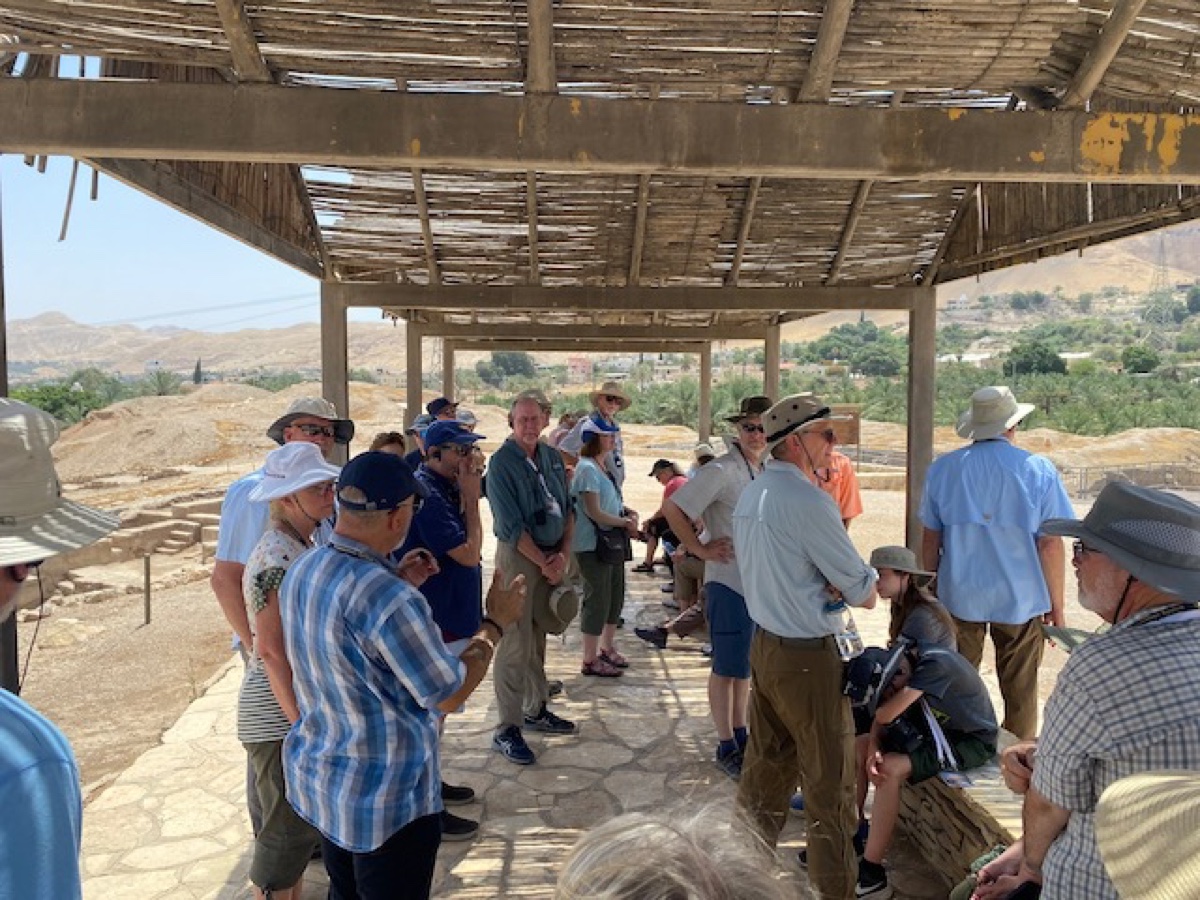
Image-1 Caption: One of my tour groups learning about the ancient site of Jericho.

Image-2 Caption: One of my tour groups taking in the beautiful view of the Jezreel Valley from the top of Mount Carmel.

Image-3 Caption: Google map image of the Elah Valley. Note the locations of Azekah and Socoh, which are both mentioned in the story of David and Goliath.
Barry Britnell is the founder of Exploring Bible Lands, LLC and leads Bible study tours to the land of Israel. He also works with Appian Media to produce biblically sound videos used in teaching others about the Bible. He and his wife, Tabatha, have three children. They live in Athens, AL, and worship with the Capshaw church of Christ. He can be reached here.



By Cheri Reeves
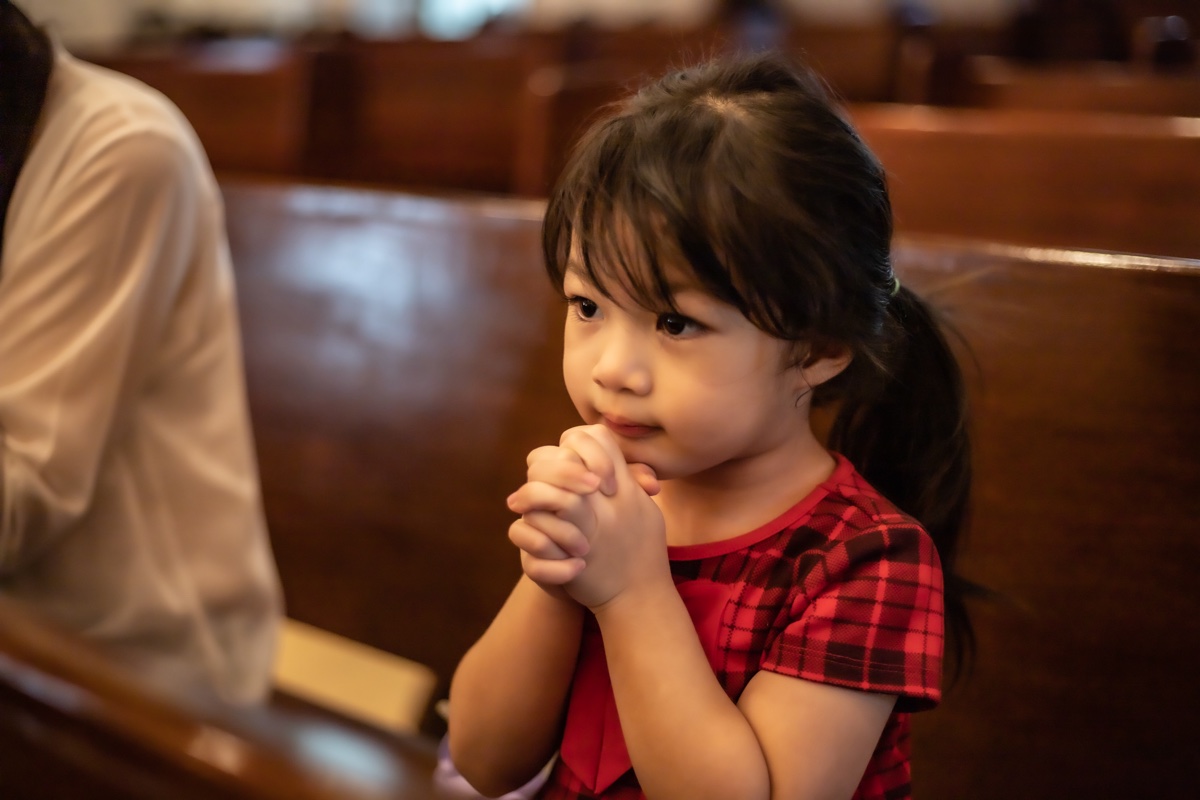
Synopsis: Sadly, many children of Christians are leaving the Lord’s body when they become adults. The word of God reminds us of the blessings of children and emphasizes that raising them to serve and worship the Lord is vital.
Raising children is a lot of work! My husband, Chris, and I have raised four children, one daughter and three sons. They are now adults and all are Christians. The two married children have found Christian spouses. Our daughter and son-in-law have blessed us with two most precious little grandsons.
What a joy it has been raising the four children and having them relatively near now that they are out on their own. We still have one in college, but he’s off to another city while in school, so we have become empty nesters.
Two of the children worship together in Memphis, and the other two worship together in Nashville. Reflecting on their physical and spiritual growth, I cannot help but think of Psalms 127:3, which says, “Behold, children are a heritage from the Lord, the fruit of the womb is a reward.”
Raising the kids to love, follow and be obedient to the Lord began early in their lives. They learned that when the church building doors were open, we would be there. Throughout their years, they were taught by example and instruction the importance of worshiping the Lord and have continued to worship Him on their own.
During worship services, our children were taught to sit still and listen. Yes, they would squirm and fidget, but I always kept them still, either on my lap or in the pew beside me. Yes, discipline was sometimes necessary, but it began in our home. It was there where they learned that there were consequences to not obeying, so during services, sometimes a stern look or whisper in their ear would be all it would take to get them to quiet down. When that didn’t work, we would practice taking them out, “wearing them out” and bringing them back in.
The children learned early the importance of sitting still and being quiet during the worship service. I would bring the children a couple of books (never a loud bag of toys) to help occupy their minds when they were young, but as soon as they could listen to the lesson, and take notes on their daddy’s sermon, they sat still, beside me.
When my second child came along, one of the elder’s wives offered to have my daughter sit by her, which was a big help since my husband was behind the pulpit. I took time to let the elder’s wife know my rules and parameters for my daughter sitting still and behaving.
When the children were young and in my lap, they were not allowed to scream out, make noise or turn around and play with people in the next pew. I would usually tap on their mouths to hush them (the source of the noise). If that didn’t work, we made a trip to the back. They would be punished and I would return with them to the auditorium to continue our worship service—quietly.
Was it hard work? You bet. Sometimes I would tell my husband, I felt like I was in a wrestling match all during the service. However, they had to learn the importance of not only worshiping, but not disrupting others while they worshiped.
Don’t wait for the children to become Christians to get them involved, but teach them early how to worship.
When it’s time to pray, start early, having them close their eyes, bow their heads and sit quietly while the prayers are led. Do the same at home as you sit around your breakfast or dinner table. Teach them to offer their own prayers at times.
In the Gospels, we read that Jesus taught His disciples to pray. In Matthew 6, the Lord explains to them the importance and purpose of prayer and how to talk to God. Do the same for your kids early in life.
Teach the children to sing out. PowerPoint songs are wonderful for having people look up and sing out, but I’m glad they were not around when my kids were young. I would always have them hold the book—whether or not they could read yet—and develop the habit of holding it open while we sang. They even had to stand when we stood.
I would use this time to point to the words to show them the order and how to follow along with the song being led. I would always encourage them to sing out. Sing with them at home as well.
During a Bible study at home, have them sit still and listen to the Scriptures read and sing while your family sings. Teach them the joy of singing. Ephesians 5:19 says, “. . .speaking to one another in psalms and hymns and spiritual songs, singing and making melody in your heart to the Lord.”
Give them some change or bills when the contribution is being collected. Help them develop the habit of giving. When they’re old enough to work and receive that first payment, talk to them about putting some aside for the Lord each week. Teach them the commands provided us in 1 Corinthians 16:2, which says, “On the first day of the week let each one of you lay something aside, storing up as he may prosper, that there be no collections when I come.”
When the Lord’s supper is passed, teach them to sit still. Explain to them at home the purpose of the two emblems and have them participate, not by taking the emblems, but by remembering the Lord’s sacrifice as the members are doing.
Let them know that, if they are ripping papers out of notebooks and making noise or whispering to siblings or friends, it could hamper others from properly worshiping God. Read to them what the Christians did on the first day of the week from Acts 20. Reflect on how Jesus instituted the Lord’s Supper.
And as they were eating, Jesus took bread, blessed and broke it, and gave it to the disciples and said, “Take, eat; this is My body.” Then He took the cup, and gave thanks, and gave it to them, saying, “Drink from it, all of you. For this is My blood of the new covenant, which is shed for many for the remission of sins” (Matt. 26:26-28).
Provide your children with notebooks when they’re old enough to write and copy down important words from the power point during the lessons. Depending on their grade level, begin by having them do a few words, to more notes that are age appropriate.
After services, teach them to greet visitors and speak to the brethren. Bring your children with you when you visit the sick or shut-ins.
Teach the children, through your example, with habits and structure. Give them responsibilities, and teach them to love and be kind, use their manners and respect the members and visitors. It will stay with them through their years of growth, as it did with Christ: “Jesus increased in wisdom and stature, and in favor with God and men” (Luke 2:52).
A young boy once told me in Bible class that he didn’t want to go to heaven because he wouldn’t be able to do there all the fun things he does here on earth. I was taken aback. Yet it made me realize that we need to teach them to love the participation of worshiping the Lord here on earth, so we have ambitions of being faithful to the Lord and serving Him around His throne in Heaven.
Therefore, they are before the throne of God, and serve Him day and night in His temple. And He who sits on the throne will dwell among them (Rev. 7:15).
It is so important to instill in our children the wonderful blessings that we have in Christ and to enjoy the opportunities provided us to worship the Lord. When parents train children early in life to love the Lord and follow His commands, they will often continue being faithful as they mature and leave the nest. This brings to my mind Deuteronomy 6:4-8 which says, “These words which I command you today shall be in your heart. You shall teach them diligently to your children, and shall talk of them when you sit in your house, when you walk by the way, when you lie down, and when you rise up.”
Cheri Reeves is the wife of Chris Reeves who preaches for the Warfield Blvd church of Christ in Clarksville, TN. In addition to her roles as wife, mother, grandmother, etc., Cheri is a reporter for Main Street Clarksville. She can be reached here.




By Danielle Renee Wallace
Synopsis: With all the dangers concerning entertainment, we must determine to guard our hearts by choosing what is pure.
A few years ago, I gave my business card to an older man. Discovering that I was an author, he responded that nobody would want to read my books if they were clean. What a thing to tell a teenage girl!
However, I completely disagree with what that man once said. I’ve had customers tell me how eager they are for a clean book with which to gift a loved one. If you must sin to find “success,” then that achievement is not worth it (Luke 9:25).Unfortunately, the entertainment industry attempts to entice the young (and old) with the allurements of sin. Yet, in reality, they fill impressionable minds, not with the fragrant aroma of goodness, but with the reeking stench of filth.
As Christians, we struggle to find clean recreation. Regardless of whether clean or sinful content is “in,” we must stay true to the Lord. I’m sure you’ve heard a song that sounded appealing until you noticed the lyrics. Perhaps you’ve seen a commercial advertising a movie that revealed so much ungodliness in twenty seconds that you knew that the film itself would hold a myriad of sins. Unfortunately, even sitting in a theater is not always an option for us anymore—most new films simply just aren’t worth watching.
The challenge with books is that, unlike movies, they are not rated G, PG, PG‐13, or R. While some may be marked as explicit, many others pose serious problems for our spirituality. You can’t always tell just by looking at the cover.
There are certain books that we obviously know to avoid. For example, romance has many subgenres, one of which is classified as “steamy.” Another romance genre on the opposite end of the spectrum is called “sweet and wholesome.” If what that man once told me was true, then surely only steamy romance novels would exist, and not the latter.
We also have a whole new genre thrown at us from which we know to stay away, and that’s LGBTQ novels. While we should certainly care about all sinners, we do not need to be reading things glorifying sin and normalizing it. Isaiah 5:20 says, “Woe to those who call evil good, and good evil; who put darkness for light, and light for darkness; who put bitter for sweet, and sweet for bitter!”
Homosexuality is sinful because it hijacks God’s definition of love and marriage. Still, all sinners can repent and come to Christ. Meditate on 1 Corinthians 6:9-11, which says:
Do you not know that the unrighteous will not inherit the kingdom of God? Do not be deceived. Neither fornicators, nor idolaters, nor adulterers, nor homosexuals, nor sodomites, nor thieves, nor covetous, nor drunkards, nor revilers, nor extortioners will inherit the kingdom of God. And such were some of you. But you were washed, but you were sanctified, but you were justified in the name of the Lord Jesus and by the Spirit of our God.
Perhaps you have friends that read things they shouldn’t. You may be tempted to read those books, too, so you can “fit in.” However, if your peers truly are your friends, they’ll respect you for not engaging in such. Who knows? Maybe they’ll even reconsider their choices of entertainment because of your example!
Since the media we consume has a way of getting caught in our minds and hearts, what we bring in must be good. What you read, watch, and listen to will affect you—often so slowly you may not even notice. Therefore, we should focus on that which is pure.
A danger, particularly with books, is that we can access many of them for free via libraries and other such places. More so, it’s incredibly easy to read things with no one knowing—especially when you consider the access we have just on our tiny phones. As Proverbs 4:23 admonishes, “Keep your heart with all diligence, for out of it spring the issues of life.” (See verses 24-27 for further thoughts regarding virtue.)
As John 17:16 says, “They are not of the world, just as I am not of the world.” Although there will always be sin around us, we don’t have to sit at its gates. Some apps filter inappropriate content out of films for viewers who do not wish to taint their minds. On a similar note, while there is an abundance of bad novels, many authors refuse to write such content. You just need to find them! You can check with fellow Christians for recommendations, discover online groups that promote clean fiction, and read reviews before purchasing to weed out inappropriate books.
If the story you’re choosing for entertainment isn’t wholesome, slam it shut. There are plenty of other books in the world—including clean ones. Don’t let entertainment pull you down and dim your light. Reflect on the words of Matthew 5:14-16, which say:
You are the light of the world. A city that is set on a hill cannot be hidden. Nor do they light a lamp and put it under a basket, but on a lampstand, and it gives light to all who are in the house. Let your light so shine before men, that they may see your good works and glorify your Father in heaven.
The world will tell us how to think and act through their deemed “heroes.” Friend, entertainment that has profanity, sensuality, and overly violent content can harm your mind. Shut the book that is promoting and holding up evil as good. (See Acts 19:19 for how some Christians dealt with ungodly books!)
If you’re struggling with impure thoughts, ask yourself what your environment is like. Are you setting yourself up to fail? Listen to the psalmist David, who said, “Create in me a clean heart, O God, And renew a steadfast spirit within me” (Ps. 51:10).
Maybe you’re struggling to let certain things go. After all, temptation is strong. Friend, don’t face this trial alone. There are Christians who are more than willing to help and pray for you—let them. Ask! Scripture promises that you will not be tempted beyond what you are able, and that you can escape sin:
No temptation has overtaken you except such as is common to man; but God is faithful, who will not allow you to be tempted beyond what you are able, but with the temptation will also make the way of escape, that you may be able to bear it (1 Cor. 10:13).
No matter what we’ve done, God is willing to forgive. Remember John’s comforting statement: “If we confess our sins, He is faithful and just to forgive us our sins and to cleanse us from all unrighteousness” (1 John 1:9).
Did you notice something about those last two passages? They both say that God is faithful. Unlike this fleeting world and the snares in it, God remains steadfast. With Him, we can overcome everything. “I can do all things through Christ who strengthens me” (Phil. 4:13). Let’s not take the beautiful gift of recreation and taint it with sin. Instead, may we be faithful to Him, as He is to us.
Not only can you ask your brothers and sisters in Christ to pray for you, but you can and should pray to your Lord for strength to be steadfast in Him!
Be anxious for nothing, but in everything by prayer and supplication, with thanksgiving, let your requests be made known to God; and the peace of God, which surpasses all understanding, will guard your hearts and minds through Christ Jesus (Phil. 4:6-7).
Do it right now. It’s not too late. Pick yourself up and follow Christ. “Wait on the Lord; Be of good courage, and He shall strengthen your heart; wait, I say, on the Lord!” (Ps. 27:14). Have faith in your heavenly Father and believe in His Son. “For whatever is born of God overcomes the world. And this is the victory that has overcome the world—our faith. Who is he who overcomes the world, but he who believes that Jesus is the Son of God?” (1 John 5:4-5).
As we wrap up this brief study, I encourage you to ponder the following question: “Are you overcoming the world or is the world overcoming you?”
Danielle Wallace is a member of the Mount Baker church of Christ in Bellingham, WA. She is a published author of clean fiction books. Her website is here. She can be reached here.






By Tyler Sams
Synopsis: What better tribute to pay to a fallen friend and brother than to consider one of his favorite subjects, a subject with which he is now much more acquainted—hope.
Grief hurts. It’s not a profound statement, I know, but sometimes it just helps to say it out loud. Grief hurts. Loss stings. The loving God we serve doesn’t attempt to convince us otherwise: He knows the pain of grief and loss. Our heavenly Father saw His beloved Son die an innocent, yet agonizing, death. God knows grief. The Son of God entered His creation, only to be met with rejection and abandonment, and be hung by unbelievers on a despised cross. Jesus knows grief. The Spirit inspired and superintended generations of humans as they recorded the divine message of salvation by grace through faith, yet He sorrows today when men and women turn from the obedience of faith (Eph. 4:30). The Holy Spirit knows grief.
When we grieve, we are not alone. We are not alone in humanity and we are not alone spiritually. Our Father, His Son, and the Holy Spirit have all been intimately acquainted with grief at various times. We serve a God who has suffered—how much that helps us in our suffering! Rather than condemning grief, Jehovah calls Christians to experience grief differently from those in the world—especially grief which occurs at the loss of a fellow Christian. Instead of forbidding grief, the Spirit calls on us not to “grieve as do the rest who have no hope” (1 Thess. 4:13). “Grieve,” the Spirit says, “but don’t lose sight of hope.”
Hope—It’s a theme we see all throughout Scripture. We encounter hope in Genesis 3 in the Seed of woman who would crush the head of the serpent. We read about hope in the last verses of nearly every Old Testament prophet. Hope empowered Peter, Paul, and other early Christians to suffer the indignities that were thrust upon them for doing nothing more than taking up the cross and following Jesus. Hope strengthened the Thessalonians to navigate through their grief over lost brethren. Indeed, hope is an important concept throughout Sacred Scripture.
I have known Sean Cavender since elementary school days. Every young person of my age at the Highway 65 church of Christ in Conway, AR, loved Sean. However, we first loved his grandmother—Ouida Cavender (the quintessential “gum lady,” if ever there was one). What his grandmother was, Sean was, too. Both were devoted, kind, and compassionate. His smile lit up a room. His love of the brethren was self-evident. As time passed, I became a preacher; not long afterwards, Sean also became a preacher. We talked often about our struggles, our challenges, and our hopes. We never got to spend as much time together as we wished, but cherished those moments when we were together, alongside the company of other preacher-friends, several of whom are also writing in this issue.
When I first heard Sean preach in-person, his text of choice was Hebrews 6:19—“This hope we have as an anchor of the soul, both sure and steadfast and one which enters within the veil.” Having now come full-circle, as we grieve Sean’s passing, let us remember we have a God who understands grief. May we also perceive the powerful role that hope plays, even during a Christian’s grief.
Hebrews 6:19 follows a brief interruption in the book of Hebrews. Melchizedek (an obscure but significant Old Testament character) was introduced near the end of Hebrews 5. The author had more to say about Melchizedek, but his audience could not yet benefit from it because they had become stagnant in their spiritual growth (5:11-14). In the subsequent chapter, the Spirit encouraged these believers to mature in their faith (6:1-3), reminding them that God had something better in store for them if they would but follow Him (6:4-9). The word of God offers hope, and they needed to follow that hope to the end (6:10-12).
At the end of Hebrews 6, the Spirit shows the power behind hope—God (vv. 17-20). Hope has the power to still our souls, wipe our tears, and comfort our hearts with the confident assurance of the future. All this occurs because of God. Particularly, the Spirit mentions “two unchangeable things” which give us strong consolation and hope (6:18). What are these “two unchangeable things”?
Whatever is said about these two things, we must recognize that they center on the person of God and His righteous nature. Since God does not lie, we conclude that these “two unchangeable things” relate to something He has said—things in which we can have absolute confidence. The “two unchangeable things” which God has said are His promise and His oath (6:17).
In American culture today, we often use the words “promise” and “oath” interchangeably. This does not seem to be the case in prior cultures, however. Indeed, Hebrews 6:17 seems to delineate promises from oaths: God promised, then “interposed” (to ratify or confirm) by means of an oath. For the sake of simplicity, an oath is an intensifier added on top of a promise. In his excellent commentary on Hebrews, David McClister notes,
Normally, God’s word needs no oath to secure it. God keeps His word, and when He says He will do something, men may count on the fulfillment of that word as if it were already done. . . but God wanted Abraham to be doubly sure, as it were, of the surety of His promise. Thus God, for Abraham’s sake, took an oath (McClister, 227).
Genesis 15 is an excellent example of the significance in Hebrew culture of an oath on top of a promise. God had already promised Abraham concerning a nation that would issue forth from him and concerning his seed through which “all the families of the earth [would] be blessed” (Gen. 12:1-3). While this was God’s word and was sure, in Genesis 15, God interposed with an oath. In an oath, one doesn’t simply promise. In an oath, one invokes punishment upon himself if the promise is not upheld. Thus, in Genesis 15, God, in the form of a smoking oven and flaming oven, passes through the midst of the cut animals. It is as though God were saying, “May what happened to these animals happen to Me if I fail to keep My word concerning you.” God’s word had already been given, and He does not lie. Imagine being Abraham and having God speak to you by means of an oath. God impresses upon Abraham the fact that His word would be accomplished.
How does all of this relate to hope? Returning to Hebrews 6, the Spirit shows that our hope relates to three central concepts. If these concepts are present, our hope is real and will be realized. However, remove one of these concepts, and it is like taking a leg off of a three-legged stool—hope will falter and collapse. What are the three central concepts to our hope?
First, God our Father is central to our hope, as we have already noted (Heb. 6:17-18). Our hope is centered on His faithfulness. The God who promised and made an oath to Abraham kept His word to Abraham. If God kept His word toward Abraham, why would He not keep His word toward me?
Second, the work of Jesus is central to our hope. After telling us that hope is the anchor of the soul, the Spirit presents Jesus as our forerunner and high priest (6:20). That Jesus is our forerunner speaks to us of the humanity of our Savior. Jesus lived on this earth, shared in flesh and blood (2:9-16), and learned obedience (5:8-9); in this way, Jesus is our example and we are to follow Him (12:1-3). His identity as our High Priest also speaks to His work of intercession before our Father. He can sympathize with us because He knows our weaknesses (4:15) and He can advocate for us before our Father because of His sinless life (4:15), and His divine nature (5:5). Our hope is firmly centered upon the perfect sacrifice and effective mediation of the Son of God (2:17-18).
Finally, our response to God’s word is a fundamental component of hope. In speaking of our response to God’s faithful word toward us, the Spirit mentions faith (6:12), patience (6:12), diligence (6:11), ministry (6:10), love (6:10), and work (6:10).
Considering the words of the Spirit in Hebrews 6, I must also acknowledge the fact that I have a role to play in my salvation, the realization of hope. I don’t play the role of promises or oaths—that is the role of our Father. I don’t play the role of atoning sacrifice or mediation in Heaven—that is the role of our Savior. What, then, is left for me? My role is the role of Abraham (6:12-13), a role of faith. My role is not merely a role of belief, but a role of belief, love, work, diligence, and patience—a role of active and obedient faith (11:6).
Hope is a beautiful and powerful thing. It sees us through grief. It delivers us to an eternity with God. My friend, Sean, left this earth far too soon—at least, in the opinion of many of us, i.e., his friend and family and fellow-Christians. Yet because he lived a life of hope, we can rest confidently in the full assurance of faith that he is resting with Jesus (Phil. 1:23). The hope that sees us through to heaven is a hope which considers God’s word, sees in Jesus the perfect savior, and responds in faith to God’s revelation. May we all live to have such hope!
McClister, David. A Commentary on Hebrews. Temple Terrace, FL: Florida College Press, 2010.
Tyler Sams has worked with the University Oaks church of Christ in San Antonio, TX, since March, 2021. He and his wife, Audrey, have two children. The church website is here. He can be reached here.



By Shawn Chancellor
Synopsis: Joy and grief are not antithetical—they often create a tension that helps us navigate our earthly existence. Despite living in a sin-corrupted world, we can have faith and hope.
“But let all that take refuge in you be glad, let them ever sing for joy. . .” (Ps. 5:11). I have to say, admonitions like the one found in this verse sometimes seem out of reach. Life in a sin-corrupted world provides so much sorrow and pain that a call to joy can seem like a misplaced anthem. However, when we realize that this call to joy is not a call to happiness, but to faith and confidence in God’s protection and provision, we can see through the fog of grief, suffering, and pain to the great promises in which our hope rests.
I have known Sean Cavender since he was in college. We met at a Bible study in Conway, AR, and quickly became friends. Through the years, we spent time together in Bible studies and gospel meetings. When I left the Bradley church of Christ in southwest Arkansas and moved to Fort Smith, Sean moved to Bradley. Sean was from the Fort Smith area, so we saw each other frequently. Two things come to mind when I think about the time we spent together. First, we were nearly always engaged in Bible study. Second, we laughed. . . a lot. One summer, I traveled to Indianapolis to attend the High School Road lectures with Sean and Kristin (who were then dating). The trip was a prime example of our relationship. We drove for ten hours, talking and laughing, then spent a week with our Bibles open, listening to God’s word.
Sean had a great sense of humor. He had many reasons to be happy: godly parents, a loving wife, and two beautiful children. However, he was blessed with something else even greater: his faith in Jesus. As important as his family was to him, it was his hope in Jesus that produced joy in his heart.
When the New Testament speaks of joy, it speaks of something more than an emotion that is dictated by outward circumstances. It is not merely a synonym for happiness. Instead, we find phrases like:
. . .you showed sympathy to the prisoners and accepted joyfully the seizure of your property (Heb. 10:34)
. . .having received the word in much tribulation with the joy of the Holy Spirit (1 Thess. 1:6)
. . .in a great ordeal of affliction their abundance of joy and their deep poverty overflowed in the wealth of their liberality (2 Cor. 8:2).
By considering these statements, we begin to understand that joy is rooted in faith. It is a response to what God has promised, not to what we are enduring at the moment. It is the product of a settled conviction, not the effect of a short-term situation. Joy is not a failure to recognize reality, i.e., a form of delusion or denial. It is the manifestation of a value system that is properly aligned by a deep and abiding conviction that the Lord will return one day and set right all the injustices perpetrated by sinful man. On that day, death will be defeated, and eternal peace with God will be enjoyed by all who have put their faith in Him (1 Cor. 15:50-57).
Our life and hope are often in tension. We live for that blessed day, but on any day, grief may strike. Over the past year, I have become far too familiar with this disturbing reality. Last September, my mother passed away after a brief, but fierce, battle with cancer. Two months later, my father died from an apparent heart attack. This spring, my good friend, Kelly Carrington, died after battling cancer for years. Then, this summer, Sean was taken so suddenly and senselessly that I still struggle to accept that reality.
I have every reason to believe that each of these four is (even now) in the arms of Jesus (Phil. 1:23; 2 Cor. 5:8). Three of them were suffering with health problems from which death brought relief. They have no more sorrow, no more fear, no more struggle.
Well-meaning people have reminded me of these things for nearly a year now. To be clear, I believe each of these things to be true. I share the hope of the faithful. On some days, those gentle reminders have been exactly what I needed to hear. Still, to be honest, on some days, I don’t want to hear it. I loved my Mom’s cinnamon rolls and discussing Scripture with my dad. There are thousands of other little things that are simply gone—and I miss them terribly. I miss talking about college football with Sean and the (mostly) light-hearted teasing between us about his Arkansas Razorbacks and my Auburn Tigers. I would love to hear another of Kelly’s stories, which were always filled with wit and wisdom.
I suppose that, considering deeper spiritual matters, these things might seem small. So be it. Still, I miss them. I grieve for the time we no longer have to do the seemingly insignificant activities with which good relationships are filled. Moreover, I look forward to being reunited and spending eternity together with our Lord.
Over the past few months, I have come to understand that grief is not the enemy of faith—they can actually work in harmony. Faith can keep us from being consumed with grief through the hope it offers. Grief can drive us to faith if we recognize it as the result of man’s calamitous choice to reject God. The reality is two things can be true.
I can have hope and, in that hope, find joy.
I can acknowledge my present condition, wherein I grieve and hurt.
Suffering, sorrow, sickness and death, ultimately result from sin. Death (and all its attendant sorrows) entered the world because of Adam’s transgression (Gen. 2:16-17; Rom. 5:12; 6:23). We should weep over the pain that sin has caused. . . as did Jesus (John 11:35). Likewise, we know that sin, death, and the pain and suffering they have caused are temporary, and, ultimately, defeated by the resurrected Christ. We should find joy in this conviction. That joy should allow us to be optimistic about the future. We can have joy even while we weep.
As is usually the case, Our Lord Jesus Christ is the greatest example of this. He found joy in serving the Father and in doing His will. However, in that service, He often suffered and found reason to grieve. Hebrews 12:2 distills this tension beautifully, saying, “. . .who for the joy set before Him (He) endured the cross, despising the shame. . . .”
This passage has the cross in view. The gospel accounts do not diminish the emotional impact of the cross. Instead, we get glimpses of the raw emotion that Jesus experienced. As He prayed in the garden before His arrest, He “began to be grieved” and said to His disciples, “My soul is deeply grieved, to the point of death” (Matt. 26:37-38). Kenny Chumbley’s comments are helpful here: “Unto death” stresses the depth of His pain. Christ’s anguish and stress was so intense that He sensed He was in danger of dying in the Garden. . . ." He quotes Whiteside, who said, “He felt as if He could not survive the pressure that was upon His soul” (Chumbley, 467).
Hebrews 12 does not suggest that Jesus viewed the suffering attached to the cross as minimal or unimportant. Instead, He “despised” it. “Despised” translates the Greek term kataphroneo, which means “to consider something not important enough to be an object of concern when evaluated against something else” (BDAG, 529). In other words, Jesus made an intentional choice—a value assessment, if you will. He viewed the results of His suffering as being more important than avoiding the suffering. He chose joy in His suffering. We can do the same.
The last time I was with Sean Cavender was at Kelly’s funeral. Tyler Sams, Sean, and I sat in a hotel, eating breakfast together. We were sad. A dear friend had died. Another dear friend was hurting deeply. It was just a few months after my parents had died. I was filled with conflicting emotions about sitting through another funeral. As we ate our breakfast, we talked about our families and respective work. Before long, we were laughing. We were still hurting, but we had our faith and each other. This was enough to remind us that there was more than loss, grief, and pain. In moments like that, the admonition in a passage like Psalm 51:1 becomes the anthem we need to overcome despair. “Let them ever sing for joy.”
Bauer, Walter, Frederick W. Danker, William Arndt, and F. Wilbur Gingrich. A Greek-English Lexicon of the New Testament and Other Early Christian Literature (BDAG). Third Edition. Chicago: University of Chicago Press. 2000.
Chumbley, Kenneth L. The Gospel of Matthew. Nashville, TN: Privately Published, 1999
Shawn Chancellor has worked with the South Georgia Street church of Christ in Amarillo, TX, since 2014. He and his wife, Bonnie, have one daughter. The church website is here. He can be reached here.


By Bruce Reeves
Synopsis: This issue of Truth Magazine is dedicated to remembering my friend, Sean Cavender, who was tragically and unexpectedly taken from us—from our standpoint, far too soon. Yet, hope remains for those who faithfully serve the Lord Jesus Christ.
On July 17th of this year, my friend, Sean Cavender, and I traveled to Athens, AL, to attend the Truth Lectures. We enjoyed our time together immensely. Sean and I had traveled together for such studies many times before. We discussed the Scriptures, spiritual matters, and laughed a lot, which would surprise no one who knows us. On the morning of July 20th, Sean preached a very thoughtful and convicting sermon on the kingdom of God. Sadly, it was that very evening, after the lectures had concluded, that our dear brother and friend passed away in a tragic car accident. I have been blessed to have known Sean since he was in the sixth grade. As he grew to maturity, his diligence, determination, and effectiveness as a gospel preacher have encouraged me. Our brethren’s generosity toward Sean’s family has been amazing. His good influence on our lives as a faithful servant who gave his heart to the work of the Lord has been deeply encouraging.
Just a few weeks before Sean’s passing, he was preparing to preach on a Wednesday night for the Northside church of Christ in Greenwood, AR. He had been assigned the question, “Why Should I Believe in Life After Death?” We discussed the best approach for his sermon. On July 9th, he delivered the lesson at the Westside church of Christ in Wichita, KS. It was a blessing for me to have had the opportunity to preach Sean’s sermon for him in Greenwood. As we consider the example and influence of Sean’s life, we will now turn our attention toward his thoughts regarding the question, “Why Should I Believe in Life after Death?”
Some define death as “the great unknown,” and discussing the subject makes many people uncomfortable. Unless we are counted among the living when Jesus returns, all of us will experience death (1 Cor. 15:51-58; Heb. 9:27). If we reject scriptural teaching, then we will be confused about many vital issues, including this one. If we consider God’s word, there is much for us to learn both about this life and the life to come. As we ask this question regarding life after death, we have a one-word answer, and it is “Jesus.” Once we come to understand who God is, who Jesus Christ is, and the inspiration of the Holy Spirit’s revelation in Scripture, then the Lord’s eternal purposes for His people are made manifest to us.
As human beings, we are people or souls who have a body. It is not that we have souls, but we are souls. Spiritual death involves the separation from God that occurs because of our sins, while the “second death” involves eternal separation from God in hell (Isa. 59:1-2; Eph. 2:1-3; Rev. 20:14). Physical death is the separation of the body and spirit (Jas. 2:26). The Bible does not teach that our spirit ceases to exist at death, or that we experience soul sleep; rather, our spirit departs from the body at death. Jesus promises us that there will be a future bodily resurrection for the righteous and the wicked (John 5:28-29). God cares what we do with our bodies and has promised to raise us up on the last day (1 Cor. 6:13-18). Often, we view ourselves as physical beings with a soul, but perhaps we should see ourselves as spiritual beings with a body. The Lord’s purpose is to sanctify us in our “body, soul, and spirit” (1 Thess. 5:23).
Life comes from God (Gen. 1:1-3; John 1:1-5). While we all have had a point of origination, we will continue to exist throughout eternity; we will exist either in separation from God, or in fellowship with God in eternity. Jesus, being God, created all things that exist and upholds all the things by the word of His power (John 1:1-3; Col. 1:15-18; Heb. 1:1-2). We read that “the Lord God formed man of dust from the ground and breathed into his nostrils the breath of life; and man became a living being” (Gen. 2:7). We also learn that, when God created Adam and Eve, each was created “in the image of God” (Gen. 1:26-28). Our identity is wrapped up in our oneness with God as Creator and we are His image bearers.
When the Sadducees questioned and quibbled with Jesus about the resurrection, He answered by referencing God’s power and the unavoidable conclusion of the teaching of Scripture in the book of Exodus. Even after the deaths of Abraham, Isaac, Jacob, Moses, and Elijah, we find evidence of their continued conscious existence and the faithful promise of the resurrection (Matt. 22:31-32; 17:3). Since the corporeal body is what dies, and God is not the God of the dead but of the living, then there must be a future resurrection. If we believe in the God that has the power to create and sustain us, then we must also believe that He has the power to raise us on the final day.
In His teaching, Jesus emphasized the continuity between this realm and the afterlife. Christ also spoke frequently of the reality of eternal conscious punishment in hell for the wicked (Matt. 5:29-31; 8:12; 10:28; 13:50; 25:46). He is not merely speaking of a loss of being, but a loss of well-being. The same verse that speaks of eternal life also speaks of eternal punishment. Jesus also comforts those who believe in Him with the assurance of eternal life in heaven (Luke 23:43; John 14:1-6). Heaven will be experienced where Jesus is presently reigning, i.e., at the right hand of the Father, not down here on the earth. When the Son returns, we will be caught up with Him in air, and this world (along with the sun, moon, and stars) will be destroyed (1 Thess. 4:13-18; 2 Pet. 3:1-18).
Christ described Himself as “the resurrection and the life” for all those who believe in Him (John 11:43-45). He furnished proof of His authority over death by commanding Lazarus to come forth from the grave, and it is by the same authority that He will raise us up as well (John 5:28-29). Jesus’s resurrection offers ultimate confirmation of life after death (John 20:16-29; Acts 2:22-39; Rom. 1:4; 1 Cor. 15:20-24). The Lord uses the term “death” in two different ways in John 11. He says, “I am the resurrection and the life; he who believes in Me will live, even if he dies” (John 11:25). Then He says, “Everyone who lives and believes in Me will never die. . .” (John 11:26). He is driving home his point that those who believe in Him will not die spiritually, even if they die physically. The Lord wept in compassion for the grief of others and over the terrors of sin, but, thanks be to God, He has offered freedom from the slavery of death through the cross (John 11:35; Heb. 2:14-18). If we believe in His resurrection, then we will believe in life after death! Let us join with Thomas, in his confession, when he declared, “My Lord and My God!” (John 20:28-29). Christianity is the only religion that provides objective evidence of life after death.
If Christ is to judge us on the Last Day, then there will be life after death. Paul proclaimed that Jesus’s resurrection offered proof that God will judge the world through His Son: “Therefore having overlooked the times of ignorance, God is now declaring to men that all people everywhere should repent, because He has fixed a day in which He will judge the world in righteousness through a Man whom He has appointed, having furnished proof to all men by raising Him from the dead” (Acts 17:30-31). When we are judged, we will be judged according to what we have done, whether good or bad (Rom. 2:16; 2 Cor. 5:10-11).
When we breathe our last breath, we will not stop being who we are! When Sean Cavender passed into eternity, he did not stop being who he was—God’s child. Satan and this world want us to think that there is no continuity from this life into the next, but the truth is that our lives now must be lived in preparation for living in eternity. If we were to live every day considering our future, what a different life would we then live! Would we not think of God’s grace more fervently? Would we not worship more passionately? Would we not preach more boldly? Would we not serve more sacrificially? Would we not love the truth more devotedly?
Toward the end of his sermon, brother Sean Cavender said something about which we all should think:
Jesus says we don’t know when He is coming again (Matt. 24:36). That is why we must always, always, always be watching, waiting, and be prepared to meet the Lord.
Bruce Reeves has labored with the Highway 65 church of Christ in Conway, AR, since 2000. He and his wife, Rachel, have one child. The church website is here. He can be reached here.


By Don McClain
Synopsis: Sean’s influence reached much further than he could have ever imagined. Why was this so?
The idea to publish this “Tribute to Sean Cavender” was excellent, and it is an honor to participate. My heart aches for Kristen, Xander, Zeke, Randy, and Brenda—they are constantly in my thoughts and prayers. I pray they will find ongoing peace and comfort as they move forward and hold fast to the God of all comfort. He can and will uphold and sustain them. I also pray that the family and all our readers find some consolation and encouragement from these thoughts as we reflect on the undying influence that our beloved brother Sean had on those who knew him.
Sean Cavender was my friend, and it was quite obvious from his memorial service on Tuesday, July 25th, that he had many, many more. As I stood throughout, leaning against the west wall of Lewis Funeral Chapel, one thought kept reemerging amid those of sadness, joy, grief, gratitude, loss, and hope: “Sean would have never believed his memorial service would be like this.” The building was more than packed, it was overflowing. Hundreds more watched online, (in fact, at last check, over 9,000 people had viewed the service on Facebook). Jeff Asher and Bruce Reeves delivered two of the most appropriate and encouraging messages I have ever heard in a memorial service. Those who knew and loved Sean mutually lifted their voices in praise to the God of heaven. The singing was absolutely incredible—a foretaste of heaven. The faith, hope, and love that so powerfully flowed throughout that building that day have been indelibly etched into my heart. It was one of the most powerful and encouraging experiences of my life. Clearly, Sean’s influence was far greater than he, or anyone else, would have imagined!
We often underestimate our influence. It works both ways. The Bible warns, “a little leaven leavens the whole lump” (1 Cor. 5:6; Gal. 5:9). While the influence of Satan and sin is great, Christians are “the light of the world,” and “the salt of the earth” (Matt. 5:13-16). As we allow Christ to reign over our lives and influence our hearts, we become “influencers” for Him in an evil and dark world (Phil. 2:14-16; 1 Pet. 3:15). Let us remember that our influence definitely affects those around us. We must be careful and diligent to ensure that our influence is based on truth and holiness. We can only be a positive influence for Christ if we are true imitators of Christ and very much unlike the world.
Sean’s memorial service revealed that his influence for Christ reached far and wide. We cannot know how many lives we have touched.
Sean is my brother. That spiritual bond was the reason we were all there. It was our mutual association with Sean in Christ, our like-minded love for God, and our appreciation for his faithful service in God’s kingdom that brought us all together. Sean certainly would not have thought of himself as a popular or widely acclaimed preacher. He was, however, very talented and a faithful proclaimer of the gospel. At the Truth Lectures, the morning of July 20th, 2023, Sean presented an excellent lesson on the kingdom of God, in which he said: “Whatever we do should be done unto the glory of Christ and His kingdom—recognizing Jesus as the King.” Not only did Sean preach it, he lived it. Sean did not seek the praises of men. His heart was not set on popularity. Rather, his heart was set on proclaiming and defending the truth. He understood that true success was not measured by what men thought of him. Sean knew that standing for the truth would not appeal to the masses. In the same lesson, Sean stated: “Preachers cannot seek relevance and popularity over the truth” (2 Tim. 4:1-4). Tragically, Sean would be taken from us that very evening after the final lecture. He was a faithful servant of Christ to the end!
Sean was my fellow worker and possessed a servant’s heart! He was a genuine servant of Christ! I called Sean one afternoon about joining me for a podcast, which he had done many times. I mentioned that I had just spoken with Bruce Reeves, but he was busy. Sean laughed and said, “So I’m your second choice?” I had to admit that he was. Regardless, he was just happy that I called him. Sean didn’t mind being second, third, or whatever—he just loved discussing God’s word whenever he could! He just wanted to serve Jesus! (Luke 13:29-30).
There are many unsung heroes in the Bible! Those who worked unceasingly behind the scenes. Paul mentions several individuals who were instrumental in his efforts to proclaim the gospel throughout the known world, who comforted, supported, and encouraged him through trials, persecution, and imprisonment—such as Epaphroditus (Phil. 2:25-30; 4:18), Phoebe (Rom. 16:1-2), Priscilla and Aquila (Rom. 16:3-5; Acts 18:2-3, 18), and many others (Rom. 16:6-15). Like these faithful men and women of antiquity, Sean was the epitome of a team player! It is amazing what we can accomplish when we do not care who gets the credit. What if we actually surrendered to the Lord’s teaching regarding how we should love, treat, and serve one another? What if we put forth the united effort which the New Testament teaches we should (Phil. 2:1-4; Eph. 4:1-16; Rom. 12:1-16; Heb. 10:23-25)? It may surprise us how much influence we would have on our communities and the world (Acts 17:6)!
Sean was a fellow soldier! I had the honor and privilege of frequently fighting the enemy alongside Sean. We worked together with Bruce Reeves to help him prepare for several debates. Sean gladly and enthusiastically accepted any task asked of him, whether doing extensive research, running errands, or toting equipment and luggage. He just wanted to help however he could. Sean made many valuable contributions, from preparing charts to improving phraseology, presentations, and argumentation. Sean was an extremely valuable soldier in the kingdom!
We need more soldiers like Sean—Christians who will equip themselves with God’s armor and engage the enemy (Eph. 6:10-18)! Sadly, it seems many prefer we lay down our swords (i.e., God’s revealed truth), remove the armor of God, and let the enemy have a free course. That certainly wasn’t Sean’s attitude; nor was it our Lord’s. We should desire, and be willing to defend the faith (Jude 3-4). To this end, let us support and proclaim the truth so that Jesus is glorified, and His kingdom advanced; let us also thwart Satan’s efforts to deceive and ruin men by exposing error.
One of the first things you noticed when you saw Sean would be that smile. He was a happy, positive, upbeat person. Sean’s smile was no facade—His heart was filled with joy! No doubt his family had a lot to do with his joyful disposition. He loved them all so deeply and constantly spoke of them with that huge smile on his face. It appears that everything brought Sean joy. He loved to laugh. Once during a live stream Bible study, he got to laughing, and it took a while to get back on track. Sean’s joy was rooted, and grew out of His love for Christ and his sacrificial service to Him. Genuine joy can only be found in genuine, sacrificial service in God’s cause (Phil. 4:4-8).
Christians should be the happiest people on earth! Yes, we face problems, disappointments, frustrations, and hardships. We will be hurt, we will suffer loss! We will weep! We will grieve! However, rooted deep within our hearts will be the abiding joy produced by our faith in Christ, the hope of the resurrection, and the eternal love of God. Paul says, “Rejoice in the Lord always. Again I will say, rejoice!” (Phil. 4:4). Such joy cannot help but be recognized by others. It is an attractive and infectious characteristic. It will draw others into our circle. Without doubt, Sean’s joyful attitude had a lot to do with why he touched so many people.
Sean’s influence reached much further than he could have ever imagined. Why? Because he was a genuine brother to so many. He was a humble, faithful fellow-worker. He was a devoted, willing soldier, who found genuine joy in serving the Lord and others. As Paul said of Epaphroditus, let us “hold such men in esteem” (Phil. 2:29).
Don McClain currently labors with saints meeting at 9500 Highway 5 in Bryant, AR. He and his wife, Denise, have two adult sons and nine grandchildren. The church website is here. He can be reached here.



By William Stewart
Synopsis: Our ability to recognize one another may be diminished by advancing age and dimness of vision (as was the case with Isaac in Genesis 27) or long years of separation (as was the case with Joseph’s brothers in Genesis 42). Will death have the same effect upon our ability to recall earthly relationships?
One of the last Bible discussions I had with my dear friend, Sean Cavender, addressed this question. As the children of God, we have the wonderful hope of an eternal home in the presence of God, where the pain and sorrow of this life are no more, where we are joint heirs with our blessed Saviour, and where the victory of immortality is won (John 14:1-3; 1 Thess. 4:17; Rom. 8:15-23; 1 Cor. 15:50-57; Rev. 21:1-7). These are wonderful things which the faithful anticipate, but understandably, the question of recognition and remembrance of our loved ones frequently is pondered in the minds of the elect. Will we know one another in heaven?
I am unaware of any Scripture which outright states that we will recognize one another in heaven. However, many texts indicate that we maintain our distinct identity after we have finished our course in this world. Further, the Scriptures reveal those who are in the spirit realm have recognition of one another and remembrance of relationships from this life. Consider the following biblical passages.
King Saul went to a medium at En Dor, seeking to contact Samuel in a seance (1 Sam. 28). When she saw the prophet, she cried out with a loud voice (v. 12). Her reaction makes me wonder if she’d ever before seen a spirit. After she described the spirit, Saul confirmed it was Samuel. A conversation ensued with the deceased prophet, who rebuked King Saul with the same fervor he had when he was alive.
The prophet Nathan announced to king David that the consequence of his sin would be the death of his first son born to Bathsheba (2 Sam. 12). For the seven days of the child’s life, the king prayed, fasted, and prostrated himself on the ground. Nevertheless, the child died. David’s servants were confused when he arose, washed himself, and ate. He explained, “While the child was alive, I fasted and wept; for I said, ‘Who can tell whether the LORD will be gracious to me, that the child may live?’ But now he is dead; why should I fast? Can I bring him back again? I shall go to him, but he shall not return to me” (vv. 22-23). David was confident that he would see (and know) his son in the hereafter.
In Luke 16, Jesus spoke about the rich man and Lazarus. Both men passed from this life and went to Hades: Lazarus was in Paradise (i.e., Abraham’s bosom) and the rich man was in torments. It is worth noting the knowledge which this deceased rich man possessed. He recognized and spoke with Abraham. He recognized and sought help from Lazarus. He remembered and was concerned for his five brothers, who were still alive. Of course, he was not in heaven, but beyond this life, in the spirit realm, despite suffering in torment, he had both recognition and remembrance.
Two prophets who had been deceased for centuries appeared and spoke with Jesus in Matthew 17. They were not nondescript, generic figures, but recognized by Simon Peter as Moses and Elijah. Their identity remained intact centuries after their deaths.
The Sadducees, who did not believe in the resurrection, presented an absurd scenario about seven brothers, who each (in turn) married the same woman, but all subsequently died (Matt. 22). They mocked Jesus, asking whose wife she would be in the resurrection. The Lord responded to their sarcasm by simply affirming that there is no marriage in heaven (v. 30), for marriage ends at the grave (Rom. 7:2-3; 1 Cor. 7:39). The greater and eternal relationship is our kinship as God’s people. He then affirmed the certainty of the resurrection by citing Exodus 3:6, where Abraham, Isaac, and Jacob, though deceased, are cited in the present tense, “I am the God of Abraham, the God of Isaac, and the God of Jacob.” Jesus added, “God is not the God of the dead, but of the living” (v. 32). In fact, in Matthew 8:11, Jesus said, “Many will come from east and west, and sit down with Abraham, Isaac, and Jacob in the kingdom of heaven.” What an amazing thought—we will be with and know the patriarchs.
The Bible speaks of “the Book of Life” where the names of those who have the hope of heaven are recorded (Luke 10:20; Phil. 4:3; Rev. 3:5; 13:8; 20:12; 21:27). The existence of such a divine document attests to the perpetuation of our distinct individuality. The Book of Life identifies us as citizens of heaven (Phil. 3:21), and members of the family of God (John 14:2-3; Eph. 2:19; 3:15; 2 Cor. 5:6).
Paul asked the Christians in Thessalonica, “What is our hope, or joy, or crown of rejoicing?” To which he answered, “Is it not even you in the presence of our Lord Jesus Christ at His coming? For you are our glory and joy” (1 Thess. 2:19-20). How hollow would such words be if he would not know them (or they him) in the resurrection? In chapter 4, some were troubled at the death of loved ones (v. 13). Paul affirmed the hope of the resurrection, emphasizing that the dead in Christ will rise and be with the Lord (vv. 14-16), and those who remain alive will meet them in the air (v. 17). This hopeful reunion is a reason to “comfort one another” (v. 18). How comforting will it be if we will not know each other? His words of comfort continue in chapter 5, where we find, “God did not appoint us to wrath, but to obtain salvation through our Lord Jesus Christ, who died for us, that whether we wake or sleep, we should live together with Him. Therefore comfort each other and edify one another, just as you also are doing” (1 Thess. 5:9-11). We will live together with Him!
If we recognize and remember people in the resurrection, will we not also be cognizant of those who are not there? If that is the case, would that not cause sadness? Nevertheless, God’s word affirms that there is no sorrow, crying, or pain in heaven (Rev. 21:4). Will the Lord somehow remove our memory of them? The Bible gives no indication of God doing so. Also Luke 16 shows that those who have passed beyond this world will retain the memory of those whom they knew.
When we experience sorrows in this life, the pain lessens over time. Grief typically gives way to acceptance. Greater still, we have the God of all comfort and His people to support us in our sorrows (2 Cor. 1:3-4). Neither of my parents was a Christian. While they were alive, they had no interest in the truth of God’s word. When they passed away, I was filled with sorrow—I understood the eternal implication. Their spiritual reality has not changed, and it is still a sad and unfortunate thing, but my experience of sadness is not the same as it once was. Certainly, I could dwell upon it and bring myself to tears, but I do not dwell on it. I cannot change it, and there are living people upon whom I can and should focus.
In heaven, when we are in the presence of the Almighty, the One “who is able to do exceedingly abundantly above all that we ask or think” (Eph. 3:20), the wondrous glory of His being and the immense greatness of His majesty will be beyond sufficient to eclipse and transcend every pain, sorrow, or trouble which we experienced in this life. Heaven will be glorious and wonderful. This exceeds our ability to fully comprehend at the present time. The fullness of our eternal existence in heaven remains a mystery, even as the apostle John wrote, “now we are the children of God; and it has not yet been revealed what we shall be, but we know that, when He is revealed, we shall be like Him, for we shall see Him as He is” (1 John 3:2). Paul added, God “will transform our lowly body that it may be conformed to His glorious body” (Phil. 3:21) and that “we shall all be changed” (1 Cor. 15:51). If we will prepare ourselves in the here and now, we shall gain entrance by His marvelous grace and mercy to the there and then. If we have been “fellow citizens with the saints and members of the household of God” in this life (Eph. 2:19), He will accordingly transform us and receive us as citizens and spiritual family in His eternal abode.
William Stewart has worked with the Limestone church of Christ in Kingston, Ontario, Canada, since November 1999. He and his wife, Shelly, have one child. The church website is here. He can be reached here.



By Shane Carrington
Synopsis: Godly friendships strengthen us throughout our lives, even after those whom we love leave this world. Memories remain, and hope compels us to live faithfully during our remaining days.
David lost his good friend, and he wept bitterly.
Then David took hold of his clothes and tore them, and so also did all the men who were with him. They mourned and wept and fasted until evening for Saul and his son Jonathan and for the people of the Lord and the house of Israel, because they had fallen by the sword (2 Sam. 1:11-12).
The loss of people who are important to us fills us with grief and moves us to reflection. Waves of agony (including our shock, a deep sense of loss, and greater awareness of the temporary nature of our lives on earth) sweep over precious memories. When those waves subside, comforting memories, occasionally mixed with sharp pains of sadness, flood our souls.
Many of us currently are experiencing something very similar. Sean Cavender was my good friend, and he had been for years. Knowing him like I did, he would not feel comfortable being compared to Jonathan. Neither would I if compared to David. Yet, Sean and I possessed something that David and Jonathan also had: we were very close friends. We did what good friends do. We stood beside each other, provided strength for one another, and shared the bond of our common mission in Christ, including our preaching the gospel.
Kelly and I met Sean and Kristin before they married. After their wedding, we stayed with them in two gospel meetings in two different cities. We knew them really well and loved them dearly. In the times we spent together, Sean was a loyal friend. All of his friends know this, and that is one of the big reasons that we feel his loss so deeply. We could always count on him. Sean stood beside us, serving in the trenches, mourning with us in times of loss, and celebrating with us in moments of victory. Sean’s life was not about himself. He was centered on Jesus, cherishing life with his family, and surrounded by trusted friends. Sean lived this principle: “A friend loves at all times, and a brother is born for adversity” (Prov. 17:17).
Sean had a contagious, joyful spirit. He beamed that radiant smile, making it natural for us to smile right back. He had an effervescent chuckle that made the same arise in us. Sean was full of joy and life. He was enthusiastic about his family and friends, studying the word of God, and the work he did in preaching among the people of God. What a blessing he will always be to us!
Sean was very talented. He labored diligently at his craft. As a preacher, writer, and editor, he worked diligently and had grown so much. Sean was a clear thinker, and talking to him about difficult passages and controversial subjects was very helpful. Listen to his speech at the Truth Lectures this summer. It was excellent. Thankfully, his speech is online, and is included in the lecture book. Sean will continue to bless us. His legacy will continue to motivate and inspire.
He was a wonderful example of a husband and father. Four years ago, Sean called me, saying, “Hey Shane, can you do me a big favor?” I responded, “Absolutely. What do you need?” Zeke had been born, and Sean and Kristin needed to get to Arizona and stay for two weeks to complete the adoption. They were living in Bald Knob, AR, and could not get a flight from Little Rock to Arizona, so they had to book a flight from the DFW airport in Dallas. Their drive would take them right through Sulphur Springs, so he asked if I could ride with them to the airport (a one-and-a-half hour trip), bring their car back to my house, and then pick them up when the two weeks were completed. I said, “Yes,” and they were on their way. When I told Kelly they were coming, she said, “I’ll have something for us to eat when they arrive.” When Kelly got off work, she came home, pulled off her typical “dinner magic,” and we enjoyed a delicious meal with Sean and Kristin. That evening, I took them to the airport. When it was time for them to come home, I picked them up at DFW and brought them back to our house. They spent the night with us, and Kelly and I were blessed to hold their newest bundle of joy. That memory has always been special to us.
In February, my beautiful Kelly passed away after a four-and-a-half-year battle with cancer. Sean and Kristin were with us every step of the way of our journey. They prayed for us, called and messaged us, and wept with us. Then, at Kelly’s funeral, they stood by me and my family in the most difficult time of our lives. Their beautiful family of four came to Kelly’s funeral, and, if you want to know who your inner circle of loyal friends really are, observe who comes with you to the cemetery at the end of the service. Yes, they were there as well. That was the last time I saw Sean on this earth, and I weep just thinking about his loyal love for his family and friends. Scripture says, “This commandment we have from Him, that the one who loves God should love his brother also” (1 John 4:21). Sean certainly did that.
Sometimes we toss around the word “closure,” but it is important to remember: the doors of our past that lead to deep and treasured memories will never be completely shut. We cherish our departed loved ones and their memories too much to leave them behind! They helped make us who we are; they even equipped us to continue growing beyond what we are now. Our tears are expressions of how deeply we loved our dear ones and their memories. Instead, a more healthy way to live in these moments is to let the tears flow, and the sadness come, because, as we work through bitter and painful emotions, they will give rise to thankfulness that we shared such a deep, meaningful relationship. Through reflectiveness and resilience, we grow stronger. Rather than closing the door on beautiful, past relationships, we need comfort and peace, and Jesus provides that too (Isa. 9:6; 53). Like He said, “Greater love has no one than this, that one lay down his life for his friends” (John 15:13). Jesus did this for our forgiveness, spiritual growth, and eternal hope. What a blessing!
At Sean’s funeral, Bruce Reeves used a poem that he also used at Kelly’s service five months earlier, “The Sailing Ship,” by Luther F. Beecher. As he read it at the end of the service, my eyes filled with tears again, but this time for a different reason. At Kelly’s funeral, the poem was a way of memorializing her passage to the other side with the imagery of a ship sailing over the horizon: “She is gone!” At Sean’s service, the poem stuck me differently, because now Kelly was already there, and it was as if she were among the ones receiving Sean by saying, “There he comes!” The poem ends with “. . .and that is dying!”
David and Jonathan had to part from one another in this life, but for all who are faithful, there is a wonderful reunion. It will be a joyous homecoming with all the redeemed of all the ages, being gathered around the throne of our Father, and praising God together for all eternity. Eternal life beyond this world is many things, but it is also being “gathered to my people” (Gen. 49:29, etc.). Sean and Kelly loved singing praise to God while on earth. Now, with clear voices, they will be able to sing with all the faithful. May we follow their example, so that we may join them there some day. That is a godly friendship. Rejoice! Let the praise begin!
Shane Carrington has labored with the Southside church of Christ in Sulphur Springs, TX, since 1999. He has two children. The church website is here. He can be reached here.



Note: Please send additions, corrections and updates here.
Updated: 10/1/2023
17312 Jones Rd, Athens, AL 35613
Sun. Bible Study 9:30 am | Sun. Worship: 10:20 am & 5:00 pm | Wed. Bible Study 7:00 pm
Evangelist: John Gibson | jonesroadchurch.org
514 W Market St, Athens, AL 35611
Sun. Bible Class 9:45 am | Sunday Worship 10:30 am & 5:00 pm | Wed. Bible Study 6:30 pm
Evangelist: David A. Cox | 256-232-1525 | marketstreet-church.com
24190 Wooley Springs Rd, Athens, AL 35613
Sun. Worship 9:30 am & 5:15 pm | Wed. Bible Class 7:00 pm
Evangelists: Bob Watson & Matt Taylor | mtzionchurchofchrist.org
2325 Old Columbiana Rd. (near I-65 & Hwy. 31)
Sun. Bible Study 9:00 am | Worship 10:00 am & 5:00 pm | Wed. Bible Study 7:00 pm
Evangelists: Zack Lee | 205-822-0018
19965 Sandlin Rd. Elkmont, AL 35620
Sun. Worship 9:30 am & 3:00 pm | Bible Classes: 10:45 am | Wed. Bible Study 7:00 pm
Evangelist: Lance R. Taylor | 256-777-0990 | sandlinroadchurch.com
851 N. Pine St. (Located next to University campus)
Sun. Bible Study 9:30 am | Worship 10:15 am & 5:00 pm | Wed. Bible Study 7:00 pm
Evangelist: Kenny Moorer | 256-766-0403
601 Pineywood Road, Gardendale, AL, 35071 (Located 10 miles N of Birmingham)
Sun. Bible Study 9:30 am | Worship: 10:25 am & 5:00 pm | Wed. Bible Study: 7:00 pm
Evangelists: Andrew Smith & Jason Shackleford | 205-631-2131 | gardendalechurchofchrist.com
129 Hillcrest Rd, Mobile, AL 36608
Sun. Worship 9-9:30 am | Bible Study 9:30-10:30 am | Worship 10:30-11:30 am | Wed. Bible Study 7:00 pm
Evangelist: Ken Sils | 765-307-8048 | 251-342-4144 or 342-2041 | westmobilechurch.com
271 Highway 65 N, Conway, AR 72032
Sun. Bible Study 9:00 am | Worship 10:00 am & 5:00 pm | Wed. Bible Study 7:00 pm
Evangelist: Bruce Reeves | Bldg: 501-336-0052 | hwy65churchofchrist.org
2655 Prince St., Conway, AR 72034
Sun. Worship 9:00 pm | Bible class 9:50 am | Worship & Lord’s Supper: 10:40 am | Wed. Bible Class 7:00 pm
501-450-8640
2323 South 46th St.
Sun. Bible Study 9:45 am | Worship 10:30 am | Wed. Bible Study 7:00 pm
churchofchristfortsmith.com
407 Bella Vista Dr.
Sun. Bible Study 9:30 am | Worship 10:15 am & 5:00 pm | Wed. Bible Study 7:00 pm
Evangelist: Norman E. Sewell | 870-741-9104 or 870-741-5151 | cappsroad.org
514 Airport Rd.
Sun. Bible Study 10:00 am | Worship 11:00 pm & 6:00 pm | Wed. Bible Study 7:00 pm
Evangelist: Dick Blackford | 870-933-9134
4341 S Camden Rd.
Sun. Bible Study 9:45 am | Worship 10:45 am & 5:00 pm | Wed. Bible Study 7:00 pm
Evangelist: Clarence W. Sell | 870-879-2097
145 N. Country Club Rd.
Sun. Bible Study 9:00 am | Worship 10:00 am & 6:00 pm | Wed. Bible Study 7:00 pm
Evangelist: Brenden Ashby | 520-326-3634 | churchofchristtucson.org
17903 Ibbetson Ave.
Sun. Bible Study 9:45 am | Worship 10:50 am & 6:00 pm | Wed. Bible Study 7:30 pm
562-866-5615 | roseavenue.org
3433 Studebaker Rd.
Sun. Bible Study 9:50 am | Worship 10:45 am & 5:30 pm | Wed. Bible Study 7:00 pm
JP Flores | 562-420-2363 or Mark Reeves | 562-377-1674 | justchristians.org
449 W. Allen Ave., Suite 120, San Dimas, CA 91773
Sun. Bible study 10:00 am | Worship 11:00 pm & 4:00 pm | Wed. Bible Study 7:30 pm
909-788-9978 | sandimaschurchofchrist.com
126 West Harvard St. | Suite 6
Sun. Bible Study 9:30 am | Worship 10:30 am
Evangelist: Richie Thetford | poudrevalleychurchofchrist.org
1414 Hawk Parkway, Unit C
Sun. Worship 11:00 pm | Bible Study 2 pm & 1:30 pm
970-249-8116 | sanjuanchurchofchrist.org
64 Casting Lake Rd.
Sun. Bible Study 9:00 am | Worship 10:00 am & 6:00 pm | Wed. Bible Study 7:00 pm
850-622-3817 | southwaltonchurchofchrist.com | Location change coming in 2022: 497 Church St Santa Rosa Beach, FL 32459
Ave. C & 2nd St.
Sun. Bible Study 9:30 am | Worship 10:45 am | 407-349-9998
6 Lane Dr., Mary Esther, FL 32569
Sun. Bible Study 9:30 am | Worship 10:30 am & 5:00 pm | Wed. Bible Study 7:00 pm
850-244-9222 | mecoc.org | Evangelist: Chris Simmons | chrissimmons6ten@gmail.com
3940 S. Bumby Ave.
Sun. Communion: 9:30 am | Bible Study 10:00 am | Praise & Preaching: 10:55 am (No pm Service) | Wed 7:00 pm
Evangelist: Ken Chapman
Office: 407-851-8031 | bumby.org | Note: Please call for current worship and Bible study times.
621 E. Wheeler Rd.
Sun. Bible Study 10:00 am | Worship 10:50 am & 6:00 pm | Wed. Bible Study 7:30 pm
Evangelist: Bobby Witherington | 813-684-1297 | seffnercoc.org
Route 116 (near Callaway Gardens)
Sun. Bible Study 10:00 am | Worship 11:00 pm & 6:00 pm | Wed. Bible Study 7:30 pm
Evangelist: Tommy W. Thomas | 706-628-5117 or 628-5229 | pmvchurch.com
370 N. Shilling | P.O. Box 158-83221
Sun. Bible Study 10:00 am | Worship 11:00 pm | Wed. Bible Study 7:30 pm
208-785-6168 or 681-1552
1310 N.E. 54th Ave.
Sun. Bible Study 9:30 am | Worship 10:40 am | Wed. Bible Study 7:00 pm
515-262-6799
1236 63rd St. (Dir: 1.5 miles E of I355)
Sun. Bible Study 9:00 am | Worship 9:55 am & 6:00 pm | Wed. Bible Study 7:30 pm
Evangelist: Steve Wolfgang | 630-968-0760 | dgcoc.org
796 Prairie Ave.
Glen Ellyn, IL 60137
Sun. Bible Study 9:30 am | Sun. Worship 10:30 am & 5:00 pm
Evangelist: Keith E. Brown | 630-858-2290 & 630-377-3990
1100 S. 17th St.
Sun. Bible Study 9:30 am | Worship 10:30 am & 6:00 pm | Wed. Bible Study 7:00 pm
217-234-3702
16224 S Vincennes Ave.
Sun. Bible Study 9:00 am | Worship 10:00 am & 4 pm | Wed. Bible Study 7:00 pm
Evangelist: Donald Hawkins | 708-339-1008 | southeastchurchofchrist.com
Meeting @ Sleep Inn Suites and Motel | 1101 North Cummings Lane, Washington, IL 61571
Sun. Worship: 11:30 am | Bible Study: 12:30 pm | Wed. Bible Study 6:30 pm @ home of Tim Sundlie, call for address
Evangelist: Tim Sundlie | 608-796-9028 | sunbeads1@gmail.com | tazewellcococ.org
407 W Lewis and Clark Parkway, Clarksville, IN 47129
Sun. Bible Study 9:30 am | Worship 10:30 am & 6:00 pm | Wed. Bible Study 7:30 pm
Elders: Allen L. Morris (812) 989-5838 and Stephen W. Nale (502) 727-7559 or (812) 944-2305 | clarksvillechurchofchrist.org
Sun. Bible Study 9:30 am | Worship 10:30 am | Wed. 7:00 pm
765-676-6404 | jamestowncoc.com
15530 Herriman Blvd, 46060
Sun. Bible Study 10:00 am | Worship 11:00 am | Wed. Bible Study 7:00 pm
Evangelist: John Smith | preacherjohn54@att.net | 317-501-8035 or 317-501-0249 or 317-701-1204
400 Lafayette Ave. | P.O. Box 34
Sun. Bible Study 9:45 am | Worship 10:30 am & 6:00 pm | Wed. 7:00 pm
812-279-4332
(First St. & Karnes Ct.)
Sun. Bible Study 9:45 am | Worship 10:30 am & 5:00 pm | Wed. Bible Study 7:00 pm
Evangelist: Jeremy Goen | 812-967-3437 or 967-3520 | pekinchurchofchrist.com
302 S. Fourth Ave., Mulvane KS 67110 | Mail: PO Box 11
Sun. Bible Classes: 10:00 am | Worship 11:00 am | Wed. Bible Study 7:00 pm
Evangelist: Jay Horsley | 316-644-8503 | mulvanechurch.com | mulvanechurch@gmail.com
5600 SW 17th St, Topeka, KS 66604
Sun. Bible Study 9:15 am | Sun. Worship 10:30 am | Wed. Bible Study 7:00 pm
785-235-8687 or 785-273-7977 | 17thstreetchurchofchrist.org
1235 Williams St.
Sun. Worship 10:00 am | Bible Study After am Worship & 6:00 pm | Wed. Bible Study 7:00 pm
Evangelist: Jerid Gunter | 270-274-4451
8081 US Hwy 68-East, Benton, KY 42025
Sun. Bible Study 9:00 am | Worship 10:00 am | Wed. Bible Study 6:00 pm
270-354-9451 | fairdealingmarc@gmail.com | churchofchristatfairdealing.com | Conveniently located near Kenlake State Resort Park on the western shore of Kentucky Lake.
612 Broadway
Sun. Bible Study 9:45 am | Worship 10:30 am & 5:00 pm | Wed. Bible Study 6:30 pm
Evangelist: Charles J. White | 270-422-3878
107 Sunny Hill Dr.
Worship 9:30 am & 11:30 am | Bible Study 10:30 am | Wed. Bible Study 7:00 pm
Evangelist: Steve Lee | 270-789-1651 | sunnyhillcoc.com
103 N. Main St. | P.O. Box 233
Sun. Bible Study 10:00 am | Worship 10:45 am & 5:00 pm | Wed. Bible Study 7:00 pm
Evangelist: Jarrod Jacobs | 270-589-4167 or 270-274-3065
385 E. Lexington Ave.
Sun. Worship 10:00 am | Bible Study 11:15 am & 5:00 pm | Wed. Bible Study 7:00 pm
Evangelist: B.J. Sipe | 859-236-4204
18 Scott Drive, Florence, KY 41042
Sun. Worship 9:30 am & 5:30 pm | Sun. Bible Study 10:30 am | Wed. Bible Study 7:00 pm
859-371-2095 | nkcofc.com
1733 Bowling Green Rd.
Sun. Bible Study 9:00 am | Worship 10:00 am & 6:00 pm | Wed. Bible Study 7:00 pm
Evangelist: Steve Monts | 270-776-9393 | 31wchurchofchrist.com
733 Mill St. Hwy 62 E.
Sun. Bible Study 10:00 am | Worship 10:55 am & 5:00 pm | Wed. Bible Study 7:00 pm
Evangelist: Dan McMahan | 270-971-1492 | millstreetchurchofchrist.org
1803 Dixie Garden Dr.
Sun. Bible Study 9:30 am | Worship 10:30 am & 6:00 pm | Wed. Bible Study 7:00 pm
Evangelist: Michael Hardin | michaelhardin1123@att.net | 502-937 2822
3221 East Hebron Lane
Sun. Bible Study 9:00 am | Worship 10:00 am & 5 pm | Wed. Bible Study 7:30 pm
Evangelist: Danny Linden & Ron Halbrook | 502-957-5115 or 502-955-1748 | hebronlanechurchofchrist.com
405 Orice Roth Rd. | 70737 (Baton Rouge area)
Sun. Bible Class 9:30 am | Worship 10:30 am & 6:00 pm | Wed. Bible Study 7:00 pm
Evangelist: R.J. Evans | rjevans@eatel.net | 225-622-4587
12095 Texas Hwy. (Hwy. 6 W.)
12 miles west of Many
Sun. Bible Study 10:00 am | Worship 11:00 pm & 5:00 pm | Wed. Bible Study 7:00 pm
318-256-9396
856 Brighton Ave. (Breakwater School) | Leave Maine Turnpike at Exit 48
Sun. Bible Study 10:00 am | Worship 11:00 pm w/ second service immediately following am worship | Mid-week Bible Study (please call for times & places)
207-839-3075 or 839-8409
3084 Creek Drive SE, #1-C, Kentwood, MI 49512 | P.O. Box 8446, Kentwood, Mich. 49508 (Grand Rapids area)
Sun. Worship 11:00 am | Sun. Bible Study 12:30 pm | Wed. Bible Study 7:00 pm
Evangelist: Joseph Gladwell | cedarsprings98@gmail.com
414 South Main Street
Sun. Bible Study 10:00 am | Worship 11:00 am | Wed. Bible Study 6:00 pm
Evangelist: Ryan Thomas | 810-837-1302 or 989-389-3226 | northernmichiganchurchofchrist.com
301 N McRaven Rd, Clinton, MS 39056 (Located near I-20, Exit 36).
Sun. Bible Study 9:00 am | Worship 10:00 am | Wed. Bible Study 7:00 pm
Evangelist: Brent Dyer | 601-925-9757 | mcravenroadchurchofchrist.org | All services broadcast live on FaceBook
2914 7th St.
Sun. Bible Study 9:00 am | Worship 10:00 am
2820 Grandview Ave.
Sun. Bible Study 10:00 am | Sun. Worship 11:00 pm | Wed. 6:30 pm
Ron Cooper: 601-934-3675 | roncooper@bellsouth.net
Ricky Ethridge: 601-737-5778 | rickymarsha@bellsouth.net
2110 E State Line Rd. (Exit I-55) (Memphis area)
Sun. Bible Study 9:30 am | Worship 10:30 am | Wed. Bible Study 7:00 pm
Evangelist: James A. Brown | Bldg: 662-342-1132
805 Meadow Rd, Severn, MD 21144
Sun. Bible Study 10:00 am | Sun. Worship 11:00 pm & 6:00 pm | Wed. Bible Study 7:30 pm
Evangelist: Brandon Trout | 410-969-1420 or 410-551-6549 | swcofchrist.com
422 N Linton St., Blodgett, MO 63824
Sun. Worship 10:00 am | Wed. Bible Study 7:00 pm
Evangelist: Russell Rice | 573-475-0417
4000 SW Christiansen
Sun. Worship 9:00 pm | Bible Study 10:00 am | Worship 11:00 pm | Wed. Bible Study 7:00 pm
Evangelist: Brett Hogland | 816-228-9262
432 Eagle Rock Rd, Branson, MO 65616
Sun. Worship 9:30 am | Bible Study 10:30 am | Sun. Evening Worship 5:00 pm | Wed. Bible Study 6:00 pm
Evangelist: Philip North | 417-239-1036 | primrosenor@suddenink.net | eaglerockroadchurchofchrist.org
2912 Bloomfield Rd
Sun. Bible Study 9:15 am | Worship 10:00 am | Wed. Bible Study 7:00 pm
Seth McDonald & Jerry Lee Westbrook | 573-837-1001 | capecountycoc@gmail.com | capecountycoc.com
217 N. Orchard Blvd.
Sun. Bible Study 9:00 am & 10:00 am | Worship 11:00 pm | Wed. Bible Study 7:00 pm
Evangelist: Walter Myers | 417-830-8972 or 417-736-2663
703 Harrison St.
Sun. Bible Study 10:00 am | Worship 11:00 pm & 6:00 pm | Wed. Bible Study 7:00 pm
Evangelist: Nolan Glover | 573-888-6778 or 870-650-1648 | westsidechurchofchrist.us
685 Sidney St.
Sun. Bible Study 9:30 am | Worship 10:15 am & 5:00 pm | Wed. Bible Study 7:00 pm
Evangelist: Lynn Huggins | 573-265-8628
2727 County Line Rd.
Sun. Bible Study 9:00 am | Worship 9:50 am | Wed. Bible Study 7:00 pm
816-279-4737 | countylinechurchofchrist.com
Bell St & S 7th St. Beatrice, NE 68310
Sun. Bible Study 9:00 am | Worship 10:00 am & 6:30 pm
402-233-4102 or 402-228-3827 | churchofchrist7bell.org
5327 S. Tryon Street, Charlotte, NC 28217
Sun. Bible Study 9:30 am | Sun. Worship 10:30 am | Wed. Bible Study 7:30 pm
704-525-5655 | charlottechurchofchrist.org
3781 East Highway 27, Iron Station, NC 28080
Sun. Bible Study: 10:00 am | Sun. Worship 11:00 am & 6:00 pm | Wed. Bible Study 7:00 pm
Evangelist: Stan Adams | 704-748-9777 (Bldg) & 704-748-3747 (Jerry) | lincolnncchurch@gmail.com | lincolncoc.com
1031 Welford Dr, Beavercreek, OH 45434 (located a few miles E of Dayton)
Sun. Short Worship: 9:30 am | Bible Study 10:05 am | Sun. Worship 11:00 am | Wed. Bible Study Adults: 1:00 pm & All ages: 7:00 pm
Evangelist: Heath Rogers | 937-426-1422 | knollwoodchurch.org
28 W. Main St., Dayton, OH 45449
Sun. Worship 9:00 pm | Bible Study 9:30 am | Worship 10:25 am | Wed. Bible Study 7:00 pm
Evangelists: Michael Grushon 937-866-5162 or Alan Beck 937-469-3311 | wc-coc.org
6417 Franklin-Lebanon Rd. Franklin, OH 45005
Sun. Bible Study 10:00 am | Worship 10:45 am | Tues. Bible Study 6:30 pm
Evangelist: Josh Lee | 937-789-8055 or 937-746-1249 | franklin-church.org
687 Mansfield-Lucas Rd. Mansfield, OH 44907
Sun. Bible Study 10:00 am | Worship 10:45 am | Wed. Bible Study 4:30 pm
James Bond: 419-564-3878 | Mr. Kim Walton: 419-651-3488 | Bldg: 419-522-8982 | northsidecofc.us
1973 W Main St. New Lebanon, OH 45345
Sun. Bible Study 9:30 am | Worship 10:30 am, & 5:00 pm | Wed. Bible Study 7:00 pm
Evangelist: Bruce Hastings | 937-687-7150 or 937-478-0367
80 Sandhill Rd. Reno, OH 45773
Sun. Bible Study 9:30 am | Worship 10:30 am & 6:30 pm | Wed. Bible Study 7:00 pm
Evangelist: Mark Childers | 304-615-1091 | 740-374-9827 | mariettarenochurchofchrist.org
4110 Frey Rd., Northwood, OH 43619 (Toledo Area)
Sun. Bible Study 10:00 am | Worship 11:00 pm & 6:00 pm | Wed. Bible Study 7:00 pm
Evangelist: Donald Jarabek | 419-893-3566 & 567-694-5062
33226 Children’s Home Rd., Pomeroy, OH 45769
Sun Worship 10:00 am & 5 pm | Bible Study 11:00 am | Wed. Bible Study 6:00 pm
Jack Hunt | wmhunt55@gmail.com | 740-645-4612 | Find us on Facebook!
2120 No. A St.
Sun. Bible Study 9:45 am | Worship 10:45 am & 5:30 pm | Wed. Bible Study 7:00 pm
Evangelist: Rob Lungstrum | 918-931-1362 or 918-423-3445
4110 NE 122nd Ave #101, Portland, OR 97230
Sun. Bible Study 10:00 am | Worship 11:00 am | Thur. Bible Study 7:00 pm
Evangelist: Samuel A. Matthews | 971-331-2838 | Bldg: 503-432-8697 | samatm@comcast.net | libertynwchurchofchrist.org
3702 E. Long St.
Sun. Bible Study 10:00 am | Worship 11:00 pm & 7:00 pm | Wed. Bible Study 7:30 pm
Bldg: 541-367-1599
7222 Germantown Ave, Philadelphia, PA 19119
Sun. Bible Study 10:15 am | Sun. Worship: 11:15 am | Tues. Bible Study: 7:00 pm
Evangelist: James H. Baker, Jr. | 215-248-2026 | mtairychurchofchrist.org
3370 Broad St. Extension
Sun. Bible Study 9:30 am | Worship 10:30 am & 5:30 pm | Wed. Bible Study 7:00 pm
Evangelist: A.A. Granke, Jr. | 803-499-6023
4013 Edmund Hwy. (Hwy. 302)
Note: See our web site for current assembly schedule.
Evangelist: Terry W. Benton | 803-834-6978 | airport-church-of-christ.com
417 Mooresville Pike | (Located .8 mi. N. of Hwy. 50/Jas. Campbell)
Sun. Bible Study 9:30 am | Worship 10:30 am & 3:30 pm | Wed. Bible Study 7:00 pm
931-388-5828 or 931-381-7898 | mooresvillepikecoc.com
4894 Hooper Hwy. | 37722 | (Located 15 mi. E. of Gatlinburg on Hwy. 321)
Sun. Bible Study 10am | Worship 11:00 pm & 5:00 pm | Wed. Bible Study 6:00 pm
Evangelist: Olie Williamson | 423-487-5540 or 423-748-0844
350 N Main St. Kingston Springs, TN 37082
Sun. Bible Study 9:00 am | Worship 10:00 am & 5:00 pm | Wed. Bible Study 7:00 pm
kscoc.com
108 Locust St.
Sun. Bible Study 9:30 am | Worship 10:30 am & 5:00 pm | Wed. Bible Study 7:00 pm
Evangelist: Daniel H. King, Sr. | 931-379-3704 or 931-964-3924 | lscoc.com
1110 Cason Lane
Sun. Bible Study 9:00 am | Worship 10:00 am & 5:00 pm | Wed. Bible Study 7:00 pm
Bldg: 615-896-0090 | casonlanechurch.org
2091 Pitts Ln, Murfreesboro, TN 37130 (located at the corner of Northfield Blvd and Pitts Lane)
Sun. Bible Study 9:30 am | Sun. Worship 10:30 am & 6:00 pm | Wed. Bible Study 7:00 pm
Evangelist: David Bunting | 615-893-1200 | GodsRedeemed.org
7471 Charlotte Pike
Sun. Bible Study 9:00 am | Worship 10:00 am & 5:00 pm | Wed. Bible Study 7:00 pm
Evangelist: Lee Wildman | 615-952-5458 or 615-356-7318
423 Donelson Pike
Sun. Bible Study 9:00 am | Worship 9:55 am & 6:00 pm | Wed. Bible Study 7:00 pm
Evangelist: Johnny Felker | 615-883-3118 | perryheights.faithweb.com
1414 W. Exchange Pkwy
Sun. Bible Study 9:00 am | Worship 10:00 am & 5:00 pm | Wed. Bible Study 7:00 pm
Evangelist: Jerry King 214-504-0443 or 972-727-5355 | twincreekscoc.com
E. Service Rd. off I-35, N. of Alvarado
Sun. Bible Study 10:00 am | Worship 11:00 pm & 6:00 pm | Wed. Bible Study 7:00 pm
817-295-7277 or 790-7253
605 E. Adoue St., Alvin, TX 77511
Sun. Bible Study 9:30 am | Worship 10:30 am & 5:00 pm | Wed. Bible Study 7:30 pm
Evangelist: Mark Mayberry | mark@ascoc.org | ascoc.org
701 North Pruett St.
Sun. Bible Study 9:45 am | Worship 10:40 am & 6:30 pm | Wed. Bible Study 7:00 pm
Bldg: 281-422-5926 | Weldon: 713-818-1321 | biblework.com
3060 Dowlen Rd.
Sun. Bible Study 9:30 am | Worship 10:30 am & 6:00 pm | Wed. Bible Study 7:00 pm
Evangelist: Max Dawson | 409-866-1996 | dowlenroad.com
2919 Main St/FM 517 E., Dickinson, TX 77539
Sun. Bible Study 10:00 am | Sunday Worship 11:00 am & 6:00 pm | Wed. Bible Study 7:00 pm
713-298-6673
301 Robison St.
Sun. Bible Study 9:30 am | Worship 10:30 am & 6:00 pm | Wed. Bible Study 7:00 pm
Evangelist: Phillip Stuckey | 361-782-5506 or 361-782-2844 | ednachurchofchrist.org
3277 Pendleton Rd.
Sun. Bible Study 9:30 am | Worship 10:30 am & 5:00 pm | Wed. Bible Study 7:00 pm
915-855-1524
4303 18th St, Bacliff, TX 77518
Sun. Bible Study 9:00 am | Sun. Worship 10:00 am & 6:00 pm | Wed. Bible Study 7:00 pm
Evangelist: Richard Lay | bacliffchurchofchrist.org
6110 White Settlement Rd. 76114
Sun. Bible Study 9:30 am | Worship 10:30 am & 6:00 pm | Wed. Bible Study 7:30 pm
817-738-7269
Old Granbury Rd Church of Christ
4313 Old Granbury Rd, Granbury, TX 76049
Sun. Bible Study 9:30 am | Sun. Worship 10:30 am & 6:00 pm | Wed. Bible Study 7:00 pm
Evangelist: Chip Foster | 817-913-4209 or 817-279-3351 | oldgranburyrdchurch.org
2510 Fry Rd, Houston, TX 77084
Sun. Bible Study 9:45 am | Worship 10:30 am & 6:00 pm | Wed. Bible Study 7:00 pm
Evangelist: David Flatt | fryroad.org | church@fryroad.org
2320 Imperial Dr. (Located close to DFW Airport)
Sun. Bible Study 9:00 am | Worship 9:50 am & 6:00 pm | Wed. Bible Study 7:30 pm
Evangelist: Mark Roberts | 972-986-9131 | justchristians.com
6111 Indiana Ave, Lubbock, TX 79413
Sun. Bible Study 10:00 am | Sun. Worship 9:00 am & 11:00 am | Wed. Bible Study 7:00 pm
806-795-3377 | lubbockchurch.com
1820 Mansfield Webb Rd, Mansfield, TX 76063
Sun. Bible Study 9:30 am | Sun. Worship: 10:20 am & 5:00 pm | Wed. Bible Study 5:30 pm.
Evangelist: Tom Roberts | 817-996-3926 | northsidecofc.us
612 S Shawnee St, Nacogdoches, TX 75961
Sun. Bible Study 9:45 am | Worship 10:30 am & 6:00 | Wed. Bible Study 6:00 pm
Minister: Van Dennis | 936-615-2950
3831 N.E. Stallings Dr.
Sun. Bible Study 9:30 am | Worship 10:20 am & 6:00 pm | Wed. Bible Study 7:00 pm
Evangelists: Randy Harshbarger & Jay Taylor
268 Utopia Ave. (Dir: I-37 S.E. Exit Pecan Valley)
Sun. Bible Study 9:30 am | Worship 10:30 am & 5:00 pm | Wed. Bible Study 7:00 pm
Evangelist: Jesse Garcia | 210-660 0409 | pecanvalleychurchofchrist.org
314 N. Tolbert
Sun. Bible Study 9:30 am | Worship 10:30 am & 5:00 pm | Wed. Bible Study 7:00 pm
Evangelist: Ronald Stringer
4404 Twin City Blvd.
Sun. Bible Study 9:30 am | Worship 10:30 am & 6:00 pm | Wed. Bible Study 7:30 pm
Evangelist: Jason Garcia (yourfriendjgar@gmail.com) or (leonvalleychurch@gmail.com) | 254-939-0682 | leonvalleychurch.org
2301 Franklin Dr., Texarkana, AR 71854
Sun. Bible Study 9:30 am | Worship 10:15 am | Wed. Bible Study 7:00 pm
870-772-0746 | txkchurch.com
340 E Warren St. (in Hewitt, a suburb of Waco)
Sun. Bible Class 9:30 am | Worship 10:30 am & 5:00 pm | Wed. Bible Study 7:00 pm
Evangelist: Marc Smith | 254-292-2482 or 652-7698
4500 Kell West Blvd, Wichita Falls, TX 76309
Sun. Bible Class 9:30 am | Worship 10:30 am & 3:30 pm | Wed. Bible Study 6:30 pm
Evangelist: Dennis L. Scroggins | 512-626- 5702 | dennis.scroggins@gmail.com | floralheightschurchofchrist.org
Please mail all correspondence to 1504 Hayes St, Wichita Falls, TX 76309
Meeting in the Capital City Grange Hall, 6612 Route 12 Berlin, VT 05602
Sun. Bible Study 9:00 am | Worship 10 am | Tues. Evening in Homes
Evangelist: Open | montpelierchurchofchrist.com | P.O. Box 70, Williamstown, VT 05679 | For questions or directions: Wade Holt 802-485-4311
217 Taxus St., Chesapeake, VA 23320
Sun. Bible Study 10:00 am | Worship 11:00 am & 5:00 pm | Wed. Bible Study 7:00 pm
Evangelist: Steven Matthews | 757-436-6900 | tidewaterchurchofchrist.com
8330 Doublecreek Court, Chesterfield, VA 23832 (Located in teh Metro Area; Courthouse Rd. at Double Creek Ct. 2.2 miles S of Rt. 288)
Sun. Bible Study 9:30 am | Worship 10:30 am & 5:00 pm | Wed. Bible Study 7:00 pm
Evangalist: Nathan L. Morrison | 804-778-4717 | courthousechurchofchrist.com
1208 W. 41st St.
Sun. Bible Study 10:00 am | Worship 11:00 pm & 6:00 pm | Wed. Bible Study 7:00 pm
Evangelist: Jack Bise, Jr. | 804-233-5959
2970 Old Leaksville Rd.
Sun. Bible Study 10:00 am | Worship 11:00 pm & 5:30 pm | Wed. Bible Study 7:00 pm
276-956-6049 | churchofchristatridgeway.com
929 Indiana Ave. NE (5 min. from Roanoke Convention Center)
Sun. 1st Lesson 9:15 am | Bible Study 10:00 am | Worship 11:00 pm | Wed. Bible Study 7:30 pm
Evangelist: Brent Paschall | 540-344-2755 | blueridgecoc.org
5652 Haden Rd.
Sun. Bible Study 10:00 am | Worship 11:00 pm
Robert Mallard | 757-464-4574
1860 Mt. Baker Hwy.
Sun. Bible Study 9:30 am | Worship 10:30 am & 6:00 pm | Wed. Bible Study 7:00 pm
Evangelist: Joe Price | 360-752-2692 or 360-920-6965 | bibleanswer.com/mtbaker
Meeting at Gray Middle School, 6229 S. Tyler St., Tacoma, WA 98409
Note: Please see webpage for updated meeting location and times.
Sun. Bible Study 10:00 am | Worship 11:00 pm | Wed. Bible Study 7:00 pm (Online)
253-242-3098 | tacomachurch@gmail.com | tacomachurch.com
7 Old Davisson Run Rd
Sun. Worship 9:30 am
304-622-5433 | westsidechurchofchristwv.net
1929 Morgantown Ave.
Sun. Bible Study 10:00 am | Worship 10:45 am & 6:00 pm | Wed. Bible Study 7:00 pm
304-363-8696 or 304-844-2437
210 Cedar Ave, Moundsville, WV 26041
Sun. Bible Study 9:30 am | Sun. Worship 10:30 am & 6:00 pm | Wed. Bible Study 7:00 pm
Evangelist: Tony Huntsman | 304-845-4940 | cedarsower.com
803 20A Ave NE, Calgary AB T2E 1S1
Sun. Bible Study 10:00 am | Sun. Worship 11:00 am & 6:00 pm | Wed. Bible Study 7:00 pm
Evangelist: Eric Castillo | +1-403-619-1249 | churchofchristcalgary.com