
By Luke Chandler
Synopsis: Archaeology requires physical discoveries to form conclusions or make claims about the past. So far, the search for Noah’s Ark has not produced testable, physical remains that can be examined by trained scholars. A big claim like the discovery of Noah’s Ark needs solid evidence to accompany it.
For hundreds of years, people have sought Noah’s Ark around Mt. Ararat, a peak in eastern Turkey. It would probably be the greatest biblical discovery ever made. Every few years, someone claims to have found the ark, or that they are close to finding it. However, we still have no physical evidence that has been presented openly to analyze and consider. Is it possible we may find it?
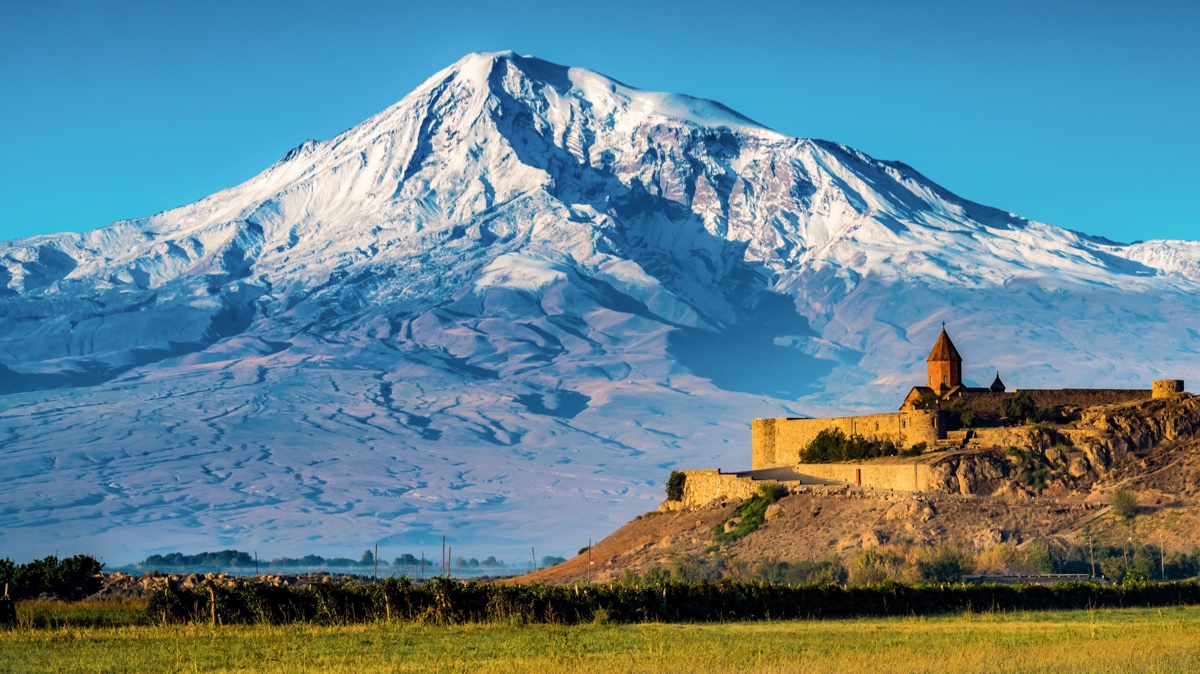
There are difficulties that many believers may not have considered in the search for Noah’s ark. For one, the search area for the ark is much larger than generally known. Mount Ararat in eastern Turkey has been called other names since ancient times, and even today is known as Ağrı Dağı (“Mountain of Pain/Sorrow”) in Turkish and Çiyayê Agirî (“Fiery Mountain”) in Kurdish. (The Kurdish name in particular may reflect the peak’s volcanic past.) We have no record of anyone identifying it as “Mt. Ararat” until the twelfth century AD. Lest we believe this is a long time ago, the Bible records the Flood as taking place thousands of years before the twelfth century. This comparatively late identification as Mt. Ararat seems to have been based on a tradition of unknown origin, or perhaps simply because that peak is the tallest in the region. We have no evidence or indication that people in biblical times called that mountain “Ararat.”
A careful reading of the biblical text gives additional perspective. Genesis 8:4 states, “The ark came to rest in the mountains of Ararat.” We should notice the reference to plural “mountains” that indicates a broad area rather than a single peak. Also, the term “Ararat” is the Hebrew version of the name “Urartu,” an ancient kingdom below the Black Sea that stretched through modern-day Turkey, Syria, Armenia, and into Iran. To state the biblical verse more plainly, we are told the ark came to rest “in the mountains of [the kingdom of] Urartu.” This is a vastly bigger region than the famous peak later termed, “Mount Ararat” and expands the search area for the Ark into thousands of square miles.
Records from ancient peoples in the region preserve memories of the ark being located away from the modern Mt. Ararat. Early Syriac and Armenian Christians, along with early Muslims, believed Noah’s Ark rested on Mount Judi (“Cudi Dağı”), an area hundreds of miles south of Mt. Ararat. The ancient Epic of Gilgamesh has a flood story with many similarities to that of the Bible, but states that the ark came to rest on Mount Nisir, an area corresponding to northern Iraq. What should we make of the many ark-hunters who only search around Mt. Ararat? To quote Indiana Jones, they are probably “digging in the wrong place.”
We should consider one other factor in the search for Noah’s ancient ark. After a massive flood as described in the Bible, mature trees would be scarce and lumber would be in short supply. Where would Noah’s family and immediate descendants find a reliable supply of wood for cooking fires, animal pens, and shelters? Most likely, they would have spent many years recycling the ark’s pre-cut lumber. Given that the climate of ancient Urartu was temperate, any remaining material would likely have rotted away over the centuries and millennia. How much of the ark would be left to find in modern times?
Perhaps the net result of the search for Noah’s ark comes to a loss for believers. Many sincere people (along with a few fraudsters) have claimed to find it in various locations, but no one has yet provided clear, unquestioned remains to back up the sensational assertions. Archaeology requires physical evidence that can be analyzed, tested, verified, and debated, yet none exists for the ark. How does this lead the world to view believers who readily embrace unfounded claims of a large boat on a mountain? We should take care to be known as a discerning people, vigorously testing new claims, as did the noble Bereans (Acts 17:11). Perhaps we’ll find traces of it someday, though it seems unlikely. In the end, we needn’t find Noah’s ark to have faith in the story and its message of trust in God.
Caption: Majestic snowcapped Mt. Ararat and monastery Khor Virap, Armenia
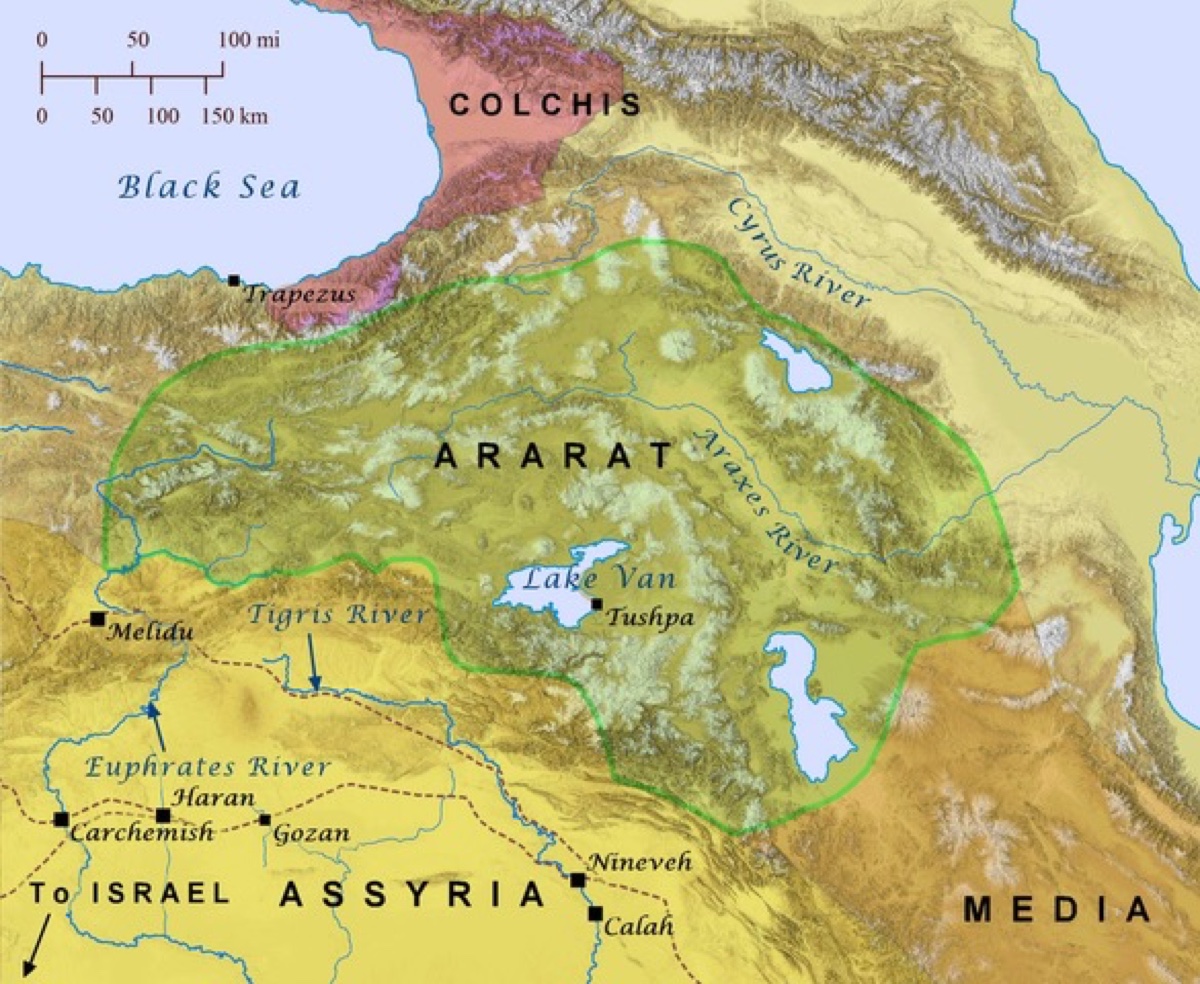
Caption: Map of Traditional Mt. Ararat. Noah’s ark is believed by many to rest around the modern Mt. Ararat, but the Bible and other evidence may suggest otherwise.
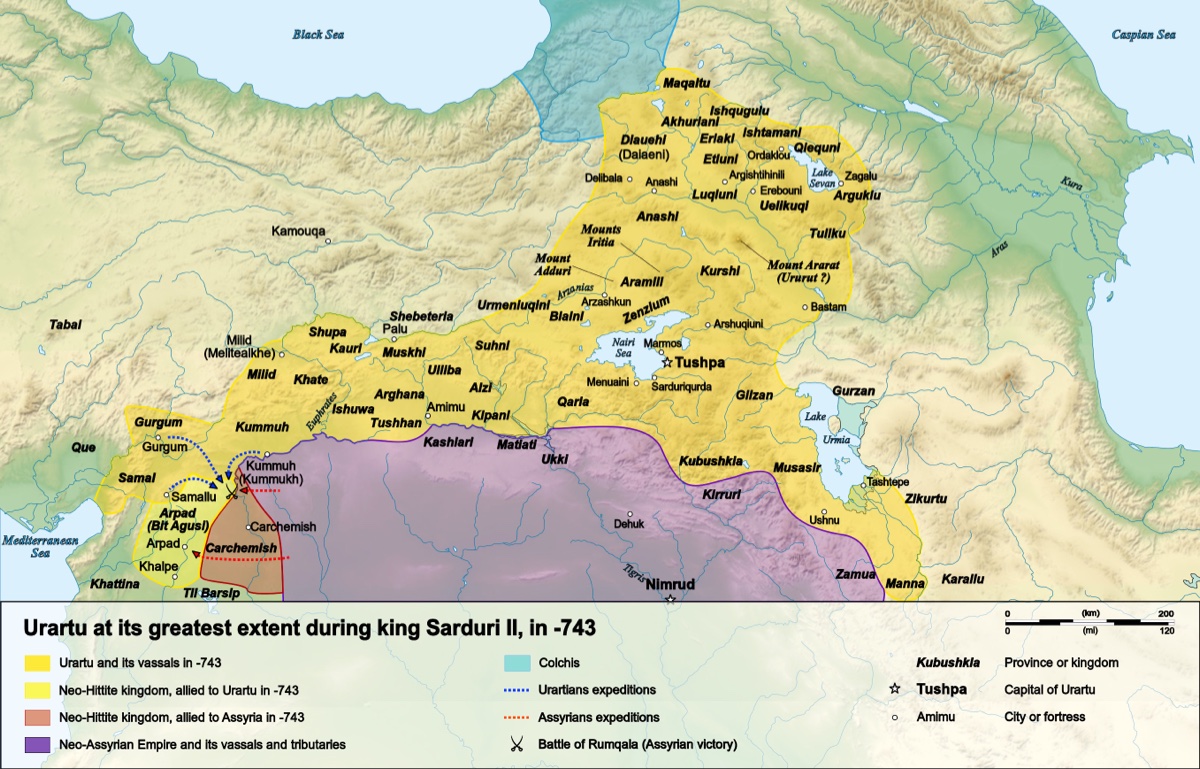
Caption: Map of the Ancient Kingdom of Urartu at its greatest extent. Attribution: © Sémhur / Wikimedia Commons / CC-BY-SA-4.0, or Free Art License.
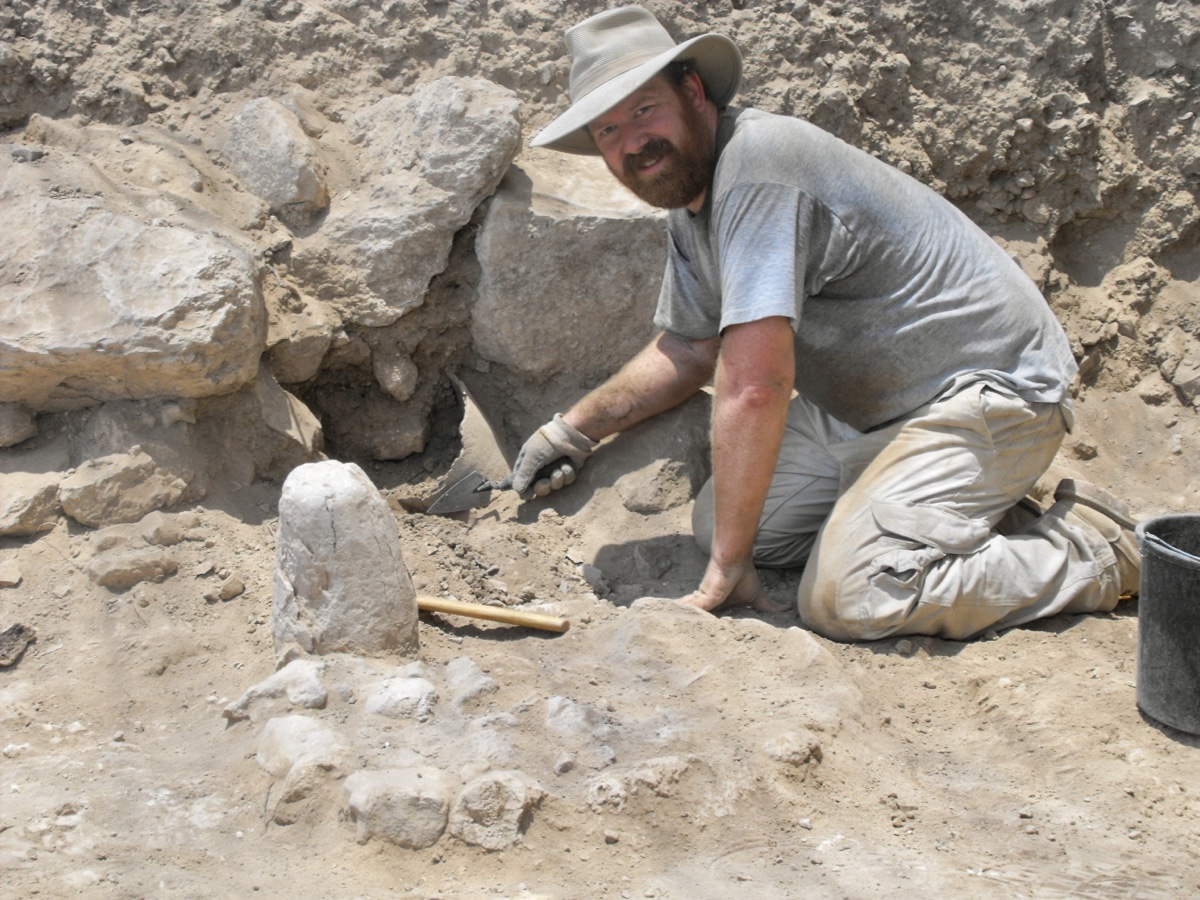
Caption: Luke Chandler at Archaeological Site. Photo by Prof. Jon Waybright.
Luke Chandler has worked with the North Terrace church of Christ near Tampa, FL, since 2006. He and his wife, Melanie, have five children. His websites are: Bible, Archaeology & Travel Blog and Chandler Tours. The church website is here. Luke holds an MA in Ancient History and has worked ten archaeological seasons in Israel. He can be reached here.