(August, 2023 | No. 8 | Vol. 67)
8/1/2023
Truth Magazine (ISSN 1538-0793) is published once a month by Truth Publications, Inc., 220 S. Marion, Athens, AL 35611.
© 2023 Truth Publications, Inc. All Rights Reserved.
Manuscripts should be sent to the editor, Mark Mayberry, at mark@truthpublications.com. Link.
Subscriptions, renewals & other correspondence should be sent to: Truth Magazine, 220 S. Marion, Athens, AL 35611 or by emailing us at subscriptions@truthmagazine.com. Link.
Book orders should be sent to: CEI Bookstore | truthbooks.com | Street Address: 220 S. Marion, Athens, AL 35611 | Phone: (855) 492-6657 | Email: sales@truthbooks.com Link.
The Truth Magazine Archives Are Available Online at truthmagazine.com
DISCLAIMER: Books in ads are screened, but an ad does not mean unqualified endorsement. All books should be tested by Scripture. We appreciate readers notifying us if they find some glaring fault in ads.


By Mark Mayberry
Synopsis: Brother Sean Cavender tragically lost his life in a car accident in Athens, AL, on Thursday evening (July 20th) after attending and participating in the 2023 Truth Lectures. He delivered a distinctive and powerful message on the kingdom of God that very morning. His devotion to the gospel and untimely passing remind us of the certainties and uncertainties of life.
Can we have confidence in God’s promises? Can we be certain regarding our own salvation?
Calvinistic theology leads to opposite extremes: (1) overconfidence in our spiritual standing, based upon the erroneous doctrine of “once saved, always saved,” and (2) uncertainty regarding one’s status, leading one to question, “How can I know if I am truly one of God’s elect?”
In contrast, the Scriptures offer clarity on this subject. Divine grace is extended to all men, but the promise of salvation belongs to those who trust and obey.
Calling Abram from Ur of the Chaldees, God gave the patriarch three great promises (Gen. 12:1-3). Subsequently, the Lord reassured Abraham of His protection and provision: “Do not fear, Abram, I am a shield to you; your reward shall be very great” (Gen. 15:1).
In the ensuing discussion, God stated that the seed promise would be fulfilled, not through Eliezer of Damascus, but through Abram’s own offspring. After He reaffirmed the land and nation promise, Abram asked, “O Lord GOD, how may I know that I will possess it?”
The Lord instructed him to sacrifice a heifer, female goat, and a ram (all three years old), along with a turtledove and a young pigeon. God said to Abram,
Know for certain that your descendants will be strangers in a land that is not theirs, where they will be enslaved and oppressed four hundred years. But I will also judge the nation whom they will serve, and afterward they will come out with many possessions. As for you, you shall go to your fathers in peace; you will be buried at a good old age. Then in the fourth generation they will return here, for the iniquity of the Amorite is not yet complete" (Gen. 15:13-16).
Finally, the Lord provided a sign: “It came about when the sun had set, that it was very dark, and behold, there appeared a smoking oven and a flaming torch which passed between these pieces” (Gen. 15:17).
Abram/Abraham’s faith was reflected in his actions:
By faith Abraham, when he was called, obeyed by going out to a place which he was to receive for an inheritance; and he went out, not knowing where he was going. By faith, he lived as an alien in the land of promise, as in a foreign land, dwelling in tents with Isaac and Jacob, fellow heirs of the same promise; for he was looking for the city which has foundations, whose architect and builder is God (Heb. 11:8-10).
In this lesson, let us note the difference between certainty and uncertainty. Certainty signifies a “firm conviction that something is the case” or “the quality of being reliably true.” Uncertainty describes “the state of being uncertain,” i.e., meaning that we are not able to rely upon the veracity of someone or something. It is used of a person who is “not completely confident or sure of something” (Oxford’s English Dictionary).
People can perceive the truth. This is true of those who possess good and honest hearts, as well as those who focus upon the truths under consideration and are not distracted by side issues. As an illustration of these points, let us consider Peter on Pentecost, and Paul before the Council.
On the day of Pentecost, Peter concluded his sermon by saying, “Therefore let all the house of Israel know for certain that God has made Him both Lord and Christ—this Jesus whom you crucified” (Acts 2:36). Three thousand responded in obedience to Peter’s message, which was based upon a triad of truths: (1) confirming miracles, (2) fulfilled prophecy, and (3) credible eyewitness testimony.
Faith provides assurance and conviction: “Now faith is the assurance of things hoped for, the conviction of things not seen” (Heb. 11:1).
Faith is essential: “Without faith it is impossible to please Him, for he who comes to God must believe that He is and that He is a rewarder of those who seek Him” (Heb. 11:6).
Spiritual blessings flow from a deeply rooted faith and a dedicated commitment to divine revelation:
So Jesus was saying to those Jews who had believed Him, “If you continue in My word, then you are truly disciples of Mine; and you will know the truth, and the truth will make you free” (John 8:31-32).
Returning to Jerusalem after his third missionary journey, Paul was seized in the temple. A Roman centurion rescued Paul from the mob, and subsequently brought him before the Jewish Sanhedrin, “wishing to know for certain why he (i.e., Paul) had been accused by the Jews” (Acts 22:30).
By considering Paul’s words before the Council, and their reaction, one can clearly discern that the apostle was innocent, and at least half the assembly agreed, saying, “We find nothing wrong with this man; suppose a spirit or an angel has spoken to him?” (Acts 23:9). Although few from the Pharisaic party possessed “good and honest hearts,” yet on this occasion, Paul framed the discussion in a manner that forced them to agree with the central truths under consideration (Acts 22:30-23:11).
Paul began crying out in the Council, “Brethren, I am a Pharisee, a son of Pharisees; I am on trial for the hope and resurrection of the dead!”
As he said this, there occurred a dissension between the Pharisees and Sadducees, and the assembly was divided. For the Sadducees say that there is no resurrection, nor an angel, nor a spirit, but the Pharisees acknowledge them all.
And there occurred a great uproar; and some of the scribes of the Pharisaic party stood up and began to argue heatedly, saying, “We find nothing wrong with this man; suppose a spirit or an angel has spoken to him?”
If people are observant, they can see through pretense. This is illustrated by two pagan kings in the Old Testament and the final admonition of Simon Peter.
Abimelech, king of the Philistines, was able to perceive the falseness of Isaac’s words by his actions (Gen. 26:6-11, esp. vv. 8-9).
So Isaac lived in Gerar. When the men of the place asked about his wife, he said, “She is my sister,” for he was afraid to say, “my wife,” thinking, “the men of the place might kill me on account of Rebekah, for she is beautiful.” It came about, when he had been there a long time, that Abimelech, king of the Philistines, looked out through a window, and saw, and behold, Isaac was caressing his wife Rebekah. Then Abimelech called Isaac and said, “Behold, certainly she is your wife! How then did you say, ‘She is my sister’?” And Isaac said to him, “Because I said, ‘I might die on account of her.’” Abimelech said, “What is this you have done to us? One of the people might easily have lain with your wife, and you would have brought guilt upon us.” So Abimelech charged all the people, saying, “He who touches this man or his wife shall surely be put to death” (Gen. 26:6-11).
Nebuchadnezzar, king of the Chaldeans, was able to see the duplicity of his magicians by their reaction to his commandment (Dan. 2:1-11, esp. vv. 8-9).
Now in the second year of the reign of Nebuchadnezzar, Nebuchadnezzar had dreams; and his spirit was troubled and his sleep left him. Then the king gave orders to call in the magicians, the conjurers, the sorcerers and the Chaldeans to tell the king his dreams. So they came in and stood before the king. The king said to them, “I had a dream and my spirit is anxious to understand the dream.” Then the Chaldeans spoke to the king in Aramaic: “O king, live forever! Tell the dream to your servants, and we will declare the interpretation.” The king replied to the Chaldeans, “The command from me is firm: if you do not make known to me the dream and its interpretation, you will be torn limb from limb and your houses will be made a rubbish heap.”But if you declare the dream and its interpretation, you will receive from me gifts and a reward and great honor; therefore declare to me the dream and its interpretation." They answered a second time and said, “Let the king tell the dream to his servants, and we will declare the interpretation.” The king replied, “I know for certain that you are bargaining for time, inasmuch as you have seen that the command from me is firm, that if you do not make the dream known to me, there is only one decree for you. For you have agreed together to speak lying and corrupt words before me until the situation is changed; therefore tell me the dream, that I may know that you can declare to me its interpretation.” The Chaldeans answered the king and said, “There is not a man on earth who could declare the matter for the king, inasmuch as no great king or ruler has ever asked anything like this of any magician, conjurer or Chaldean.”Moreover, the thing which the king demands is difficult, and there is no one else who could declare it to the king except gods, whose dwelling place is not with mortal flesh" (Dan. 2:1-11).
In like manner, if we grow in the grace and knowledge of our Lord and Savior, we can avoid being led astray by the error of unprincipled men (2 Pet. 3:14-18).
Therefore, beloved, since you look for these things, be diligent to be found by Him in peace, spotless and blameless, and regard the patience of our Lord as salvation; just as also our beloved brother Paul, according to the wisdom given him, wrote to you, as also in all his letters, speaking in them of these things, in which are some things hard to understand, which the untaught and unstable distort, as they do also the rest of the Scriptures, to their own destruction. You therefore, beloved, knowing this beforehand, be on your guard so that you are not carried away by the error of unprincipled men and fall from your own steadfastness, but grow in the grace and knowledge of our Lord and Savior Jesus Christ. To Him be the glory, both now and to the day of eternity. Amen (2 Pet. 3:14-18).
We must not trust in the uncertainty of riches, but in God, who richly supplies us with all things to enjoy (1 Tim. 6:17-19).
Instruct those who are rich in this present world not to be conceited or to fix their hope on the uncertainty of riches, but on God, who richly supplies us with all things to enjoy. Instruct them to do good, to be rich in good works, to be generous and ready to share, storing up for themselves the treasure of a good foundation for the future, so that they may take hold of that which is life indeed (1 Tim. 6:17-19).
The Greek word adēlotēs, occurring only here and translated “uncertainty,” is a compound of the alpha prefix [which negates the word/concept to which it is attached] and dēlos [which refers to that which is “clear, evident”] (Thomas, 83).
In contrast with the aforementioned adēlotēs (a negative form that communicates “uncertainty”), the root dēlos (occurring three times) identifies things that are “clear to the understanding” (BDAG). Consider each of these in reverse order of appearance:
The first occurrence involves Peter. While Jesus was being tried before Caiaphas, Simon Peter was sitting in the courtyard. A servant girl approached him, saying, “You were with Jesus the Galilean,” but he denied it. After exiting the gateway, another said, “This man was with Jesus of Nazareth.” Peter denied it with an oath. Nevertheless, Peter’s speech clearly identified him as a Galilean: “A little later the bystanders came up and said to Peter, ‘Surely you too are one of them; for even the way you talk gives you away’” (Matt. 26:73). In other words, they were certain that Peter was from Galilee (and thus was counted among the disciples) because of his Galilean accent.
The second occurrence involves the impotence of the law:
Now that no one is justified by the Law before God is evident; for, “THE RIGHTEOUS MAN SHALL LIVE BY FAITH” (Gal. 3:11).
The third occurrence involves the extent of Christ’s authority:
For He (i.e., God the Father) has put all things in subjection under His (i.e., Jesus Christ’s) feet. But when He says, “All things are put in subjection,” it is evident that He is excepted who put all things in subjection to Him (1 Cor. 15:27).
So, from this short divergence into the Greek, we recognize that some things are certain and self-evident.
When it comes to riches, which can be a blessing if properly employed, but a curse if coveted after—may we be discerning. Instead of fixing our hope on uncertain riches or earthly attainment, let us emphasize the importance of a proper spiritual diet coupled with spiritual exercise, while we fix our hope on the living God (1 Tim. 4:6-10, esp. v. 10).
In pointing out these things to the brethren, you will be a good servant of Christ Jesus, constantly nourished on the words of the faith and of the sound doctrine which you have been following. But have nothing to do with worldly fables fit only for old women. On the other hand, discipline yourself for the purpose of godliness; for bodily discipline is only of little profit, but godliness is profitable for all things, since it holds promise for the present life and also for the life to come. It is a trustworthy statement deserving full acceptance. For it is for this we labor and strive, because we have fixed our hope on the living God, who is the Savior of all men, especially of believers (1 Tim. 4:6-10).
Let us also recognize the uncertainty of time: “Do not boast about tomorrow, for you do not know what a day may bring forth” (Prov. 27:1).
Instead of wandering aimlessly through life, let us be good stewards—making the most of each opportunity. Yet, we must recognize that our future plans are contingent upon God’s overarching purpose:
Come now, you who say, “Today or tomorrow we will go to such and such a city, and spend a year there and engage in business and make a profit.” Yet you do not know what your life will be like tomorrow. You are just a vapor that appears for a little while and then vanishes away. Instead, you ought to say, “If the Lord wills, we will live and also do this or that.” But as it is, you boast in your arrogance; all such boasting is evil (Jas. 4:13-16).
Ponder the meditations of David, as recorded in Psalm 39, as he reflects upon the vanity of life:
I said, “I will guard my ways That I may not sin with my tongue; I will guard my mouth as with a muzzle while the wicked are in my presence.” I was mute and silent, I refrained even from good, and my sorrow grew worse. My heart was hot within me, while I was musing the fire burned; then I spoke with my tongue: "LORD, make me to know my end and what is the extent of my days; let me know how transient I am. Behold, You have made my days as handbreadths, and my lifetime as nothing in Your sight; surely every man at his best is a mere breath. Selah (vv. 1-5).
Surely every man walks about as a phantom; surely they make an uproar for nothing; he amasses riches and does not know who will gather them (v. 6).
And now, Lord, for what do I wait? My hope is in You. Deliver me from all my transgressions; make me not the reproach of the foolish. I have become mute, I do not open my mouth, because it is You who have done it. Remove Your plague from me; because of the opposition of Your hand I am perishing. With reproofs You chasten a man for iniquity; You consume as a moth what is precious to him; surely every man is a mere breath. Selah (vv. 7-11).
Hear my prayer, O LORD, and give ear to my cry; Do not be silent at my tears; for I am a stranger with You, a sojourner like all my fathers. Turn Your gaze away from me, that I may smile again before I depart and am no more (vv. 12-13).
In contrast with pure gospel preaching, which sounds forth as a clarion (Isa. 58:1), many today are making uncertain sounds.
Cry loudly, do not hold back; raise your voice like a trumpet, and declare to My people their transgression and to the house of Jacob their sins (Isa. 58:1).
In this regard, consider Paul’s admonition to the Corinthians regarding the proper use of spiritual gifts, while noting the parallel application of these principles for today (1 Cor. 14:1-12, esp. vv. 7-9).
Pursue love, yet desire earnestly spiritual gifts, but especially that you may prophesy. For one who speaks in a tongue does not speak to men but to God; for no one understands, but in his spirit he speaks mysteries. But one who prophesies speaks to men for edification and exhortation and consolation. One who speaks in a tongue edifies himself; but one who prophesies edifies the church. Now I wish that you all spoke in tongues, but even more that you would prophesy; and greater is one who prophesies than one who speaks in tongues, unless he interprets, so that the church may receive edifying. But now, brethren, if I come to you speaking in tongues, what will I profit you unless I speak to you either by way of revelation or of knowledge or of prophecy or of teaching? Yet even lifeless things, either flute or harp, in producing a sound, if they do not produce a distinction in the tones, how will it be known what is played on the flute or on the harp? For if the bugle produces an indistinct sound, who will prepare himself for battle? So also you, unless you utter by the tongue speech that is clear, how will it be known what is spoken? For you will be speaking into the air. There are, perhaps, a great many kinds of languages in the world, and no kind is without meaning. If then I do not know the meaning of the language, I will be to the one who speaks a barbarian, and the one who speaks will be a barbarian to me. So also you, since you are zealous of spiritual gifts, seek to abound for the edification of the church (1 Cor. 14:1-12).
Paul rebukes the Corinthians for various misconceptions and abuses of spiritual gifts. They were manifesting a proudly competitive spirit: “My gift of tongue speaking is better than your gift of prophecy!” Their exercise of gifts was generating confusion: Everyone was yammering at the same time. Those gifted with the ability to speak in tongues were doing so without an interpreter being present. Bedlam abounded. The purpose of such gifts involved the revelation and confirmation of the word. Absent an interpreter, tongue speaking might have been a display of divine power, but offered no edification:
Yet even lifeless things, either flute or harp, in producing a sound, if they do not produce a distinction in the tones, how will it be known what is played on the flute or on the harp? For if the bugle produces an indistinct sound, who will prepare himself for battle? (1 Cor. 14:7-8).
The Greek word adēlos is here used of a bugle that makes an “indistinct sound.” Arndt says it pertains to “(1) not being readily apparent, not clear, latent, unseen (Luke 11:44); (2) not being clearly defined, indistinct of a trumpet that gives out an indistinct sound, so that the signal cannot be recognized” (1 Cor 14:8) (BDAG, 19).
Its only other occurrence is in Jesus’s denunciation of the Pharisees. Instead of helping maintain the purity of God’s people, the religious hierarchy of first century Judaism was a source of corruption. They were like concealed tombs, over which people might walk and unknowingly become ceremonially unclean.
Woe to you Pharisees! For you love the chief seats in the synagogues and the respectful greetings in the market places. Woe to you! For you are like concealed tombs, and the people who walk over them are unaware of it (Luke 11:43-44).
In contrast, consider the clarity and confidence of faithful gospel preaching.
Sean Cavender spoke on the “Kingdom of God” on Thursday morning at the 2023 Truth Lectures in Athens, AL. Tragically, he was taken from us approximately twelve hours later. In his last sermon, Sean sounded forth the truth distinctively. Here are my notes from his lesson:
Those who have been affected by Calvinistic thinking affirm that Abraham did nothing in Romans 4. However, such is not the case. Abraham believed and obeyed God.
Sean pointed out that even some denominational writers are coming to recognize this point. He quoted from Salvation by Allegiance Alone, by Matthew W. Bates:
Furthermore, if we were to determine that in appropriate salvation-oriented contexts in the New Testament, pistis most likely means faithfulness, or fidelity, or allegiance, then might not pistis by its very definition include concrete acts that are inseparable from allegiance? In other words, we might come to discover that faith and works are not mutually exclusive after all (Bates, 22).
Sean concluded this point by citing Romans 1:5, which refers to the obedience of faith—i.e., “concrete acts” as described by Bates. Faith is something that we “do,” i.e., it is our personal active response to God’s goodness and grace.
[Our Lord] was declared the Son of God with power by the resurrection from the dead, according to the Spirit of holiness, Jesus Christ our Lord, through whom we have received grace and apostleship to bring about the obedience of faith among all the Gentiles for His name’s sake (Rom. 1:4-5).
Additionally, Sean emphasized that we must also recognize Christ’s authority. He has the right to speak, and we are obligated to hear and heed. Submitting to Christ’s authority is an element of our faith. The attitude of the Roman centurion in Matthew 8 reflected a proper view of Christ’s authority, which Jesus Himself said evidences his “great faith” (Matt. 8:8-10).
Bible authority is established in one of three ways: Direct Statements/Commands, Approved Examples, and Necessary Inference. Many object by saying that CENI is a human construct designed to achieve an engineered outcome. However, in all areas of life, we speak, learn, and communicate in these three ways.
While Sean was in college, pursuing a journalism degree, one of his professors stated: "We learn from reports (i.e., prepared statements of facts), judgments (examples, charts, polls, tests, etc.), and inferences (i.e., the concluding that come from reports and judgments). This is not reverse engineering, but rather, this is how human communication occurs.
In this lesson, we have noted the difference between certainty and uncertainty. We can know the truth. We can identify error. We can have a genuine hope. We should speak with clarity and conviction.
Can we have confidence in God’s promises? Absolutely! Reminding Israel of God’s faithfulness, Moses exhorted them of the need for obedience:
Know therefore that the LORD your God, He is God, the faithful God, who keeps His covenant and His lovingkindness to a thousandth generation with those who love Him and keep His commandments; but repays those who hate Him to their faces, to destroy them; He will not delay with him who hates Him, He will repay him to his face. Therefore, you shall keep the commandment and the statutes and the judgments which I am commanding you today, to do them (Deut. 7:9-11).
Paul expressed similar confidence in addressing the Corinthian church. Despite their deficiencies, if they would continue their spiritual journey from sin to sanctification, God would confirm them in the end:
I thank my God always concerning you for the grace of God which was given you in Christ Jesus, that in everything you were enriched in Him, in all speech and all knowledge, even as the testimony concerning Christ was confirmed in you, so that you are not lacking in any gift, awaiting eagerly the revelation of our Lord Jesus Christ, who will also confirm you to the end, blameless in the day of our Lord Jesus Christ. God is faithful, through whom you were called into fellowship with His Son, Jesus Christ our Lord (1 Cor. 1:4-9).
Can we have confidence regarding our own salvation? That depends. By diligently growing in the “Christian graces” and putting them into practice, we make our calling and election sure:
Now for this very reason also, applying all diligence, in your faith supply moral excellence, and in your moral excellence, knowledge, and in your knowledge, self-control, and in your self-control, perseverance, and in your perseverance, godliness, and in your godliness, brotherly kindness, and in your brotherly kindness, love. For if these qualities are yours and are increasing, they render you neither useless nor unfruitful in the true knowledge of our Lord Jesus Christ. For he who lacks these qualities is blind or short-sighted, having forgotten his purification from his former sins. Therefore, brethren, be all the more diligent to make certain about His calling and choosing you; for as long as you practice these things, you will never stumble; for in this way the entrance into the eternal kingdom of our Lord and Savior Jesus Christ will be abundantly supplied to you (2 Pet. 1:5-11).
Bates, Matthew W. Salvation by Allegiance Alone: Rethinking Faith, Works and the Gospel of Jesus the King. Grand Rapids, MI: Baker Academic, 2017.
Mark Mayberry serves as Editor of Truth Magazine. He has labored with the Adoue Street church of Christ in Alvin, TX, since 1998, where he serves as the evangelist and an elder. The church website is here. His website is here. He can be reached here.





By Kyle Pope
Synopsis: Most people consider themselves to be “good people,” but what defines that which is good? If I do wrong, am I still a “good” person? Before God, is anyone truly “good”? Does God’s grace automatically excuse the sins committed by children of God? If not, what does the Bible teach that Christians should do if sin comes into their lives? Do “good people” continue in sin?
There is a local attorney where I live that runs a commercial that begins with the words, “even good people can get in trouble with the law.” That might sound like a legitimate claim if it were not for the fact that on the commercial, as these words are spoken, the image in the background shows a shot glass filled with liquor beside a set of car keys. The reason this is used in an ad for a law office is to suggest to viewers that even if they may have been stopped by the police for driving while under the influence of alcohol, they are still “good people.” They hope that this will lead viewers to believe their lawyer can help get them out of legal trouble.
I wonder how that ad would be received if they stated more directly what they are really trying to infer? That is, if they said it, “even if you drive while under the influence of alcohol, you’re still a good person!” That sounds different, doesn’t it? Do “good people” put chemicals into their bodies that impair their judgment, reflexes, and response times, then get behind the wheel of a deadly vehicle? No. Do “good people” put the lives of men, women, and children in jeopardy for the sake of their buzz? No. Ask those who have been maimed, widowed, orphaned, or permanently disabled by a drunk or “buzzed” driver if those who do such things are “good people,” I think we all know what their answer would be: “No!”
The Bible teaches that drunkards will not “inherit the kingdom of God” (1 Cor. 6:11). Christians are not to “keep company with” drunkards (1 Cor. 5:11) and are commanded not to “be drunk with wine, in which is dissipation” (Eph. 5:18). Drunkenness, and other types of drinking of alcohol, are said to be behaviors that the Christian has left behind in coming to Christ (1 Pet. 4:3). So, clearly, those who engage in this behavior are not “good people.”
We might understand why a lawyer looking for clients might use such language, but really, this wording simply reflects attitudes that have become common within our culture. We like to believe that just because we occasionally do things that are wrong, we are still “good people.” To believe that, we must either change the definitions of what “good” is or accept views about God’s grace that ignore sinful behavior. Neither approach is new.
In the time of Isaiah, the Holy Spirit led the prophet to rebuke the people of his day. He wrote, “Woe to those who call evil good, and good evil; Who put darkness for light, and light for darkness; Who put bitter for sweet, and sweet for bitter!” (Isa. 5:20, NKJV). If we can convince ourselves that things we do that are wrong are actually “good,” then our problem goes away. We are not “good people” who sometimes do wrong; we are “good people” doing “good” things!
This is at the heart of so many issues that have embroiled our culture in recent times. We say abortion isn’t the murder of a child (a sinful thing)—it is “a woman’s right to choose” (a “good” thing). Homosexuality isn’t an “abomination” (a sinful thing)—it is an “alternative lifestyle” (a “good” thing). Adultery and divorce aren’t treasonous violations of a covenant (sinful things)—they are “taking a shot at happiness” (good things).
Sadly, in all of these things, we convince ourselves that things God defines as evil are actually “good,” then tell ourselves (as we do them) that we are really still “good people.” The problem is that we are not the ones who have the right to set the definitions of good and evil—God is! It is God’s word as revealed in Scripture that defines sin and equips us for “every good work” (2 Tim. 3:16-17). In our behavior or in the things we do to worship Him, if God does not define something as good, calling it “good” doesn’t make it so.
When Paul wrote to the church in Rome, he asked, “What shall we say, then? Shall we continue in sin that grace may abound?” (6:1), to which he answered, “Certainly not! How shall we who died to sin live any longer in it?” (6:2). Paul’s question suggests that some in his day imagined that God’s willingness to forgive sins by His grace meant that it no longer mattered if they committed sin. Paul’s answer emphatically refutes this misconception. He literally says, “may it never be!” (NASB).
This skewed view of grace persists today and is totally contrary to what the New Testament teaches. The Bible teaches of accountable souls that “all have sinned and fall short of the glory of God” (Rom. 3:23). Because of this, on one level, “There is none who does good, no, not one” (Rom. 3:12b). The blood of Jesus offered by the grace of God is the only thing that can make a sinner right before God—“In Him we have redemption through His blood, the forgiveness of sins, according to the riches of His grace” (Eph. 1:7). It is “His grace, by which He has made us accepted in the Beloved” (Eph. 1:6b). So, in this sense, only Christ’s blood can make us “good” or “accepted,” but does that mean that sin no longer matters? No.
When Simon sinned, he was in danger of perishing (Acts 8:20). His heart was “not right in the sight of God” (8:21). He was said to be “bound by iniquity” (8:23) and was told to “repent” and “pray” that he “may be forgiven” (8:22). Did it matter that he had sinned? Yes. Did God’s grace automatically and unconditionally cover his sin? No. Paul taught:
For the grace of God that brings salvation has appeared to all men, teaching us that, denying ungodliness and worldly lusts, we should live soberly, righteously, and godly in the present age, looking for the blessed hope and glorious appearing of our great God and Savior Jesus Christ, who gave Himself for us, that He might redeem us from every lawless deed and purify for Himself His own special people, zealous for good works (Titus 2:11-14).
We note that it is the offering of Christ that redeems us from sin. This came by God’s grace offered to all, but we also note that His grace teaches us some things. It teaches us to deny “ungodliness and worldly lusts” and to live “soberly, righteously, and godly.” His redemption should make us a people “zealous for good works.” God’s grace does not excuse sin nor change evil to good. It calls us to live in obedience to the lessons it would teach us.
The apostle John, through the Holy Spirit, had a way of expressing things with a clarity and simplicity that cuts through all efforts to complicate and confuse things. He wrote:
Little children, let no one deceive you. He who practices righteousness is righteous, just as He is righteous. He who sins is of the devil, for the devil has sinned from the beginning. For this purpose, the Son of God was manifested, that He might destroy the works of the devil. Whoever has been born of God does not sin, for His seed remains in him; and he cannot sin, because he has been born of God (1 John 3:7-9).
According to John, what defines those who are “good people”? He tells us: “He who practices righteousness is righteous.” By definition, good people don’t do wrong. When I sin, I am not doing good, so I am not a “good person” while engaging in such behavior. What does John mean when he says one “born of God does not sin” and “cannot sin”? He is not saying that sin is an impossibility. In the opening words of the same book, he taught what Christians must do “if anyone sins” (2:1). Just as Simon was told, forgiveness comes to the Christian who sins as he confesses to God (1:9) through the advocacy of Jesus (2:1). We should note that John qualifies the conditions under which the child of God “does not sin.” It is when one allows “His seed” (i.e., the word of God, cf. Luke 8:11) to remain within him. Good people, forgiven by the blood of Jesus, live their lives, striving diligently to follow God’s word, which they plant deep within their hearts. They do not excuse, redefine, or ignore sin when it comes into their lives, but humbly learn from the grace of God to confess and turn from it quickly.
Kyle Pope preaches for the Olsen Park church of Christ in Amarillo, TX. He has written several books published by Truth Publications, including Thinking About AD 70: Challenging Realized Eschatology. Visit TruthBooks.com for more info. The church website is here. He can be reached here.




By Diana Dow
Synopsis: Science is the study of God’s creation. In reference to his work in astronomy, the German scientist Johannes Kepler (1571-1630) reportedly said, “I was merely thinking God’s thoughts after Him.”
“Houston, we have a problem.” Words that take us back to 1970 and the ill-fated Apollo 13 mission. What followed was a beautiful display of scientists doing that for which they had prepared their whole lives. They had studied mathematics, biology, chemistry, physics, and astronomy for years. Now they were putting their understanding of these sciences into practice under extremely stressful circumstances to bring the Apollo 13 astronauts and their crippled spacecraft safely back home.
For some of us, the sciences these men and women studied are quite intimidating. “But I can’t teach Calculus!” is the cry of many overwhelmed parents as they contemplate what lies ahead in home schooling their child. Thankfully, we need not reinvent the wheel. There have been many before us who thoroughly enjoy these subjects and happily break it all down into words that the average person can understand. I hesitate to use the word curriculum to describe what these science-loving people have produced because, while there are some good textbooks out there, we are not limited to a textbook. These amazing people have produced a plethora of books, videos, co-op classes, and online courses to help hesitant parents.
Thankfully, unless you have a genius child on your hands, no one is expecting you to jump in there and teach rocket science to your 8-year-old. Early science studies are not complex. They all begin with the basic concepts and become more challenging as the student progresses. The study of mathematics does not start with calculus. It starts with number recognition, counting, sorting, and simple arithmetic. These are all things we do every day. Biology is just a fancy word for the study of life. More specifically, the study of living organisms. You know, plants and animals. This study begins in your own backyard. Take your kids outside. Teach them to observe what they see. Talk about the parts of a flower and draw pictures. Look up what kind of plant it is. Watch a video showing its life cycle. Start a nature notebook to keep their observations and drawings in. All the sciences should initially be studied this way. Observe, discuss, draw pictures, seek further information from experts in the field.
These early studies will hopefully instill a curiosity in your child that will bring excitement to learn more. For some children, all that is needed is a little encouragement from a parent guiding them to reliable sources to find answers to their questions and they will teach themselves. Other children are not so easily inspired by the sciences. They need a little more structure and consistency to reach the level of knowledge and understanding that is necessary to succeed in our world.
Whichever child you are blessed with, eventually you will want to find a study program, curriculum, or class that will teach the sciences on a deeper level. Be careful here. There is a lot of choices available. Some will align themselves with those who use science to “disprove” that God exists. That has always baffled me. Science is a study of how things work, where things came from, and when things got here. Science is the study of creation—God’s creation. Claiming to ask sincere questions and to seek sincere answers, yet refusing to go down a path that leads directly to the Creator is dishonest. Yet, many of the science books available today do just that. Do your research when looking for resources. Look past the beautiful pictures, elegantly designed layout, and impressive reviews. Open the book and see what it says for yourself.
Mathematics is a little different from other subjects. It needs to be learned sequentially. Each step building on the previous. For this reason, it is important to find a program that you feel comfortable with and stick with it. Math textbooks are written in a sequential manner, but not all math textbooks follow the same sequence. Jumping from one to another may mean the child has missed important skills, which leads to frustration. It frequently happens when a child switches from a public/private school to schooling at home. To avoid this, many textbook companies offer placement tests. Take advantage of them. If your child needs to go back a grade level or two, do not let pride get in the way. Do what is best for your child. If the cover of the appropriate level math book has a big “Five” on it and your child’s age places him in seventh grade, put a cover on the book. Not to hide the truth from him, but to keep it from being something he is reminded of every day. The important thing is not for your child to be “at grade level” but to learn math in the least frustrating way.
Some children will soar past your wildest expectations when studying the sciences. Some will not. While it looks impressive on a transcript that a student has studied all the higher-level science courses, we need to ask ourselves what it is we are trying to accomplish: An impressive transcript, or a young adult prepared to make his way in the world? While basic knowledge and understanding of the sciences are essential, not everyone needs to study calculus or advanced chemistry. Do not get distracted by your preconceived idea of what a successful education is like. Do not become distracted by your peers who are guiding their children down a different path. Keep your child’s interests, his strengths, and his weaknesses in mind. Help him find his passion. Encourage him to dig deeper into what interests him. If science is his thing. Great! Enjoy the ride. If not, let his studies follow where his interests lead him.
The heavens declare the glory of God; and the firmament shows His handiwork. Day unto day utters speech, and night unto night reveals knowledge. There is no speech nor language where their voice is not heard (Ps. 19:1-3).
Diana Dow homeschooled her six boys for twenty-nine years. She lives in Sinton, TX, with her husband, Danny Dow, who preaches for the Borden Street church of Christ. She maintains a website about teaching Bible classes here and one about homeschooling and other endeavors here. She can be reached here.



by Bruce Reeves
Synopsis: It was Jesus’s willingness, as God’s divine Son, to take on the “form of a servant” and the conditions of humanity that drove Paul to “pour himself out as a drink offering upon the sacrifice and service of your faith” (Phil. 2:17).
There is no section of Scripture that peers more deeply into the mind of Christ than Philippians 2:5-11. One writer has described it as Paul’s “master story” (Gorman, 13). The congregation at Philippi was encouraged to be less concerned about their own rights and liberties, as Roman citizens, and more concerned about their fellowship together in Christ (Phil. 1:27-2:4). It was Jesus’s willingness, as God’s divine Son, to take on the “form of a servant” and the conditions of humanity that drove Paul to “pour himself out as a drink offering upon the sacrifice and service of your faith” (Phil. 2:17). Some scholars argue that this section of Scripture may have served as an early church hymn which, if true, would demonstrate the high Christology of first century Christians, but regardless it is a beautiful admonition to all believers to put the mind of Christ into their own hearts. The Philippians lived in a culture very similar to our own. The encouragement of this context is particularly helpful for those living in an extremely self-focused society, as we do.
The exhortation is both practical and profound. It is central to our faith and our relationships. Paul was not merely engaging in a Christological debate, although he reveals a great deal about the incarnation. He powerfully presents the unparalleled humility of our Savior to motivate believers to follow in His footsteps (John 13:15; 1 Pet. 2:21-25). Philippians 2:5 looks back in the context to the encouragement to be unselfish with one another (Phil. 2:1-4) and looks forward to the marvelous example of Christ (Phil. 2:5-8). There is no more beautiful calling than to live like Jesus.
It is beneficial to consider the mindset of Jesus, since that is the attitude we are to have as God’s people. There is considerable debate about the meaning of the term morphe translated “form” in both verses 6-7. The term means “outward appearance, shape” (BDAG, 659). However, it is difficult to apply this meaning to God since He is a spirit being. It is evident that Paul has more than shape under consideration. M.R. Vincent argues that “the word is intended to describe that mode in which the essential being of God expresses itself. . . it is not identical with the essence itself, but is identified with it, as its natural and appropriate expression, answering to it in every particular” (431). Christ did not treat His status as a prize to which He clutched at all costs, but as God in the flesh showed us the nature of divine love in His sacrifice (Bird, Gupta, 77).
Those who question the deity of Christ (such as our Jehovah’s Witness and Unitarian friends) do so despite this context—not because of it. Only a divine person can be truly described as “being in the form of God” (Phil. 2:6). In His preincarnate condition, the Son enjoyed the full glory of His heavenly state, as He dwelt in the presence of the Father (John 1:1-3; 2 Cor. 8:9; Heb. 1:1-3). He was not merely a thought in the mind of God: He was a divine person distinct from the Father and Holy Spirit. It should be noted that He was “considering” and “thinking” prior to taking on flesh (Phil. 2:6). The phrase “form of God” was Paul’s way of emphasizing divine status, and the phrase “form of a servant” emphasizes Jesus’s attitude of selfless sacrifice for humanity. Just as in Philippians 2:6 the phrase “form of God” is followed by “equality with God,” so also in 2:7 “form of a slave” is followed by “human likeness.” Many writers insightfully refer to the “V-shaped” trajectory of Paul’s appeal to Christ’s sacrifice from high glory, down to humble earthly existence, down lower even to His death on a cross and then super-exaltation to the high place of glory by the right hand of God. Jesus’s willingness to leave the divine glory of heaven to suffer for our sins is an amazing truth that has the power to change our lives forever. Christ prays, “Now, Father, glorify Me together with Yourself, with the glory which I had with you before the world was” (John 17:5).
There has been significant discussion regarding the term harpagmos translated “grasped” in the NASB. Louw and Nida define the term as “that which is to be held on to forcibly; something to hold by force, something to be forcibly retained” (Lou and Nida, electronic). Jesus did not hold on to the condition of eternal glory and majesty so tightly that He would retain such at all costs. On the contrary, He was willing to humble Himself in becoming flesh “as the only begotten of the Father, full of grace and truth (John 1:14). While Christ was equal to the Father and, thus, did not have to strive to seize it, Paul’s point to the Philippians was that Jesus did not exploit His divine privileges, but put the interests of others before His own (Chancellor, 366). If Jesus was willing to”make Himself of no reputation," should we not likewise put our interests aside for the well-being of others? The emphasis is that Jesus Christ, rather than being selfish, “emptied Himself, taking the form of a bondservant and being made in the likeness of men, being found in appearance as a man, He humbled Himself by becoming obedient to the point of death, even death on a cross” (Phil. 2:7-8). It is not being argued that the essential nature of Jesus was changed, or that He ceased to be God. Rather, we see that He, as God, did not take advantage of His divine privileges in a way that would prevent Him from the human experience that was vital to the redemption of mankind. Christ did not seek self-promotion; He came to seek and save the lost (Luke 19:10). The identity of God is revealed as much in self-abasement and service as it is in exaltation and rule. In contrast to the rulers and emperors, the Philippians were familiar with those who constantly promoted themselves in a dictatorial context, the Lord Jesus sacrificed Himself and has been exalted as King of kings. The Psalmist describes the greatness of God’s selfless love, “Who is like the Lord our God, Who is enthroned on high, Who humbles Himself to behold the things that are in heaven and in the earth? He raises the poor from the dust and lifts the needy from the ash heap. . .” (Ps. 113:5-8). Jesus explains and exegetes the Father, “No one has seen God at any time; the only begotten God who is in the bosom of the Father, He has explained Him” (John 1:18; cf. 14:9).
It is worth noting that the Son’s submission to the Father in no way diminishes His divinity. Commenting on the phrase “the Father is greater than I” in John 14:28, Dan King says, “Jesus is God incarnate when He utters these words, and although He possessed the Divine attributes. . . still He holds a position of subordination, as a Son to His Father, while He is in this role” (Mark 13:32; 1 Cor. 15:24-28). The Father, Son, and Holy Spirit are each fully divine as the one Godhead (Gen. 1:26-27), but they bear distinctive roles and have done so eternally (Gen. 1-2). Diversity of function in the Godhead is observed whether one considers God’s work in creation, redemption, or revelation. Not only did the Son submit to the Father, but the Holy Spirit also submits to both the Father and Son (John 14:26; 15:26; 16:7-14).
Philippians 2:5-8 makes it clear that Jesus made the voluntary decision in harmony with the purpose of the Father to fulfill the plan of salvation for humanity. We might argue that becoming flesh and living as a man represents a greater degree of submission and humiliation than would have been possible in His pre-incarnate state. However, submission is an integral part of the relational aspects between the persons of the Godhead. Jesus shows us the greatness of submission and the virtue of surrender. What an astonishing thought to consider the sacrifice of the Son of God for us! If God did not live among us and suffer for our sins, we would be lost.
John’s use of the word “became” implies that this assumption of human nature by the Word was a genuine change of state, not a mere appearance presented to beholders, or an impression made upon them, nor yet a temporary association with human life. His words were suited to refute the errors of Cerinthus in particular and other Gnostic heretics in general, as well as to give a full explanation of this miracle of divine power and love to later generations (King, 16).
The writer of Hebrews proclaims that God speaks to us through His Son (Heb. 1:2) and Jesus is said to have created the world (John 1:1-3; Col. 1:15-17; Heb. 1:1-3). Christ is described as the “radiance of His glory and the exact representation of His nature,” yet He is also the one who has “made purification for our sins” and is now reigning at the right hand of God (Heb. 1:3). How was this possible? We read, “But we do see Him who was made a little lower than the angels, namely, Jesus, because of the suffering of death crowned with glory and honor, so that by the grace of God He might taste death for everyone” (Heb. 2:9).
As we read of Jesus’s attitude, there are inescapable correlations to the encouragement in 2:1-4. For instance, the phrase “He emptied” in 2:7 gestures to the earlier noun “empty conceit” in 2:3a. Similarly, the verb “He humbled” in 2:8 references the earlier noun “humility” in 2:3b and the adjective “obedient” also in 2:8 anticipates the verb “obeyed” in 2:12 (Holloway, 123). Paul chose the expression to produce a meaningful wordplay: rather than displaying “empty conceit,” Christ “emptied Himself.” Second, the progression “He emptied Himself, taking the form of a bondservant, made in the likeness of men” illustrates His incarnate sacrifice. Paul’s statements should not be interpreted as arguing that Jesus only appeared to be a human, but as contrasting His human appearance and circumstances as God in the flesh.
Jesus was not an unwitting victim of circumstance. Paul declares that He “humbled Himself” in His voluntary love toward lost sinners. From a Roman perspective, the cross represented an irrecoverable sign of hopelessness without any thought of restitution or vindication. Yet, Paul demonstrates that this death of the cross would bring restoration and redemption. It was the fulfillment of obedience to God, and it led Jesus to His proper exaltation. The “name above every name” refers to the authority of Jesus as Lord and Christ. Peter proclaims Jesus as the exalted Messiah, “Therefore let all the house of Israel know for certain that God has made Him both Lord and Christ—this Jesus whom you crucified” (Acts 2:36). There is an obvious contextual link between Philippians 2:9-11 and Isaiah 45:20-25. At the very least, Paul is identifying Jesus with YHWH in a manner that offers a clear affirmation of the deity of the incarnate Son. This confession of the authority of the Lord Jesus Christ calls us to surrender to Him. Our Savior’s humility leads to heavenly exaltation, the glorification of God, and the redemption of all those who surrender to His will.
What does this mean for us? Believers are once again brought face to face with the beautiful story of Christ in their relationships with one another. Just as Philippians 1:27-2:4 encourages children of God to put selfish ambition and vain glory aside and to show love toward one another, so Philippians 2:12-14 is strongly connected to the story of Jesus’s glorious sacrifice and majestic exaltation. The more we consider what Jesus has done for us, the more diligent we will be in our steadfast obedience, the working out of our own salvation, fear and trembling before our Lord, and reliance on our Savior’s purposes rather than our own. Just consider for a moment how the attitude of Christ would transform our relationships: How it would renew our marriages, bless our parenting, increase our patience, and lead to bringing more lost souls to our Redeemer. Jesus showed us the astonishing love that God has for those He has created in His own image (Gen. 1:26-28). He offered Himself to exalt all those who would enter His fellowship by His abundant grace. Indeed, His name is above every name!
Arndt, William, et al. A Greek-English Lexicon of the New Testament and Other Early Christian Literature (BDAG). Chicago, IL: University of Chicago Press, 2000.
Bird, Michael F. and Nijay K. Gupta. Philippians: New Cambridge Bible Commentary. New York: Cambridge University Press, 2020.
Chancellor, Shawn. “I Believe Jesus is the Son of God.” I Believe in Jesus: An Apologetic Defense of Faith in Jesus Christ. Athens, AL: Truth Publications, 2022.
Gorman, Michael. Inhabiting the Cruciform God: Kenosis, Justification and Theosis in Paul’s Narrative. Grand Rapids, MI: William B. Eerdmans Publishing Co., 2009.
Holloway, Paul A. Hermeneia—A Critical and Historical Commentary on the Bible: Philippians: A Commentary. Minneapolis, MN: Fortress Press, 2017.
King, Daniel H. Truth Commentaries: The Gospel of John. Athens, AL: Truth Publications, 1998.
Louw, Johannes P. and Eugene Albert Nida. Greek-English Lexicon of the New Testament: Based on Semantic Domains. New York: United Bible Societies, 1996.
Vincent, Marvin Richardson. Word Studies in the New Testament. New York, NY: Charles Scribner’s Sons, 1887.
Bruce Reeves has labored with the Highway 65 church of Christ in Conway, AR, since 2000. He and his wife, Rachel, have one child. The church website is here. He can be reached here.
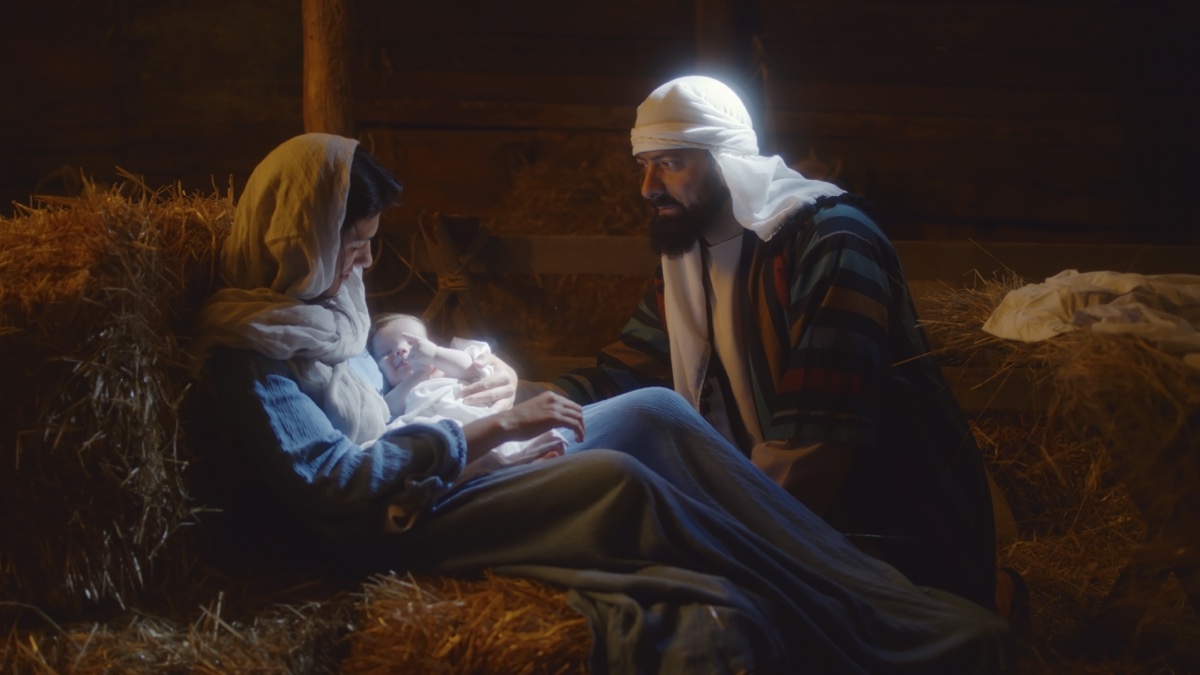
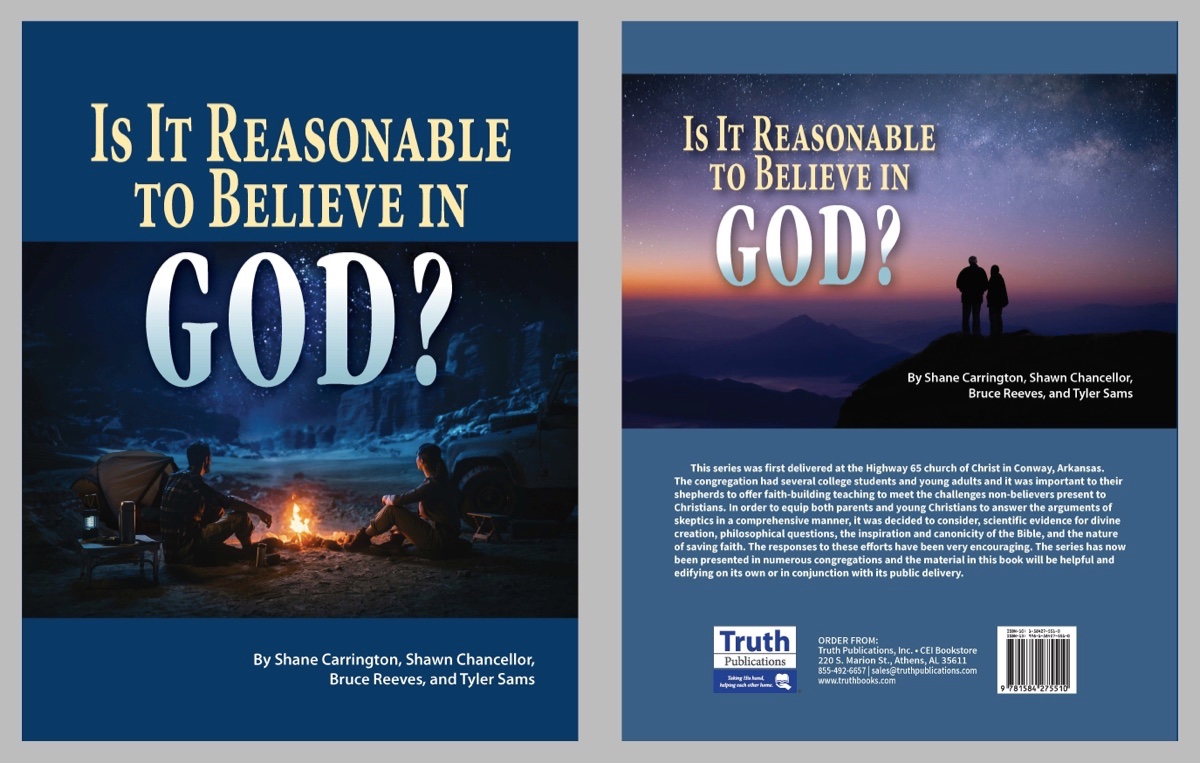


by Shane Carrington
Synopsis: As our high priest, Jesus is the ultimate mediator who strengthens us during our struggles in this difficult world in which we live.
Sometimes we might decide that God is far away, “though He is near to each one of us” (Acts 17:27). Jesus said that He and the Father enjoy an especially close relationship with His disciples. “If anyone loves Me, he will keep My word; and My Father will love him, and We will come to him and make Our abode with him” (John 14:23).
How is it possible for the holy God of heaven to have fellowship with humans who have separated themselves from God through sin (Rom. 6:23)? The sacrifice of God’s holy Son! “By this will we have been sanctified through the offering of the body of Jesus Christ once for all” (Heb. 10:10).
This kind of sacrifice requires a priest qualified to offer it, and Jesus is perfectly equipped for the task: “He, having offered one sacrifice for sins for all time, sat down at the right hand of God” (Heb. 10:12). Jesus did this “once for all when He offered up Himself” (Heb. 7:27).
While we are broken through our sins and are living in a sin-damaged world, Jesus offered Himself for our spiritual cleansing, healing, and hope. What a Savior!
As we focus on His priesthood, consider how that work enlivens and emboldens our faith.
Many priests existed before Jesus. Patriarchs served as priests on behalf of their families (Noah, Gen. 8:20; Abraham, Gen. 12:7-8; Jacob, Gen. 35; Job, Job 1-2; etc.). Israel had the Levitical priesthood (Heb. 7:5, 11-14). These priests played a mediatorial role by offering “both gifts and sacrifices for sins” (Heb. 5:1) which the people could not offer for themselves. They interceded between humanity and God. That’s why “every high priest taken from among men is appointed on behalf of men in things pertaining to God” (Heb. 5:1). Sinful humanity needs help, and God provides it through His priests. Thank God, He blessed us with Jesus as our high priest (Heb. 5:5)!
Because humanity needs a Mediator, Jesus came to fulfill that role (1 Tim. 2:5-6). Jesus’s priesthood is patterned after that of Melchizedek (Heb. 5:1-11; 6:20; 7:1-17).
From Hebrews 5, consider some points that set forth Jesus’s priestly qualifications.
That is true of other priests, as the passages above clearly teach, but, in this case, God sent His divine Son. The Father sent Jesus—God incarnate—to serve us in this capacity. God commissioned many priests through the years, but only the incarnate Christ could fulfill this role in the ultimate way. God the Son offered Himself upon the cross (Acts 20:28). Amazing grace indeed!
One of the powerful and, perhaps, surprising parts of Hebrews 5 concerns Jesus’s obedience to His Father:
In the days of His flesh, He offered up both prayers and supplications with loud crying and tears to the One able to save Him from death, and He was heard because of His piety. Although He was a Son, He learned obedience from the things which He suffered. And having been made perfect, He became to all those who obey Him the source of eternal salvation (Heb. 5:7-9).
These verses describe Jesus’s suffering and “loud crying and tears” in the garden. It also describes His reverent submission (Heb. 5:7, “piety” or “godly fear,” NKJV) toward His Father. While Jesus did these things to redeem us and to model the submissive spirit God requires of us (Heb. 5:9), in His suffering and death, Jesus displayed how we must follow God (1 Pet. 2:21-25).
In order to redeem us, He became both priest and sacrifice. Only the incarnate Son of God could have accomplished this, and He did so to provide for our forgiveness (Heb. 5:1; Heb. 9:14-17). Jesus could not have done this if He had not become a mortal man!
Jesus is our “priest forever according to the order of Melchizedek” (5:5-10). The mysteries of Melchizedek are many, but consider three important, priestly intersections between him and Jesus:
Abraham, an important man in God’s scheme, paid tithes to him (Heb. 7:1-10). In a similar fashion, all humanity should pay tribute to Jesus.
Melchizedek was “king of righteousness. . . king of Salem. . . king of peace” (Heb. 7:2). In an ultimate way, so is Jesus: “the blessed and only Potentate, the King of kings and Lord of lords” (1 Tim. 6:15).
Like Melchizedek, Jesus’s priesthood is not based on His earthly lineage (Heb. 7:3). In other words, Melchizedek is not a priest through Levi, and neither is Jesus. The law of Moses was not in effect during Melchizedek’s day, so there was no Levitical, genealogical requirement. With His death, the covenant changed, ending the Levitical requirement (Heb. 7:11-17).
Jesus is uniquely qualified in every way to redeem us, transform us into His image, and provide us eternal, spiritual hope. What a Savior!
The Father saw our great need and sent His Son to redeem us. “So also Christ did not glorify Himself so as to become a high priest,” but the Father said to Him, “You are My Son, Today I have begotten You” (5:5). What gracious action on the part of God to provide for us what we could not provide for ourselves!
As we survey the book of Hebrews, we discover that God sent Jesus so that He “by the grace of God, might taste death for everyone” (Heb. 2:9). This allows us to “come boldly to the throne of grace, that we may obtain mercy and find grace to help in time of need” (Heb. 4:16). Consequently, we must be cautious “lest anyone fall short of the grace of God” (Heb. 12:15). Since God qualified us to partake in His eternal purposes, “let us have grace, by which we may serve God acceptably with reverence and godly fear” (Heb. 12:28).
Through His priesthood, Jesus provides us all these opportunities.
While we live in an uncertain world where sin holds sway in so many corners around us, God has provided us a source of spiritual strength in life and eternal hope in death. The divine Son of God, through the incarnation, became our high priest and sacrifice. When John the baptizer said, “Behold! The Lamb of God who takes away the sin of the world!” (John 1:29), he was declaring that God provided the sacrifice that only He could. The book of Hebrews teaches us that Jesus is also the priest who offered Himself as that sinless sacrifice. What a blessing God provided to redeem us, transform us, and give us eternal hope! Cleave to Him, and you will find strength in this fallen world!
Shane Carrington has worked with the Southside church of Christ in Sulphur Springs, TX, for twenty-four years. He has two children. The church website is here. He can be reached here.



By Bobby L. Graham
Synopsis: While the work of preaching is an important function and noble endeavor, it must never be viewed an occasion for self-promotion.
Some do not believe it is important for us to have a preacher. How important is it, and what are his qualifications and duties?
While the New Testament does not state explicitly that a congregation must have a man dedicated exclusively to preaching the gospel, it shows his importance in other ways, which we shall examine in this answer. We shall examine next month the qualifications of a preacher, as shown in the New Testament.
Perhaps the first way to see the importance of a preacher is in the various words used to indicate his work. A preacher is designated as a preacher, meaning a herald or one who announces something important or needed (1 Tim. 2:7; Rom. 10:14). Thus, we learn what a preacher does. A second way of indicating his important work is the word evangelist. This term means one who bears/carries glad tidings or good news (2 Tim. 4:5; Acts 21:8).In this way, we learn what he announces. Finally, a preacher is also described as a minister, one who serves in relation to his Master/Lord, to the church, and to His work (1 Tim. 4:6). Thereby, we learn about his relationship as a servant.
It is significant that these words underscore his subordinate role, not a preeminent role. For this reason, neither these terms nor the work they describe should elevate him to a high position. Instead of nurturing pride on his part, they should encourage his humility. Not one of these words expresses a title in some official sense, but rather the work done or his function in the church.
Any preacher worth his salt will ask himself this question: Am I willing to function in these tasks/roles to herald the good news, to serve under Christ my Lord, to serve the needs of the congregation, and to make the message larger than self? Preachers can easily cause problems by their misunderstanding of such matters. Their greatness comes from their willingness to serve God and men.
If any still doubt the importance of preaching, let us dispel such doubt by stressing that an evangelist is one of the gifts given by Christ to the church when He ascended (Eph. 4:11-12). Further, the good work of preaching has the great potential of building up the church by maturing/perfecting the saints (Eph. 4:11-140; Matt. 28:20) and of saving lost souls (1 Tim. 4:16).
Again, I emphasize the preacher’s importance, but I also challenge him with this question: Do I preach for these scriptural reasons, not for fame, honor, money, or some other ulterior reason? Preachers can rapidly cause problems by attitudes and motives other than the right ones.
The local church also should seriously consider this divinely supplied information concerning a preacher and his work, because some saddle such men with tasks so heavy that they neglect the more important responsibilities here identified. Some would make him a social butterfly, a congregational manager, or even an elder without the qualifications. In too many cases, the people want him to do for them what they should be doing. When he refuses to be/do what the Lord nowhere tells him to be/do, he becomes a persona non grata. It is really the unrealistic expectations of the members driving this developing problem, not the preacher’s refusal.
I close this article with every preacher’s solemn charge from God: “I charge thee therefore before God, and the Lord Jesus Christ who shall judge the quick and the dead at His appearing and His kingdom; Preach the word; be instant in season, out of season; reprove, rebuke, exhort with all long-suffering and doctrine” (2 Tim. 4:1-2).
Bobby L. Graham actively participates in fill-in preaching, Belize trips, teaching an hour each day at Athens Bible School, and in gospel meeting work. He and his wife, Karen, have three children. He can be reached here.


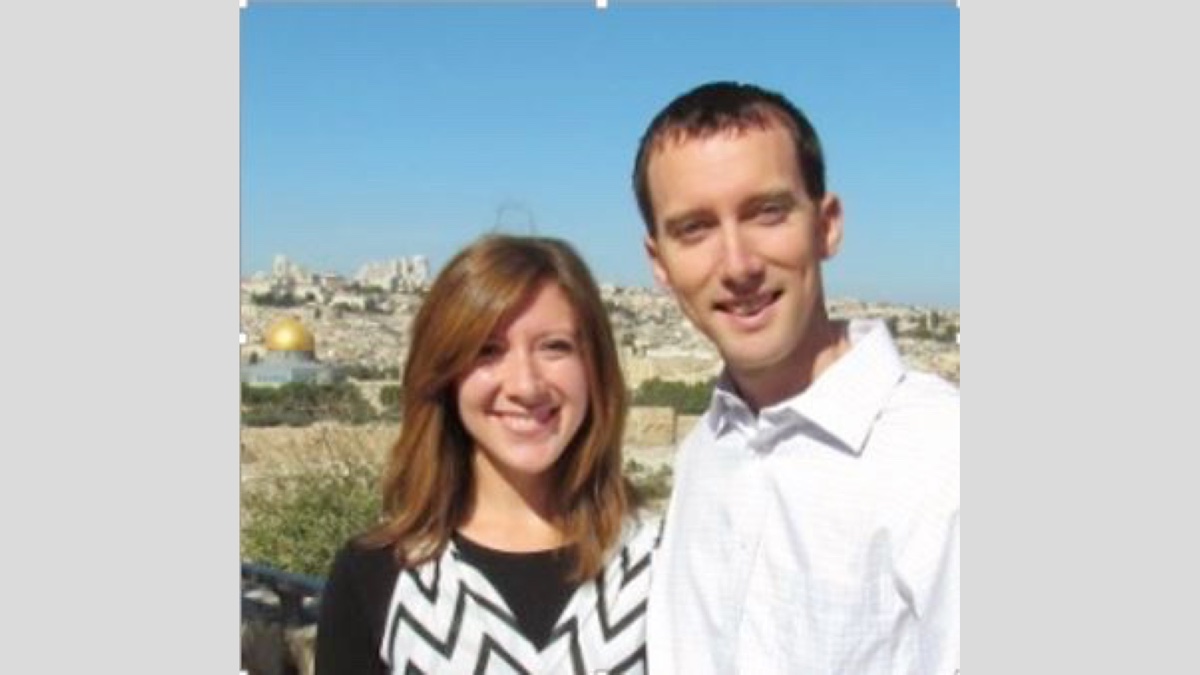
By Trent and Rebekah Dutton
Synopsis: Despite claims to the contrary, similarities between the Bible and contemporary texts are not evidence of borrowing.
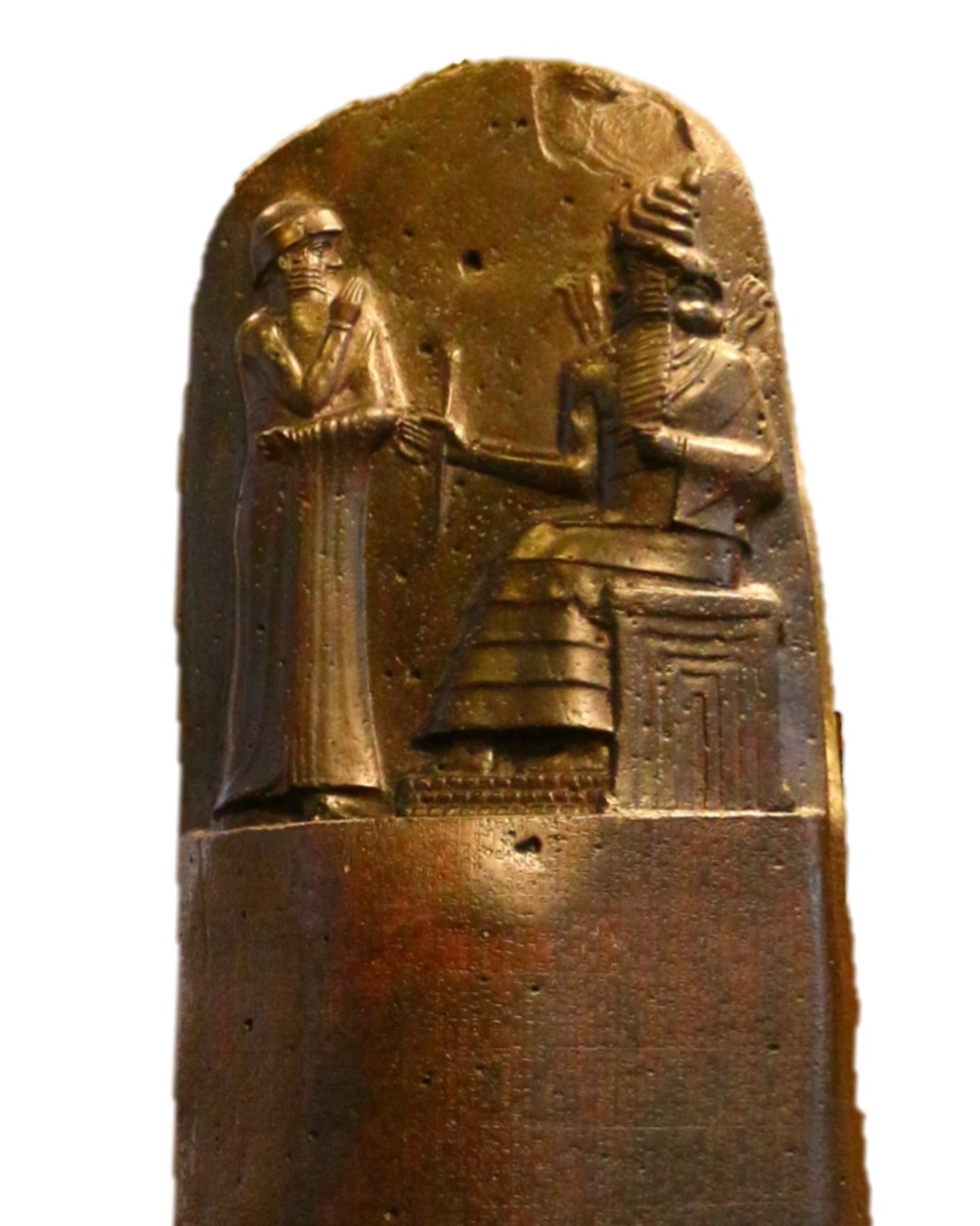
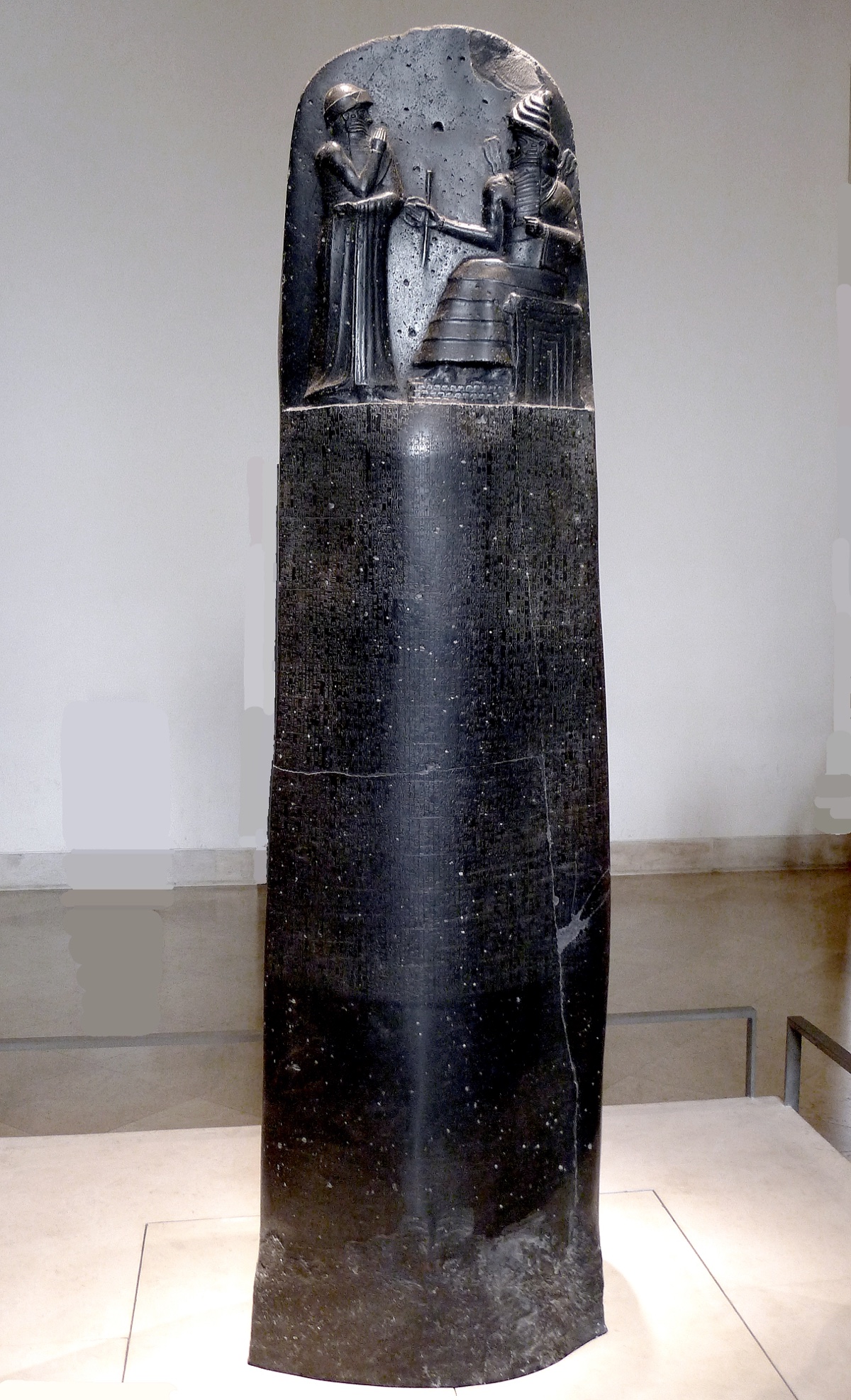
One of the most common and tiresome headlines you will see about archaeological discoveries related to the Bible is that someone has translated an ancient text that is similar to the Biblical narrative and the researcher explains that the Biblical author borrowed that idea. This is especially common with “law” texts like Hammurabi’s Code.
The reality is that one would expect similarities between ancient texts and the Biblical text. Why? Because the Bible claims to be situated at a specific point in history. The individuals in the Biblical narrative would therefore be expected to have the same general knowledge base as the people in the world around them, have comparable expectations of what is moral and ethical, as well as the same vices. This is why ancient law codes bear a similarity to the law of Moses. One would expect the laws of the United States and laws of the United Kingdom to bear some similarities, since we have similar cultures. You would also expect them to be ultimately different because our country was born from a desire to not share the inherent problems we saw in the United Kingdom. The Law of Moses is profoundly different from its peers, because God’s intention was to guide humanity back to His presence, not perpetuate the cruelties and injustices of a human-run world.
Some laws are naturally comparable—such as the lex talionis (law of retribution in kind) of Exodus 21:21-36. These laws find parallels in each known law code of the ancient Near East and walk the reader through the consequences for both deliberate as well as accidental injuries against others.
The law that we will use as our primary example is pertinent to many aspects of Christianity in today’s socio-political climate, but we will focus only on how it differs from its contemporary laws. That is the law of Exodus 21:22-25. A close translation of the text reads thus:
And if men struggle with each other, and they strike a woman with child, and she gives birth prematurely, but no fatal injury follows, he will be fined according to [the penalty] the husband of the woman lays upon him, and he will give according to the estimate. Yet if a fatal injury follows, then he will certainly give life for life, eye for eye, tooth for tooth, hand for hand, foot for foot, burn for burn, wound for wound, stripe for stripe.
This law describes a fight between men that results in a pregnant woman receiving such a blow that she goes into premature labor. Studies of the theological trajectory of this law show that the Hebrews understood “no fatal injury” to mean that both mother and infant survive the event. Should either die as a result, the lex talionis judgment is applied against the perpetrator. The difference between the law encompassed within these four verses can quickly be seen in the following passages.
M50 of Hammurabi’s law states:
If a man has struck a free woman with child, and has caused her to miscarry, he shall pay ten shekels for her miscarriage.
If that woman die, his daughter shall be killed.
If it be the daughter of a plebeian, that has miscarried through his blows, he shall pay five shekels of silver.
If that woman die, he shall pay half a mina of silver.
If he has struck a man’s maid and caused her to miscarry, he shall pay two shekels of silver.
If that woman die, he shall pay one-third of a mina of silver.
The Middle Assyrian codes reads thus:
If a man strike the daughter of a [free] man and cause her to drop what is in her, they shall prosecute him, they shall convict him, two talents and thirty minas of lead shall he pay, fifty blows they shall inflict on him, one month shall he toil.
Finally, the Hittite law code stipulates:
If anyone cause a free woman to miscarry, if it be the tenth month, he shall give ten half-shekels of silver, if it be the fifth month, he shall give five half-shekels of silver.
If anyone cause a female slave to miscarry, if it be the tenth month, he shall give five half-shekels of silver.
These laws reveal the contemporary cognitive environment of the Mosaic laws, that inadvertently or deliberately injuring a woman so badly that she goes into labor is considered “bad.” Across these extra-Biblical laws, though, one can see the common understanding that the death of the infant was a crime that a fine could make right. However, the death of the mother only carried the lex talionis clause if she were of the upper class—and even then, the perpetrator, presumed to be a man, is not himself killed. His daughter must suffer for the crimes of her father. Otherwise, a woman’s loss also required another heavy fine to pay the bride price for her replacement. In contrast, the law we argue is divinely inspired not only recognizes the value of all lives involved in the altercation, but also does not distinguish between social classes. Under the Mosaic Law, a pregnant slave’s life holds the same value as a pregnant noblewoman. These regulations, as all the legal corpus of the ancient world, illustrate the striking differences between the nations and God’s people, whose law only distinguishes between classes in order to ensure that all receive justice.
Trent and Rebekah Dutton both hold Master’s degrees in Biblical Archaeology from Wheaton College, in the Chicago, IL, area. They have participated in four full excavation seasons with The Leon Levy Expedition to Ashkelon, two seasons at Tel Shimron in the Jezreel Valley, and one season at Tel Burna in the Shephelah. They are members of the Eastside church of Christ in Athens, AL. They can be reached here.



By Chris Reeves
Synopsis: When a couple is planning to get married, they should focus on more weighty issues than the wedding ceremony and reception—such as character and commitment, and cultivating a Christ-like spirit.
As I sit down to write this article, my wife and I will celebrate our 35th wedding anniversary in just a few days. We have been blessed by God with so many years of time together. Indeed, marriage is honorable (Heb. 13:5). I see other Christians, often young ones, desiring to get married and I think about the importance of spending some quality time talking about marriage before you get married. Many couples will spend hours planning the wedding ceremony without really spending time talking about the actual marriage relationship itself. I look back over my life of marriage and I realize that thoughts of the wedding ceremony can fade quickly, but what is constantly before my mind each day are the biblical principles that make marriage work the way God planned it. As I have the opportunity to mentor couples concerning marriage, I suggest the following items to talk about before you get married.
Ye husbands, in like manner, dwell with your wives according to knowledge, giving honor unto the woman, as unto the weaker vessel, as being also joint-heirs of the grace of life; to the end that your prayers be not hindered (1 Pet. 3:7).
Before you marry, make sure that the one you love is a faithful Christian. It has been said many times, but it needs to be said over and over again: marry a faithful Christian. Wait to marry until you are a Christian and the one you love is a Christian. By Christian, I mean the way the New Testament uses the description of “Christian” (Acts 11:26)—someone who has obeyed the gospel plan of salvation and is living according to the New Testament pattern each day. I don’t mean a good person, a religious person, or a member of a man-made denomination. I mean a true New Testament Christian. I continue to hear throughout my life how couples close to me are leaving the Lord because a Christian married someone other than a faithful Christian. Why would you put your soul in jeopardy for “love”? Yes, Christians marrying other Christians have left the Lord as well, but the chances are greater for this when you marry a non-Christian. Just don’t do it! Don’t risk your spiritual future and that of your children. I married a faithful Christian woman, and she has helped me stay faithful to this point in my life and I would encourage you to do the same.
And the man said, This is now bone of my bones, and flesh of my flesh: she shall be called Woman, because she was taken out of Man. Therefore shall a man leave his father and his mother, and shall cleave unto his wife: and they shall be one flesh (Gen. 2:23-24).
Before you marry, plan to live your own life and start your own family apart from your parents. There may be some emergency situation when you have to stay with your parents either to help them or get help from them, but with that exception aside, you need to plan to live your own life in your own place. So many marriage problems could be solved if every couple would do this. It is not a question of love. Parents love their adult children and the children love their parents, but God’s plan is to leave and cleave. We may live in a culture where adult children still want to live with their parents and the parents are happy to let them do that, but that is not God’s way. If you are old enough to marry, you are old enough to live on your own.
But if any provideth not for his own, and specially his own household, he hath denied the faith, and is worse than an unbeliever (1 Tim. 5:8).
Before you marry, plan to take care of your own responsibilities. Just as it is good for married couples to live on their own, it is also good that they take care of their own affairs and not live off of their parents. Get your own job. Plan to rent or buy your own place for you and your spouse. Take care of your own bills. When the children come along, raise your own children (Eph. 6:1-4; Col. 3:21; 1 Tim. 5:14; Titus 2:4). I love my grandchildren and I love to be around them (They are the best grandkids in the world.), but they are not my responsibility to raise. Yes, there may be emergencies or special circumstances that require parents to help their adult married children, but those cases need to be made the exception and not the rule. Many young married couples want to have so many material things that both of them work all the time and let the grandparents (or daycare) raise the kids. This is not God’s way. It matters not what the grandparents want, it’s about what God wants. It matters not what is culturally acceptable, it’s about what is acceptable to God.
Wives, be in subjection unto your own husbands, as unto the Lord. For the husband is the head of the wife, as Christ also is the head of the church, being himself the saviour of the body. But as the church is subject to Christ, so let the wives also be to their husbands in everything. Husbands, love your wives, even as Christ also loved the church, and gave himself up for it (Eph. 5:22-25).
Before you marry, know clearly what your roles are as a husband and a wife. The man needs to know that he will have to be a loving leader (head) to his wife and make decisions that are important to this life and going to heaven. The woman needs to know that she will have to be a submissive help-meet to her husband and support and help him (Gen. 2:18). Both have important roles when the children come along as father and mother. All these roles are very serious and critical to the well-being of the godly family. They also bring great blessings as well. It is not good to marry someone who does not know or want to fulfill his (or her) God-given roles and responsibilities.
Better is little, with the fear of Jehovah, than great treasure and trouble therewith. Better is a dinner of herbs, where love is, than a stalled ox and hatred therewith (Prov. 15:16-17).
Before you marry, decide that you do not have to have everything all at once. You don’t have to have the newest items in your house. You don’t have to have all the latest gadgets. You don’t have to have the newest iPhone. You don’t have to drive two new cars with high payments. Plan to live within your means. So many married couples start out buying all the newest things they can and then spend the rest of their life working overtime to pay for it all. Because they are working all the time to pay for their new things, they don’t have time for themselves, their service to God, their children, or others. Start out small and work your way up to having more things or newer things. There is nothing wrong with owning something older if it still works well and serves your needs.
The rich ruleth over the poor; and the borrower is servant to the lender (Prov. 22:7).
Before you marry, plan to live on a budget. If you don’t know how to budget, learn how. It’s rather easy to learn. Just make sure the money coming is greater than the money going out. Many married couples “get in over their heads” rather quickly because they buy most of their things on credit and then have trouble paying it off. Married couples overwhelmed with debt will sometimes neglect responsibilities such as giving to the Lord each first day of the week, providing for their children, or giving to those in need. They will not have extra funds to spend on enjoying life. Debt often causes married couples to be stressed all the time and fight with each other. Money (debt) problems are at the root of many marital problems today. There were many times in my marriage when I wanted to have something new for my wife and children, but I resisted buying it because it would put us in great debt. It’s just best to live on a budget.
Above are some practical things from God’s word that you should talk about with the one you plan to marry. Next month, Lord willing, I will offer some more advice to help you get your marriage off to a good start. Getting some biblical principles in place and agreed upon before you marry will make your marriage so much sweeter, so much more fulfilling, and so much more pleasing in God’s sight.
Unless otherwise noted, all Scripture quotations are taken from the American Standard Version (ASV 1901 Edition).
Chris Reeves has preached for the Warfield Blvd. church of Christ in Clarksville, TN, since 2016. He and his wife, Cheri, have four children and two grandchildren. His Bible study website is here. The church website is here. He can be reached here.



By Annie Stevens
Synopsis: Writing hymns is a great way to gain a deeper connection to scripture, create songs on new topics, learn new things, build relationships, and turn personal, spiritual experience into worship.
Hymn writing is a hobby that has taught me many things and brought me much joy. I wrote my first hymn a few years ago when my dad taught my Bible class how to write lyrics. Then last summer, I joined a workshop he held for young hymn writers, where he taught all of us how to create lyrics and improve them each week. I am currently participating in the workshop again this year and hope to write many more songs in my lifetime. Writing hymn lyrics has spiritual benefits, is a wonderful way to express spiritual ideas, and is an opportunity to build relationships with other Christians.
In the Young Writers’ workshop this year, we talked about why each of us wanted to write a hymn. The reason was different for everyone. One reason mentioned was the desire to be continually thinking about spiritual things, and another reason was wanting to spend more time in Scripture. Hymn writing is a great opportunity to gain a deeper connection to God’s word. After spending months contemplating how to write a song about one particular passage, that passage is engraved on your heart and hard to forget. Another reason to write hymns is that you can write them exactly how you want. I love making each part of the song something that is powerful and significant to me personally. Finally, one of the most fascinating reasons to write songs is that there are many topics, passages, and unique points of view that have no songs written about them, yet. It is thrilling to consider the idea of filling that void.
Hymn writing can seem scary without knowing where to start. The basic writing process that I have learned is to choose a topic, study it, and then determine how to write about it in the most powerful and effective way. In the class and workshops that I have attended, the first few weeks were about picking the topic and studying to find relevant Scriptures. Finding passages about my topic is extremely helpful to me because I can fill my song with words and phrases pulled from Scripture instead of only thinking of my own. Studying the Scriptures is also essential in making sure the words of the song are true; writing a song is like creating a sermon that will be preached repeatedly, so it is important for the message to be accurate. After studying and constructing a more specific plan for the hymns, we each made multiple outlines of our songs, each one more detailed than the last. We went from outlining the general idea of each verse of the song to eventually determining every word to use. Finally, we fit the lyrics with rhythm and rhyme. Describing the process seems simple, but in actual writing, it often takes frustrating effort and pain to make a song the best it can be. During one of the workshop meetings last summer, my friend zealously said, “I’m gonna go home, and I’m gonna be nitpicky, and I’m gonna get mad at my song.” Finding and fixing blemishes in a song can be brutal. Thankfully, the pain is worth it. Every weak line or verse cut out and replaced makes the song better. It is satisfying to see the lyrics slowly gain more purpose and impact.
Writing hymns has given me a new way of looking at spiritual things. Since I have started song writing, I have noticed inspiration around me for future songs. The ideas come from a variety of places. I keep a paper stashed in the back of my Bible where I jot down potential song topics or content for songs I am currently writing. The page is full of inspiration from sermons, phrases from Scripture, and new ideas I hear in Bible discussions. I enjoy finding and collecting potential hymns.
Something else I have noticed after learning how to write songs is the new point of view I have regarding other people’s hymns. When I have spent hours trying to use Scripture references well and use good rhymes for my songs, I have far more appreciation for songwriters who can do all of it successfully. I love the feeling as I am singing a hymn when I realize the author perfectly used a phrase straight from Scripture or chose the strongest rhyme in existence. When that happens, it gives me chills.
In the workshop last year, I loved writing hymns with other young people. Because we worked together on writing, I learned the story behind their songs, the work that went into each verse, and the reason why each part was written a certain way. Being part of the creation of someone else’s song is special; I have a particular connection to those hymns because I know who wrote it and how. We gave each other content for our songs, thinking of useful passages and sharing powerful words to include in the lyrics. Working together each week was fun and strengthened our friendships as well as our songs.
I am also very thankful for the help my dad has given me with my songs. Being able to get help from an experienced hymn writer is a great blessing. It is hard to see the issues in my own hymns, and when I do recognize a problem, I often do not know how to fix it. He can see the weaknesses in my hymns more clearly than I can and offers solutions when I feel stuck. For me, hymn writing is more enjoyable and successful when others contribute to the process.
So far, I have finished writing two hymns. The first, called “The Lost Sheep,” was for the song writing Bible class. This song, written about important spiritual events in my life, is about God rescuing a wandering sheep that is incapable of saving itself. My second song, titled “Come and Tell Me of Heaven,” was for the workshop last year. One night earlier that summer, some friends and I started talking about heaven—all that we were looking forward to and how amazing heaven would be. I wanted to remember to always look forward to heaven, so I wrote the hymn as a reminder. Hymn writing is a good way to capture spiritual stories from your life and to remind yourself of what you learned.
I am currently writing a hymn about 2 Kings 6:8-23. In that passage, the king of Syria sent an army to surround the city where Elisha was. Elisha’s servant saw the army and was terrified, but Elisha assured him, “Do not fear, for those who are with us are more than those who are with them.” God opened the servant’s eyes to see His army surrounding Elisha, then struck the Syrians with blindness, and Elisha led them to the king of Israel, who sent them back to their master. I love this story because God revealed the unseen power of His army to Elisha’s servant; the story fills me with zeal, and I love being able to write a song about it. It is wonderful to be able to take an amazing event from the Bible and turn it into a hymn.
Writing hymns is a great way to gain a deeper connection to Scripture, create songs on new topics, learn new things, build relationships, and turn personal, spiritual experience into worship. I hope that anyone who wants to write hymns will go for it. You do not have to write multiple hymns, or even a long hymn. I hope you will try it and feel the joy of turning experience and Scripture into a song of worship for God.
Audio Recording of “The Lost Sheep”
Audio Recording of “Come and Tell Me of Heaven”
Annie Stevens has been a member of the Benchley church of Christ in Benchley, TX, all her life. She is a student at Stevens Academy. She can be reached at the YouTube links provided above.



By Kevin Maxey
Synopsis: The book of Hebrews empowers Christians to develop maturity in thought by thinking correctly about Jesus, Scripture and sin. May we recognize the need for proper attitudes.
“Where is Jesus?” “Why hasn’t He come back yet?” “I’m trying so hard to serve God faithfully, so why am I suffering?” “Is it really worth it to be a Christian?” “I’m more comfortable with how things were before I became a Christian.” “I’m tired.” “I’m weary.” “I’m discouraged.” “I may quit.”
Have you ever thought like this? If so, you’re not alone. Satan frequently tempts weary Christians with skeptical and troubling thoughts. The book of Hebrews reveals even Christians in the first century struggled with similar thinking. This study will investigate how the book of Hebrews empowers Christians to develop maturity in thought.
God calls discouraged Christians to transform distorted thinking into mature thinking. The book of Hebrews, believed to be written some 30 years after the ascension of Christ, admonishes sluggish Christians to “leave the elementary doctrine of Christ and go on to maturity” (Heb. 6:1). How do weak Christians press on to maturity? Seasoned maturity begins with correct thinking and wise discernment. The verse just prior to Hebrews 6:1 emphasize that pressing towards maturity requires proper thinking. “Solid food is for the mature, for those who have their powers of discernment trained by constant practice to distinguish good from evil” (Heb. 5:14). Mature thinking equips discerning Christians to distinguish, thoughtfully, good from evil. The book of Hebrews reveals that the path to maturity in thought requires thinking correctly about Jesus, Scripture, and sin.
Many Hebrew Christians were not thinking maturely about Jesus. Three decades prior to the writing of Hebrews, angels promised, “This Jesus, who was taken up from you into heaven, will come in the same way you saw him go into heaven” (Acts 1:11). “It’s been 30 years,” some early Christians thought, “angels promised Jesus would return. So where is He?”
Prior to His crucifixion, Jesus himself promised, “Let not your hearts be troubled. Believe in God; believe also in me. . . I will come again and will take you to myself, that where I am, you may be also” (John 14:1-4). Jesus confidently promised that He would return. However, doubting first-century thinkers asked, “Where is He?” Thirty years is a long time to wait for those with inaccurate expectations.
Preceding His ascension, Jesus affirmed, “Behold, I am with you always, to the end of the age” (Matt. 28:20). Time is passing. Persecution is rising. Life is hard. Jewish Christians wonder, “Was Jesus really the long-awaited Messiah, or should we just go back to the way things were under the law of Moses?” Hebrews is addressed to weary Christians tempted by bad thinking.
The Hebrew writer corrects this faulty thinking by carefully demonstrating the sovereign superiority of Jesus. Jesus is better: better than prior prophets (Heb. 1:1-4); better than angels (Heb. 1:5-14); better than Moses (Heb. 3:1-6); better than Levitical high priests (Heb. 4:14f); better than Aaron (Heb. 7:11f); a better mediator of a better covenant enacted on better promises (Heb. 8:1f). He serves in a better heavenly tabernacle (Heb. 9:23f); offered better blood (Heb. 9:11f); ensures a better rest (Heb. 4:1f); invites all to a better heavenly country (Heb. 11:16).
Divine proofs erase doubtful thinking. Where is Jesus? He, the King of kings, reigns on His throne. Jesus secured victory “once and for all” and will return in triumph (Heb. 7:27; 9:12; 10:10). The mature mind believes. Doubts arise when we fail to understand and believe in the identity, mission, and power of Jesus. Revisit the book of Hebrews and gain a greater appreciation for our Savior. Mature thinking begins when see, hear, and serve the Son (Heb. 1:1-4).
Hebrew Christians heard messianic prophecies, answered the inspired gospel call, and confessed Jesus as Lord and King, yet destructive doubts crept in. They were in danger of drifting away. “Therefore, we must pay much closer attention to what we have heard, lest we drift away from it. For since the message declared by angels proved to be reliable, and every transgression or disobedience received a just retribution, how shall we escape if we neglect such a great salvation?” (Heb. 2:1-3). The antidote for apostasy is careful adherence to Scripture.
Immature thinking doubts the validity and relevance of Scripture. Foolish thoughts place human traditions, personal opinions, secular culture, and sinful passion above the word of God. Mature thinking understands, “All Scripture is breathed out by God and profitable for teaching, for reproof, for correction, and for training in righteousness that the man of God may be competent, equipped for every good work” (2 Tim. 3:16-17). Immature thinking lets modern culture redefine sin, marriage, gender, sexuality, modesty, church roles, family roles, the work of the church, etc. Mature thinkers do not add to or take away from Scripture, instead they speak only as the oracles of God (1 Pet. 4:11; Col. 3:17; Deut. 4:2).
Immature thinkers make no time for the solid food of Scripture, settling for a malnourishing diet of spiritual milk. Mature thinkers feast on a steady diet of God’s thoughts. “For everyone who lives on milk is unskilled in the word of righteousness, since he is a child. But solid food is for the mature” (Heb. 5:13-14). Immature thinkers spend more time listening to the thoughts of men, than handling aright the words of God (2 Tim. 2:15).
Foolish minds think they can hide from the truth of God’s word. Mature minds understand, “the word of God is living and active, sharper than any two-edged sword, piercing to the division of the soul and of spirit, of joints and of marrow, and discerning the thoughts and intentions of the heart” (Heb. 4:12).
Immature thinkers are easily deceived by sinful thoughts. Mature minds give and receive biblical exhortation daily. “Take care, brothers, lest there be in any of you an evil, unbelieving heart, leading you to fall away from the living God. But exhort one another every day, as long as it is called”today," that none of you may be hardened by the deceitfulness of sin" (Heb. 3:12-13).
Sin deceives our thinking. Fill your thoughts with the voice of God and “do not harden your hearts as in the rebellion” (Heb. 3:15). Immature thinking led the exodus generation to doubt God’s promised land provision (Heb. 3:17). Immature thinking says, “Giants are in the land! The enemy will slaughter us. God brought us out here to die. We should never have left Egypt.” Mature thinking believes God is greater than the giants.
Immature minds justify and cling to sin. Mature minds understand the imperative need for discarding sin. “Let us also lay aside every weight and the sin which clings so closely” (Heb. 12:1). The battle against sin, through God’s help, first is won in the mind. A penitent mind is determined to turn from sin. “Keep your heart with all vigilance, for from it flow the springs of life” (Prov. 4:23).
It is not easy to train one’s mind to grow in maturity of thought. God empowers mental transformation. “Do not be conformed to this world, but be transformed by the renewal of your mind, that by testing you may discern what is the will of God, what is good and acceptable and perfect” (Rom. 12:2). It is worth it? Consider the eternal benefits of pressing on toward maturity in thought:
Instead of allowing trials and temptations to create doubtful thoughts, look unto Jesus (Heb. 12:1-2). We who share in a heavenly calling train our minds to always “consider Jesus” (Heb. 3:1).
Forgetful minds drift. “Therefore, we must give the more earnest heed to the things which we have heard, lest we drift away” (Heb. 2:1). Filling our minds with faith-filled attention to inspired thoughts guards against apostasy.
Immature minds grow weary. When you think about giving up, think about Jesus. “Consider him who endured from sinners such hostility against himself, so that you may not grow weary or fainthearted” (Heb. 12:3). Immature thinking believes, “I can’t take it anymore. I am the only one suffering like this. I can’t do it.” Mature thinking remembers, “Jesus understands. Jesus endured suffering for me. Jesus’s example enables me to not grow weary.” Worldly anxiety wearies the flesh. Godly thinking brings restful peace (Phil. 4:8)
Immature minds quit. “Let us run with endurance the race that is set before us, looking to Jesus, the founder and perfector of our faith, who for the joy set before Him endured the cross, despising the shame, and is seated at the right hand of the throne of God” (Heb. 12:1-2). Seasoned minds get back up, and, with God’s grace and strength, cross the eternal finish line.
Press on to maturity in thought by thinking correctly about Jesus, Scripture, and sin. Refuse to feed your mind with negative doubt. Confidently determine, instead, to press on to maturity in thought.
Kevin Maxey has worked with the Port Royal church of Christ in Spring Hill, TN, since 2009. He and his wife, Jennifer, have five children. The church website is here. He can be reached here.
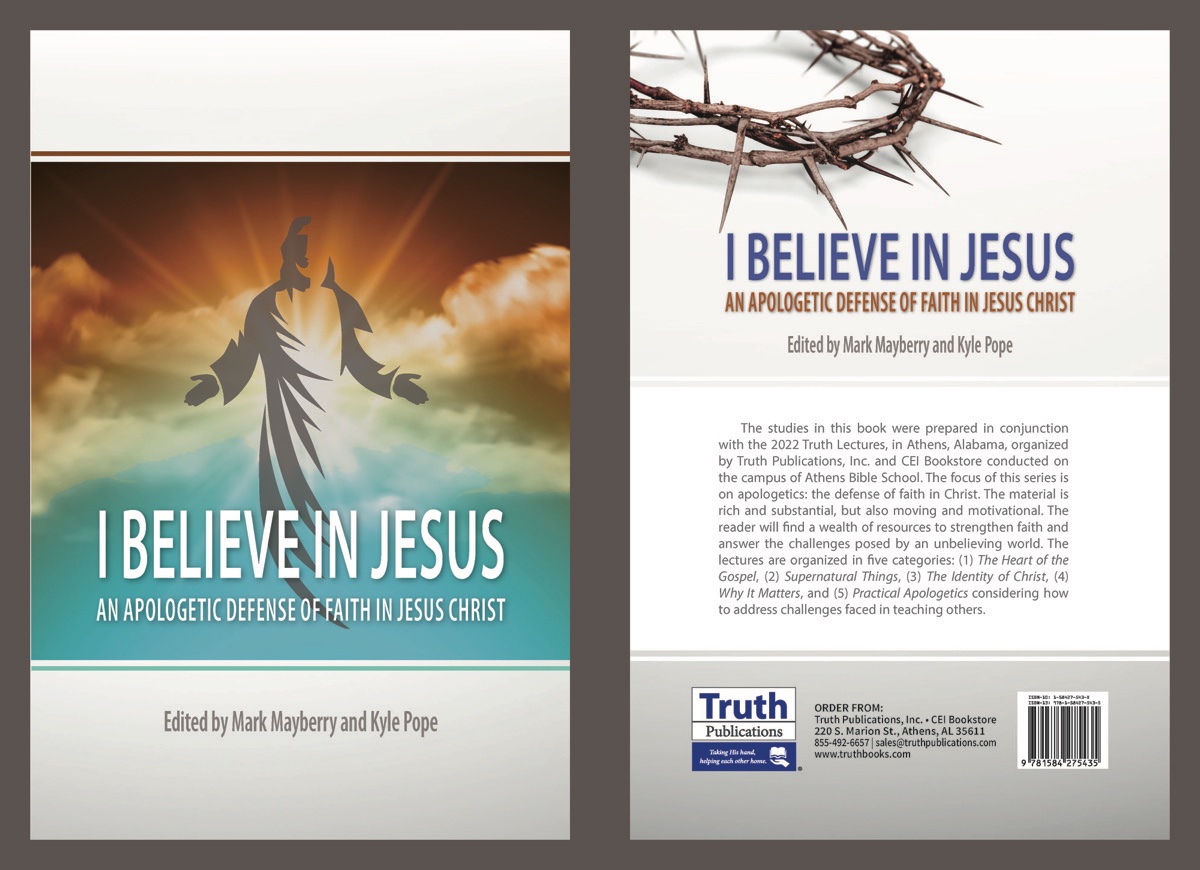


By Mike Willis
Synopsis: The tongue is a small, but potent, part of the body. Instead of allowing it to be set on fire by hell, may we learn to control the tongue—using it to bless rather than to blaspheme.
How we use our tongue has a grave impact on our present life. The wise man wrote,
A man shall eat well by the fruit of his mouth, but the soul of the unfaithful feeds on violence (Prov. 13:2).
He who guards his mouth preserves his life, but he that opens wide his lips shall have destruction (Prov. 13:2-3).
Whoever guards his mouth and tongue keeps his soul from troubles (Prov. 21:23; cf. 17:20; 18:6-7, 21).
Those who sin with their tongue bring distress to themselves in a variety of ways. More importantly, however, sins of the tongue will cause souls to be lost in hell. Jesus said,
But I say to you that for every idle word men may speak, they will give account of it in the day of judgment. For by your words you will be justified, and by your words you will be condemned (Matt. 12:36-37).
Consequently, we must learn to avoid committing the sins of the tongue.
Some people talk too much, earning for themselves the descriptions of “motor mouth,” “chatterbox,” etc. Such speech pours out foolishness (Prov. 15:2, 28) because no forethought is given to what is said. “A fool vents all his feelings, but a wise man holds them back” (Prov. 29:11). There are some things better left unsaid.
Whisperers and talebearers dig up evil stories about things that others have committed so they will have something to tell on that person (Prov. 16:27). Too, they tell secrets (Prov. 11:13). As a result, they wound people, inflicting pain with their tongue (Prov. 18:8), and separating friends (Prov. 16:28; 17:9). Talebearers and whisperers are fools (Prov. 10:8—from nabal which describes one who has no respect for God).
When I perceive that one of my friends is a whisperer or gossip, I must quit listening to his stories. The listening ear must share in the blame of the gossiping tongue. The wise man wrote, “The north wind brings forth rain, and a backbiting tongue an angry countenance” (Prov. 25:23).
Another sin of the tongue is the sin of lying, telling a deliberate falsehood. Some men lie to cover their sins, to avoid hurting the feelings of someone else, to take advantage of others, and many other reasons. God hates the “lying tongue” (Prov. 6:17; 12:22). Eventually, a liar will be exposed. “The truthful lip shall be established forever, but a lying tongue is but for a moment” (Prov. 12:19). One’s friends will eventually catch him in his lie. When that occurs, his word no longer will be trusted. Liars must tell lies to cover their lies. Sooner or later, they are caught in their lies, either because someone heard the other story that he told, he forgot to whom he told what, or some other reason. One can protect himself from having to have a perfect memory of what he told whom by always telling the truth.
Some people flatter a person when in his presence and then attack and destroy him behind his back. The proverbs say that such a person hides hatred with lying lips (Prov. 10:18) and warns of the danger of the “kisses of an enemy” (Prov. 27:6). Eventually these flatterers will become known for what they are (Prov. 28:23). Men have little respect for this kind of character.
Some words are described as “grievous words” because they stir up anger (Prov. 15:1). Frequently, they are words spoken in haste and without forethought (Prov. 12:16); they gender strife (Prov. 15:18). Little thought is given to the damage these angry words do to the various relationships of life. Read the words to “Angry Words” by H.R. Palmer:
Angry words! O let them never From the tongue unbridled slip; May the heart’s best impulse ever Check them ere they soil the lip.
Love is much too pure and holy, Friendship is too sacred far, For a moment’s reckless folly Thus to desolate and mar.
Angry words are lightly spoken, Bitt’rest tho’ts are rashly stirred, Brightest links of life are broken, By a single angry word.
“Love one another,” thus saith the Savior; Children, obey the Father’s blestcommand; “Love one another,” thus saith the Savior; Children, obey the blest command.
“There is one who speaks like the piercings of a sword, but the tongue of the wise promotes health” (Prov. 12:18). We sometimes say, “He really cut you down!” What a misuse of the tongue when its function is to hurt someone else.
The Ten Commandments warn us not to take the name of the Lord in vain (Exod. 20:7). James deplored those Christians who “bless our God” on the one hand and “curse men, who have been made in the similitude of God” on the other hand. He said, “Out of the same mouth proceed blessing and cursing. My brethren, these things ought not to be so” (Jas. 3:10). Some who profess to be Christians use profanity regularly.
“Filthiness,” “foolish talking,” and “coarse jesting” (Eph. 5:4) were among the sinful uses of the tongue condemned by Paul. Jokes that are vulgar and filthy reflect a mind that is in the gutter and drags others down to the same level.
The tongue, which is so frequently guilty of sin, can and should be used for the accomplishment of good. Consider what an impact for righteousness the Savior’s tongue had on this earth. Here are some good uses of the tongue:
“A soft answer turns away wrath” (Prov. 15:1). Rather than using the tongue to stir up anger, we should use it to calm anger.
“The lips of the wise disperse knowledge” (Prov. 15:7). The tongue can be used to teach someone how to be saved, to live better, to do a job easier, and many other useful purposes.
“Faithful are the wounds of a friend, but the kisses of an enemy are deceitful” (Prov. 27:6). “He who rebukes a man will find more favor afterward Than he who flatters with the tongue” (Prov. 28:23). The tongue should be used to point out the sinner’s evil ways, while calling him to repentance (cf., the work of John the Baptist in Matt. 3).
“A man has joy by the answer of his mouth, and a word spoken in due season, how good it is!” (Prov. 15:23). We can render service to our fellowman by encouraging the downhearted and depressed, the weak and sickly.
When the tongue is used in these ways, it is pleasant to others (Prov. 15:26). These uses of the tongue make friends (Prov. 16:13; 22:11). You can understand why this kind of tongue is compared to:
• A tree of life (Prov. 15:4).
• A well of life (Prov. 10:11).
• A honeycomb (Prov. 16:24).
• An apple of gold in a network of silver (Prov. 25:11).
• Choice silver (Prov. 10:20).
• Good food (Prov. 10:21).
You should control your tongue. “The heart of the wise teaches his mouth, and adds learning to his lips” (Prov. 16:23). Though the tongue can never be tamed (Jas. 3:8), it can be bridled and controlled. You should begin right now to control your tongue.
Don’t allow yourself to abuse people when angry. Don’t take the Lord’s name in vain. Be truthful. Learn to speak an encouraging word, to comfort those who are suffering, to express your love. You will enhance the quality of your life here and have the hope of eternal life in heaven later.
This first appeared in Bible Text Books: Proverbs, pp. 30-31.
Willis, Mike. Bible Text Books: Proverbs. Athens, AL: Truth Publications, Inc., 2011, 2022.
Mike Willis served as editor of Truth Magazine for forty years. Presently, he is preaching for the Decatur Township church southwest of Indianapolis, IN. He can be reached here.



By Daniel H. King, Sr.
Synopsis: Maturity is not simply a theory of advancement in any endeavor. Rather, it is a practical growth strategy that takes us where we need to be. Neglect it, and you will remain exactly where you are. Pursue it, and the sky is the limit!
“Hypocrisy” might be one of the most obnoxious words in any language. Few people would react positively to someone describing them as a “hypocrite.” What the term depicts is falseness. It is the practice of professing beliefs, feelings, or virtues that one does not hold or possess. It is also the act of feigning to be what one is not or else pretend to believe what one does not actually believe. The Greek term (hupokritēs) from which it derives pictures a stage-actor: “It was a custom for Greek and Roman actors to speak in large masks with mechanical devices for augmenting the force of the voice; hence the word became used metaphorically of a ‘dissembler, a hypocrite’” (Vine, 316). Deep inside the heart of one who is so inclined as to pretend to be something or someone he is not, there is a recognition of the falseness of those claims. So, a hypocrite is an actor. He plays the part of someone else. Reality, however, is quite different from perception.
A mature Christian cannot be hypocritical. He is what he claims to be. He lives by the dicta he imposes on others. He is no charlatan. By very definition, this cannot be the case for someone who is sincere and whose religion is genuine. “Wickedness, and all guile, and hypocrisies, envies, and all evil communications” are to be put away by the maturing child of God, according to Peter’s declaration in 1 Peter 2:1. Even though it is also true that one might be a practiced hypocrite (see 1 Tim. 4:2), from years spent feigning true religion, the apostle here seems to imply that early hypocritical attitudes and actions in the practice of the Christian life should be put behind one who becomes more advanced in his Christian walk with God. It is assumed that one who learns the will of the Lord over time will eventually recognize the reality of one’s falseness to the Lord’s claims on us and pretension will be shed as a nymph, an insect larva, sheds its old self and becomes a new creature in its adulthood. Outward pretension is discarded off and sincere spiritual adornment takes place over years of learning and application of the principles of the Christian system.
Those who follow Christ ought to learn, over time, to behave like Christian adults. As Paul put it, “When I was a child, I spoke as a child, I thought like a child, I reasoned as a child. But when I became a man, I gave up childish ways” (1 Cor. 13:11). There are many people who have never abandoned the ways of little children. They still know how to pout, act recklessly, “pitch a fit” in order to gain attention, and behave like spoiled brats. Such people attend congregations of saints all across the world. What they need to do is grow up. So said Paul: “Brethren, cease thinking like children. In regard to evil, be children. But in your thinking, be mature adults” (1 Cor. 14:20). No adult child of God should ever act like a small child. According to Paul, the transition from childishness to spiritual adulthood starts with a change in one’s thinking. Stop making excuses for such people. They need to grow up!
Jesus said it best: “Blessed are those who hunger and thirst for righteousness, for they will be filled” (Matt. 5:6). Please take note of the fact that the Lord’s observation comes with a promise associated with it. Those who take up this pursuit will surely be satisfied by their search and rewarded for their effort. They “will be filled.” Peter also had somewhat to say about this. He wrote, “Like newborn infants, long for the spiritual milk, that by it you may grow up into salvation” (1 Pet. 2:2). God’s people ought to encourage in themselves a spiritual “longing” or hankering for that which is good. Only then will the pursuit begin in earnest for maturity in Christ.
Too many people take the search for truth and right as a casual concern rather than as a hopeful realization of Paul’s prayer for the saints in Colossae: “We have not ceased to pray for you, asking that you may be filled with the knowledge of His will in all spiritual wisdom and understanding, so as to walk in a manner worthy of the Lord, fully pleasing Him, bearing fruit in every good work and increasing in the knowledge of God; being strengthened with all power, according to His glorious might, for all endurance and patience and joy; giving thanks to the Father, who has qualified you to share in the inheritance of the saints in light” (Col. 1:9-12). Now that, my friends, is a prayer that all of us can hope will be fulfilled in our own particular circumstances, as well as in our families and congregations!
Peter provides for us a program for spiritual development in 2 Peter 1:5-11 that cannot fail to help us as we put into practice those truths that we have come to accept because of our commitment to Jesus Christ as our Lord and Savior. He explains:
For this very reason, make every effort to supplement your faith with virtue, and virtue with knowledge, and knowledge with self-control, and self-control with steadfastness, and steadfastness with godliness, and godliness with brotherly affection, and brotherly affection with love. For if these qualities are yours and are increasing, they keep you from being ineffective or unfruitful in the knowledge of our Lord Jesus Christ. For whoever lacks these qualities is so nearsighted that he is blind, having forgotten that he was cleansed from his former sins. Therefore, brothers, be all the more diligent to confirm your calling and election, for if you practice these qualities, you will never fall. For in this way there will be richly provided for you an entrance into the eternal kingdom of our Lord and Savior Jesus Christ (ESV).
It should not be missed that in his presentation of this series of rudimentary steps that should be taken toward Christian maturity, that he begins with the assertion that faith must be “added to” or “supplemented.” Faith is not our stopping point. Faith is only our beginning point. That is where we begin. Too many people have failed to realize this simple truth, and because of this have failed to develop into mature disciples of Christ. Peter outlines a series of additions to Christian character: virtue is to be added, then knowledge, then self-control, then steadfastness, then godliness, then brotherly kindness, and lastly, love is to be broadened and shown to everyone.
Spiritual effectiveness, the apostle informs us, will not follow unless each one of these is developed within the life of one who claims to be a follower of Jesus. Entrance into the eternal kingdom of God will be assured by constantly adding these graces to one’s personality and lifestyle. Doing all of this will ensure that one always has work to do. There will never be a time, so long as we are still living and breathing, when there will not be more for us to work on in this realm. Our broken and sinful humanity will make it certain that there will always be some refinement in these various departments that needs to take place in order for us to grow nearer to the perfect model left for us in the life and work of our Lord Jesus.
One of the problems many people have with growing to spiritual adulthood has to do with their associations. They spend too much time with the wrong crowd and insufficient time with the right crowd. This problem is addressed frequently in Scripture. The early church folks in Jerusalem were “together” (Acts 2:44), they met together (v. 46a), and they even often ate together in their separate homes (v. 46b). Their “togetherness” is emphasized throughout that passage. Nowhere is it more effectively dealt with than in the tenth chapter of Hebrews. That writer speaks of holding fast the confession of our hope without wavering (v. 23), then emphasizes the importance of considering one another in order to “stir up one another to love and good works” (v. 24).
The reader should observe that the emphasis in this passage is not on self. Rather, he stresses that we have a duty to one another which must not be ignored and should not be neglected. Assembling as saints “in the church” or “in church” is all about helping each other to advance and grow in faith and love. So, in verse 25, he says that Christians should not take up the habit of some people who had apparently begun to neglect their assembling together. Instead, they ought to “encourage each other” by their presence at worship.
Moreover, in verse 26, he goes on to say that doing so is “sinning willfully” or “deliberately” and that this will not end well for those who neglect worship opportunities. For them, what awaits is frightening in prospect: “there remains no longer a sacrifice for sins, but instead a fearful expectation of judgment, and a fury of fire” that will consume the enemies of God (v. 27).
Regular worship is essential to Christian service. It must not be neglected. The casual attitude that is had by so many in our day toward neglecting worship certainly is not reflective of the serious concern with the matter, as is presented in the New Testament. Mature Christians attend worship at every opportunity and do not become nonchalant about the importance of their physical presence at the assemblies of the church.
Vine, W. E., Merrill F. Unger, and William White Jr., Vine’s Complete Expository Dictionary of Old and New Testament Words. Nashville, TN: Thomas Nelson Publishers, 1985.
Daniel H. King, Sr. lives in Columbia, TN. He and his wife, Donna, have two children. He has preached for the Locust St. church of Christ in Mt. Pleasant, TN, since 2015. Presently he is also serving as an elder of the congregation. The church website is here. He can be reached here.




By Ron Halbrook
Synopsis: Maturity in dress means we dress to meet God’s standard and to reflect the glorious light of the gospel of Christ to all people in all situations. May we recognize the need for proper attire.
When David’s and Bathsheba’s newborn was deathly ill, David laid on the ground in penitence and prayer for seven days (2 Sam. 12:16). When the infant died, “Then David arose from the earth, and washed, and anointed himself, and changed his apparel, and came into the house of the Lord, and worshipped,” in humble submission to the penalty of his sins (v. 17). What was going on in David’s mind? Did he not know that “how we dress is just a matter of opinion, and, anyway, God does not care how we dress just so we have a good heart?” Why wash and change his clothes—just go to the house of the Lord and worship!
David had a far more mature attitude about dress than some of us do, and we would do well to learn from him. The truth is that God Himself gave man the first proper clothing, then He gave instructions regarding how men should dress in every dispensation of time, and our clothing reflects our attitude toward God in many ways.
Adam and Eve first lived in perfect but naked innocence (Gen. 2:25). With the experience of sin came the consciousness of nakedness, which they attempted to hide with “aprons” (Hebrew hagora, Gen. 3:7; translated “loin girdle” in Jer. 13:1). God rejected these garments, which left much of the thigh exposed and provided “coats” or “tunics” covering from the shoulders to the knees (Hebrew kuttonet, “a tunic. . . ; generally with sleeves, coming down to the knees, rarely to the ankles” (Gesenius, Hebrew and Chaldee Lexicon, 420).
God’s covering of nakedness reflects His knowledge of human nature and the dangers of temptation aroused by exposing our nakedness. Human nature and these dangers have not changed with the passing of ages, covenants, and dispensations. Priestly garments detailed in Exodus 28 and 39 reflected God’s concern for reflecting His glory but also practical concern for modesty: “Make them linen undergarments to cover their naked bodies; they must extend from the waist to the thighs” (Ex. 28:42, Christian Standard Bible). The continuing shame of nakedness is reflected in numerous events and admonitions in the New Testament. This shame is addressed with literal applications which teach women to dress modestly rather than shamelessly (1 Tim. 2:9-10; 1 Pet. 3:3-4) and also figurative applications which compare spiritual apathy to reckless disregard for adequate clothing (Rev. 3:17-18; 16:15).
Godly people have respected different styles and articles of dress projecting various messages down through history. The mere washing of clothes indicated purification in preparation to hear God’s word spoken (Exod. 19:10-11). White clothing often projects purity and joy: “Let thy garments be always white; and let thy head lack no ointment” (Eccl. 9:8). The Ancient of Days wore white clothing in Daniel 7:9, and the clothing of Jesus “was white as the light” at His transfiguration. Kings and high officials representing them appeared in garments signifying royalty, such as when “Mordecai went out from the presence of the king in royal apparel of blue and white, and with a great crown of gold, and with a garment of fine linen and purple” (Esth. 8:15; cf. 5:1).
Ancient people, both male and female, wore flowing garments rather than trousers with shirts or blouses. Customary clothing could indicate the mourning of widowhood or the advertising of harlotry (Gen. 38:14-15). God warned His people not to take up Gentile customs of cross-dressing, i.e., males wearing the customary attire of females or vice versa (Deut. 22:22).
Various customs of veils are reflected in both Bible and secular history. The first mention of a veiling custom in Scripture is Genesis 24:65 when Rebekah “covered herself” as Isaac approached. Well dressed Jewish women included veils among their wardrobe (Isa. 3:23). Paul urged Christian women in Corinth’s moral chaos to respect the Greek custom of veiling as a sign of submission to male leadership (1 Cor. 11:2-16). The cultures of India and of Arabian nations embrace that sign today. The bridal veil was common in ancient Roman weddings, still widely practiced today.
Joseph languished in prison for over two years, but when called by Pharaoh, “he shaved himself, and changed his raiment, and came in unto Pharaoh” (Gen. 41:14). Prison attire was not appropriate for an audience with the king. Likewise, after spending a week in penitent mourning on the floor, King David washed himself and changed his clothes in order to appear in public before God, a greater King than himself (2 Sam. 12:16-17).
In Matthew 22:1-14 Jesus tells the parable of a king who invited many guests to his son’s wedding feast and who was incensed when a guest attended wearing inappropriate attire. When the guest was confronted, he was “speechless” because he had no excuse for thus insulting the king and his son—he was immediately evicted and incarcerated. People who profess to honor Christ but do not obey Him will face an even worse fate!
Like the guests at the wedding feast, we serve a great King whose Son must be honored at all times by our conduct. Claiming our conduct is not important since the King sees our heart is foolish, insolent, insulting, and rebellious. We need to study seriously passages such as Malachi 1, where God rebuked Israel and her priests for their debonair, nonchalant attitude toward Him, His law, and His worship. They had given God minimal service, halfhearted worship, and mere scraps for sacrifices. They had not prepared themselves to give God the highest honor due Him—yet, they were indignant when God challenged and rebuked them!
God tried to reason with His immature children by showing they gave Him less honor than a son gives his father, than a servant gives his master, and than a citizen gives his governor. God concluded they had just as well close the temple and cease all pretenses of worshiping Him (Mal. 1:6-10).
Do we reflect maturity or immaturity in our dress when we follow the changing patterns of ungodly, immodest, seductive attire constantly evolving in the world under Satan’s leadership? God covered Adam and Eve in clothing from their shoulders to their knees to cover the shame of nakedness and thus avoid the dangers of sexual temptation. Satan constantly finds new “styles” to uncover the same terrain: sections of the body from our shoulders to our knees.
Mary Quant, designer of skirts climbing above the knees, was not timid about her intentions. When asked if such designs are intentionally suggestive and seductive, she responded, “But I love vulgarity. Good taste is death, vulgarity is life” (Interview with Adburgham, Alison). Why do Christians wear such vulgar attire?
Do we reflect maturity or immaturity in our dress when we “dress down” for worship services? One symptom of our society’s loss of respect for all sources and standards of authority is the “dress down” attitude when attending any important occasion, including weddings, funerals, and worship services. It is no longer important to show honor to the person or occasion which should be honored, but it is important only to feel personally relaxed and uninhibited. The common alibi regarding worship services is that “so long as God knows my heart is right, it does not matter how I dress.” However, the heart is not right when we drag God down from His divine throne so that we can commiserate with Him as a bowling buddy or fishing partner. We are losing the sense of reverence for God and of humility as His creatures and as pardoned criminals in the Court of Heaven!
Do we reflect maturity or immaturity in our dress when we adopt the changing customs, which manifest rebellion and ungodly lifestyles? Yes, customs may change and not all of them are sinful. Paul adjusted to different cultures and customs but not in ways which violated the law of Christ (1 Cor. 9:20-22). When homosexual males introduced the wearing of earrings, some Christian males could not wait to join the vanguard of a changing custom—even at the expense of tarnishing their influence and reputation.
After the passing of years, some such customs lose their sinful significance and may be adopted by Christians, but we must not adopt Gentile customs which send mixed signals about our moral stand. What associations and communities do we identify ourselves with when we plaster our bodies with tattoos, dye and style our hair to match people obsessed with drawing attention to themselves, and pierce our heads, tongues, and other body parts with metal objects? We should pause to ask what lifestyles will we likely be identified with before we adopt these fads.
Let us dress at all times in a manner which clearly communicates the highest honor to our great King!
Adburgham, Alison. “Mary Quant talks to Alison Adburgham.” [Tuesday 10 October 1967] Interview published in The Guardian. [British newspaper published in London]. https://www.theguardian.com/century/1960-1969/Story/0,,106475, 00.html.
Gesenius, Wilhelm, and Samuel Prideaux Tregelles, Gesenius’ Hebrew and Chaldee Lexicon to the Old Testament Scriptures. Bellingham, WA: Logos Bible Software, 2003.
Ron Halbrook has served as an evangelist for the Hebron Lane church of Christ in Shepherdsville, KY for twenty-six years where he labors alongside Danny Linden. In addition to preaching in foreign nations (83 Philippine trips), he holds gospel meetings in the U.S. as time permits. The church website is here. He can be reached here.




By Mark Mayberry
Synopsis: Spiritual maturity (or a lack thereof) is also reflected in how we interact with the world. May we learn to live in the world, but not be of the world.
The Greek word kosmos, translated “world” 184 times in the New Testament, carries a variety of meanings. It is used of the universe, of the planet earth, of humanity in general, and of those who live in rebellion to God’s will. Our attitude toward “the world” will differ, depending on the concept under consideration. Additionally, the concept of “orderliness” is also associated with kosmos—reminding us that (1) we live in an orderly universe, the produce of divine creation, and (2) the Creator expects His people to live in an orderly manner.
We should appreciate the realm of creation. As David said, “The earth is the LORD’S, and all it contains, the world, and those who dwell in it. For He has founded it upon the seas and established it upon the rivers” (Ps. 24:1-2). Speaking on behalf of God, Asaph declared, “For every beast of the forest is Mine, the cattle on a thousand hills. I know every bird of the mountains, and everything that moves in the field is Mine” (Ps. 50:10-11).
God’s invisible attributes, i.e., His power and divinity, are reflected in the physical creation. Those who close their eyes to the evidence are without excuse.
For since the creation of the world His invisible attributes, His eternal power and divine nature, have been clearly seen, being understood through what has been made, so that they are without excuse (Rom. 1:20).
Like our heavenly Father, we should value the realm of mankind: “For God so loved the world, that He gave His only begotten Son, that whoever believes in Him shall not perish, but have eternal life” (John 3:16).
As God took the initiative, loving us before we loved Him, Christians should manifest the same love toward one another (1 John 4:9-11). In contrast with the Pharisees and scribes, who criticized Jesus for associating with Zaccheus (“A man who is a sinner!”), we should recognize the value of every individual, and adopt the attitude of Jesus: “the Son of Man has come to seek and to save that which was lost” (Luke 19:1-10, esp. v. 10).
By this the love of God was manifested in us, that God has sent His only begotten Son into the world so that we might live through Him. In this is love, not that we loved God, but that He loved us and sent His Son to be the propitiation for our sins. Beloved, if God so loved us, we also ought to love one another (1 John 4:9-11).
In a world of darkness, we should serve as beacons of hope (Matt. 5:14-16). In continuing fulfillment of the great commission, saints today must share the gospel with a lost and dying world (Mark 16:15-16).
You are the light of the world. A city set on a hill cannot be hidden; nor does anyone light a lamp and put it under a basket, but on the lampstand, and it gives light to all who are in the house. Let your light shine before men in such a way that they may see your good works, and glorify your Father who is in heaven (Matt. 5:14-16).
And He said to them, “Go into all the world and preach the gospel to all creation. He who has believed and has been baptized shall be saved; but he who has disbelieved shall be condemned” (Mark 16:15-16).
We should abhor and avoid the realm of sin. Let us hear and heed Jude’s admonition: “Have mercy on some, who are doubting; save others, snatching them out of the fire; and on some have mercy with fear, hating even the garment polluted by the flesh” (Jude 22-23).
The world is under divine judgment.
This is the judgment, that the Light has come into the world, and men loved the darkness rather than the Light, for their deeds were evil. For everyone who does evil hates the Light, and does not come to the Light for fear that his deeds will be exposed. But he who practices the truth comes to the Light, so that his deeds may be manifested as having been wrought in God (John 3:19-21).
Accordingly, we must not love the world, nor foolishly yield to its sinful lusts (1 John 2:15-17). Christians must not be conformed to the world, but transformed by the renewing of their minds through sacrificial service (Rom. 12:1-2).
Do not love the world nor the things in the world. If anyone loves the world, the love of the Father is not in him. For all that is in the world, the lust of the flesh and the lust of the eyes and the boastful pride of life, is not from the Father, but is from the world. The world is passing away, and also its lusts; but the one who does the will of God lives forever (1 John 2:15-17).
Therefore, I urge you, brethren, by the mercies of God, to present your bodies a living and holy sacrifice, acceptable to God, which is your spiritual service of worship. And do not be conformed to this world, but be transformed by the renewing of your mind, so that you may prove what the will of God is, that which is good and acceptable and perfect (Rom. 12:1-2).
God is an orderly God, and He expects us to live orderly lives. Orderliness is a distinguishing characteristic of the faithful. Disorderliness is a mark of those who are dominated by sin and selfish desires.
Consider the poem, “The Heathen,” by Rudyard Kipling, who accompanied British troops to Afghanistan in the time when the sun never set on the British empire. While disorderliness may have been characteristic of the tribal inhabitants of the east, Kiplings poem primarily focuses on how the British army trains young men to be soldiers. When drafted into the British military, the raw recruit is equally undisciplined. Yet, through persistent efforts by his sergeant, and pressure applied by his peers, the young recruit ceases to be a slacker and learns to be a soldier.
The ‘eathen in ’is blindness bows down to wood an’ stone; ‘E don’t obey no orders unless they is ’is own; ’E keeps ’is side-arms awful: ’e leaves ’em all about, An’ then comes up the Regiment an’ pokes the ’eathen out.
All along o’ dirtiness, all along o’ mess; All along o’ doin’ things rather-more-or-less; All along of abby-nay, kul an’ hazar-ho, Mind you keep your rifle an’ yourself jus’ so!
Note: The expressions “abby nay” means “not now.” The words “kul” means “tomorrow,” and “hazar-ho” means “Wait a bit.”
Consider how God’s activity on day one (Gen. 1:1-5) correlates with day four (Gen. 1:14-19). Note how His activity on day two (Gen. 1:6-8) correlates with day five (Gen. 1:20-23). Ponder how His activity on day three (Gen. 1:9-13) correlates with day six (Gen. 1:24-31). As Jeff Wilson stated, “He created ‘habitats’ or spheres of existence on days one through three and then went back and sequentially populated those habitats” (Wilson, “Is There a Pattern?” Christ and the Church, 140).
The Lord specified which tribes camped on the East (Num. 2:3-9), on the South (Num. 2:10-16), on the West (Num. 2:18-24), and on the North (Num. 2:25-31), while the tabernacle was in the center of the camp (Num. 2:17, 33-34).
According to the primacy afforded to Judah (Gen. 49:8-12), the tribe received their territorial allotment first (15:1-63). Ephraim (16:1-10) and Manasseh (17:1-18) received their extensive inheritance next. Then came Benjamin (Josh. 18:11-28), Simeon (Josh. 19:1-9), Zebulun (Josh. 19:10-16), Issachar (Josh. 19:17-23), Asher (Josh. 19:24-31), Naphtali (Josh. 19:32-39), and Dan (Josh. 19:40-48). Reuben and Gad had previously requested to dwell in the Transjordan (Num. 32). In addition, forty-eight Levitical cities were scattered throughout Israel, six of which would function as cities of refuge (Num. 35).
We must worship in spirit and truth, i.e., with the right attitude and according to the divine pattern:
But an hour is coming, and now is, when the true worshipers will worship the Father in spirit and truth; for such people the Father seeks to be His worshipers. "God is spirit, and those who worship Him must worship in spirit and truth (John 4:23-24).
Note the general statement of this principle in Paul’s admonition to Timothy: “Retain the standard of sound words which you have heard from me, in the faith and love which are in Christ Jesus.” Using different language, he repeats the charge in the next verse: “Guard, through the Holy Spirit who dwells in us, the treasure which has been entrusted to you” (2 Tim. 1:13-14).
The Greek word hupotupōsis, here translated “standard,” derived from a related verb which means “to delineate,” refers to “an outline, sketch, figuratively, an example” (Thomas, 5296). Arndt defines it as “a pattern” (a) as a model prototype; (b) as a basis for behavioral comparison standard" (BDAG, 1042). This word occurs twice in the New Testament:
It is a trustworthy statement, deserving full acceptance, that Christ Jesus came into the world to save sinners, among whom I am foremost of all. Yet for this reason I found mercy, so that in me as the foremost, Jesus Christ might demonstrate His perfect patience as an example for those who would believe in Him for eternal life (1 Tim. 1:15-16).
This principle applied to the exercise of spiritual gifts (1 Cor. 14:26-40). Concluding his discussion, Paul admonished the Corinthians, saying, “Let all things be done decently and in order” (1 Cor. 14:40, NKJV). In the NASB, it is rendered, “But all things must be done properly and in an orderly manner” (NASB). In the LEB, it is rendered “But let all things be done decently and according to proper procedure.” In the NIV 1984 edition, it is rendered “But everything should be done in a fitting and orderly way.”
It also applies generally to the work, worship and organization of the church. As Paul and his company returned to Lystra, Iconium, and Antioch, “they had appointed elders for them in every church” (Acts 14:21-23). This parallels Paul’s instruction to Titus: “For this reason I left you in Crete, that you would set in order what remains and appoint elders in every city” (Titus 1:5-11). The New Testament serves as a pattern for God’s people:
For this reason I have sent to you Timothy, who is my beloved and faithful child in the Lord, and he will remind you of my ways which are in Christ, just as I teach everywhere in every church (1 Cor. 4:17).
We must be orderly in our communication (Jas. 1:26; 3:2-12). In today’s world, people frequently are undisciplined in their speech—exploding with cursing and bitterness at the slightest provocation, real or imagined. Witness the seemingly endless tirades that “go viral” on social media.
We should avoid being hasty in word.
We should listen before we speak.
We must be orderly in our conduct (Jas. 3:13-18).
Who among you is wise and understanding? Let him show by his good behavior his deeds in the gentleness of wisdom. But if you have bitter jealousy and selfish ambition in your heart, do not be arrogant and so lie against the truth. This wisdom is not that which comes down from above, but is earthly, natural, demonic. For where jealousy and selfish ambition exist, there is disorder and every evil thing. But the wisdom from above is first pure, then peaceable, gentle, reasonable, full of mercy and good fruits, unwavering, without hypocrisy. And the seed whose fruit is righteousness is sown in peace by those who make peace (Jas. 3:13-18).
The concept of order is also associated with a Christian’s modest attire. In writing to Timothy, Paul spoke of the need for proper clothing (1 Tim. 2:9-10), and Peter echoed this theme (1 Pet. 3:3-4). According to Paul, our clothing must be proper, i.e., “orderly.” According to Peter, a Christian woman’s external adornment (made orderly through the avoidance of excess and extravagance) and her inner disposition (made beautiful through cultivating a gentle and quiet spirit) combine into something that is imperishable and counted by God as precious. Although Christian women are specifically addressed in these passages, the principles would apply equally to men.
Likewise, I want women to adorn themselves with proper (Greek: kosmios, derived from kosmos) clothing, modestly and discreetly, not with braided hair and gold or pearls or costly garments, but rather by means of good works, as is proper for women making a claim to godliness (1 Tim. 2:9-10).
Your adornment (Greek: kosmos) must not be merely external—braiding the hair, and wearing gold jewelry, or putting on dresses; but let it be the hidden person of the heart, with the imperishable quality of a gentle and quiet spirit, which is precious in the sight of God (1 Pet. 3:3-4).
God will judge the world in righteousness by His Son Jesus Christ.
Therefore having overlooked the times of ignorance, God is now declaring to men that all people everywhere should repent, because He has fixed a day in which He will judge the world in righteousness through a Man whom He has appointed, having furnished proof to all men by raising Him from the dead (Acts 17:30-31).
Therefore, it is imperative that we believe in His name, learn His will, and render obedience to the gospel of Christ:
There was the true Light which, coming into the world, enlightens every man. He was in the world, and the world was made through Him, and the world did not know Him. He came to His own, and those who were His own did not receive Him. But as many as received Him, to them He gave the right to become children of God, even to those who believe in His name, who were born, not of blood nor of the will of the flesh nor of the will of man, but of God (John 1:9-13).
Let us trust, not in worldly wisdom (which is ineffectual and vacuous), but in the gospel of Jesus Christ (which is the power of God unto salvation):
For I am not ashamed of the gospel, for it is the power of God for salvation to everyone who believes, to the Jew first and also to the Greek. For in it the righteousness of God is revealed from faith to faith; as it is written, “BUT THE RIGHTEOUS man SHALL LIVE BY FAITH” (Rom. 1:16-17).
Where is the wise man? Where is the scribe? Where is the debater of this age? Has not God made foolish the wisdom of the world? For since in the wisdom of God the world through its wisdom did not come to know God, God was well-pleased through the foolishness of the message preached to save those who believe. For indeed Jews ask for signs and Greeks search for wisdom; but we preach Christ crucified, to Jews a stumbling block and to Gentiles foolishness, but to those who are the called, both Jews and Greeks, Christ the power of God and the wisdom of God (1 Cor. 1:20-24).
Finally, may we be conformed to the image of Jesus Christ:
And we know that God causes all things to work together for good to those who love God, to those who are called according to His purpose. For those whom He foreknew, He also predestined to become conformed to the image of His Son, so that He would be the firstborn among many brethren; and these whom He predestined, He also called; and these whom He called, He also justified; and these whom He justified, He also glorified (Rom. 8:28-30).
To this end, please consider the lyrics of the gospel hymn, “Dear Lord and Father of Mankind,” by John G. Whittier (1872):
Dear Lord and Father of mankind, forgive our foolish ways; reclothe us in our rightful mind, in purer lives, Thy service find, in deeper rev’rence, praise.
Drop Thy still dews of quietness, till all our strivings cease; take from our souls the strain and stress, and let our ordered lives confess, the beauty of Thy peace.
Harris III, W. Hall, et al., eds. The Lexham English Bible (LEB). Bellingham, WA: Lexham Press, 2012.
New American Standard Bible: 1995 Update (NASB). La Habra, CA: The Lockman Foundation, 1995.
The Holy Bible: New International Version (NIV84). Grand Rapids, MI: Zondervan, 1984.
The New King James Version (NKJV). Nashville: Thomas Nelson, 1982.
Mark Mayberry serves as Editor of *Truth Magazine.** He has labored with the Adoue Street church of Christ in Alvin, TX, since 1998, where he serves as the evangelist and an elder. The church website is here. His website is here. He can be reached here.
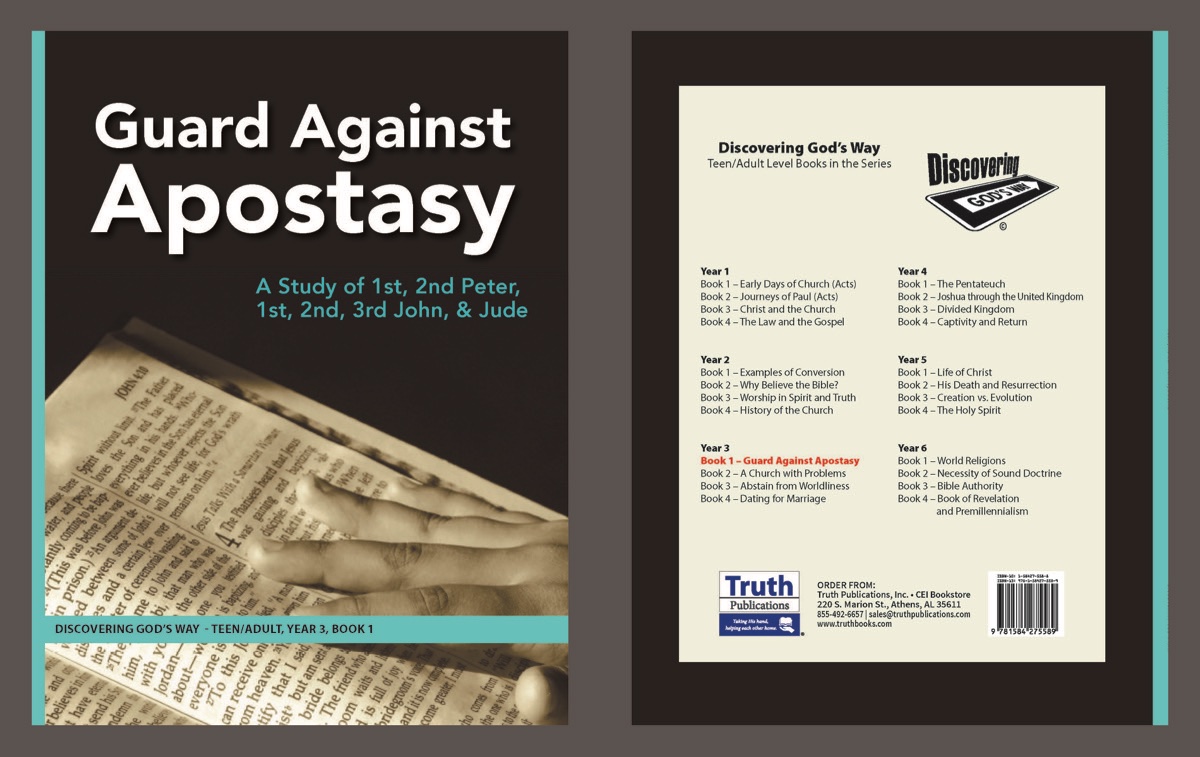


By Kyle Pope
Synopsis: Spiritual immaturity can have a profound impact on the functioning of a local congregation. Understanding some ways this can happen will not only safeguard against the problems this can cause, but it can also stir us towards maturity in our own lives.
By Kyle Pope
As God created human life, we are not born full grown. From the moment of conception, a process of growth and development starts that continues in various stages until we die. As the Holy Spirit informs us of the nature of our spiritual life in Christ, He compares it to this same process. In Christ, we are “born again” (John 3:3, 7; 1 Pet. 1:23), starting out as “newborn babes” feeding upon the milk of God’s word, we “grow thereby” (1 Pet. 2:2). Continuing this process leads to maturity in behavior and understanding (1. Cor. 2:6; 14:20; Phil. 3:15). The failure to develop leaves one “a babe” even when he ought to be “of full age” with “senses exercised to discern both good and evil” (Heb. 5:13-14, NKJV).
Our relationship with one another in the church brings people of diverse backgrounds, personalities, temperaments, and economic status together in a spiritual family because of “our common faith” (Titus 1:4). Within this assortment of individuals is a wide array of spiritual maturity. This can produce some challenges as we work together. Maturity does not always correspond to one’s age. An older Christian may have come to Christ late in life or failed to mature as the years have passed. Some younger Christians may have made devotion to Christ such a priority in their lives that their spiritual maturity surpasses the age of their bodies. We don’t wear color-coded badges that identify our maturity level, and if I am spiritually immature, I may resent being viewed that way. So, ultimately this must be something in which we individually assess our own growth, development, and maturity, recognizing that we all have work to do.
There ae many ways that spiritual immaturity can impact our work and relationships within the local church. Let’s consider a few:
If I have not grown to view the worship of God as a priority, I may allow other interests or opportunities to take me away from times of worship and Bible study. Jesus taught that His disciples should “seek first the kingdom and His righteousness” (Matt. 6:33a). If I choose a concert, a game, a movie; if I would rather relax at home, go fishing, camping, or shopping; if while on vacation I don’t seek out faithful brethren with whom to assemble and worship; if I see some times of assembly as necessary but others as optional, am I really seeking God’s kingdom “first”? Do I truly “desire the pure milk of the word” that I “may grow thereby” (1 Pet. 2:2)?
There are many responsibilities involved in work within a local church. Men are assigned to lead prayers, serve the Lord’s Supper, lead singing, and count the contribution. Teachers prepare classes and students (children and adults) are given lessons they are responsible for completing. Some clean the building, prepare the Lord’s Supper, print visitor’s cards and post them, take pictures for the directory and post or print them, order material, or make repairs around the building. Men are assigned to do sermons, special lessons, or invitations. What is my attitude toward these responsibilities? Do I treat them as important? Do I consider it an honor to fulfil them or do I neglect my responsibilities? Do I give the same diligence to carrying out these duties that I give to assignments at work, school, on my team, or to my favorite hobby? If I am immature, I may approach these things half-heartedly. I may cause other people to have to scramble at the last minute to cover my duties. I may discourage my brothers and sisters when they look around at my unfinished work or when I come unprepared for classes. The mature soul will remember Paul’s words, “whatever you do, do it heartily as to the Lord and not to men” (Col. 3:23).
The Bible does not proscribe a dress code, but it teaches principles. It teaches Christians to dress modestly (1 Tim. 2:9). It teaches that “nakedness” is to be covered with clothing that covers the upper body and thighs (Exod. 28:42; Isa. 47:2-3). It teaches that in acts of worship I should give God my best, not my leftovers (Mal. 1:6-8). How will these principles impact what I wear when I assemble with my brothers and sisters to worship? If I am immature, I might decide that since God sees me when I dress in shabby clothes, relaxing at home, it doesn’t matter how I dress when I come to worship Him. Or I might go to the other extreme and dress in clothing so expensive that I flaunt my wealth and social status. As a woman, I might wear leggings so tight that they look as if they have only been painted on my naked legs and bottom. I might wear skirts that expose my thighs, or have plunging necklines that expose my chest, back, and upper body. Do these things show reverence to God? Do these things show respect for my brothers and sisters in Christ? Will my shabby clothes discourage my brothers and sisters in Christ? Do they show that I consider worship something special? Will my immodest clothes tempt fellow Christians to lust while they are trying to worship? Will my fancy expensive clothes shame my brethren with smaller bank accounts? Paul urged the Philippians, “Let each of you look out not only for his own interests but also for the interests of others” (Phil. 2:4). Do I think about others in the clothes I wear or disregard them?
Those in the world live “in malice and envy, hateful and hating one another” (Titus 3:3b). That’s not how it should be in Christ. Jesus taught, “A new commandment I give to you, that you love one another; as I have loved you, that you also love one another. By this all will know that you are My disciples, if you have love for one another” (John 13:34-35). Our fellow Christians are not flawless. They will disappoint us. They will hurt us. They (like us) will say the wrong things, do things they regret, or things that hurt us. How will I view them? If I am immature, will I assume the worst about them? Will I hold a grudge over every slight they ever commit? Will I refuse to forgive them? Will I try to destroy their reputation with others? Perhaps if I think I am mature, and see them as immature, I will show no patience as they grow. Every misstep, naïve action, or deed they commit in ignorance, I will resent and shun them with no effort to help them grow. That’s not love, and that is not maturity.
Our tongue is a powerful tool. It can encourage, build up, and comfort, or it can slander, discourage, and cause wounds that never heal. Paul taught the Colossians, “Let your speech always be with grace, seasoned with salt, that you may know how you ought to answer each one” (Col. 4:6). If I am immature, I will give little thought to what I say. If you make me mad, I will let loose and let the words fly. Maybe I won’t use the worst curse words, but I will come the closest to them I can. It doesn’t matter if those who hear me can’t tell the difference. I will say what I want to! Paul taught, “Let no corrupt word proceed out of your mouth, but what is good for necessary edification, that it may impart grace to the hearers” (Eph. 4:29). The immature won’t be cautious in what they teach: “If it is a novel thought, I will express it.” In contrast, those who are mature will remember Paul’s charge to “hold fast the pattern of sound words” (2 Tim. 2:13a).
In Ephesians 4:11-16, Paul explained why God set different workers within the church (v. 11), “for the equipping of the saints for the work of ministry, for the edifying of the body of Christ” (v. 12). The goal of this is “the unity of the faith” unto the shaping of the “perfect” (or “mature” NASB) man in accordance with “the stature of the fullness of Christ” (v. 13, NKJV). What will this mean for my personal faith? It means we “should no longer be children, tossed to and fro and carried about with every wind of doctrine, by the trickery of men, in the cunning craftiness of deceitful plotting” (v. 14). A goal of our work together in the church is unity and soundness of faith and doctrine. If I am immature, I may be swayed by any “wind of doctrine” that comes along. The mature will “test all things, hold fast to what is good” (1 Thess. 5:21). May we no longer be children, but “grow up in all things” into Christ (v. 15).
When growth and development stops in our bodies, we know that something is wrong. If we fail to mature spiritually, we are not what God would have us to be. This can have serious consequences within the Lord’s body, the church. If we want our churches to grow, let’s make certain that each of us strives diligently to “press on” towards maturity, striving towards “that for which Christ Jesus has also laid hold of” us (Phil. 3:12).
Kyle Pope preaches for the Olsen Park church of Christ in Amarillo, TX. He has written several books published by Truth Publications, including Thinking About AD 70: Challenging Realized Eschatology. Visit here for more info. The church website is here. He can be reached here.
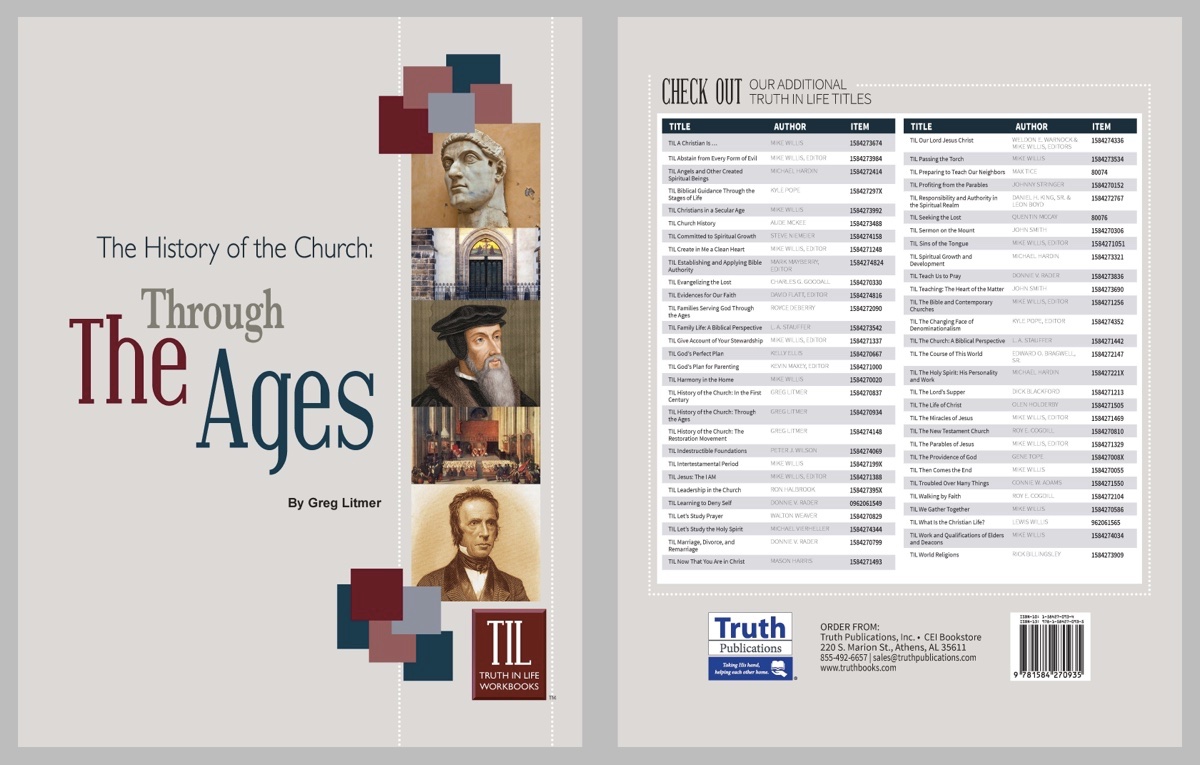


Send Updates to Mark Mayberry mark@truthpublications.com 6/1/2023
17312 Jones Rd, Athens, AL 35613
Sun. Bible Study 9:30 am | Sun. Worship: 10:20 am & 5:00 pm | Wed. Bible Study 7:00 pm
Evangelist: John Gibson | jonesroadchurch.org
514 W Market St, Athens, AL 35611
Sun. Bible Class 9:45 am | Sunday Worship 10:30 am & 5:00 pm | Wed. Bible Study 6:30 pm
Evangelist: David A. Cox | 256-232-1525 | marketstreet-church.com
24190 Wooley Springs Rd, Athens, AL 35613
Sun. Worship 9:30 am & 5:15 pm | Wed. Bible Class 7:00 pm
Evangelists: Bob Watson & Matt Taylor | mtzionchurchofchrist.org
2325 Old Columbiana Rd. (near I-65 & Hwy. 31)
Sun. Bible Study 9:00 am | Worship 10:00 am & 5:00 pm | Wed. Bible Study 7:00 pm
Evangelists: Zack Lee | 205-822-0018
19965 Sandlin Rd. Elkmont, AL 35620
Sun. Bible Class 9:30 am Worship: 10:45 am & 3:00 pm | Wed. Bible Study 7:00 pm
Evangelist: Lance R. Taylor | 256-777-0990 | sandlinroadhchurch.com
851 N. Pine St. (Located next to University campus)
Sun. Bible Study 9:30 am | Worship 10:15 am & 5:00 pm | Wed. Bible Study 7:00 pm
Evangelist: Kenny Moorer | 256-766-0403
601 Pineywood Road, Gardendale, AL, 35071 (Located 10 miles N of Birmingham)
Sun. Bible Study 9:30 am | Worship: 10:25 am & 5:00 pm | Wed. Bible Study: 7:00 pm
Evangelists: Andrew Smith & Jason Shackleford | 205-631-2131 | gardendalechurchofchrist.com
129 Hillcrest Rd, Mobile, AL 36608
Sun. Worship 9-9:30 am | Bible Study 9:30-10:30 am | Worship 10:30-11:30 am | Wed. Bible Study 7:00 pm
Evangelist: Ken Sils | 765-307-8048 | 251-342-4144 or 342-2041 | westmobilechurch.com
271 Highway 65 N, Conway, AR 72032
Sun. Bible Study 9:00 am | Worship 10:00 am & 5:00 pm | Wed. Bible Study 7:00 pm
Evangelist: Bruce Reeves | Bldg: 501-336-0052 | hwy65churchofchrist.org
2655 Prince St., Conway, AR 72034
Sun. Worship 9:00 pm | Bible class 9:50 am | Worship & Lord’s Supper: 10:40 am | Wed. Bible Class 7:00 pm
501-450-8640
2323 South 46th St.
Sun. Bible Study 9:45 am | Worship 10:30 am & 5:00 pm | Wed. Bible Study 7:00 pm
Evangelist: John Hagenbuch | Bldg: 479-782-0588 | churchofchristfortsmith.com
407 Bella Vista Dr.
Sun. Bible Study 9:30 am | Worship 10:15 am & 5:00 pm | Wed. Bible Study 7:00 pm
Evangelist: Norman E. Sewell | 870-741-9104 or 870-741-5151 | cappsroad.org
514 Airport Rd.
Sun. Bible Study 10:00 am | Worship 11:00 pm & 6:00 pm | Wed. Bible Study 7:00 pm
Evangelist: Dick Blackford | 870-933-9134
4341 S Camden Rd.
Sun. Bible Study 9:45 am | Worship 10:45 am & 5:00 pm | Wed. Bible Study 7:00 pm
Evangelist: Clarence W. Sell | 870-879-2097
145 N. Country Club Rd.
Sun. Bible Study 9:00 am | Worship 10:00 am & 6:00 pm | Wed. Bible Study 7:00 pm
Evangelist: Brenden Ashby | 520-326-3634 | churchofchristtucson.org
17903 Ibbetson Ave.
Sun. Bible Study 9:45 am | Worship 10:50 am & 6:00 pm | Wed. Bible Study 7:30 pm
562-866-5615 | roseavenue.org
3433 Studebaker Rd.
Sun. Bible Study 9:50 am | Worship 10:45 am & 5:30 pm | Wed. Bible Study 7:00 pm
JP Flores | 562-420-2363 or Mark Reeves | 562-377-1674 | justchristians.org
449 W. Allen Ave., Suite 120, San Dimas, CA 91773
Sun. Bible study 10:00 am | Worship 11:00 pm & 4:00 pm | Wed. Bible Study 7:30 pm
909-788-9978 | sandimaschurchofchrist.com
126 West Harvard St. | Suite 6
Sun. Bible Study 9:30 am | Worship 10:30 am
Evangelist: Richie Thetford | poudrevalleychurchofchrist.org
1414 Hawk Parkway, Unit C
Sun. Worship 11:00 pm | Bible Study 2 pm & 1:30 pm
970-249-8116 | sanjuanchurchofchrist.org
64 Casting Lake Rd.
Sun. Bible Study 9:00 am | Worship 10:00 am & 6:00 pm | Wed. Bible Study 7:00 pm
850-622-3817 | southwaltonchurchofchrist.com | Location change coming in 2022: 497 Church St Santa Rosa Beach, FL 32459
Ave. C & 2nd St.
Sun. Bible Study 9:30 am | Worship 10:45 am | 407-349-9998
6 Lane Dr., Mary Esther, FL 32569
Sun. Bible Study 9:30 am | Worship 10:30 am & 5:00 pm | Wed. Bible Study 7:00 pm
850-244-9222 | mecoc.org | Evangelist: Chris Simmons | chrissimmons6ten@gmail.com
3940 S. Bumby Ave.
Sun. Communion: 9:30 am | Bible Study 10:00 am | Praise & Preaching: 10:55 am (No pm Service) | Wed 7:00 pm
Evangelist: Ken Chapman
Office: 407-851-8031 | bumby.org | Note: Please call for current worship and Bible study times.
8910 Front Beach Rd.
Sun. Bible Study 10:00 am | Worship 11:00 pm & 6:00 pm | Wed. Bible Study 7:00 pm
850-234-2521
621 E. Wheeler Rd.
Sun. Bible Study 10:00 am | Worship 10:50 am & 6:00 pm | Wed. Bible Study 7:30 pm
Evangelist: Bobby Witherington | 813-684-1297 | seffnercoc.org
Route 116 (near Callaway Gardens)
Sun. Bible Study 10:00 am | Worship 11:00 pm & 6:00 pm | Wed. Bible Study 7:30 pm
Evangelist: Tommy W. Thomas | 706-628-5117 or 628-5229 | pmvchurch.com
370 N. Shilling | P.O. Box 158-83221
Sun. Bible Study 10:00 am | Worship 11:00 pm | Wed. Bible Study 7:30 pm
208-785-6168 or 681-1552
1310 N.E. 54th Ave.
Sun. Bible Study 9:30 am | Worship 10:40 am | Wed. Bible Study 7:00 pm
515-262-6799
1236 63rd St. (Dir: 1.5 miles E of I355)
Sun. Bible Study 9:00 am | Worship 9:55 am & 6:00 pm | Wed. Bible Study 7:30 pm
Evangelist: Steve Wolfgang | 630-968-0760 | dgcoc.org
796 Prairie Ave.
Glen Ellyn, IL 60137
Sun. Bible Study 9:30 am | Sun. Worship 10:30 am & 5:00 pm
Evangelist: Keith E. Brown | 630-858-2290 & 630-377-3990
1100 S. 17th St.
Sun. Bible Study 9:30 am | Worship 10:30 am & 6:00 pm | Wed. Bible Study 7:00 pm
217-234-3702
16224 S Vincennes Ave.
Sun. Bible Study 9:00 am | Worship 10:00 am & 4 pm | Wed. Bible Study 7:00 pm
Evangelist: Donald Hawkins | 708-339-1008 | southeastchurchofchrist.com
Meeting @ Sleep Inn Suites and Motel | 1101 North Cummings Lane, Washington, IL 61571
Sun. Worship: 11:30 am | Bible Study: 12:30 pm | Wed. Bible Study 6:30 pm @ home of Tim Sundlie, call for address
Evangelist: Tim Sundlie | 608-796-9028 | sunbeads1@gmail.com | tazewellcococ.org
407 W. Lewis & Clark Parkway, 47129
Sun. Bible Study 9:30 am | Worship 10:30 am & 6:00 pm | Wed. Bible Study 7:30 pm
Evangelist: Brian Anderson | 812-944-2305 or 812-948-9917 | clarksvillechurchofchrist.org
Sun. Bible Study 9:30 am | Worship 10:30 am | Wed. 7:00 pm
765-676-6404 | jamestowncoc.com
15530 Herriman Blvd, 46060
Sun. Bible Study 10:00 am | Worship 11:00 am | Wed. Bible Study 7:00 pm
Evangelist: John Smith | preacherjohn54@att.net | 317-501-8035 or 317-501-0249 or 317-701-1204
400 Lafayette Ave. | P.O. Box 34
Sun. Bible Study 9:45 am | Worship 10:30 am & 6:00 pm | Wed. 7:00 pm
812-279-4332
(First St. & Karnes Ct.)
Sun. Bible Study 9:45 am | Worship 10:30 am & 5:00 pm | Wed. Bible Study 7:00 pm
Evangelist: Jeremy Goen | 812-967-3437 or 967-3520 | pekinchurchofchrist.com
5600 SW 17th St, Topeka, KS 66604
Sun. Bible Study 9:15 am | Sun. Worship 10:30 am | Wed. Bible Study 7:00 pm
785-235-8687 or 785-273-7977 | 17thstreetchurchofchrist.org
1235 Williams St.
Sun. Worship 10:00 am | Bible Study After am Worship & 6:00 pm | Wed. Bible Study 7:00 pm
Evangelist: Jerid Gunter | 270-274-4451
8081 US Hwy 68-East, Benton, KY 42025
Sun. Bible Study 9:00 am | Worship 10:00 am | Wed. Bible Study 6:00 pm
270-354-9451 | fairdealingmarc@gmail.com | churchofchristatfairdealing.com | Conveniently located near Kenlake State Resort Park on the western shore of Kentucky Lake.
612 Broadway
Sun. Bible Study 9:45 am | Worship 10:30 am & 5:00 pm | Wed. Bible Study 6:30 pm
Evangelist: Charles J. White | 270-422-3878
107 Sunny Hill Dr.
Worship 9:30 am & 11:30 am | Bible Study 10:30 am | Wed. Bible Study 7:00 pm
Evangelist: Steve Lee | 270-789-1651 | sunnyhillcoc.com
103 N. Main St. | P.O. Box 233
Sun. Bible Study 10:00 am | Worship 10:45 am & 5:00 pm | Wed. Bible Study 7:00 pm
Evangelist: Jarrod Jacobs | 270-589-4167 or 270-274-3065
385 E. Lexington Ave.
Sun. Worship 10:00 am | Bible Study 11:15 am & 5:00 pm | Wed. Bible Study 7:00 pm
Evangelist: B.J. Sipe | 859-236-4204
18 Scott Drive, Florence, KY 41042
Sun. Worship 9:30 am & 5:30 pm | Sun. Bible Study 10:30 am | Wed. Bible Study 7:00 pm
859-371-2095 | nkcofc.com
1733 Bowling Green Rd.
Sun. Bible Study 9:00 am | Worship 10:00 am & 6:00 pm | Wed. Bible Study 7:00 pm
Evangelist: Steve Monts | 270-776-9393 | 31wchurchofchrist.com
733 Mill St. Hwy 62 E.
Sun. Bible Study 10:00 am | Worship 10:55 am & 5:00 pm | Wed. Bible Study 7:00 pm
Evangelist: Dan McMahan | 270-971-1492 | millstreetchurchofchrist.org
1803 Dixie Garden Dr.
Sun. Bible Study 9:30 am | Worship 10:30 am & 6:00 pm | Wed. Bible Study 7:00 pm
Evangelist: Michael Hardin | michaelhardin1123@att.net | 502-937 2822
3221 East Hebron Lane
Sun. Bible Study 9:00 am | Worship 10:00 am & 5 pm | Wed. Bible Study 7:30 pm
Evangelist: Danny Linden & Ron Halbrook | 502-957-5115 or 502-955-1748 | hebronlanechurchofchrist.com
405 Orice Roth Rd. | 70737 (Baton Rouge area)
Sun. Bible Class 9:30 am | Worship 10:30 am & 6:00 pm | Wed. Bible Study 7:00 pm
Evangelist: R.J. Evans | rjevans@eatel.net | 225-622-4587
12095 Texas Hwy. (Hwy. 6 W.)
12 miles west of Many
Sun. Bible Study 10:00 am | Worship 11:00 pm & 5:00 pm | Wed. Bible Study 7:00 pm
318-256-9396
856 Brighton Ave. (Breakwater School) | Leave Maine Turnpike at Exit 48
Sun. Bible Study 10:00 am | Worship 11:00 pm w/ second service immediately following am worship | Mid-week Bible Study (please call for times & places)
207-839-3075 or 839-8409
3084 Creek Drive SE, #1-C, Kentwood, MI 49512 | P.O. Box 8446, Kentwood, Mich. 49508 (Grand Rapids area)
Sun. Worship 11:00 am | Sun. Bible Study 12:30 pm | Wed. Bible Study 7:00 pm
Evangelist: Joseph Gladwell | cedarsprings98@gmail.com
414 South Main Street
Sun. Bible Study 10:00 am | Worship 11:00 am | Wed. Bible Study 6:00 pm
Evangelist: Ryan Thomas | 810-837-1302 or 989-389-3226 | northernmichiganchurchofchrist.com
301 McRaven Rd. (I20, exit 36)
Sun. Bible Study 9:00 am | Worship 10:00 am & 6:00 pm | Wed. Bible Study 7:00 pm
Evangelist: Leonard White | 601-925-9757 or 924-2645
2914 7th St.
Sun. Bible Study 9:00 am | Worship 10:00 am
2820 Grandview Ave.
Sun. Bible Study 10:00 am | Sun. Worship 11:00 pm | Wed. 6:30 pm
Ron Cooper: 601-934-3675 | roncooper@bellsouth.net
Ricky Ethridge: 601-737-5778 | rickymarsha@bellsouth.net
2110 E State Line Rd. (Exit I-55) (Memphis area)
Sun. Bible Study 9:30 am | Worship 10:30 am | Wed. Bible Study 7:00 pm
Evangelist: James A. Brown | Bldg: 662-342-1132
805 Meadow Rd, Severn, MD 21144
Sun. Bible Study 10:00 am | Sun. Worship 11:00 pm & 6:00 pm | Wed. Bible Study 7:30 pm
Evangelist: Brandon Trout | 410-969-1420 or 410-551-6549 | swcofchrist.com
422 N Linton St., Blodgett, MO 63824
Sun. Worship 10:00 am | Wed. Bible Study 7:00 pm
Evangelist: Russell Rice | 573-475-0417
4000 SW Christiansen
Sun. Worship 9:00 pm | Bible Study 10:00 am | Worship 11:00 pm | Wed. Bible Study 7:00 pm
Evangelist: Brett Hogland | 816-228-9262
432 Eagle Rock Rd.
Sun. Worship 9:30 am | Bible Study 10:30 am | Sun. Evening Worship 2 pm | Wed. Bible Study 6:00 pm
Evangelist: Philip North | 417-239-1036 | primrosenor@suddenink.net | eaglerockroadchurchofchrist.org
2912 Bloomfield Rd
Sun. Bible Study 9:15 am | Worship 10:00 am | Wed. Bible Study 7:00 pm
Seth McDonald & Jerry Lee Westbrook | 573-837-1001 | capecountycoc@gmail.com | capecountycoc.com
217 N. Orchard Blvd.
Sun. Bible Study 9:00 am & 10:00 am | Worship 11:00 pm | Wed. Bible Study 7:00 pm
Evangelist: Walter Myers | 417-830-8972 or 417-736-2663
703 Harrison St.
Sun. Bible Study 10:00 am | Worship 11:00 pm & 6:00 pm | Wed. Bible Study 7:00 pm
Evangelist: Nolan Glover | 573-888-6778 or 870-650-1648 | westsidechurchofchrist.us
685 Sidney St.
Sun. Bible Study 9:30 am | Worship 10:15 am & 5:00 pm | Wed. Bible Study 7:00 pm
Evangelist: Lynn Huggins | 573-265-8628
2727 County Line Rd.
Sun. Bible Study 9:00 am | Worship 9:50 am | Wed. Bible Study 7:00 pm
816-279-4737 | countylinechurchofchrist.com
Bell St & S 7th St. Beatrice, NE 68310
Sun. Bible Study 9:00 am | Worship 10:00 am & 6:30 pm
402-233-4102 or 402-228-3827 | churchofchrist7bell.org
5327 S. Tryon Street, Charlotte, NC 28217
Sun. Bible Study 9:30 am | Sun. Worship 10:30 am | Wed. Bible Study 7:30 pm
704-525-5655 | charlottechurchofchrist.org
3781 East Highway 27, Iron Station, NC 28080
Sun. Bible Study: 10:00 am | Sun. Worship 11:00 am & 6:00 pm | Wed. Bible Study 7:00 pm
Evangelist: Stan Adams | 704-748-9777 (Bldg) & 704-748-3747 (Jerry) | lincolnncchurch@gmail.com | lincolncoc.com
1031 Welford Dr, Beavercreek, OH 45434 (located a few miles E of Dayton)
Sun. Short Worship: 9:30 am | Bible Study 10:05 am | Sun. Worship 11:00 am | Wed. Bible Study Adults: 1:00 pm & All ages: 7:00 pm
Evangelist: Heath Rogers | 937-426-1422 | knollwoodchurch.org
28 W. Main St., Dayton, OH 45449
Sun. Worship 9:00 pm | Bible Study 9:30 am | Worship 10:25 am | Wed. Bible Study 7:00 pm
Evangelists: Michael Grushon 937-866-5162 or Alan Beck 937-469-3311 | wc-coc.org
6417 Franklin-Lebanon Rd. Franklin, OH 45005
Sun. Bible Study 10:00 am | Worship 10:45 am | Tues. Bible Study 6:30 pm
Evangelist: Josh Lee | 937-789-8055 or 937-746-1249 | franklin-church.org
687 Mansfield-Lucas Rd. Mansfield, OH 44907
Sun. Bible Study 10:00 am | Worship 10:45 am | Wed. Bible Study 4:30 pm
James Bond: 419-564-3878 | Mr. Kim Walton: 419-651-3488 | Bldg: 419-522-8982 | northsidecofc.us
1973 W Main St. New Lebanon, OH 45345
Sun. Bible Study 9:30 am | Worship 10:30 am, & 5:00 pm | Wed. Bible Study 7:00 pm
Evangelist: Bruce Hastings | 937-687-7150 or 937-478-0367
80 Sandhill Rd. Reno, OH 45773
Sun. Bible Study 9:30 am | Worship 10:30 am & 6:30 pm | Wed. Bible Study 7:00 pm
Evangelist: Mark Childers | 304-615-1091 | 740-374-9827 | mariettarenochurchofchrist.org
4110 Frey Rd., Northwood, OH 43619 (Toledo Area)
Sun. Bible Study 10:00 am | Worship 11:00 pm & 6:00 pm | Wed. Bible Study 7:00 pm
Evangelist: Donald Jarabek | 419-893-3566 & 567-694-5062
33226 Children’s Home Rd., Pomeroy, OH 45769
Sun Worship 10:00 am & 5 pm | Bible Study 11:00 am | Wed. Bible Study 6:00 pm
Jack Hunt | wmhunt55@gmail.com | 740-645-4612 | Find us on Facebook!
2120 No. A St.
Sun. Bible Study 9:45 am | Worship 10:45 am & 5:30 pm | Wed. Bible Study 7:00 pm
Evangelist: Rob Lungstrum | 918-931-1362 or 918-423-3445
4110 NE 122nd Ave #101, Portland, OR 97230
Sun. Bible Study 10:00 am | Worship 11:00 am | Thur. Bible Study 7:00 pm
Evangelist: Samuel A. Matthews | 971-331-2838 | Bldg: 503-432-8697 | samatm@comcast.net | libertynwchurchofchrist.org
3702 E. Long St.
Sun. Bible Study 10:00 am | Worship 11:00 pm & 7:00 pm | Wed. Bible Study 7:30 pm
Bldg: 541-367-1599
7222 Germantown Ave, Philadelphia, PA 19119
Sun. Bible Study 10:15 am | Sun. Worship: 11:15 am | Tues. Bible Study: 7:00 pm
Evangelist: James H. Baker, Jr. | 215-248-2026 | mtairychurchofchrist.org
3370 Broad St. Extension
Sun. Bible Study 9:30 am | Worship 10:30 am & 5:30 pm | Wed. Bible Study 7:00 pm
Evangelist: A.A. Granke, Jr. | 803-499-6023
4013 Edmund Hwy. (Hwy. 302)
Note: See our web site for current assembly schedule.
Evangelist: Terry W. Benton | 803-834-6978 | airport-church-of-christ.com
417 Mooresville Pike | (Located .8 mi. N. of Hwy. 50/Jas. Campbell)
Sun. Bible Study 9:30 am | Worship 10:30 am & 3:30 pm | Wed. Bible Study 7:00 pm
931-388-5828 or 931-381-7898 | mooresvillepikecoc.com
4894 Hooper Hwy. | 37722 | (Located 15 mi. E. of Gatlinburg on Hwy. 321)
Sun. Bible Study 10am | Worship 11:00 pm & 5:00 pm | Wed. Bible Study 6:00 pm
Evangelist: Olie Williamson | 423-487-5540 or 423-748-0844
350 North Main St.
Sun. Bible Study 9:00 am | Worship 10:00 am & 5:00 pm | Wed. Bible Study 7:00 pm
Evangelist: Steve Walker | kscoc.com
108 Locust St.
Sun. Bible Study 9:30 am | Worship 10:30 am & 5:00 pm | Wed. Bible Study 7:00 pm
Evangelist: Daniel H. King, Sr. | 931-379-3704 or 931-964-3924 | lscoc.com
1110 Cason Lane
Sun. Bible Study 9:00 am | Worship 10:00 am & 5:00 pm | Wed. Bible Study 7:00 pm
Bldg: 615-896-0090 | casonlanechurch.org
2091 Pitts Ln, Murfreesboro, TN 37130 (located at the corner of Northfield Blvd and Pitts Lane)
Sun. Bible Study 9:30 am | Sun. Worship 10:30 am & 6:00 pm | Wed. Bible Study 7:00 pm
Evangelist: David Bunting | 615-893-1200 | GodsRedeemed.org
7471 Charlotte Pike
Sun. Bible Study 9:00 am | Worship 10:00 am & 5:00 pm | Wed. Bible Study 7:00 pm
Evangelist: Lee Wildman | 615-952-5458 or 615-356-7318
423 Donelson Pike
Sun. Bible Study 9:00 am | Worship 9:55 am & 6:00 pm | Wed. Bible Study 7:00 pm
Evangelist: Johnny Felker | 615-883-3118 | perryheights.faithweb.com
1414 W. Exchange Pkwy
Sun. Bible Study 9:00 am | Worship 10:00 am & 5:00 pm | Wed. Bible Study 7:00 pm
Evangelist: Jerry King 214-504-0443 or 972-727-5355 | twincreekscoc.com
E. Service Rd. off I-35, N. of Alvarado
Sun. Bible Study 10:00 am | Worship 11:00 pm & 6:00 pm | Wed. Bible Study 7:00 pm
817-295-7277 or 790-7253
605 E. Adoue St., Alvin, TX 77511
Sun. Bible Study 9:30 am | Worship 10:30 am & 5:00 pm | Wed. Bible Study 7:30 pm
Evangelist: Mark Mayberry | mark@ascoc.org | ascoc.org
701 North Pruett St.
Sun. Bible Study 9:45 am | Worship 10:40 am & 6:30 pm | Wed. Bible Study 7:00 pm
Bldg: 281-422-5926 | Weldon: 713-818-1321 | biblework.com
3060 Dowlen Rd.
Sun. Bible Study 9:30 am | Worship 10:30 am & 6:00 pm | Wed. Bible Study 7:00 pm
Evangelist: Max Dawson | 409-866-1996 | dowlenroad.com
2919 Main St/FM 517 E., Dickinson, TX 77539
Sun. Bible Study 10:00 am | Sunday Worship 11:00 am & 6:00 pm | Wed. Bible Study 7:00 pm
713-298-6673
301 Robison St.
Sun. Bible Study 9:30 am | Worship 10:30 am & 6:00 pm | Wed. Bible Study 7:00 pm
Evangelist: Phillip Stuckey | 361-782-5506 or 361-782-2844 | ednachurchofchrist.org
3277 Pendleton Rd.
Sun. Bible Study 9:30 am | Worship 10:30 am & 5:00 pm | Wed. Bible Study 7:00 pm
915-855-1524
4303 18th St, Bacliff, TX 77518
Sun. Bible Study 9:00 am | Sun. Worship 10:00 am & 6:00 pm | Wed. Bible Study 7:00 pm
Evangelist: Richard Lay | bacliffchurchofchrist.org
6110 White Settlement Rd. 76114
Sun. Bible Study 9:30 am | Worship 10:30 am & 6:00 pm | Wed. Bible Study 7:30 pm
817-738-7269
Old Granbury Rd Church of Christ
4313 Old Granbury Rd, Granbury, TX 76049
Sun. Bible Study 9:30 am | Sun. Worship 10:30 am & 6:00 pm | Wed. Bible Study 7:00 pm
Evangelist: Chip Foster | 817-913-4209 or 817-279-3351 | oldgranburyrdchurch.org
2510 Fry Rd, Houston, TX 77084
Sun. Bible Study 9:45 am | Worship 10:30 am & 6:00 pm | Wed. Bible Study 7:00 pm
Evangelist: David Flatt | fryroad.org | church@fryroad.org
2320 Imperial Dr. (Located close to DFW Airport)
Sun. Bible Study 9:00 am | Worship 9:50 am & 6:00 pm | Wed. Bible Study 7:30 pm
Evangelist: Mark Roberts | 972-986-9131 | justchristians.com
6111 Indiana Ave, Lubbock, TX 79413
Sun. Bible Study 10:00 am | Sun. Worship 9:00 am & 11:00 pm | Wed. Bible Study 7:00 pm
806-795-3377 | lubbockchurch.com
1820 Mansfield Webb Rd, Mansfield, TX 76063
Sun. Bible Study 9:30 am | Sun. Worship: 10:20 am & 5:00 pm | Wed. Bible Study 5:30 pm.
Evangelist: Tom Roberts | 817-996-3926 | northsidecofc.us
612 S Shawnee St, Nacogdoches, TX 75961
Sun. Bible Study 9:45 am | Worship 10:30 am & 6:00 | Wed. Bible Study 6:00 pm
Minister: Van Dennis | 936-615-2950
3831 N.E. Stallings Dr.
Sun. Bible Study 9:30 am | Worship 10:20 am & 6:00 pm | Wed. Bible Study 7:00 pm
Evangelists: Randy Harshbarger & Jay Taylor
268 Utopia Ave. (Dir: I-37 S.E. Exit Pecan Valley)
Sun. Bible Study 9:30 am | Worship 10:30 am & 5:00 pm | Wed. Bible Study 7:00 pm
Evangelist: Jesse Garcia | 210-660 0409 | pecanvalleychurchofchrist.org
314 N. Tolbert
Sun. Bible Study 9:30 am | Worship 10:30 am & 5:00 pm | Wed. Bible Study 7:00 pm
Evangelist: Ronald Stringer
4404 Twin City Blvd.
Sun. Bible Study 9:30 am | Worship 10:30 am & 6:00 pm | Wed. Bible Study 7:30 pm
Evangelist: Jason Garcia (yourfriendjgar@gmail.com) or (leonvalleychurch@gmail.com) | 254-939-0682 | leonvalleychurch.org
2301 Franklin Dr.
Sun. Bible Study 9:30 am | Worship 10:15 am | Wed. Bible Study 7:00 pm
Evangelist: Bryan Garlock | 870-772-0746 | txkchurch.com
340 E Warren St. (in Hewitt, a suburb of Waco)
Sun. Bible Class 9:30 am | Worship 10:30 am & 5:00 pm | Wed. Bible Study 7:00 pm
Evangelist: Marc Smith | 254-292-2482 or 652-7698
Meeting in the Capital City Grange Hall, 6612 Route 12 Berlin, VT 05602
Sun. Bible Study 9:00 am | Worship 10 am | Tues. Evening in Homes
Evangelist: Open | montpelierchurchofchrist.com | P.O. Box 70, Williamstown, VT 05679 | For questions or directions: Wade Holt 802-485-4311
217 Taxus St.
Sun. Bible Study 10:00 am | Worship 11:00 pm & 6:00 pm | Wed. Bible Study 7:00 pm
Evangelist: Steven Matthews | 757-436-6900 | tidewaterchurchofchrist.com
8330 Doublecreek Court, Chesterfield, VA 23832 (Located in teh Metro Area; Courthouse Rd. at Double Creek Ct. 2.2 miles S of Rt. 288)
Sun. Bible Study 9:30 am | Worship 10:30 am & 5:00 pm | Wed. Bible Study 7:00 pm
Evangalist: Nathan L. Morrison | 804-778-4717 | courthousechurchofchrist.com
1208 W. 41st St.
Sun. Bible Study 10:00 am | Worship 11:00 pm & 6:00 pm | Wed. Bible Study 7:00 pm
Evangelist: Jack Bise, Jr. | 804-233-5959
2970 Old Leaksville Rd.
Sun. Bible Study 10:00 am | Worship 11:00 pm & 5:30 pm | Wed. Bible Study 7:00 pm
276-956-6049 | churchofchristatridgeway.com
929 Indiana Ave. N.E. (5 min. from Roanoke Convention Center)
Sun. 1st Lesson 9:15 am | Bible Study 10:00 am | Worship 11:00 pm | Wed. Bible Study 7:30 pm
Evangelist: Brent Paschall | 540-344-2755 | blueridgecoc.org
5652 Haden Rd.
Sun. Bible Study 10:00 am | Worship 11:00 pm
Robert Mallard | 757-464-4574
1860 Mt. Baker Hwy.
Sun. Bible Study 9:30 am | Worship 10:30 am & 6:00 pm | Wed. Bible Study 7:00 pm
Evangelist: Joe Price | 360-752-2692 or 360-920-6965 | bibleanswer.com/mtbaker
Meeting at Gray Middle School, 6229 S. Tyler St., Tacoma, WA 98409
Note: Please see webpage for updated meeting location and times.
Sun. Bible Study 10:00 am | Worship 11:00 pm | Wed. Bible Study 7:00 pm (Online)
253-242-3098 | tacomachurch@gmail.com | tacomachurch.com
7 Old Davisson Run Rd
Sun. Worship 9:30 am
304-622-5433 | westsidechurchofchristwv.net
1929 Morgantown Ave.
Sun. Bible Study 10:00 am | Worship 10:45 am & 6:00 pm | Wed. Bible Study 7:00 pm
304-363-8696 or 304-844-2437
210 Cedar Ave, Moundsville, WV 26041
Sun. Bible Study 9:30 am | Sun. Worship 10:30 am & 6:00 pm | Wed. Bible Study 7:00 pm
Evangelist: Tony Huntsman | 304-845-4940 | cedarsower.com
803 20A Ave NE, Calgary AB T2E 1S1
Sun. Bible Study 10:00 am | Sun. Worship 11:00 am & 6:00 pm | Wed. Bible Study 7:00 pm
Evangelist: Eric Castillo | +1-403-619-1249 | churchofchristcalgary.com