By Annie Stevens
Synopsis: Writing hymns is a great way to gain a deeper connection to scripture, create songs on new topics, learn new things, build relationships, and turn personal, spiritual experience into worship.
Hymn writing is a hobby that has taught me many things and brought me much joy. I wrote my first hymn a few years ago when my dad taught my Bible class how to write lyrics. Then last summer, I joined a workshop he held for young hymn writers, where he taught all of us how to create lyrics and improve them each week. I am currently participating in the workshop again this year and hope to write many more songs in my lifetime. Writing hymn lyrics has spiritual benefits, is a wonderful way to express spiritual ideas, and is an opportunity to build relationships with other Christians.
In the Young Writers’ workshop this year, we talked about why each of us wanted to write a hymn. The reason was different for everyone. One reason mentioned was the desire to be continually thinking about spiritual things, and another reason was wanting to spend more time in Scripture. Hymn writing is a great opportunity to gain a deeper connection to God’s word. After spending months contemplating how to write a song about one particular passage, that passage is engraved on your heart and hard to forget. Another reason to write hymns is that you can write them exactly how you want. I love making each part of the song something that is powerful and significant to me personally. Finally, one of the most fascinating reasons to write songs is that there are many topics, passages, and unique points of view that have no songs written about them, yet. It is thrilling to consider the idea of filling that void.
Hymn writing can seem scary without knowing where to start. The basic writing process that I have learned is to choose a topic, study it, and then determine how to write about it in the most powerful and effective way. In the class and workshops that I have attended, the first few weeks were about picking the topic and studying to find relevant Scriptures. Finding passages about my topic is extremely helpful to me because I can fill my song with words and phrases pulled from Scripture instead of only thinking of my own. Studying the Scriptures is also essential in making sure the words of the song are true; writing a song is like creating a sermon that will be preached repeatedly, so it is important for the message to be accurate. After studying and constructing a more specific plan for the hymns, we each made multiple outlines of our songs, each one more detailed than the last. We went from outlining the general idea of each verse of the song to eventually determining every word to use. Finally, we fit the lyrics with rhythm and rhyme. Describing the process seems simple, but in actual writing, it often takes frustrating effort and pain to make a song the best it can be. During one of the workshop meetings last summer, my friend zealously said, “I’m gonna go home, and I’m gonna be nitpicky, and I’m gonna get mad at my song.” Finding and fixing blemishes in a song can be brutal. Thankfully, the pain is worth it. Every weak line or verse cut out and replaced makes the song better. It is satisfying to see the lyrics slowly gain more purpose and impact.
Writing hymns has given me a new way of looking at spiritual things. Since I have started song writing, I have noticed inspiration around me for future songs. The ideas come from a variety of places. I keep a paper stashed in the back of my Bible where I jot down potential song topics or content for songs I am currently writing. The page is full of inspiration from sermons, phrases from Scripture, and new ideas I hear in Bible discussions. I enjoy finding and collecting potential hymns.
Something else I have noticed after learning how to write songs is the new point of view I have regarding other people’s hymns. When I have spent hours trying to use Scripture references well and use good rhymes for my songs, I have far more appreciation for songwriters who can do all of it successfully. I love the feeling as I am singing a hymn when I realize the author perfectly used a phrase straight from Scripture or chose the strongest rhyme in existence. When that happens, it gives me chills.
In the workshop last year, I loved writing hymns with other young people. Because we worked together on writing, I learned the story behind their songs, the work that went into each verse, and the reason why each part was written a certain way. Being part of the creation of someone else’s song is special; I have a particular connection to those hymns because I know who wrote it and how. We gave each other content for our songs, thinking of useful passages and sharing powerful words to include in the lyrics. Working together each week was fun and strengthened our friendships as well as our songs.
I am also very thankful for the help my dad has given me with my songs. Being able to get help from an experienced hymn writer is a great blessing. It is hard to see the issues in my own hymns, and when I do recognize a problem, I often do not know how to fix it. He can see the weaknesses in my hymns more clearly than I can and offers solutions when I feel stuck. For me, hymn writing is more enjoyable and successful when others contribute to the process.
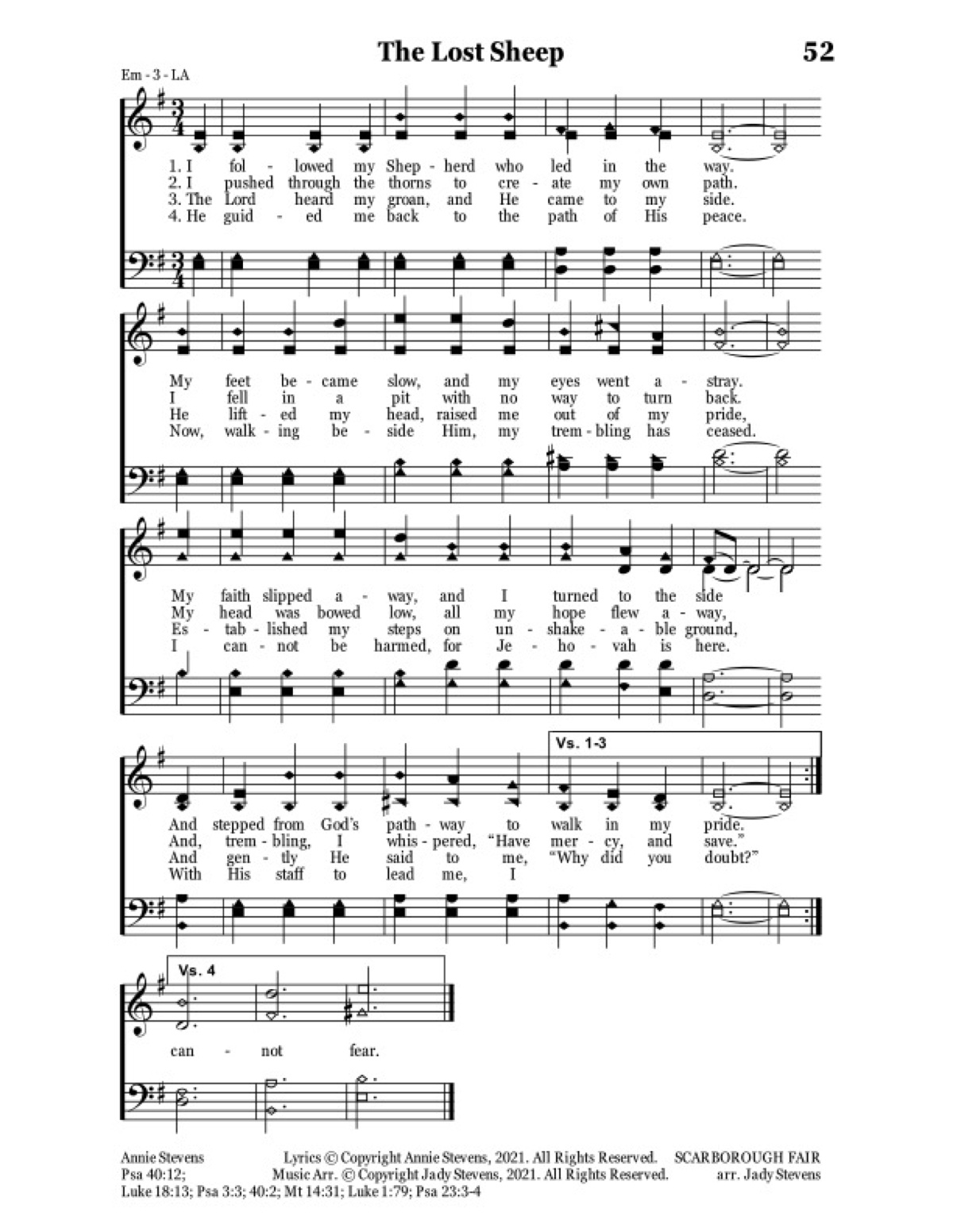
So far, I have finished writing two hymns. The first, called “The Lost Sheep,” was for the song writing Bible class. This song, written about important spiritual events in my life, is about God rescuing a wandering sheep that is incapable of saving itself. My second song, titled “Come and Tell Me of Heaven,” was for the workshop last year. One night earlier that summer, some friends and I started talking about heaven—all that we were looking forward to and how amazing heaven would be. I wanted to remember to always look forward to heaven, so I wrote the hymn as a reminder. Hymn writing is a good way to capture spiritual stories from your life and to remind yourself of what you learned.
I am currently writing a hymn about 2 Kings 6:8-23. In that passage, the king of Syria sent an army to surround the city where Elisha was. Elisha’s servant saw the army and was terrified, but Elisha assured him, “Do not fear, for those who are with us are more than those who are with them.” God opened the servant’s eyes to see His army surrounding Elisha, then struck the Syrians with blindness, and Elisha led them to the king of Israel, who sent them back to their master. I love this story because God revealed the unseen power of His army to Elisha’s servant; the story fills me with zeal, and I love being able to write a song about it. It is wonderful to be able to take an amazing event from the Bible and turn it into a hymn.
Writing hymns is a great way to gain a deeper connection to Scripture, create songs on new topics, learn new things, build relationships, and turn personal, spiritual experience into worship. I hope that anyone who wants to write hymns will go for it. You do not have to write multiple hymns, or even a long hymn. I hope you will try it and feel the joy of turning experience and Scripture into a song of worship for God.
The Lost Sheep: https://www.youtube.com/watch?v=h6DzioXu3Fs
Come and Tell Me of Heaven: https://www.youtube.com/watch?v=qO_eX9DhYTI
Annie Stevens has been a member of the Benchley church of Christ in Benchley, TX, all her life. She is a student at Stevens Academy. She can be reached at the YouTube links provided above.