
By Trent and Rebekah Dutton
Synopsis: Despite claims to the contrary, similarities between the Bible and contemporary texts are not evidence of borrowing.
One of the most common and tiresome headlines you will see about archaeological discoveries related to the Bible is that someone has translated an ancient text that is similar to the Biblical narrative and the researcher explains that the Biblical author borrowed that idea. This is especially common with “law” texts like Hammurabi’s Code.
The reality is that one would expect similarities between ancient texts and the Biblical text. Why? Because the Bible claims to be situated at a specific point in history. The individuals in the Biblical narrative would therefore be expected to have the same general knowledge base as the people in the world around them, have comparable expectations of what is moral and ethical, as well as the same vices. This is why ancient law codes bear a similarity to the law of Moses. One would expect the laws of the United States and laws of the United Kingdom to bear some similarities, since we have similar cultures. You would also expect them to be ultimately different because our country was born from a desire to not share the inherent problems we saw in the United Kingdom. The Law of Moses is profoundly different from its peers, because God’s intention was to guide humanity back to His presence, not perpetuate the cruelties and injustices of a human-run world.
Some laws are naturally comparable—such as the lex talionis (law of retribution in kind) of Exodus 21:21-36. These laws find parallels in each known law code of the ancient Near East and walk the reader through the consequences for both deliberate as well as accidental injuries against others.
The law that we will use as our primary example is pertinent to many aspects of Christianity in today’s socio-political climate, but we will focus only on how it differs from its contemporary laws. That is the law of Exodus 21:22-25. A close translation of the text reads thus:
And if men struggle with each other, and they strike a woman with child, and she gives birth prematurely, but no fatal injury follows, he will be fined according to [the penalty] the husband of the woman lays upon him, and he will give according to the estimate. Yet if a fatal injury follows, then he will certainly give life for life, eye for eye, tooth for tooth, hand for hand, foot for foot, burn for burn, wound for wound, stripe for stripe.
This law describes a fight between men that results in a pregnant woman receiving such a blow that she goes into premature labor. Studies of the theological trajectory of this law show that the Hebrews understood “no fatal injury” to mean that both mother and infant survive the event. Should either die as a result, the lex talionis judgment is applied against the perpetrator. The difference between the law encompassed within these four verses can quickly be seen in the following passages.
M50 of Hammurabi’s law states:
If a man has struck a free woman with child, and has caused her to miscarry, he shall pay ten shekels for her miscarriage.
If that woman die, his daughter shall be killed.
If it be the daughter of a plebeian, that has miscarried through his blows, he shall pay five shekels of silver.
If that woman die, he shall pay half a mina of silver.
If he has struck a man’s maid and caused her to miscarry, he shall pay two shekels of silver.
If that woman die, he shall pay one-third of a mina of silver.
The Middle Assyrian codes reads thus:
If a man strike the daughter of a [free] man and cause her to drop what is in her, they shall prosecute him, they shall convict him, two talents and thirty minas of lead shall he pay, fifty blows they shall inflict on him, one month shall he toil.
Finally, the Hittite law code stipulates:
If anyone cause a free woman to miscarry, if it be the tenth month, he shall give ten half-shekels of silver, if it be the fifth month, he shall give five half-shekels of silver.
If anyone cause a female slave to miscarry, if it be the tenth month, he shall give five half-shekels of silver.
These laws reveal the contemporary cognitive environment of the Mosaic laws, that inadvertently or deliberately injuring a woman so badly that she goes into labor is considered “bad.” Across these extra-Biblical laws, though, one can see the common understanding that the death of the infant was a crime that a fine could make right. However, the death of the mother only carried the lex talionis clause if she were of the upper class—and even then, the perpetrator, presumed to be a man, is not himself killed. His daughter must suffer for the crimes of her father. Otherwise, a woman’s loss also required another heavy fine to pay the bride price for her replacement. In contrast, the law we argue is divinely inspired not only recognizes the value of all lives involved in the altercation, but also does not distinguish between social classes. Under the Mosaic Law, a pregnant slave’s life holds the same value as a pregnant noblewoman. These regulations, as all the legal corpus of the ancient world, illustrate the striking differences between the nations and God’s people, whose law only distinguishes between classes in order to ensure that all receive justice.
Trent and Rebekah Dutton both hold Master’s degrees in Biblical Archaeology from Wheaton College, in the Chicago, IL, area. They have participated in four full excavation seasons with The Leon Levy Expedition to Ashkelon, two seasons at Tel Shimron in the Jezreel Valley, and one season at Tel Burna in the Shephelah. They are members of the Eastside church of Christ in Athens, AL. They can be reached at trentdutton@gmail.com.

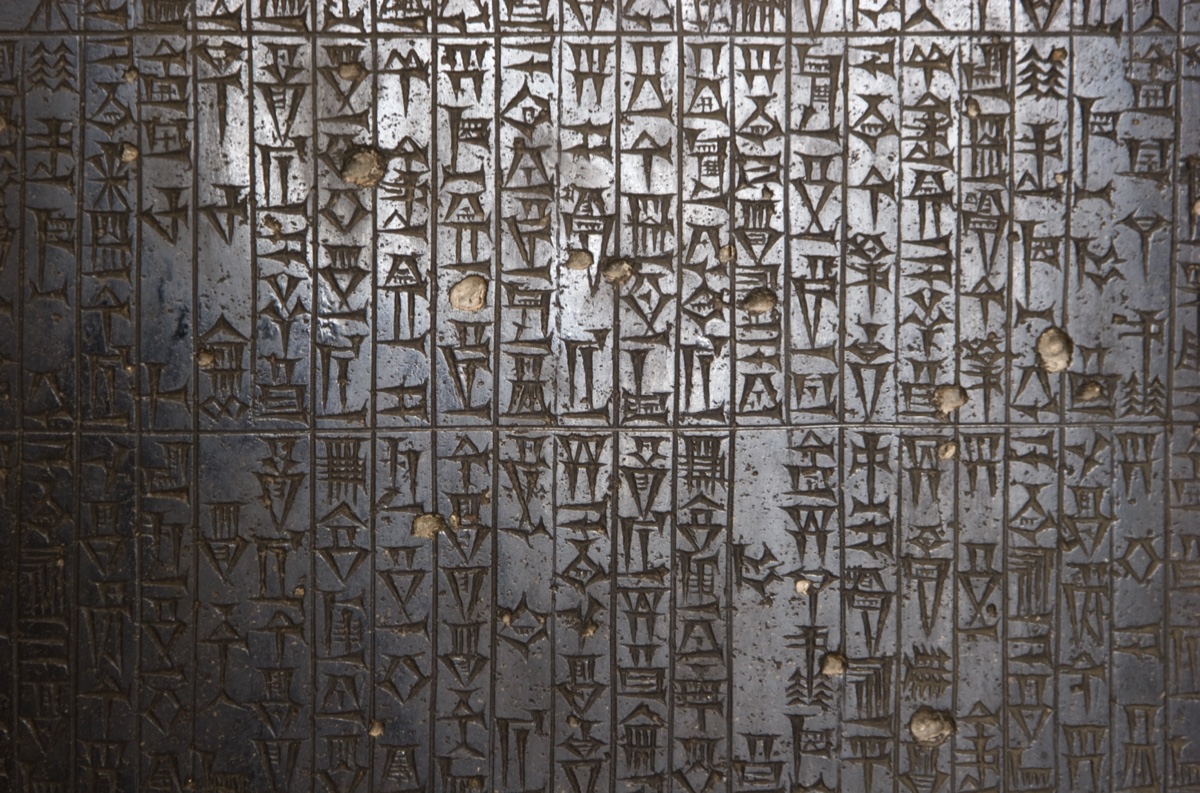
Image-2 Caption: A close-up of the Code of Hammurabi.
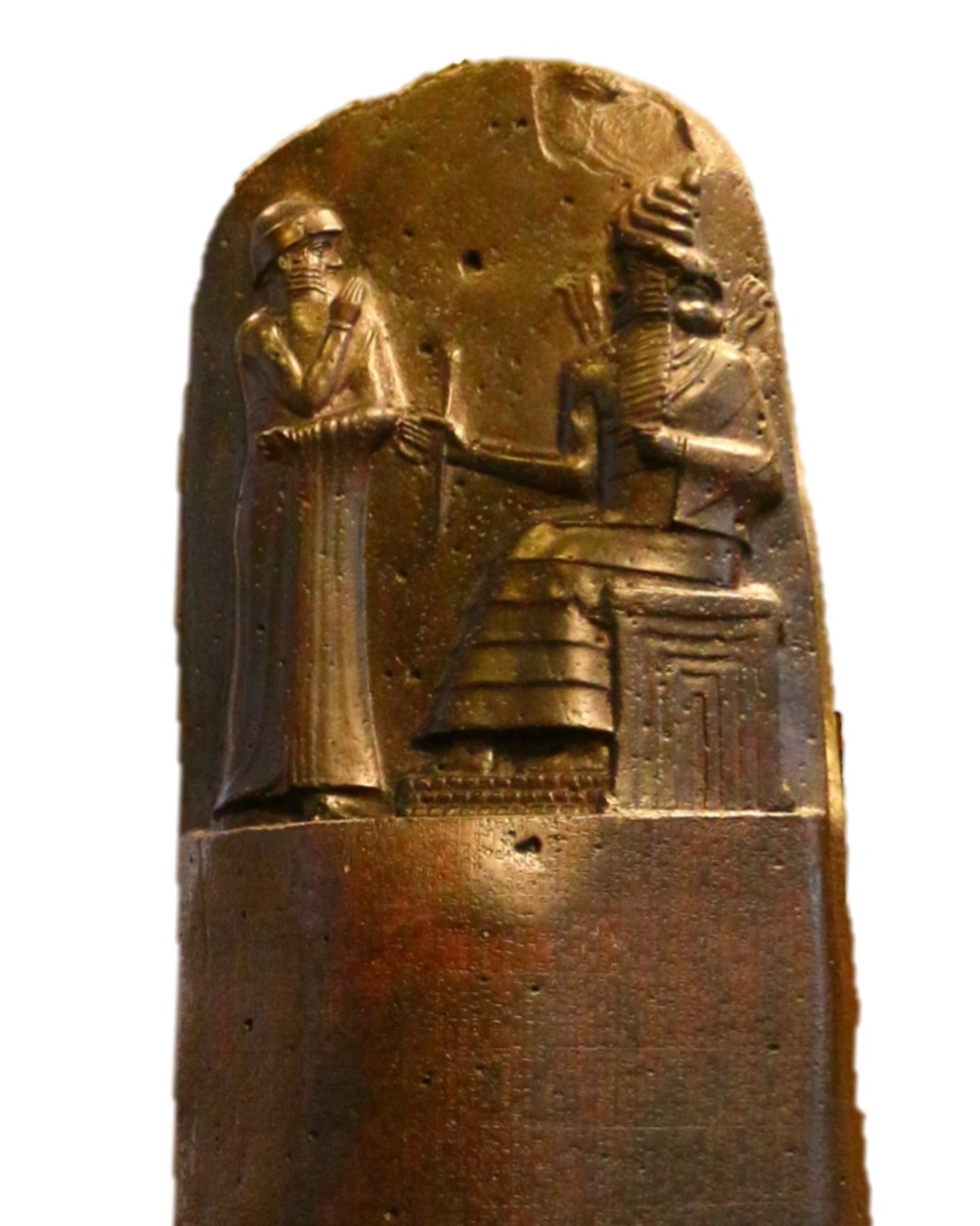
Image-3 Caption: A replica of the Hammurabi Stela from the Oriental Institute in Chicago, IL.
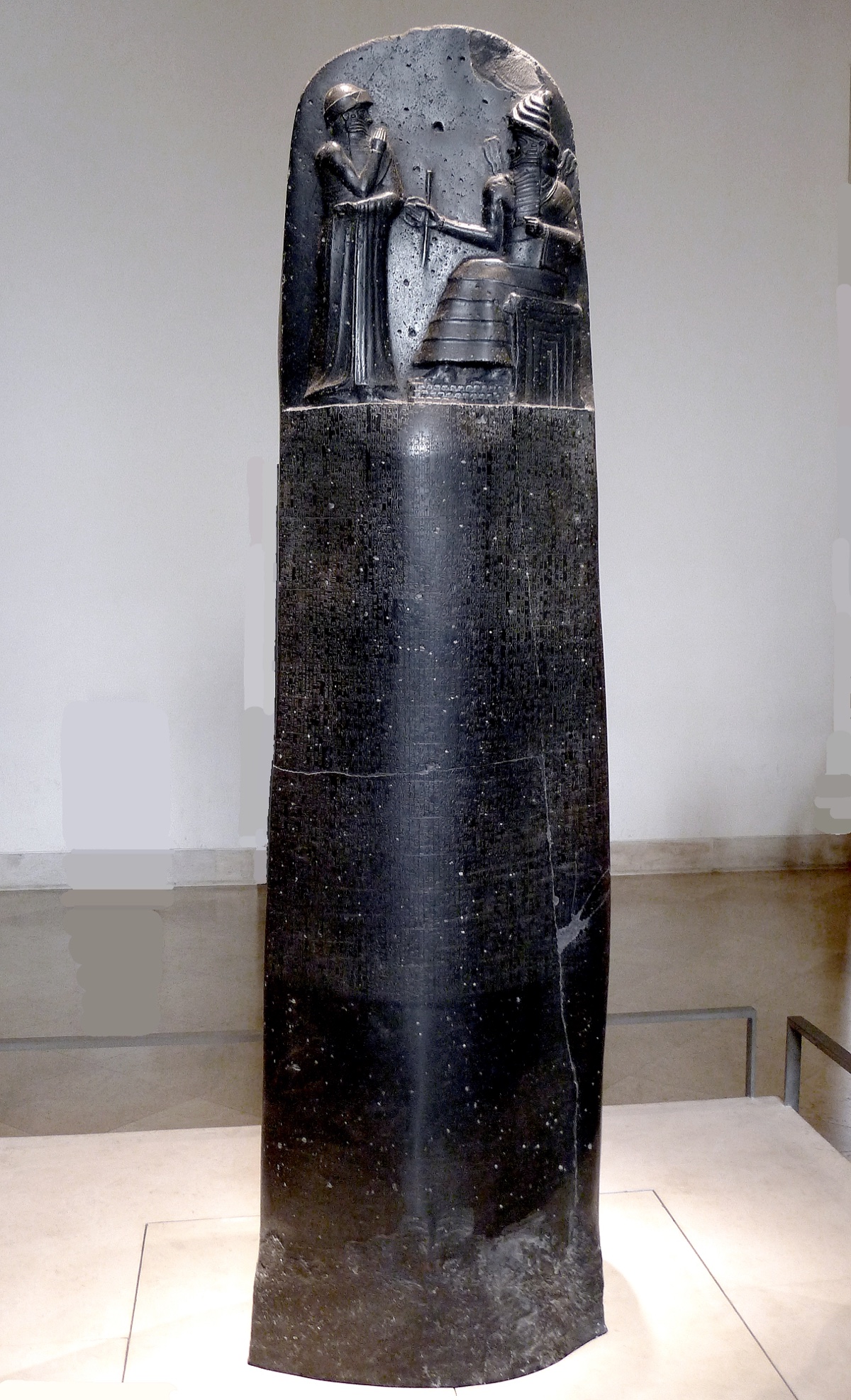
Image-4 Caption: The Hammurabi Stela from the the Louvre in Paris, France.
Hammurabi, CC BY 3.0