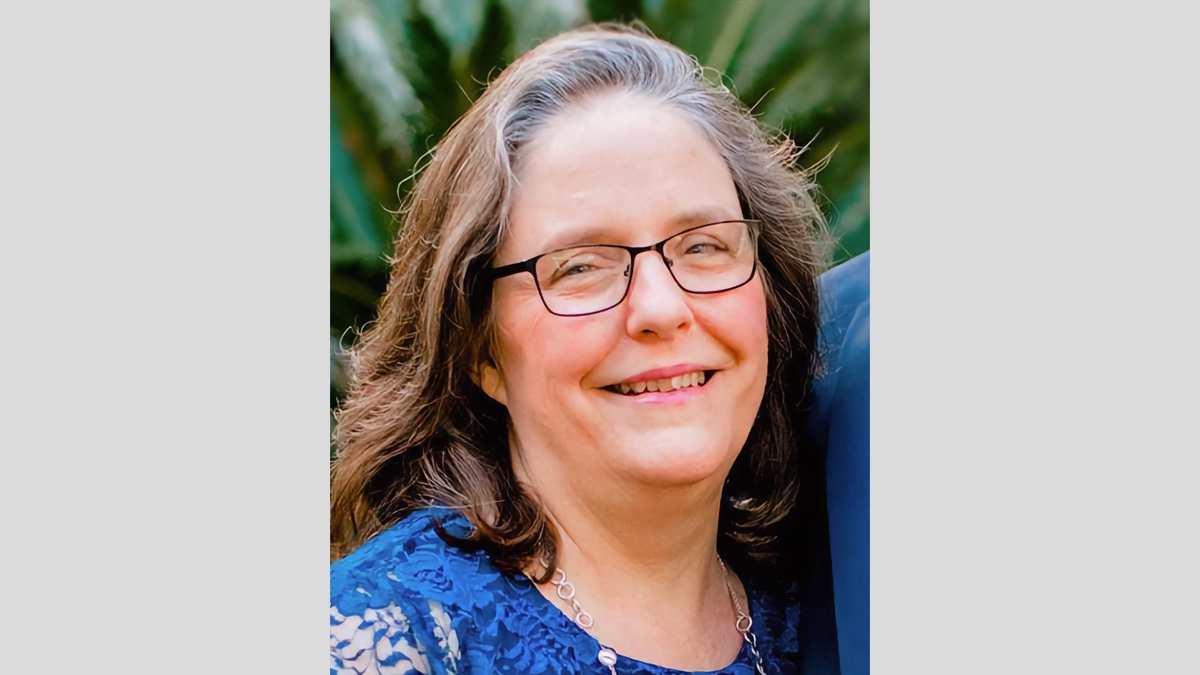
By Diana Dow
Synopsis: Science is the study of God’s creation. In reference to his work in astronomy, the German scientist Johannes Kepler (1571-1630) reportedly said, “I was merely thinking God’s thoughts after Him.”
“Houston, we have a problem.” Words that take us back to 1970 and the ill-fated Apollo 13 mission. What followed was a beautiful display of scientists doing that for which they had prepared their whole lives. They had studied mathematics, biology, chemistry, physics, and astronomy for years. Now they were putting their understanding of these sciences into practice under extremely stressful circumstances to bring the Apollo 13 astronauts and their crippled spacecraft safely back home.
For some of us, the sciences these men and women studied are quite intimidating. “But I can’t teach Calculus!” is the cry of many overwhelmed parents as they contemplate what lies ahead in home schooling their child. Thankfully, we need not reinvent the wheel. There have been many before us who thoroughly enjoy these subjects and happily break it all down into words that the average person can understand. I hesitate to use the word curriculum to describe what these science-loving people have produced because, while there are some good textbooks out there, we are not limited to a textbook. These amazing people have produced a plethora of books, videos, co-op classes, and online courses to help hesitant parents.
Thankfully, unless you have a genius child on your hands, no one is expecting you to jump in there and teach rocket science to your 8-year-old. Early science studies are not complex. They all begin with the basic concepts and become more challenging as the student progresses. The study of mathematics does not start with calculus. It starts with number recognition, counting, sorting, and simple arithmetic. These are all things we do every day. Biology is just a fancy word for the study of life. More specifically, the study of living organisms. You know, plants and animals. This study begins in your own backyard. Take your kids outside. Teach them to observe what they see. Talk about the parts of a flower and draw pictures. Look up what kind of plant it is. Watch a video showing its life cycle. Start a nature notebook to keep their observations and drawings in. All the sciences should initially be studied this way. Observe, discuss, draw pictures, seek further information from experts in the field.
These early studies will hopefully instill a curiosity in your child that will bring excitement to learn more. For some children, all that is needed is a little encouragement from a parent guiding them to reliable sources to find answers to their questions and they will teach themselves. Other children are not so easily inspired by the sciences. They need a little more structure and consistency to reach the level of knowledge and understanding that is necessary to succeed in our world.
Whichever child you are blessed with, eventually you will want to find a study program, curriculum, or class that will teach the sciences on a deeper level. Be careful here. There is a lot of choices available. Some will align themselves with those who use science to “disprove” that God exists. That has always baffled me. Science is a study of how things work, where things came from, and when things got here. Science is the study of creation—God’s creation. Claiming to ask sincere questions and to seek sincere answers, yet refusing to go down a path that leads directly to the Creator is dishonest. Yet, many of the science books available today do just that. Do your research when looking for resources. Look past the beautiful pictures, elegantly designed layout, and impressive reviews. Open the book and see what it says for yourself.
Mathematics is a little different from other subjects. It needs to be learned sequentially. Each step building on the previous. For this reason, it is important to find a program that you feel comfortable with and stick with it. Math textbooks are written in a sequential manner, but not all math textbooks follow the same sequence. Jumping from one to another may mean the child has missed important skills, which leads to frustration. It frequently happens when a child switches from a public/private school to schooling at home. To avoid this, many textbook companies offer placement tests. Take advantage of them. If your child needs to go back a grade level or two, do not let pride get in the way. Do what is best for your child. If the cover of the appropriate level math book has a big “Five” on it and your child’s age places him in seventh grade, put a cover on the book. Not to hide the truth from him, but to keep it from being something he is reminded of every day. The important thing is not for your child to be “at grade level” but to learn math in the least frustrating way.
Some children will soar past your wildest expectations when studying the sciences. Some will not. While it looks impressive on a transcript that a student has studied all the higher-level science courses, we need to ask ourselves what it is we are trying to accomplish: An impressive transcript, or a young adult prepared to make his way in the world? While basic knowledge and understanding of the sciences are essential, not everyone needs to study calculus or advanced chemistry. Do not get distracted by your preconceived idea of what a successful education is like. Do not become distracted by your peers who are guiding their children down a different path. Keep your child’s interests, his strengths, and his weaknesses in mind. Help him find his passion. Encourage him to dig deeper into what interests him. If science is his thing. Great! Enjoy the ride. If not, let his studies follow where his interests lead him.
The heavens declare the glory of God; and the firmament shows His handiwork. Day unto day utters speech, and night unto night reveals knowledge. There is no speech nor language where their voice is not heard (Ps. 19:1-3).
Diana Dow homeschooled her six boys for twenty-nine years. She lives in Sinton, TX, with her husband, Danny Dow, who preaches for the Borden Street church of Christ. She maintains a website about teaching Bible classes at https://www.biblesongsandmore.com and one about homeschooling and other endeavors at https://www.dandidow.com. She can be reached at dianaidow@gmail.com.