By Lindy Stevens
Synopsis: On a recent trip to Nicaragua, I learned from the brethren what it really means to lay up treasures in heaven.
This January, my father and I had the amazing opportunity to travel to Nicaragua to visit Christians there. It was a wonderful experience that opened my eyes—reminding me of how comfortable we are in the U.S., and helping to change my perspective on earthly wealth.
Nicaragua is one of five countries that make up Central America, and the way we got connected with brethren there was through Jason Stannard, a brother from the Lindale church of Christ. He had travelled there twice in past years. When he announced that he was planning another trip to Nicaragua in January, my father and I knew that this would be an experience we would not want to miss.
After our long day of travel on January 6, brother Jason, brother Statlyr (also from the Lindale church), Daddy, and I landed at the airport in Managua, the capital of Nicaragua. When we arrived, brother Edwin Palma and sister Evling and their kids, Eylin (19), and Edwin Jr. (Gabriel) (12), welcomed us with big hugs and lots of laughs. Brother Edwin Palma is a preacher at one of the churches in Managua. He has been close friends with brother Jason ever since Jason’s first trip there. That evening, we visited the Goshen church, just outside Managua, and ate supper with the brethren. Then Daddy and I stayed the night at Edwin’s mother’s house.
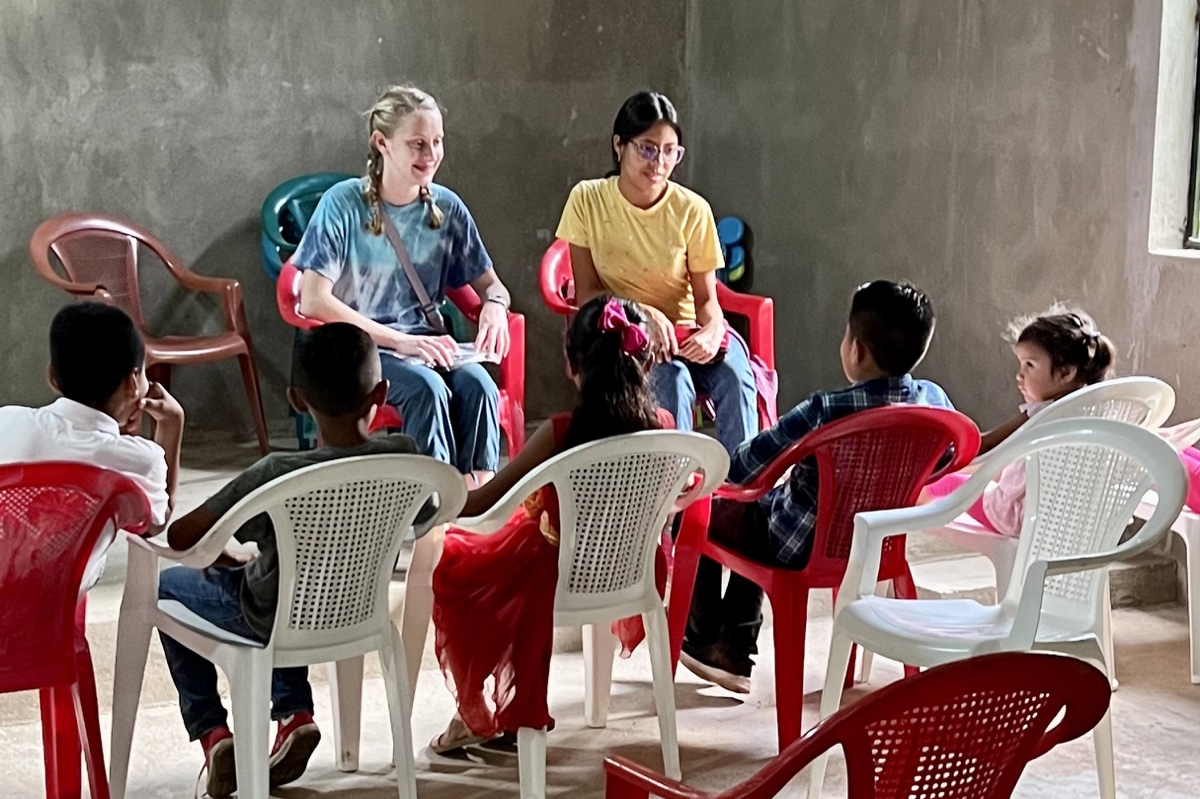
The next morning, we woke up early to begin the five-hour drive to Siuna. When we arrived, we had a short worship service with the brethren there, then we stayed the night with a family from the congregation. On Sunday morning, we worshipped again with the Siuna church, but before worship services, I had my first experience teaching a children’s Bible class in Spanish. My grandmother, who has been my Spanish teacher since I started homeschooling, made flash cards for me so that I could remember what to say for my lesson. Eylin had learned English in school, so she was able to translate for me when I needed help. I know I could not have taught the Bible class without her.
During our time in Siuna, we also had the opportunity to visit some brethren who had fallen away from the faith and encourage them to return to the Lord. We also gave money to some brethren who were struggling financially.
Over the next few days, we travelled to two or three churches every day within about a two-hour radius of Siuna. At many of the churches, Eylin and I were able to teach the children’s Bible class and give them a Spanish children’s Bible. During those few days of travelling to churches near Siuna, I celebrated my seventeenth birthday, and the family from the Siuna church that we were staying with made me a cake! It was a birthday I know I will never forget.
The next big part of our trip was travelling to Pajaratim. Pajaratim is up in the green mountains, far away from cities and paved roads. Brother Nelson, who is the preacher for the church in Pajaratim, had travelled around with us while we were staying in Siuna, and he led us on the trip to his family’s farm. Because of its location, there is no road to Pajaratim, so to get there, we had to ride mules and little mountain horses. The ride was about two hours long—taking us through mud, up steep hills, and across a river. When we arrived at brother Nelson’s house, we were sweaty and tired, but the view of the green mountain landscape was breathtaking.
In the bigger cities like Managua, people have a few more household comforts than do people in the country. Yet, even in the cities, no one has air conditioning or washers and dryers. They also do not have indoor plumbing in the country, so they collect rainwater for drinking and washing and use outhouses. Yet even with so few physical comforts out in the country, we were provided with large, delicious meals every day cooked, over a wood-burning cook setup.
That evening, we worshipped with the little church in Pajaratim, which mostly consisted of brother Nelson’s relatives who lived nearby. Eylin and I were also able to teach the children’s Bible class there. After services, we ate supper with brother Nelson’s family and all of his relatives from the church. Visiting Pajaratim was probably my favorite part of the trip.
In the morning, we rode back down the mountain and began driving back to Managua for the last few days before returning home. That evening we worshipped at the Alta Gracia church, where brother Edwin preaches, and then ate supper with some brethren. The next morning, we did a few tourist activities by visiting a nearby volcano and shopping in a couple of the markets for souvenirs. It almost felt strange to be doing tourist activities after growing so comfortable being in Nicaragua.
The next day, we went to a large grocery store to buy a lot of food that we would give to some struggling Christian families over the next couple of days. That afternoon we ate lunch with a lady who worships at Alta Gracia. We gave her some of the food we had bought to help support her family. In the evening, we visited a very sick Christian sister to encourage her—giving her some money and food as well. After that, we worshipped with the Pelota congregation, near the sick sister’s house, and ate supper with them.
On Sunday morning, we worshipped at Alta Gracia, and Eylin and I taught the children’s Bible class. Then we ate lunch with the Alta Gracia brethren before leaving to drive a couple of hours to the Puerto Sandino congregation near the coast. Eylin and I taught the children’s class for the last time at the Puerto Sandino congregation. We shared supper with the brethren there.
The next morning was one of mixed feelings. I was excited to be going home to see my family, but I had also grown very close to Eylin, and it was hard to say goodbye. On the flight home, I reflected on my experiences throughout the previous ten days. We had visited twelve congregations, and at seven of them, Eylin and I taught the children’s Bible class. We visited brethren who had fallen away and offered support to Christian families who were struggling financially. Looking back on everything I had seen and experienced, what stuck out to me the most was how selflessly giving the brethren in Nicaragua are.
In Nicaragua, no one has all the physical comforts in their lives like we have in the United States. Yet, despite having fewer physical comforts, the brethren in Nicaragua simply want to share their blessings with others. Everywhere we went, we were always well fed by brothers and sisters who opened up their homes and their kitchens to us. No one clung to the things they possessed. They held their blessings with open hands, ready to give them back to God by sharing them with others.
They know what it means to lay up treasures where moth and rust never destroy, and where thieves cannot break in and steal. Their greatest treasures are the bonds they have with their brothers and sisters in Christ. They know that their physical needs will be met by God, and that everything they have belongs to Him.
But lay up for yourselves treasures in heaven, where neither moth nor rust destroys and where thieves do not break in and steal. For where your treasure is, there your heart will be also (Matt. 6:20-21).
We are so physically blessed here in the United States, but we ought to have the same attitude as our brothers and sisters in Nicaragua. God has blessed us greatly so that we can use what we have to bless others. Let’s all strive to hold our blessings with open hands.