(June, 2023 | No. 6 | Vol. 67)
6/1/2023
Truth Magazine (ISSN 1538-0793) is published once a month by Truth Publications, Inc., 220 S. Marion, Athens, AL 35611. Postage paid at Decatur, AL, and additional mailing offices.
© 2023 Truth Publications, Inc. All Rights Reserved.
Manuscripts should be sent to the editor, Mark Mayberry, at mark@truthpublications.com. Link.
Subscriptions, renewals & other correspondence should be sent to: Truth Magazine, 220 S. Marion, Athens, AL 35611 or by emailing us at subscriptions@truthmagazine.com. Link.
Book orders should be sent to: CEI Bookstore | truthbooks.com | Street Address: 220 S. Marion, Athens, AL 35611 | Phone: (855) 492-6657 | Email: sales@truthbooks.com Link.
Online Website: truthmagazine.com
DISCLAIMER: Books in ads are screened, but an ad does not mean unqualified endorsement. All books should be tested by Scripture. We appreciate readers notifying us if they find some glaring fault in ads.
By Mark Mayberry
Synopsis: While brethren may sometimes become weary of lessons of Bible authority, they serve as an essential reminder of fundamental truths.
Ingratitude, inattentiveness, and insolence are reoccurring failures of humanity—especially among those who are young and inexperienced. Sadly, many in our present age are neither thankful nor thoughtful. We boast of our superiority to past generations, discounting their hard-won victories, denying their enduring legacy, and dreaming that we can construct a better world based upon the fiction that our ephemeral ideas are better than the real world experience of our fathers. Yet, through pride and perversity, we become forgetful—ignoring the principles that brought success to past generations, while repeating their failures, and falling into the same traps that have repeatedly ensnared God’s people when they drifted into apostasy. This was true of ancient Israel (Deut. 6:4-15). It was a threat to the first-century church (Acts 20:28-32). It remains a peril today (Heb. 2:1-4).
Recently, a relatively young preacher in a neighboring state presented a lesson at his home congregation entitled, “It’s Deeper than That,” in which he dismissed preaching on Bible authority as irrelevant and unnecessary. Remember, he labors for a non-institutional church of Christ that exists because faithful brethren in past generations courageously stood against error and fought the battle for truth. Reflecting on his experience of growing up in the Lord’s church, this young preacher said,
When I was growing up, a lot of the teaching that was being done, at that time was more about what we can’t do or shouldn’t do as far as the worship assemblies, than it was about reaching for something that we should be doing. . . A lot of the teaching was done about things that are unauthorized, things that are not allowed in worship. . . It always confused me as to why we had to have that same lesson so frequently. . . You probably remember lessons like that from when you were growing up. You probably remember Bible classes—entire quarters that were spent on talking about these kinds of things. . . You remember lessons where the word “authority” was mentioned many, many, many times. And it was dissected and things were drilled down. And you remember lessons about gopher wood, and red heifers, and strange fire. And you remember about all of those examples that we see that talk about how God views things in relation to what He said, in relation to what He hasn’t said and how He interacts with His people based on those things.
And. . .
And if you have been paying attention very long at all, you know that I have not done lessons like that. I have not done lessons where I used gopher wood as an example of God’s authority and what He has spoken. You’ve never heard me do a lesson on specific or generic authority. We’ve not had any lessons on instrumental music or how the church should spend its money. And I admit to that, that those lessons have not been taught. . . Why have we not had a lesson on instrumental music? Why have we not had a lesson on how to spend church funds? Why have we not talked about generic and specific authority? My answer to that is, “It’s a whole lot deeper than that. . .”
But. . .
Having attacked the foundation of biblical authority, this brother offered nothing of substance to take its place.
Let us distinguish between the deep things of God and the deep things of Satan. Men often exalt their own wisdom, while discounting the revelation of God’s mind that was given by the Holy Spirit. We are not left without guidance, because “the Spirit searches all things, even the depths of God. . .” (1 Cor. 2:10).
In contrast, men often rationalize false doctrine and corrupt practices: Addressing the spiritual deficiencies at Thyatira, the Lord chastised the church for tolerating a woman identified as Jezebel, “who calls herself a prophetess, and she teaches and leads My bond-servants astray so that they commit acts of immorality and eat things sacrificed to idols” (Rev. 2:20). After describing the dire consequences that would befall Jezebel and her followers, Jesus addresses the faithful remnant: “But I say to you, the rest who are in Thyatira, who do not hold this teaching, who have not known the deep things of Satan, as they call them—I place no other burden on you. Nevertheless, what you have, hold fast until I come” (Rev. 2:24-25).
So, the Bible speaks of the deep things of God and also the deep things of Satan. Pride often blinds us to its peril. As Paul said, “The word of the cross is foolishness to those who are perishing, but to us who are being saved it is the power of God” (1 Cor. 1:18). Those who pursue the path of apostasy often manifest a condescending spirit toward those who simply seek to follow God’s pattern. In the dark days preceding the Babylonian captivity, Jeremiah called Israel to return unto God: “Stand by the ways and see and ask for the ancient paths, where the good way is, and walk in it; and you will find rest for your souls.” Because they refused to listen, calamity and disaster lay ahead (Jer. 6:16-19; 18:15-17).
Thus says the LORD, “Stand by the ways and see and ask for the ancient paths, where the good way is, and walk in it; and you will find rest for your souls. But they said, ‘We will not walk in it.’ And I set watchmen over you, saying, ‘Listen to the sound of the trumpet!’ But they said, ‘We will not listen.’ Therefore hear, O nations, and know, O congregation, what is among them. Hear, O earth: behold, I am bringing disaster on this people, the fruit of their plans, because they have not listened to My words, and as for My law, they have rejected it also” (Jer. 6:16-19).
For My people have forgotten Me, they burn incense to worthless gods, and they have stumbled from their ways, from the ancient paths, to walk in bypaths, not on a highway, to make their land a desolation, an object of perpetual hissing; Everyone who passes by it will be astonished and shake his head. Like an east wind, I will scatter them before the enemy; I will show them My back and not My face in the day of their calamity (Jer. 18:15-17).
We must preach on Bible authority because God is our Creator. He is the Potter and we are the clay (Isa. 64:8). We are in no position to consider ourselves His equal or question His word or ways.
Woe to those who deeply hide their plans from the LORD, and whose deeds are done in a dark place, and they say, “Who sees us?” or “Who knows us?” You turn things around! Shall the potter be considered as equal with the clay, that what is made would say to its maker, “He did not make me;” or what is formed say to Him who formed it, “He has no understanding?” (Isa. 29:15-16).
Mortal man often manifests the defiant spirit of a rebellious teenager:
Woe to the one who quarrels with his Maker—an earthenware vessel among the vessels of earth! Will the clay say to the potter, “What are you doing?” or the thing you are making say, “He has no hands”? Woe to him who says to a father, “What are you begetting?” or to a woman, “To what are you giving birth?” (Isa. 45:9-10).
For clay to be suitable for the potter’s wheel, it must possess proper plasticity: (1) being sufficiently pliable to conform to the will of the potter, and (2) being sufficiently cohesive to maintain its shape. The same principles apply spiritually. We must conform to the image of His Son, and we must have enough internal consistency (i.e., grit) to maintain our shape when we stand on our own.
Paul said, “Thanks be to God that though you were slaves of sin, you became obedient from the heart to that form of teaching to which you were committed, and having been freed from sin, you became slaves of righteousness” (Rom. 6:17-18). The Greek word tupos, here translated “form,” suggests a model or pattern (BDAG, 1020), or a “form” or mold (Vine, 202). Thayer says it refers to “the teaching which embodies the sum and substance of religion and represents it to the mind” and further states that, in a technical sense, it refers to “the pattern in conformity to which a thing must be made” (Thayer, 632).
God is the Potter. We are the clay. We must be pliable enough to conform to His will. If viewed from another standpoint, the gospel is the mold. Like liquid clay that is poured into a mold, we must be conformed to the doctrine of Christ as revealed in the New Testament.
We must preach on Bible authority because Christ is our King. The events associated with Jesus’s triumphal entry into Jerusalem fulfilled the Messianic prophecy of Israel’s coming King:
This took place to fulfill what was spoken through the prophet: “SAY TO THE DAUGHTER OF ZION, ‘BEHOLD YOUR KING IS COMING TO YOU, GENTLE, AND MOUNTED ON A DONKEY, EVEN ON A COLT, THE FOAL OF A BEAST OF BURDEN’” (Matt. 21:4-5; cf. John 12:12-15).
The inspired apostle Paul praised the Lord Jesus Christ as “He who is the blessed and only Sovereign, the King of kings and Lord of lords, who alone possesses immortality and dwells in unapproachable light, whom no man has seen or can see. To Him be honor and eternal dominion! Amen” (1 Tim. 6:15-16). While sinful men rebel against the Lord’s anointed (cf. Ps. 2), faithful disciples respect Christ’s authority and obey Him in all things. In giving the Great Commission, Jesus said:
All authority has been given to Me in heaven and on earth. Go therefore and make disciples of all the nations, baptizing them in the name of the Father and the Son and the Holy Spirit, teaching them to observe all that I commanded you; and lo, I am with you always, even to the end of the age (Matt. 28:18-20).
Jesus possesses all authority. The apostles were commanded to go unto all the world and make disciples of all nations. A disciple is a learner (i.e., one who sits at the Master’s feet). Accepting the yoke of submission and service, he becomes an active learner. The Greek word manthanō, translated “learn,” means “to gain knowledge or skill by instruction” (BDAG, 615).
The term “mathematics” (i.e., the science of quantity; the abstract science which investigates the concepts of numerical and spatial relations) derives from this same Greek word. One does not master mathematics by simply making up their own set of subjective rules (such as asserting “two plus two equals five”) but by respecting the rules that govern this abstract science. In the same manner, there are rules that govern communication. While some may criticize the authoritative concept of “Command, Example, and Necessary Inference” (C.E.N.I.), these are the tools of communication—not only in the study of God’s word but also in everyday discourse.
We must preach on Bible authority because the Holy Spirit is our Guide. In 1 Corinthians 2:6-16, the apostle Paul describes the nature of New Testament inspiration:
Yet we do speak wisdom among those who are mature; a wisdom, however, not of this age nor of the rulers of this age, who are passing away; but we speak God’s wisdom in a mystery, the hidden wisdom which God predestined before the ages to our glory; the wisdom which none of the rulers of this age has understood; for if they had understood it they would not have crucified the Lord of glory; but just as it is written, THINGS WHICH EYE HAS NOT SEEN AND EAR HAS NOT HEARD, AND which HAVE NOT ENTERED THE HEART OF MAN, ALL THAT GOD HAS PREPARED FOR THOSE WHO LOVE HIM. For to us God revealed them through the Spirit; for the Spirit searches all things, even the depths of God. For who among men knows the thoughts of a man except the spirit of the man which is in him? Even so the thoughts of God no one knows except the Spirit of God. Now we have received, not the spirit of the world, but the Spirit who is from God, so that we may know the things freely given to us by God, which things we also speak, not in words taught by human wisdom, but in those taught by the Spirit, combining spiritual thoughts with spiritual words. But a natural man does not accept the things of the Spirit of God, for they are foolishness to him; and he cannot understand them, because they are spiritually appraised. But he who is spiritual appraises all things, yet he himself is appraised by no one. For WHO HAS KNOWN THE MIND OF THE LORD, THAT HE WILL INSTRUCT HIM? But we have the mind of Christ (1 Cor. 2:6-16).
Furthermore, in the epistle to the Ephesians, Paul made three significant statements: (1) Along with the other apostles and prophets, Paul served as an agent of revelation; (2) by referring to this, when we read, we can understand his insights into the mystery of Christ (i.e., truths that were previously hidden, but now have been revealed); and, (3) proper understanding is not only possible, it is imperative.
For this reason I, Paul, the prisoner of Christ Jesus for the sake of you Gentiles—if indeed you have heard of the stewardship of God’s grace which was given to me for you; that by revelation there was made known to me the mystery, as I wrote before in brief. By referring to this, when you read you can understand my insight into the mystery of Christ, which in other generations was not made known to the sons of men, as it has now been revealed to His holy apostles and prophets in the Spirit (Eph. 3:1-5).
Therefore, be careful how you walk, not as unwise men but as wise, making the most of your time, because the days are evil. So then do not be foolish, but understand what the will of the Lord is (Eph. 5:15-17).
The Holy Scriptures present a unified theme. When the Old and New Testaments are taken together, we observe God’s grand, overarching plan of redemption. The Bible not only reveals God’s perfection, but also the universality of sin. Despite man’s prowess and potential, his accomplishments are fleeting, his days are numbered, his character is flawed. From its opening pages (which record Adam and Eve’s transgression in the garden) to its closing chapter (which portrays the heavenly restoration of Eden), the divinely inspired message points to a Deliverer who will crush the head of the serpent (Satan), and through the promised seed of Abraham (Jesus Christ), bring a blessing upon the entire world.
Blessed be the God and Father of our Lord Jesus Christ, who has blessed us with every spiritual blessing in the heavenly places in Christ, just as He chose us in Him before the foundation of the world, that we would be holy and blameless before Him. In love (Eph. 1:3-4).
If you address as Father the One who impartially judges according to each one’s work, conduct yourselves in fear during the time of your stay on earth; knowing that you were not redeemed with perishable things like silver or gold from your futile way of life inherited from your forefathers, but with precious blood, as of a lamb unblemished and spotless, the blood of Christ. For He was foreknown before the foundation of the world, but has appeared in these last times for the sake of you (1 Pet. 1:17-20).
Please recall the statement of our critical brother who decried the use of such Bible examples:
You remember lessons about gopher wood, and red heifers, and strange fire. . . And if you have been paying attention very long at all, you know that I have not done lessons like that. I have not done lessons where I used gopher wood as an example of God’s authority and what He has spoken. You’ve never heard me do a lesson on specific or generic authority. We’ve not had any lessons on instrumental music or how the church should spend its money. And I admit to that, that those lessons have not been taught. . .
What about this? Are evangelists like me, who have presented repeated lessons on the need for Bible authority, and have cited Old Testament examples that reference gopher wood and strange fire just a bunch of country bumpkins? Those who are enamored with the “deeper” insights of popular evangelical pastors seem allergic to such a simplistic approach. Yet, this peril is perennial:
For the word of the cross is foolishness to those who are perishing, but to us who are being saved, it is the power of God. For it is written, “I will destroy the wisdom of the wise, And the cleverness of the clever I will set aside.” Where is the wise man? Where is the scribe? Where is the debater of this age? Has not God made foolish the wisdom of the world? For since in the wisdom of God the world through its wisdom did not come to know God, God was well-pleased through the foolishness of the message preached to save those who believe (1 Cor. 1:18-21).
Although the Old Testament records God’s dealings with mankind from ages past, consistencies may be seen, despite the dispensational differences. Why was Abel’s sacrifice accepted while Cain’s was rejected? Why was Noah saved by water while the antediluvian world perished? Why were Nadab and Abihu destroyed by fire? Finally, what’s the deal with the red heifer?
God accepted the offering of Abel but rejected the offering of Cain (Gen. 4:3-5). Why? Because Abel acted by faith—following God’s instructions while Cain did not (Heb. 11:4; cf. Rom. 10:17).
So it came about in the course of time that Cain brought an offering to the LORD of the fruit of the ground. Abel, on his part, also brought of the firstlings of his flock and of their fat portions. And the LORD had regard for Abel and for his offering; but for Cain and for his offering, He had no regard. . . (Gen. 4:3-5).
By faith Abel offered to God a better sacrifice than Cain, through which he obtained the testimony that he was righteous, God testifying about his gifts, and through faith, though he is dead, he still speaks (Heb. 11:4).
So faith comes from hearing, and hearing by the word of Christ (Rom. 10:17).
Why was Noah saved by water while others died in the deluge? Noah found favor in God’s eyes because he was righteous and walked with God (Gen. 6:8-9). He followed God’s instructions regarding the ark (i.e., its construction and dimensions) and its contents (i.e., his family, the animals and birds [two of every clean kind, seven of every unclean kind], plus provision for them all) (Gen. 6:19-21; 7:1-3).
God specified that Noah build the ark of gopher wood. What kind of wood was that? We don’t know. Koehler says it refers to “an unknown species of tree used for building the ark” (HALOT, 200). However, rest assured that Noah understood God’s instructions, and that he followed them explicitly: “Thus Noah did; according to all that God had commanded him, so he did” (Gen. 6:14-22, esp. v. 22). Accordingly, Noah is counted as a hero of faith:
By faith Noah, being warned by God about things not yet seen, in reverence prepared an ark for the salvation of his household, by which he condemned the world, and became an heir of the righteousness which is according to faith (Heb. 11:7).
What about Nadab and Abihu, the sons of Aaron, who were divinely executed because they offered strange fire before the Lord? God gave specific instructions regarding the construction of the tabernacle and the worship that was offered therein.
According to all that I am going to show you, as the pattern of the tabernacle and the pattern of all its furniture, just so you shall construct it (Exod. 25:9).
See that you make them after the pattern for them, which was shown to you on the mountain (Exod. 25:40).
Then you shall erect the tabernacle according to its plan which you have been shown in the mountain (Exod. 26:30).
Then the LORD spoke to Moses, saying, “Speak to Aaron and say to him, ‘When you mount the lamps, the seven lamps will give light in the front of the lampstand.’” Aaron therefore did so; he mounted its lamps at the front of the lampstand, just as the LORD had commanded Moses. Now this was the workmanship of the lampstand, hammered work of gold; from its base to its flowers, it was hammered work; according to the pattern which the LORD had shown Moses, so he made the lampstand (Num. 8:1-4).
God destroyed Nadab and Abihu, and then did not permit Aaron to engage in the normal expressions of grief. This served as an object lesson to Israel (and ultimately, to us) of the need for full obedience: “By those who come near Me I will be treated as holy, And before all the people I will be honored” (Lev. 10:1-7).
Now Nadab and Abihu, the sons of Aaron, took their respective firepans, and after putting fire in them, placed incense on it and offered strange fire before the LORD, which He had not commanded them. And fire came out from the presence of the LORD and consumed them, and they died before the LORD. Then Moses said to Aaron, “It is what the LORD spoke, saying, ‘By those who come near Me I will be treated as holy, And before all the people I will be honored.’” So Aaron, therefore, kept silent. Moses called also to Mishael and Elzaphan, the sons of Aaron’s uncle Uzziel, and said to them, “Come forward, carry your relatives away from the front of the sanctuary to the outside of the camp.” So they came forward and carried them still in their tunics to the outside of the camp, as Moses had said. Then Moses said to Aaron and to his sons Eleazar and Ithamar, “Do not uncover your heads nor tear your clothes, so that you will not die and that He will not become wrathful against all the congregation. But your kinsmen, the whole house of Israel, shall bewail the burning which the LORD has brought about. You shall not even go out from the doorway of the tent of the meeting, or you will die; for the LORD’S anointing oil is upon you.” So they did according to the word of Moses (Lev. 10:3).
Afterwards, God reiterated the procedures that Aaron and other priests must follow in Old Testament worship, including specific instructions regarding the incense offering: “He shall take a firepan full of coals of fire from upon the altar before the LORD and two handfuls of finely ground sweet incense, and bring it inside the veil. He shall put the incense on the fire before the LORD, that the cloud of incense may cover the mercy seat that is on the ark of the testimony, otherwise he will die” (Lev. 16:1-13, esp. v. 13).
Instructions regarding the Old Testament ritual of the red heifer, while less familiar to modern day disciples, was equally precise (Num. 19:1-10). Animal sacrifices are no longer operative since Jesus offered Himself as a perfect sacrifice (Heb. 9:23-10:10). However, obedience to God’s pattern remains relevant in the Christian dispensation.
For whatever was written in earlier times was written for our instruction, so that through perseverance and the encouragement of the Scriptures we might have hope. Now may the God who gives perseverance and encouragement grant you to be of the same mind with one another according to Christ Jesus, so that with one accord you may with one voice glorify the God and Father of our Lord Jesus Christ (Rom. 15:4-6).
From the beginning to the end of Sacred Scripture, obedience is rewarded, disobedience is punished. The people of God must do what He says, and follow the divinely revealed pattern, not substitute their own preferences. Sadly, history has a habit of repeating itself (2 Chron. 36:15-16; Hos. 4:6). Therefore, we need regular reminders (2 Pet. 1:13-15; 3:1-2).
I consider it right, as long as I am in this earthly dwelling, to stir you up by way of reminder, knowing that the laying aside of my earthly dwelling is imminent, as also our Lord Jesus Christ has made clear to me. And I will also be diligent that at any time after my departure you will be able to call these things to mind (2 Pet. 1:13-15).
This is now, beloved, the second letter I am writing to you in which I am stirring up your sincere mind by way of reminder, that you should remember the words spoken beforehand by the holy prophets and the commandment of the Lord and Savior spoken by your apostles (2 Pet. 3:1-2).
Let us continue to emphasize basic Bible doctrines. May our preaching be based upon a “book, chapter and verse” approach. Our duty is to speak the utterances of God—providing a “Thus saith the Lord. . .” for all that we proclaim and practice.
Whoever speaks is to do so as one who is speaking the utterances of God; whoever serves is to do so as one who is serving by the strength which God supplies; so that in all things God may be glorified through Jesus Christ, to whom belongs the glory and dominion forever and ever. Amen (1 Pet. 4:11).
Aaron, Elijah. “It’s a Lot Deeper Than That.” Northside church of Christ. Conway, AR. March 21, 2023. Available online at https://www.northsidecofc.com/sermons/its-a-lot-deeper-than-that/
Arndt, William, et al. A Greek-English Lexicon of the New Testament and Other Early Christian Literature (BDAG). Chicago, IL: University of Chicago Press, 2000.
Koehler, Ludwig, et al. The Hebrew and Aramaic Lexicon of the Old Testament (HALOT). Leiden: E.J. Brill, 1994-2000.
Thayer, Joseph Henry. A Greek-English Lexicon of the New Testament: Being Grimm’s Wilke’s Clavis Novi Testamenti. New York: Harper & Brothers., 1889 via Logos Bible Software.
Vine, W. E., Merrill F. Unger, and William White Jr. Vine’s Complete Expository Dictionary of Old and New Testament Words. Nashville, TN: Thomas Nelson Publishers, 1996.


By Kyle Pope
Synopsis: In his letters to the Ephesians and Colossians, Paul urged the brethren in both congregations to live their lives “redeeming the time” (Eph. 5:16; Col. 4:5b). How does one redeem time? How much time do we have to redeem? Is it morbid and pessimistic to consider such questions? How well are we “redeeming the time” in our lives?
This year I turned sixty. That doesn’t seem as old as it used to, but even so, it will take a while to sink in. It will take some getting used to, to say “I’m sixty.”
Moses, in the prayer recorded in Psalm 90, declared, “The days of our lives are seventy years; and if by reason of strength they are eighty years, yet their boast is only labor and sorrow; for it is soon cut off, and we fly away” (Ps. 90:10, NKJV). He wasn’t describing a hard and fast rule, but a general tendency. Moses himself lived to be one hundred and twenty and in good health—“his eye was not dim, nor his natural force abated” (Deut. 34:7). This side of the flood, human life on earth does not last for centuries, but only about seventy years, or “threescore years and ten” (as the King James put it).
Moses’s words bear an amazing correlation to modern conditions in America. In the recent decades before Covid-19 (i.e., from 1960-2020), the average life expectancy in the US rose steadily from 70 to 77. It hasn’t always been that way. In 1860, it was 39! Nor is it the same everywhere. Today in Japan it’s 84. In Great Britain, it’s 80.
So, “I’m sixty!” What does that mean for me? At twenty, it was easy to feel “ten feet tall and bulletproof,” but at sixty it is burying one’s head in the sand to imagine life on earth will continue indefinitely. David prayed, “LORD, make me to know my end, and what is the measure of my days, that I may know how frail I am” (Ps. 39:4). We have no indication that David, like Hezekiah, was told in exact terms how long he had to live (cf. 2 Kings 20:1-6; Isa. 38:1-5). David is praying that he would not take his life for granted and presume to have more time than he really did.
James, through the Holy Spirit, warned of this attitude. He wrote:
Come now, you who say, “Today or tomorrow we will go to such and such a city, spend a year there, buy and sell, and make a profit;” whereas you do not know what will happen tomorrow. For what is your life? It is even a vapor that appears for a little time and then vanishes away. Instead, you ought to say, “If the Lord wills, we shall live and do this or that” (Jas. 4:13-15).
This is not teaching that we should live with a morbid fear that death is around every corner. Jesus has released the Christian from “bondage” to the “fear of death” (Heb. 2:14-15). Like David’s prayer, James is teaching disciples of Christ to live in recognition of God’s providential care and the brevity of our own lives.
Paul expressed this idea with a figure of speech he used in two different epistles in different contexts. In his letter to the church in Ephesus, he urged them to “walk circumspectly,” or “carefully” (ASV), not behaving as “fools but as wise” (Eph. 5:15, NKJV). He urged them not to “be unwise but” to “understand what the will of the Lord is” (Eph. 5:17). In the midst of this admonition, he told them that they should be “redeeming the time, because the days are evil” (Eph. 5:16). In a similar way, he urged the Colossians to consider their influence on non-Christians. He commanded them to, “Walk in wisdom toward those who are outside” (Col. 4:5a). Part of this involved how they speak. He explained, “Let your speech always be with grace, seasoned with salt, that you may know how you ought to answer each one” (Col. 4:6). While offering this instruction, Paul also said that they should live, “redeeming the time” (Col. 4:5b).
Redemption involves the “regaining or gaining possession of something in exchange for payment or clearing a debt” (New Oxford American Dictionary). How does one redeem time? The Holy Spirit, through Paul, is teaching Christians that we have a debt, or an obligation, for how we use the use of the time entrusted to us. Whether our days are many or few, the Lord has given them to us with the expectation that we will use them wisely. We must not waste our time. There is work to do in service, devotion, and obedience to Him. Using time wisely doesn’t clear our debt to the Lord as it relates to sin, but the careful use of time in recognition that it is a trust bestowed upon us by God, Paul describes as “redeeming the time.”
So, “I am sixty.” How much time do I have to redeem? Only the Lord knows, but sometimes family trends can offer clues. My father lived to be seventy-seven. If I live as long as he did, I have seventeen years, or 204 months, 6,205 days, or 148,920 hours! That’s quite a bit of time. Yet, one of my grandfathers died at sixty-two. That would leave me only two years, or twenty-four months, 730 days, or only 17,520 hours. That’s not as much time to redeem, is it? Perhaps I have inherited some longevity from my great-grandparents. My father’s grandpa lived to be eighty-eight. I met him once. If I live that long, I will have twenty-eight more years, or 336 months, 10,220 days, or 245,280 hours. Do I have that much time? My mother’s grandma lived to be 100! I was with her on her last birthday. That would leave me forty more years, or 480 months, 14,600 days, or 350,400 hours. That’s a lot of time! Do I have that much? Only the Lord knows.
What’s clear is, I have no time to waste! I need to redeem whatever time I have. Peter told his readers, “For we have spent enough of our past lifetime in doing the will of the Gentiles—when we walked in lewdness, lusts, drunkenness, revelries, drinking parties, and abominable idolatries” (1 Pet. 4:3). To apply this to myself, I have no time for crankiness, self-pity, or selfishness—I have “spent enough” time on those things. I must redeem my time! The Wise Man urged one to “rejoice with the wife of your youth” (Prov. 5:18b) and the psalmist declared, “children are a heritage from the LORD, The fruit of the womb is a reward” (Ps. 127:3). I have no time to waste. I must show my love to my wife and family. I must work to influence their faith and encourage their love and service to the Lord. I must redeem my time! Paul told the saints in the church in Rome to “Be devoted to one another in love. Honor one another above yourselves” (Rom. 12:10, NIV). I have no time to waste. I have a commitment to serve the congregation with which I am identified. I have brothers and sisters who need my encouragement, edification, and love. I must redeem my time! Peter taught, “Sanctify the Lord God in your hearts, and always be ready to give a defense to everyone who asks you a reason for the hope that is in you, with meekness and fear” (1 Pet. 3:15, NKJV). I have no time to waste. I must stand ready to share my faith with those around me. I must redeem my time!
All of this assumes that “all things continue as they were from the beginning of creation” (2 Pet. 3:4b). We can’t presume that. Peter warned, “The day of the Lord will come as a thief in the night, in which the heavens will pass away with a great noise, and the elements will melt with fervent heat; both the earth and the works that are in it will be burned up” (2 Pet. 3:10). Paul told the Thessalonians, concerned that their loved ones who had already died had missed out on the blessings of the gospel, that at any moment:
The Lord Himself will descend from heaven with a shout, with the voice of an archangel, and with the trumpet of God. And the dead in Christ will rise first. Then we who are alive and remain shall be caught up together with them in the clouds to meet the Lord in the air. And thus we shall always be with the Lord (1 Thess. 4:16-17).
That means that at any moment the Lord could return, this life will come to an end, and each of us will be called to account for how well we have redeemed the time we have been given.
“I am sixty!” How will I redeem the time the Lord may give me? That isn’t a dark and gloomy thought to ponder. Paul wrote that we should live, “knowing the time, that now it is high time to awake out of sleep; for now our salvation is nearer than when we first believed” (Rom. 13:11). Whether the Lord grants me many days or few; whether the Lord returns before I see even another day, may I (and all children of God) recognize the blessing we have been given to have time in service to Him and live every day “redeeming the time.”


By Lindsay Mast
Synopsis: In all endeavors, preparation is an essential key to success, while a lack thereof consigns us to mediocrity, or condemns us to failure.
“I probably should have trained more, but I think I’ll be able to finish!” The perky young woman on our overnight relay team tied her shoe, adjusted her long brunette ponytail, and trotted off to run her second leg of the race.
She’s seventeen. She’s athletic. It turned out she was right. Even though she had only put in one or two training runs for this race, she walked away with a finisher’s medal. Her quads and ankles were sore, and it was hard to walk for a couple of days, but she finished it.
As someone with many more years and miles on this young woman, I am truly in awe of her ability and determination to see a race through that she hadn’t trained for. I also can’t help but wonder: what could she have achieved that weekend if she had actually trained for this? How much further or faster could she go if she ate a bagel and peanut butter between her runs, instead of munching on Doritos?
The Christian race is hard. Hebrews 12:1 tells us it takes endurance. We know from Galatians 6:9 that it’s entirely possible to feel weary when we are doing good. Scripture also tells us we can gather strength for it, that God has put helps in place that we can use. How often do we complain about how hard we are struggling when we just haven’t been training well for it?
It’s easy to think—“I’ve got this!” or “This isn’t so hard!”—when things are going well or even when we are in a busy season and need to rely on past spiritual training. Often, we do okay for a while. At some point, “okay” can turn into “struggle,” and if we’re not careful, then we can be left limping along, wondering how we got here, and if we’ll finish the race at all.
God wants everyone to start—and finish—this race we have on earth (2 Pet. 3:9). While he always gets the credit for our ability to be in this race at all, Scripture indicates that we need to be active participants in our own strengthening and endurance.
Doritos taste great. They have just the right amount of crunch. However, they don’t really help prepare us for long-distance running in the way other foods do. Would our spiritual race be easier if, instead of eating spiritual Doritos, we were regularly fueling ourselves with the kind of spiritual food that would leave us not just finishing the race, but finishing it well?
What if we spent more time in His word? What if we committed to an active and specific prayer life? What if we gave more money away? Actively pursued hospitality a la Romans 12:12? What if we pursued deeper fellowship with other Christians? What if we actually got more uncomfortable in the name of the Lord?
That teenager never felt the discomfort of run training before the race. Yet, out on the course, being reduced to hobbling up hills, she certainly felt the consequences of it. Had she been well-trained, that race would’ve felt challenging, but likely not debilitating. How much more for us, spiritually, if we will put in some work so that when our spiritual problems come, we have the strength and endurance to persevere? The finish will certainly be worth the discomfort.
Therefore, since we are surrounded by such a great cloud of witnesses, let us throw off everything that hinders and the sin that so easily entangles. And let us run with perseverance the race marked out for us, fixing our eyes on Jesus, the pioneer and perfecter of faith. For the joy set before Him, He endured the cross, scorning its shame, and sat down at the right hand of the throne of God. Consider Him who endured such opposition from sinners, so that you will not grow weary and lose heart (Heb. 12:1-3).



By Bruce Reeves
Synopsis: Our faith will grow, our resolve will be grounded, and the focus of our hope will become stronger and stronger until we dwell in the glorious presence of God in our eternal reward.
The greatest challenge for Christians today may involve maintaining our spiritual focus in a world full of distractions. Satan overcomes some with a direct and full-frontal assault, but with others he simply offers a host of options that draw us away from our mission as God’s people (Matt. 6:33; Col. 3:1-2). As Paul encourages believers to have the mind of Christ, he calls them to focus on their fellowship and hope in God (Phil. 1:1-11; 1:21-26; 2:5). One of the very impressive characteristics of the apostle Paul was that, even in adversity, he remained focused on being with Christ for all eternity. Our spiritual vision is indispensable to our joy and faith, remaining constant even when our circumstances do not. Divine joy is grounded in the emulation of Christ, not in preserving ideal physical conditions (Phil. 4:2). Having emphasized the blessings of our fellowship in the gospel, Paul now encourages his readers to center their minds on Jesus Christ even in times of tribulation.
Paul writes, “Now I want you to know, brethren, that my circumstances have turned out for the greater progress of the gospel, so that my imprisonment in the cause of Christ has become well known throughout the whole praetorian guard and to everyone else, and that most of the brethren, trusting in the Lord because of my imprisonment, have for more courage to speak the word of God without fear” (Phil. 1:12-14). The phrase “now I want you to know” offers an emphatic priority for the Philippians to understand what is important. In modern language, we might say, “I really want you to get this” or “I really want you to understand.”
We often become discouraged when the surrounding circumstances make it hard for us to do God’s work, but doors opened for the gospel are often opened by the Lord in adverse and challenging situations (Phil. 1:12; cf. Acts 14:27; 1 Cor. 16:9; Col. 4:3). What may seem to be a negative may become a positive through God’s providence. Paul lived what he preached! Rather than being filled with bitterness about the trying nature of his experiences, he was filled with the joy of the Lord for the opportunity to share the gospel of Christ. He knew that the progress of the gospel could be a rough, but rewarding, road. The term “furtherance,” or “progress,” describes not only moving ahead, but doing so against obstacles. The related verb was used of an explorer or of an army advance team cutting a path through dense trees and underbrush, moving ahead slowly and with considerable effort, yet successfully and deliberately (John MacArthur, 58-59). As the gospel continues to progress, the Lord will bring it to perfection regardless of the opposition that we, His people, encounter (Phil. 1:6, 12).
How had Paul’s imprisonment possibly turned out to be for the “greater progress of the gospel”? The progress of the gospel had been seen among non-believers who were positioned around Paul. The Praetorian Guard was the Imperial Guard of Rome. This guard was an elite corps of handpicked soldiers established for the Emperor of the Roman Empire. In time, this guard became the Emperor’s private bodyguard, and in the end, nothing less than kingmakers. In our nation, they would be like a mixture of the Secret Service and the Honor Guard. Although Paul was allowed some freedom, he was constantly under guard and these soldiers were under his constant spiritual influence. Had there been the least divergence from his profession of faith, these soldiers would have caught it. What they observed was Christ in His obedient servant, Paul. They noticed that he was no ordinary prisoner of Rome, but he was a “bondservant of Christ Jesus” (Phil. 1:1). The gospel was unhindered even while Paul was imprisoned (Acts 28:30-31; Phil. 1:13; 4:22). Thus, he wrote, “Remember Jesus Christ, risen from the dead, descendant of David, according to my gospel, for which I suffer hardship even to imprisonment as a criminal; but the word of God is not imprisoned” (2 Tim. 2:8-9). Not only had non-believers been influenced by the imprisonment of the apostle, but many brethren had also been emboldened to courageously “speak the word of God without fear” (Phil. 1:14). Satan intends persecution to stifle the gospel, but the Lord uses it to convert the lost and convict the saved (Acts 8:1-5). When we hear of the persecution our brothers and sisters in Christ undergo around the world, we too are encouraged to stand more firmly in our faith (1 Pet. 5:9). Courage, like fear, is contagious!
One of the most painful experiences for a gospel preacher is encountering selfish ambition among brethren, especially fellow laborers in the gospel. The brothers Paul refers to are teaching truth, not error. He would never have rejoiced in the teaching of the Judaizers. In fact, Paul felt it necessary to warn brethren of those teaching false doctrine. He bluntly identifies false teachers as “dogs,” “evil workers,” and those who teach a “false circumcision” (Phil. 3:2). There is a time to identify those whose “end is destruction, whose god is their appetite, and who glory is in their shame, who set their minds on earthly things” (Phil. 3:19). He tearfully warns brethren of those who were “the enemies of the cross” (Phil. 3:18). It is painful to lose formerly faithful brethren to error, but the truth of the gospel must be proclaimed. Such experiences bring tears, not joy; yet it must be done to “safeguard” the “unsuspecting” from deceptive, but “smooth and flattering speech” which causes “hindrances contrary to the doctrine which you have learned” (Phil. 3:1-2; cf. Rom. 16:17). Friendships and past relationships must never overwhelm our commitment to the word of God.
Yet, even among those who are teaching the truth, there can be varying motivations. Those whom Paul describes as being driven by “selfish ambition” or “contention” were teaching the truth with selfish agendas (Phil. 1:17). The problem was not these brothers’ doctrine, as in Philippians 3:2 with the Judaizers, but with their motivations. Paul does not specifically mention what these fellow preachers were saying about him or in what way they thought their preaching of the gospel would cause distress to Paul in his imprisonment, but there are some valuable applications that can be drawn from the context. Some brethren preach from “good will,” “love,” and “pure motives” in support of the “defense of the gospel, whereas others are driven by”envy,” “strife,” and “selfish ambition.” Their hostility can be heard in their unfair misrepresentations and unloving slurs toward those who defend the truth of Christ (Phil. 1:15-17). The term “selfish ambition” comes from a word that describes one who works for money as a hireling and is obsessively focused on his own interests. These brothers tend to be obsessed with self-promotion and self-aggrandization professedly in the name of the gospel, when their goals were grounded in a competitive spirit (1 Cor. 3:1-7; 4:6). Those who are preaching error must be opposed, but those who are preaching truth must be supported and encouraged. Perhaps the brethren who opposed Paul were jealous of his work and were attempting to use the gospel as a tool to harm him, rather than glorify Christ. However, Paul was not thinking about His own interests, he was thinking about the cause of Christ, “What then? Only that in every way, whether in pretense or in truth, Christ is proclaimed; and in this I rejoice” (Phil. 1:18). It is critical that we see the big picture! We must not allow selfish ambition to enter our hearts and disrupt the declaration of the whole counsel of God and the fellowship and support of those who teach the truth of the gospel (1 Cor. 2:1-5). It is in the denial of ourselves that we find the greatest spiritual joy. We can always know that God will righteously judge the motives of humanity and reward the diligence of the righteous (2 Tim. 4:7-8). Our responsibility is to preach the gospel and serve our Savior.
Paul declares the deliverance of our joyful faith when he writes, “Yes, and I will rejoice, for I know that this will turn out for my deliverance through your prayers and the provision of the Spirit of Jesus Christ. . .” (Phil. 1:18-19). How can we face difficulties ranging from suffering to detractors? Paul attributes his confidence in God’s deliverance to two major factors. First, he was thankful for the prayers of his brethren in Christ. Paul prayed for them (Phil. 1:3-4), and they prayed for him (Phil. 1:19). There is great power in praying for one another as children of God. The second contribution to his deliverance was the provision of the Spirit of Christ. The “Spirit of Christ” refers to the help and strengthening of the Holy Spirit in the gospel (Acts 16:6-7; Rom. 8:9; 15:30; 1 Pet. 1:11). The exact nature of the help which Paul speaks of is understood by looking at the context. He references what is evidently a backward look at his proclamation of the gospel (Phil. 1:12). Christians are “strengthened with power through His Spirit in the inner man, so that Christ may dwell in your hearts through faith” (Eph. 3:16-17). Through the message of the cross we are strengthened, encouraged, and blessed with comfort and peace in the stormy trials of life, “Now I commend you to God and to the word of His grace which is able to build you up. . .” (Acts 20:32).
Having the attitude and mind of Christ will intensify, strengthen, and embolden our focus on God. Our faith will grow, our resolve will be grounded, and our hope will become increasingly strong until we dwell in the glorious presence of God in our eternal reward.

By Shane Carrington
Synopsis: As we navigate this fallen world, the faithful Christ provides tools for our strength, hope, and peace.
We live in a fallen world. Evidence for this is everywhere. Recent reminders include the bloodshed of war, abortion, and mass shootings.
We should also gaze into the mirror and behold brokenness in our own lives as we struggle with personal transgressions against God.
But Jesus!
He came to deliver us from sin, transform us into His image, and embolden us in the hope of eternal life.
Our faith is strengthened the more we come to understand both Jesus’s deity and humanity (Heb. 1-2). This article focuses on His faithfulness (Heb. 3), which should strengthen our faith and aid us in overcoming this fallen world.
Before listing the heroes of faith in chapter 11, the writer points us to Moses and Jesus as the great examples of faith.
Moses provides an example which modern disciples can strive to emulate. Moses “was faithful in all His house” (Heb. 3:2). He gave faithful allegiance to God “as a servant” (Heb. 3:5). This does not imply that Moses had no weaknesses, or that he never sinned. We know the story, so we know better, but the deficiencies of Moses are not the focal point of his life. He stood up for his people before his exile to Midian (Exod. 2:11-15). He listened when God spoke to him from the burning bush, confronting Pharaoh with God’s message, “Let My son (i.e., Israel) go” (Exod. 3). By God’s wisdom and power, Moses led them to freedom through the Red Sea (Exod. 12-15), instruction at Mt. Sinai (Exod. 19-20), construction of the tabernacle in the wilderness (Exod. 25-40), and to the precipice of the promised land (Deut. 31-34). His failings aside, Moses set an example for us by being “faithful in all His house,” but we have an even better example to follow.
Jesus provides the ultimate example of faithfulness. “He was faithful to Him who appointed Him” (Heb. 3:1-2). Moses was faithful as a servant in God’s ancient house/family (Israel), but Christ is “a Son over His house” (Heb. 3:6), “whose house we are.” Listen to what Jesus said about Himself.
For I have come down from heaven, not to do My own will, but the will of Him who sent Me (John 6:38).
Listen to what is said about Him.
In the days of His flesh, He offered up both prayers and supplications with loud crying and tears to the One able to save Him from death, and He was heard because of His piety. Although He was a Son, He learned obedience from the things which He suffered. And having been made perfect, He became to all those who obey Him the source of eternal salvation (Heb. 5:7-9).
The Father sent Jesus so that we might “become conformed to the image of His Son, so that He (i.e., Jesus) would be the firstborn among many brethren” (Rom. 8:29). May we follow His example of faithfulness as members of the church (Heb. 3:6; 1 Tim. 3:15), God’s house or family today.
Jesus and Moses urge us to faithfulness. We can “hold fast our confidence and the boast of our hope firm until the end” (Heb. 3:6). We can heed God’s warnings, submit to God’s will, and receive His blessings.
Take care, brethren, that there not be in any one of you an evil, unbelieving heart that falls away from the living God. But encourage one another day after day, as long as it is still called “Today,” so that none of you will be hardened by the deceitfulness of sin. For we have become partakers of Christ, if we hold fast the beginning of our assurance firm until the end (Heb. 3:12-15).
Moses was generally faithful to God, but he made mistakes. In this, Moses serves as an example to us both in what to do and what to avoid. Jesus rendered perfect obedience to God, giving us two things:
a flawless example which we must strive to follow, and
a perfect, sinless sacrifice in order to forgive our failings.
When God’s people come to Him in repentance and prayer, He forgives them of their transgressions (1 John 1:8-10; Acts 8:20-24).
The writer mentions the difficulties we face in this fallen world. We are tempted toward “unbelief” (Heb. 3:12). Ancient Israel believed God existed, but was still guilty of “unbelief.” Likewise, we can believe that God “is,” while still being guilty of “unbelief.” In the context, “unbelief” refers to not rendering faithful obedience to Him.
And to whom did He swear that they would not enter His rest, but to those who were disobedient? So we see that they were not able to enter because of unbelief (Heb. 3:18-19).
Notice in those verses how “disobedient” is interchangeable with “unbelief.” Ancient Israel believed God existed, but the degree of their faith did not rise to the level of submission to His will. Many passages teach this principle (John 12:42-43; 14:15; Rom. 1:5; 4:12; 16:26; Gal. 5:6). “Faith” without submission is not really faith (Jas. 2:14-26).
They wrestled with hardness of heart, provoked God, tested/tried Him, and, as God said, went “astray in their heart, and they did not know My ways” (Heb. 3:7-10). The result? God banned them from the promised land.
As I swore in My wrath, “They shall not enter My rest” (Heb. 3:11).
They had a heart problem. True service to God is multi-faceted, beautiful, and robust: “faith working through love” (Gal. 5:6). Ancient Israel’s character during that period is described as unbelief, disobedience, and sin (Heb. 3:16-19). This danger can also creep into our lives.
Take care, brethren, that there not be in any one of you an evil, unbelieving heart that falls away from the living God (Heb. 3:12).
How can we overcome this danger?
We live in a dangerous world, but God brings us opportunity and hope. He graciously provides several tools to strengthen and embolden us for service now, preparing us for eternal life yet to come. We overcome through…
He is the foundation of our faithfulness (Heb. 3:1-2, 6). His faithfulness to His Father, revealed in His living, dying, arising, ascending, and reigning, paved the way for us. His perfect example also gives us a pattern unto which we strive and through which we grow. What a Savior!
We need to understand both life’s dangers and our weaknesses, then “take care” (“beware,” NKJV) (Heb. 3:12) and “hold fast” (Heb. 3:14). Knowing our deficiencies helps us avoid Satan’s schemes while growing stronger in areas of concern. What an opportunity!
We must “encourage one another day after day” (Heb. 3:13), including through participating well in assemblies (Heb. 10:24-25). God placed us in a family with brothers and sisters in Christ, because we need spiritual grounding and accountability. We grow best while surrounded by people who love us, and, more importantly, the Lord and His word. What a gift!
Satan uses the discouragements, distractions, and deceptions of this fallen world to draw us away from God and His holy word.
Overcome in Jesus by remembering your initial faith. “For we have become partakers of Christ, if we hold fast the beginning of our assurance firm until the end” (Heb. 3:14). Read His word. Faithfully participate in the assemblies. Work closely in every way with a sound congregation.
Grow stronger in Jesus through maintaining a tender heart for truth (Heb. 3:15). Meditate upon His precepts, pour out your heart in praise and petition, and see Christ in the hearts and lives of the faithful ones whom you know well where you worship.
The faithful Christ is our foundation for faith in a fallen world. Listen to Him, observe Him closely in the pages of Scripture, and build your life upon Him. He is our calm and peace amid life’s storms. While the world around you crumbles, He will stabilize you in life, and He will lead you to our eternal home. Trust Him; He is faithful.


By Bobby L. Graham
Synopsis: What is the biblical distinction between body, soul, and spirit?
Why does Paul mention both spirit and soul in 1 Thessalonians 5:23? Aren’t they the same?
There are times when the Bible uses Thess. words synonymously, because there is an overlapping of meaning in them. On other occasions, however, it uses the two words side by side in the same sentence because there are varying significances in them as well.
Yes, the Bible does identify three parts of man’s nature—body, soul, and spirit—in some verses (1 Thess. 5:23); but the usual pattern is to focus on the physical and the spiritual, the outer and the inner. That there is a distinction between “soul” and “spirit” should be obvious from the statement of the Hebrews writer in 4:12, where he clearly drew a line between the two.
Though “spirit” (Hebrew ruach, Greek pneuma) sometimes means something else (like wind or breath), there is no doubt that it usually refers to man’s inner part, made in God’s image/likeness. It designates the human entity, the real person. That spiritual part of the human is not subject to death but survives the dissolution of the human body (Eccl. 12:7; Acts 15:7). It is not a product of human generation but comes directly from God, who forms the spirit of man within him (Zech. 12:1; Heb. 12:9). It was in reference to our inner nature that Moses said, “We fly away” (Ps. 90:10).
The word “soul” (Hebrew nephesh, Greek psuche) is a generic term that conveys different meanings, which the context must determine.
“Soul” is sometimes a synonym for the person (Ezek. 18:20; Acts 2:47; 1 Pet. 3:21). Bible writers used the principal part of the human being in such passages to designate the whole person—a figure of speech known as synecdoche.
“Soul” also sometimes refers to one’s animal/physical life, which man possesses in common with the beasts (Gen. 1:30; 2:7; 7:22). Such use appears in Matthew 2:2 and 16:26. In an interesting description of punishment inflicted upon the Egyptians during the Exodus in Psalms 78:50, Asaph apparently refers to their physical life saying, “He spared not their soul from death, but gave their life over to the pestilence.” “Soul” and “life” are used interchangeably in this case of Hebrew parallelism. What the psalmist is saying is that they lost their physical existence as they died; nothing here refers to the spiritual nature, the spirit.
“Soul” is also a synonym for man’s immortal spirit in passages like Matthew 10:28 and Acts 2:27. In the former passage, only God can render the soul devoid of its welfare (the meaning is not annihilation); in the latter, Jesus’s soul was in the Hadean realm for that period between His death and resurrection.
Two passages which use “soul” and “spirit” interchangeably are Genesis 35:18 and Ecclesiastes 12:7. In Genesis 35:18, where Moses was recording the death of Rachel in giving birth to Benjamin, we learn that Rachel died when her soul departed. James 2:26 shows that death takes place when the spirit leaves the body. In view of what we learn elsewhere, the soul (spirit) then returns to God, who gave it (Eccl. 12:7). The Lord even gave us an example of such happening in the case of Stephen’s spirit (Acts 7:57).
As a final note, observe that Paul’s prayer in 1 Thessalonians 5:23 was that God might preserve them complete—spirit, soul, and body—without blame at the coming of our Lord Jesus Christ. It is possible that two of these, “spirit” and “soul,” constitute what we usually call the spiritual part of each person, with “body” being the material.



By Barry Britnell
Synopsis: Spending time making mud bricks in the middle of Egypt is a great time to be reminded of the value of hard work and the value of Jesus.
Last October, I had the privilege of traveling with the rest of the Appian Media crew to the beautiful country of Egypt. We were there to film scenes from our upcoming documentary series “Out of Egypt.” One evening, we boarded a train in Giza (the third-largest city in Egypt) and after eight hours, we arrived in Luxor. Our drivers met us there and drove us out to a factory where they still hand make mud bricks.
On the day that we arrived, the foreman had five individuals who were working for him. Over the course of a normal working day, one person can make about 500 bricks. On that day, of course, their goal was to make 2,500.
It was an amazing experience to watch them work. They had a huge pile of dirt with channels of water feeding the area. The dirt was mixed with the water and then taken, one wheelbarrow load at a time, to a separate area. In this area, they would walk through the mud with their bare feet and turn the mud over with their hands. This served a two-fold purpose: (1) By working the mud with their hands and feet, it prepared the mud to be in the correct consistency for making the bricks. (2) By putting their bare hands and feet into the mud, they could find and remove any foreign objects (such as rocks) which would limit the mud’s ability to dry properly. Once the mud was ready, then it would be taken to a third area, where another man used a wooden form to shape and actually create the bricks. At that point, the baking process would begin. If the weather is consistently sunny and warm, then a mud brick will need to bake in the sun for about five days before it is ready to be sold and used in construction.
It was an amazing experience to watch and as we drove away, several thoughts came to mind.
First, hard work is a good thing. As we shook their hands and spoke with them, it was obvious that these men were 160 pounds of pure muscle. They were strong as oxen. As we were filming the scenes, a couple of us actually worked with the men to create the bricks. I will be honest with you. After about five minutes, I was breathing hard. This was really hard work, and I was not prepared for it.
Jesus worked hard while He was here on earth. In Matthew 4:23-24, we read:
And he went throughout all Galilee, teaching in their synagogues and proclaiming the gospel of the kingdom and healing every disease and every affliction among the people. So his fame spread throughout all Syria, and they brought him all the sick, those afflicted with various diseases and pains, those oppressed by demons, those having seizures, and paralytics, and he healed them (ESV).
Do you see the words that I have highlighted in that passage? Jesus went to all of Galilee…and cured every disease and every affliction. his fame was spread throughout all Syria and they brought Him all the sick.
That is a lot of hard work. Jesus worked very hard while He was on earth. So should we.
Second, sometimes hard work can be very messy, but that does not mean that it is not important. Walking through mud every day is a messy job! In fact, it may be the very definition of a messy job! Yet, that doesn’t mean that it is unimportant. As we drove away from the site, we passed house after house after house that had been constructed using the mud bricks which were created by those men. Hundreds of people are now living in houses that would not exist without the hard, messy work of those men.
Jesus did messy work as well. Think about that passage again from Matthew 4. Think about all the people who came to see Jesus. Some of these were people who had sores on their body. Some of these people had internal diseases causing bodily fluids to come out of them. Some of these people were running fevers and sweating. Some of these people were highly contagious. Speaking and caring for these people was not a pretty job, but that doesn’t mean that it was unimportant.
Jesus took the time for these people. While we are not told the details, I suspect that Jesus didn’t quickly heal them and send them on their way. He probably spoke with them. He cried with them. He comforted them. Then He would heal them.
It was messy work, but for those people, it was incredibly important.
I appreciate our time at the mud-brick factory outside of Luxor. Even though our team was there to discuss and film scenes about the Exodus, I was reminded of Jesus. Isn’t that interesting? Think about that.






By Chris Reeves
Synopsis: So many people today are living unhappy lives. They get up each day and go through their routines with no enjoyment. In contrast, God wants all of us to enjoy life and He tells us in His word how we can do that.
Let me ask you a question that you may not get asked often: Are you happy? Are you enjoying life? So many people are not. If you Google something like “Percentage of Americans who are unhappy,” you will find many stories reporting the sad reality of the sad state of many people today. One AP News story found on nbcnews.com from 2020 is titled “Americans are the unhappiest they’ve been in 50 years, poll finds. Just 14% of U.S. adults say they’re very happy.”
Why are there so many unhappy people in the world? Many people are showing high rates of negativity in their life. There is much sadness, loneliness, depression, suicide, stress, anxiety, fear, anger, etc., in the lives of many. Many people are merely existing, but they do not have any real hope, purpose, meaning, or joy in life. This is not good, and this is not what God wants for you.
I’m not a “life coach” as some would call it, but I would like to take the time to mentor others in the importance of enjoying life as God directs us to do. One place in the Bible to learn how to enjoy life is the book of Ecclesiastes. Did you know that Solomon writes several places in the book of Ecclesiastes about enjoying life? Let’s look at six important lessons that we can learn from him on this subject.
Solomon tells his readers that they need to enjoy life. That he addressed this subject shows that people need to be reminded to do it. We can get so caught up in life that we forget to enjoy it. You need to stop and take the time to enjoy life. If you are too busy to enjoy life, you are too busy. Hear what Solomon says:
There is nothing better for a man than that he should eat and drink, and make his soul enjoy good in his labor. This also I saw that it is from the hand of God (Eccl. 2:24, ASV).
Solomon not only tells his readers to enjoy life, but he tells them where this enjoyment originates—it comes “from the hand of God,” and it is a “gift from God.” When we think about gifts from God, we usually think about the gift of Jesus, the gift of salvation, or the gift of answered prayer. Enjoyment is also one of God’s gifts. God gives us many things to enjoy; take the gift. Hear what Solomon says:
Behold, that which I have seen to be good and to be comely is for one to eat and to drink, and to enjoy good in all his labor, wherein he labors under the sun, all the days of his life which God hath given him: for this is his portion. Every man also to whom God hath given riches and wealth, and hath given him power to eat thereof, and to take his portion, and to rejoice in his labor—this is the gift of God. For he shall not much remember the days of his life; because God answers him in the joy of his heart (Eccl. 5:18-20, ASV).
Solomon tells his readers to enjoy things like eating and drinking, one’s labor, and one’s wife. He is talking about ordinary, everyday activities. You don’t have to have some special activity or occasion to enjoy life. You don’t have to spend money to enjoy life. You don’t have to go to a special place to enjoy life. You can enjoy life right around you in the ordinary events throughout the day. It could be food, yard work, a sport, a hobby, a good book, a drive in the country, a walk in the park, a visit, a good deed, etc., that you enjoy. Hear what he says:
Go thy way, eat thy bread with joy, and drink thy wine with a merry heart; for God hath already accepted thy works. Let thy garments be always white; and let not thy head lack oil. Live joyfully with the wife whom you love all the days of thy life of vanity, which He hath given thee under the sun, all thy days of vanity: for that is thy portion in life, and in thy labor wherein you labor under the sun (Eccl. 9:7-9, ASV).
Solomon tells his readers to enjoy life, but he also talks about real-life experiences such as death and old age. He talks about the different “seasons” of life that include the negative, the difficult, and the troubling (Eccl. 3:1-9), and then he says to enjoy life. What we learn from this is that we are to enjoy life even during difficult times. Even when one is growing old, or dying, or experiencing some mistreatment, one can find something to enjoy in those times as well. In fact, when one continues to enjoy life, one can make it through the tough times. Hear what he says:
I have seen the travail which God hath given to the sons of men to be exercised therewith. He hath made everything beautiful in its time: also He hath set eternity in their heart, yet so that man cannot find out the work that God hath done from the beginning even to the end. I know that there is nothing better for them, than to rejoice, and to do good so long as they live. And also that every man should eat and drink, and enjoy good in all his labor, is the gift of God (Eccl. 3:10-13, ASV).
Solomon laments the situation that one can be in where he finds no “good” in life. Even if this person lived many years, if he enjoyed no good and then died, what is the point of living? The same is true for us. We can live a long life, but if we do not choose to enjoy it along the way, it will be empty and vain. Don’t be among the unfortunate who fail to enjoy life. Hear what he says:
If a man beget a hundred children, and live many years, so that the days of his years are many, but his soul be not filled with good, and moreover he have no burial; I say, that an untimely birth is better than he: for it cometh in vanity, and departs in darkness, and the name thereof is covered with darkness; moreover it hath not seen the sun nor known it; this hath rest rather than the other: yea, though he live a thousand years twice told, and yet enjoy no good, do not all go to one place? (Eccl. 6:3-6)
Lastly, Solomon tells his readers that enjoyment without God is vanity (Eccl. 2:1). It’s not enjoyment for enjoyment’s sake, but enjoyment from God and recognizing one’s dependance upon God and obedience to God (Eccl. 12:13-14). It’s enjoying life while serving God at the same time. Hear what he says:
Rejoice, O young man, in thy youth, and let thy heart cheer thee in the days of thy youth, and walk in the ways of thy heart, and in the sight of thine eyes; but know thou, that for all these things God will bring thee into judgment. Therefore, remove sorrow from thy heart, and put away evil from thy flesh; for youth and the dawn of life are vanity (Eccl. 11:8-9).
Let me encourage you to get up and get out and enjoy life more. Pick one thing this week to enjoy and then try to increase the number each week until you are enjoying things each day. We don’t need to be reckless or careless, but we do need to live in the moment—“stop and smell the roses.” We don’t need to live in a fantasy world of unreality, but we do need to find joy even in the difficult things. We don’t need to engage in hedonistic immorality, but we do need to enjoy “good, clean fun.” We don’t need to attempt to enjoy life without God, but we do need to enjoy life with Jesus Christ. Friend, enjoy life—this is the gift of God!


By Jeffrey Henry
Synopsis: In Romans 11, Paul asks, “Has God rejected His people?” No. God chose the nation of Israel as the vehicle through which He would carry out His plan and purpose. However, each individual (Jew and Gentile alike) exercises freedom of choice regarding the same.
As God’s elect, let us produce all various fruits of the Spirit with prudent hearts. For when the harvest time comes, the Lord expects an abundant, ripe gathering of fruit.
Let me sing for my beloved my love song concerning his vineyard: My beloved had a vineyard on a very fertile hill. He dug it and cleared it of stones, and planted it with choice vines; he built a watchtower in the midst of it and hewed out a wine vat in it; and he looked for it to yield grapes, but it yielded wild grapes (Isa. 5:1-2, ESV).
Wild grapes are woody, deciduous vines with a voracious growth habit. Some can even reach up to fifty feet in length. They’re considered weeds because of how aggressively they grow and can overtake a garden or forest with little effort. Thanks to their sticky tendrils, they’re able to latch onto trees and bushes like parasites, quickly overpowering them and depriving that plant of sunlight. Moreover, their roots grow into the ground as thick tangles that persist for years, making it nearly impossible for crops to compete for soil nutrients. These aren’t the sweet, cultivated grapes we’re used to finding at a grocery store. Rather, they were extremely bitter to the taste.
In Isaiah chapter 5, we read of a vineyard that the Lord our God himself prepared. Wise in understanding, He carefully fashioned this vineyard with everything it could need to produce bountiful good fruit. He chose a beautiful green hill. He removed the rocks and tilled the ground underneath. He planted it with the finest seed. He furnished it by building a watchtower and wine vat within it. All that was left to do was to wait for it to grow, and He waited with eager anticipation. Yet in the fullness of time, when the vine was ready to be harvested, He found it insufficient. The vineyard hadn’t produced the expected sweet grapes of wine, but yielded bitter, wild grapes—worthless for anything good. Therefore, God destroyed the vineyard and razed it to the ground (vv. 5-6), forsaking it to drought and to thorns.
The vineyard described here is the nation of Israel (v. 7). The Lord chose a land flowing with milk and honey (Exod. 3:8). He removed the idolatrous nations (Lev. 18:24-25). Instructing them in all His ways, He planted His chosen people (Duet. 6:10-12). In His glory, He tabernacled in their midst, guarding them day and night (Num. 14:14). The Lord had showered Israel with His goodness, yet they only bore withered fruits of greed and injustice. They broke His laws and gave themselves over as prostitutes to other gods, twice over defiling the land which had once been purified. Israel should have been a beacon of the Lord’s salvation to the surrounding nations by bearing His holy name (Ex. 19:6, Isa. 49:6). Instead, they became filled with corruption and yielded sin—wild grapes. Therefore, the master of the house (Matt. 21:33-43) brought judgment to the nation of Israel by destroying it, and thus the sad song of the vineyard. Amid the carnage of Israel’s collapse, the Lord our God was carefully preserving the chosen seed of promise.
Thus says the Lord: “As the new wine is found in the cluster, and they say, ‘Do not destroy it, for there is a blessing in it,’ so I will do for my servants’ sake, and not destroy them all. I will bring forth offspring from Jacob, and from Judah, possessors of my mountains; my chosen shall possess it, and my servants shall dwell there. Sharon shall become a pasture for flocks, and the Valley of Achor a place for herds to lie down, for my people who have sought me” (Isa. 65:8-10 ESV).
Despite the nation of Israel failing in its responsibility to glorify God, there had always been a righteous remnant. A fragment of the vine that actually yielded good fruit. That is, individuals who pursued faithfulness to God instead of conforming to the world’s futility. Blessed be the Lord our God, who is faithful to His eternal promises. For the Lord called Abram out of the city of idolatry to be a sojourner in this world, so that he and his family might seek a heavenly city with foundations. Abram obeyed the calling (Gen. 12:4) and believed the Lord (Gen. 15:6). By this faith, he found favor in the eyes of God. Moreover, the Lord made an everlasting covenant with him: by Abraham’s seed—the seed of this faith—all the nations of the world would be blessed (Gen. 22:17-18).
Hundreds of years later, after Abraham’s death, Moses leads the Israelites to the promised land, which was just beyond the Jordan River. Standing before the people, Moses prophesies of their fall from God, and alludes back to this blessing of all the nations. That, because of Israel’s barrenness, they would be cut off from the Vine and wild branches would be grafted in.
They have made me jealous with what is no god; they have provoked me to anger with their idols. So I will make them jealous with those who are no people; I will provoke them to anger with a foolish nation (Deut. 32:21 ESV).
The spiritual forces of evil have always waged war against the hearts of God’s people (Eph. 6:12). Though these forces had laid siege against the gates of Israel, the Lord’s hand wasn’t shortened so that it couldn’t still save. In truth, His hand was strengthened! The Lord’s servant, the Holy One of Israel, took the responsibility to shine the light to the entire world (Isa. 49:6; John 8:12). Jesus Christ was the fulfillment of the promise given to Abraham, and the fulfillment of the “seed.” Through His precious blood that He shed on the accursed cross, all nations and peoples can share in that everlasting covenant by faith (Gal. 3:7-9; 27-29). These once wild branches are now grafted into the Vine (John 15:5), which gives life to all who are in Him. However, what about these natural branches which were cut off?
So I ask, did they stumble in order that they might fall? By no means! Rather, through their trespass, salvation has come to the Gentiles, so as to make Israel jealous. Now if their trespass means riches for the world, and if their failure means riches for the Gentiles, how much more will their full inclusion mean!
But if some of the branches were broken off, and you, although a wild olive shoot, were grafted in among the others and now share in the nourishing root of the olive tree, do not be arrogant toward the branches. If you are, remember it is not you who support the root, but the root that supports you. For if God did not spare the natural branches, neither will He spare you. Note then the kindness and the severity of God: severity toward those who have fallen, but God’s kindness to you, provided you continue in His kindness. Otherwise you too will be cut off. And even they, if they do not continue in their unbelief, will be grafted in, for God has the power to graft them in again. For if you were cut from what is by nature a wild olive tree, and grafted, contrary to nature, into a cultivated olive tree, how much more will these, the natural branches, be grafted back into their own olive tree (Rom. 11:11-12, 17-18, 21-24, ESV).
I am a Gentile, and I and many others have been grafted in by the grace and power of the Lord Jesus Christ. God the Father hasn’t merely given us the body of His Son, has revealed His standard of righteousness and godliness (2 Pet. 1:3-11). He has planted us on the most fertile hill. Therefore, let us strive to grow all fruits of the Spirit (Gal. 5:22-23). May we also seek to shine the light of Christ to our Jewish brothers and sisters who have fallen—moving them to a godly jealousy to return to their Redeemer. For when the Lord returns, He expects an abundant harvest from our branches. It is our great commission.
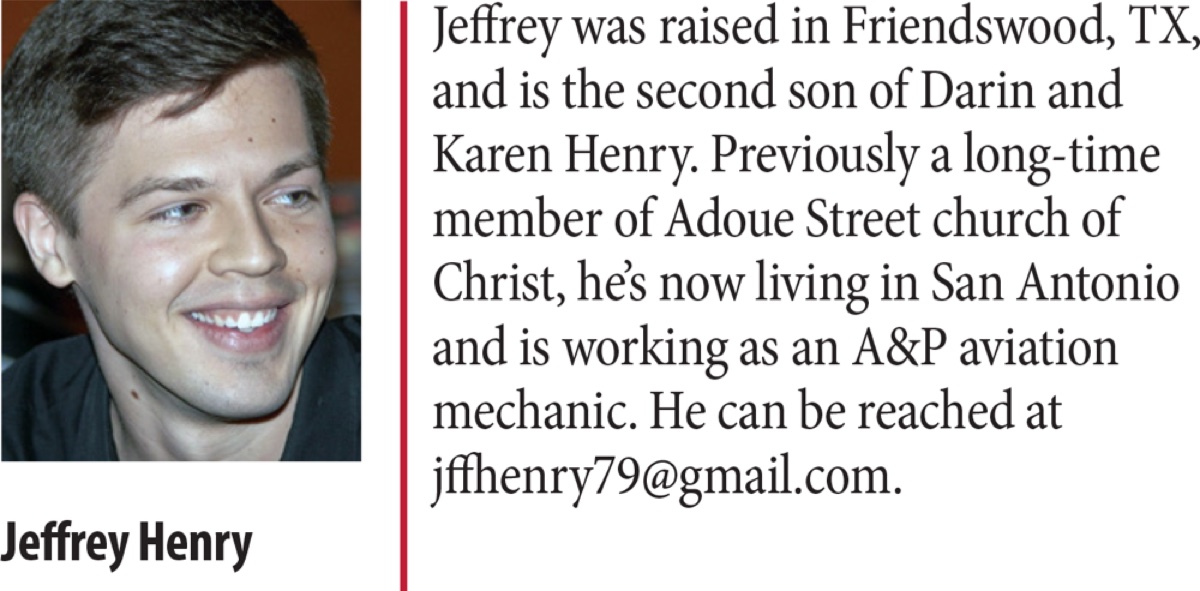


By David Banning
Synopsis: Our pursuit of holiness should affect all of life, including what I post and comment as I interact with others on social media.
Therefore, prepare your minds for action, keep sober in spirit, fix your hope completely on the grace to be brought to you at the revelation of Jesus Christ. As obedient children, do not be conformed to the former lusts which were yours in your ignorance, but like the Holy One who called you, be holy yourselves also in all your behavior; because it is written, “You shall be holy, for I am holy (1 Pet. 1:13-16).
You may be reading this brief essay hoping I will rail against the many misuses of social media by disciples. I certainly plan to address some of those concerns. However, I want to address upfront a more fundamental issue. There is a problem underneath the disturbing material being posted—a heart problem. We are not committed to holiness. We have not settled once for all that sin is abhorrent and every vestige must be eradicated from our lives (Ps. 119:104). We have not made it our single ambition to be like Jesus (Matt. 10:25), to be holy like Him in ALL of our behavior (1 Pet. 1:16). These are extraordinary changes. Hating sin and pursuing holiness alters the way we process everything, including how we use social media. It is not possible to get this right (or any other moral issue) until we first get our hearts right. So we begin with this fundamental question: “Am I committed to holiness?”
With that question lingering in the back of our minds, let’s tackle some of those concerns. Perhaps, like me, you are disturbed by some of the pictures fellow disciples choose to share on their social media accounts. I struggle to figure out how the qualities of modesty and discretion can be compatible with the choices being made about beach wear and prom dresses, for example. Social media adds a whole additional dimension to this problem because now the images are being shared with other disciples and the world. When choices like this are made, do we consider how our dress reflects on our claim to follow Jesus? Do we consider the struggle of godly men to keep their hearts pure as they strive to be holy (Matt. 5:27-30)? Is it the pursuit of holiness that is driving these choices or the desire to imitate culture?
Political posts can also be a problem. Many disciples love this country and are disturbed by its decline. They are they determined to put leaders in place who will move the nation in the right direction. This is certainly a noble endeavor. However, this does not turn us loose to say or do anything in support of our candidates. As I wade through all the shared articles and political memes my Facebook friends are posting, I wondered about the many passages that address our conduct toward our leaders. Peter said to honor the king (1 Pet. 2:17). Paul said to speak evil of no man and to be polite and considerate (Titus 3:1-2). It made me wonder if we are more concerned with pressing a political agenda than in pursuing holiness.
However, the problem is bigger than simply the choices we make about the memes and articles we share. As friends read and comment, sometimes a heated debate breaks out between those with opposing views. Is it even necessary to describe what that is like? We’ve all seen it; maybe we’ve been part of it. A discussion of different ideas and positions morphs into an ugly exchange of sarcastic remarks and insults. Do we even consider how this will be processed by young disciples and unbelievers who quietly observe the conflict?
This problem is not limited to political discourse. I watch with dismay as disciples try to use social media as a forum for untangling complicated theological controversies. Some share their doubts about Bible authority. Others speculate about new grounds to justify divorce. I saw a lengthy battle recently over what we are supposed to do with our hands when we worship. Lots of discussion followed; it was not helpful. Certainly no consensus was reached. Plenty of unkind words were exchanged. As I watch all of this, I think about young disciples who quietly observe and I wonder what impact it has on them.
Part of the problem is our failure to recognize how much harder it is to communicate effectively with social media. We miss all the non-verbal cues (tone, facial expression) that help us interpret what someone is trying to say. We would do well to remember that we will not change the world (or in most cases, even one person’s mind) with a comment on a Facebook post. Even more importantly, we should subject our dialog to the rigorous standard of Scripture. Will this post or comment edify (Eph. 4:29)? Is it driven by bitterness or kindness (Eph. 4:31-32)? Is it gentle (2 Tim. 2:23-25)? Is the issue at stake even worth my time (2 Tim. 2:23)? I fear that too often we are more focused on getting someone told than pursuing holiness.
Exploring these passages about our speech sheds light on another problem. Some use social media as an outlet for venting their personal grievances with other people. Their friends get a daily dose of what irritating thing the boss did or a rant about that driver who cut them off as they made their way home. It feels so good to unload that frustration and have all our friends cheer us on with their comments. Yet, what have we really accomplished? Has anyone been uplifted or encouraged? I think about Paul’s admonition “. . .only such a word as is good for edification. . .” (Eph. 4:29), and wonder how these rants help the reader.
Sometimes it’s worse than this. I’ve run across very personal posts where people shared some offense they had suffered, including unkind remarks about the person who inflicted the injury. They were careful not to name the target of their anger. However, some knew who they were addressing. Sometimes I did. Let’s be plain: this kind of digital gossip is wicked and cowardly. It is not the way Jesus taught us to resolve our differences (Matt. 18:15). The devil loves it when we are consumed with getting even, rather than consumed with the pursuit of holiness.
We must examine our hearts! Our pursuit of holiness must pulse through the decisions we make about our use of social media.
I use social media. I have Facebook and Instagram accounts. I don’t post a lot, but I read some of what others post. Along the way, I’ve encountered things that encouraged me. To end this on a positive note, I’d like to comment about some of those.
I like that social media allows me to stay connected with other disciples. It is a daily blessing to hear good news about children being born and sinners being born again. I enjoy seeing pictures from weddings, birthday celebrations and young couples in front of their first house. I’ve appreciated the opportunity to share grief and offer comfort when my friends have suffered tragedy. Social media helps keep me aware of what is happening in the lives of people who are special to me. An added benefit is that it allows me to do this with disciples all over the country (and all over the world). In the past, I would meet wonderful people during the week of a gospel meeting in some other place, then lose contact with them when the meeting was over. Social media allows me to stay connected even with brothers and sisters in far-off places.
This is a blessing for young people too. They can stay connected with other disciples that they meet at a camp or youth weekend and to continue to encourage each other. We need to encourage each other (Heb. 10:23-24). Social media offers another way to do this.
Even more important than these are the opportunities we have to edify each other and share the gospel with these tools. Facebook, Instagram and Twitter are great resources to help spread the word about special events like gospel meetings and youth devotions. Many churches are creating their own pages to share information about their group and recordings of sermons. Facebook Live provides an easy way to actually stream classes and sermons live to the internet.
We must not underestimate the value of the simple things. I’ve been uplifted by a moving quotation or Scripture citation someone posted. I’ve benefitted from book recommendations and sermon recordings that others shared. When you think about it, there are so many ways to seize these resources and use them to honor God and encourage His people. Let’s commit ourselves to do that!
Let’s also keep in mind that we will be in a much better position to use social media to God’s glory when we’ve first set our hearts to be holy. Right conduct springs from holy hearts. Like the Holy One who called us, let us be holy.
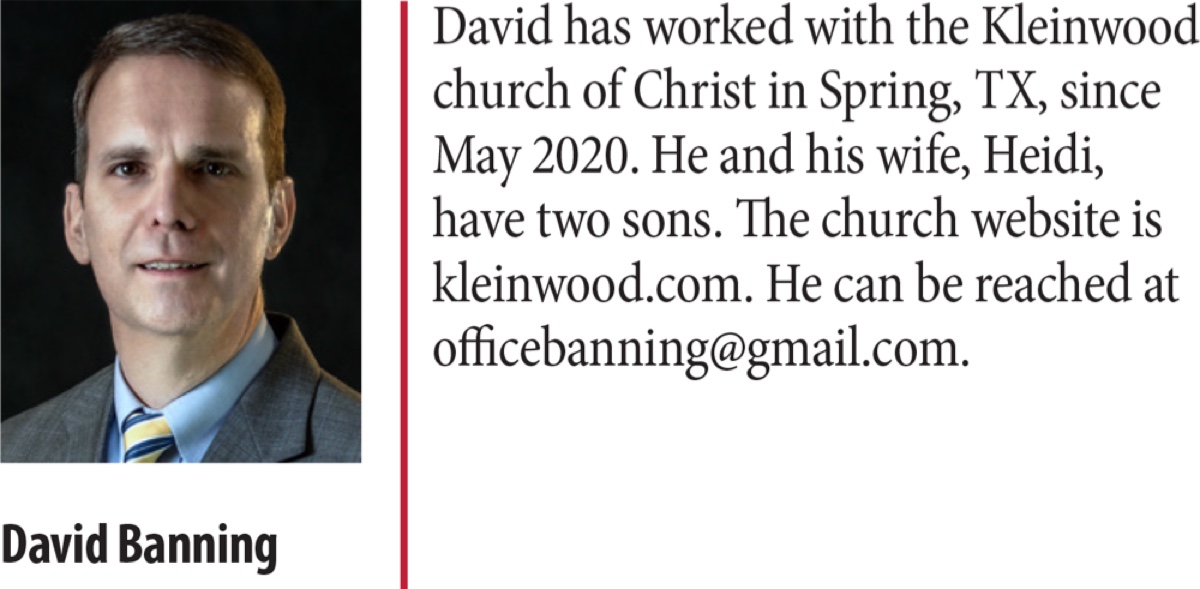


By David Dann
Synopsis: Darkness and depravity increase as men reject the light of the gospel. In a world filled with wickedness, Satan’s influence becomes ascendent. Yet, his promises are as false today as they were in the garden of Eden.
Satan’s popularity is on the rise. This is not necessarily new. The apostle John addressed this issue long ago, saying, “We know that we are of God, and the whole world lies under the sway of the wicked one” (1 John 5:19, NKJV). However, what has become more pronounced is the overt allegiance to the devil that is openly on display today. One recent example of this is the animated television series “Little Demon,” which is based on the following premise: “After being impregnated by the Devil, a reluctant mother and her Antichrist daughter attempt to live an ordinary life in Delaware” (Imdb.com). Another example is the annual Grammy Awards show which featured “non-binary” singer Sam Smith and “trans” singer Kim Petras putting on a satanic act. “Smith, alongside Kim Petras, performed their chart-topping song ‘Unholy’ during the 65th Grammy Awards which had both singers and their backup dancers clad in blood-red devil-esque costumes” (Jack Hobbs, New York Post).
Even more recently, Target, the seventh-largest retailer in the United States, got in on the Acts “Part of the new ‘PRIDE’ collection introduced by Target includes clothing made by a UK-based brand whose designer has expressed satanist views, according to a report. Abprallen, a London-based company which is headed by a transgender man known as ‘Erik,’ has reportedly been collaborating with Target for about a year, according to The Washington Examiner. The collection includes sweatshirts and tote bags with messages that include ‘live laugh lesbian,’ ‘cure transphobia not trans people,’ ‘too queer for here,’ and ‘we belong everywhere.’ Abprallen sells apparel that includes satanic imagery including pentagrams, horned skulls, and references to the devil. One design found on the apparel maker’s T-shirts and pins has the message: ‘Satan respects pronouns’” (Ariel Zilber, New York Post).
In addition to these examples, The Telegraph reports the following: “Chaplain Leopold, a 32-year-old London-based undertaker, co-runs the Global Order of Satan UK which he said has seen a 200 percent increase in membership over the last five years. . . Satanists generally do not believe in a higher power, and instead revolve around a religion ‘of the self,’ believing that it is up to individuals to define their own moral code, and to develop themselves as their own God heads. . . Chaplain Leopold said that ritual is used as a form of community bonding and meditation to give people the time to develop ‘your own personal vision of yourself as Satan’. . . ‘You wouldn’t recognise a Satanist most of the time if you pass them in the street,’ he said. ‘But then we like to have the ritual space, which is when we don the robes and light the candles and hail Satan and everything else we wish to do’” (Gabriella Swerling).
What is the appeal of turning to Satan? Please consider:
As the news report states, “Satanists generally do not believe in a higher power, and instead revolve around a religion ‘of the self.’” Allegiance to Satan offers the appeal of supposedly freeing one from having to focus on God so that he can focus on himself. The apostle Paul warned Timothy, saying, “For men will be lovers of themselves, lovers of money, boasters, proud, blasphemers, disobedient to parents, unthankful, unholy, unloving, unforgiving, slanderers, without self-control, brutal, despisers of good, traitors, headstrong, haughty, lovers of pleasure rather than lovers of God” (2 Tim. 3:2-4). The freedom to serve self comes at a cost. “Do you not know that to whom you present yourselves slaves to obey, you are that one’s slaves whom you obey, whether of sin leading to death, or of obedience leading to righteousness?” (Rom. 6:16). Those who heed the satanic call to serve self are nothing more than slaves of sin.
The news report points out that Satanists believe “that it is up to individuals to define their own moral code.” The satanic approach has been on display in every case in which “everyone did what was right in his own eyes” (Judg. 21:25) and was clearly seen in “Cain, who was of the wicked one and murdered his brother” (1 John 3:12). Jesus said, “If you love Me, keep My commandments” (John 14:15). However, those who find His commandments too restrictive for their liking fall for the devilish lie that each one can decide for himself what is right or wrong with no repercussions. Ignored in all of this is that “There is a way that seems right to a man, but its end is the way of death” (Prov. 14:12). Those who heed the satanic call to create their own moral code are destined for destruction.
As is stated in the news report, this trendy version of Satanism is about allowing people to “develop themselves as their own God heads” and “to give people the time to develop ‘your own personal vision of yourself as Satan.’” This, of course, has always been Satan’s empty and deceptive promise. When Eve explained that she would die should she violate God’s law by eating from the tree of the knowledge of good and evil, “Then the serpent said to the woman, ‘You will not surely die. For God knows that in the day you eat of it your eyes will be opened, and you will be like God, knowing good and evil’” (Gen. 3:4-5). As it turned out, God was still God. The first man and woman were punished for their sin. Satan did not hang around to help once they had ruined their lives (vv. 6-24). Those who heed the satanic call to become their own gods are setting themselves up for disaster and disappointment.
While it may seem shocking that so many would reject the love of God and openly turn to the devil, we would do well to be reminded that Satan is “a liar and the father of it” (John 8:44), is “the ruler of this world” (12:31), is “the god of this age” who “has blinded” those “who do not believe” (2 Cor. 4:4), and is also the wicked one who “walks about like a roaring lion, seeking whom he may devour” (1 Pet. 5:8). The empty promises of satanic allegiance lead only to the destiny that will be deemed worthy of the devil himself. As Jesus said of Himself concerning the coming judgment, “Then He will also say to those on the left hand, ‘Depart from Me, you cursed, into the everlasting fire prepared for the devil and his angels’” (Matt. 25:41). While the opportunity to focus on self, to create your own moral code, and to become your own god may carry a certain appeal here and now, it is an approach that leads only to eternal misery in hell hereafter. “Therefore submit to God. Resist the devil and he will flee from you” (Jas. 4:7).
Hobbs, Jack. “Sam Smith’s ‘Satanic’ Grammys Performance Slammed: ‘Sponsored by Pfizer.’” New York Post, February 6, 2023. https://nypost.com/2023/02/06/sam-smiths-satanic-grammys-performance-slammed-on-twitter/.
“Little Demon.” The International Movie Database. https://www.imdb.com/title/tt12198014/.
Swerling, Gabriella. “Young Sacrifice Belief in God on Altar of Satanism.” The Telegraph, January 14, 2023. https://www.telegraph.co.uk/news/2023/01/14/young-people-turning-satanism-instead-stuffy-christianity/.
Zilber, Ariel. “Target partners with ‘satanist’ brand for ‘PRIDE’ collection: ‘Live laugh lesbian.’” New York Post, May 23, 2023. https://nypost.com/2023/05/23/target-partners-with-satanist-brand-for-pride-collection/.
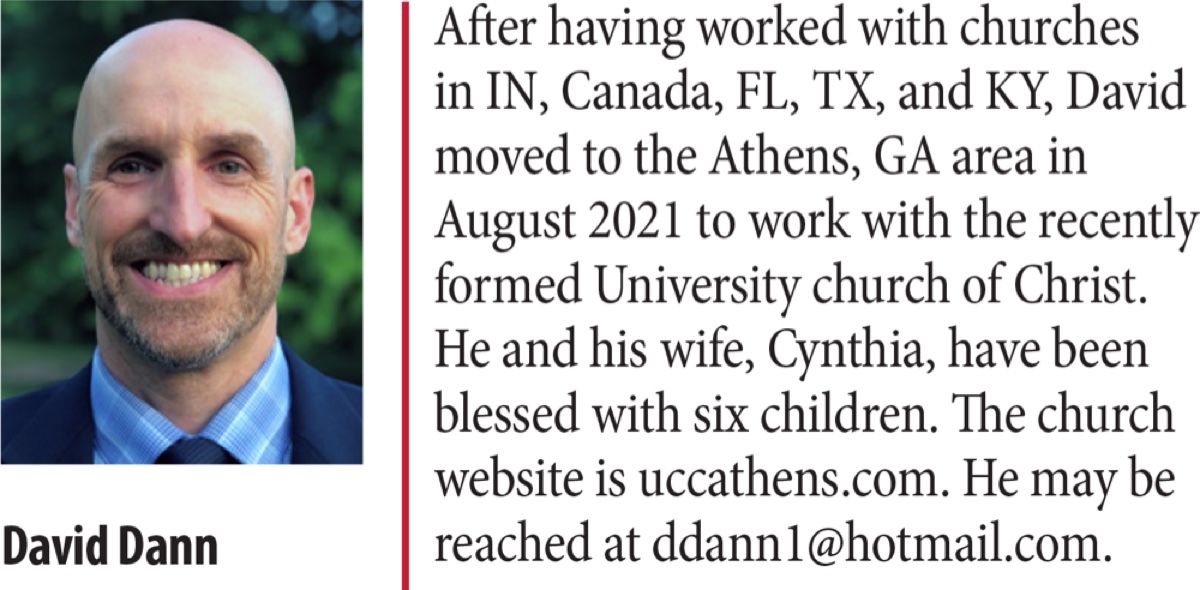


By John Humphries
Synopsis: This poem, in its present form, was written by John Humphries. The originator of the idea for this is unknown.
Be angry, and do not sin: do not let the sun go down on your wrath, nor give place (opportunity) to the devil (Eph. 4:26-27).
In traveling down life’s highway,
Dealing with kith and kin,
I simply must never allow
Hot anger to lead to sin.
For when I rail in anger
With cheeks all flaming red,
I carelessly say hateful things
I wish I had not said.
In anger, I have rarely done
A kindly deed or wise,
But said or did some things for which
I had to apologize.
A kindred heart, my words have hurt
And pushed them far away,
I utterly failed to win them back;
Harsh words just do not pay.
In looking back across my life,
And all I’ve gained or made,
I don’t recall a single time
When fury ever paid.
Yes, even now, as years have flown,
My conscience I will taint—
For when hot anger overcomes,
I sadly lose restraint.
So, I struggle to be patient
As I advance in age,
I must not act in unkind ways,
Nor speak a word in rage.
God’s law commands be quick to hear,
Let not hot anger speak,
For when we violate His word,
Forgiveness we must seek!


By Ethan Jennings
Synopsis: The doctrine of premillennialism is not only inconsistent with Sacred Scripture, it also an insult to the God of heaven.
One of the many false doctrines in the religious world is the teaching of premillennialism. This doctrine contains many falsehoods revolving around the end of the world. It’s taught by a wide range of religious groups today. These include Baptists, Mormons, Seventh-Day Adventists, Jehovah’s Witnesses, Catholics, Methodists, and Pentecostals. Though they are few, some even among churches of Christ have fallen prey to this doctrine.
The title of this article is “Premillennialism, and What It Does to God” because there are several conclusions one must make regarding God if this doctrine is true. Since many people may be unfamiliar with this doctrine, let us begin with a summary.
First, the doctrine of premillennialism rewrites the teachings and history of the Bible. The doctrine states that the Jews have yet to receive all the land promised by God to Abraham. Second, it says that Jesus came to earth to establish an earthly kingdom over which He would rule. However, the Jews rejected Christ as king, so this earthly kingdom had to be postponed. Instead of setting up the kingdom, He established the church as an afterthought. Presently, we await His second coming, when He will fulfill His promises. In other words, the first coming of Christ was a failure.
Before the battle of Armageddon, premillennial doctrine says the righteous people will be taken away in a moment of time they call the “rapture.” The wicked will be left behind to endure seven years of torment, or “tribulation,” on this earth. The battle of Armageddon—the final climactic conflict between Christ and the devil—will occur at the end of this period. Christ will win with the help of the angels, the redeemed He took seven years earlier, and any of the righteous who have turned to the Lord during the seven years of tribulation. Christ will then reign on David’s throne in Jerusalem for a thousand years. Afterwards, the wicked will be resurrected and the day of judgment will occur. Sound familiar? This has been the plot of many movies, and many televangelists teach this as well.
While there are many obvious false teachings we could examine within this summary, I want to focus on the fact that these teachings do many horrible things to God.
Someone may ask, “How does premillennialism do that?” The doctrine says that Israel has not yet received the land God had promised to Abraham thousands of years ago when He said, “All the land which you see, I will give it to you and to your descendants forever” (Gen. 13:15). God’s word states that this prophecy has been fulfilled. Joshua 21:43-45 states, “So the Lord gave Israel all the land which He had sworn to give to their fathers, and they possessed it and lived in it. And the Lord gave them rest on every side, according to all that He had sworn to their fathers, and no one of all their enemies stood before them; the Lord gave all their enemies into their hand. Not one of the good promises which the Lord had made to the house of Israel failed; all came to pass.”
God kept His promises. The reason Israel did not continue to possess the land was that they disobeyed the covenant. Joshua told the people before his death, “Now behold, today I am going the way of all the earth, and you know in all your hearts and in all your souls that not one word of all the good words which the Lord your God spoke concerning you has failed; all have been fulfilled for you, not one of them has failed. It shall come about that just as all the good words which the Lord your God spoke to you have come upon you, so the Lord will bring upon you all the threats, until He has destroyed you from off this good land which the Lord your God has given you. When you transgress the covenant of the Lord your God, which He commanded you, and go and serve other gods and bow down to them, then the anger of the Lord will burn against you, and you will perish quickly from off the good land which He has given you (Josh. 23:14-16). God’s promise to give Abraham the land was unconditional. However, we can see in Joshua’s words, their keeping of the land was conditional! Therefore, because they did not obey, they lost the land.
As stated earlier, the doctrine of Premillennialism says that when Christ first came, it was to establish the earthly kingdom. Since the Jews rejected Him, He failed. The promise of the kingdom that God made long ago (Dan. 2:44) was not looking forward to an earthly kingdom, but a spiritual one. This is made clear after Jesus fed the 5,000 in John 6. The crowds saw the sign, and notice what happened: “So Jesus, perceiving that they were intending to come and take Him by force to make Him king, withdrew again to the mountain by Himself alone.” If Jesus wanted to set up an earthly kingdom, here was the time to do it. Either His kingdom wasn’t supposed to be an earthly one, or He missed His chance! Let us allow Jesus to tell us the nature of His kingdom. When He was on trial for His life, Jesus told Pilate that His kingdom “is not of this world” (John 18:36). No, Jesus was not planning on establishing an earthly kingdom. His kingdom is spiritual in nature, and will not come at a future date, but is here now (Matt. 16:18-19, Col. 1:13)
The Scriptures clearly teach that Jesus is currently sitting on His throne. God promised thousands of years ago to seat one of David’s descendants on His throne (Ps. 110:1, cf. Acts 2:30). In Ephesians 1:20-21, Paul wrote concerning God seating Christ “at His right hand in the heavenly places far above all rule and authority and dominion, and every name that is named, not only in this age but also the one to come.” Paul spoke of this as something that had already happened. Yet, premillennialists say that Christ has yet to reign on this throne. By doing this, they have dethroned the very Lord they claim to worship!
Four of God’s promises have not been kept if premillennialism is true.
God promised to sit one of David’s descendants on His throne (Acts 2:30) and kept that promise according to Ephesians 1:19-22. Premillennialists state that God hasn’t kept that promise and Christ is not on David’s throne yet. Therefore, this doctrine has either contradicted plain statements of Scripture, or God lied!
God promised that none of Coniah/Jeconiah’s descendants would prosper on David’s throne (Jer. 22:28-30). Premillennialism claims that Jesus will reign on that throne in Jerusalem. Why is this a contradiction? The Bible says Jesus is a descendant of Jeconiah (Matt. 1:11-16). Therefore, to bring Him back to earth to rule on David’s literal throne means He will not prosper as King! Premillennialists say Christ must rule from David’s literal throne, and God says Christ will not prosper from there. Whom will we accept?
God promised to give Abraham’s descendants the land of Canaan (Gen. 13:15). The Scripture clearly states that they received it (Josh. 21:43-45). Yet, as seen in the summary, premillennialists state God has yet to give them this land. Whom are we to believe? Can we believe Joshua, who said God gave them the land, or are we to believe premillennial doctrine?
God promised to set up a kingdom (Dan. 2:44-45), and the Scripture tells us that the kingdom is here (Col. 1:13). However, premillennialists state that this kingdom is yet to come because Christ failed to set it up the first time. Here’s a problem for premillennialists: If God failed to set it up the first time, how can we be sure He won’t fail a second time? Or a third or fourth time?
Premillennialism is a false doctrine that does many horrible things to God. It turns God into somebody He is not. The God we find in Premillennialism is not the God we read about in the Bible. The God of the Bible is a God who does not lie. Rather, He succeeds in all that He does—putting Christ on His throne and keeping His promises. We can place our hope in Him. Don’t fall for the lies of premillennialism! Accept the truth of the Scriptures (John 17:17; 2 Tim. 3:16-17)!


By Bruce Reeves
Synopsis: In every generation, some disciples drift into apostasy. Personalities may change, but the peril persists: A desire to be like the surrounding nations (or human denominations) inevitably leads to a loss of distinctiveness, and ultimately, spiritual identity.
Jesus Christ is the centerpiece of the Bible. We see His glory as Creator, Messiah, Savior, Lord, King, High Priest, and Judge. The glorious Son of God is found both in prophecy and promise. We see Him in His virgin birth, sinless life, masterful teaching, selfless ministry, sacrificial death, powerful resurrection, glorious ascension, and divine reign for the salvation of humanity. Not only is this true in His fulfillment of the Old Testament prophecies and promises, but it is also true of the New Testament’s portrayal of His life and sacrifice. Whether one studies the nature of grace, faith, baptism, the Lord’s supper, moral sanctification, discipleship, the church and her organization, work, worship, or (for that matter) the second coming—Jesus Christ is at the heart of God’s message! If we miss this truth, we miss the power of the gospel and the beauty of the doctrine of Christ.
Yet, there are those who, under the guise of preaching more about the cross and grace, are undermining the fullness of the gospel. An attempt among some of our brethren has been under way to deemphasize the doctrine of Christ. This is happening through the redefining of phrases and terms, such as “sound doctrine,” “fellowship,” “grace,” “authority,” and “pattern.” It has become rather trendy to slander those who believe in “pattern theology” as cold-hearted and formalistic in their faith. Misrepresentations and mischaracterizations are par for the course in such controversies. Labels such as “Pharisees,” “legalists,” “truth-protectors,” and “traditionalists” have been weaponized to dismiss a serious consideration of doctrinal questions. Misunderstandings of those terms, the unrighteous judgments of others, and diversions from the actual issues evade what is really at stake: our identity, mission, relationship with God, purpose, and salvation.
The gospel-doctrine distinction has been quite popular in the religious world at large, but it is very unbiblical. Proponents of the grace-unity movement will inevitably attempt to redefine either the “gospel of Christ” or the “doctrine of Christ” to justify a compromising spirit toward religious error. The motto “Let’s preach the man and not the plan” is wholly unscriptural. Christ cannot be separated from His word, commandments, or teaching (Matt. 7:24-27; John 12:47-48; 14:15). Some have said that the problem is that we have been “majoring in minors.” Of course, statements like this one must be explained. There are issues that do not impact our salvation that are matters about which God is indifferent (Rom. 14:1-15:3). Yet if one means that the way we worship, the work and mission of the local congregation, marriage, divorce, and remarriage, or moral issues should not be discussed openly, then such a concept should be rejected out of hand (1 Tim. 3:15; 4:1-6; 2 Tim. 4:1-5).
There have been multiple waves of the Grace-Unity Movement among churches of Christ throughout the 1970s, 1980s, and 1990s. It has now entered the thinking of some brethren again. The position has been clearly stated by its advocates in the past. Carl Ketcherside wrote, “Not one apostolic letter is part of the gospel of Christ. . . the letter to the Galatians was not a part of the gospel. . .” What an amazing statement considering the truth that Paul is offering a doctrinal defense of the gospel of grace in this splendid epistle. How could anyone say the book of Galatians is not part of the gospel of Christ? Ketcherside went on to say,
No honest opinion held by one who is in Christ Jesus and who respects His lordship is “another gospel.” Since it is the gospel which forms the basis of the fellowship with the Father, the Son and with one another in Christ, such an opinion can never be made a test of union or communion in Christ. A man may hold a view as to the perseverance of the saints, the manner of the resurrection, or the second coming of our Lord, and he may prove to be as wrong as one could be, but he cannot be debarred from citizenry in the kingdom of heaven by the other subjects. . . No man “preaches another gospel” simply by being mistaken about some aspects of the will of God, otherwise one would need to know perfectly the divine will or be a perverter of the gospel. . . Regardless of motive, [those who oppose gospel/doctrine distinction, B.R.] reveal that they are ignorant of what constitutes both gospel and apostasy (Carl Ketcherside, “Another Gospel,” Twisted Scriptures, Mission Messenger, 4-9).
Again, this error avows that the nature of our assurance in Christ, the coming resurrection, and even teaching about the Lord’s return, are not considered part of the gospel. Leroy Garrett demonstrated why he was asserting this teaching:
The implications of all this to unity and fellowship are weighty. It means that the gospel itself, not our doctrinal interpretations, is the basis of our being one in Christ and in fellowship with each other. That is, when one believes in Jesus and obeys Him in baptism, he is our brother and in the fellowship. . . This is oneness and this is unity. That fellowship is strengthened and made joyful by doctrine, but it is the gospel and not doctrine that determines the fellowship”(Leroy Garrett).
The implications of all this to unity and fellowship are weighty indeed. Without the teaching coming from and about Jesus Christ, we have no fellowship (2 John 9-11). Arnold Hardin likewise wrote, “The gospel is not defined as everything in the New Testament. . . not all truth is gospel; though all truth is for our instruction.”
Charles L. Loos said, “Doctrines do not save us; we are saved by Christ. Doctrines do not cleanse us from our sins; it is the efficacious blood of Christ. . . We are not baptized into [doctrines], but into Christ. We do not hope in them, trust in them, glory in them, but in Christ Jesus our Lord” (Leonard Allen quoting Charles L. Loos, teacher with Campbell at Bethany College, 89). Yet, how would we know about salvation in Jesus, the atonement, faith in Christ, or baptism were it not for the doctrine of Christ revealed in Scripture? These types of arguments meet themselves coming back and are self-contradictory. The “core-gospel” approach argues that the birth, life, death, burial, resurrection, ascension, coronation, and glorification of Christ constitutes the gospel? Are “faith,” “repentance,” “confession,” and “baptism” not a part of the gospel (Eph. 4:4-7)? If so, which one is and which one is not? Various people offer different determinations. Is the gospel limited to these facts alone? We only determine the gospel of Christ through the teaching revealed in the Bible.
The gospel-doctrine distinction is not merely a matter of wrongly defining biblical words. It is also a mechanism for departure and widespread change of vital aspects of the fellowship of God’s people. In the New Testament, the term “gospel” denotes the good news of the kingdom of God and the term “doctrine” simply refers to “teaching” or “instruction.” The gospel includes the facts of Jesus (1 Cor. 15:1-4) and the interpretation of these facts expressed as teaching or doctrine (Matt. 4:23; Acts 20:24; 28:31; Rom. 1:16; 10:16; 1 Thess. 2:2). The gospel is expressed in facts to be believed, commands to be obeyed, and promises to be enjoyed (Mark 16:15-16; Rom. 6:3-4; Col. 2:11-13). The grace of God offers instruction that leads to godliness and salvation (Titus 2:11-15).
There are several synonyms for the message of the gospel in Acts 13:7-12. Note that the phrases “the word of God” (13:7), “the faith” (13:8), “all righteousness” (13:10), “straight ways of the Lord” (13:10), and “the doctrine of the Lord” (13:12) all refer to the same message. Paul’s farewell to the elders at Ephesus encouraged them to “be on guard for yourselves and for all the flock, among which the Holy Spirit has made you overseers, to shepherd the church of God which He purchased with His own blood. I know that after my departure, savage wolves will come in among you, not sparing the flock, and from among your own selves’ men will arise, speaking perverse things to draw away disciples after them” (Acts 20:28-30). He also declared that he was innocent of the blood of all men because he did not “shrink from declaring to you the whole purpose of God” (Acts 20:27). Did this not include the qualities and work of elders (Acts 20:17, 28), “the gospel of the grace of God” (Acts 20:24), and error of false teachers (Acts 20:28; Titus 1:9-11)?
Paul wrote that he was looking forward to preaching the gospel to the beloved saints at Rome (Rom. 1:15-16). How could this be possible if the gospel only included the death, burial, and resurrection of Jesus Christ? He was speaking to the “beloved of God, called to be saints.” Therefore, he was not going to preach the gospel only to the unsaved, but also to the saved. The terms “gospel,” “doctrine,” “truth,” and “message” refer to the same body of information. Sometimes the terms are even combined—as in the phrase, “the gospel of truth” (Gal. 2:5; 5:7). Each term simply emphasizes different features of God’s message. It should also be noted that the terms “gospel” and “doctrine” are used interchangeably.
For example, consider 1 Timothy 1:8–11, where the inspired apostle identifies violations of divine law as behavior that is “contrary to sound doctrine,” (that was) “in accordance with the gospel” with which he had been entrusted:
Now we know that the law is good, if one uses it lawfully, understanding this, that the law is not laid down for the just but for the lawless and disobedient, for the ungodly and sinners, for the unholy and profane, for those who strike their fathers and mothers, for murderers, the sexually immoral, men who practice homosexuality, enslavers, liars, perjurers, and whatever else is contrary to sound doctrine, in accordance with the gospel of the glory of the blessed God with which I have been entrusted (1 Tim. 1:8-11, ESV).
Those who are constantly castigating faithful brethren for traditionalism may want to consider the difference in human traditions being bound on others (Matt. 15:9), versus the divine traditions of the apostles, which believers are to obey (2 Thess. 2:15; 3:6, 14). We are to preach the word with doctrinal instruction and longsuffering (2 Tim. 4:2). The apostles’ teaching was necessary for the salvation and fellowship of the Lord’s people (Matt. 28:20; Acts 2:42; 1 Cor. 11:1-2, 17-18; Col. 1:5).
Should fellowship exclude doctrine? Paul says that the faithful are to identify and turn away from those who are teaching those things contrary to the doctrine which we have learned from God’s word (Rom. 16:17). Likewise, teachers are charged to teach no other doctrine, and believers are admonished to “abide in the doctrine of Christ” (1 Tim. 1:3, 10; 4:1, 6, 13, 16; 6:1, 3; 2 Tim. 3:10, 16; 4:3; Titus 1:9; 2:1, 7, 10; 2 John 9-11). No one is claiming sinless perfectionism, but we are called to obedience from the heart (Rom. 6:17). We are transformed and renewed by God’s grace as we surrender to His love (Rom. 12:1-2; Eph. 4:22-24). Christ’s blood cleanses us from all unrighteousness as we walk in His light and confess our sins (1 John 1:7-2:2). Why do these kinds of issues arise among brethren? John wrote, “They went out from us, but they were not really of us; for if they had been of us, they would have remained with us; but they went out, so that it would be shown that they all are not of us” (1 John 2:19). He is not speaking of their geographical location, but of their spiritual condition and doctrinal soundness. This movement of divisive brethren against the truth had left the original ground of their spiritual unity, apostolic teaching, and the faith once delivered (Acts 2:42; 1 Cor. 1:10; Jude 3-4). In effect, John is saying, “We did not change: they did. We did not go anywhere: they did. We believe what we have believed all along. They are the ones who abandoned the truth, and broke fellowship with those who conform to its demands.”
Those who promote these types of doctrines usually follow the same pattern. They attempt to build dissatisfaction so that their agendas will be received. Scare tactics are used in statements such as, “If you don’t believe what I’m saying, then all our young Christians will leave in droves.” There is significant self-promotion and disrespect toward previous generations of faithful brethren. Obedience to Christ will be described as impossible and there will be incessant disruption, dissatisfaction, and deception of the naïve and unsuspecting.
While many have seen that the hard and fast distinction between the gospel and doctrine is a fallacious perspective, they may adopt a similar approach by diluting the phrase “sound doctrine.” We frequently will see a deliberate effort to deemphasize and dismiss the New Testament pattern found in the epistles as well as the basic rules of communication (command, approved example, and necessary conclusions). Ironically, those who profess to be “Jesus-centered” are disavowing the pattern Jesus left us for interpreting God’s will (Matt. 19:4-6).
Another tactic is to use examples of human opinion to mask false views about essential aspects of the faith. The redefining of biblical terms unbiblically is something about which we must always be sensitive in our understanding of the truth. For instance, the notion that the phrase “sound doctrine” has no application to the “organization of the church, the work of the local church, how we use funds. . . how we conduct worship” is contrary to the letters Paul wrote to Timothy and Titus, where the phrase is found (1 Tim. 1:8-11; 6:3-4, 12, 20; 2 Tim. 1:13; 4:1-5; Titus 1:9-13). Soundness is both personal and congregational (1 Tim. 3:15). It includes instructions regarding the organization, mission, work, benevolence, and worship of the local church (1 Cor. 5:1-13; 2 Thess. 3:6; 1 Tim. 2:9-15; 3:1-13; 5:8-16, 19-20; Rev. 2-3).
The current trend to redefine and limit the application of “sound doctrine” is an attempt to broaden congregational fellowship beyond the biblical framework. The “either/or” fallacy must be recognized. It argues: “Either we emphasize Jesus or the biblical pattern,” “either we emphasize grace or obedience,” “either we emphasize love and faith or the authority of the Scriptures.” Brethren, we can and must emphasize God’s grace and the surrender of obedience, Christ’s love and His preeminent authority as King of kings, and we must proclaim the Son of God as Savior, Lord, and Judge!
The following quotation indicates a serious problem in the thinking of some of our brethren and jeopardizes new and young Christians to spiritual danger:
You remember lessons where the word “authority” was mentioned many, many, many times. And it was dissected, and things were drilled down. And you remember lessons about gopher wood, and red heifers, and strange fire. And you remember about all those examples that we see that talk about how God views things in relation to what He said, in relation to what He hasn’t said and how He interacts with His people based on those things. And if you have been paying attention very long at all, you know that I have not done lessons like that. I have not done lessons where I used Gopher Wood as an example of God’s authority and what He has spoken. You’ve never heard me do a lesson on specific or generic authority. We’ve not had any lessons on instrumental music or how the church should spend its money. And I admit to that, that those lessons have not been taught (Elijah Aaron, “It’s a Lot Deeper Than That,” March 21, 2023, Northside church of Christ, Conway, Arkansas).
The path of doctrinal change in churches can be gradual at first, but rapid as things continue to digress. There are four stages of departure:
Spoken Truth—The whole counsel of God is proclaimed, Christians are encouraged, Christ is glorified, and warnings against error are presented.
Unspoken Truth—It is assumed that each generation knows the truth on doctrinal issues, but it is decided that such topics do not need to be addressed because they are controversial.
Unspoken Error—As a result of the absence of teaching over time, brethren lack knowledge, conviction, and understanding, and false views develop—although they are not expressed publicly.
Spoken Error—Now that unbiblical concepts have circulated around privately, they begin to be expressed explicitly and publicly, but by now whole elderships, preachers, teachers, parents, and youth have lost their way.
What happens when we stop preaching on the context of Scripture and the application of biblical principles to questions that arise? Hearers come to believe that those topics are unimportant and are merely matters of human tradition. Disciples are susceptible to being misled, and we show a lack of love for our brethren. Shepherds have a responsibility to continue to build up mature Christians, as well as young believers and new converts. As parents, we have a responsibility to lead our children in the way of the Lord (Eph. 6:4).
If this approach is successful, it will not be possible to defend “sound doctrine,” because the concept will be so very subjective that only the deity of Christ and immorality will matter anymore. It is my conviction that faithful brethren will see these notions for the dangerous, but bankrupt ideas that they are and fervently embrace the truth of the gospel. We must listen well. Those who use unscriptural terminology and arguments are playing with fire that will harm the “unstable” and “immature” (2 Pet. 2:14; Eph. 4:14). Let us embrace the love, grace, and mercy of God while also embracing the power of the gospel to change lives, guide disciples, and mold every aspect of our service to our King and God.
Aaron, Elijah. “It’s a Lot Deeper Than That.” Northside church of Christ. Conway, AR. March 21, 2023. Available online at https://www.northsidecofc.com/sermons/its-a-lot-deeper-than-that/
Garrett, Leroy. “The Word Abused. . . ‘If We Or An Angel Preach Any Other Gospel.’” Restoration Review. (Volume 17, Number 3, pp. 42-46 [March, 1975]) via Tom M. Roberts, “The Gospel/Doctrine Distinction: Bred in Infidelity; Nurtured by Cynicism; Spread by Discontent.” Guardian of Truth. (XXXVIII: 13, p. 16-18 [July 7, 1994]). Available online at https://digitalcommons.acu.edu/cgi/viewcontent.cgi?article=1131&context=restorationreview.
Ketcherside, Carl. “Another Gospel” Twisted Scriptures. Mission Messenger. 1965, pp. 4, 7-9, via Mike Willis, “The Word Abused: Galatians 1:8-9.” Truth Magazine, (XIX: 40, pp. 632-636 [August 21, 1975]).
Ketcherside, W. Carl. “The Twisted Scriptures: Another Gospel.” Mission Messenger. [Originally published in St. Louis, MO, 1965] Reprinted by DeFuniak Springs, FL: A Signal Hill Book, 1992. Available online at https://webfiles.acu.edu/departments/Library/HR/restmov_nov11/www.mun.ca/rels/restmov/texts/wcketcherside/tts/chap3.html.


By John Partain
Synopsis: Grandparents who serve as spiritual role models leave a lasting legacy. In offering this tribute to his grandparents, John Partain fulfilled the ancient injunction: “You shall rise up before the grayheaded and honor the aged, and you shall revere your God; I am the LORD” (Lev. 19:32).
Many of us who grew up in the church have been blessed with faithful Christian grandparents. I consider myself greatly blessed that all four of my grandparents have provided me lifelong examples of faithfulness and service in the Lord’s church. In 2 Timothy 1:5, Paul writes to Timothy about his memory of Timothy’s faith, which first dwelt in his grandmother Lois and mother Eunice. I can completely relate to Timothy. Each of my grandparents has passed down their faith to me, as well as many of their children and grandchildren.
I have two outstanding grandfathers. Both of them have been effective in teaching and spreading the gospel to others in their own unique way. One is very well known among brethren and one is relatively unknown. Wayne Partain has been a gospel preacher for 70-plus years and he’s still running his race into his late 90s. If you want proof, just look him up on YouTube. He’s widely known for his work among Hispanic brethren and churches and his work outside the United States, especially in Mexico and South America. Every congregation I visit, someone recognizes my last name and asks me how I’m related to Wayne. Grandpa Partain’s influence has spread to many because of his work in preaching the gospel in Spanish.
My other grandpa, John Lyman Nations, known primarily as “J.L.,” is not nearly as well known. He was not a preacher. In fact, I’m not sure he ever preached a sermon, but he converted many souls through personal work! Grandpa just passed away last month at the age of 98. I witnessed him pass from this life peacefully. He crossed the finish line. He’s a hero to me. I would venture to say that many others whose lives Grandpa touched feel the same way. I want to tell you a little about him and hopefully help his name become a little more well known. I know that many brethren can probably share similar stories about one or more of their faithful grandparents as well.
J.L. was a Veteran who served in World War II. He was a machinist stationed for two years on a tanker ship named the U.S.S. ARETHUSA that carried crude oil to other ships in the Pacific during the war. He witnessed combat on the water. When the war ended, he was in Okinawa, Japan. He came back to the United States on one of those crowded boats where every soldier was packed in, standing shoulder to shoulder. Grandpa was rather private about his time and experience in the war.
After the war, J.L. returned to his home in Kennett, Missouri. He met my grandma, Wanda Goldsmith, at the local skating rink and they got married there in Kennett. They first lived on an eight-acre farm on the Saint Francis River on the west side of Kennett where they fished and grew crops for their primary food supply. They moved a short distance away to Rector, Arkansas, just across the river, and Grandpa purchased some land and built a house there. They associated with the Christians there, and J.L. and Wanda were soon baptized just three weeks before Sheila, my mother, was born in 1950. They were both baptized during the winter and the baptistry did not even have a working heater!
They lived in Rector for about six to eight years. During this time, J.L. and Wanda faced the growing influence of liberal thinking among brethren in the area. Many churches started using the treasury to support colleges, orphan homes, and the Herald of Truth. As you well know, brethren became widely divided on the subject. J.L. and Wanda had not been Christians for very long, but they studied the Bible for themselves and held fast to the truth. Like the Bereans in Acts 17:11, they examined the Scriptures to “see if these things were so.” J.L. studied with the brethren there on these issues. However, one day J.L. and Wanda came to the church building and found that the doors were padlocked. The message was clear—they were no longer welcome.
After that, they moved to Ward, Arkansas, near Little Rock, where, once again, J.L. bought land and built a house. He found work at a gas station. He informed his boss that he could not work on Sundays and Wednesday nights and was later fired for refusal to work late one Wednesday evening. His younger brother, Gerald, taught him how to do body work on cars and J.L. made a living doing that in Ward.
By this time, J.L. and Wanda had a full house. They had six children—three of their own and three that they raised as their own. Before the six children, they suffered the loss of their first son, Eric, during childbirth.
In 1968, J.L. and Wanda sold all they had in Ward and moved to Zephyrhills, Florida, where J.L. opened his own body shop. Sheila was 18 years old by that time, and they had heard much of Florida College and wanted her to attend college there. They lived in Zephyrhills for four years and then moved near Lake Wales, Florida, where J.L. purchased a Gulf gas station and later purchased a salvage yard.
For all of J.L.’s Christian life, while living in Arkansas and Florida until recently, when his mind and body failed him, he talked to everyone he could about the gospel of Jesus Christ. He always felt this great obligation to God. His talent was personal work. He was not someone you’d see at church services that would preach or teach the adult Bible class, but he was great at converting souls! He was a seed thrower, and he found many open hearts that received the gospel message and responded with obedience. J.L. went door-to-door, armed with his Bible and the Jule Miller film strips that he utilized as a tool to introduce the Bible. He had a saying when it was time to go do personal work, “Let’s go out and beat the bushes.”
On one occasion while living in Zephyrhills, he met with a small denominational group of people and studied with them. They asked him to meet several more times. He taught many the gospel while in Zephyrhills. Of course, not all responded, but J.L. kept throwing the seed. In the 1990s, when I was a teenager, my mother, little sister, and I lived in Zephyrhills about two decades after Grandma and Grandpa lived there. We attended the Zephyrhills church of Christ, and on one occasion, Grandma and Grandpa visited. While at church services, a man that J.L. didn’t recognize approached him and told him that he was taught the gospel by J.L. decades before. The man said that he rejected J.L. at the time, but he never forgot what he taught him. The seed stayed with him and later in life, his heart was pricked and he obeyed the gospel.
J.L. had another great saying: To those who came to church without their Bible, he would say, “You don’t go hunting without your gun, so why would you go to worship without your Bible?” Grandpa’s Bible had very little white in it. He had marked it all up with notes. The book of Psalms tells us to meditate on God’s word day and night. Grandpa had a simple way of explaining what it means to meditate on the Bible. He said meditating is not just when you’re reading your Bible; it’s about taking what you read with you the rest of the day.
When we were kids, my younger sister, Kandi, and I spent a lot of time at Grandma and Grandpa’s house in Lake Wales. We were always so excited to spend the weekend with them. It was during these times that I learned so much about the kind of man my grandpa was. He worked all day, every day, it seemed, except on Sundays. He taught me what hard work was. He always had a good-sized garden on his property that he would tend to. At the dinner table, he would always tell us whatever we put on our plate, we’d better eat.
When we’d go to church on Sunday morning, we were always the first ones there. Grandpa was a great example of reverence. He took worship seriously. Many times, I remember Grandpa getting on his knees during prayers. Grandpa loved to lead songs, and he always sang out. In the worship services, Grandpa focused on who he was worshipping and conducted himself accordingly. His devotion was evident. He had a humble and kind way about him.
J.L. Nations is a hero. He’s a hero for his service to our country. However, he never placed much importance on that part of his life. He placed much higher importance on his service to God. The apostle Paul said in 1 Corinthians 11:1, “Be imitators of me, as I am of Christ.” J.L. was Christ-like. I seek to imitate his faithful example.