By John Partain
Synopsis: Grandparents who serve as spiritual role models leave a lasting legacy. In offering this tribute to his grandparents, John Partain fulfilled the ancient injunction: “You shall rise up before the grayheaded and honor the aged, and you shall revere your God; I am the LORD” (Lev. 19:32).
Many of us who grew up in the church have been blessed with faithful Christian grandparents. I consider myself greatly blessed that all four of my grandparents have provided me lifelong examples of faithfulness and service in the Lord’s church. In 2 Timothy 1:5, Paul writes to Timothy about his memory of Timothy’s faith, which first dwelt in his grandmother Lois and mother Eunice. I can completely relate to Timothy. Each of my grandparents has passed down their faith to me, as well as many of their children and grandchildren.
I have two outstanding grandfathers. Both of them have been effective in teaching and spreading the gospel to others in their own unique way. One is very well known among brethren and one is relatively unknown. Wayne Partain has been a gospel preacher for 70-plus years and he’s still running his race into his late 90s. If you want proof, just look him up on YouTube. He’s widely known for his work among Hispanic brethren and churches and his work outside the United States, especially in Mexico and South America. Every congregation I visit, someone recognizes my last name and asks me how I’m related to Wayne. Grandpa Partain’s influence has spread to many because of his work in preaching the gospel in Spanish.
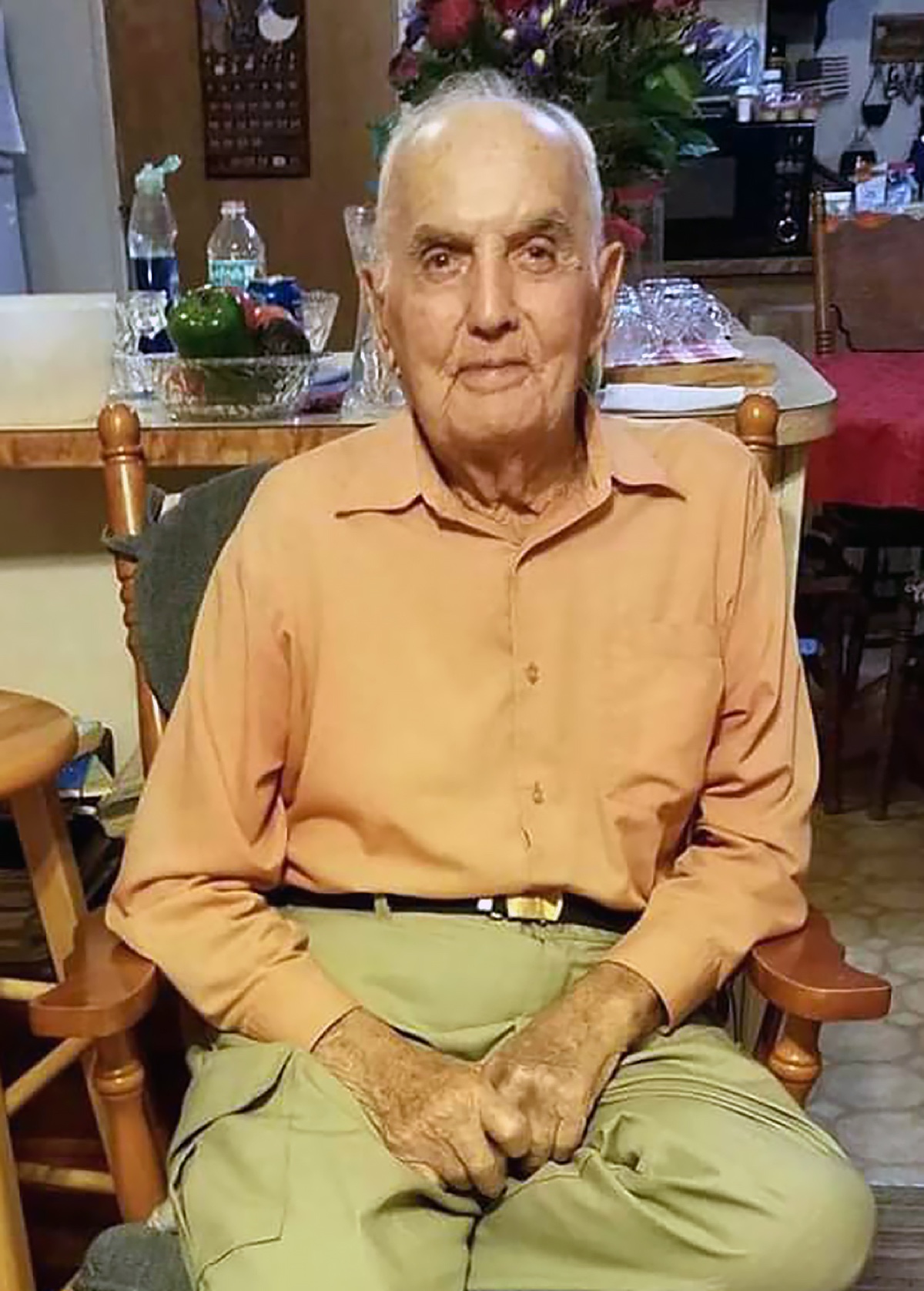
My other grandpa, John Lyman Nations, known primarily as “J.L.,” is not nearly as well known. He was not a preacher. In fact, I’m not sure he ever preached a sermon, but he converted many souls through personal work! Grandpa just passed away last month at the age of 98. I witnessed him pass from this life peacefully. He crossed the finish line. He’s a hero to me. I would venture to say that many others whose lives Grandpa touched feel the same way. I want to tell you a little about him and hopefully help his name become a little more well known. I know that many brethren can probably share similar stories about one or more of their faithful grandparents as well.
J.L. was a Veteran who served in World War II. He was a machinist stationed for two years on a tanker ship named the U.S.S. ARETHUSA that carried crude oil to other ships in the Pacific during the war. He witnessed combat on the water. When the war ended, he was in Okinawa, Japan. He came back to the United States on one of those crowded boats where every soldier was packed in, standing shoulder to shoulder. Grandpa was rather private about his time and experience in the war.
After the war, J.L. returned to his home in Kennett, Missouri. He met my grandma, Wanda Goldsmith, at the local skating rink and they got married there in Kennett. They first lived on an eight-acre farm on the Saint Francis River on the west side of Kennett where they fished and grew crops for their primary food supply. They moved a short distance away to Rector, Arkansas, just across the river, and Grandpa purchased some land and built a house there. They associated with the Christians there, and J.L. and Wanda were soon baptized just three weeks before Sheila, my mother, was born in 1950. They were both baptized during the winter and the baptistry did not even have a working heater!
They lived in Rector for about six to eight years. During this time, J.L. and Wanda faced the growing influence of liberal thinking among brethren in the area. Many churches started using the treasury to support colleges, orphan homes, and the Herald of Truth. As you well know, brethren became widely divided on the subject. J.L. and Wanda had not been Christians for very long, but they studied the Bible for themselves and held fast to the truth. Like the Bereans in Acts 17:11, they examined the Scriptures to “see if these things were so.” J.L. studied with the brethren there on these issues. However, one day J.L. and Wanda came to the church building and found that the doors were padlocked. The message was clear—they were no longer welcome.
After that, they moved to Ward, Arkansas, near Little Rock, where, once again, J.L. bought land and built a house. He found work at a gas station. He informed his boss that he could not work on Sundays and Wednesday nights and was later fired for refusal to work late one Wednesday evening. His younger brother, Gerald, taught him how to do body work on cars and J.L. made a living doing that in Ward.
By this time, J.L. and Wanda had a full house. They had six children—three of their own and three that they raised as their own. Before the six children, they suffered the loss of their first son, Eric, during childbirth.
In 1968, J.L. and Wanda sold all they had in Ward and moved to Zephyrhills, Florida, where J.L. opened his own body shop. Sheila was 18 years old by that time, and they had heard much of Florida College and wanted her to attend college there. They lived in Zephyrhills for four years and then moved near Lake Wales, Florida, where J.L. purchased a Gulf gas station and later purchased a salvage yard.
For all of J.L.’s Christian life, while living in Arkansas and Florida until recently, when his mind and body failed him, he talked to everyone he could about the gospel of Jesus Christ. He always felt this great obligation to God. His talent was personal work. He was not someone you’d see at church services that would preach or teach the adult Bible class, but he was great at converting souls! He was a seed thrower, and he found many open hearts that received the gospel message and responded with obedience. J.L. went door-to-door, armed with his Bible and the Jule Miller film strips that he utilized as a tool to introduce the Bible. He had a saying when it was time to go do personal work, “Let’s go out and beat the bushes.”
On one occasion while living in Zephyrhills, he met with a small denominational group of people and studied with them. They asked him to meet several more times. He taught many the gospel while in Zephyrhills. Of course, not all responded, but J.L. kept throwing the seed. In the 1990s, when I was a teenager, my mother, little sister, and I lived in Zephyrhills about two decades after Grandma and Grandpa lived there. We attended the Zephyrhills church of Christ, and on one occasion, Grandma and Grandpa visited. While at church services, a man that J.L. didn’t recognize approached him and told him that he was taught the gospel by J.L. decades before. The man said that he rejected J.L. at the time, but he never forgot what he taught him. The seed stayed with him and later in life, his heart was pricked and he obeyed the gospel.
J.L. had another great saying: To those who came to church without their Bible, he would say, “You don’t go hunting without your gun, so why would you go to worship without your Bible?” Grandpa’s Bible had very little white in it. He had marked it all up with notes. The book of Psalms tells us to meditate on God’s word day and night. Grandpa had a simple way of explaining what it means to meditate on the Bible. He said meditating is not just when you’re reading your Bible; it’s about taking what you read with you the rest of the day.
When we were kids, my younger sister, Kandi, and I spent a lot of time at Grandma and Grandpa’s house in Lake Wales. We were always so excited to spend the weekend with them. It was during these times that I learned so much about the kind of man my grandpa was. He worked all day, every day, it seemed, except on Sundays. He taught me what hard work was. He always had a good-sized garden on his property that he would tend to. At the dinner table, he would always tell us whatever we put on our plate, we’d better eat.
When we’d go to church on Sunday morning, we were always the first ones there. Grandpa was a great example of reverence. He took worship seriously. Many times, I remember Grandpa getting on his knees during prayers. Grandpa loved to lead songs, and he always sang out. In the worship services, Grandpa focused on who he was worshipping and conducted himself accordingly. His devotion was evident. He had a humble and kind way about him.
J.L. Nations is a hero. He’s a hero for his service to our country. However, he never placed much importance on that part of his life. He placed much higher importance on his service to God. The apostle Paul said in 1 Corinthians 11:1, “Be imitators of me, as I am of Christ.” J.L. was Christ-like. I seek to imitate his faithful example.