By Jeffrey Henry
Synopsis: In Romans 11, Paul asks, “Has God rejected His people?” No. God chose the nation of Israel as the vehicle through which He would carry out His plan and purpose. However, each individual (Jew and Gentile alike) exercises freedom of choice regarding the same.
As God’s elect, let us produce all various fruits of the Spirit with prudent hearts. For when the harvest time comes, the Lord expects an abundant, ripe gathering of fruit.
Let me sing for my beloved my love song concerning his vineyard: My beloved had a vineyard on a very fertile hill. He dug it and cleared it of stones, and planted it with choice vines; he built a watchtower in the midst of it and hewed out a wine vat in it; and he looked for it to yield grapes, but it yielded wild grapes (Isa. 5:1-2, ESV).
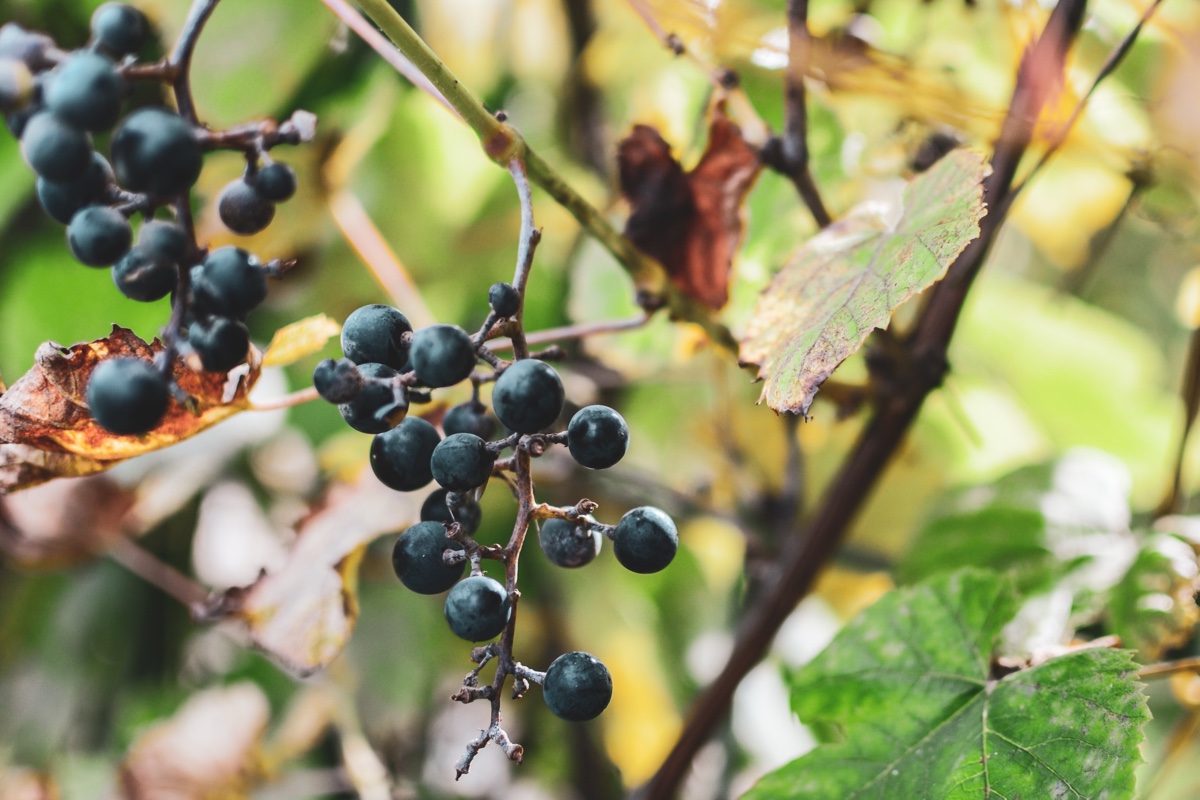
Wild grapes are woody, deciduous vines with a voracious growth habit. Some can even reach up to fifty feet in length. They’re considered weeds because of how aggressively they grow and can overtake a garden or forest with little effort. Thanks to their sticky tendrils, they’re able to latch onto trees and bushes like parasites, quickly overpowering them and depriving that plant of sunlight. Moreover, their roots grow into the ground as thick tangles that persist for years, making it nearly impossible for crops to compete for soil nutrients. These aren’t the sweet, cultivated grapes we’re used to finding at a grocery store. Rather, they were extremely bitter to the taste.
In Isaiah chapter 5, we read of a vineyard that the Lord our God himself prepared. Wise in understanding, He carefully fashioned this vineyard with everything it could need to produce bountiful good fruit. He chose a beautiful green hill. He removed the rocks and tilled the ground underneath. He planted it with the finest seed. He furnished it by building a watchtower and wine vat within it. All that was left to do was to wait for it to grow, and He waited with eager anticipation. Yet in the fullness of time, when the vine was ready to be harvested, He found it insufficient. The vineyard hadn’t produced the expected sweet grapes of wine, but yielded bitter, wild grapes—worthless for anything good. Therefore, God destroyed the vineyard and razed it to the ground (vv. 5-6), forsaking it to drought and to thorns.
The vineyard described here is the nation of Israel (v. 7). The Lord chose a land flowing with milk and honey (Exod. 3:8). He removed the idolatrous nations (Lev. 18:24-25). Instructing them in all His ways, He planted His chosen people (Duet. 6:10-12). In His glory, He tabernacled in their midst, guarding them day and night (Num. 14:14). The Lord had showered Israel with His goodness, yet they only bore withered fruits of greed and injustice. They broke His laws and gave themselves over as prostitutes to other gods, twice over defiling the land which had once been purified. Israel should have been a beacon of the Lord’s salvation to the surrounding nations by bearing His holy name (Ex. 19:6, Isa. 49:6). Instead, they became filled with corruption and yielded sin—wild grapes. Therefore, the master of the house (Matt. 21:33-43) brought judgment to the nation of Israel by destroying it, and thus the sad song of the vineyard. Amid the carnage of Israel’s collapse, the Lord our God was carefully preserving the chosen seed of promise.
Thus says the Lord: “As the new wine is found in the cluster, and they say, ‘Do not destroy it, for there is a blessing in it,’ so I will do for my servants’ sake, and not destroy them all. I will bring forth offspring from Jacob, and from Judah, possessors of my mountains; my chosen shall possess it, and my servants shall dwell there. Sharon shall become a pasture for flocks, and the Valley of Achor a place for herds to lie down, for my people who have sought me” (Isa. 65:8-10 ESV).
Despite the nation of Israel failing in its responsibility to glorify God, there had always been a righteous remnant. A fragment of the vine that actually yielded good fruit. That is, individuals who pursued faithfulness to God instead of conforming to the world’s futility. Blessed be the Lord our God, who is faithful to His eternal promises. For the Lord called Abram out of the city of idolatry to be a sojourner in this world, so that he and his family might seek a heavenly city with foundations. Abram obeyed the calling (Gen. 12:4) and believed the Lord (Gen. 15:6). By this faith, he found favor in the eyes of God. Moreover, the Lord made an everlasting covenant with him: by Abraham’s seed—the seed of this faith—all the nations of the world would be blessed (Gen. 22:17-18).
Hundreds of years later, after Abraham’s death, Moses leads the Israelites to the promised land, which was just beyond the Jordan River. Standing before the people, Moses prophesies of their fall from God, and alludes back to this blessing of all the nations. That, because of Israel’s barrenness, they would be cut off from the Vine and wild branches would be grafted in.
They have made me jealous with what is no god; they have provoked me to anger with their idols. So I will make them jealous with those who are no people; I will provoke them to anger with a foolish nation (Deut. 32:21 ESV).
The spiritual forces of evil have always waged war against the hearts of God’s people (Eph. 6:12). Though these forces had laid siege against the gates of Israel, the Lord’s hand wasn’t shortened so that it couldn’t still save. In truth, His hand was strengthened! The Lord’s servant, the Holy One of Israel, took the responsibility to shine the light to the entire world (Isa. 49:6; John 8:12). Jesus Christ was the fulfillment of the promise given to Abraham, and the fulfillment of the “seed.” Through His precious blood that He shed on the accursed cross, all nations and peoples can share in that everlasting covenant by faith (Gal. 3:7-9; 27-29). These once wild branches are now grafted into the Vine (John 15:5), which gives life to all who are in Him. However, what about these natural branches which were cut off?
So I ask, did they stumble in order that they might fall? By no means! Rather, through their trespass, salvation has come to the Gentiles, so as to make Israel jealous. Now if their trespass means riches for the world, and if their failure means riches for the Gentiles, how much more will their full inclusion mean!
But if some of the branches were broken off, and you, although a wild olive shoot, were grafted in among the others and now share in the nourishing root of the olive tree, do not be arrogant toward the branches. If you are, remember it is not you who support the root, but the root that supports you. For if God did not spare the natural branches, neither will He spare you. Note then the kindness and the severity of God: severity toward those who have fallen, but God’s kindness to you, provided you continue in His kindness. Otherwise you too will be cut off. And even they, if they do not continue in their unbelief, will be grafted in, for God has the power to graft them in again. For if you were cut from what is by nature a wild olive tree, and grafted, contrary to nature, into a cultivated olive tree, how much more will these, the natural branches, be grafted back into their own olive tree (Rom. 11:11-12, 17-18, 21-24, ESV).
I am a Gentile, and I and many others have been grafted in by the grace and power of the Lord Jesus Christ. God the Father hasn’t merely given us the body of His Son, has revealed His standard of righteousness and godliness (2 Pet. 1:3-11). He has planted us on the most fertile hill. Therefore, let us strive to grow all fruits of the Spirit (Gal. 5:22-23). May we also seek to shine the light of Christ to our Jewish brothers and sisters who have fallen—moving them to a godly jealousy to return to their Redeemer. For when the Lord returns, He expects an abundant harvest from our branches. It is our great commission.