By Diana Dow
Synopsis: Communication is a vital skill and a lifelong learning process. Make it a priority in the education of your child.
Previously, we discussed the “whys” and “wherefores” of home schooling. It’s time to delve into the nitty gritty of the “whats.” What are we going to teach the children? Resources abound, including lists of what a child needs to know and boxed-curriculum that covers all the basics. While these are helpful, I would like to take a different approach. We are told by Solomon to “train up a child in the way he should go. . .” What skills will my child need to support his family, run her household, build solid relationships, serve God faithfully? We are going to consider the skills our children will need and, from there, build a plan to help achieve them.
The most fundamental of all skills is communication. From the first cry, newborn babies communicate with their parents. Soon the child is forming words, building complex sentences and carrying on well-thought-out discussions with loved ones. The growth from the newborn cries to the talkative five-year-old is quite astounding. In those first five years, the child learns by imitating those around him. He learns by trial and error. The more proficient he becomes, the more easily understood he is, which brings the immediate gratification of having been understood.
During this time of learning to talk, another communication skill is being developed: The child is learning to listen. Listening requires one to turn his attention from himself to another person. The listener must learn to show empathy for the speaker, to evidence humility in acquiescing to another’s thoughts, and a willingness to follow directions when appropriate. Patient parental guidance in this area is essential for developing good listening skills.
As speaking and listening skills continue to grow, the time comes when a child is ready to read. Reading allows a child to learn from others who live far away—both in distance and in time. Most importantly, learning to read gives the child the ability to read the inspired words of God.
There are differences of opinion on how to go about teaching a child to read. Books have been written and programs produced that guarantee the child’s success. While these varying opinions may make the task seem daunting, teaching reading boils down to some basic steps. In fact, teaching anything is the process of “dividing the data.” Take what needs to be taught, divide it into its simplest form and build from there.
Reading is simply a matter of learning the sounds of the letters, the diphthongs (ae, ou, oa, etc.), the digraphs (ck, th, br, etc.), the basic rules (silent e, bossy r, etc.) and practicing putting them together. In other words, phonics. Phonics is like a secret code. When the code is cracked, reading progresses at an astonishing rate, limited only by the availability of reading material and the child’s desire to read.
While it is easy and often a lot of fun to use a fancy phonics program with all the bells and whistles, it isn’t necessary. For many years, children were taught to read with just a Bible. The key to teaching reading is not how much money is spent, but how consistently the lessons are presented.
Timing is important in learning to read. Just as talking happens at varying ages, so does reading. It is important to take cues from your child. Just because the neighbor’s child learned to read at age five does not mean that your child will do the same. Some children are ready at age three, while others do much better if reading instruction is delayed to as late as nine years old. Pushing a child to learn to read before he is ready can cause lifelong difficulties with reading and learning.
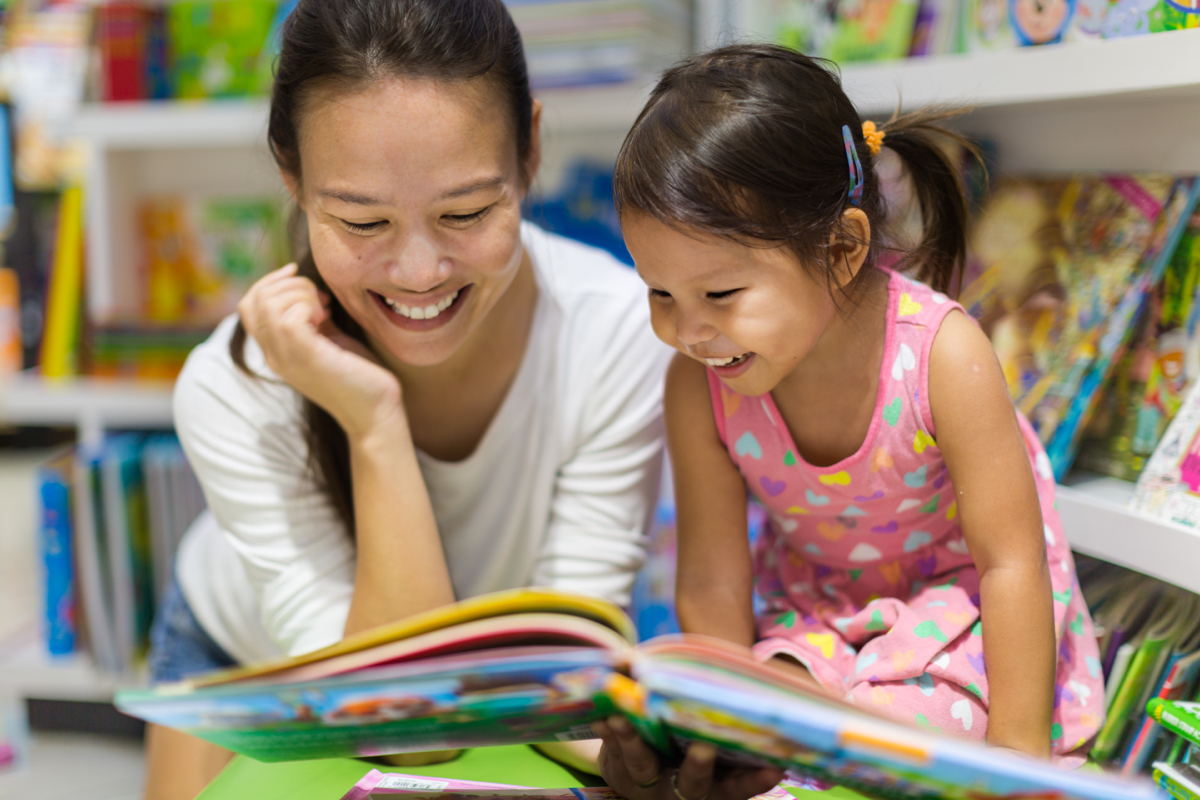
When your child was learning to talk, he was imitating you. The same goes for reading. Let your child see you read. If he sees you reading, he will want to read as well. Read to your child. He will associate reading with the comfort of snuggling up next to you. Read simple children’s books, pointing to each word as you go, reinforcing the idea of reading from left to right. Discuss the illustrations and how they relate to the story. Read chapter books that allow him to get fully engrossed in the story, forming pictures in his mind based only on the descriptions the author offers. Read with fluency and enthusiasm, using voice inflection to bring the story to life. Ask your child to narrate back what he heard, giving him practice in forming complex thoughts and speaking them aloud. Narration is a first step to writing well.
The next significant challenge of communication is learning to express oneself through writing. Like reading, your child’s readiness to write is essential. Forming letters is hard for developing hands. Putting those letters in the correct order to form words is quite a feat. While many have difficulty, spelling is essential to writing. The more a child sees the words spelled correctly, the easier spelling will be. Reading boosts spelling. If spelling remains a problem, it can improve when the computer is used for writing. As spell check signals a misspelled word, the child is given the opportunity to correct the error immediately, building confidence and satisfaction in a job well done.
Copy work and dictation are natural methods of learning to spell and write well. Begin copying short sentences using simple words. Gradually transitioning to dictation, increasing the length and complexity to include paragraphs and essays from the wisest thinkers, both past and present. The Bible is an excellent resource for these writing activities. In this way, children learn to write, just as they learn to speak, through imitation. With well-written works as a model, the child learns to write well. It can be tedious and challenging, but the benefits will be impressive.
Communication is a vital skill and a lifelong learning process. Make it a priority in the education of your child. While your child is learning, you might be pleasantly surprised to find that your communication skills are improving as well.