By Kyle Campbell
Synopsis: Daniel possessed an “extraordinary spirit,” and if we can mimic his spirit, it’ll produce four astounding benefits for us, our churches, and our communities.
Both the hummingbird and the vulture fly over the desert. All vultures see is rotting meat, because that’s what they look for—they thrive on that diet. Hummingbirds ignore the smelly flesh of dead animals. Instead, they look for the colorful blossoms of desert plants. The vultures live on what was—the past. They fill themselves with what is dead and gone. Hummingbirds live on what is—new life. They fill themselves with freshness and vitality. Each bird finds what it’s looking for. We all do.
Everyone who approaches the Bible hopefully does so to find a higher purpose for living. God gave us both testaments to have a storehouse of wisdom that will point us toward godly purpose. Daniel is a fantastic example of one who demonstrated godly purpose.
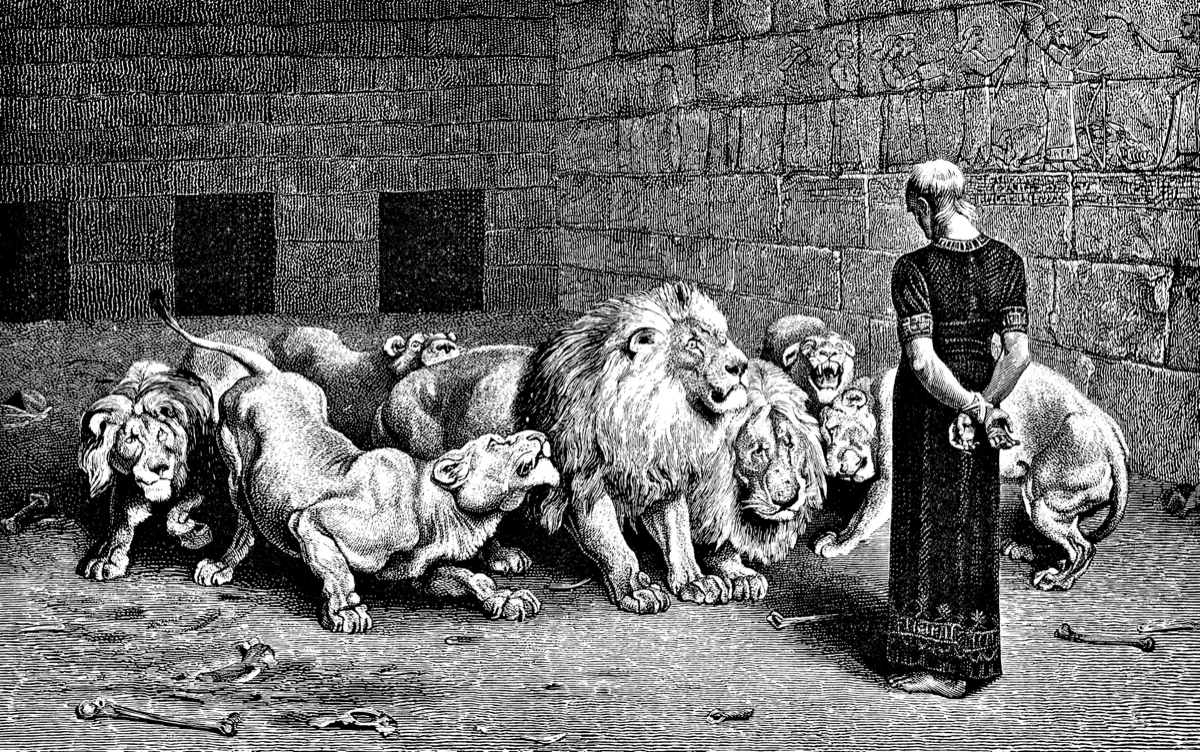
Daniel isn’t a great example by accident. The narrative of Daniel in the lion’s den begins by recounting the efforts of Darius to organize his kingdom after the takeover of Babylon by Persia in Daniel 5. After setting 127 satraps over his kingdom, it says of Daniel, “Then this Daniel began distinguishing himself among the commissioners and satraps because he possessed an extraordinary spirit, and the king intended to appoint him over the entire kingdom” (v. 3, NASB; cf. 5:12).
What does an “extraordinary spirit” mean? In short, it means a mental disposition of godliness, righteousness, and eminent spirituality. Learning from Daniel’s example and developing this spirit within yourself can result in four outstanding benefits.
Society is increasingly more skeptical than in previous generations. An “extraordinary spirit” doesn’t ignore important issues and downplay crucial questions from those younger, dismissing their doubt and missing a golden opportunity to establish them in the faith. God vanquishes doubt by giving us a revelation that can be examined and substantiated (Luke 1:1-4; Acts 1:1-3; 2 Pet. 1:16).
Sometimes our doubt isn’t in the word, but in us. God’s here to help by giving us the option to pray, gain wisdom, and diminish doubt (Jas. 1:5-6; cf. Daniel 6:10; 9:3). He furthermore assures us that when we follow His directions on courage (Josh. 1:9), He will be with us (Isa. 41:10).
An “extraordinary spirit” seeks answers and then integrates them into a maturing faith. There are only two times recorded in the Bible when Jesus marveled at anything. He marveled at the people’s great unbelief (Mark 6:6), and He marveled at a Gentile soldier’s great faith (Matt. 8:10). In what extreme will you be? The disciples had issues with doubt (Luke 24:38; John 20:27), and so will we. The “extraordinary spirit” can repair doubt when it arises in the heart.
Self-control is not only a fruit of the Spirit (Gal. 5:22-23); it’s also on Peter’s list of attributes that Christians develop to “make their call and election sure” (2 Pet. 1:6, 10). Daniel decided as a young man to not defile himself with the delicacies of Babylon (Dan. 1:8). This self-control resulted in favor of man and God.
Your “extraordinary spirit,” which is shown in your ability to reign in thoughts, words, and actions, will produce a strength of character that will pay rich dividends in your life, and save you a lot of self-inflicted pain. In turn, this will make other’s lives happier and more fulfilling.
The “snare of the devil” (1 Tim. 3:7; 2 Tim. 2:26) is Satan’s tactic to overwhelm and discredit us. The “roaring lion” can be resisted by those who are “steadfast in the faith” (1 Pet. 5:8-9). Daniel’s “extraordinary spirit” kept him from compromise when his life and faith were on the line.
James 1:14-15 explains that we sin when we give in to temptation. The “extraordinary spirit” knows how to set the mind on things above (Col. 3:2) and draw near to God (Jas. 4:8). It also knows that the wisest course of action with temptation is often to flee (1 Cor. 6:18; cf. Gen. 39:12). An “extraordinary spirit” won’t keep you from sinning entirely (1 John 1:8), but it’ll give you much greater power to overcome the evil one (1 John 2:13-14; 4:1-4).
The Bible spends a remarkable amount of time encouraging obedience to Jesus Christ. Once that obedience is activated, Scripture turns its attention to saints holding on to their salvation. This is why standing fast in doctrine is so important (Titus 2:1, 7).
Paul told Timothy, “Take heed to yourself and to the doctrine. Continue in them, for in doing this you will save both yourself and those who hear you” (1 Tim. 4:16). False doctrine destroys the faith of God’s saints, which is why it must be resisted (2 Tim. 2:17-18). An “extraordinary spirit” cares about true doctrine and won’t fellowship false doctrine (Eph. 5:11).
Because culture is always fluid, Christians are presented with various questions and challenges to their faith. Some of these will include “macro issues” (which pit Christians against the larger religious world) like the reliability of the Bible, the believability of the miracles of creation and the resurrection, the true nature of the church of Christ, the use of musical instruments when we worship, and the essentiality of baptism.
Other challenges include “micro issues” (which Christians discuss and dispute among themselves) such as divorce and remarriage, the existence of hell, the AD 70 doctrine, the deity of Christ, and the nature of the new heavens and new earth.
Bible writers warned that people would turn away from sound doctrine (2 Tim. 4:1-5; Jude 3-4). An “extraordinary spirit” will defend true doctrine against postmodernism, which postulates that people can believe any doctrine they wish, so long as they don’t insist that their doctrine is right and others are wrong.
The mission of Christ is advanced by teaching non-Christians and Christians. Matthew 28:19-20 is the mission of the kingdom: “Go, therefore, and make disciples of all the nations, baptizing them in the name of the Father and the Son and the Holy Spirit, teaching them to follow all that I commanded you; and behold, I am with you always, to the end of the age.”
The “extraordinary spirit” will move you to not only overcome the fear and embarrassment of asking a non-Christian to study the Bible, but it’ll also move you to teach and edify Christians where you worship. Almost every church with which I’ve come in contact desperately needs well-grounded saints who can communicate the word to younger generations, which brings them to maturity and solidifies the body of Christ (Eph. 4:11-16).
Daniel’s prophecies bothered him greatly (Dan. 4:19; 7:15, 28; 8:27; 10:2-3, 8, 16-17). At times, he didn’t know how to process the information God gave him. However, he was committed to the mission of telling both kings and the common people what God wanted them to know.
Don’t forget the promise that Christ will be with us as we make disciples. Proverbs 11:30 says, “He who wins souls is wise.” That’s another way of saying that it shows an “extraordinary spirit.”
There’s a couple of observations that need to be made before this article closes. First, as has been pointed out, Daniel’s “extraordinary spirit” reached all the way back to when he was a very young man. The time span between chapter 1 and 6 is approximately seventy years. Time didn’t destroy his spirit. Neither did his exposure to the pagan society of Babylonia. He was the living embodiment of Romans 12:1-2, which says, “Therefore I urge you, brothers and sisters, by the mercies of God, to present your bodies as a living and holy sacrifice, acceptable to God, which is your spiritual service of worship. And do not be conformed to this world, but be transformed by the renewing of your mind, so that you may prove what the will of God is, that which is good and acceptable and perfect.”
Second, there’s nothing in Daniel’s “extraordinary spirit” that can’t be replicated in you today. Our culture is arguably more righteous than Daniel’s exile culture, so I know that you’re capable of becoming a partaker of the “extraordinary spirit” of Daniel. The benefits of having this spirit within yourself will be seen in your family, church, and community. It’s difficult, but it’s not impossible. Once you develop the “extraordinary spirit,” you can then pass it along to others.