By Mark Mayberry
Synopsis: Spending a day at the courthouse, and observing our judicial system provided an excellent reminder of nature of evidence in relation to our faith and spiritual convictions.
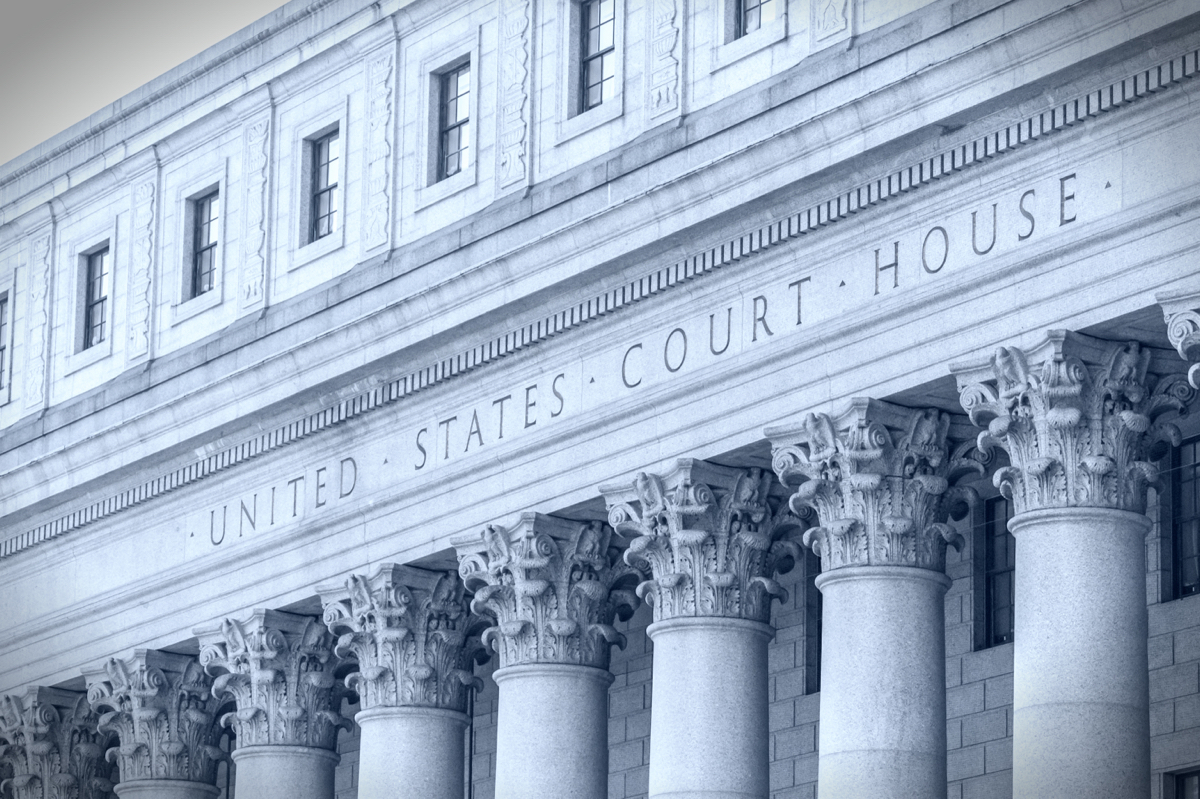
On Monday, January 23, 2023, I was summoned to the Brazoria County Courthouse in Angleton, TX, for potential jury service. Judge Justin R. Gilbert, who presides over the 412th District Court in Brazoria County, addressed the assembly of over 200 individuals who, like me, had received a jury summons. He provided us with instructions, administered the requisite oath, and divided the assembly into several seventy member pools that were assigned to various courtrooms in which cases were scheduled to be tried. From each pool, twelve jurors and two alternates would be chosen to hear the evidence and decide the fate of those who had been indicted and were scheduled to be tried by a jury of their peers.
During his orientation speech, Judge Gilbert described the privileges we enjoy in the United States of America. Our constitution guarantees certain rights, including the right of trial by jury. He traced the history of this right, from the Magna Carta, a charter of liberties to which the English barons forced King John to give his assent in June, 1215, at Runnymede. This seminal document became the foundation of the liberties that we enjoy today, including the right to trial by jury.
The Magna Carta, also known as the English Great Charter, was the “charter of English liberties granted by King John on June 15, 1215, under threat of civil war and reissued, with alterations, in 1216, 1217, and 1225. By declaring the sovereign to be subject to the rule of law and documenting the liberties held by”free men,” the Magna Carta provided the foundation for individual rights in Anglo-American jurisprudence (Britannica.com).
The right to trial by a jury of one’s peers was also important to the founding fathers of the United States. Three separate provisions of the U.S. Constitution provide for the right to a trial by jury.
Article III, Sec. 2 provides: “The trial of all crimes, except in cases of impeachment, shall be by jury; and such trial shall be held in the State where the said crimes shall have been committed.”
The Sixth Amendment says: “In all criminal prosecutions, the accused shall enjoy the right to a speedy and public trial, by an impartial jury of the State and district wherein the crime shall have been committed. . .”
Finally, for civil matters, the Seventh Amendment provides: “In suits at common law, where the value in controversy shall exceed twenty dollars, the right of trial by jury shall be preserved, and no fact tried by a jury, shall be otherwise re-examined in any court of the United States, than according to the rules of the common law.”
Attempting to offset the sense of frustration that often accompanies the reception of a jury summons, Judge Gilbert sought to inspire a sense of devotion and duty in the hearts of the assembly. He said,
“We live in the greatest nation in the world. We live in the greatest state in the greatest nation in the world. We live in the greatest county in the greatest state in the greatest nation in the world.”
Granted, Judge Gilbert was seeking to motivate the audience, many who doubtlessly would rather not spend the day (and potentially the following week or so) at the county courthouse. Yet, while cynics might characterize his comments as corny, I appreciated the reminder. In an age when woke progressives view the United States as the source of evil in the modern world, I am grateful for sincere expressions of patriotism.
As Christians, we should view our service to God in a similar manner. It is a privilege to be counted as children of God and disciples of the Lord Jesus Christ. With these privileges come responsibilities, which should not be viewed as burdensome duties, but blessed opportunities (Heb. 12:18-24).
For you have not come to a mountain that can be touched and to a blazing fire, and to darkness and gloom and whirlwind, and to the blast of a trumpet and the sound of words which sound was such that those who heard begged that no further word be spoken to them. For they could not bear the command, “IF EVEN A BEAST TOUCHES THE MOUNTAIN, IT WILL BE STONED.” And so terrible was the sight that Moses said, “I AM FULL OF FEAR and trembling.” But you have come to Mount Zion and to the city of the living God, the heavenly Jerusalem, and to myriads of angels, to the general assembly and church of the firstborn who are enrolled in heaven, and to God, the Judge of all, and to the spirits of the righteous made perfect, and to Jesus, the mediator of a new covenant, and to the sprinkled blood, which speaks better than the blood of Abel (Heb. 12:18-24).
The liberties we enjoy as American citizens were purchased at a high cost. Freedom from the curse of sin came at even a higher cost (2 Cor. 5:14-15). This recognition should cause us to embrace our spiritual responsibilities: living righteously, attending faithfully, giving generously, laboring diligently, etc.
For the love of Christ controls us, having concluded this, that one died for all, therefore all died; and He died for all, so that they who live might no longer live for themselves, but for Him who died and rose again on their behalf (2 Cor. 5:14-15).
When the orientation was completed, the assembly was dismissed until later in the day, when each prospective juror was to report to the courtroom to which he had been assigned.
I was assigned to Judge Gilbert’s courtroom, located on the second floor of the courthouse. I showed up at 11:45 a.m. and after standing around for another forty-five minutes, was ushered into his courtroom, where we spent Monday afternoon, receiving further instructions from the judge, and listening to presentations by both the prosecuting and defense attorneys who were assigned to this case.
Larry Dale King, Jr. was being tried by the State of Texas—having been indicted for “tampering with physical evidence,” a second degree felony that carried a prison sentence of two to twenty years, and a fine of 10,000 USD, if the defendant was convicted. Legalistic language masked the seriousness of this offense. The physical evidence that Mr. King allegedly tampered with was a corpse.
Voir dire, which lasted all afternoon, is the preliminary phase of a jury trial in which the jurors are examined and selected. The judge, the prosecutor, and the defense attorneys all spoke to the potential jurors. As Bryan Rock, a prosecutor for the State of Texas, explained, “voir dire” simply means “to speak our mind and tell the truth.”
According to the American Heritage Dictionary, this portion of a trial is:
The formal examination of a prospective juror under oath to determine suitability for jury service or of a prospective witness under oath to determine competence to give testimony.
The prosecutor and defense attorneys each addressed the pool of potential jurors, setting forth principles that we were obligated to follow if they selected us to serve. Through asking questions and soliciting responses, the prosecution and defense teams were seeking to winnow out anyone who evidenced clear bias, and would therefore be unqualified to fulfill this important civic duty.
Our pool of seventy potential jurors was composed of a diverse group of Brazoria county residents. We differed in race and ethnicity. Some were Caucasian, Black, Hispanic, Asian. The economic status of the jury pool was also diverse, ranging from restaurant workers to medical researchers. One young lady worked at What-A-Burger. One man was a heart surgeon at M. D. Anderson. There were truck drivers and teachers, students and retirees, etc. When the twelve jurors and two alternates were finally selected, they reflected the same diversity.
In a similar manner, the church is composed of people from all backgrounds. Yet, despite our differences, if we are committed to Christian principles, we can also work together to accomplish God’s will (John 10:16; Acts 13:1-3; Gal. 3:28).
I have other sheep, which are not of this fold; I must bring them also, and they will hear My voice; and they will become one flock with one shepherd (John 10:16).
Now there were at Antioch, in the church that was there, prophets and teachers: Barnabas, and Simeon who was called Niger, and Lucius of Cyrene, and Manaen who had been brought up with Herod the tetrarch, and Saul. While they were ministering to the Lord and fasting, the Holy Spirit said, “Set apart for Me Barnabas and Saul for the work to which I have called them.” Then, when they had fasted and prayed and laid their hands on them, they sent them away (Acts 13:1-3).
There is neither Jew nor Greek, there is neither slave nor free man, there is neither male nor female; for you are all one in Christ Jesus (Gal. 3:28).
Both the prosecution and the defense teams stressed the importance of a jury being willing to be fair and open-minded of the evidence as they reach a verdict. If convicted, the individual standing trial might spend the next twenty years behind bars.
Mr. Lintton, the defense attorney, went around the room, moving his hand in a back-and-forth fashion, asking, “Are you willing to listen to both sides of the story and honestly consider the evidence presented by the prosecution and the defense?” In like manner, believers are obligated to approach God’s word with the same open-minded spirit (Acts 10:33; 17:11-12).
So I sent for you immediately, and you have been kind enough to come. Now then, we are all here present before God to hear all that you have been commanded by the Lord (Acts 10:33).
Now these were more noble-minded than those in Thessalonica, for they received the word with great eagerness, examining the Scriptures daily to see whether these things were so. Therefore, many of them believed, along with a number of prominent Greek women and men (Acts 17:11-12).
Our duty as jurors was set forth as follows: We were obligated to (1) judge the facts with an open-mind (2) follow the judge’s instructions, (3) listen to the witnesses that would be called to testify, and weigh the evidence that would be presented, (4) assign credibility to the witnesses, and finally, (5) to reach a verdict. If the jury concludes that the state has proven its case beyond a reasonable doubt, they are obligated to return a guilty verdict.
We were reminded that proof of the defendant’s guilt does not mean 100% certainty, but is based upon a presentation of evidence that is counted as credible beyond a resonable doubt. Otherwise, if 100% certainty was required, each juror would need to witness of the event.
Types of evidence: (1) direct evidence; (2) circumstantial evidence. Direct evidence comes from an eyewitness who declares, “I saw it happen!” Everything else is circumstantial evidence, which is not enough to secure a conviction.
Jury members must not engage in speculation, but they can make deductions based upon evidence, and draw inferences. Juries must use their common sense to determine the guilt or innocence of the accused.
This is exactly how we come to believe the gospel message and how we establish Bible authority. We don’t engage in speculation, or listen to hearsay, or give credence to outside sources, or societal pressures, but rely exclusively upon the testimony of God’s word to reach our verdict of what is truth and what is error (Isa. 8:19-20).
When they say to you, “Consult the mediums and the spiritists who whisper and mutter,” should not a people consult their God? Should they consult the dead on behalf of the living? To the law and to the testimony! If they do not speak according to this word, it is because they have no dawn (Isa. 8:19-20).
Furthermore, we use these same common sense methods in establishing Bible authority: heeding commands, following examples, drawing inferences.
In a similar manner, we are called to weigh the evidence of Christ’s resurrection. None of us witnessed His ministry, arrest, trial, death, burial, resurrection, and ascension. Therefore, we must rely upon physical evidence and the testimony of witnesses.
How do we explain the empty tomb of Jesus? Are the witnesses competent? Are they credible? Is their testimony consistent?
What ulterior motives would have caused Peter or Paul to offer false testimony about the risen Savior? What would motivate such perjury? Riches? Power? Position?
Peter gave up a successful fishing business to become a follower of Jesus Christ. Paul was a rising star of Judaism, had achieved power and position—if not fame and fortune. Yet both sacrificed their earthly ambitions on the altar of discipleship (Mark 10:28-30; Phil. 3:2-8).
Peter began to say to Him, “Behold, we have left everything and followed You.” Jesus said, “Truly I say to you, there is no one who has left house or brothers or sisters or mother or father or children or farms, for My sake and for the gospel’s sake, but that he will receive a hundred times as much now in the present age, houses and brothers and sisters and mothers and children and farms, along with persecutions; and in the age to come, eternal life (Mark 10:28-30).
Beware of the dogs, beware of the evil workers, beware of the false circumcision; for we are the true circumcision, who worship in the Spirit of God and glory in Christ Jesus and put no confidence in the flesh, although I myself might have confidence even in the flesh. If anyone else has a mind to put confidence in the flesh, I far more: circumcised the eighth day, of the nation of Israel, of the tribe of Benjamin, a Hebrew of Hebrews; as to the Law, a Pharisee; as to zeal, a persecutor of the church; as to the righteousness which is in the Law, found blameless. But whatever things were gain to me, those things I have counted as loss for the sake of Christ. More than that, I count all things to be loss in view of the surpassing value of knowing Christ Jesus my Lord, for whom I have suffered the loss of all things, and count them but rubbish so that I may gain Christ (Phil. 3:2-8).
Christian faith is based upon a solid evidentiary foundation, but ultimately, we walk by faith and not by sight (2 Cor. 5:7).
When “doubting” Thomas encountered the risen Savior, conviction quickly supplanted skepticism. Jesus said, “Reach here with your finger, and see My hands; and reach here your hand and put it into My side; and do not be unbelieving, but believing.” In response, Thomas answered, “My Lord and my God!” Jesus said to him, “Because you have seen Me, have you believed? Blessed are they who did not see, and yet believed” (John 20:19-29, esp. v. 29).
No one living in the post-apostolic era has seen Jesus Christ. Nevertheless, Christian faith has a solid foundation. The physical universe declares God’s glory. The Bible is such a glorious, life-changing, and transcendent message, it could never have originated with mortal men. Creditable wittness testify to the life, death and resurrection of our Lord.
Now faith is the assurance of things hoped for, the conviction of things not seen. For by it, the men of old gained approval (Heb. 11:1-2).
“Constitution Annotated.” Congress.gov. https://constitution.congress.gov/constitution/.
“Magna Carta.” Britannica.com. https://www.britannica.com/topic/Magna-Carta.
“Voir dire.” The American Heritage Dictionary of the English Language, Fifth Edition. HarperCollins Publishers, 2022.