By Heath Rogers
Synopsis: Calvinism continues to be a subtle threat. When this grid is imposed upon Scriptures, it corrupts not only our view of the biblical text but also our self-understanding.
We live in an amazing time of unlimited access to information. Anyone can produce and upload content to the internet through various platforms for free. This content can be accessed and consumed by others on a scale that was unheard of years ago. While there are blessings to living in this Information Age, it requires that Christians be discerning readers, hearers, and viewers.
When Christians venture away from teachings produced by faithful brethren, they subject themselves to doctrinal error. If they are not careful, this error will take seed in their hearts. Instead of searching the Scriptures to make sure what they have heard is the truth (Acts 17:11), some will allow these newly found ideas to determine the meaning of Scripture.
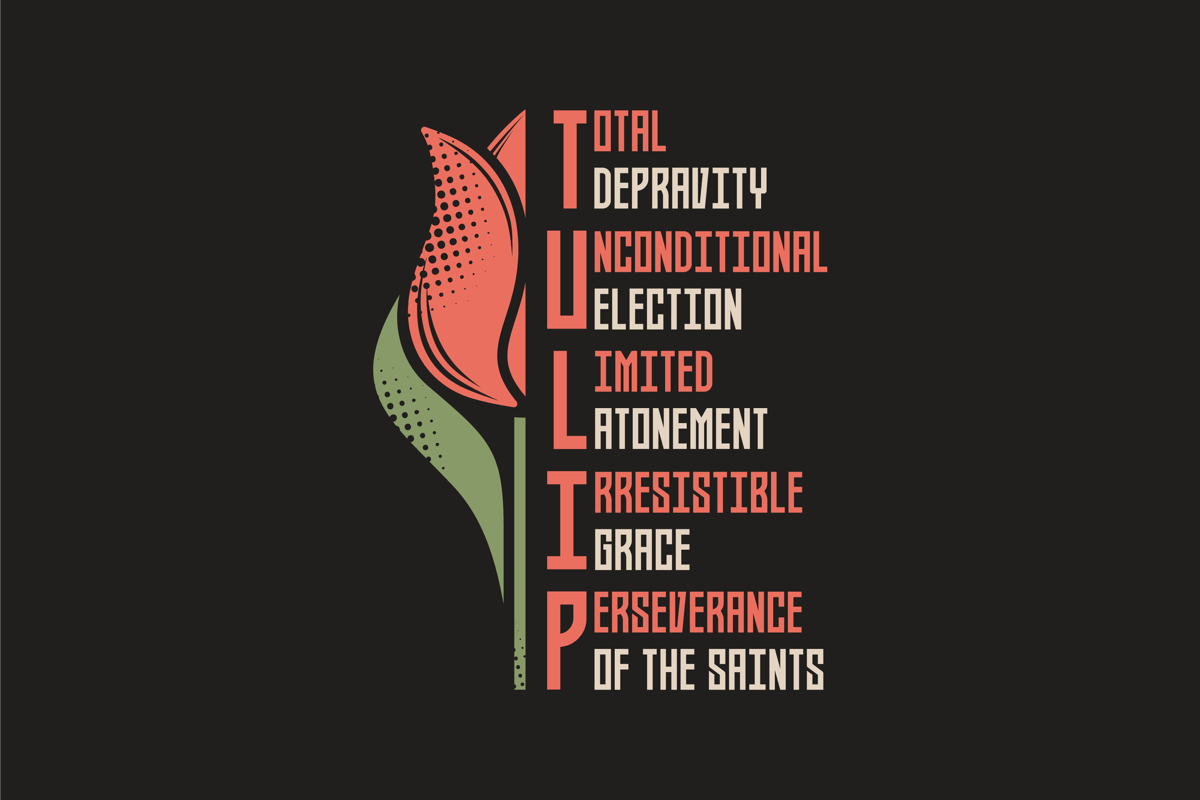
Calvinism is a false theological system permeating the denominational world. While some adherents reject the full five points of Calvinism (Total Hereditary Depravity, Unconditional Election, Limited Atonement of the Blood of Christ, Irresistible Grace, and Perseverance of the Saints), they zealously uphold some of these errors.
Unfortunately, we sometimes hear brethren question the validity of Calvinistic ideas. If not quickly corrected, these brethren will become unsatisfied with the Lord’s church and drift away into denominationalism. Such problems are caused when brethren dabble in Calvinism. The word dabble means to “take part in an activity in a casual or superficial way.” Christians who talk with denominational friends, read popular books written by evangelicals, or view such religious content on the internet, will be introduced to, and bombarded with, various teachings that are rooted in Calvinism. When these errors are not corrected with the truth of Scripture, such hearts can drift away into error. These seeds of Calvinism sown into the hearts of brethren can be detected in various ways.
For instance, the false belief that we are led by the Holy Spirit in a manner separate and apart from the word of God can be traced to the influence of Calvinism. Calvinists believe unregenerate man is incapable of responding in obedience to the gospel call. It requires a direct operation of the Holy Spirit to make us alive spiritually and causes us to respond in obedience. Unfortunately, some Christians haven’t studied and learned what the Bible actually says about the way the Holy Spirit influences man today. This vacuum is easily filled with Calvinistic error. It is becoming more common to hear Christians claim the Holy Spirit is operating in their hearts and lives in a manner separate and apart from the word of God.
Calvinists explain that our struggle with sin and temptation results from everyone being born with a sinful nature inherited from Adam. In years past, many Christians recommended that my wife and I read books by Dr. James Dobson to help us in raising our children. We found Dr. Dobson’s material to be filled with references to children’s “inbred sinful nature” as being the cause for their tantrums, disrespect, rebellion, and disobedience. These affirmations are from the false doctrine of Calvinism.
Preachers and Bible students must be careful of the Calvinism found in many commentaries. Old standards, like Clark, Barnes, Pulpit Commentary, etc., are full of Calvinist errors. More modern popular authors like Wiersbe, Stott, and MacArthur are also Calvinistic. I have these books in my library and have benefitted from some writings by these authors. These resources are helpful, but they must be used with discernment. If not, Calvinistic ideas can easily creep into our sermons and Bible classes from these sources. Not only are we blessed to live in a time of unlimited access to information, we are also blessed to live in a time in which numerous commentaries and Bible study materials have been written by faithful brethren. Why aren’t these resources being recommended and preferred over Calvinistic sources?
The influence of Calvinism is also present in some of our hymns. I have heard a few hymns penned by denominational writers claim that our sins are covered by the blood of Jesus. The idea is that Christ hides our sins from God. When He looks down on us, He doesn’t see our imperfections; He only sees the perfection of His Son. This is Calvinism’s false view of how we are made righteous before God. In contrast, the Bible plainly teaches that our sins are washed away in the blood of Christ, not covered. “To Him who loved us and washed us from our sins in His own blood” (Rev. 1:5b). “If we walk in the light as He is in the light, we have fellowship with one another, and the blood of Jesus Christ His Son cleanses us from all sin” (1 John 1:7). Please note, the blood of Jesus Christ cleanses us, not covers us. “Such were some of you. But you were washed, but you were sanctified, but you were justified in the name of the Lord Jesus and by the Spirit of our God” (1 Cor. 6:11). “Washed,” “sanctified,” “justified”—not covered. We must be extremely careful of the influence of Calvinism from hymns.
Calvinism is popular because it removes man’s responsibility. If I am born a sinner, and I can’t be saved unless God wants to save me personally, and once I am saved, there is no way I can be lost—there isn’t anything left for me to do. In contrast, the Bible plainly teaches that we are capable of choosing to obey or reject God (Deut. 30:19; Acts 7:51). Christians are responsible for confessing and repenting of their sins to receive God’s forgiveness (1 John 1:9; Acts 8:22). We are admonished to examine ourselves (2 Cor. 13:5). Like David, our prayer should be that we would become aware of our secret faults and correct them (Ps. 19:12). We decide whether we will be conformed to this world or transformed by the renewing of our minds (Rom. 12:2). Calvinism says all of this is impossible.
False views of grace and works relating to our salvation come from Calvinism. The Bible teaches that grace is a gift. It is when God gives us something, not because we have earned it, but because it pleases Him to give it. Grace can’t be earned. “Now to him who works, the wages are not counted as grace but as debt. But to him who does not work but believes on Him who justifies the ungodly, his faith is accounted for righteousness” (Rom. 4:4-5).
Nevertheless, this doesn’t mean God’s grace is offered without conditions. For instance, God gave Israel the city of Jericho. “The Lord said to Joshua: ‘See! I have given Jericho into your hand, its king, and the mighty men of valor’” (Josh. 6:2, emphasis mine—HR). It was a gift of God’s grace. However, to receive it, they had to meet conditions; they had to march around the city, blow horns, and shout (vv. 3-5). They did not earn the city, but they received it from God when they met His conditions. Salvation is offered freely. It can’t be earned. It can only be received when we meet the conditions that have been set forth in the gospel. “Having been perfected, He became the author of eternal salvation to all who obey Him” (Heb. 5:9).
Calvinism also portrays grace as being at odds with every kind of law. “Therefore, we conclude that a man is justified by faith apart from the deeds of the law” (Rom. 3:28, c.f. Eph. 2:8-9). However, a close look at the context of both Romans and Ephesians shows that the law being discussed is the Law of Moses, not law in general. Any attempt to pursue righteousness through a law that is void of the blood of Christ requires perfection, which would negate grace. However, salvation by God’s grace is obtained through the law of Christ.
While no faithful Christian would claim to believe in “Once Saved, Always Saved” many seem to live as if they accept this error. Christians can take joy and comfort in the assurance of their salvation. “These things I have written to you who believe in the name of the Son of God, that you may know that you have eternal life, and that you may continue to believe in the name of the Son of God” (1 John 5:13, emphasis mine—HR). However, this salvation must never be taken for granted. We can fall away. Christians can sometimes take an attitude of “I’ll sin today and repent for it tomorrow.” Granted, we may be sarcastically joking with such an attitude, but our Calvinistic friends aren’t joking. They are serious. Soon, drifting brethren won’t be joking either.
Brethren, we need to be very careful about the things we allow to influence us. Choosing religious books, blogs, podcasts, on-line videos, etc., over sinful or secular ones is commendable, but they are not without dangers. Today, as much as ever, Christians must be discerning consumers of such material. Before we imbibe in these products, we must first ground ourselves in the truth of God’s word. There are plenty of books, commentaries, periodicals, blogs, sermons, etc. produced by faithful Christians for us to consume during our day. However, even when reading after and listening to brethren, we must still consult the word of God and make sure we are hearing the truth. “These were more fair-minded than those in Thessalonica, in that they received the word with all readiness, and searched the Scriptures daily to find out whether these things were so” (Acts 17:11).