By Diana Dow
Synopsis: Teaching by example and observation how to start and how to maintain a friendship is an integral part of a homeschool family’s life.
Relationships are important. People need each other. We desire to surround ourselves with people we love. God knew this when He gave Eve to Adam, creating the first family. The family offers parents and children a God-designed inner circle who love and care for each other.
And the LORD God said, “It is not good that man should be alone; I will make him a helper comparable to him” (Gen. 2:18).
For those of “like precious faith,” we fill the area just outside the innermost circle with our brethren. God designed the church to support each other, love each other, help each other go to heaven. This is where our first group of friends outside our family will be found. Our children need to be encouraged to build relationships with old and young alike among our brethren. We need to be teaching our children that their brethren are their best friends.
This requires spending time together, i.e., time inside and outside the regularly scheduled worship services.
Be kindly affectionate to one another with brotherly love, in honor giving preference to one another (Rom. 12:10).
With our inner circle designated by God and our second circle determined when we chose to follow God, what about other relationships? How do we choose with whom to become friends with whom to keep at arm’s distance?
Friends can be a blessing if chosen wisely. A friend can warn of bad choices. A friend can encourage excellence. A friend can make one a better person.
As iron sharpens iron, so a man sharpens the countenance of his friend (Prov. 27:17).
Alternatively, friends can also be a curse. A friend can encourage dangerous and immoral behavior. A friend can cause one to turn from God.
Do not be deceived: Evil company corrupts good habits (1 Cor. 15:33).
Parents must teach their children how to choose friends and how to develop friendships. Homeschool parents proactively guide the relationship process when they participate with their children in various activities. Through example, the parent can teach how to approach new people, how to listen to others, how to engage in friendly conversation, and how to be a friend.
A man who has friends must himself be friendly. . . (Prov. 18:24).
How does a homeschool family go about forming relationships with those outside their family? Where do they go to meet other people?
I have heard it said that, for two people to form a friendship, they need to be with each other in seven different settings. Sitting in the same Bible class for seven weeks or attending seven park days is not enough to form a friendship. Yet, if the two people go to a variety of events (like attending a couple of park days, a field trip, a teen devotional, a couple of Bible classes, and even running into each other at the store), these shared experiences increase the chance of forming a bond, which, if nurtured, will grow into a solid relationship—a friendship.
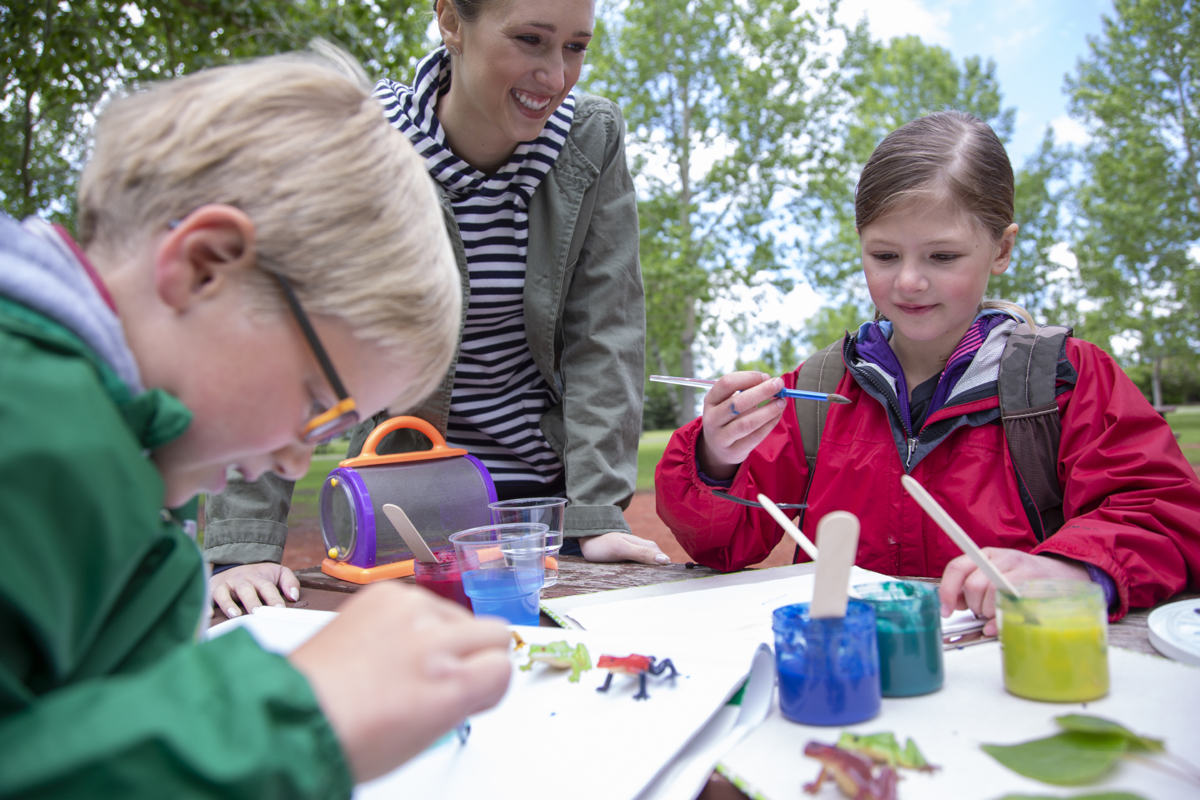
There are obvious activities that bring children with common interests together. 4-H, Scouts, sports, are some in which public, private and homeschool children participate together. For the homeschool family, it takes a little detective work to find out how to get involved, but once the right contacts are made, they can be a great addition to the education of the children. There are also many activities open to homeschool students exclusively. Finding these can be a little more difficult, but well worth the effort.
Back in the day, in the early 1990s, communication among homeschoolers was initiated through word of mouth. Once the connection was made, strong bonds were created with those of similar educational philosophies. There were fewer people homeschooling back then. Most who didn’t frowned on it. Here in Texas, it had only recently become legal. We stayed connected through support group newsletters delivered to our front door by the mailman. Archaic, I know. Eventually, these support groups created websites that allowed newcomers who move to town, as well as residents who are new to homeschooling, to find them easily. As social media platforms arose, snail mail newsletters became obsolete and eventually most websites did as well. Today, a quick search of Facebook for homeschool groups in your area can get you connected with the locals in no time.
These means of communication, past and present, have allowed homeschoolers to create communities of like-minded families. Field trips, music groups, sports days, park days, moms’ night out, etc. are classic group activities used in the past and the present by many homeschool families. A prevalent method homeschoolers are using today is joining a co-op. A co-op is simply a group of families who have chosen to pool their talents and resources to provide a variety of learning opportunities for their children. All the previous activities listed (and more) can be included in one day in one location. Each co-op has its own style. Finding one that fits your family is like discovering a treasure.
Sounds like fun, doesn’t it? It is. Getting together with others of like mind can be uplifting. Moms can discuss everything from child-rearing to curriculum to raising chickens. Friendships are made. Children can practice their relationship-building skills with others from all age groups while learning new things. Friendships are made.
Two words of warning. First, it is important to note that not every activity marketed toward homeschoolers will encourage the same values that you are trying to instill in your child. There are many people choosing to homeschool who have no plans to put God first in their lives. In fact, there are many who directly oppose Him. Second, outside activities can be time-consuming. It is easy, in trying to fill a void in your child’s social life, to over schedule. This can leave little time for relationship building with your family and brethren. Choose wisely.