(January, 2023 | No. 1 | Vol. 67)
1/1/2023
Truth Magazine (ISSN 1538-0793) is published once a month by Truth Publications, Inc., 220 S. Marion, Athens, AL 35611. Postage paid at Decatur, AL, and additional mailing offices.
© 2023 Truth Publications, Inc. All Rights Reserved.
Manuscripts should be sent to the editor: Mark Mayberry (mark@truthpublications.com).
Subscriptions, renewals & other correspondence should be sent to: Truth Magazine, 220 S. Marion, Athens, AL 35611 (subscriptions@truthmagazine.com).
Book orders should be sent to: CEI Bookstore | truthbooks.com 220 S. Marion, Athens, AL 35611 Phone: (855) 492-6657 sales@truthbooks.com
Online Website: truthmagazine.com
DISCLAIMER: Books in ads are screened but an ad does not mean unqualified endorsement. All books should be tested by Scripture. We appreciate readers notifying us if they find some glaring fault in ads.
By Mark Mayberry
Synopsis: In a culture that is hostile to Christian faith, God’s people need the courage and commitment to remain distinctive. May we let our lights shine in this dark world!
Miriam, Aaron, and Moses were the children of Amram and Jochebed (Exod. 6:20). While Moses is the most famous of these siblings, the scriptural record contains enough details that we can learn valuable lessons from each.
As a young girl, Miriam showed compassion in watching over her baby brother, Moses, and evidenced courage by acting decisively to help protect his physical and spiritual wellbeing (Exod. 2:1-10).
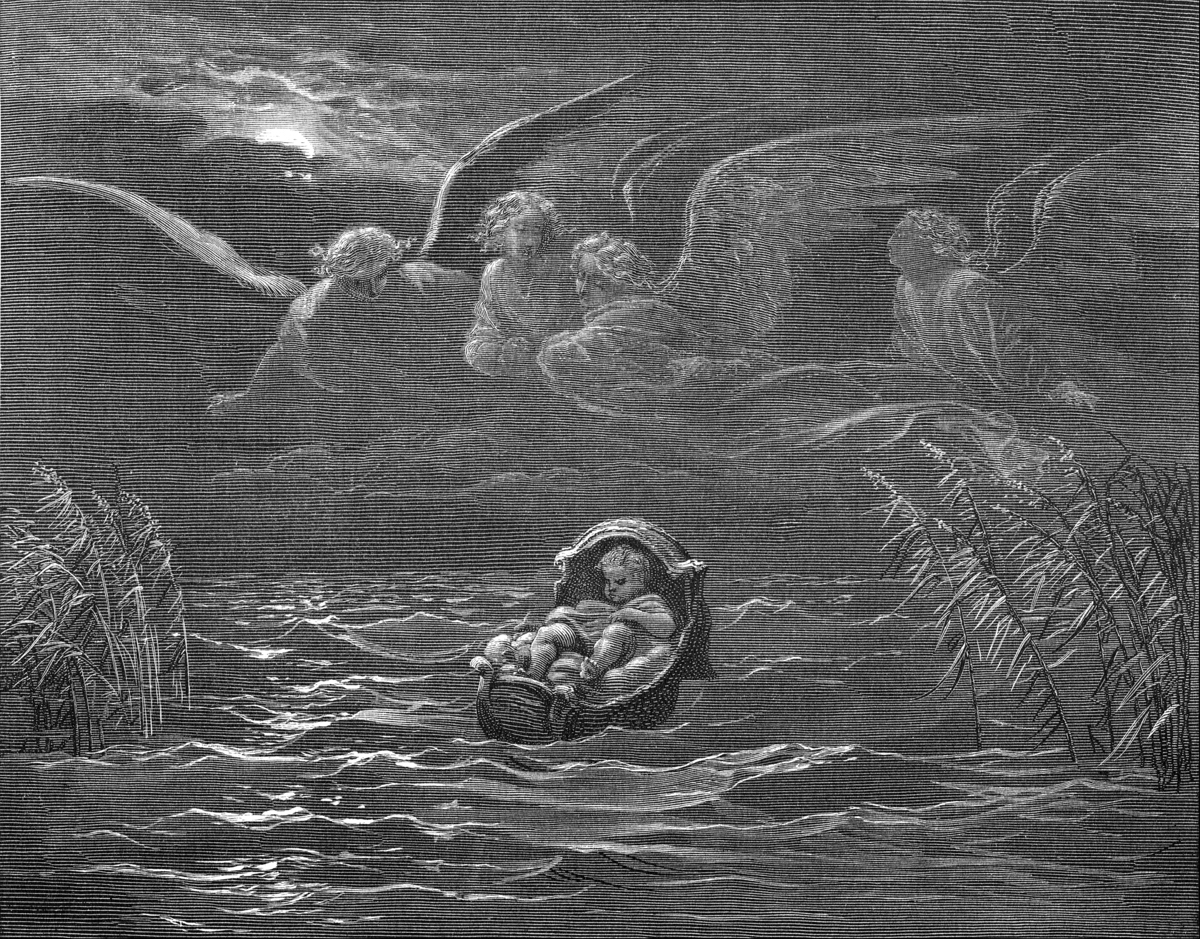
Put yourself in her position. Miriam, a simple slave girl, as she watches over her brother as he floated among the reeds in a wicker basked. Along comes a princess of Egypt and her maidens, who discover the basket held a crying child.
In your mind, allow time to stop and ponder the significance of this moment. What divergent paths could the story here take? If the Egyptian princes possesses the callous spirit of her father, she would say, “It’s nothing but an accursed Israelite’s male child. Toss him into the Nile and leave him for the crocodiles.” If she was flighty and bubble-headed, the surrounding sights and sounds might have quickly distracted her: “Look, an Ibis!” (i.e., a bird that was venerated in ancient Egypt and considered sacred). Instead, she showed compassion: The daughter of Pharaoh has pity on the child, saying, “This is one of the Hebrews’ children.” The Hebrew word chamal, translated “pity,” means “to have compassion” (Koehler, 328) or “to become responsible. . . to spare” (BDB, 328). What a mature young lady!
However, a second dramatic pause immediately follows. Having witnessed this scene from a distance (Exod. 2:4), Miriam now faced a choice. She was a slave girl in the presence of Egyptian royalty. In Egyptian mythology, Pharaoh was a god. His children shared in his divinity. According to the superstitions of the age, Miriam was not merely in the presence of a princess, she was in the presence of a goddess. Did she run? Did she hide? Did she remain silent? Remarkably, this young slave girl summoned the courage to speak: “Shall I go and call a nurse for you from the Hebrew women that she may nurse the child for you?”
Pharaoh’s daughter said to her, “Go ahead.” So the girl went and called the child’s mother. Then Pharaoh’s daughter said to her, “Take this child away and nurse him for me and I will give you your wages.” So the woman took the child and nursed him.
The child grew, and she brought him to Pharaoh’s daughter and he became her son. And she named him Moses, and said, “Because I drew him out of the water.”
Carpe diem (Latin: “pluck the day” or “seize the day”) is a phrase made famous by the Roman poet, Horace, which expresses the idea that one should enjoy life while one can.
Carpe diem is part of Horace’s injunction “carpe diem quam minimum credula postero,” which appears in his Odes (I.11), published in 23 BCE. It can be translated literally as “pluck the day, trusting as little as possible in the next one.” The phrase carpe diem has come to stand for Horace’s entire injunction, and it is more widely known as “seize the day” (Britannica).
While many apply this concept to the pursuit of pleasure, the apostle Paul, in two of his prison epistles, provides a more meaningful and moral application: We should redeem the time, i.e., make the most of the opportunities afforded each day (Eph. 5:15-16). Specifically, this includes the value of thoughtful and timely speech (Col. 4:5-6).
Yes, there is a time to be silent, but there is also a time to speak (Eccl. 3:1, 7b). May we recognize the power of a word spoken properly in the right circumstances (Prov. 25:11-15).
Like apples of gold in settings of silver is a word spoken in right circumstances. Like an earring of gold and an ornament of fine gold is a wise reprover to a listening ear. Like the cold of snow in the time of harvest is a faithful messenger to those who send him, for he refreshes the soul of his masters. Like clouds and wind without rain is a man who boasts of his gifts falsely. By forbearance, a ruler may be persuaded, and a soft tongue breaks the bone (Prov. 25:11-15).
If Miriam cowered in silence, what would happen to Moses? Would they ever see him again? How would he be raised? Her brother’s future and her mother’s happiness hung in the balance. Yet these seconds were even more momentous. Although Miriam did not know it, her people’s destiny, and (in a sense) the hope of the world, was hanging in the balance.
Yes, it is true that God’s eternal purpose would be realized, one way or the other. As Jehoshaphat, king of Judah, once said, “O LORD, the God of our fathers, are You not God in the heavens? And are You not ruler over all the kingdoms of the nations? Power and might are in Your hand so that no one can stand against You” (2 Chron. 20:6).
While God affects human affairs by fiat, divine providence is frequently felt indirectly through the lives of his faithful followers (Esther 4:13-14).
After God delivered Israel from Egyptian captivity, and the army of Pharaoh lay dead of the shores of the Red Sea, Miriam, the prophetess, showed conviction in leading the women in praise to God, as the nation of Israel celebrated their deliverance from captivity (Exod. 15:1-21, esp. vv. 20-21). Elsewhere, she is identified as one sent by God (Micah 6:4). Like Miriam, we should have sufficient faith to praise God openly.
Unfortunately, Miriam also struggled with critical attitudes that sometimes take root in our hearts. Miriam and Aaron murmured against Moses because of the Cushite woman whom he had married (Num. 12:1-10). Part of their complaint was personal. Miriam and Aaron didn’t like their sister-in-law, which may have resulted from cultural or racial prejudice. Part of their complaint was prideful. They said, “Has the Lord indeed spoken only through Moses? Has He not spoken through us as well?”
God rebuked both Aaron and Miriam, temporarily afflicting her with leprosy to emphasize the shamefulness of their actions. Yet, He mercifully ended her punishment, and restored her to a position of honor in Israel.
Why did God judge Miriam so severely? So that she might learn humility and respect. She was the older sister, but that did not grant her superiority. Miriam and Aaron also needed to acknowledge God’s right to accomplish His purposes in His own way. In a sense, the Lord manifested remarkable patience. During the wilderness wandering, others who rebelled against Moses faced much harsher judgment. Miriam is not mentioned again until her death and burial at Kadesh in the Wilderness of Zin (Num. 20:1).
Aaron was the brother of Moses and Israel’s first high priest. He was three years older than Moses (Exod. 7:7). Aaron married Elisheba, who bore him four sons: Nadab and Abihu, Eleazar and Ithamar (Exod. 6:23).
Even though he was older than Moses, Aaron willingly served as his brother’s spokesman (Exod. 4:14-17). Moses and Aaron faithfully communicated God’s word to the elders of Israel, and performed signs in the sight of the people. As a result, the Israelites believed and worshipped God (Exod. 4:27-31). Moses and Aaron also faithfully communicated God’s command to Egypt’s obstinate ruler—performing signs, bring the plagues upon Israel’s pagan oppressors (Exod. 7:1-7).
Unfortunately, Aaron faltered with standing alone in the spotlight (Exod. 32:1-6). Sometimes we are faithful when surrounded by fellow-Christians, but stumble when standing alone. Assembling with the saints is a significant source of spiritual encouragement (Heb. 10:23-25). Faithful brethren exhort one another through words and deeds (1 Thess. 5:11; Heb. 3:13).
Valuable lessons also come from considering the aftermath.
God’s Righteous Indignation: The Lord’s wrath was so great that He offered to destroy Israel and raise up a nation from Moses (Exod. 32:7-10).
Moses’s Humble Entreaty: Pleading for the people, Moses asked the Lord to turn from his burning anger, and remember the promises He had made to Abraham, Isaac, and Israel (Exod. 32:11-14).
Moses’s Burning Anger: When he came down from the mount, and observed Israel’s decadent behavior, Moses also was filled with righteous indignation. He took the golden calf, burned it with fire, ground it to powder, and cast the dust into the brook that flowed down from Mt. Horeb—so that the people drank it (Exod. 32:15-20; Deut. 9:15-21).
Aaron’s Evasive Answer: Afterward, Moses questioned his brother, saying, “What did this people do to you, that you have brought such great sin upon them?” Instead of accepting responsibility, Aaron prevaricated and passed the buck (Exod. 32:21-24).
Moses’s Courageous Challenge: In contrast with the cowardice of Aaron, Moses was boldly called out, “Whoever is for the LORD, come to me!” The Levites responded, and exacted revenge upon their brethren without regard for friendship or family (Exod. 32:25-29).
God’s Summary Statement: Afterwards, God also punished Israel by means of His holy angel—reminding us it is a fearful thing to fall into the hands of the living God (Exod. 32:30-35; cf. Heb. 10:28-31).
Moses is called “the servant of the Lord” or “the servant of God” over twenty times in the Old Testament.
Consider the commendation of Moses found in Hebrews 11:23-29.
By faith Moses, when he was born, was hidden for three months by his parents, because they saw he was a beautiful child; and they were not afraid of the king’s edict. By faith Moses, when he had grown up, refused to be called the son of Pharaoh’s daughter, choosing rather to endure ill-treatment with the people of God than to enjoy the passing pleasures of sin, considering the reproach of Christ greater riches than the treasures of Egypt; for he was looking to the reward. By faith he left Egypt, not fearing the wrath of the king; for he endured, as seeing Him who is unseen. By faith he kept the Passover and the sprinkling of the blood, so that he who destroyed the firstborn would not touch them. By faith they passed through the Red Sea as though they were passing through dry land; and the Egyptians, when they attempted it, were drowned (Heb. 11:23-29).
Moses benefited from the faithful choices of his parents, Amram and Jochebed (Exod. 2:1-4; 6:20). In fact, his conception and continued existence were the result of their faith. They chose life rather than death. They chose faith rather than fear. Moses benefited from the courage of his sister, Miriam, and the compassion of Pharaoh’s daughter (Exod. 2:5-10). In time, through the influence of his godly mother, Moses cast his lot with the people of God (Exod. 2:11-15).
While we might find much that could be criticized in this account, we also recognize that Moses did his best while facing difficult circumstances. Yes, inexperience resulted in rash action. Being impatient and impulsive, he took matters into his own hands.
Despite Moses’s halting efforts, there is much to commend.
He chose to endure ill-treatment with the people of God rather than enjoy the passing pleasures of sin.
He counted the reproach of Christ as having greater value than the treasures of Egypt.
He looked to the reward.
Instead of fearing the wrath of Egypt’s reigning monarch, he obeyed the King of Kings.
Moses refused. . . chose. . . considered. . . looked. . . left. . . endured. . . kept. . . passed. . .
What Privileges Have We Refused (Matt. 4:1-11)?
What Sufferings Have We Chosen (Matt. 5:10-12)?
What Object of Value Have We Considered (Matt. 13:45-46)?
What Goal Are Looking Toward (Col. 3:1-4)?
What Place Have We Left (Matt. 19:29)?
What Affliction Have We Endured (2 Cor. 4:17-18)?
What Commandments Have We Kept (1 John 2:3-6)?
What Transitions Have We Passed Through (John 5:24; 1 John 3:14).
What were the characteristic qualities of this great man?
Moses was courageous. He was not terrified by the advancing army of Pharaoh, but said, “Do not fear! Stand by and see the salvation of the LORD which He will accomplish for you today; for the Egyptians whom you have seen today, you will never see them again forever.”The LORD will fight for you while you keep silent” (Exod. 14:5-31, esp. vv. 13-14).
Moses was committed to God. He fearlessly stood up for the truth, despite Israel’s transgression. He challenged the Israelites by saying, “Whoever is on the Lord’s side, come over to me!” (Exod. 32:19-28, esp. vv. 25-27).
Moses was compassionate. When the Israelites believed the evil report of the ten faithless spies, God offered to destroy the people and raise up a new nation from the seed of Moses. However, Moses asked the Lord to pardon and forgive His chosen people (Num. 14:6-23, esp. vv. 13-19).
Moses was not a perfect man. In fact, his own transgression kept him from entering the promised land (Deut. 32:48-52; 34:1-8). Nevertheless, he embodied those qualities of an ideal leader/servant. The coming Messiah would be like unto Moses—only greater (Deut. 18:15-18; cf. Acts 3:17-26; Heb. 3:5-13).
These Old Testament events contain valuable lessons for Christians. Israel was delivered from the slavery of Egypt just as we are delivered from the slavery of sin. In crossing the Red Sea, they were symbolically baptized unto Moses in the cloud and in the sea. In like manner, Christian baptism marks a transition from the slavery of sin to the forgiveness and freedom made possible by Christ Jesus. However, we must remain faithful if we hope to cross over spiritual Jordan to receive our promised reward (1 Cor. 10:6-7).
Britannica, Editors of the Encyclopaedia. “Carpe Diem.” Encyclopedia Britannica, September 13, 2022. https://www.britannica.com/topic/carpe-diem.
Brown, Francis, Samuel Rolles Driver, and Charles Augustus Briggs. Enhanced Brown-Driver-Briggs Hebrew and English Lexicon. Oxford: Clarendon Press, 1977.
Koehler, Ludwig, et al. The Hebrew and Aramaic Lexicon of the Old Testament. Leiden: E.J. Brill, 1994–2000.


 |
By Kyle Pope
Synopsis: Our words reveal the things we esteem, and influence others to share the same priorities. How do our words about the Lord’s church impact those around us?
A good man out of the good treasure of his heart brings forth good things, and an evil man out of the evil treasure brings forth evil things. But I say to you that for every idle word men may speak, they will give account of it in the day of judgment. For by your words you will be justified, and by your words you will be condemned (Matt. 12:35–37, NKJV).
As Christians, we interact with other people every day. Maybe it’s our family, our coworkers, friends at school, or on social media. Have you ever thought about what the things that you say about your faith communicate to those people?
Perhaps you’ve had some disappointments with the church. Perhaps sometimes you wish things were different in your interaction with God’s people. There can be value in constructively discussing such things with other Christians, especially if our goal is to improve, correct, or change things. However, what if we choose to air our frustrations in front of non-believers?
Many unbelievers are quick to talk bad about faith. To them, everything about the Lord’s church, the gospel, and being a Christian is horrible. If I choose to vent my frustrations about faith or with my brothers and sisters in Christ in the presence of unbelievers, it may simply reinforce their thinking that faith in Christ is something to be avoided.
Some Christians imagine that it is an act of devotion to God to let everybody know how bad other disciples, congregations, elderships, or preachers are. Again, it’s one thing if we are trying to help, but I fear sometimes we “shoot our own soldiers.” We make it seem as if everybody except us has poor motives, acts in the wrong way, and is just not as sincere in service to God as we are. When other Christians hear our disappointments with God’s people or with them personally, it is discouraging. When non-Christians hear our complaints about something we claim to be a part of, they conclude that believers are just hypocrites and pretenders. They feel justified in their refusal to follow God rather than become part of what they hear us criticize.
As Christians, we are to let our light shine (Matt. 5:16). We must have the courage to expose sin and rebuke error (Eph. 5:11). Whether it’s other Christians or alien sinners, we must never ignore sin or rationalize away the misdeeds of ourselves or others. Yet, if we could weigh on balanced scales the things we say about the church with all the bad things on one side and our expression of praise, encouragement, and appreciation on the other, which way would the scale tip?
Have you ever noticed how easily younger children can be influenced by what they hear older children say? Maybe it’s a video game the younger child once loved—but if the older child thinks it’s “lame,” suddenly the younger child doesn’t like it anymore. Perhaps it’s a fashion trend. If the older child says it’s now out of style, the younger child will never wear it again!
This isn’t only true of children. Our family hears from us how foolish we think something is at church. Will they be encouraged to make faith a priority? Our friends hear us criticize the personality, style, clothing, or hairstyle of a teacher. Will that encourage them to find the class interesting, edifying, and valuable? I am not saying that we can’t have preferences or that we should ignore things that are wrong, but do we extend to others the grace that we hope they extend to us?
Instead, what if we tried deliberately to look for the good things in other Christians? What if we sought out those things about our congregation that are exceptional? What if, in our conversations with others, we chose to emphasize those things? Would that have a different impact on those who hear us? Could that be an influence for good?
Think about choices you make in life. Do you pursue the things you hear praised and spoken well of or the things you hear others disparage? If I told you, “I ate at that restaurant, but the food was too salty, the service was bad, the air conditioning was out, and flies were everywhere!” is that somewhere you will rush to try? On the other hand, what if you hear, “I love that restaurant, they have the best burgers, they’re always busy, but the staff is so kind—it’s like a picnic at the park!” you might want to try that eatery.
When people and things are not as they should be, it is amazing how sometimes encouragement in the areas that are good can help people grow, develop, and often even improve the areas in which they are deficient. Have you ever seen a child who once struggled with a particular subject in school begin to flourish when he has an exceptional teacher who made it all come together? A little positive reinforcement can do amazing things. Paul taught:
. . .Whatever things are true, whatever things are noble, whatever things are just, whatever things are pure, whatever things are lovely, whatever things are of good report, if there is any virtue and if there is anything praiseworthy—meditate on these things. The things which you learned and received and heard and saw in me, these do, and the God of peace will be with you (Phil. 4:8-9).
The Bible teaches that those who have obeyed the gospel are members of Christ’s body (Eph. 5:30). They were purchased with the blood of Christ (Acts 20:28) and are part of the family of God (Eph. 3:14-15; Heb. 2:11). Are they flawless? No. Our sin is what demanded the shedding of Christ’s blood in the first place. Are they trying to serve God sincerely? Yes. If not, that also is a sin for which Christ died. They need to grow, learn, and repent. Despite these flaws, they are a special people (Titus 2:14; 1 Pet. 2:9) because God has set them apart (Acts 20:32; 1 Cor. 6:11; Heb. 10:14; Jude 1).
This assembly of God’s people, the church, is a special institution (Heb. 12:22-23). We should appreciate it, respect its work, leadership, and identity. We should honor it in the things we say (Eph. 3:8-12; Heb. 13:7, 17). To dishonor it is to dishonor God (Jas. 4:11). It belongs to Him. Christ established it (Matt. 16:18). He purchased it with His blood (1 Pet. 1:17-19). How do we feel when someone talks bad about things that belong to us? How must God feel when we talk bad about His family, His body, and His people whom He purchased with His own blood?
May each of us think about this the next time we have the opportunity to talk about the people and relationships that we, as Christians, enjoy in Christ. Are there flaws and shortcomings in the frail fellow servants that are our brothers and sisters in Christ upon which we could focus? Sure. Are there ways in which our local congregation of believers could grow and do better? Sure, but may we value and appreciate the special treasure that brings souls together in Christ. May we “tip the scale” in praise, encouragement, and recognition of the glorious body of Christ and let all who hear us know the honor in which we esteem it.

By Sherelyn Mayberry
Synopsis: The word “love” occurs 348 times in the NASB, and 14.5 billion times on the internet. If we are seeking spiritual insights, especially relating to the love of God, shall we go with quality or quantity?
In the hymn, “How Deep the Father’s Love” (PHSS, no. 448), we sing of God’s deep love for mankind and how it extends to an unimaginable measure. God so loved the world that He gave His Son to bring us to glory (John 3:16). Jesus took my sins to the cross. Because of my sinful self, I have nothing of which to boast. I can only boast in the sinless Savior who died to pay my debt.
God’s unfailing love is as vast as the heavens, and His faithfulness reaches to the clouds (Ps. 36:5). We cannot fathom how our Father would be willing to demonstrate His love toward us. While we were yet sinners, He gave His Son, our Savior, to die for us (Rom. 5:8). God, being rich in mercy, even when we were wretched in our trespasses, made us alive together with Christ. As we walk in good works of obedience, we are saved through God’s grace (Eph. 2:4-10). He loves us and gives us eternal consolation and comfort with hope through the death of His Son (2 Thess. 2:16). As we allow the Light of the glory of God to shine in our hearts, we become His treasure in earthen vessels. Carrying about in our bodies the dying of Jesus, we manifest Him in our daily lives (2 Cor. 4:7-10).
Salvation came at such a cost. God’s deep love for lost humanity required the death of His Only Begotten Son! Jesus was wounded for our transgressions and was bruised for our iniquities (Isa. 53:5). Since our Savior bore these sins on the cross, Our Father turned away from Jesus. “My God, My God, why have you forsaken Me?” (Matt. 27:46; Mark 15:34). As He looked upon our sins, God’s lovingkindness appeared—He offered us salvation through His mercy, by the washing of regeneration and renewing of the Holy Spirit (Titus 3:4). Thus, as we take hold of the Lord’s right hand, allowing His counsel to guide us, He will bring His children to glory (Ps. 73:23-24).
God sent His Son into the world to be the propitiation for our sins. In dying on the cross, Jesus atoned for my transgressions, enabling me to be reconciled to God. We may live through Him as God’s love is perfected in us (1 John 4:9-12). As He bore our sins in His body on the cross, we must die to sin and live to righteousness (1 Pet. 2:24). Unfortunately, we sin, and then sin again. Each time we sin, we crucify the Son afresh and put Him to open shame (Heb. 6:4-6). My sin held Jesus on the cross through His decision to allow that horrendous act to happen! He was mocked and taunted to come down from the cross, but He remained on the cross. Having fulfilled the Scriptures of prophecy, in His dying breath, Jesus declared, “It is finished” (John 19:30). The act of bearing my sin on the cross was accomplished. Through reenacting His death in baptism and arising to walk in newness of life, we have hope of eternal life (Matt. 26:54, 56; Rom. 6:4-5).
“Let not a wise man boast of his wisdom, and let not the mighty man boast of his might, let not a rich man boast of his riches; but let him who boasts boast of this, that he understands and knows Me, that I am the Lord who exercises lovingkindness, justice and righteousness on earth; for I delight in these things,” declares the Lord (Jer. 9:23).
Vaunting one’s sinful self is like clouds and wind without rain—false, producing nothing (Prov. 25:14). Instead, we should humbly glory in the Lord, remembering what He has done for us (Ps. 34:2). In Christ there is reason for boasting—His death and resurrection. We can speak of what Christ has accomplished through us in the spreading of His gospel, leading others in obedience to Him (Rom. 15:17-18), but this is not a prideful act. Our boasting should only be centered on the cross of our Lord Jesus Christ (Gal. 6:14).
Since I have sinned, I cannot boast that I have earned my salvation. God’s mercy and grace give me hope, though. I will be rewarded according to my labors as a fellow worker for God (1 Cor.3:8-9). What does God require of me? He wants me to do justice, to love kindness, and to walk humbly with Him (Micah 6:8). Since every act will be brought into judgment, I must fear Him and keep His commandments (Eccl. 12:13-14). Taking refuge in Christ, who is my strength and guide, I trust that He paid my ransom to rescue me out of Satan’s snare (Ps. 31:1-5). Jesus showed His love in giving His life on the cross. His healing wounds paid the ransom for me and you (Matt. 20:28; Mark 10:45; 1 Tim. 2:5-6).



By Bruce Reeves
Synopsis: In attempting to defend the final premise of Calvin’s T.U.L.I.P, i.e., the “Perseverance of the Saints,” proponents of Reformed Theology not only twist the Scriptures, but also rob their followers of any real assurance of salvation.
Discerning the “real issues” in any controversial discussion is often easier said than done. It is important that we fairly and accurately represent the views of those with whom we differ. This is especially true when we are addressing and interacting with advocates of Calvinistic Theology. While the Bible presents the assurance of our salvation, it is an assurance conditioned on a faithful walk with the Lord (1 John 5:11-13; Phil. 1:21-23; Acts 8:35-39; 2 Cor. 5:1-4, 7). Ironically, as we progress, we see that assurance of salvation is not something well-informed Calvinists can consistently claim.
The issue is not:
God’s power to save the believer
God’s faithfulness to His promises
God’s love for His children
The security of the believer
Flawless performance or being saved by grace
Rather, the issue is:
Can a child of God choose to leave Christ?
Can a Christian cast away the Lord’s promises?
Will God disinherit His unfaithful children?
Can a believer become an unbeliever?
Are there conditions connected with walking by faith?
There are some truths that are not at issue in this discussion:
Those who refuse to obey the gospel will be lost (John 8:24).
The faithful child of God is secure in Christ (John 4:13-14; 6:35-40; 10:25-30; Rom. 8:28-39; 2 Tim. 1:12; 1 Pet. 1:5; 1 John 5:11-13).
We are saved by grace through faith (Eph. 2:8-9).
While we should accept all passages which assure devoted disciples of salvation, none of these verses teach the impossibility of apostasy.
If one tenet of Reformed Theology falls, all logically fall. The Calvinistic system is tightly constructed, and its central teachings are interdependent. It is important to observe the circular reasoning of Calvinism in its unbiblical presentation of God’s sovereignty, human free will, the atonement, and salvation.
The perseverance of the saints is described in various ways: “preservation of the saints,” “security of the believer,” “impossibility of apostasy,” or “once saved, always saved.” Soft Calvinism is quite inconsistent and thus open to exposure by non-Calvinists and Calvinists alike. Yet Classic Calvinists must defend every point of their system, or it cannot logically survive.
Calvinists who subscribe to what is called “Lordship Salvation” argue that those who depart from God were lost from the very beginning. Yet, throughout their lifetimes, such individuals are told they were saved. This teaching may appear to offer assurance, but it doesn’t. Since we do not know where we will be (spiritually speaking) in the future, this teaching would demand that we live without the assurance of salvation. Some will argue, “I know I’m saved because I feel I’m saved” or “I know I’m saved because I bear fruit.” Yet, informed Calvinists admit that the non-elect can have feelings of assurance and still be lost. It is interesting that some who subscribe to this teaching hurl accusations about insecurity toward those who reject Reformed Theology when they have no real assurance themselves.
Peter explains that we have confidence in our salvation through the full surrender to God’s will: “If you do these things, you will never fall” (2 Pet. 1:10). However, this assurance does not promise the impossibility of falling if we leave the Lord (Gal. 5:4).
In contrast with the clear and consistent teaching of Scripture, Calvinism’s contorted view of salvation is “If you don’t have it, you can’t get it; if you get it, you can’t lose it; and if you lose it, you never had it.”
Charles Stanley has written the following in his book, The Eternal Security of the Believer:
Faith is simply the way we say yes to God’s free gift of eternal life. Faith and salvation are not one and the same any more than a gift and the hand that receives it are the same. Salvation or justification or adoption—whatever you wish to call it—stand independently of faith. Consequently, God does not require a constant attitude of faith to be saved—only an act of faith . . . One more illustration may be helpful. If I chose to have a tattoo put on my arm that would involve a one-time act on my part. Yet the tattoo would remain with me indefinitely. I don’t have to maintain an attitude of fondness for tattoos to ensure that the tattoo remains on my arm. In fact, I may change my mind the minute I receive it. But that does not change the fact that I have a tattoo on my arm. My request for the tattoo and the tattoo itself are two entirely different things. I received it by asking and paying for it. But asking for my money back and changing my attitude will not undo what is done. Forgiveness/salvation is applied at the moment of faith. It is not the same thing as faith. And its permanence is not contingent upon the permanence of one’s faith (Stanley, 80),
Sam Morris, a Baptist preacher, shared this view as well. The consequences are unbiblical and riveting.
We take the position that a Christian’s sins do not damn his soul. The way a Christian lives, what he says, his character, his conduct, or his attitude toward other people has nothing whatever to do with the salvation of his soul. All the prayers a man can pray, all the Bibles he may read, all the churches he may belong to, all the services he may attend, all the sermons he may practice, and all the debts he may pay, all the ordinances he may observe, all the laws he may keep, all the benevolent acts he may perform, will not make his soul one bit safer. And all the sins he may commit, from idolatry to murder, will not make his soul in any more danger (Morris, Do a Christian’s Sins Damn His Soul?).
Stephen Garrett, a declared Calvinist, in a debate in November 2009, was asked a question about homosexuality. The following was his response, “His second question is, ‘Is an elect and regenerated Christian saved while committing a homosexual act?’ Yes he is.” (Steven Garrett—Garrett / Gentry debate—6:54 of first affirmative speech Friday). In two debates with Mr. Garrett, on the subjects of Unconditional Election (2010) and the Impossibility of Apostasy (2012), we played this quote, and he continued to defend his statement.
Classic Calvinists will argue that salvation is conditioned on the gift of faith which is given irresistibly to those who are unconditionally elected and it is not of their own freewill:
This perseverance of the saints depends not upon their own free will, but upon the immutability of the decree of election, flowing from the free and unchangeable love of God the Father; upon the efficacy of the merit of the intercession of Jesus Christ, the abiding of the Spirit, and of the seed of God within them, and the nature of the covenant of grace: from all which ariseth also the certainty and infallibility thereof (The Westminster Confession of Faith, 17.1).
Wayne Gruden writes, “The perseverance of the saints means that all those who are truly born again will be kept by God’s power and will persevere as Christians until the end of their lives, and that only those who persevere until the end have been truly born again” (Gruden, 788). Yet, he goes on to write:
But here we see why the phrase eternal security can be quite misleading. In some evangelical churches, instead of teaching the full and balanced presentation of the perseverance of the saints, pastors have sometimes taught a watered-down version, which in effect tells people that all who have once made a profession of faith and have been baptized are “eternally secure.” The result is that some people who are not genuinely converted at all may “come forward” at the end of an evangelistic sermon to profess faith in Christ, and may be baptized shortly after that, but then they leave the fellowship of the church and live a life no different from the one they lived before they gained this “eternal security.” In this way, people are given false assurance and are being cruelly deceived into thinking they are going to heaven when in fact they are not (ibid., 806).
Again, the bottom line for Calvinism is that if you are lost, you cannot choose to be saved and if you are saved, you cannot choose to be lost.
The primary defense by Calvinists of the warning passages is that they are either addressing unsaved people who are deceived into thinking they are saved when they are not or merely speak of the loss of degrees of one’s heavenly reward. The first option is illogical—why would the Holy Spirit warn those who are not saved of falling from grace which they have never experienced in the first place? The notion of degrees of reward being lost assumes what is not taught in Scripture. Moreover, the logical conclusion of such a view argues for earning our heavenly reward through our works, the very thing Calvinists accuse non-Calvinists of believing.
Who is Paul warning? He addresses those who are “brethren” (1 Cor. 10:1) and have been “washed,” “sanctified,” and “justified” (1 Cor. 1:2; 6:11). Israel’s example references those who fell in the wilderness after having been delivered from Egyptian bondage because of their disobedience (Num. 14:26-38). The apostle affirms this Old Testament story is an example for us (1 Cor. 10:6). What should we learn? They fell, and so can we. If it were impossible to fall, what would be Paul’s point in warning saints with this admonition (1 Cor. 10:11)?
The correlation of this event to our spiritual lives is obvious. Just as Israel was delivered from Egypt and Pharaoh, we have been delivered from the world and from Satan. As they had Moses as their deliverer, we have Christ as ours. As they were partaking of the blessings of God’s grace, but fell into disobedience, so we too can fall in the wilderness of this world if we do not follow God’s guidance in our journey toward our heavenly Canaan. Paul presents the security of the believer by emphasizing God’s faithfulness to provide a way of escape in each temptation we encounter (1 Cor. 10:13). The apostle’s objective is clearly stated: “Therefore let him who thinks he stands, take heed that he does not fall” (1 Cor. 10:12).
The Galatians are described as those who had been rescued from the present evil age (Gal. 1:4). However, some of them were on the verge of deserting the Lord for a distorted gospel, which would rob them of their liberty in Christ and lead them back into the bondage of sin and the Law (Gal. 1:6-9; 2:4-5; 3:1-5). Paul exhorts believers to “keep standing firm” in the grace of God (Gal. 5:1). Why would he do so if there was no other alternative, or if it did not affect their salvation? If those who left the Lord had never been in a relationship with Him, why speak of them being “severed from Christ” and having “fallen from grace” (Gal. 5:4)? Those who were in jeopardy of being cut off from Christ were even told that they had in the past been “running well.” Then they were asked, “who hindered you from obeying the truth?” (Gal. 5:7). Previously, they had been obeying the truth, but in their present wayward state, they had “fallen from grace.” Christians are encouraged to bear the fruit of the Spirit, rather than the works of the flesh. Yet, Paul warns that if they abandoned the Spirit’s teaching for the works of the flesh, they would not inherit the kingdom of God (Gal. 5:19-21).
It is helpful to note Paul’s description of faith in Christ. He writes, “I have been crucified with Christ; and it is no longer I who live, but Christ lives in me; and the life which I now live in the flesh I live by the faith of the Son of God, who loved me and gave Himself up for me” (Gal. 2:20). Faith in Christ changes, renews, and restores us. It does not leave us in the enslavement and bondage of sin: “May it never be that I would boast, except in the cross of our Lord Jesus Christ, through which the world has been crucified to me, and I to the world” (Gal. 6:14). Once we have given our allegiance and loyalty to Jesus, the passions and desires of the flesh will be crucified (Gal. 5:24). Grace is not a license to sin; instead, it results in deliverance from sin and transformation into the image of God’s Son (Gal. 4:19). Our freedom in Christ is not freedom from “the law of Christ” (Gal. 6:2) or humble service to others (Gal. 5:6; 6:1-3), rather it is the freedom to give our heart to be like Jesus!
In our next column, we will delve into a study of the warnings and encouragement of Romans, Hebrews, and 2 Peter. We will see how those texts expose the false assurances of Calvinism and provide us with the promises of God’s abundant grace in the gospel of His Son!



By Shane Carrington
Synopsis: The Holy Spirit’s interaction with the church in Ephesus shows His use of the inspired word to change hearts and lives.
Biblical examples strengthen our understanding of God and help us grows in our walk with Him. This series, Life in the Spirit, has emphasized important aspects of His person and work. Like the Father and Son, the Holy Spirit is vital to our journey of faith. The early history of the church at Ephesus narrates His importance to God’s people.
Luke’s second volume, The Acts of the Apostles, sometimes wears the nickname, “The Acts of the Holy Spirit.” Since He both inspired and empowered the apostles, this makes perfect sense. The Spirit worked in concert with Jesus in His ministry (Acts 10:38) and with the apostles in theirs (Acts 2:1-4,16-18,42-43).
The narrative of the work of the Holy Spirit among the people of Ephesus imparts a wealth of understanding about His activity (cf. Acts 19-20, Ephesians, 1 and 2 Timothy, and Revelation). Since Apollos left disciples in Ephesus who only knew John’s baptism, Paul’s arrival was critical. When he asked them about the Holy Spirit, they replied, “No, we have not even heard whether there is a Holy Spirit” (Acts 19:2). Such ignorance was not only problematic, but perilous. How can we be Christians without knowing the Father, Son, and Spirit (Eph. 1:3-14)? Paul asked about their baptism. After correcting their misunderstandings, “they were baptized in the name of the Lord Jesus” (Acts 19:5). Then the text says, “When Paul had laid his hands upon them, the Holy Spirit came on them, and they began speaking with tongues and prophesying” (Acts 19:6). Since the New Testament writings were a work in progress, having inspired people in congregations was instrumental to those disciples in accessing God’s instructions. Ephesus now had true disciples who were inspired to edify and evangelize in the absence of an apostle.
In reading Paul’s letter to the Ephesians, we gain further insight into these disciples and their relationship with the Holy Spirit. The Jew-Gentile problem plagued early congregations. Almost every New Testament letter discusses this (cf. Romans, Galatians, Hebrews, etc.). Ephesus was no exception (Eph. 1:12-14; 2:11-22; 3:1-13). While Ephesians 1:12-14 might reference the apostles (“the first to hope in Christ”), then the balance of disciples (“you also”), considering the gist of the book, these sayings most likely reference Jews (“the first”) and Gentiles (“you also”). All disciples, regardless of ethnicity, stand on equal footing before the cross and throne of Jesus the Christ. The Holy Spirit’s work—both miraculous (Acts 19:1-7) and non-miraculous (Eph. 6:17)—testifies to this.
After the conversion of some in Ephesus, the Holy Spirit’s role there continued to shine: “God was performing extraordinary miracles by the hands of Paul, so that handkerchiefs or aprons were even carried from his body to the sick, and the diseases left them and the evil spirits went out” (Acts 19:11-12). As a result of the Holy Spirit’s miraculous activity, “the word of the Lord was growing mightily and prevailing” (Acts 19:20).
Reading Paul’s letter to the Ephesians yields several connections between the work of the Holy Spirit and the word of God. Consider a few of these.
The “Spirit in the inner man” is synonymous with “Christ. . . in your hearts through faith” (Eph. 3:16-17a). We know “faith comes from hearing. . . the word of Christ” (Rom. 10:17). Therefore, the Spirit shapes our hearts into the image of Christ by using the word.
Paul addresses the source of his writings by saying:
that by revelation there was made known to me the mystery, as I wrote before in brief. By referring to this, when you read you can understand my insight into the mystery of Christ, which in other generations was not made known to the sons of men, as it has now been revealed to His holy apostles and prophets in the Spirit (Eph. 3:3-5).
The Holy Spirit inspired the word, so we may “read” and “understand.” Following the Spirit’s written word is following Him.
Paul contrasts two manners of living by writing:
So then do not be foolish, but understand what the will of the Lord is. And do not get drunk with wine, for that is dissipation, but be filled with the Spirit, speaking to one another in psalms and hymns and spiritual songs (Eph. 5:17-19a).
Being “foolish” is parallel to being “drunk with wine,” which is condemned. Understanding “the will of the Lord” is parallel to being “filled with the Spirit,” which is commanded. We fill ourselves “with the Spirit” by letting “the will of the Lord,” as revealed in Scripture, shape our hearts and lives. This becomes even more compelling when we read Colossians: Paul’s letter that is parallel to Ephesians.
. . .be filled with the Spirit, speaking to one another in psalms and hymns and spiritual songs, singing. . . (Eph. 5:18b-19a).
Let the word of Christ richly dwell within you, with all wisdom teaching and admonishing one another with psalms and hymns and spiritual songs, singing. . . (Col. 3:16).
Being “filled with the Spirit” means to “let the word of Christ richly dwell within you, with all wisdom.” This results in two more parallel concepts: “. . .speaking to one another in psalms. . .” and “teaching and admonishing one another with psalms. . ..” By letting “the word of Christ” dwell within us, we are being “filled with the Spirit.” Through this, Jesus and the Spirit strengthen our faith, emboldening us to speak to one another through teaching and admonishing.
These connections receive the greatest clarity in Ephesians 6:17, which contains the following exhortation:
Take the helmet of salvation, and the sword of the Spirit, which is the word of God.”
The word of God is the sword/instrument the Holy Spirit uses to change hearts and lives. It is precise and piercing (Heb. 4:12), brings us spiritual direction and life (2 Tim. 3:16-17; John 6:63), and nourishes our souls (Matt. 4:4). The Holy Spirit changes us into the image of Christ through the written word.
Many crave mystical guidance that stirs their emotions, claiming that these feelings indicate the Holy Spirit’s leading. God’s work among disciples in Ephesus reveals that the Holy Spirit empowered messengers to verify the word they spoke through miraculous manifestations. The Spirit also inspired them to speak the word and guided them to record that message as Scripture. God intends for us to read, understand, and follow Him by submitting to that word. Doing so is true guidance by the Holy Spirit.
God’s inspired, written word to Ephesus, and the other six congregations in Revelation, reads, “He who has an ear, let him hear what the Spirit says to the churches” (Rev. 2:7). We listen to the Holy Spirit by listening to the written word.
The book of Revelation concludes with an invitation from Jesus and the Holy Spirit:
I, Jesus, have sent My angel to testify to you these things for the churches. I am the root and the descendant of David, the bright morning star. The Spirit and the bride say, “Come.” And let the one who hears say, “Come.” And let the one who is thirsty come; let the one who wishes take the water of life without cost (Rev. 22:16-17).
Listen to the pleadings of Jesus and the Spirit as revealed in Scripture. Earnestly study and follow the word He inspired. He will give you the water of life. He will mold you into the image of Christ.


By Bobby Graham
Based on Matthew 7:22, how can people that are false prophets do the things that Jesus attributed to them in this passage (prophesy, cast out demons)?
In brief, we must point out that there’s a difference between making the claim and the acknowledgment of the claim, even in this passage. Those under the sentence of condemnation by God are clearly presented as working outside the will of God, for Jesus called their works “iniquity” (Greek: anomia, i.e., lawlessness, without the direction of divine law). From passages like Second Thessalonians 2:9 and Deuteronomy 13:1ff, such were seemingly possible, but what they did was characterized by the Lord as “lying” or deceiving works. Though workers of iniquity could perform what appeared to be miraculous signs, Jesus did not actually acknowledge that aspect of their claim. He simply assessed their sin when He said that their works were works of lawlessness. They were done without authority from God, thus were not according to God’s will. How could false prophets prophesy what God wanted them to say? Why would God empower them to work wonders/signs in confirmation of their error? Are the deeds which man counts as wonderful the same as those which God wants us to do? Furthermore, the Lord says to them who worked in defiance of His will, “I never knew you.”
The querist also wonders whether the Lord previously knew them—that is, in the days of their faithfulness (thinking that they had perhaps fallen away from the Lord). While such is a possibility, all that we know for sure is that He did not know them in the time of their rejection of His will. He did know them because He here condemned their disobedience; He did not know them in the sense of approving their actions. I encourage the readers to study Psalms 101:4 to see the sense of knowing/approving the wickedness of men.
A perverse heart shall depart from me; I will not know wickedness (Ps. 101:4, NKJV).
A perverse heart shall depart from me; I will know no evil (Ps. 101:4, NASB).
Some very telling principles of truth stand out in this impressive narrative from the Sermon on the Mount:
Calling Jesus Lord/praying to Him is insufficient if it is not accompanied by the obedience making Him Lord (v. 21).
While many in the world disparage the necessity of obeying the Lord, our Lord Himself places a premium on such in this passage (vv. 21, 23).
In harmony with Matthew 7:13-14, many will be lost because of their failure to understand the true nature of acknowledging Jesus as Lord (v. 23).
The claims of men are never equal to the divine acknowledgment of those claims (v. 22).
One desiring God’s approval must do more than merely pronounce the Lord’s name over his deeds (v. 21).
Many today are working under the same delusion as men of old. No doubt, on the last day, they will offer a similar justification for their cause—despite having done everything but the Lord’s will (v. 23).
For people who have lost a sense of sin, even denying the possibility of sin or of sin that condemns the soul, the judgment will bring reality to the forefront for those acting/living outside the will of God (v. 23).


By Luke Chandler
Synopsis: Some artifacts in the Louvre illuminate Baal and deepen our understanding of Elijah’s drought and the Mt. Carmel contest.
Baal is famous in the Old Testament. The idol was popular throughout ancient Syria, Phoenicia, and Canaan. The Bible records that some in Israel and Judah were worshiping Baal in the time of the Judges (Judg. 6; 1 Sam 12:10). Later, Baal was still being worshiped in both Israel (1 Kings 16:31) and Judah (2 Chron 23:17). Under King Ahab and his sons, Israel had a dedicated temple for Baal in the capital city of Samaria (1 Kings 16:32).
Some people incorporated Baal into their names. The nickname “Jerubbaal,” given to Gideon in Judges 6:32, was recently attested through archaeology at the Khirbet er-Ra’i site in Israel. (I worked on that project in 2019.) Other people named for Baal include the Phoenician princess Jezebel (“bel” was a form of “baal”) and her father Ethbaal (1 Kings 16:31). The name Baal literally means “Owner” or “Lord” and occasionally could denote YHWH, but almost always refers to the idol in the biblical text. What did King Saul intend when he named his youngest son Eshbaal [“man of baal”] (1 Chron. 8:33; 9:39)? The Bible usually calls him Ishbosheth, possibly to avoid referring to the baal name. Is there a related reason Jonathan named his own son Merib-baal [“one who resists baal”] (1 Chron. 8:34)? The Bible otherwise calls him Mephibosheth in the books of Samuel.
What did Baal look like? We typically find him depicted as a man in a standing position with feet in mid-stride. He wears a tall hat that symbolizes his authority. Baal’s right arm is raised above the head and his left hand is extended forward, as if receiving an offering. In some depictions, his raised right hand carries a weapon for smiting an enemy. Smaller Baal figurines have pegs on the bottom of the feet that would fit into a block of wood, enabling the idol to stand upright in its shrine.
For all the fame of Baal’s name, can we identify his powers? What did Baal’s followers expect him to do? From archaeology, we know Baal was a weather deity. He was the god of the storm and his voice was the thunder. He sent the rain in its season. Ancient pagans looked for Baal to give life to their crops and protect from famine.
One depiction in the Louvre museum illuminates the Bible’s most famous story of Baal. A stone relief from the ancient Syrian kingdom of Ugarit portrays the god standing over a smaller figure who likely represents the local king. Baal’s raised right arm wields a mace but his extended left hand holds a plant-looking thunderbolt shaped at the bottom like a spear. What is the message? Baal is shown as a powerful protector of the king, who brings fertility to plants and casts lightning to the earth.
When Ahab and Jezebel instituted Baal worship as Israel’s official religion, Elijah countered by proclaiming a drought in the name of God and later challenging Baal to send lightning down on his own altar (1 Kings 18). What better way to reveal Baal’s impotence? Elijah specifically targeted Baal’s powers and showed that only YHWH controlled the rain and storm.
Archaeology provides another biblical insight about Baal. In the same room that contains the stone relief mentioned above, there are a series of ancient tablets from Ugarit that detail the “Baal Cycle.” In this mythology, Baal is killed and later comes back to life. Most scholars interpret this as an explanation for the dry summers in the Eastern Mediterranean. Why do the rains go away from late spring to early fall each year? Ancient Canaanites believed Baal was dead during those months, then came back to life (in our month of October) to send the early rains. Perhaps this is why Elijah proclaimed, “As YHWH, the God of Israel, lives. . . there shall be neither dew nor rain these years” (1 Kings 17:1) Elijah’s words directly contrasted the constantly dying Baal with the omnipresent God of Israel.
Archaeology provides us with a powerful tool. It brings us closer to the original perspectives of biblical people. We come to understand words and events as they did, which is vital to us as “Biblical Restorationists.”


Image-1 Caption: The first photo, showing Baal with a gold hat, shows the typical pose. His right arm is raised to smite, and his left is extended to either hold something or to receive an offering.

Image-2 Caption: The second photo shows a stone relief of Baal holding a mace in his raised right hand and lightning in his left. He was considered a god who controlled weather, which illuminates why Elijah revealed Baal’s impotence with both a drought and a challenge to light his own altar from the sky.
Both photos were taken by Luke Chandler in the Louvre Museum in Paris, France.


By Chris Reeves
Synopsis: Any person who is single can, of course, go to heaven and Paul calls the single life a “gift.” Yet, singles also need to remember to give their undivided attention to Christ and to consider the honorable state of marriage.
Once a week I have a Bible study with a man who is single and age 30. Besides going through a book of the Bible, we often talk about what is going on in his life with his work, his family, and his relationships. He will ask me for advice about various things and sometimes he will ask me about dating and marriage. When I give him advice on those matters, he will often acknowledge that he must work on being less selfish. He admits that his issues with others are often complicated by putting himself first: his food preferences, his time schedule, his choices, etc. Over and over, I tell him over and over that if he wants to get serious about dating and marriage, he should start thinking about the woman as well and what she wants. He’s a great guy, but he has to stop thinking about himself alone. Because he has been single throughout his 20s, he admits that he has conditioned himself to think of himself first. Being single and selfish is a genuine danger.
Of course, before I got married, I was a single myself. I lived by myself for a while away from home. I know what it is like to go by my own schedule, spend my own money, cook my own food, drive my own car, live in my own rented place, etc. When I got married, that all changed—for the better, I might add. I had to start thinking about my wife.
Obviously, single people can be faithful Christians and go to heaven without ever being married. We know of well-known single people in the Bible who faithfully served the Lord: Jeremiah, John the Baptist, Jesus, and Paul. Single people in and out of the church should never be ostracized, looked down upon, forgotten about, or considered second-class citizens. Neither should we believe that single people have done something bad to deserve their singleness, or that their singleness is a punishment from God.
While I would never say that a Christian must marry, I encourage singles to think about their choices. In mentoring singles who live in our present challenging world, I offer two pieces of advice: (1) if you choose to live the single life, don’t be selfish, and (2) why not take another look at the biblical value of marriage and family. Let’s examine these two points further.
I have known several godly singles in my lifetime who have given themselves to serving the Lord. These men and women were faithful in their attendance and volunteered to do the Lord’s work in and out of the local church. They were fine Christians. On the other hand, there are singles in the church who can be selfish with their time, talents, money, etc.
Here are a few things to remember about the choice to be single.
First, singleness is a choice and a God-given “gift” (1 Cor. 7:7-8). Not all choose to marry and that is fine. Jesus said this when the disciples asked about the strictness of marriage:
But He said unto them, “Not all men can receive this saying, but they to whom it is given. For there are eunuchs, that were so born from their mother’s womb: and there are eunuchs, that were made eunuchs by men: and there are eunuchs, that made themselves eunuchs for the kingdom of heaven’s sake. He that is able to receive it, let him receive it” (Matt. 19:10-12).
Second, the choice to be single should cause one to be more devoted to Christ. Being single should allow one to not be distracted between the cares of having a mate and serving Christ. Paul said this when he encouraged the members at Corinth to be as he was (single) during the present distress of persecution:
But I would have you to be free from cares. He that is unmarried is careful for the things of the Lord, how he may please the Lord: but he that is married is careful for the things of the world, how he may please his wife, and is divided. So also the woman that is unmarried and the virgin is careful for the things of the Lord, that she may be holy both in body and in spirit: but she that is married is careful for the things of the world, how she may please her husband. And this I say for your own profit; not that I may cast a snare upon you, but for that which is seemly, and that ye may attend upon the Lord without distraction (1 Cor. 7:32-35).
The choice to remain single in life is certainly fine, but remember, if you choose that to make sure you are giving yourself more to Christ. Don’t be selfish with your singleness. You do not have to care for a spouse or children, so you often have more time to volunteer in the local church and you have more money to contribute to the Lord’s work. As Paul would say, be careful for the things of the Lord without distraction. Don’t be caught up in the culture of separation, singleness, and selfishness. Give more of yourself to the Lord’s service. If you choose singleness, make sure you give your undivided attention to the Lord.
Not only would I encourage singles to give themselves wholly to the Lord, but I would also encourage them to consider marriage and family seriously. I am told that the number of people getting married and having children in western cultures is way down. For example, in America, there has been a drop in marriage of about 30% since 1978. Other countries are showing the same trends. Getting married and having children is not as popular as it once was. There are many factors behind this, but mainly fewer people are seeing the benefit of getting married and having children. They do not believe that it is worthwhile to do so.
I would remind our singles that marriage and having children is God’s ideal. In His word, we read, “It is not good that man should be alone. . .” (Gen. 2:18); “children are a heritage of the Lord and the fruit of the womb is his reward” (Ps. 127:3); “whoso findeth a wife findeth a good thing, and obtaineth favor of the Lord” (Prov. 18:22); “two are better than one. . .” (Eccl. 4:9); and, “marriage is honorable. . .” (Heb. 13:4).
If you choose the single life, keep in mind God’s ideal as well. Stay open to the possibility of finding a faithful Christian mate. It is challenging to find one in today’s world, but it is also very rewarding. After thirty-four years of marriage, I can honestly say how wonderful it is to be married with children. It’s a blessing to share and care for a spouse. No one or nothing compares to the love and joy that children can give you as a parent, now and in your old age. In man’s world, fulfillment centers on a career. In God’s world, fulfillment centers on marriage to a spouse in the home and marriage to Christ in the church. There’s even an entire book of the Bible—Song of Solomon—devoted to the beauty of marriage!
In closing, let me say to all who choose the “gift” of singleness, while you may not be distracted by a spouse, you can be distracted by this world or even by yourself. Remember to always put Christ first in your life! Along the way, stay open to the possibility of God’s first great institution called marriage. It has great rewards, too.



By Isabella Mason
Synopsis: Remaining a faithful Christian while attending college has its challenges; how can we overcome these challenges with the Lord’s help?
This past August, a big change took place in my life. After being homeschooled for my entire elementary and high school education, I began my freshman year of college at the University of Central Arkansas. Now I have just completed my first semester, and my experience with the secular world has had its challenges. As a Christian college student, I have had to learn how to find the balance between school, my Lord, my family, and my friends. This is not always easy when you are getting pulled in several directions all at once. I certainly have not done a perfect job of it. However, I have learned a few important things along the way.
Is college a challenge? Absolutely, yes! There are assignments due, papers to write, homework to finish, and tests to take seemingly nonstop. However, it isn’t the academic challenges that threaten one’s soul. The devil sees an opportunity when Christian young people go off to college. He loves it when they get so busy that they forget about their God. He loves it when they become disconnected from their grounded Christian family and friends. Most of all, he loves it when they listen to the lies fed to them by that unbelieving college professor with a doctorate.
One of the biggest challenges for me this semester was keeping my priorities in order, which is ironic, considering my favorite verse is Matthew 6:33. It says, “Seek first the kingdom of God and His righteousness, and all these things shall be added to you.” This verse is my favorite because for me it represents what the Christian walk encompasses—making God your number one priority. This became a struggle for me as I added hours of classes and studying into my everyday schedule. Sometimes, trying to make good grades became such a focus that I would go a whole day without having spent meaningful time in the word of God. Guilt would nag at me for knowing that I had not done my best to make time for the Lord and sometimes He would feel far away.
I knew that a relationship with the Father takes work and time, but time often seemed to be evading me. After all, James 4:8 says, “Draw near to God and He will draw near to you. . .” As a Christian, if you want to feel close to God, you must actively seek Him. Every morning when you wake up, you must decide to take up your cross and follow Him (Matt. 16:24). We have no guarantee that life as a Christian will be simple (2 Tim. 3:12)—sometimes you have to balance God, family, school, and work. When you become overwhelmed by the surmounting floods of responsibility, remember that falling short (Rom. 10:23) does not mean failure. The Christian life described as a race (2 Tim. 4:6) and a walk in the light (1 John 1:7). If you stumble, the key to victory is to get up and keep going. God rewards those who diligently seek Him (Heb. 11:6).
What is holiness? To be holy means to be set apart. Christians are called to be holy (Rom. 12:1; Eph. 1:4; 1 Thess. 4:7; 2 Tim. 1:9) and set apart from the world—a peculiar people (1 Pet. 2:9). Because the Father is holy, He asks His people to be holy (1 Pet. 1:15-16). As a Christian college student, I have felt my differences from the world more than ever this semester. I have witnessed rampant immodest dress, profane language, degradation of faith in God, and the hearty approval of sin. It has been easier for me than for some to separate myself from such things because I live at home instead of on campus, but I still have encountered plenty of immorality. Christian college students cannot fall into the trap of wanting to fit in with those around them. Romans 12:2 says, “Do not be conformed to this world. . .” The devil will try to convince us to give in to our desires (Jas. 1:14-15), but with God’s faithful help, we can overcome (1 Cor. 10:13). The world will hate us because it hated Jesus (John 15:18-19) and we have to be ready to face that reality.
Christian college students must be careful about the friends they choose. 1 Corinthians 15:33 says, “Do not be deceived: ‘Evil company corrupts good habits.’” Whether we want them to or not, our friends have a strong influence on our behavior. I tried to be careful about who I spent time with this semester. I decided that if someone frequently used bad language, I would rather not hang out with them all the time. If you know that someone is going to influence you to do sinful things, do not let them get close to you. You can show kindness to someone and even have conversations with them in class without allowing them to be a constant influence in your life. We should rely upon our godly family and friends to be our support—not those of the world. If we have holy friends, it will be easier for us to remain holy as well.
When you get busy, overwhelmed, and exhausted, it is the perfect time to pray, but praying doesn’t always come easily—at least not for me. I know that as a Christian I should pray continually (1 Thess. 5:17); however, sometimes prayer feels tedious. I never want it to feel that way, but sometimes it does. Does this mean that I give up on trying to pray? No, because I know that if I do give up, my relationship with God will suffer. Prayer is vital to a Christian going through the stress and anxiety of college (Phil. 4:6-7; Ps. 18:6). When you pray, it should be from the sincerity of your heart, not to be seen by others (Matt. 6:6-7). Prayer is a powerful tool that God has given us. If we neglect it, God slips away from the center of our lives. The key is to keep trying, even when you fail, because the Lord knows your heart (1 Sam. 16:7); He knows if you want to grow your relationship with Him through prayer. If you cultivate your prayer life, you will grow closer to God in faith.
A Christian is supposed to be a light to the world (Matt. 5:13). This means that we should be shining the light of Jesus wherever we are—even at college! Matthew 28: 19-20 says, “Go therefore and make disciples of all the nations, baptizing them in the name of the Father and of the Son and of the Holy Spirit, teaching them to observe all things that I have commanded you; and lo, I am with you always, even to the end of the age.”
Youth does not exempt us from this duty. Something that I try to do to shine my light is talk about God in the small opportunities that occur. This does not always result in a deep biblical conversation. When you mention Christ and live in a way that reflects Him, people will notice, and it can influence them for good!
Another good way to influence others is by inviting them to Bible studies. I know that this often comes with rejection, but if you ask them and they say no, it is not your fault (John 12:48; Matt. 10:14, 33). We should love those around us enough to tell them about our amazing Savior. Everyone will appear before the judgment seat of Christ (2 Cor. 5:10). On Judgement Day we do not want anyone saying to us, “You never mentioned Him to me.”
A young person in the Bible who “purposed in his heart that he would not defile himself” (Dan. 1:6) was Daniel. As Christian college students, we should follow his example because he ordered his priorities. He was prepared to be holy, he strengthened his relationship with the Lord, and he was a beneficial influence on those around him. He did not let a new and difficult situation change the way he lived for God. Neither should we.


For God so loved the world, that He gave His only begotten Son, that whoever believes in Him shall not perish, but have eternal life (John 3:16, NASB).
By Caleb Wray
Synopsis: Consider how Almighty God manifested the most powerful emotion for all mankind.
For God so loved the world, that He gave His only begotten Son, that whoever believes in Him shall not perish, but have eternal life (John 3:16, NASB).
In these few simplistic words recorded by John the Lord’s teaching, much can be said about the magnificent plan of the Creator, beginning with a recognition of the Creator Himself.
Throughout history, mankind has sought to know the origin of the universe. Even amongst our agnostic and atheistic friends and colleagues, there is much speculation and consideration given to how the earth and surrounding heavenly bodies came into existence. In the various mythologies, there are a variety of different stories on the creation of everything around us. Many mythologies give credit to multiple “gods” for the creation of various pieces. In many of these ancient beliefs, it was a rarity for one “god” to be listed as the sole designer. However, Scripture declares, “In the beginning God (Elohim) created the heavens and the earth” (Gen. 1:1). Elohim, or the Mighty One, is seen as the Greatest Being with infinite power and evidenced by the creation around the globe.
The book of Daniel describes how the four youths of Judah are taken into the service of King Nebuchadnezzar, where they will become learned men of the way of the Chaldeans. In that opening of the book, there is a change of names that occurs for each of them. Their names, which honor the true God, El Shaddai (God Almighty), are changed into references to different Chaldean idols. In particular, one is worthy of discussion: Mishael means “Who is what God is?” whereas Meshach, according to several scholars, means, “Who is what the moon god is?” It is interesting to note that when changed, this name pays honor to but one pagan God. Polytheism limits the powers and abilities of their deities. Claiming that a force of nature, place, animal, or characteristic belongs to only to the domain of one or two deities—which shows how truly insufficient that deity is. How impressive is a well-run facility, a home, a workplace, a project, when it is done by one individual as opposed to the work of many? Truly, the completed, perfect item that is done by one individual is far more impressive.
Egyptian mythology has over eight hundred deities. Spanning more than multiple millennia and thirty-two dynasties, Egypt’s history relied heavily on their mythology. Although Akhenaten (Amenhotep IV) lead Egypt to adopt a monotheistic religion for a short time, most of Egypt’s history was steeped in polytheism, assigning deities of the river, sons of Horus to guard the organs in the afterlife, and more. In examining the final plague on Egypt, there is no doubt of who the true, superior being was and is today.
When God Almighty spoke to Moses and Aaron in Exodus 12:12, He stated that, in this final plague upon Egypt, He would execute judgment upon Egypt, and on all the gods of Egypt. Through the plagues, Israel’s God manifested superiority over the pagan gods of Egypt. As the plagues devastated the realms of several Egyptian deities, clearly, judgment had come upon them.
The apostle Paul told the men of Athens at Mars Hill, “This unknown God I now proclaim to you.” God Almighty is able to create the entire world, to fashion humanity and give each person a free will, to control the rulers and principalities, to be all powerful, all knowing, and ever present. God is far beyond the comprehension of our mortal minds. Everywhere across this planet sings of His praise. In Acts 17:24-25, Paul informs the men of Athens that this true God is not one who lives in objects made by human hands. His being cannot be symbolized by a graven image. Such things cannot communicate His glory. He is far beyond what man can imagine and create. He is the infinite creator of the universe.
Love is a simple word, yet it is so complex. First and foremost, God teaches us what love is and reveals the impact of love. Peter instructs us to love each other because love covers a multitude of sins (1 Pet. 4:8). In writing about love, John reminds us that we love because God first loved us (1 John 4:19). Our love for one another is to be an imitation of the love of the Father.
How can one be assured that God manifests love towards us? In another comparison to a pagan deities, consider Elijah’s encounter with the prophets of Baal. Four hundred and fifty priests of Baal cried loudly, beseeching a god who could not answer them. They made loud intercession, seeking an answer, the symbol of the power of Baal. Elijah called to God, who immediately responded and showed His ability. In the ensuing passage of 1 Kings 19, Elijah fled from the presence of Jezebel, who has threatened his life. When the angel of the Lord came and ministered to Elijah, the Lord’s servant was ready for his end. He besought the Lord to take his life, for he did not differ from his fathers. God made provision for Elijah, who then journeyed to Horeb to stand before the Lord.
In this passage, when God asked Elijah what he was doing there (i.e., why had he fled?), God showed His magnificent power. Elijah saw a strong wind that tore the mountains, an earthquake, and a great fire (vv. 11-12). Yet, Scripture declares that the Lord was not in these manifestations of power. After the fire, there was “the sound of a low whisper” (ESV). Immediately, “when Elijah heard it, he wrapped his face in his cloak and went out and stood at the entrance of the cave” (v. 13).
Why did Elijah hide his face, unless he recognized that the Lord was present in the whisper? Have you ever stopped to consider how close one must be to hear a whisper, and understand its meaning and implication? God was present with Elijah despite the prophet’s despair. That is merely one instance of many in which we clearly see God with His people.
God is surely capable of emotion, as evidenced throughout Scripture. Consider Genesis 6. Upon seeing the wickedness of man’s heart, God Almighty regretted that He made man. Yet, frequently manifested long-suffering towards His people. Moved by the groaning of the Israelites in Egypt, God sent Moses and Aaron to deliver them (Exod. 2:24). In Jonah’s misplaced complaint of God’s willingness to relent, and not pour out His wrath upon Nineveh, he says, “I knew that You are a gracious God and merciful, slow to anger and abounding in steadfast love, and relenting from disaster” (Jonah 4:2b). While Jonah stated this as a criticism, it is God’s crowning characteristic: He abounds in steadfast, unwavering love.
Amidst judgments pronounced upon Israel and Judah in the Minor Prophets, there are continual glimpses of the remnant, and the salvation that they will experience. Throughout history, it is undeniable that God loves His people. To accomplish His purposes, God provided a plan that would offer salvation to all people.
From cover to cover of our Bibles, there is but one central theme: redemption. The Greatest Being shows His eternal love for His creation. He desires all be saved, so that all may experience the love of the Father. In Jesus’s parable of the prodigal son, the Father’s love for His wayward child never ceased. Why else would He look out daily for His son to return? In a similar manner, the Great Almighty God has never ceased to love His people. Reading through the book of Hosea will show the personal relationship that God so desperately desires from His people, and the implications of the relationship between Creator and creation. Near the middle of that letter, He says, “I desire compassion, not sacrifice.” Words that Jesus spoke on two occasions (Matt. 9:9-13; 12:1-7) which remind us of what John writes: “We love because He first loved us.” God’s love has never wavered for any of us so may we have full assurance of the fact that The Greatest Being Manifested the Greatest Emotion for you and me.
Redford, Donald B. Akhenaten: The Heretic King. Princeton, NJ: Princeton University Press, 1987.
By Tol Burk
Synopsis: Human beings are God’s greatest creation, but man’s freewill leads to the greatest need of all.
For God so loved the world, that He gave His only begotten Son, that whoever believes in Him shall not perish, but have eternal life (John 3:16, NASB).
We live in an age of wonders. Technology has “created” so many helpful things—things that were in the category of “science fiction” just 100 years ago. In medicine, advances have been amazing: artificial hearts, joints and lenses, to name a few. Then all the new inventions that have made life so much easier in every realm—communication, transportation, even household chores. How does God’s creation match up to man’s?
The Merriam-Webster online dictionary defines creation as “to bring into existence” and gives this example: “In the beginning, God created the heavens and the earth.” In this sense, only God can create anything—we correctly talk of man’s inventions, not creations. “Create,” like “inspire” has come to be used in the sense of “creating” a play or movie, a movie character, but obviously, this is not what we’re discussing.
Allowing for the loose usage of today, God’s creation is so far superior to man’s that His alone can be called “the Greatest.” This universe and all that is in it, is so far above anything man could even conceive of much, less invent. God’s creation is self maintaining and responds to His command immediately.
Our efforts to “control” this world are frequently impotent, and in the worst cases, damaging and destructive. Someone will say, “Yes, but notice our inventions on the small scale, like our artificial heart.” If we compare the latest version, the newest and most improved artificial heart, to the original organ created by God, its inferiority is obvious. The artificial hearts that men create serve as a temporary measure, to be used only until a transplant can be performed. On every front, man’s “improvements” on what God has created fall short.
No one has trouble understanding “the world” in this verse. In our text, “the world” refers to the mankind. Yes, humanity is the greatest thing in God’s creation. The physical world that we inhabit was created for man. Even though man was created on the sixth day, he was not an afterthought. Once everything was prepared, God created man. God created a garden for man, filling it with every plant that was good to eat and pleasant to the eyes (Gen. 2:8-9). Man was given dominion over every living thing (Gen. 1:28). What sets man apart from the rest of God’s creation? “Then God said, ‘Let Us make man in Our image, according to Our likeness’” (Gen. 1:26). Nothing else was made in the image and likeness of God—only man.
The grass and the trees brought forth according to their kind (1:12).
The sea creatures were created according to their kind (1:21).
The birds of the air were created according to their kind (1:21).
The land animals were created according to their kind (1:25).
Yet of man it is said, “So God created man in His image; in the image of God He created Him; male and female created He them” (1:27).
What does “in the image and likeness of God mean”? Obviously, it doesn’t mean the physical body—God is a Spirit. What sets man apart from the animals is his immortal soul—the inner man whose desires are not the fleshly desires of animals. Do animals reason? Yes, in a limited (instinctive) sense. However, do they understand right and wrong, or comprehend the long-term consequences of their actions? No. Because of that, we don’t charge animals with sin, such as fornication or murder. Man is a free moral agent. His soul desires to please God. It can only be at peace when it is at peace with God. This soul is the source of good thoughts and actions, or alternatively, bad thoughts and actions. Man can desire to be like God. If properly focused, he longs to be with a loving God who has prepared a place for the righteous. As Ecclesiastes. says, God has put eternity in our hearts (3:11).
Because of all this, mankind is truly God’s greatest creation. I believe God created man because He wanted to share His love with someone. God created man with freewill, i.e., the ability to accept or reject the love that He offers. He can choose to obey or disobey God. He can love and embrace God or turn his back upon his Maker.
Adam and Eve chose to disobey God when they ate the fruit of the tree of the knowledge of good and evil. As a result, they were driven out of the garden and separated them from the tree of life. Sin also severed their fellowship with God. From that moment forward, they were destined to die—their bodies would decay. Adam’s sin brought sin into the world and since then “all have sinned and fall short of the glory of God” (Rom. 3:23). The greatest creation, with the greatest hope and promises, now finds itself in the greatest need.
How many books have been written about the needs of humanity and how to fill them? How many songs, poems, etc. try to answer this question? The sheer numbers illustrate clearly the magnitude of man’s need, but what is that need?
Every child is born with a body and a soul. We have recently been blessed with the birth of twin great granddaughters. When we first saw them, they were two weeks old—all they did was eat and grunt, yet they were (and still are) precious in our eyes. As they grow, they will make many discoveries; they will reach out to their parents and later others for guidance. They will learn about right and wrong—first that hitting others brings unpleasant consequences, and that sharing with others brings pleasant reactions from parents. As they reach the age of accountability, and that age is different for each child, their understanding goes from “If I do this, I get punished, or rewarded” to “If I do this, I am disobeying God. I realize that this is wrong—that this is sin.”
Isaiah 59:2 puts it succinctly, “Your iniquities have separated you from your God, and your sins have hidden His face from you.” God is holy and can have no fellowship with sin. When we sin, we are separated from God. We are cut off from His protection, His help, His care, and most of all—His love.
As Ephesians 2:12 describes the condition of these brethren before they were Christians, “that at that time you were without Christ. . . having no hope and without God in the world.” What a tragedy it is for one to have no hope in this sinful world. When you have health problems, but have no one to whom you may turn, and no one upon whom you may lean, you must face the trial all alone. When you have people problems, who will help you, or console you? Life without hope is no life at all.
All have sinned and fall short of the glory of God and the wages of sin is death. Physical death directly results from sin and the separation from God that followed. Yet, man’s greatest need lies beyond the grave—death is not the end. Rather, it is the beginning of the life that really matters because it is eternal. Each one will be judged and will experience one of two destinies—eternal life with God in heaven or eternal torment in a devil’s hell.
What will hell be like? “Then death and hades were cast into the lake of fire. This is the second death. And anyone not found written in the book was cast into the lake of fire” (Rev. 20:13-14). Of all the things mankind needs, there is none greater than a response to our sins—we need a Savior.


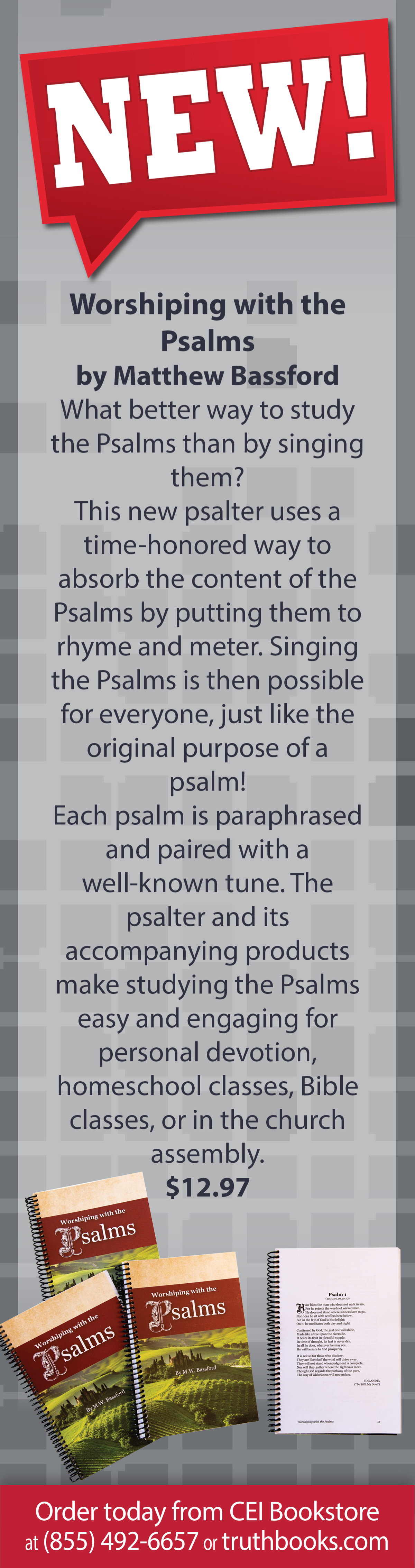
By Kevin Maxey
Synopsis: Jesus’s path to greatness is diametrically opposed to worldly standards of greatness.
For God so loved the world, that He gave His only begotten Son, that whoever believes in Him shall not perish, but have eternal life (John 3:16, NASB).
G.O.A.T., a modern sports acronym used to describe greatness, means the “Greatest of All Time.” Fickle sport enthusiasts enjoy debating the merits of their favorite reigning G.O.A.T., at least until the next one comes along. Regardless of the arena, man’s attempts at greatness flicker in comparison to our Savior’s eternal greatness. Speaking of Jesus, the angel Gabriel definitively proclaimed, “He will be great” (Luke 1:32). Christ’s greatness is unparalleled. Period. Overuses of the word “great” pale the against unique greatness that is Jesus.
John 3:16, which many call the greatest verse of the Bible, describes the greatest act ever accomplished by the greatest man of all time: “For God so loved the world, that He gave His only Son, that whoever believes in Him should not perish but have eternal life.”
Gospel writers engaged in the formidable task of recording the “Greatest Story Ever Told.” John concludes his gospel with these words, “Now there are also many other things that Jesus did. Were every one of them to be written, I suppose that the world itself could not contain the books that would be written” (John 21:25). All the books of the world cannot contain the greatness that is Jesus.
Jesus is great because of who He is. Earlier in his gospel, John affirmed Jesus as Logos, Deity, and Creator. “In the beginning was the Word, and the Word was with God, and the Word was God. He was in the beginning with God. All things were made through Him, and without Him was not any thing made that was made” (John 1:1-3). John continues proclaiming Jesus as Life and Light. “In Him was life, and the life was the light of the men. The Light shines in the darkness and the darkness has not overcome it” (John 1:4-5).
This Logos, Deity, Creator, Light, and Life accomplished the extraordinary and “became flesh and dwelt among us” (John 1:14)—truly making Him the greatest man. Jesus was no ordinary man. Jesus, who tabernacled, lived, and walked among men, was fully God in the flesh (Col. 1:15; 2:9; Heb. 1:3, 8; 2 Cor. 4:4; Phil. 2:6).
Jesus is great because of how He lived. Not only was He fully God, Jesus was also fully man. Walking in the flesh enabled the world to see glory, grace, and truth. “We have seen His glory, glory as of the only Son from the Father, full of grace and truth” (John 1:14). Jesus explained to His disciples, “Whoever has seen me has seen the Father” (John 14:9). Just before the John 3:16 passage, even Nicodemus, leading member of the Jewish Sanhedrin, admits to Jesus, “Rabbi, we know that you are a teacher from God, for no one can do these signs that you do unless God is with him” (John 3:2). Jesus manifested greatness in acts of compassion as He “went about doing good” (Acts 10:38). Jesus spoke like no other (John 7:46; Matt. 7:28-29). Jesus performed miracles like no other man. “Now Jesus did many other signs in the presence of His disciples, which are not written in this book, but these are written so that you may believe that Jesus is the Christ, the Son of God, and that by believing you may have life in His name” (John 20:30-31).
Beyond these unique claims to greatness, Jesus stands above all others because He lived without sin. “He committed no sin, neither was deceit found in His mouth” (1 Pet. 2:22). Satan, who tempts all men to sin (Rom. 3:23), miserably failed with Jesus (Matt. 4:1-11). Jesus “knew no sin” (2 Cor. 5:21). “In Him there is no sin” (1 John 3:5). He was “in every respect . . . tempted as we are, yet without sin” (Heb. 4:15). Despite His innocence, “They made His grave with the wicked and with a rich man in His death, although He had done no violence, and there was no deceit in His mouth” (Isa. 53:9).
Looking back nearly 2,000 years towards the cross, it is easy for us to agree upon the greatness of Jesus. Based on first century standards, however, He appeared to be far from great. “He had no form or majesty that we should look at Him, no beauty that we should desire Him. He was despised and rejected by men; a man of sorrow, and acquainted with grief; and as one from whom men hid their faces, He was despised, and we esteemed Him not” (Isa. 53: 2-3). Jesus’s path to the cross redefined greatness. Secular views of greatness involve physical strength, renowned beauty, dominant might, arrogant pride, exorbitant wealth, and monumental popularity. Of these worldly standards, Jesus had none.
Returning to John 3, we learn that Jesus came into a world filled with darkness, evil, hatred, and wickedness. “Light has come into the world, and people loved the darkness rather than the light because their deeds were evil. For everyone who does wicked things hates the light” (John 3:19-21). Jesus’s path to greatness is diametrically opposed to worldly standards of greatness.
Renouncing pride, Jesus achieved greatness through humility. “Being found in human form, He humbled himself by becoming obedient to the point of death, even death on a cross” (Phil. 2:8).
Renouncing self-exaltation, Jesus modeled greatness through service. “Whoever would be great among you must be your servant, and whoever would be first among you must be your slave, even as the Son of Man came not to be served but to serve, and to give His life as a ransom for many” (Matt. 20:28).
Renouncing bitterness, Jesus illustrated greatness through forgiveness. Even while on the cross, He prayed, “Father, forgive them, for they know not what they do” (Luke 23:34).
Renouncing self-will, Jesus demonstrated greatness through self-denial. In the garden, He prayed, “O My Father, if it is possible, let this cup pass from Me; nevertheless, not as I will, but as You will” (Matt. 26:39).
Renouncing ease, Jesus modeled greatness through suffering. “Christ also suffered for you, leaving you an example, so that you might follow in His steps” (1 Pet. 2:21).
Renouncing hatred, Jesus showed greatness through loving us, even in our sin. “For one will scarcely die for a righteous person—though perhaps for a good person one would dare even to die—but God shows His love for us in that while we were still sinners, Christ died for us” (Rom. 5:7-8). “Greater love has no one than this, that someone lay down his life for his friends” (John 15:13).
As we reflect on the greatest act by the greatest man, we must rethink our understanding of greatness. Do you desire greatness? If so, by what standard? Are you allowing worldly standards of greatness to choke your relationships with pride, self-exaltation, bitterness, hatred, and self-will? Instead, follow your Savior’s path to greatness through humility, love, forgiveness, self-denial, suffering, and service. Indeed, this is our greatest challenge!
But whoever would be great among you must be your servant, and whoever would be first among you must be your slave, even as the Son of Man came not to be served but to serve, and to give His life as a ransom for many (Matt. 20:28).


By Jesse Flowers
Synopsis: God’s invitation for salvation is universal in scope; that specific gospel fact has always been a key component of the scheme of redemption.
For God so loved the world, that He gave His only begotten Son, that whoever believes in Him shall not perish, but have eternal life (John 3:16, NASB).
The disciple whom Jesus loved recorded in his inspired gospel account: “For God so loved the world that He gave His only begotten Son, that whoever believes in Him should not perish but have everlasting life” (John 3:16).
Out of the 31,102 verses in the Bible, this is one of the most cited, quoted, and cherished verses of all. Yet, it is also one of the most misunderstood and misapplied. Let’s focus our attention on the following five words: “that whoever believes in Him.” That short phrase contains the greatest invitation ever extended.
God’s invitation for salvation is universal in scope; that specific gospel fact has always been a key component of the scheme of redemption. Jesus is the “Lamb slain from the foundation of the world” (Rev. 13:8) for the whole world. This same apostle wrote in his first epistle, “And we have seen and testify that the Father has sent the Son as Savior of the world” (1 John 4:14). The Father did not send His Son to be the Savior of just one nation or a class of people. Rather, He sent His only begotten Son to be the Savior of everyone!
Sadly, many belonging to the Jewish nation were blinded by their nationalistic pride and were convinced that they alone held exclusive rights to the Messiah (the Christ); that they alone were the children of God; and that there was little hope for the non-Jew unless they converted to Judaism. The Jews possessed an overconfidence, a false security, and even an arrogance because Abraham was their father (Matt. 3:9; John 8:39). The meaning and fulfilment of God’s promise to Abraham that “in you all the families of the earth shall be blessed” (Gen. 12:3) seemed completely lost on them. In fact, the apostle Paul describes God’s promise to Abraham as the gospel being preached to him. “The Scripture, foreseeing that God would justify the Gentiles by faith, preached the gospel to Abraham beforehand, saying, ‘In you all the nations shall be blessed’” (Gal. 3:8; cf. 3:16). All the nations would be blessed through the coming of Jesus Christ who is “the propitiation for our sins, and not for ours only but also for the whole world” (1 John 2:2).
The greatest invitation unto salvation was extended through the preaching of the gospel. As we read in the great commission texts of Matthew, Mark, and Luke. “He said to them, ‘Go into all the world and preach the gospel to every creature’” (Mark 16:15). The English Standard Version renders it as “Go into all the world and proclaim the gospel to the whole creation.” In Matthew’s account, Jesus gave the apostles the command to “Go therefore and make disciples of all the nations.” Luke records Jesus telling them. . . “that repentance and remission of sins should be preached in His name to all nations, beginning at Jerusalem” (Luke 24:47). Clearly, the gospel (good news) message of salvation was to be proclaimed to one and all.
Let it also be understood that the greatest invitation ever given can be refused. Discipleship is not forced upon anyone. Jesus Himself said: “If anyone desires to come after Me, let him deny himself, and take up his cross daily, and follow Me” (Luke 9:23). Becoming a follower of Christ is a free-will choice—not something forced upon us against our will. In the parable of the great supper, many were invited but they rejected the invitation by making excuses as to why they could not attend (Luke 14:16-24). When Paul sought to preach the word of God in Antioch of Pisidia, the Jews began to contradict, blaspheme, and oppose the things Paul spoke. After which, Paul and Barnabas grew bold and declared: “It was necessary that the word of God should be spoken to you first; but since you reject it, and judge yourselves unworthy of everlasting life, behold, we turn to the Gentiles” (Acts 13:46). Notice carefully that these Jews were charged with rejecting the word of God. They refused the greatest invitation to be saved from their sins through Jesus Christ (cf. Acts 13:23-39). Yes, God “desires all men to be saved and to come to the knowledge of the truth” (1 Tim. 2:4), but individuals must have the desire to be saved as well. As John records in the last book of the New Testament, “The Spirit and the bride say, ‘Come!’ And let him who hears say, ‘Come!’ And let him who thirsts come. Whoever desires, let him take the water of life freely” (Rev. 22:17). The NASB renders the last phrase as “let the one who wishes take the water of life without cost.” The ESV translates it as “let the one who desires take the water of life without price.” Therefore, “if we neglect so great a salvation” (Heb. 2:3), it will be because of our own foolish choice.
It is of the utmost importance than each one observes that the greatest invitation for salvation is conditional in nature. John 3:16 reads: “. . .that whoever believes in Him. . .” Some subscribe to the doctrine of “universalism,” meaning God saves everyone no matter what they do or do not do. Ultimately, this concept is widely promoted amongst denominations in the general acceptance of all roads lead to heaven (i.e., all “Christian” faiths will be in heaven).
Yes, the invitation for salvation is universal in scope. “For the grace of God that brings salvation has appeared to all men” (Titus 2:11). Anyone can be saved from their sins because God is “rich in mercy,” “because of His great love with which He loved us,” and because of “the exceeding riches of His grace in His kindness toward us in Christ Jesus” (Eph. 2:4, 7). However, God’s invitation for salvation is conditional. One must believe in God’s only begotten Son to be saved. If we do not believe in Him, we will die in our sins (John 8:24). Even in the great grace text of Ephesians 2, Paul wrote: “For by grace you have been saved through faith. . .” (v. 8).
What does it mean to “believe in Him”? One must be fully convinced by all the evidence provided in the inspired word of God that “Jesus is the Christ, the Son of God” (John 20:31; cf. Matt. 16:16). Saving faith is not merely a mental agreement that is expressed in words alone, but it is a firm belief in Him that is expressed in one’s obedience to Him in all things (John 14:15, 21, 23-24; 15:14). John 3:16 is a favorite verse cited by many of our sincere religious neighbors as proof that salvation in Christ is based on “faith only.” The Bible does indeed mention “faith only,” but it says that one is justified by works (obedience to God instructions), “and not by faith only” (Jas. 2:24). Also, let us be reminded that earlier in John 3, Jesus had informed Nicodemus that one could not enter the kingdom of God “unless one is born of water and the Spirit” (v. 5). So, even in the very text and context of John 3, “faith only” salvation is disproven. Returning to the great commission text of Mark 16, Jesus stated: “He who believes and is baptized will be saved; but he who does not believe will be condemned” (v. 16).
In Matthew 7:21, Jesus taught: “Not everyone who says to Me, ‘Lord, Lord,’ shall enter the kingdom of heaven, but he who does the will of My Father in heaven.” A few verses later, Jesus said: “Therefore whoever hears these sayings of Mine, and does them, I will liken him to a wise man who built his house on the rock” (v. 24). In Luke 6:46, Jesus asked, “Why do you call Me Lord, Lord, and do not do the things which I say?” Please notice the reoccurring emphasis in these verses. In order to be saved and granted entrance into the kingdom of heaven, we must do (obey) what Jesus says. Jesus Christ is “the author of eternal salvation to all who obey Him” (Heb. 5:9).
On a brief side note, these five words from John 3:16 (“. . .that whoever believes in Him. . .”) effectively answer the error of Calvinism. No, God does not elect certain individuals to be saved apart from their choice. No, Christ did not die for just a select few who were pre-chosen by God. Jesus shed His precious blood for one and all. No, God does not operate upon the sinner’s heart with irresistible grace separate and apart from His word. Rather, it is through the preaching of the gospel that men are called (2 Thess. 2:14) to obey to be saved (Rom. 1:16; 10:16-18; 2 Thess. 1:8).
In conclusion, every Christian today has the urgent responsibility to continue to extend the greatest invitation to one and all. As we sometimes sing, “the blessed gospel is for all”!


By Ryan Goodwin
Synopsis: The promise of “shall not perish” in John 3:16 cuts straight through one of our greatest problems: the fear of death.
For God so loved the world, that He gave His only begotten Son, that whoever believes in Him shall not perish, but have eternal life (John 3:16, NASB).
All of us have two significant problems, neither of which has a man-made solution—we have a sin problem and a death problem. While we are clever enough to use our intellectual and material tools to overcome many of our other challenges (building amazing things, treating or curing an array of maladies, achieving feats previously unimaginable such as flight or space travel), these two great problems prove stubbornly resilient. No amount of money, intellect, skin cream, or vitamins can ultimately prevent death. In the final judgment, no amount of excuse-making or good-deed-doing can save us from the eternal consequences of our sins.
So when Jesus promises salvation from sin and eternal life in the gospel, He is not offering something trite. It’s not something we can shop around for to get a better deal. He is not selling what we don’t need. In fact, the message of John 3:16 solves the two aforementioned unsolvable problems! In this article, I want to focus on this part of the gospel, highlighting why death—though a great peril to the lost—has no power over those of us who are in Christ, for we “shall not perish.”
It surprises me how many Christians struggle with the concept of death. We would expect nothing else from an unbeliever, but it seems like those who should be most confident about their physical demise often have quite a shaky grasp of it. For many, maybe their faith lacks development or maturity. This is normal, since we all begin with a “mustard seed” in exploring our belief in God. For others, perhaps, it is dying, rather than death itself, that is frightening. Certainly, nobody looks forward to their last hours spent in a hospital, or dying in a car accident! Most of us have had to face tragedy many times in our lives. We have seen how ugly death is in the cold, expressionless faces of our loved ones in a funeral home. Or worse, some have had traumatic experiences in combat or law enforcement. So our trepidation and revulsion surrounding death is not uncommon. Solomon, the great king and philosopher who presumably wrote Ecclesiastes, noted in the final chapter of that book how difficult it is to grow old and face the bitter end.
The Bible illustrates that death comes for a variety of apparent reasons: justice, revenge, accidents, coincidence, old age. More fundamental than any of these, however, is the first cause of death. We die because of sin—Adam’s sin introduced death to the world, and we all experience it because of our participation in an environment that has been corrupted by sin. Consider Romans 5:12-21, which begins, “Therefore, just as through one man sin entered the world, and death through sin, and so death spreads to all men, because all sinned. . .” Be careful not to place blame on Adam alone (which is tempting), but ask yourself if you would have been strong enough to walk away from the temptation he faced. Adam might have been the first to sin, but none of us would have fared much better! Paul surely clarified the issue by stating, “death spread to all men, because all sinned”, which follows his earlier affirmation, “For all have sinned and fall short of the glory of God” (Rom. 3:23). He also adds in another chapter, “For the wages of sin is death” (Rom. 6:23).
One might ask, though, “But what about children? Many kids die without ever sinning!” While this is true, let us remember that the relationship between sin and death is a general one, not specific to individuals. Good people do not always live long lives, just as some evil people do not always receive “comeuppance” in this life. “I have seen everything during my lifetime of futility; there is a righteous man who perishes in his righteousness, and there is a wicked man who prolongs his life in his wickedness” (Eccl. 7:15). Death exists because sin exists in the world. They are linked, but only in a general sense. Adam’s sin caused a separation between him and God, so without God’s presence, the world itself began to undergo decay. It went from paradise to imperfection (Gen. 3:16-19). So while a child is not personally responsible for physical calamities that might come upon him, he is a living being in an imperfect world—subject to corruption and injury, just like every other creature. Jesus Himself explains that bodily harm or natural disaster are not linked to personal culpability (Luke 13:2-5, John 9:1-3, Matthew 24:6-9). Paul notes this world’s pained existence in Romans 8:20-22, leading right into our next point.
Consider 1 Corinthians 15:20-26, which can be summarized in the following way: Death is not God’s desire for us; it is our enemy. “For He must reign until He has put all His enemies under His feet. The last enemy that will be abolished is death” (15:25-26). Adam’s sin opened the door for imperfection, decay, and physical death, as well as spiritual condemnation. “For since by a man came death, by a man also came the resurrection of the dead. For as in Adam, all die. . .” (vv. 21-22). In the same way that one man’s sin paved the way for our physical destruction, another Man’s sacrifice makes our spiritual salvation possible. “So then as through one transgression there resulted condemnation to all men, even so through one act of righteousness there resulted justification of life to all men. . .” (Rom. 5:18).
The only way that Jesus could have become a suitable mediator between fallen man and perfect God was to come to this world and experience our suffering. “Since then the children share in flesh and blood, He Himself likewise also partook of the same, that through death He might render powerless him who had the power of death, that is, the devil; and might deliver those who through fear of death were subject to slavery all their lives” (Heb. 2:14-15). While He always maintained the divine spirit, Jesus was a flesh and blood human being (Col. 2:9). Our great enemy is death because of sin, and Jesus is master of both. He conquered sin by living a spotless life and defeating Satan (Heb. 4:15), and He conquered death by His transcendent power over the creation—His creation.
He is the image of the invisible God, the first-born of all creation. For by Him all things were created both in the heavens and on earth, visible and invisible, whether thrones or dominions or rulers or authorities—all things have been created by Him and for Him. And He is before all things, and in Him all things hold together. He is also the head of the body, the church; and He is the beginning, the first-born from the dead; so that He Himself might come to have first place in everything” (Col. 1:15-18).
Paul adds that it is because of His death that we are able to come before God spotless and saved (Col. 1:22).
Does “shall not perish” mean that Christians never experience physical death? Surely not, or else Jesus contradicted Himself when He essentially promised that the apostle Peter was going to die someday (John 21:18-19). Also, the promises surrounding the judgment day (such as Jesus’s own words in John 5:28-29) presume Christians will experience physical death.
So what does it mean that we “shall not perish”? We can find clarity in John 11:25-26, where Jesus reassures His dear friend, Martha, that the resurrection is where our hope is found. He says, “I am the resurrection and the life; he who believes in Me shall live even if he dies, and everyone who lives and believes in Me shall never die. Do you believe this?” This has been God’s mission ever since the garden of Eden—helping us find eternal life in Him.
One day, we will all face the end of our earthly existence; that is the unavoidable reality. As unpleasant as the process might be, never be afraid of the result. Jesus came and became a man, humbling Himself to the point of a humiliating death. Yet, He overcame the grave and paved the way for our salvation. We never have to fear death now, because our Lord showed us the way and has freely given us access to a spiritual transformation (1 Cor. 15:45-49).



By Chris Reeves
Synopsis: While we receive many suitable rewards in this life, none compares to the glorious reward of heaven that will be given to all who believe and obey Jesus Christ.
For God so loved the world, that He gave His only begotten Son, that whoever believes in Him shall not perish, but have eternal life (John 3:16, NASB).
God said: “Fear not, Abram: I am thy shield, and thy exceeding great reward” (Gen. 15:1).
The psalmist wrote: “Moreover by them is thy servant warned, in keeping them there is great reward” (Ps. 19:11).
Jesus said: “Rejoice, and be exceeding glad: for great is your reward in heaven. . .” (Matt. 5:12). He added, “Love your enemies, and do them good, and lend, never despairing; and your reward shall be great. . .” (Luke 6:35).
The author of Hebrews wrote: “Cast not away therefore your boldness, which hath great recompense of reward” (Heb. 10:35).
Do you get the idea from reading these Scriptures that a glorious reward is reserved for the one who believes and obeys the Lord? Absolutely! What a motivation and incentive this is for being a faithful Christian today.
In this life, we receive rewards for good behavior. Our parents give us rewards for obeying and eating our vegetables. Our teachers give us rewards for making good grades and behaving in class. Our coaches give us rewards for practicing hard and winning games. Our employers give us rewards for quality work and productivity. The Lord does the same. He has the greatest reward planned for all who believe and obey Him.
When Jesus expressed the words recorded in John 3:16, He spoke about the greatest things. In this article, I want to examine the final greatest thing of which He spoke. When Jesus said, “but have eternal life,” He was speaking of the greatest reward that can ever be given or received. When a person becomes a Christian and lives faithfully each day, he has the promise of eternal life. There is no greater reward, now or later, than the reward of eternal life.
What is eternal life? Eternal life is not just living forever. It is more than that. Jesus said in John 3:15 and 3:16 that eternal life begins now when one believes (and continues believing) in Jesus. (Note that Jesus used the present active subjunctive in both John 3:15 and 3:16, translated “should have” or “may have” eternal life.) [Eternal life is experienced now when one is forgiven of sin and has fellowship with Jesus. When one hears, believes, and obeys (John 3:36) the words of Jesus, he has (now) eternal life. “Life eternal” can be experienced now (i.e., in this present life) when we work together with Jesus (John 4:36), when we deny ourselves and obey His commandments (John 12:25, 50), and when we know the only true God (John 17:3). “Life eternal” is something a Christian can lay hold on now (1 Tim. 6:12). It is a promise we can experience now (1 John 2:25). Eternal life is a spiritual quality of life in which we share fellowship with God and experience the blessings of God (John 4:14; 10:28; 17:3).
According to the Scripture, eternal life will also be experienced in the future. Eternal life will one day be experienced after the judgment day (Matt. 25:46) and in the world to come (Mark 10:30). Faithful Christians are patient in well-doing for eternal life (Rom. 2:7), they have a hope of eternal life (Titus 1:2; 3:7), and they look for eternal life (Jude 21).
So, what is the greatest reward? It is eternal life. Where will this eternal life be experienced in its fullest? In heaven. Jesus said, “great is your reward in heaven.” Let’s consider how heaven is the greatest reward.
No doubt, there are substantial rewards on earth, but nothing like what will be experienced in heaven. Heaven will be the greatest reward of all time because it will not be on this earth (2 Pet. 3:10). Heaven will be a completely new place—a new heaven and earth (2 Pet. 3:13; Rev. 20:11; 21:1). Heaven, not earth, is the place to which Jesus has gone to prepare (John 14:2-3).
There are some beautiful places and things in this world, but they are nothing like what one will experience in heaven. Heaven will be the greatest reward of all time because of what one will receive there. Heaven is a reward and prize to be claimed (Matt. 5:12; Luke 6:23; Phil. 3:14; Col. 2:18), a home to be shared (2 Cor. 5:8), a life to be experienced (Mark 10:30; Rom. 2:7; Gal. 6:8; Titus 1:2; 3:7), a rest to be taken (Heb. 4:11;; Rev. 2:7, 11, 17, 26; 3:5, 12, 21; 7:13-17; 14:13; 22:3), an inheritance to be received (Matt. 19:27-30; 2 Cor. 5:1; Heb. 10:34; 1 Pet. 1:3-5), a kingdom citizenship to be exercised (Phil. 3:20; 2 Tim. 4:18; 2 Pet. 1:11), and a heavenly, spiritual body to be inhabited (Rom. 8:11, 23; 1 Cor. 15:48-49; 2 Cor. 5:1-4).
That’s not all, there’s more! Heaven will also be a city and country to be lived in (Heb. 11:8-16; 12:22; 13:14; Rev. 3:12; 21:2), a beautiful paradise garden to be enjoyed (Luke 23:43; 2 Cor. 12:4; Rev. 2:7; 21:10; 22:1-5, 14), a place of joy and comfort with no sickness, sorrow, pain, or death (Rev. 21:4), a place of righteousness with no uncleanness at all (2 Pet. 3:13; Rev. 20:11-15; 21:7-8, 27; 22:14-15), a place of eternity with no time limitations (Matt. 25:46; Rev. 22:5, 14), a grand reunion to attend (Gen. 25:8; 1 Thess. 4:13-18), and a crown to be worn (1 Cor. 9:24-25; Phil. 4:1; 1 Thess. 2:19; 2 Tim. 2:5; 4:8; Jas. 1:12; 1 Pet. 5:4; Rev. 2:10; 3:11).
There are some nice people to be around now in this life, but the audience in heaven will be far more amazing. Heaven will be the greatest reward of all time because of who will be there. The following persons will be there: God (Matt. 5:16; Rev. 4:2), Jesus Christ (Acts 7:56; 2 Cor. 5:7; Phil. 1:23; Col. 3:1-3; Heb. 8:1; 9:24; 1 Pet. 3:22; Rev. 5:6; 22:1), the Holy Spirit (1 Pet. 1:12; Rev. 1:4-5), all the holy angels (Matt. 18:10; 22:43; Luke 15:7, 10), all the Old Testament righteous (Matt. 8:11; Heb. 11:40; 12:23), all the New Testament righteous (Matt. 5:3; 11:28; 25:46; Luke 10:20; Phil. 4:3; Rev. 22:17), all who truly love the Lord (2 Tim. 4:6-8), all the little innocent and sinless children (Matt. 19:13-14), all who are committed to the Lord and who are willing even to die for Him (Rev. 2:7, 10-11, 17, 26-28; 3:5, 12, 21; 6:9; 7:14; 14:12-13), and all the righteous Christians (1 Thess. 4:17).
There are some rewards in this life that are fun to do, but none compare to what the saved will be doing in heaven. The saved of all time will spend their time praising God and serving Him for ever and ever (Rev. 7:11-17; 14:1-5; 15:2-3; 19:1; 22:3-5). Praising and serving God, how amazing that will be! To be in God’s immediate presence, to have direct access to Him, and to worship around His throne, how can you ask for anything better than that?
Yes, the greatest reward given by God and received by mankind is eternal life! Do you have it now? Will you experience it in heaven? The promise of a great reward should give all of us the motivation and incentive to live righteously now, so that we can all go to heaven. Friend, believe and obey Jesus Christ each and every day to have eternal life now and in heaven. While it may sound trite to some, it is still true: heaven is a prepared place for a prepared people and if you miss it, you’ve missed all there is.