 Agora
Agora

Smyrna is located on the western coast of Turkey in a natural harbor of the Aegean Sea, into which flows the Hermus River. Known today as modern Izmir, the ancient city of Smyrna has not and cannot be well excavated because so much of it lies beneath the modern city. The city was first settled in the 10th century B.C. (contemporary with King Solomon). That area is known as “old Smyrna” and it has been excavated.
Agora
Smyrna came into conflict with the emerging Lydian kingdom and was destroyed in about 600 B.C. The inhabitants scattered to surrounding villages. In 334 B.C., when Alexander the Great invaded the area, he refounded the city in its present location. King Lysimachus put the city on the map after his reorganization of Asia Minor, following the battle of Ipsus (301 B.C.).
Ancient Smyrna competed for trade with Ephesus and eventually became the leading trading center of the area. Some ancient coins called Smyrna the “first of Asia,” though this was contested, according to the coins of Pergamum and Ephesus (Ramsay, 1909, 255). Strabo called it the most beautiful of all cities (Blaiklock, 1983, 418). Smyrna boasted that it was the city of the famed Greek author Homer, who wrote the Iliad and the Odyssey. Even today, Izmir is one of the largest and busiest commercial centers in the region.
William Ramsay writes, “As early as 195, when Antiochus was still at the height of his power, Smyrna built a temple and instituted worship of Rome; this bold step was a pledge of uncompromising adherence to the cause of Rome, while its fortunes were still uncertain” (1909, 254).
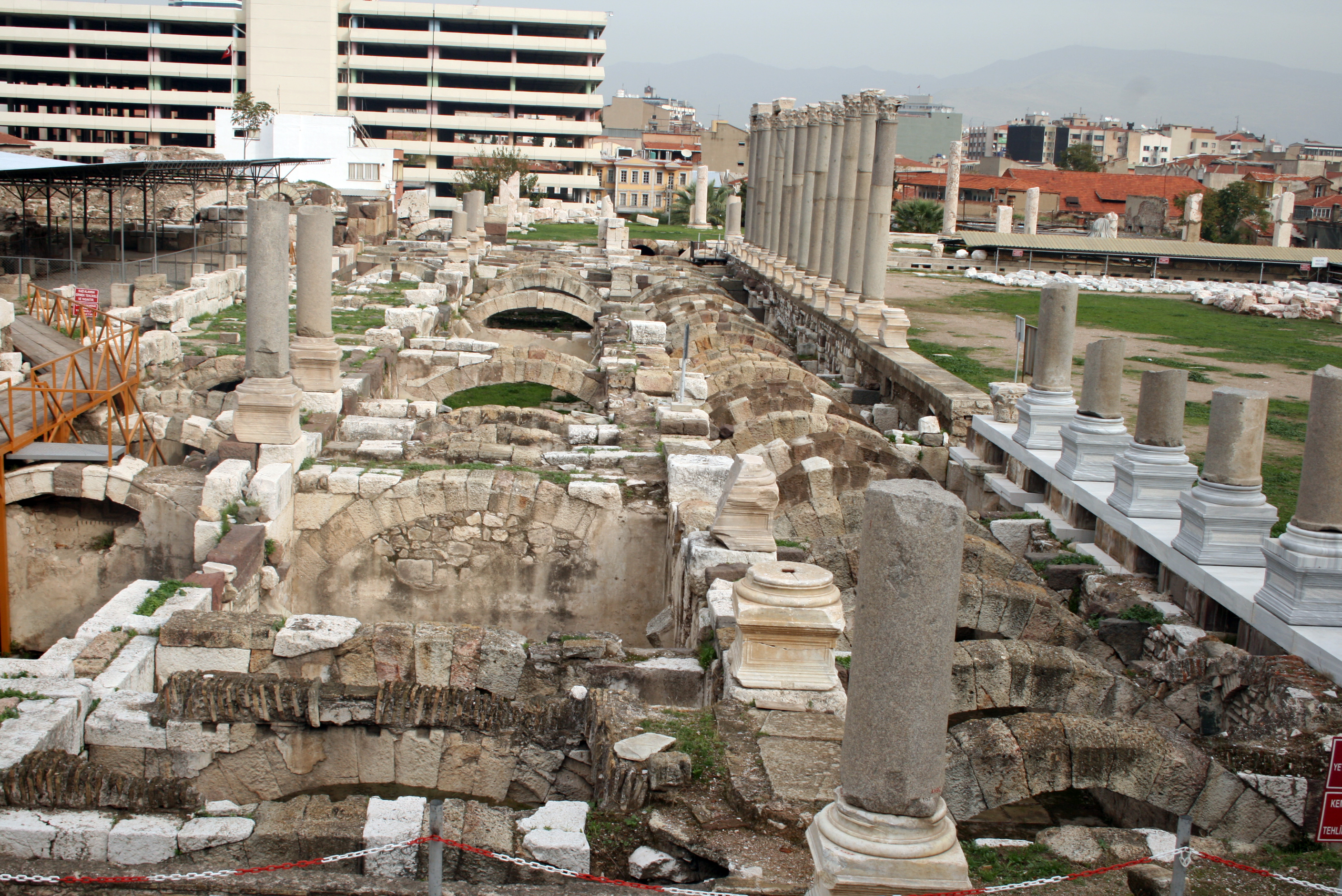 Agora Underground Shops
The town is only mentioned two times in Scripture (Rev. 1:11; 2:8). The church at Smyrna may have been established during the period that Paul preached in Ephesus and all Asia heard the gospel (Acts 19:10). There may be an allusion to ancient practices in the “crown of life” expression in Revelation 2:10. “Ancient writers often referred to the ‘crown of Smyrna,’ which perhaps referred to a crown of flowers worn by worshipers of the goddess Cybele” (Blaiklock, 1983, 418). However, Ramsay believes the “crown of Smyrna” “arose from the appearance of the hill Pagos, with the stately buildings on its rounded top and the city spreading down its rounded sloping sides” (1909, 256). Ramsay continues to write about the “crown” of Smyrna saying,
The comparison of Smyrna to a flower has a close connection with the “crown.” The crown or garland was usually a circlet of flowers; and the mention of a crown immediately aroused in the ancient mind the thought of a flower. Crowns were worn chiefly in the worship of gods. The worshipper was expected to have on his head a garland of the flowers or foliage sacred to the god whose rites he was performing. The guests at an entertainment were often regarded as worshippers of Bacchus and wore the sacred ivy: frequently, also, the entertainment was a feast connecting with the ritual of some other deity, and the crown varied accordingly. Thus the ideas of the flower and the crown suggest in their turn the idea of the god with whose worship they were connected, i.e., the statue of the god. The tutelary deity of Smyrna was the Mother-goddess, Cybele; and when Aristides pictured Smyrna as a statute sitting with her feet on the sea, and her head rising to heaven and crowned with a circlet of beautiful buildings, he had in mind the patroness and guardian of the city, who was represented enthroned and wearing a crown of battlements and towers (1909, 258).
Whether or not Ramsay is correct about his interpretation of the “crown,” the coins from Smyrna show the mother-goddess Cybele adorned with a “crown.”
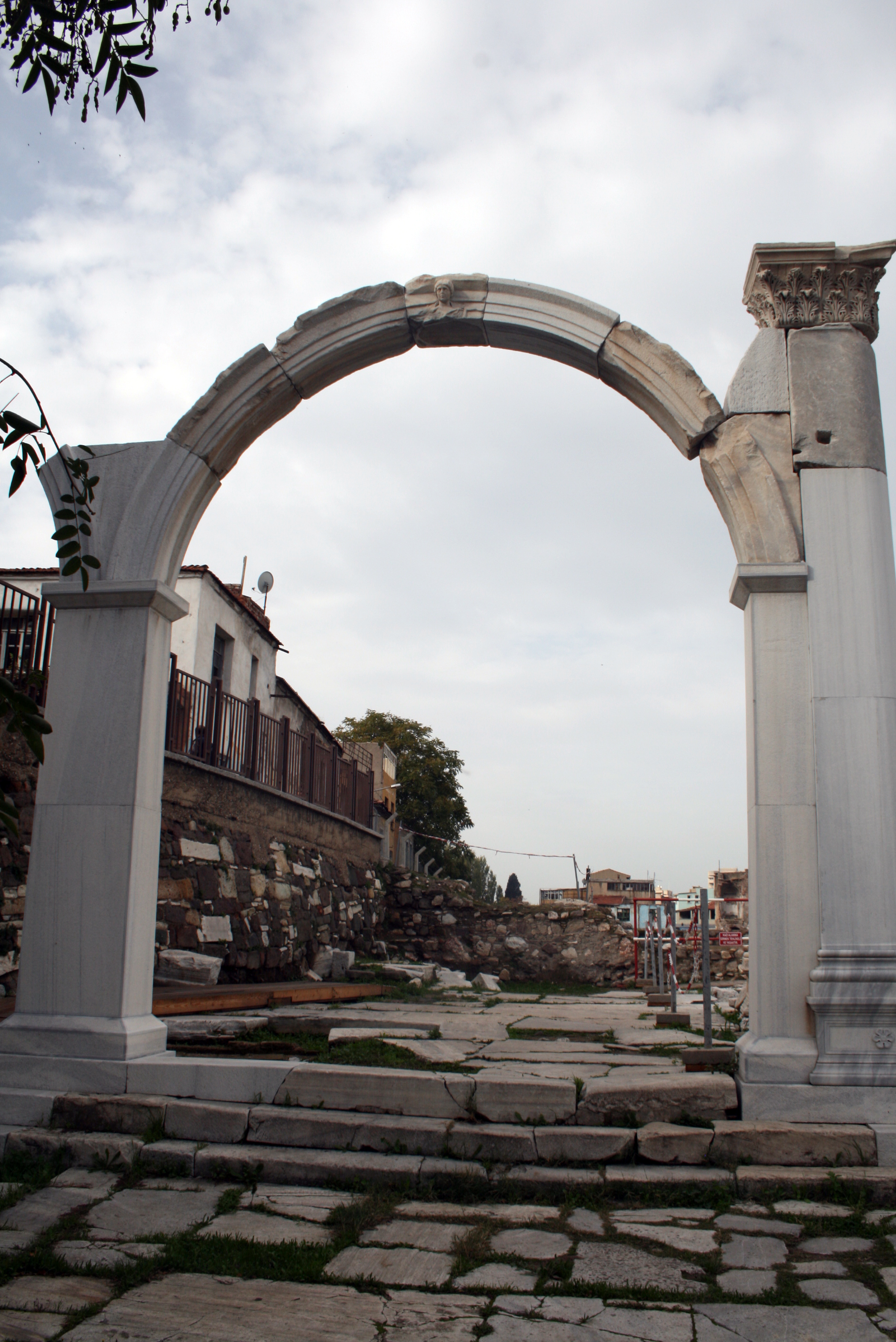 Agora Entrance Gate
The letter in Revelation indicates that there was at least one (perhaps more) Jewish synagogue in the city. “I know thy works, and tribulation, and poverty, (but thou art rich) and I know the blasphemy of them which say they are Jews, and are not, but are the synagogue of Satan” (Rev. 2:9). Most probably the animosity of the Jews toward Christians was stirred by the conversion to Christ of many Jews and God-fearing Gentiles (see Acts 10:1-2, Cornelius; the term “God-fearer” is a technical term for Gentiles who attended the synagogue but were not fully converted to Judaism).
The text also indicates that saints in Smyrna would suffer persecution, even to the point of losing their lives. John writes, “Fear none of those things which thou shalt suffer: behold, the devil shall cast some of you into prison, that ye may be tried; and ye shall have tribulation ten days: be thou faithful unto death, and I will give thee a crown of life” (Rev. 2:10). In A.D. 156, the eighty-six-year-old Polycarp was executed at Smyrna along with eleven others from Philadelphia (The Martyrdom of Saint Polycarp, 19). And, although the execution occurred on a Sabbath, the Jews were zealous in lending a hand to gather wood for Polycarp to be burned alive (The Martyrdom of Saint Polycarp, 8, 13).
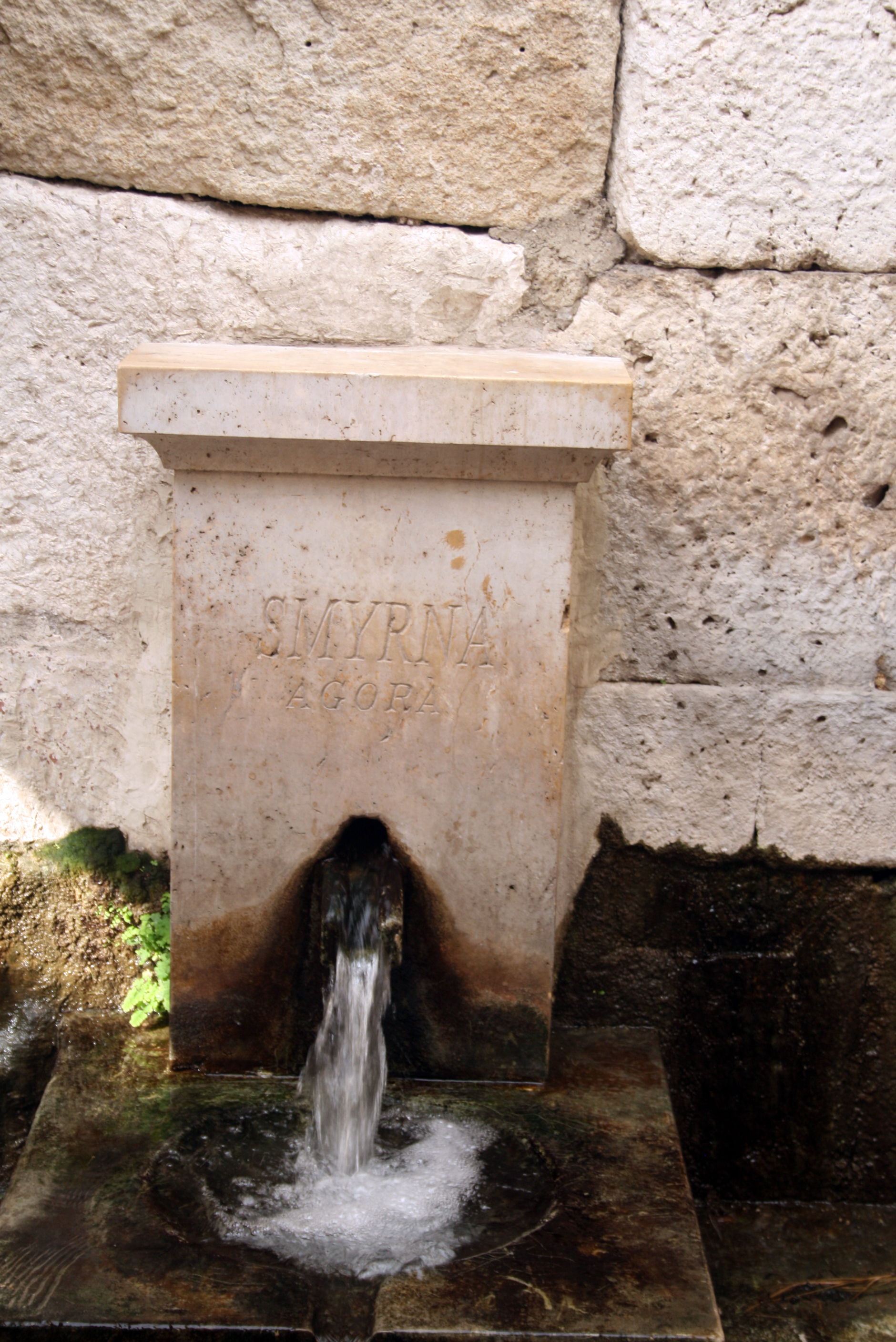 Foutain From Underground Shops